Hello, I am Dr. Peter C. Kang.
Today, I would like to share the case of a patient who visited our clinic concerned about a drooping columella, a crooked nose, and nostril asymmetry.
🔍 Surgical history
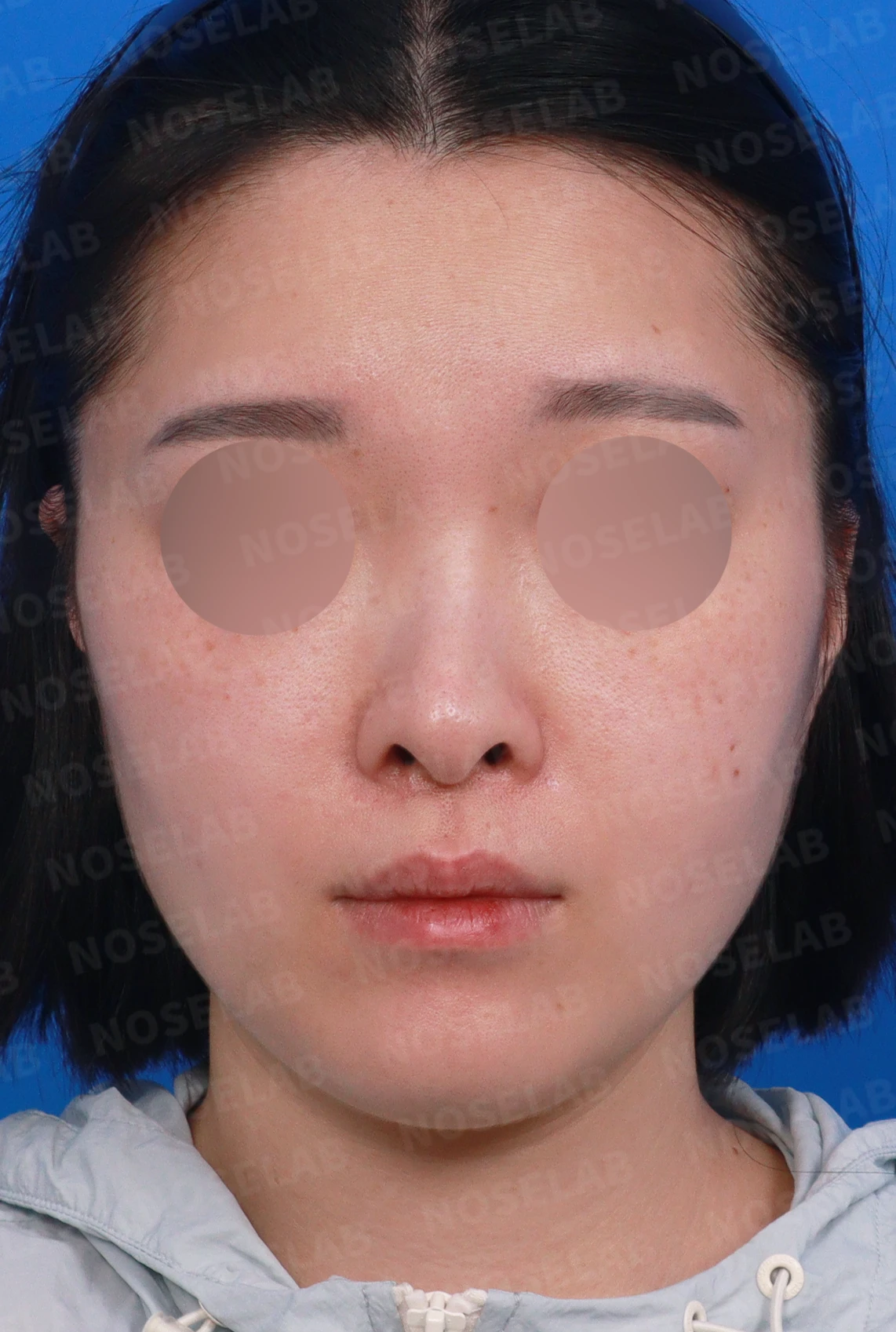
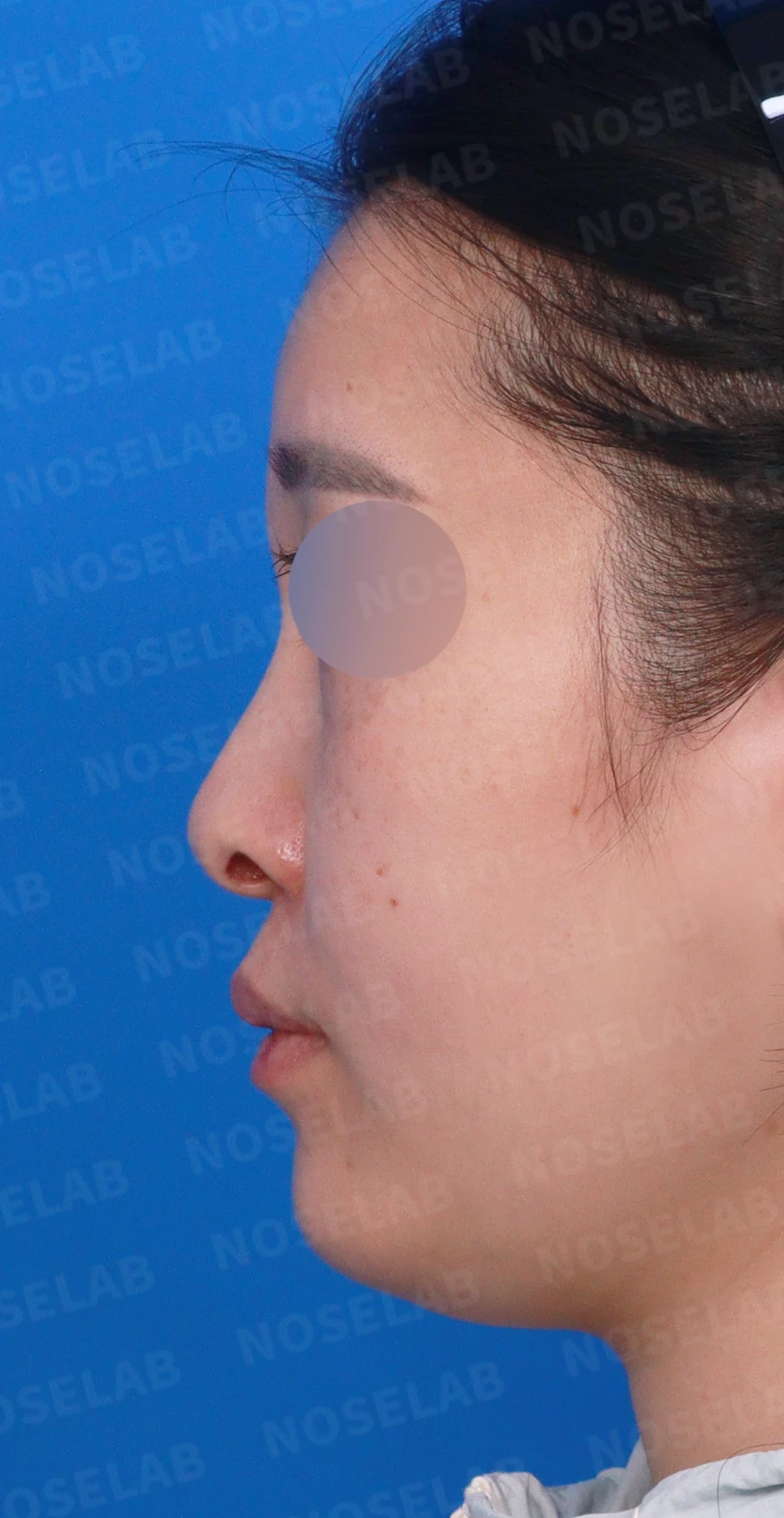
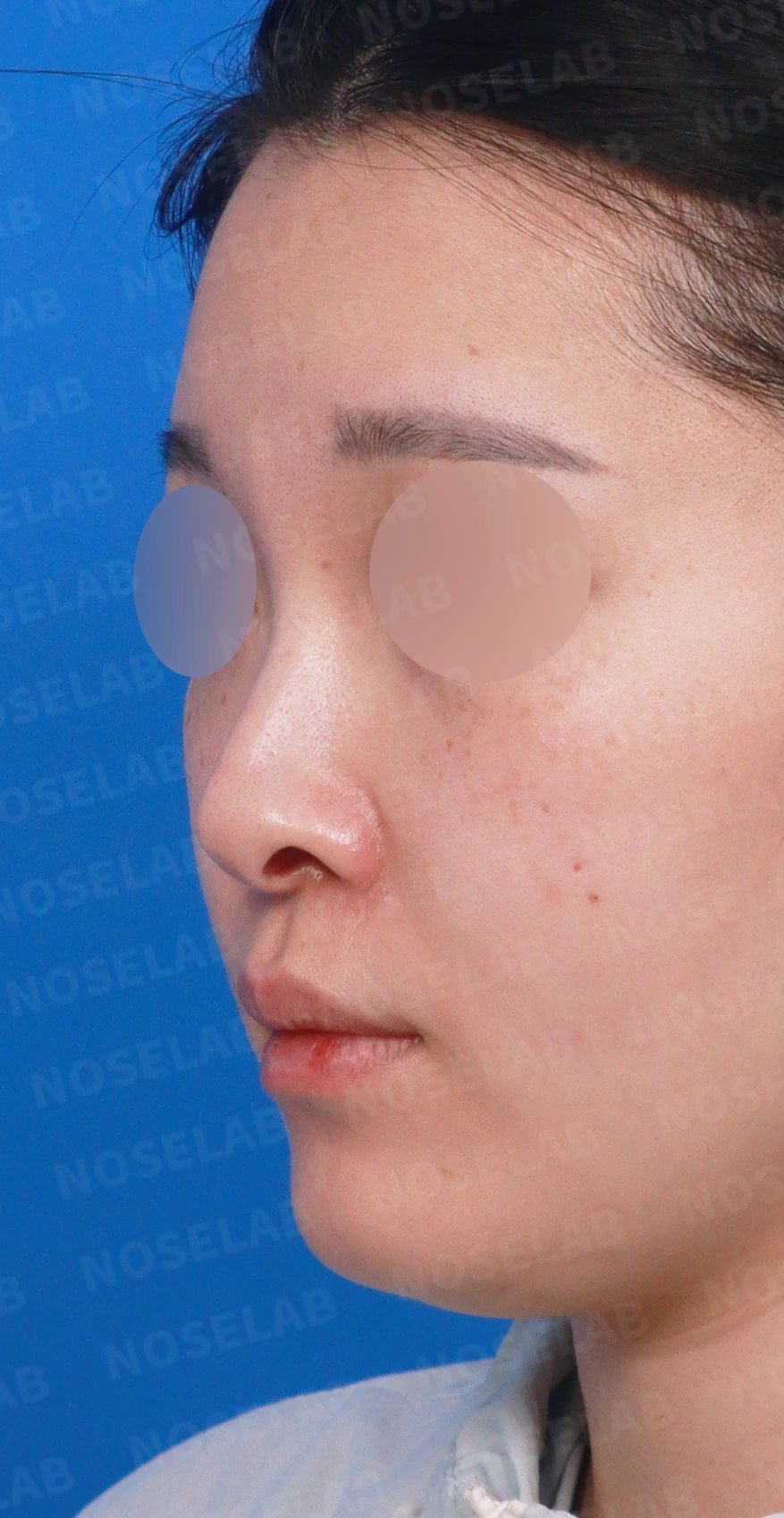
Front, left profile, and oblique views during design consultation.
Around 10 years ago: Nose filler + Misko procedure (to be removed during surgery)
9 to 10 years ago: Silicone implant + Alloderm
8 to 9 years ago: Revision surgery (adjustment) - Silicone repositioning (to correct a crooked nose)
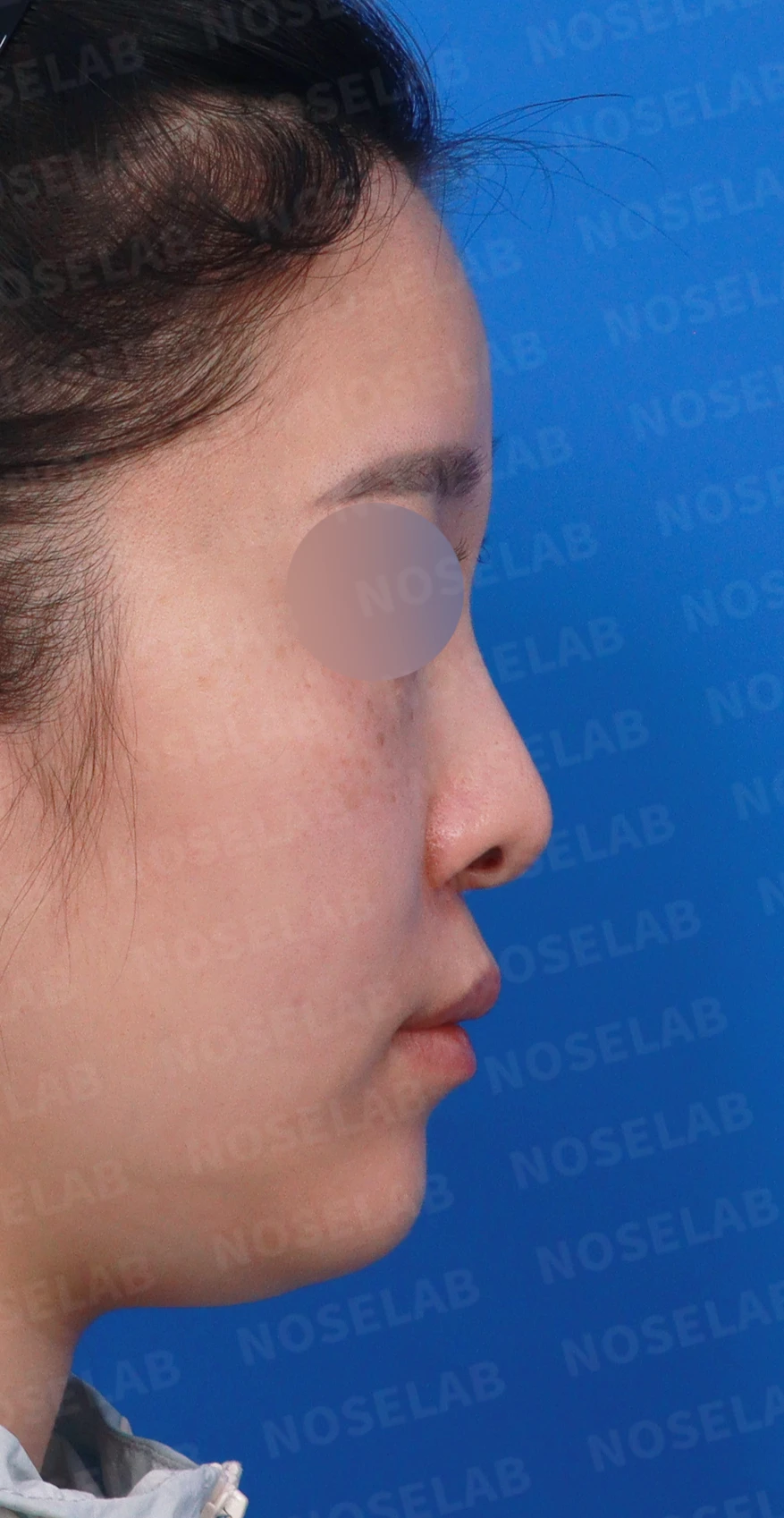
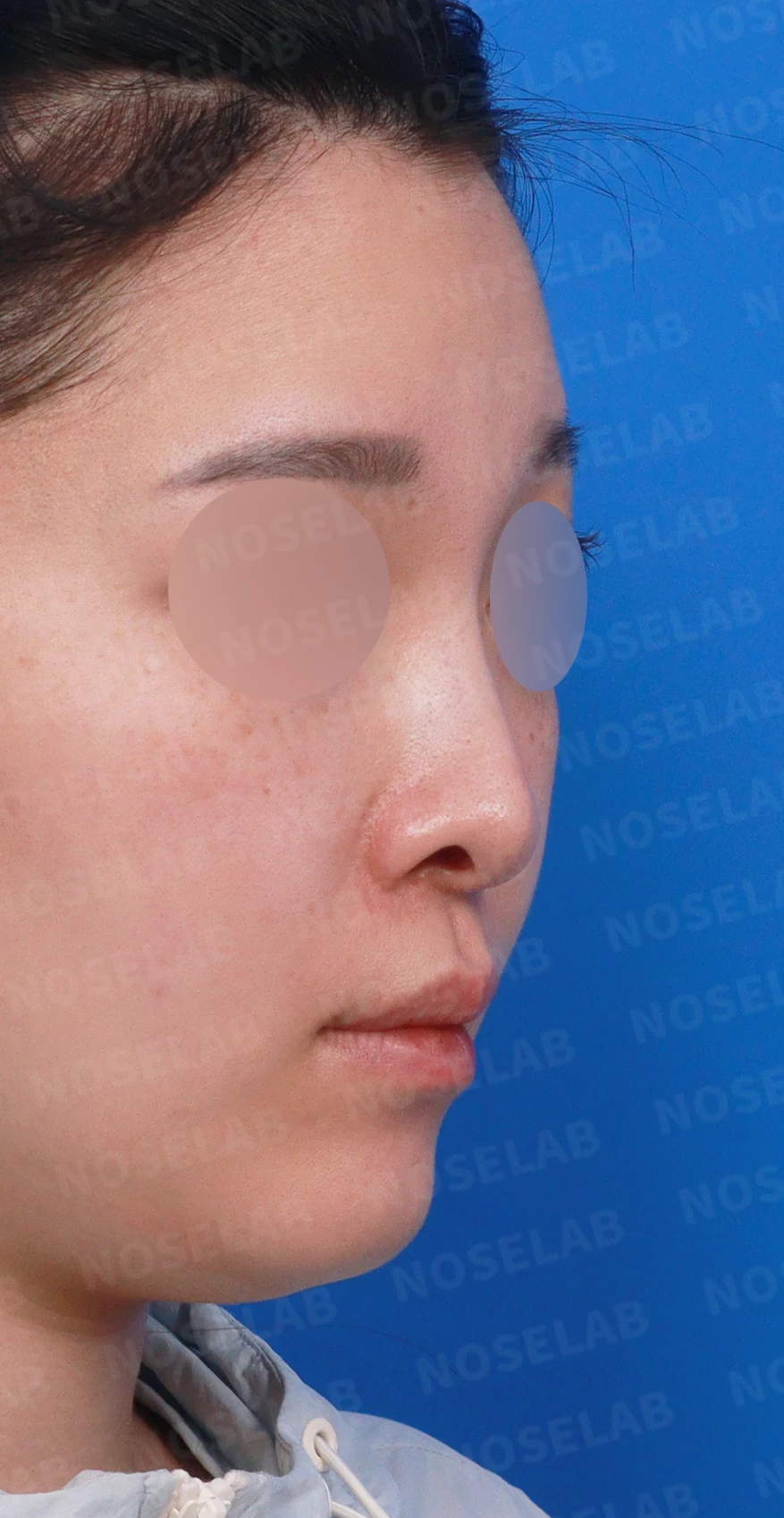
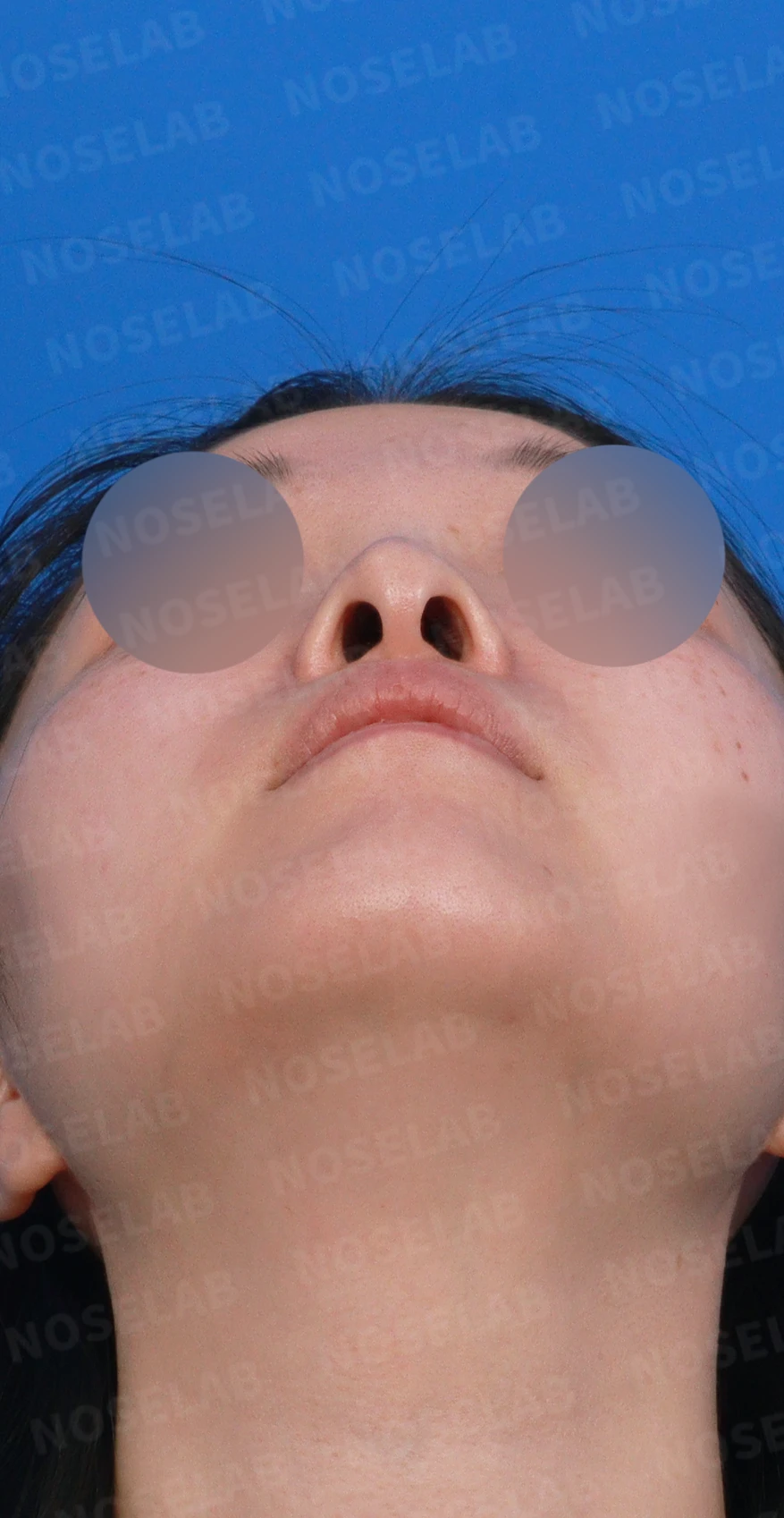
Right profile, oblique, and nostril views during design consultation.
💉 Patient requests
"I want to raise my nose higher."
"I want to reduce the size of my nostrils."
"I want to correct my crooked nose."
"I want to lift my drooping columella naturally."
"I want to reduce excessive nostril show."
"I want to correct my nostril asymmetry."
🔧 Surgical plan and procedure
In this surgery, the core objectives were to remove the silicone implant placed during the previous surgery, elevate the drooping columella, and naturally refine the exposed nostrils.
1. Existing implant removal and reconstruction
Removal of silicone and Alloderm from the previous surgery
Removal of filler and Misko from 10 years ago
Reconstruction with safety in mind using autologous rib cartilage
2. Columellar correction
Elevating the drooping columella into a natural position
Adjusting the nasolabial angle to establish a refined profile line
Reducing nostril show seen from the profile view
3. Crooked nose correction
Realigning the crooked nasal bridge through lateral osteotomies
Aligning the nasal midline with septal reconstruction
Securing front-view symmetry
4. Alar rim graft (nostril lowering)
Partial incision of the lower lateral (alar) cartilage
Lowering the alar margin by grafting autologous rib cartilage
Naturally reducing the excessively exposed nostril area
Balancing the size of both nostrils
5. Increasing nasal height
Dorsal augmentation using autologous rib cartilage
Achieving the natural height desired by the patient
Considering harmony with overall facial proportions
6. Nasolabial angle correction
Minimizing nostril show visible from the profile view
Natural angle with the philtrum
Achieving an elegant profile silhouette
🌟 Surgical results
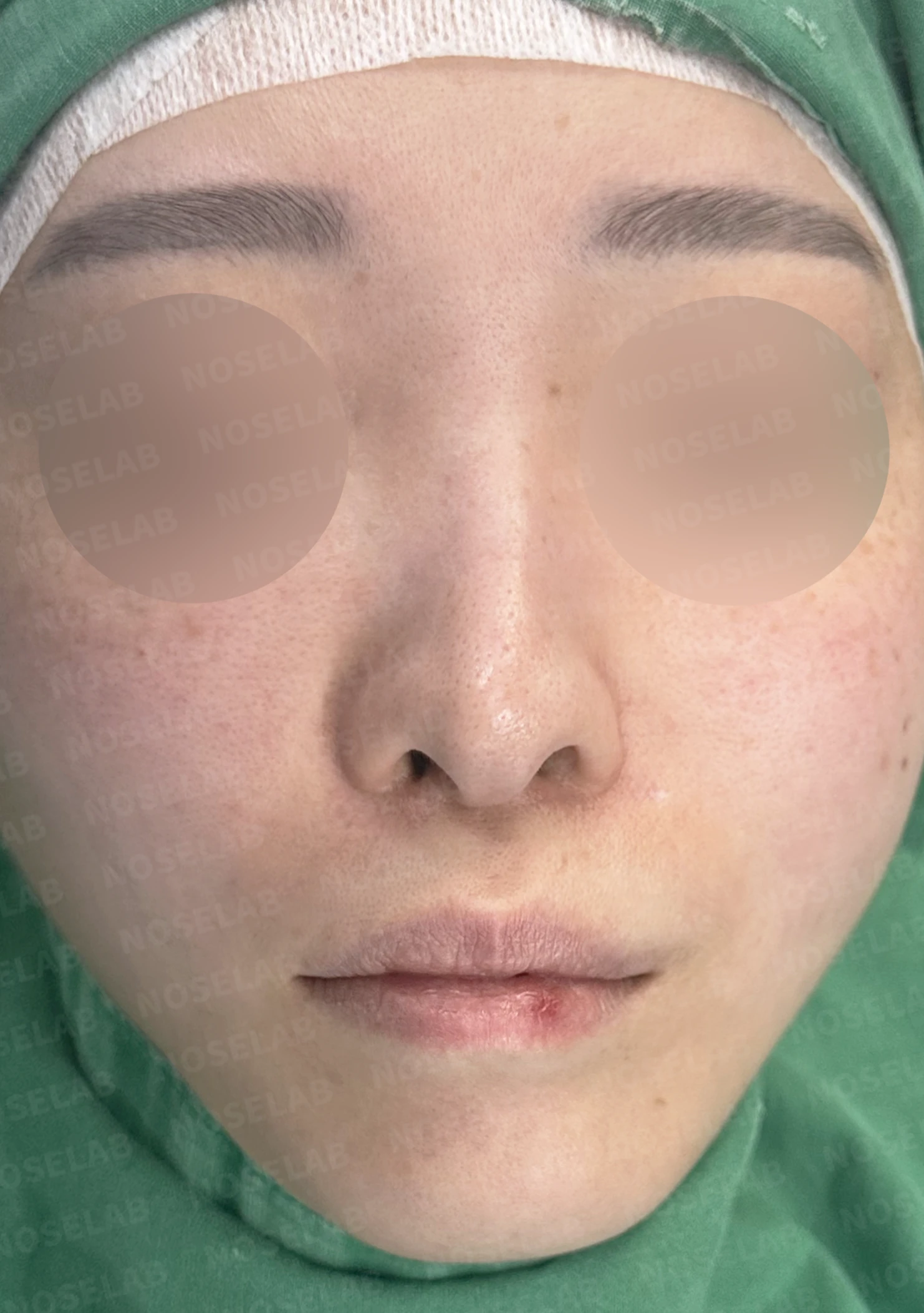
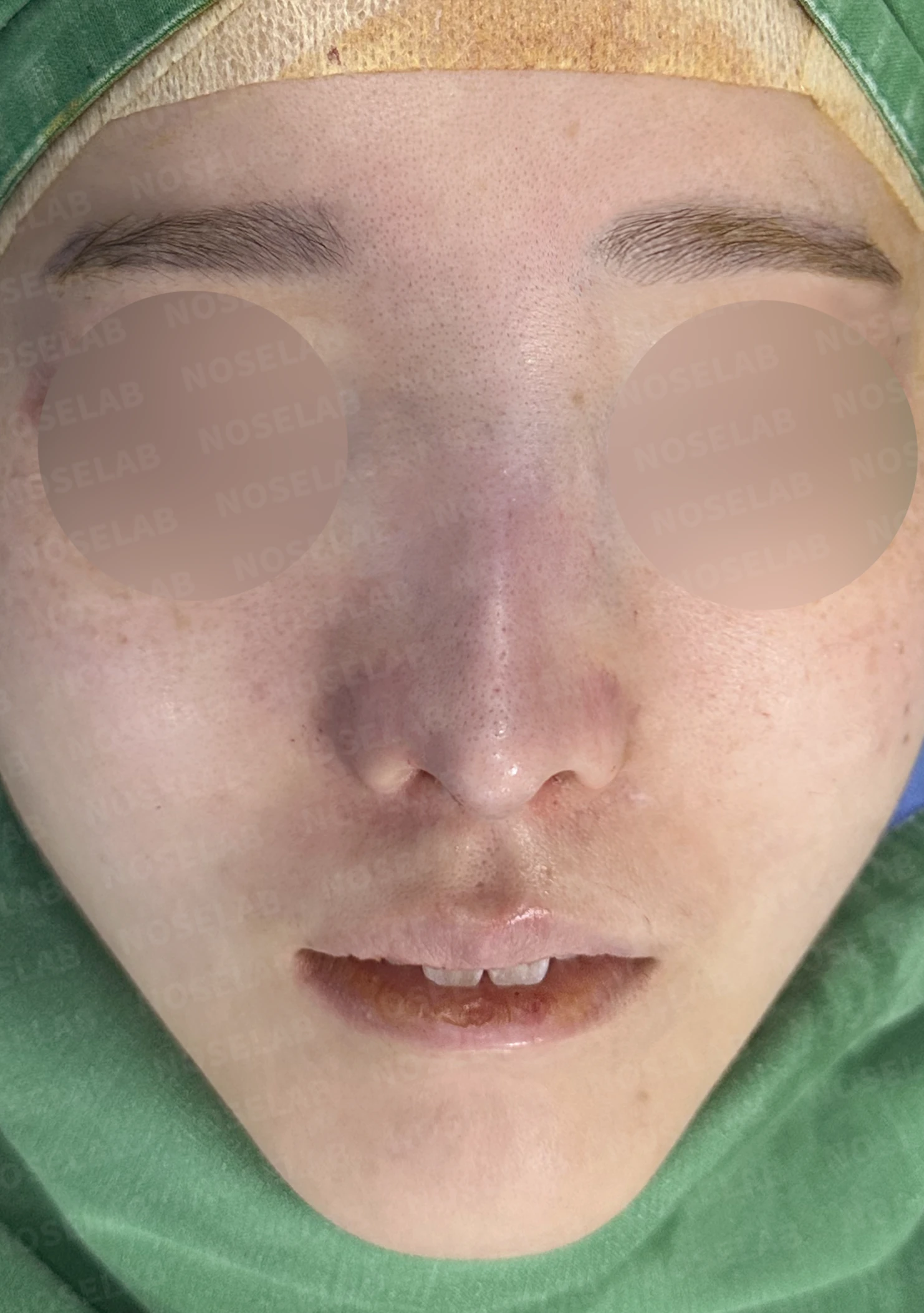
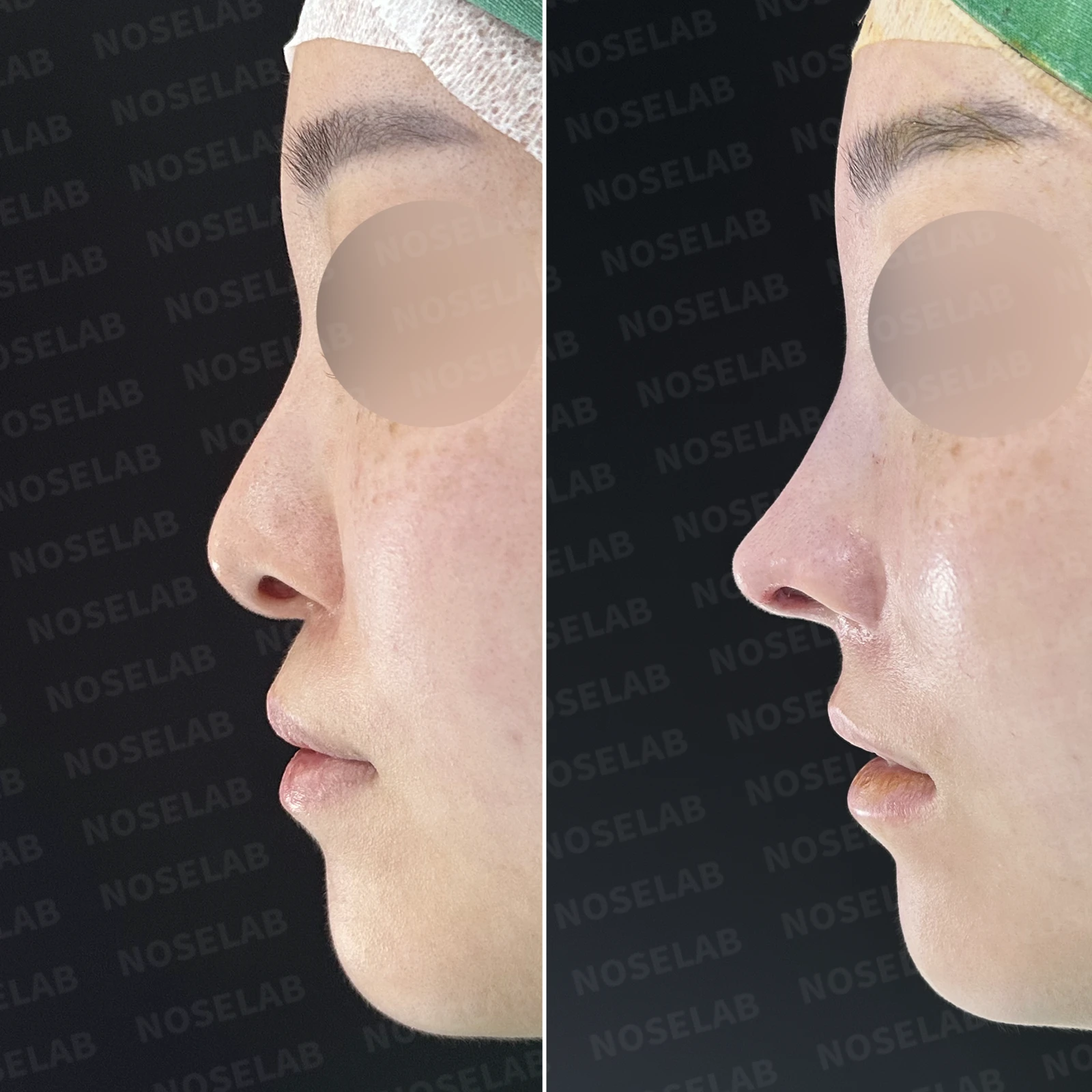
Before surgery / Day 0 immediately after surgery Photos taken immediately after surgery show swelling and may differ from the final result.
Frontal changes:
Securing symmetry through crooked nose correction
Improving left-right balance
Formation of a natural bridge line
Achieving the patient's desired nasal height
Improvement in overall facial balance
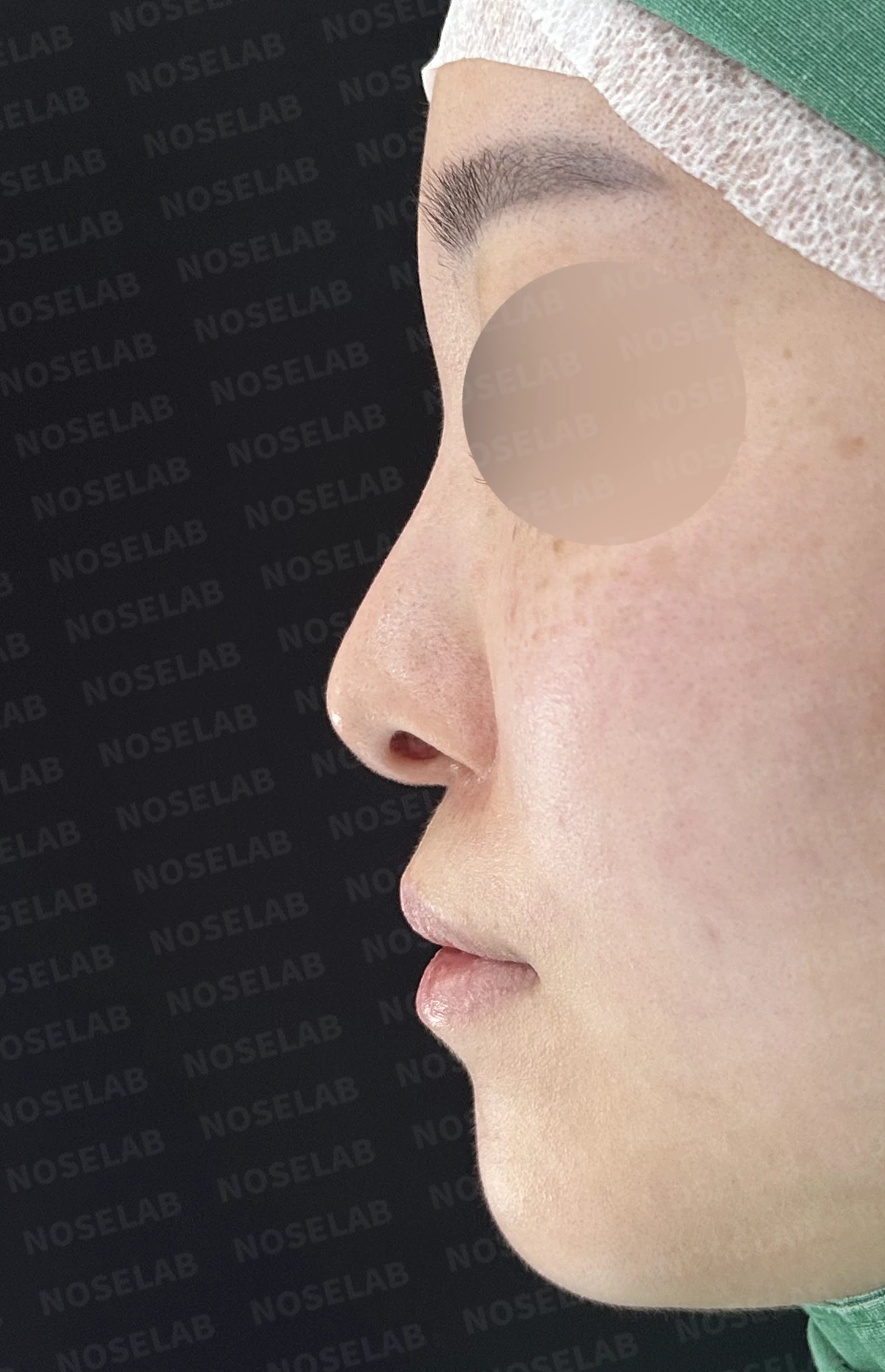
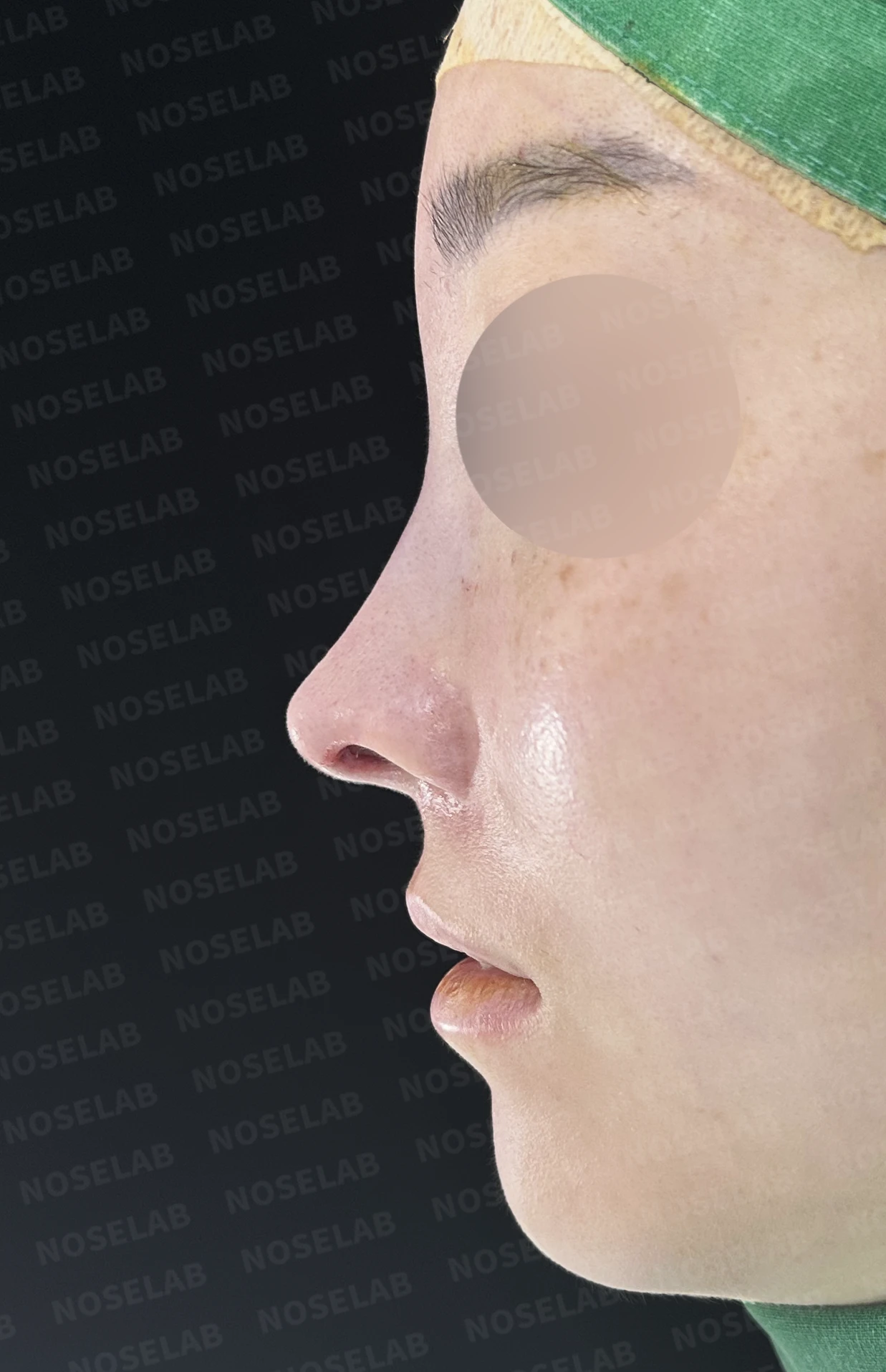
Before surgery / Day 0 immediately after surgery Photos taken immediately after surgery show swelling and may differ from the final result.
Profile changes:
Naturally elevated drooping columella
Improvement of excessive nostril show
A refined profile line
Forming a harmonious angle with the philtrum
An elegant profile with an improved nasolabial angle
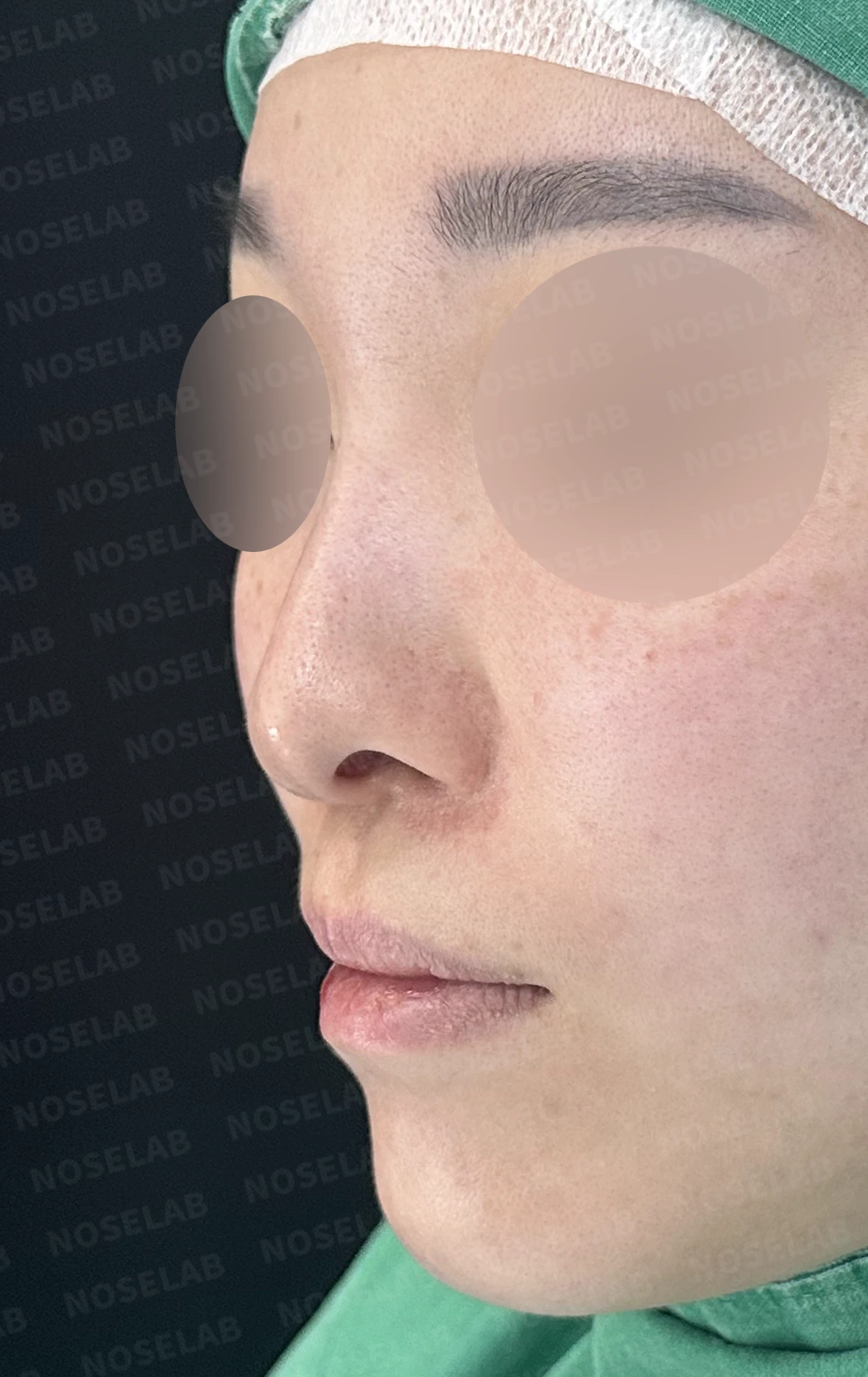
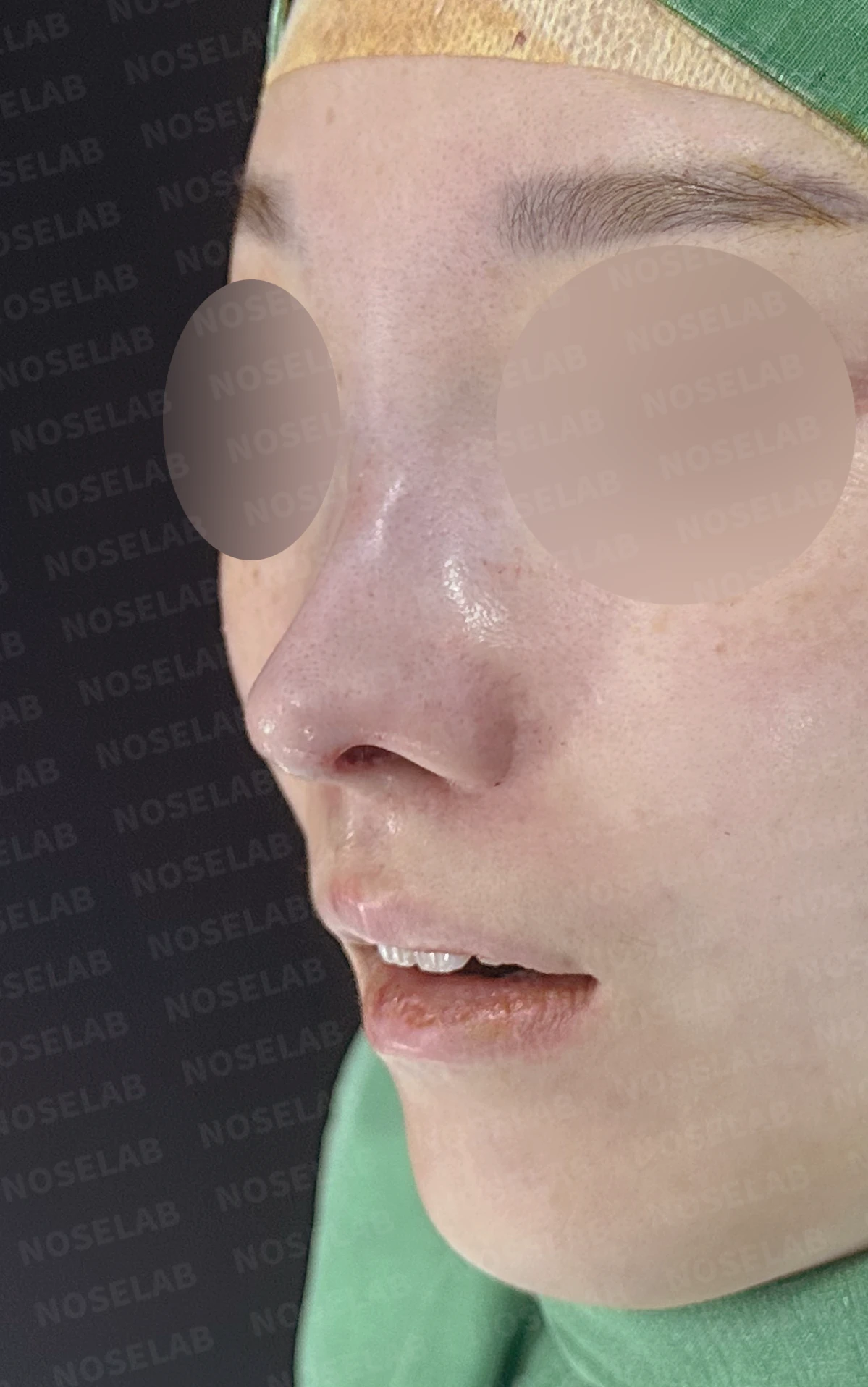
Before surgery / Day 0 immediately after surgery Photos taken immediately after surgery show swelling and may differ from the final result.
Nostril changes:
Reduced nostril show by correcting the drooping columella
Decreased nostril size
Achieving bilateral symmetry
Alignment of the columellar midline
Natural nostril shape
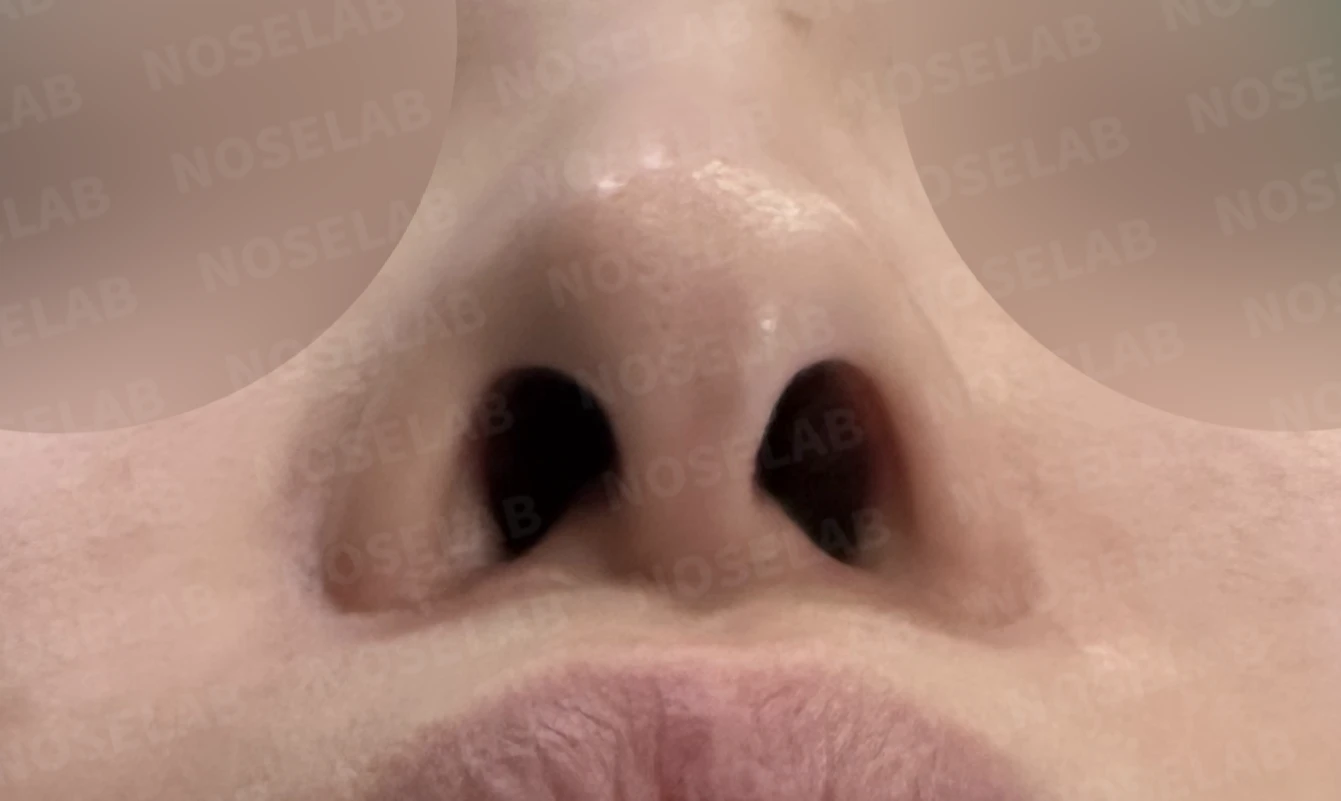
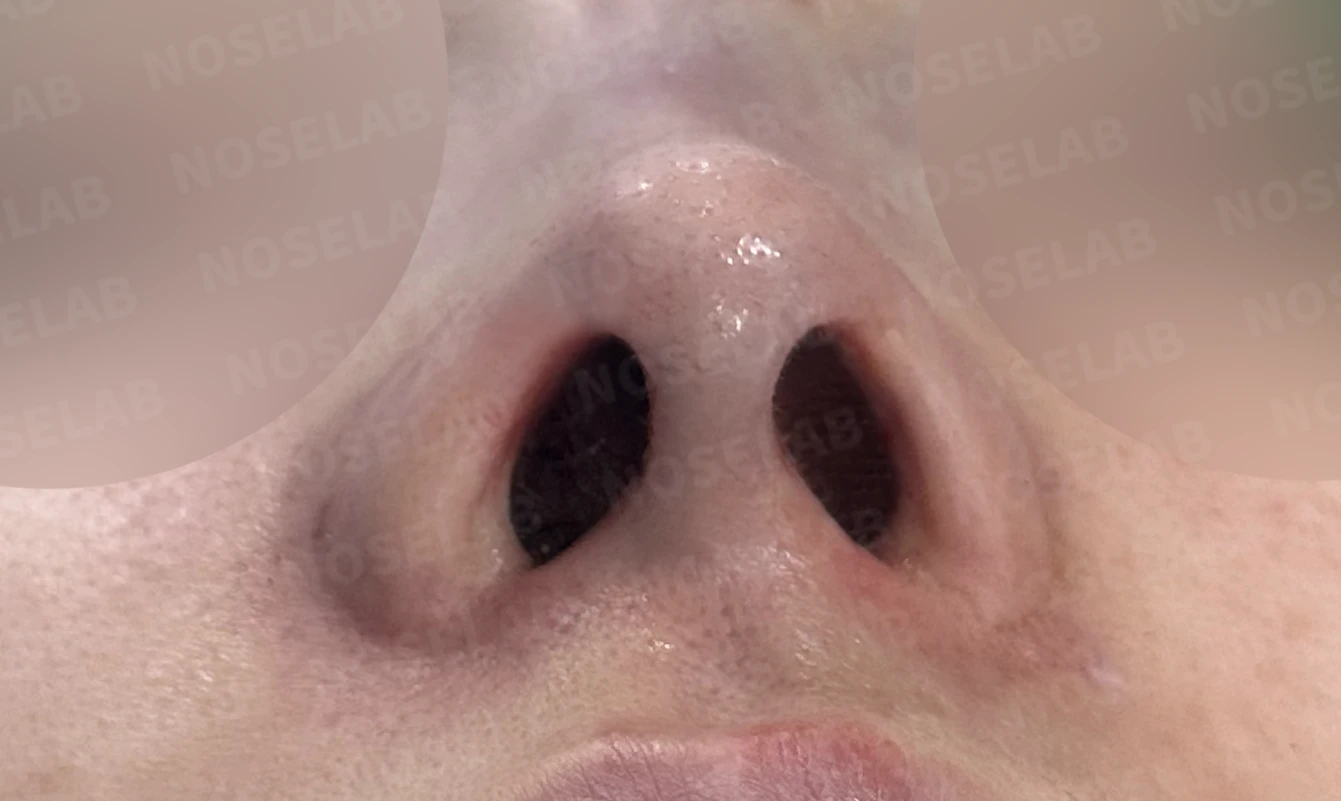
Before surgery / Day 0 immediately after surgery Photos taken immediately after surgery show swelling and may differ from the final result.
💡 Specialist opinion
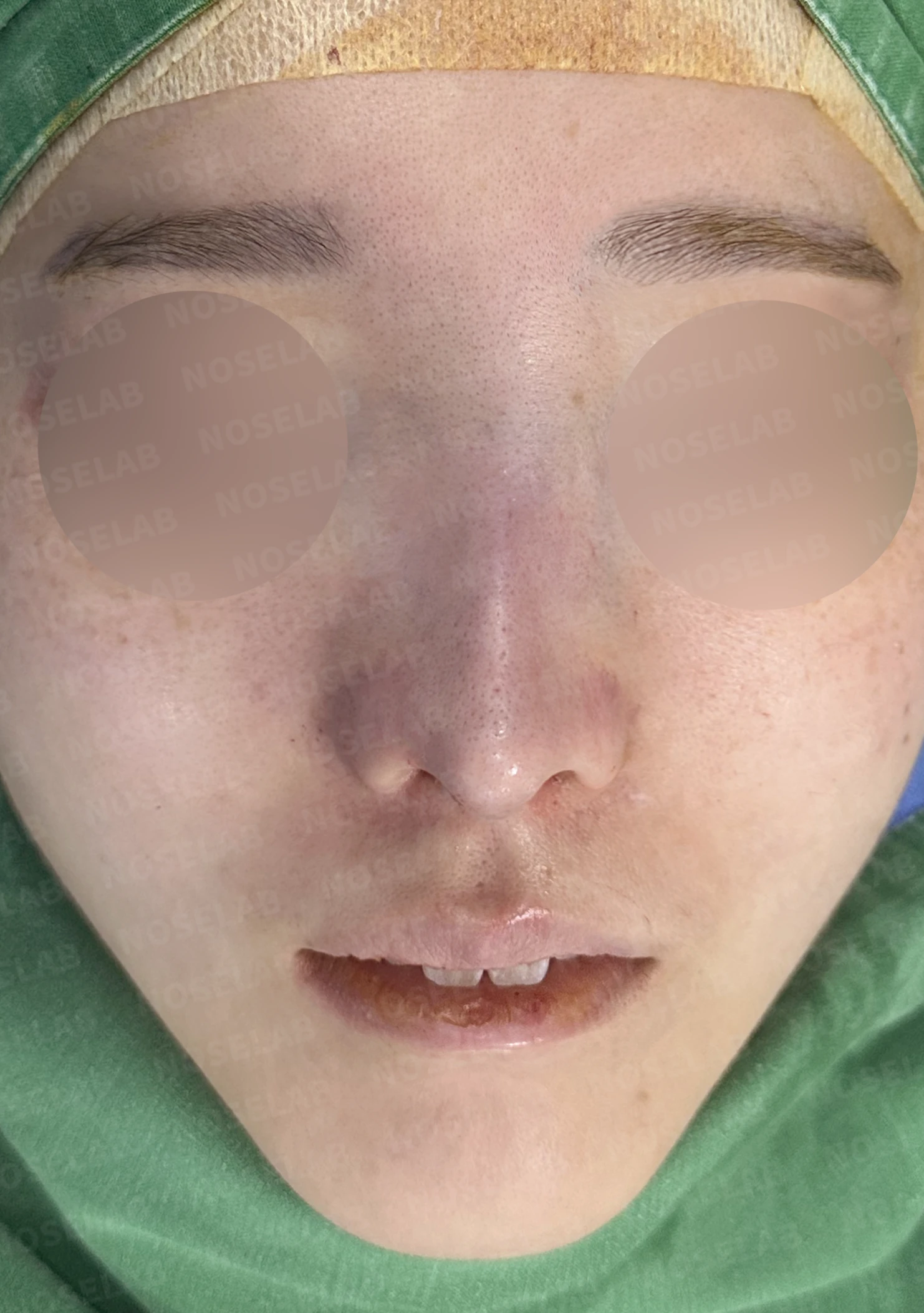
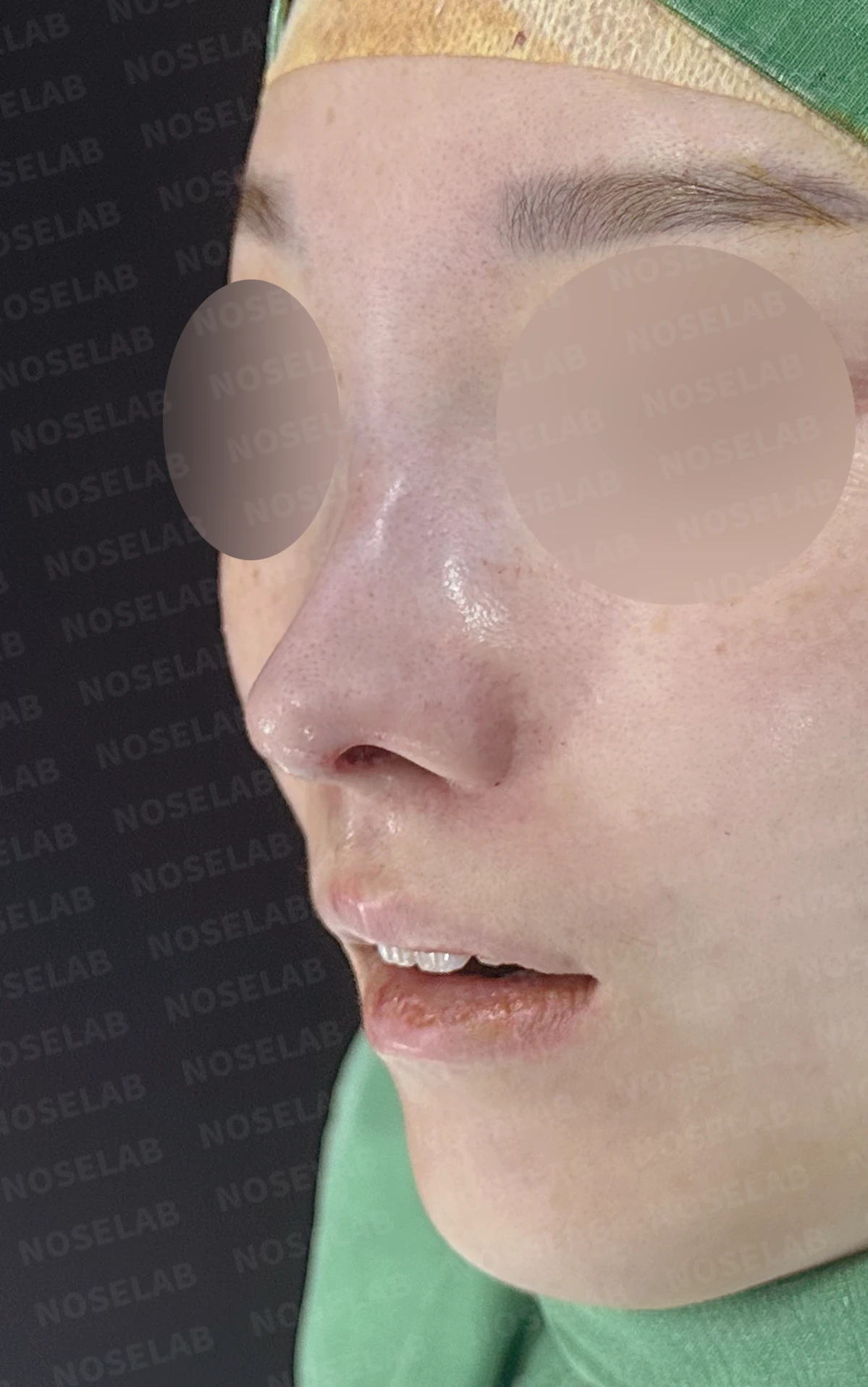
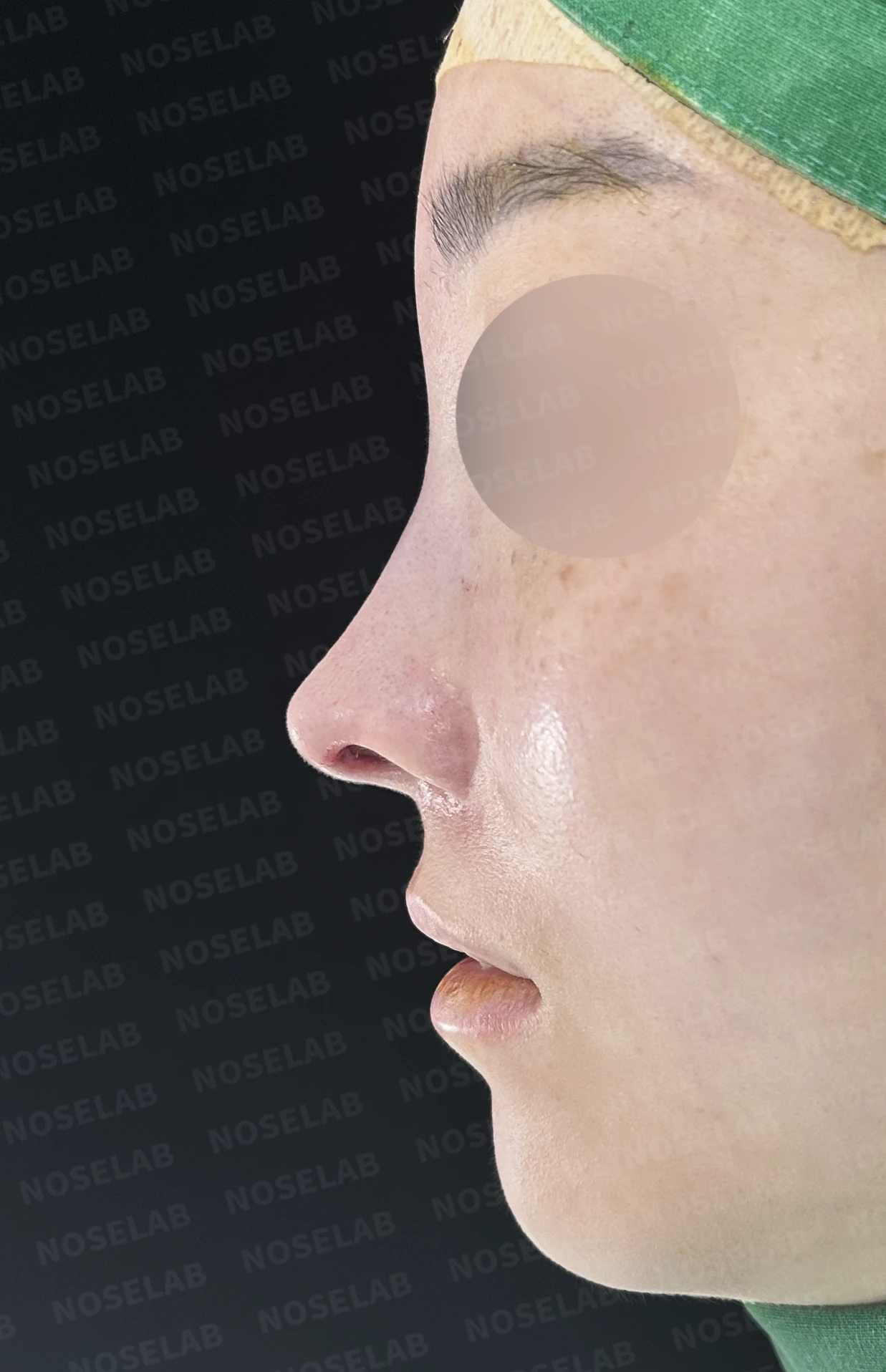
Front, oblique, and profile views on day 0 immediately after surgery. Photos taken immediately after surgery show swelling and may differ from the final result.
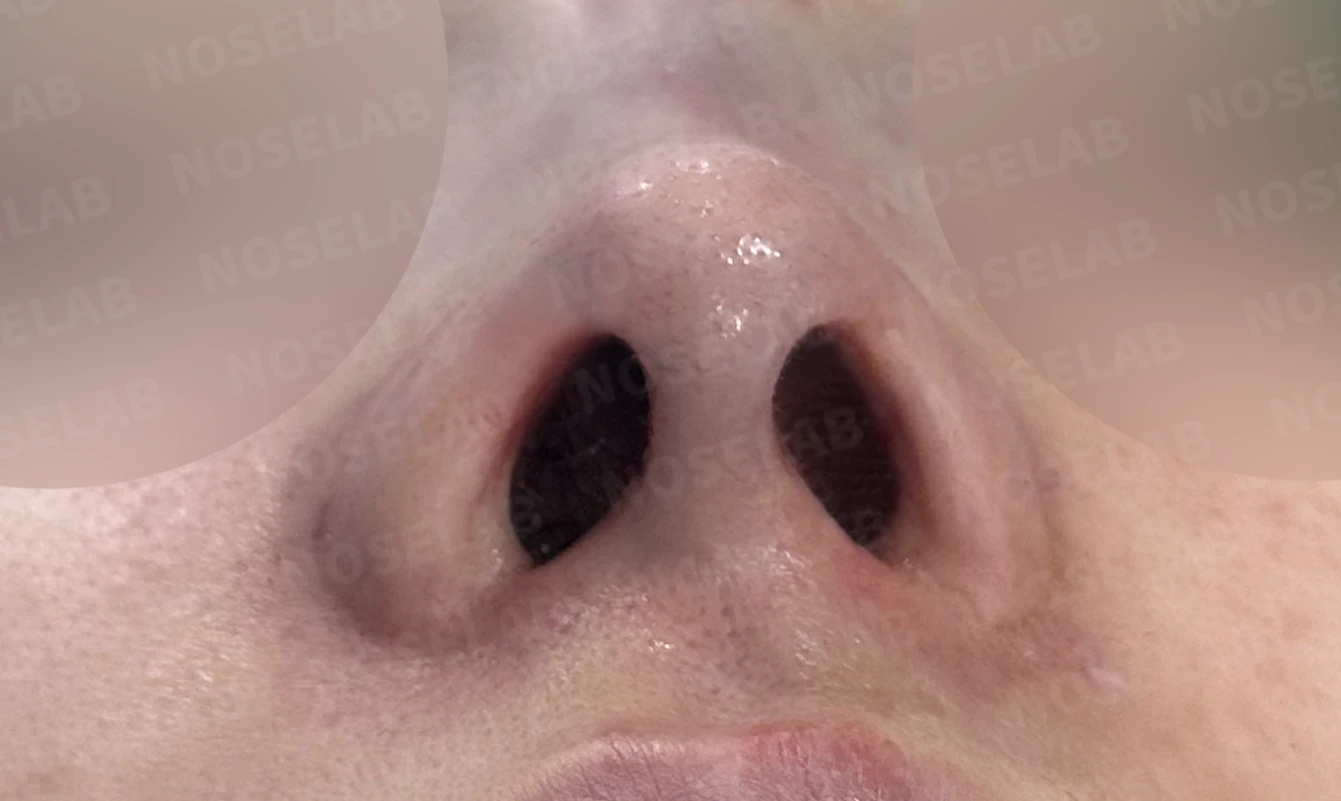
Nostril view on day 0 immediately after surgery. Photos taken immediately after surgery show swelling and may differ from the final result.
Correcting a drooping columella is not simply about lifting the columella; it is a delicate procedure that requires simultaneous consideration of the nasolabial angle and nostril show. Particularly in cases with a history of two prior surgeries like this, safely removing existing implants and reconstructing damaged tissues were essential.
After removing the previous silicone implant and Alloderm, a stable framework was rebuilt using autologous rib cartilage. Because the patient had a history of revision surgery for a deviated nose 8 to 9 years ago, the focus this time was placed on addressing the crooked nose fundamentally through septal reconstruction.
Through alar rim grafting, where the lower lateral cartilage is partially incised and augmented with autologous rib cartilage, the excessive nostril show visible from the profile view was naturally corrected. At the same time, elevating the drooping columella properly adjusted the nasolabial angle, giving the profile line a far more refined and elegant appearance.
In addition, to meet the patient's desire for increased nasal height, the dorsum was naturally augmented using autologous rib cartilage. By utilizing autologous tissue rather than the artificial implants used in previous surgeries, a more stable and natural long-term result can be expected.
Revision rhinoplasty requires a more precise and meticulous approach than primary surgery because it involves navigating scar tissue and altered structures from prior operations. For this case, each issue was resolved systematically by thoroughly analyzing the patient's surgical history and current tissue condition.
I will continue to provide customized surgeries that reflect each patient's individuality and requests through this meticulous approach. I hope this helps those with similar concerns.
This was Dr. Peter C. Kang. Thank you.
#droopingcolumellacorrection #columellacorrection #crookednosecorrection #alarrimgraft #nostrilasymmetry #nasolabialanglecorrection #autologousribcartilage #revisionrhinoplasty #siliconeremoval #nasalheightening #closedrhinoplasty #closedrevisionrhinoplasty

Limitations and risks
When autologous rib cartilage is used, scarring and pain may remain at the donor site on the chest, and pneumothorax (pleural injury) can occur rarely. Over time, the grafted cartilage may warp or undergo partial resorption.
When revising after implant removal, contracture may progress again after removal, the nasal height and length may decrease, and staged surgery may be necessary depending on the skin condition.
When the septum is corrected at the same time, nasal obstruction may persist or recur, and in rare cases, septal perforation or changes in smell may occur.
Common potential risks include infection, bleeding, asymmetry, scarring, skin necrosis, and insufficient improvement; results vary depending on individual skin condition and previous surgical history.