Hello, I am Dr. Peter C. Kang.
Today, I would like to introduce the case of a patient who visited our clinic concerned about a drooping nasal tip caused by very small lower lateral cartilages, as well as an uneven, crooked nasal bridge.
🔍 Surgical history
The patient was a primary rhinoplasty case who had never undergone any previous nasal surgery or procedures. Because the lower lateral cartilages were congenitally very small, structural support for the nasal tip was insufficient, leading to a drooping tip. Additionally, the nasal bridge had a dorsal hump and was crooked, creating an uneven and spread-out appearance that was a major concern for the patient.
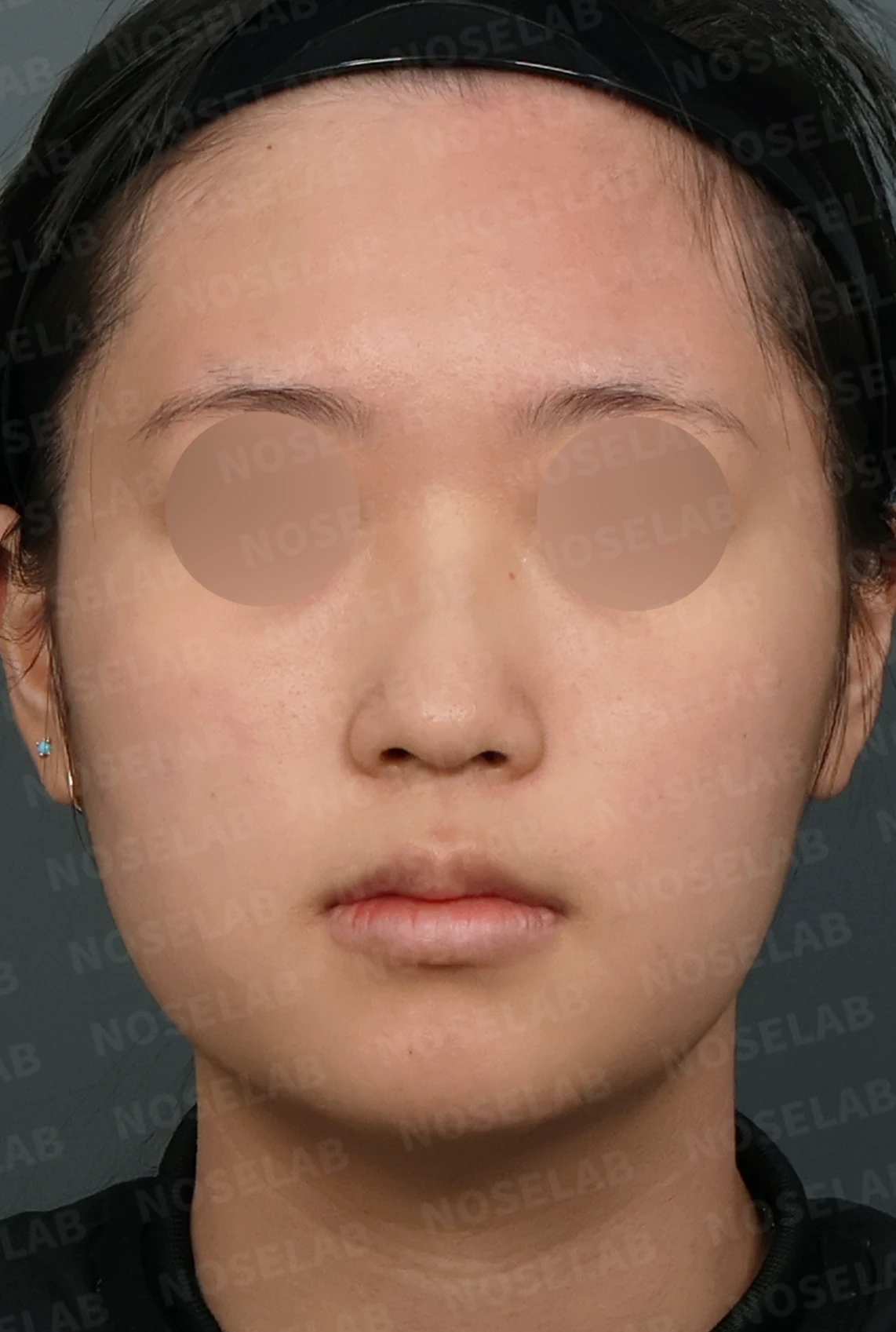
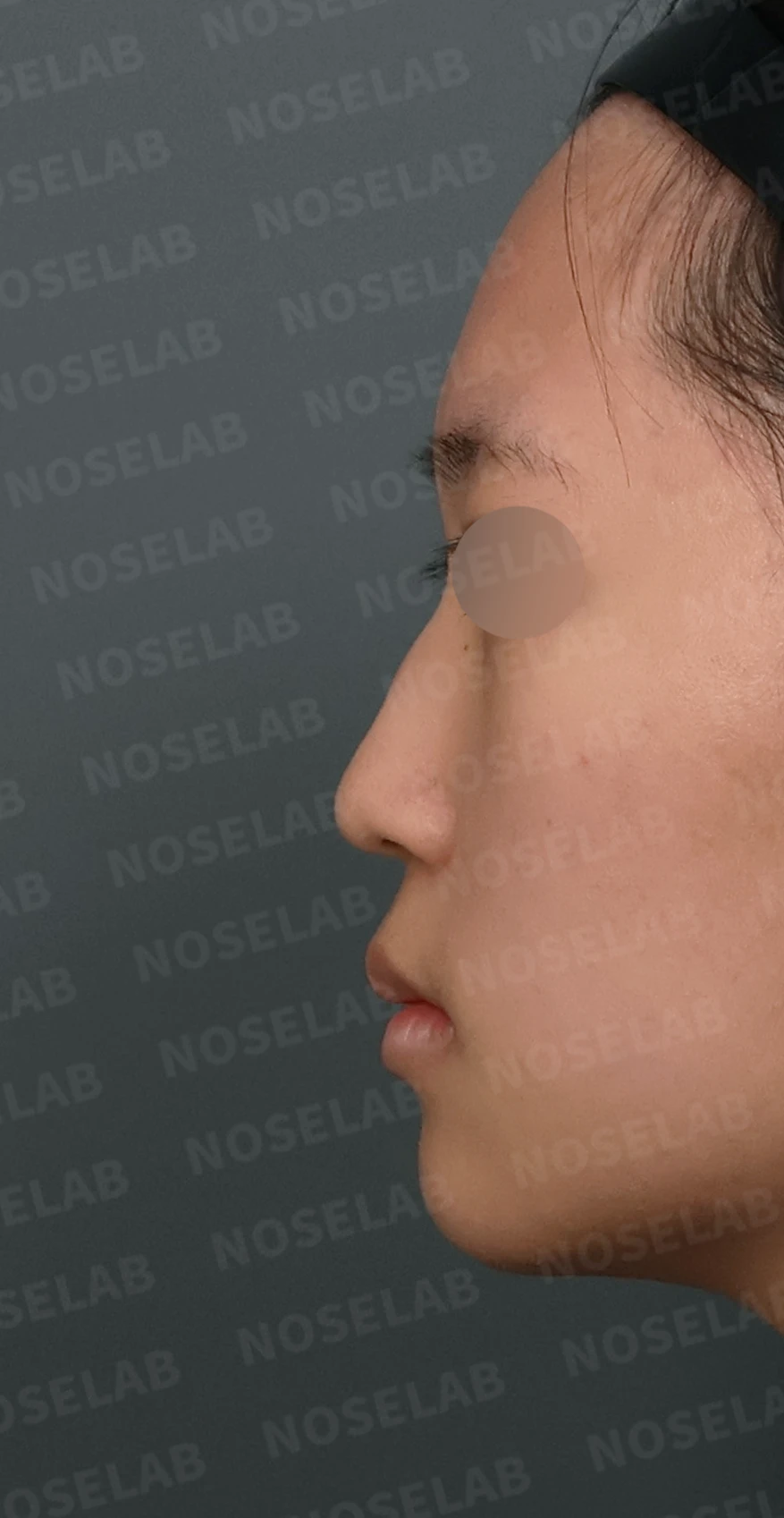
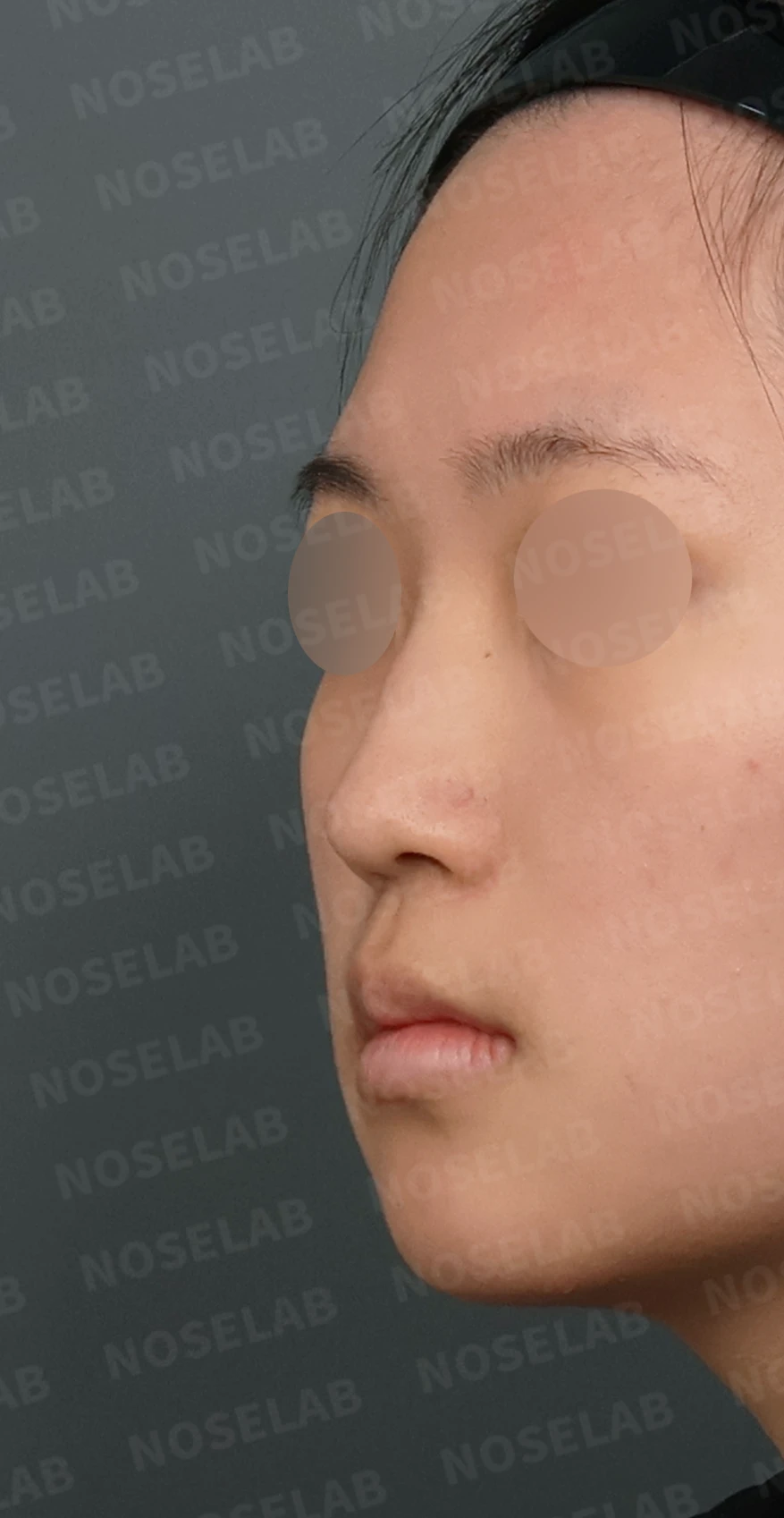
Front, left profile, and oblique views during design consultation.
💉 Patient requests
The patient's specific requests were as follows:
Natural nasal line
Correction of the dorsal hump
Elevating the drooping nasal tip to create a well-defined projection
Open to using a silicone implant
The patient wanted an overall natural yet smooth nasal line, with the dorsal hump and drooping tip being the primary concerns. Because the lower lateral cartilages were very small, reinforcing the nasal tip with autologous rib cartilage was essential for this case.
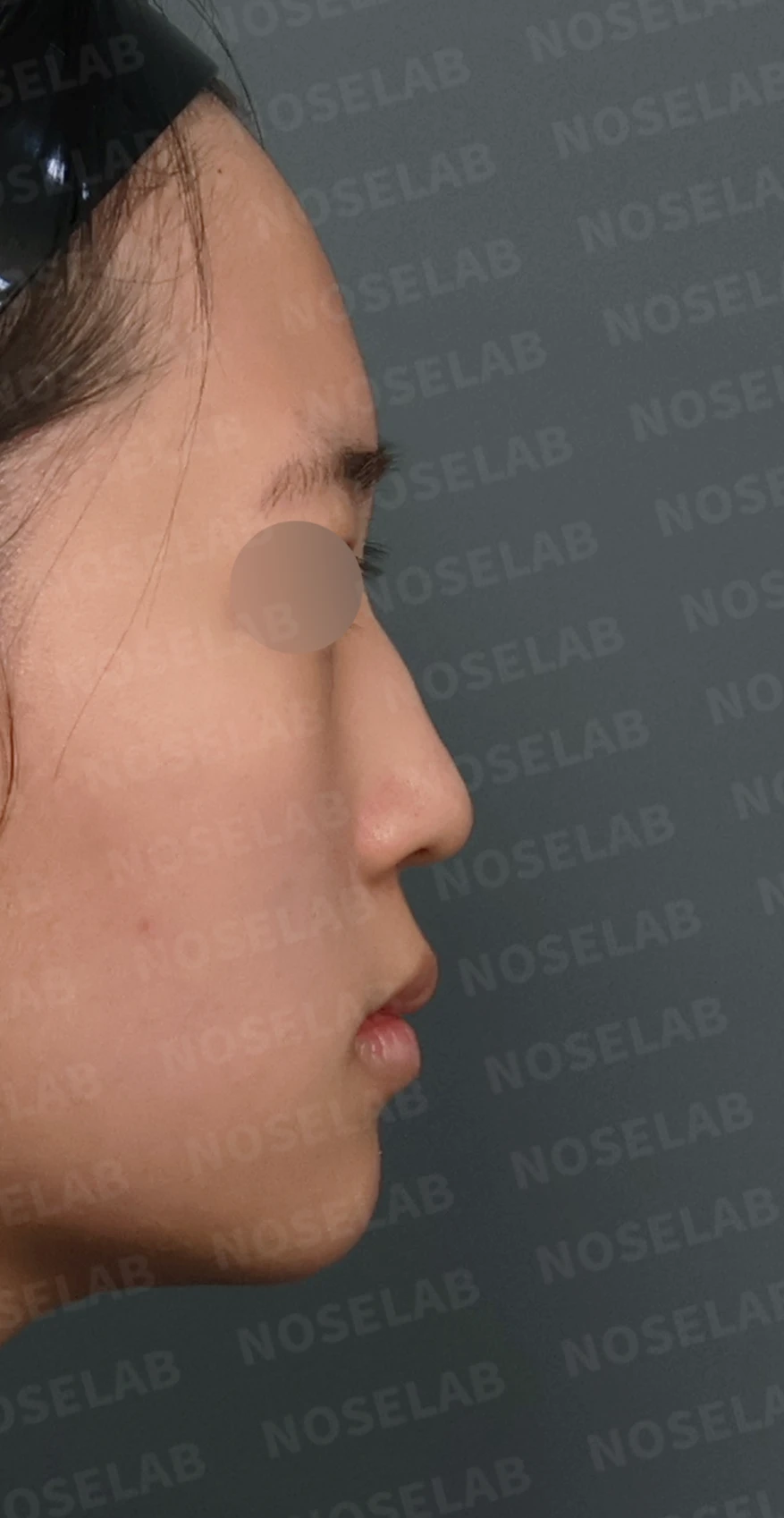
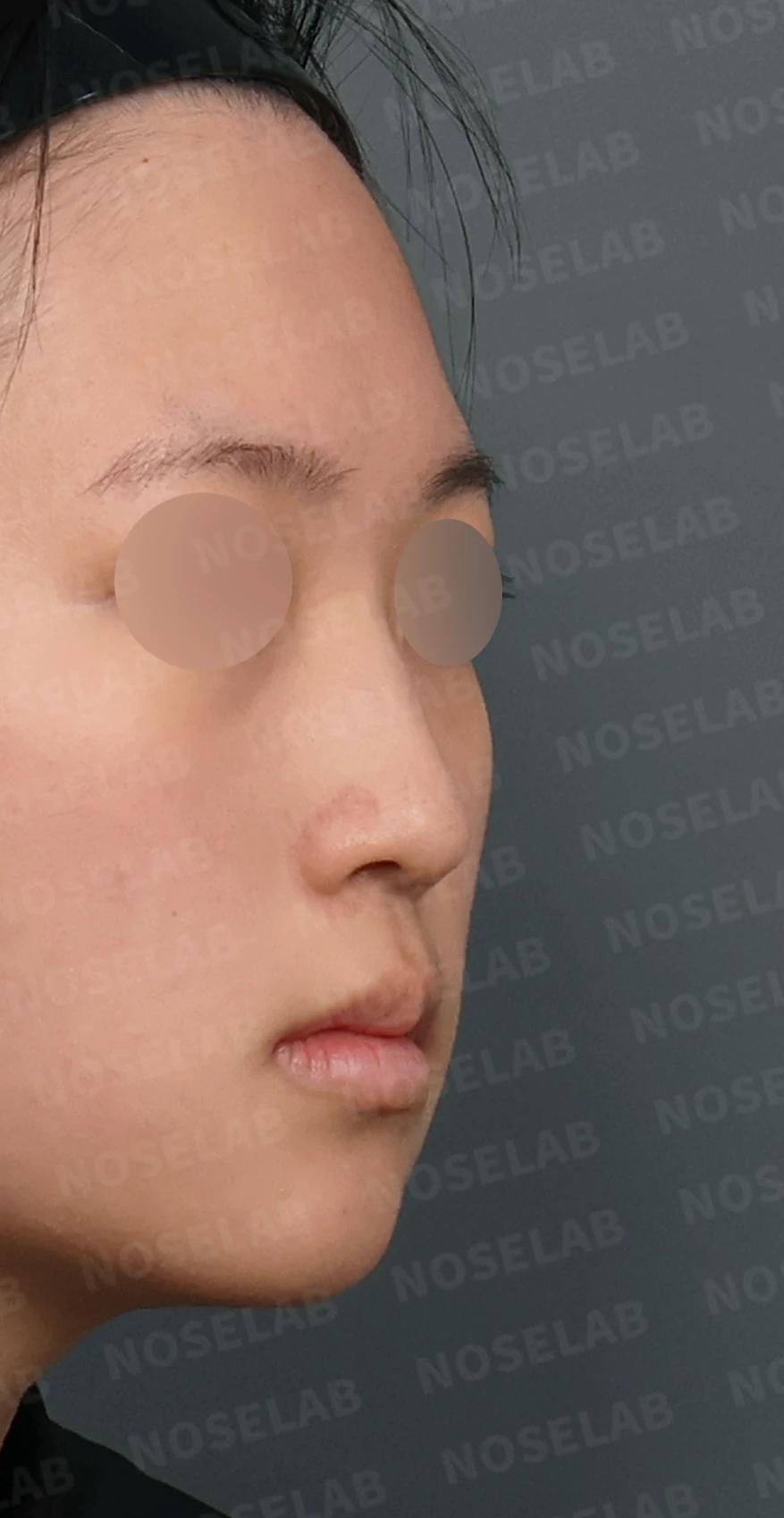
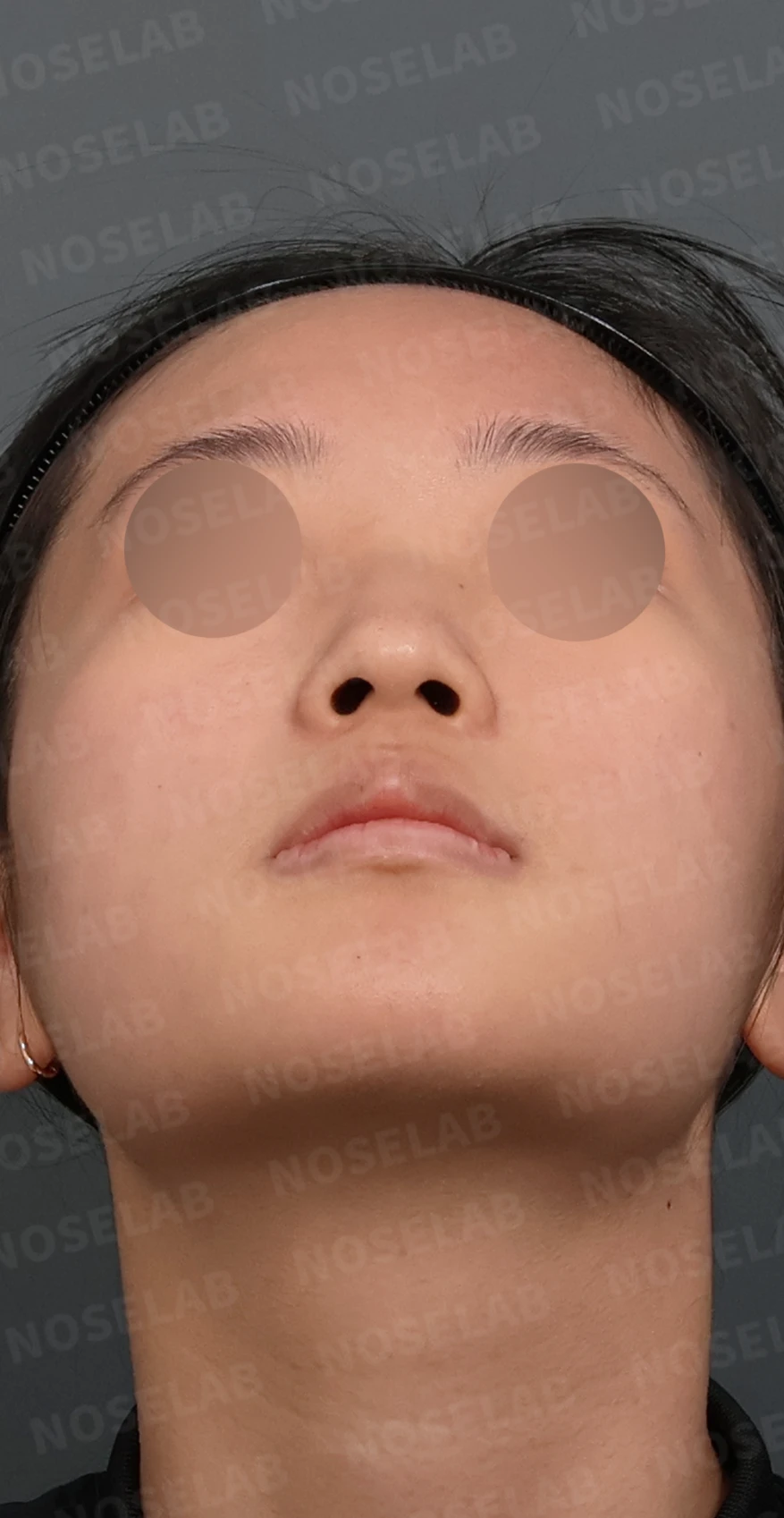
Right profile, oblique, and nostril views during design consultation.
🔧 Surgical plan and procedure
1. Nasal tip plasty using autologous rib cartilage
Using autologous rib cartilage to compensate for congenitally very small lower lateral cartilages
Reinforcing the tip support structure to elevate the drooping nasal tip into a well-defined position
Achieving natural nasal tip height and shape
2. Nasal bridge alignment via lateral osteotomy
Nasal bone osteotomy to straighten the crooked bridge
Repositioning the nasal bones to establish a straight bridge line
Contributing to the improvement of the dorsal hump
3. Nasal bridge augmentation using a silicone implant
Refining the uneven and wide bridge into a smooth contour
Naturally correcting the dorsal hump area
Precisely carving a silicone implant to match the nasal bones for a natural bridge line
4. Correction of nasolabial angle
Appropriate adjustment of the nasolabial angle between the nasal tip and the upper lip
Establishing a natural columellar line as the nasal tip is elevated
Refined profile silhouette achieved
🌟 Surgical results
Front view changes
The previously uneven bridge is corrected to become smooth and straight
The overall wide appearance of the nose is refined and streamlined
An overall balanced and natural nasal contour
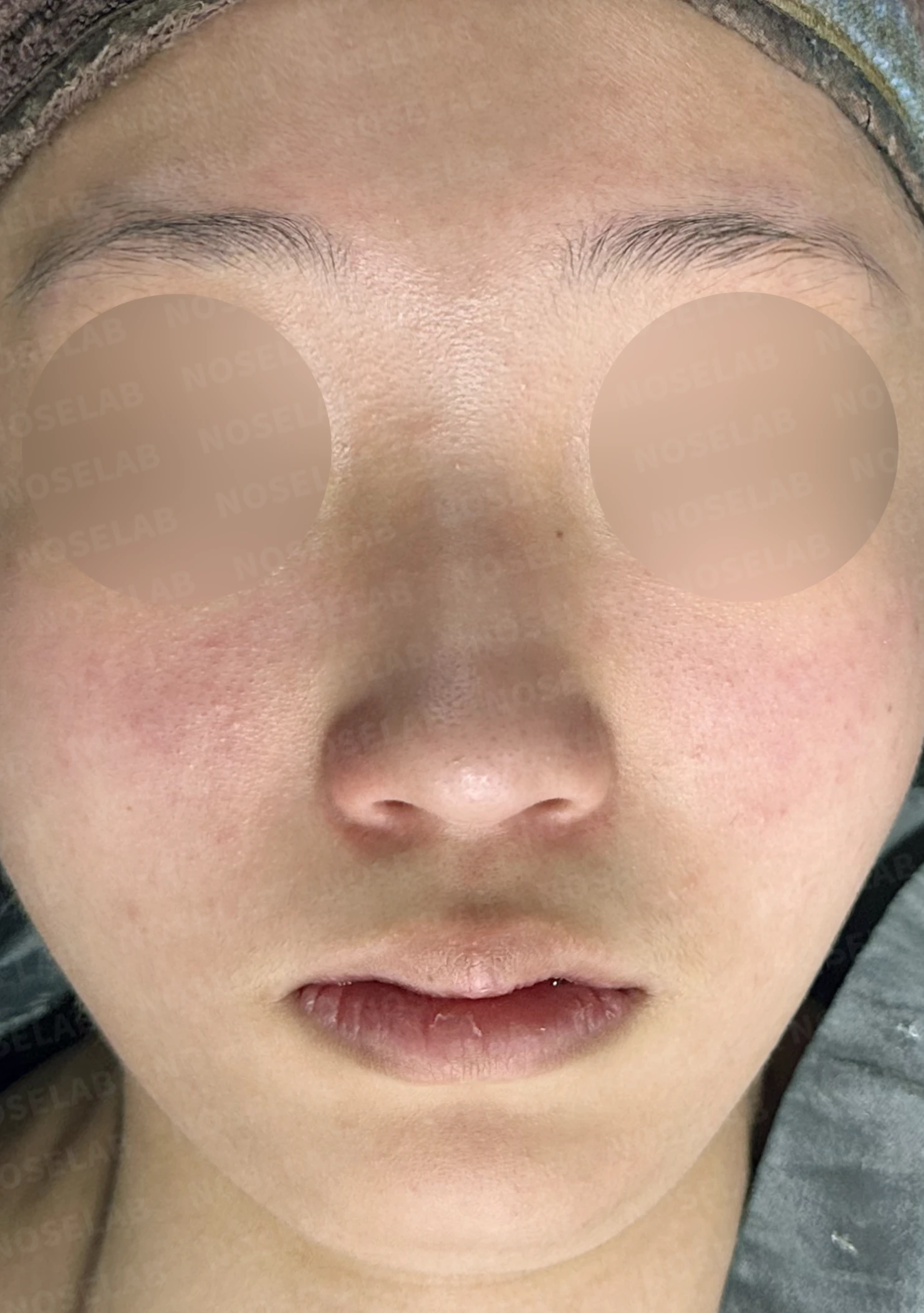
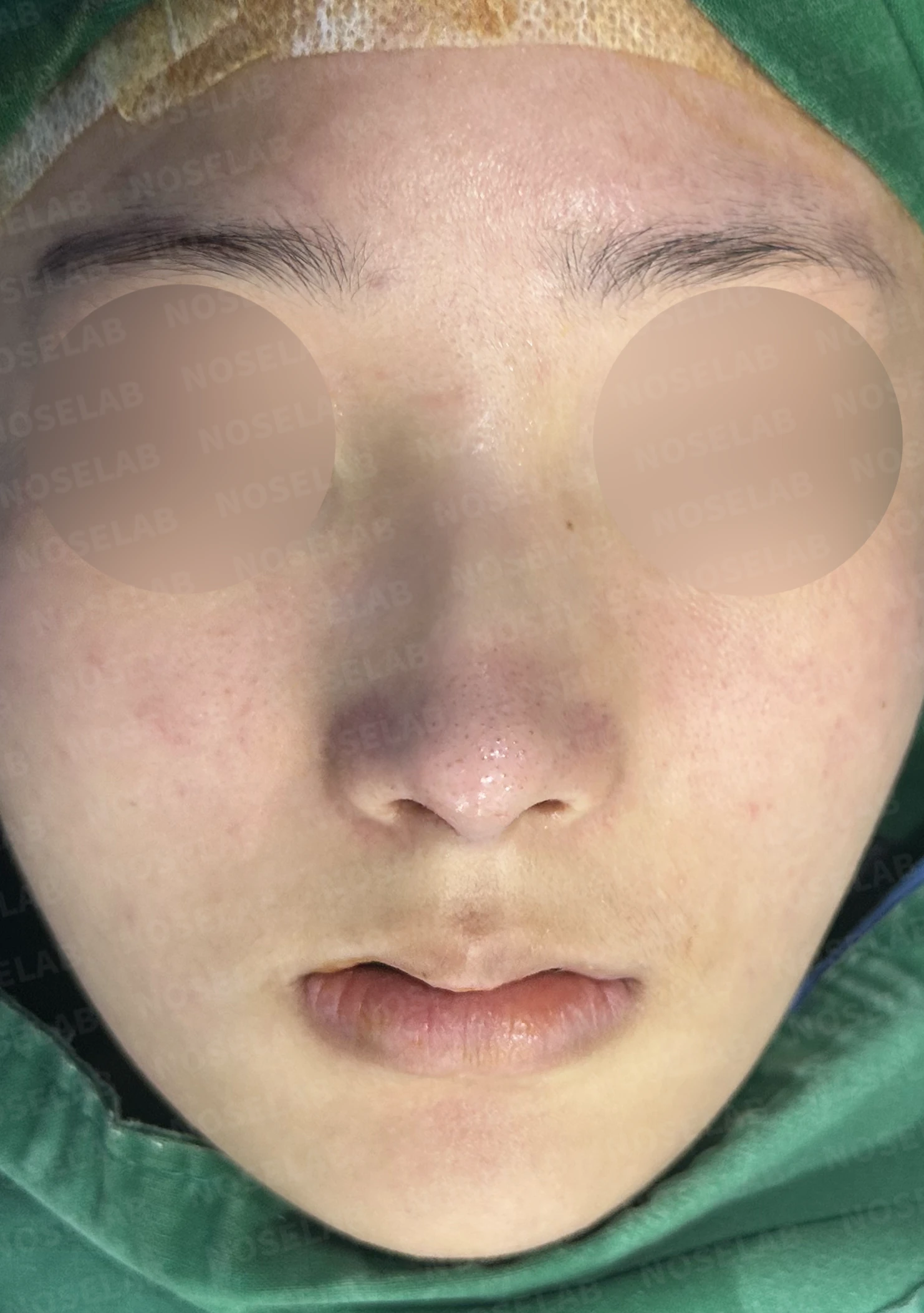
Before surgery / Day 0 immediately after surgery Photos taken immediately after surgery show swelling and may differ from the final result.
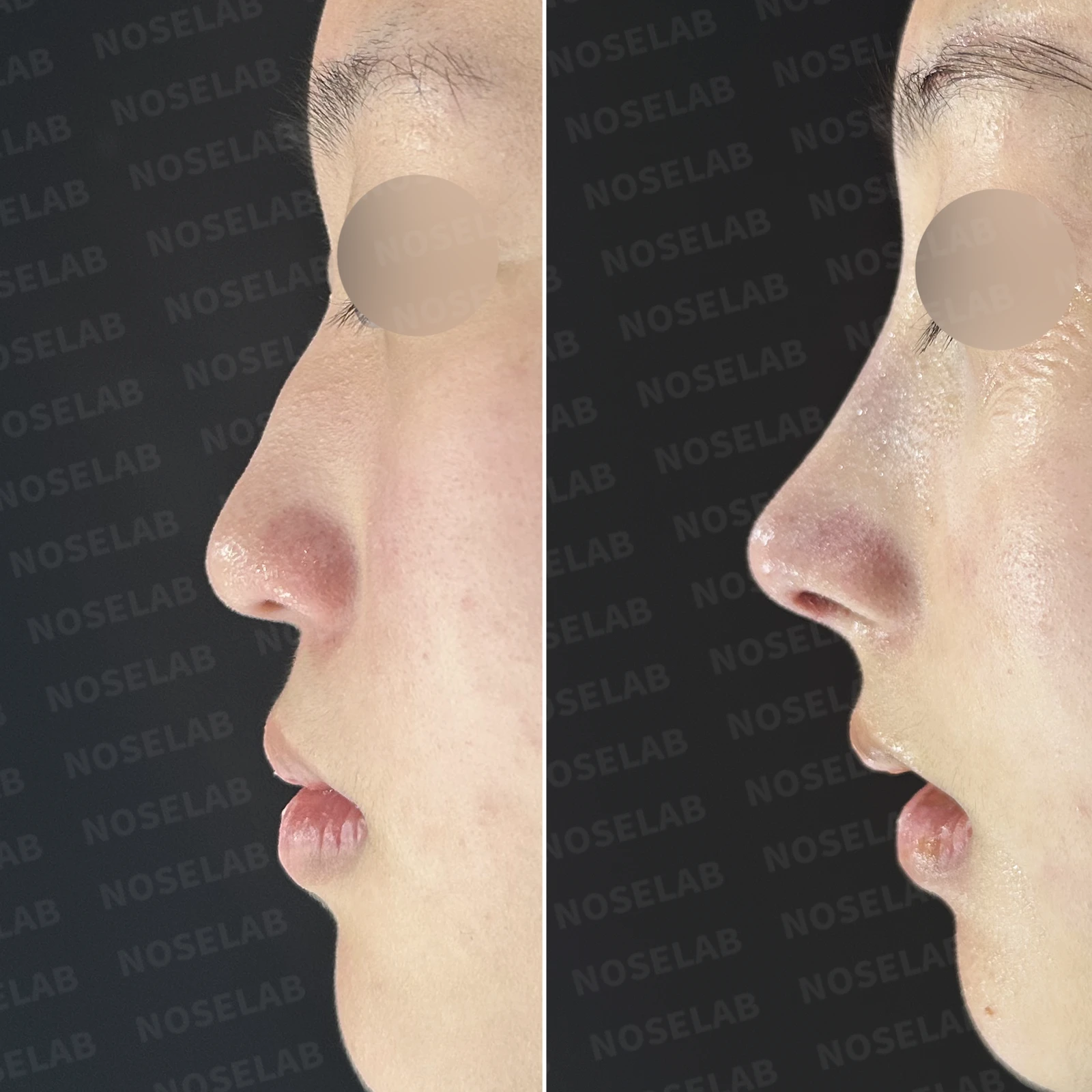
Profile view changes
The drooping tip is elevated into a well-defined projection using autologous rib cartilage
The dorsal hump is smoothly corrected to create a gentle dorsal line
Refined profile silhouette completed through nasolabial angle correction
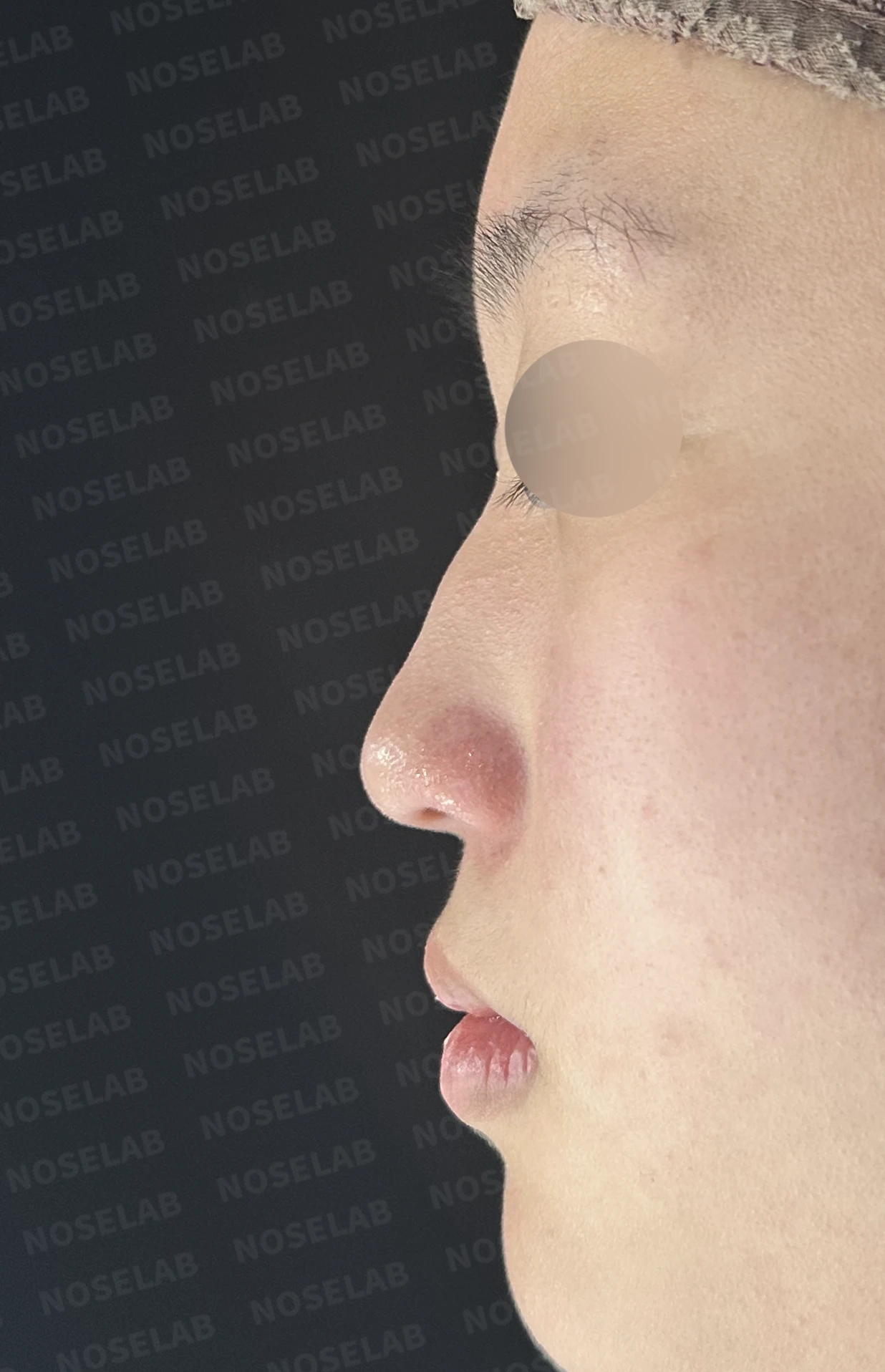
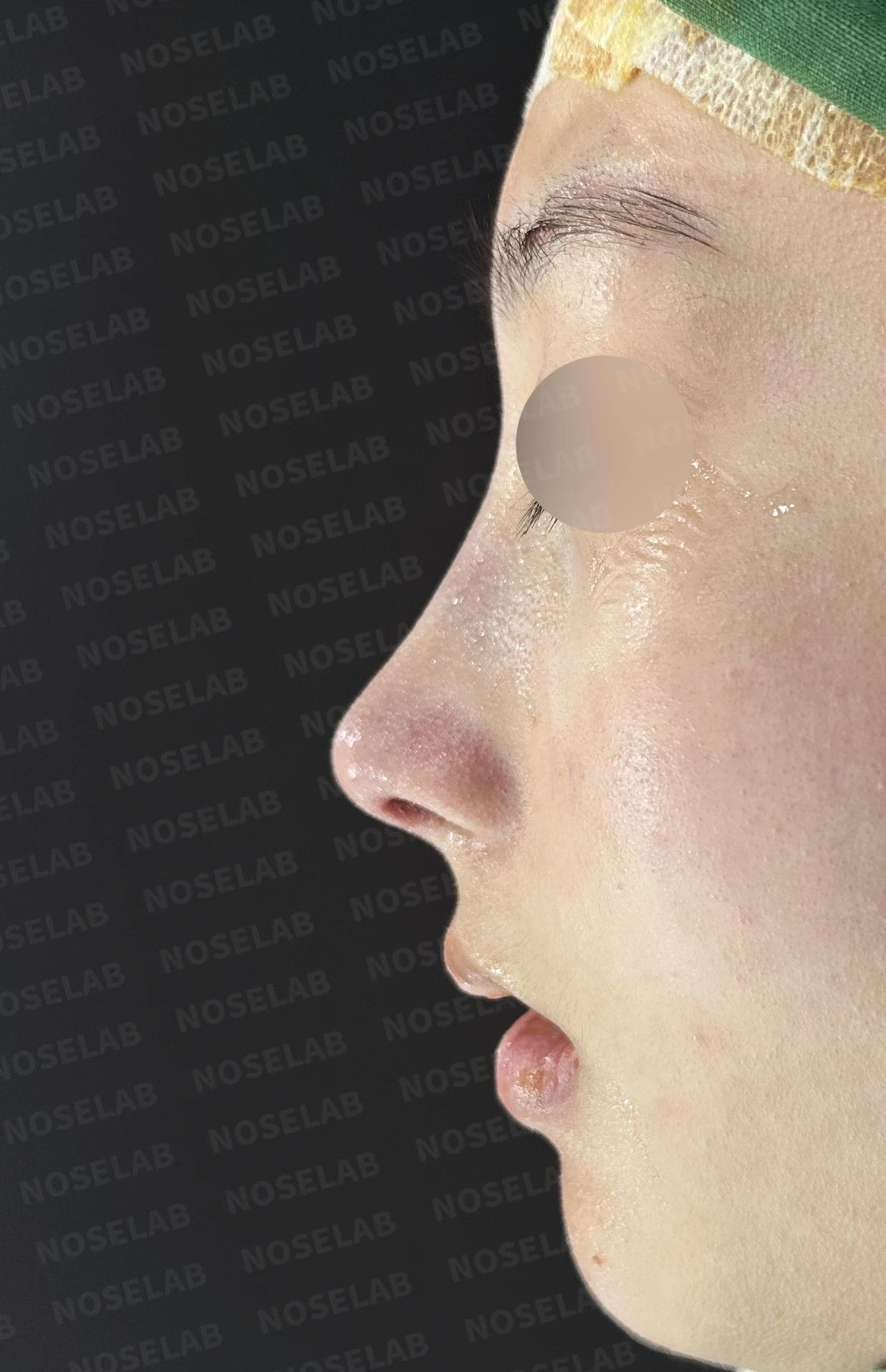
Before surgery / Day 0 immediately after surgery Photos taken immediately after surgery show swelling and may differ from the final result.
Changes on the oblique view
A natural and smooth nasal contour from a 45-degree angle
Dorsal hump resolved into a smooth bridge line
Harmonious transition between the nasal tip and bridge
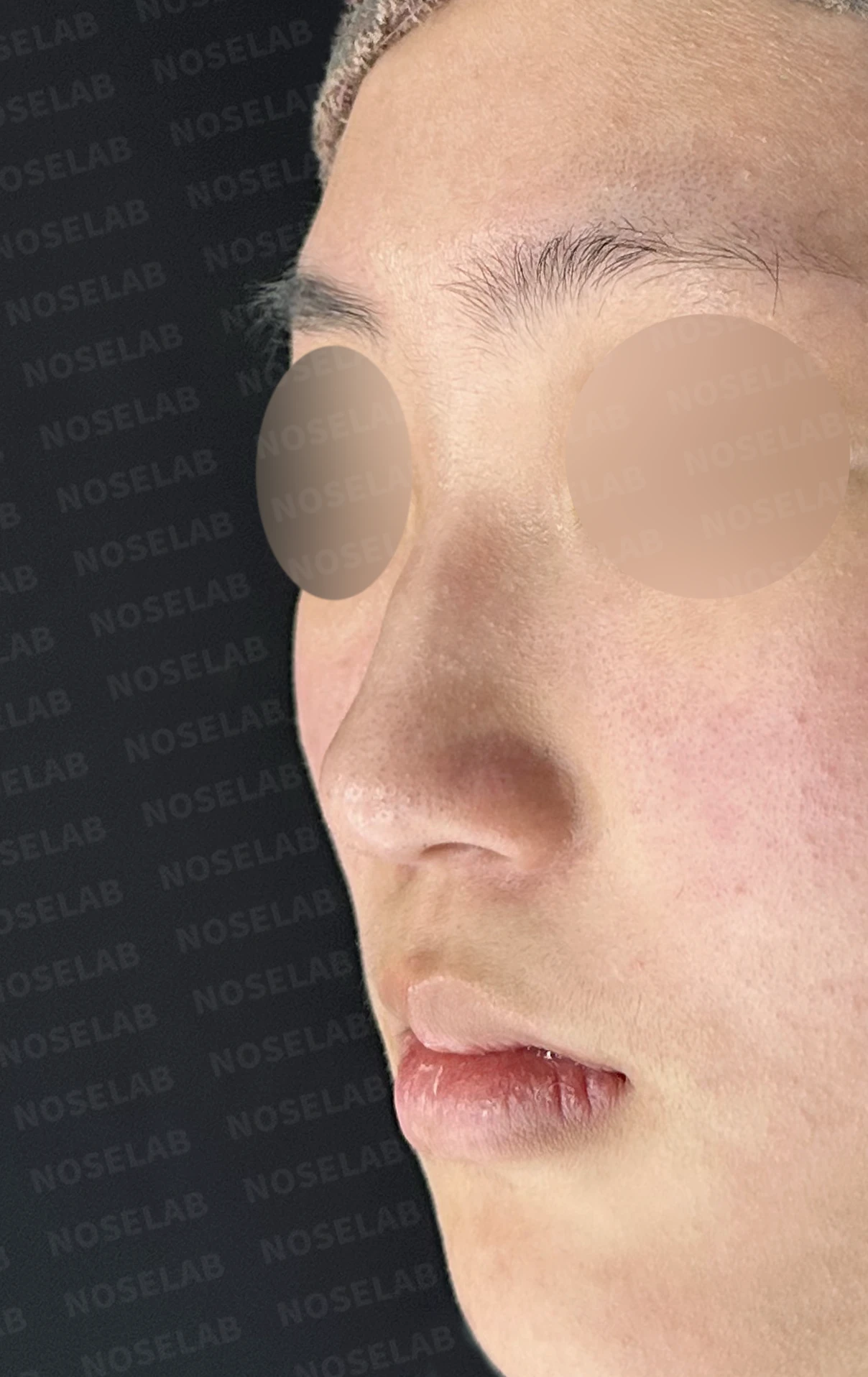
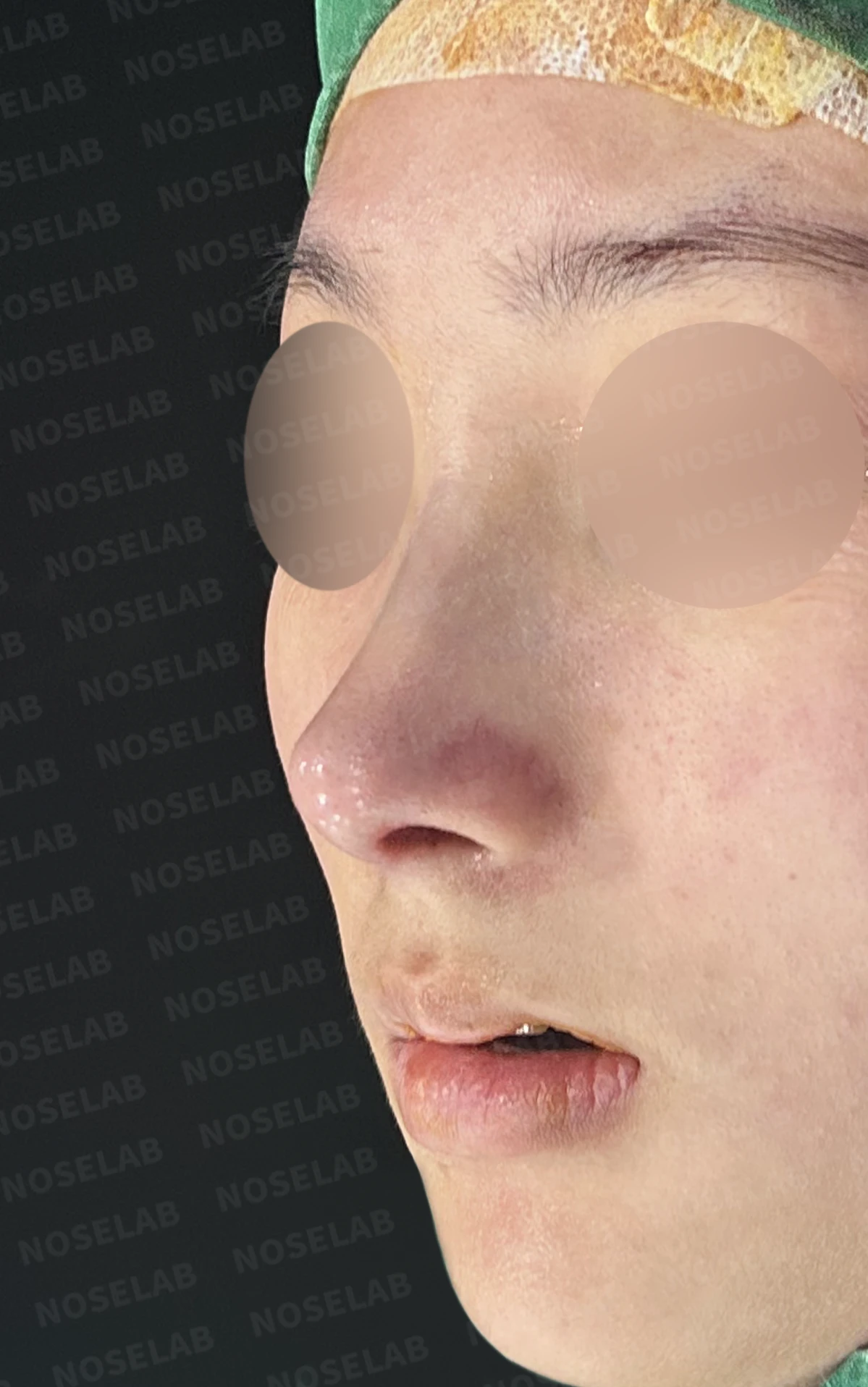
Before surgery / Day 0 immediately after surgery Photos taken immediately after surgery show swelling and may differ from the final result.
Changes in nostril shape
Nostril contours naturally improved as the nasal tip was elevated
Balanced, symmetric nostril shape
Overall neat and refined nasal base line
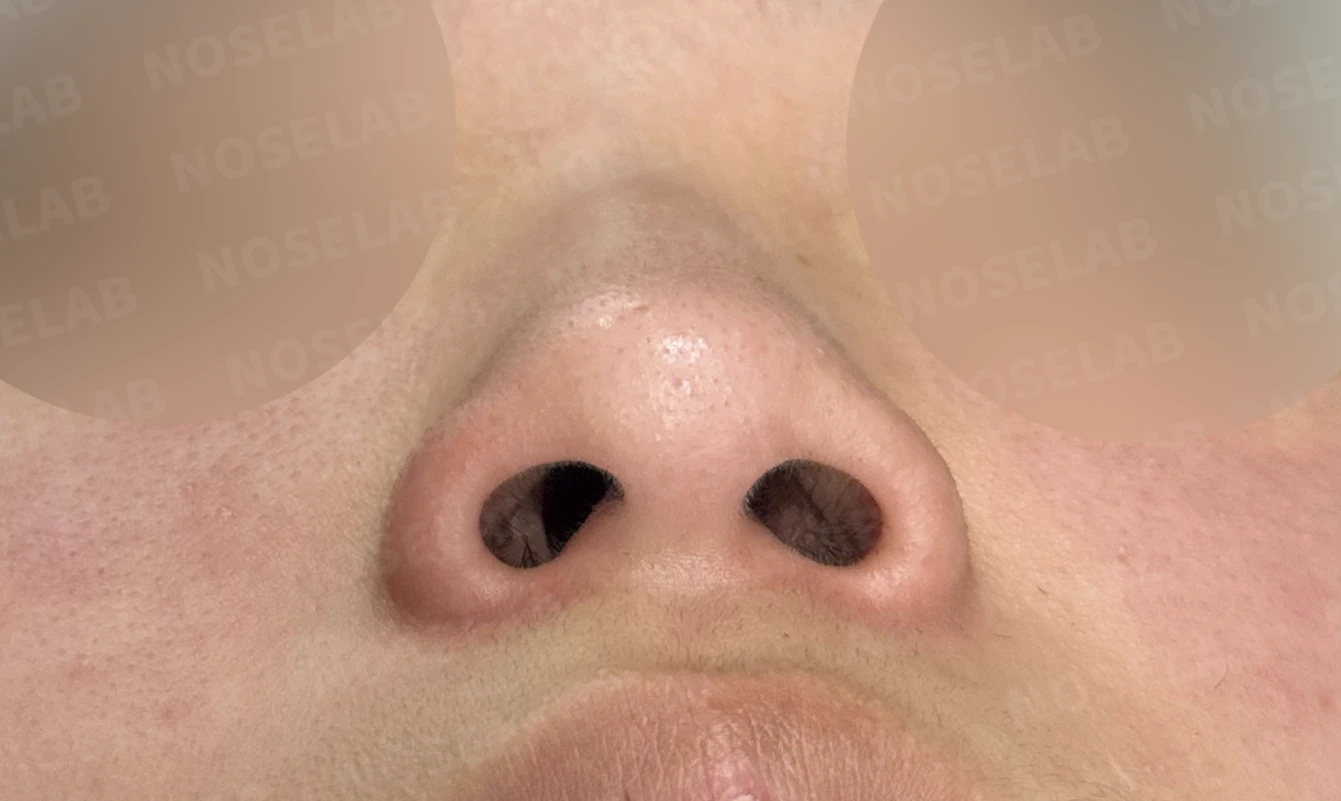
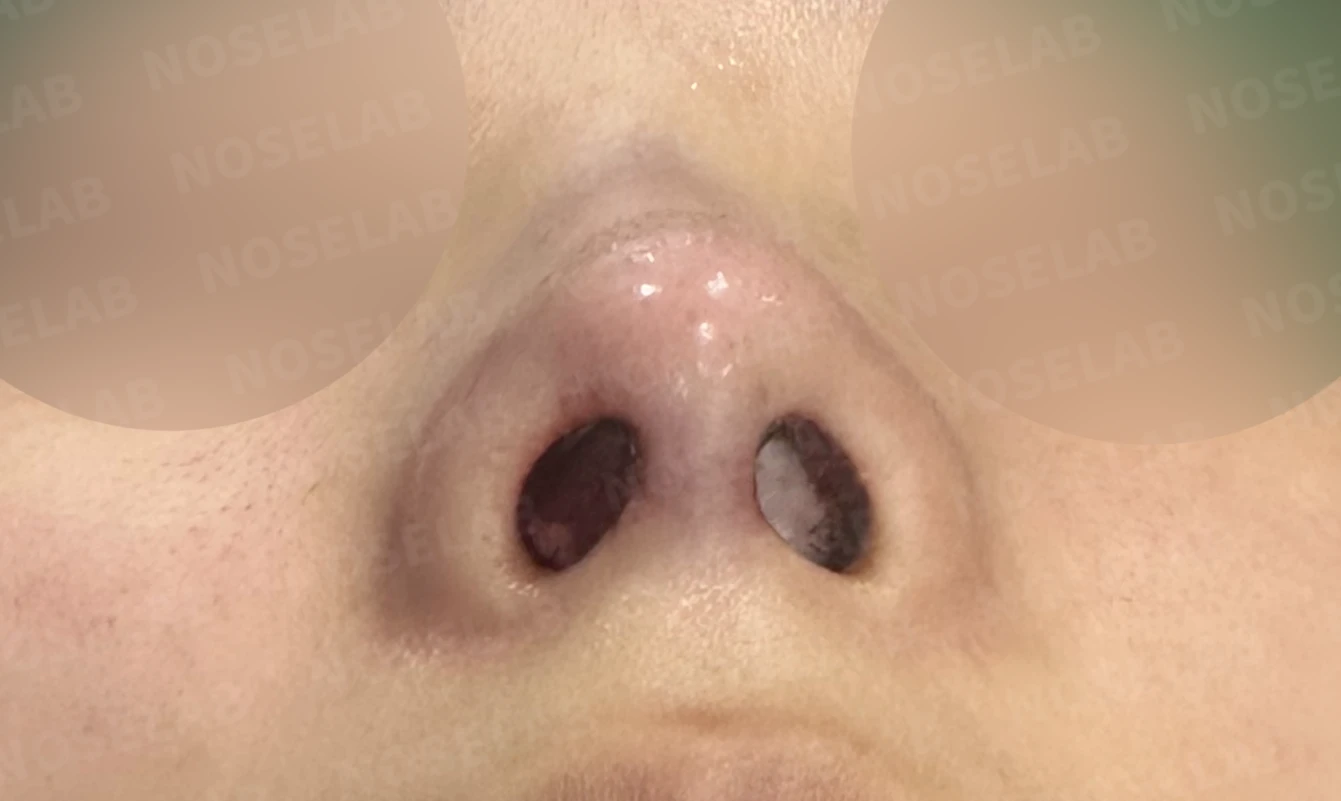
Before surgery / Day 0 immediately after surgery Photos taken immediately after surgery show swelling and may differ from the final result.
💡 Specialist opinion
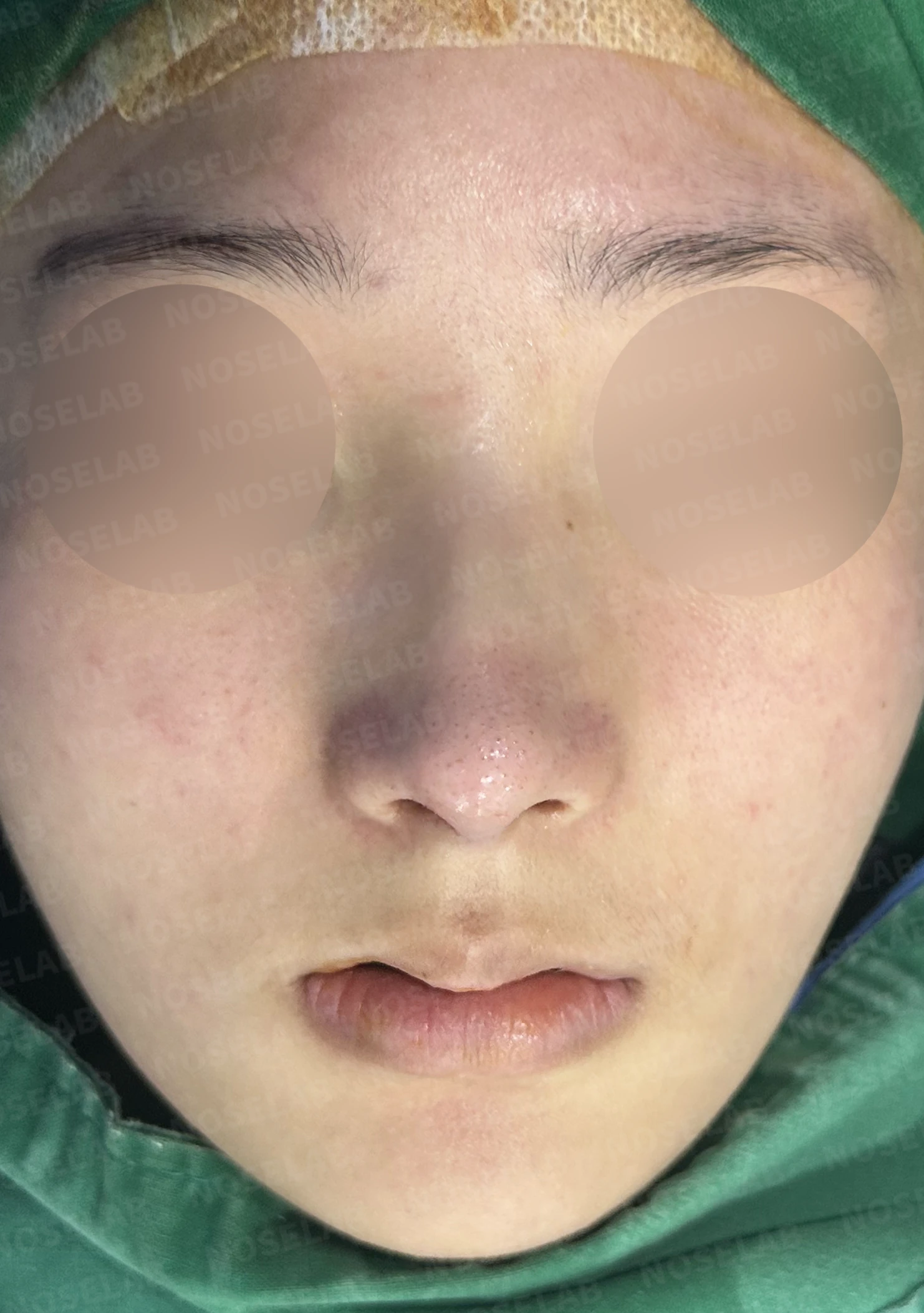
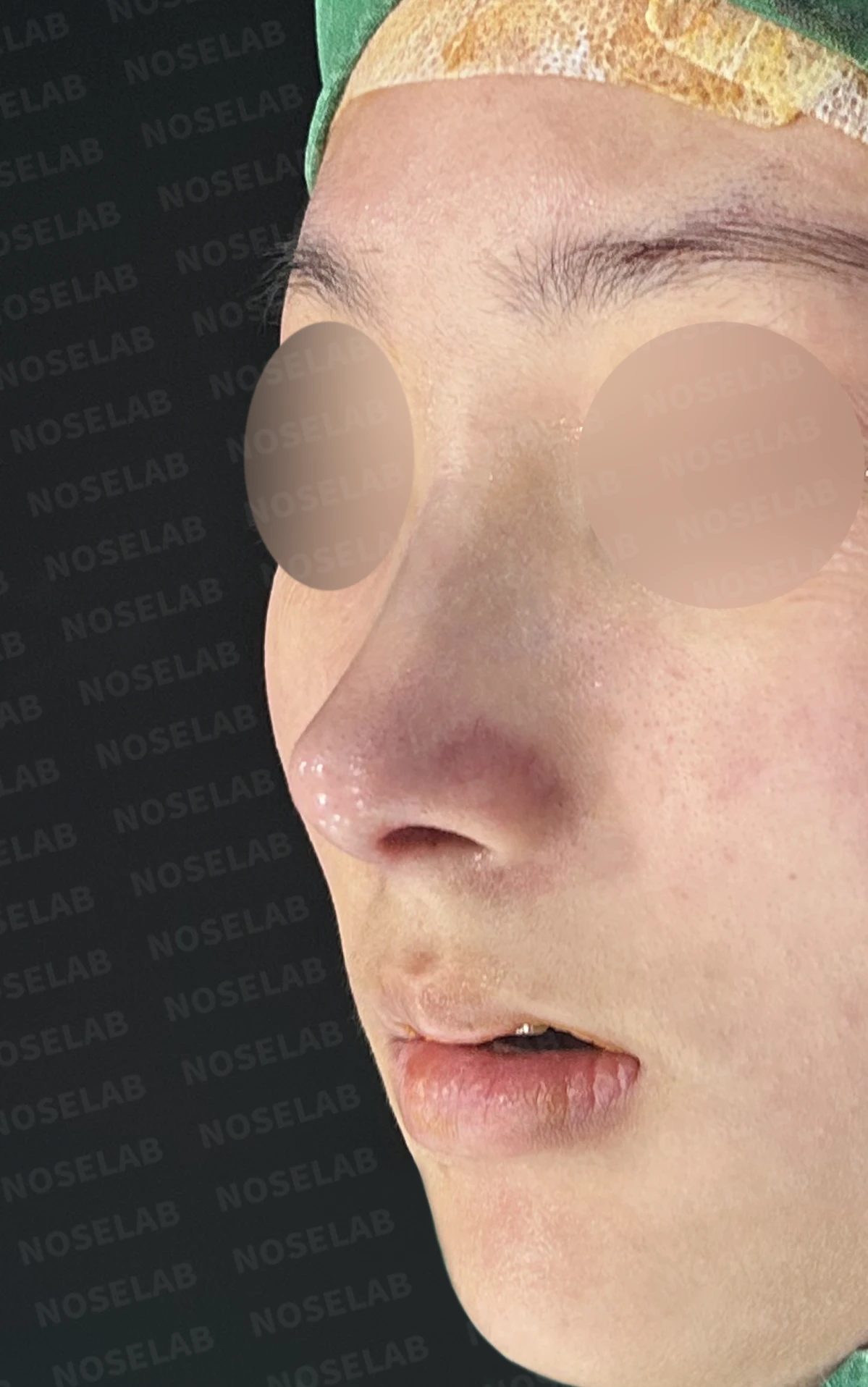
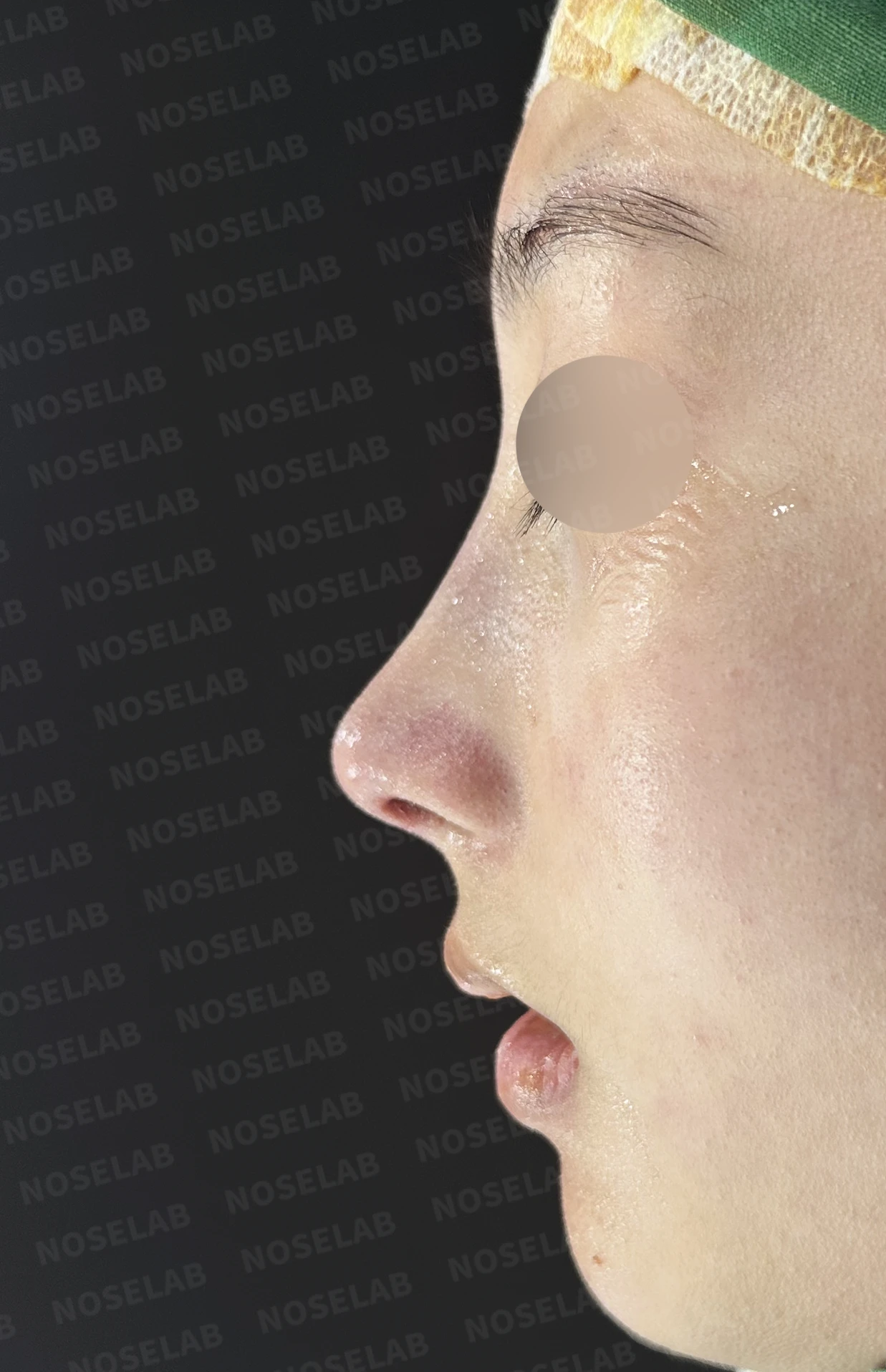
Front, oblique, and profile views on day 0 immediately after surgery. Photos taken immediately after surgery show swelling and may differ from the final result.
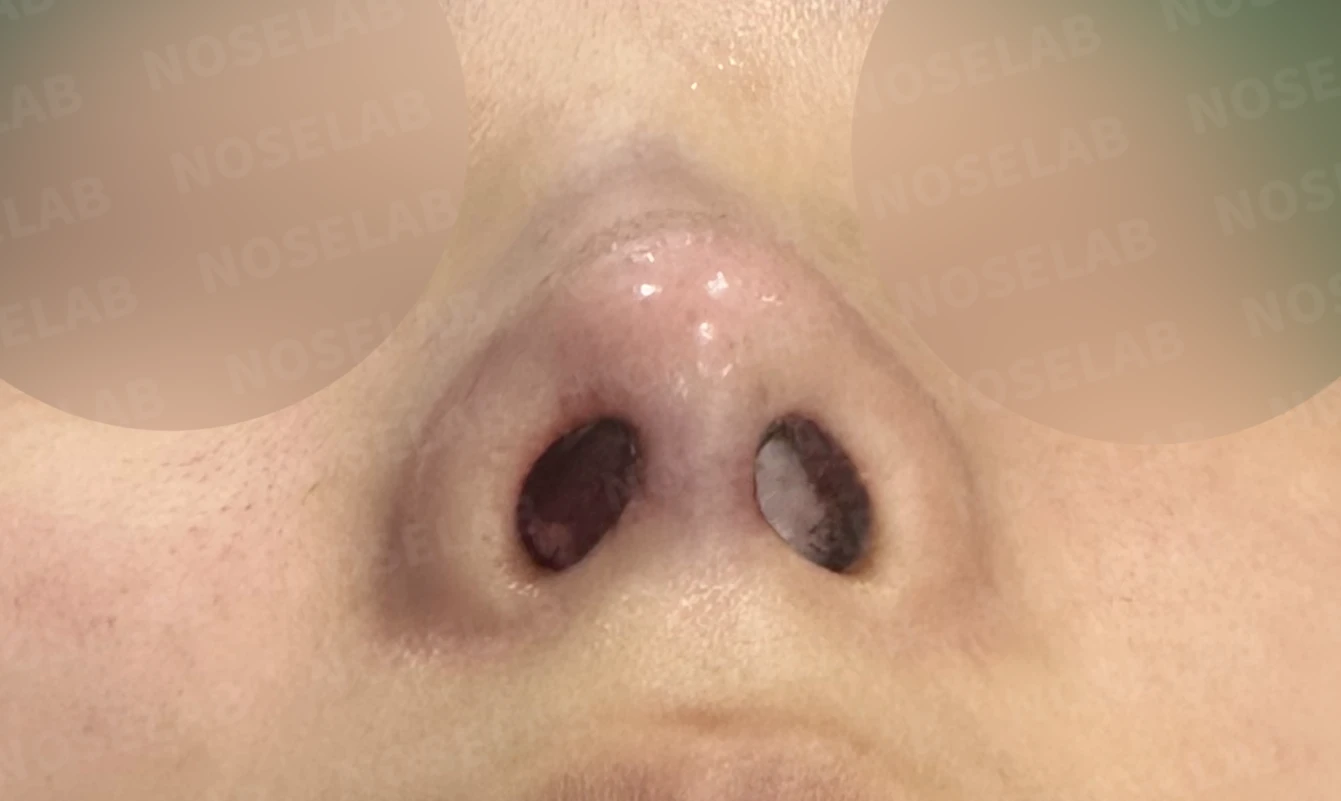
Nostril view on day 0 immediately after surgery. Photos taken immediately after surgery show swelling and may differ from the final result.
When the lower lateral cartilages are congenitally very small, structural support for the nasal tip is insufficient, resulting in a drooping or blunt tip. In such cases, simply suturing the tip cartilages together cannot achieve adequate correction, and the tip support structure must be fundamentally reinforced with a cartilage graft.
In this surgery, autologous rib cartilage was used to compensate for the deficient lower lateral cartilages and reinforce the support of the nasal tip. Autologous rib cartilage provides sufficient strength and flexibility, making it an excellent material for stably elevating the tip while achieving a natural shape.
The dorsal hump and crooked portion of the bridge were corrected using lateral osteotomy and a silicone implant. The nasal bones were repositioned with lateral osteotomy to straighten the crooked bridge, and the silicone implant was precisely carved to fit the nasal bones, improving the uneven, widened bridge into a smooth line.
An important aspect of dorsal hump correction is not simply shaving down the prominent area, but comprehensively considering the balance between the entire bridge line and the nasal tip. In cases like this, elevating the tip while correcting the hump allowed us to complete a smooth and natural nasal line overall.
We apply the most suitable surgical method by carefully analyzing each patient's cartilage condition and nasal anatomical characteristics. I hope this case serves as a helpful reference for anyone with similar concerns.
This was Dr. Peter C. Kang. Thank you.
#closedrhinoplasty #closedrevisionrhinoplasty #tiprhinoplasty #autologousribcartilage #humpcorrection #lateralosteotomy #droopingtip #nasolabialanglecorrection #siliconeimplant #lowerlateralcartilage

Limitations and risks
When autologous rib cartilage is used, scarring and pain may remain at the donor site on the chest, and pneumothorax (pleural injury) can occur rarely. Over time, the grafted cartilage may warp or undergo partial resorption.
Common potential risks include infection, bleeding, asymmetry, scarring, skin necrosis, and insufficient improvement; results vary depending on individual skin condition and previous surgical history.