Hello, I am Dr. Peter C. Kang.
Today, I would like to share the case of a patient who wanted a natural-looking nose without implants and underwent implant-free rhinoplasty.
🔍 Surgical history
This was a primary rhinoplasty case for the patient, who had never undergone any prior nasal surgery or procedures. The main concerns were a congenitally deviated, widened nasal bridge and a drooping nasal tip that gave the overall nasal line a blunt appearance.
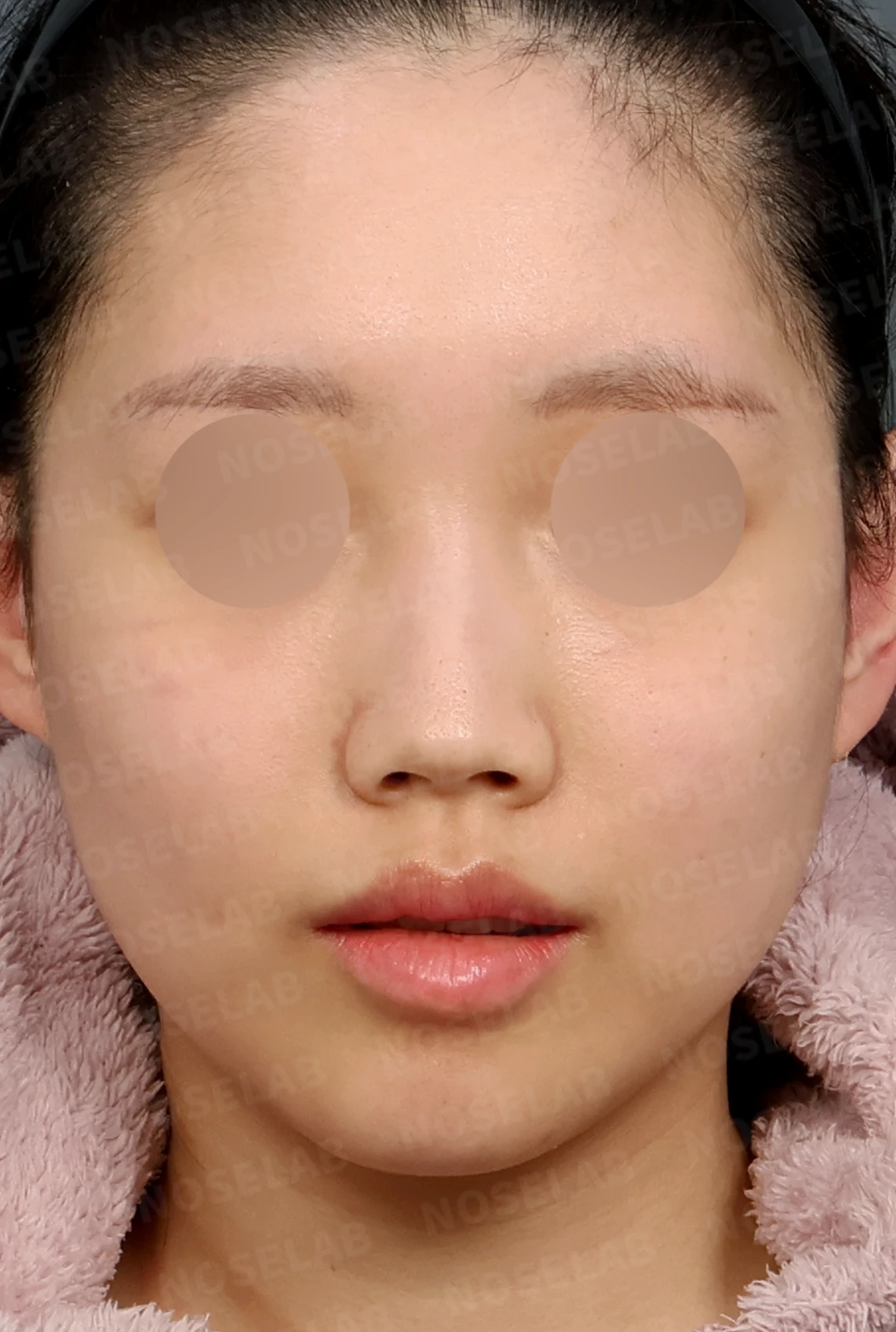
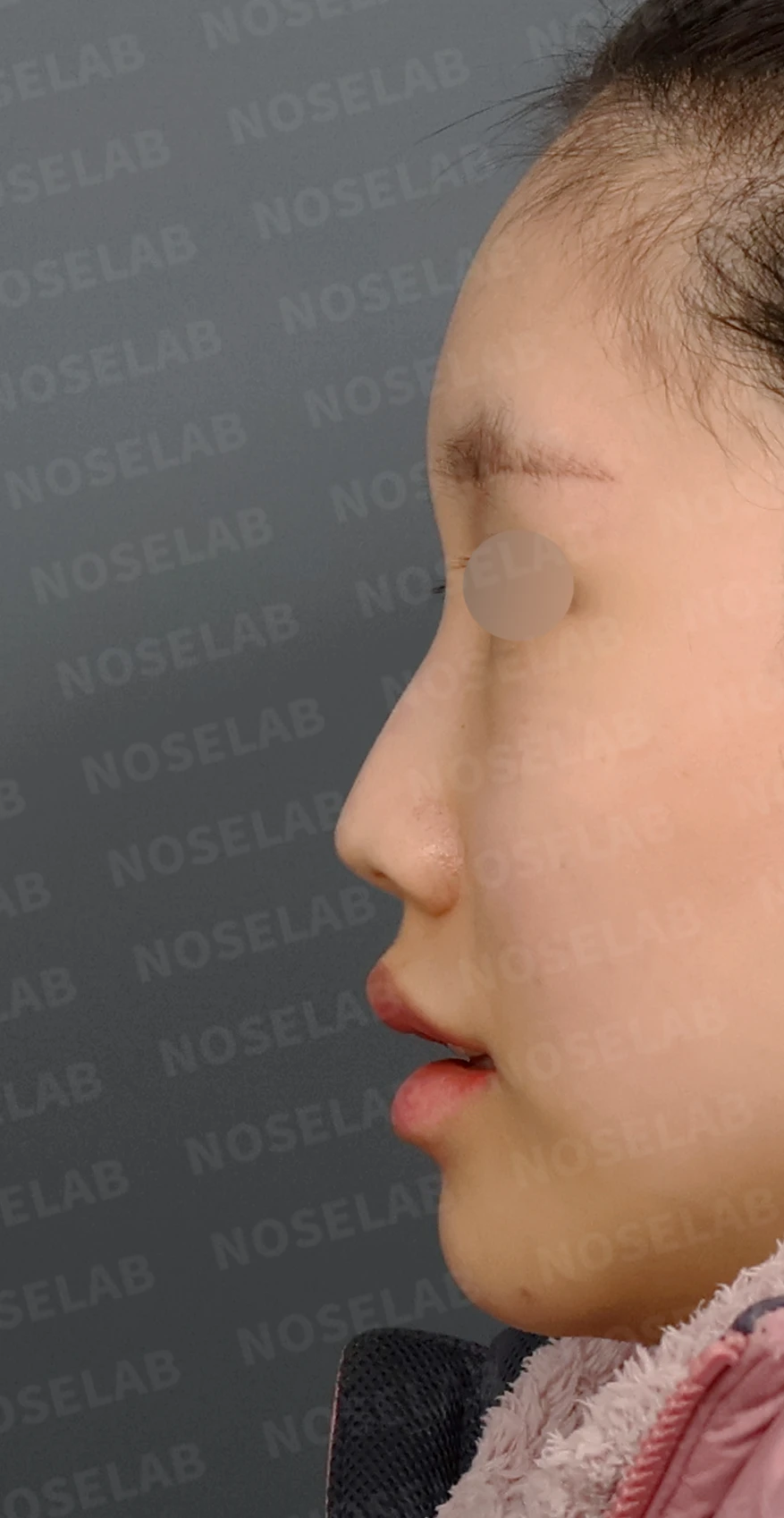
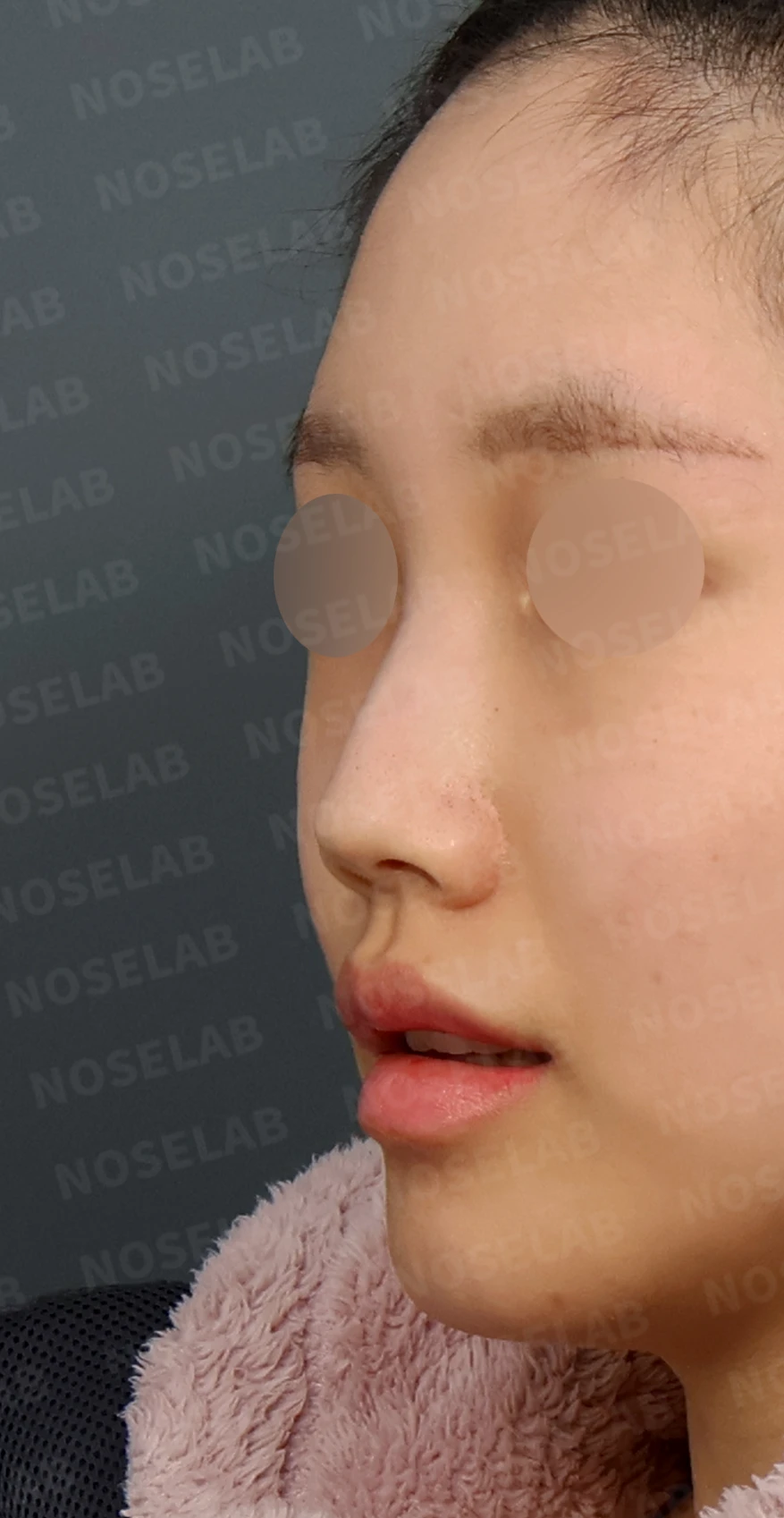
Front, left profile, and oblique views during design consultation.
💉 Patient requests
The patient's specific requests were as follows:
Desire for a natural nasal line
Desire for surgery using only natural tissue without implants
Correction of the deviated nasal bridge
Improvement of a drooping tip
The patient had a strong preference to improve the nose using only natural materials without artificial implants such as silicone. Accordingly, the surgical plan was set for implant-free rhinoplasty using donor rib cartilage and septal cartilage.
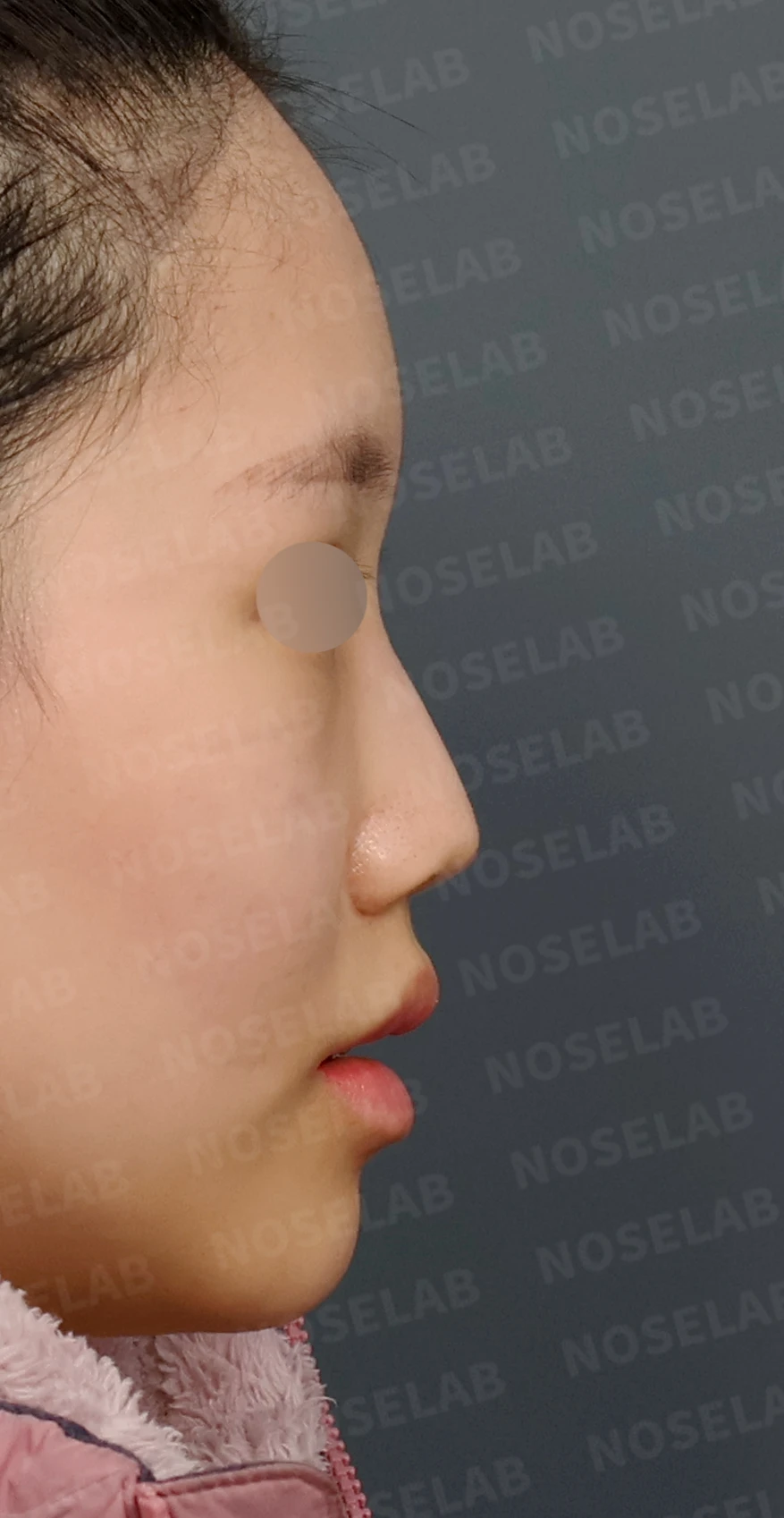
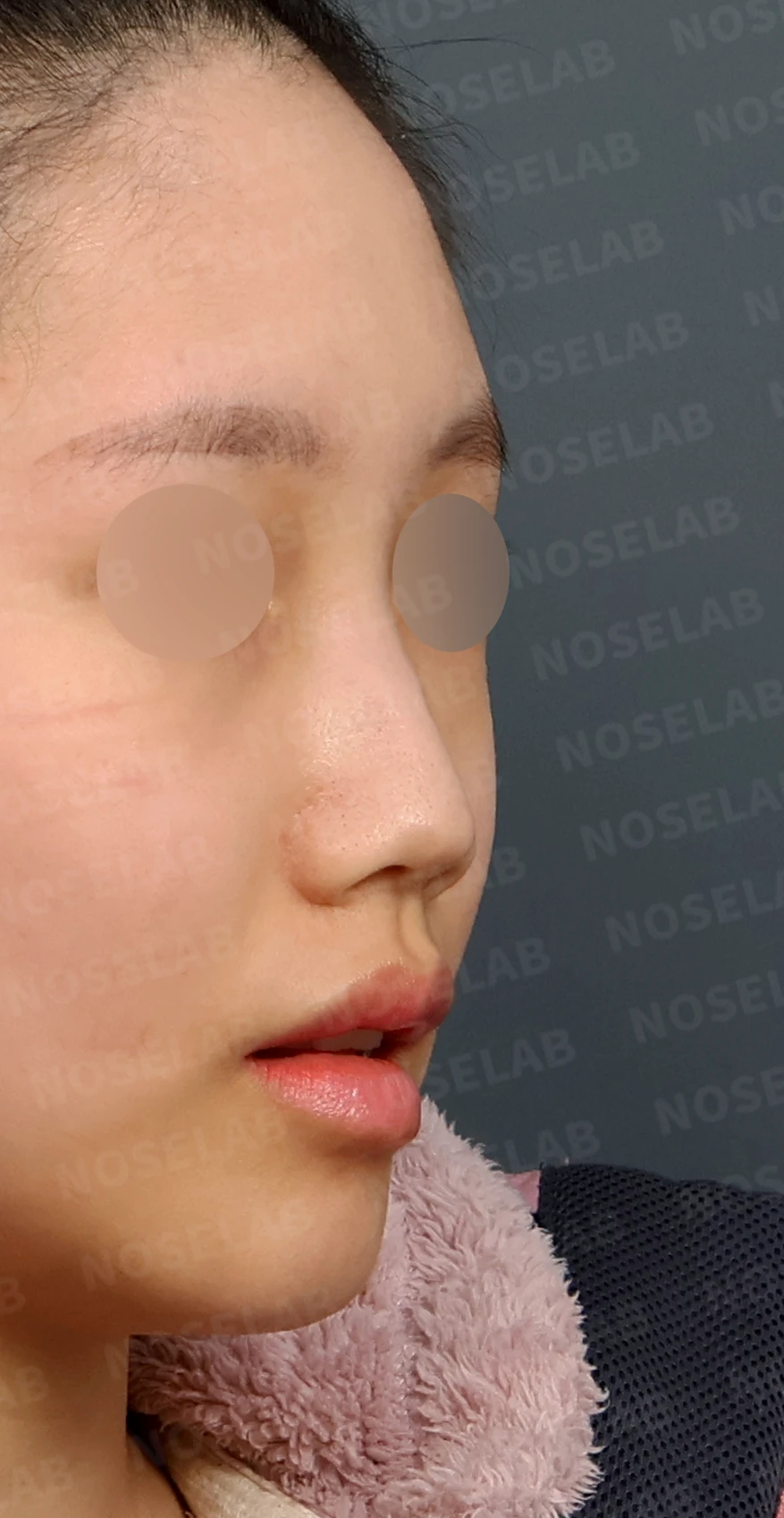
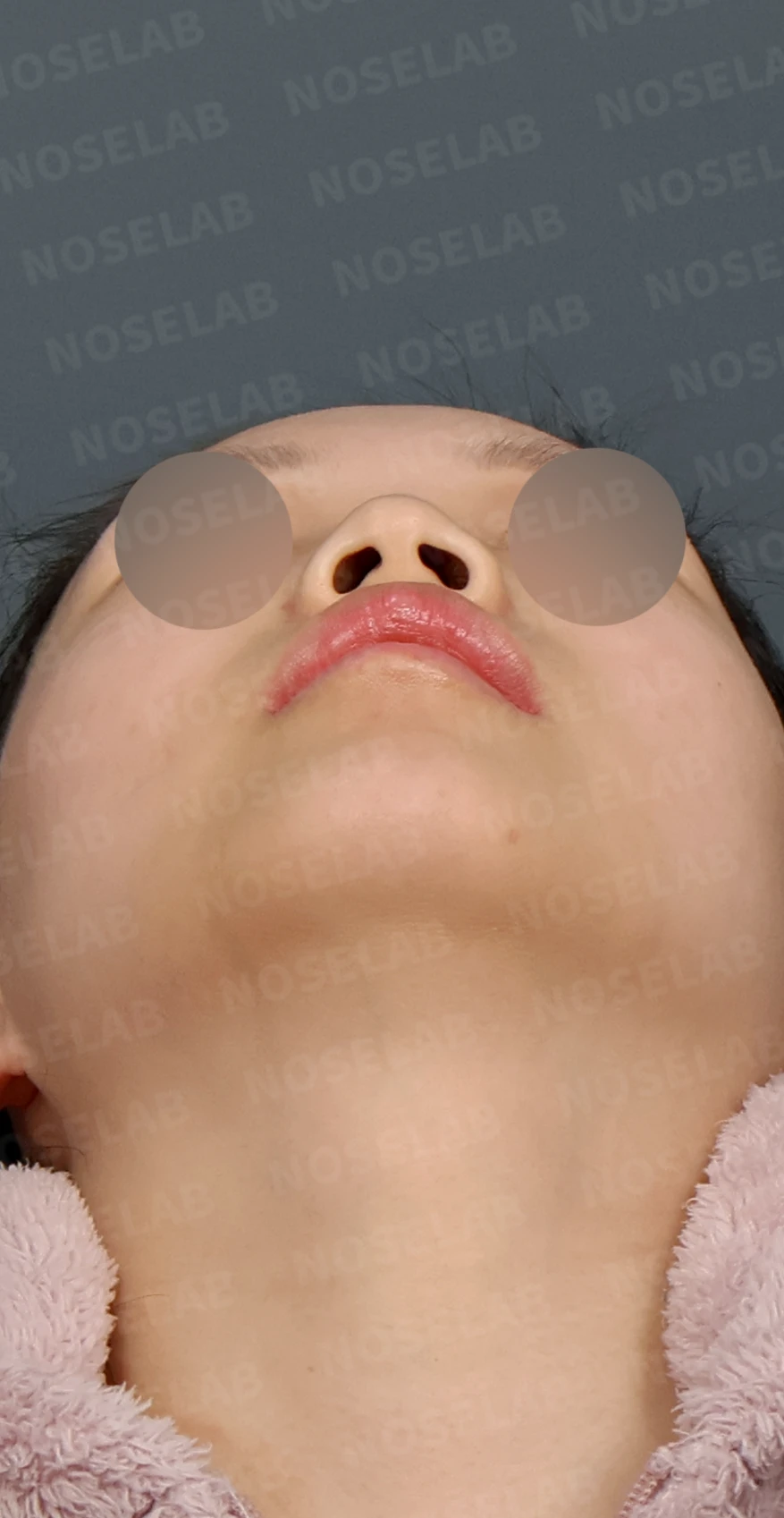
Right profile, oblique, and nostril views during design consultation.
🔧 Surgical plan and procedure
1. Nasal bridge correction via lateral osteotomy
Osteotomy of the nasal bones to correct the deviated and widened nasal bridge
Securing symmetry by repositioning the nasal bones
Creating a sleeker line by narrowing the nasal bridge width
2. Nasal bridge reinforcement using donor rib cartilage
Filling depressed areas of the nasal bridge with donor rib cartilage to create a smooth dorsal line
Using natural tissue instead of implants to achieve a natural feel and shape
Setting a bridge height that connects naturally with the nasal bone contour
3. Tip rhinoplasty using septal cartilage and donor rib cartilage
Reinforcing the tip support structure with part of the septal cartilage and donor rib cartilage
Elevating the drooping nasal tip to create a refined tip line
Improving the profile silhouette by correcting the nasolabial angle
🌟 Surgical results
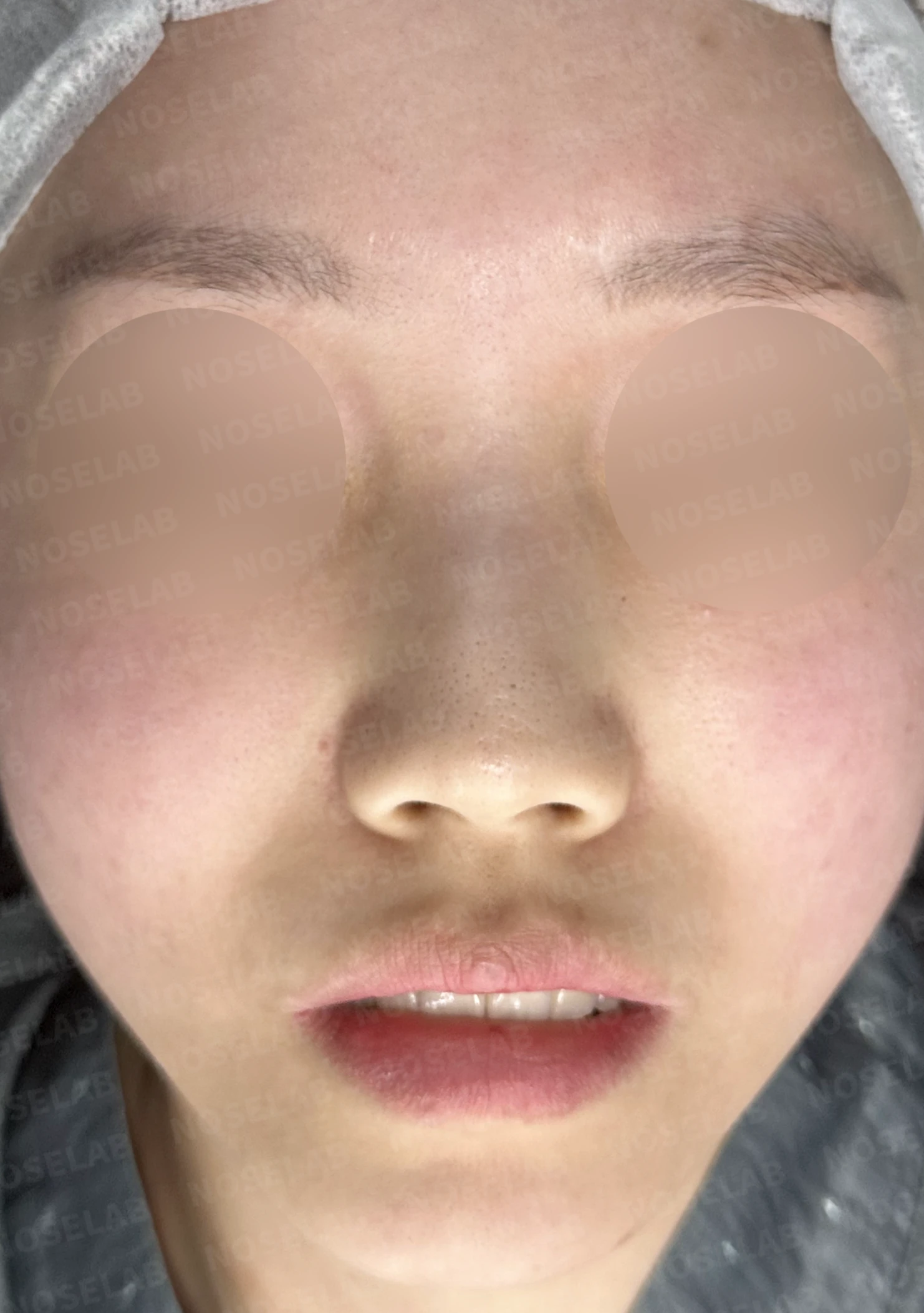
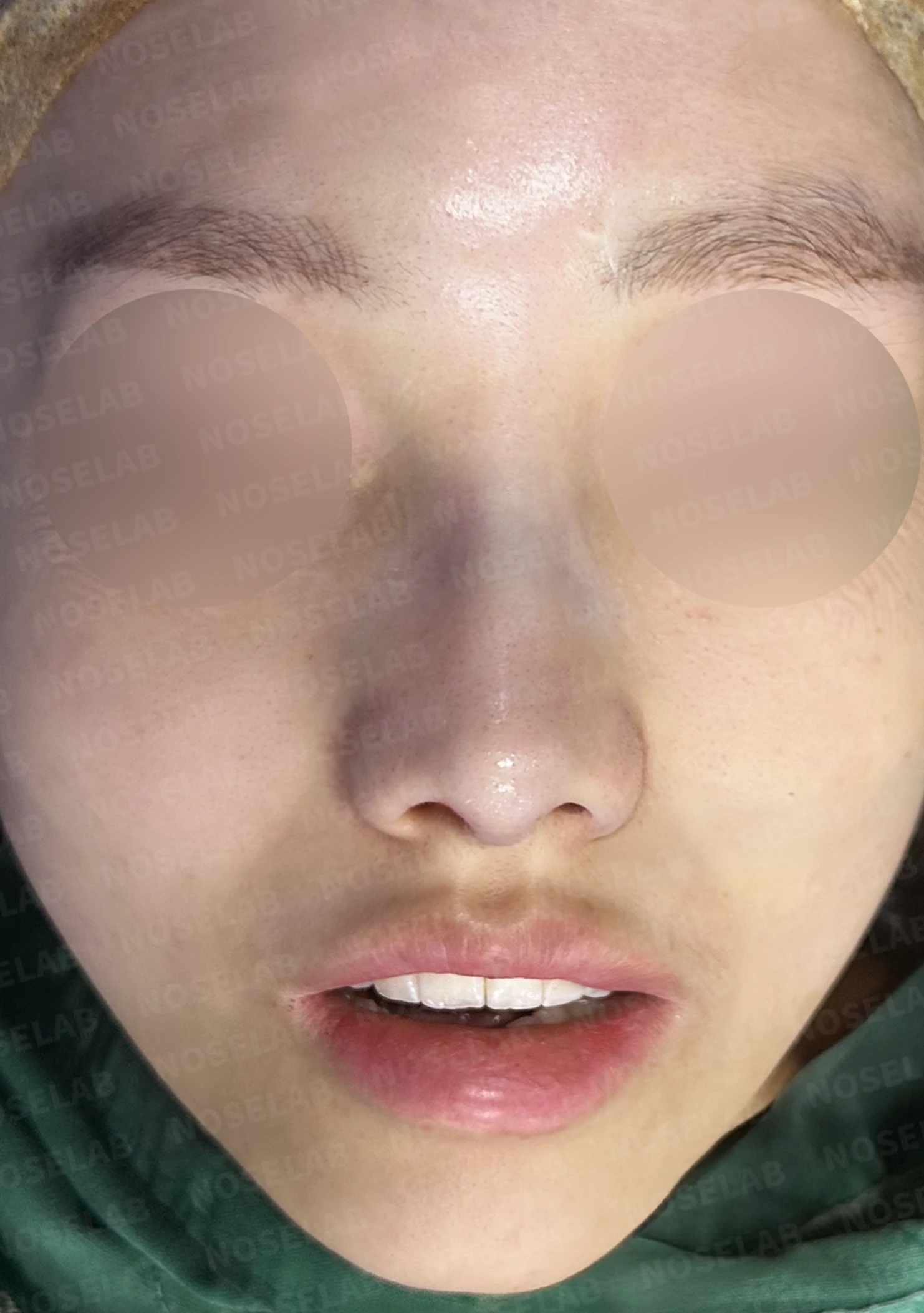
Before surgery / Day 0 immediately after surgery Photos taken immediately after surgery show swelling and may differ from the final result.
Front view changes
The deviated nasal bridge was straightened, securing symmetry
The previously widened nasal bridge is refined into a sleeker line
An overall refined and balanced nasal contour
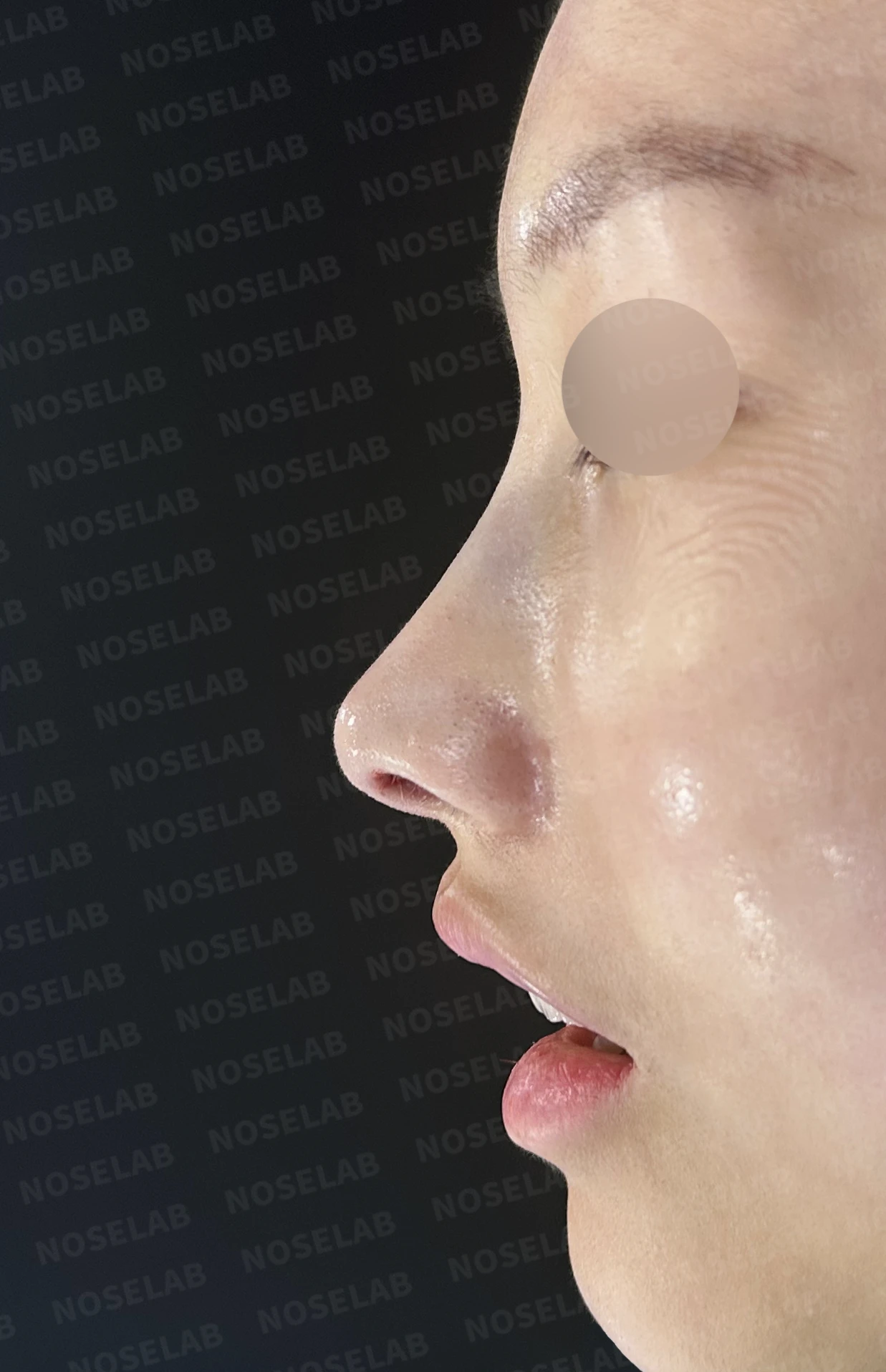
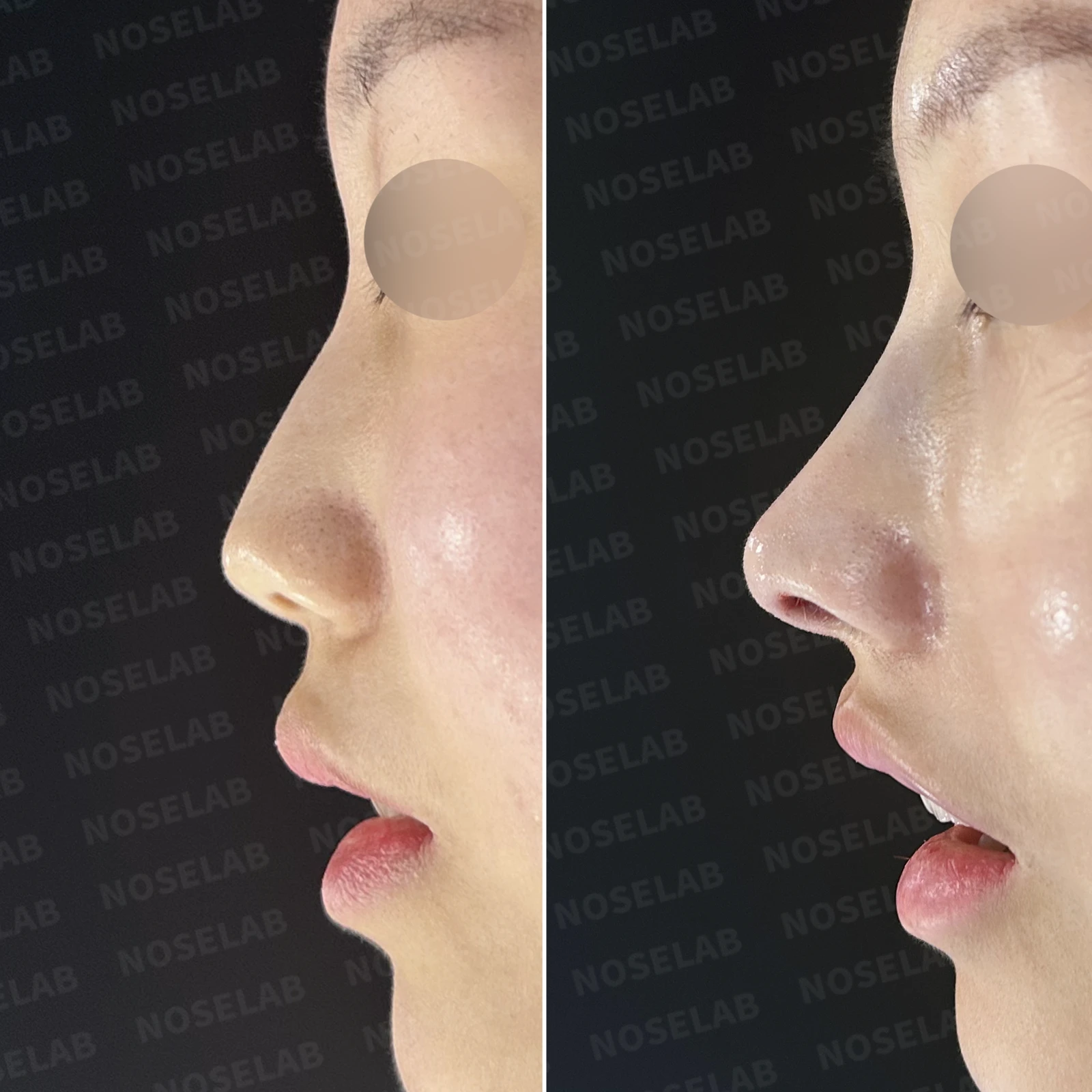
Before surgery / Day 0 immediately after surgery Photos taken immediately after surgery show swelling and may differ from the final result.
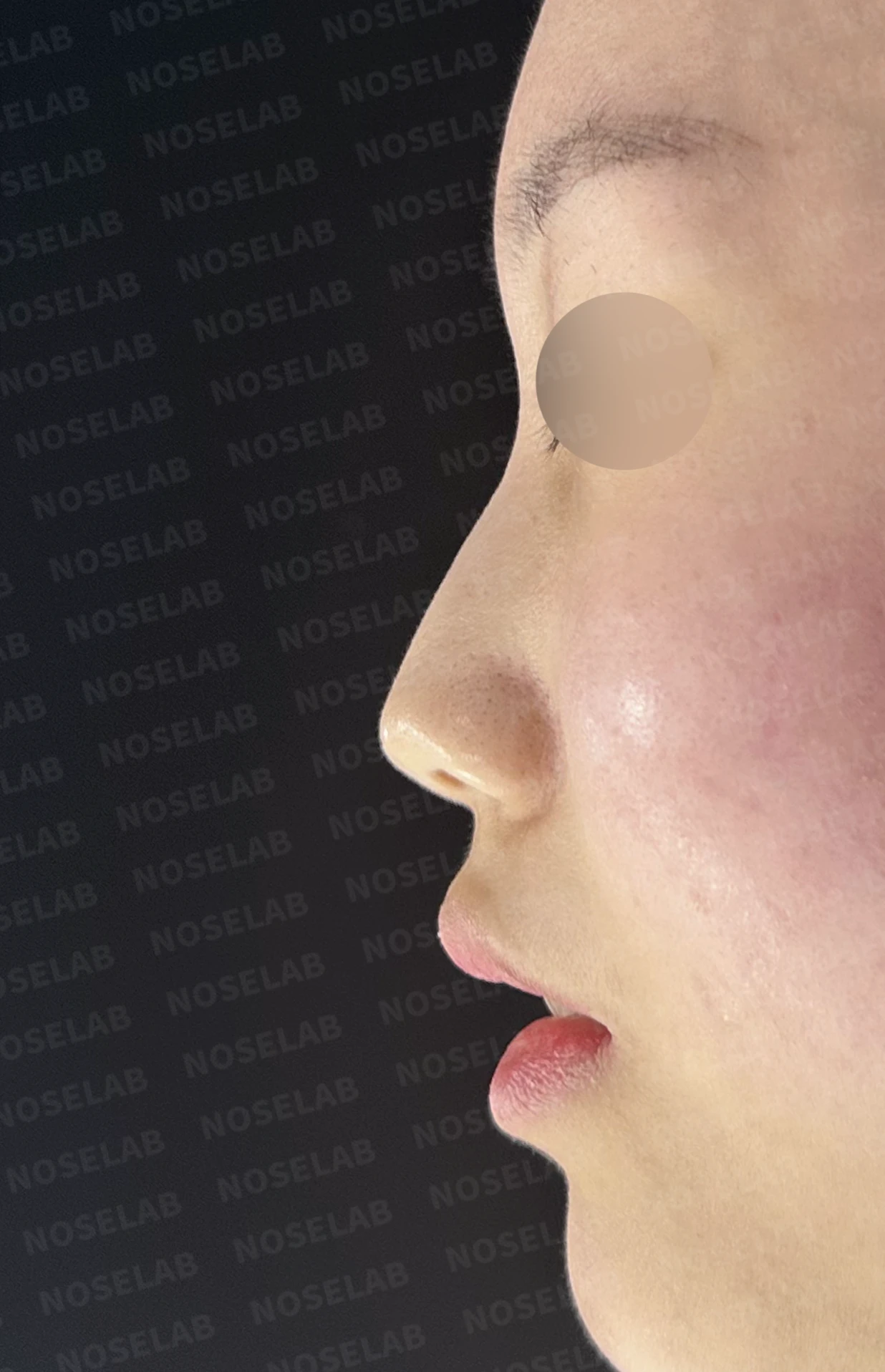
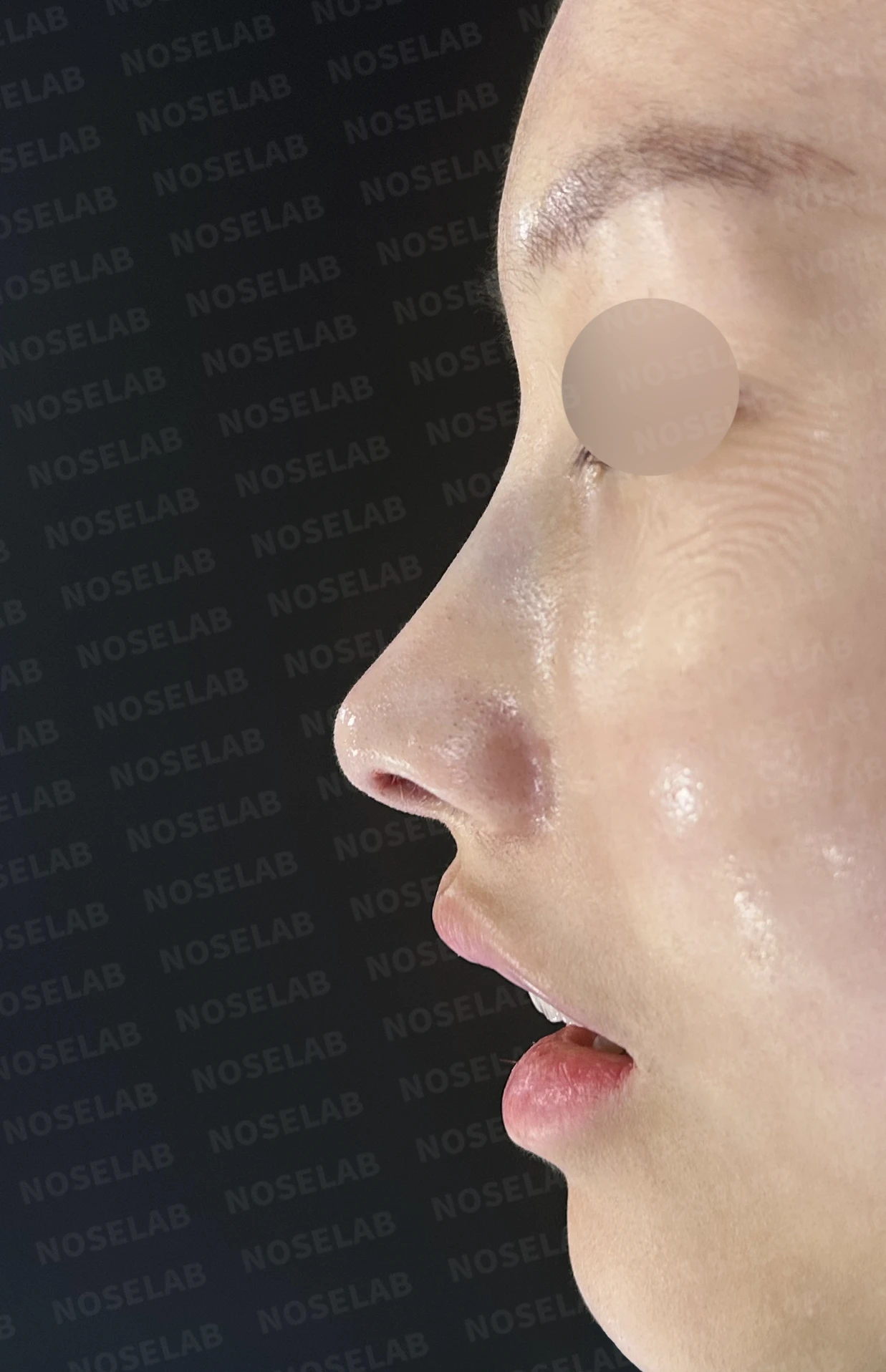
Profile view changes
The drooping tip is naturally elevated, creating a refined tip line
A feminine, refined profile silhouette achieved by improving the nasolabial angle
A natural dorsal line created without implants
Before surgery / Day 0 immediately after surgery Photos taken immediately after surgery show swelling and may differ from the final result.
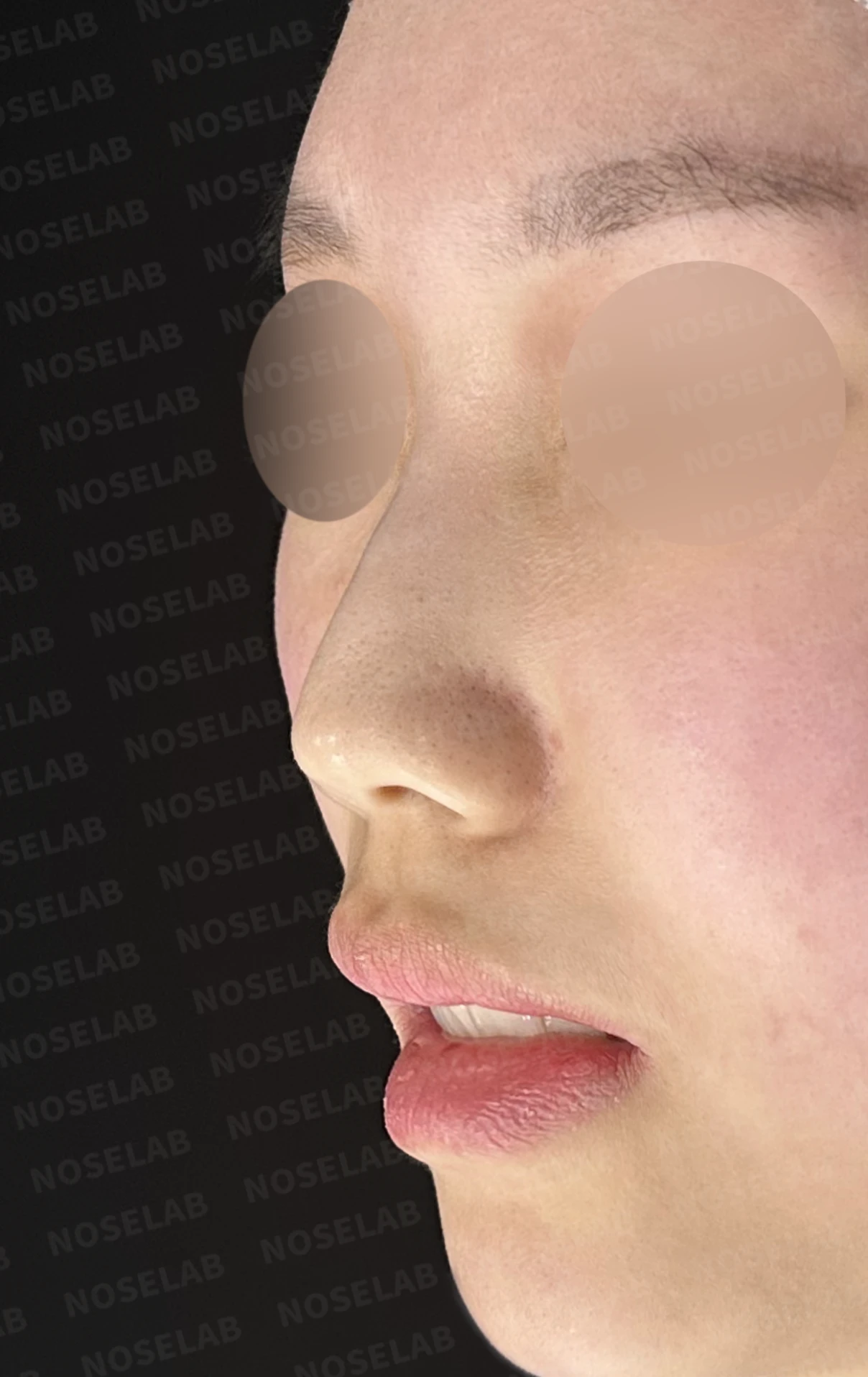
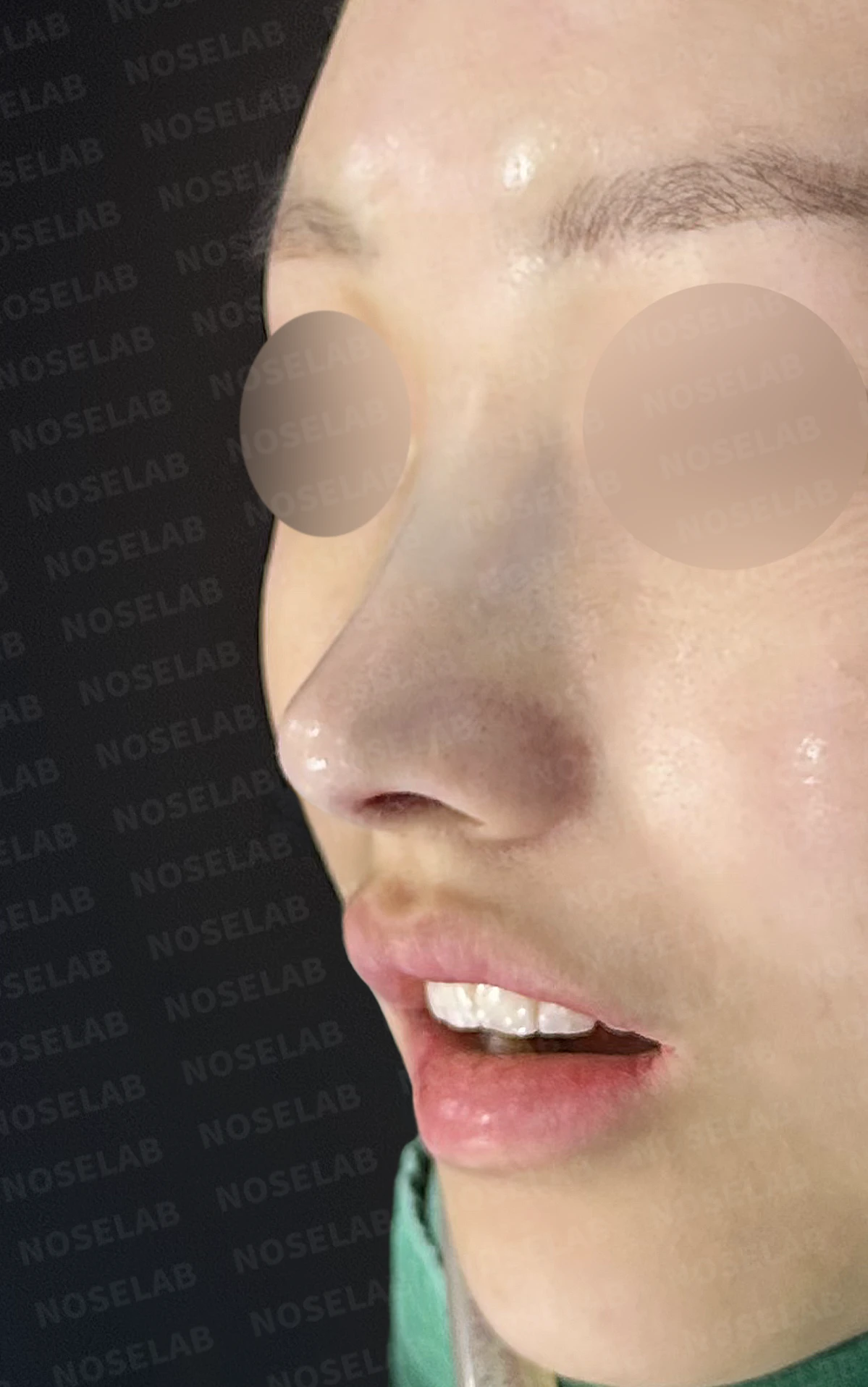
Changes on the oblique view
A natural, smooth nasal contour, even from the 45-degree angle
The depressed area of the nasal bridge is smoothly filled with donor rib cartilage
A harmonious line between the nasal tip and the bridge
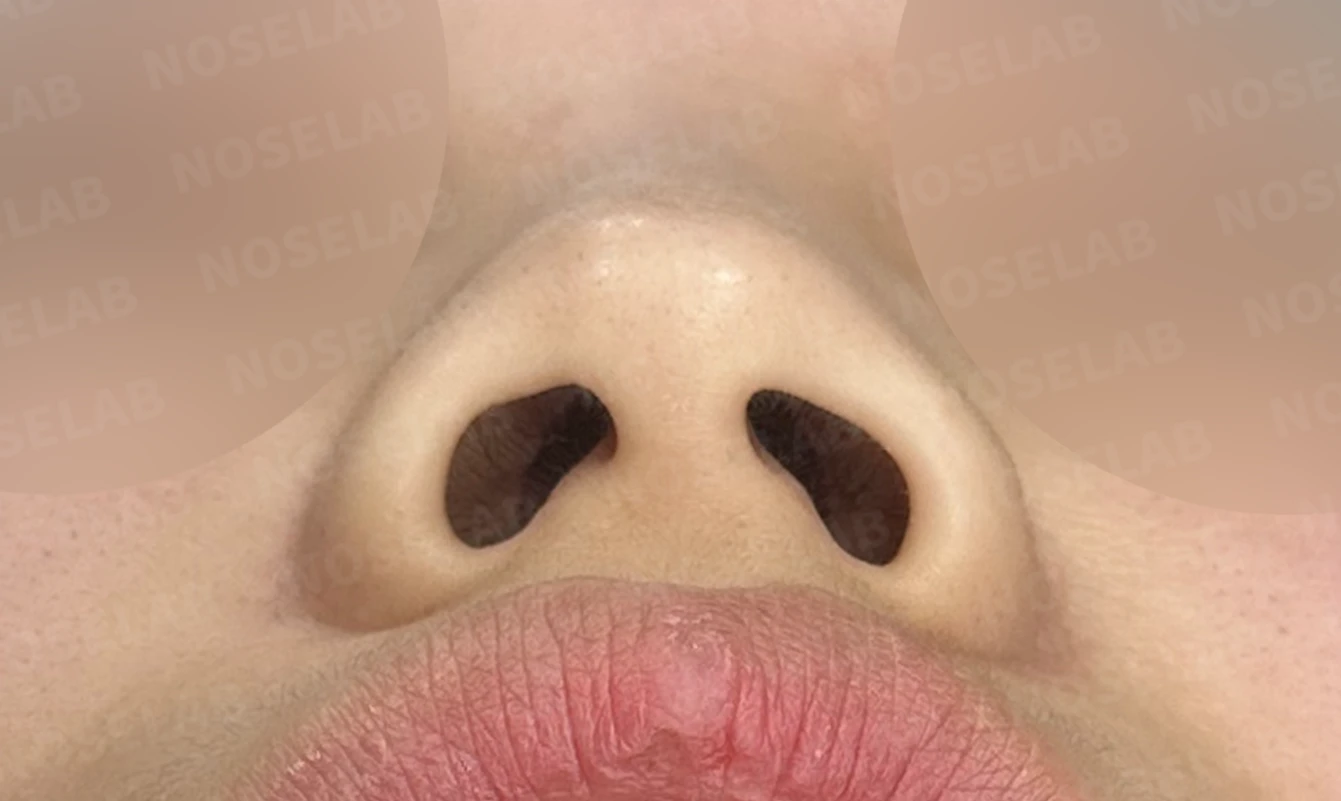
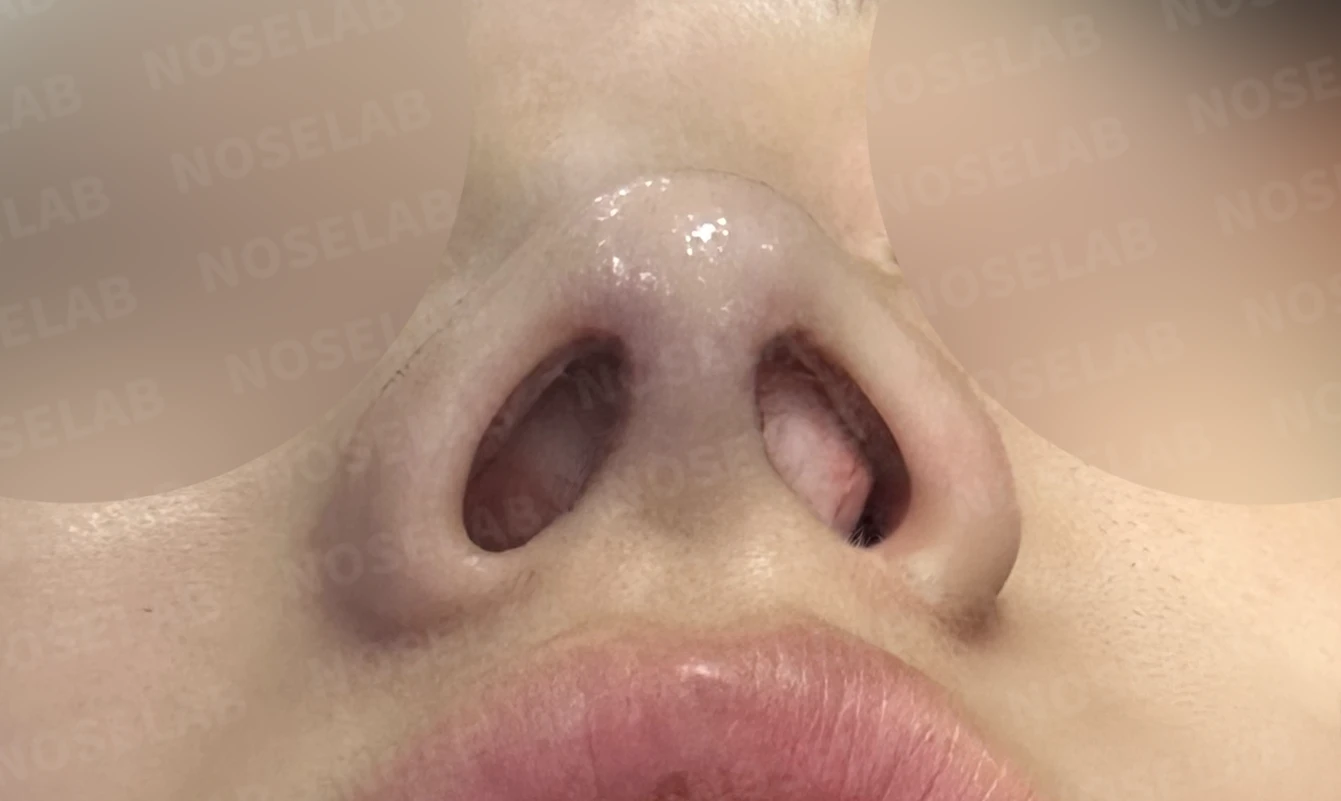
Before surgery / Day 0 immediately after surgery Photos taken immediately after surgery show swelling and may differ from the final result.
Changes in nostril shape
Nostril contours naturally improved as the nasal tip was elevated
Balanced, symmetric nostril shape
Overall neat and refined nasal base line
💡 Specialist opinion
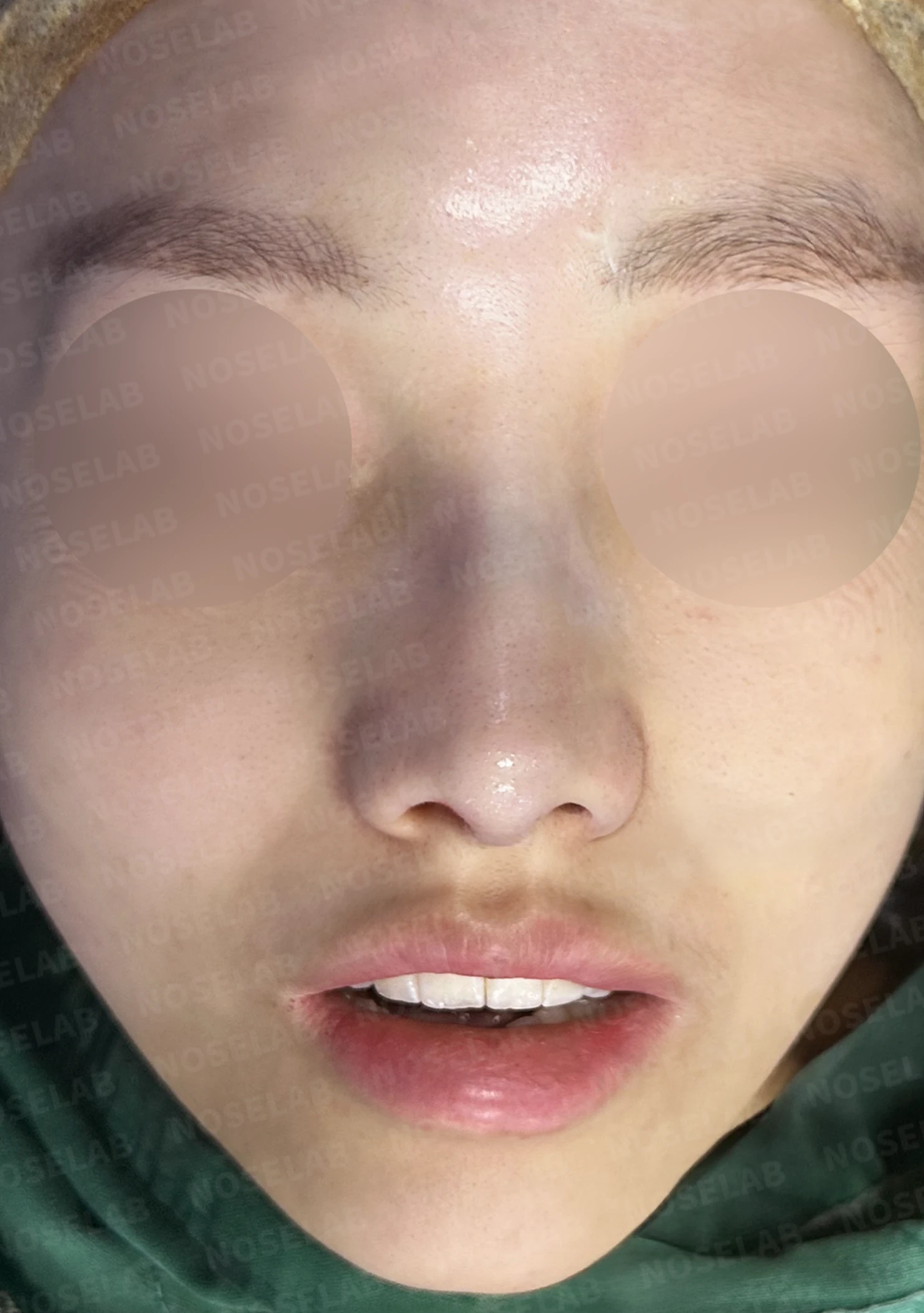
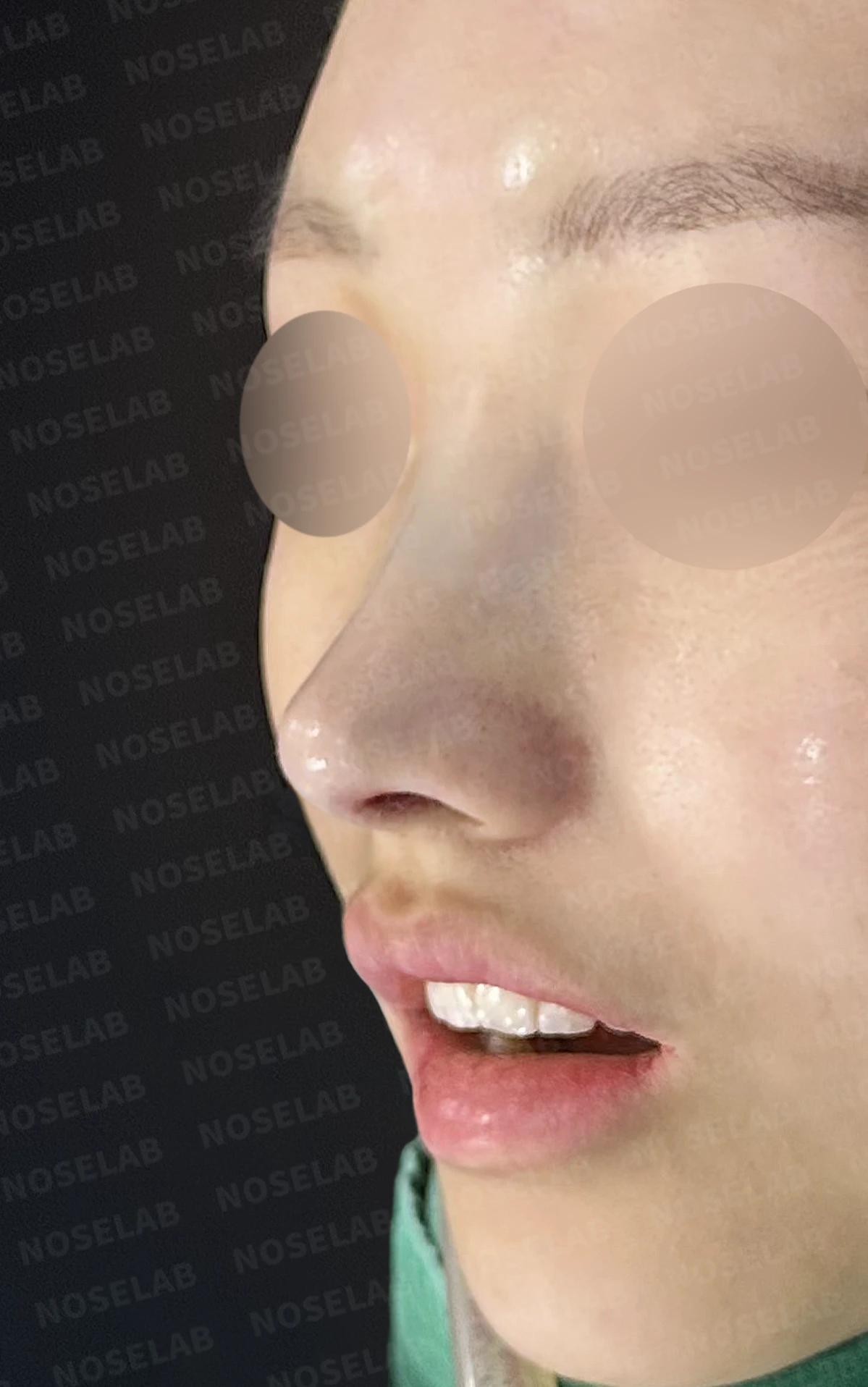
Front, oblique, and profile views on day 0 immediately after surgery. Photos taken immediately after surgery show swelling and may differ from the final result.
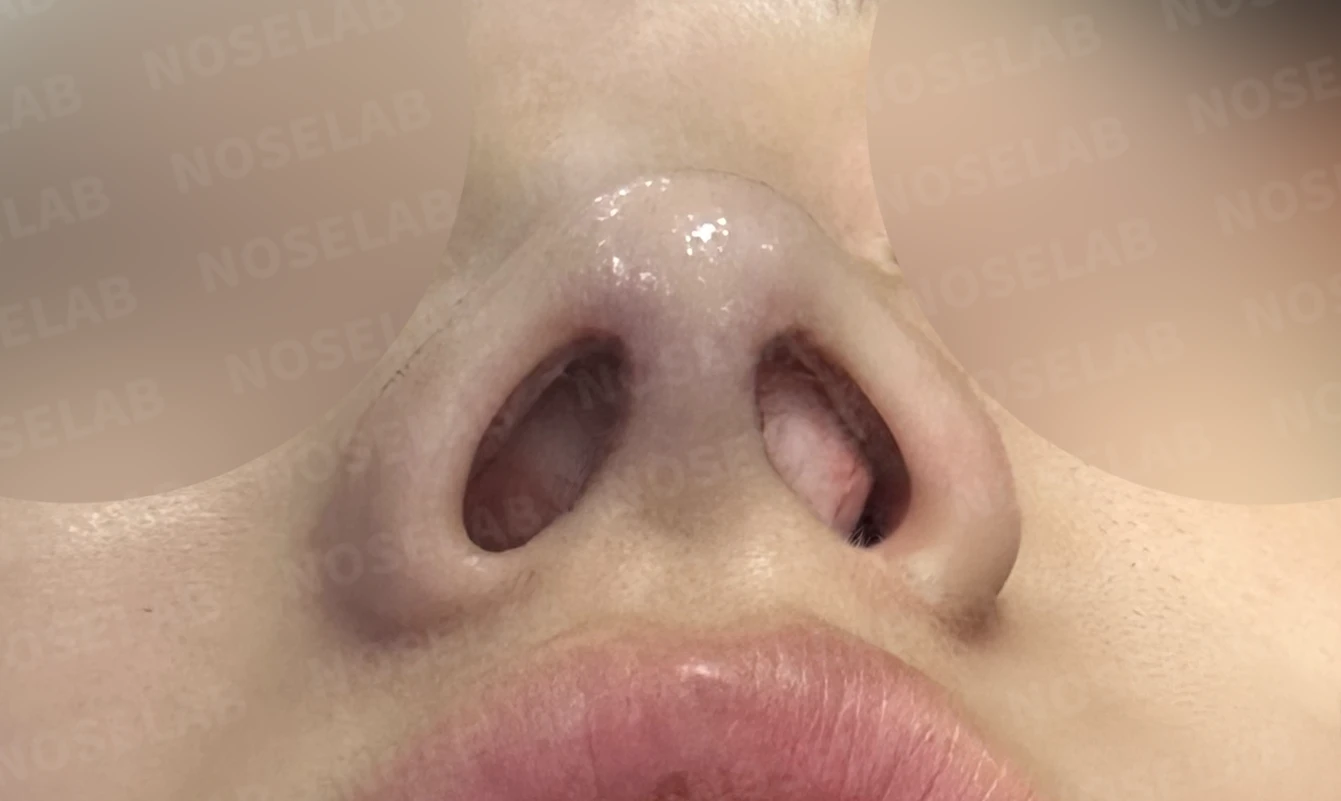
Nostril view on day 0 immediately after surgery. Photos taken immediately after surgery show swelling and may differ from the final result.
Implant-free rhinoplasty is a procedure that improves the shape of the nose using only natural tissues, such as donor rib cartilage or autologous cartilage, without artificial implants like silicone or Gore-Tex. It is a suitable option for those who feel burdened by implants or desire the most natural-looking results.
In this type of case, donor rib cartilage was utilized to reinforce the depressed bridge, and septal cartilage combined with donor rib cartilage was used to elevate the drooping tip. In addition, lateral osteotomy corrected the deviated, widened bridge to complete an overall balanced nasal line.
The key to implant-free rhinoplasty lies in the precise carving and accurate placement of the cartilage. Because cartilage does not come in a predetermined shape like an implant, the surgeon's skill in delicately sculpting and positioning the cartilage to match the patient's individual nasal anatomy is critical.
In particular, when the nasal bridge is deviated as in this case, the crucial point is to straighten the nasal bones with lateral osteotomy and then fill depressed areas with donor rib cartilage to create a smooth dorsal line. A natural height and contour can be achieved without implants, maintaining a natural feel over time.
In this way, based on extensive experience in implant-free rhinoplasty, I strive to achieve the intended results tailored to each patient's nasal condition and requests. I hope this case is helpful to those with similar concerns.
This was Dr. Peter C. Kang. Thank you.
#closedrhinoplasty #closedrevisionrhinoplasty #implantfreerhinoplasty #naturalrhinoplasty #tiprhinoplasty #lateralosteotomy #donorribcartilage #nasolabialanglecorrection #deviatednosecorrection

Limitations and risks
When using donor rib cartilage, long-term follow-up is necessary because the grafted cartilage may resorb or warp.
When revising after implant removal, contracture may progress again after removal, the nasal height and length may decrease, and staged surgery may be necessary depending on the skin condition.
When the septum is corrected at the same time, nasal obstruction may persist or recur, and in rare cases, septal perforation or changes in smell may occur.
Common potential risks include infection, bleeding, asymmetry, scarring, skin necrosis, and insufficient improvement; results vary depending on individual skin condition and previous surgical history.