Hello, I am Dr. Peter C. Kang.
Today, I would like to share a case of a patient who was troubled by a bulbous, drooping long nose and achieved a soft, feminine straight bridge line through closed revision rhinoplasty.
🔍 Surgical history
About 7 to 8 years ago, the patient underwent cartilage correction, osteotomy, and alar reduction. Later, because the bridge became excessively high, an implant replacement surgery was performed. Most recently, the patient had nasal correction using autologous rib cartilage along with facial contouring surgery.
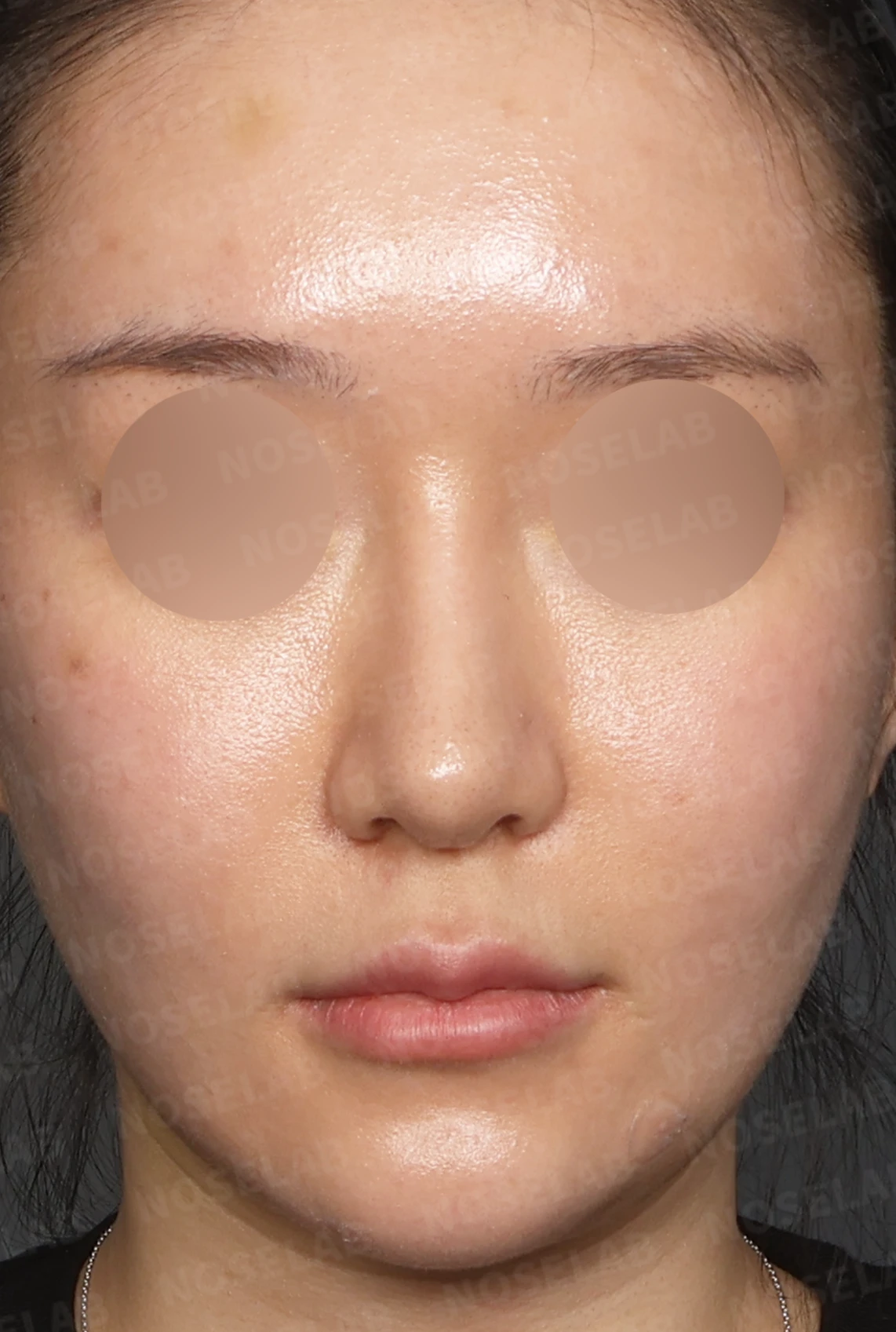
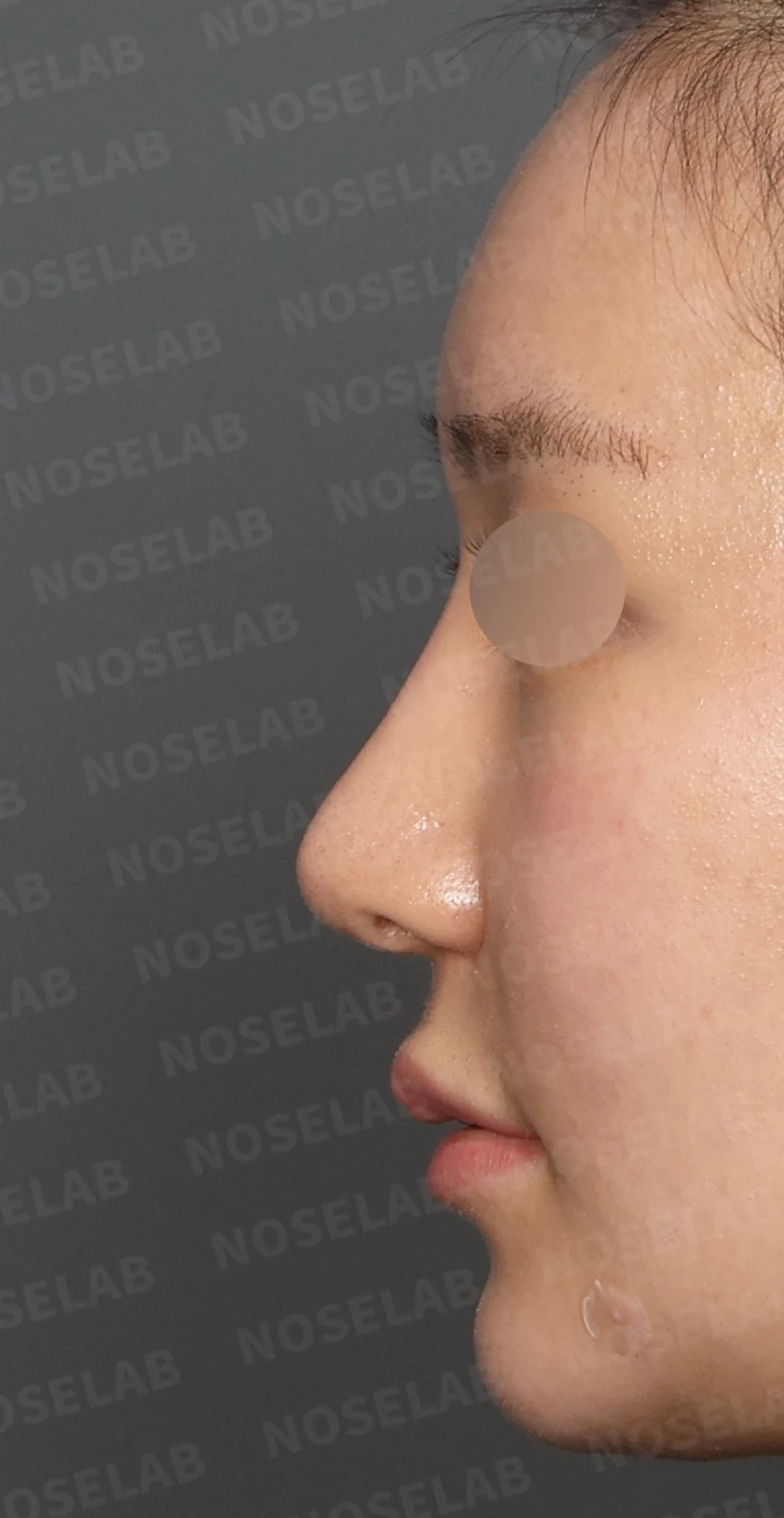
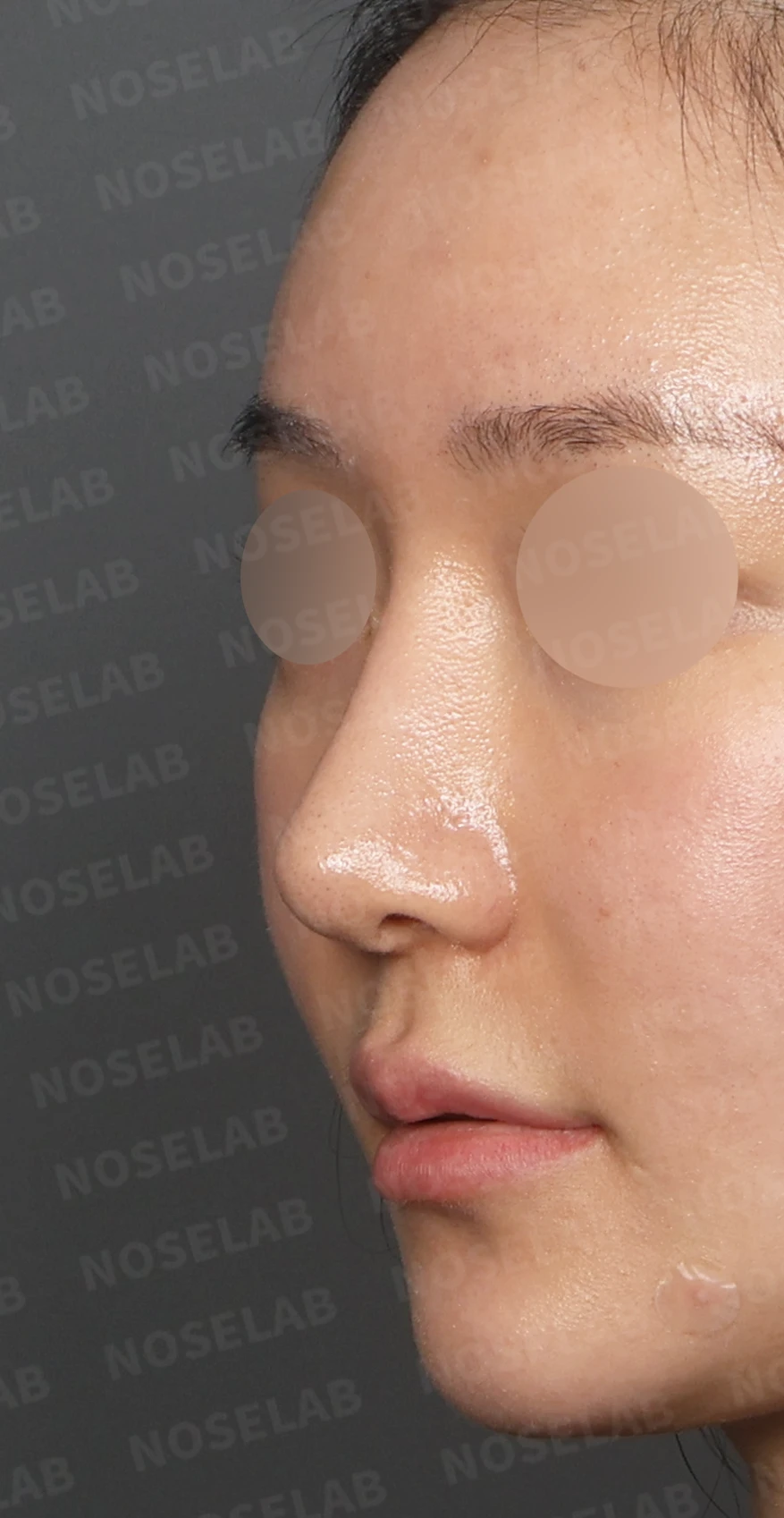
Front, left profile, and oblique views during design consultation.
💉 Patient requests
Lowering an excessively high radix that appeared heavy and overly prominent
Creating a soft, feminine straight bridge line
Repositioning the nasal tip direction so the nose no longer appears long
Improving facial balance and proportions through nasolabial angle correction
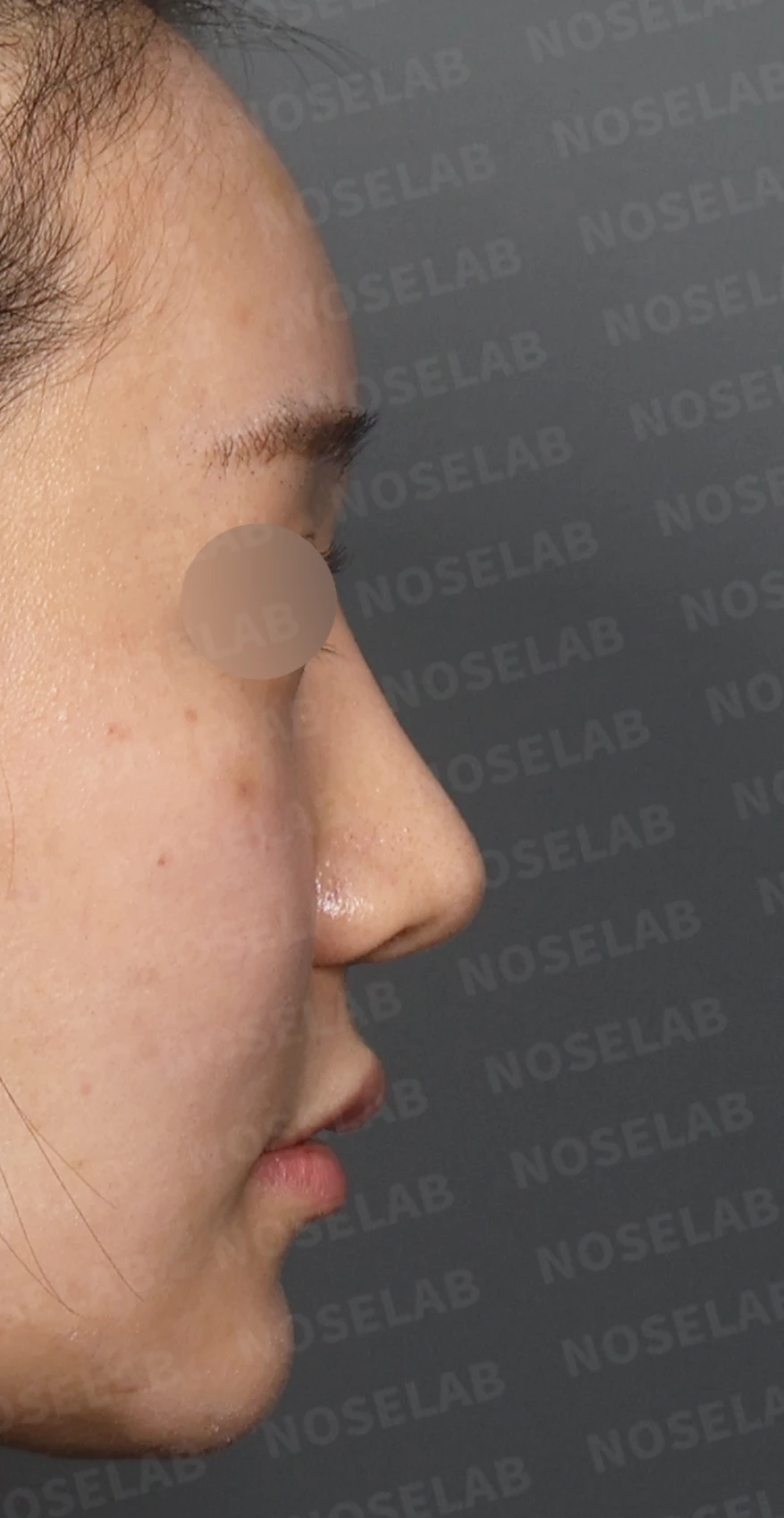
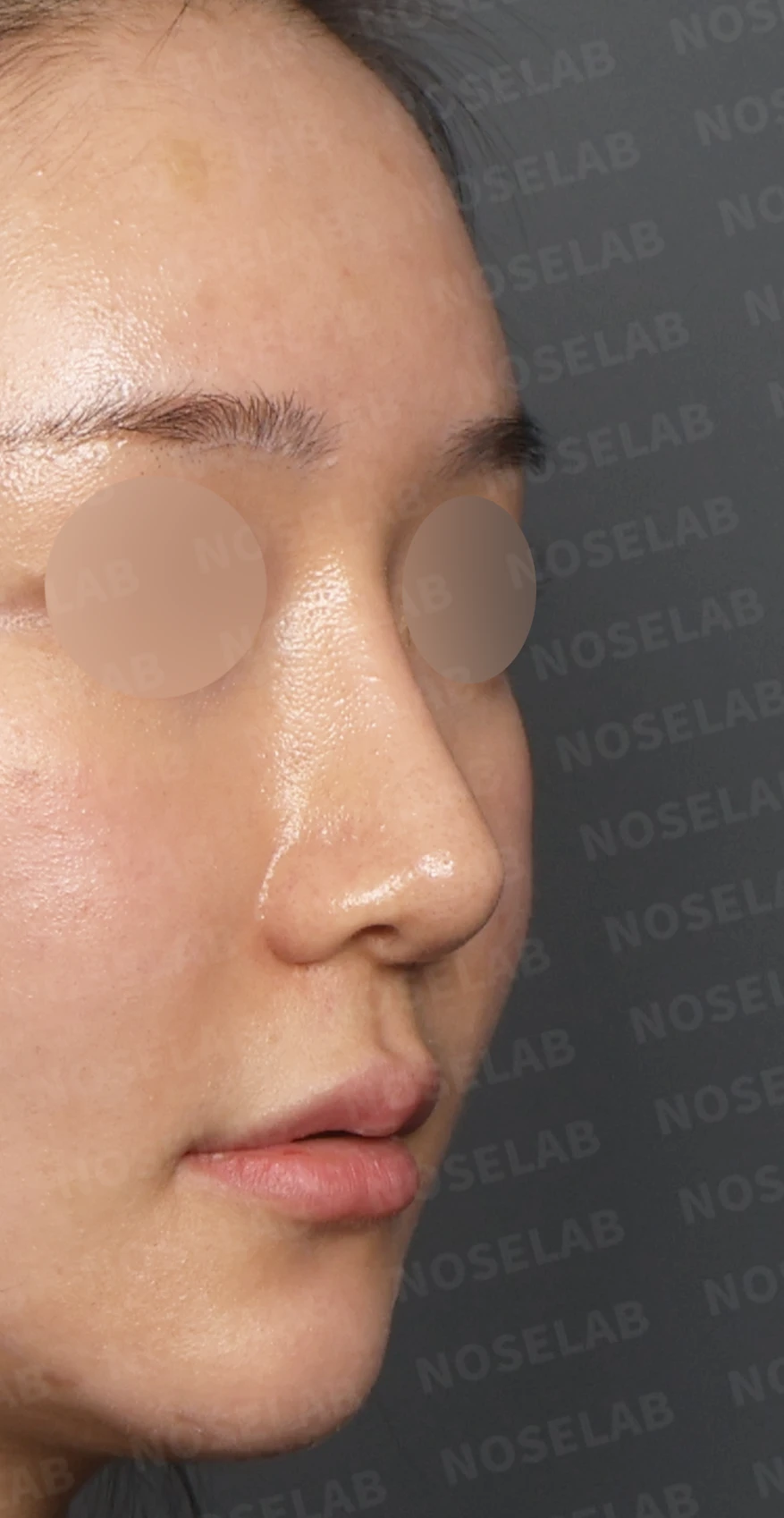
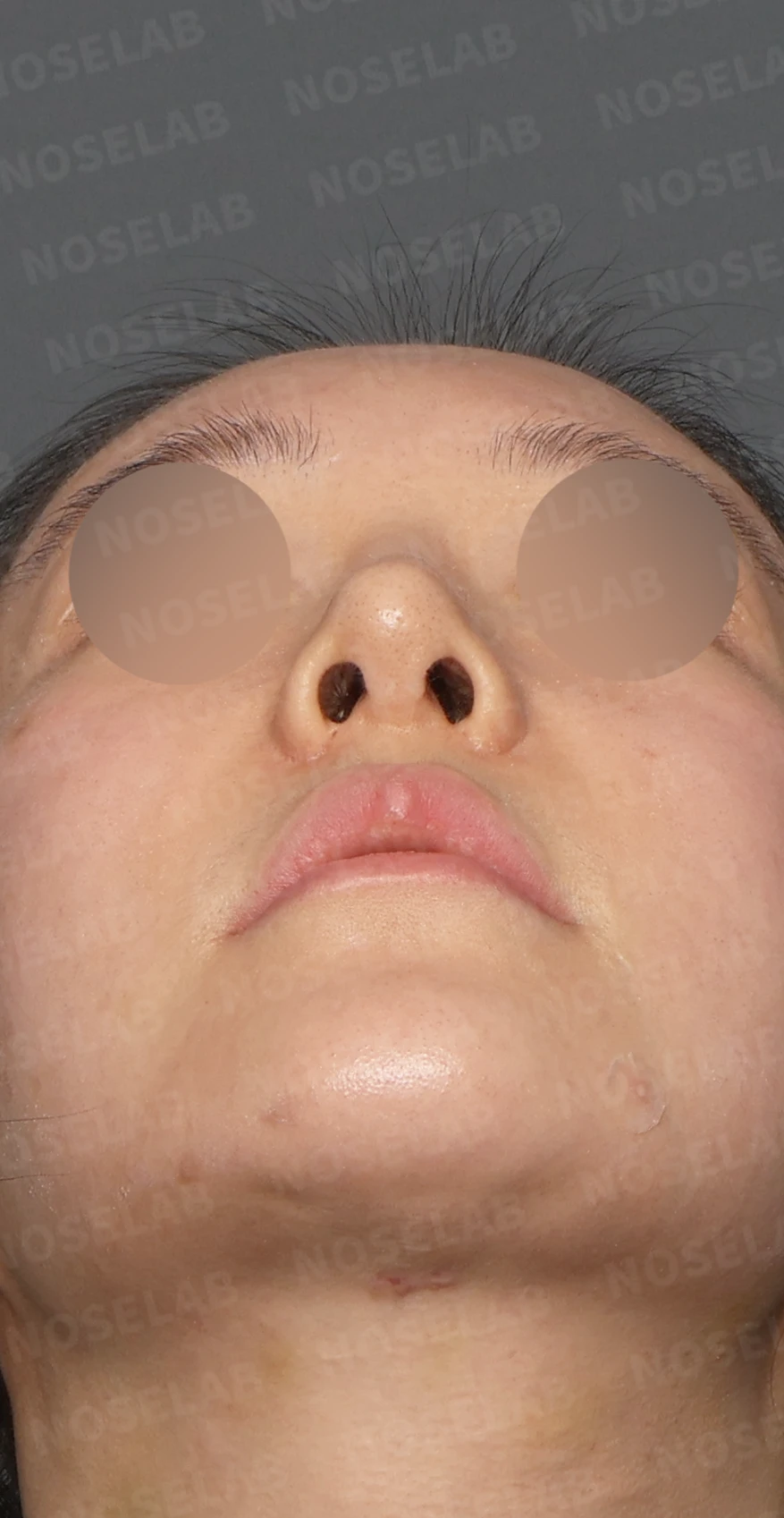
Right profile, oblique, and nostril views during design consultation.
🔧 Surgical plan and procedure
1. Radix adjustment: The excessively high radix was adjusted naturally to align with the level of the pupils.
2. Nasal tip rotation: The tip definition point was elevated slightly upward so the bulbous, drooping tip would no longer appear long.
3. Nasolabial angle correction: The columella was naturally lowered to adjust the angle between the nose and upper lip, creating a natural nasal profile.
4. Scar tissue removal and skin thickness adjustment: Scar tissue formed from prior surgeries at other clinics was partially excised to adjust the thickness of the nasal tip skin.
5. Osteotomy: Lateral osteotomy of the nasal bones was performed to naturally narrow the nasal bridge, which had widened after previous operations.
6. Septoplasty and turbinate surgery: To resolve nasal obstruction, correction of a deviated septum and turbinate reduction (rhinitis surgery) were performed simultaneously.
🌟 Surgical results
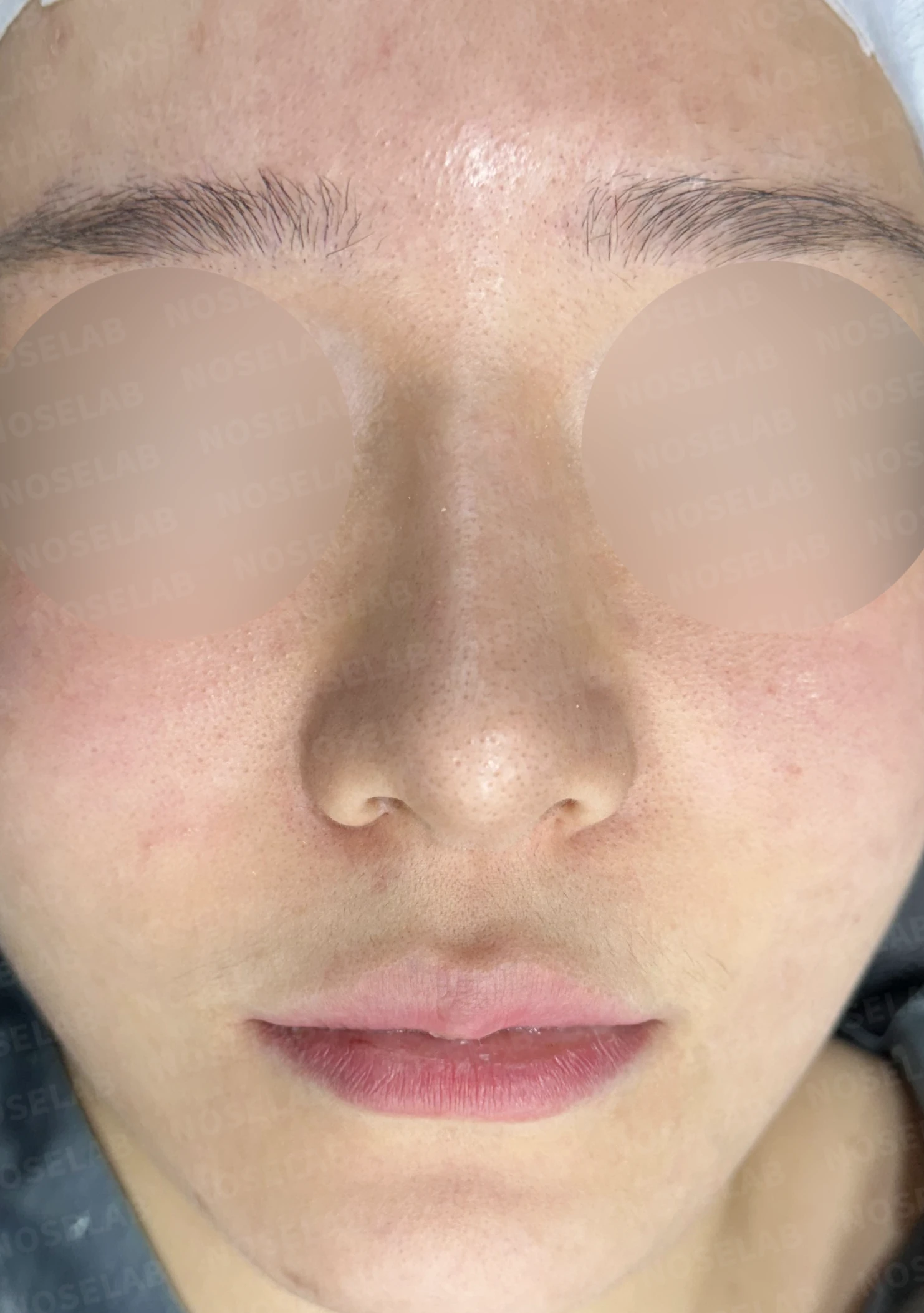
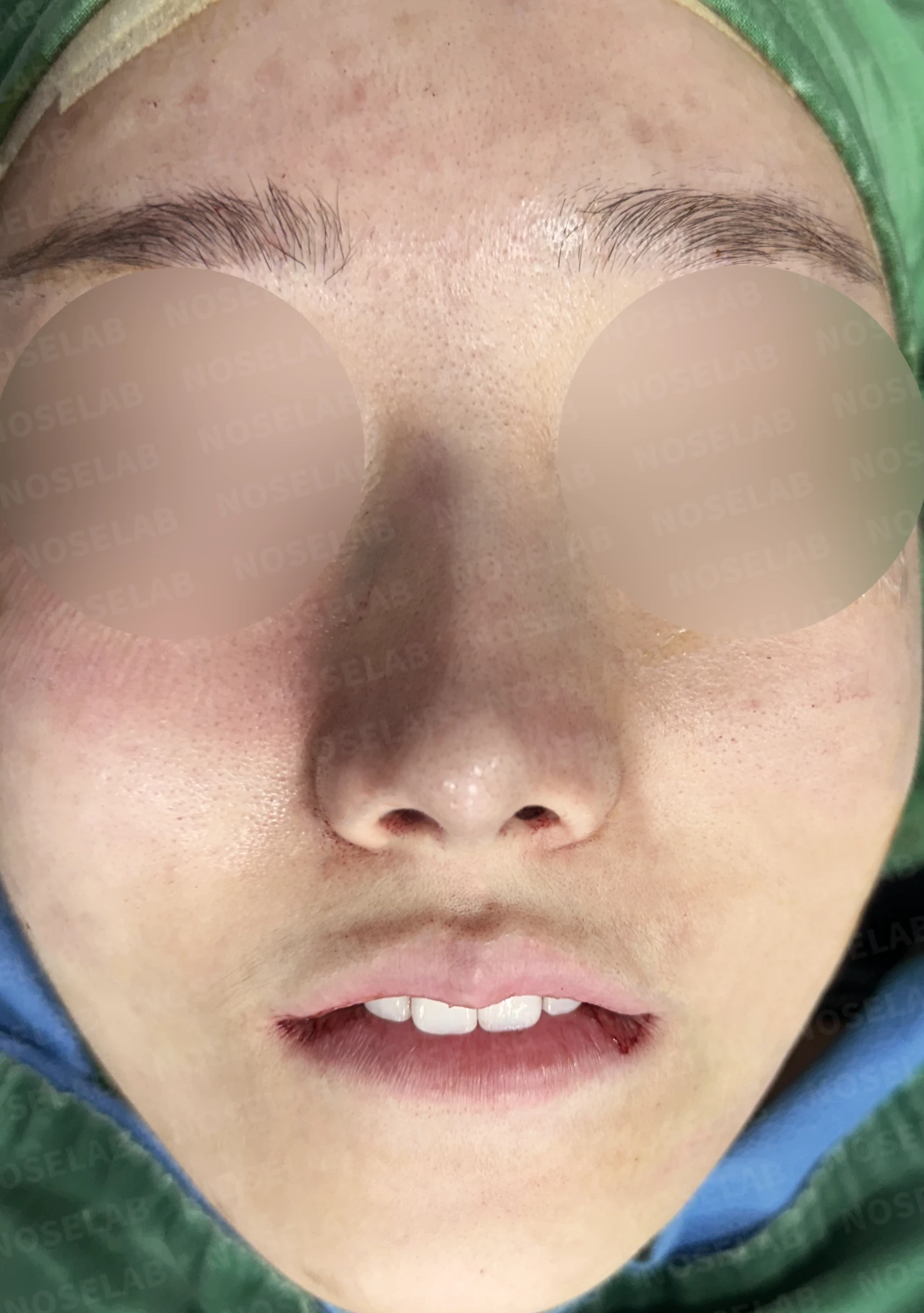
Before surgery / Day 0 immediately after surgery Photos taken immediately after surgery show swelling and may differ from the final result.
Front view changes
The previously high radix was naturally lowered, softening the patient's overall facial impression.
The bulbous nasal tip was refined into a neat contour, creating a well-defined tip shape.
Before surgery / Day 0 immediately after surgery Photos taken immediately after surgery show swelling and may differ from the final result.
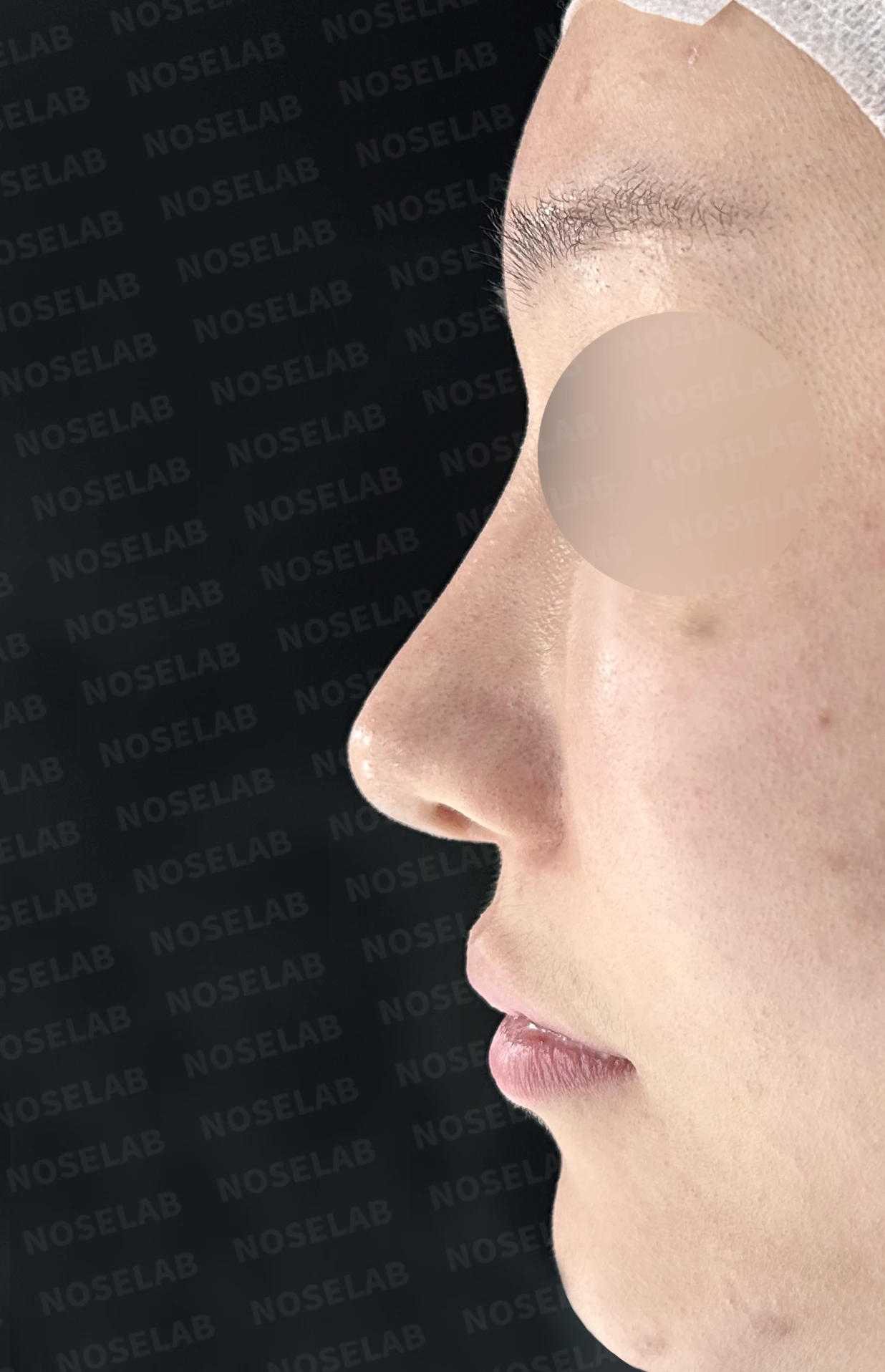
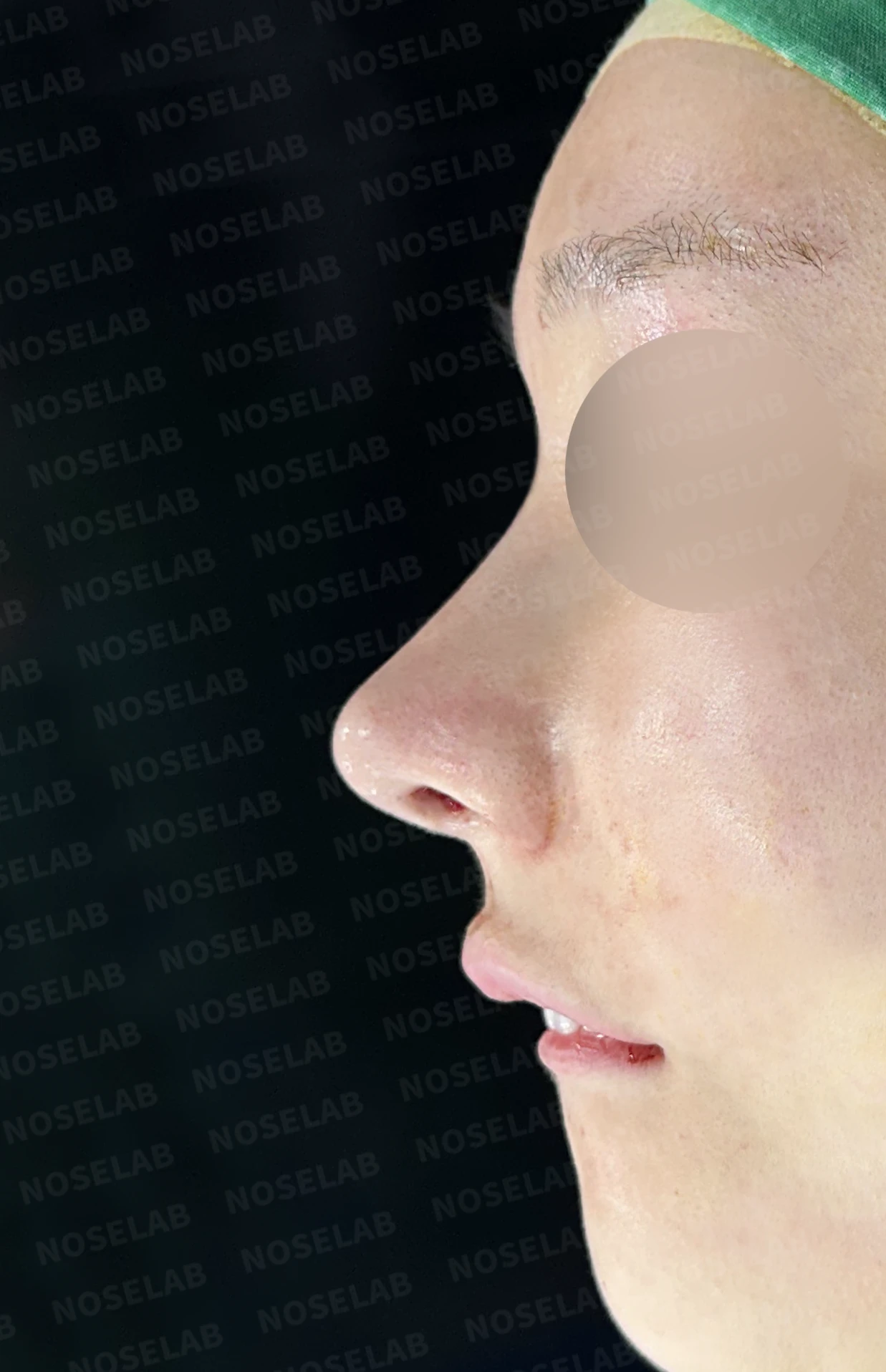
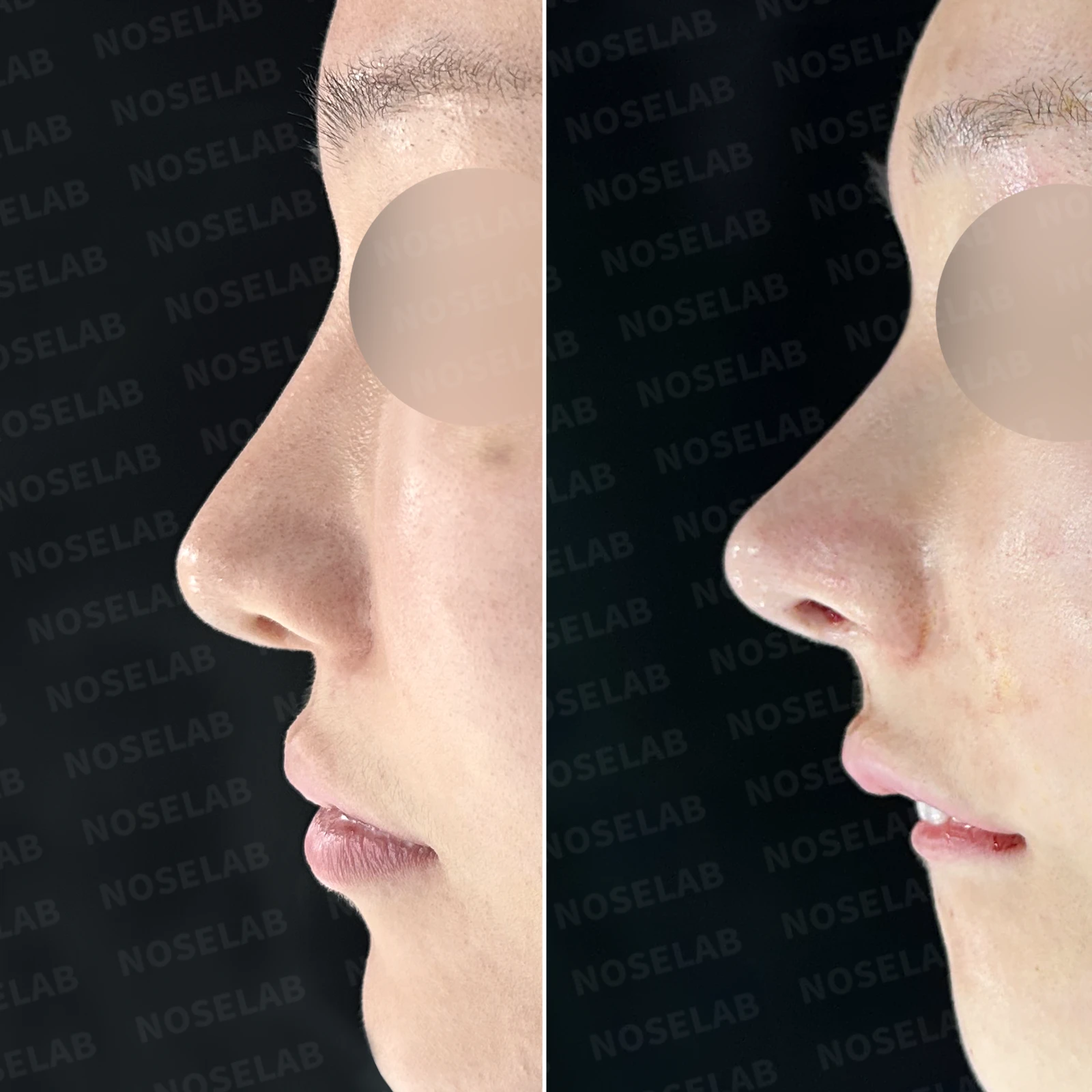
Profile view changes
The patient achieved the desired feminine, straight bridge line.
With the nasolabial angle corrected, the proportions of the midface were balanced more harmoniously.
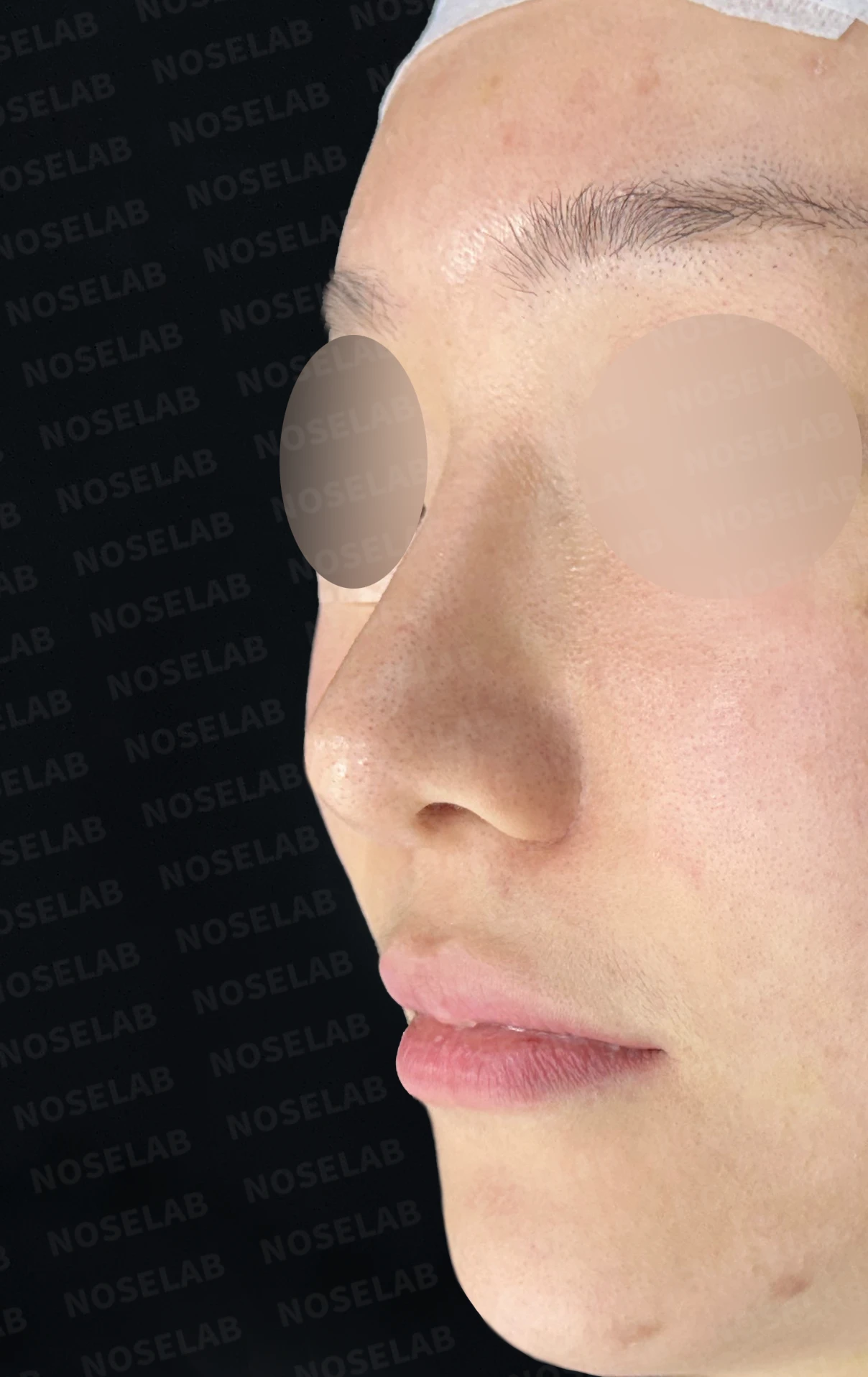
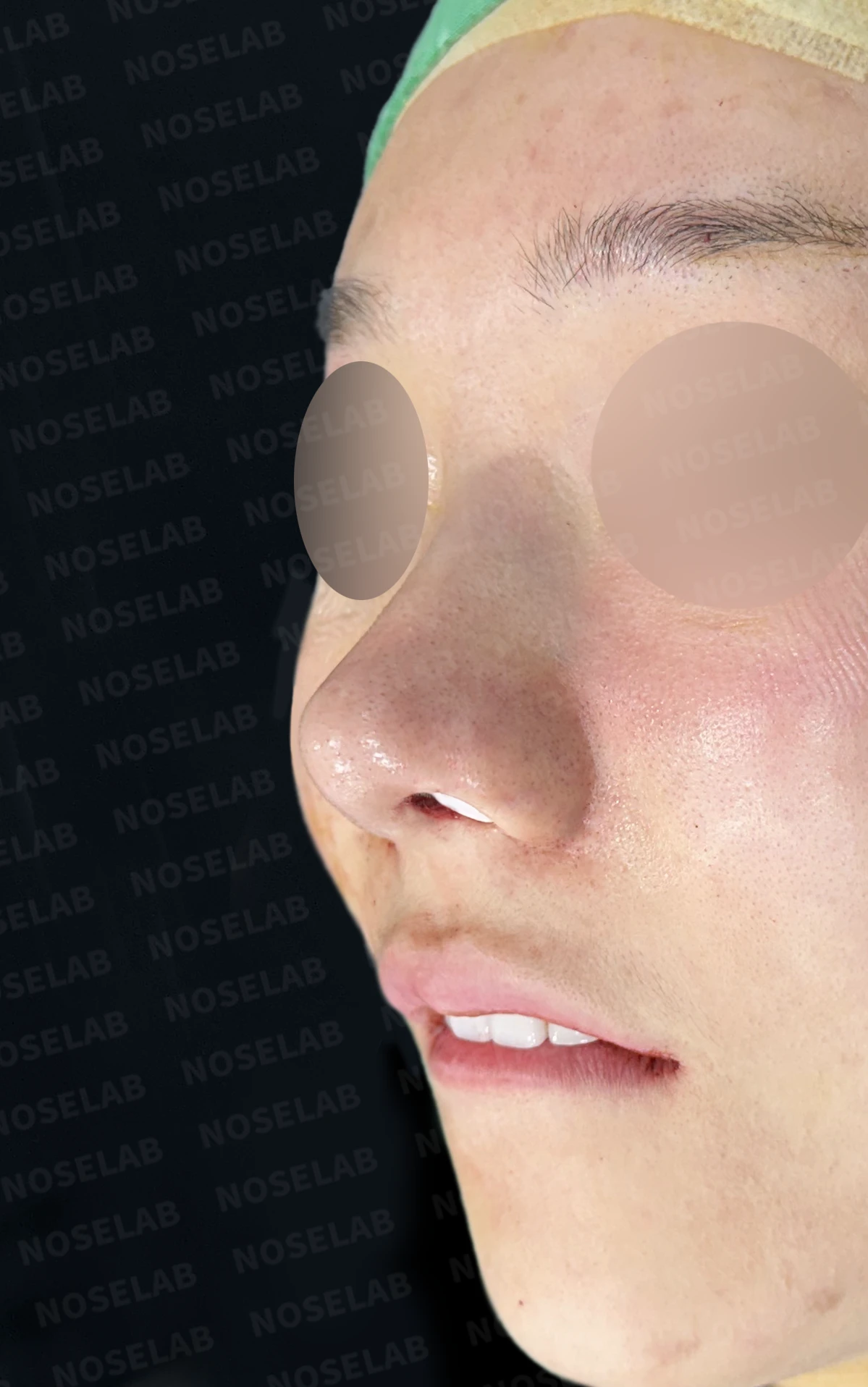
Before surgery / Day 0 immediately after surgery Photos taken immediately after surgery show swelling and may differ from the final result.
Functional changes
Through correction of the deviated septum and inferior turbinate surgery, nasal obstruction symptoms are expected to improve.
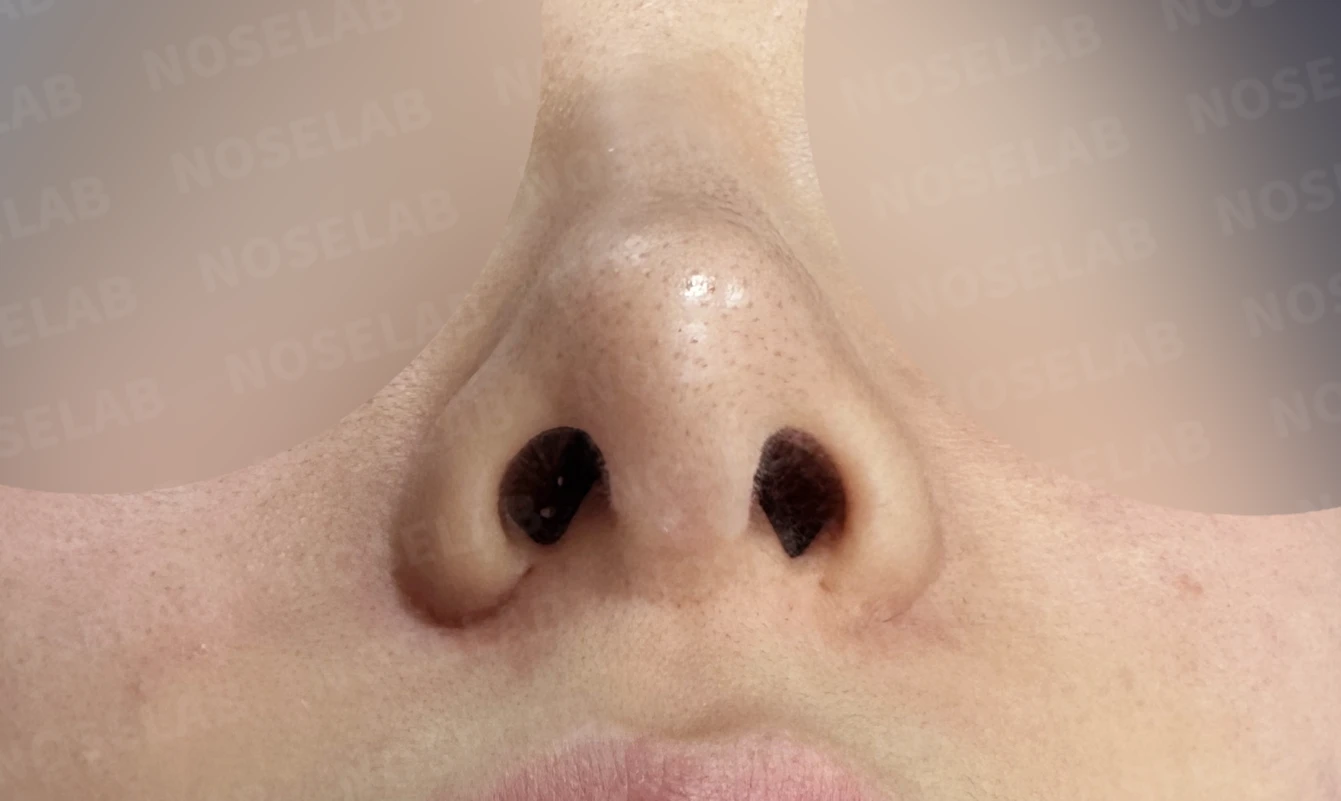
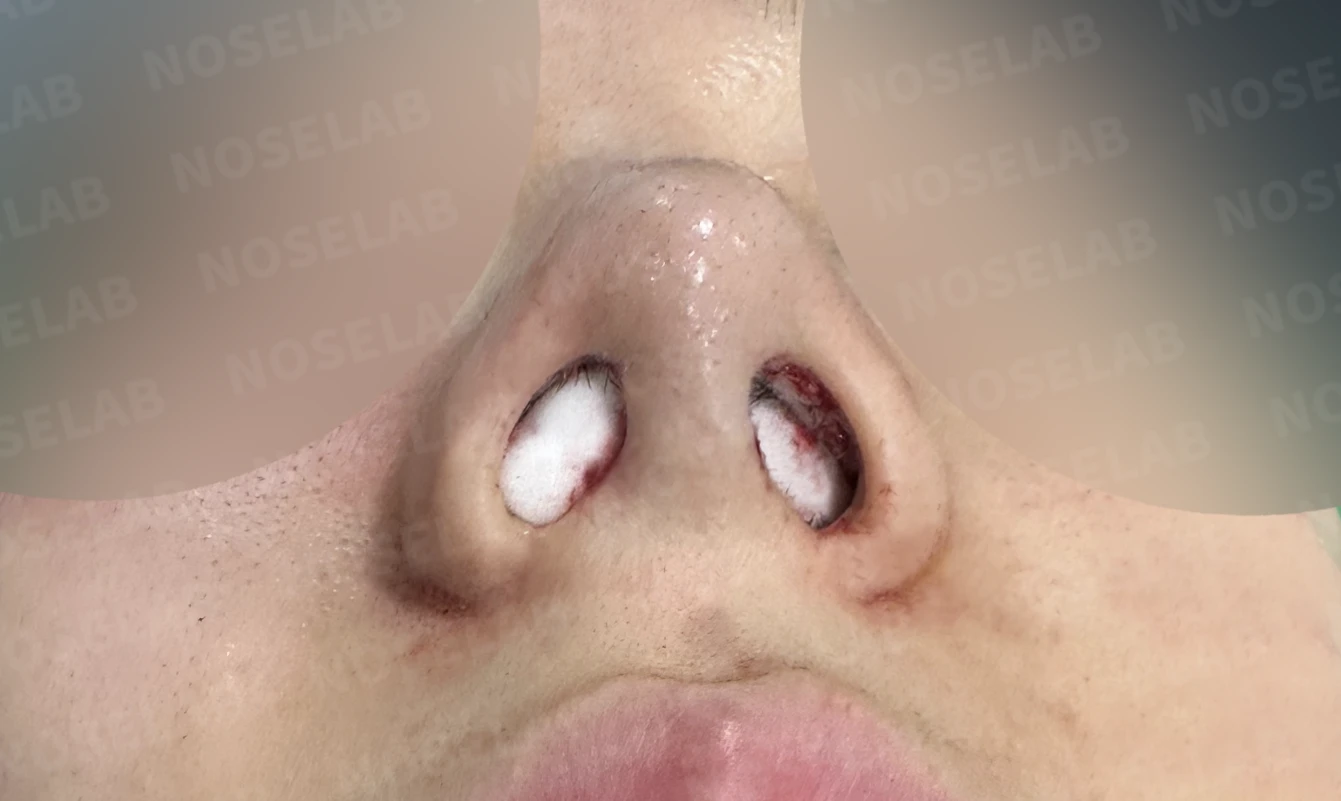
Before surgery / Day 0 immediately after surgery Photos taken immediately after surgery show swelling and may differ from the final result.
🌟 Surgical results
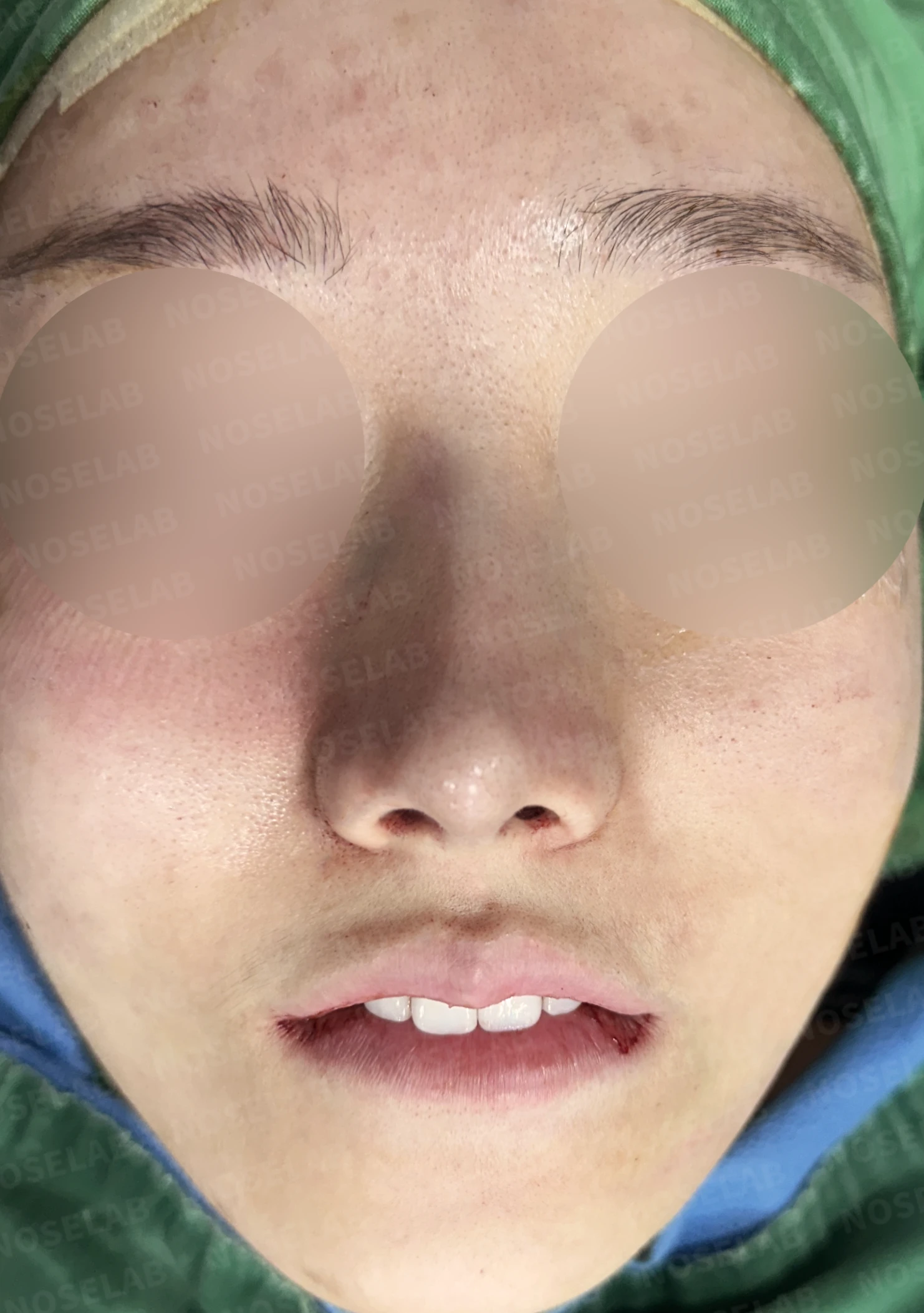
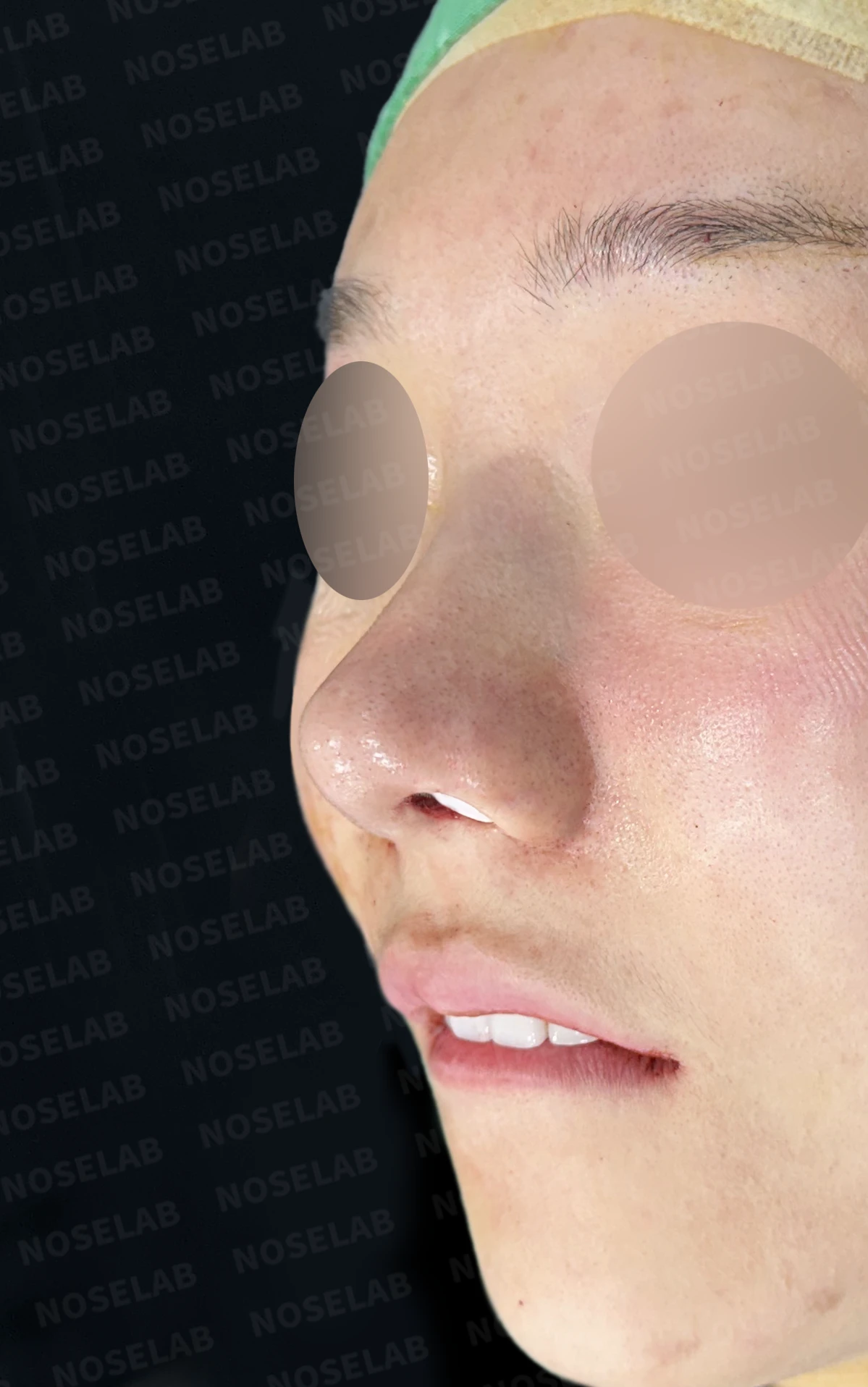
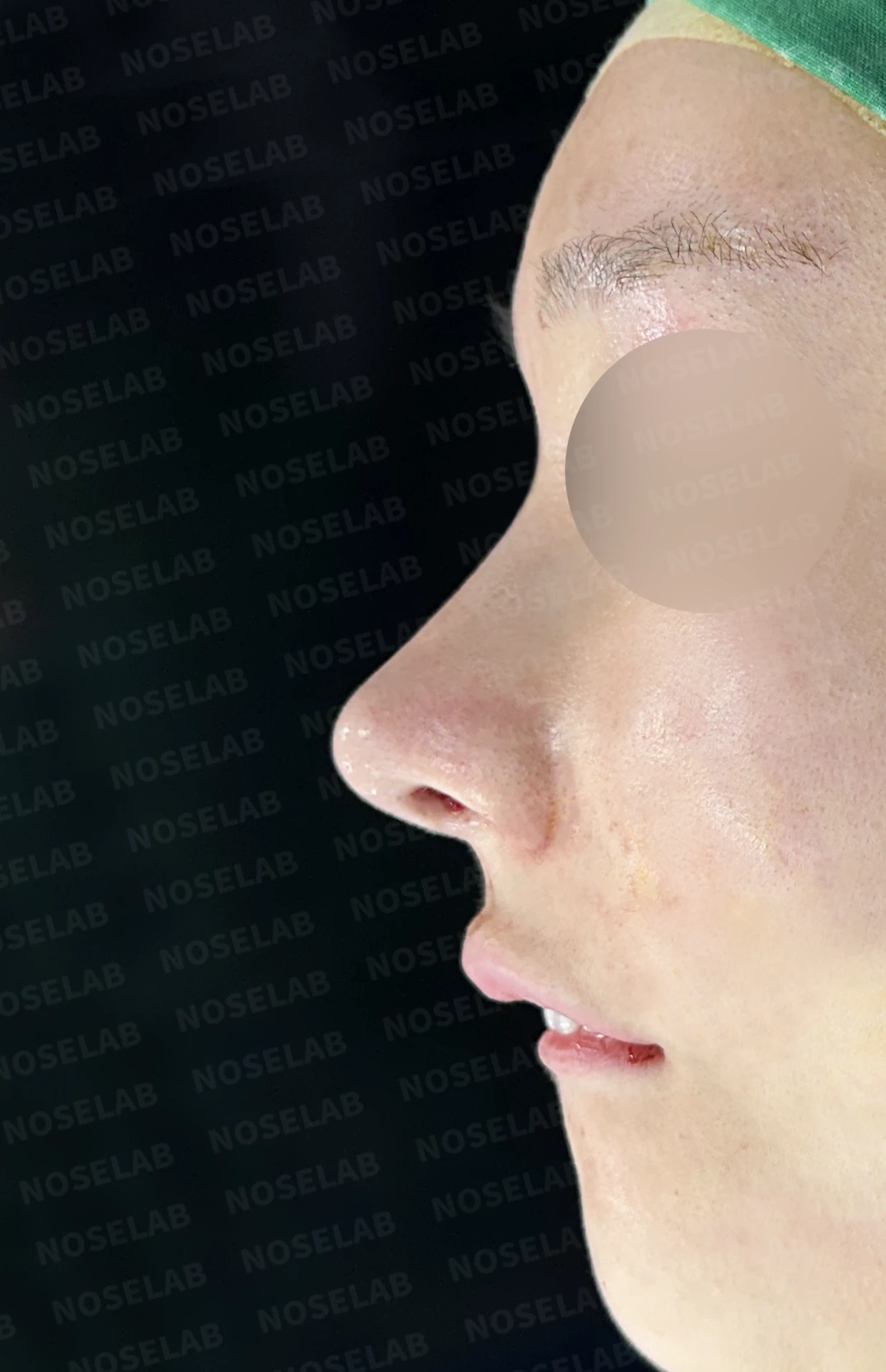
Front, oblique, and profile views on day 0 immediately after surgery. Photos taken immediately after surgery show swelling and may differ from the final result.
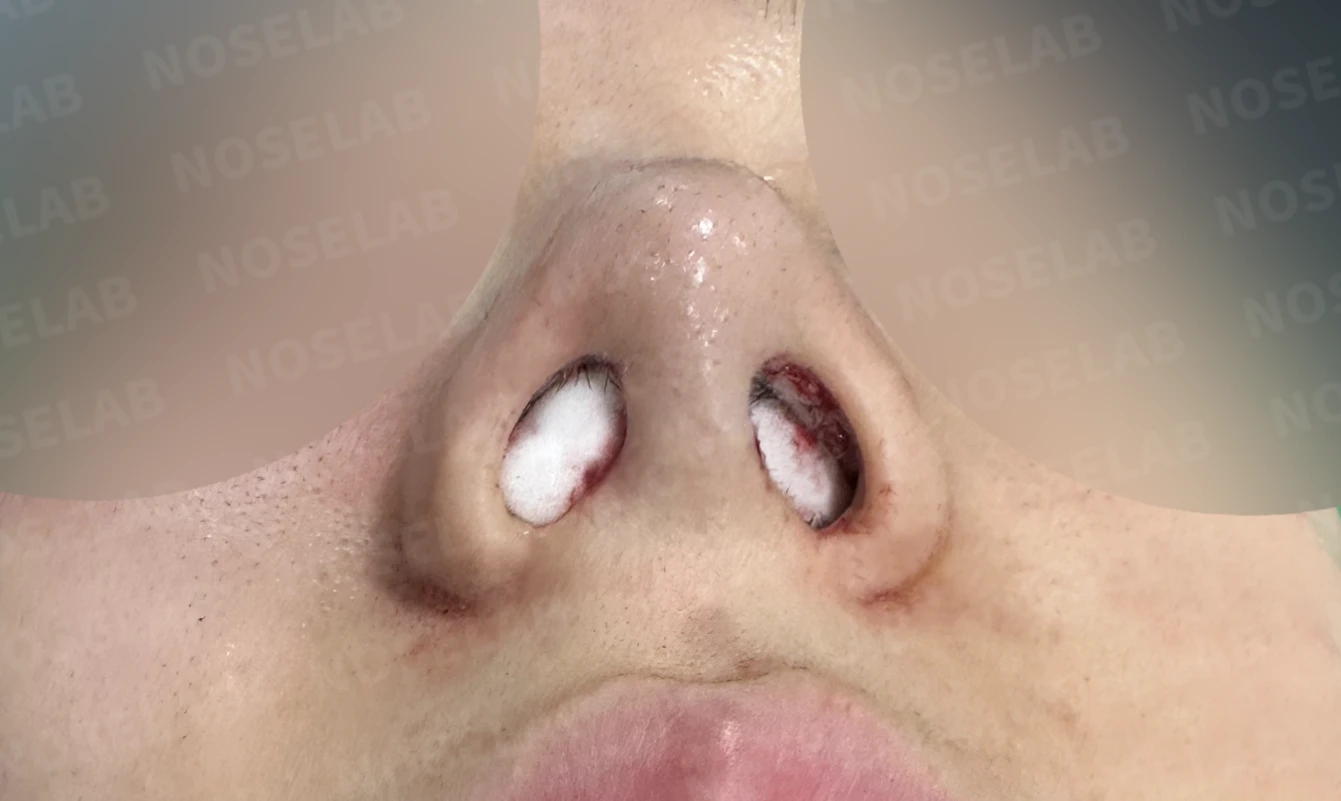
Nostril view on day 0 immediately after surgery. Photos taken immediately after surgery show swelling and may differ from the final result.
When performing revision rhinoplasty on patients who have undergone multiple prior nasal surgeries, surgical plans must be established only after thoroughly assessing scar tissue formation, cartilage status, and changes in skin thickness. In this case, a closed approach was used to minimize unnecessary scarring while providing precise access to the areas requiring correction.
Along with aesthetic improvements to the nose, septoplasty and inferior turbinate surgery were performed to resolve functional concerns, ensuring enhanced comfort in daily life.
This was Dr. Peter C. Kang. Thank you.
#closedrhinoplasty #closedrevisionrhinoplasty #longnosecorrection #droopingtipcorrection #nasolabialanglecorrection #revisionrhinoplasty #osteotomy #deviatedseptum #inferiorturbinatesurgery #nasalobstructionsurgery

Limitations and risks
When autologous rib cartilage is used, scarring and pain may remain at the donor site on the chest, and pneumothorax (pleural injury) can occur rarely. Over time, the grafted cartilage may warp or undergo partial resorption.
When the septum is corrected at the same time, nasal obstruction may persist or recur, and in rare cases, septal perforation or changes in smell may occur.
Common potential risks include infection, bleeding, asymmetry, scarring, skin necrosis, and insufficient improvement; results vary depending on individual skin condition and previous surgical history.