Hello, I am Dr. Peter C. Kang.
Today, I would like to introduce the case of a patient who visited our clinic concerned about a short, upturned nasal tip and a drooping columella.
🔍 Preoperative condition
The patient had no prior history of nasal surgery and was undergoing primary rhinoplasty. Because the nasal tip was turned upward, there was substantial nostril show from both the front and profile views. In addition, the columella, which serves as the supporting pillar for the tip, was drooping downward, making the side profile appear somewhat unstable. With an upturned tip that appeared sharply pointed like an arrow combined with a thin nasal bridge, the overall nasal contour lacked defined balance.
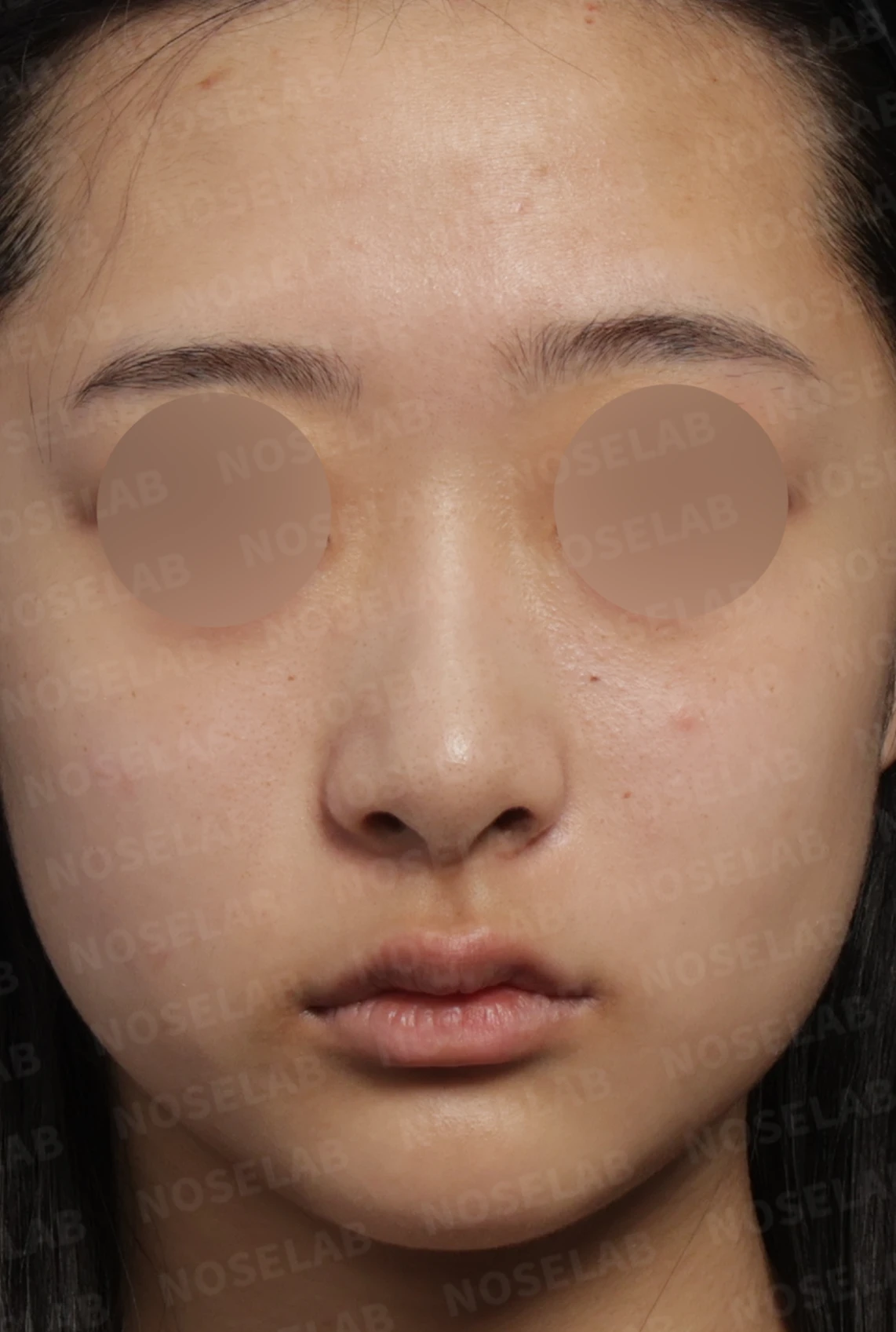
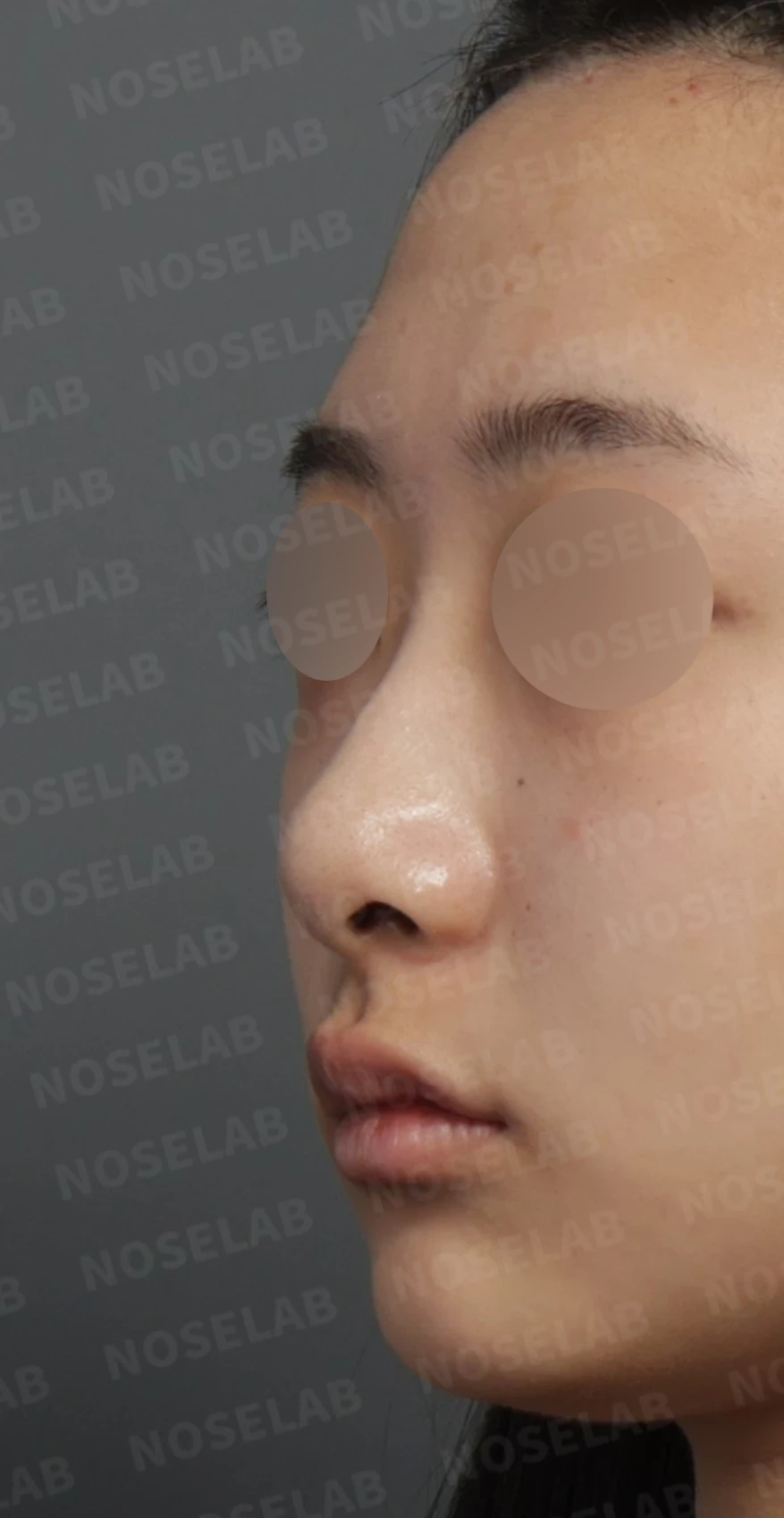
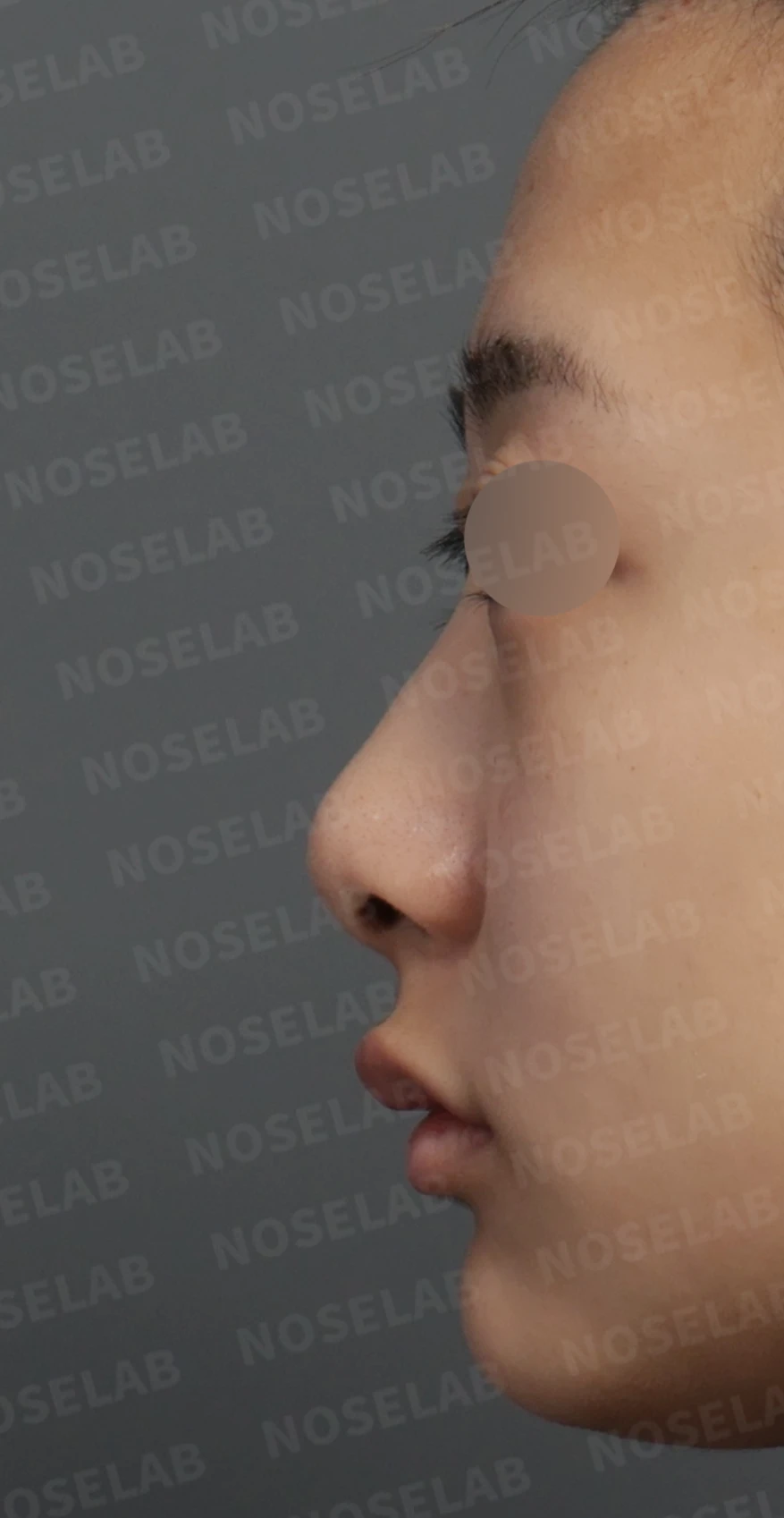
Design consultation: front, left oblique, and profile views.
💉 Patient requests
Desired a softly rounded yet clearly defined nasal tip line.
Hoped for a harmonious line transitioning smoothly from the nasal bridge to the tip, blending straight and subtle curved contours.
Wanted to improve the bulbous-looking nasal tip.
Desired the most natural possible result without looking artificial.
There were no breathing difficulties or nasal obstruction, and no notable history of medications, medical conditions, or allergies, making the patient a suitable candidate for surgery.
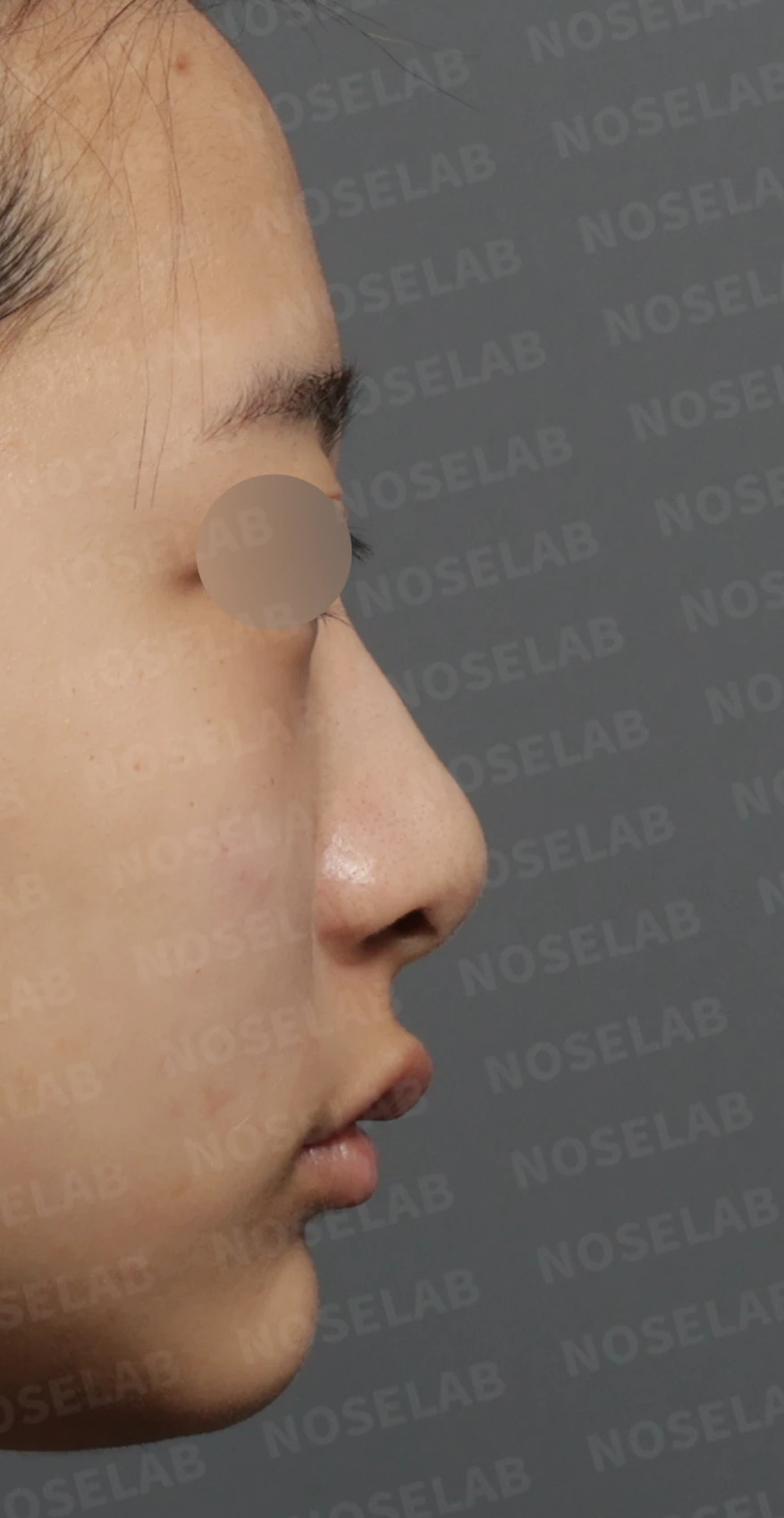
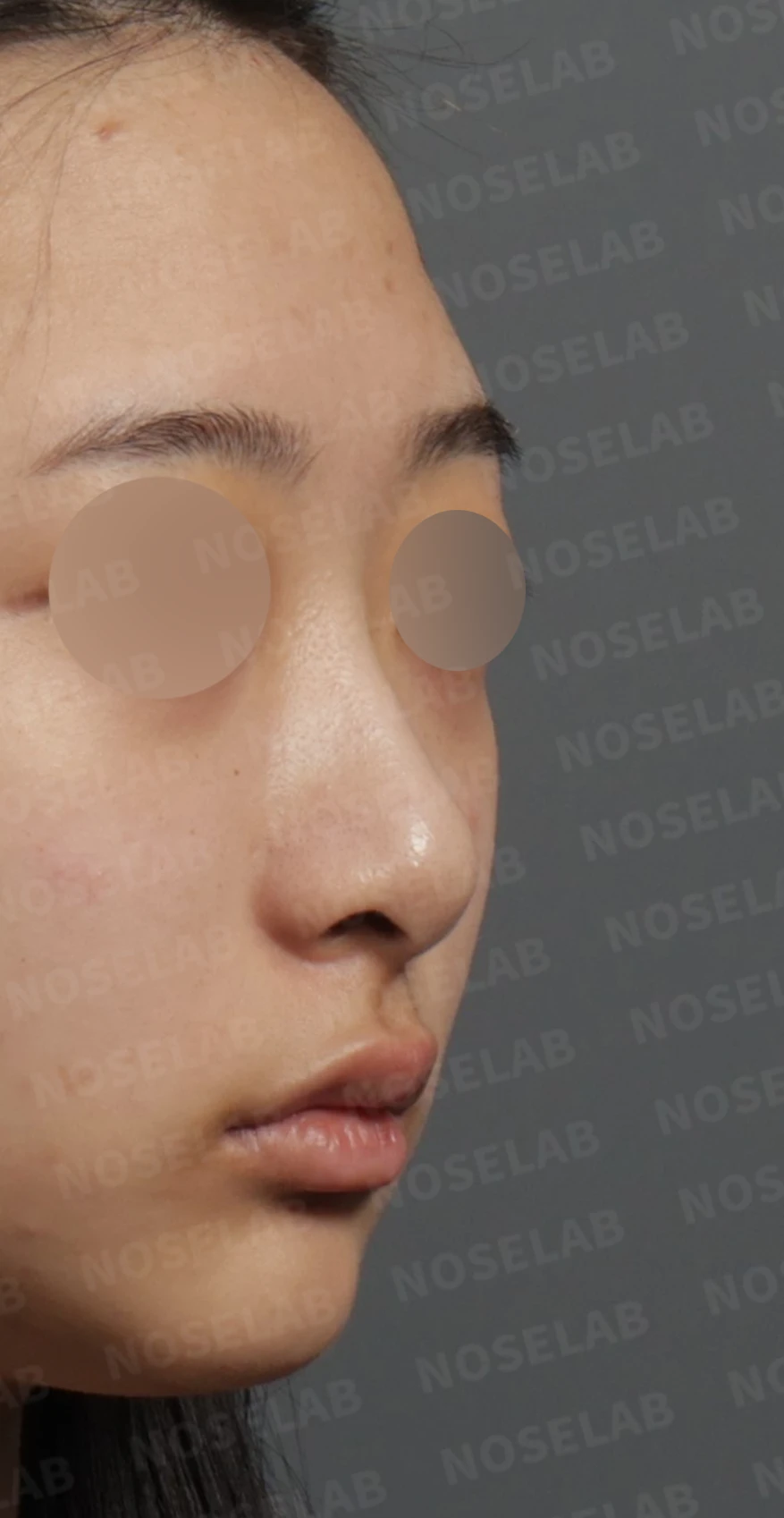
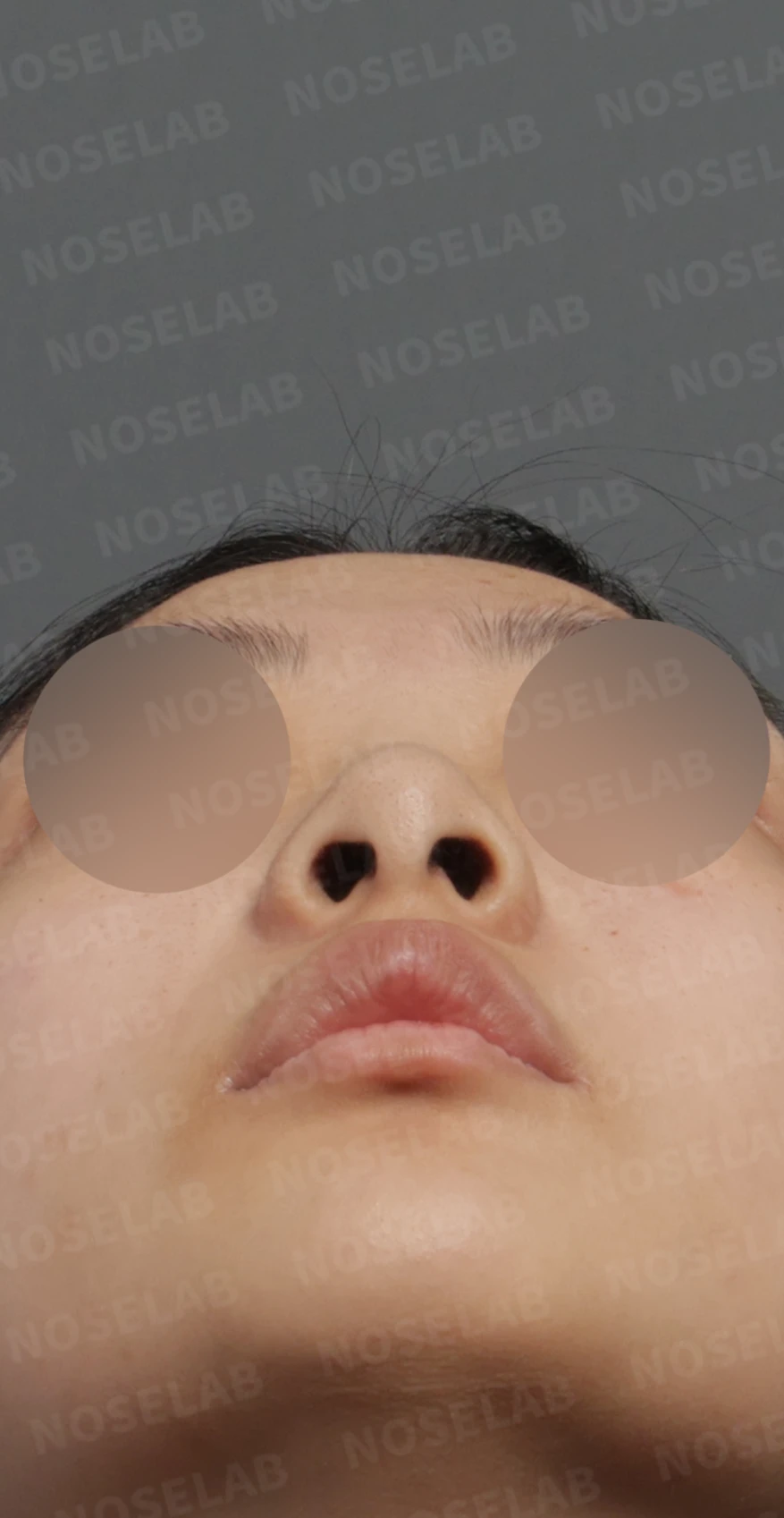
Right profile, oblique, and nostril views during design consultation.
🔧 Surgical plan and procedure
1. Correcting the nasal tip position with septal extension — Using donor rib cartilage together with the patient's septal cartilage, a new support structure was created to reinforce the nasal tip, naturally lowering the upturned tip to correct both length and angle.
2. Correcting the drooping columella — The downward-drooping columella was naturally elevated, reducing excessive nostril show when viewed from the profile.
3. Enhancing the nasal bridge line — The thin nasal bridge was refined to a natural width and height using a silicone implant without over-augmentation.
4. Nasal tip refinement — The nasal tip was delicately refined so it appeared well-projected without looking sharp or pointy.
🌟 Surgical results
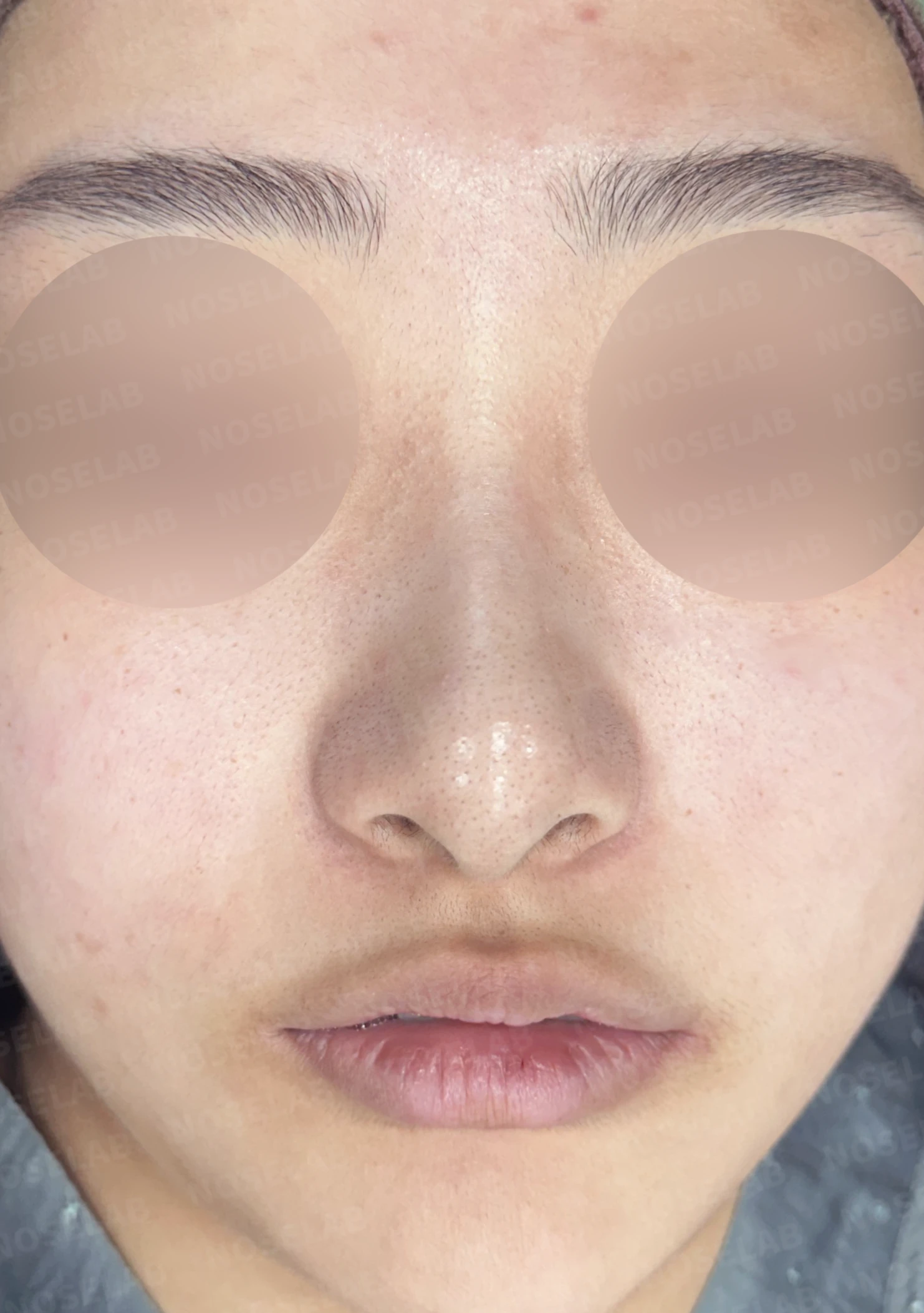
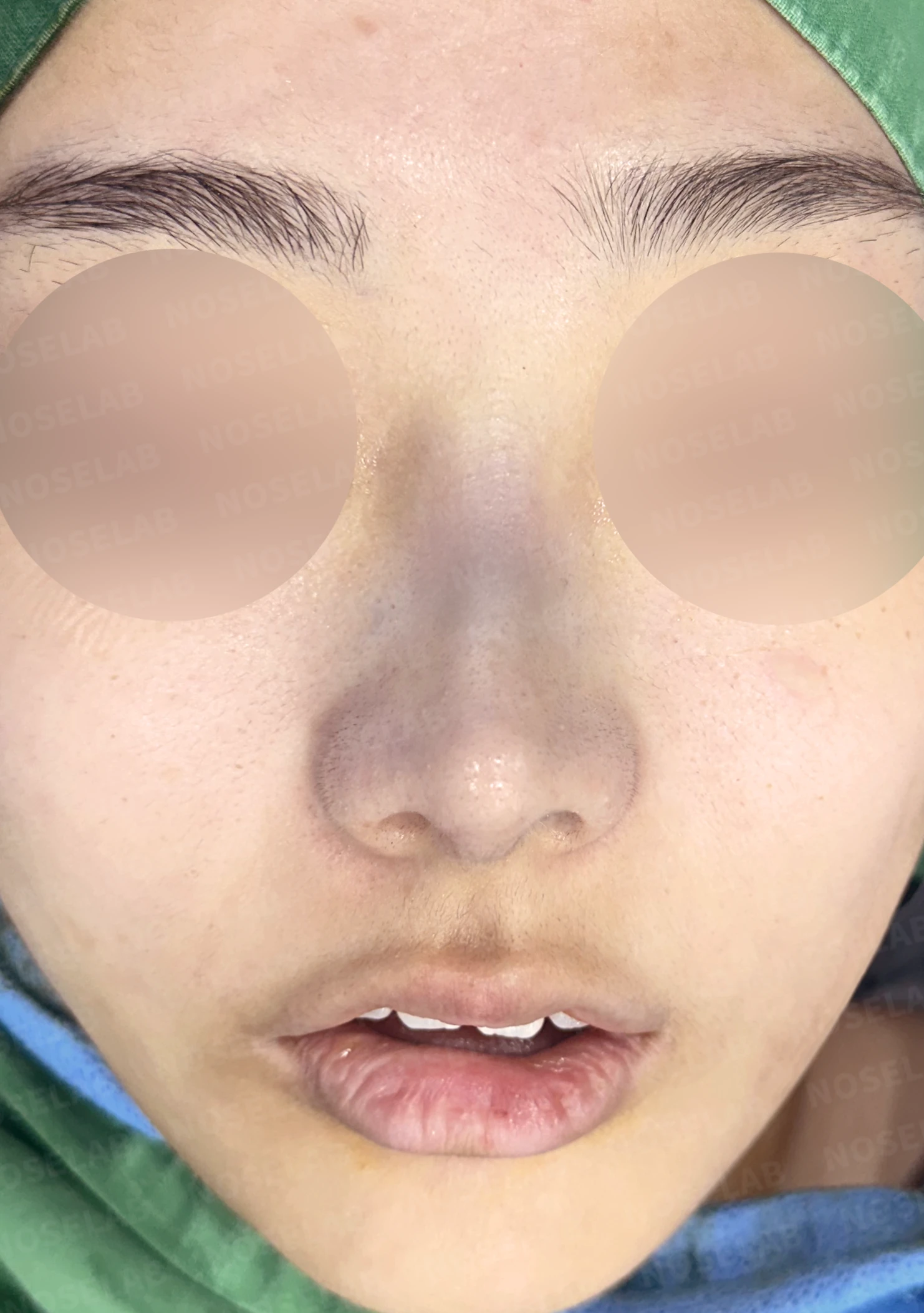
Before surgery / Day 0 immediately after surgery Photos taken immediately after surgery show swelling and may differ from the final result.
Front view changes
The upturned nasal tip settled into a stable position, reducing nostril show.
The previously blunt tip shifted to a much more refined impression.
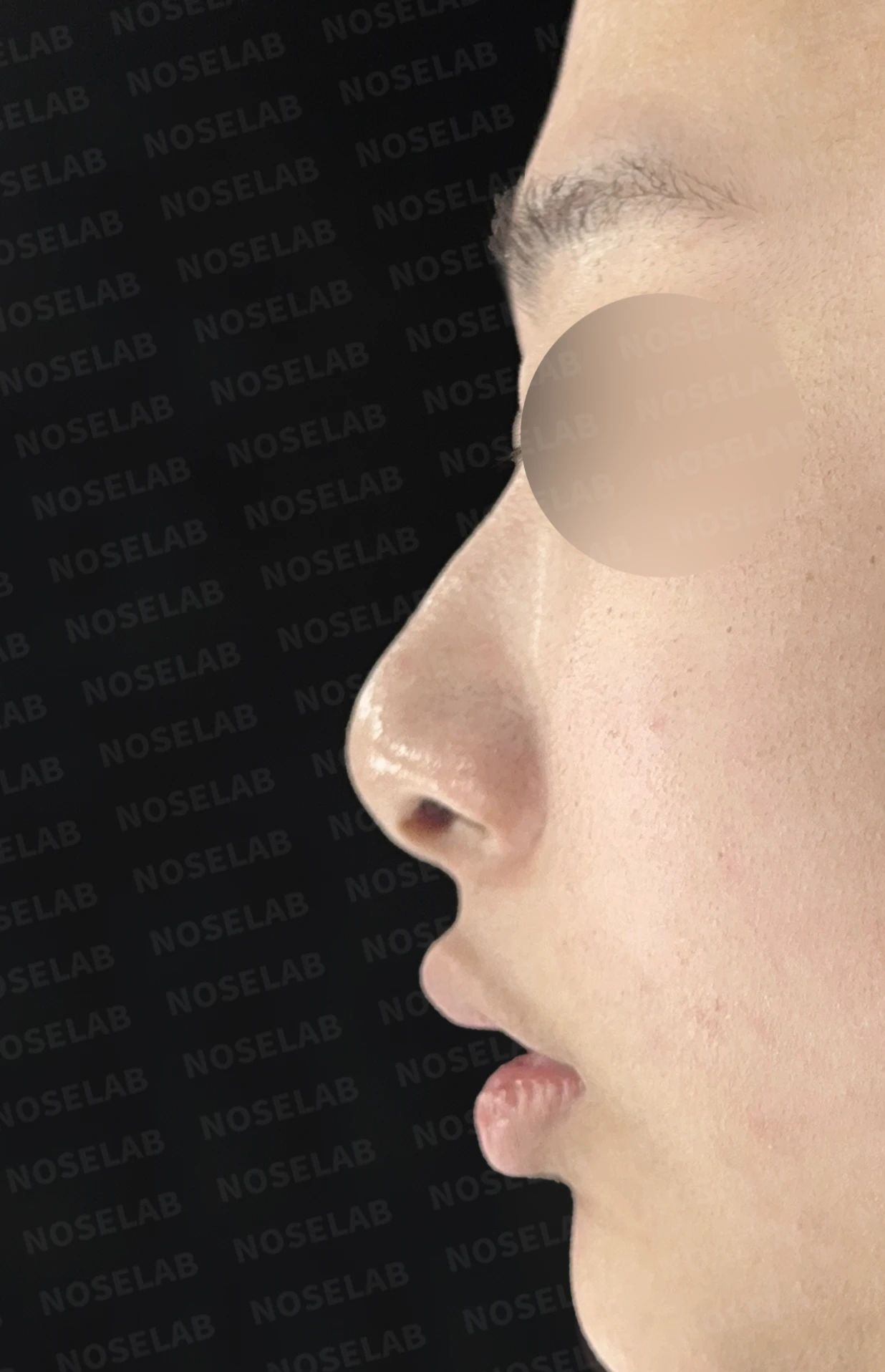
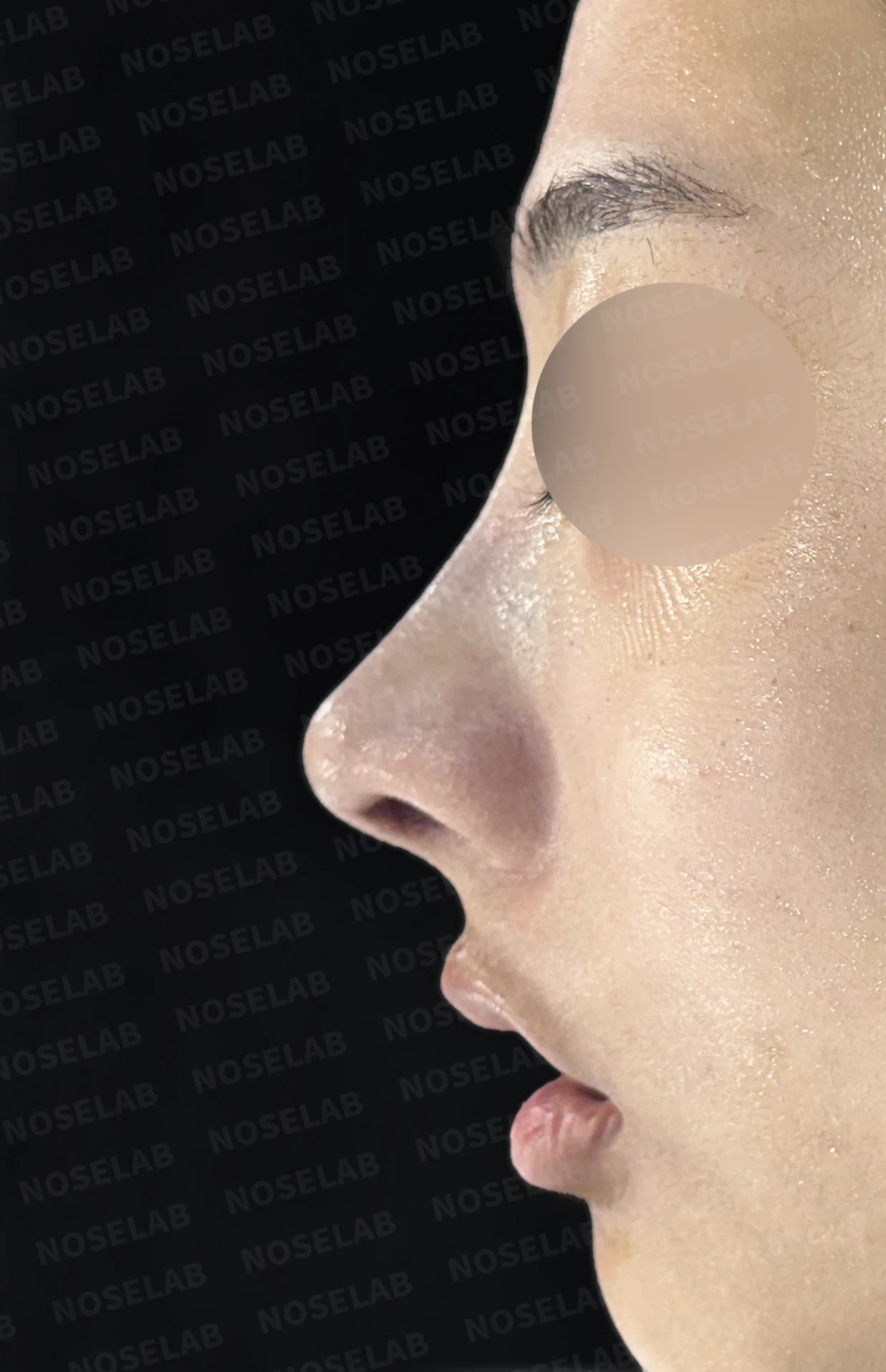
Before surgery / Day 0 immediately after surgery Photos taken immediately after surgery show swelling and may differ from the final result.
Profile view changes
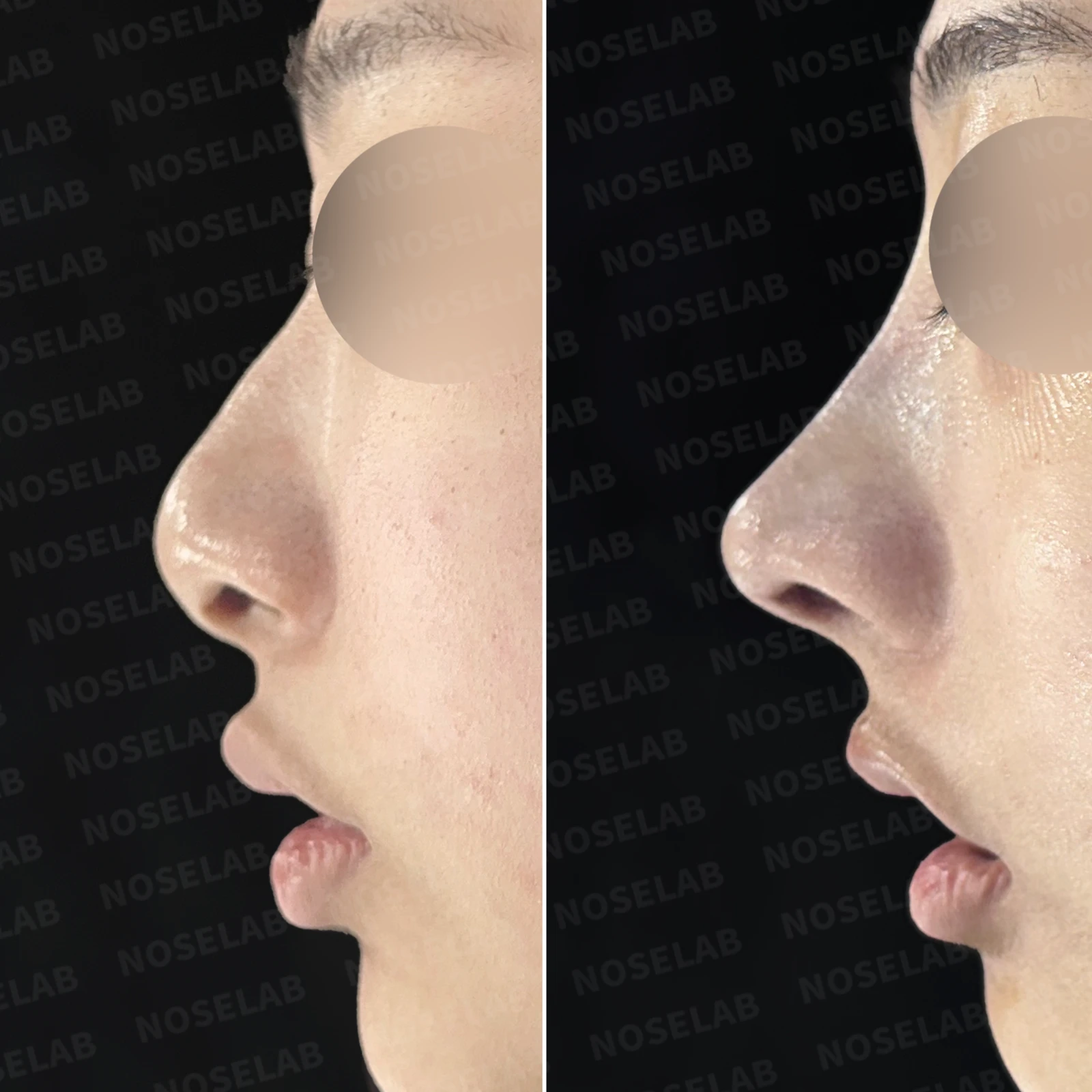
As the drooping columella was raised, the profile silhouette became significantly more natural.
The line flowing from the nasal bridge to the nasal tip connected smoothly.
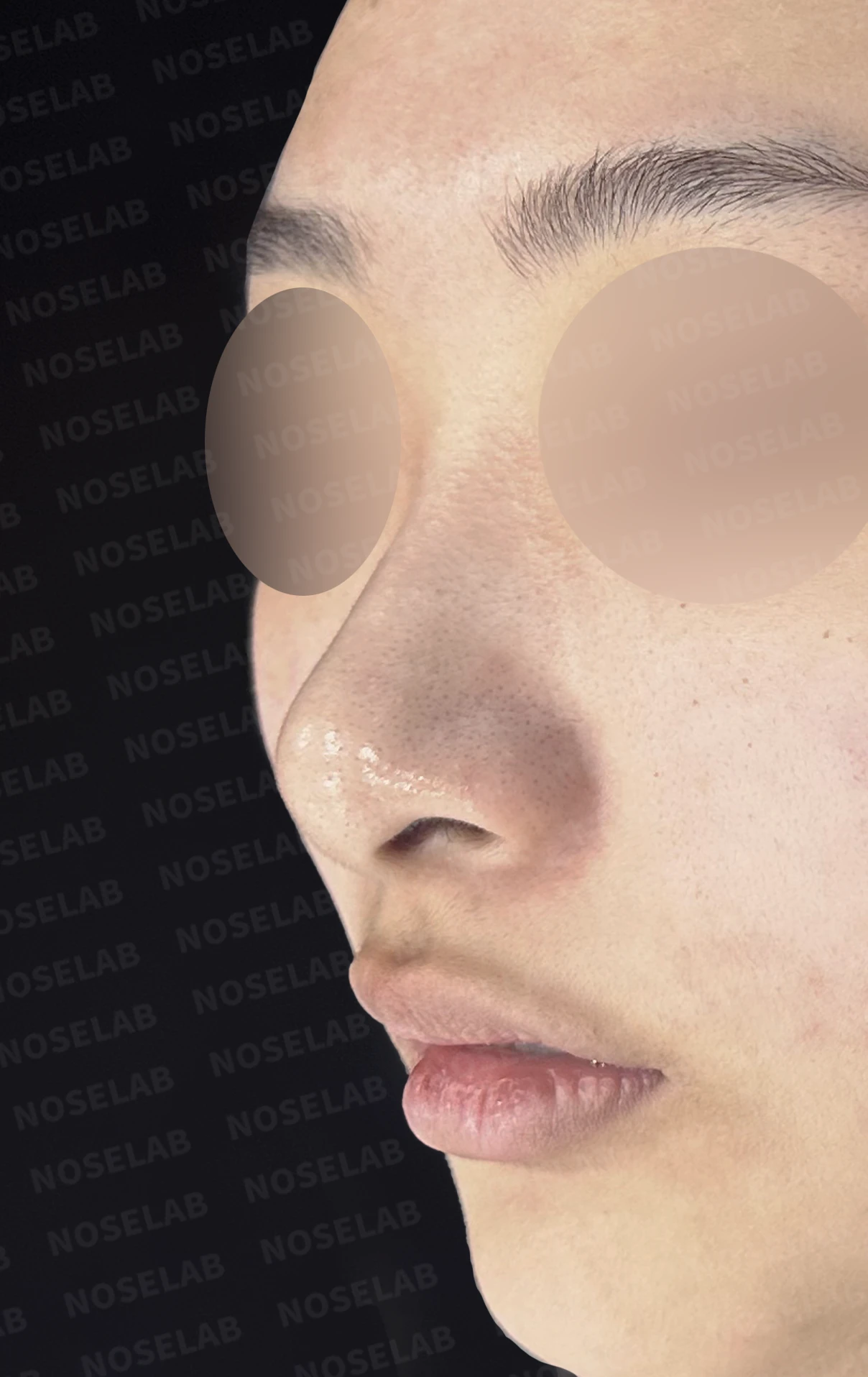
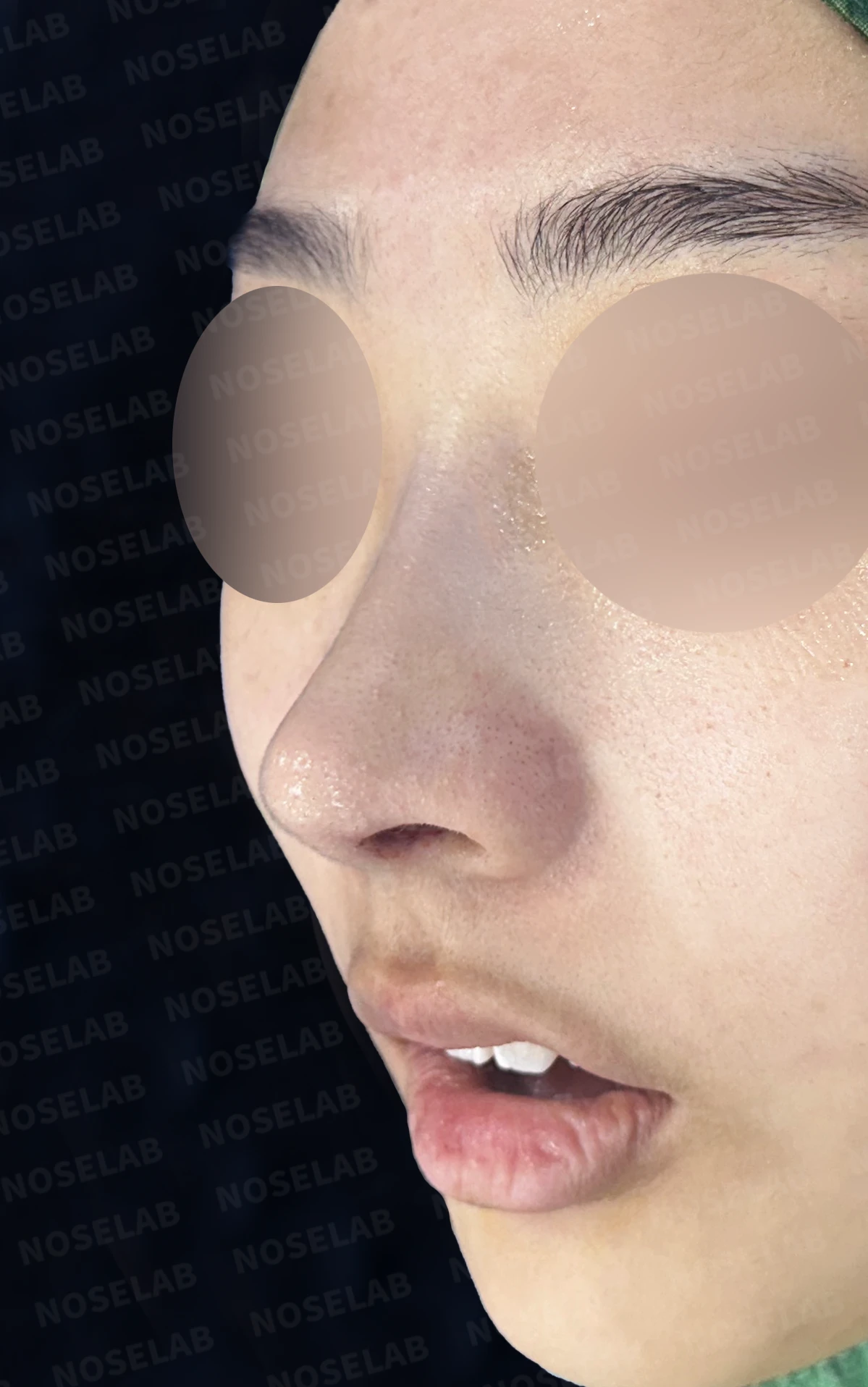
Before surgery / Day 0 immediately after surgery Photos taken immediately after surgery show swelling and may differ from the final result.
Overall change in impression
Natural volume was added to the thin nasal bridge, completing a defined yet understated nasal contour.
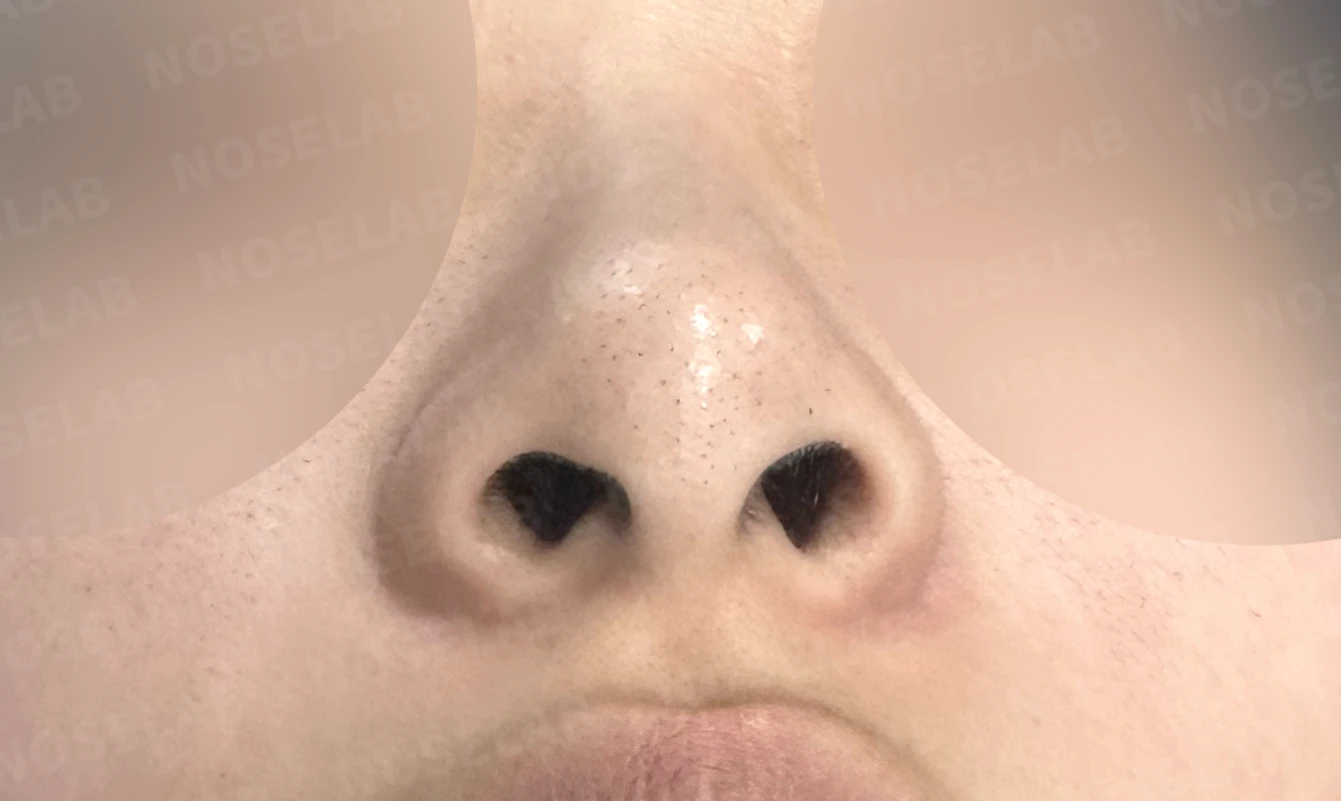
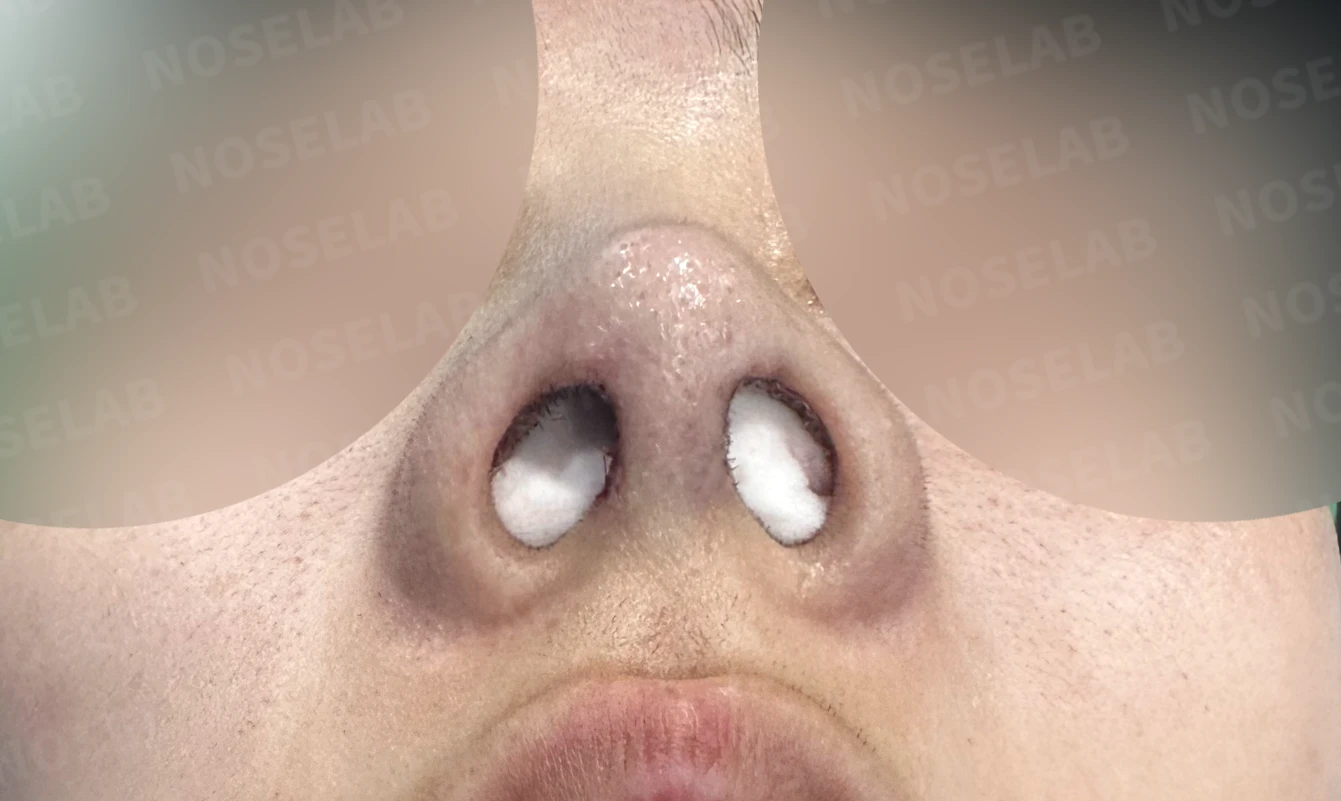
Before surgery / Day 0 immediately after surgery Photos taken immediately after surgery show swelling and may differ from the final result.
💡 Specialist opinion
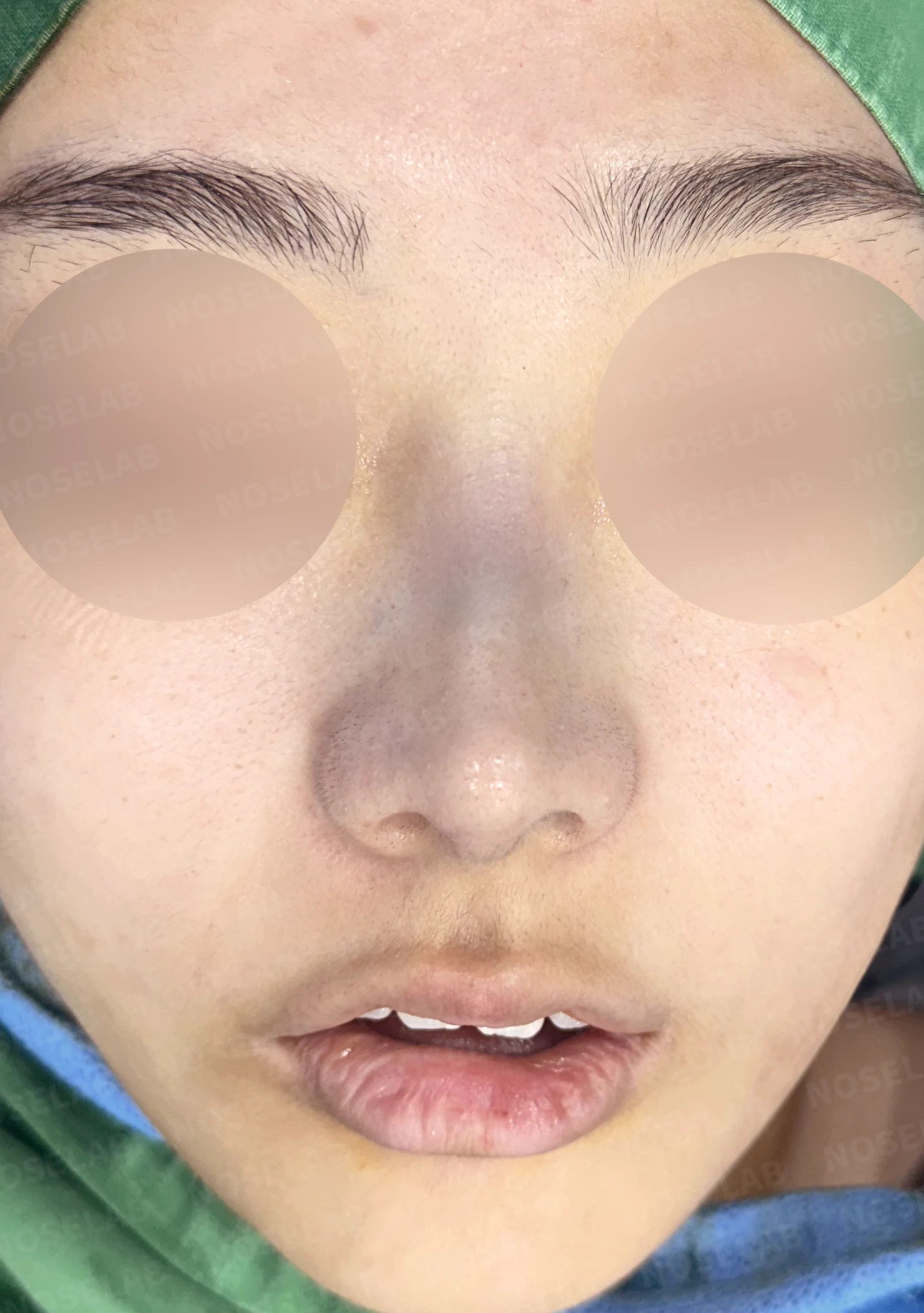
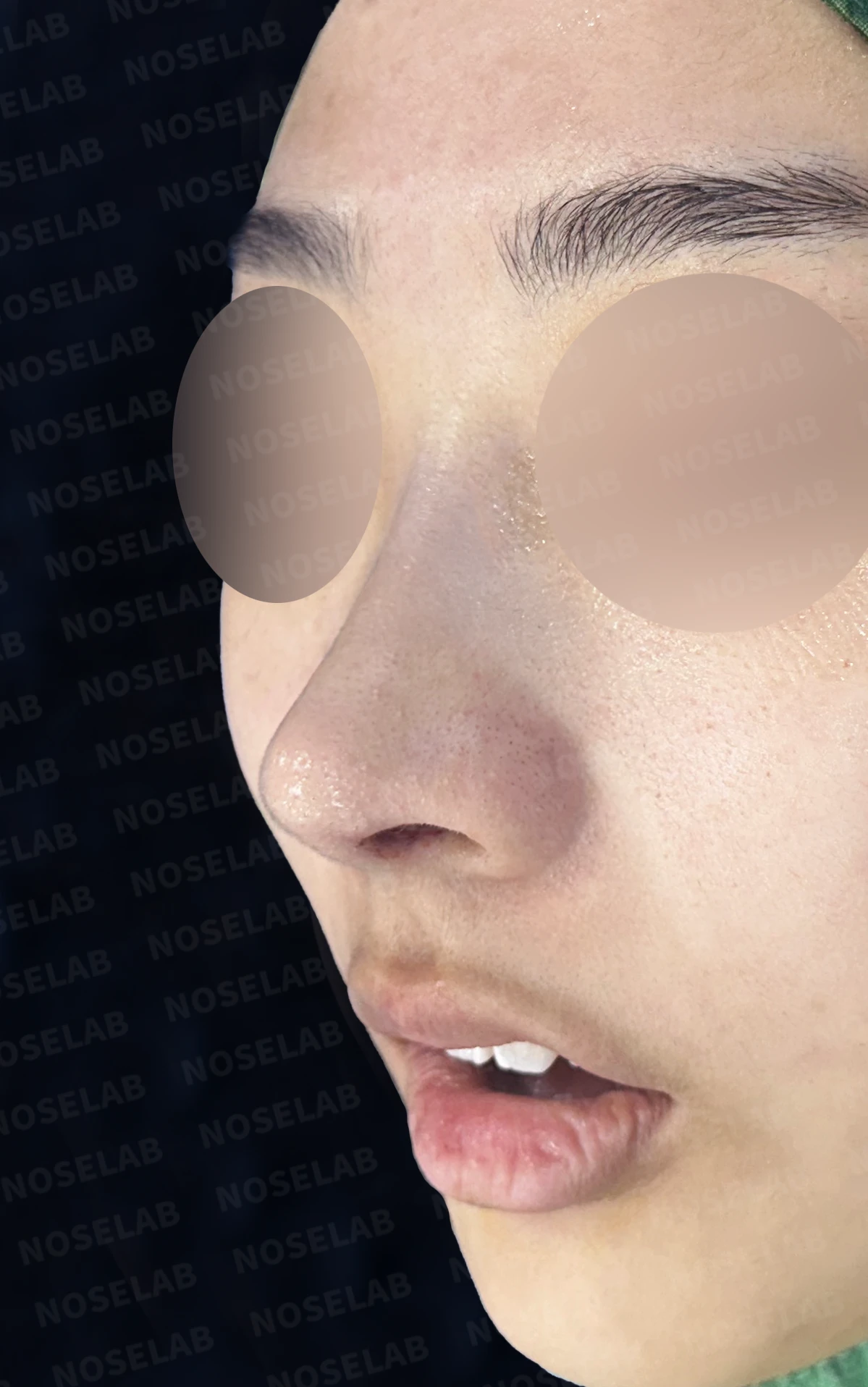
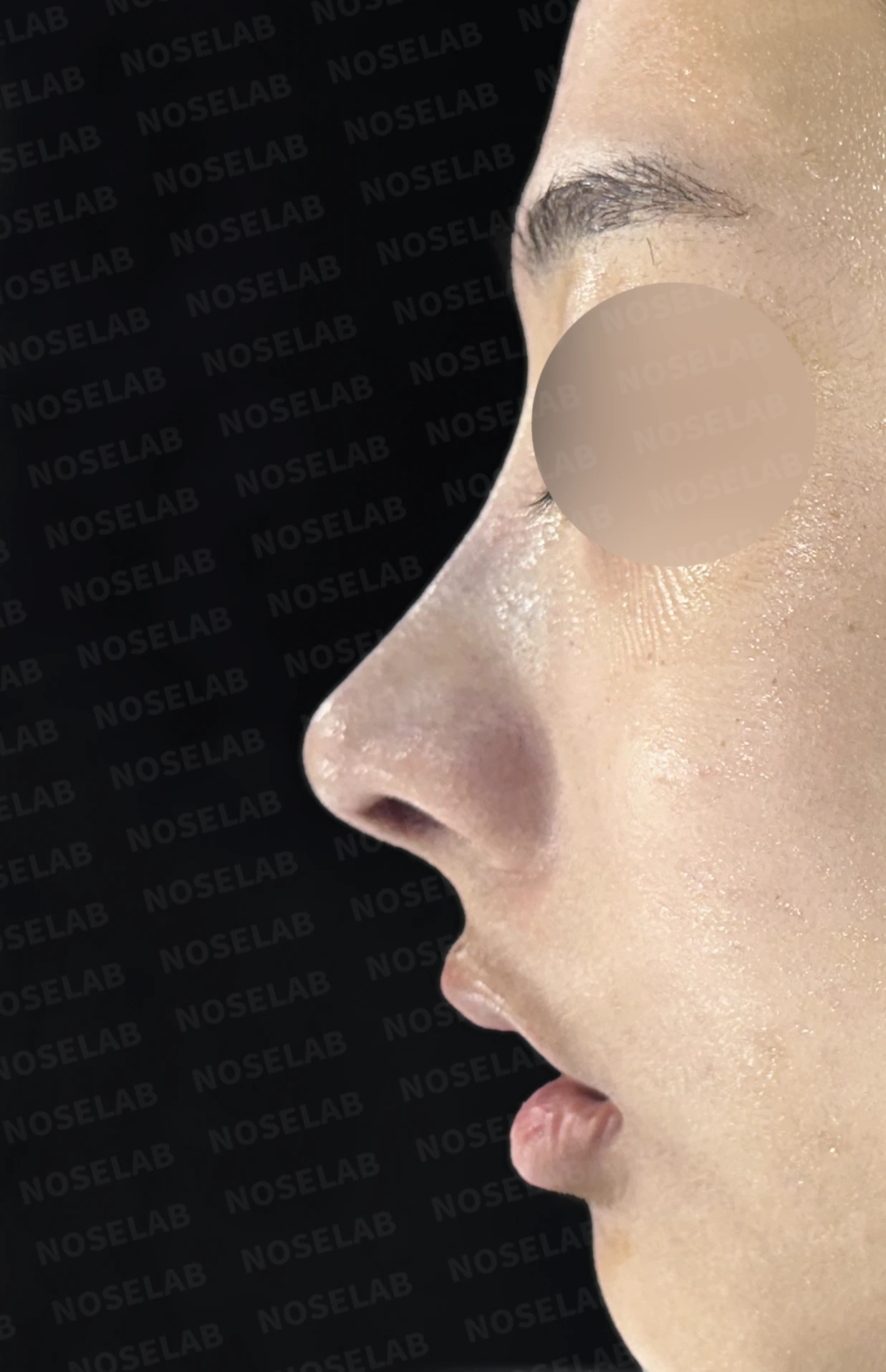
Front, oblique, and profile views on day 0 immediately after surgery. Photos taken immediately after surgery show swelling and may differ from the final result.
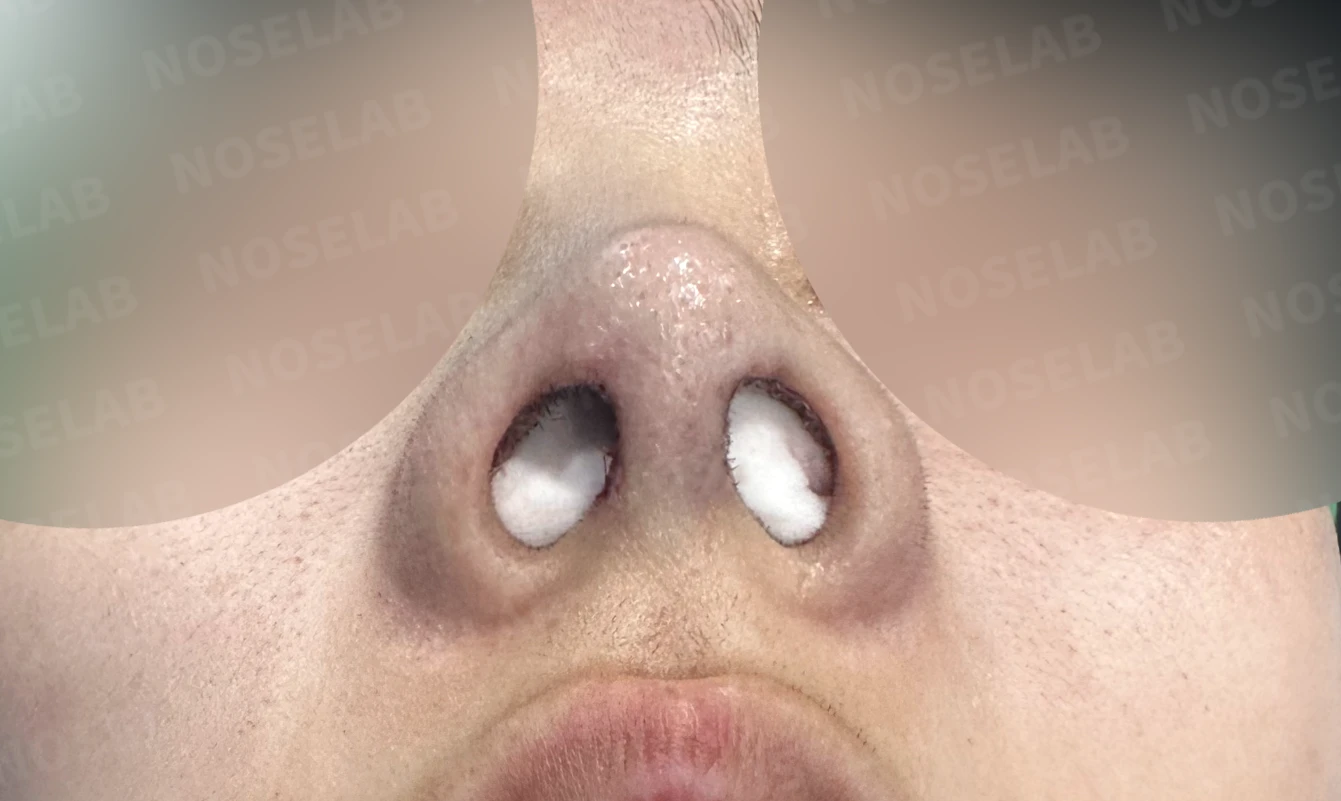
Nostril view on day 0 immediately after surgery. Photos taken immediately after surgery show swelling and may differ from the final result.
With an upturned nose, merely pressing the nasal tip downward often leads to relapse. The key is creating adequate structural support to securely hold the tip's position and angle. In this type of case, using donor rib cartilage together with septal cartilage forms a strong support structure, and simultaneously correcting the drooping columella achieves a balanced outcome from both the front and profile views.
Particularly for patients with a thin nasal bridge, rather than excessively raising height, it is far more important to find a natural width and height that harmonizes with the entire face. Carefully designing the procedure while taking into account both the patient's tissue condition and desired look led to a satisfying outcome.
I hope this case is helpful to those with similar concerns.
This was Dr. Peter C. Kang. Thank you.
#closedrhinoplasty #upturnednosecorrection #droopingcolumellacorrection #septalextension #naturalnasaltip #shortnosecorrection #donorribcartilage

Limitations and risks
When using donor rib cartilage, long-term follow-up is necessary because the grafted cartilage may resorb or warp.
When the septum is corrected at the same time, nasal obstruction may persist or recur, and in rare cases, septal perforation or changes in smell may occur.
Common potential risks include infection, bleeding, asymmetry, scarring, skin necrosis, and insufficient improvement; results vary depending on individual skin condition and previous surgical history.