Introduction
Hello! Today, I would like to introduce a surgical case correcting a bulbous and upturned nose. The patient decided to undergo surgery after multiple non-surgical treatments failed to achieve the desired result. I hope this post will be helpful to those with similar concerns.
Patient introduction
Patient profile
• Sex: Female
• Age: 21 years old
• Occupation: Student
• Main concerns: Upturned nose, short and wide nose, bulbous tip
Reason for choosing surgery
The patient had been stressed by an upturned nose with excessive nostril show and a wide, bulbous nasal tip. After undergoing multiple non-surgical procedures (Botox, contouring injections) without satisfactory results, she decided to proceed with surgery.
Preoperative design consultation
First consultation with the patient
When I first met the patient, she had many concerns due to self-consciousness about her nasal shape. In particular, an upturned nose with noticeable nostril show and a short, wide nasal tip were major issues.
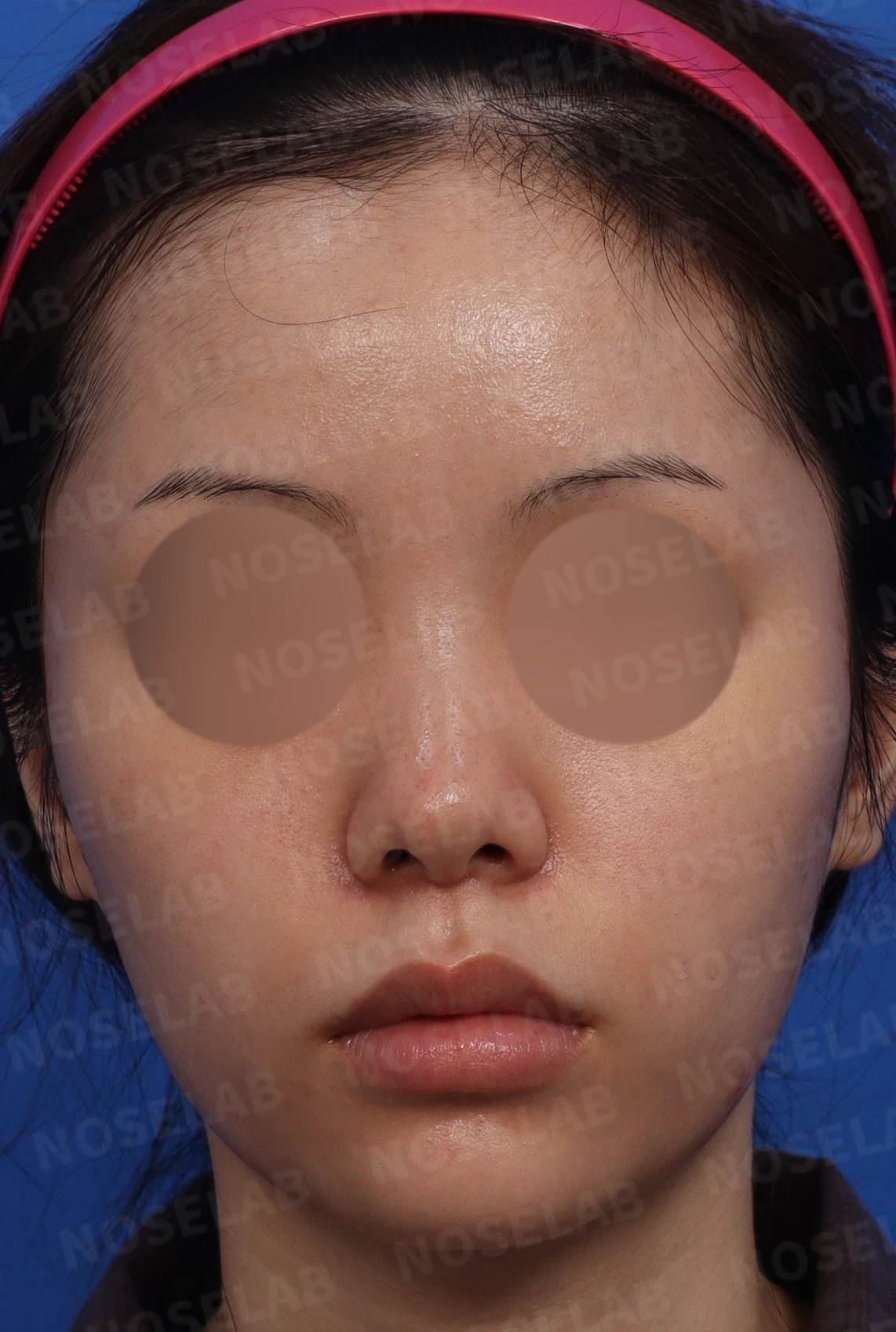
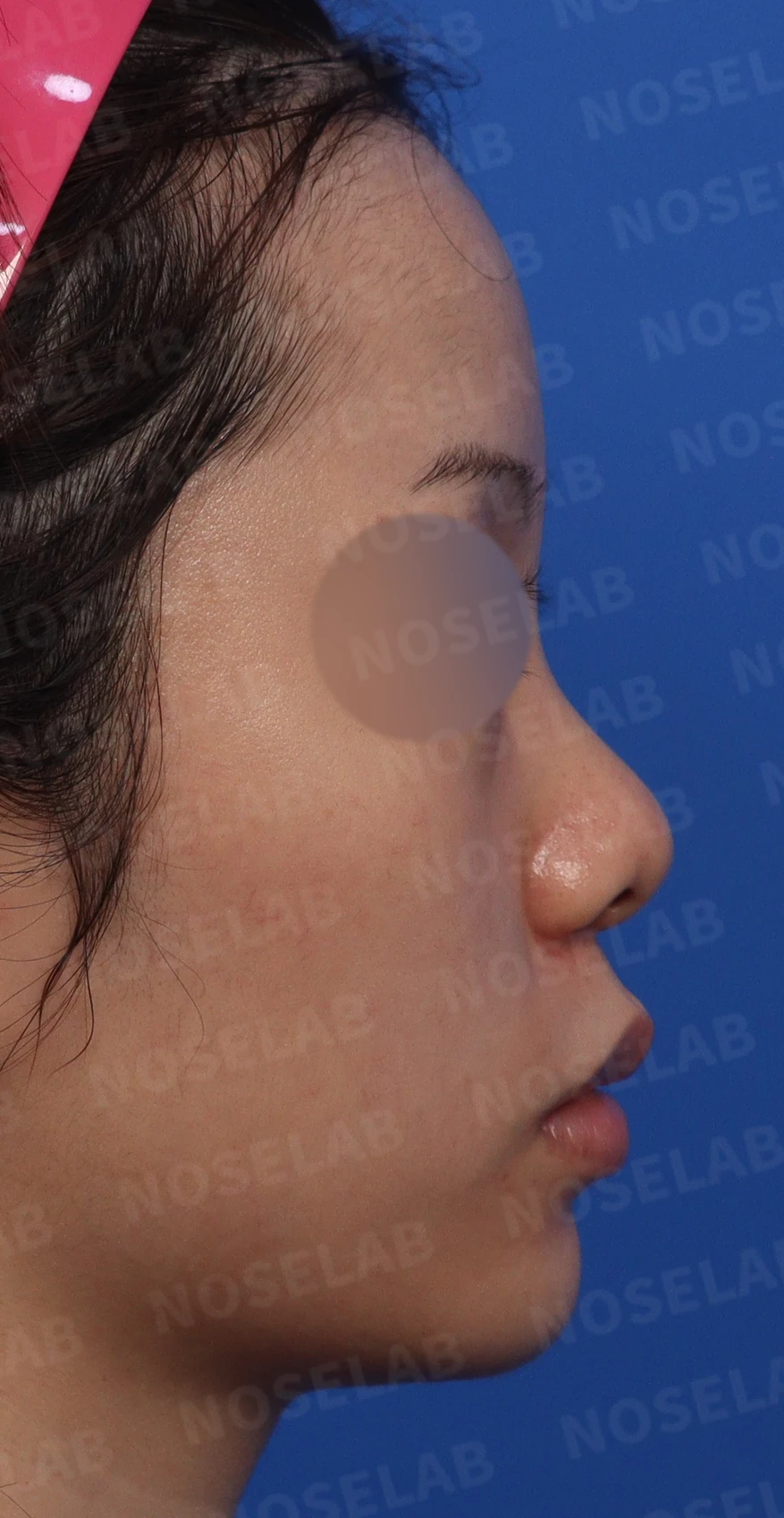
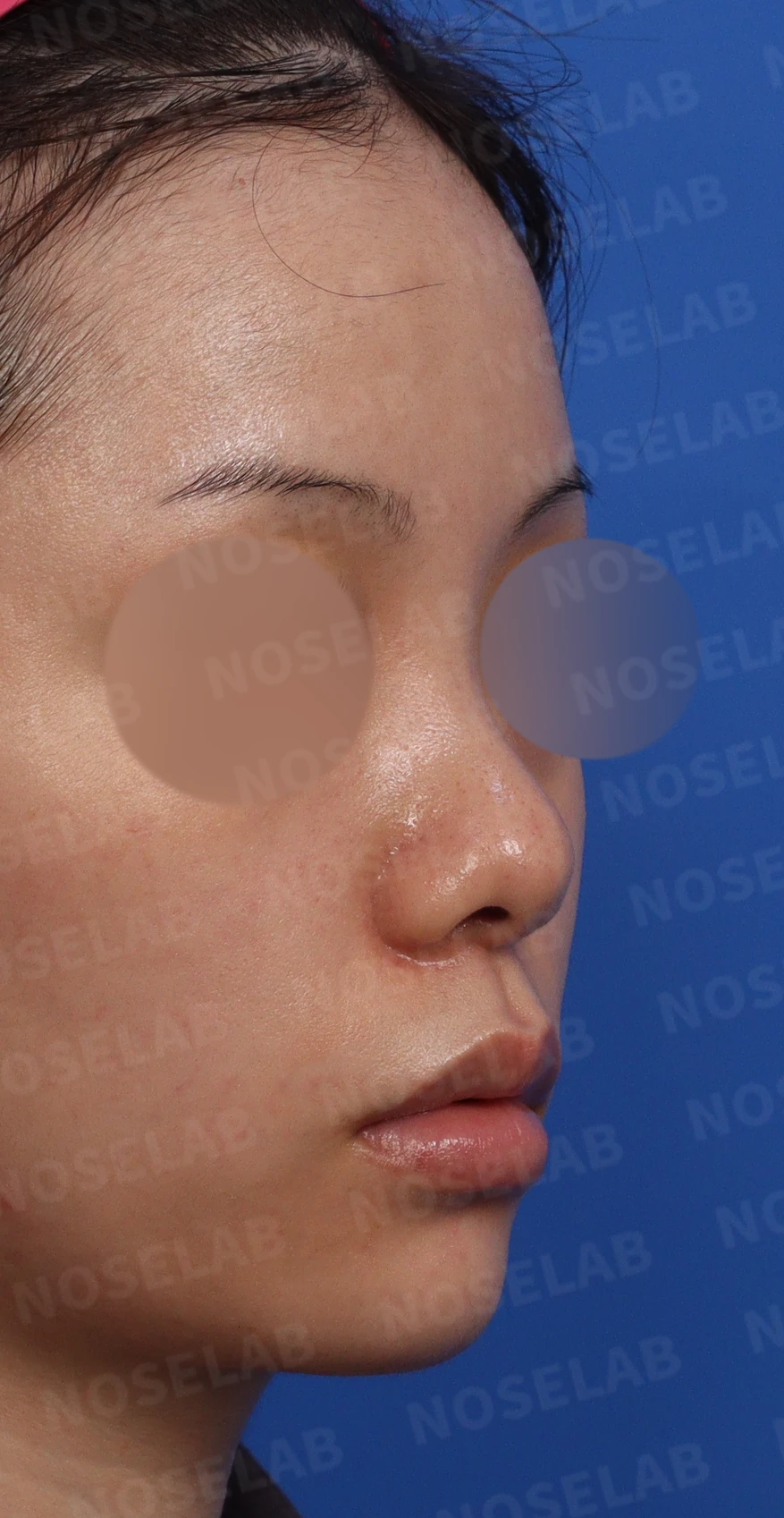
Before surgery design consultation front, profile, and oblique views
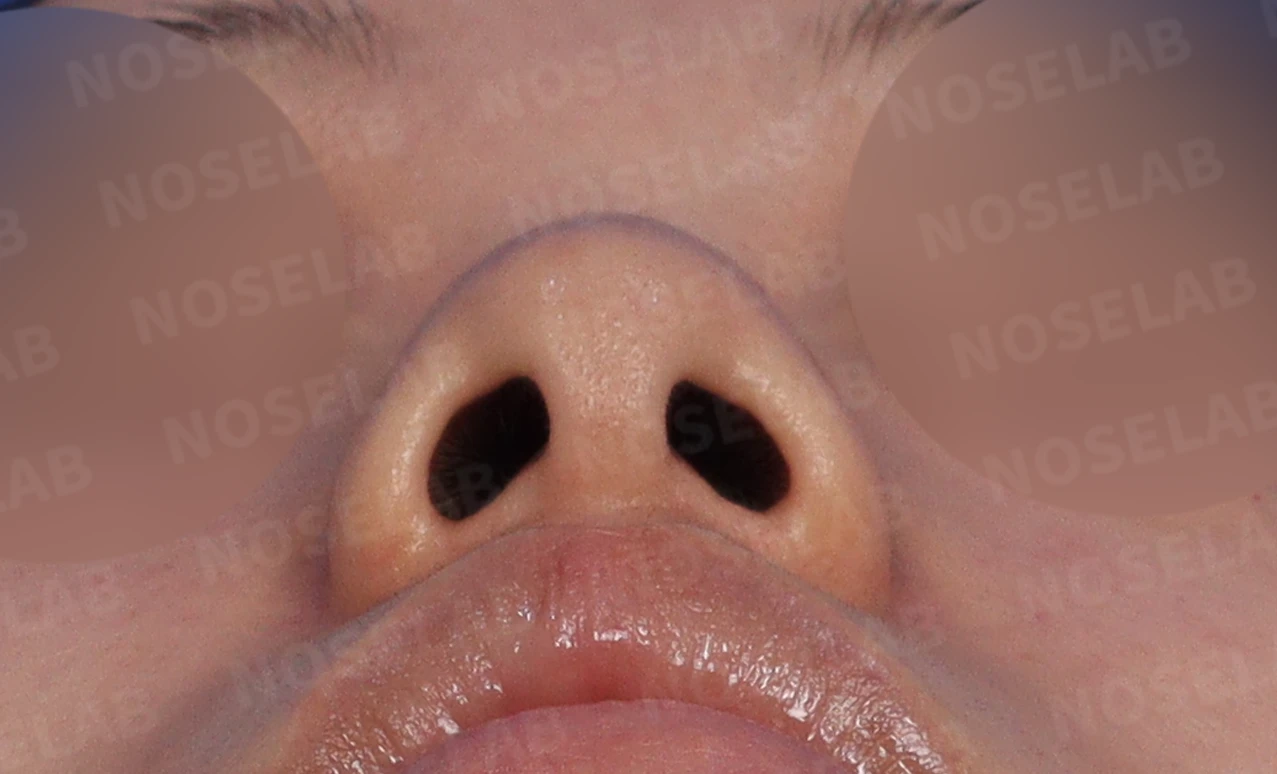
Basal (nostril) view
The patient's concerns and goals
The patient wanted a natural, refined nose. In particular, she wanted to prevent the nasal tip from spreading when smiling and improve the shape of both the nasal bridge and the nasal tip.
Surgical plan
Setting surgical goals
The patient's goals were as follows:
1. Bulbous nose correction: Refining the blunt nasal tip
2. Lateral osteotomy and silicone implant placement: Creating a slimmer appearance for a wide nasal bridge
3. Septal extension graft: Correcting the upturned nose for a natural appearance
Selecting the surgical approach
For the surgical approach, bulbous tip correction, lateral osteotomy with silicone implant placement, and septal extension grafting were selected. Through these procedures, we planned to create a naturally balanced nasal contour overall.
Surgical procedure
Bulbous tip correction
Bulbous tip correction was performed to refine the blunt nasal tip. Because the tip skin was thick, a portion of the subcutaneous tissue was removed, and the lower lateral cartilage was repositioned and sutured to achieve a well-defined tip.
Lateral osteotomy and silicone implant placement
To correct the wide nasal bridge, a lateral osteotomy was performed, and a silicone implant was inserted to achieve a slimmer appearance.
Septal extension graft
To correct the upturned nose, a septal extension graft was performed using septal cartilage and donor rib cartilage. Stable fixation on both sides was achieved using septal cartilage on the right side and donor rib cartilage on the left side.
Comparison between preoperative and immediately postoperative photos
Front view comparison
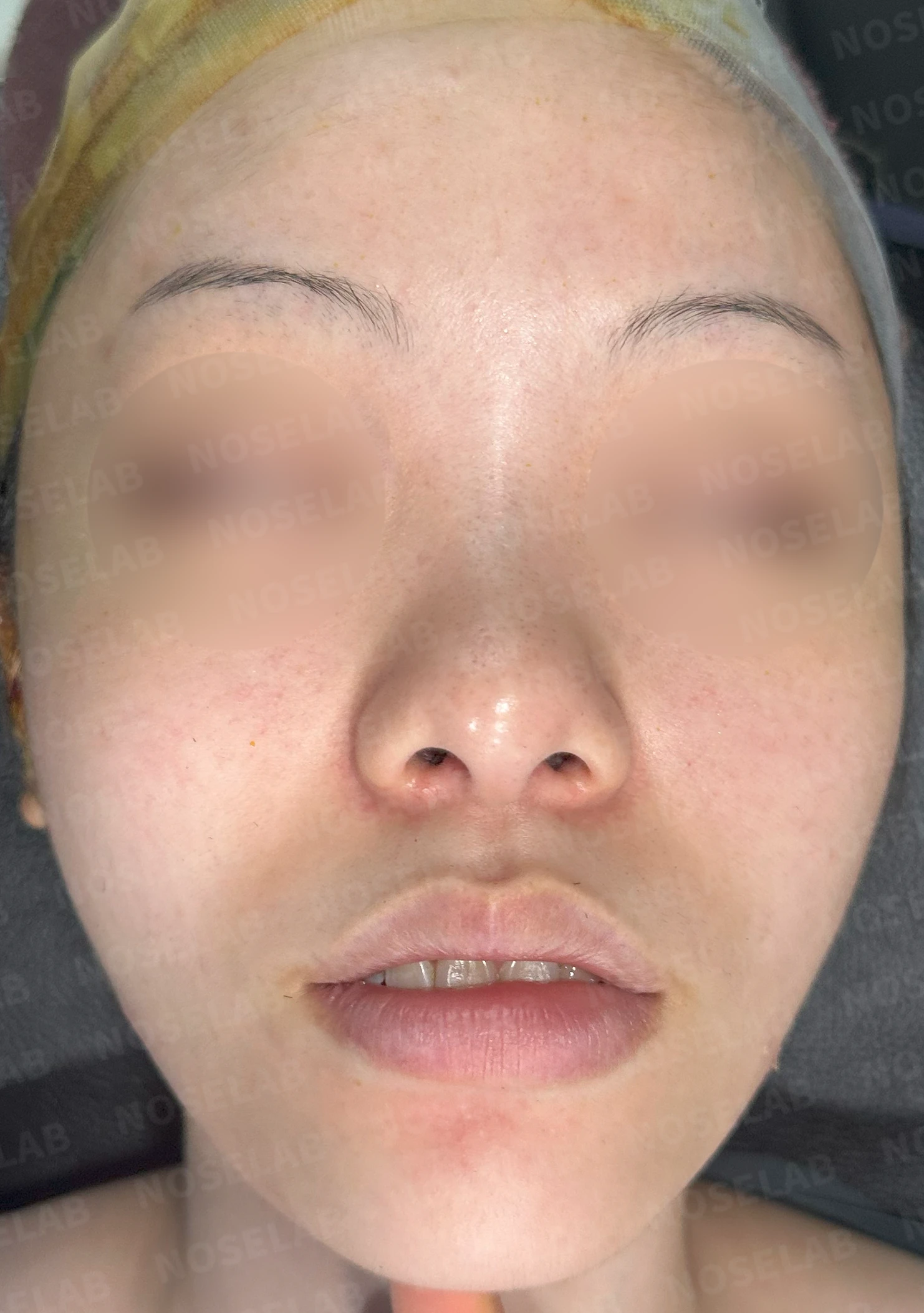
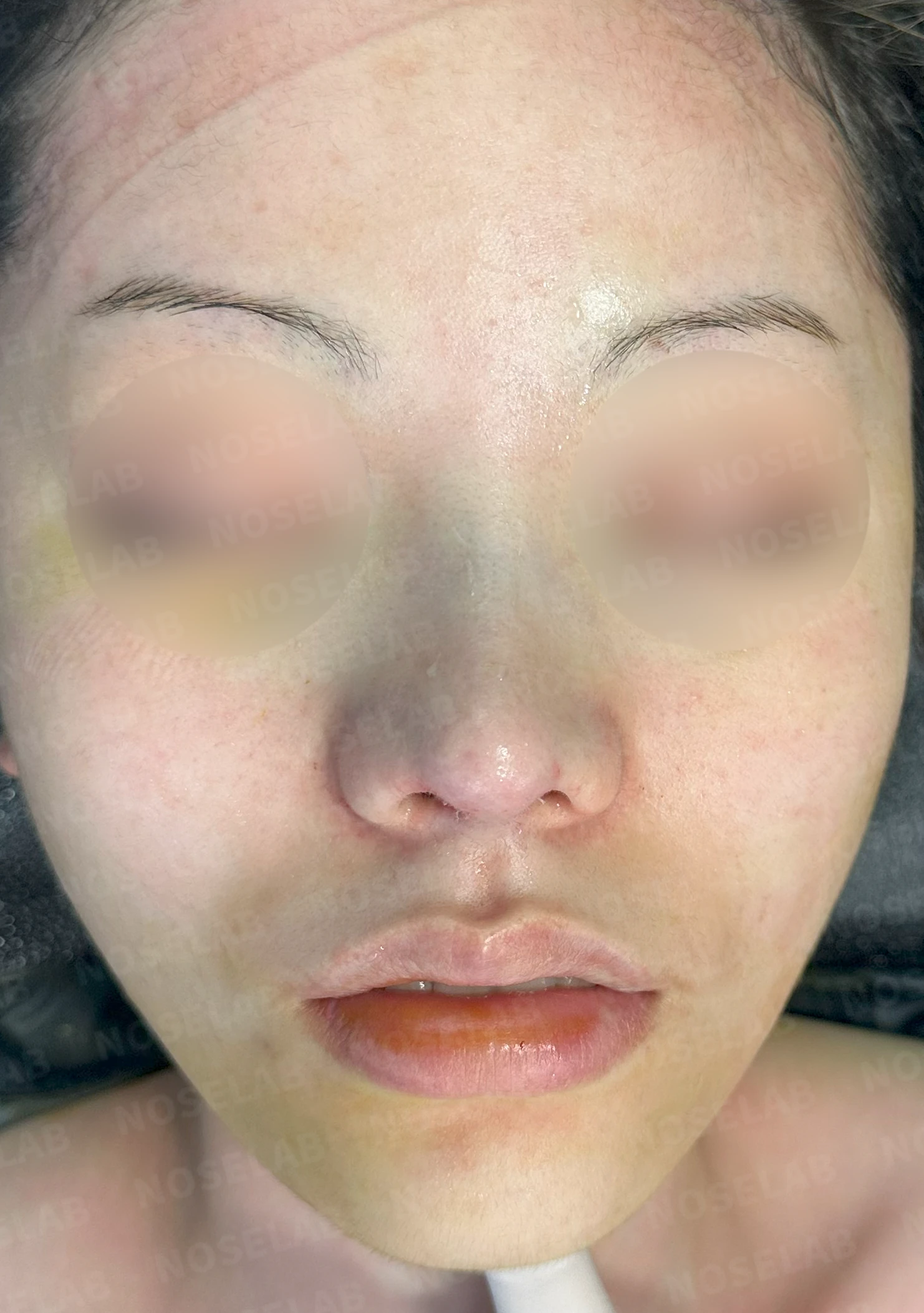
Before surgery / Day 0 immediately after surgery Photos taken immediately after surgery show swelling and may differ from the final result.
In the preoperative front view, the short and wide appearance of the nose is noticeable. In the postoperative front view, the nose appears elongated and balanced.
Oblique view comparison
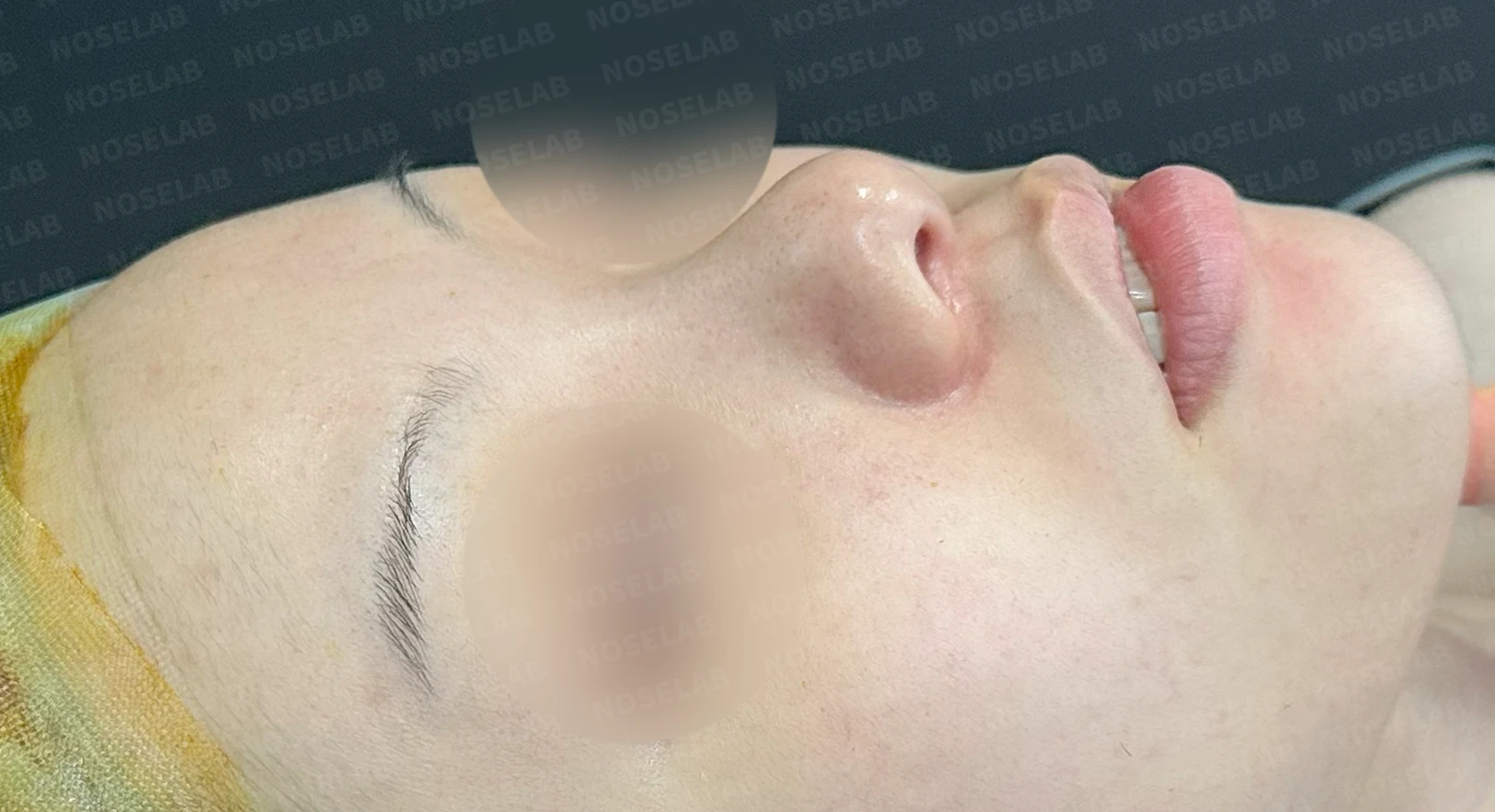
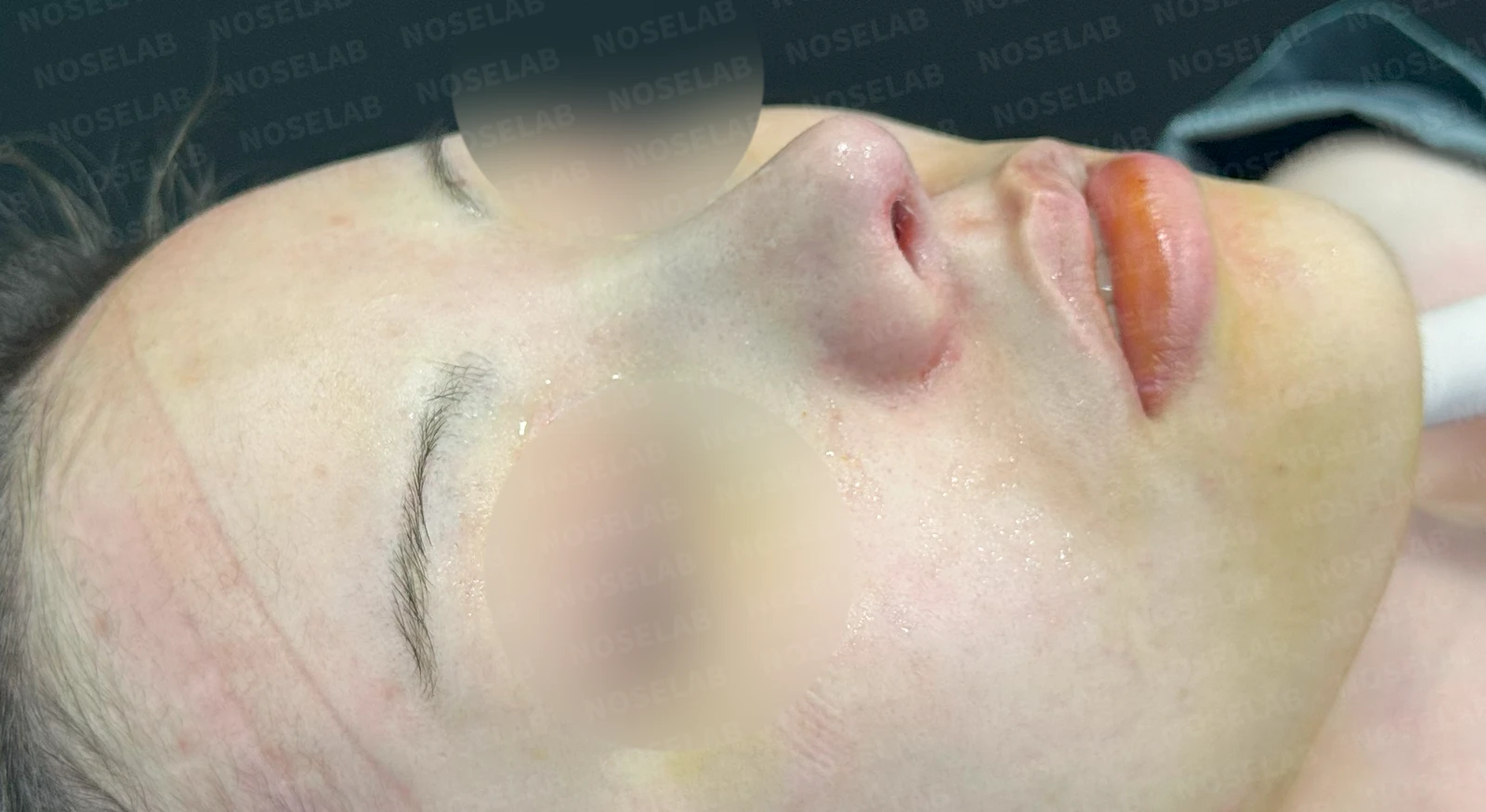
Before surgery / Day 0 immediately after surgery Photos taken immediately after surgery show swelling and may differ from the final result.
The oblique view highlights three-dimensional definition. While the nose appeared flat and wide before surgery, it gained natural and refined definition after surgery.
Profile view comparison
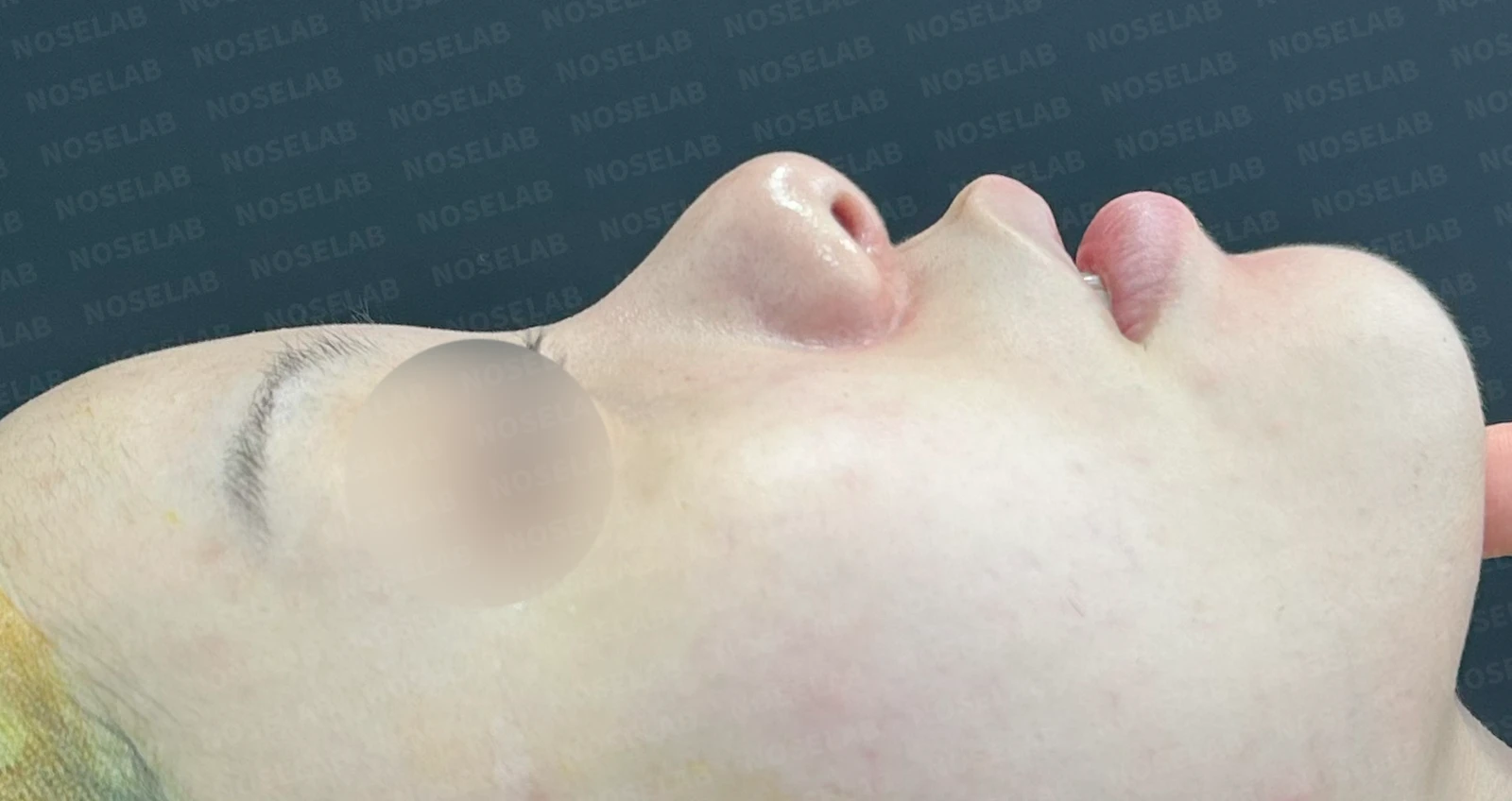
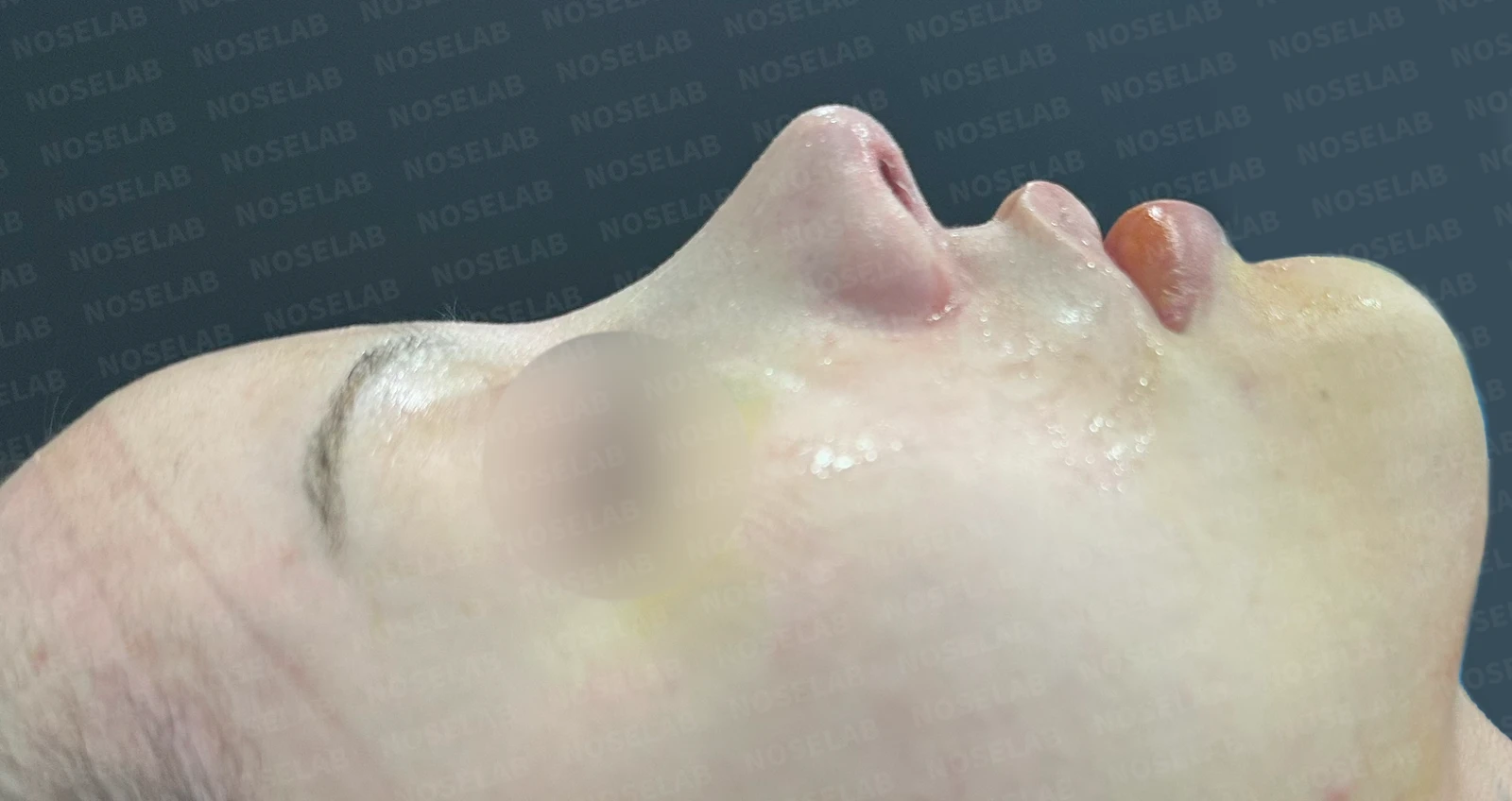
Before surgery / Day 0 immediately after surgery Photos taken immediately after surgery show swelling and may differ from the final result.
The profile view illustrates the septal extension graft and overall changes in nasal contour. Although the nasolabial angle appeared unnatural before surgery, it was adjusted to an appropriate angle after surgery.
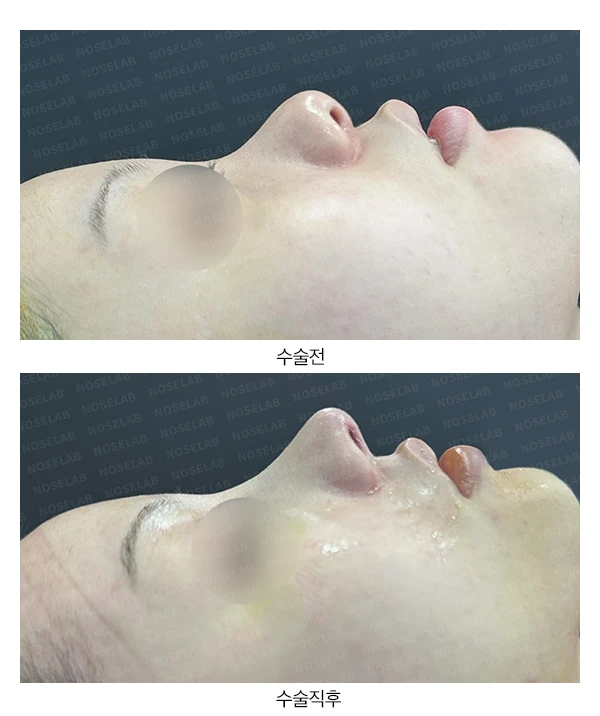
Basal (nostril) view comparison
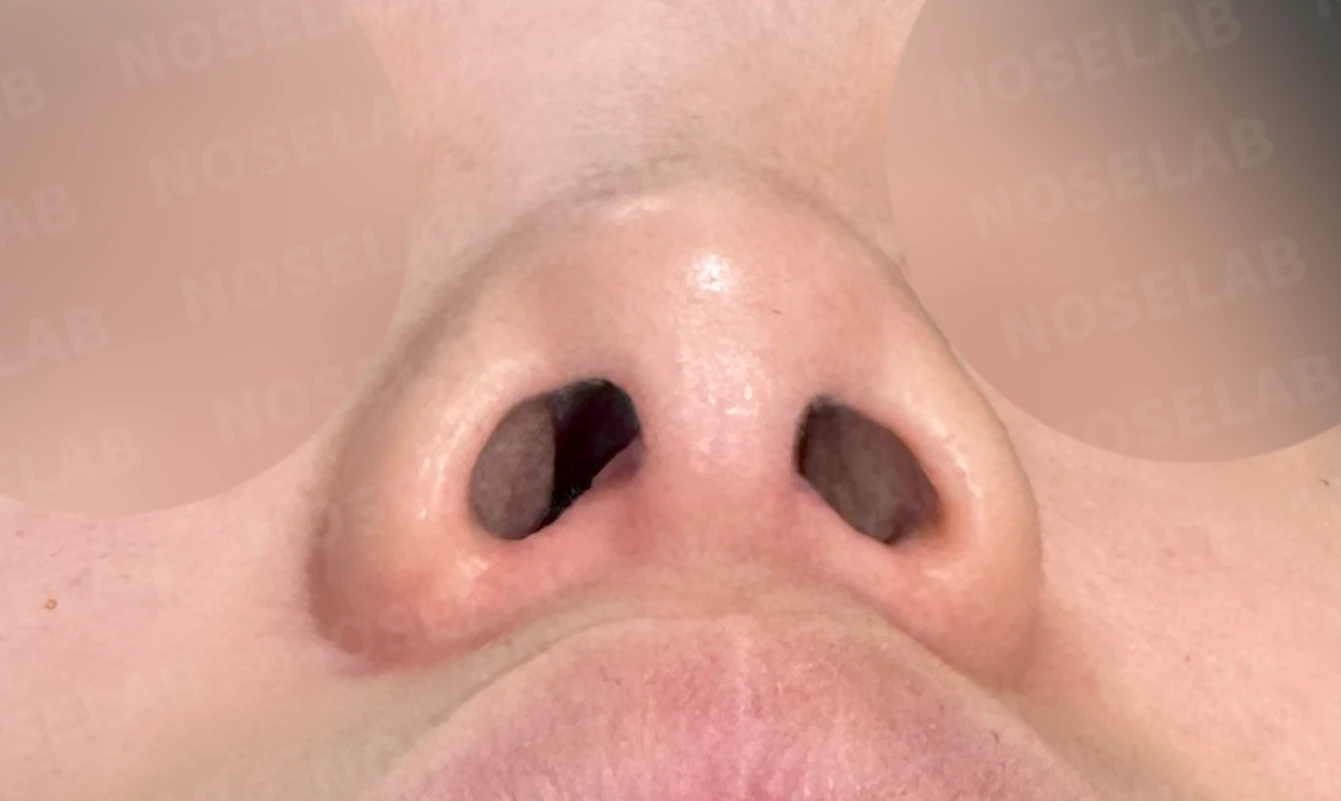
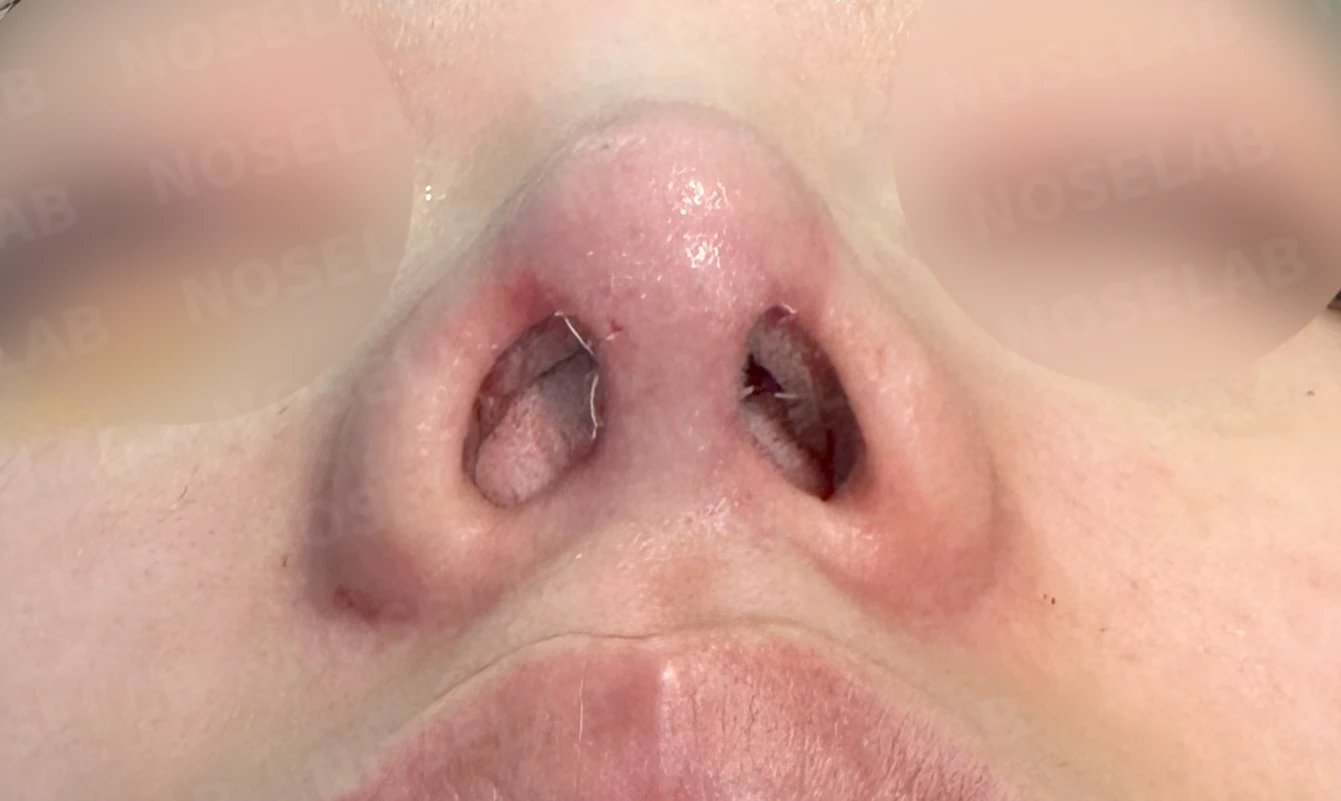
Before surgery / Day 0 immediately after surgery Photos taken immediately after surgery show swelling and may differ from the final result.
The asymmetry of the nostrils also showed noticeable improvement. While there was asymmetry between the left and right sides before surgery, balanced nostrils can be observed after surgery.
Photos immediately after surgery
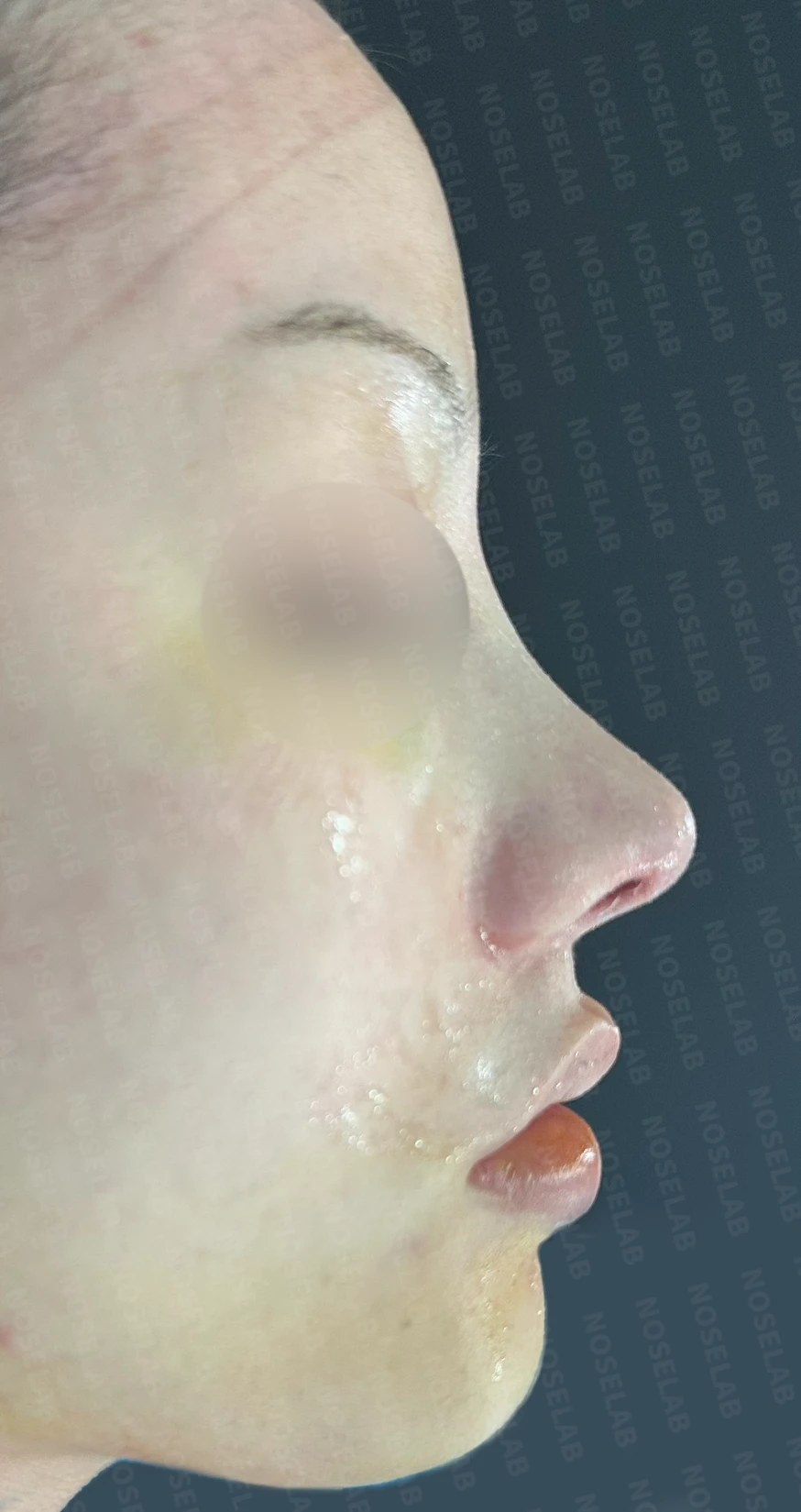
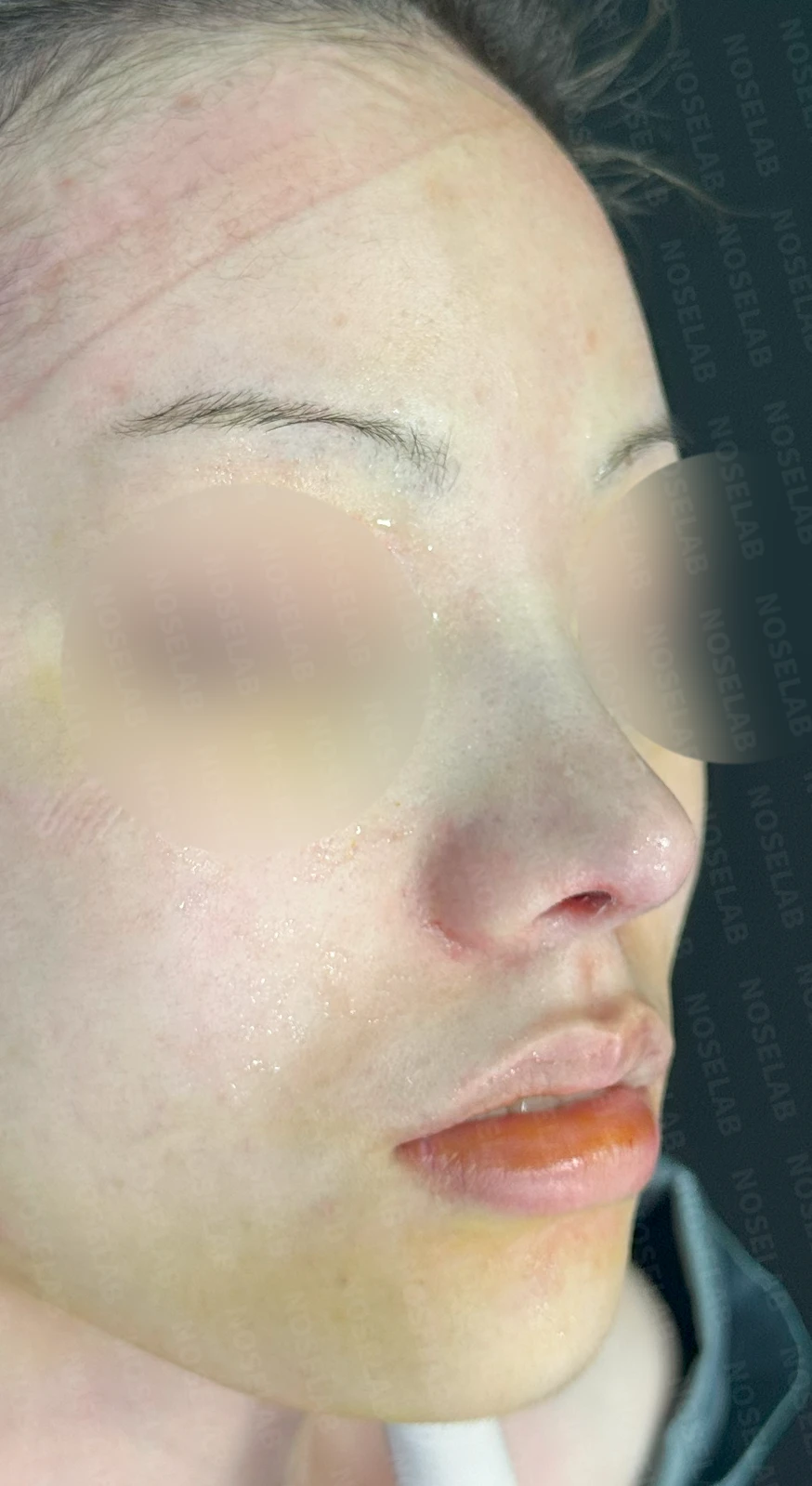
Immediately after surgery day 0 front, profile, and oblique viewsPhotos taken immediately after surgery show swelling and may differ from the final result.
Basal (nostril) view immediately after surgery (Day 0)Immediate postoperative photos show swelling and may differ from the final result.
Conclusion
Through this surgery, the patient's nose transitioned from a short, wide appearance to a natural and balanced contour. The patient was very satisfied with the surgical result and regained her confidence.
Closing remarks
I hope this post is helpful to those with similar concerns. For anyone concerned about their nasal shape, seeking professional consultation and surgery may help restore your confidence.
Frequently asked questions (FAQs)
1. How long is the recovery period after surgery?
Although recovery periods vary by individual, patients can generally return to daily activities in about 1-2 weeks.
2. Are cartilage grafts safe?
Yes, cartilage grafts are safe, and when autologous cartilage is used, the risk of rejection is minimal.
3. How is the pain after surgery?
There may be mild pain after surgery, but it can be managed with prescribed pain medication.
4. When can the surgical results be seen?
As swelling subsides, results gradually become visible after 1-2 months.
#rhinoplasty #upturnednosecorrection #shortnoserhinoplasty #widenosesurgery #rhinoplastyreviews #tiprhinoplasty #plasticsurgery #revisionrhinoplasty #rhinoplastybeforeandafter #nasalsurgery #tipcorrection #lateralosteotomy #septalextension #closedrhinoplasty #advancedclosedrhinoplasty #rhinoplastyclinic

Limitations and risks
When using donor rib cartilage, long-term follow-up is necessary because the grafted cartilage may resorb or warp.
When the septum is corrected at the same time, nasal obstruction may persist or recur, and in rare cases, septal perforation or changes in smell may occur.
Common potential risks include infection, bleeding, asymmetry, scarring, skin necrosis, and insufficient improvement; results vary depending on individual skin condition and previous surgical history.