Hello, I am Dr. Peter C. Kang.
Today, I would like to share the case of a patient who visited our clinic after suffering for a long time from recurrent inflammation and implant complications following multiple nasal surgeries.
🔍 Surgical history
The patient had previously undergone multiple nasal surgeries at other clinics.
Approximately 20 years ago: Silicone implant insertion (dissatisfied with the shape)
Approximately 17 years ago: Silicone implant revision surgery (dissatisfied with the shape)
Approximately 14 years ago: Silicone implant and ear cartilage surgery (subsequent inflammation developed, along with recurrent acne on the nasal dorsum)
Approximately 10 years ago: Removal of the silicone implant
Approximately 10 years ago (about 6 months after removal): Reinsertion of a silicone implant and ear cartilage
Due to recurrent inflammation caused by the implant over an extended period, the nasal tissues were in a weakened state.
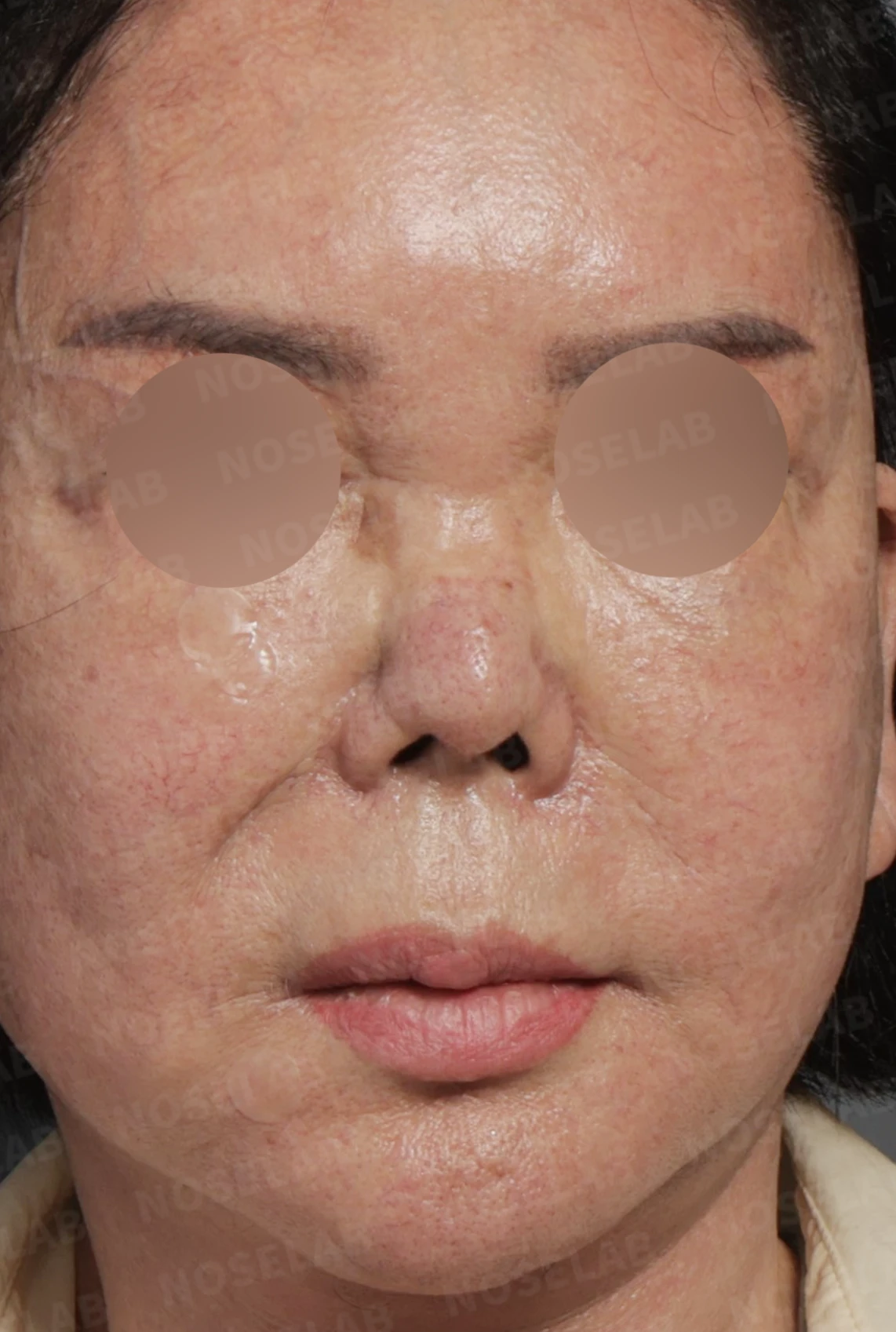
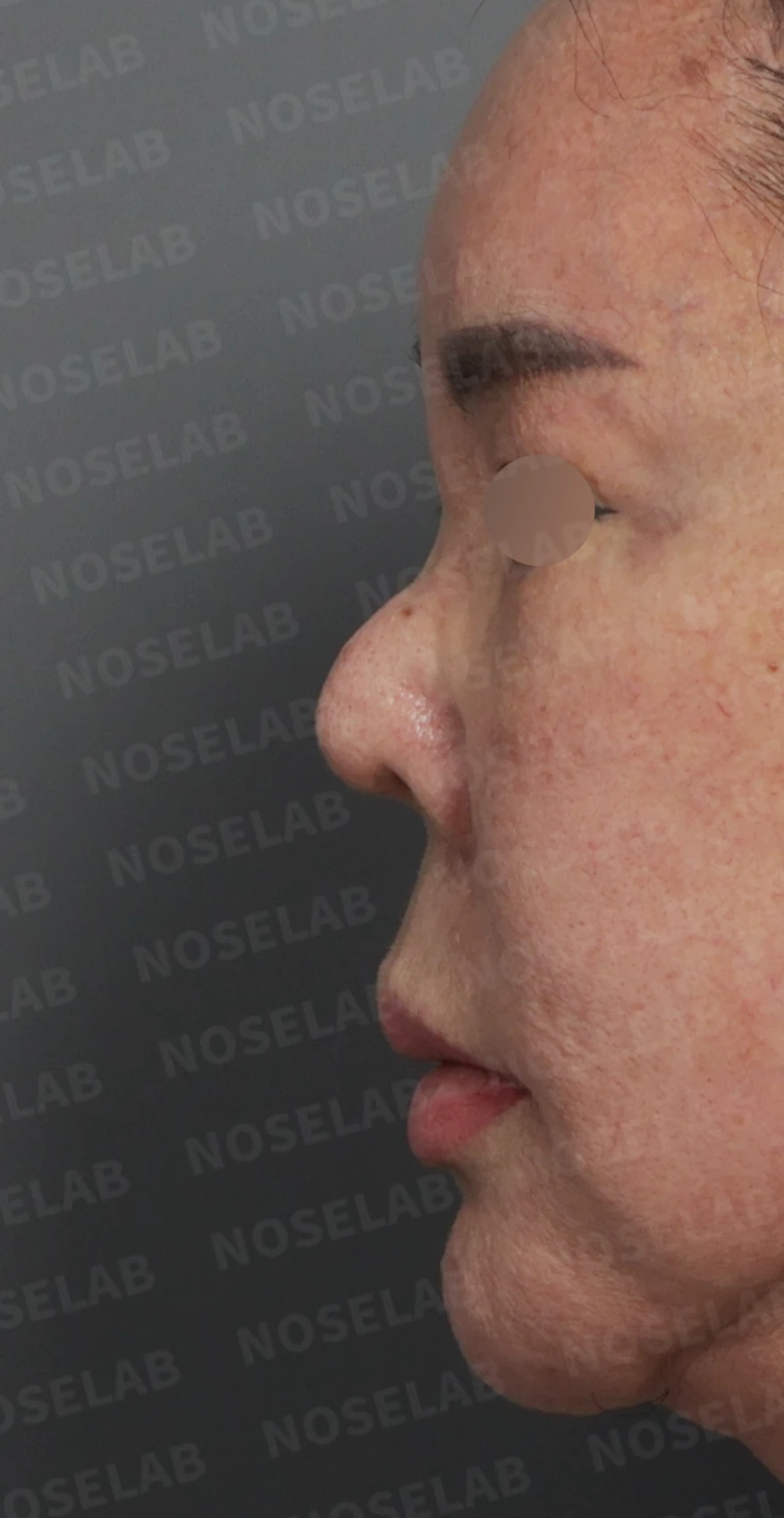
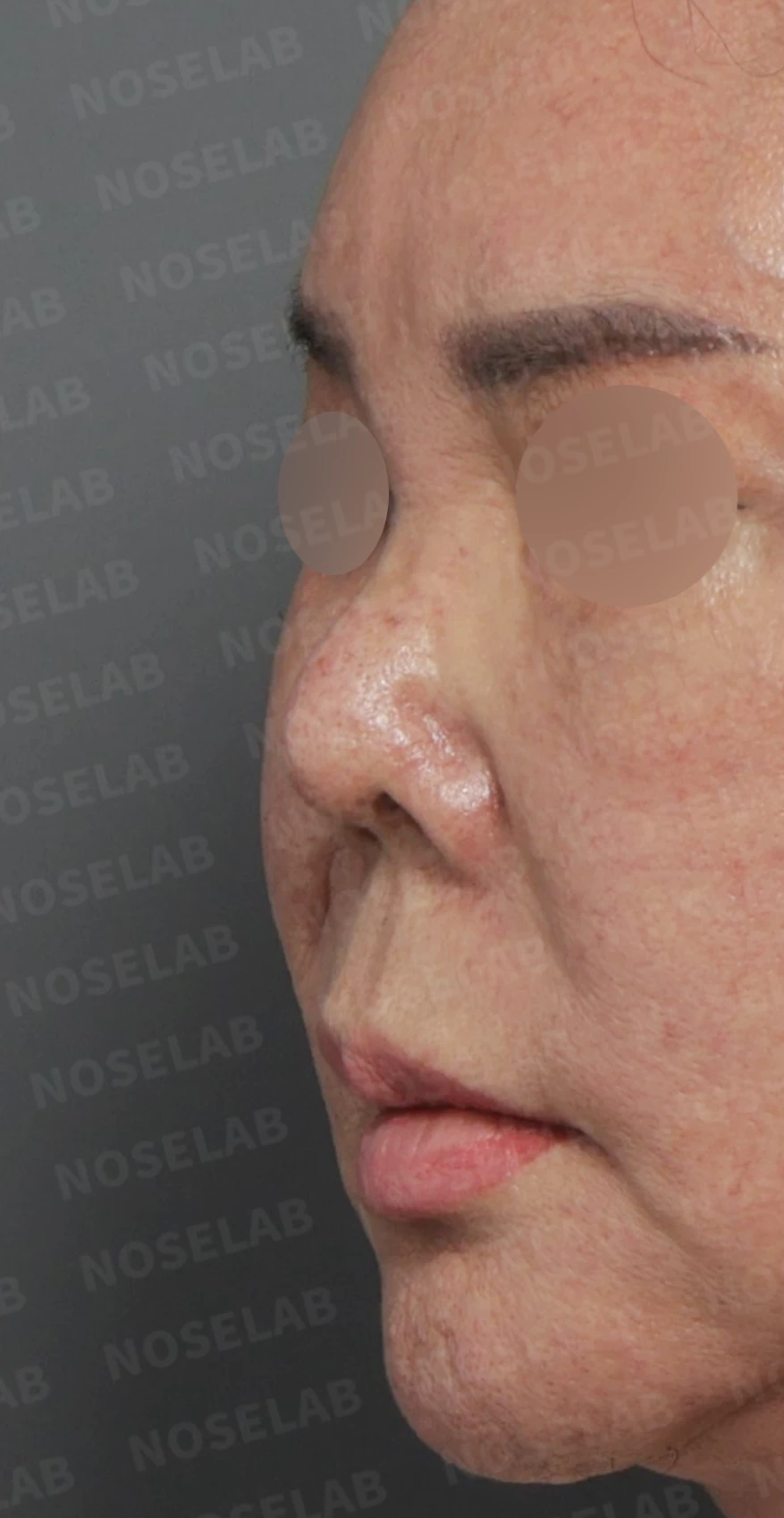
Front, left profile, and oblique views during design consultation.
💉 Patient requests
Resolution of recurrent acne and inflammation on the nasal dorsum
Correction of the retracted columella and the short-appearing nose
A natural nasal profile planned with safety in mind, rather than excessive changes
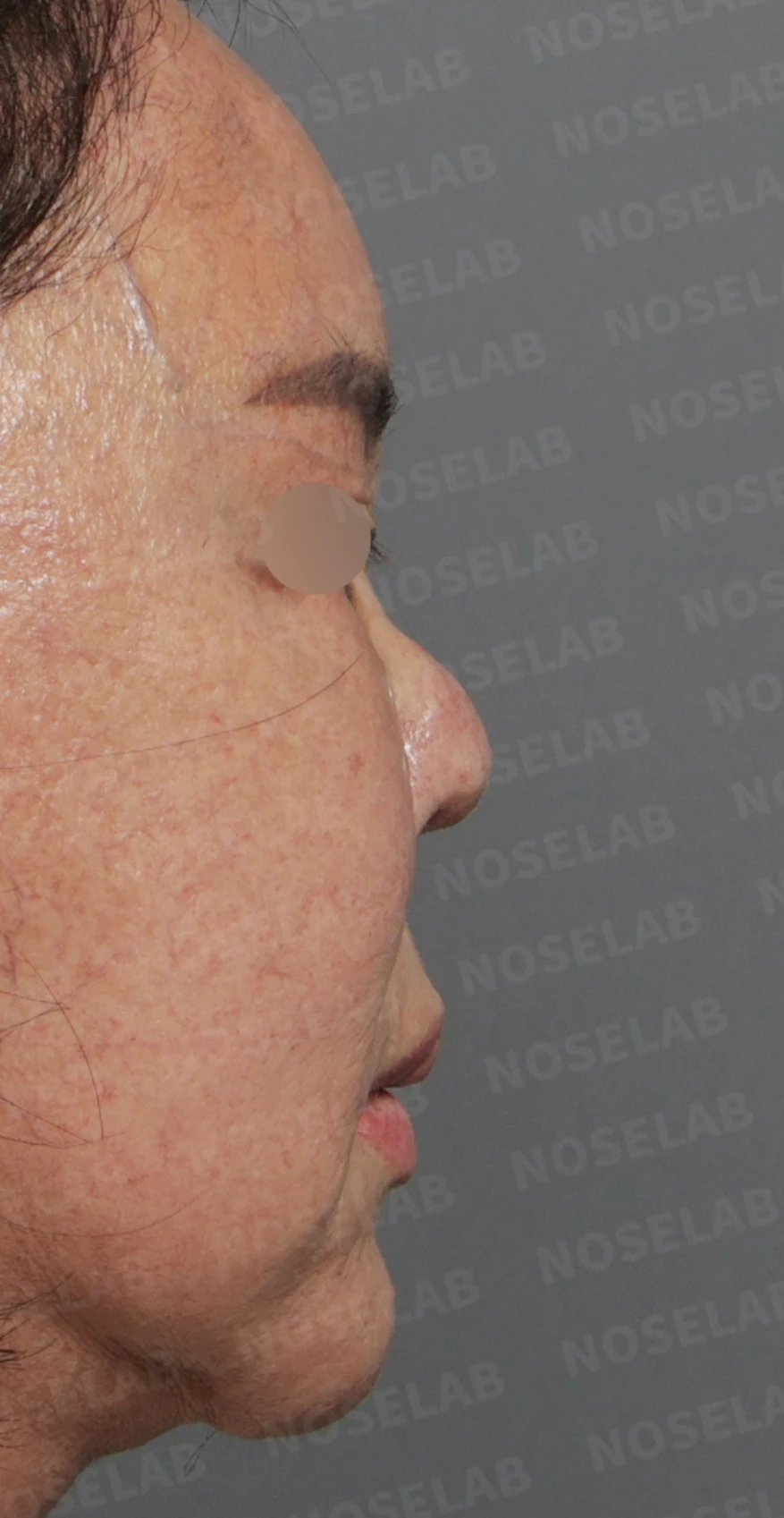
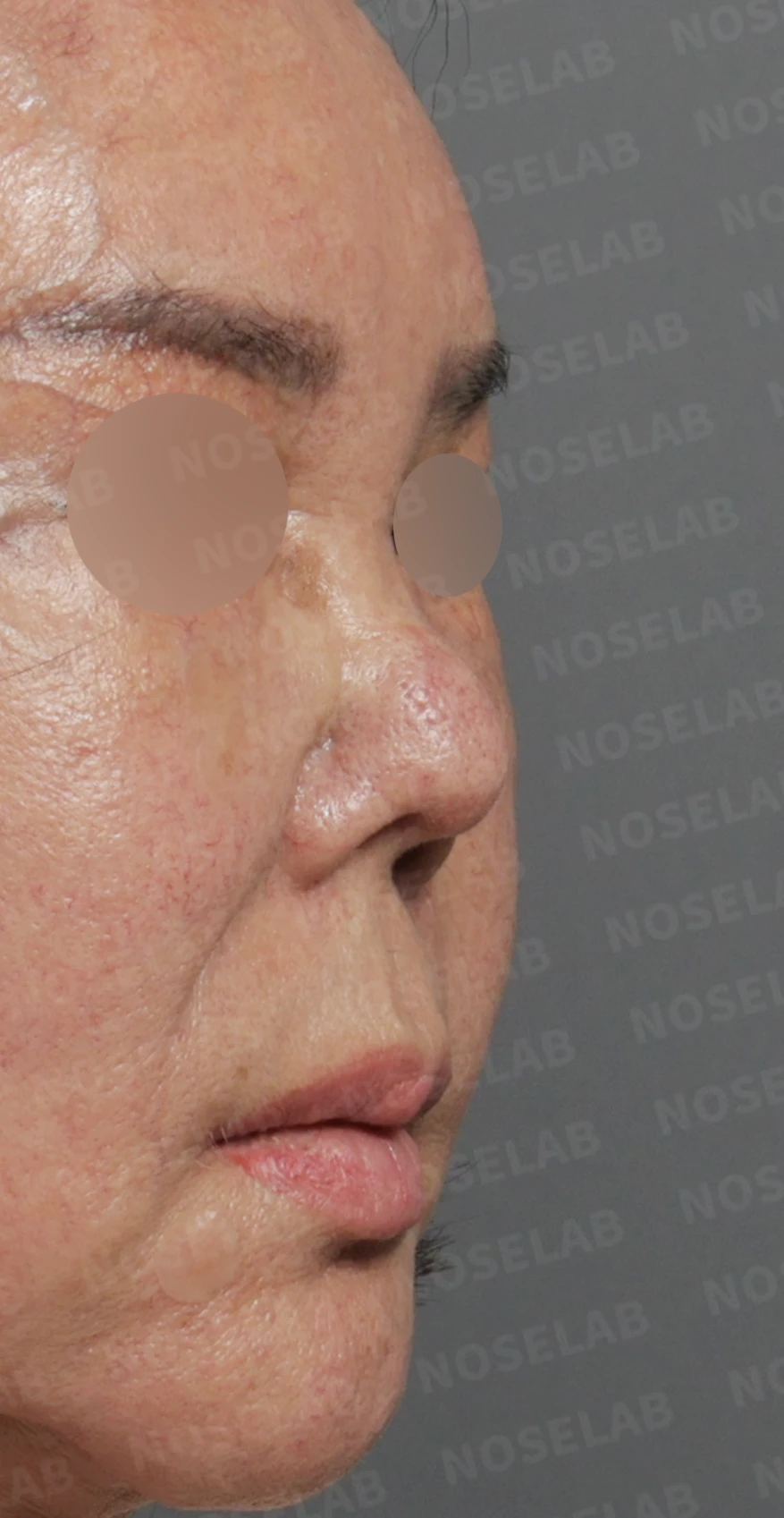
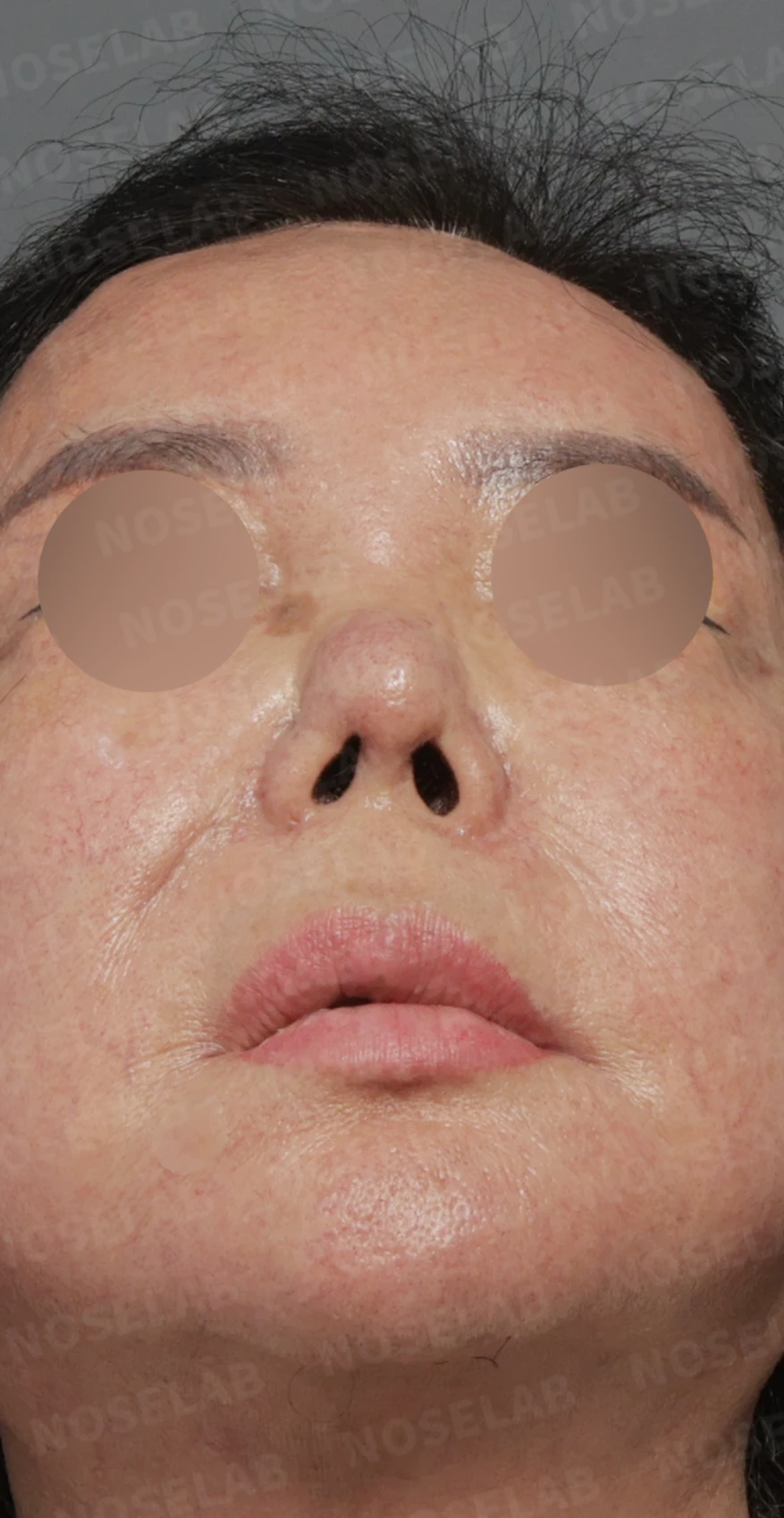
Right profile, oblique, and nostril views during design consultation.
🔧 Surgical plan and procedure
Because this patient had experienced severe inflammation caused by foreign materials during previous surgeries, a staged approach was of utmost importance.
Eliminating the cause of inflammation — The existing implant and other foreign materials were completely removed, and the inflamed tissue was meticulously debrided.
A sufficient resting period of about 2 years — Time was allowed for the inflammation to subside and the tissues to heal.
Tissue regeneration therapy using stem cells — Helped support the recovery of the weakened nasal tissues.
Structural reconstruction using donor rib cartilage (reflecting the patient's preference) — Reinforced the central supporting cartilage of the nose, repositioned the lower lateral cartilages, and tied the cartilages to refine the nasal tip shape.
Creating the nasal bridge line — A silicone implant was used to achieve a natural dorsal height.
🌟 Surgical results
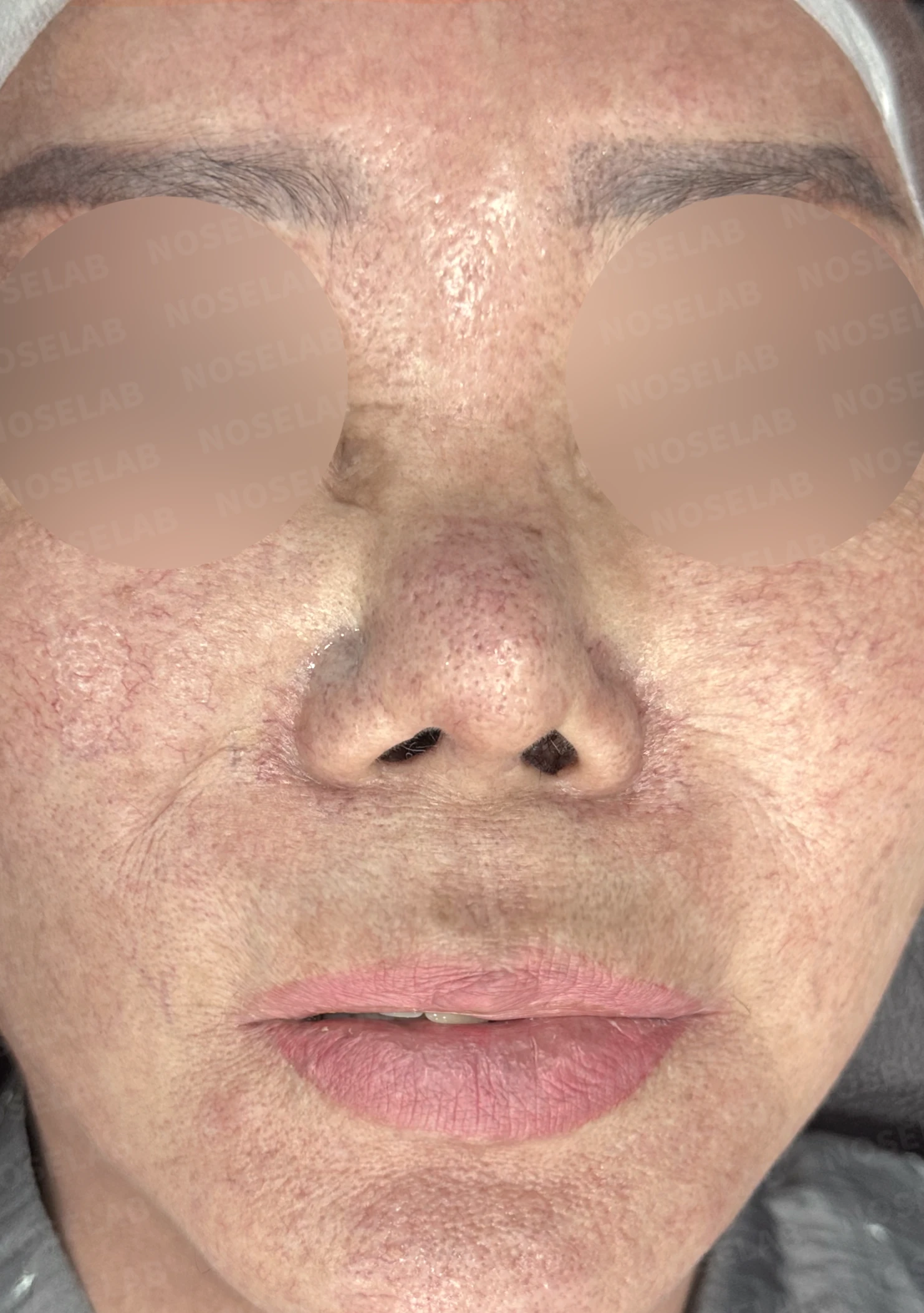
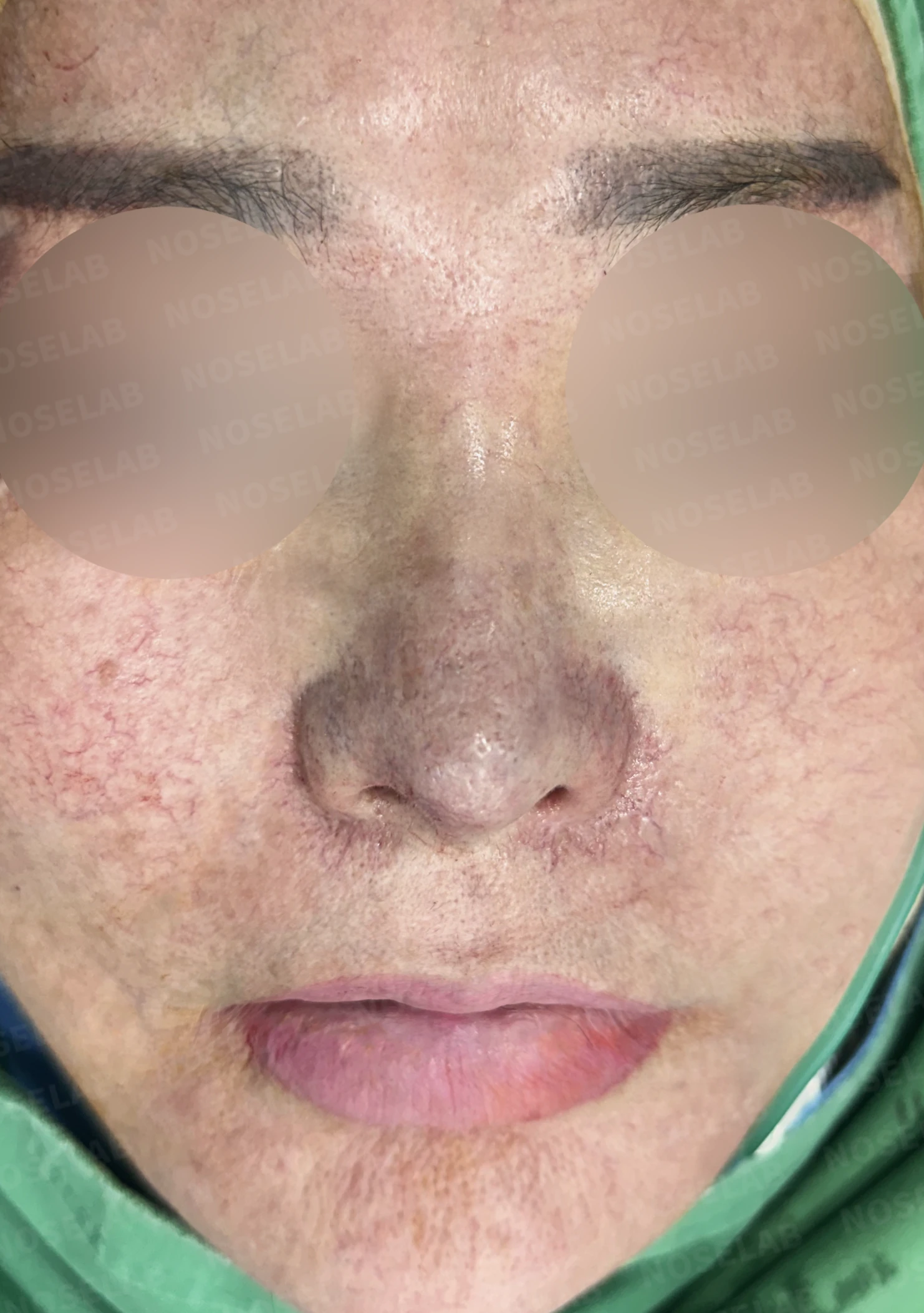
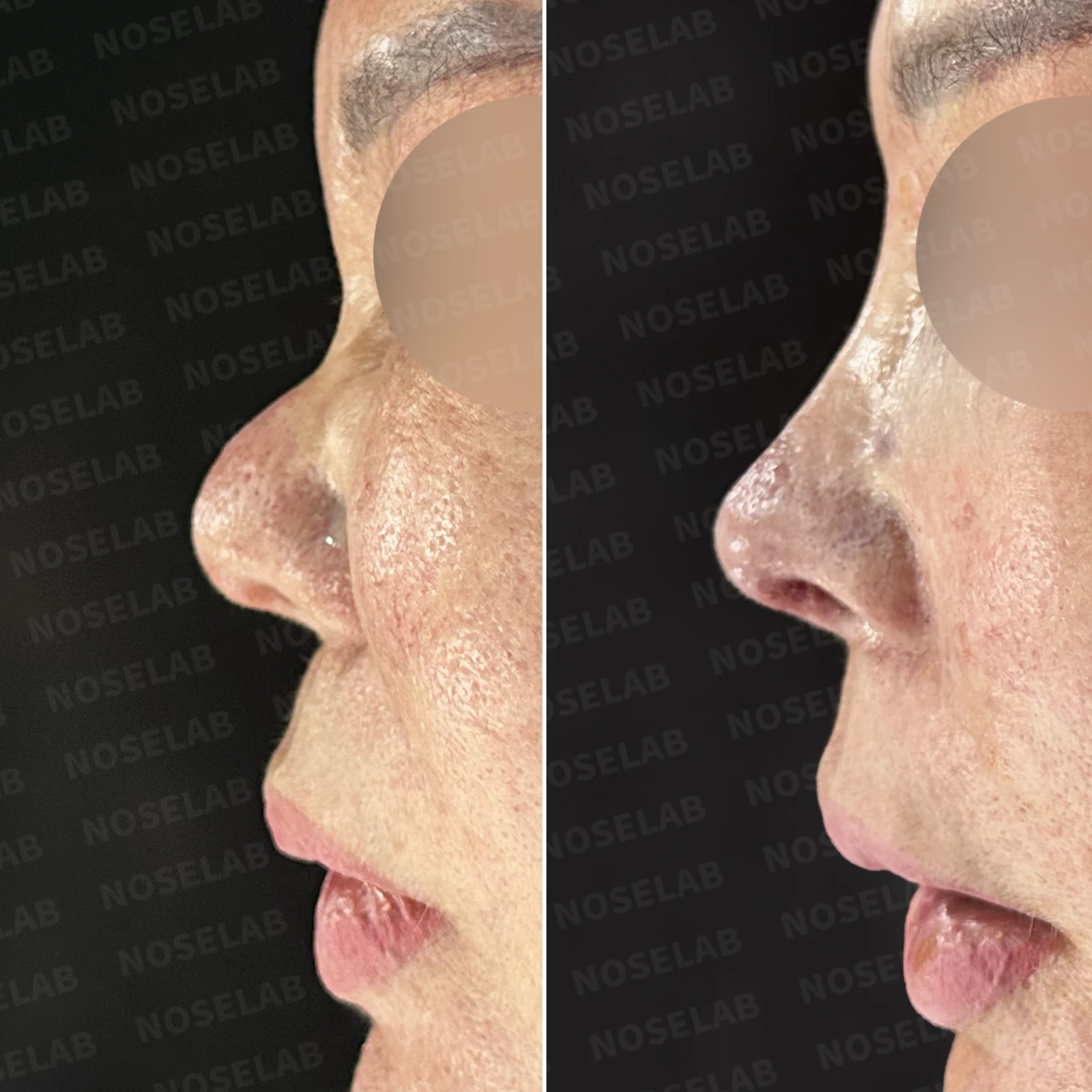
Before surgery / Day 0 immediately after surgery Photos taken immediately after surgery show swelling and may differ from the final result.
Front view changes
The causes of recurrent inflammation and dorsal skin issues were resolved
The short-appearing nose was improved with a much more balanced proportion
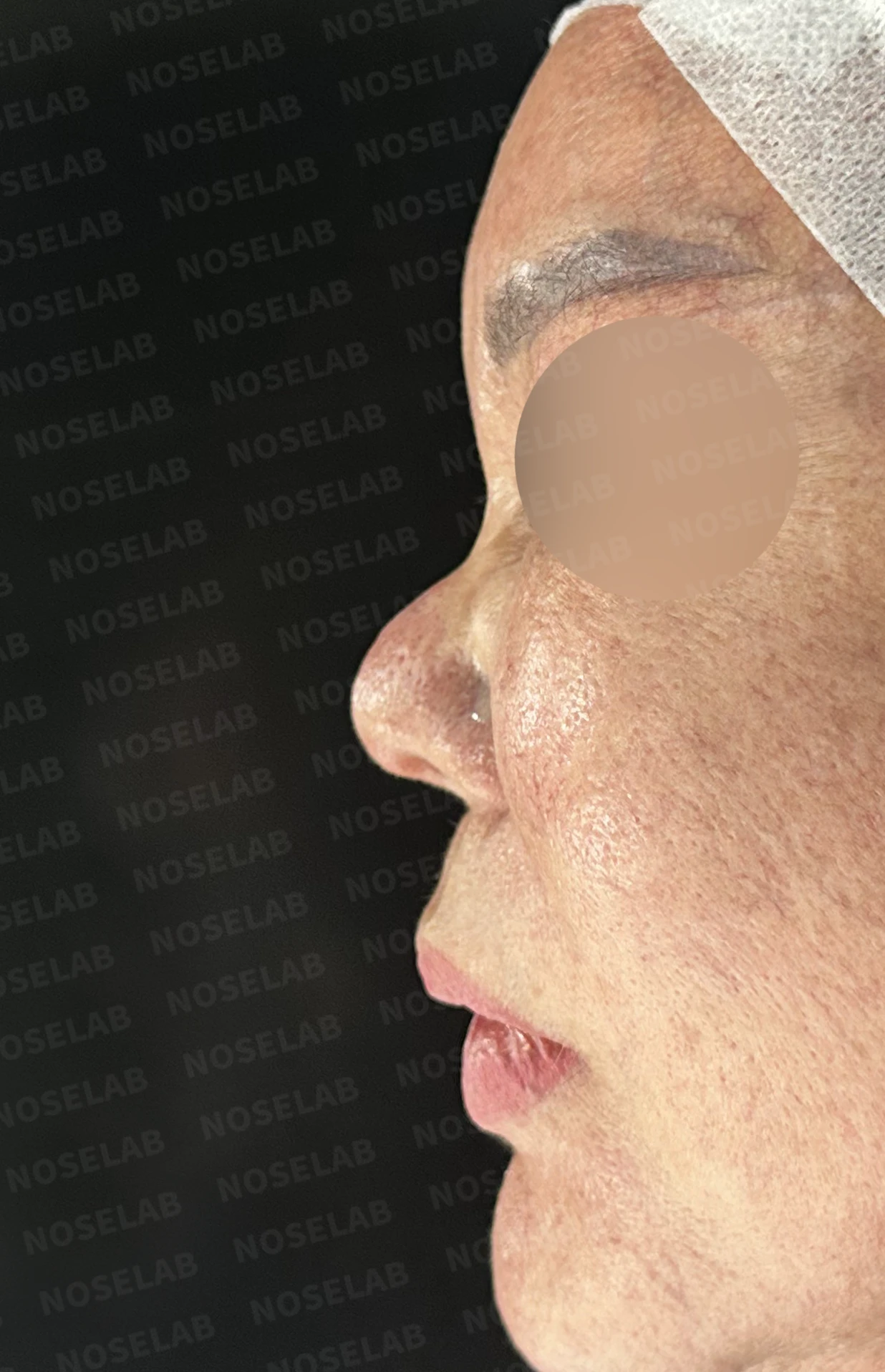
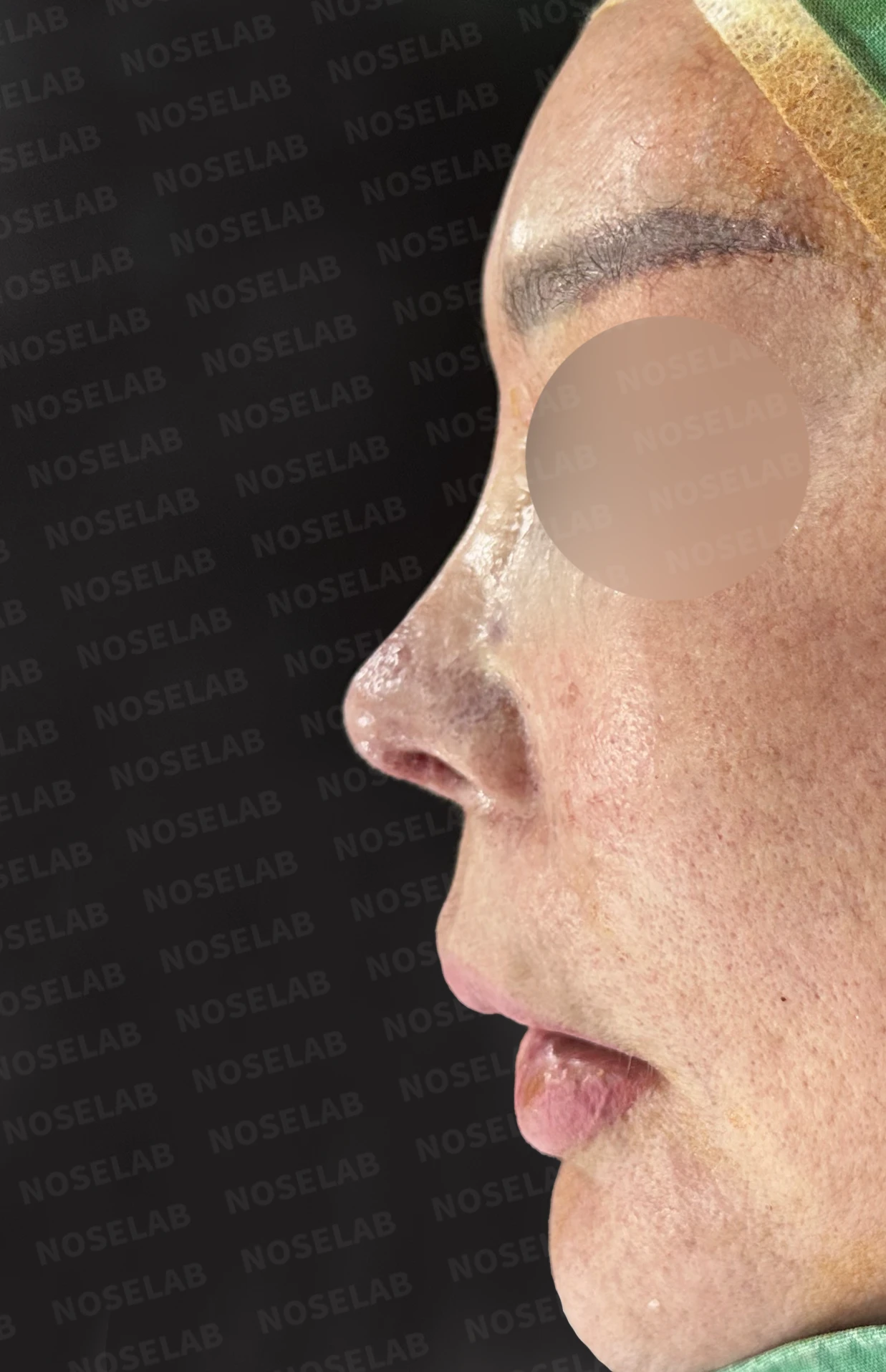
Before surgery / Day 0 immediately after surgery Photos taken immediately after surgery show swelling and may differ from the final result.
Profile view changes
The retracted columella was naturally corrected
A smooth, stable nasal bridge line was established
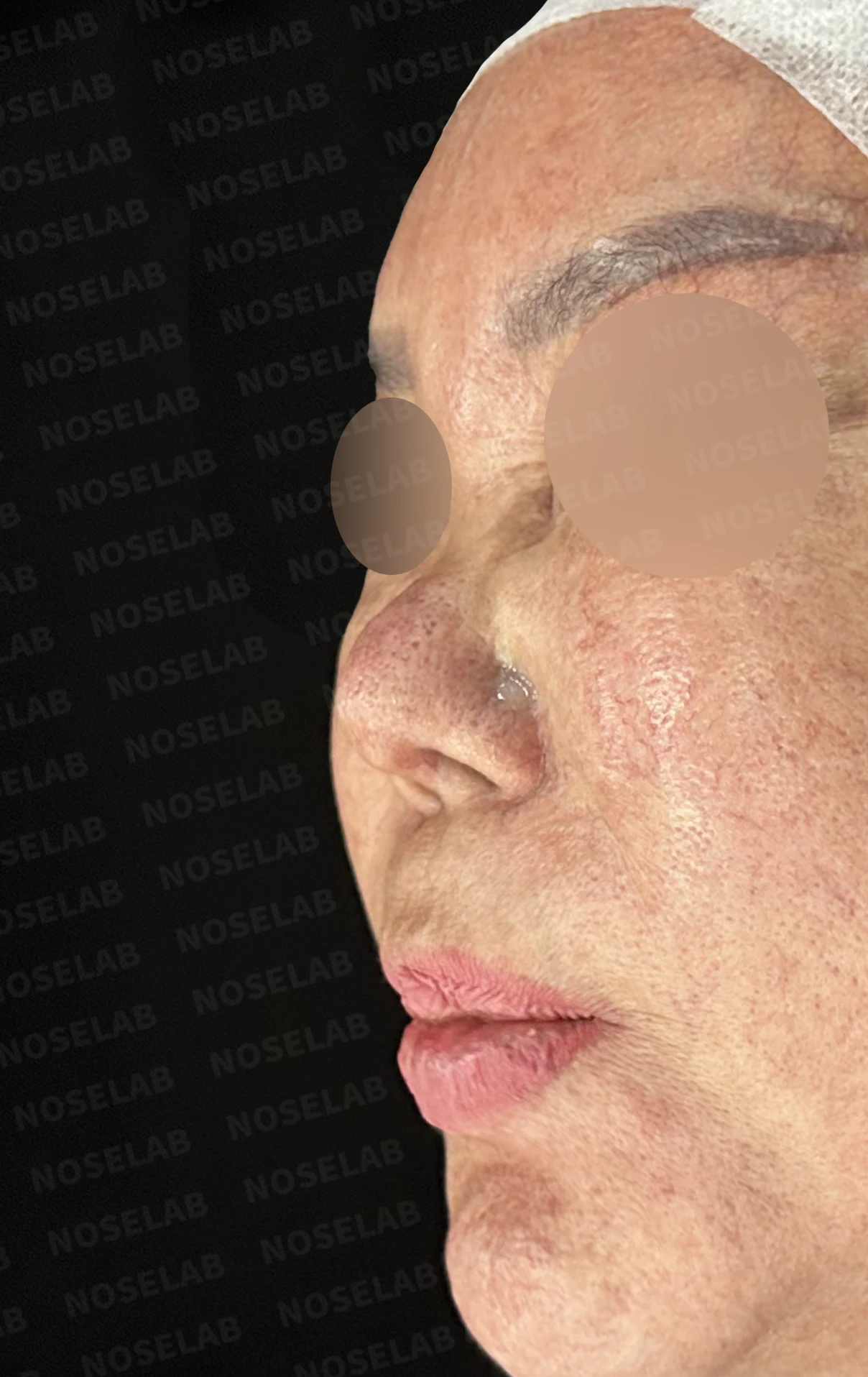
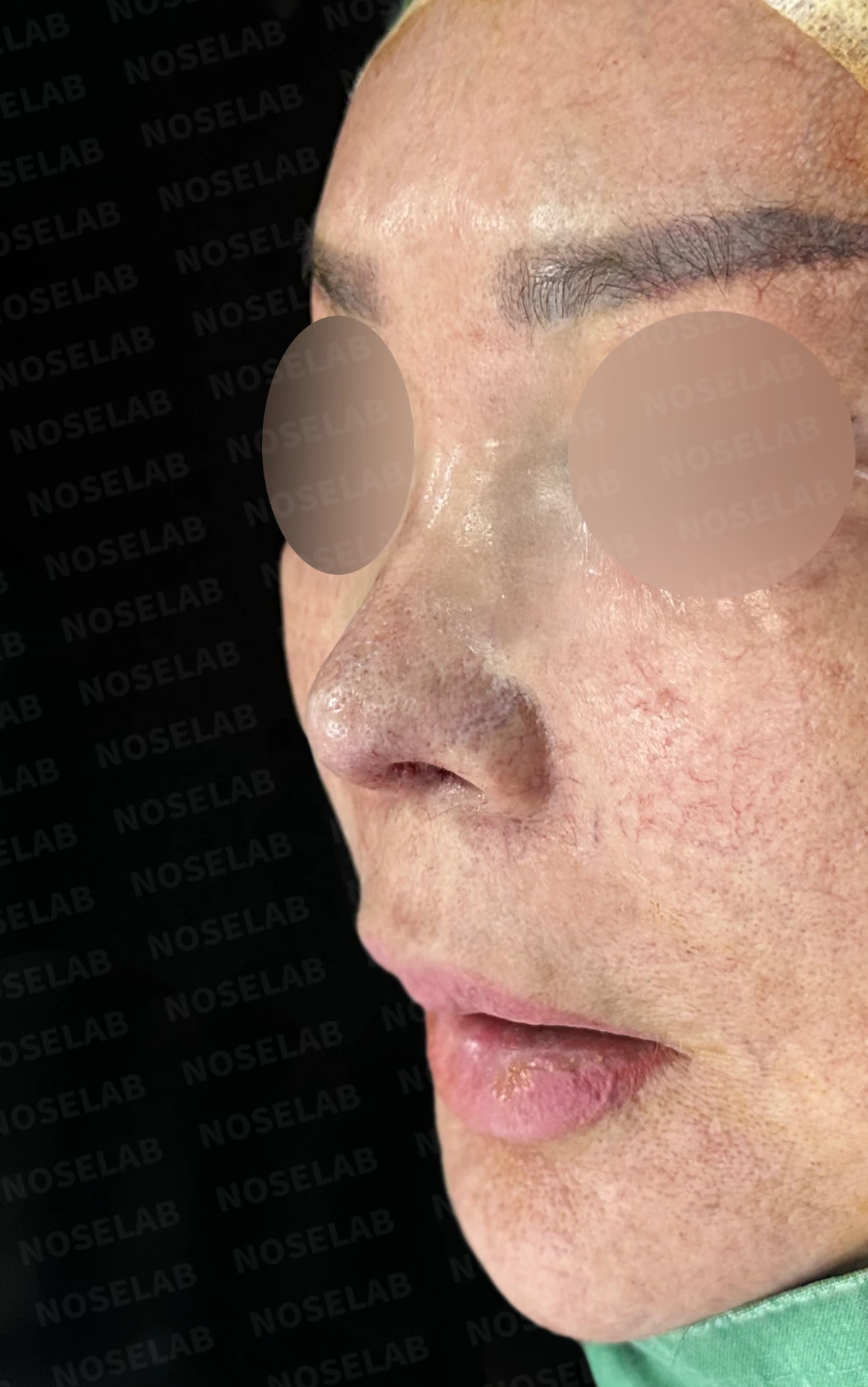
Before surgery / Day 0 immediately after surgery Photos taken immediately after surgery show swelling and may differ from the final result.
Overall change in impression
Achieved a natural, refined nasal shape without excessive alterations
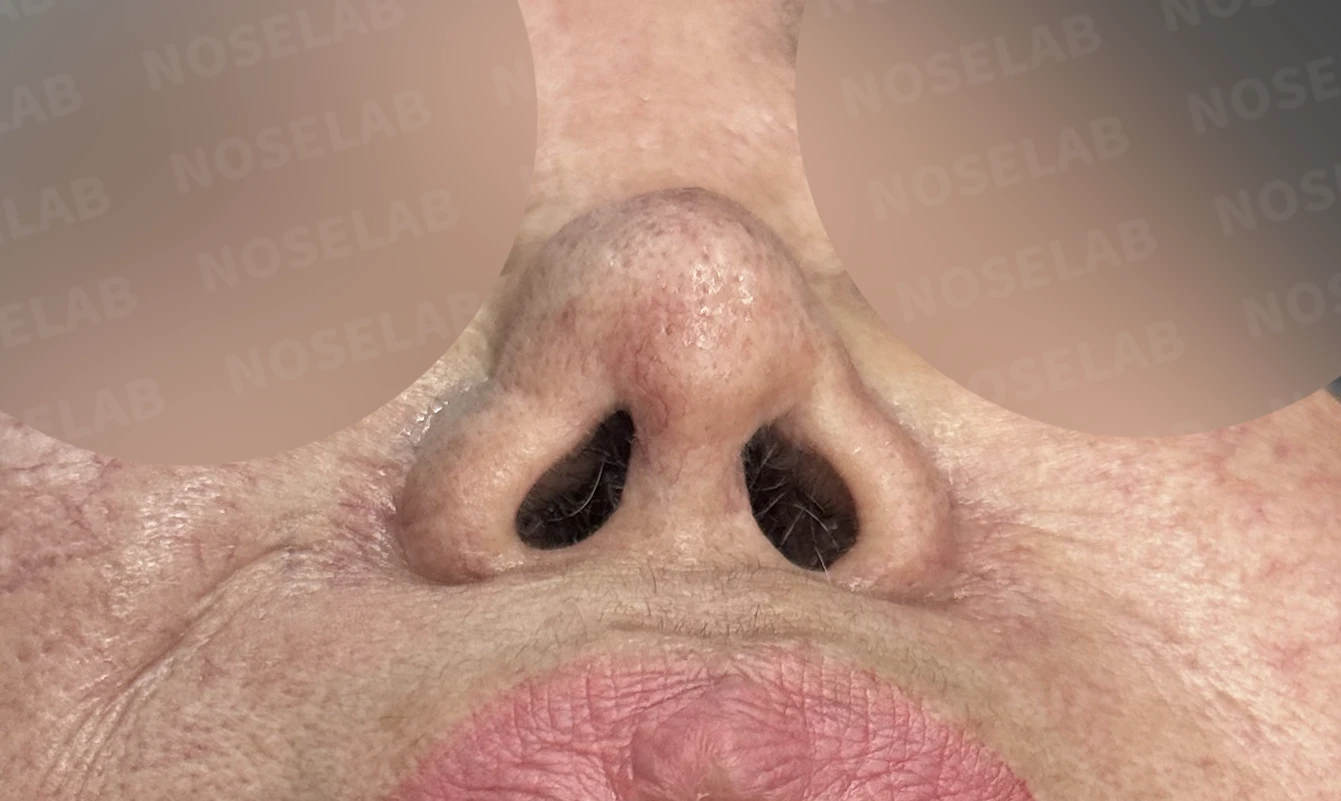
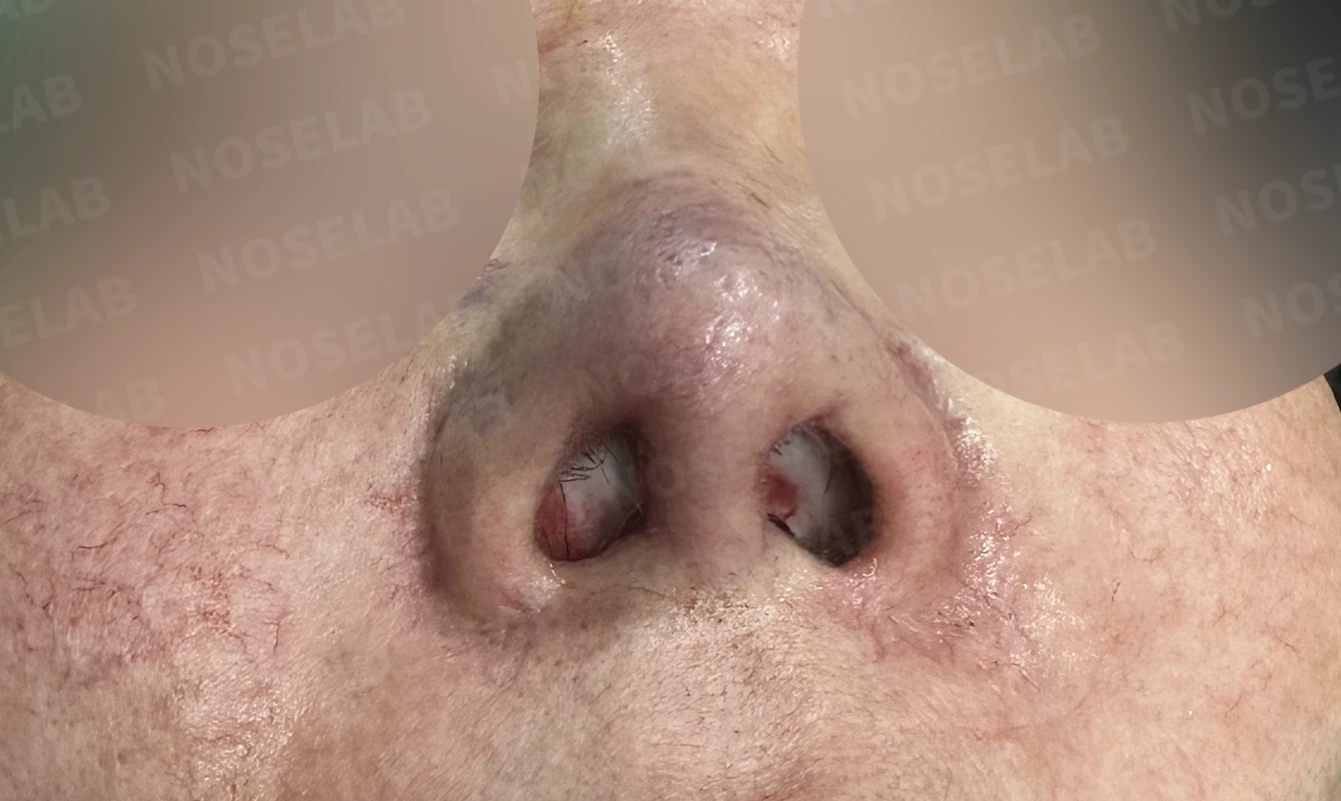
Before surgery / Day 0 immediately after surgery Photos taken immediately after surgery show swelling and may differ from the final result.
💡 Specialist opinion
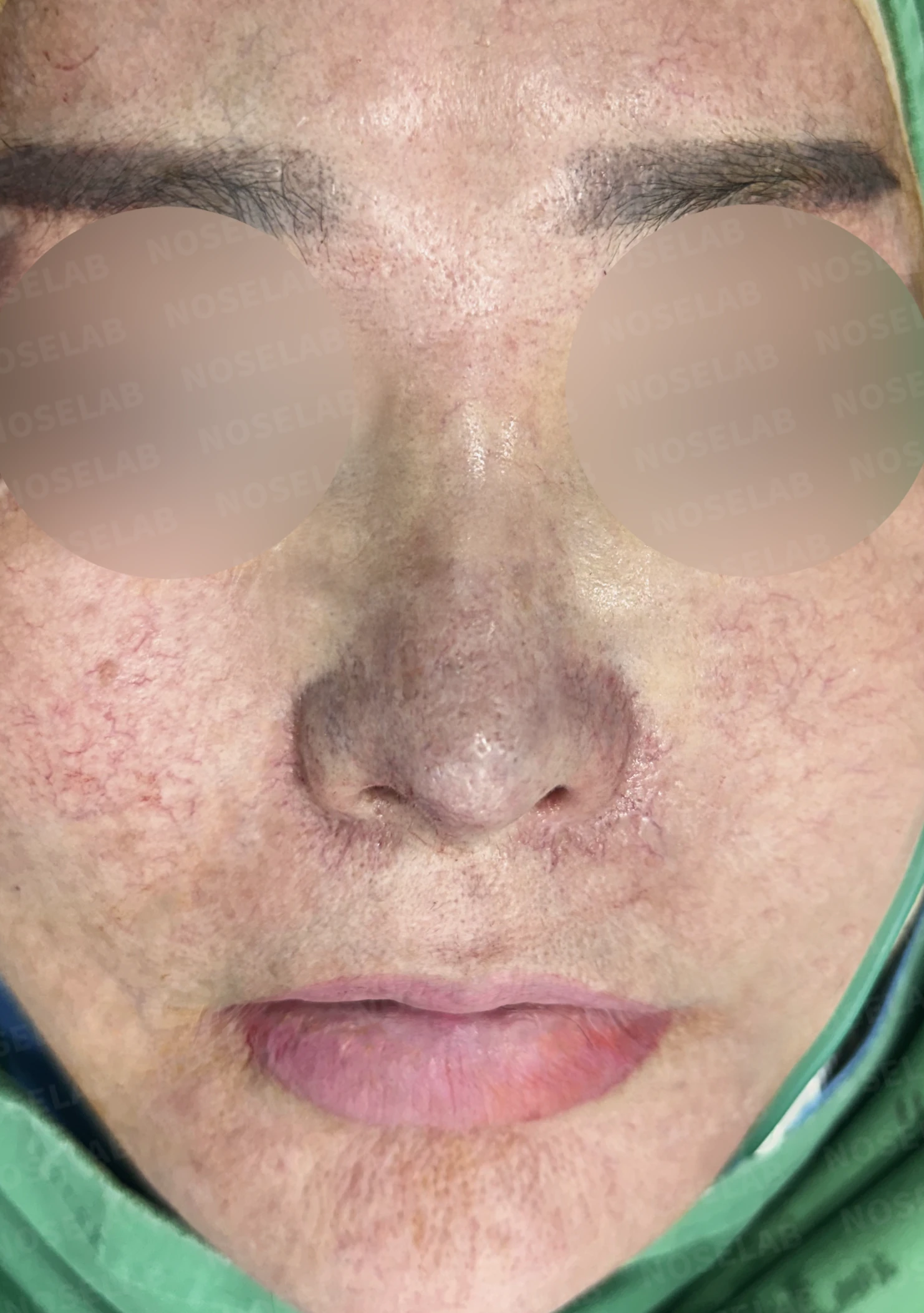
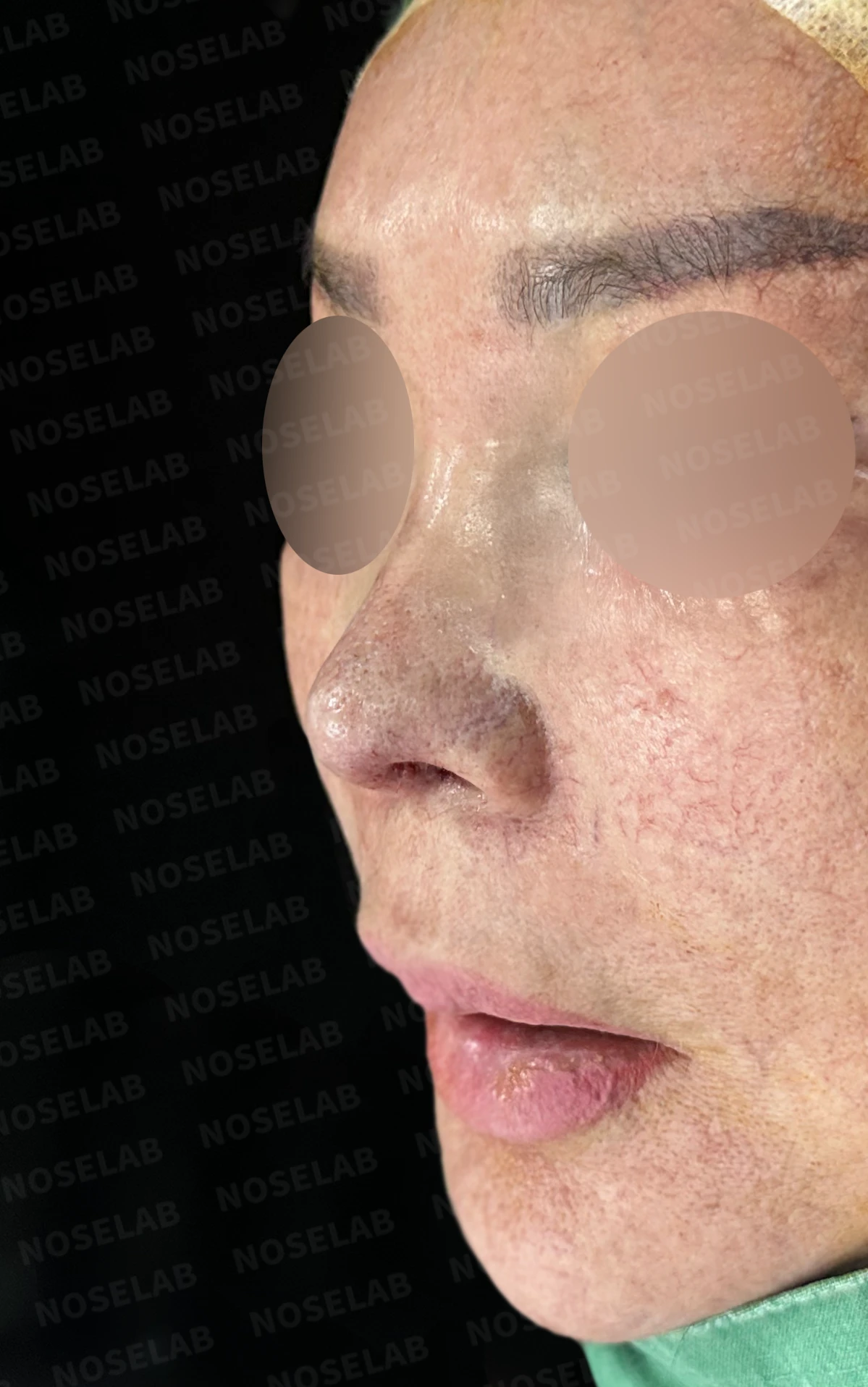
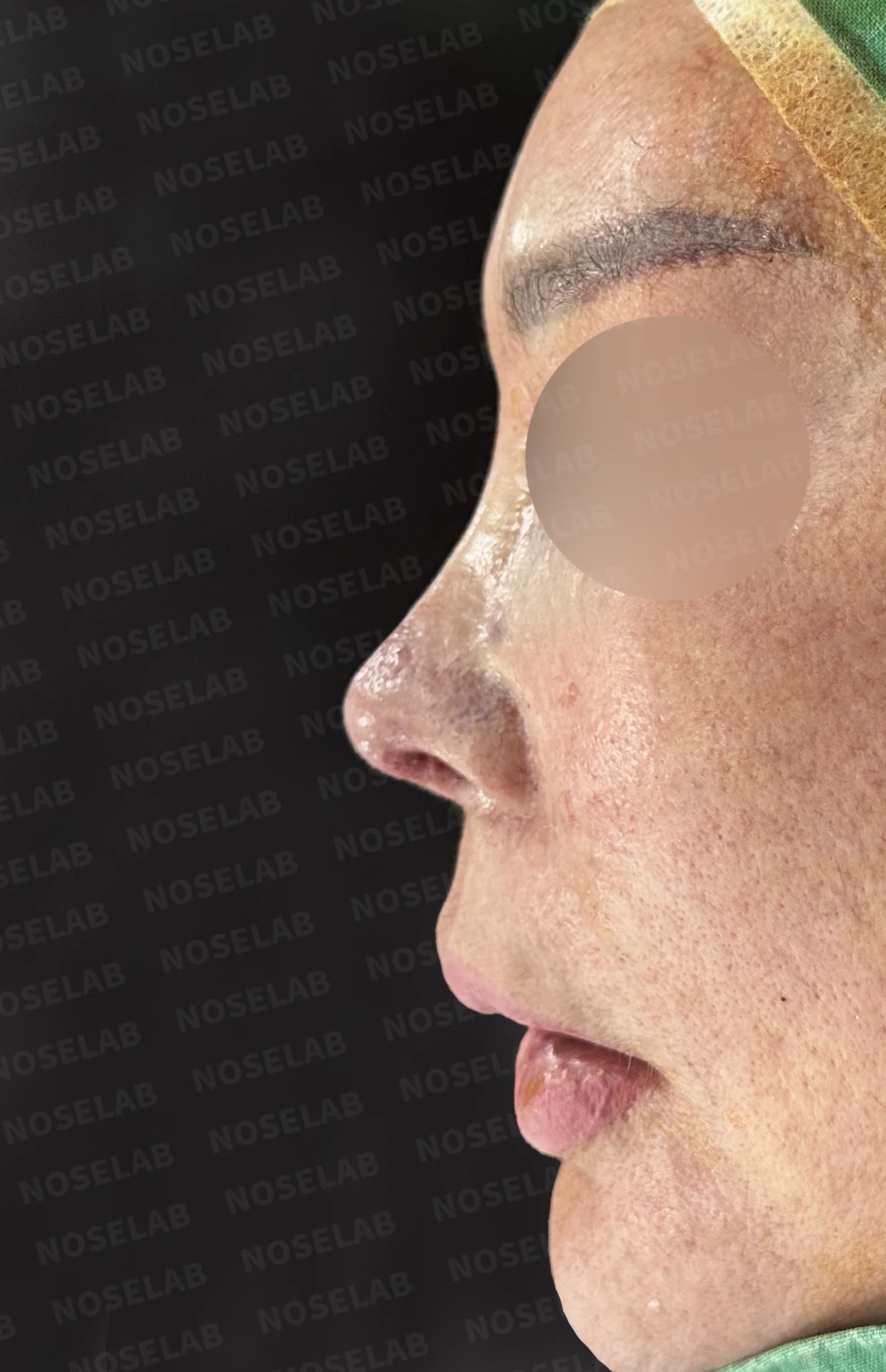
Front, oblique, and profile views on day 0 immediately after surgery. Photos taken immediately after surgery show swelling and may differ from the final result.
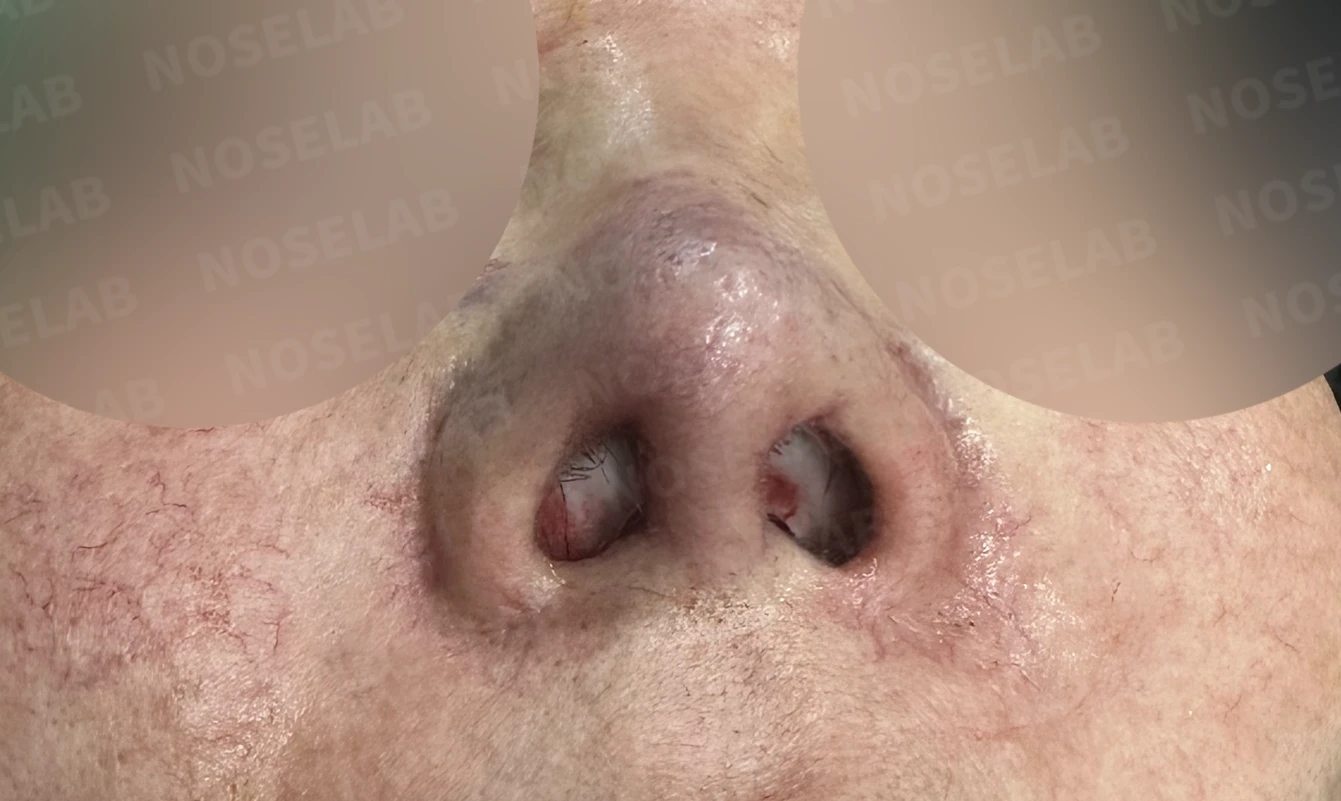
Nostril view on day 0 immediately after surgery. Photos taken immediately after surgery show swelling and may differ from the final result.
For a nose damaged by multiple surgeries and recurrent inflammation, attempting drastic changes in a single procedure carries high risk; instead, a staged approach—first removing the source of inflammation and allowing the tissues sufficient time to heal—is the safer path.
In this type of case, foreign materials and inflamed tissue were debrided, followed by a resting period of approximately 2 years. Stem cell therapy was used to assist in the recovery of weakened tissues, after which a stable structure was reconstructed using donor rib cartilage per the patient's preference. Respecting the patient's preference regarding materials while simultaneously accounting for both nasal function and structural stability was the key.
In revision rhinoplasty where damage has accumulated, meticulous planning tailored to the state of the tissues and an adequate recovery period determine the surgical outcome. NOSELAB will continue to closely examine each patient's condition to provide customized surgeries with safety as our top priority.
This was Dr. Peter C. Kang. Thank you.
#closedrhinoplasty #closedrevisionrhinoplasty #revisionrhinoplasty #donorribcartilage #rhinoplastycomplications #saferevisionrhinoplasty #septalreconstruction #stemcellrhinoplasty

Limitations and risks
When using donor rib cartilage, long-term follow-up is necessary because the grafted cartilage may resorb or warp.
When revising after implant removal, contracture may progress again after removal, the nasal height and length may decrease, and staged surgery may be necessary depending on the skin condition.
When foreign materials such as injected fillers are removed and reconstructed, contracture may recur, nasal height and length may decrease, and staged surgery may be necessary depending on the skin condition.
When the septum is corrected at the same time, nasal obstruction may persist or recur, and in rare cases, septal perforation or changes in smell may occur.
Common potential risks include infection, bleeding, asymmetry, scarring, skin necrosis, and insufficient improvement; results vary depending on individual skin condition and previous surgical history.