Hello, I am Dr. Peter C. Kang.
Today, I would like to introduce a revision rhinoplasty case of a patient who was unsatisfied with their nasal shape despite having undergone multiple procedures.
🔍 Surgical history
About 10 years ago: Filler injection to the nasal bridge and nasal tip
About 3 years ago: Rhinoplasty using a silicone implant, ear cartilage, and septal cartilage (filler removal performed concurrently)
About 2 years ago: Revision surgery at the same clinic
Despite having a total of three procedures and surgeries, the patient remained dissatisfied with the nasal shape and visited NOSELAB.
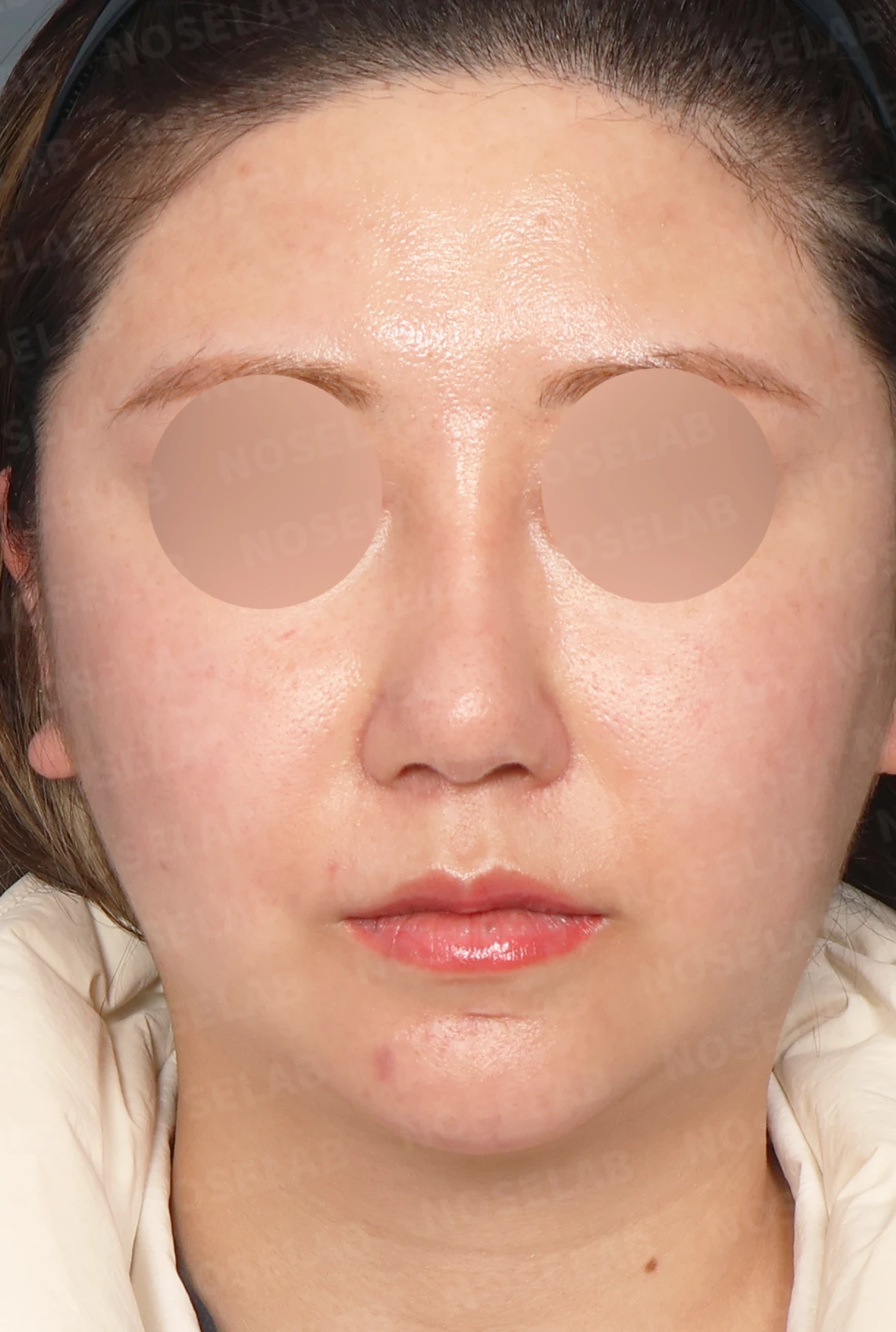
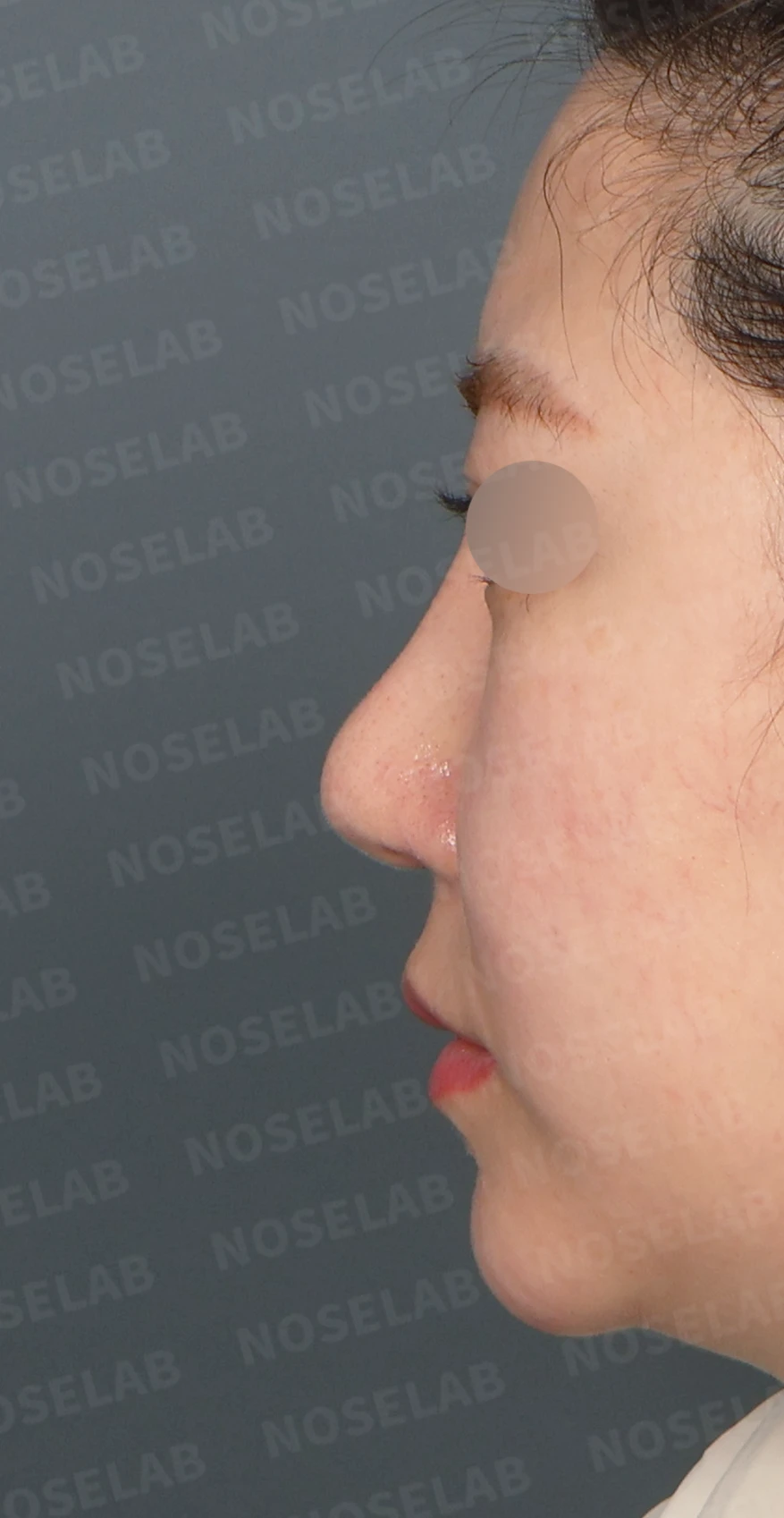
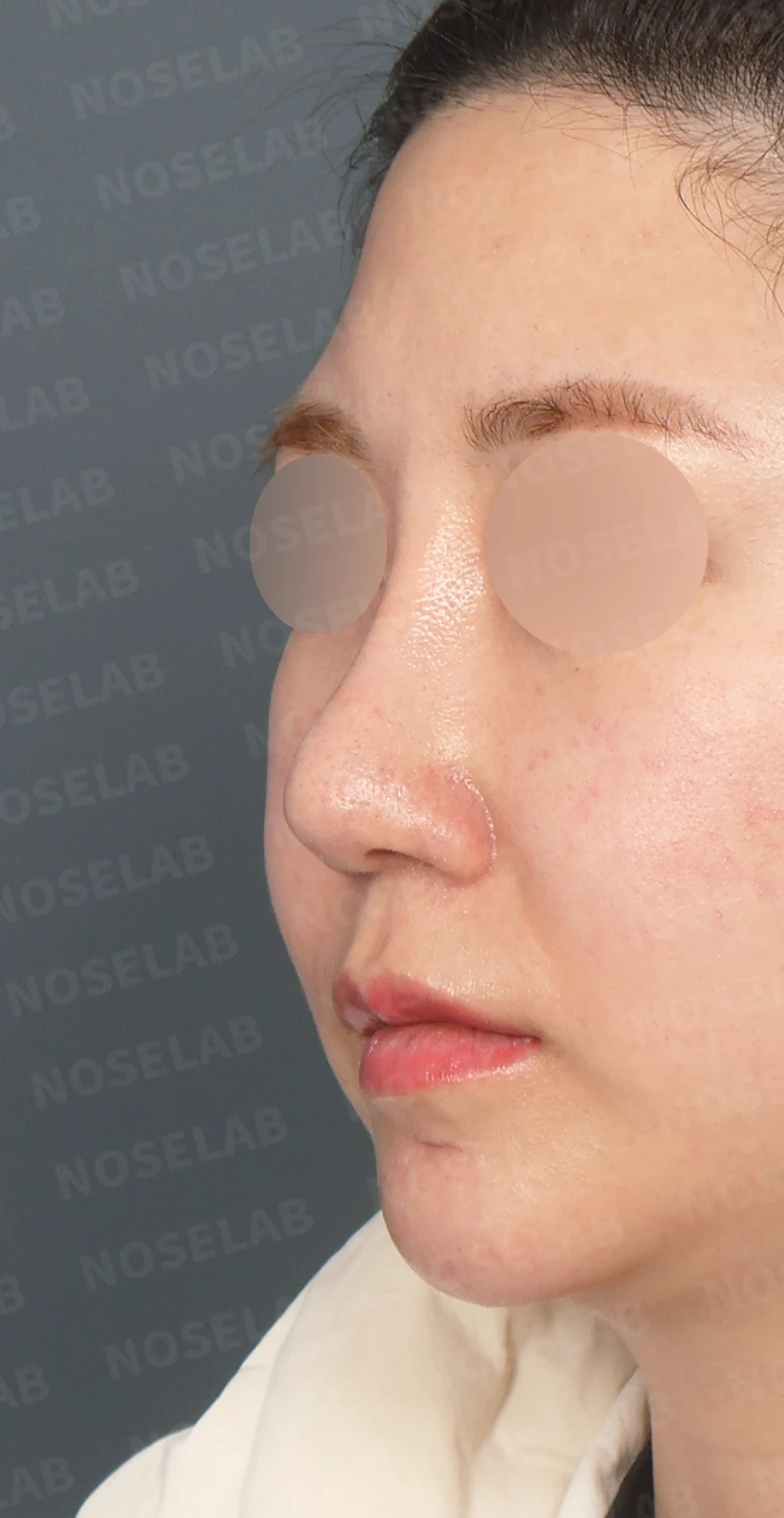
Front, left profile, and oblique views during design consultation.
💉 Patient requests
Wants to refine a blunt, wide nasal tip into a sharper appearance
Wants to lower the radix so that the nose does not appear long
Desires a natural yet defined straight bridge line
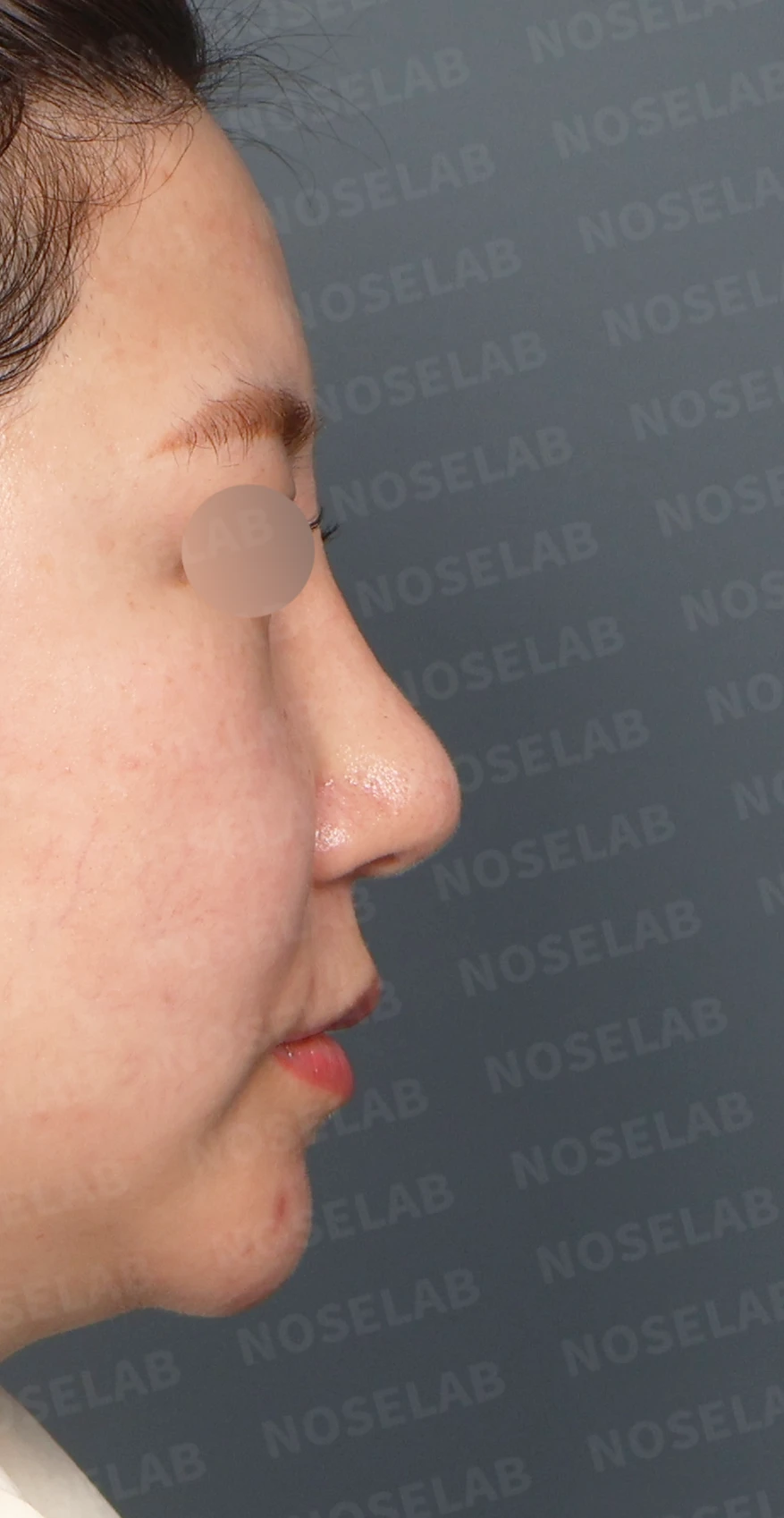
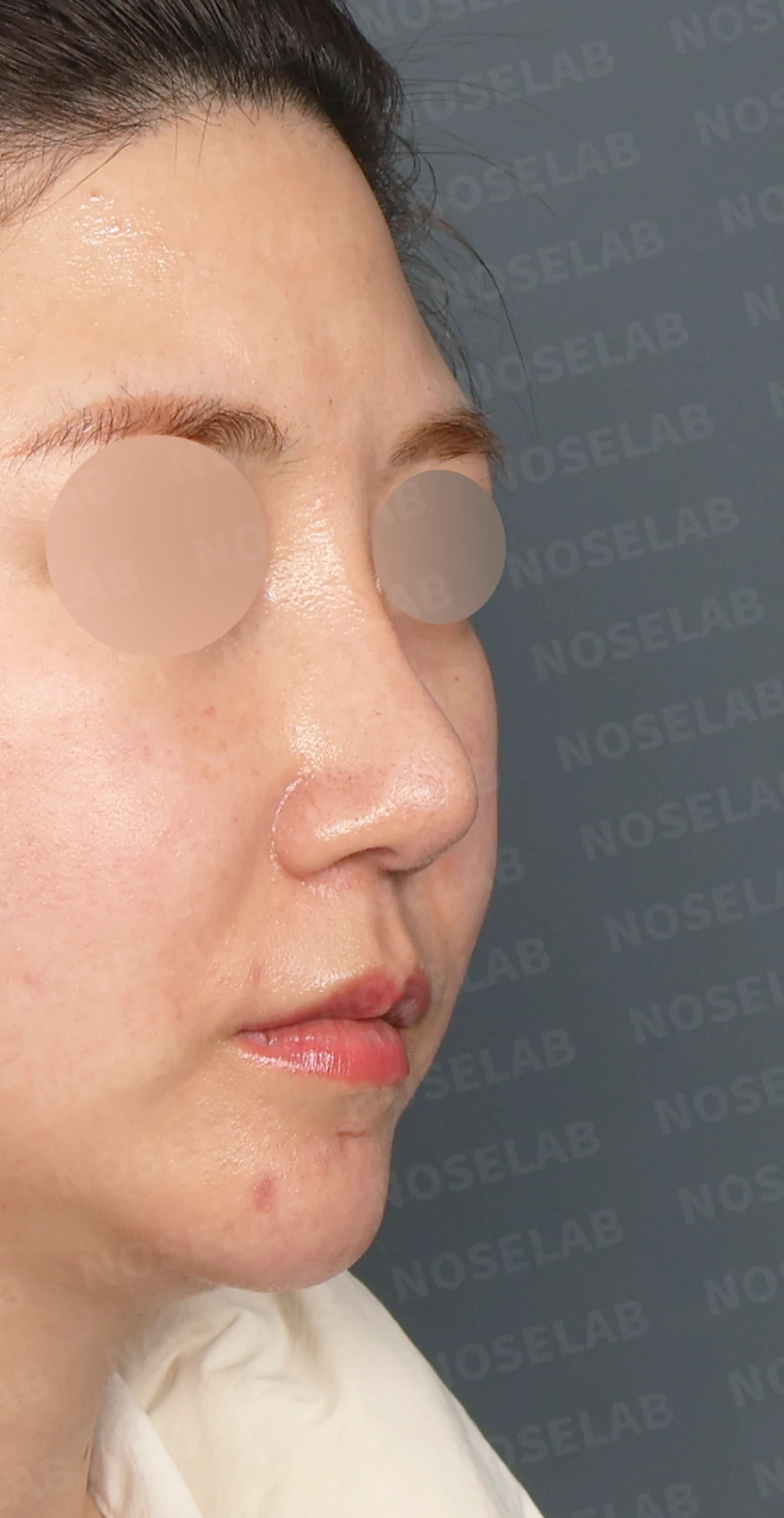
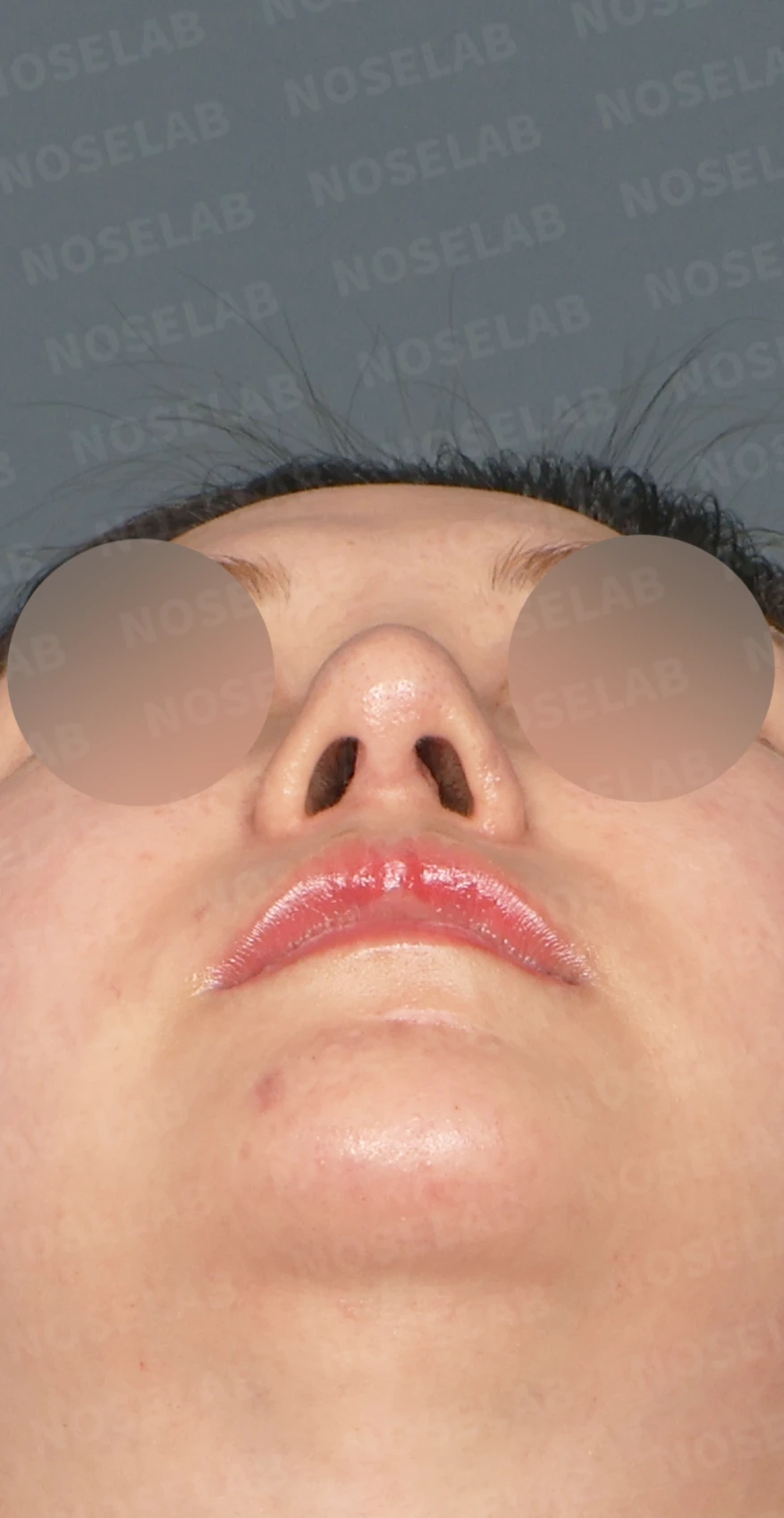
Right profile, oblique, and nostril views during design consultation.
🔧 Surgical plan and procedure
1. Implant replacement and radix correction
The existing silicone implant was positioned very high and deviated to the right. It was removed and replaced with a newly carved silicone implant tailored to the nasal bone structure, naturally lowering the radix and correcting the crooked nose.
2. Septal extension using donor rib cartilage
To secure structural support for the nasal tip, septal extension was performed using donor rib cartilage.
3. Bulbous tip correction
Partial resection of subcutaneous soft tissue at the nasal tip and lower lateral cartilage suturing were performed to gather the blunt, wide tip. Increasing the tip projection added three-dimensional definition to improve the bulbous tip.
4. Nasolabial angle correction and columella shaping
The retracted columella was lowered using donor rib cartilage along with previously harvested septal cartilage and ear cartilage, creating a natural nasolabial angle. This also reduced the elongated appearance of the nose.
5. Concurrent rhinitis surgery
Because the patient reported nasal obstruction, inferior turbinate reduction was performed concurrently to achieve functional improvement.
🌟 Surgical results
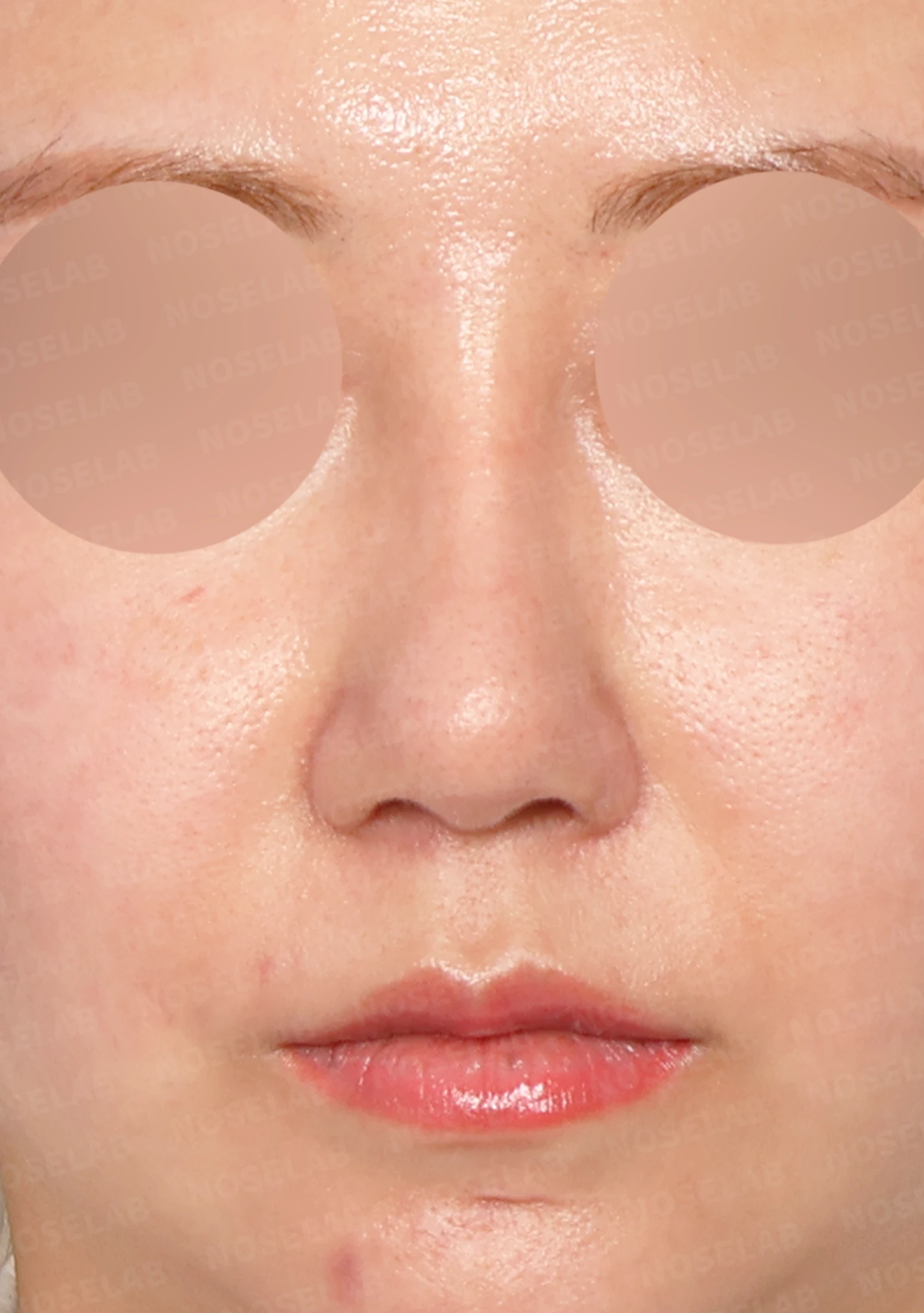
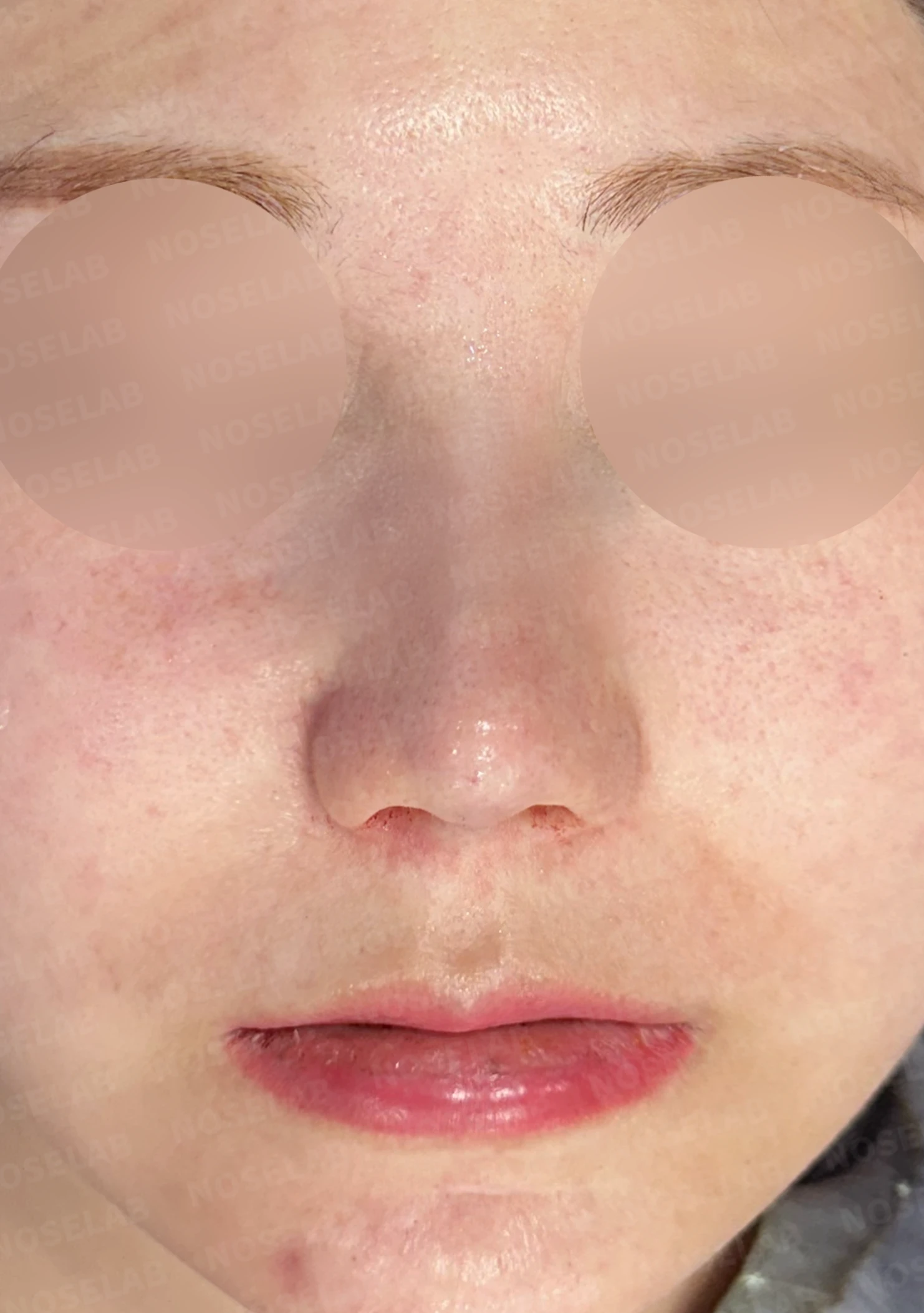
Before surgery / Day 0 immediately after surgery Photos taken immediately after surgery show swelling and may differ from the final result.
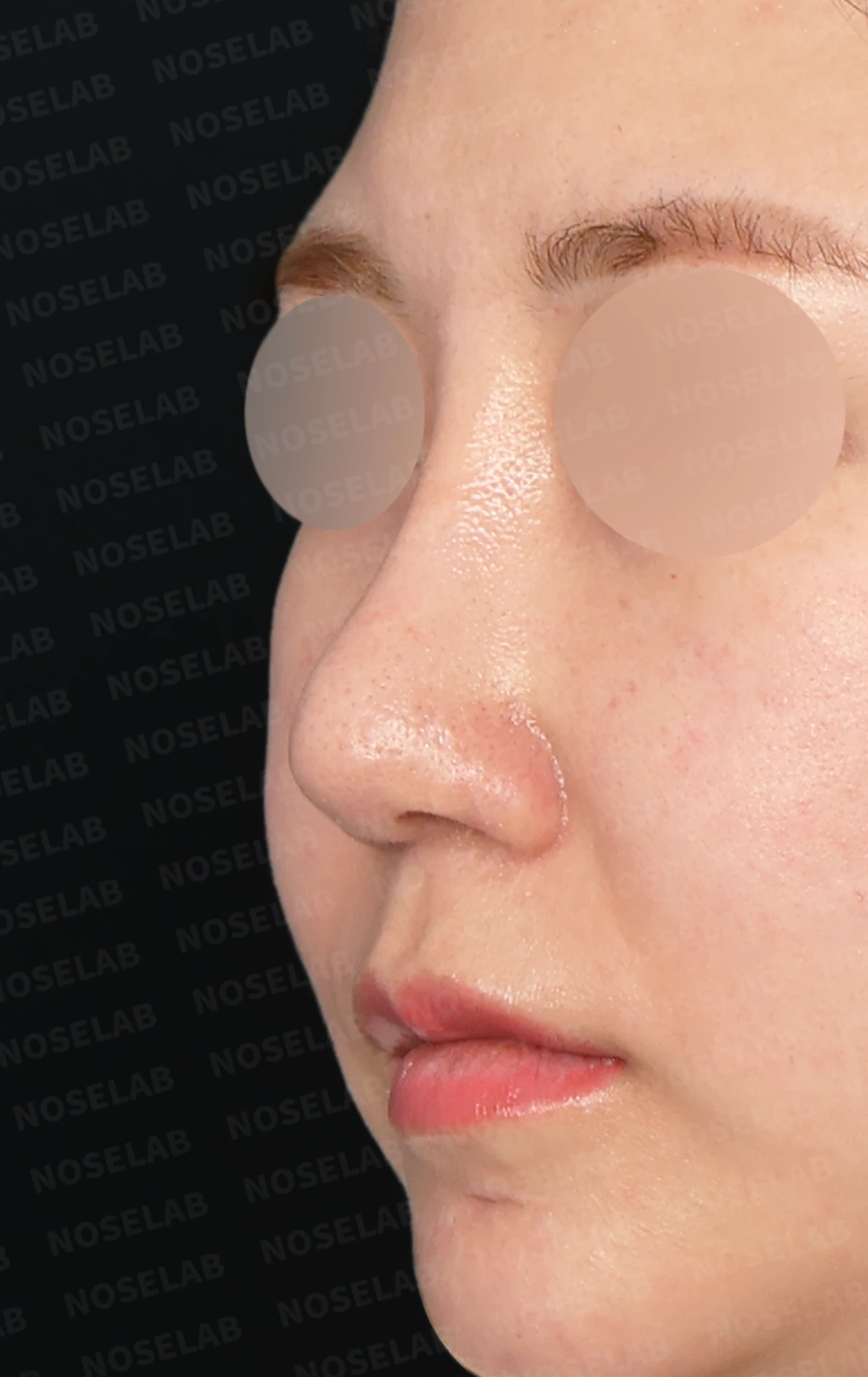
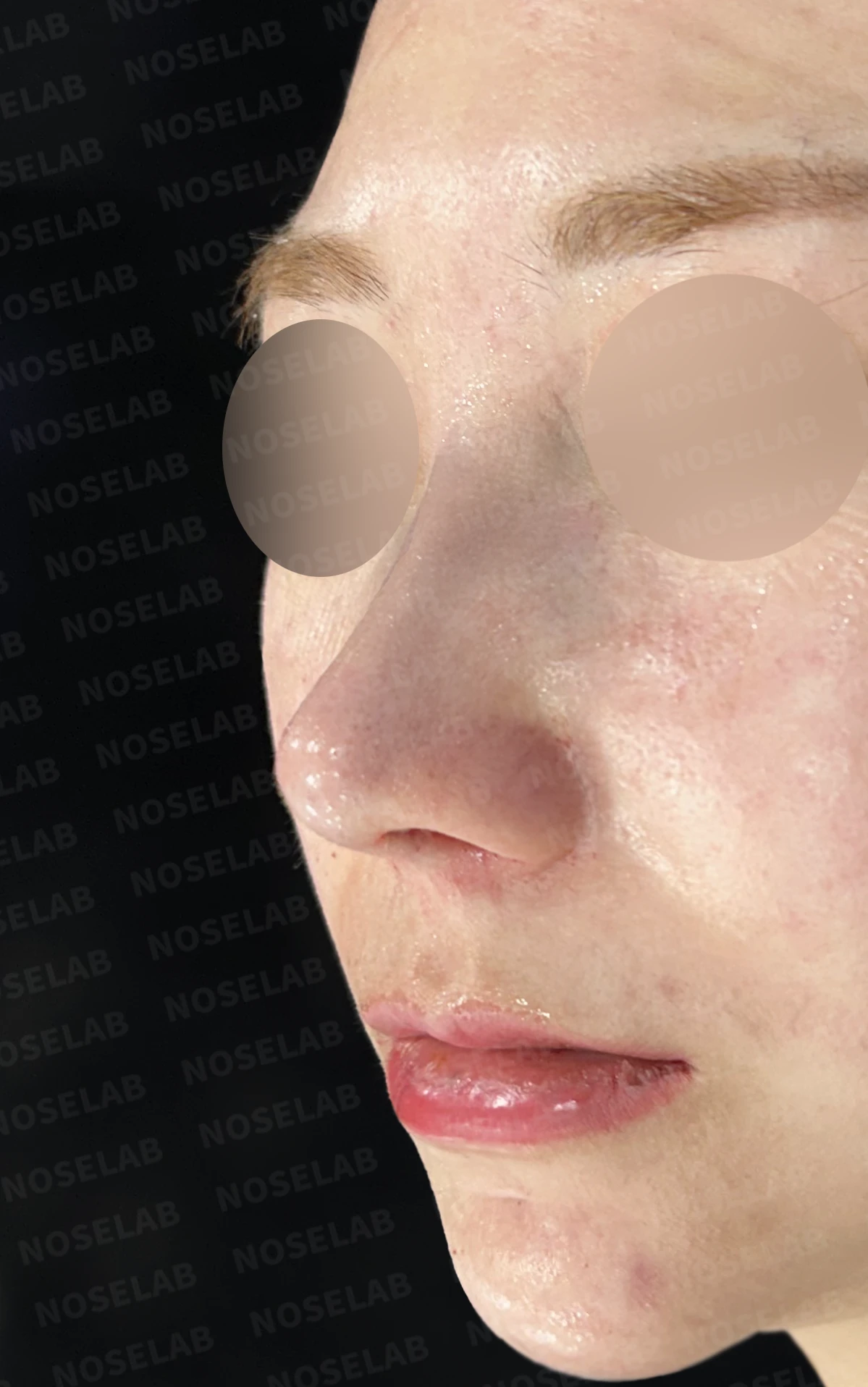
Front view changes: The blunt, spreading nasal tip has been gathered and refined. The nasal bridge that had deviated to the right is now properly aligned.
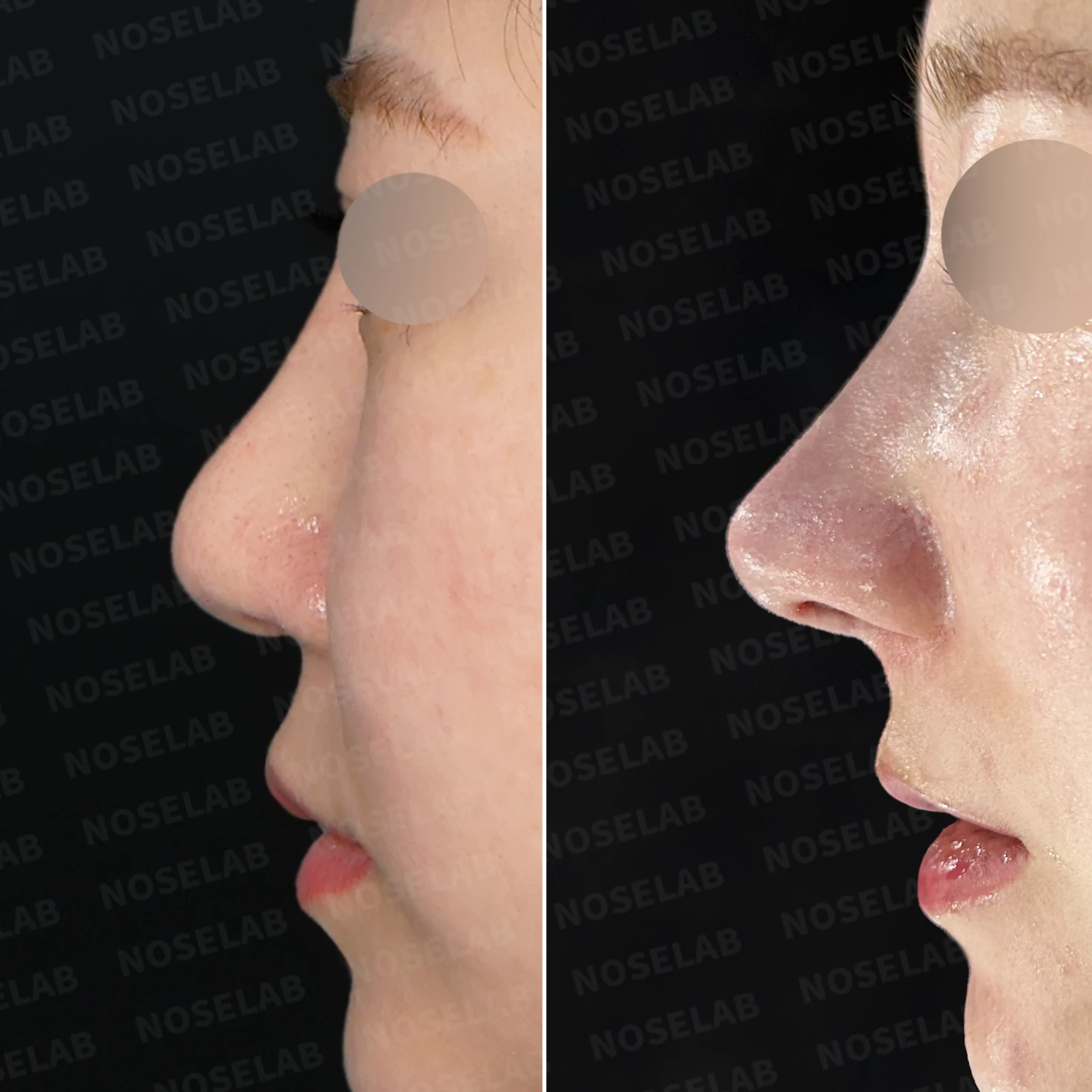
Before surgery / Day 0 immediately after surgery Photos taken immediately after surgery show swelling and may differ from the final result.
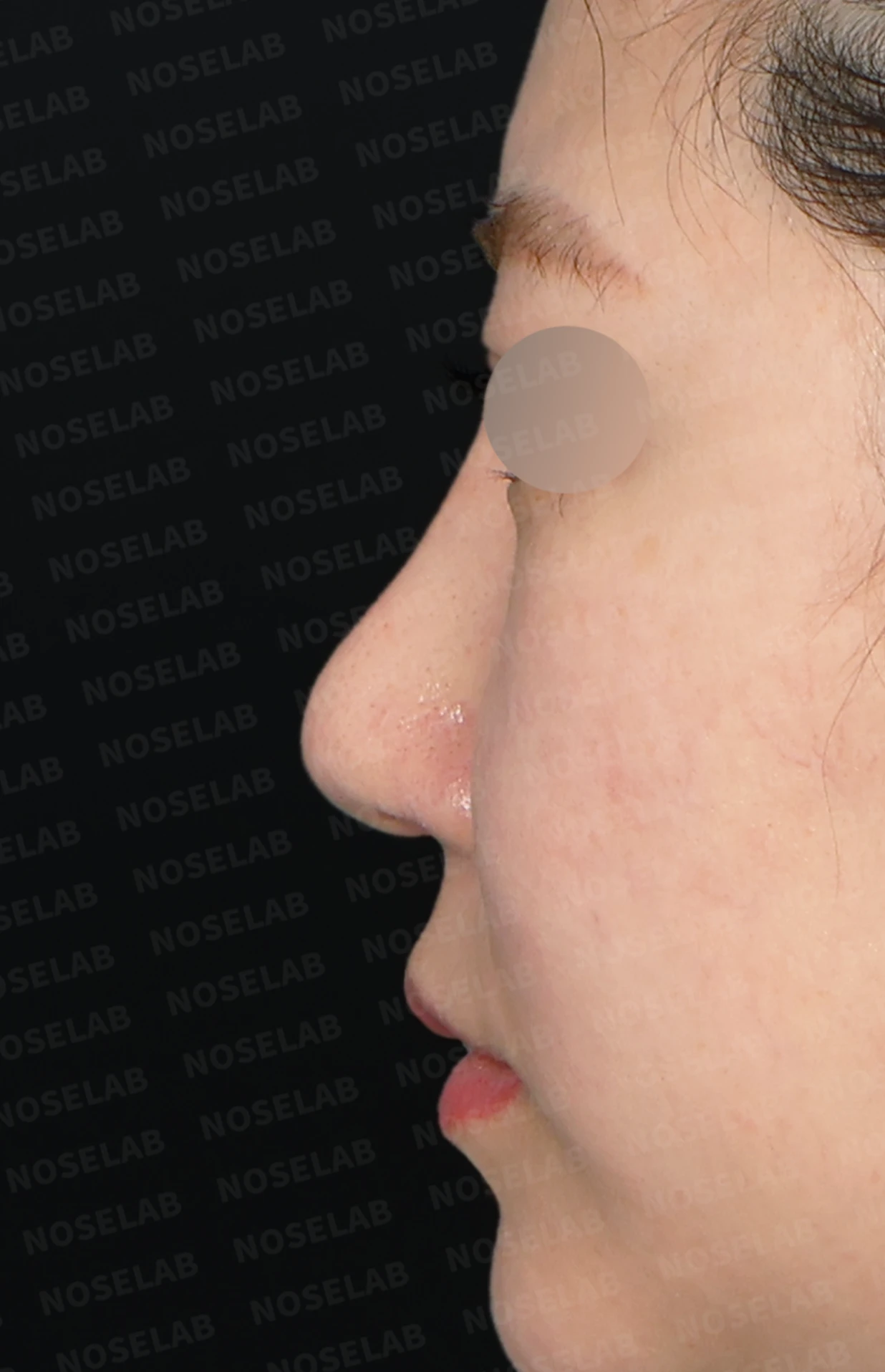
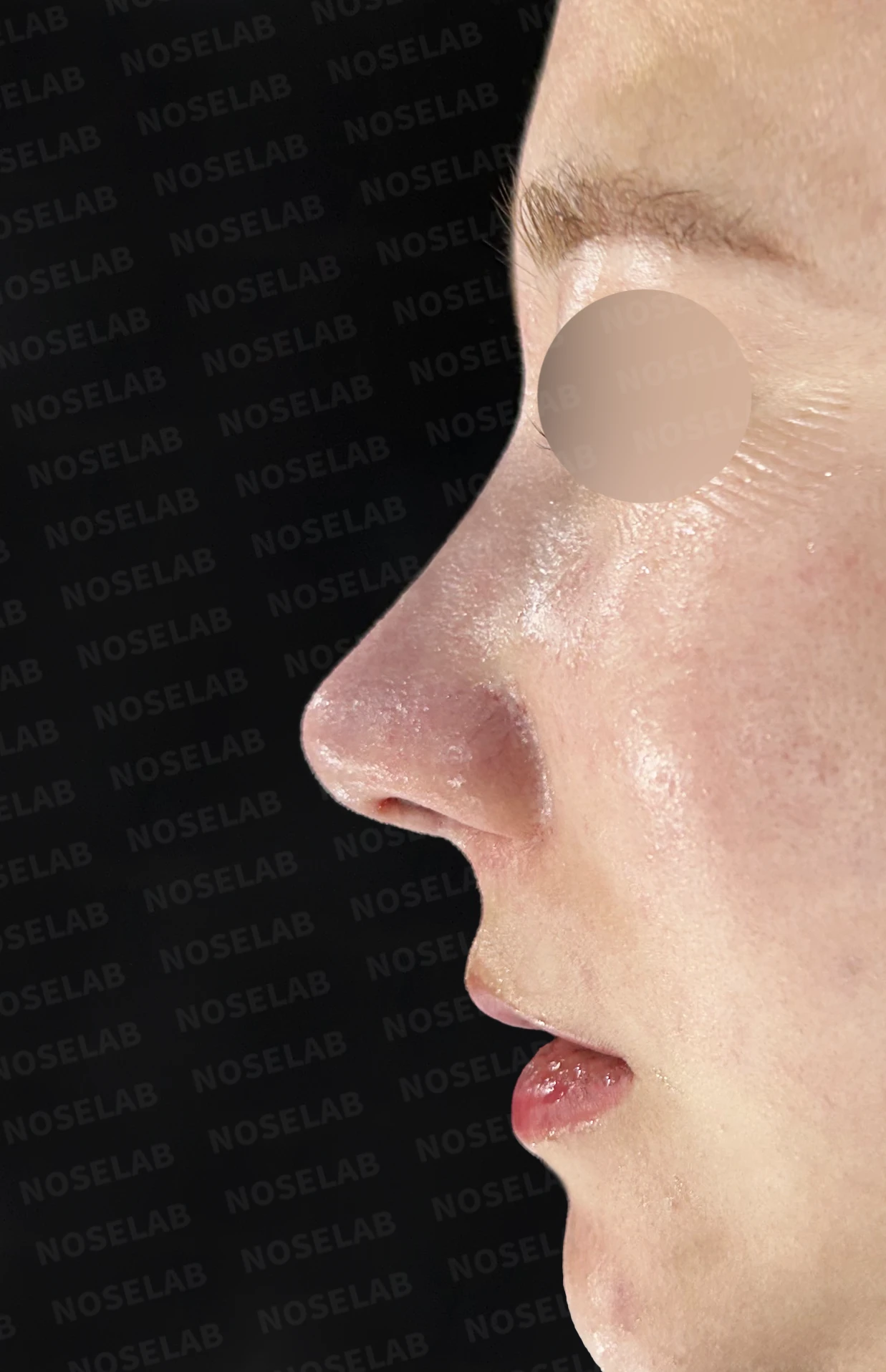
Profile view changes: The previously high radix was naturally lowered, eliminating the impression of an overly long nose. A natural yet defined straight bridge line was established. With appropriate correction of the nasolabial angle, a refined profile silhouette was achieved.
Before surgery / Day 0 immediately after surgery Photos taken immediately after surgery show swelling and may differ from the final result.
Nostril view changes: The retracted columella was naturally brought down, improving nostril balance.
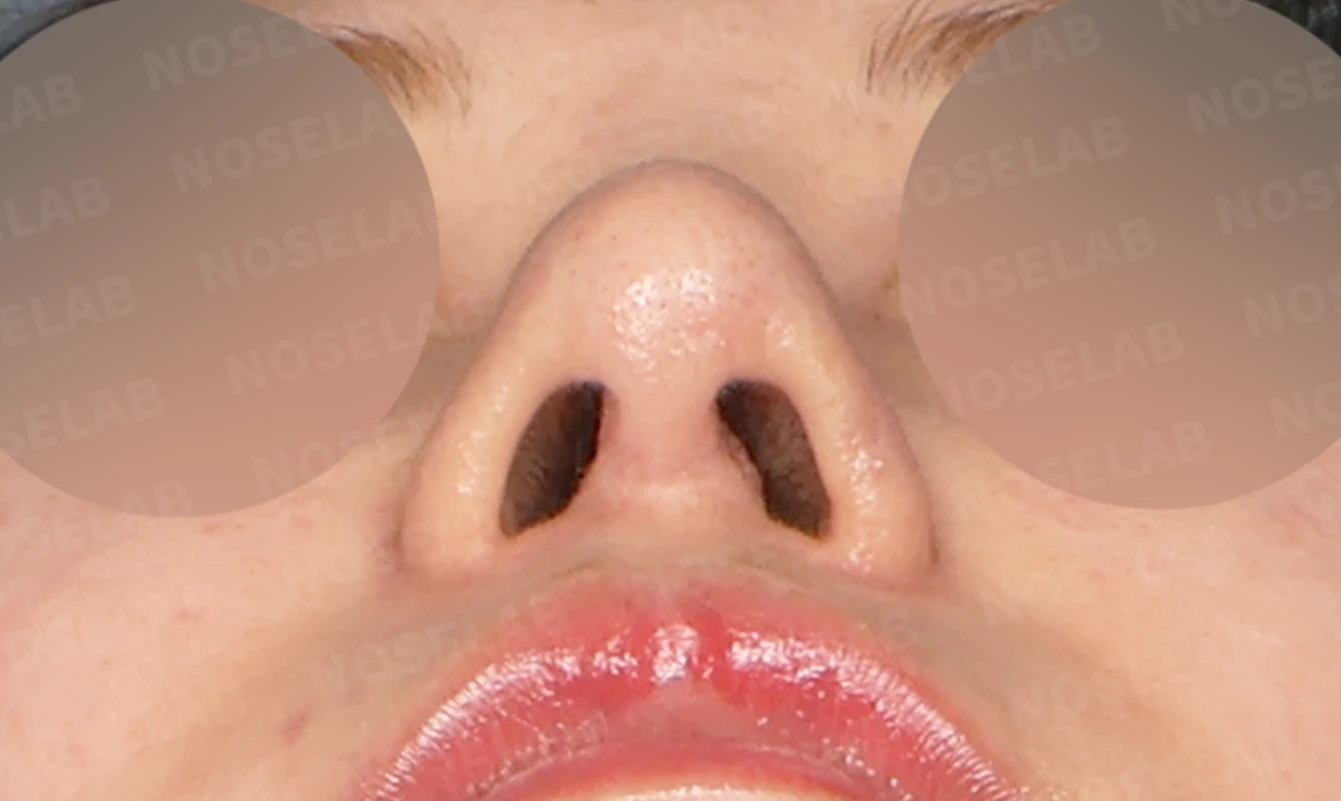
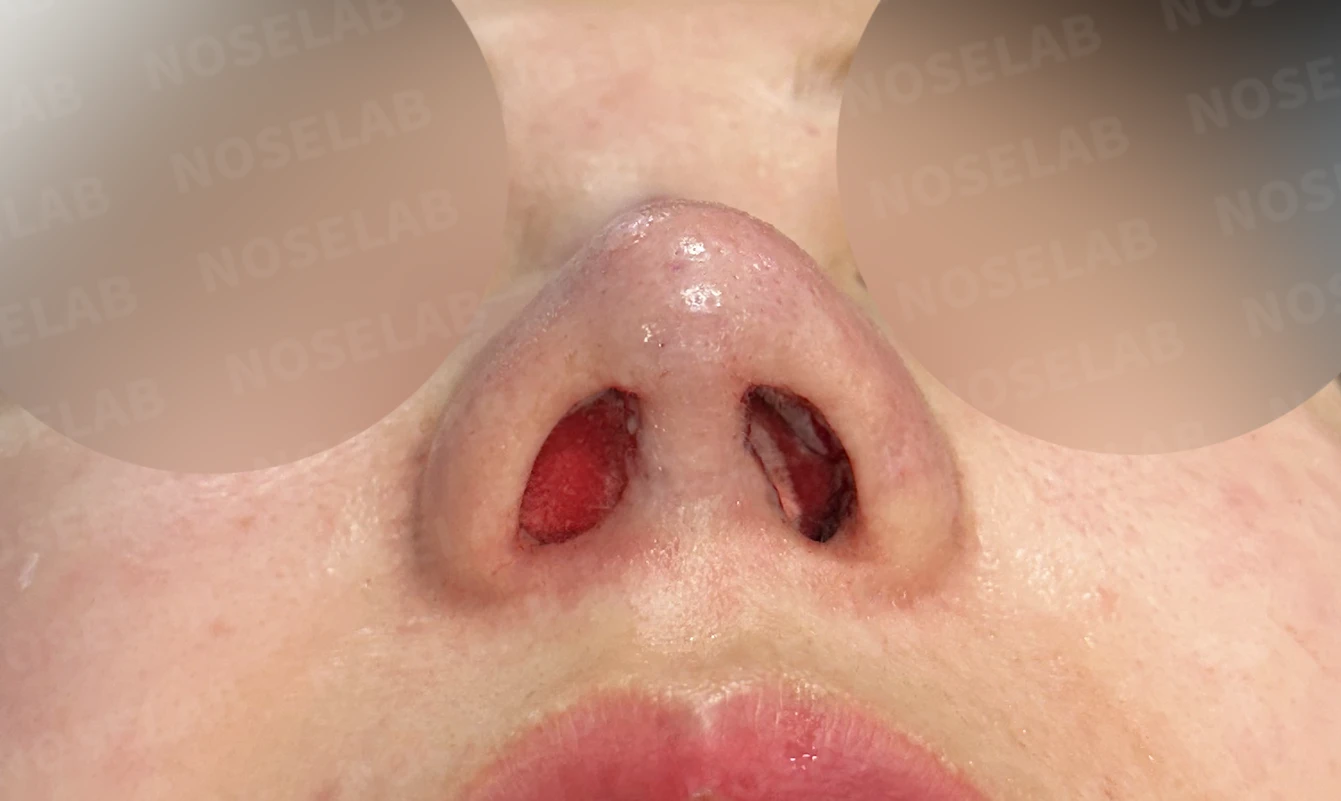
Before surgery / Day 0 immediately after surgery Photos taken immediately after surgery show swelling and may differ from the final result.
💡 Specialist opinion
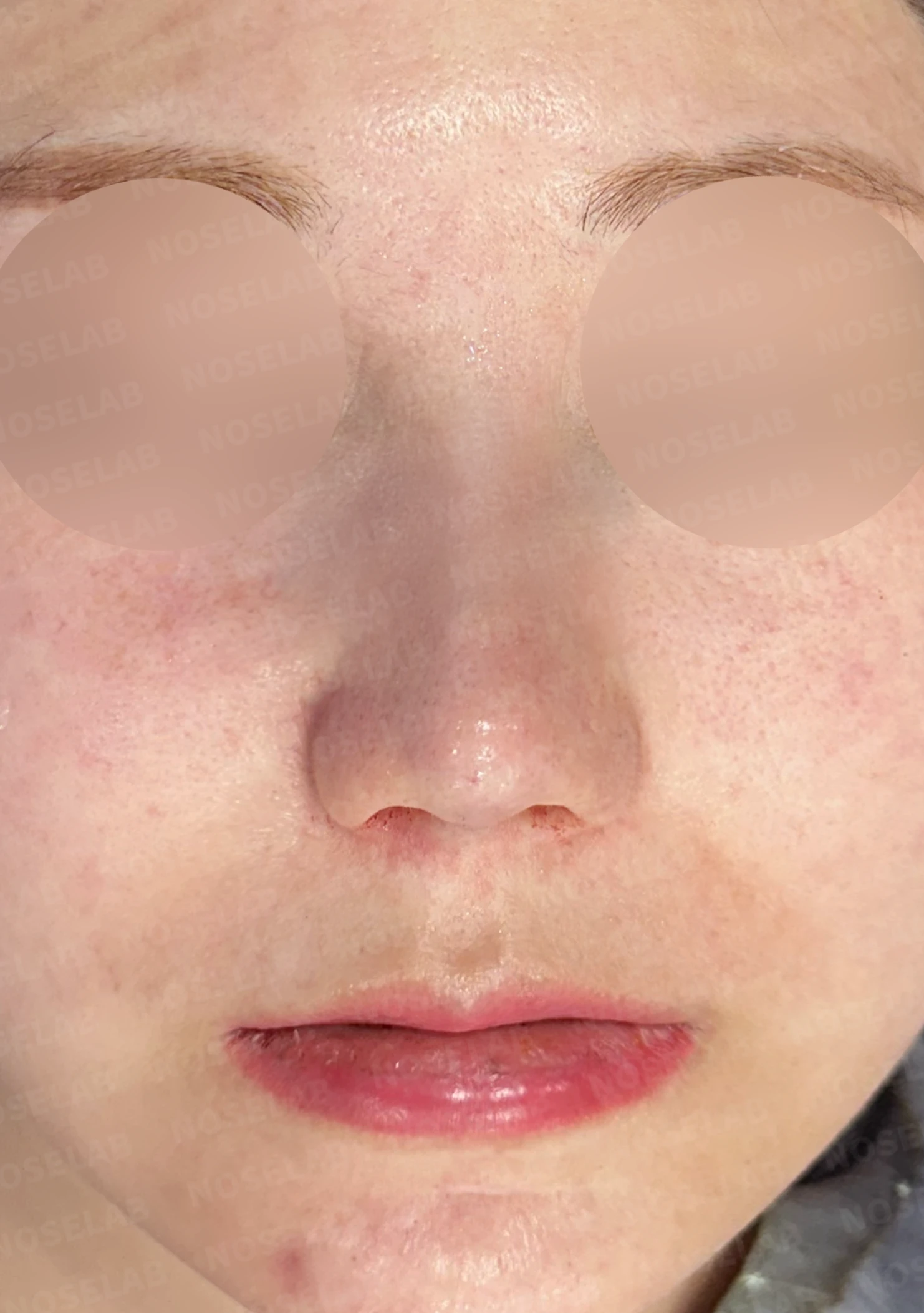
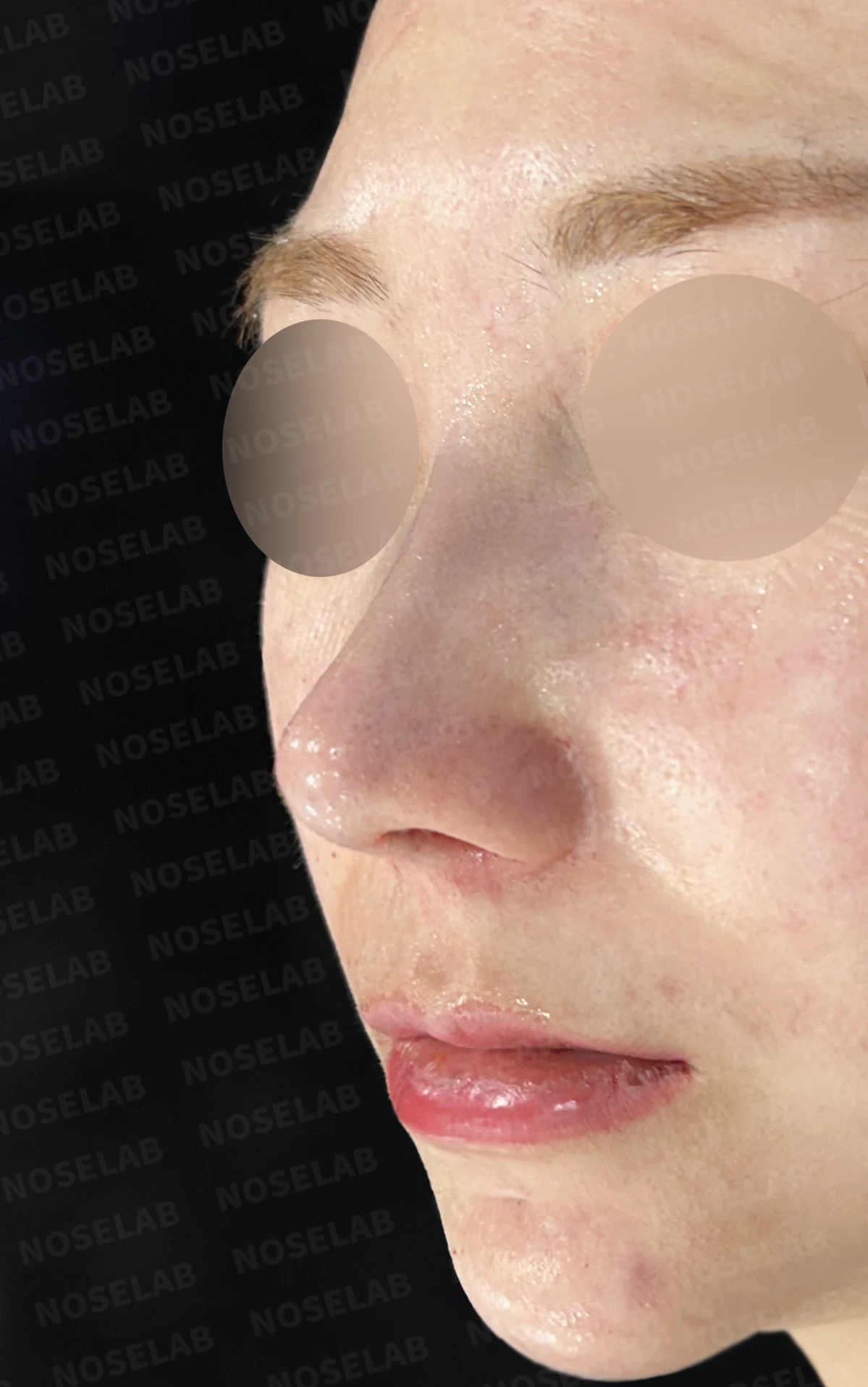
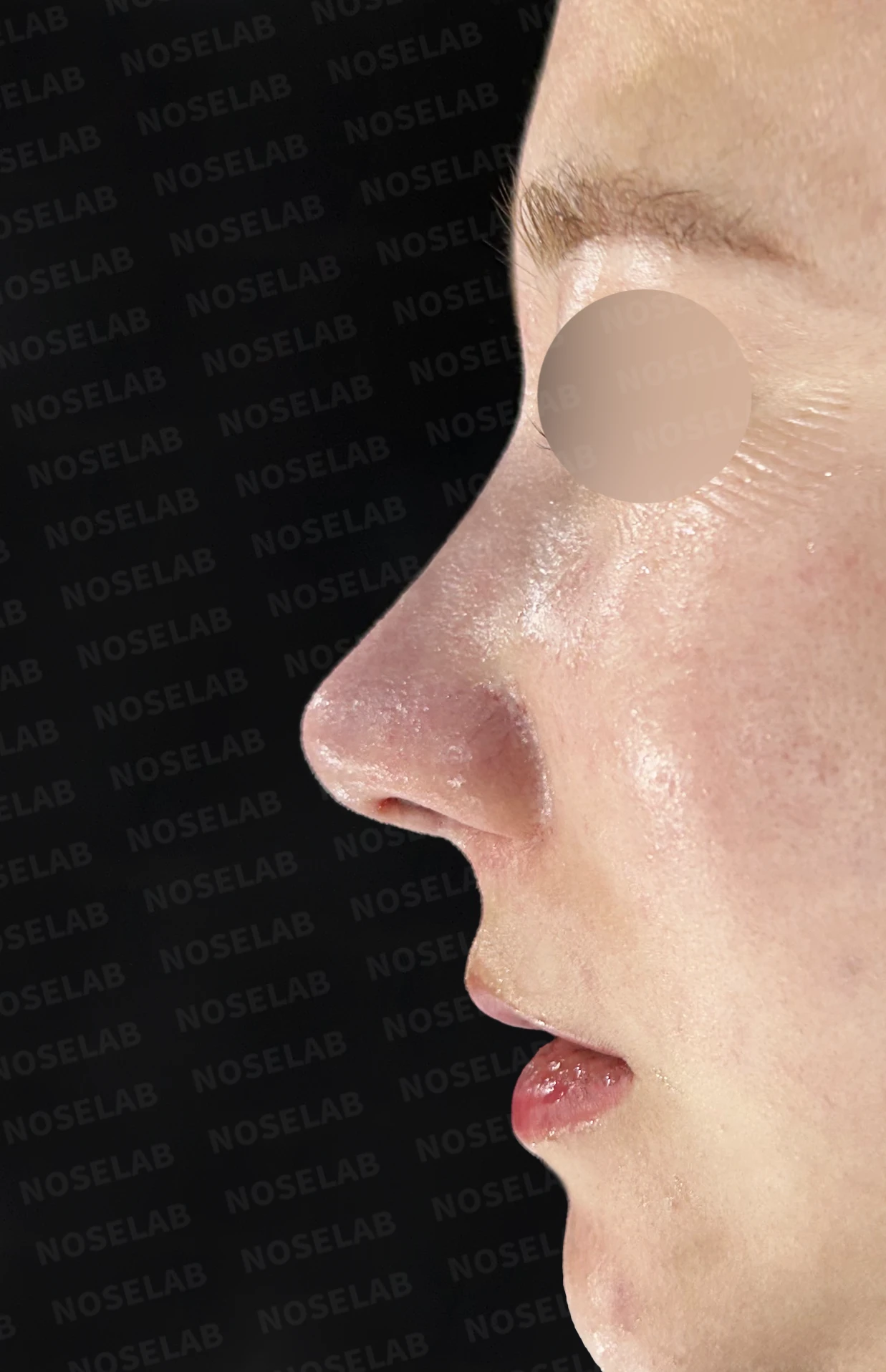
Front, oblique, and profile views on day 0 immediately after surgery. Photos taken immediately after surgery show swelling and may differ from the final result.
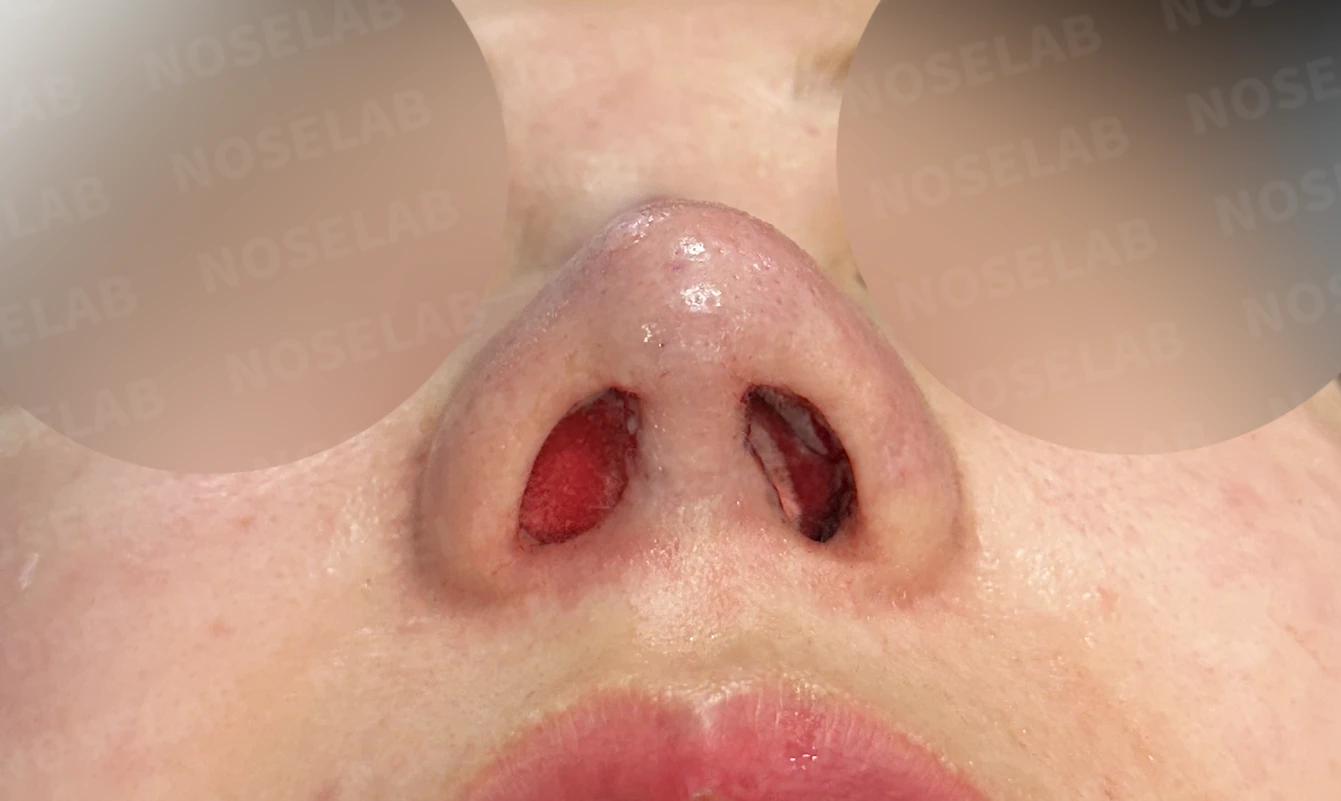
Nostril view on day 0 immediately after surgery. Photos taken immediately after surgery show swelling and may differ from the final result.
In revision rhinoplasty involving multiple past procedures, accurately evaluating the existing materials and tissue status is of paramount importance. In cases like this, after comprehensively evaluating the malpositioned implant and weakened tip structural support, implant replacement was performed alongside structural reinforcement using donor rib cartilage.
In particular, adjusting both the radix and the nasolabial angle corrected the elongated appearance of the nose, and correcting the bulbous tip achieved the refined, elegant nasal line the patient desired. Addressing functional concerns with concurrent rhinitis surgery was also a key aspect of this procedure.
This was Dr. Peter C. Kang. Thank you.
#closedrhinoplasty #closedrevisionrhinoplasty #bulboustipcorrection #revisionrhinoplasty #donorribcartilage #nasolabialanglecorrection #crookednosecorrection #tipplasty #straightbridgeline #septalextension #nasalobstructionsurgery

Limitations and risks
When using donor rib cartilage, long-term follow-up is necessary because the grafted cartilage may resorb or warp.
When revising after implant removal, contracture may progress again after removal, the nasal height and length may decrease, and staged surgery may be necessary depending on the skin condition.
When foreign materials such as injected fillers are removed and reconstructed, contracture may recur, nasal height and length may decrease, and staged surgery may be necessary depending on the skin condition.
When the septum is corrected at the same time, nasal obstruction may persist or recur, and in rare cases, septal perforation or changes in smell may occur.
Common potential risks include infection, bleeding, asymmetry, scarring, skin necrosis, and insufficient improvement; results vary depending on individual skin condition and previous surgical history.