Hello, I am Dr. Peter C. Kang.
Today, I would like to share a revision rhinoplasty case of a patient who visited our clinic after suffering for a long time from nostril asymmetry and a crooked nose.
🔍 Surgical history
The patient had undergone rhinoplasty about 16 years earlier using a Gore-Tex implant and ear cartilage.
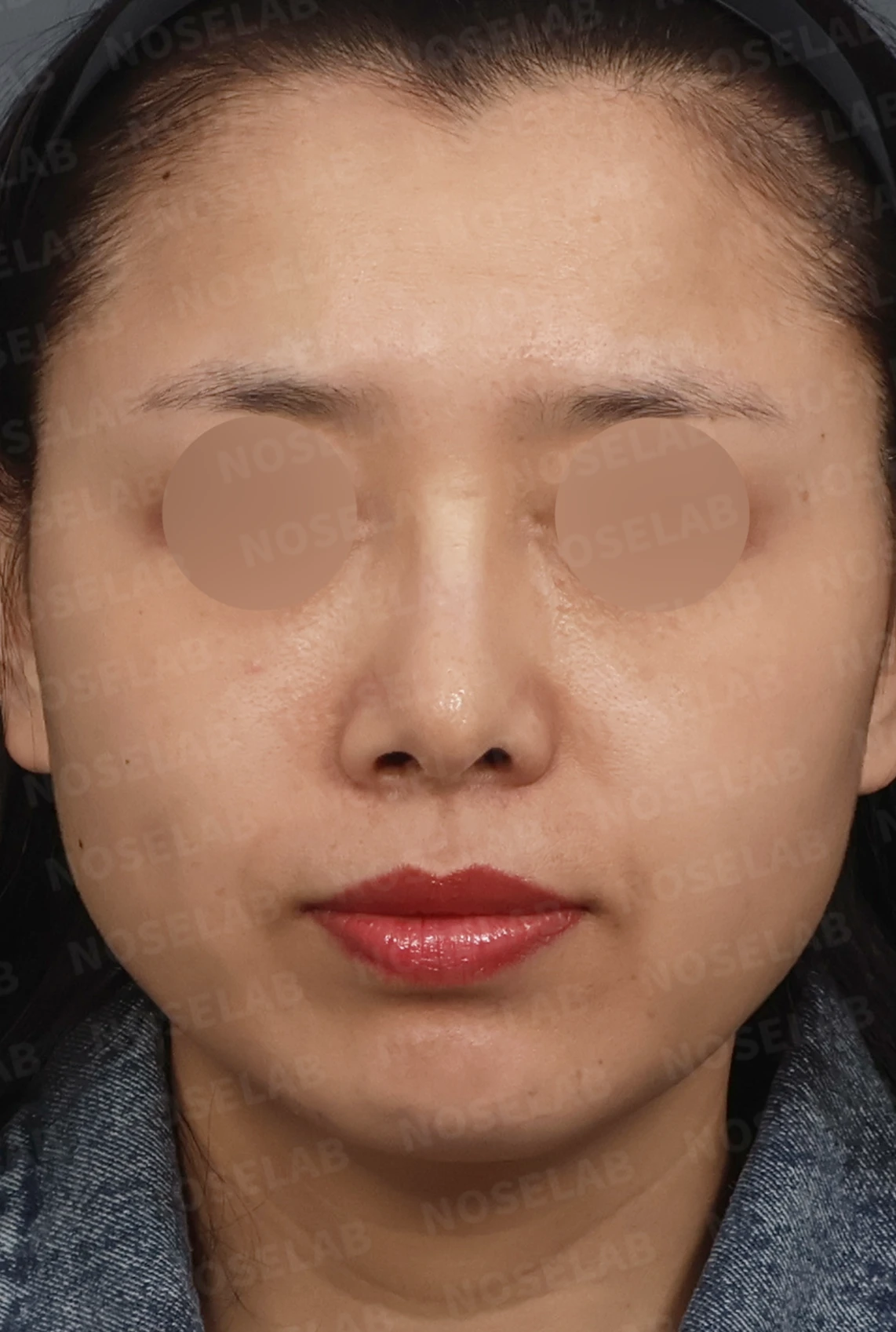
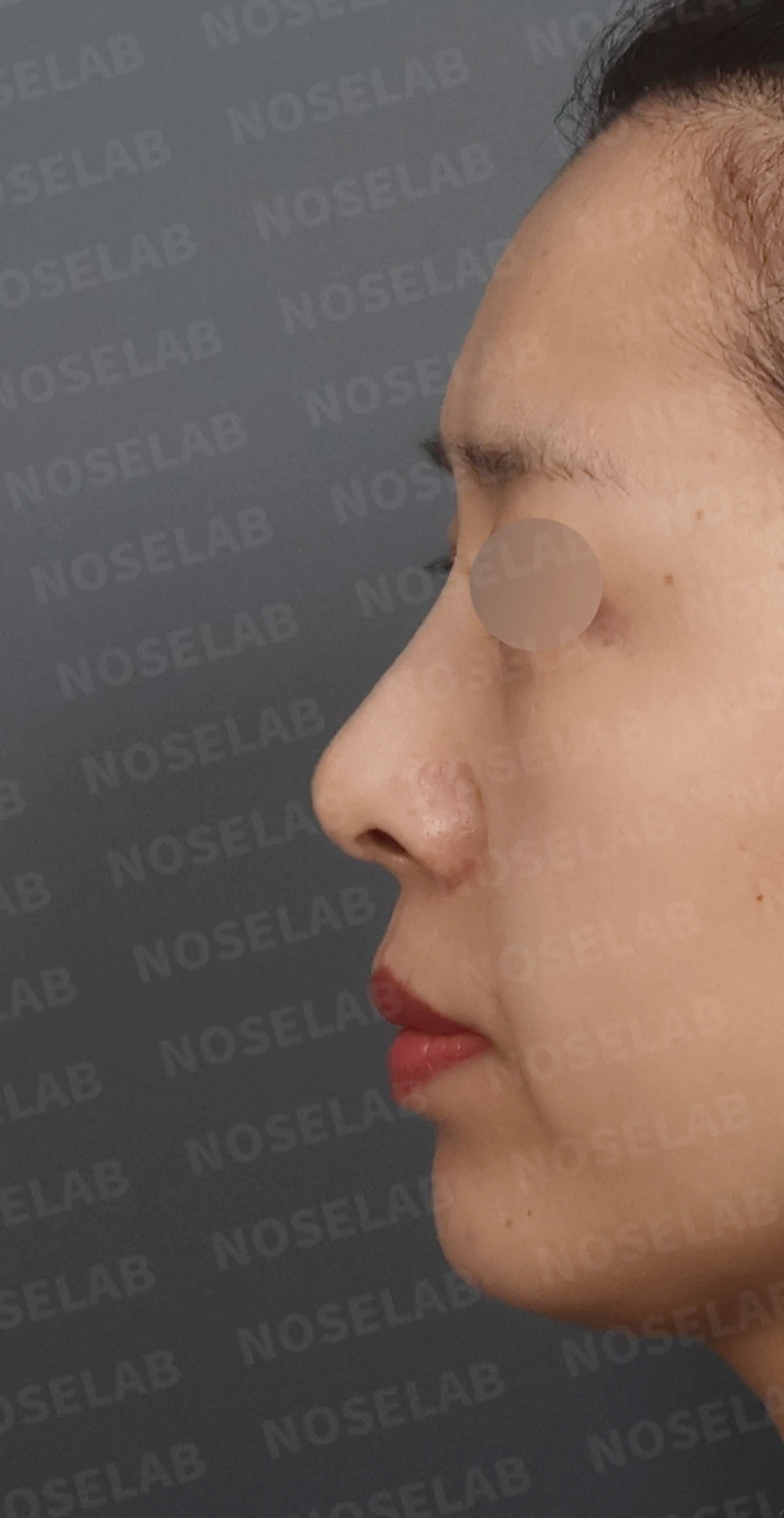
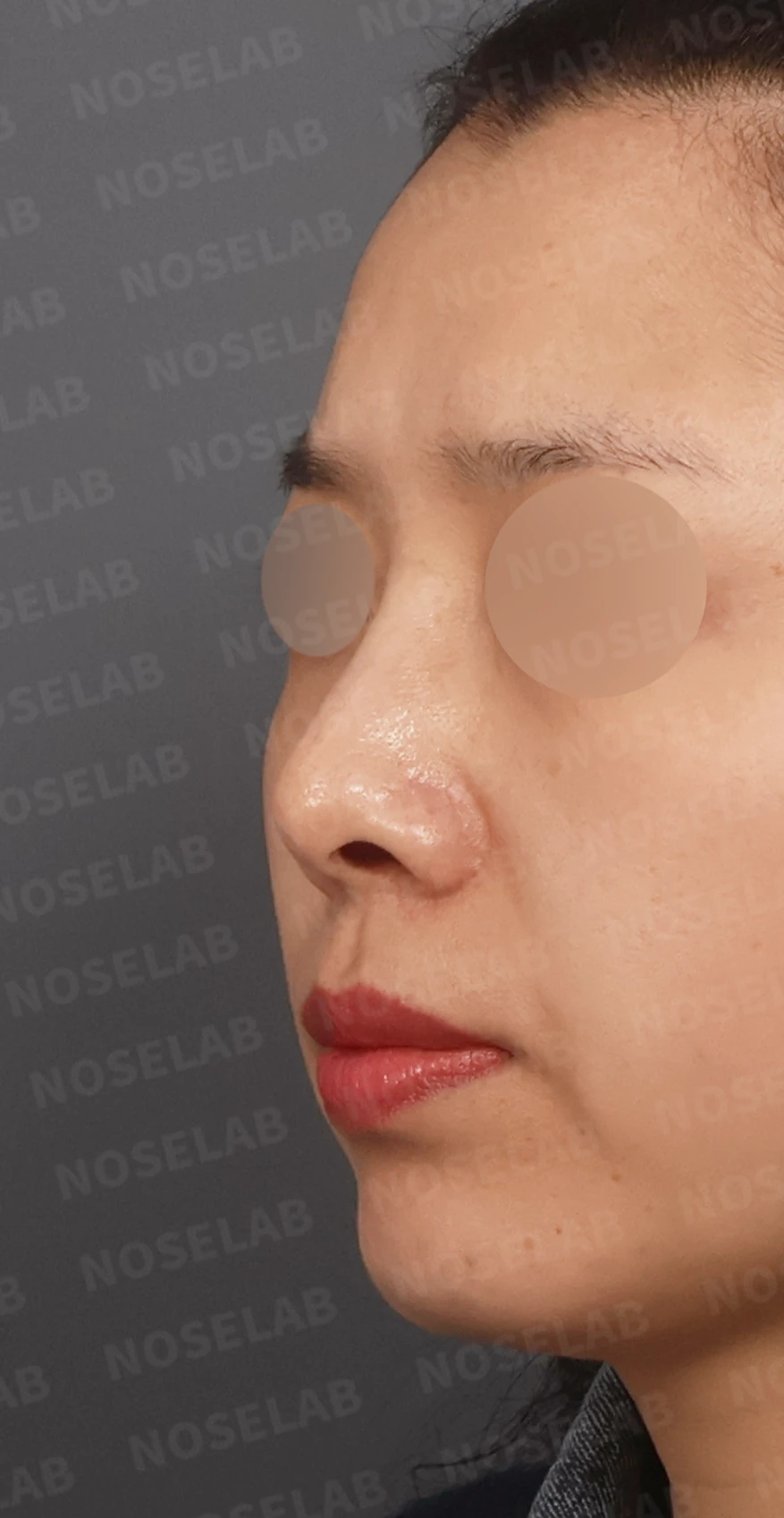
Front, left profile, and oblique views during design consultation
💉 Patient requests
The patient had the following concerns:
Improving nostril asymmetry
Correction of crooked nose
Lowering the radix, which appeared too high, to achieve a natural look
A soft, feminine, and refined nasal profile
A harmonious nose that complements the face
In addition, functional improvement was planned because the patient experienced bilateral nasal obstruction.
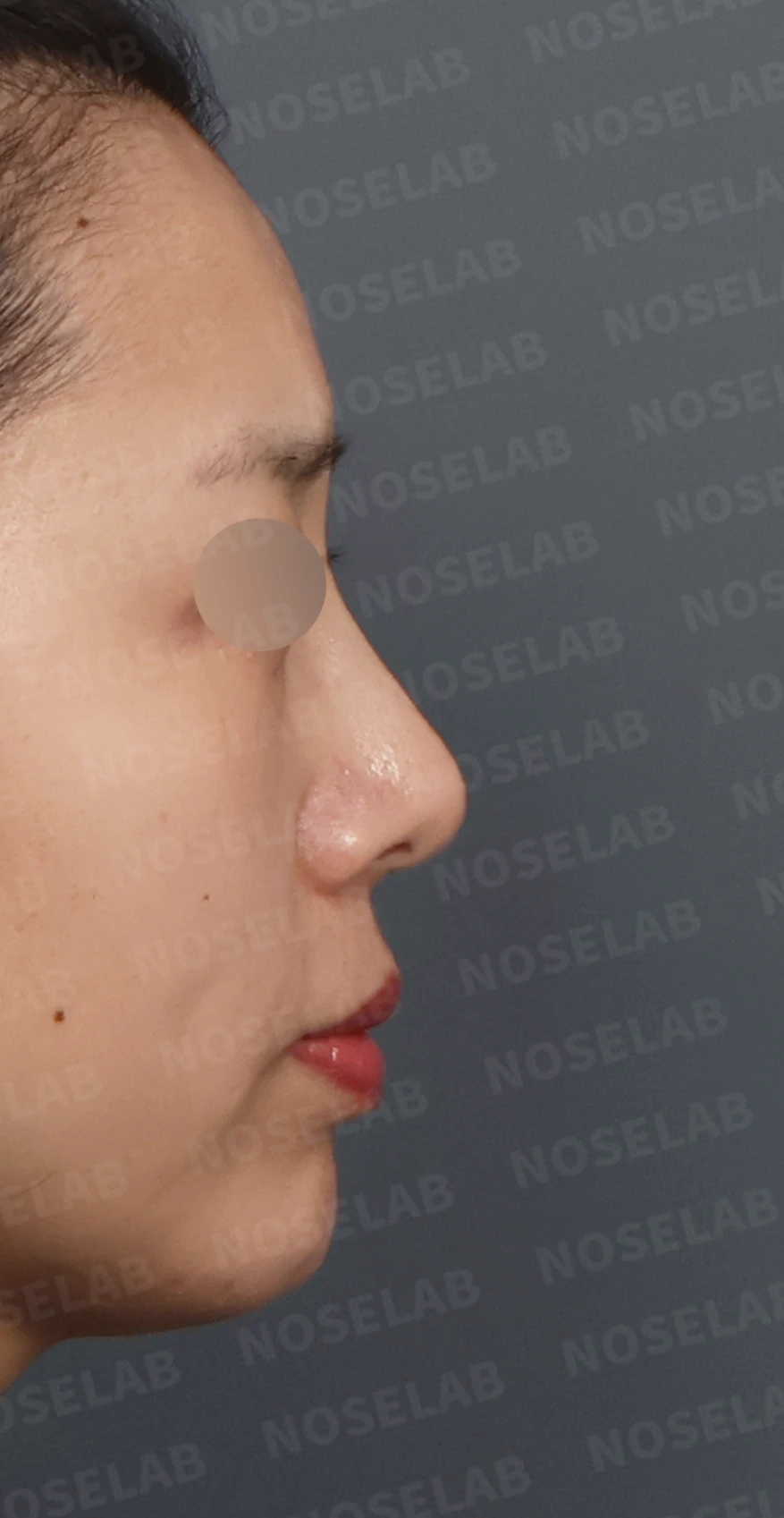
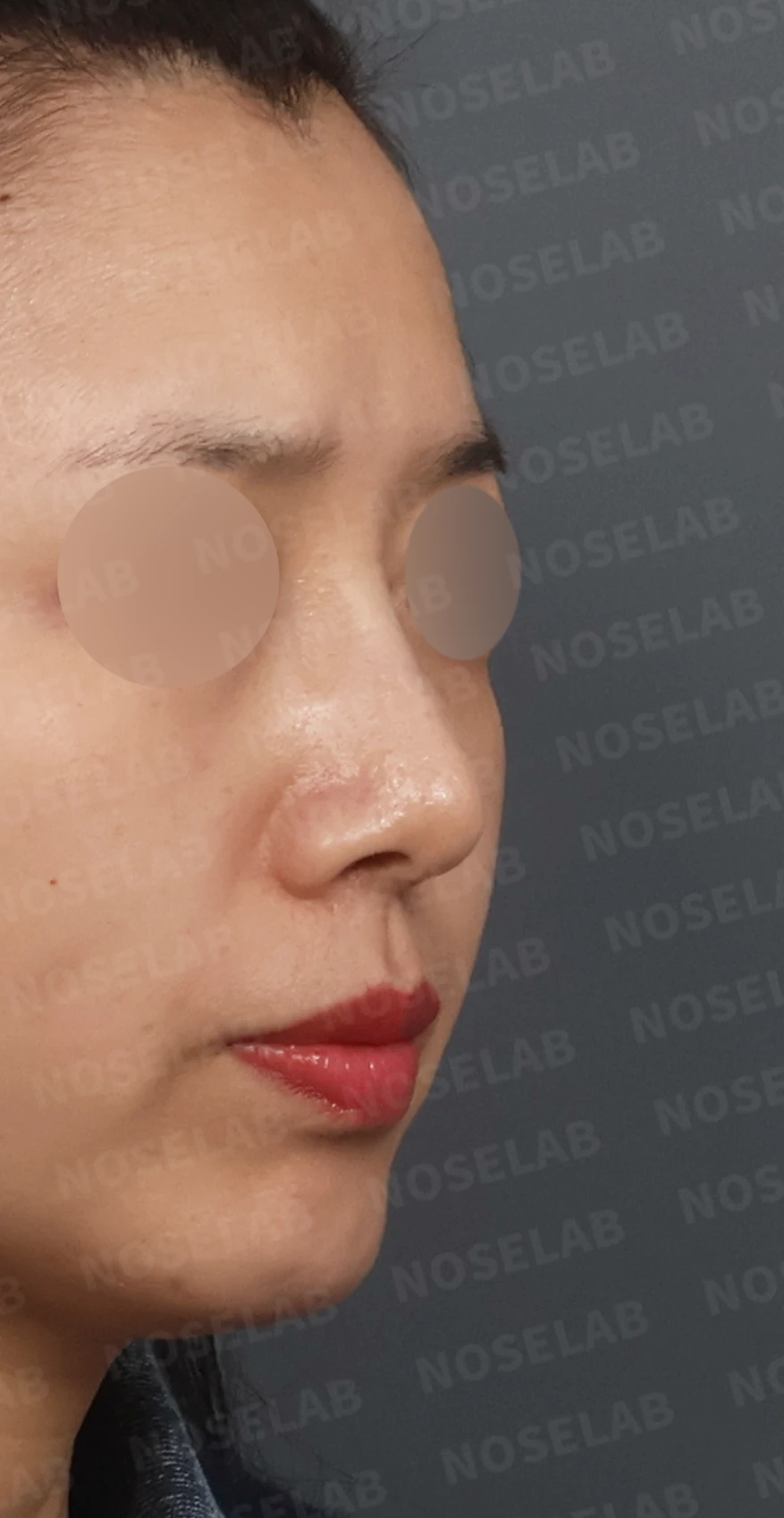
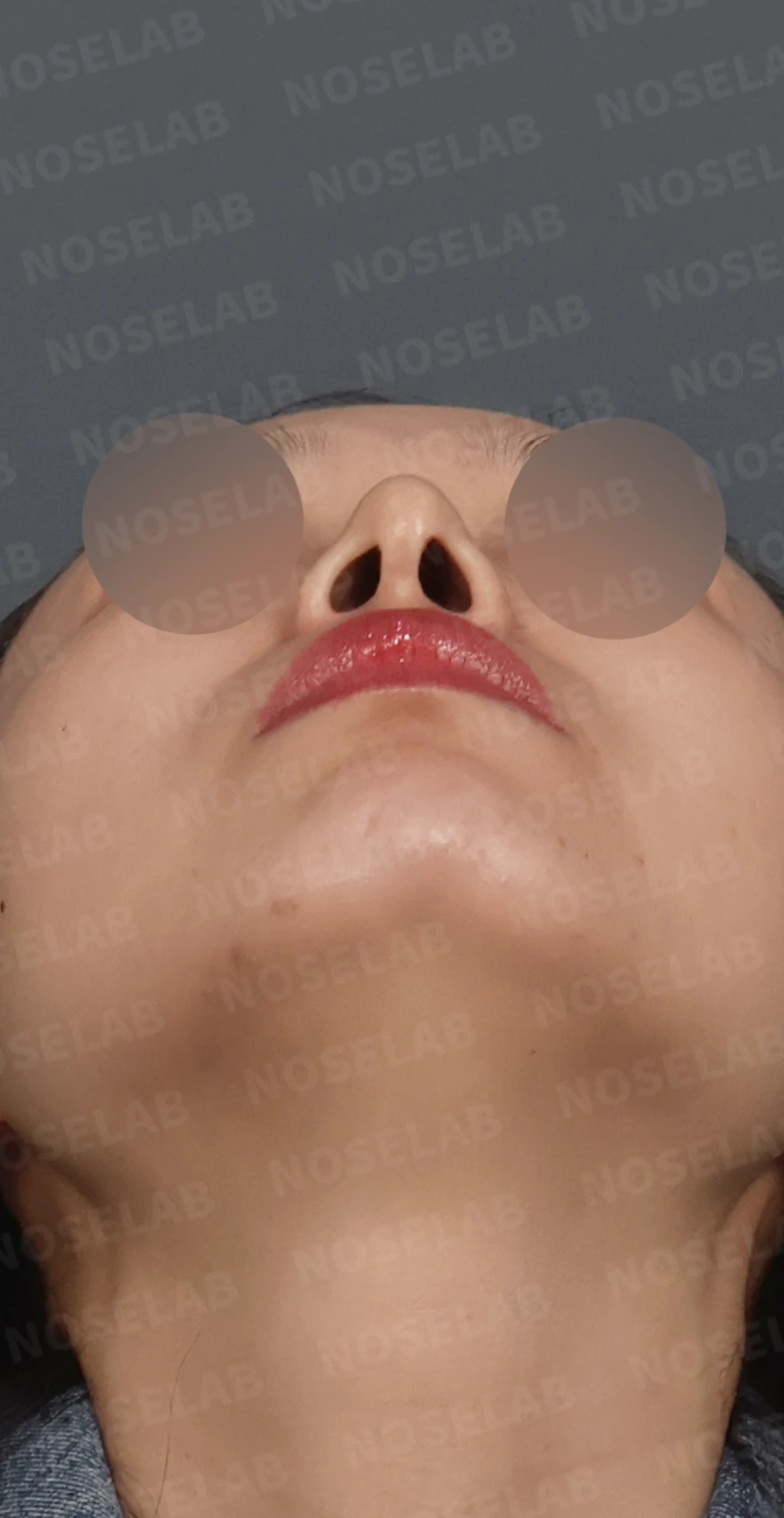
Right profile, oblique, and nostril views during design consultation
🔧 Surgical plan and procedure
1. Closed revision rhinoplasty using autologous rib cartilage
The Gore-Tex implant placed during the previous surgery was removed, and the overall nasal framework was restructured.
2. Correction of nostril asymmetry
Structural instability had developed because almost none of the right lower lateral cartilage remained from the previous surgery. The right lower lateral cartilage was reconstructed using autologous rib cartilage to restore balance between both sides.
3. Correction of crooked nose
The columella was tilted to the left due to a deviated septum, which contributed to the nostril asymmetry. The septal cartilage was straightened to align the central axis of the nose.
4. Natural correction of the nasal bridge
A silicone implant was precisely sculpted to fit the shape of the patient's nasal bone, naturally elevating the bridge. By lowering the radix, the transition line from the forehead to the nose was smoothly connected.
5. Functional improvement
Septoplasty and inferior turbinate reduction were performed together, resolving the symptoms of nasal obstruction.
🌟 Surgical results
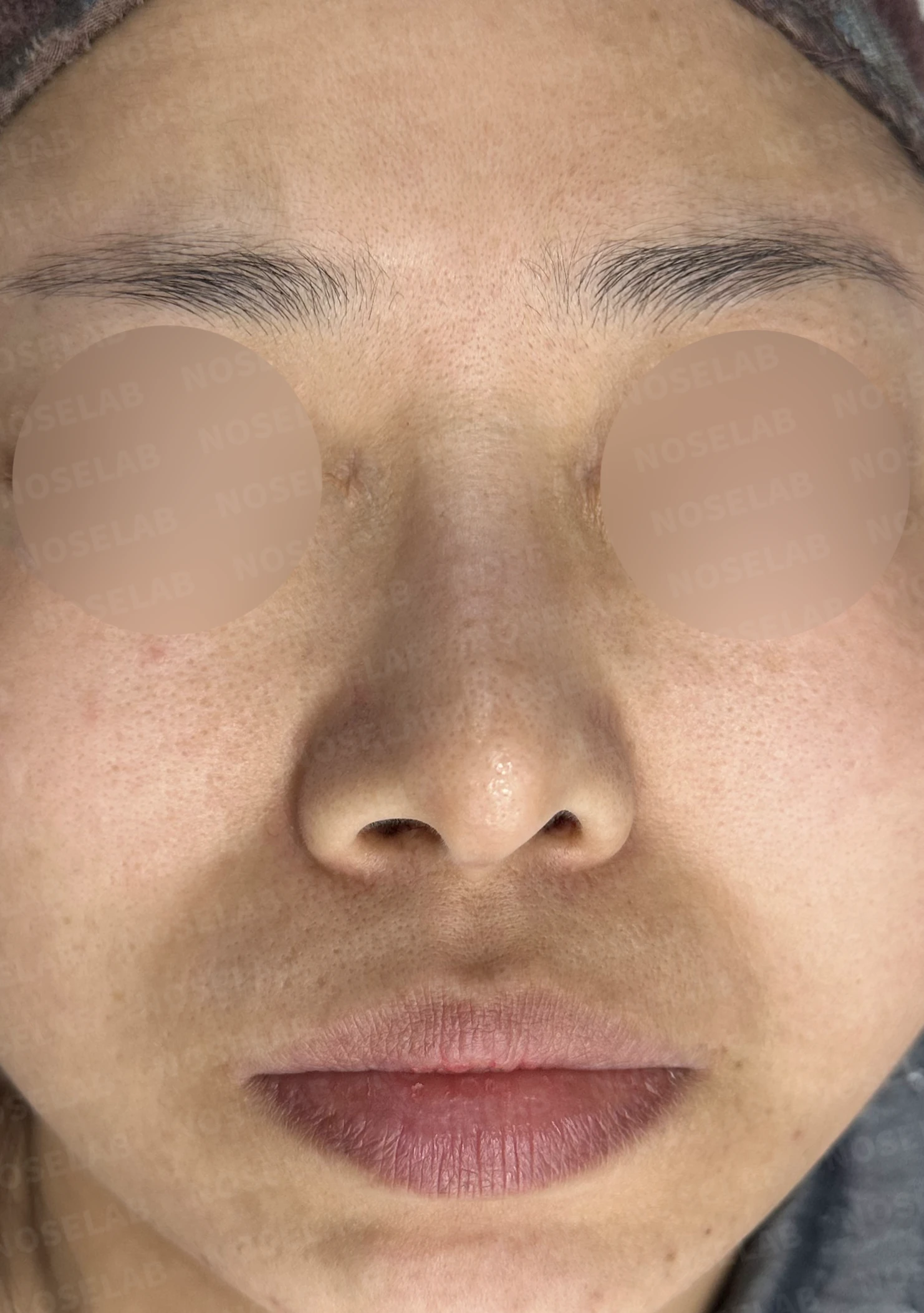
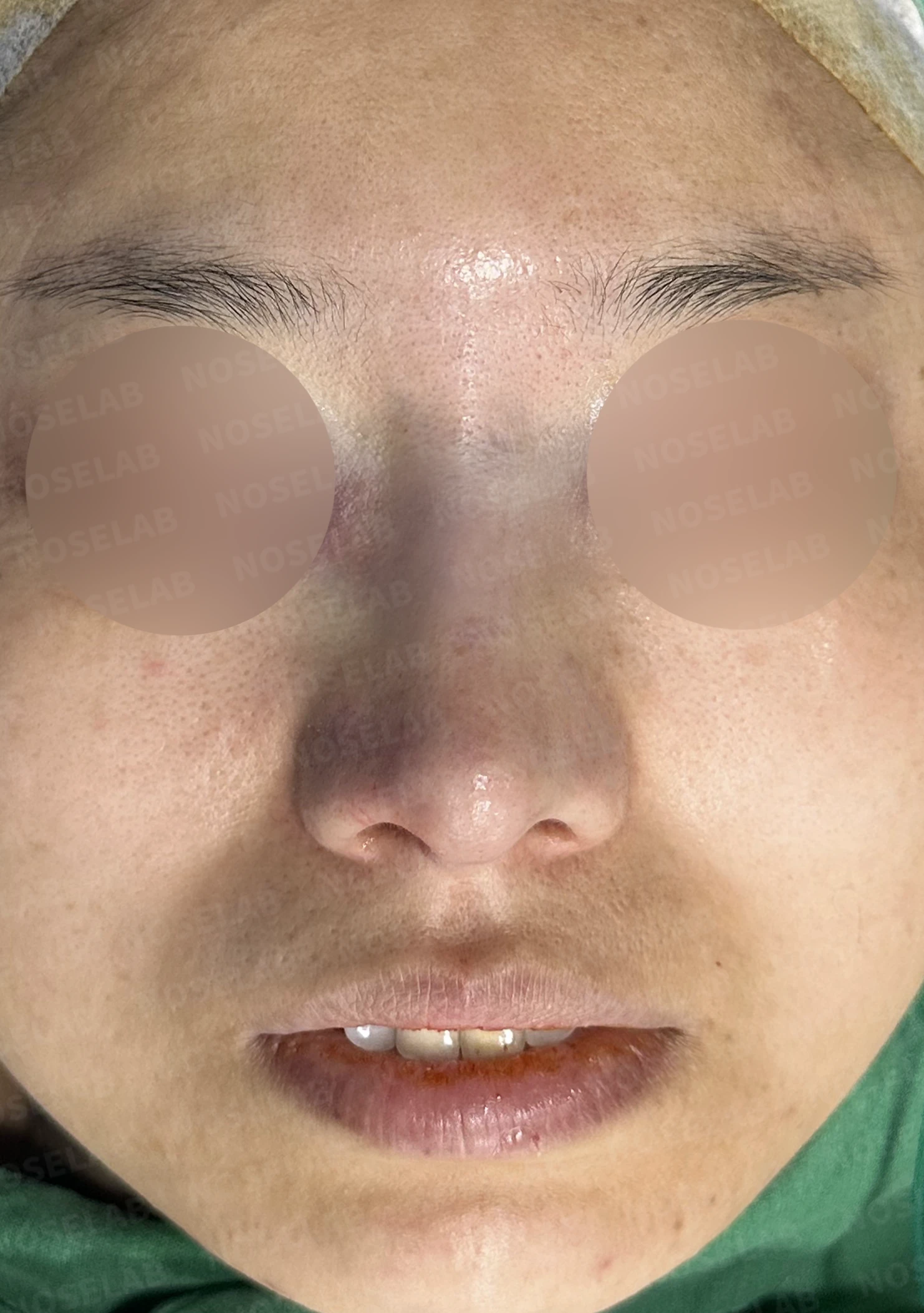
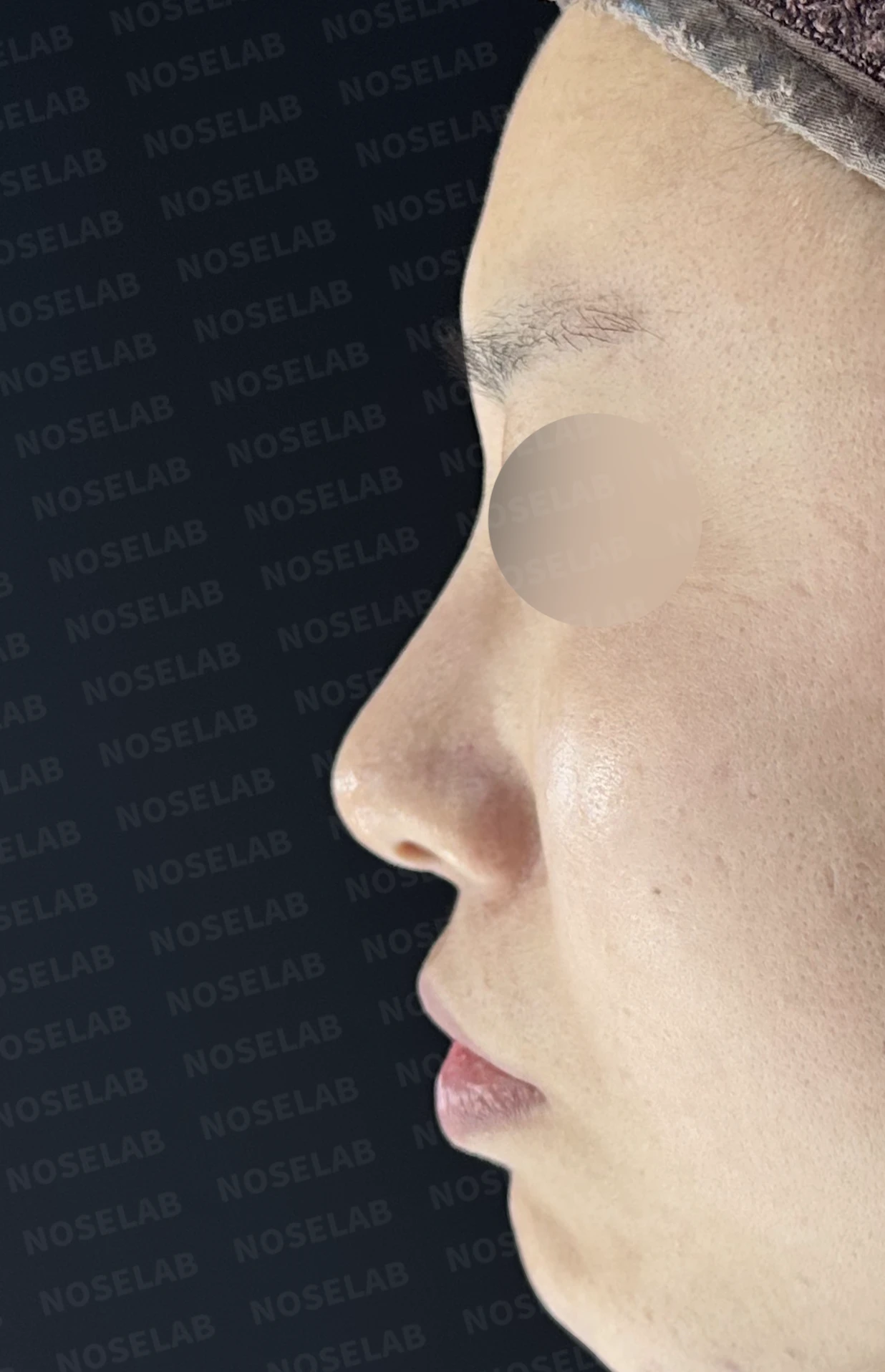
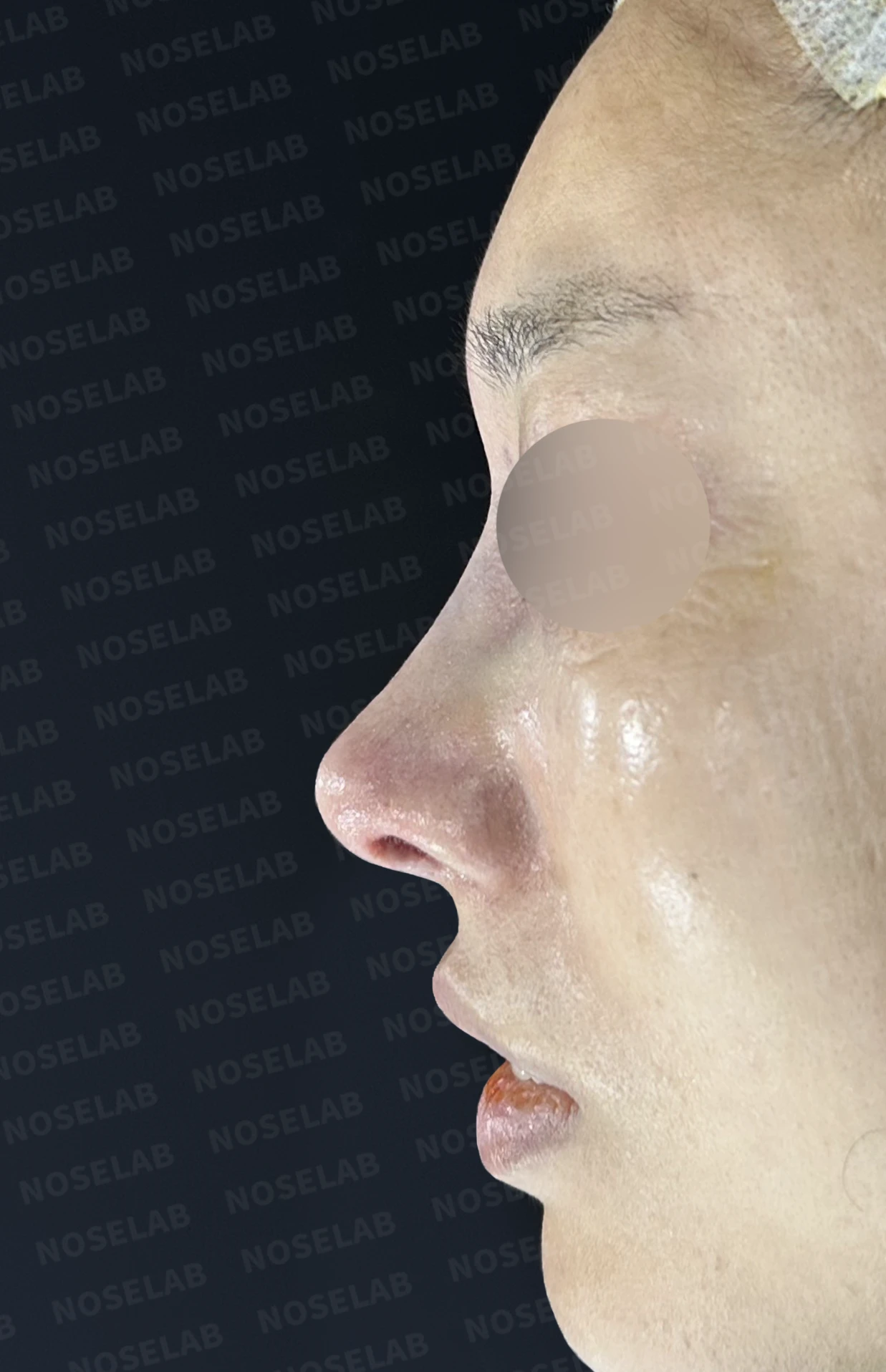
Before surgery / Day 0 immediately after surgery Photos taken immediately after surgery show swelling and may differ from the final result.
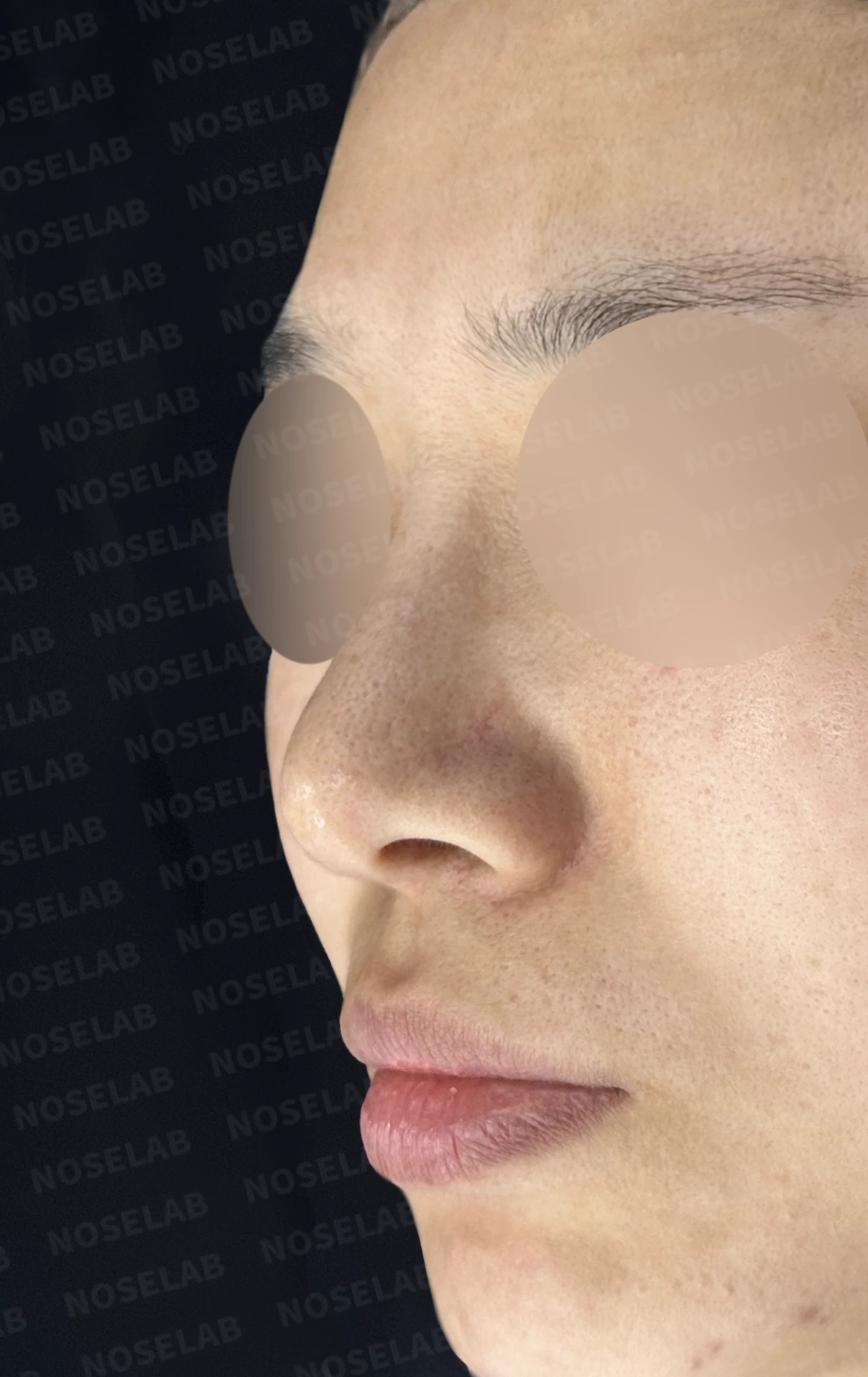
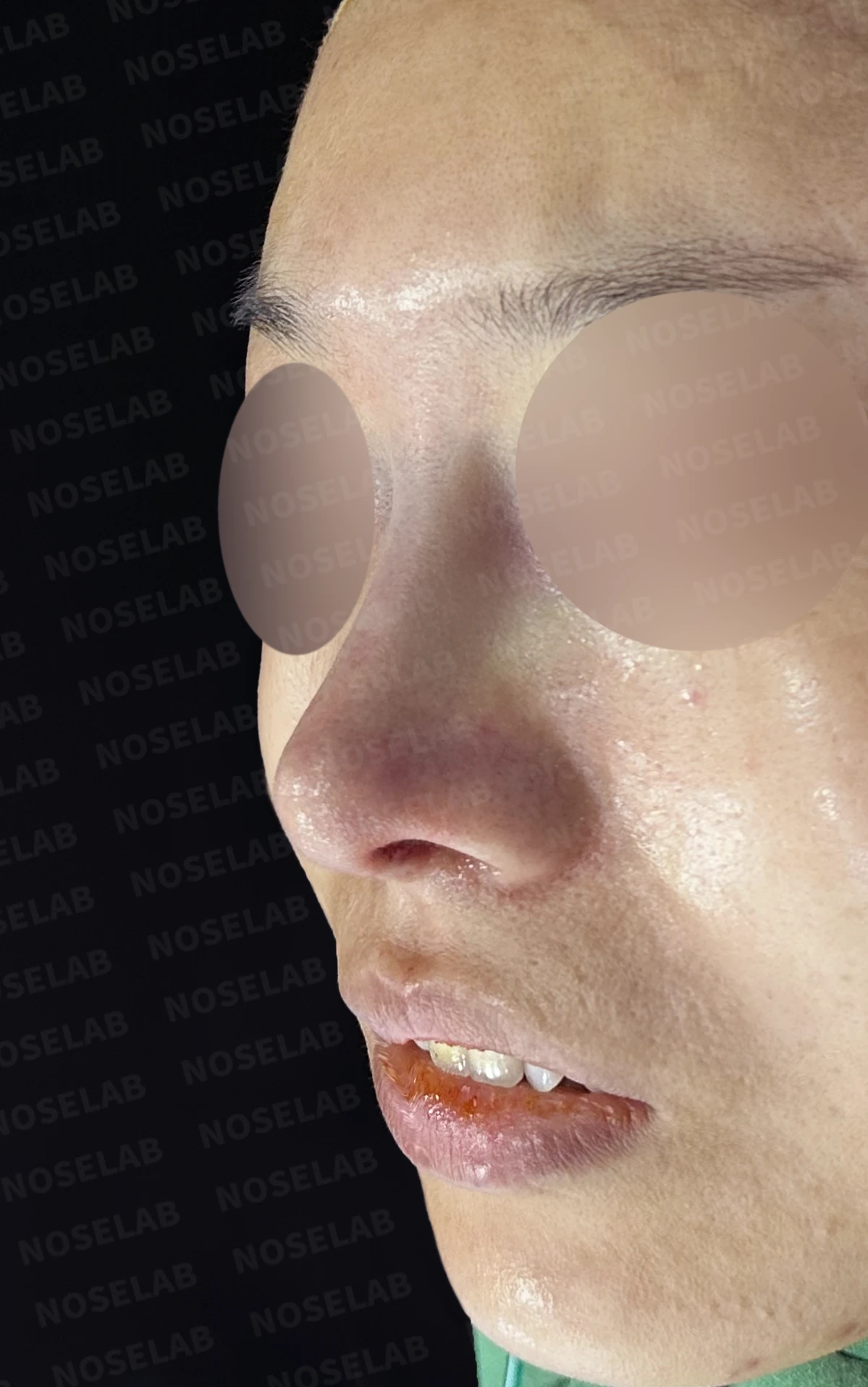
Front view changes:
The nostril asymmetry improved, restoring balance between both sides. The crooked appearance of the nose was straightened.
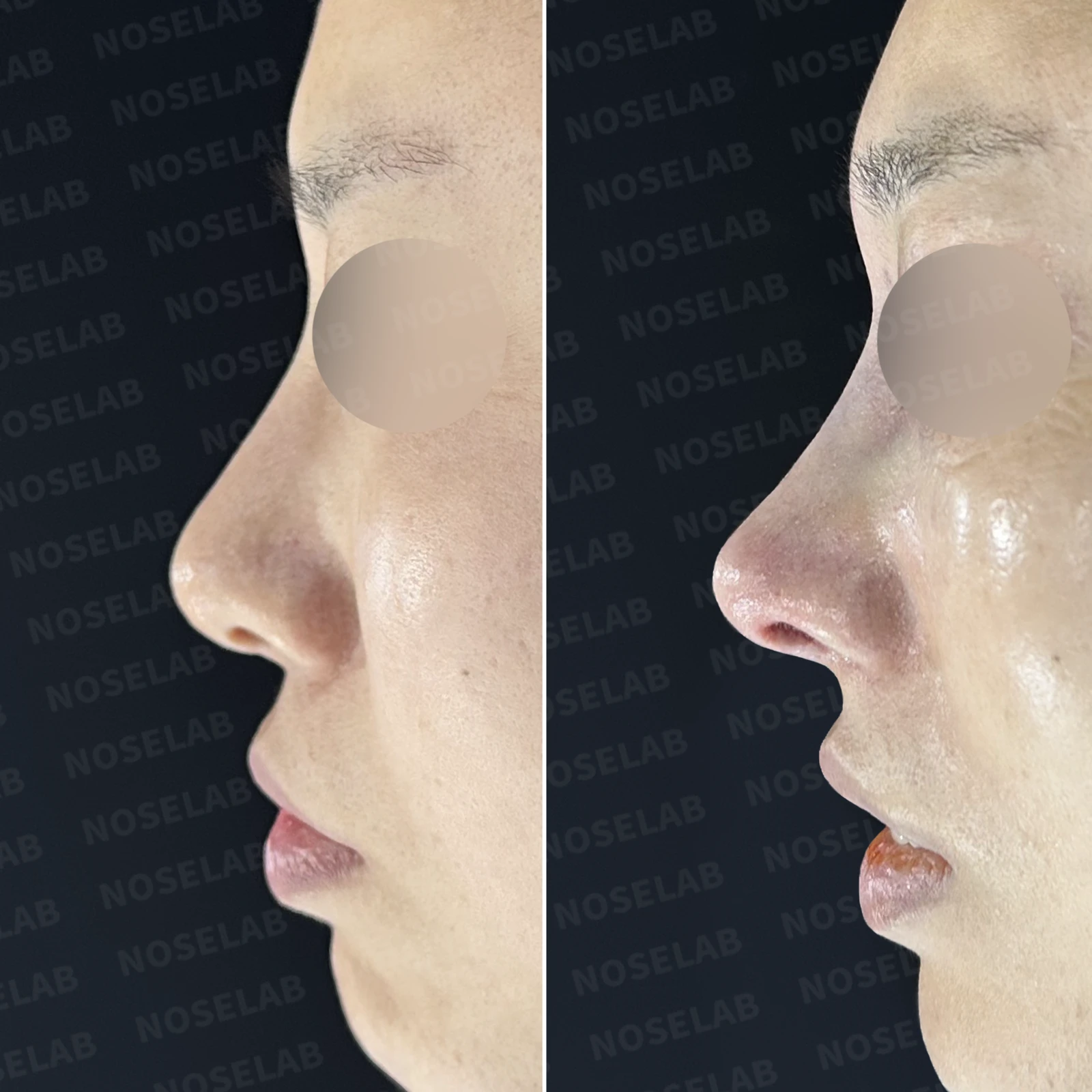
Before surgery / Day 0 immediately after surgery Photos taken immediately after surgery show swelling and may differ from the final result.
Profile view changes
The nasal bridge, which previously started excessively high, now begins at a natural position, creating a soft line. A feminine and refined profile was achieved.
Before surgery / Day 0 immediately after surgery Photos taken immediately after surgery show swelling and may differ from the final result.
Changes in nostril shape
The size of both nostrils became symmetrical. The columella, which had been tilted to the left, was centered.
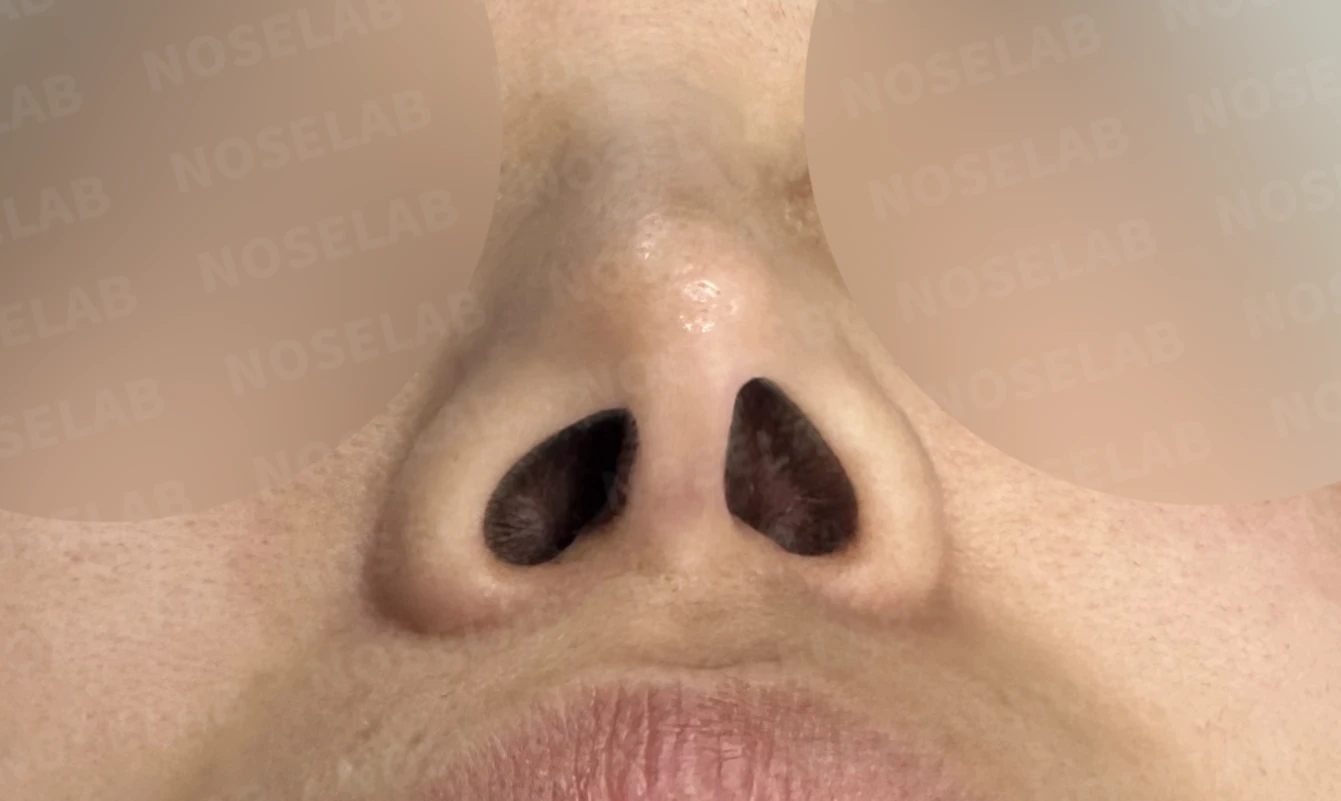
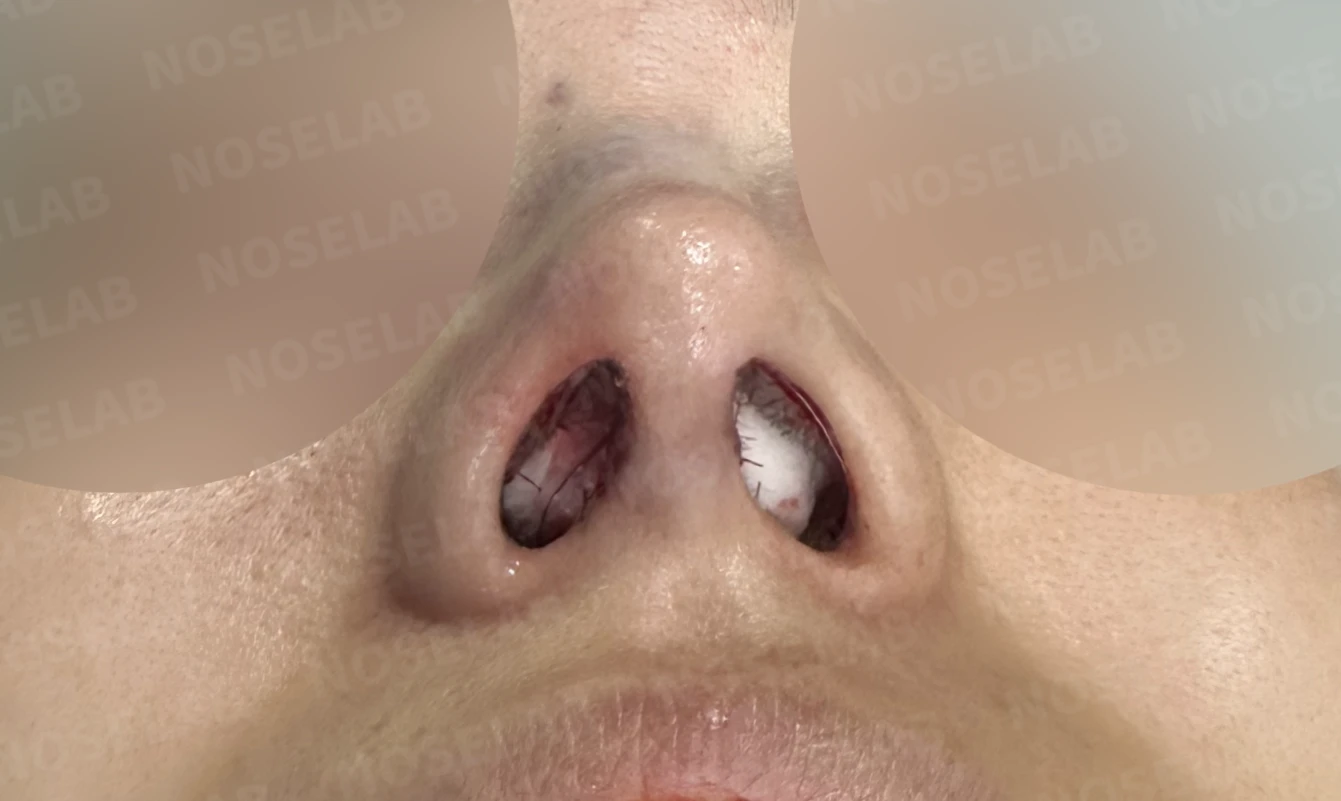
Before surgery / Day 0 immediately after surgery Photos taken immediately after surgery show swelling and may differ from the final result.
💡 Specialist assessment
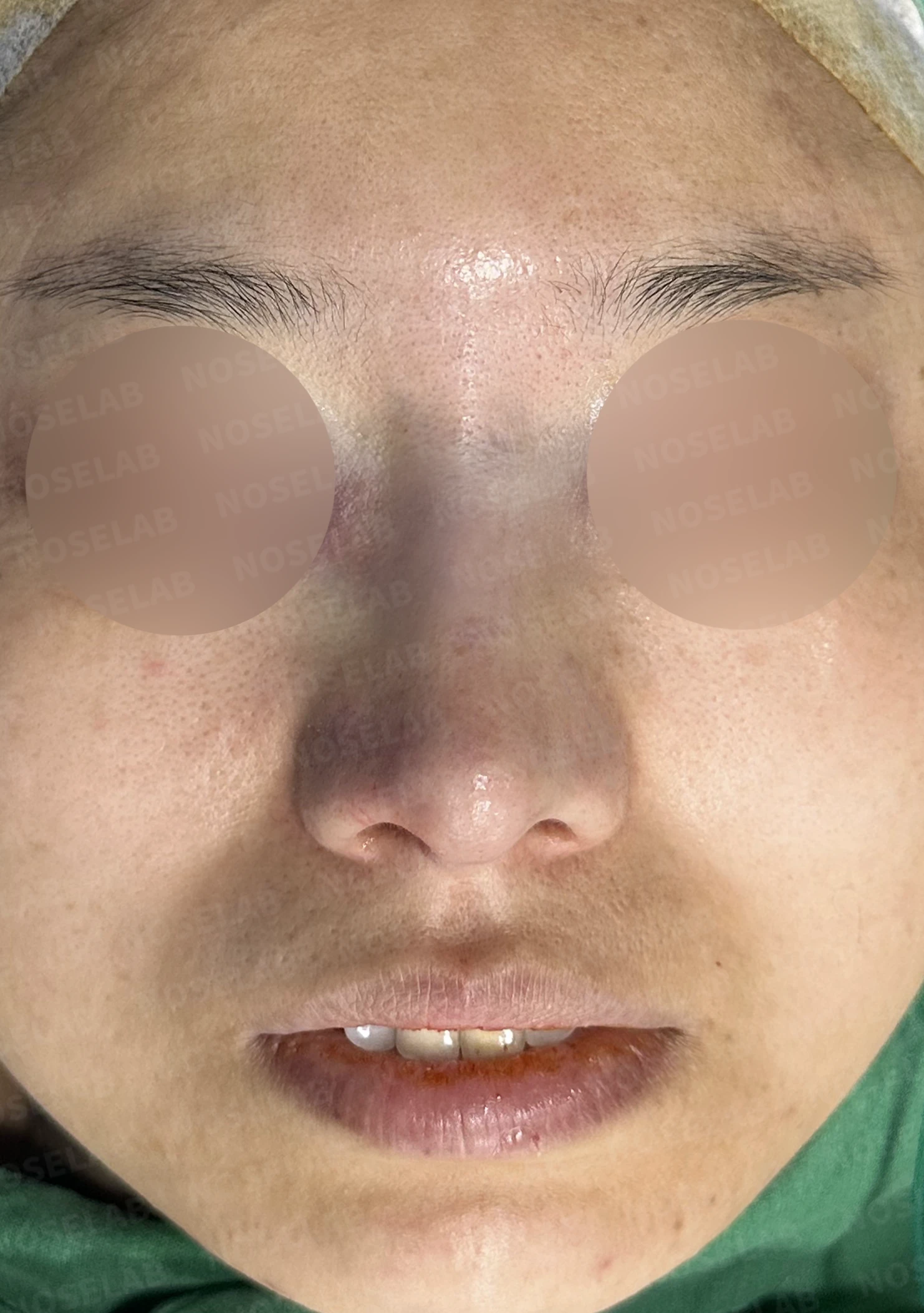
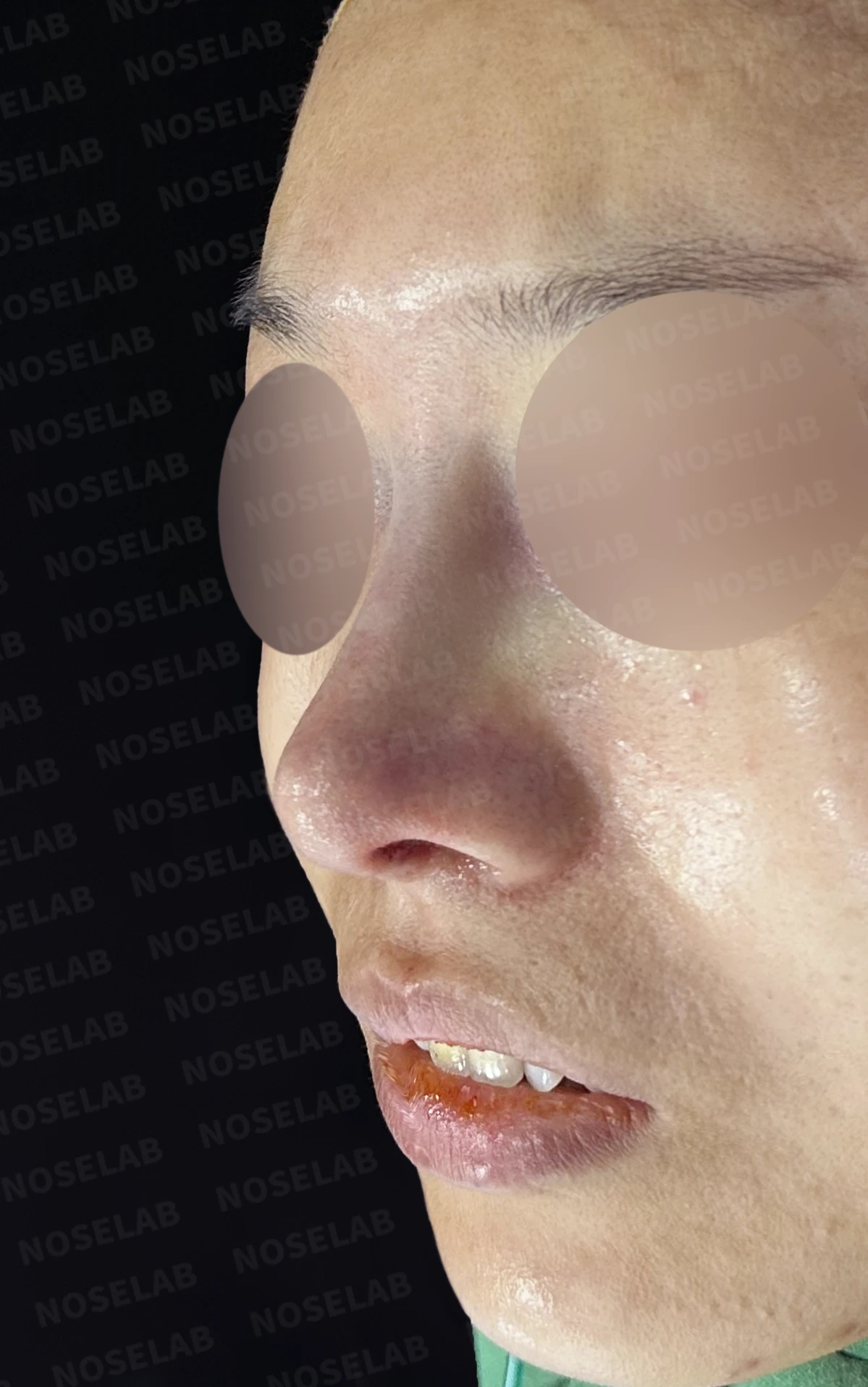
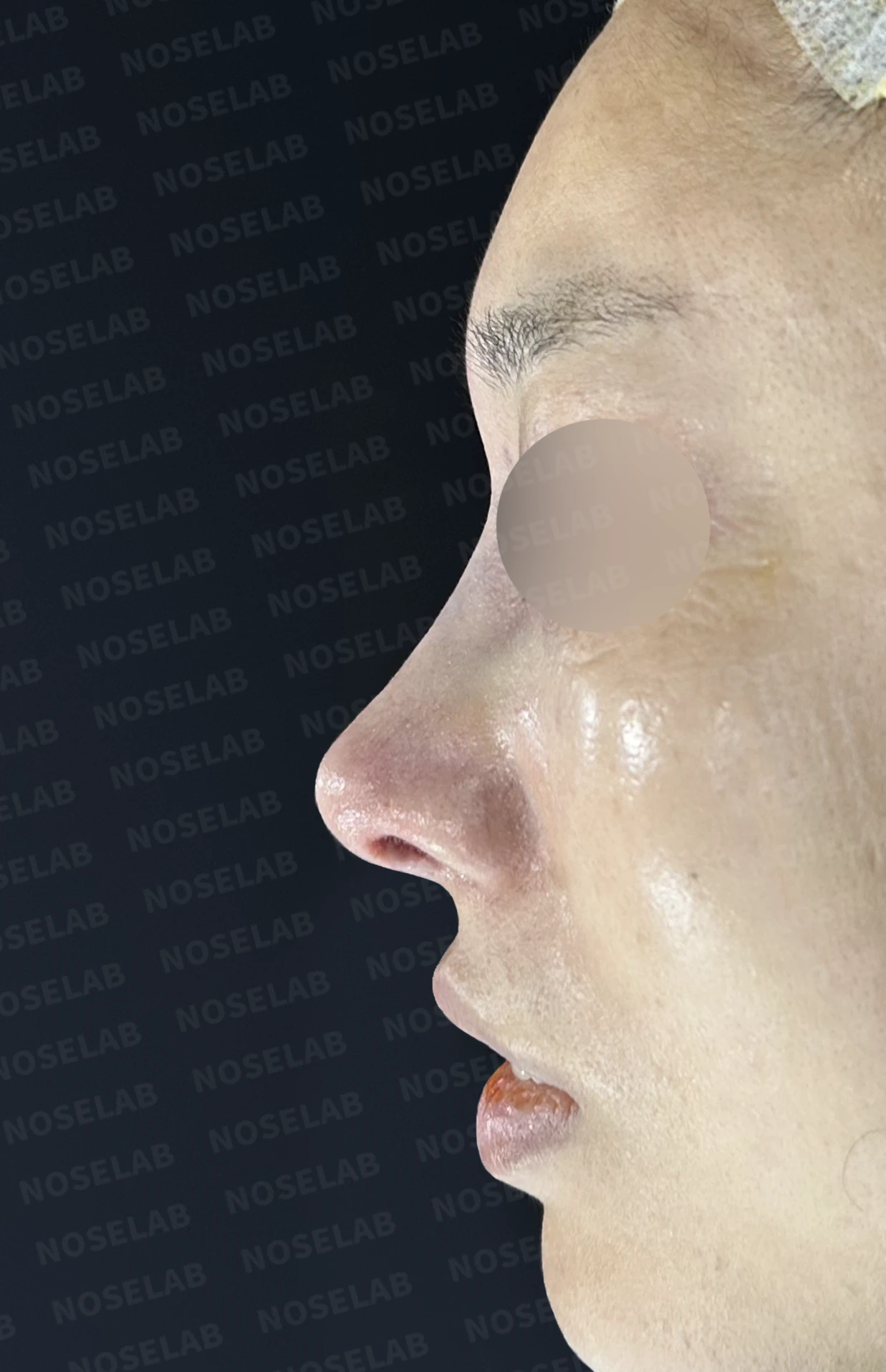
Front, oblique, and profile views on day 0 immediately after surgery Photos taken immediately after surgery show swelling and may differ from the final result.
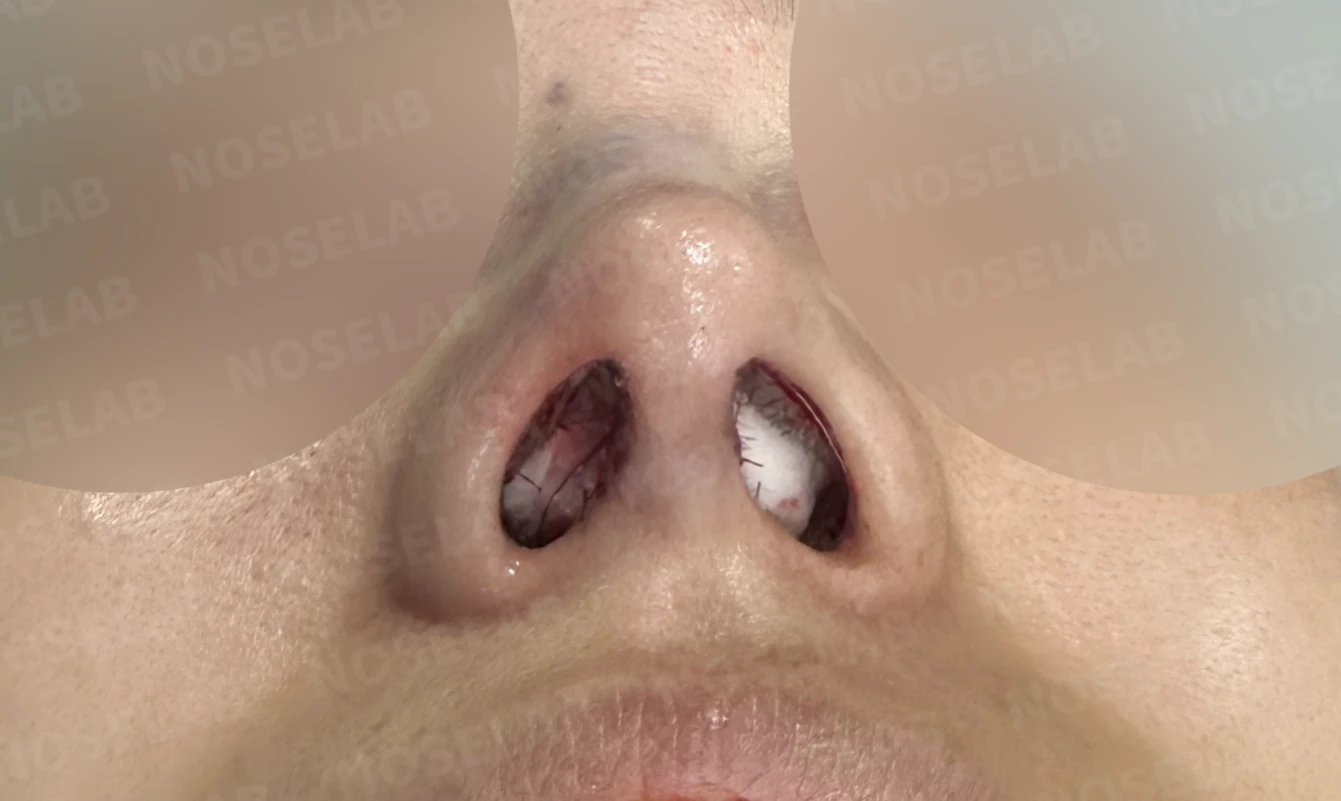
Nostril view on day 0 immediately after surgery Photos taken immediately after surgery show swelling and may differ from the final result.
Correcting nostril asymmetry in revision rhinoplasty is technically challenging. In particular, when cartilage tissue has been lost due to prior surgery, a simple correction cannot provide a fundamental solution.
In this type of case, nostril asymmetry developed from a combination of lost right lower lateral cartilage and a deviated septum. We addressed the structural cause by reconstructing the missing cartilage with autologous rib cartilage and straightening the septum.
Furthermore, by naturally adjusting the radix, we achieved the soft, feminine nasal line the patient desired. Functionally, nasal obstruction was also resolved, making this a case that achieved both aesthetic and functional satisfaction.
This was Dr. Peter C. Kang. Thank you.
#closedrhinoplasty #closedrevisionrhinoplasty #nostrilasymmetry #crookednose #revisionrhinoplasty #autologousribcartilage #septalcorrection #nasalobstructionrelief #femalerhinoplasty

Limitations and risks
When autologous rib cartilage is used, scarring and pain may remain at the donor site on the chest, and pneumothorax (pleural injury) can occur rarely. Over time, the grafted cartilage may warp or undergo partial resorption.
When revising after implant removal, contracture may progress again after removal, the nasal height and length may decrease, and staged surgery may be necessary depending on the skin condition.
When the septum is corrected at the same time, nasal obstruction may persist or recur, and in rare cases, septal perforation or changes in smell may occur.
Common potential risks include infection, bleeding, asymmetry, scarring, skin necrosis, and insufficient improvement; results vary depending on individual skin condition and previous surgical history.