Hello, I am Dr. Peter C. Kang.
Today, I would like to introduce a revision rhinoplasty case of a patient who was concerned about alar and nostril asymmetry.
This case involved a patient who had already undergone three previous nasal surgeries and visited our clinic for a fourth procedure.
Design consultation details
Let us analyze the patient's condition in detail:
Front view:
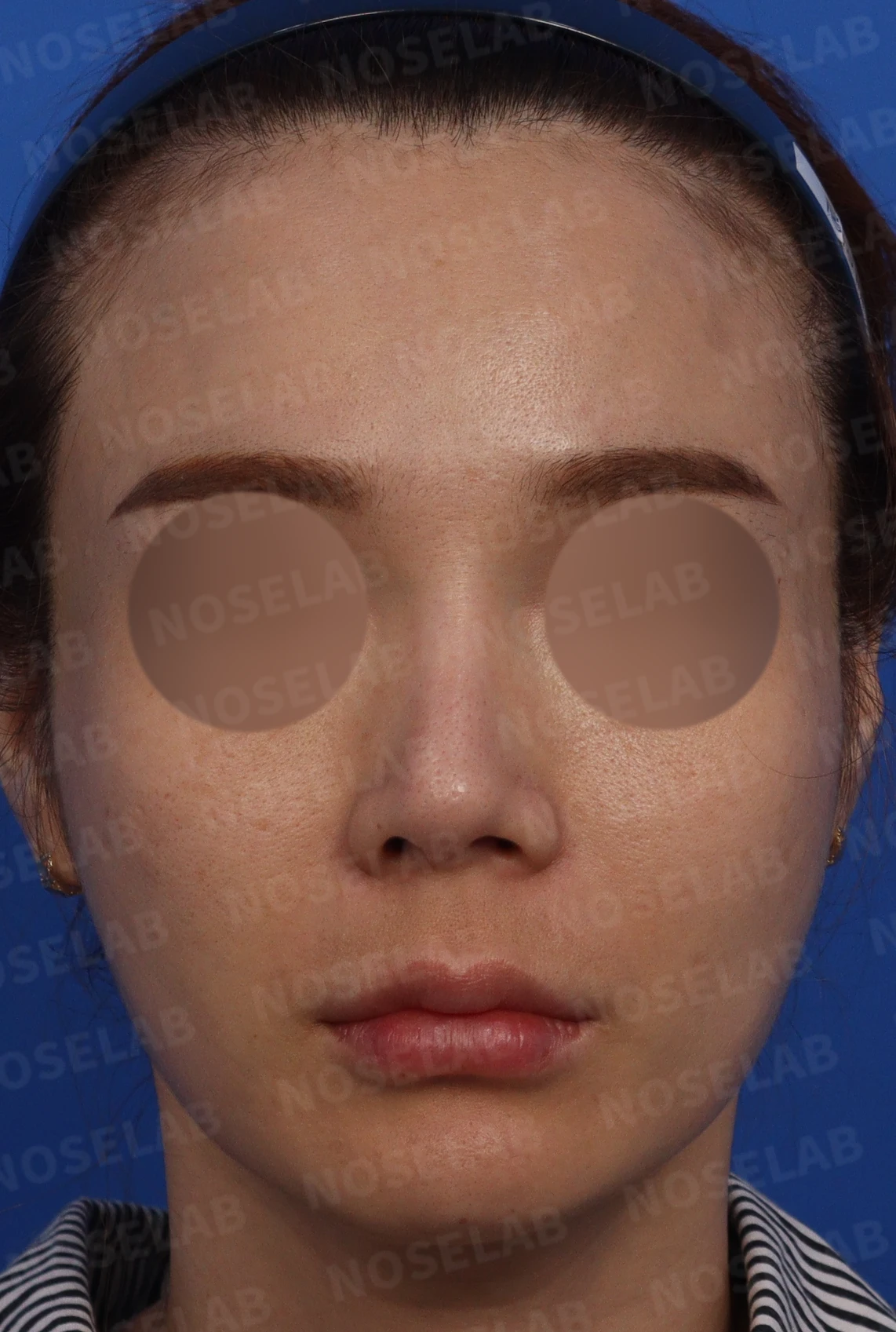
Front view
The nasal tip was deviated to the right
Severe nostril asymmetry was present
The left ala had a pinched appearance
Alar asymmetry was observed
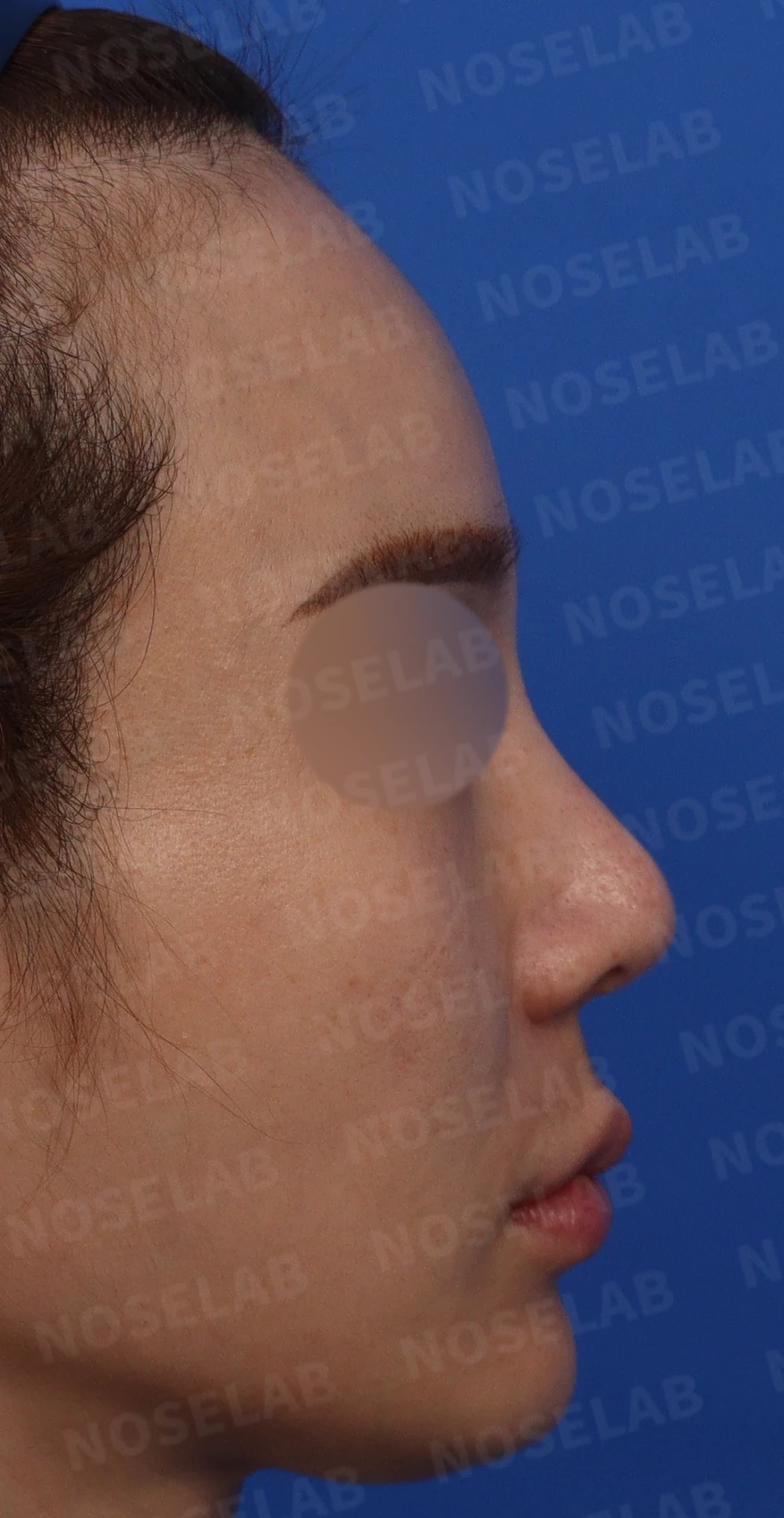
Profile view
Profile view:
The columella was barely visible between the alae, creating a constricted appearance
Nasal tip appears drooping
Oblique view:
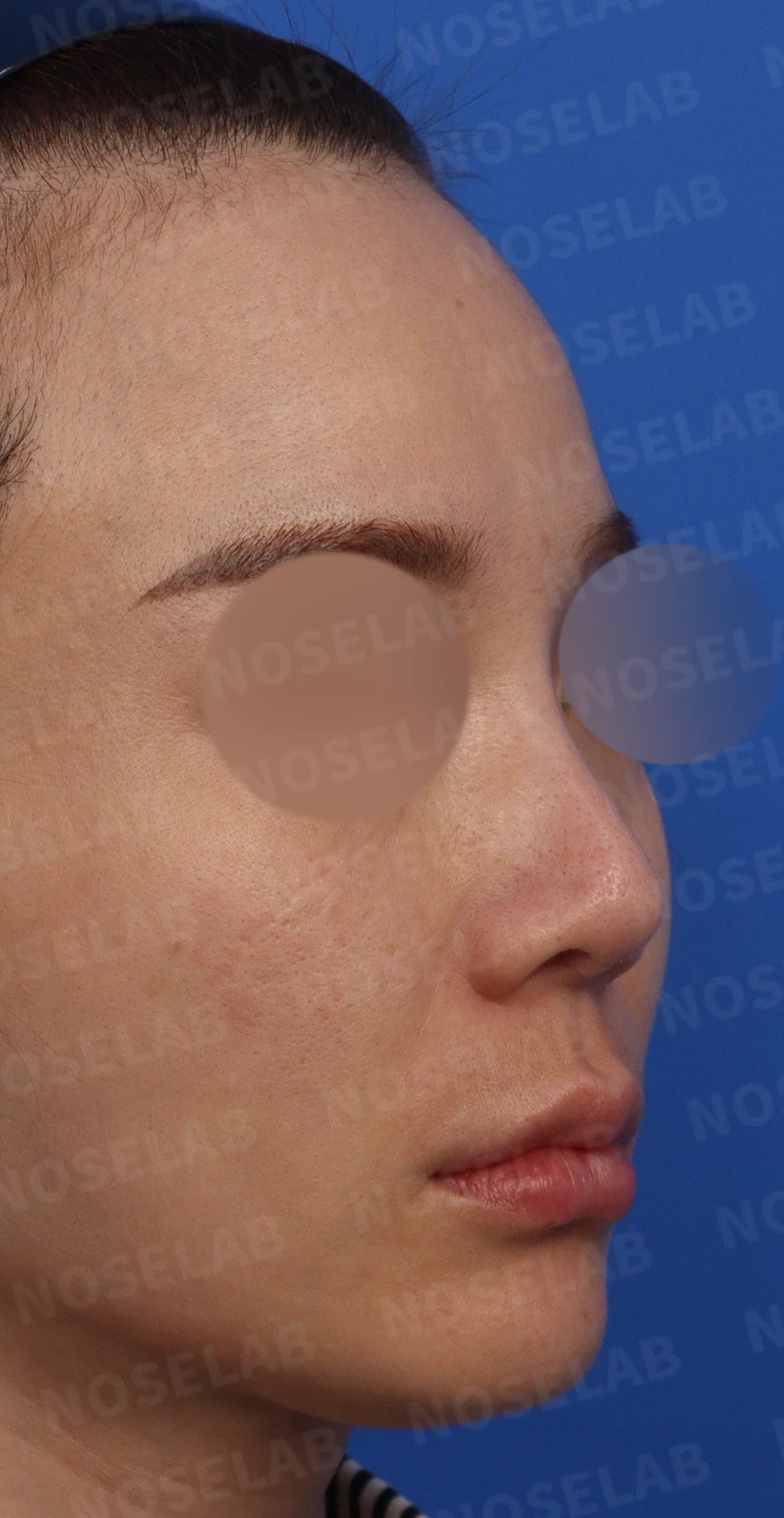
Oblique view
Nasal deviation was even more pronounced
Tip splaying and drooping were clearly visible
Nostrils:
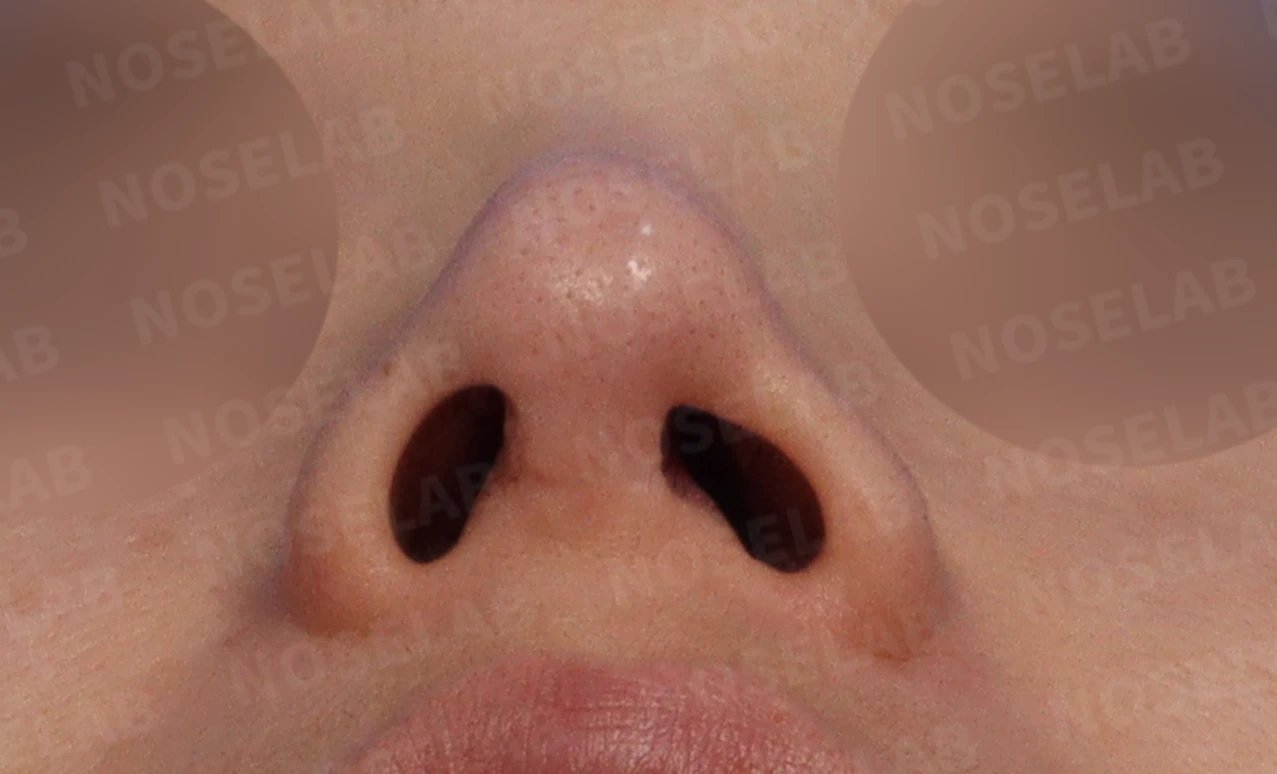
Base view (nostril) photo
The columella was shifted toward the right
The right nostril was smaller than the left
Nostril asymmetry was severe
Surgical plan and procedure details
a) Autologous rib cartilage harvest and septal cartilage reconstruction:
The septal cartilage, which had been depleted from previous surgeries, was reconstructed using autologous rib cartilage.
This allowed the position and shape of the nasal tip to be stably maintained.
b) Septal extension graft:
The reconstructed septal cartilage was used to extend and reinforce the septum.
This increased structural support for the nasal tip and corrected drooping.
c) Septoplasty:
The deviated septum was corrected to improve the nasal deviation and enhance breathing function.
d) Submucosal resection of the inferior turbinate:
Hypertrophied inferior turbinate tissue was reduced using radiofrequency to address rhinitis symptoms.
e) Management of existing autologous dermis:
The autologous dermis used in the prior surgery was carefully removed and repositioned.
f) Nasal tip correction:
Using the reconstructed septal cartilage as a stable base, the tip deviation was corrected.
The splayed and drooping tip was naturally elevated and reshaped.
g) Nostril asymmetry correction:
By straightening the deviated nasal tip, the nostril asymmetry naturally improved.
All procedures were performed using a closed approach, completing the surgery without external scars.
Comparison before and immediately after surgery
Comparing photos taken immediately after surgery on day 0 shows the following improvements: Photos taken immediately after surgery show swelling and may differ from the final result.
Front view:
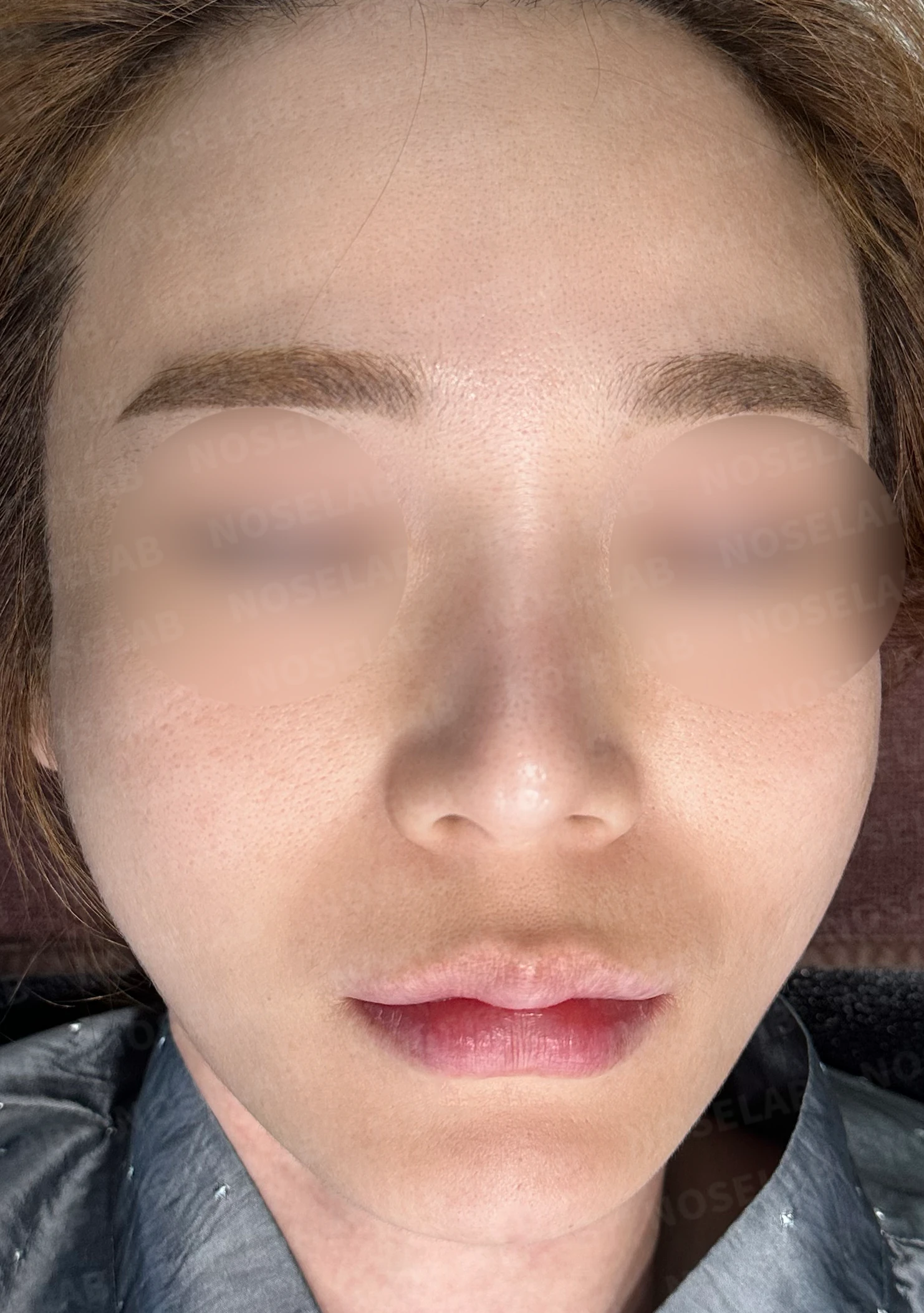
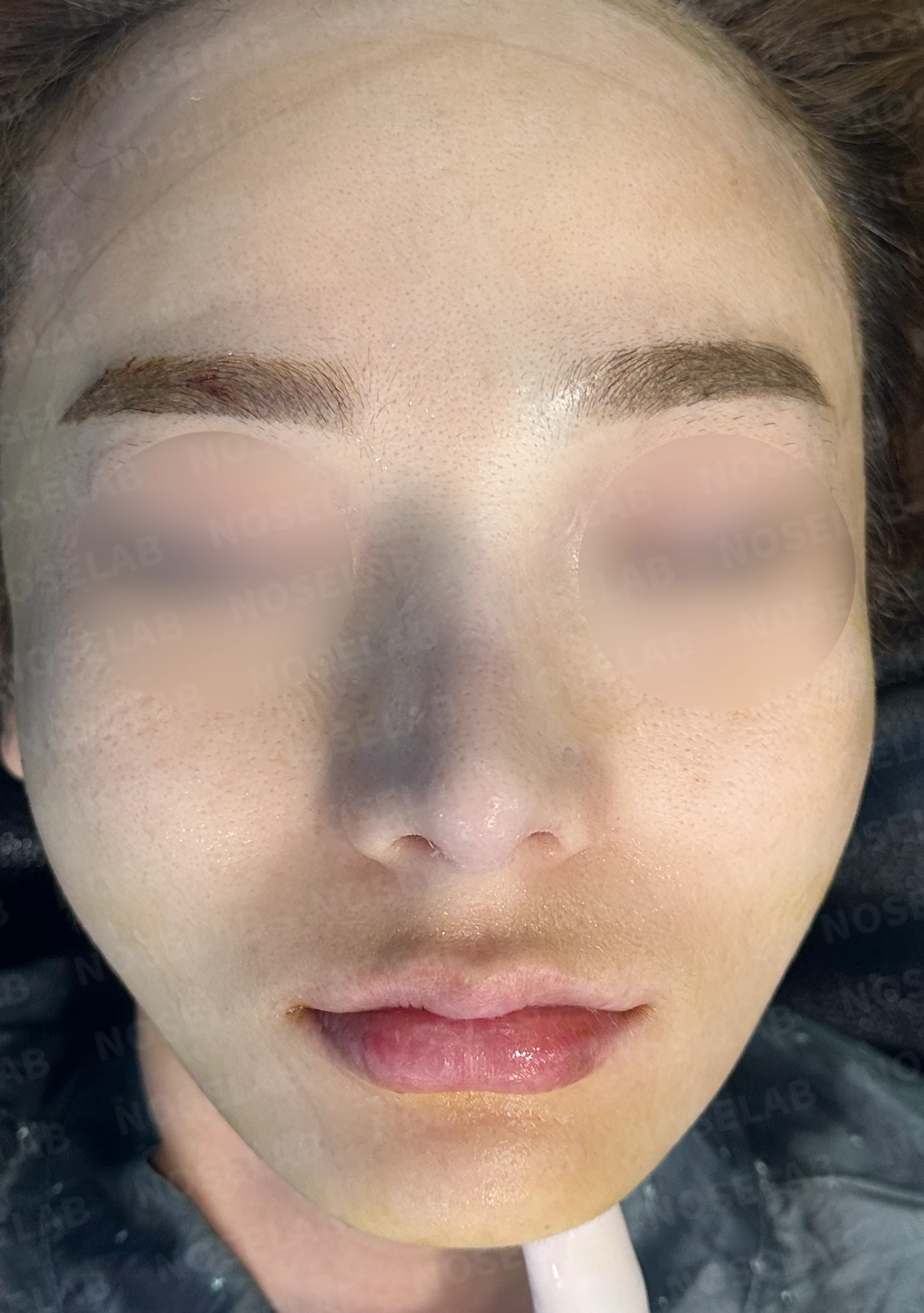
Before surgery / Day 0 immediately after surgery Photos taken immediately after surgery show swelling and may differ from the final result.
The nasal tip, which had been deviated to the right, was centered.
The severe nostril asymmetry was significantly improved.
Alar asymmetry was improved.
The pinched appearance of the left ala was resolved.
The splayed, drooping tip was naturally elevated and refined.
Profile view:
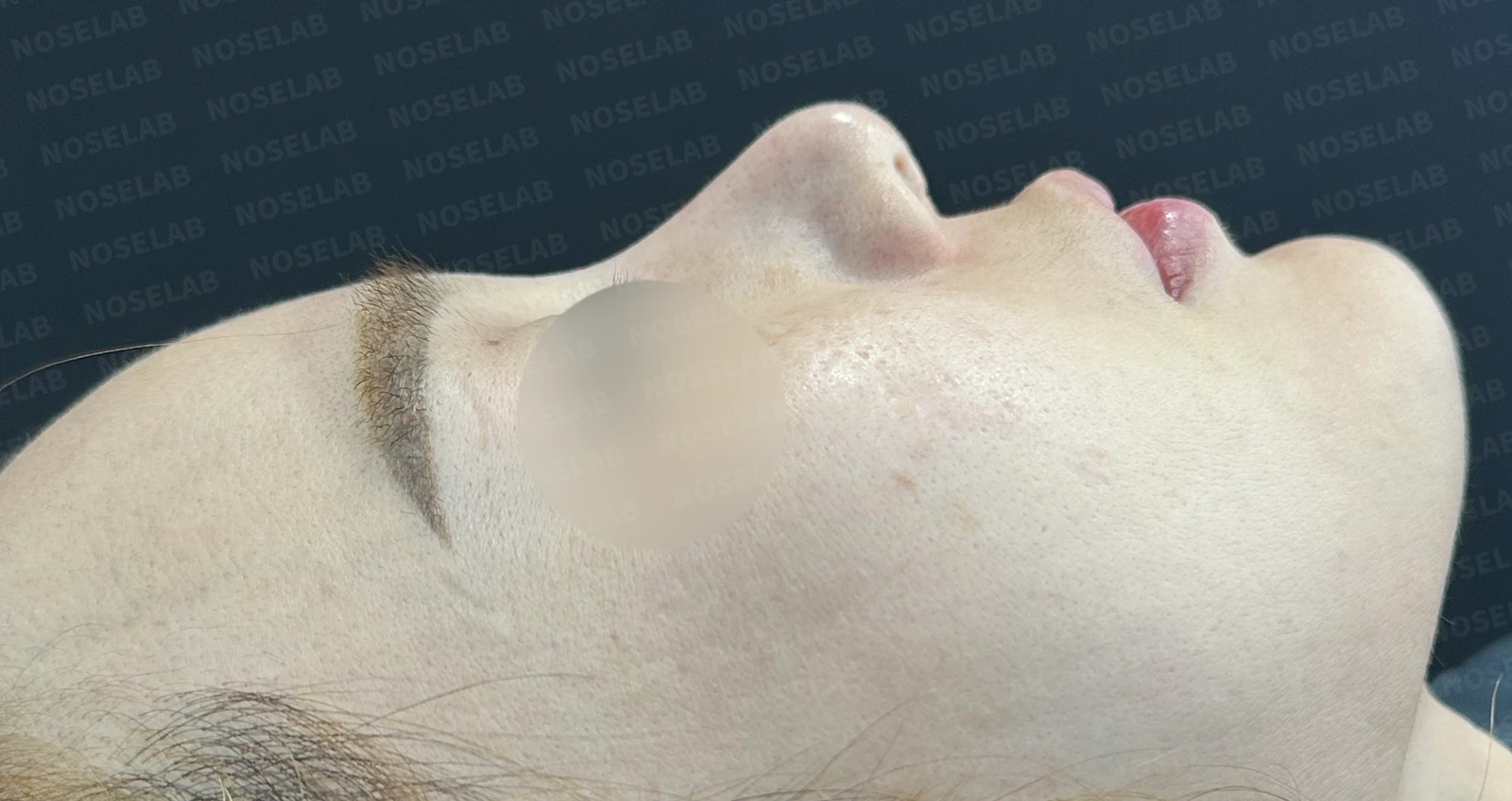
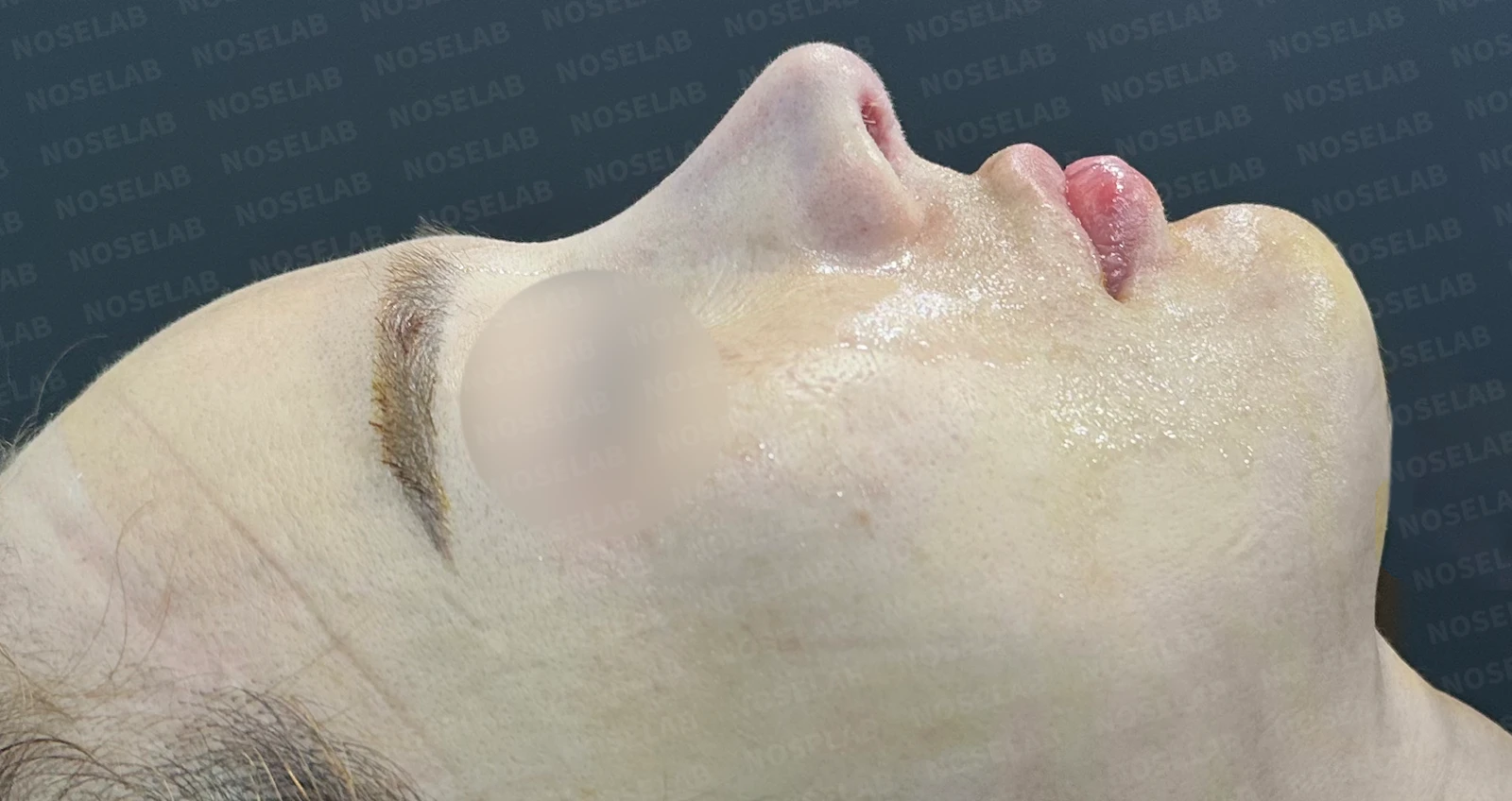
Before surgery / Day 0 immediately after surgery Photos taken immediately after surgery show swelling and may differ from the final result.
The columella became properly visible between the alae, eliminating the constricted appearance.
The drooping nasal tip gained a more natural contour.
Oblique view:
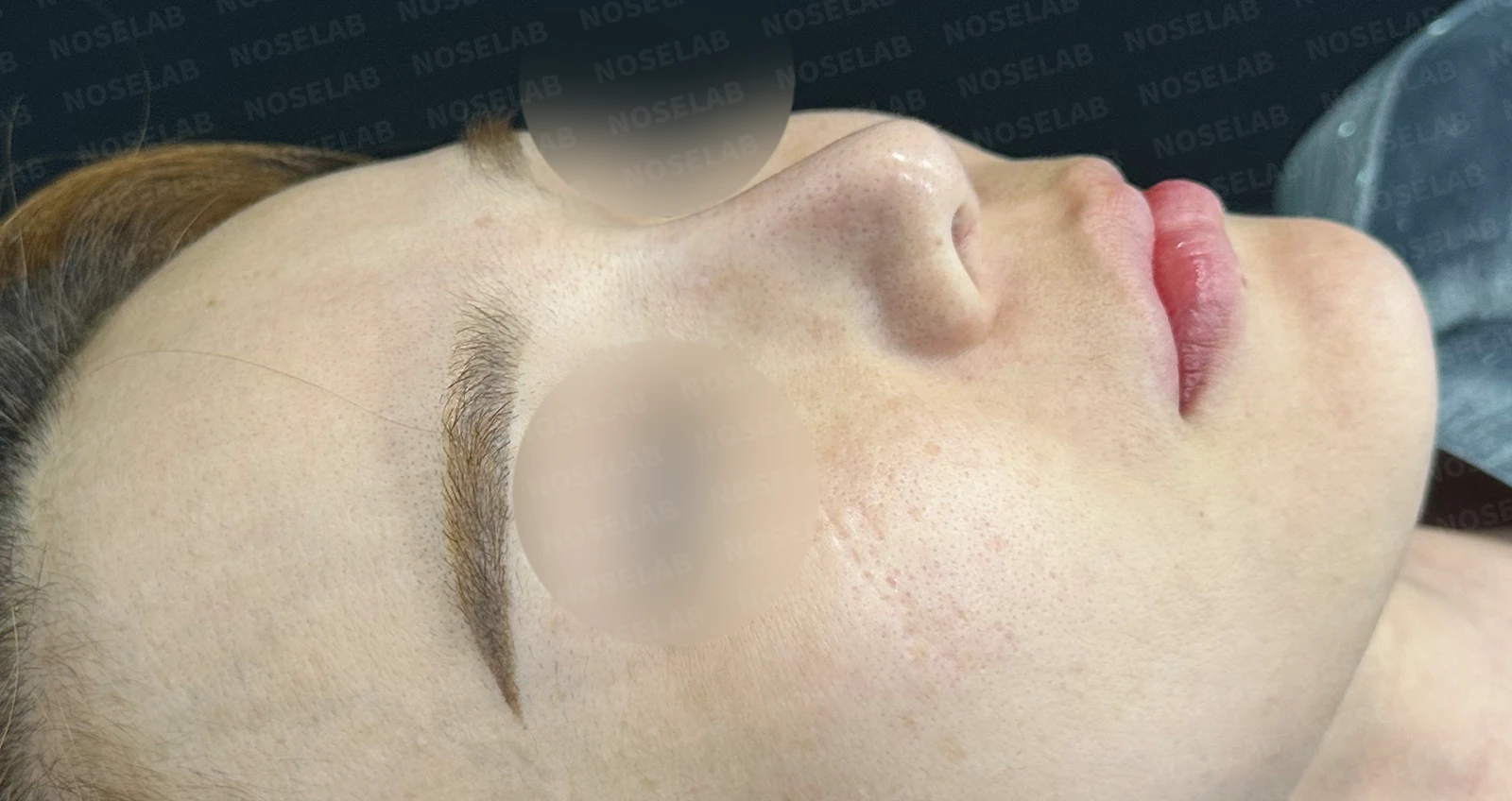
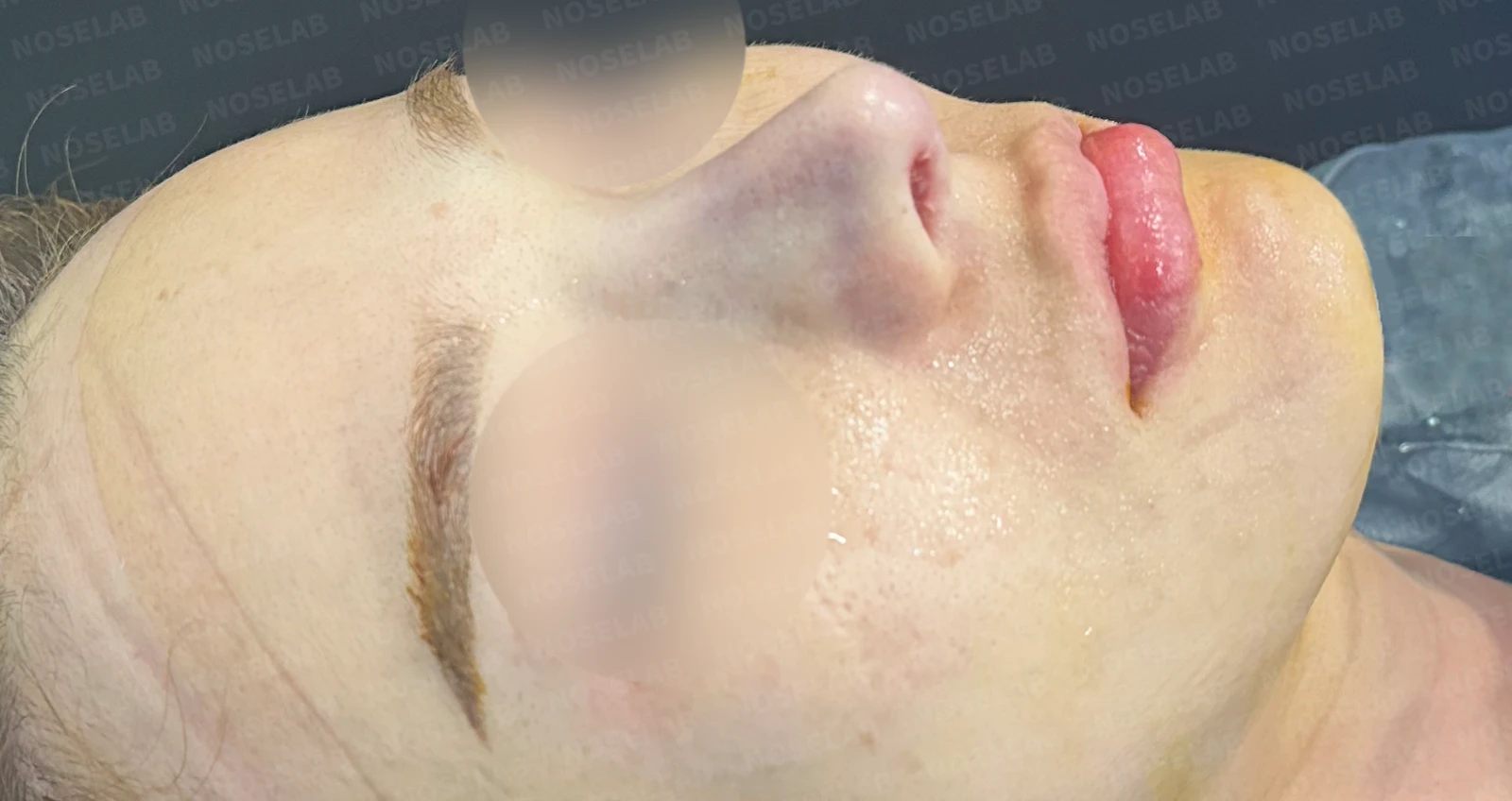
Before surgery / Day 0 immediately after surgery Photos taken immediately after surgery show swelling and may differ from the final result.
The nasal deviation was significantly corrected, resulting in a smooth line.
The tip splaying and drooping were improved, creating overall balance.
Nostrils:
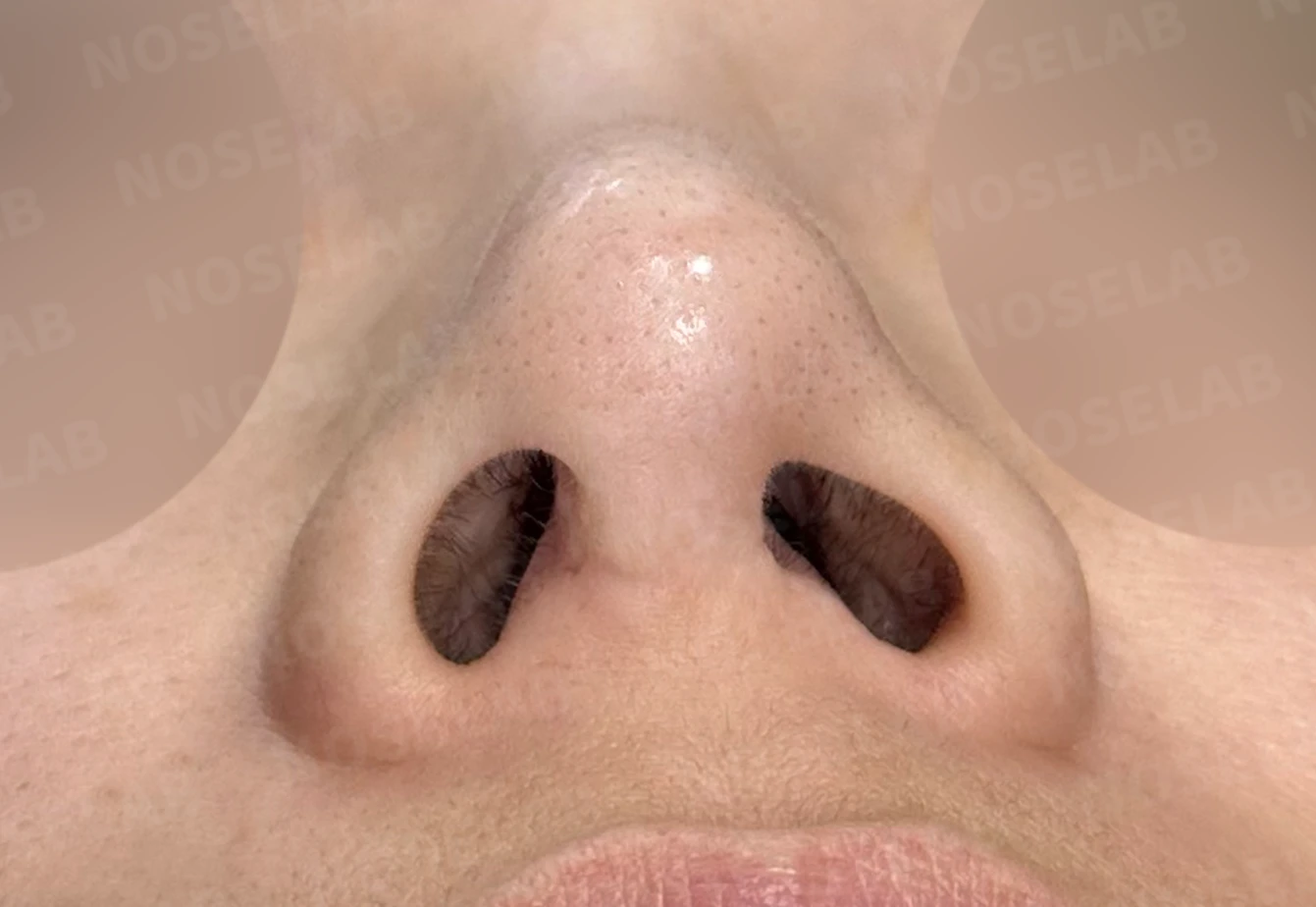
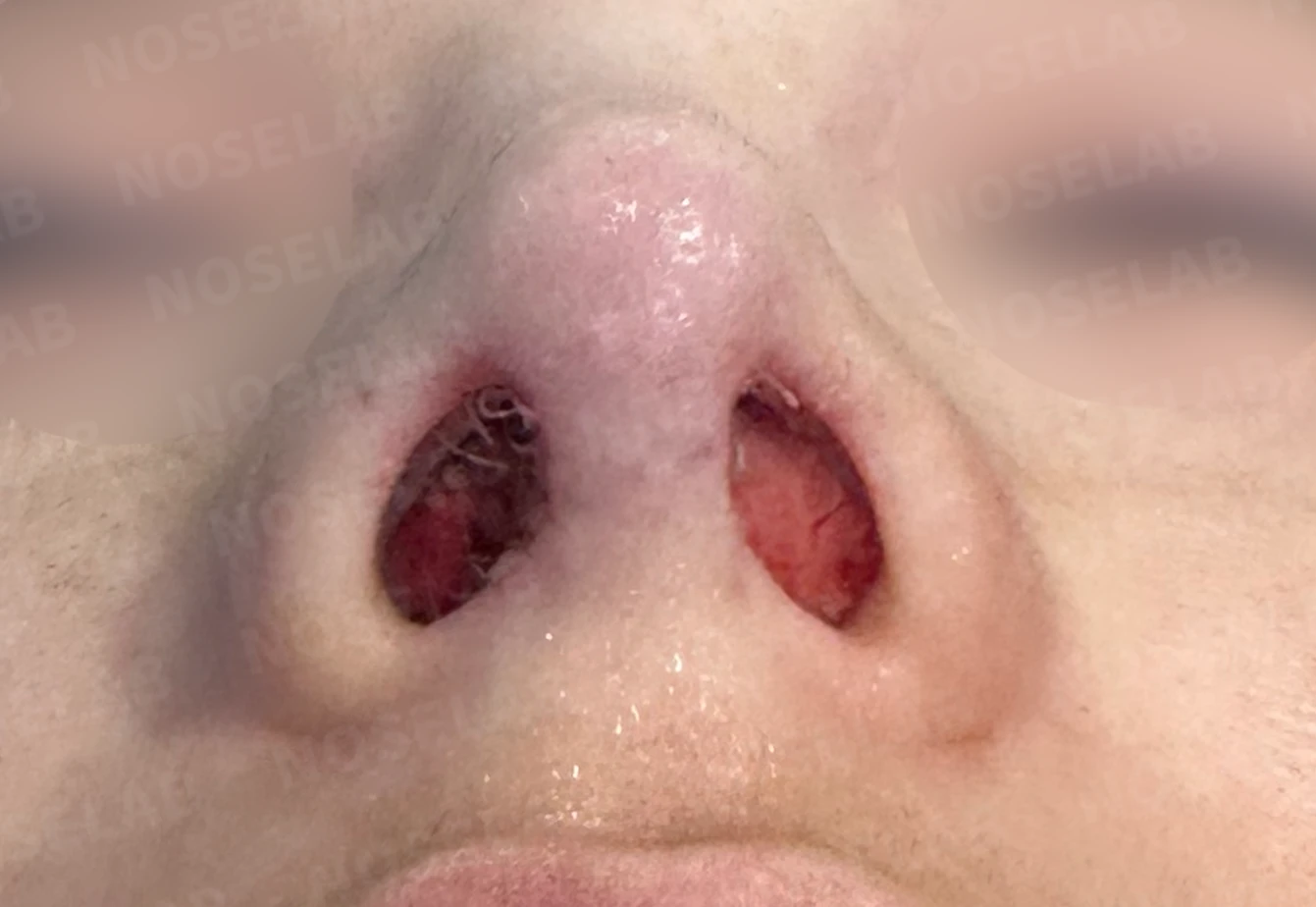
Before surgery / Day 0 immediately after surgery Photos taken immediately after surgery show swelling and may differ from the final result.
The columella, which had shifted toward the right, was centered.
The difference in size and shape between the left and right nostrils was noticeably improved.
Photos immediately after surgery
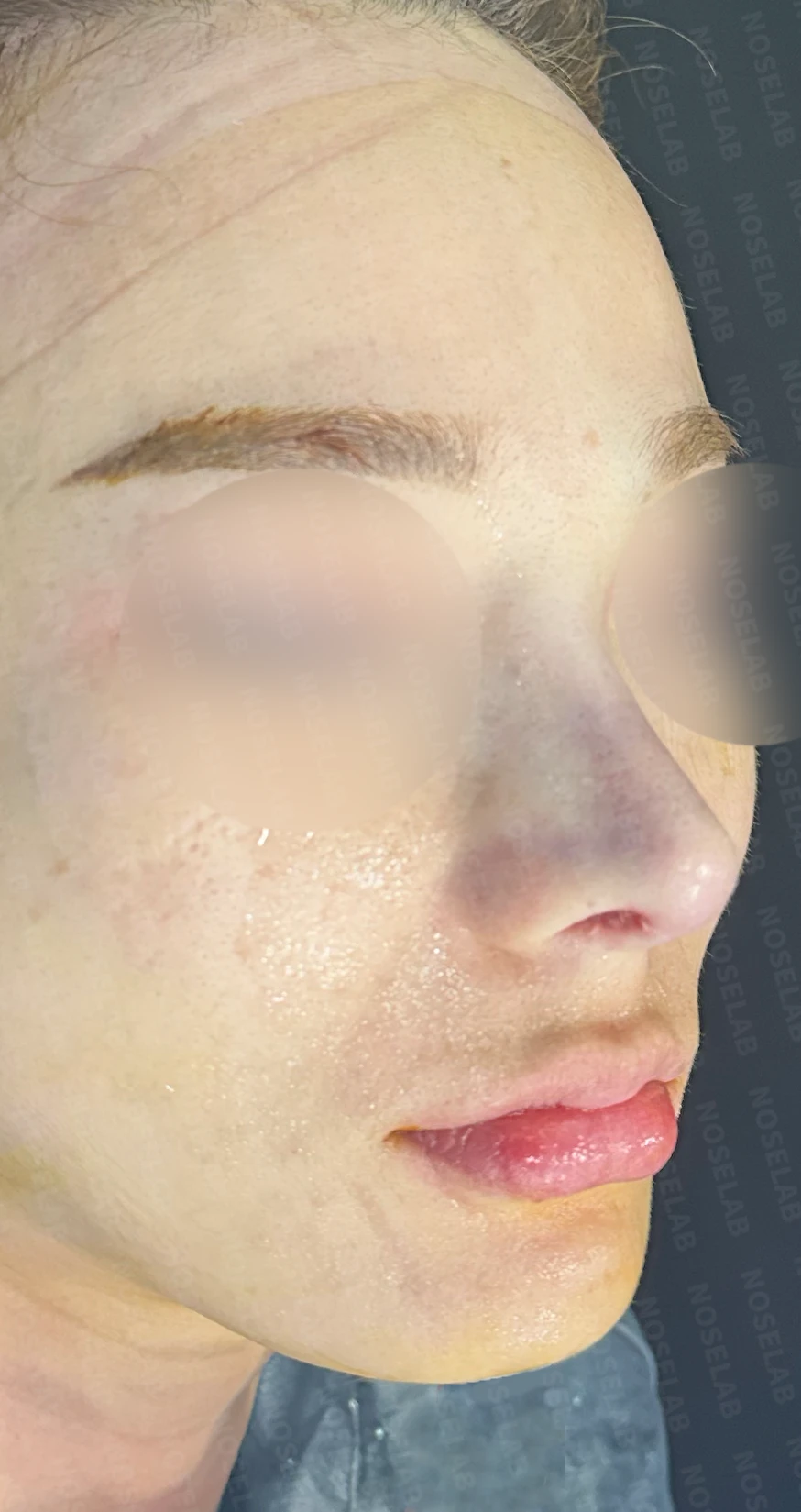
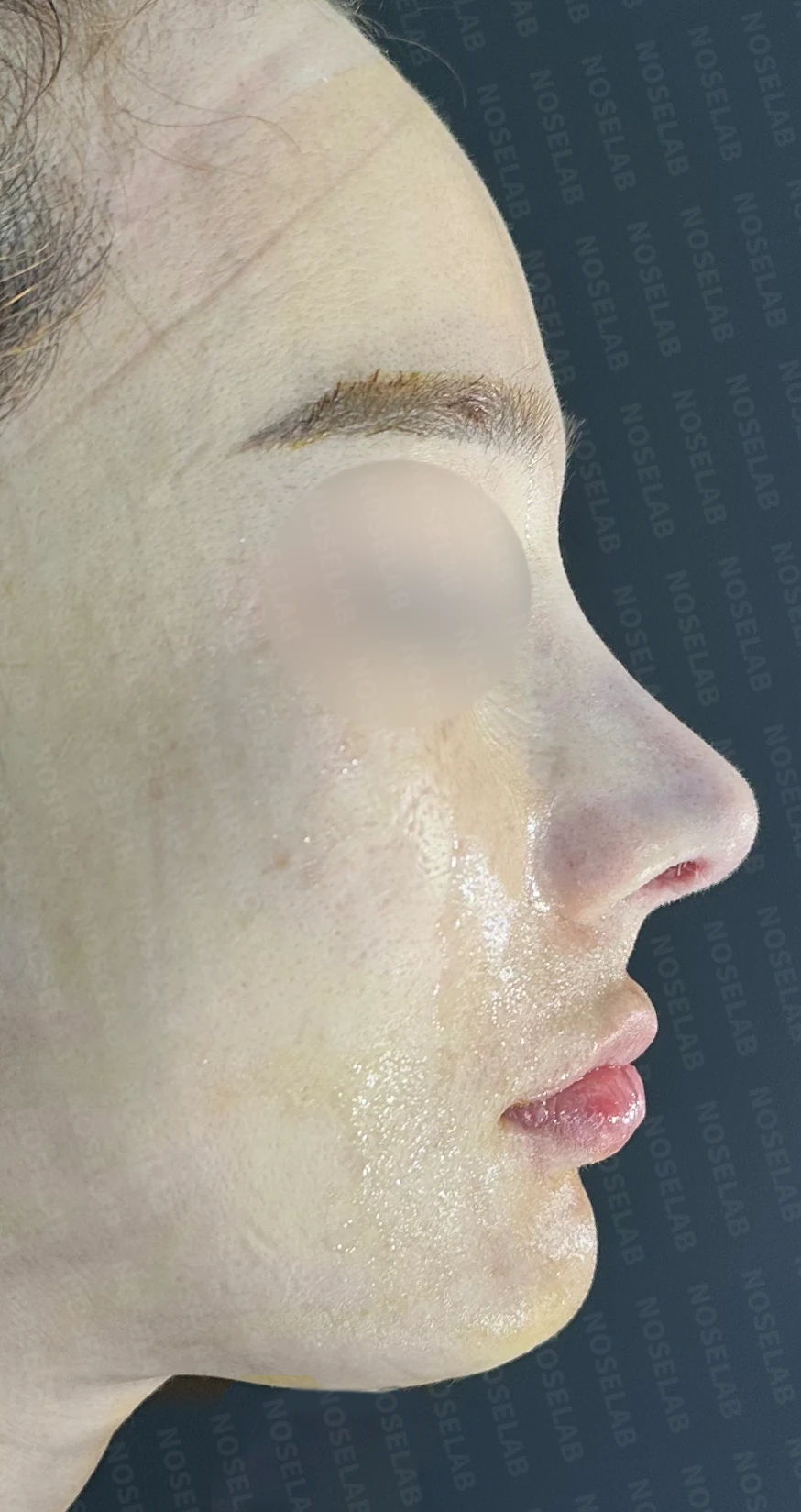
Front, oblique, and profile views immediately after surgery on day 0. Photos taken immediately after surgery show swelling and may differ from the final result.
Nostril view on day 0 immediately after surgery Photos taken immediately after surgery show swelling and may differ from the final result.
Conclusion
This case clearly illustrates the relationship between nostril asymmetry and alar asymmetry. In many instances, nostril asymmetry is a secondary phenomenon caused by the nasal tip deviating to one side. Therefore, attempting to correct only the nostril asymmetry (for example, by lowering the nostril rim) is likely to fail in resolving the underlying issue.
In this patient's case, straightening the deviated tip naturally improved the nostril asymmetry. This highlights the importance of accurately identifying the cause of asymmetry and selecting an appropriate corrective approach.
Straightening a deviated nasal tip relies heavily on proper correction of the septal cartilage. This is an area where board-certified otolaryngologists offer specialized expertise. In this case as well, reconstructing the septal cartilage with autologous rib cartilage played a key role in achieving a successful outcome.
Closing remarks
I hope this case is helpful to those dealing with alar and nostril asymmetry. An essential point to remember is that nostril asymmetry correction cannot follow a single standardized method for everyone. The appropriate surgical strategy varies depending on each patient's individual condition and underlying cause.
Therefore, it is important to undergo an in-depth consultation with a specialist to accurately evaluate your nasal structure and develop a customized surgical plan. At NOSELAB, we draw on extensive experience and clinical expertise to offer each patient the most suitable solution.
NOSELAB is here to help you achieve a healthy, aesthetically pleasing nose. Thank you.
#closedrhinoplasty #complexclosedrhinoplasty #rhinoplasty #crookednosecorrection #nostrilasymmetrycorrection #alarasymmetrycorrection #nostrilwingasymmetry #septalreconstruction #autologousribcartilagegraft #closedrevisionrhinoplasty #ENTspecialistrhinoplasty #deviatedseptum #hypertrophicrhinitistreatment #nasalbridgecorrection #tipplasty
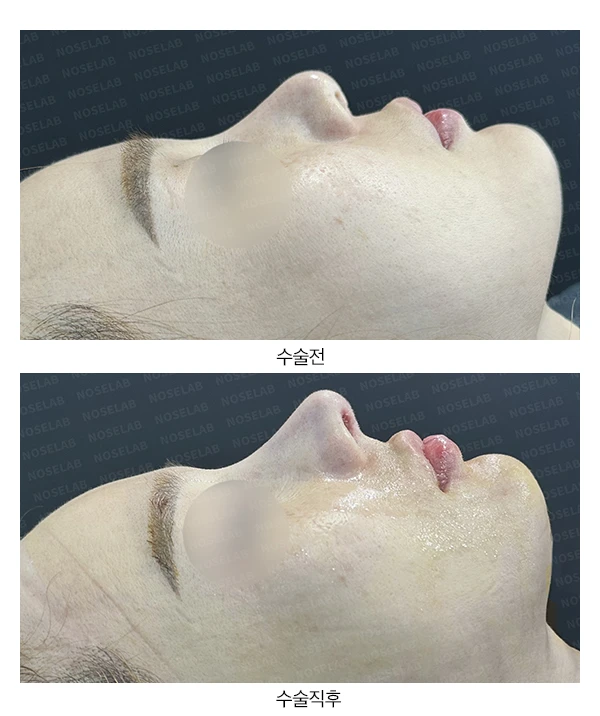

Limitations and risks
When autologous rib cartilage is used, scarring and pain may remain at the donor site on the chest, and pneumothorax (pleural injury) can occur rarely. Over time, the grafted cartilage may warp or undergo partial resorption.
When the septum is corrected at the same time, nasal obstruction may persist or recur, and in rare cases, septal perforation or changes in smell may occur.
Common potential risks include infection, bleeding, asymmetry, scarring, skin necrosis, and insufficient improvement; results vary depending on individual skin condition and previous surgical history.