Hello, I am Dr. Peter C. Kang.
Today, I would like to share a special case of a patient who resolved difficulties experienced after undergoing 8 rhinoplasty procedures over the course of 15 years.
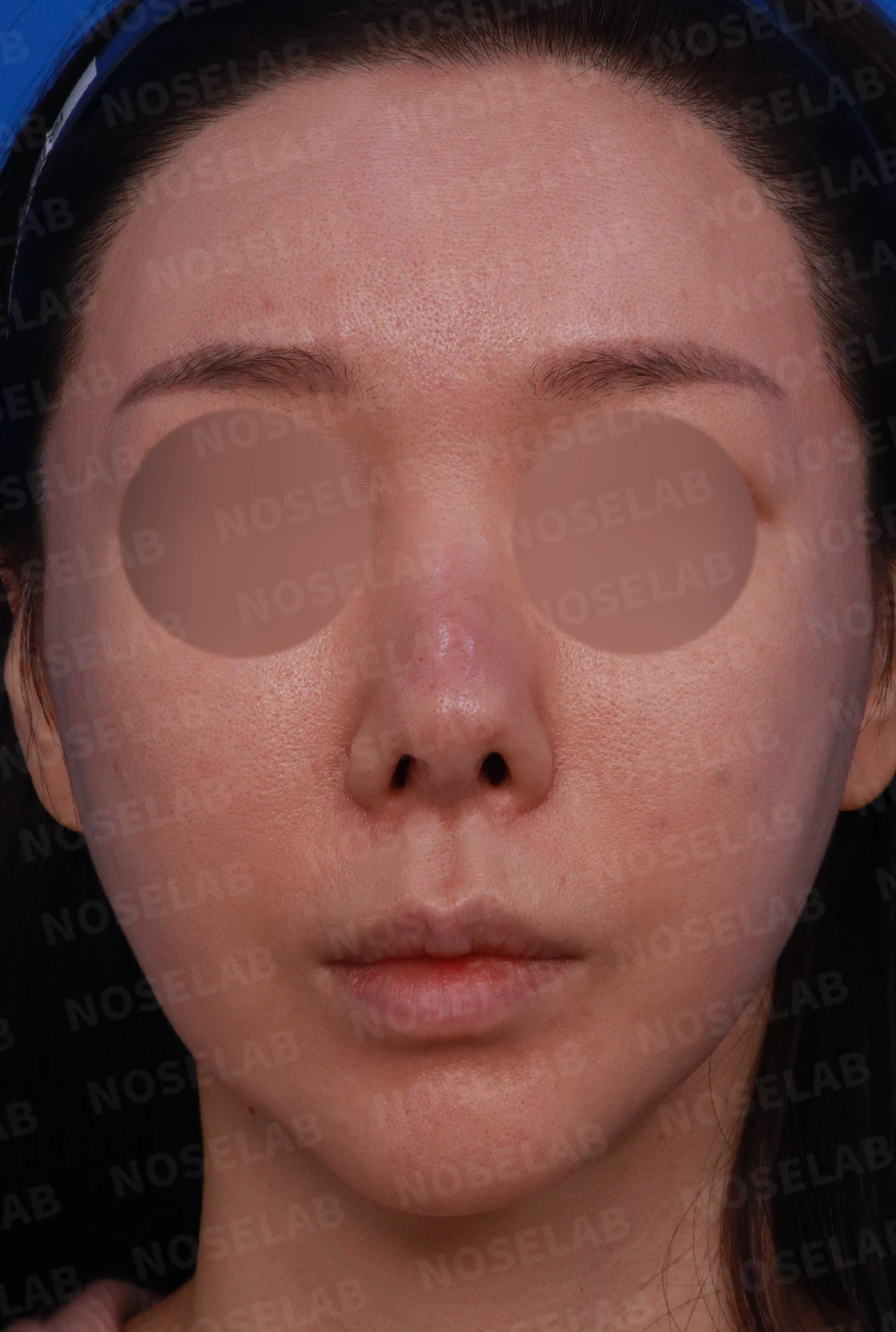
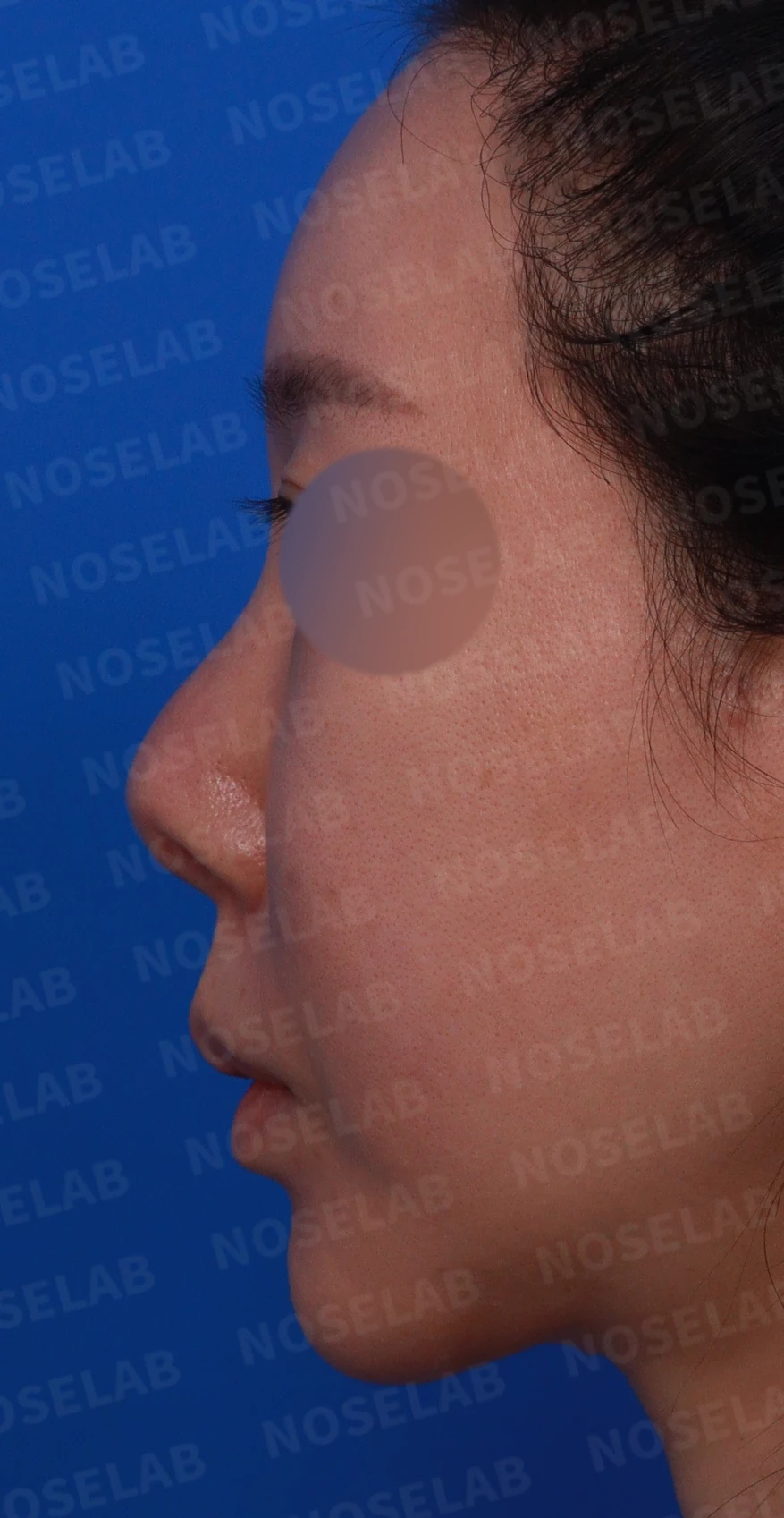
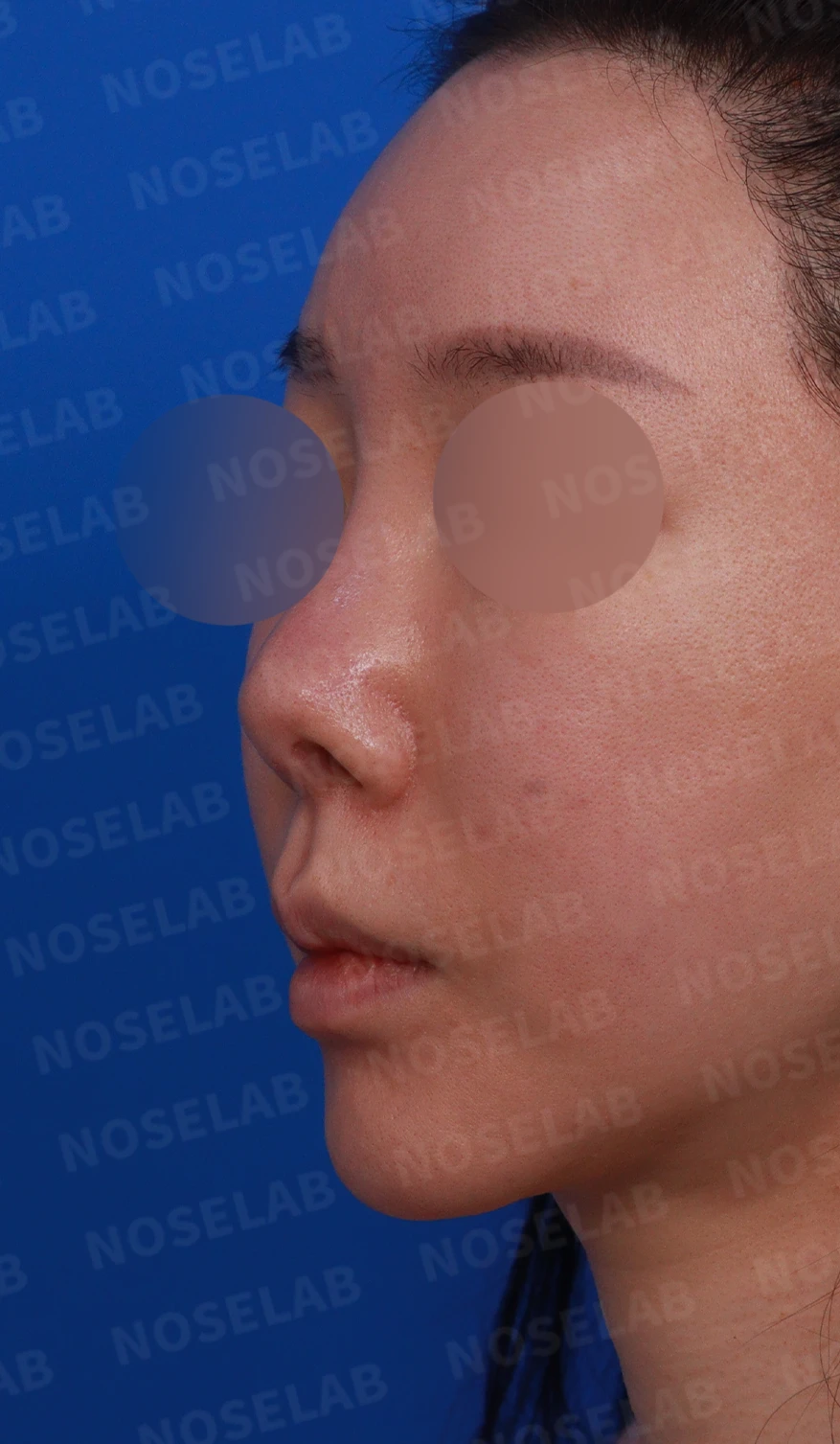
Front, left profile, and oblique views during design consultation.
🔍 Surgical history
15 years ago: Gore-Tex + ear cartilage (revision performed because the result appeared too natural)
14 years ago: L-shaped silicone implant + ear cartilage (contracture and an upturned nose developed)
12 years ago: Autologous rib cartilage + autologous buttock dermis (nose on the verge of collapse)
11 years ago: Autologous rib cartilage + septum, no implant (wide nasal bridge)
10 years ago: AlloDerm (allergic reaction)
9 years ago: AlloDerm removal + additional autologous rib cartilage
2 years ago: Utilization of existing materials + autologous buttock dermis + ear cartilage
1 year ago: Fat graft, followed by monthly dermal injections 7 to 8 times
Particularly notable were the allergic reaction to AlloDerm observed during the fifth surgery and the severe damage to the septal cartilage.
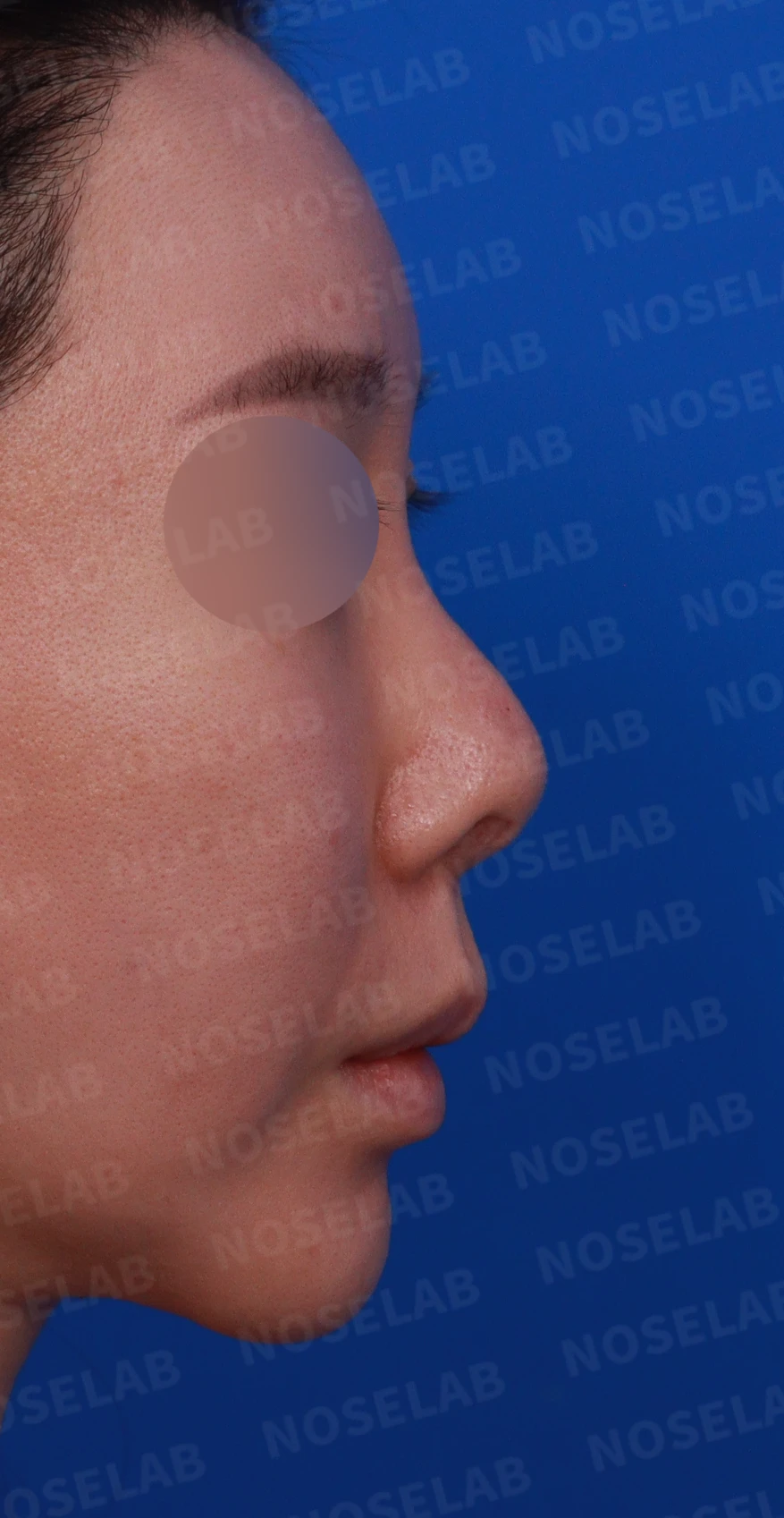
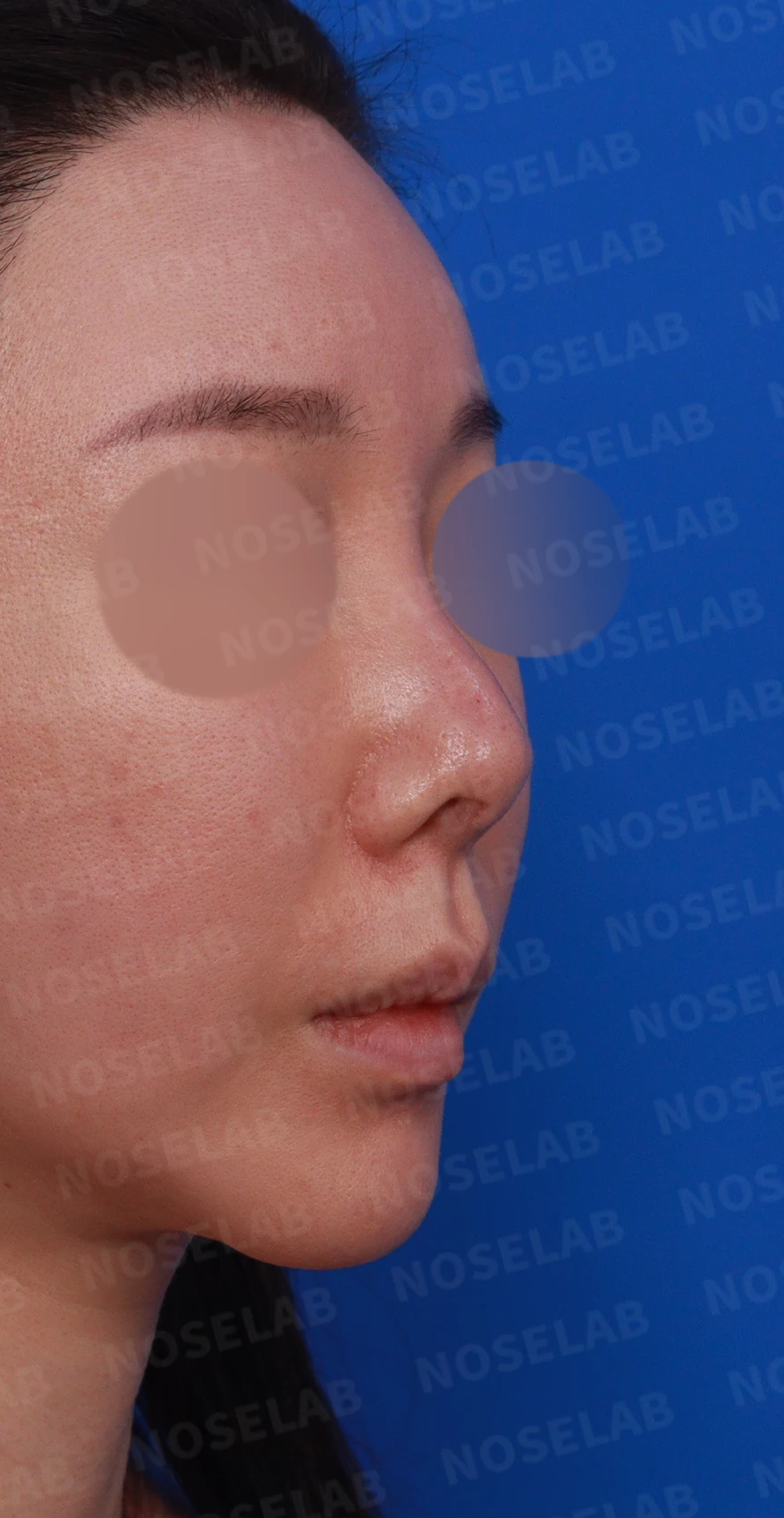
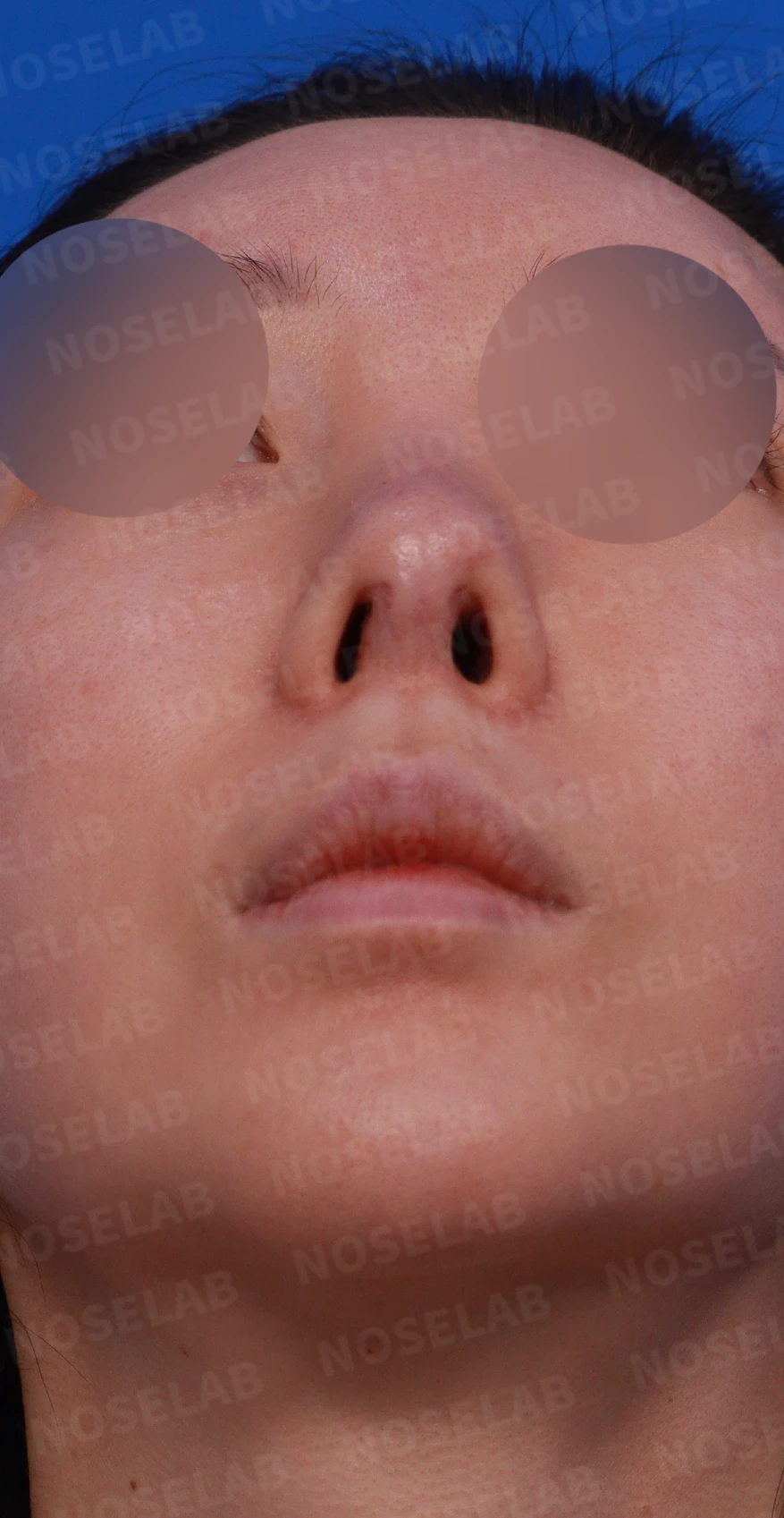
Right profile, oblique, and nostril views during design consultation.
💉 Key problems
Severe damage to septal cartilage
Upturned nasal tip
Bilateral pinched alae
Irregular nasal tip cartilage
Nostril asymmetry
Severe nasal obstruction
Depressed nasal dorsum
🔧 Surgical procedure details
Structural reconstruction
Total septal reconstruction using autologous rib cartilage
Correction of the upturned nasal tip
Lower lateral cartilage reconstruction
2. Soft tissue improvement
Restoration of the alae via dermal grafting
Improvement of irregularities around the nasal tip
Scar tissue removal
3. Functional improvement
Adjustment of columellar width via septal reconstruction to improve the external nasal valve
Correction of nostril asymmetry
Relief of nasal obstruction
4. Nasal bridge correction
Scar tissue removal
Creation of a straight bridge line
🌟 Surgical results
Although this was a highly complex and difficult surgery, all procedures proceeded smoothly, yielding a favorable result.
In particular, the following areas showed substantial improvement:
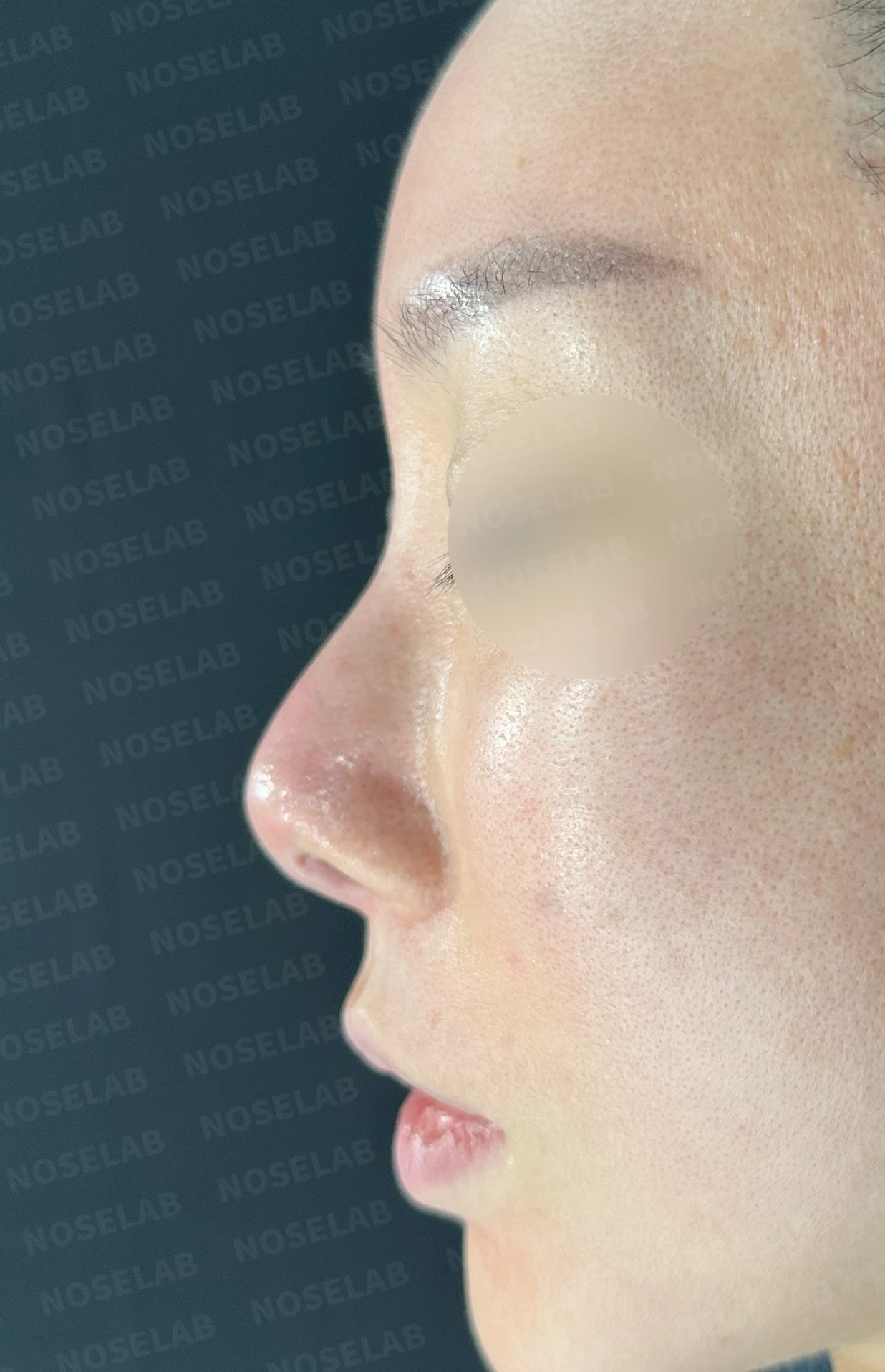
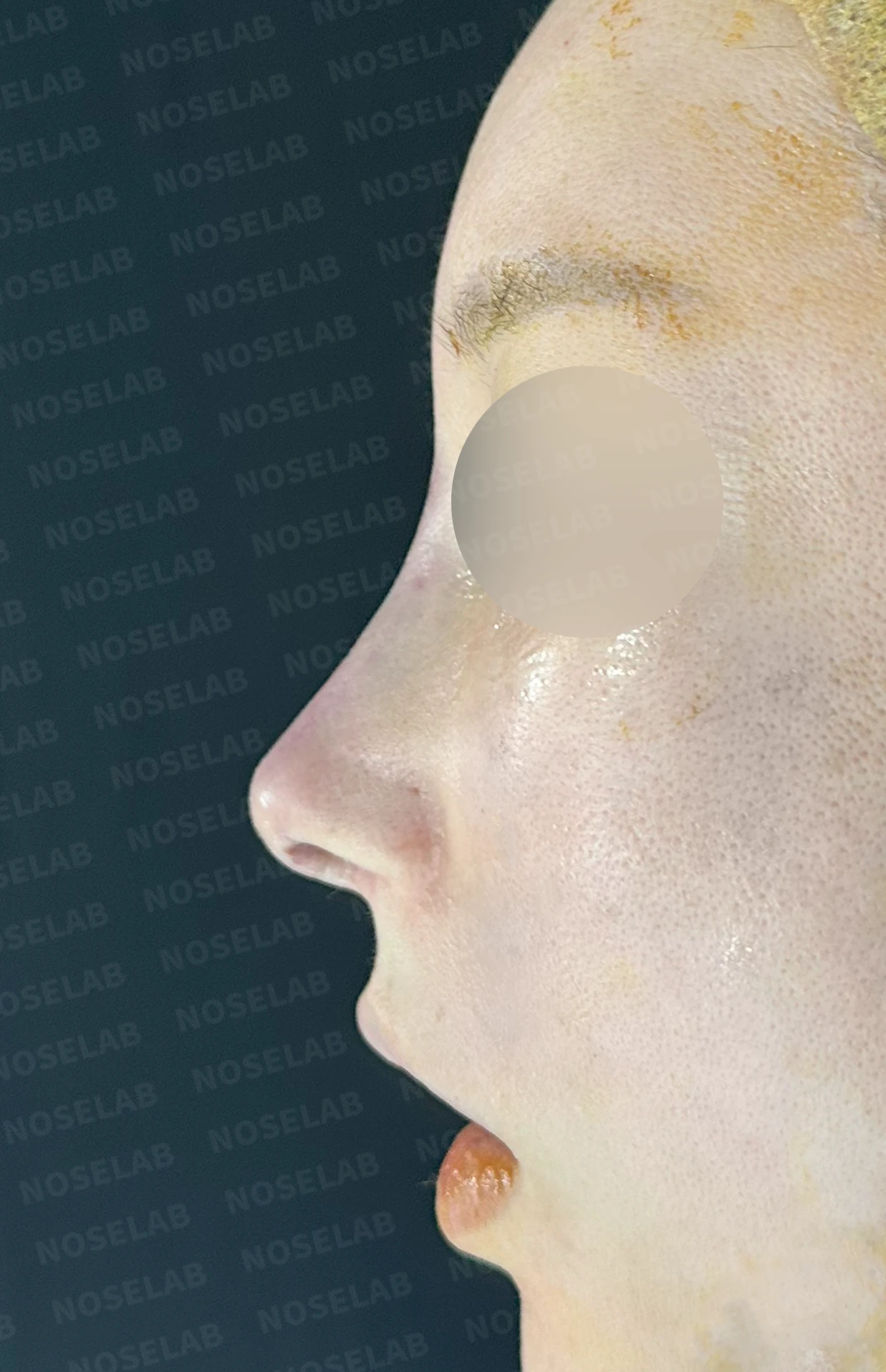
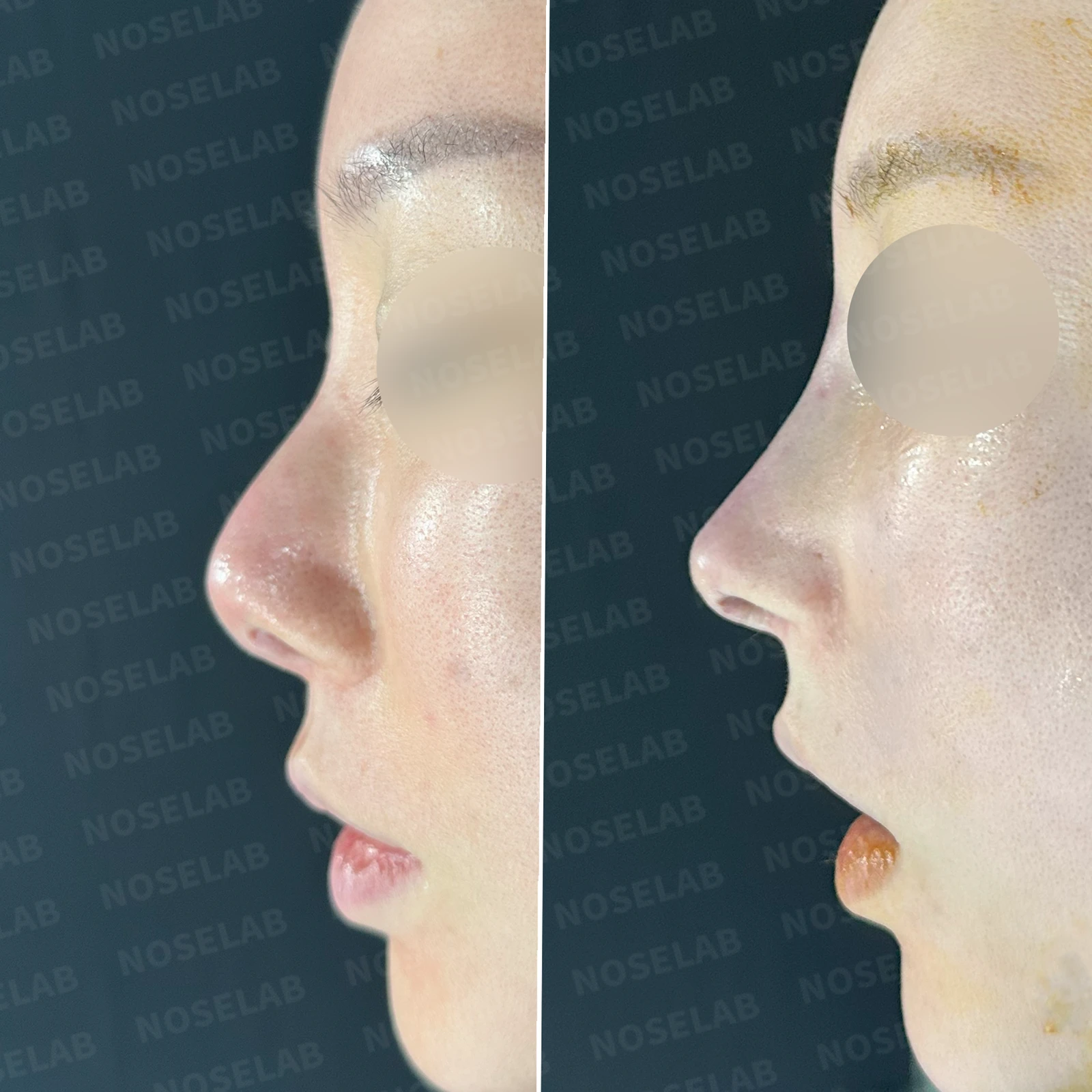
Before surgery / Day 0 immediately after surgery Photos taken immediately after surgery show swelling and may differ from the final result.
Structural improvement
Stable septal reconstruction
Natural nasal tip position
Improved alar shape
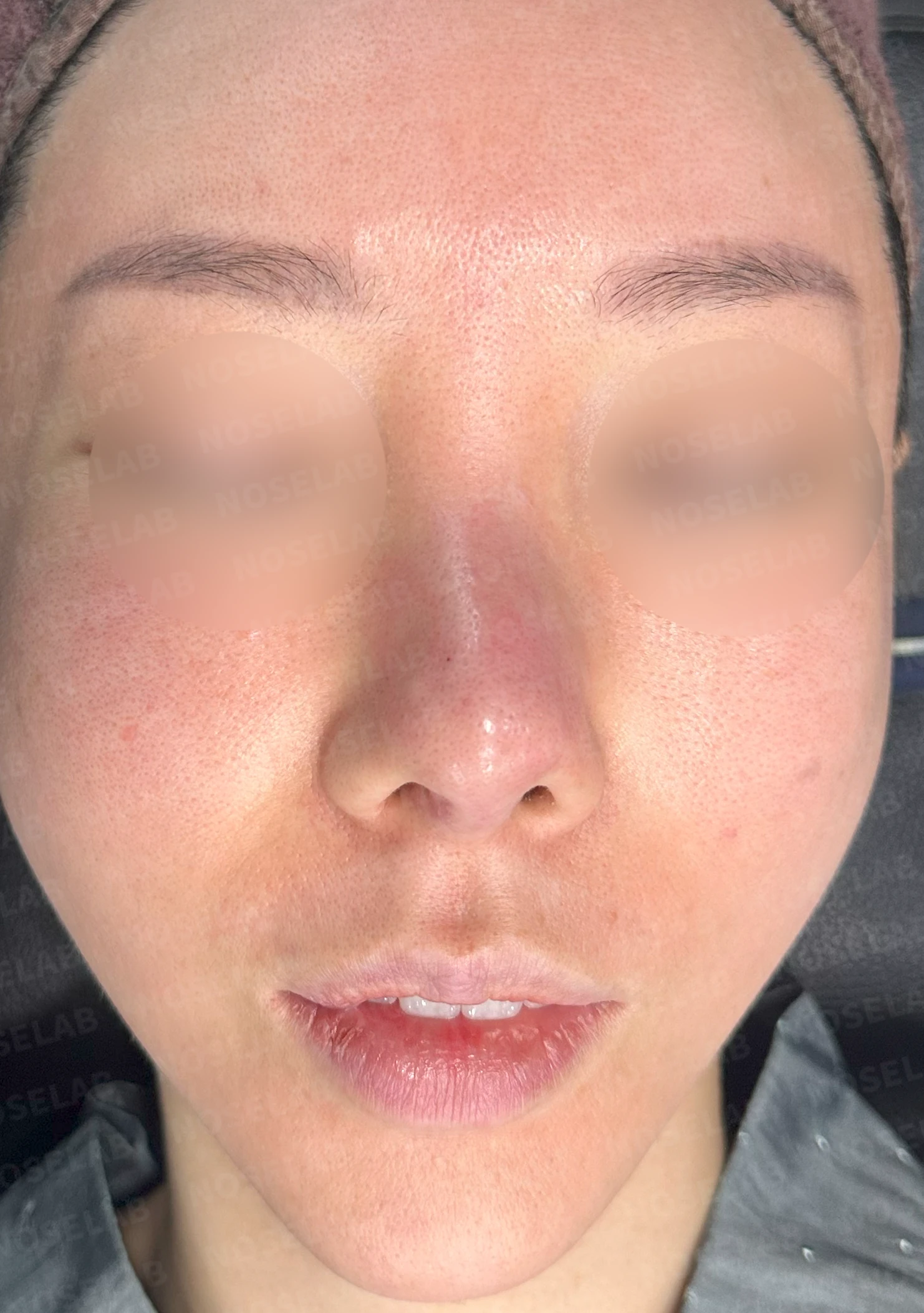
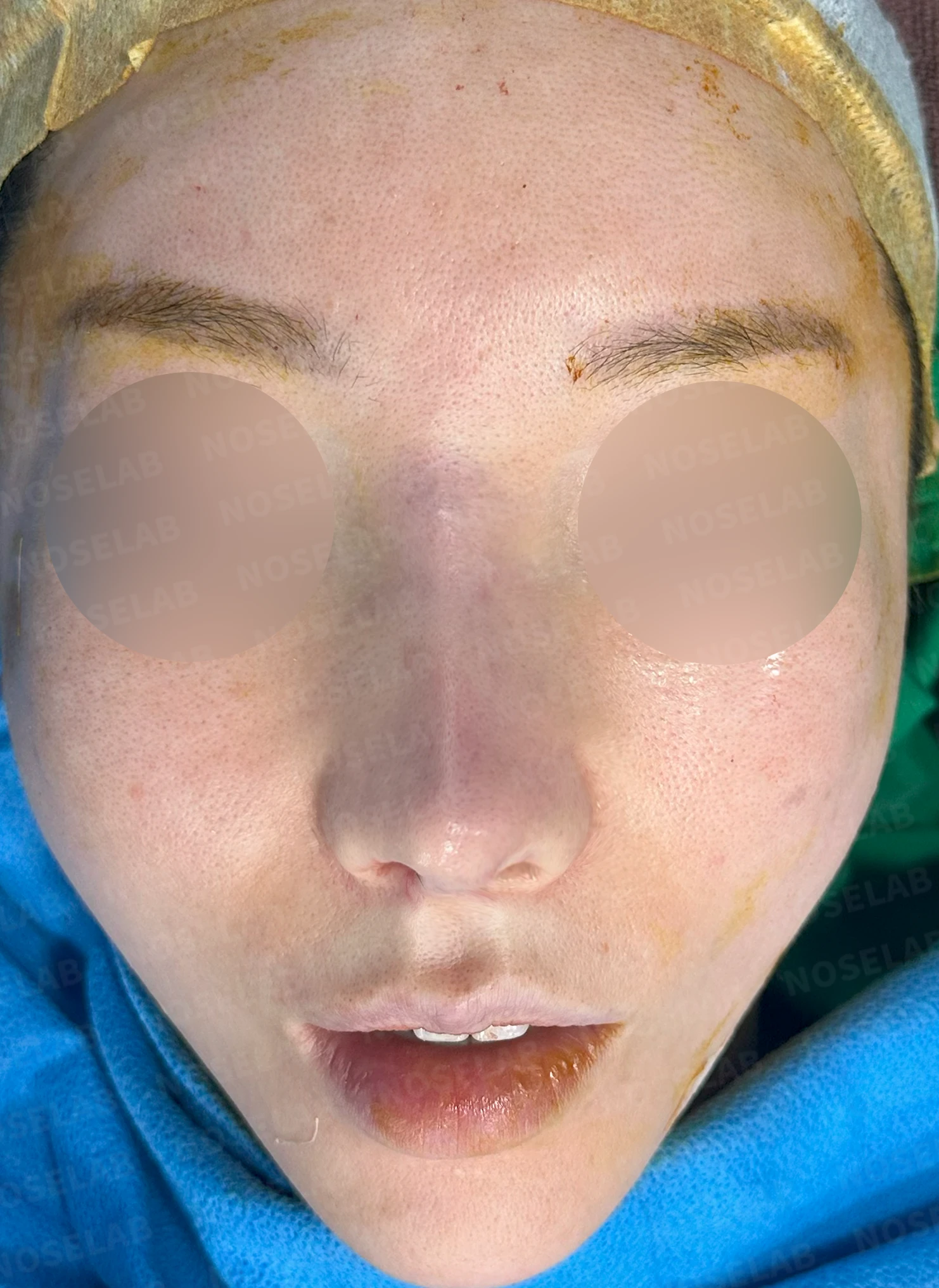
Before surgery / Day 0 immediately after surgery Photos taken immediately after surgery show swelling and may differ from the final result.
2. Functional improvement
Relief of nasal obstruction
Widened nostrils
Restoration of breathing function
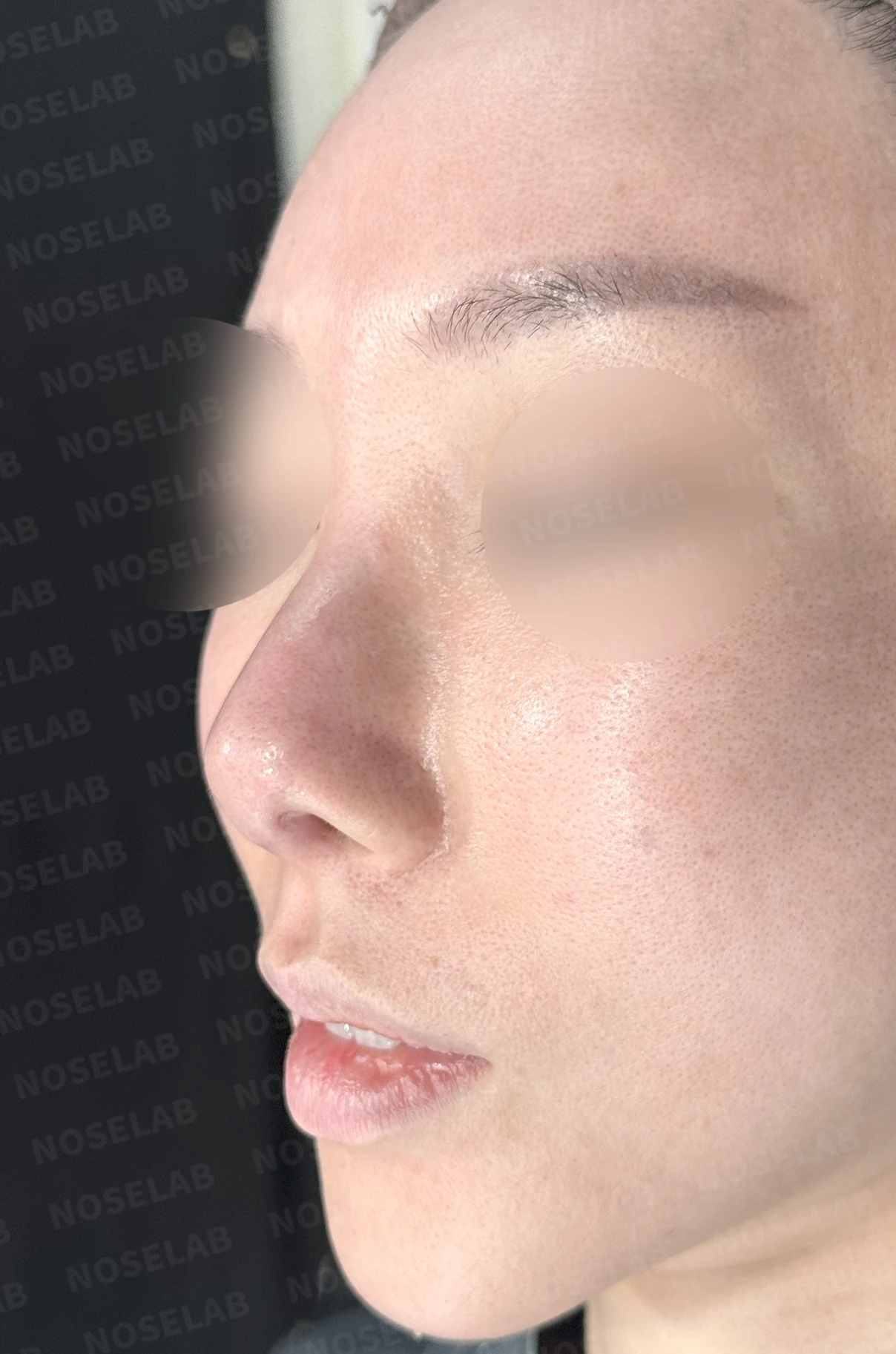
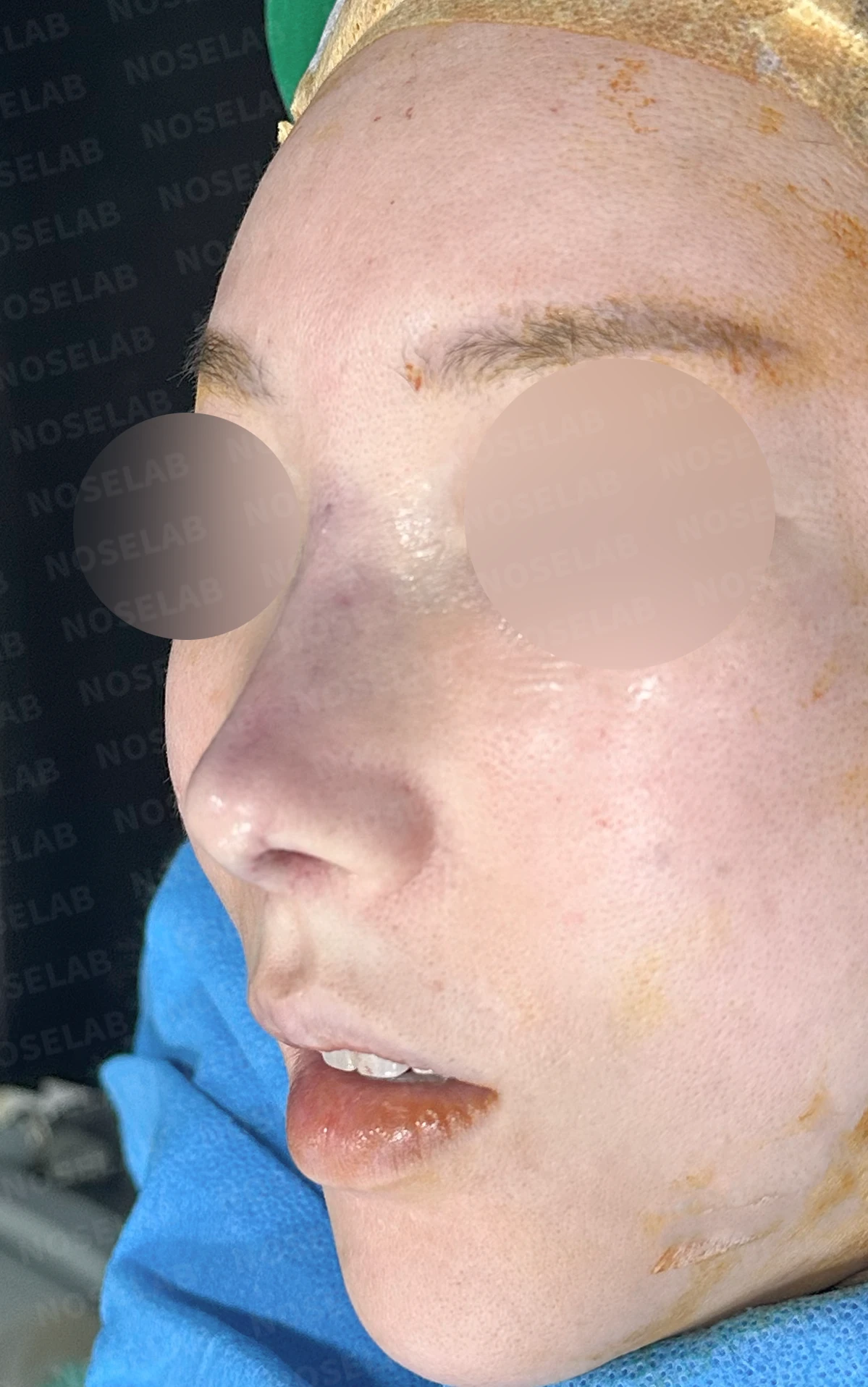
Before surgery / Day 0 immediately after surgery Photos taken immediately after surgery show swelling and may differ from the final result.
3. Cosmetic improvement
Smooth nasal bridge line
Natural nasal tip
Improved asymmetry
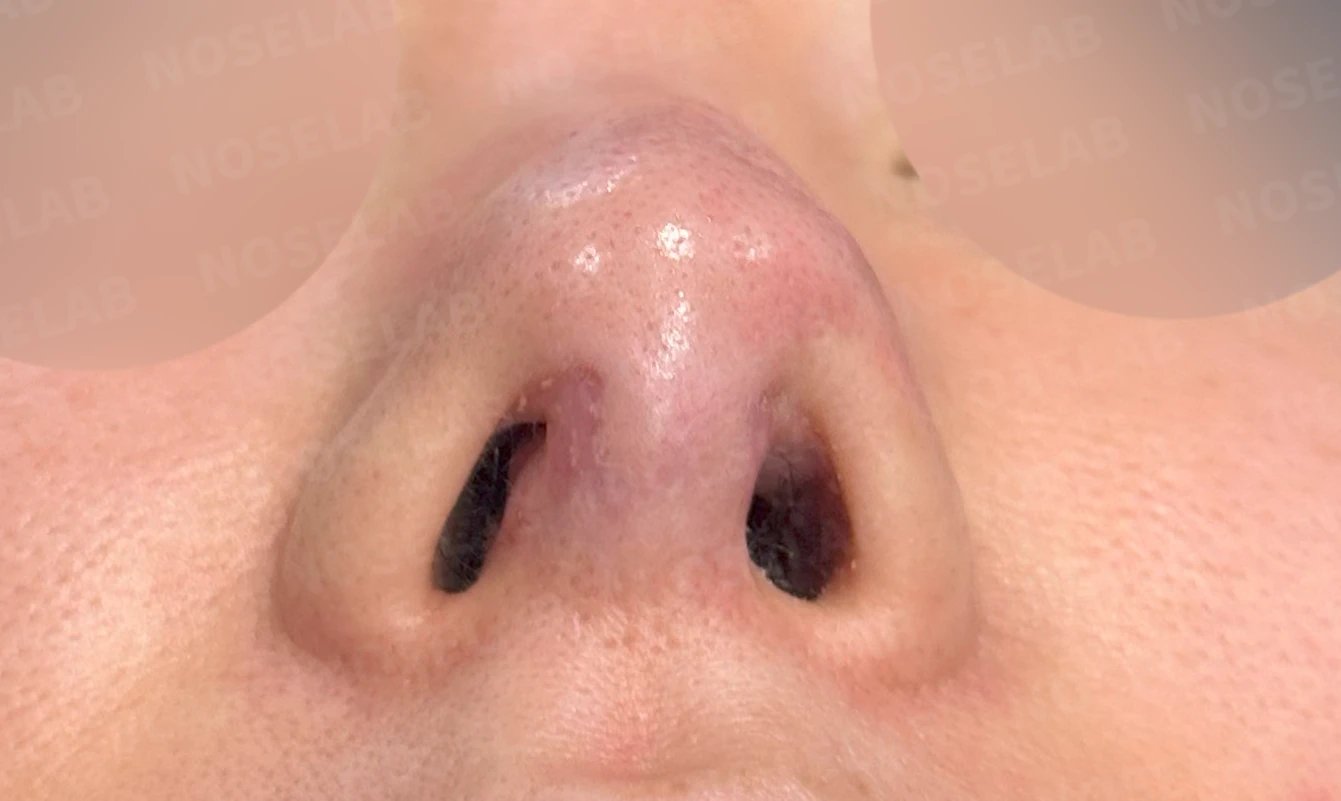
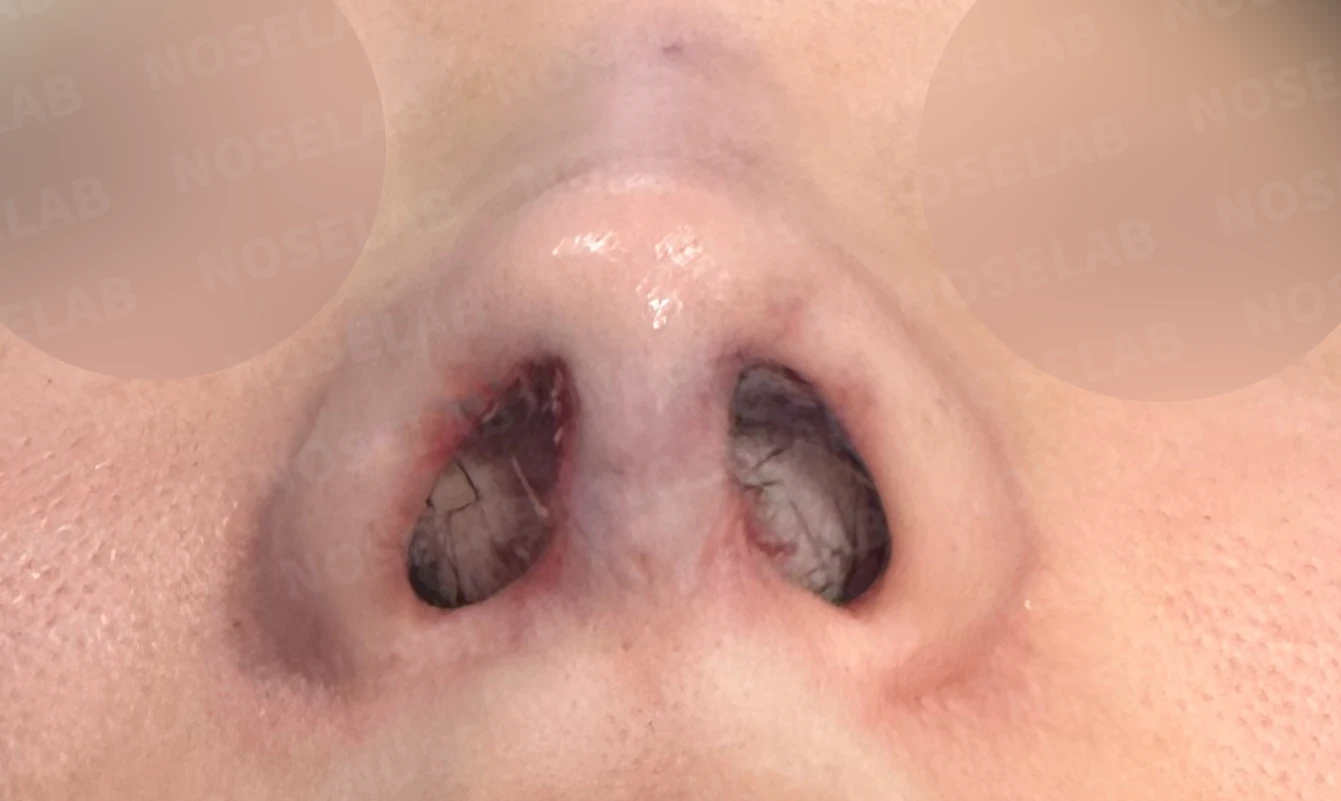
Before surgery / Day 0 immediately after surgery Photos taken immediately after surgery show swelling and may differ from the final result.
💡 Specialist's opinion
To resolve the complex problems caused by multiple operations, an accurate cause analysis and a systematic approach were necessary. In particular, septal reconstruction was the most critical task, through which the other associated problems could also be addressed.
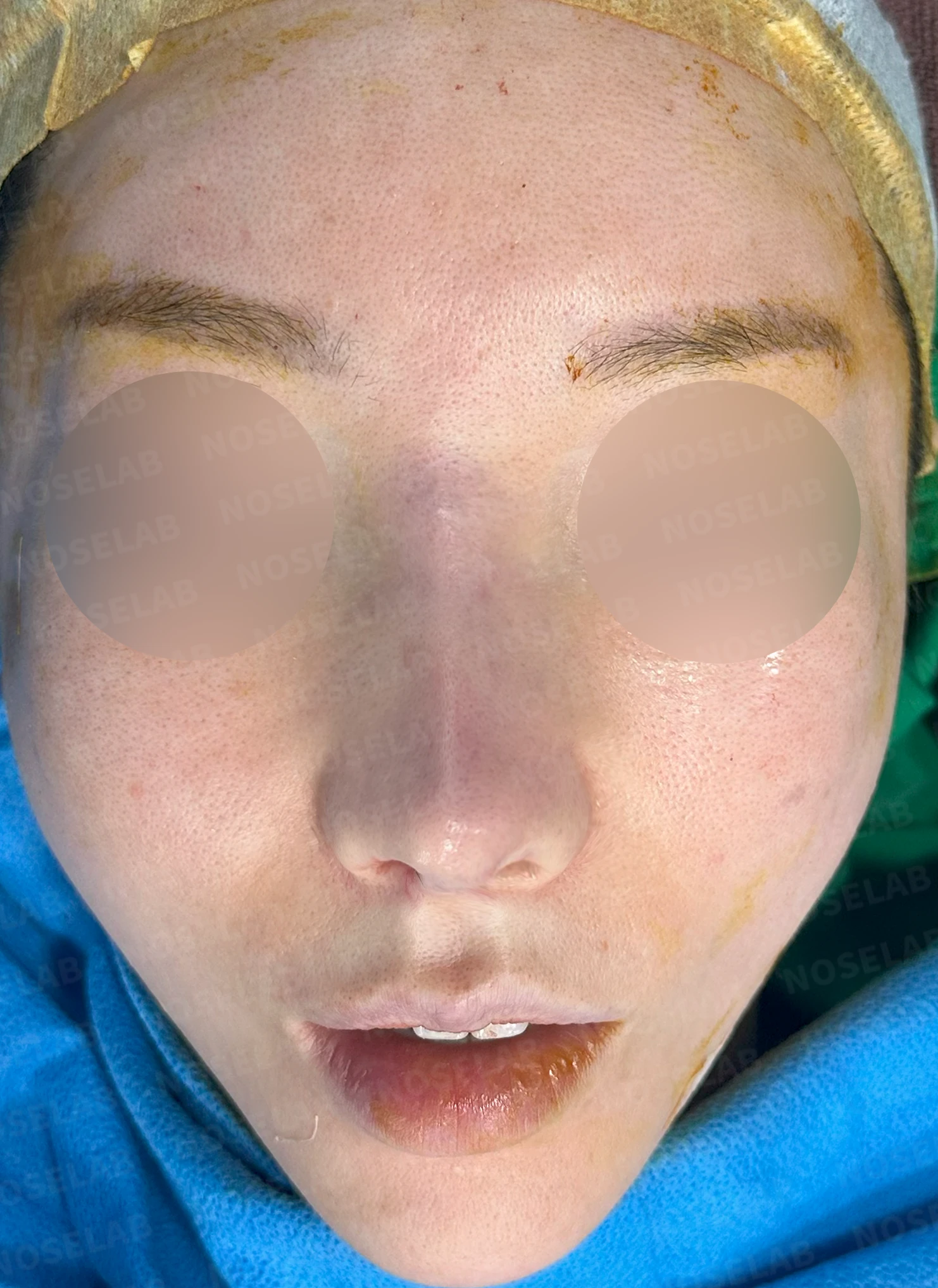
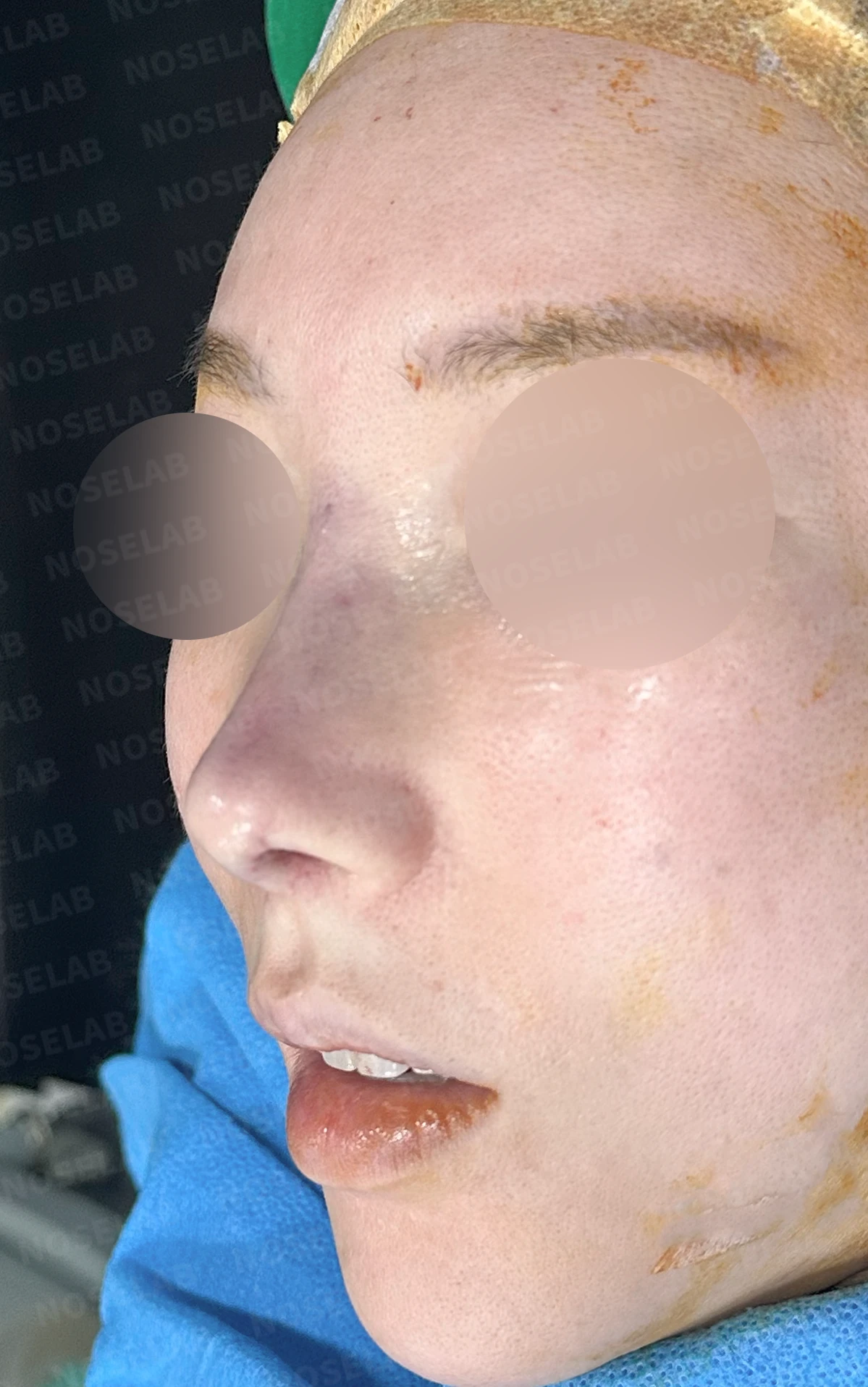
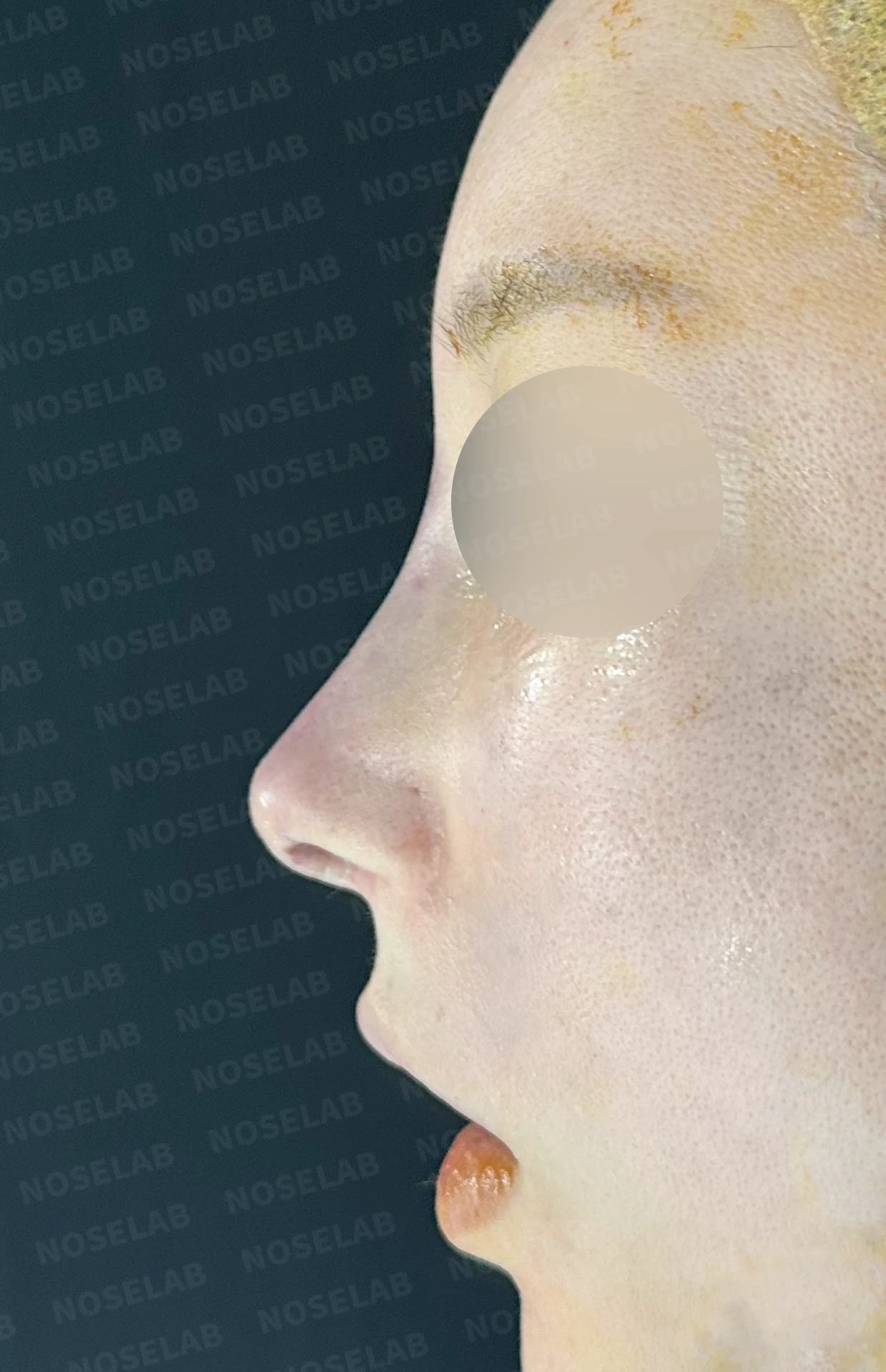
Front, oblique, and profile views on day 0 immediately after surgery. Photos taken immediately after surgery show swelling and may differ from the final result.
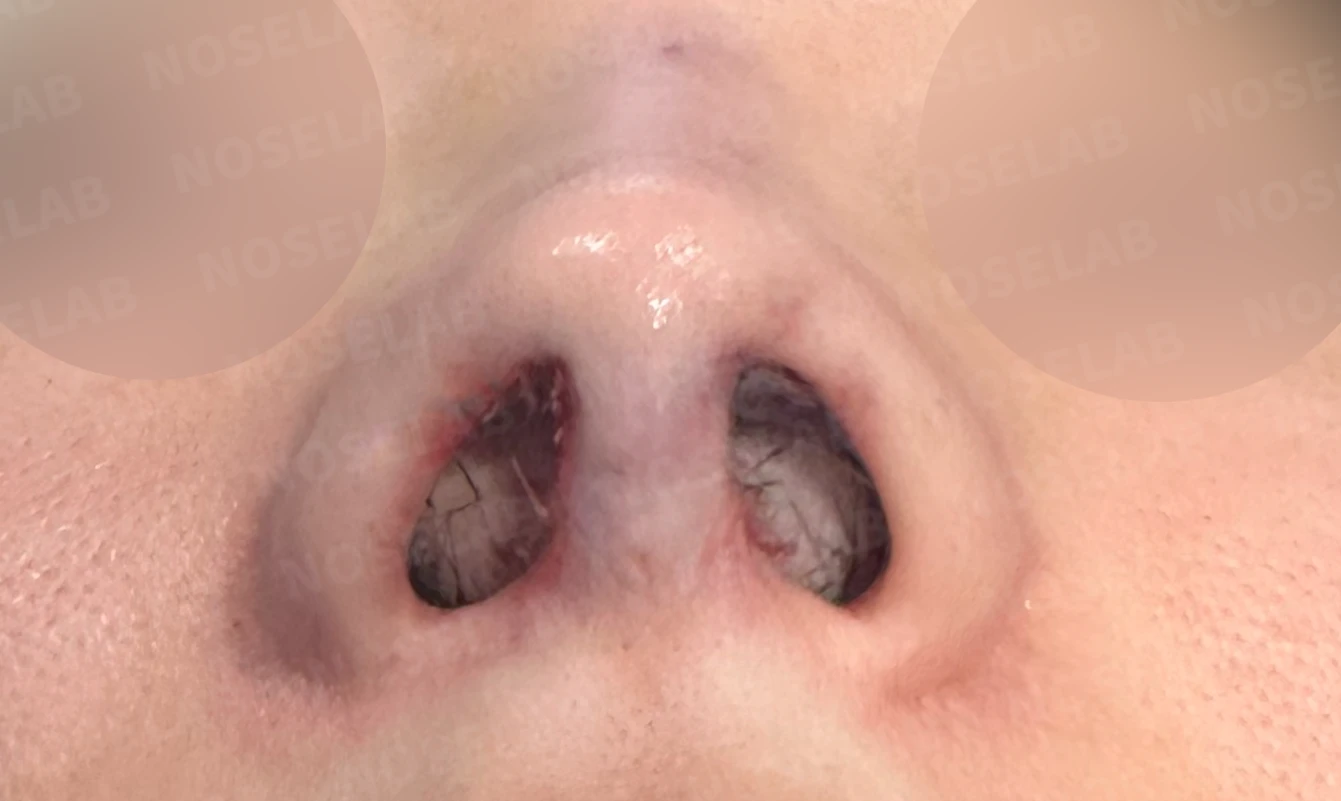
Nostril view on day 0 immediately after surgery. Photos taken immediately after surgery show swelling and may differ from the final result.
I will continue to do my best to achieve the intended results, even in difficult revision surgery cases.
#closedrhinoplasty #revisionrhinoplasty #contracturecorrection #nasalobstructionrelief #naturalnose #customrhinoplasty

Limitations and risks
When autologous rib cartilage is used, scarring and pain may remain at the donor site on the chest, and pneumothorax (pleural injury) can occur rarely. Over time, the grafted cartilage may warp or undergo partial resorption.
When revising after implant removal, contracture may progress again after removal, the nasal height and length may decrease, and staged surgery may be necessary depending on the skin condition.
When the septum is corrected at the same time, nasal obstruction may persist or recur, and in rare cases, septal perforation or changes in smell may occur.
Common potential risks include infection, bleeding, asymmetry, scarring, skin necrosis, and insufficient improvement; results vary depending on individual skin condition and previous surgical history.