Hello, I am Dr. Peter C. Kang.
Today, I would like to introduce the case of a patient who visited our clinic troubled by an upturned nose and nostril show 13 years after undergoing rhinoplasty.
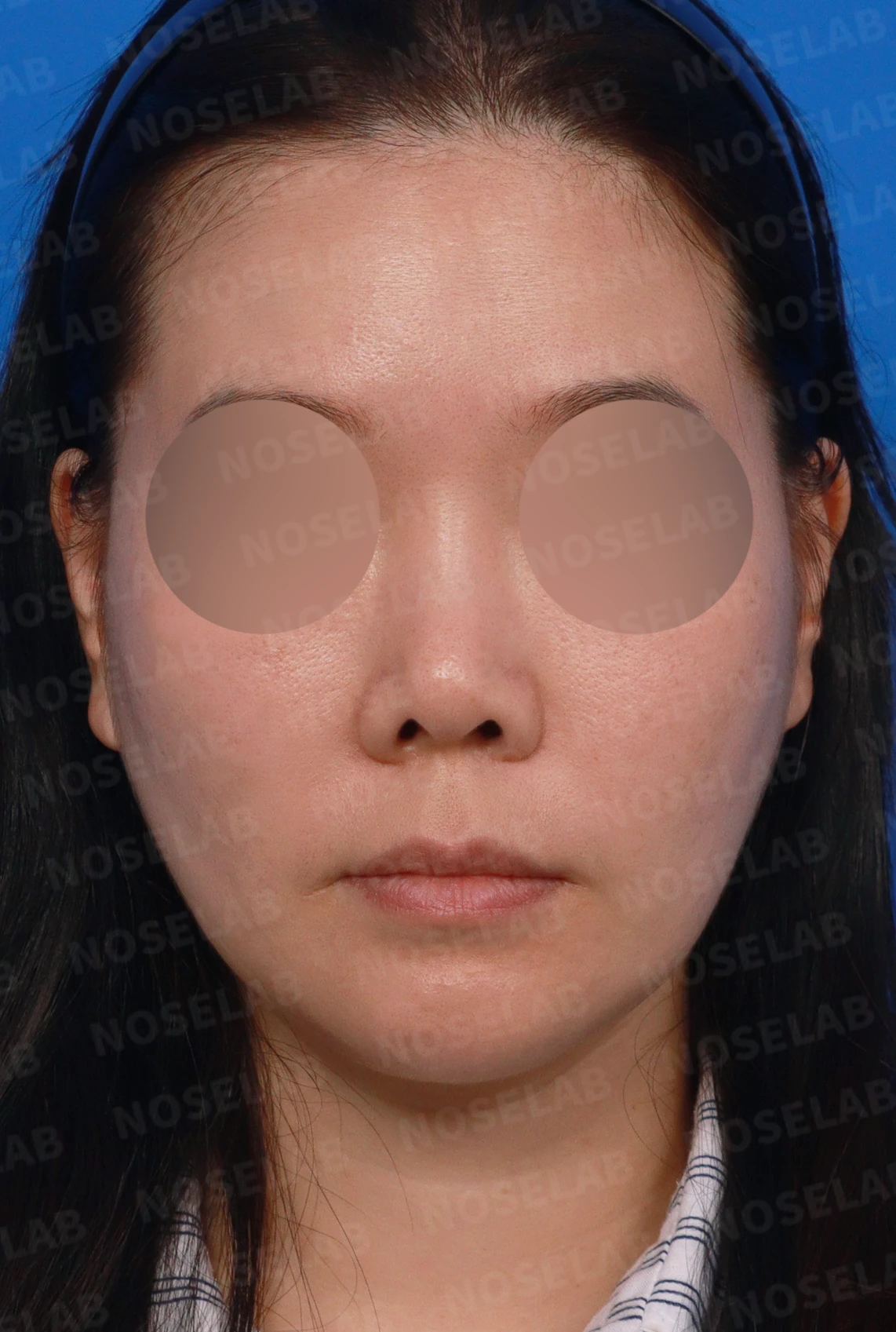
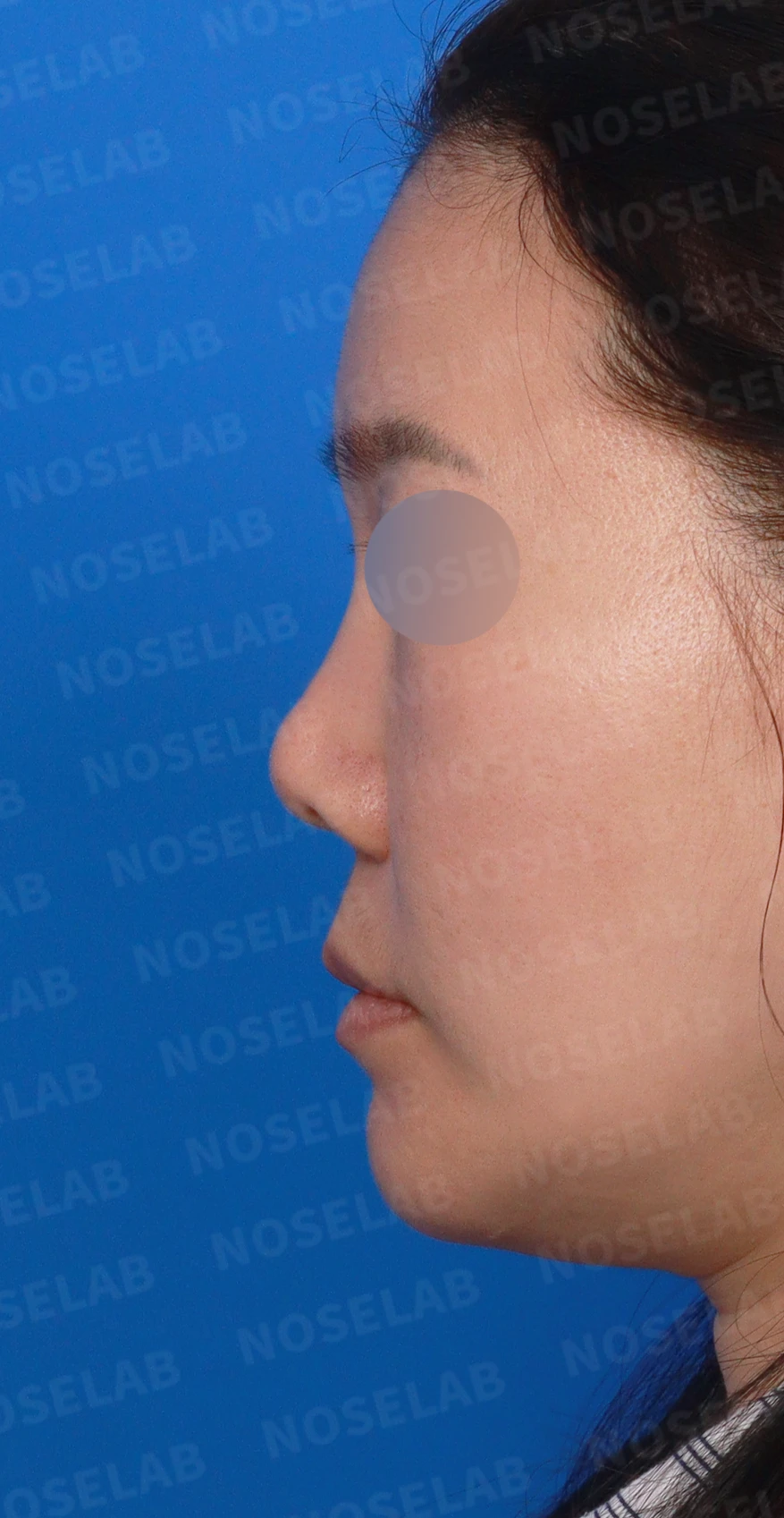
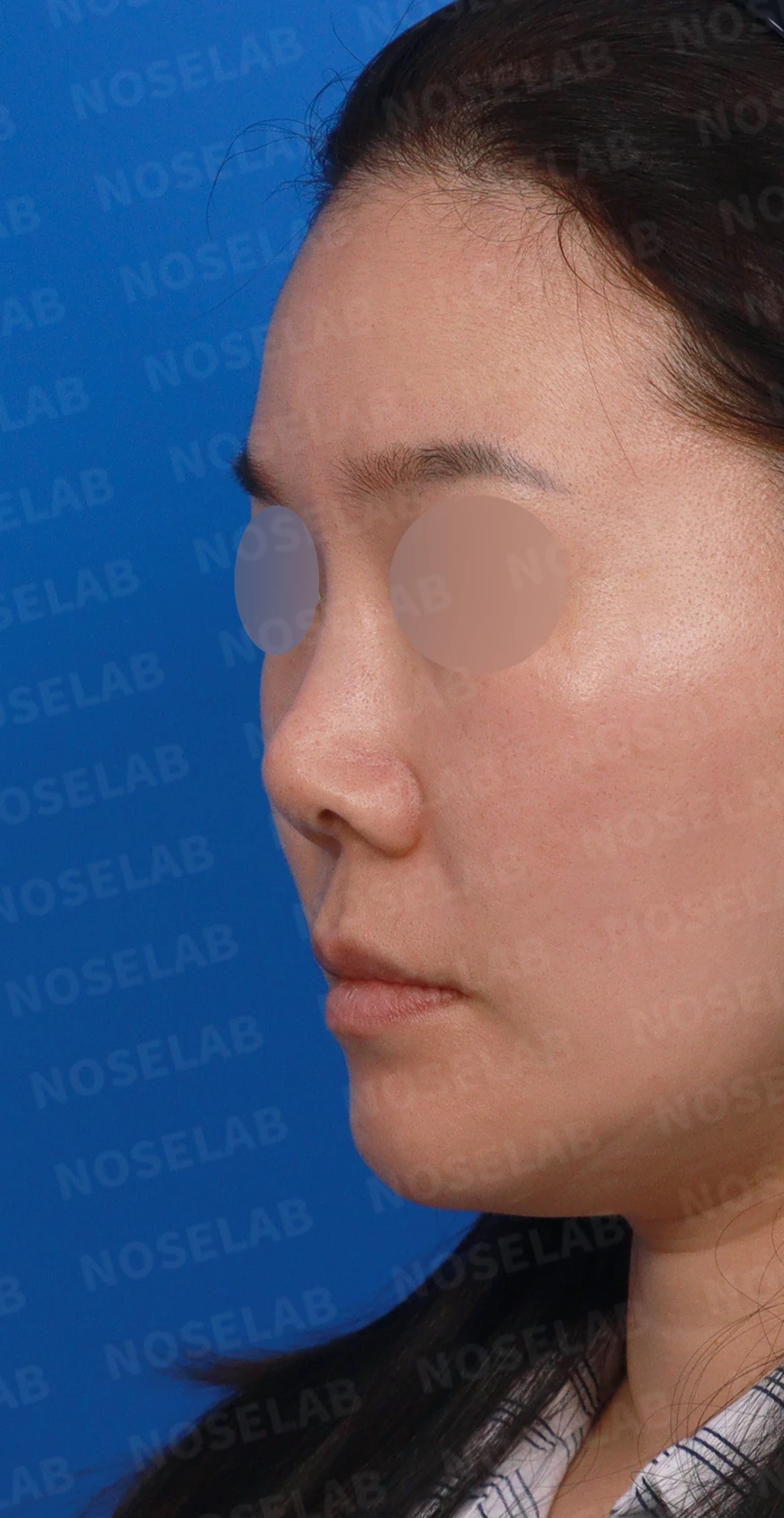
Front, left profile, and oblique views during design consultation
🔍 Surgical history
13 years ago: surgery with ear cartilage and a silicone implant
No functional issues experienced until recently
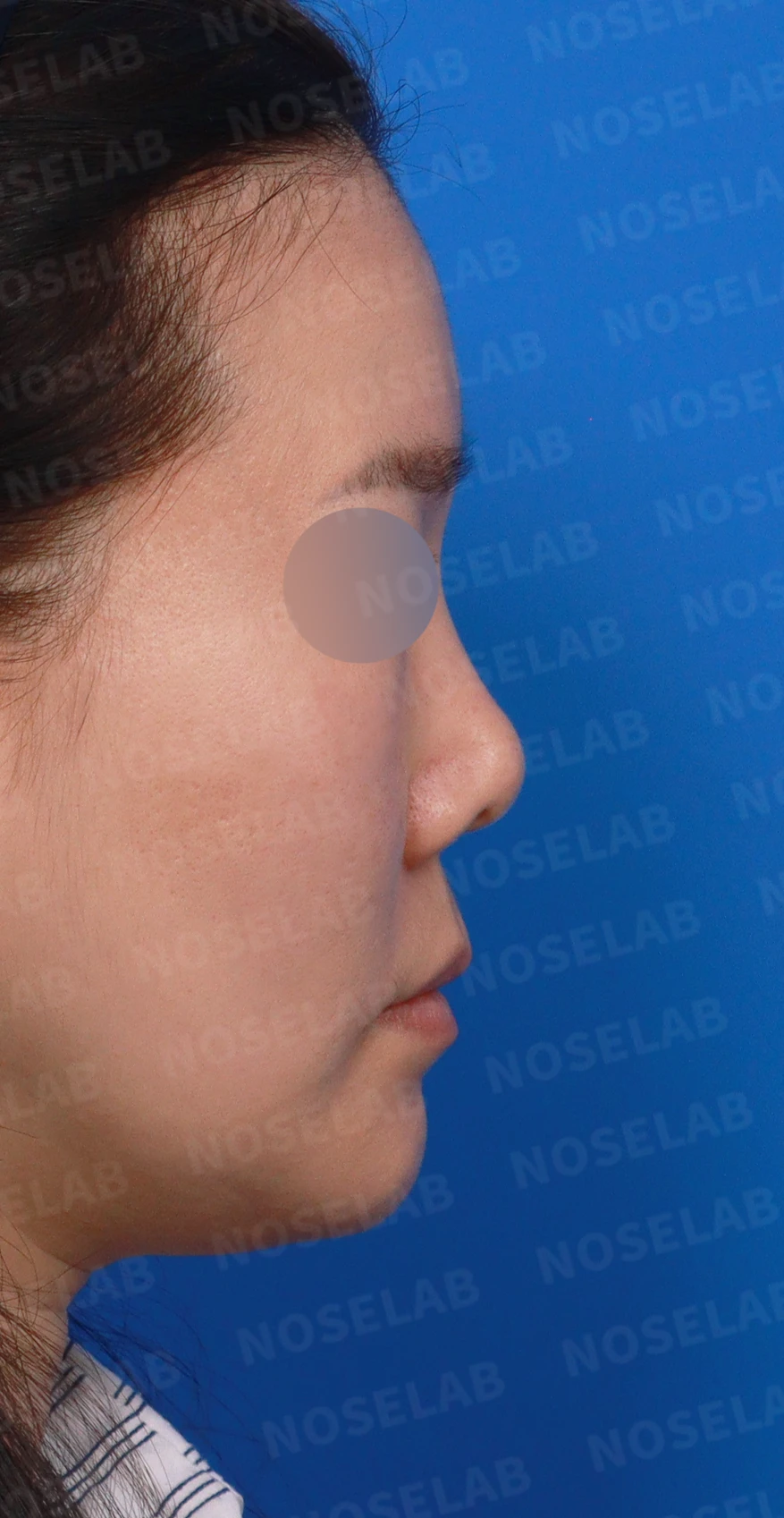
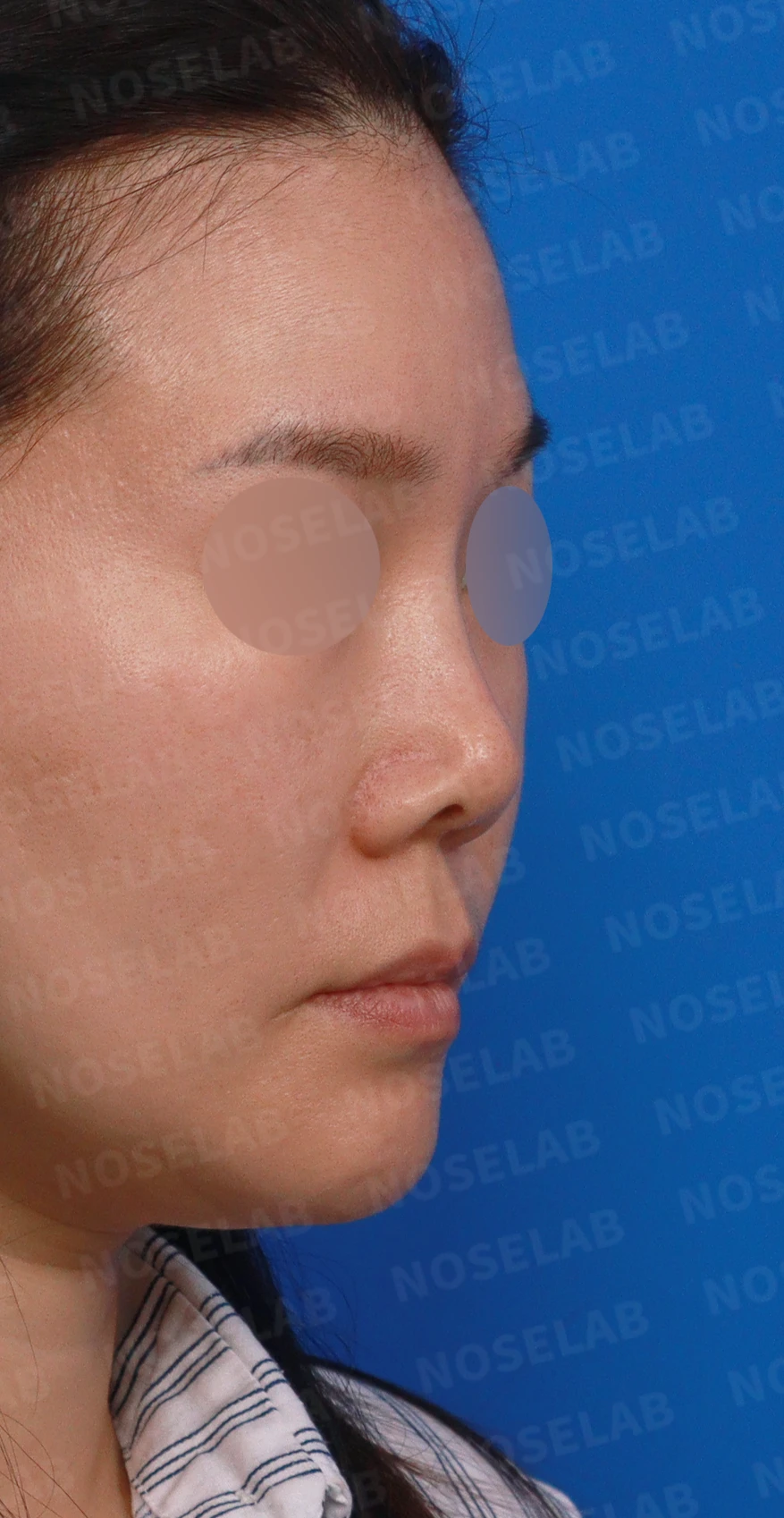
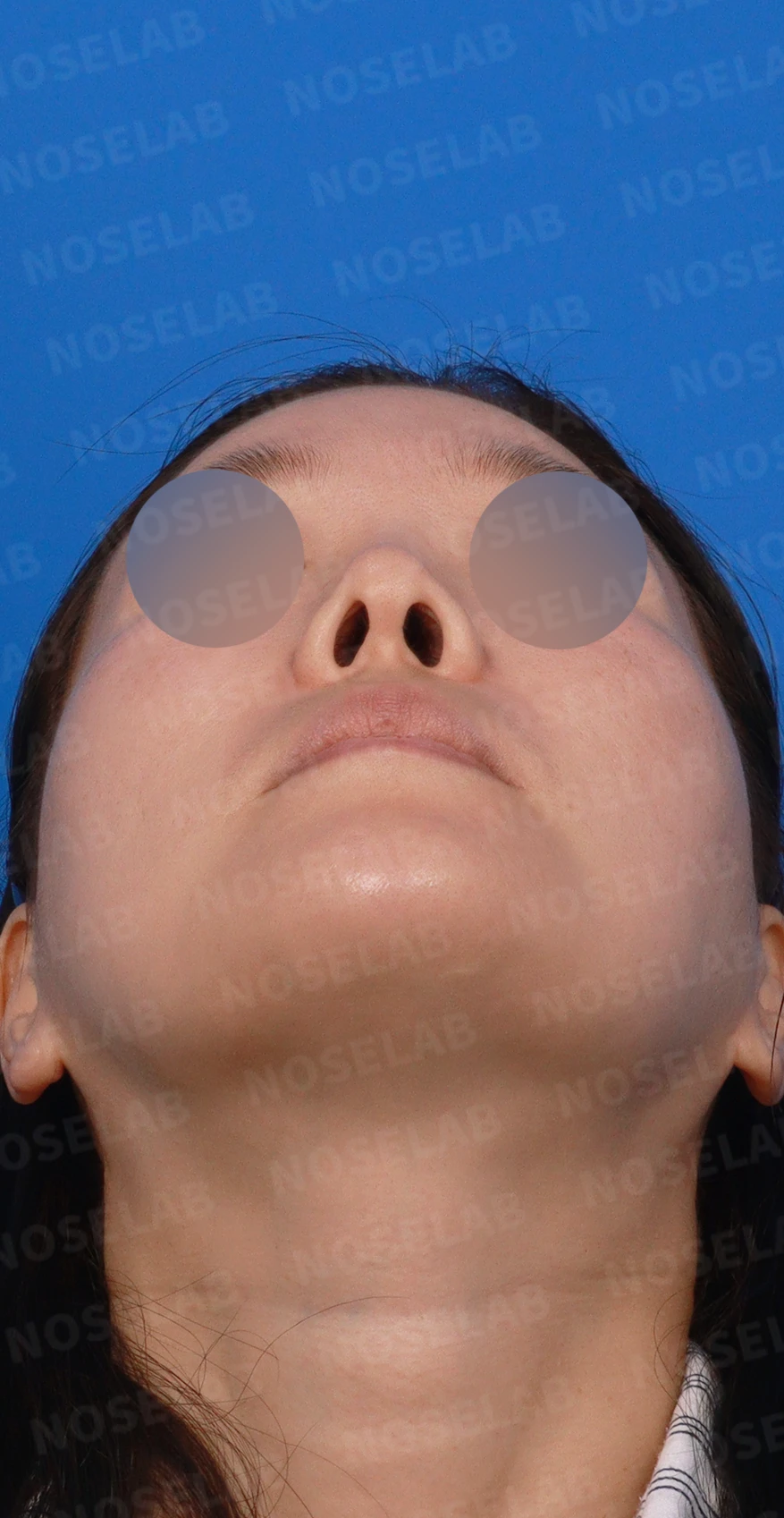
Right profile, oblique, and nostril views during design consultation
💉 Patient requests
Reducing excessive nostril show
Correcting the upturned nose to achieve a natural angle
Resolving nostril asymmetry
Natural and reliable results planned with safety in mind
Findings discovered during surgery
There was an important finding during surgery. Medpor had been used for septal extension in the previous surgery, and over the course of 13 years, severe adhesion to the surrounding tissues had developed.
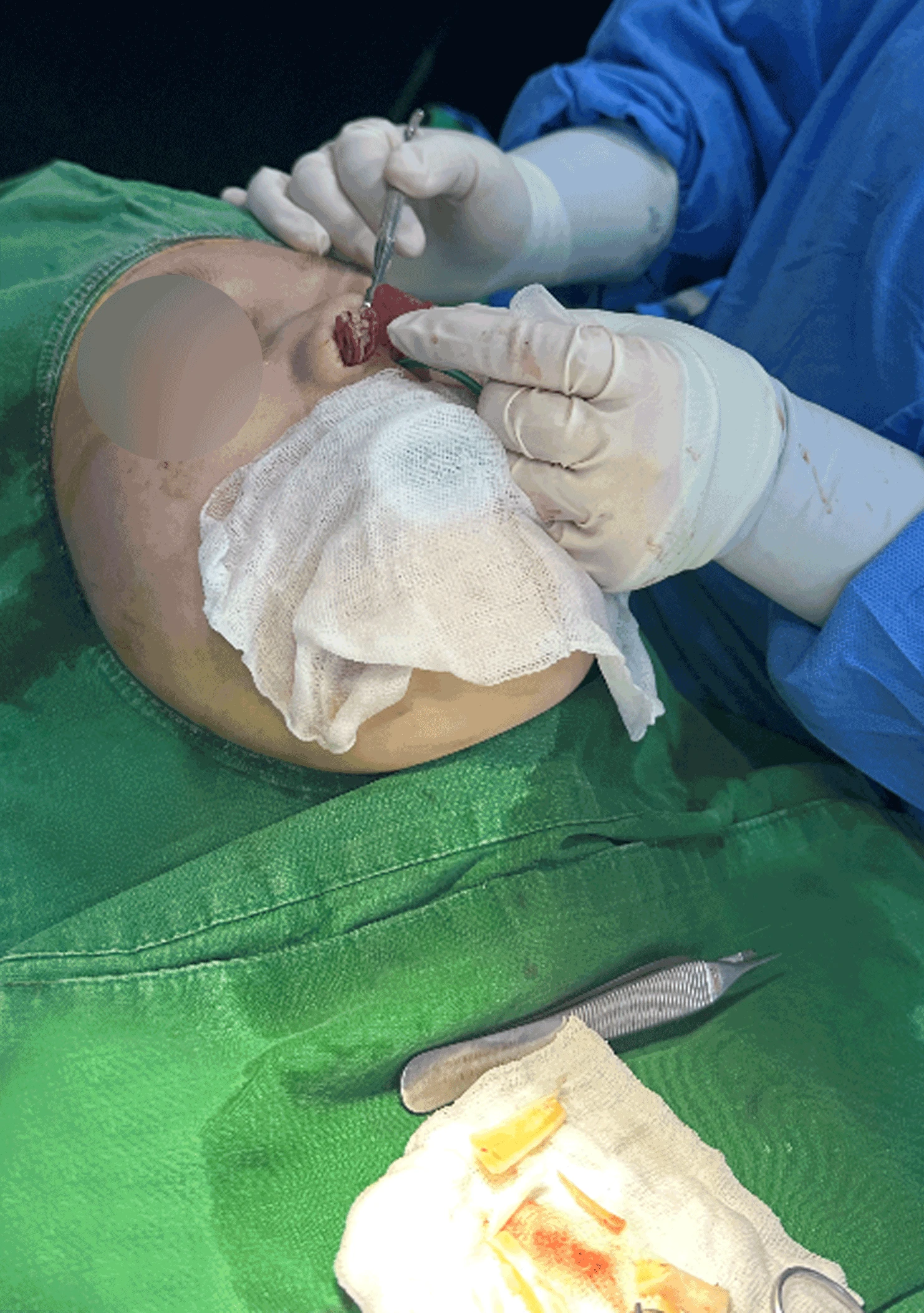
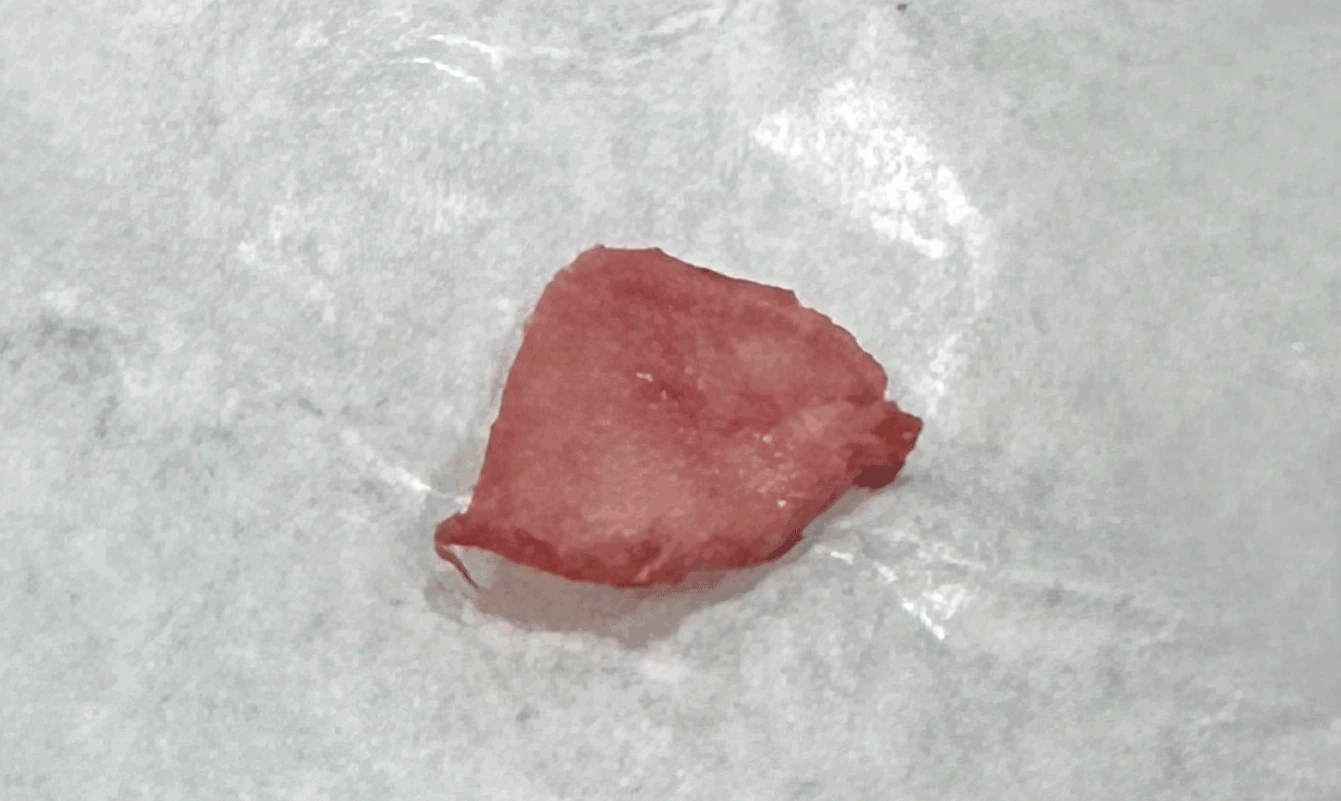
Intraoperative photo of Medpor removal.
The key to this surgery was the safe removal of Medpor and structural reconstruction using autologous tissue.
1. Safe removal of Medpor
Removing the old Medpor without damaging surrounding tissues
Meticulously dissecting the adhered areas
Evaluating and debriding the septum after removal
2. Septal reconstruction using autologous dermis
Using autologous dermis for a natural result planned with safety in mind
Reinforcing nasal tip support through septal extension
Structural reconstruction to improve the angle of the upturned nose
3. Correction of the nasolabial angle
Adjusting the excessively upturned nasal tip angle
Minimizing nostril show
Creating a natural profile line
4. Concurrent functional nasal surgery
Optimizing respiratory function through septoplasty
Preventing nasal obstruction through inferior turbinate reduction
Simultaneous cosmetic refinement and functional improvement
5. Asymmetry correction
Balancing the size and shape of both nostrils
Aligning the central axis of the nasal tip and columella
🌟 Surgical results
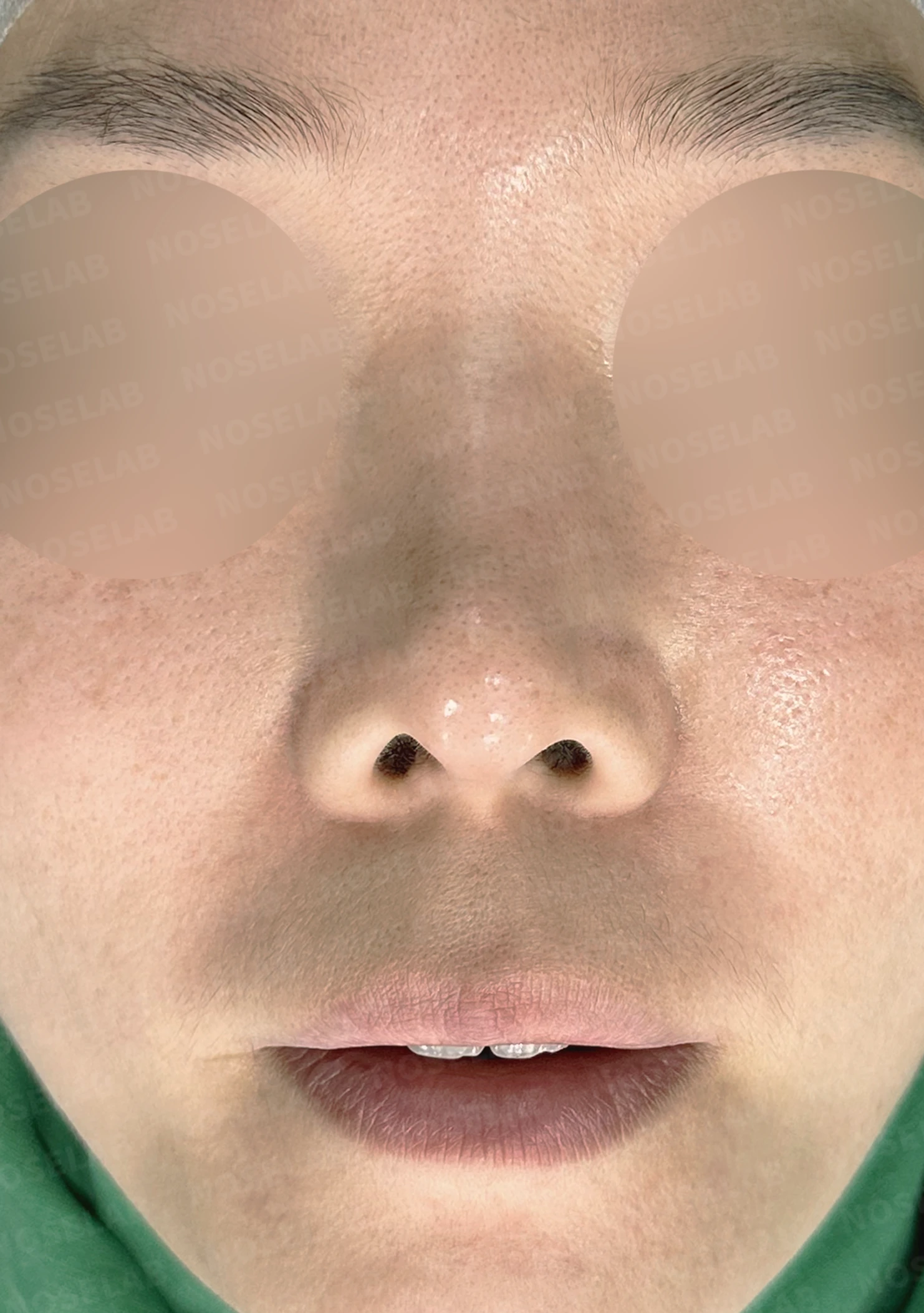
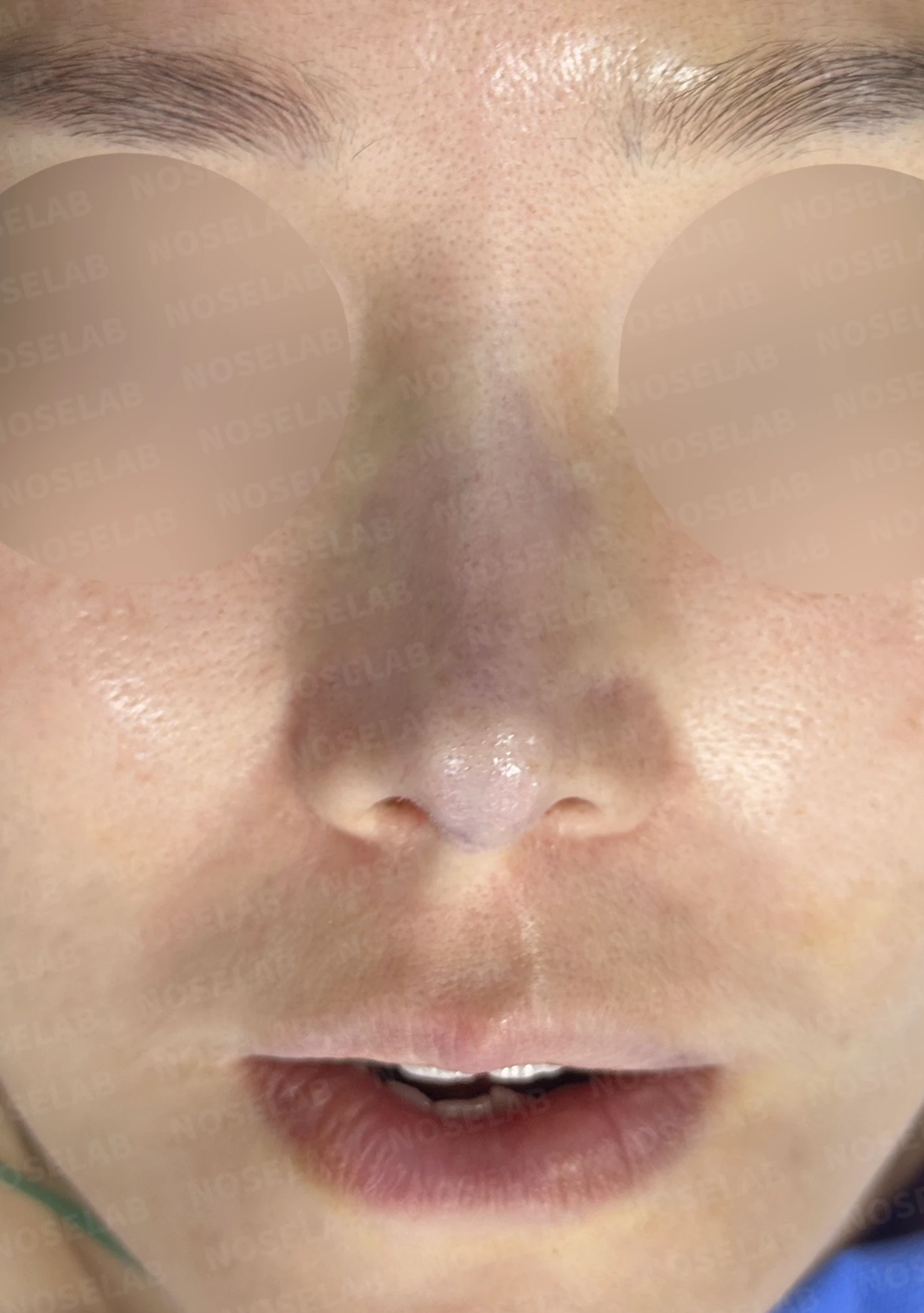
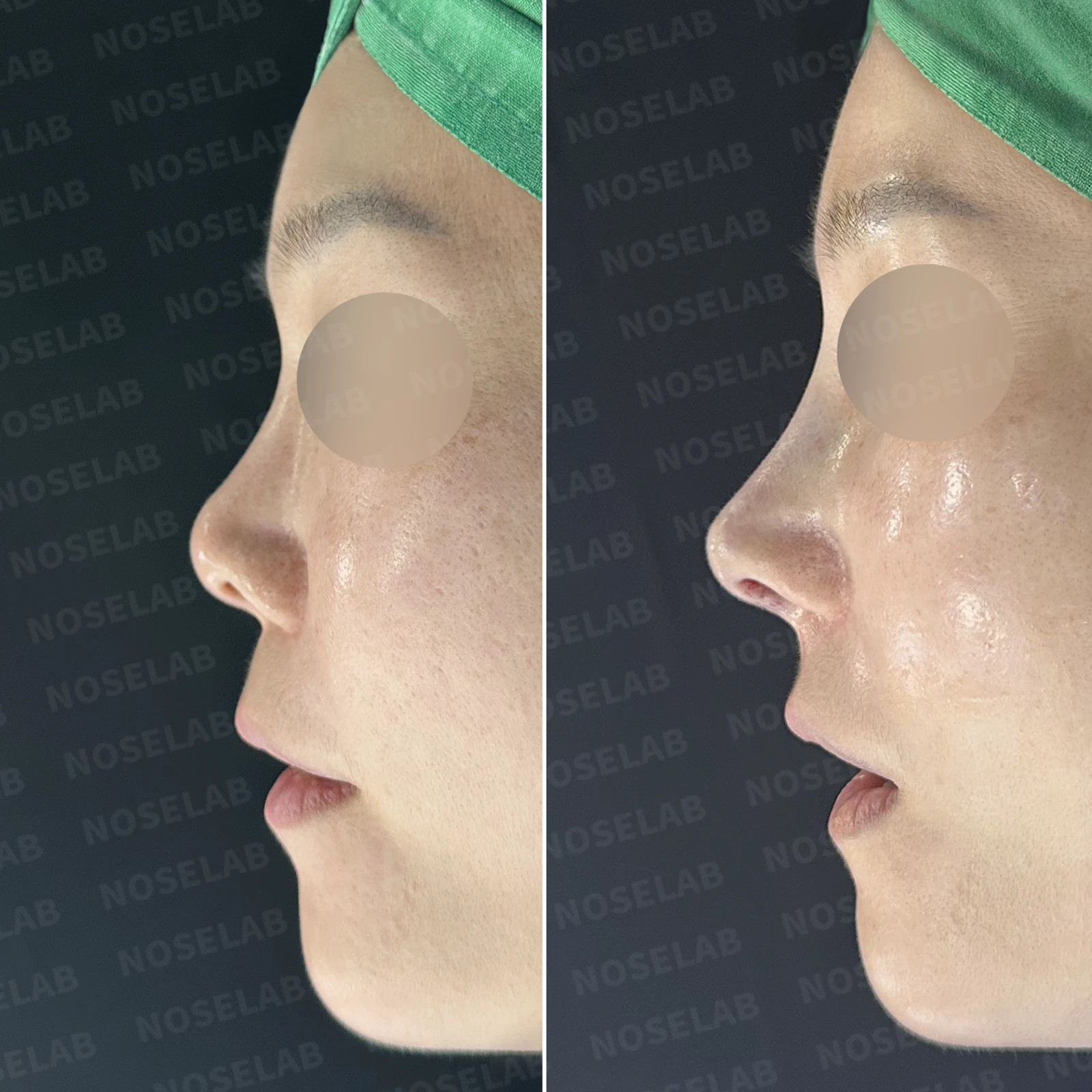
Before surgery / Day 0 immediately after surgery Photos taken immediately after surgery show swelling and may differ from the final result.
1. Correction of the upturned nose
The excessively upturned nasal tip angle was adjusted to a natural position
Nostril show was noticeably reduced
The profile nasal line was refined gracefully
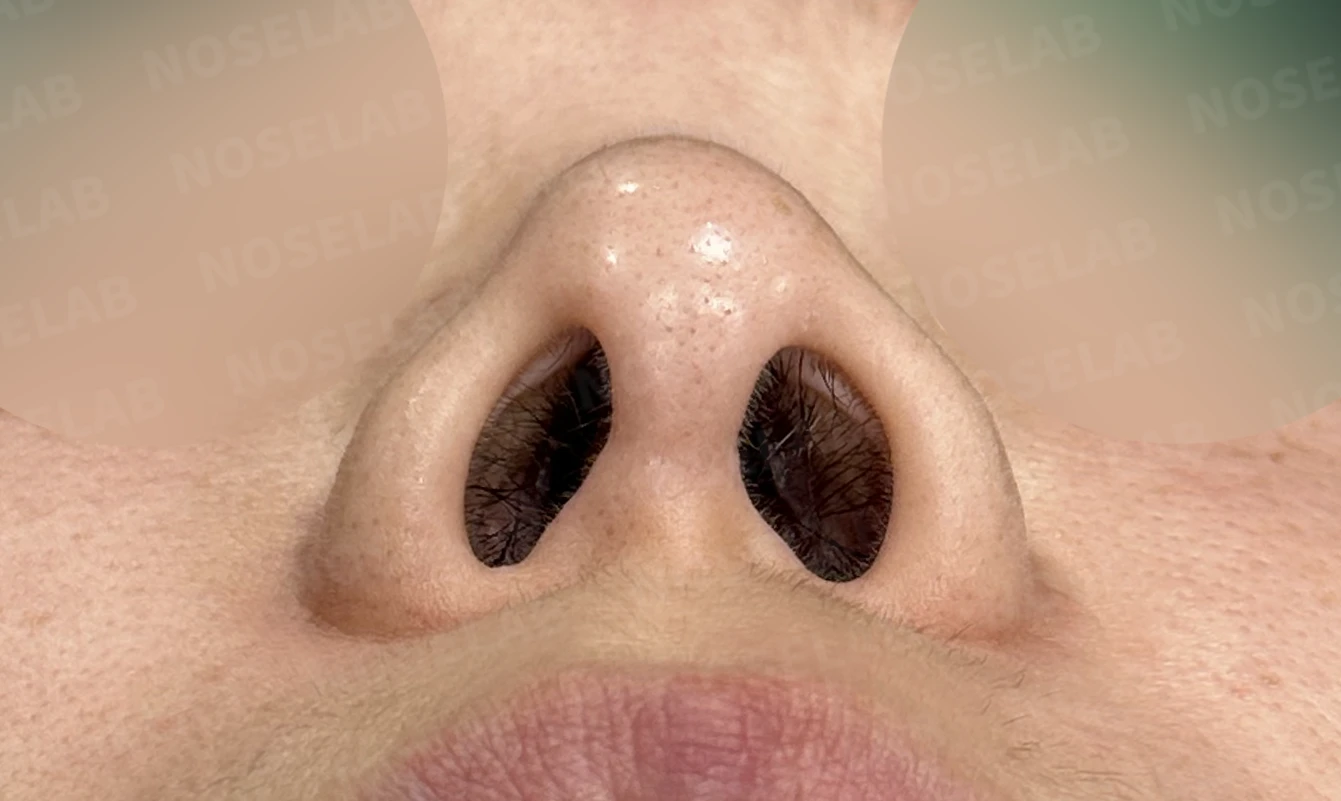
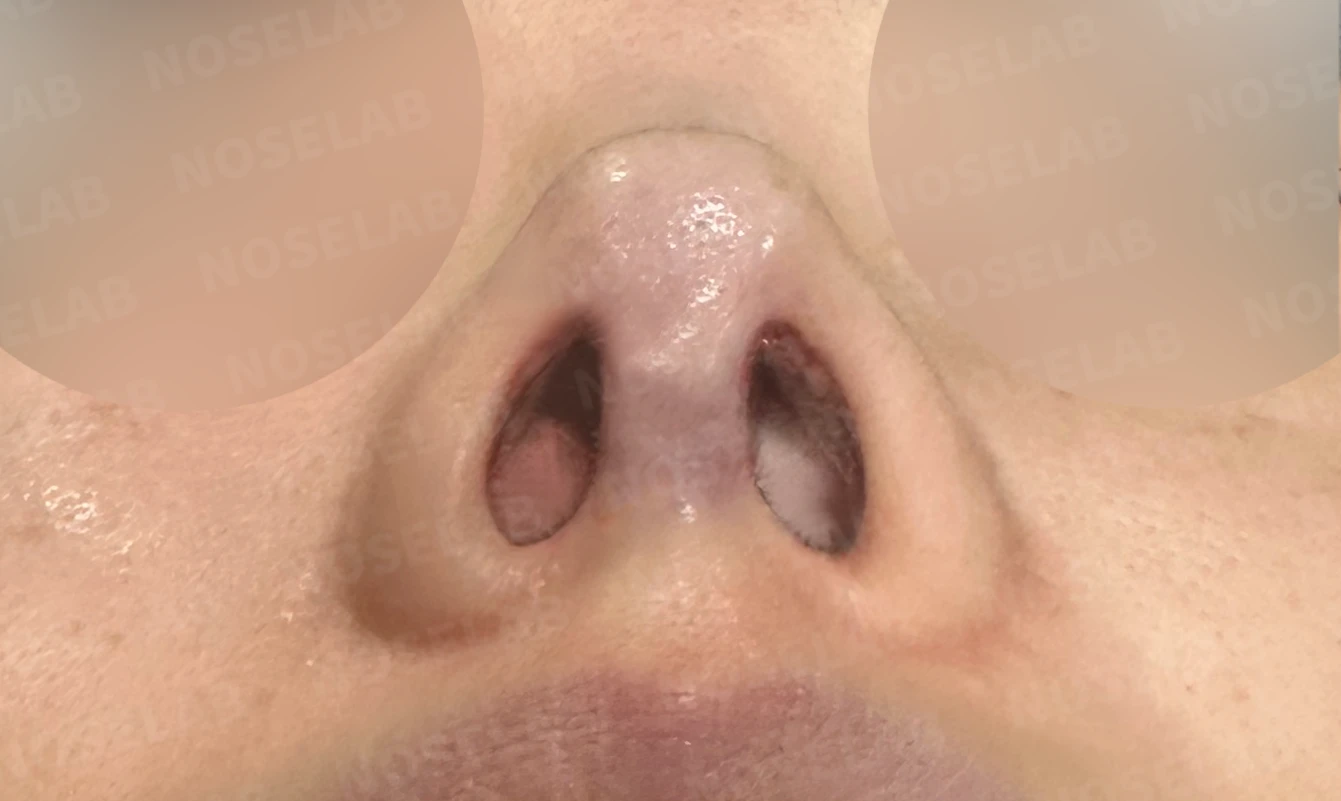
Before surgery / Day 0 immediately after surgery Photos taken immediately after surgery show swelling and may differ from the final result.
2. Correction of nostril asymmetry
Symmetry in nostril size and shape was restored
Overall facial balance on the front view was improved
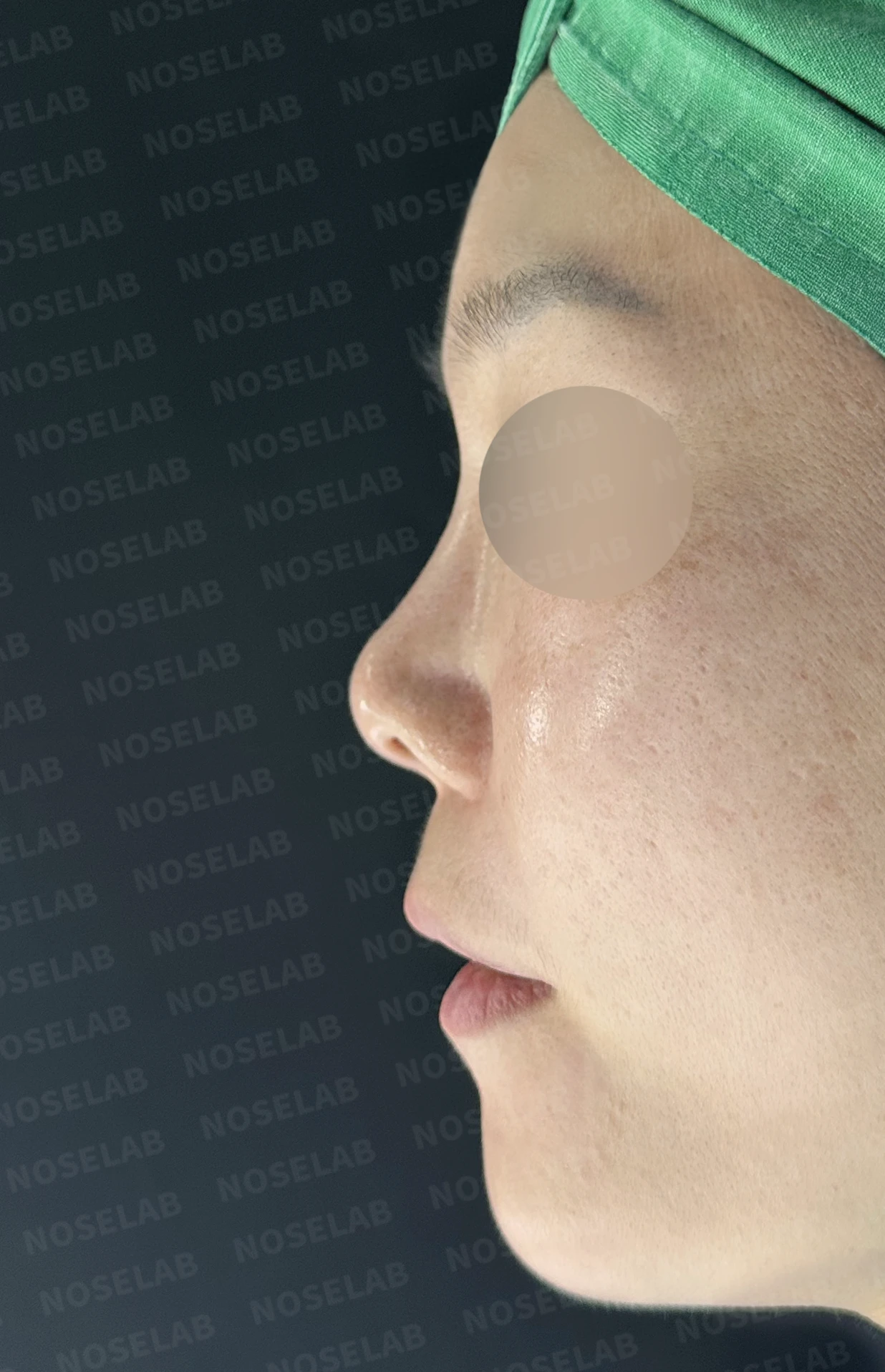
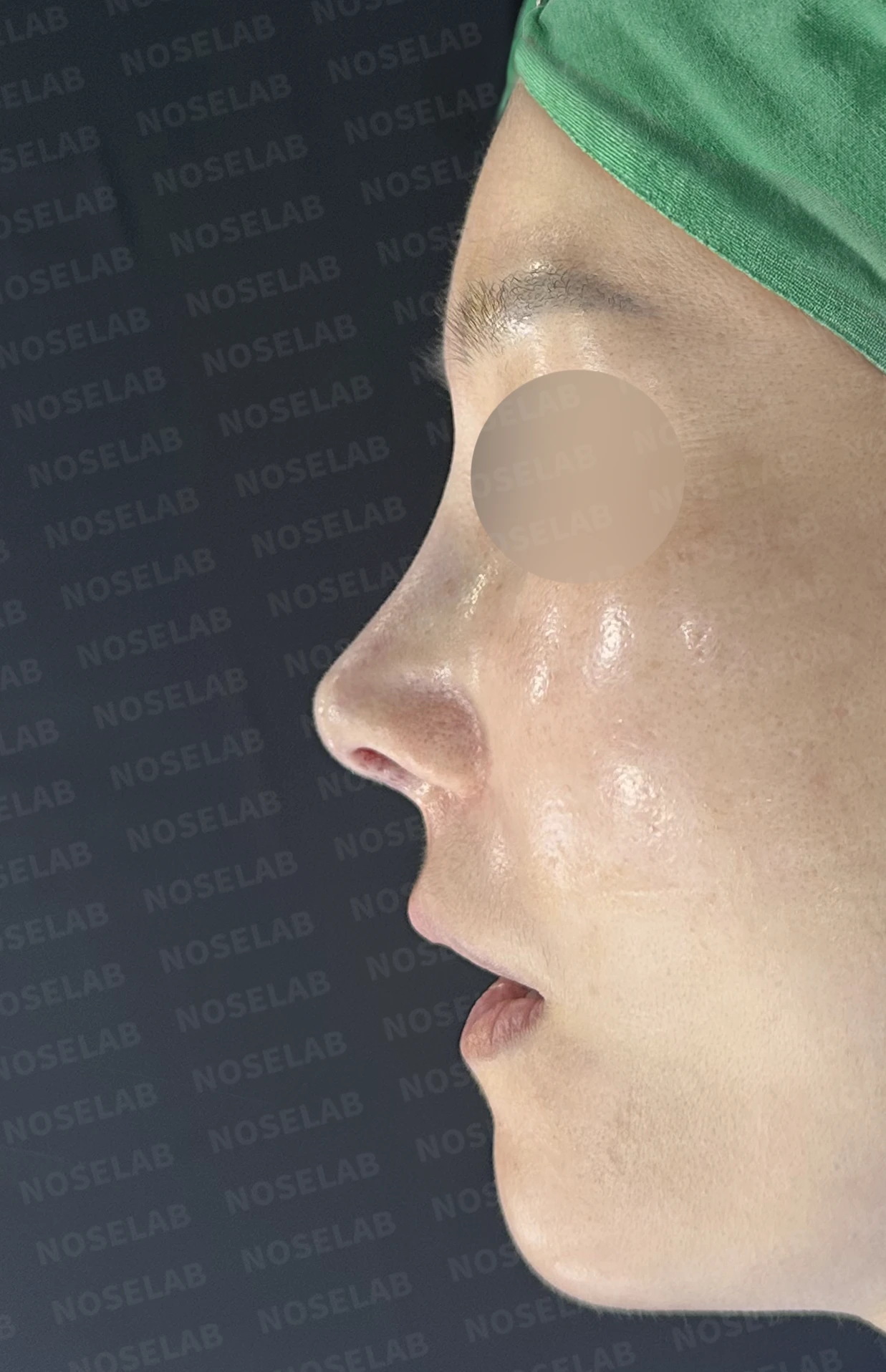
Before surgery / Day 0 immediately after surgery Photos taken immediately after surgery show swelling and may differ from the final result.
3. Natural nasal contours
A natural nasal shape without an artificial look
The use of autologous dermis also improved the nasal feel to a natural texture
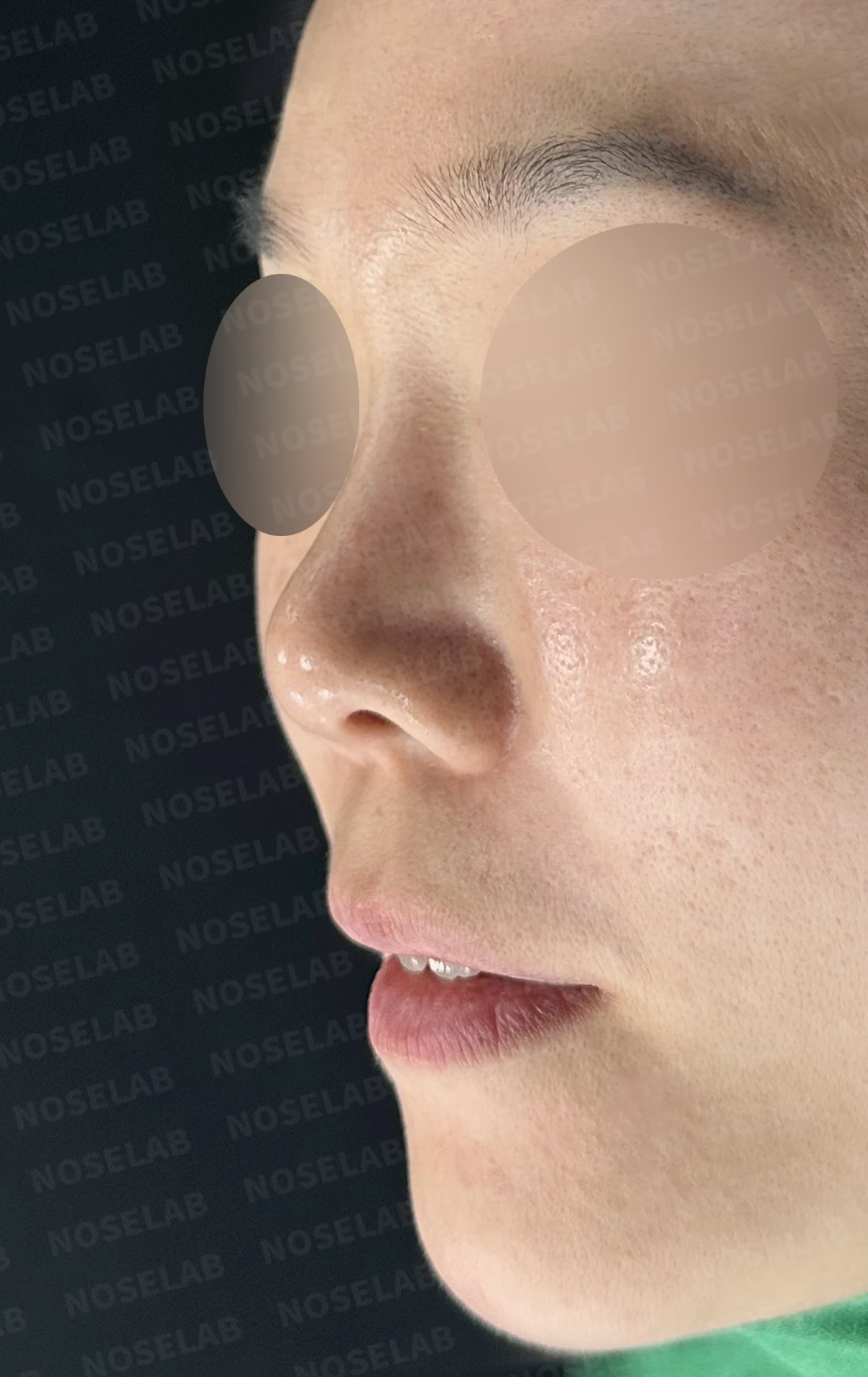
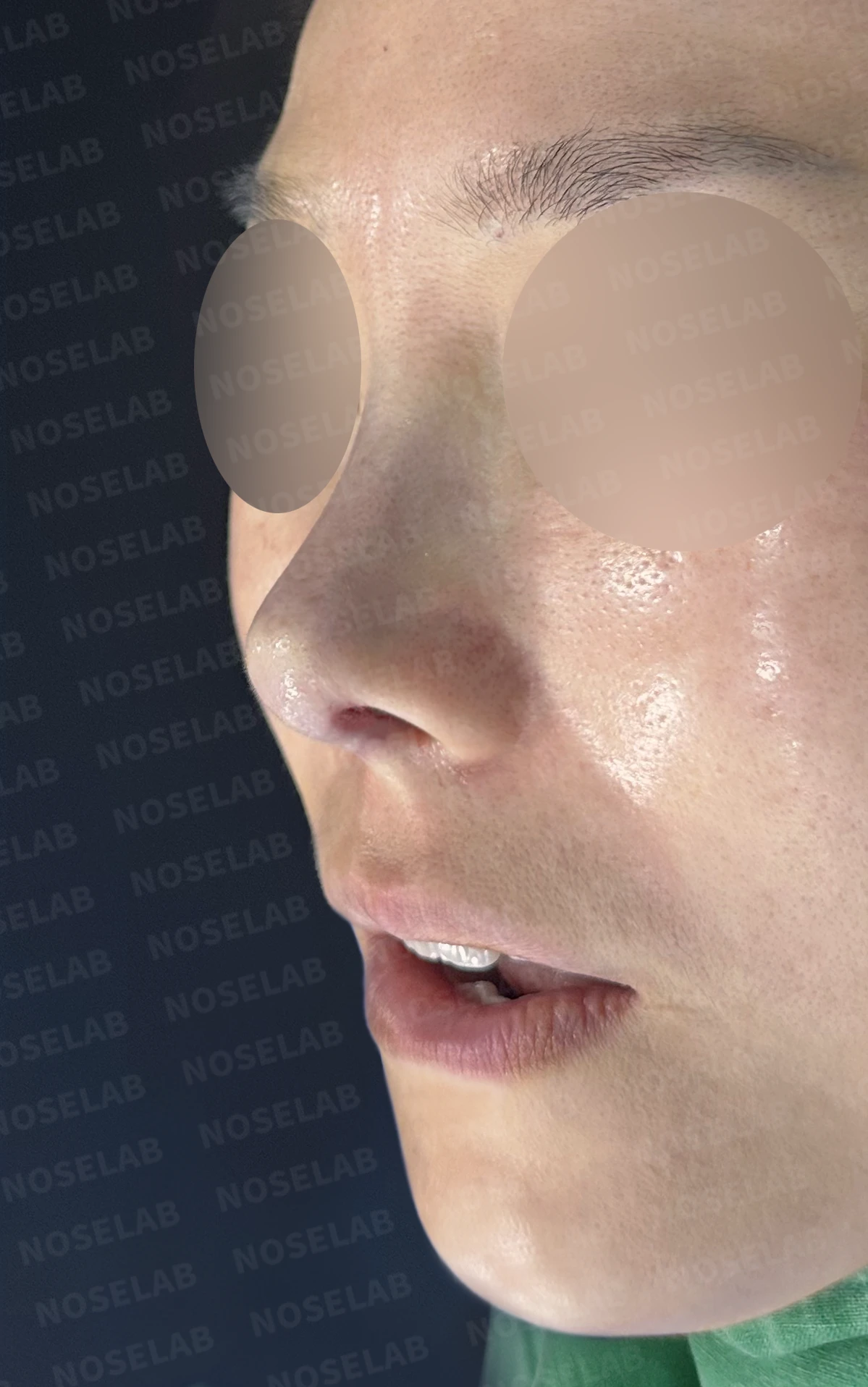
Before surgery / Day 0 immediately after surgery Photos taken immediately after surgery show swelling and may differ from the final result.
4. Functional improvement
Breathing function improved concurrently
Comfortable breathing without nasal obstruction
💡 Specialist opinion
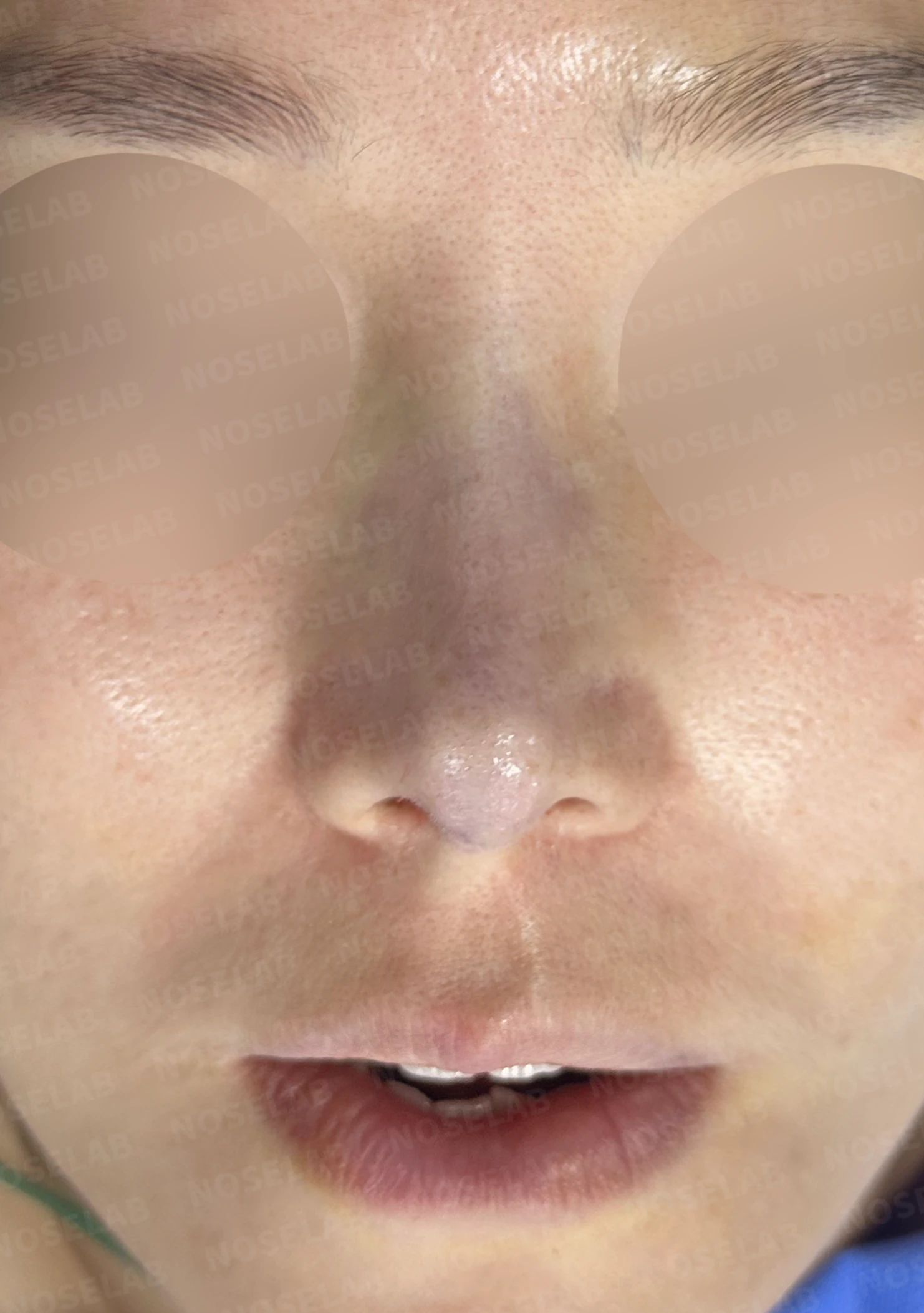
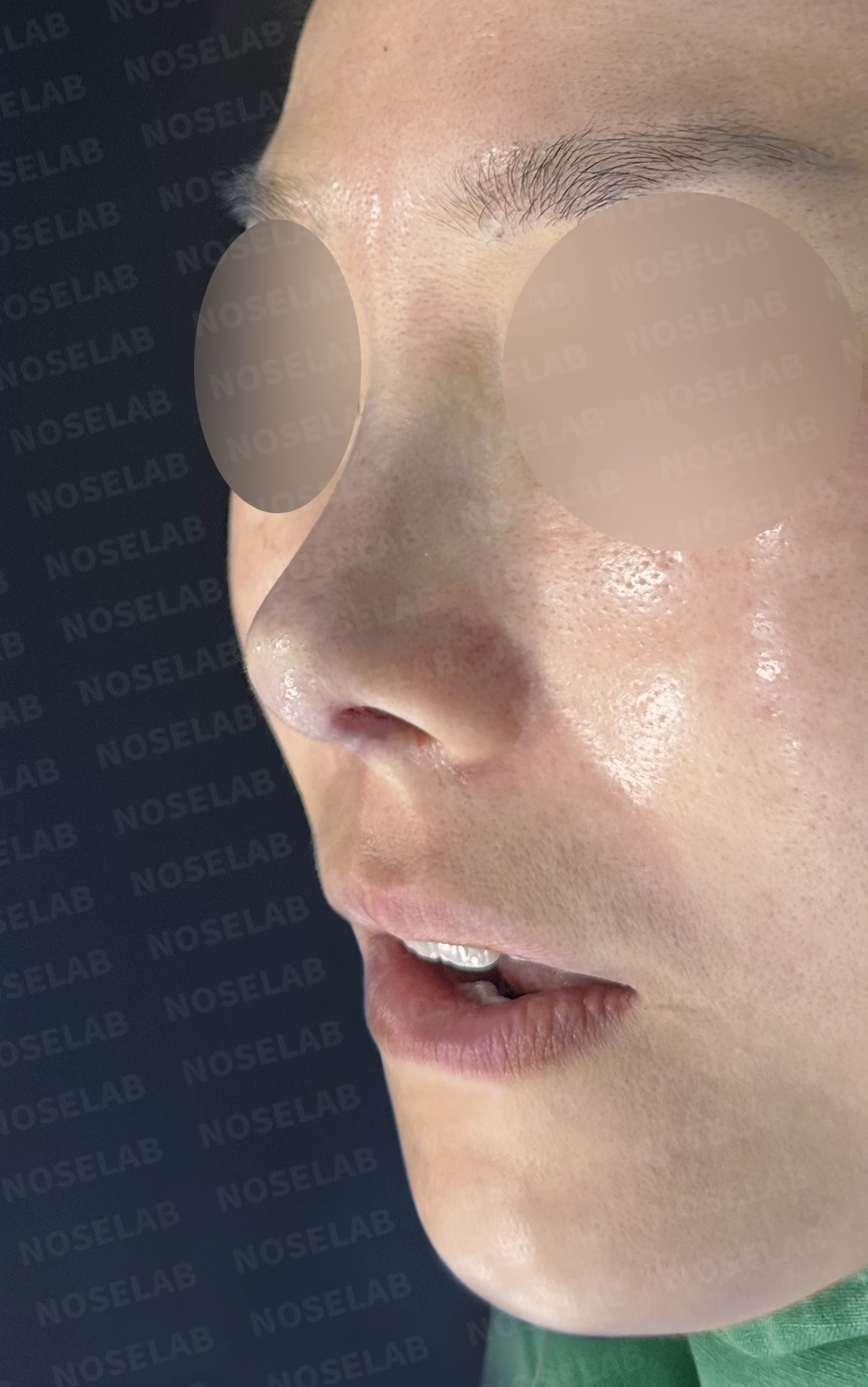
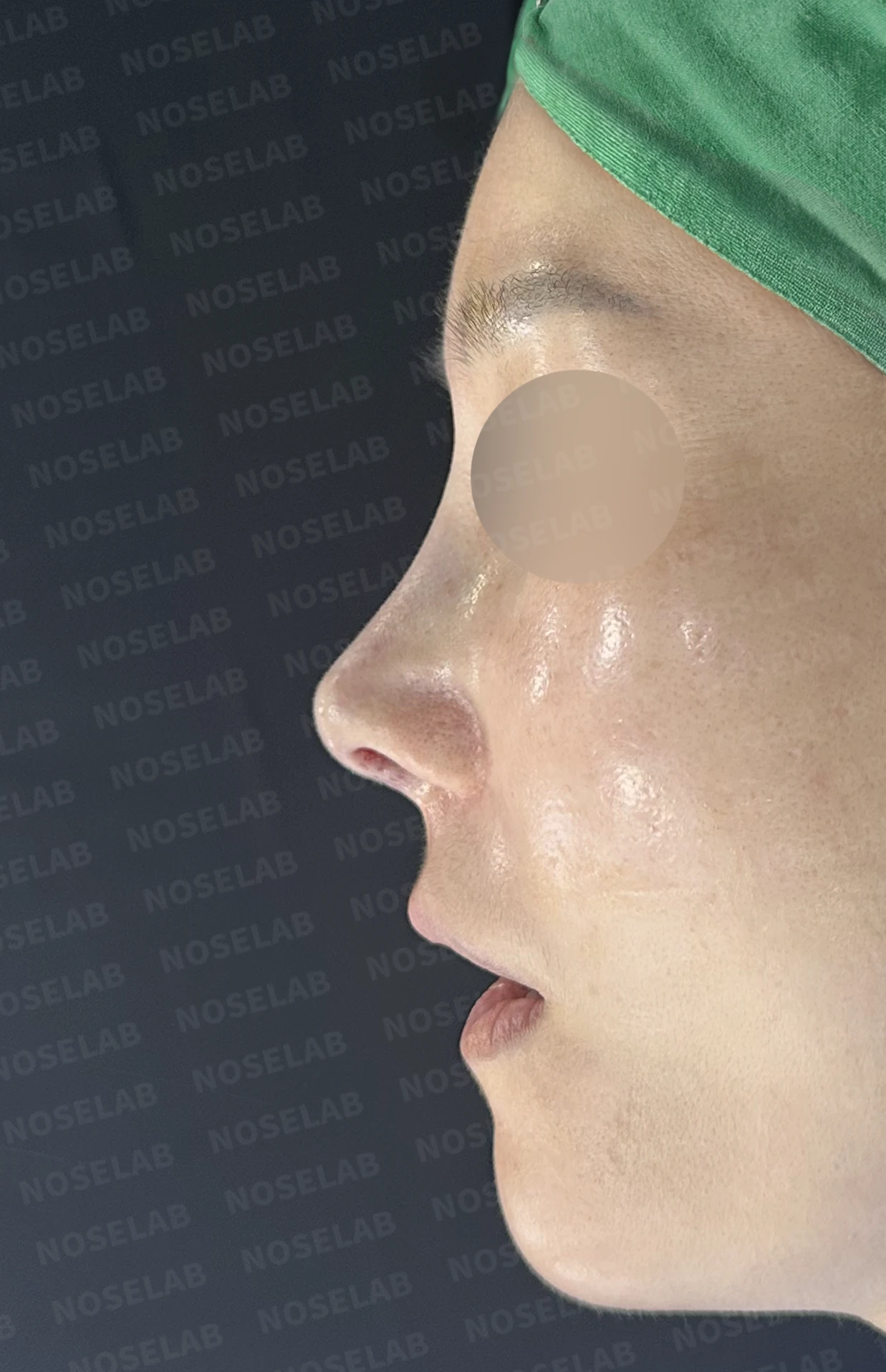
Front, oblique, and profile views on day 0 immediately after surgery. Photos taken immediately after surgery show swelling and may differ from the final result.
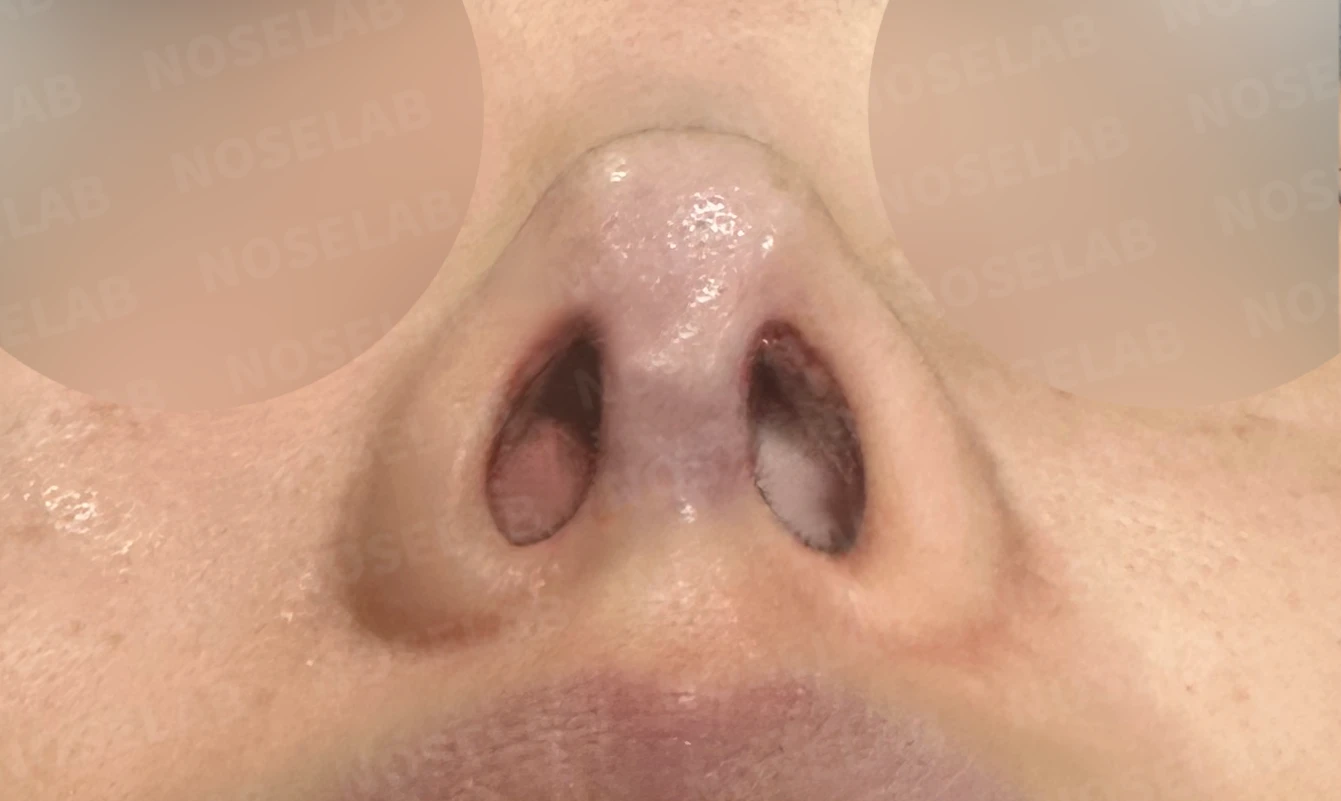
Basal (nostril) view taken immediately after surgery (day 0).Immediate postoperative photos show swelling and may differ from the final result.
The most crucial aspect of this surgery was the safe removal of the Medpor placed 13 years prior. Over time, Medpor becomes densely incorporated into surrounding tissues, requiring meticulous care during dissection.
Revision rhinoplasty for surgery performed long ago is far more complex and challenging than standard primary procedures. One must navigate pre-existing scar tissue and altered anatomical structures, and an even more cautious approach is needed when synthetic materials such as Medpor are involved.
In this type of case, safely removing the Medpor and reconstructing the septum with autologous dermis made it possible to achieve long-term, stable, and natural results. Because autologous dermis is the patient's own tissue, the risk of rejection or complications is minimal, and it maintains a natural appearance over time.
When correcting an upturned nose, simply adjusting the angle is not enough; securing structural support via septal extension is essential. This allowed us to satisfy both goals requested by the patient: minimizing nostril show and achieving a natural nasal shape.
I am pleased that the concerns that troubled the patient for 13 long years were addressed through this surgery. We will continue to provide post-operative follow-up to support and preserve the intended result.
This was Dr. Peter C. Kang. Thank you.
#closedrhinoplasty #closedrevisionrhinoplasty #upturnednosecorrection #medporremoval #autologousdermisrhinoplasty #nostrilasymmetry #functionalnasalsurgery #septalreconstruction

Limitations and risks
When revising after implant removal, contracture may progress again after removal, the nasal height and length may decrease, and staged surgery may be necessary depending on the skin condition.
When the septum is corrected at the same time, nasal obstruction may persist or recur, and in rare cases, septal perforation or changes in smell may occur.
Common potential risks include infection, bleeding, asymmetry, scarring, skin necrosis, and insufficient improvement; results vary depending on individual skin condition and previous surgical history.