Hello, this is Dr. Peter C. Kang, medical director.
Today, I would like to introduce a case of natural improvement for a patient who was troubled by nasal tip show-through, an upturned nose, and excessive nostril show.
📍Surgical history
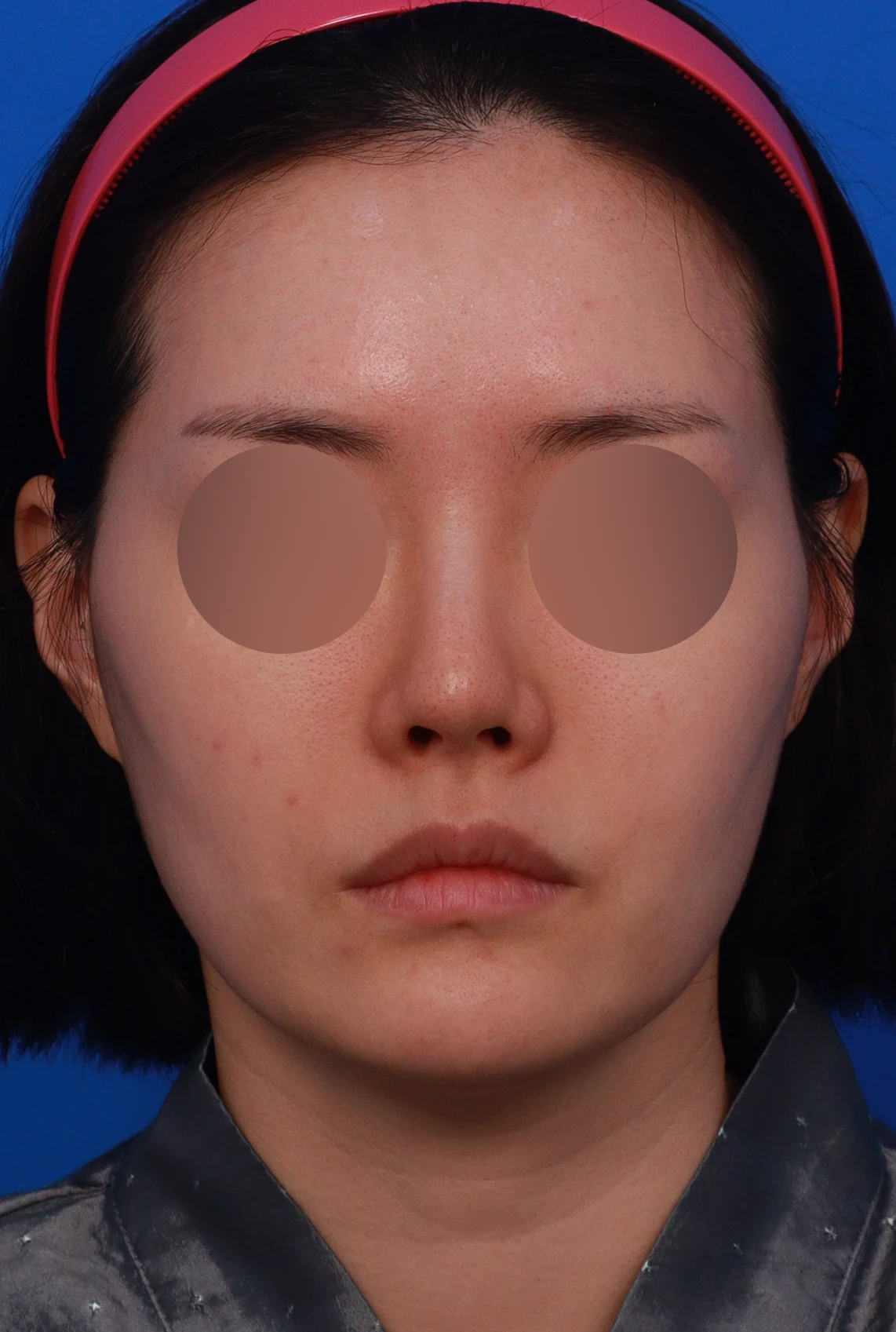
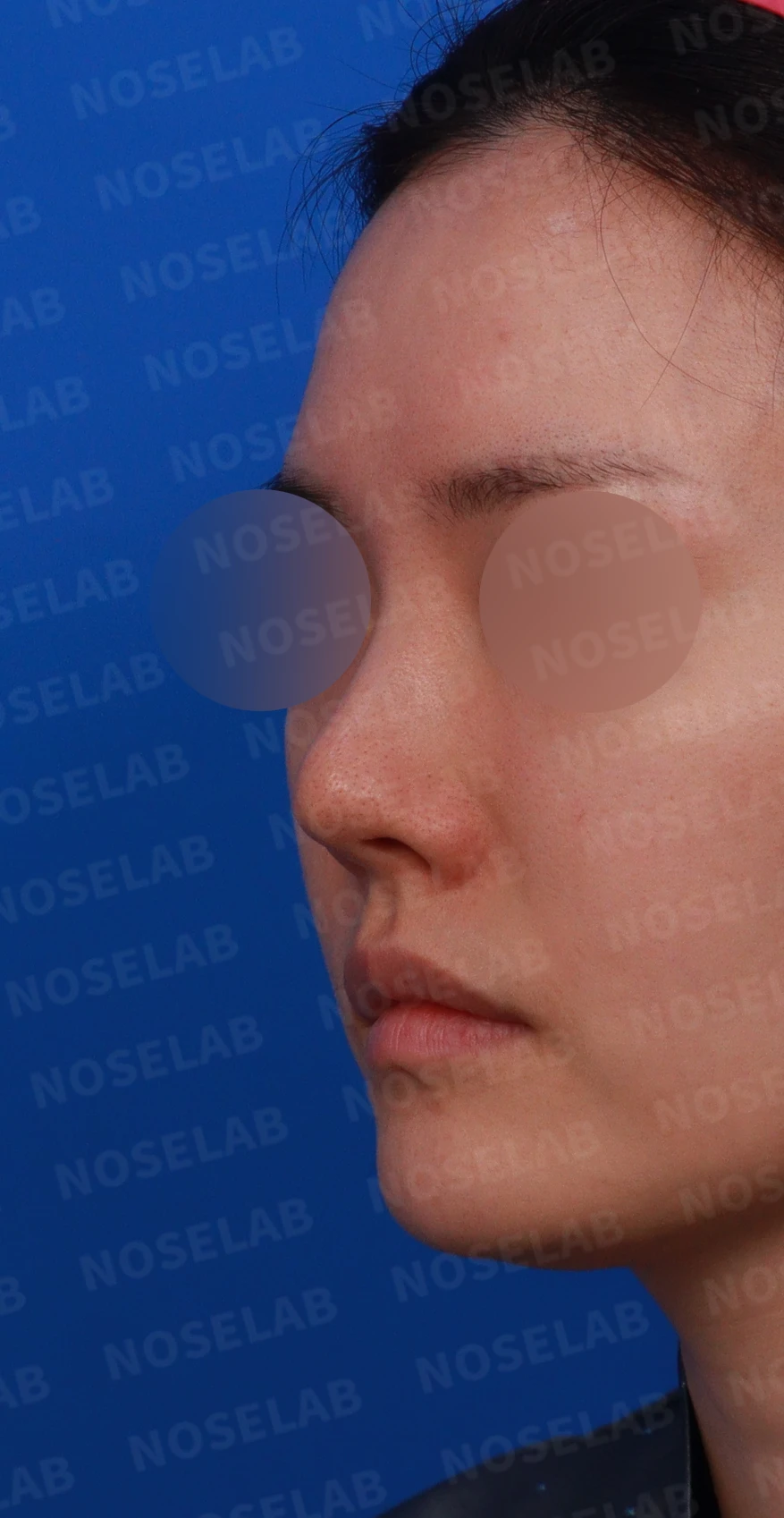
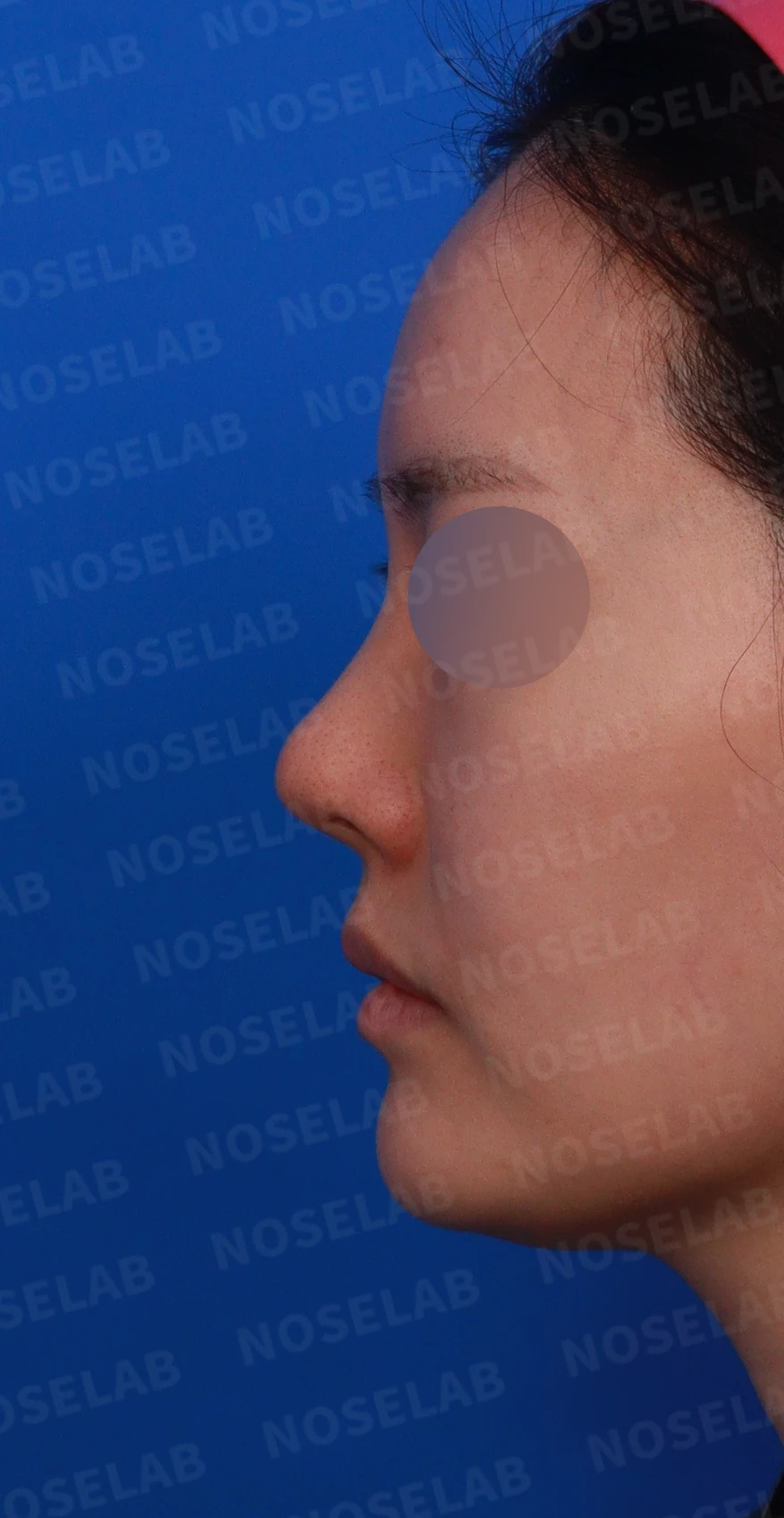
Design consultation: front, oblique, and left profile views
10 years ago: Nasal filler injection → removed during surgery
2015 (10 years ago): Silicone implant + ear cartilage surgery
2018 (7 years ago): Ear dermis graft surgery due to nasal tip show-through
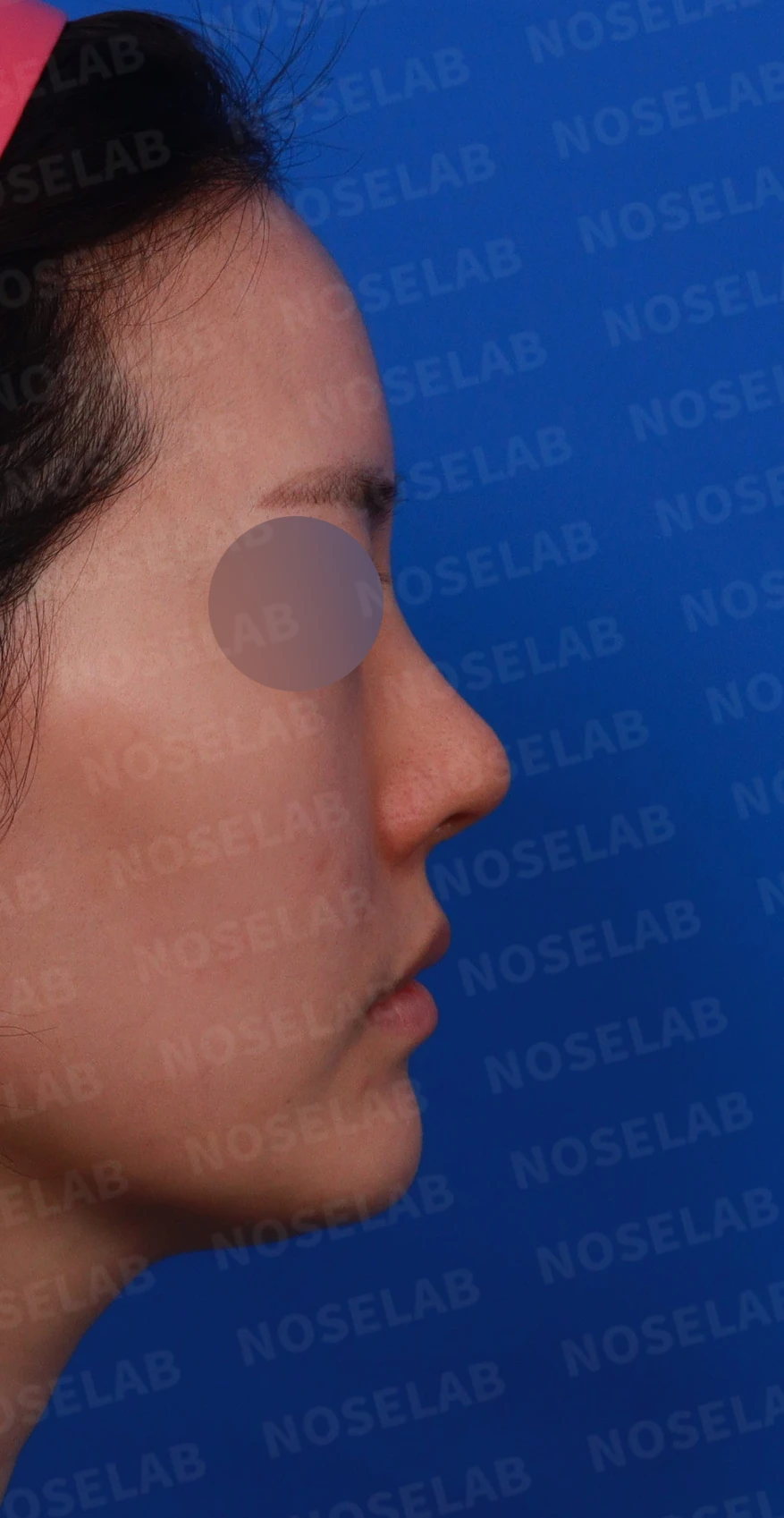
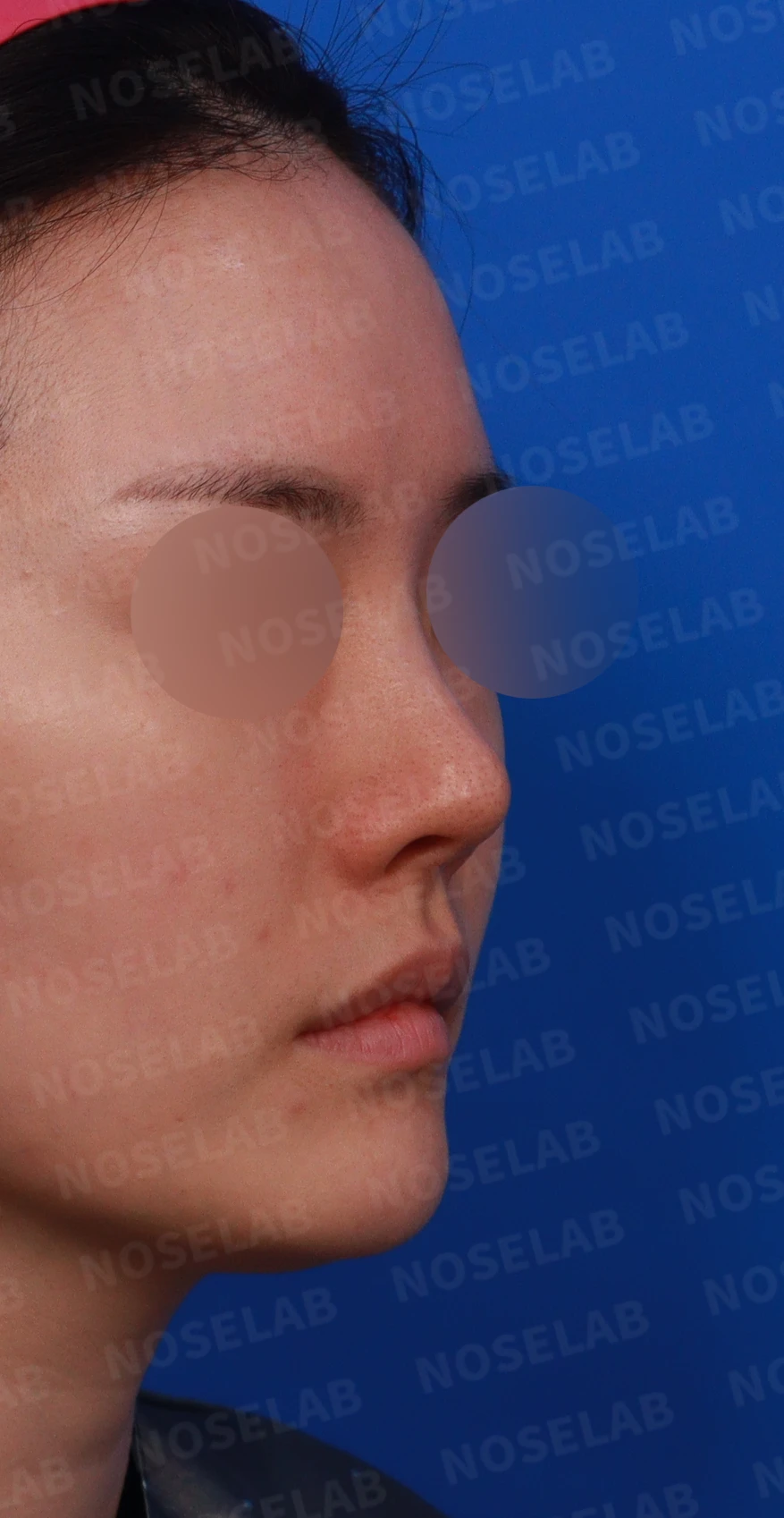
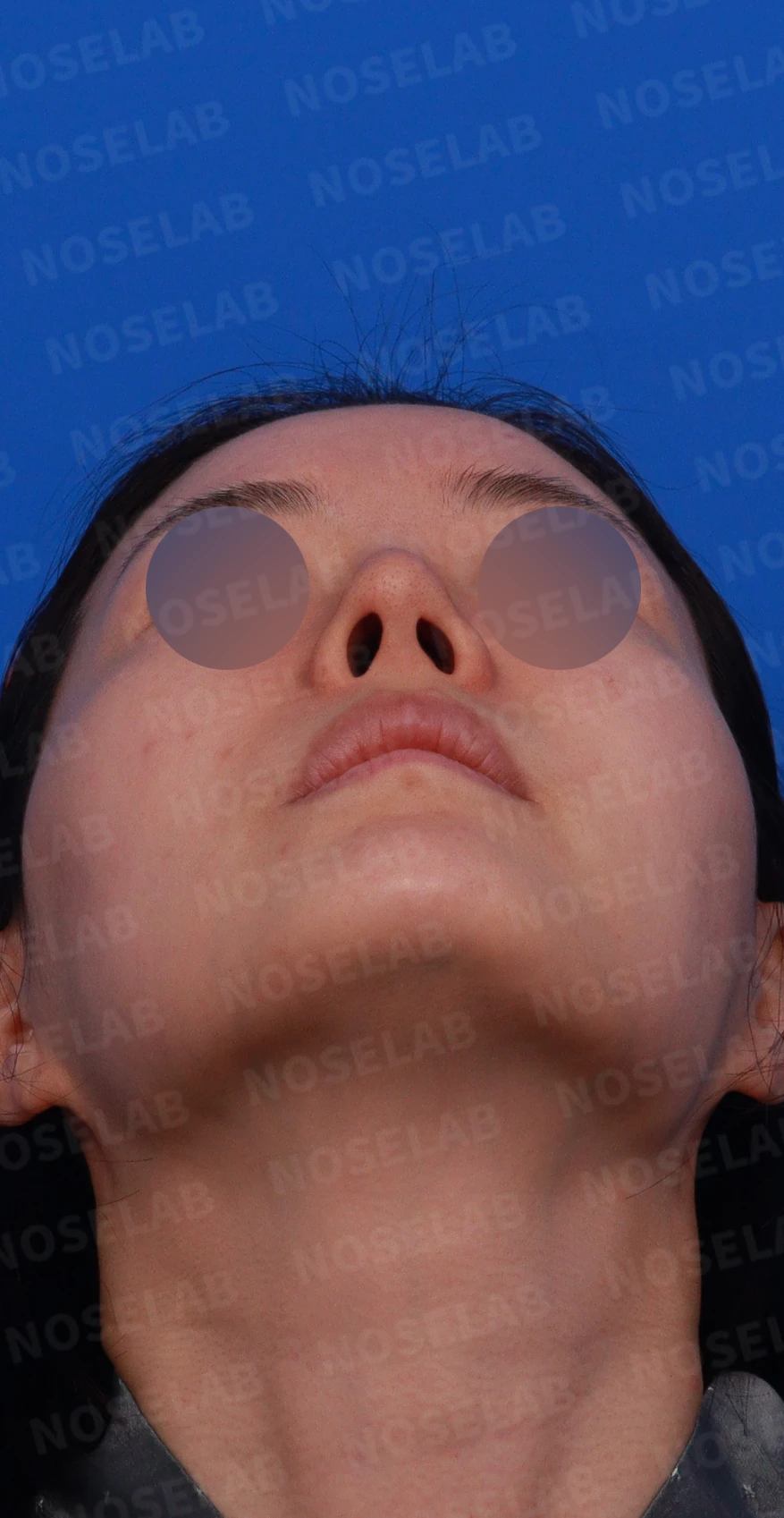
These are design consultation photos: right profile, oblique, and nostril views.
🔎Initial consultation findings
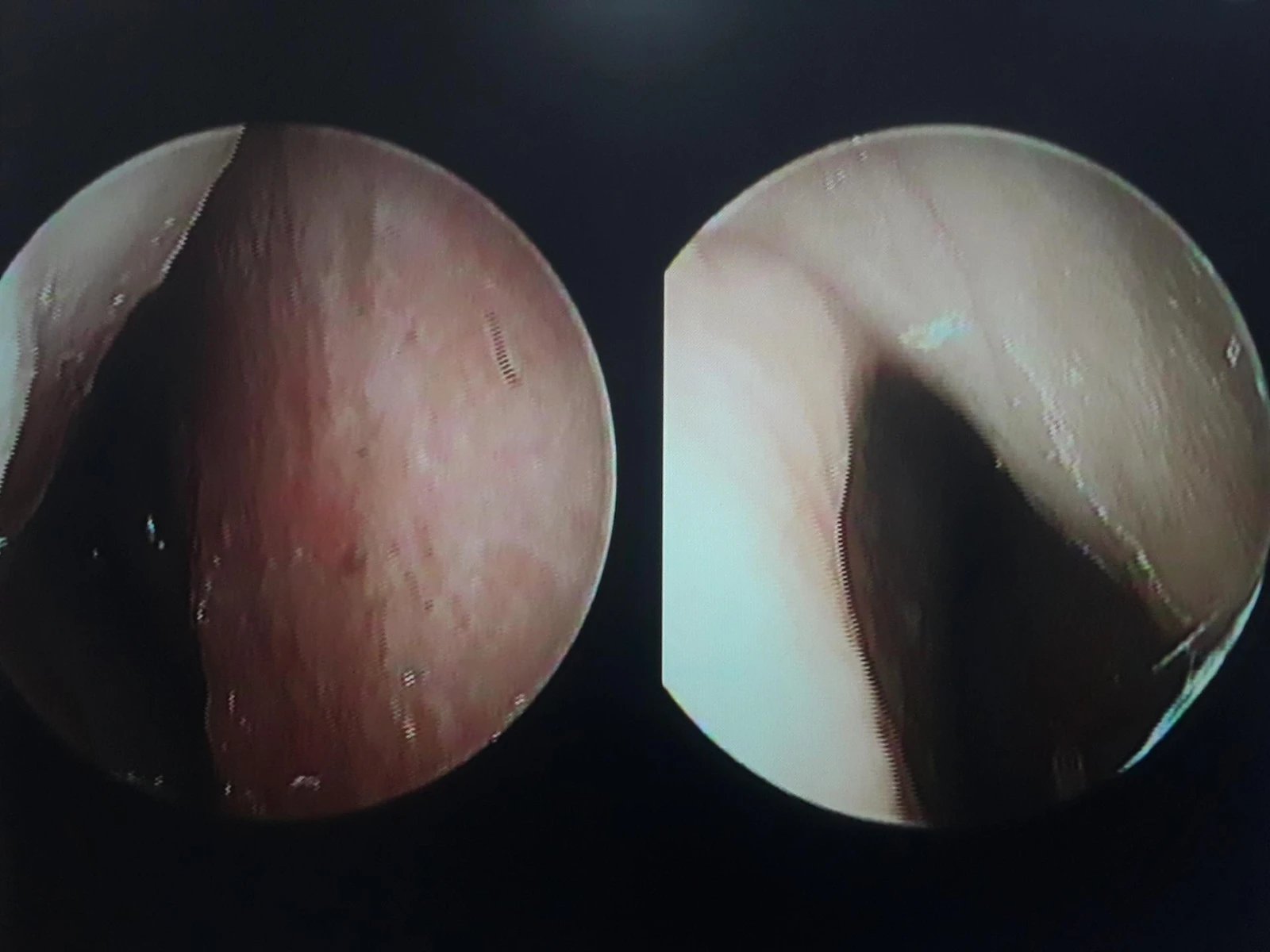
Nasal endoscopy photos
Functional issues
Rhinitis (alternating runny nose and nasal obstruction, sneezing)
Aesthetic concerns
The left side of the nose appears depressed
Nasal tip show-through (persists even after the ear dermis graft)
Upturned nose
Nostril show
Deviated nose
✨ Patient's requests


The patient's desired look
Improvement of the depressed left side and show-through
Wants to lower the tip defining point even if the nose becomes lower
Correction of an upturned nose
Reduction of nostril show
Correction of deviated nose
💉 Surgical procedure details
Resolution of nasal tip show-through
Complete removal of 10-year-old nasal filler residue
Naturally lowered tip defining point
Improvement of the depression on the left side of the nose
Structural improvement
Tip plasty using autologous rib cartilage
Correction of upturned nose
Correction of deviated nose
Reduction of nostril show
Functional improvement
Improvement of rhinitis through septoplasty and radiofrequency submucosal turbinoplasty of the inferior turbinates
✅ Surgical results
Functional improvement
Relief of rhinitis symptoms (improvement of runny nose, nasal obstruction, and sneezing)
Smooth breathing function
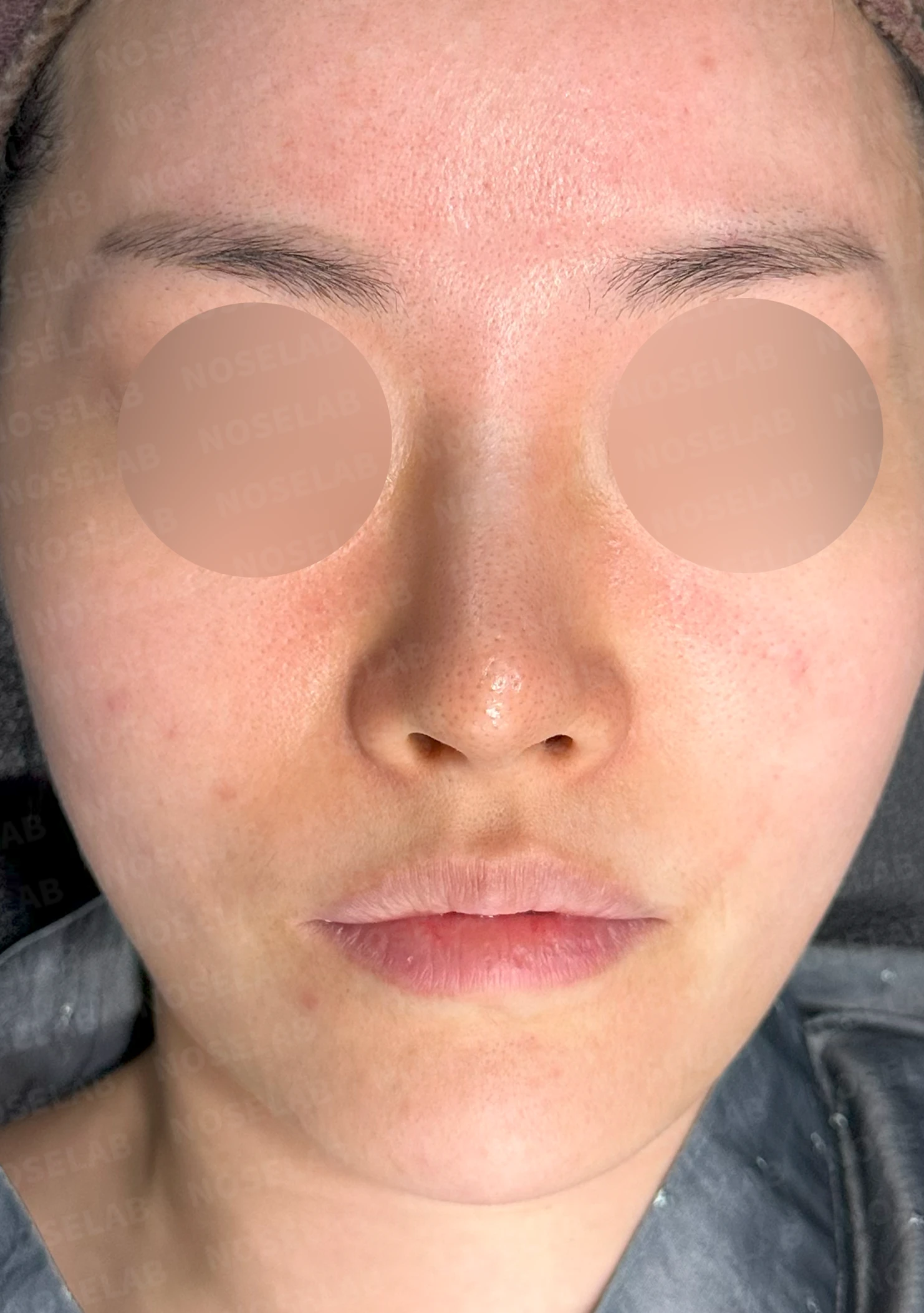
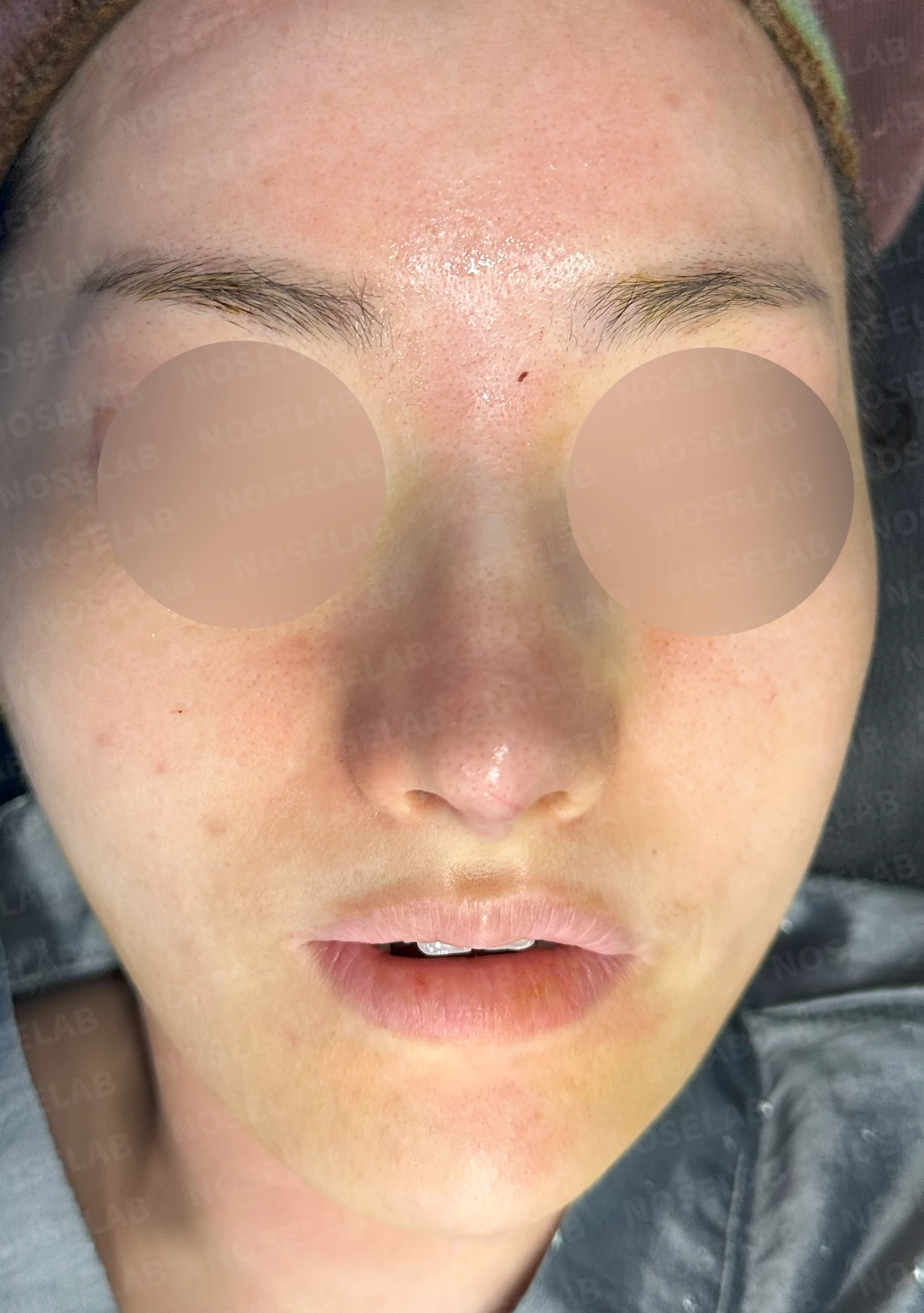
Before surgery / Day 0 immediately after surgery Photos taken immediately after surgery show swelling and may differ from the final result.
Front view
Improvement of the depression on the left side of the nose
Resolution of nasal tip show-through
Correction of crooked nose
Reduced nostril show
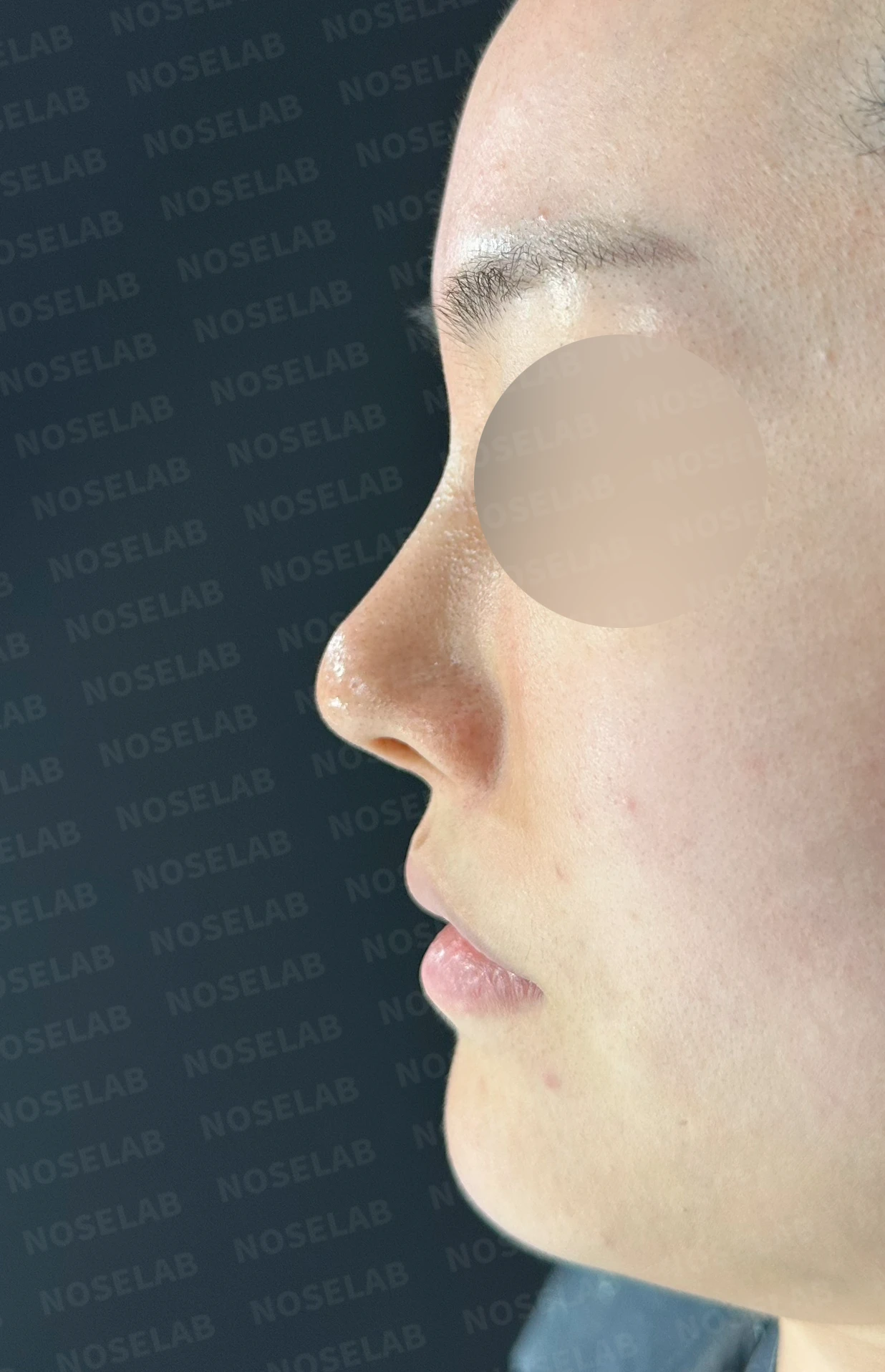
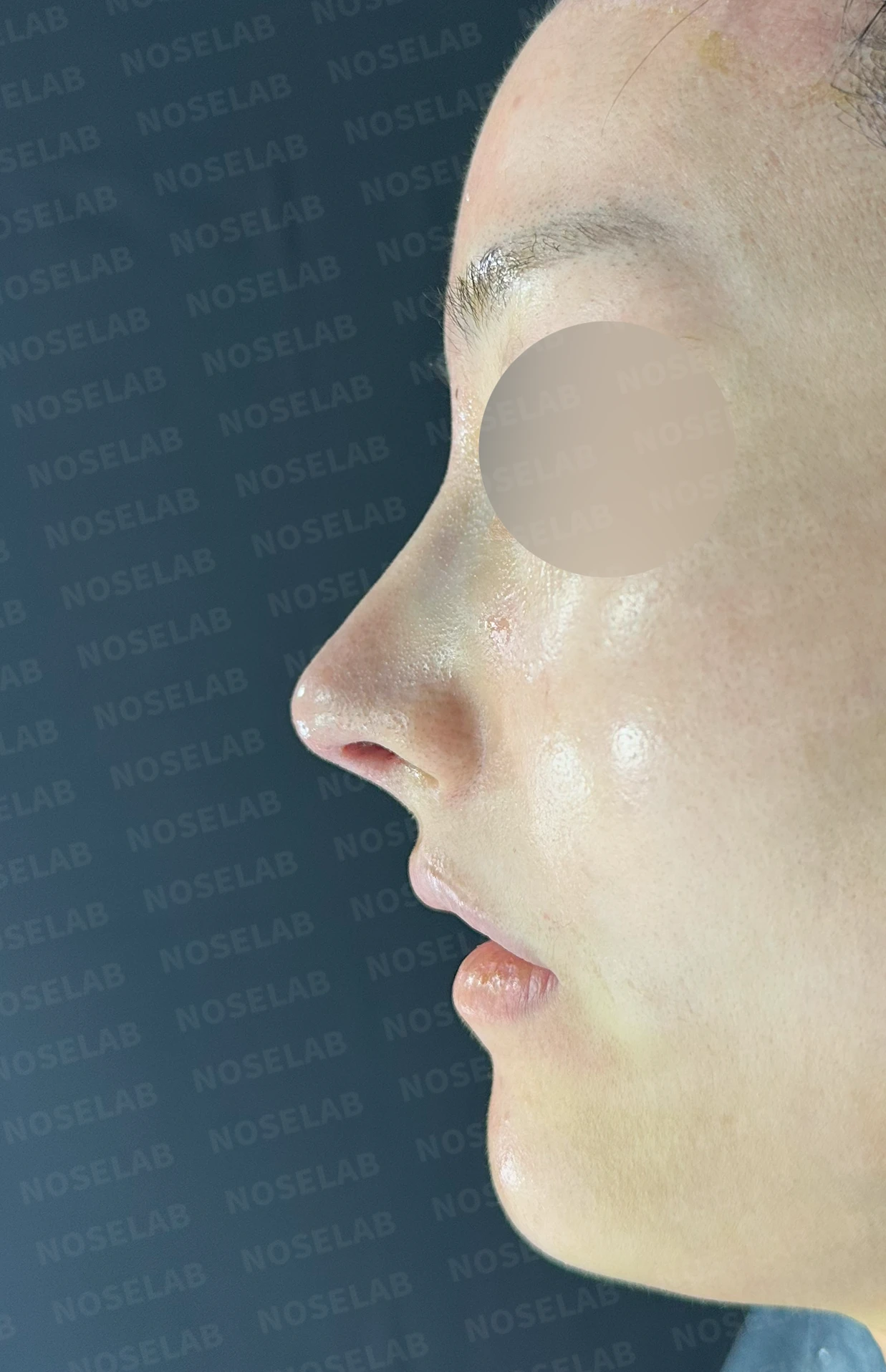
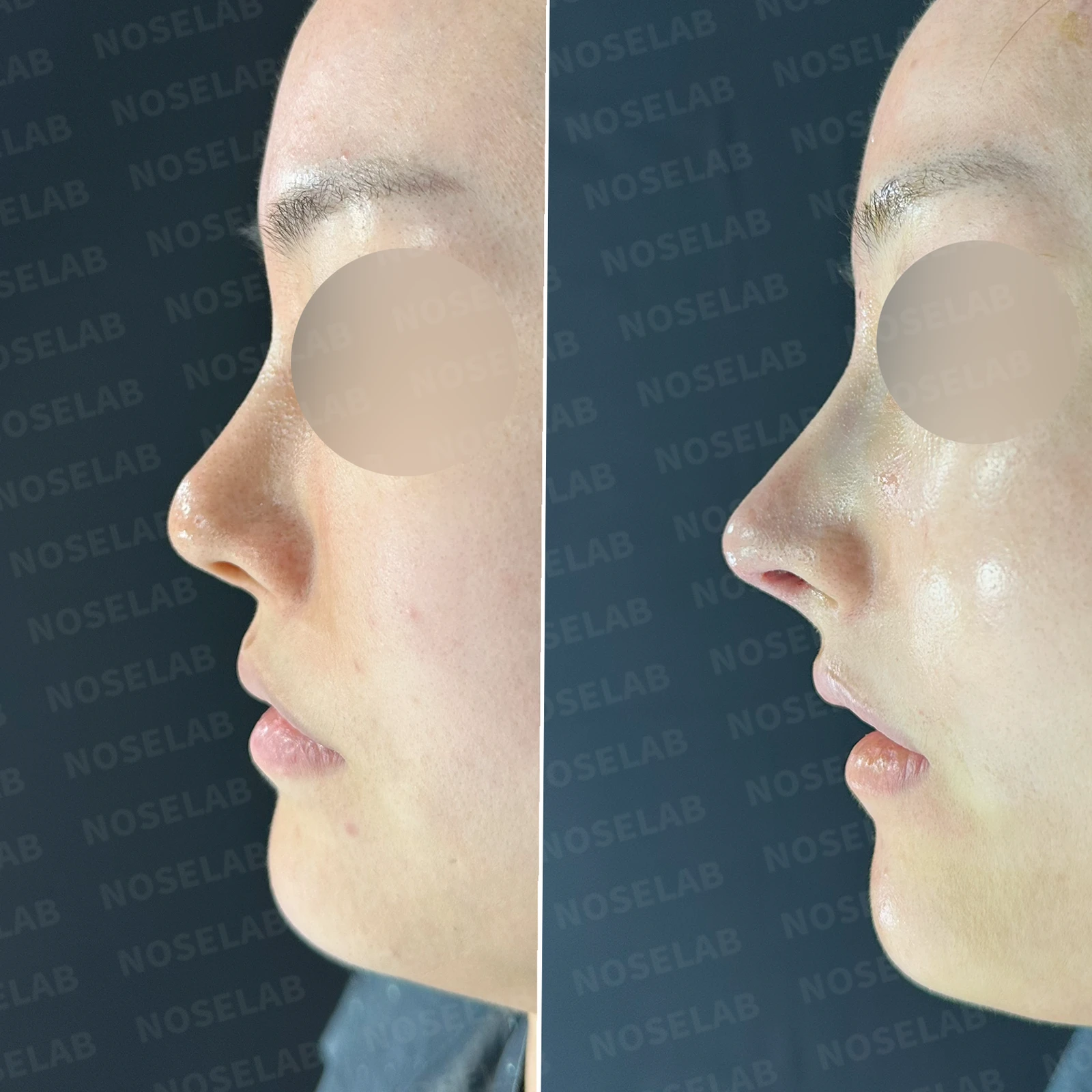
Before surgery / Day 0 immediately after surgery Photos taken immediately after surgery show swelling and may differ from the final result.
Profile view
Naturally lowered tip defining point
Correction of an upturned nose
Balanced profile line
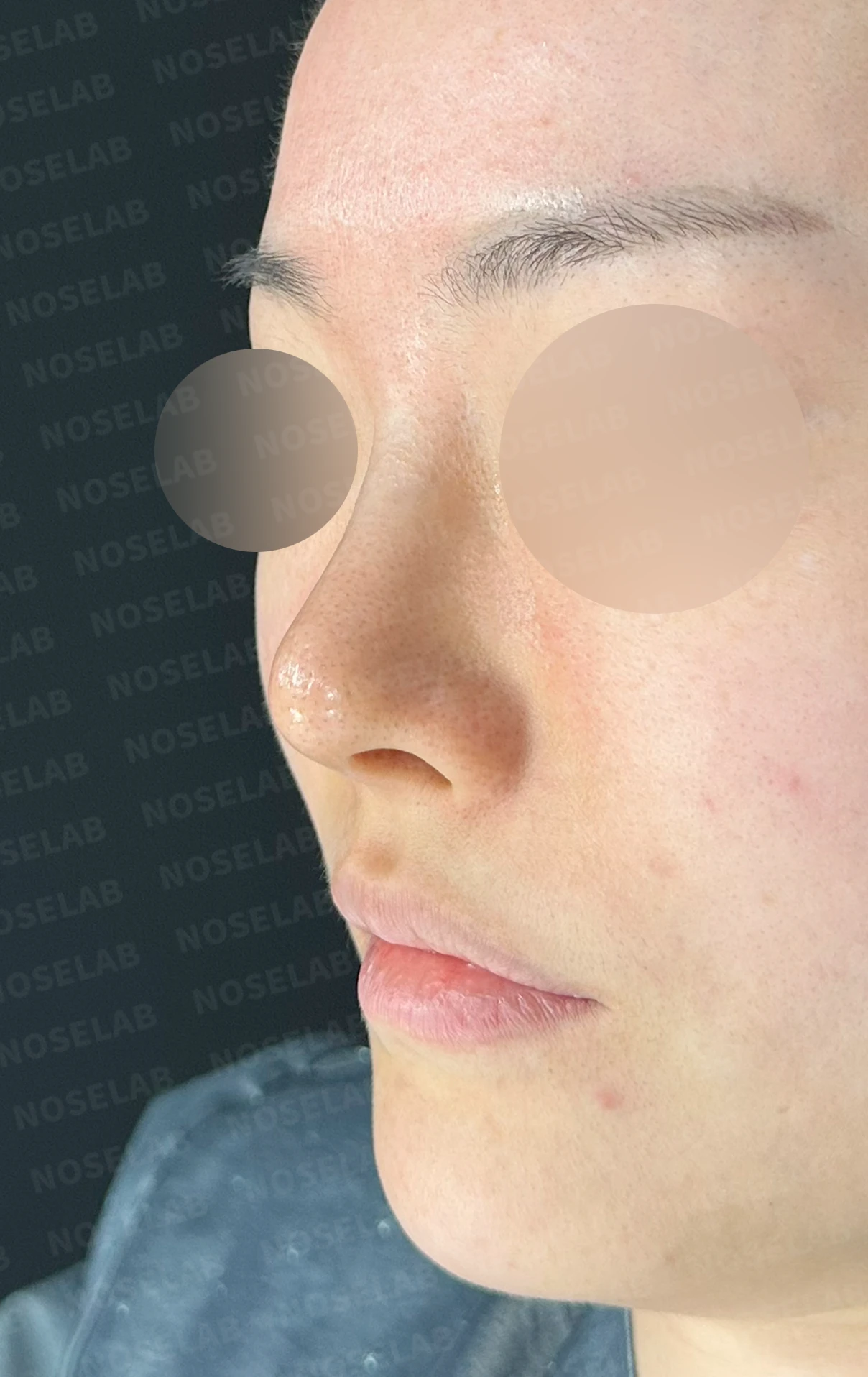
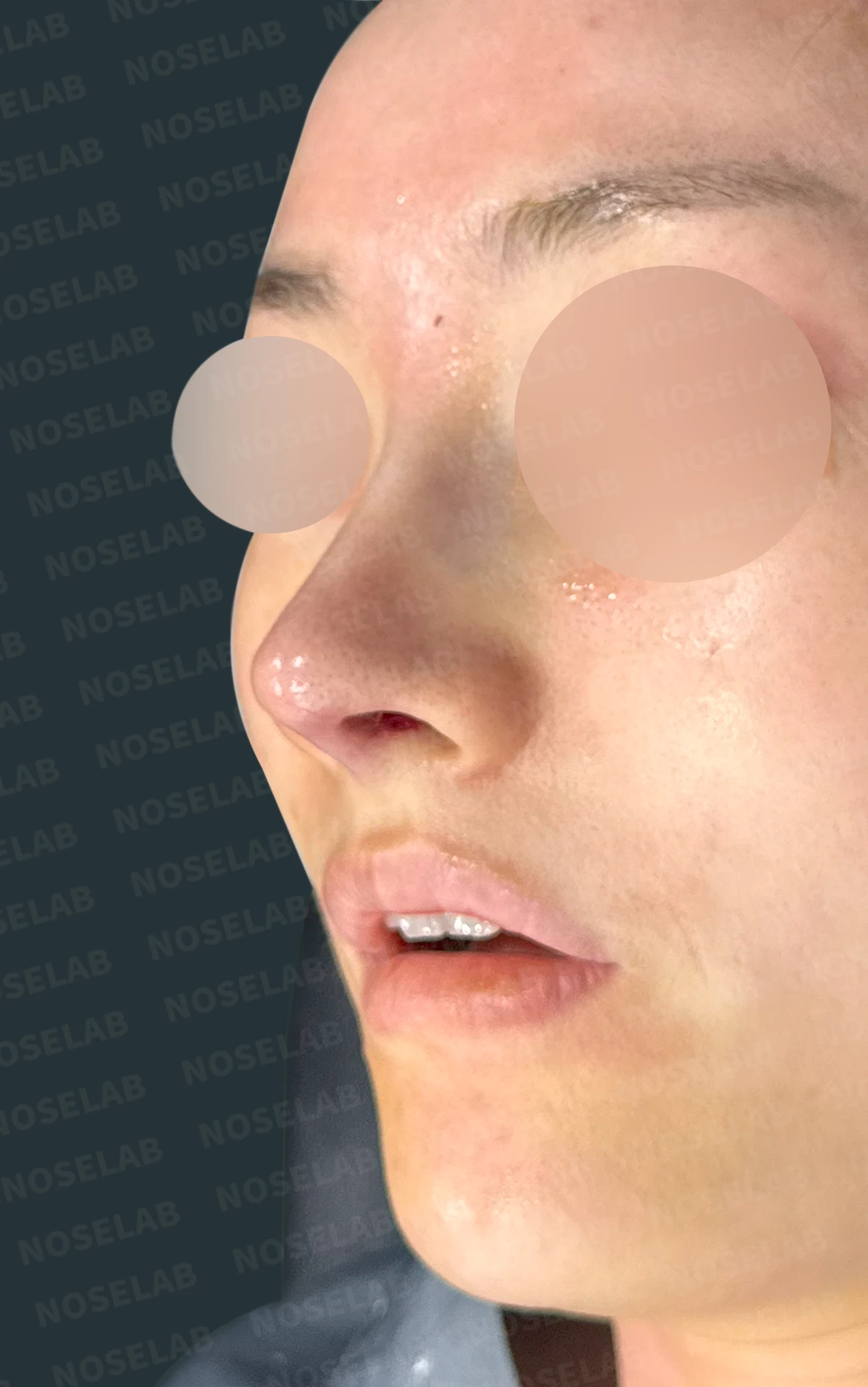
Before surgery / Day 0 immediately after surgery Photos taken immediately after surgery show swelling and may differ from the final result.
Nasal tip
Resolved show-through issue
Natural nasal tip shape
Smooth nasal tip contour
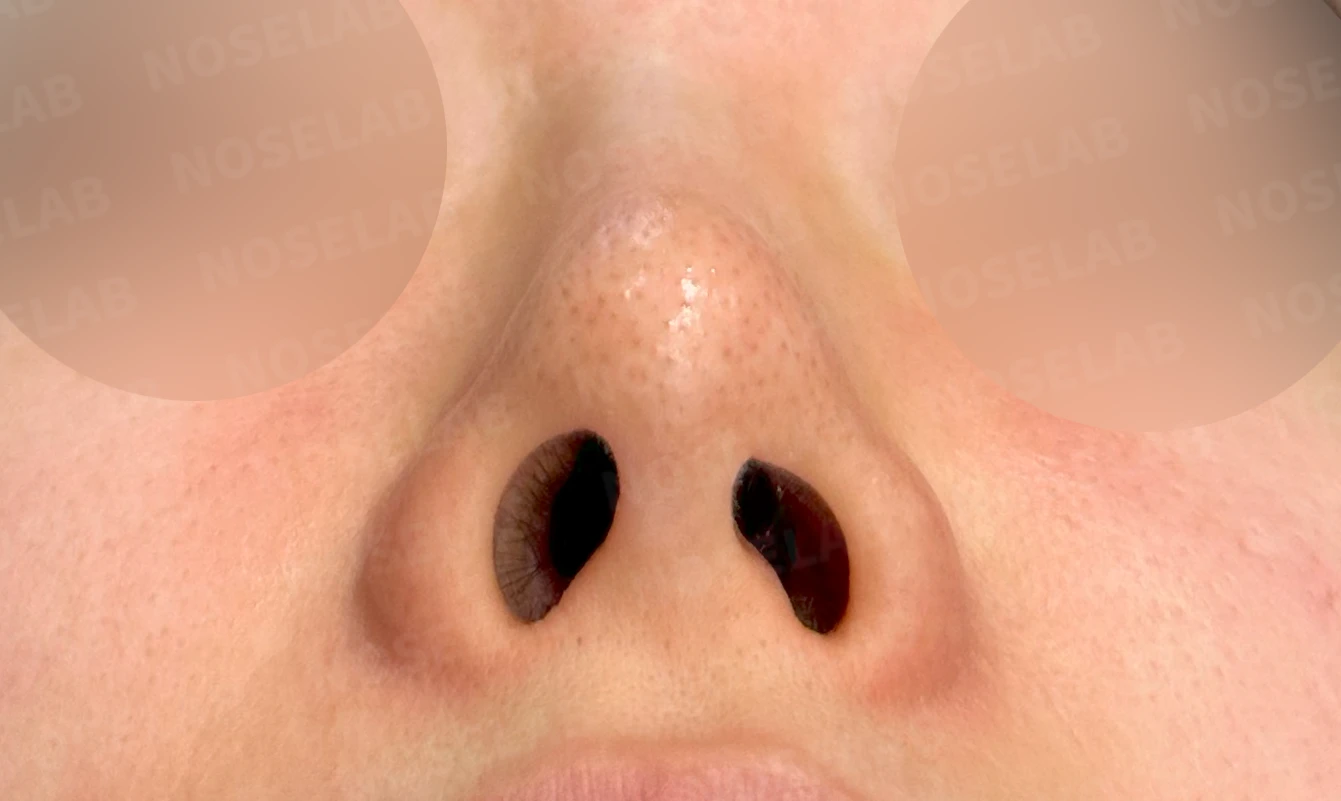
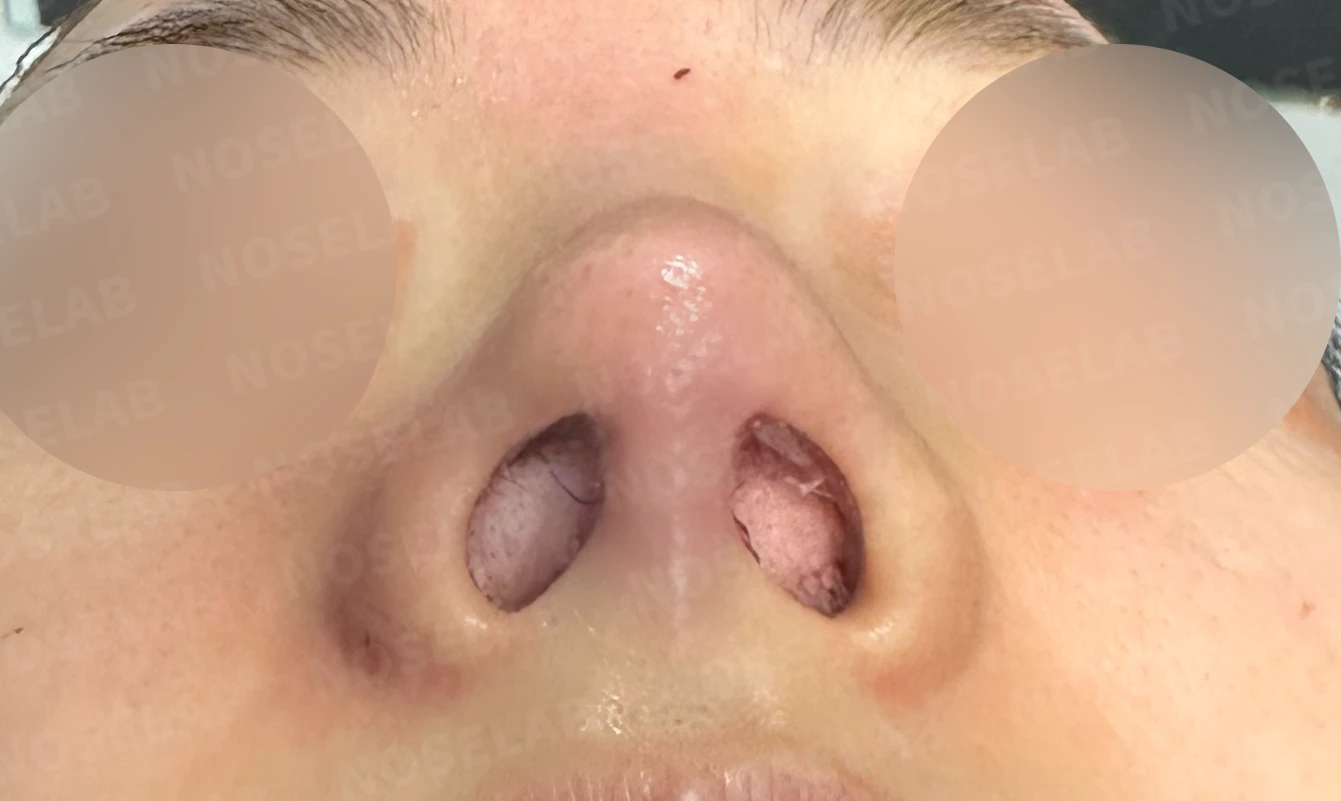
Before surgery / Day 0 immediately after surgery Photos taken immediately after surgery show swelling and may differ from the final result.
👨⚕️ Specialist's assessment
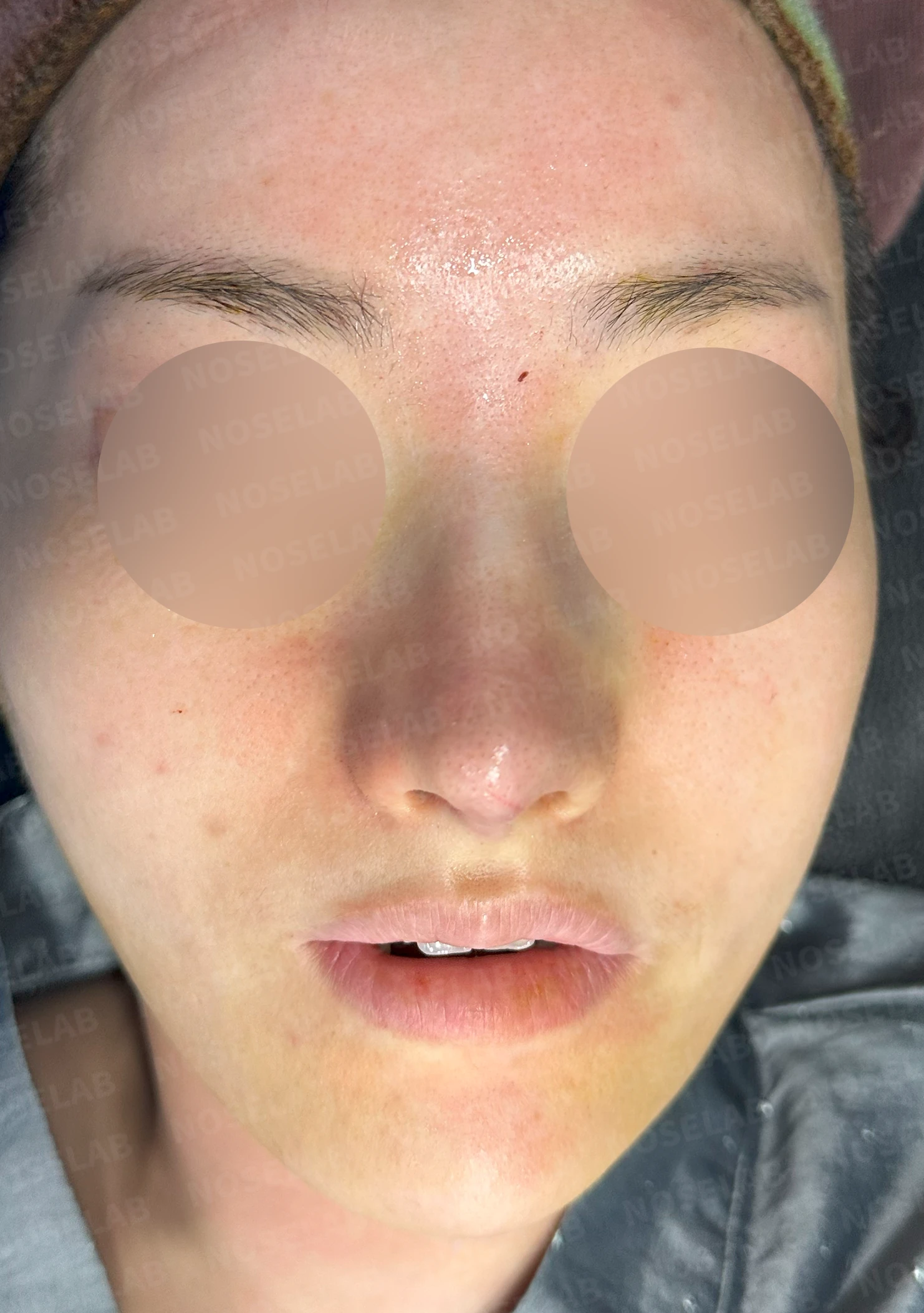
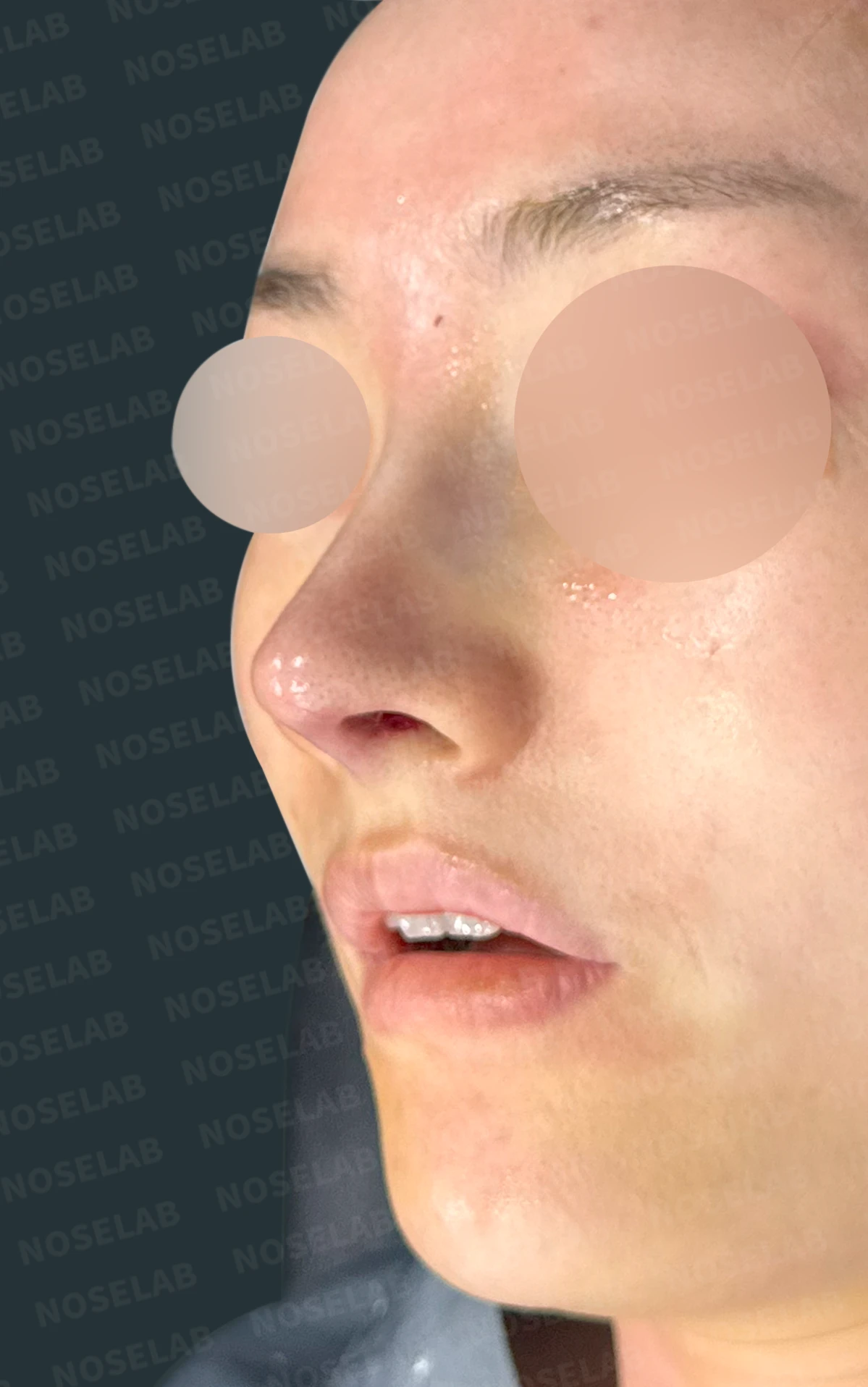
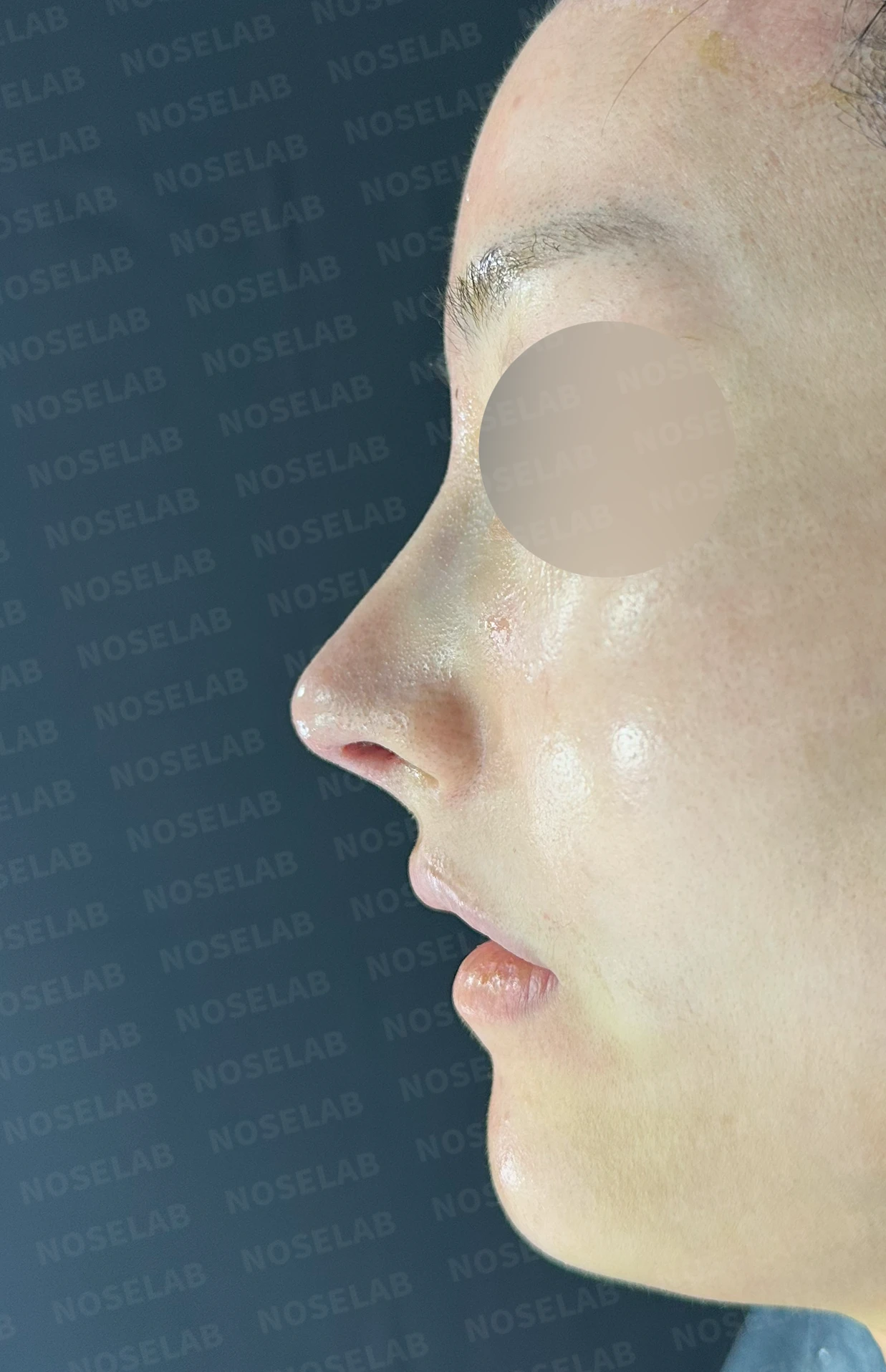
Immediately after surgery (day 0): front, oblique, and profile viewsImmediate postoperative photos show swelling and may differ from the final result.
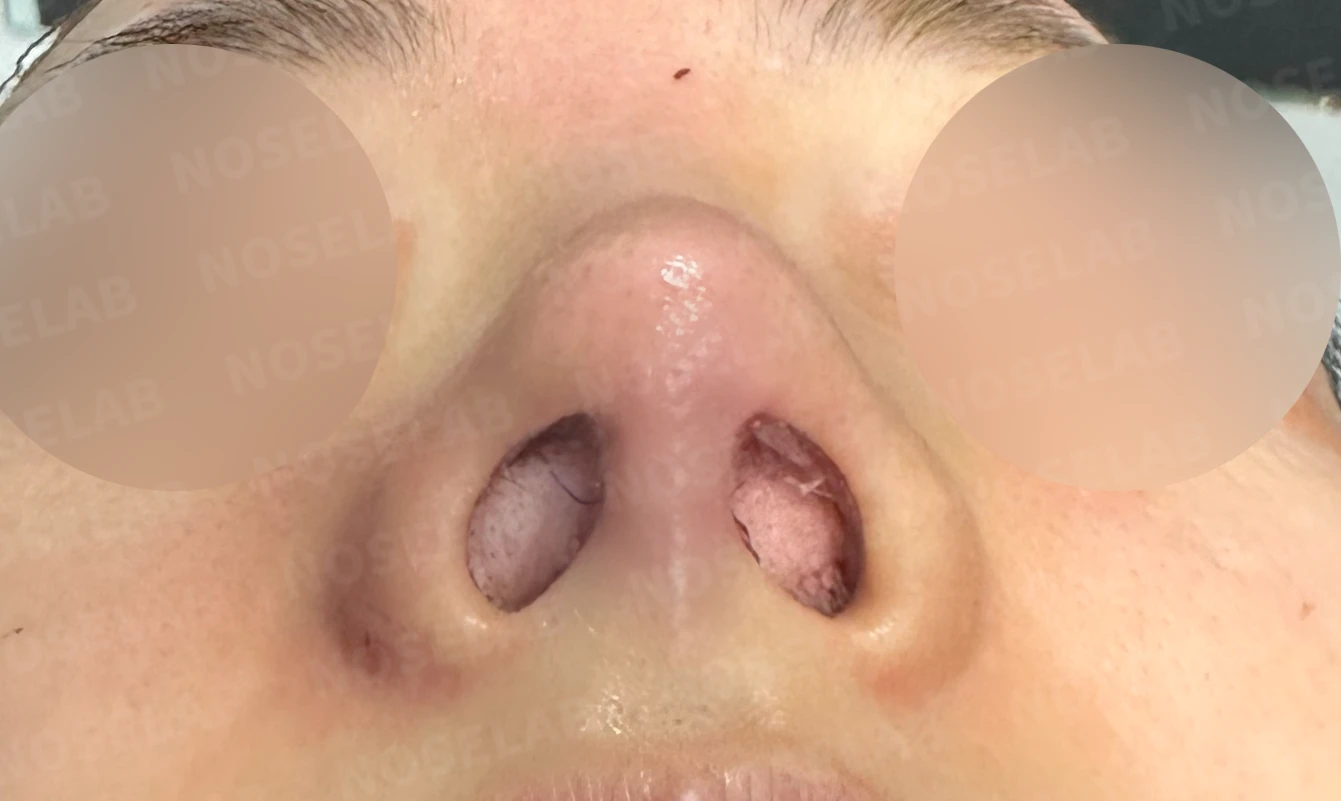
Nostril view on day 0 immediately after surgery Photos taken immediately after surgery show swelling and may differ from the final result.
This patient had been troubled by nasal tip show-through for a long time. After the initial surgery in 2015 using a silicone implant and ear cartilage, nasal tip show-through developed; an ear dermis graft was performed in 2018, but the visibility issue still remained.
The patient's greatest concern was that the left side of the nose looked depressed while simultaneously showing cartilage visibility. In addition, excessive nostril show due to an upturned nose was a significant concern. Most notably, the patient clearly stated, "Even if the nose becomes lower, I want to lower the tip defining point."
Nasal tip show-through occurs when the skin is thin or the cartilage is overly prominent, making it one of the more challenging issues to correct once it occurs. The fact that show-through remained even after a previous ear dermis graft meant that a fundamental approach was necessary.
First, the residue from the 10-year-old nasal filler was completely removed to create a clean environment. Then, according to the patient's request, surgery proceeded in the direction of naturally lowering the tip defining point. We carefully respected the patient's clear preference for a natural, show-through-free nose rather than a high nose.
Meticulous adjustments were made to improve the depression and visibility on the left side of the nose, and the upturned nose was naturally resolved alongside the repositioning of the nasal tip. Nostril show was also noticeably reduced, significantly improving the frontal appearance.
The crooked nose was corrected at the same time to create an overall balanced nasal shape. Most importantly, the show-through issue that the patient wanted resolved most was fundamentally addressed, resulting in a natural and smooth nasal tip.
From a functional standpoint, septoplasty and radiofrequency laser submucosal resection of the inferior turbinates were performed concurrently to improve rhinitis symptoms such as runny nose, nasal obstruction, and sneezing.
As a result, we resolved the nasal tip show-through that troubled the patient most, while comprehensively improving the upturned nose, nostril show, and crooked nose. It was a meaningful case where we fully respected the patient's request—even if it meant lowering the height—to achieve a natural and satisfying result.
This has been Dr. Peter C. Kang, medical director.
Thank you.
#closedrhinoplasty #tipshowthroughcorrection #upturnednosecorrection #nostrilshowcorrection #naturalnasaltip #customrhinoplasty

Limitations and risks
When autologous rib cartilage is used, scarring and pain may remain at the donor site on the chest, and pneumothorax (pleural injury) can occur rarely. Over time, the grafted cartilage may warp or undergo partial resorption.
When foreign materials such as injected fillers are removed and reconstructed, contracture may recur, nasal height and length may decrease, and staged surgery may be necessary depending on the skin condition.
When the septum is corrected at the same time, nasal obstruction may persist or recur, and in rare cases, septal perforation or changes in smell may occur.
Common potential risks include infection, bleeding, asymmetry, scarring, skin necrosis, and insufficient improvement; results vary depending on individual skin condition and previous surgical history.