Hello, I am Dr. Peter C. Kang.
Today, I would like to introduce the case of a patient who visited our clinic concerned about their nose becoming wider and lower after double-jaw surgery.
🔍 Surgical history
December 2021: Revision rhinoplasty using autologous rib cartilage + autologous dermis + 3D printing + functional nasal surgery
February 2022: Release of internal nasal synechia (adhesions)
August 2022: Revision tip rhinoplasty + autologous dermis
February 2023: Revision rhinoplasty
October 2023: Revision rhinoplasty (overall reduction in height)
June 2025: Double jaw surgery (two-jaw surgery)
After double-jaw surgery, changes to the nasal support structure caused the nose to spread and become lower overall.
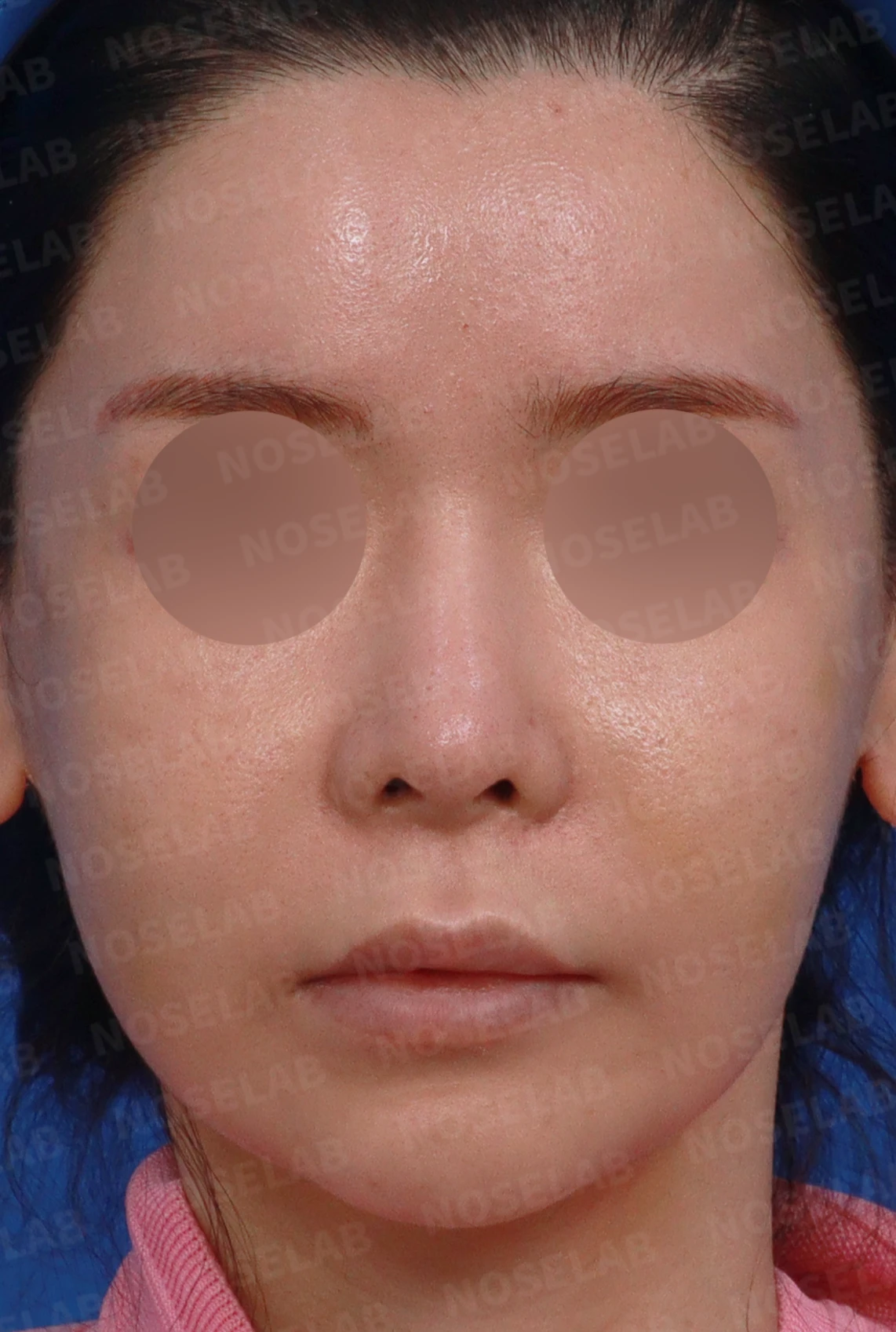
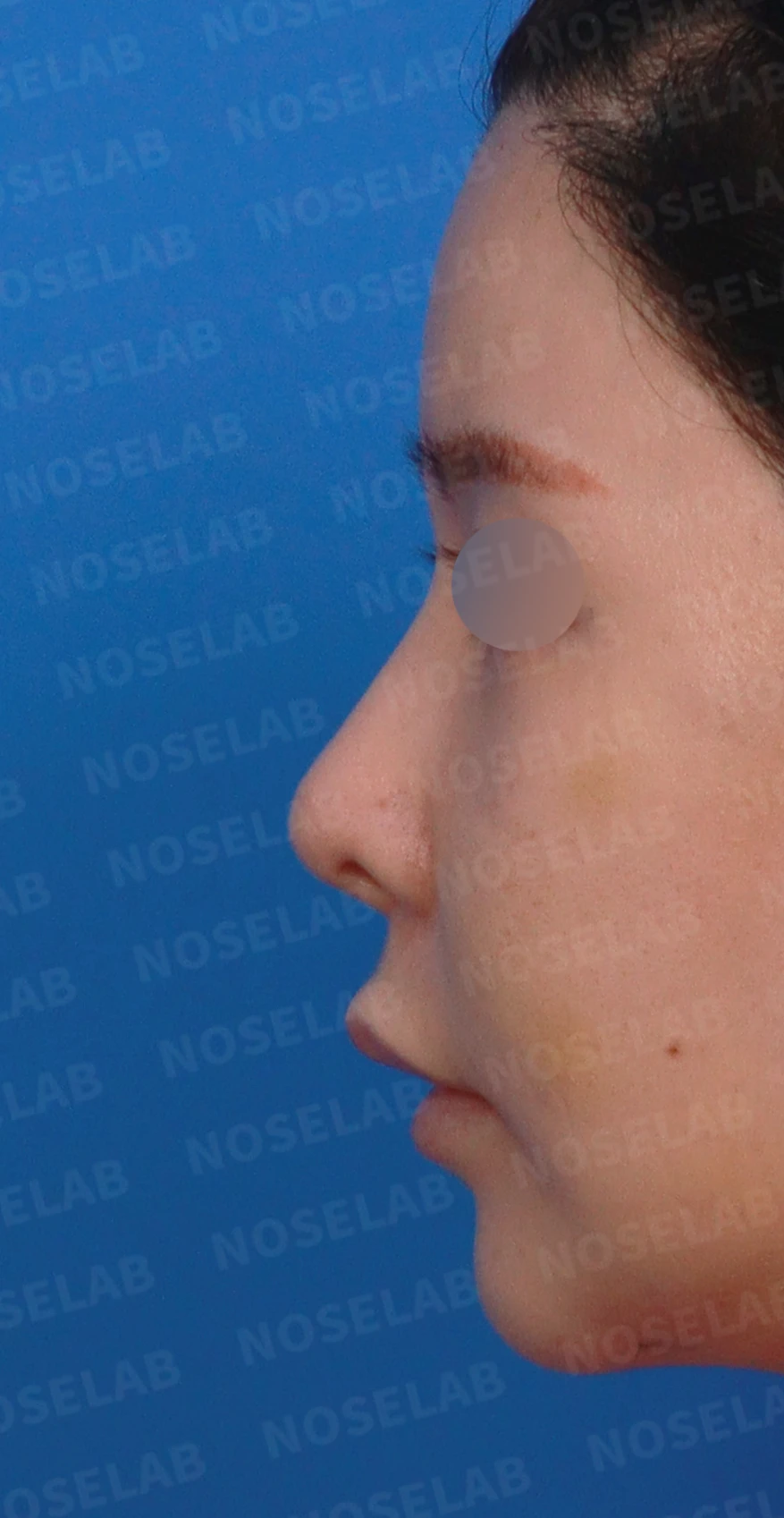
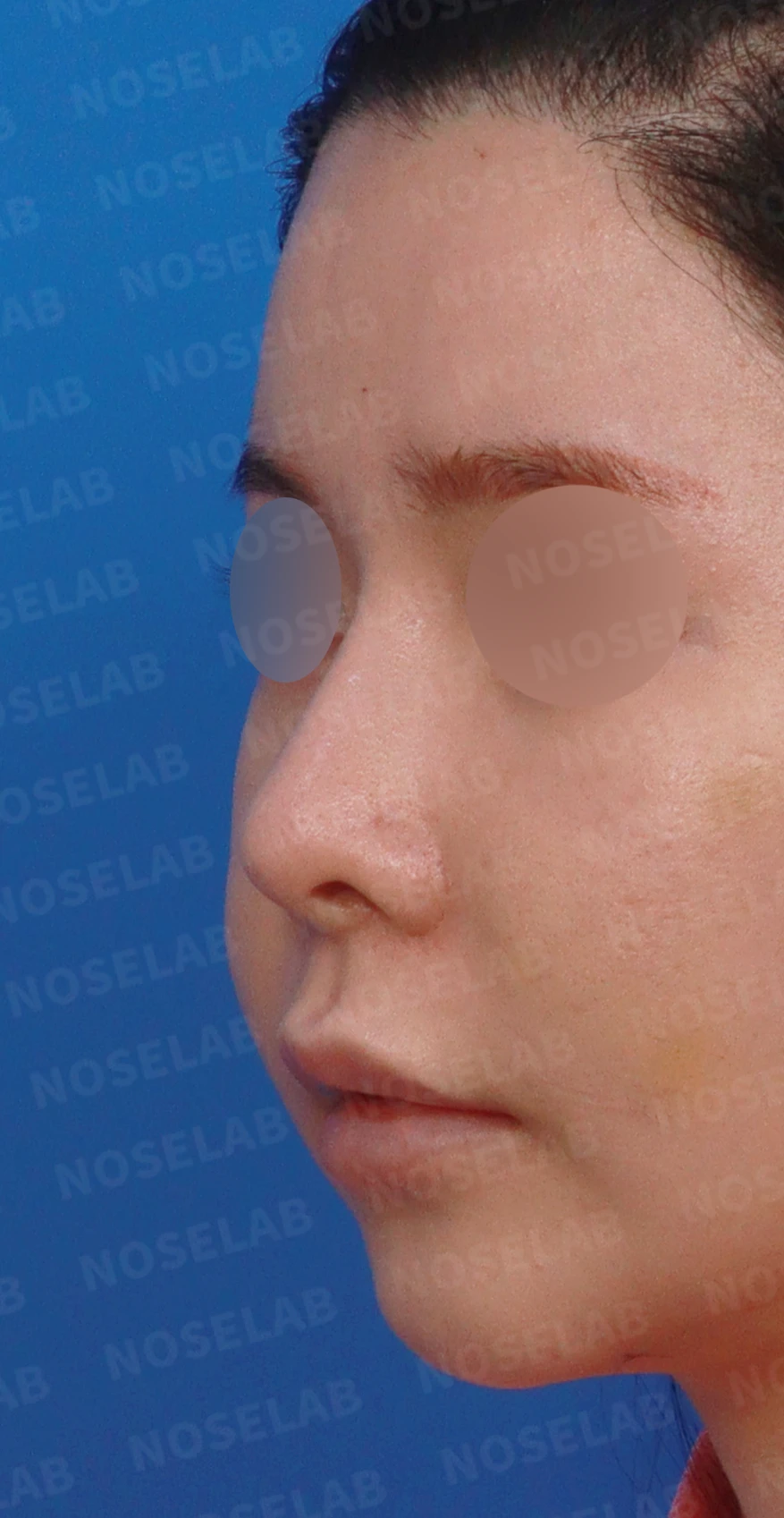
Front, left profile, and oblique views during design consultation.
💉 Patient requests
The patient was troubled by the changes in nasal shape following double-jaw surgery.
Main requests:
Improvement of a wide nose
Elevating the lowered nasal tip
Natural bridge line
A soft, non-pointed appearance for the nasal tip
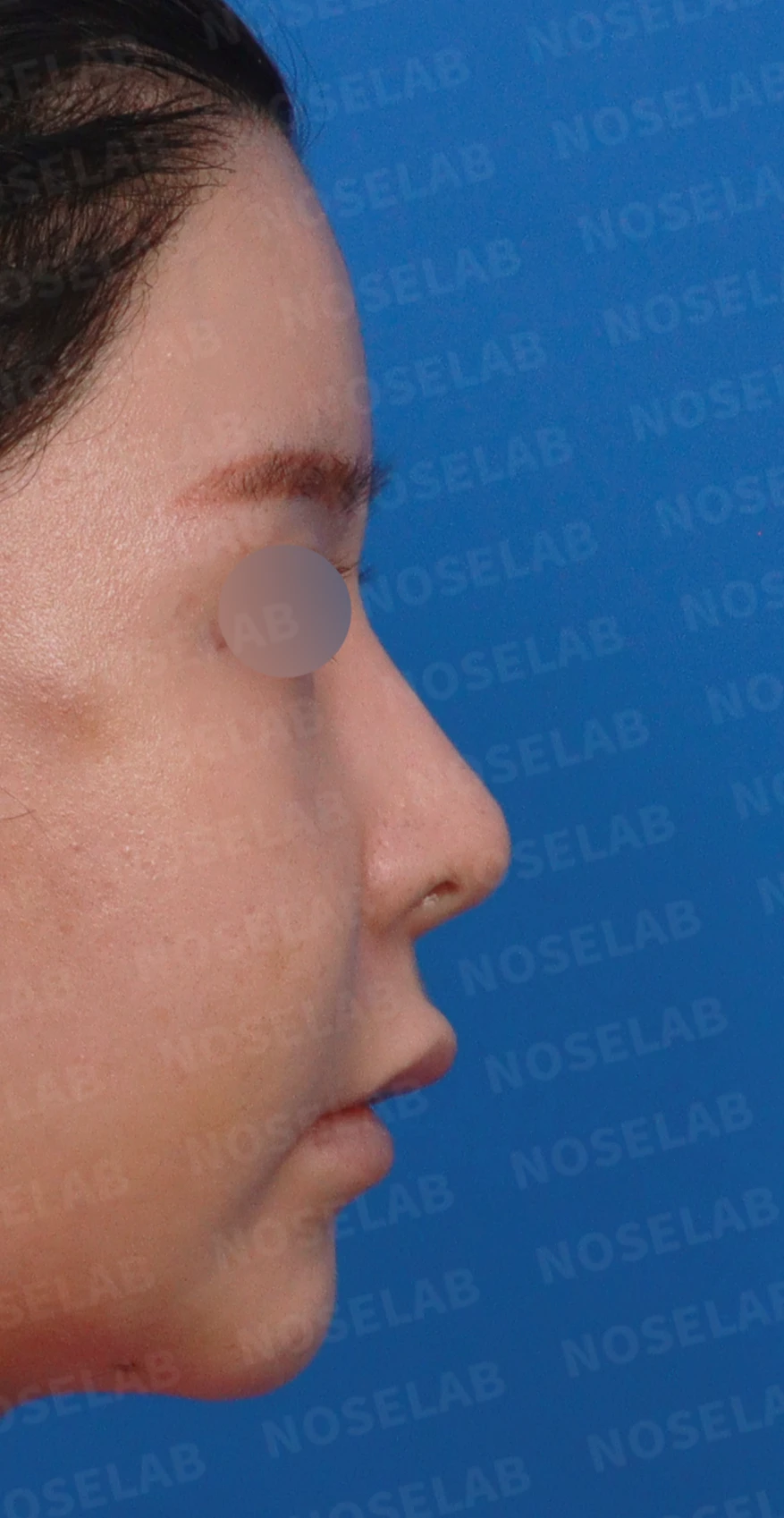
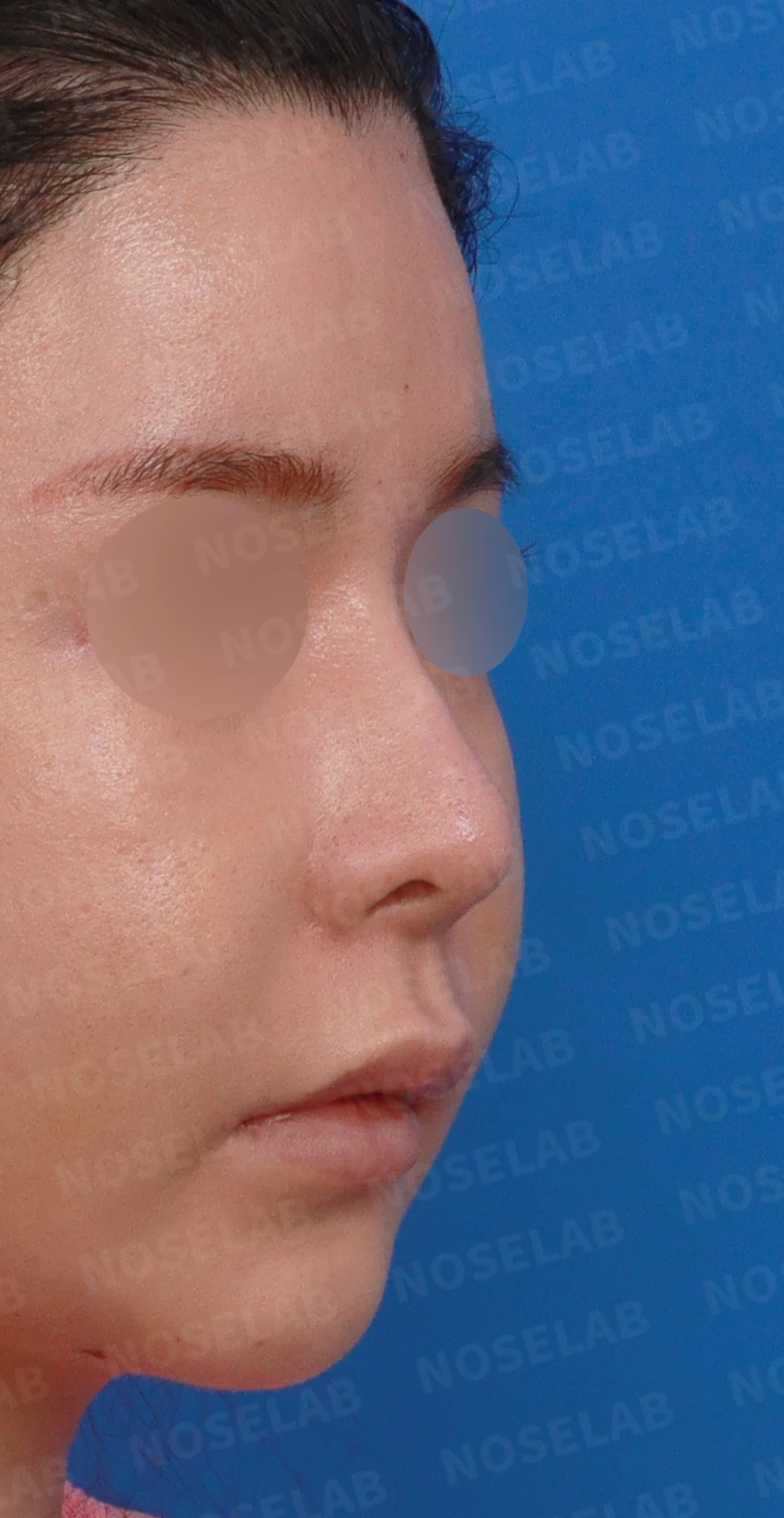
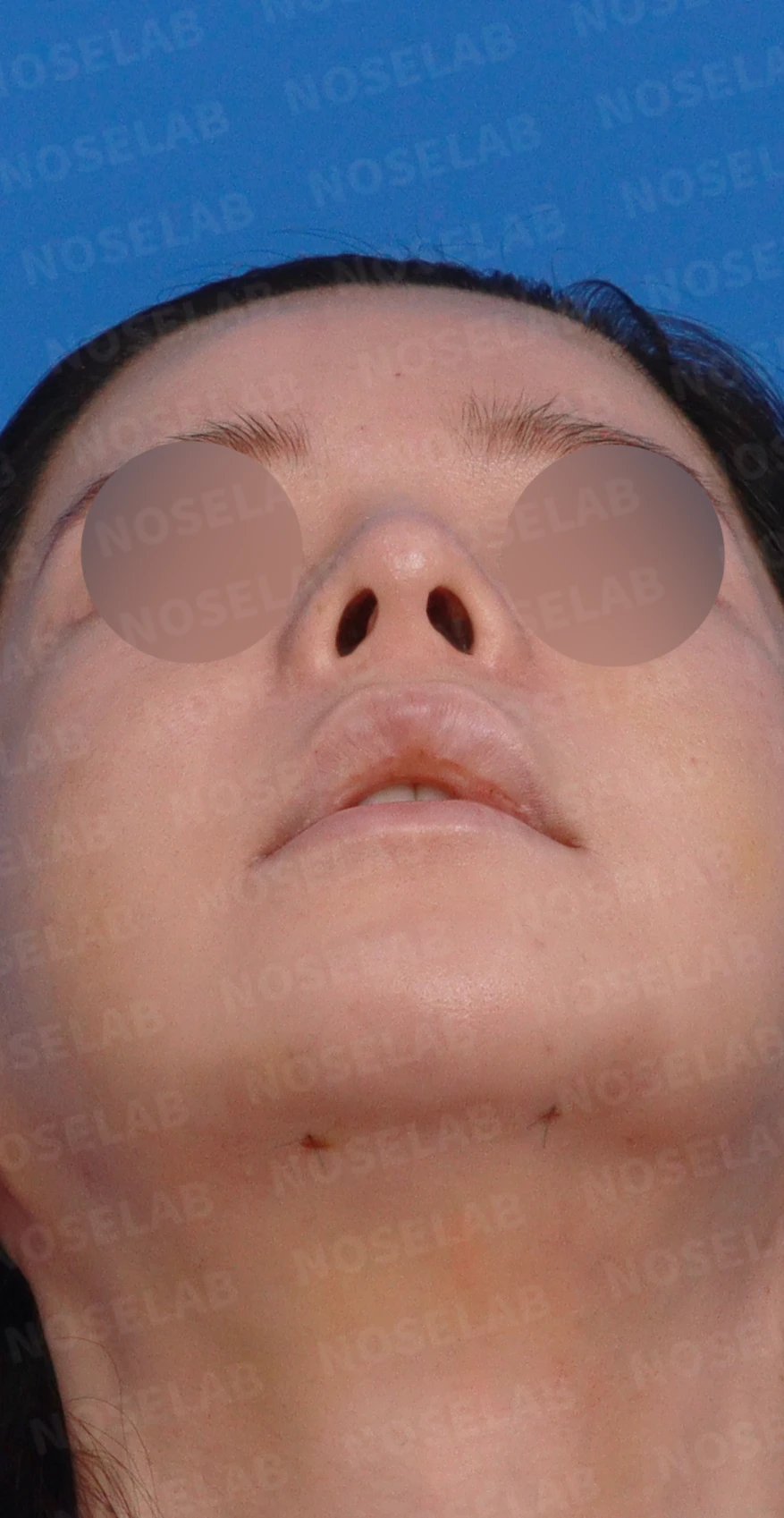
Right profile, oblique, and nostril views during design consultation.
Surgical plan and procedure
1. Assessment of the septum
The septal cartilage had been significantly weakened by the double-jaw surgery. Because a weakened septum could not adequately raise and support the nasal tip, reconstruction using autologous tissue was necessary.
2. Septal reconstruction using autologous rib cartilage
We harvested autologous rib cartilage to reinforce and reconstruct the weakened septum.
Advantages of autologous rib cartilage:
No tissue rejection because it is autologous tissue
Maintaining tip height with strong support
Long-term stable outcome
Effectively reinforcing the structure weakened after double-jaw surgery
We naturally elevated the nasal tip over the reconstructed septum.
3. Connecting the bridge with a silicone implant
To create a seamless transition with the elevated nasal tip, we custom-carved and placed a silicone implant along the nasal bridge. This formed a smooth, continuous line from the nasal tip to the bridge.
4. Refining the nasal tip shape
In accordance with the patient's request, the nasal tip was refined to have a soft, natural contour rather than a pointed look.
🌟 Surgical results
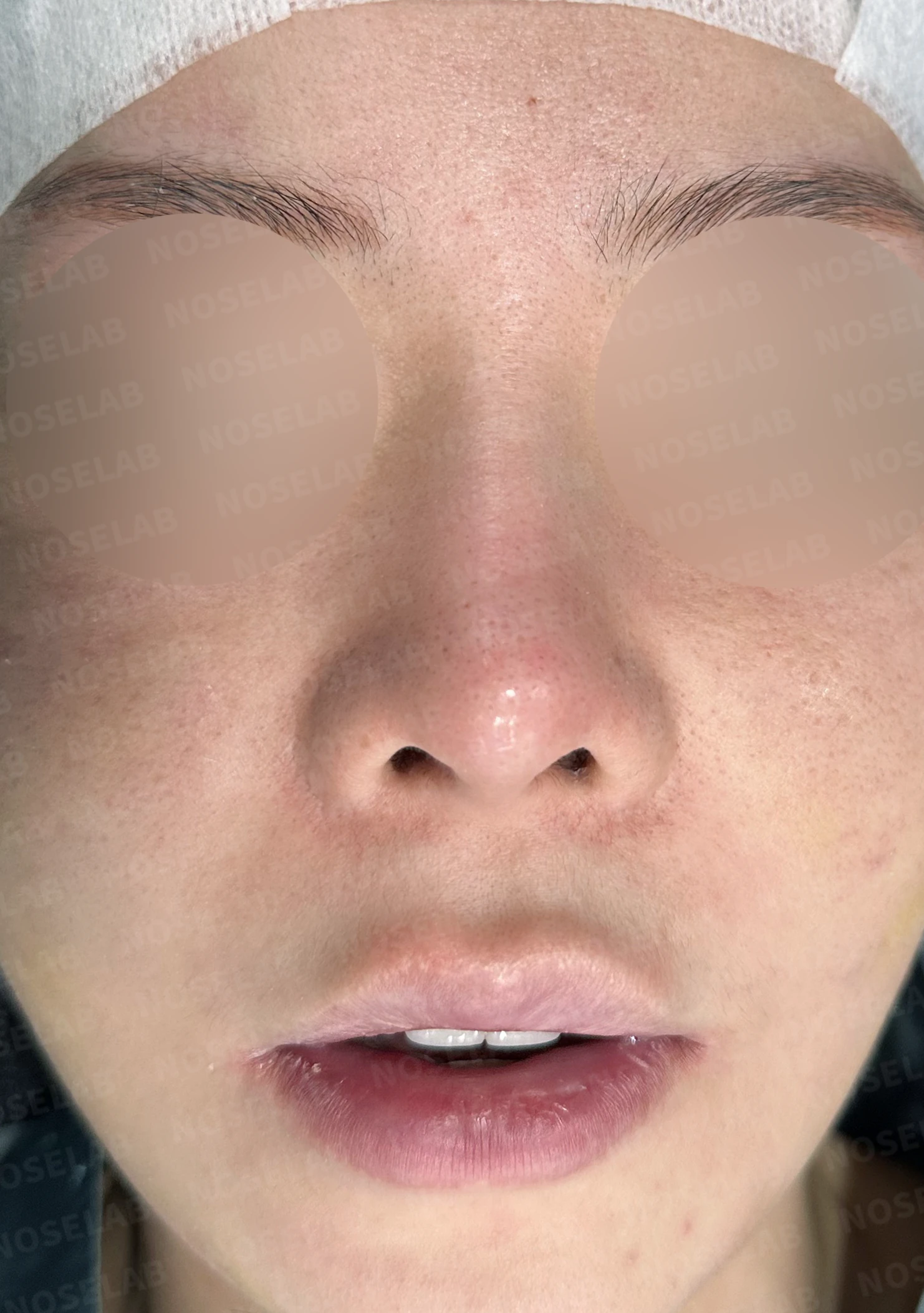
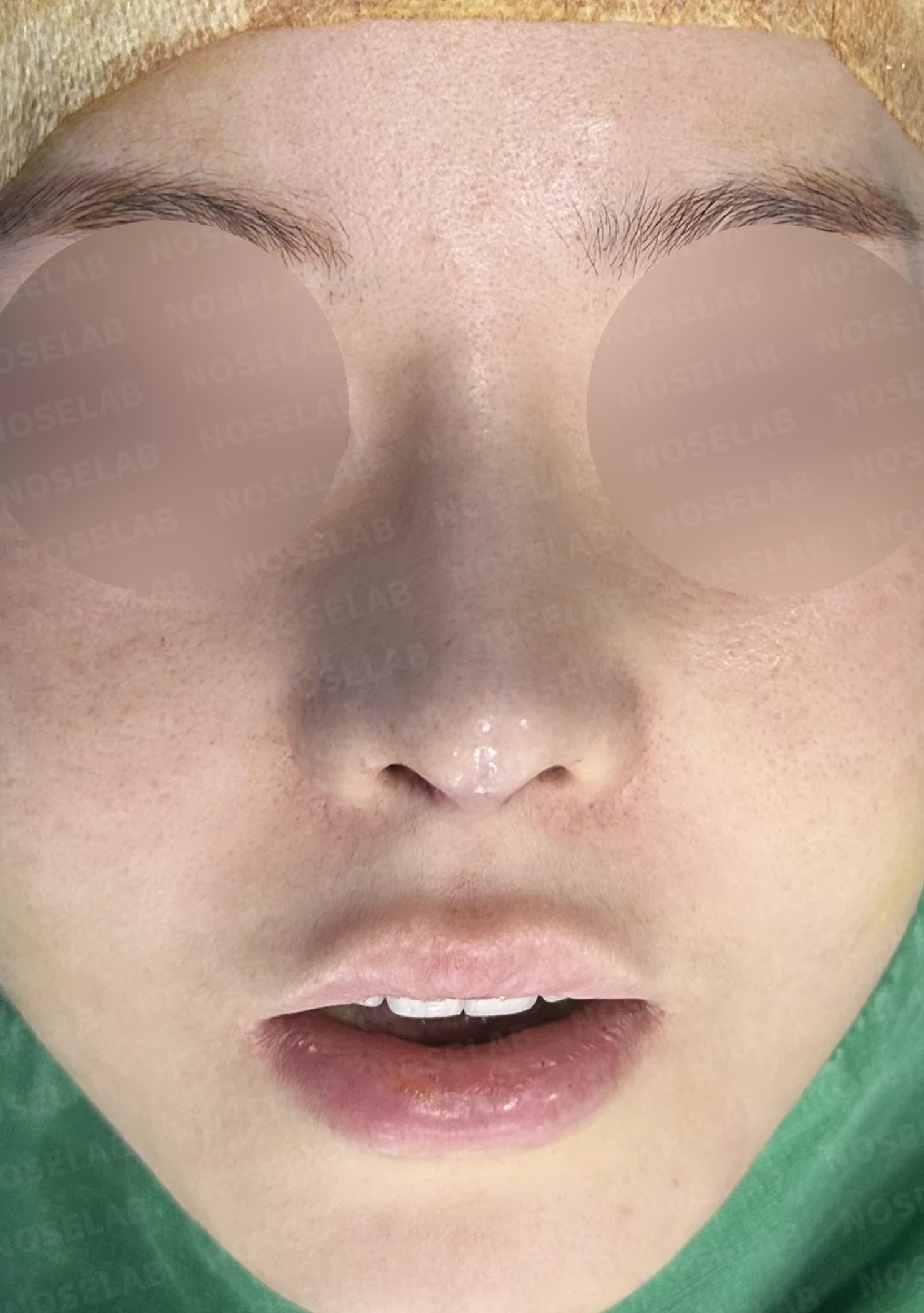
Before surgery / Day 0 immediately after surgery Photos taken immediately after surgery show swelling and may differ from the final result.
Front view changes:
A previously splayed nose now appears centered and defined
An overall neat, well-balanced nasal shape
Harmonious balance with the entire face
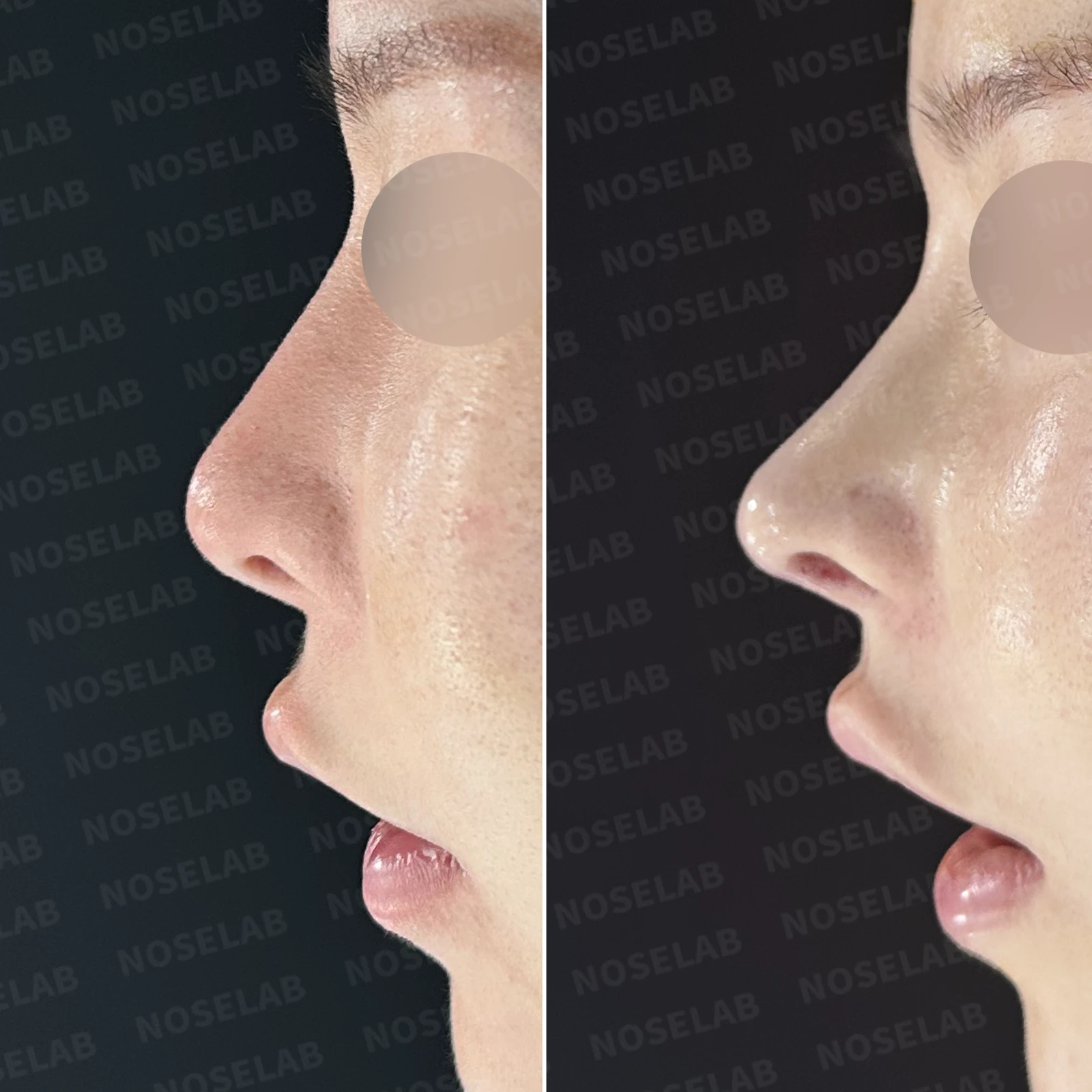
Before surgery / Day 0 immediately after surgery Photos taken immediately after surgery show swelling and may differ from the final result.
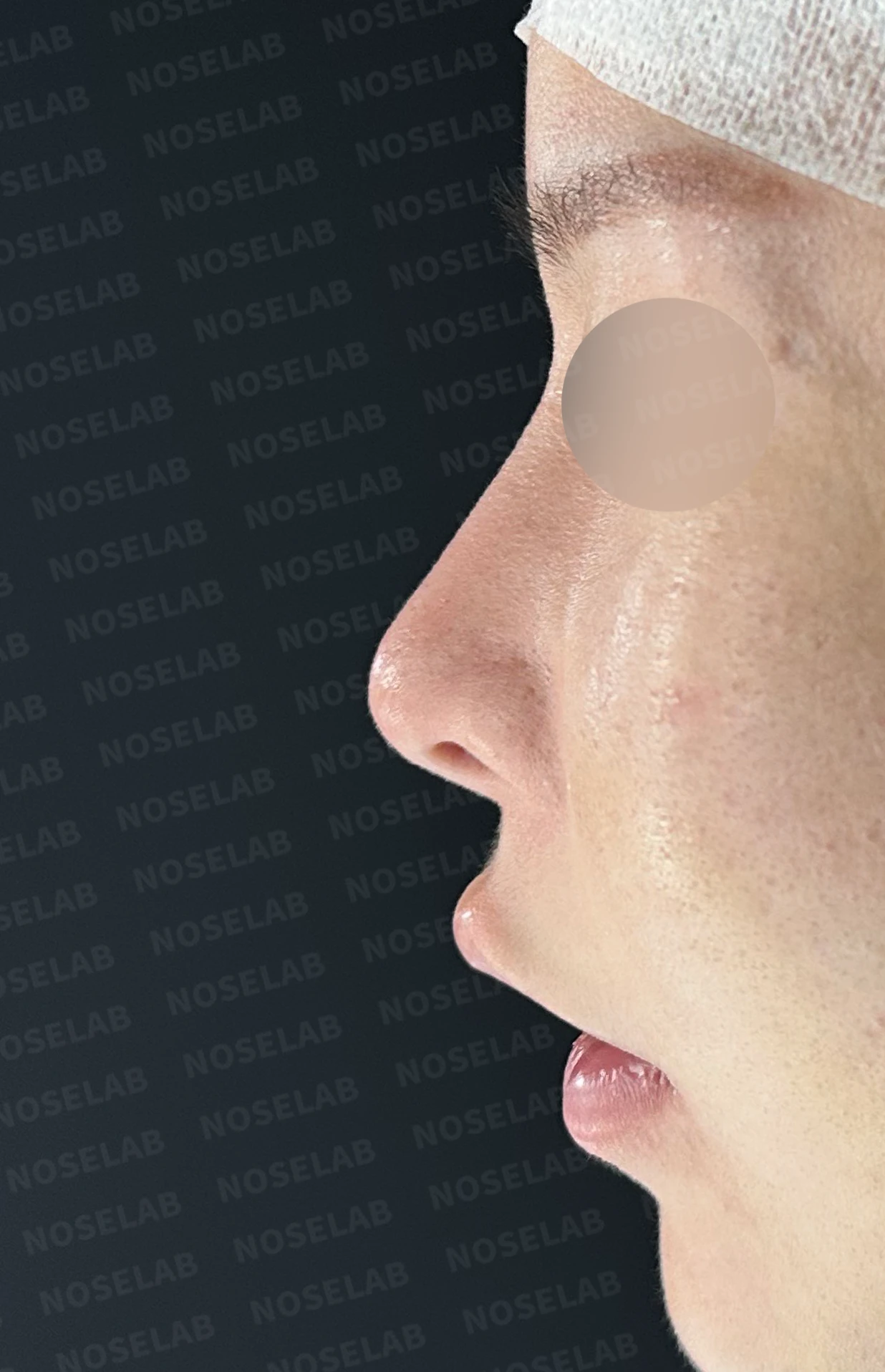
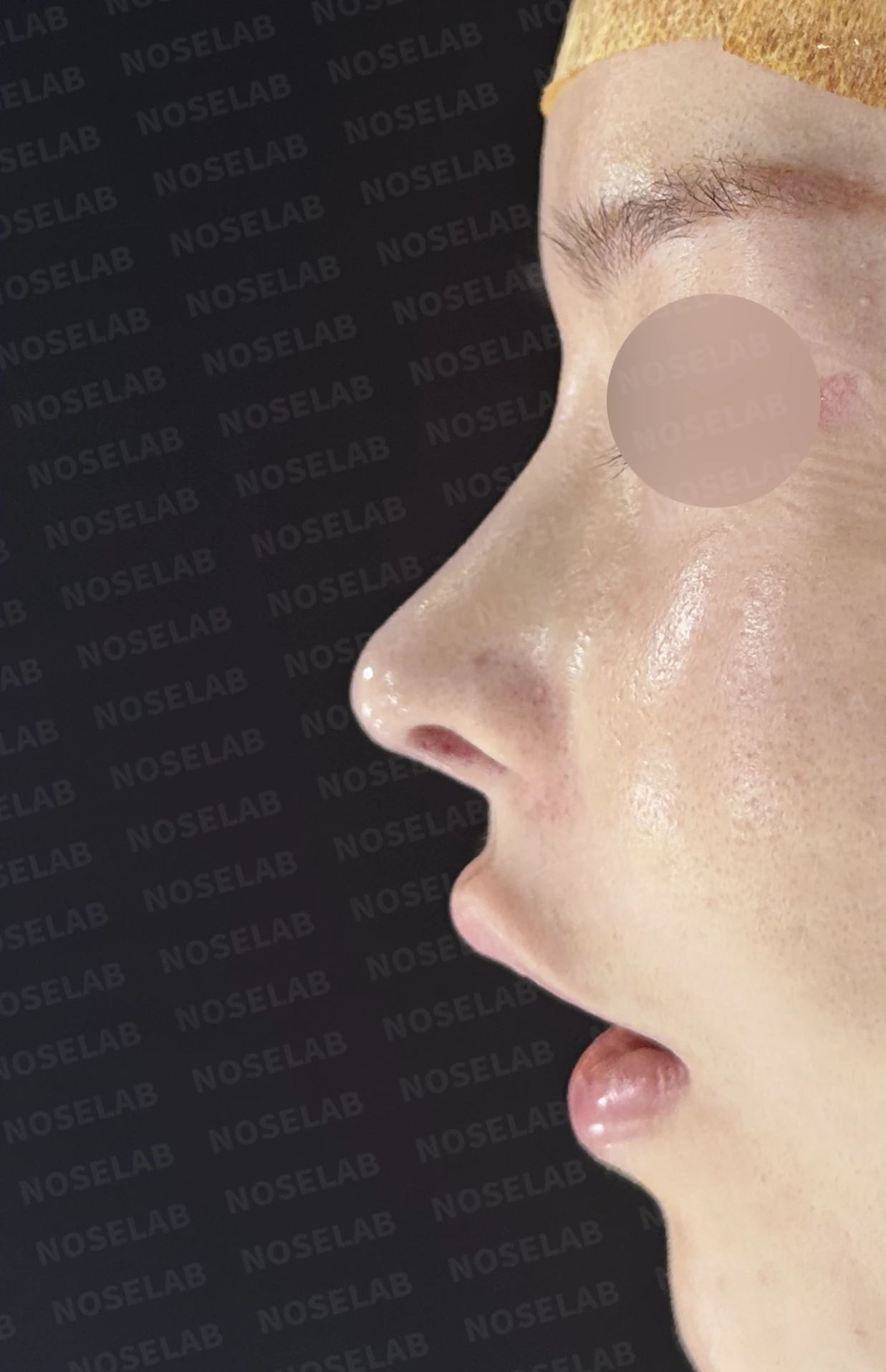
Profile view changes:
Naturally elevated from a previously low nasal tip
Smooth transition between the nasal bridge and tip
Achieving a natural nasal line
Before surgery / Day 0 immediately after surgery Photos taken immediately after surgery show swelling and may differ from the final result.
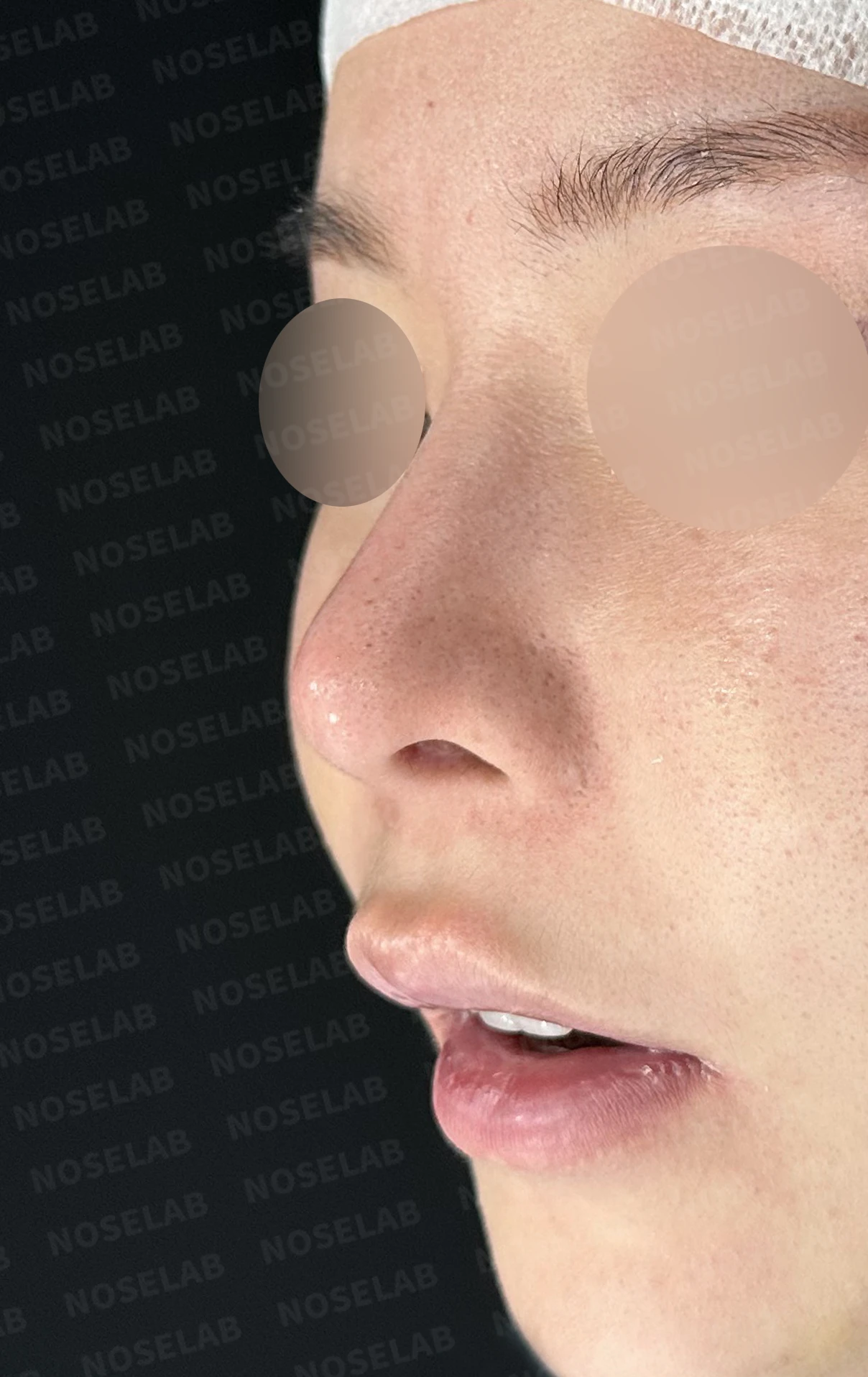
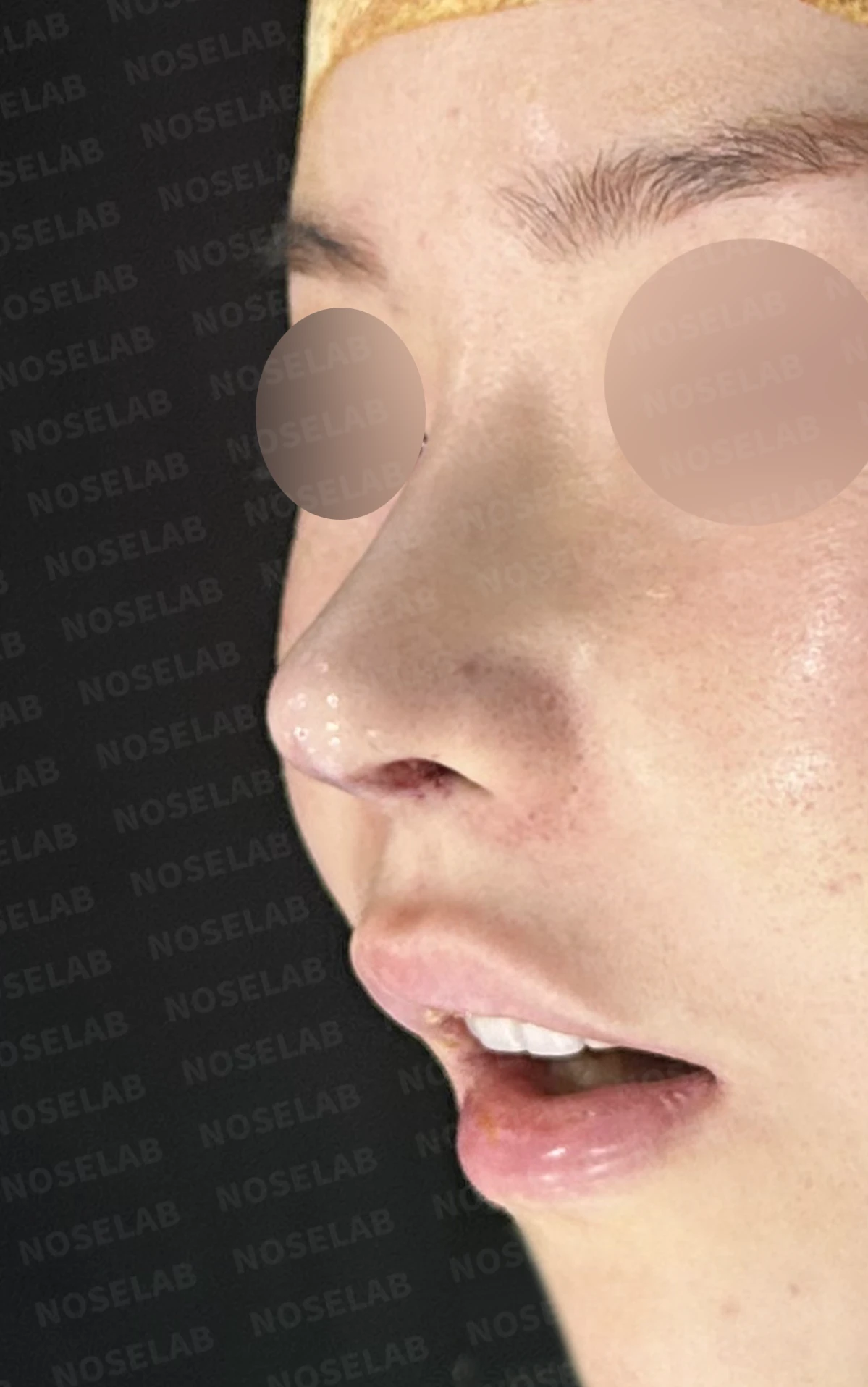
Nasal tip changes:
A soft, non-pointed nasal tip
Securing stable support
Natural height and shape
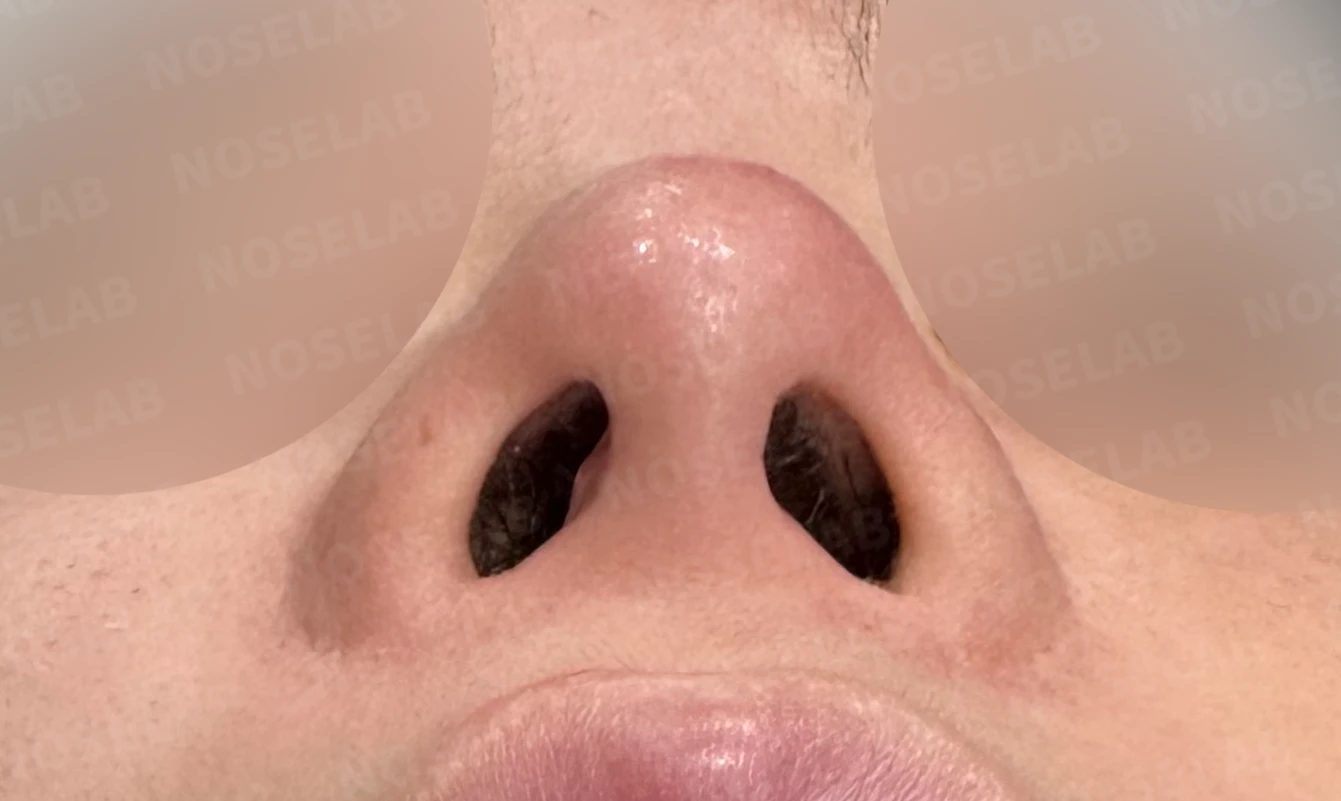
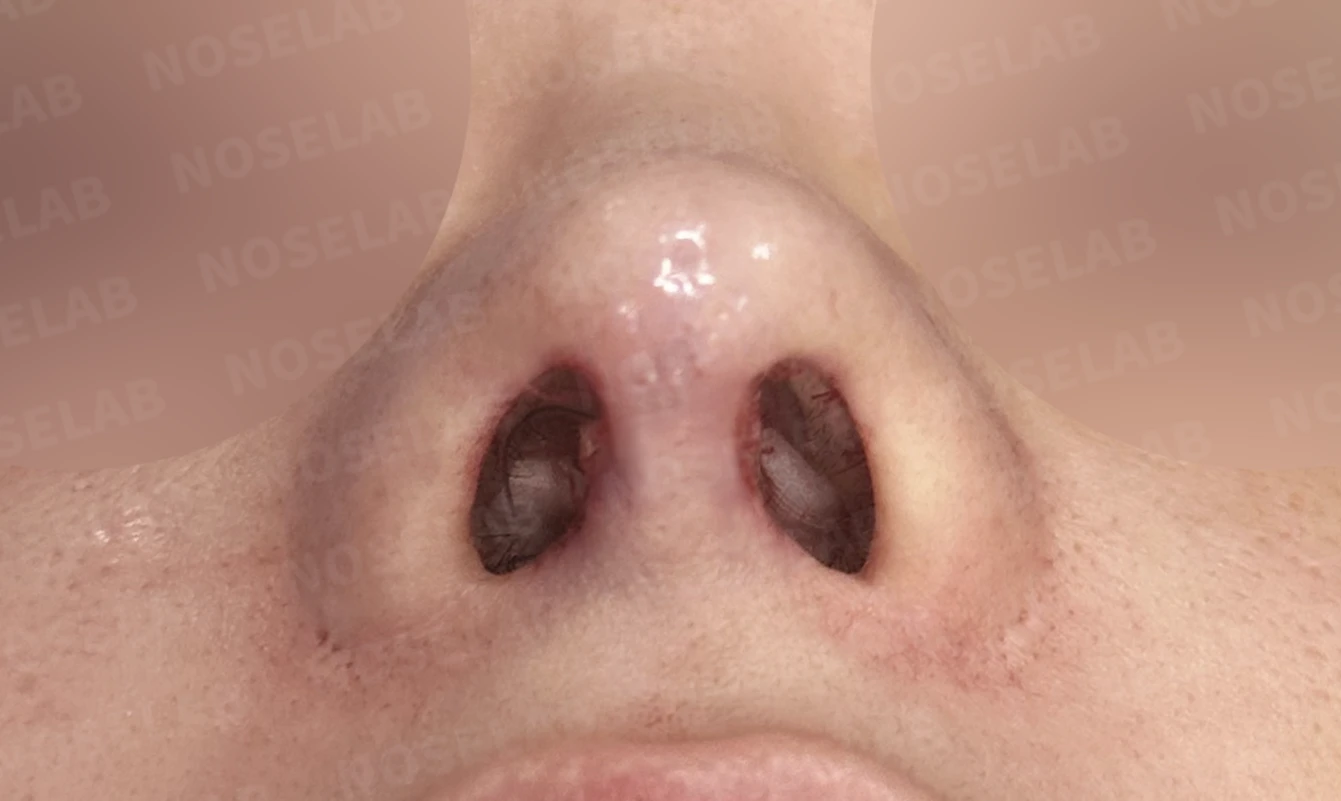
Before surgery / Day 0 immediately after surgery Photos taken immediately after surgery show swelling and may differ from the final result.
💡 Specialist opinion
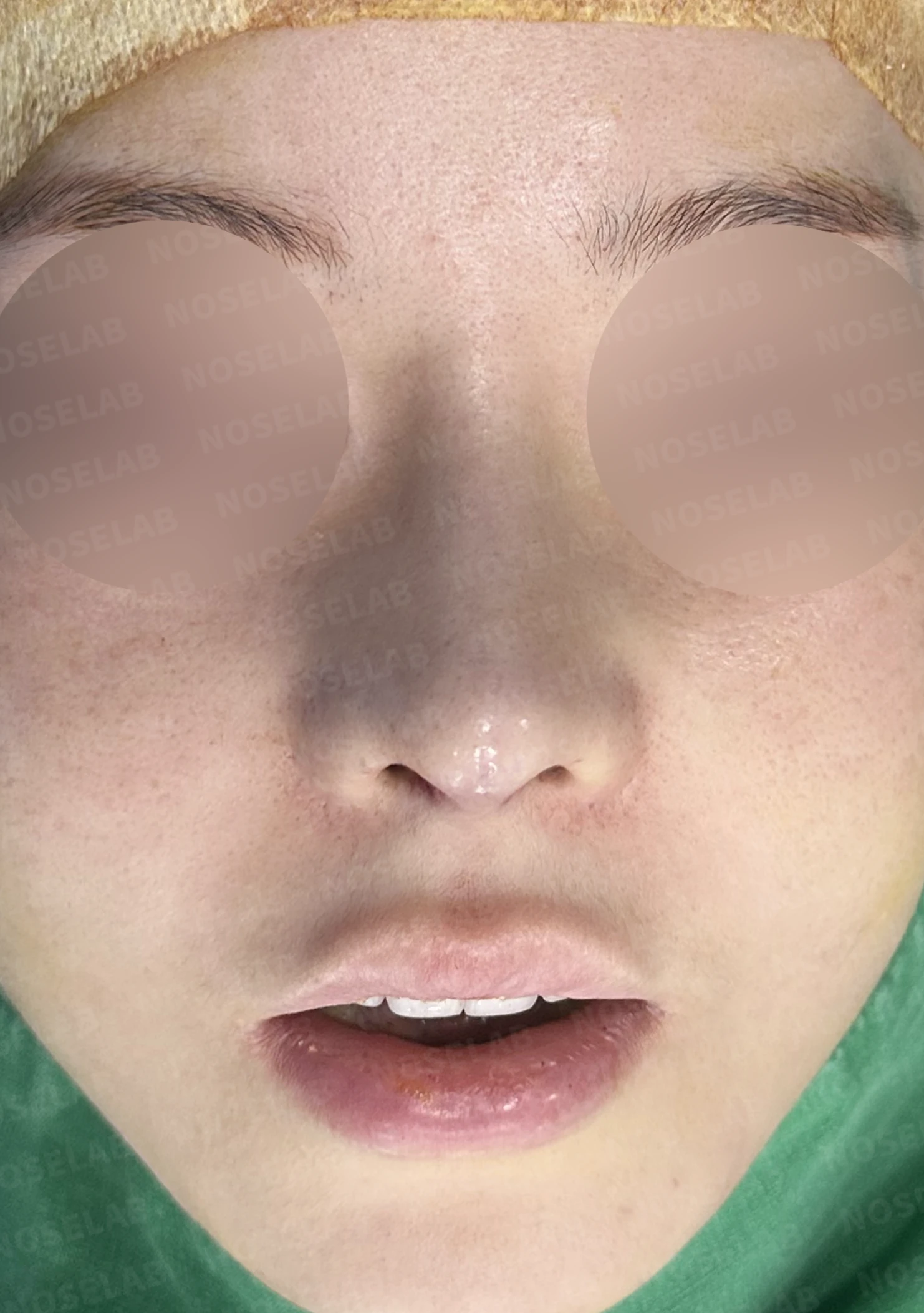
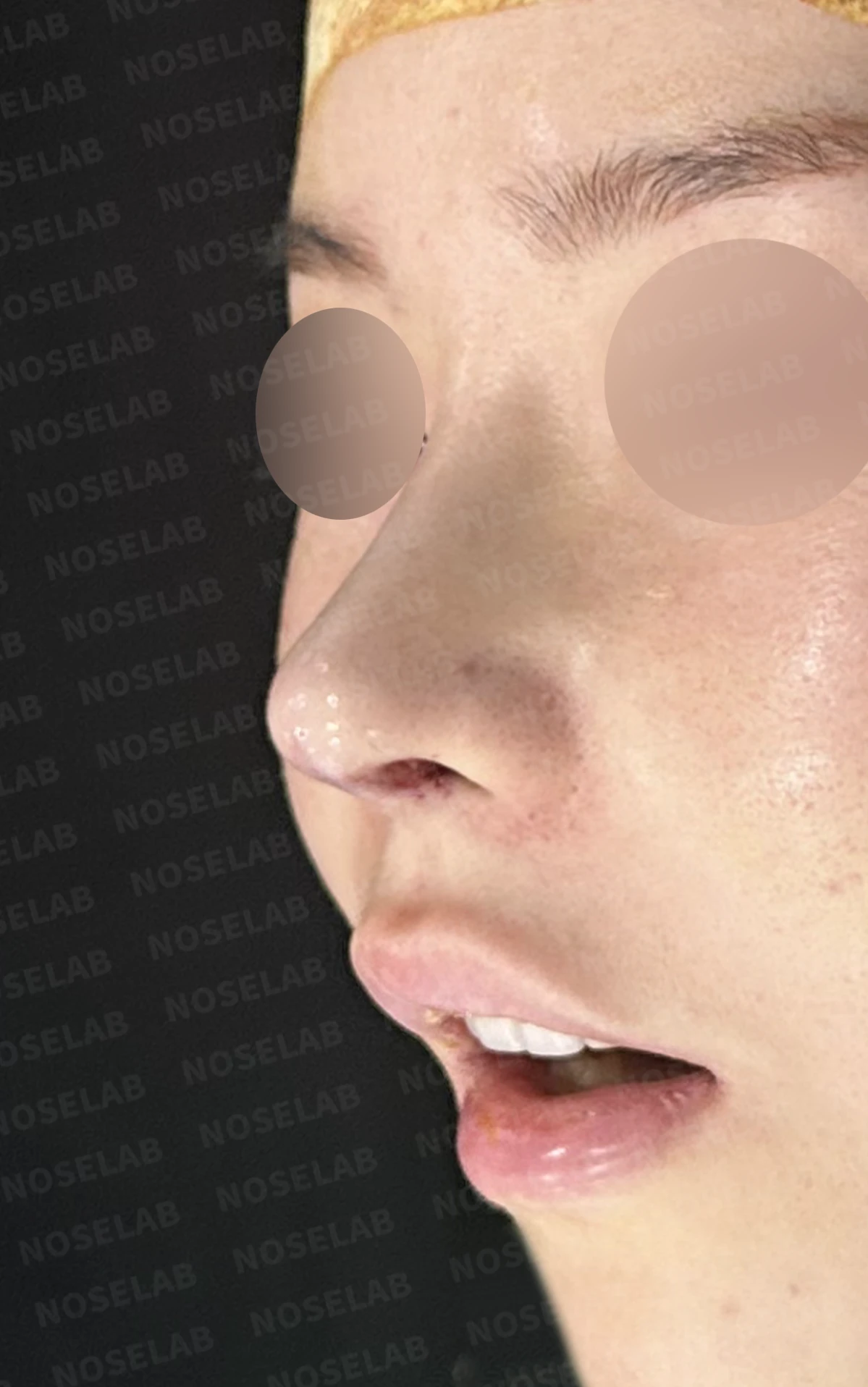
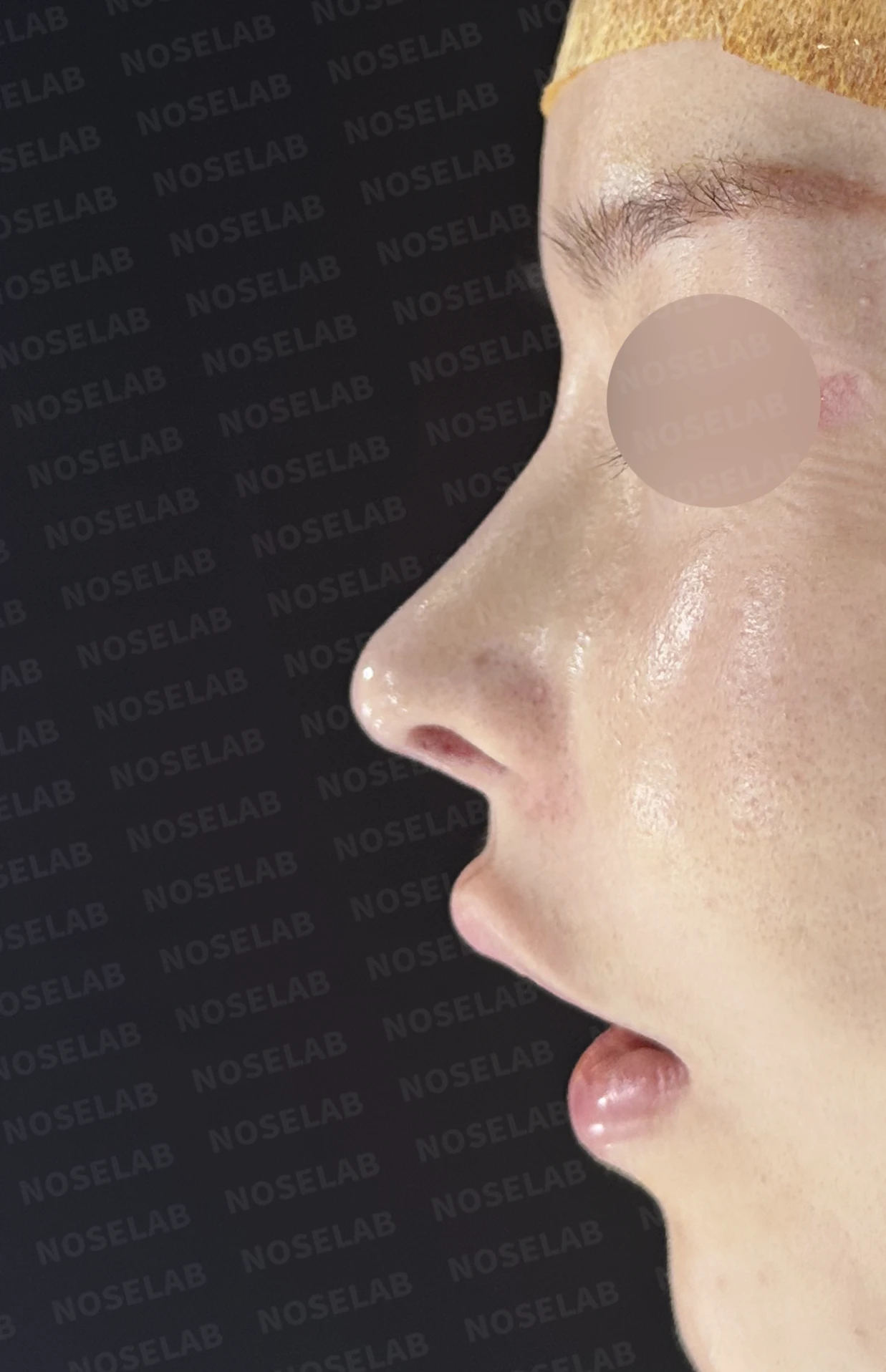
Front, oblique, and profile views on day 0 immediately after surgery. Photos taken immediately after surgery show swelling and may differ from the final result.
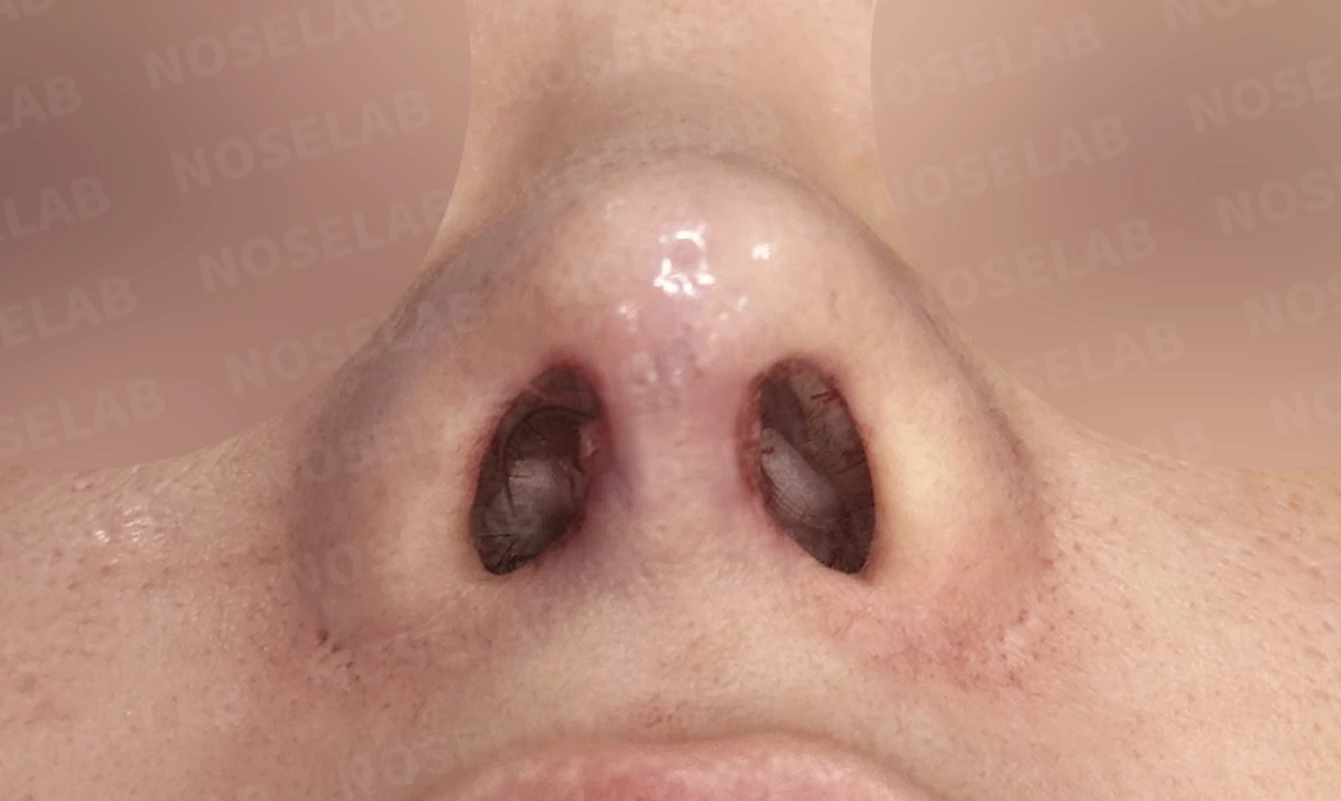
Nostril view on day 0 immediately after surgery. Photos taken immediately after surgery show swelling and may differ from the final result.
In cases like this, it is difficult to achieve adequate support using an implant alone. As demonstrated here, reconstructing the weakened septum with autologous rib cartilage and re-establishing the structural foundation of the nasal tip is essential.
To achieve the soft and natural nasal tip requested by the patient, the surgery was performed without excessive elevation, maintaining harmony with the entire face. I hope this provides helpful insight for those concerned about nasal shape changes after double-jaw surgery. This has been Dr. Peter C. Kang, Medical Director. Thank you.
#closedrhinoplasty #closedrevisionrhinoplasty #autologousribcartilage #septalreconstruction #revisionrhinoplasty #rhinoplastyafterorthognathicsurgery #naturalnose

Limitations and risks
When autologous rib cartilage is used, scarring and pain may remain at the donor site on the chest, and pneumothorax (pleural injury) can occur rarely. Over time, the grafted cartilage may warp or undergo partial resorption.
When the septum is corrected at the same time, nasal obstruction may persist or recur, and in rare cases, septal perforation or changes in smell may occur.
Common potential risks include infection, bleeding, asymmetry, scarring, skin necrosis, and insufficient improvement; results vary depending on individual skin condition and previous surgical history.