English日本語简体中文
Skip to main content
Dr. Peter C. Kang's Rhinoplasty Stories
PrologueBlogMy thoughtsNasal obstructionSurgical journalSurgical photos
About the surgeon

Dermal graft and dermal reinforcement cases

Even when a surgical record notes dermal tissue or dermis reinforcement, it may not be clear whether it refers to autologous dermis or allogeneic material. This page gathers such cases without arbitrarily replacing those expressions with specific material names. You can read actual records where nasal tip skin thinned by an implant was reinforced with dermis while also correcting the nasolabial angle.

It also includes revision rhinoplasty cases where the height was insufficient after a prior dermal graft, or where the nasal bridge appeared uneven. Here, the priority is distinguishing between procedures that reinforced with new dermis and those that removed existing dermis. If you want to know the material type, check the exact terms used in the original text first, without assuming unwritten details.

View before-and-after cases ↓Comprehensive rhinoplasty guide

Searching for surgical cases matching your criteria.
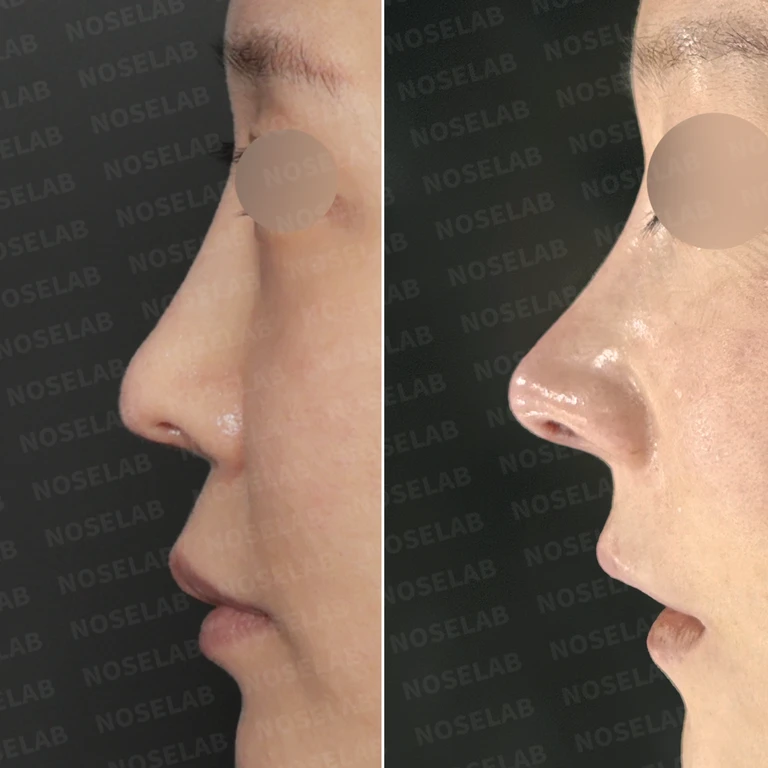
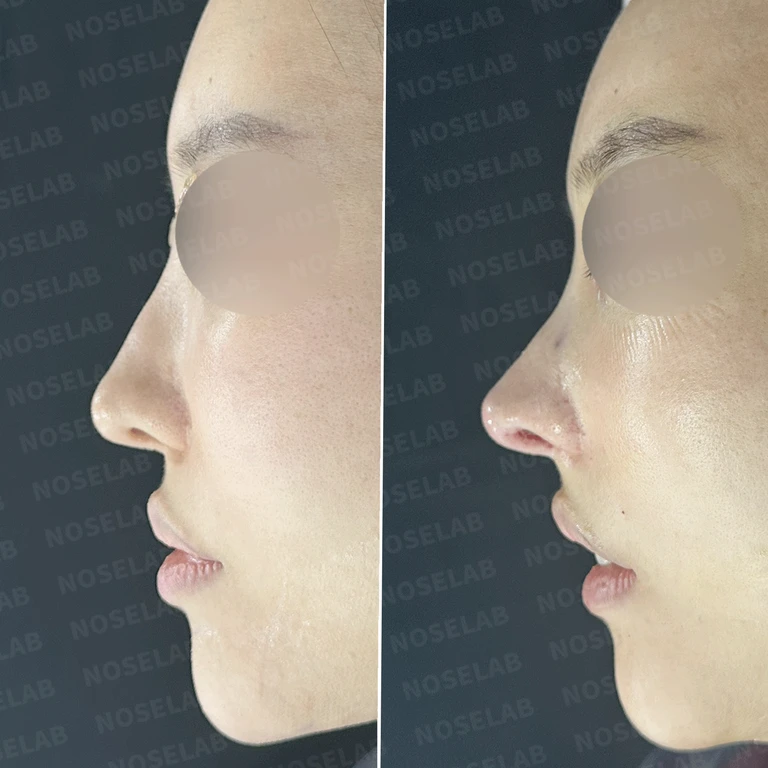
Why an L-shaped silicone implant gradually causes the nasal tip to become upturned: removal and reconstruction — Before-and-after comparison
Before-and-after comparison

Why an L-shaped silicone implant gradually causes the nasal tip to become upturned: removal and reconstruction

A case where an L-shaped implant placed about 10 years ago caused skin thinning and an upturned nasal tip. The L-shaped silicone implant was removed, and nasal tip reconstruction with autologous rib cartilage, septal correction, and dermal tissue reinforcement were performed.

Performed or used in this surgery
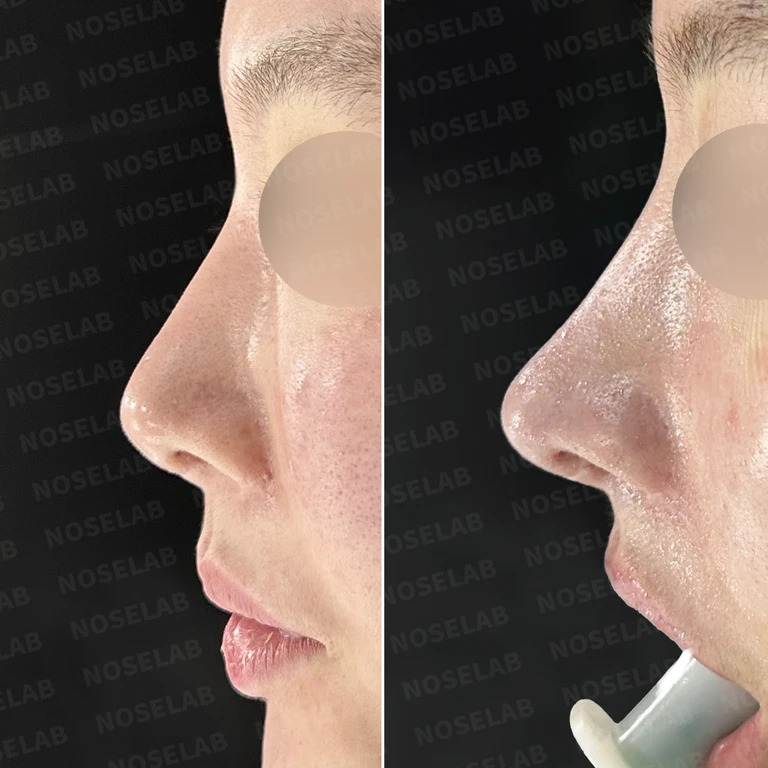
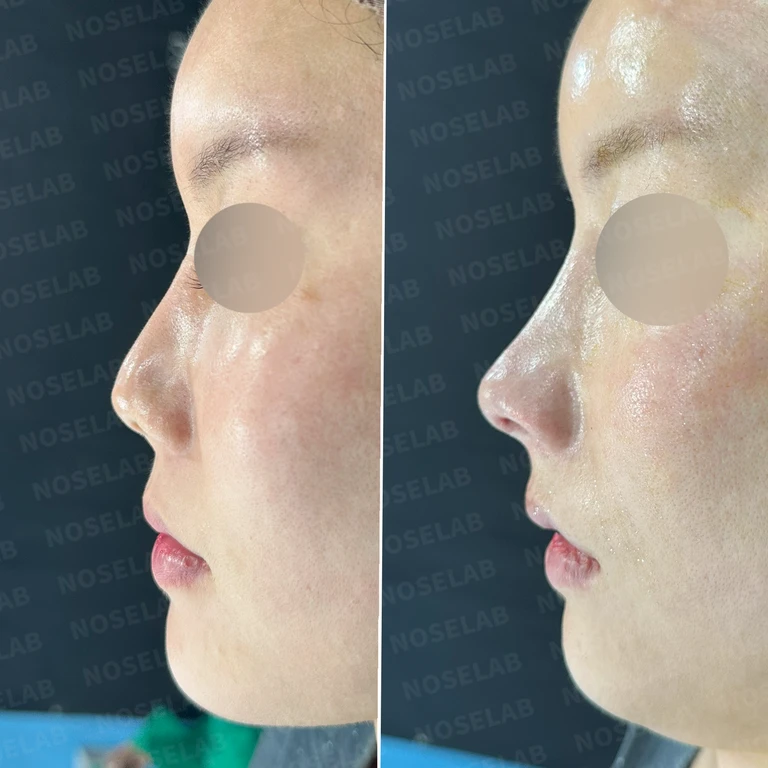
Why mesh remaining in the septum causes an upturned nose, and reconstruction after removal — Before-and-after comparison
Before-and-after comparison

Why mesh remaining in the septum causes an upturned nose, and reconstruction after removal

This is a case where mesh left in the septum after previous surgeries resulted in an upturned nose and excessive nostril show. All foreign material was removed, followed by septal reconstruction using autologous rib cartilage, replacement of the silicone implant, and reinforcement of the skin with acellular dermal matrix.

Previous surgeries and procedures

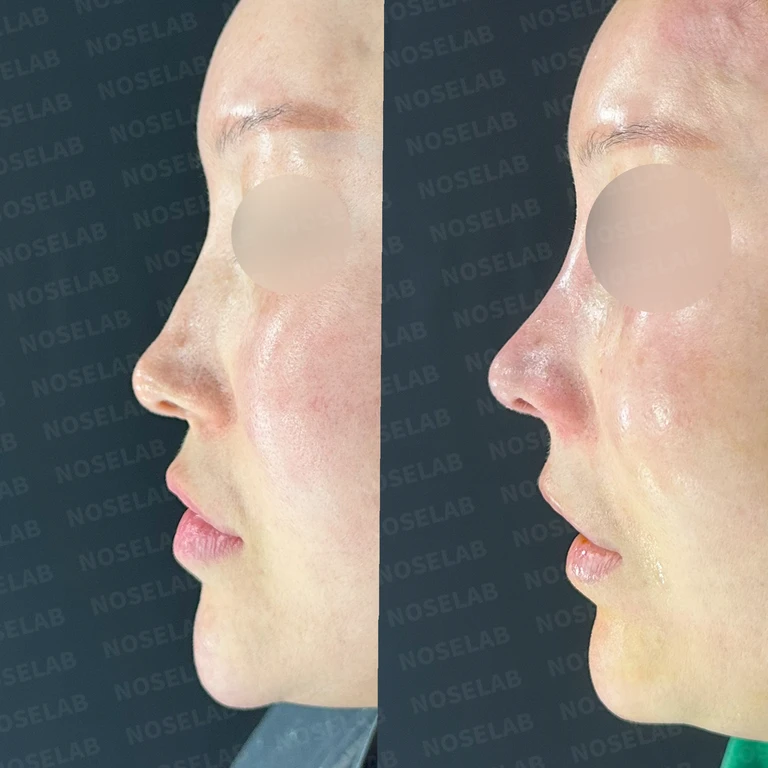
Why nasal tip skin depresses and implants show through after inflammation, and how to reconstruct it — Before-and-after comparison
Before-and-after comparison

Why nasal tip skin depresses and implants show through after inflammation, and how to reconstruct it

A case where repeated surgeries and inflammation led to depressed nasal tip skin and implant show-through. The damaged skin was revised, dermal and cartilage grafts were placed, the septum was reinforced with autologous rib cartilage, and the implant was replaced.

Previous surgeries and procedures · Performed or used in this surgery

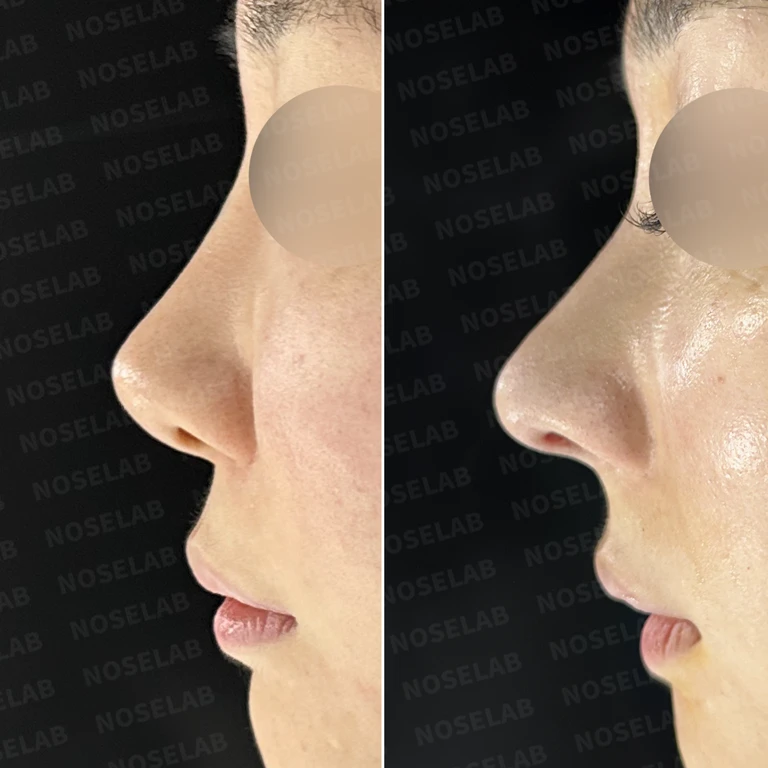
Why a nose operated on twice looks long and drooping, and how septal reconstruction using rib cartilage is performed — Before-and-after comparison
Before-and-after comparison

Why a nose operated on twice looks long and drooping, and how septal reconstruction using rib cartilage is performed

A revision rhinoplasty case where the septum was depleted due to excessive cartilage use in prior surgeries. The septum was reconstructed using autologous rib cartilage, a cartilage fragment on the bridge was removed, and silicone implant replacement was combined with osteotomy.

Performed or used in this surgery

Nasal obstruction from a severely deviated septum: why cartilage reconstruction is necessary — Before-and-after comparison
Before-and-after comparison

Nasal obstruction from a severely deviated septum: why cartilage reconstruction is necessary

In a primary rhinoplasty patient, a severely deviated septum was reconstructed using autologous rib cartilage, and hypertrophied inferior turbinates were reduced. Dermis was grafted into the depressed alar region, and the nasolabial angle was adjusted.

Performed or used in this surgery
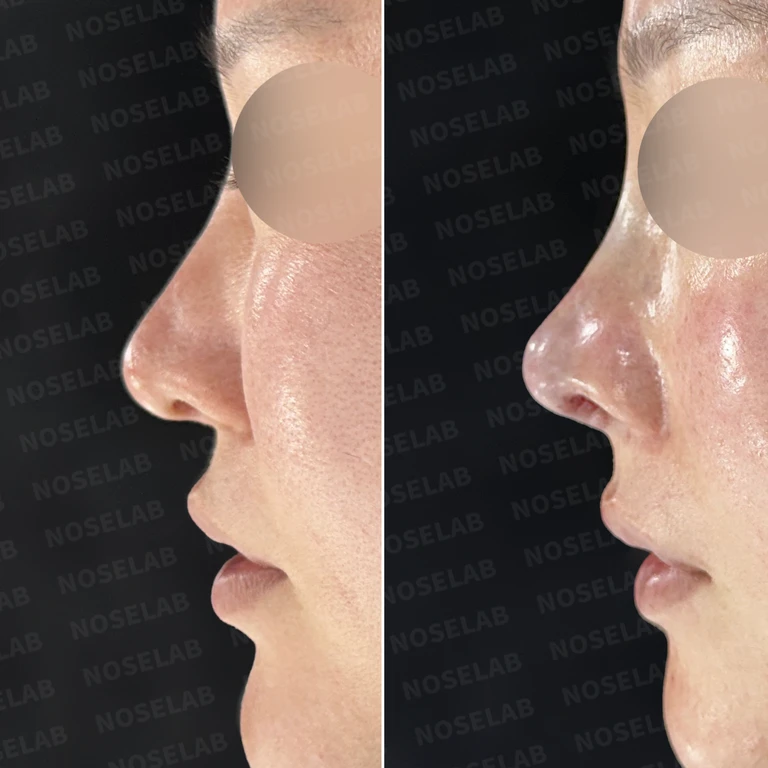
Why a nose operated on multiple times continues to appear upturned, and how septal reconstruction is performed — Before-and-after comparison
Before-and-after comparison

Why a nose operated on multiple times continues to appear upturned, and how septal reconstruction is performed

Following previous surgeries and double-jaw surgery, an upturned nasal tip and nostril asymmetry were precisely corrected using donor rib cartilage septal reconstruction, lower lateral cartilage restoration, and a composite dermis-fat graft to the soft triangle.

Performed or used in this surgery
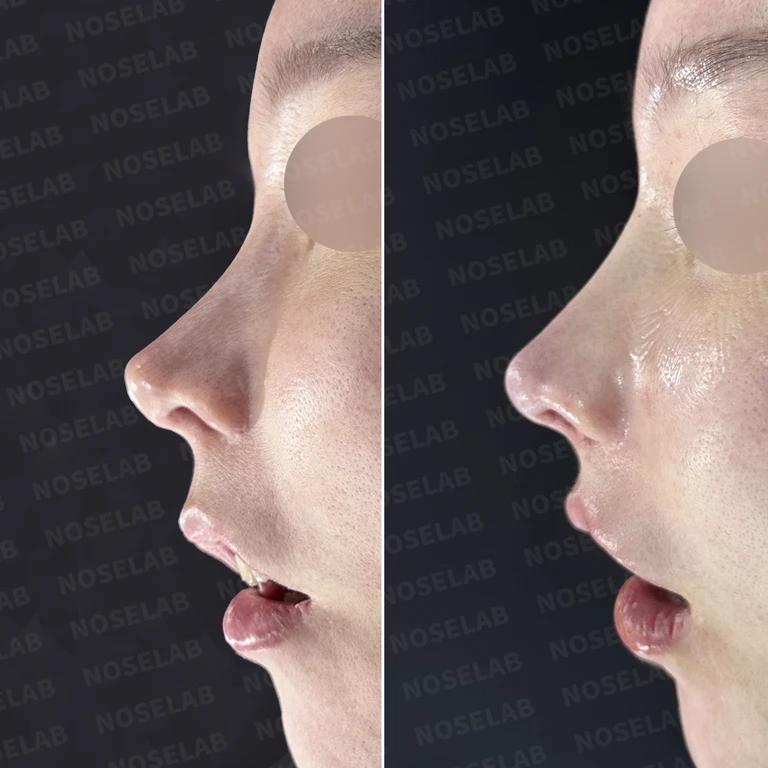
Why nasal obstruction persists after multiple surgeries: How to reconstruct the septum and nasal valve — Before-and-after comparison
Before-and-after comparison

Why nasal obstruction persists after multiple surgeries: How to reconstruct the septum and nasal valve

For a patient whose septum had collapsed after repeated surgeries, causing internal nasal valve stenosis and inferior turbinate adhesions, we performed septal reconstruction with autologous rib cartilage, osteotomy reversal, and adhesiolysis.

Performed or used in this surgery
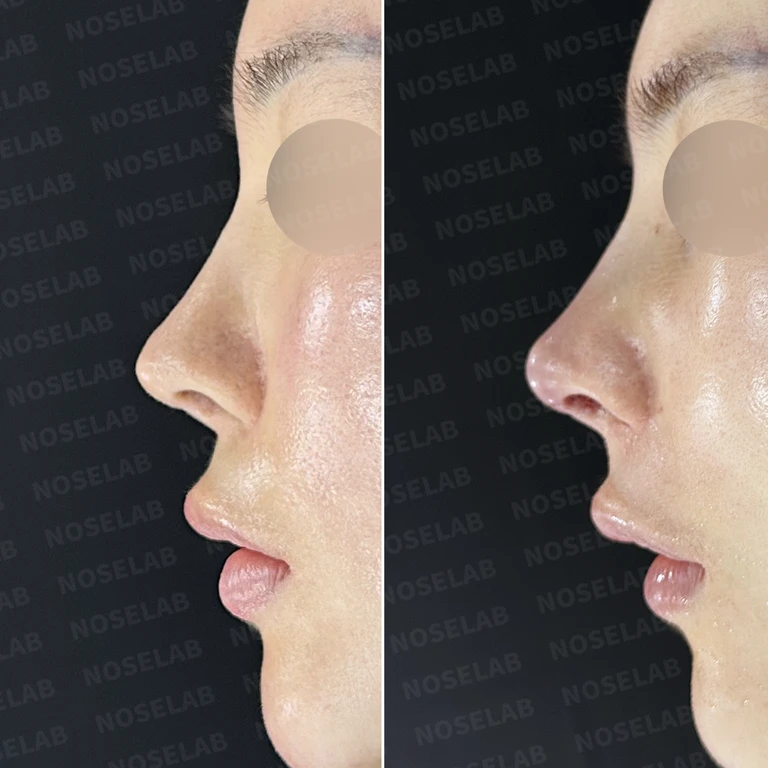
A nose with almost no septal cartilage left: why the nasal tip cannot be elevated — Before-and-after comparison
Before-and-after comparison

A nose with almost no septal cartilage left: why the nasal tip cannot be elevated

A case where the septal support was largely lost from previous surgeries, resulting in nostril asymmetry. The central support was reconstructed with autologous rib cartilage, and the nasal tip was elevated with dermis and cartilage grafts.

Performed or used in this surgery
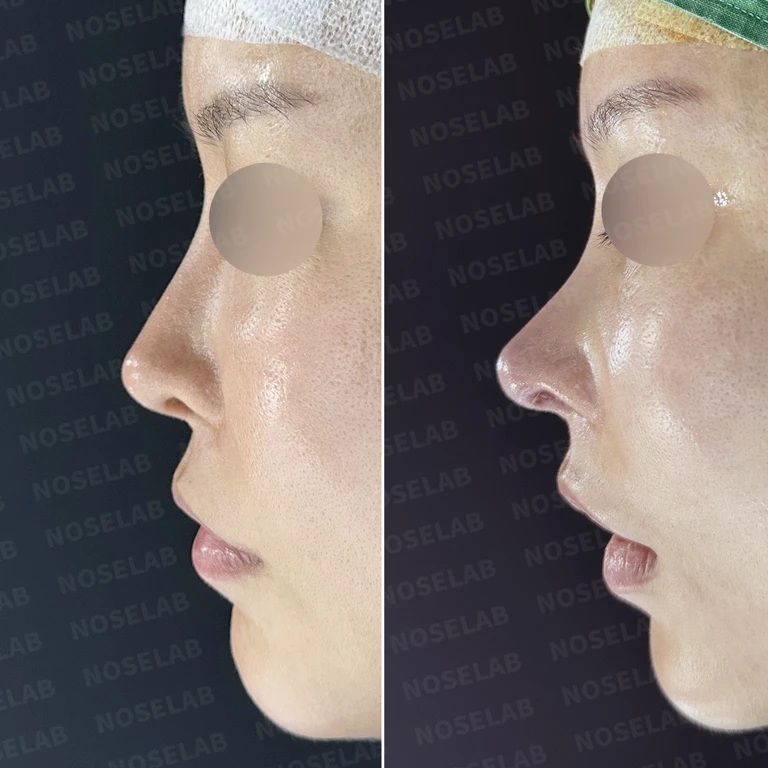
Why nasal tip skin thins and cartilage shows through, and how skin reinforcement is done — Before-and-after comparison
Before-and-after comparison

Why nasal tip skin thins and cartilage shows through, and how skin reinforcement is done

A case of skin thinning, cartilage show-through, and an upturned nose following contracted nose surgery. The skin was reinforced with dermis and autologous rib perichondrium, along with septal extension.

Performed or used in this surgery
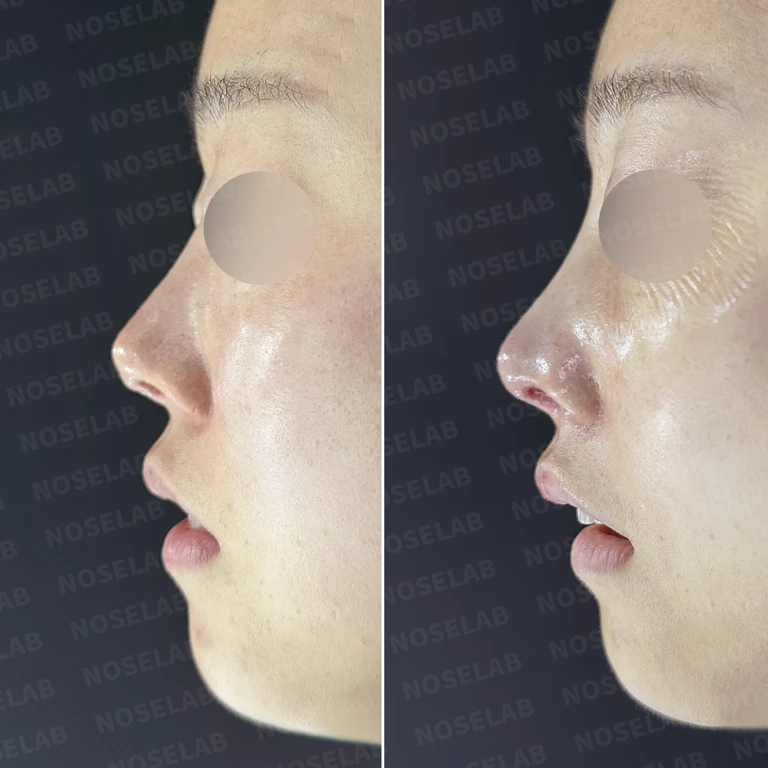
Foreign materials from illegal procedures in the nasal bridge: how to perform removal and total septal reconstruction — Before-and-after comparison
Before-and-after comparison

Foreign materials from illegal procedures in the nasal bridge: how to perform removal and total septal reconstruction

We removed foreign materials from illegal injections in the nasal bridge, completely reconstructed the cartilage-depleted septum using autologous rib cartilage, and performed dermal grafting on the thinned skin.

Performed or used in this surgery
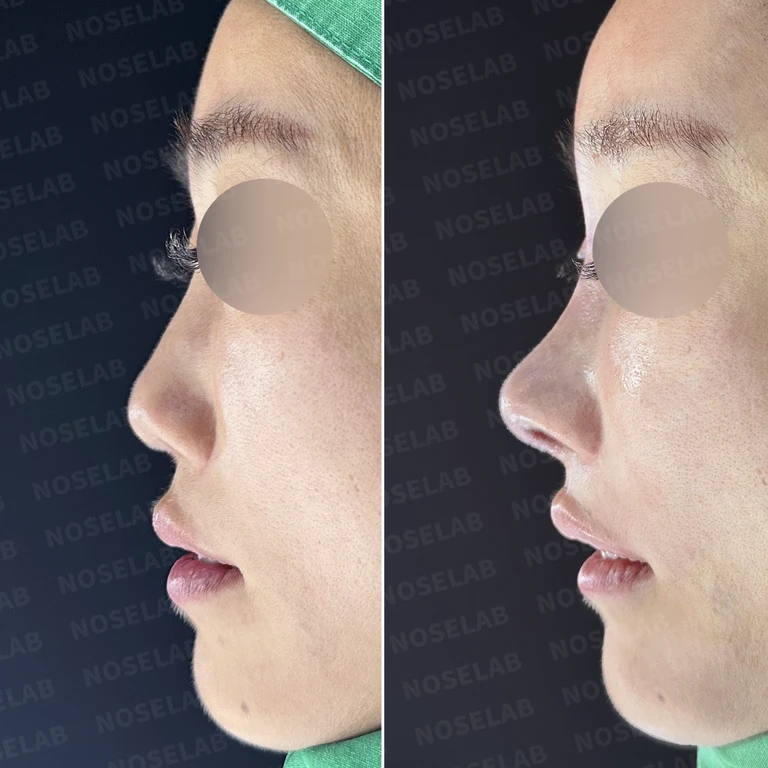
Why the glabella widens and the nasal tip upturns after repeated filler and thread treatments — Before-and-after comparison
Before-and-after comparison

Why the glabella widens and the nasal tip upturns after repeated filler and thread treatments

Foreign materials that had widened the glabella along with the previous implant were removed, and the upturned nose was corrected through partial septal reconstruction using autologous rib cartilage and nasolabial angle adjustment.

Removed in this surgery

Why inflammation recurs after rhinoplasty and how to reconstruct using only autologous tissue — Before-and-after comparison
Before-and-after comparison

Why inflammation recurs after rhinoplasty and how to reconstruct using only autologous tissue

Persistent tip inflammation, deviation, and nasal symptoms following repeated surgeries were resolved by removing previous foreign materials and performing septal reconstruction with autologous rib cartilage alongside functional nasal surgery.

Previous surgeries and procedures

Why the nose looks wide and the tip droops after double jaw surgery, and how to reconstruct it with rib cartilage — Before-and-after comparison
Before-and-after comparison

Why the nose looks wide and the tip droops after double jaw surgery, and how to reconstruct it with rib cartilage

After double jaw surgery and rhinoplasty, a wide-looking nose and drooping tip were improved by removing the previous materials, reconstructing the septum with autologous rib cartilage, and performing nasal sill reduction.

Previous surgeries and procedures · Removed in this surgery

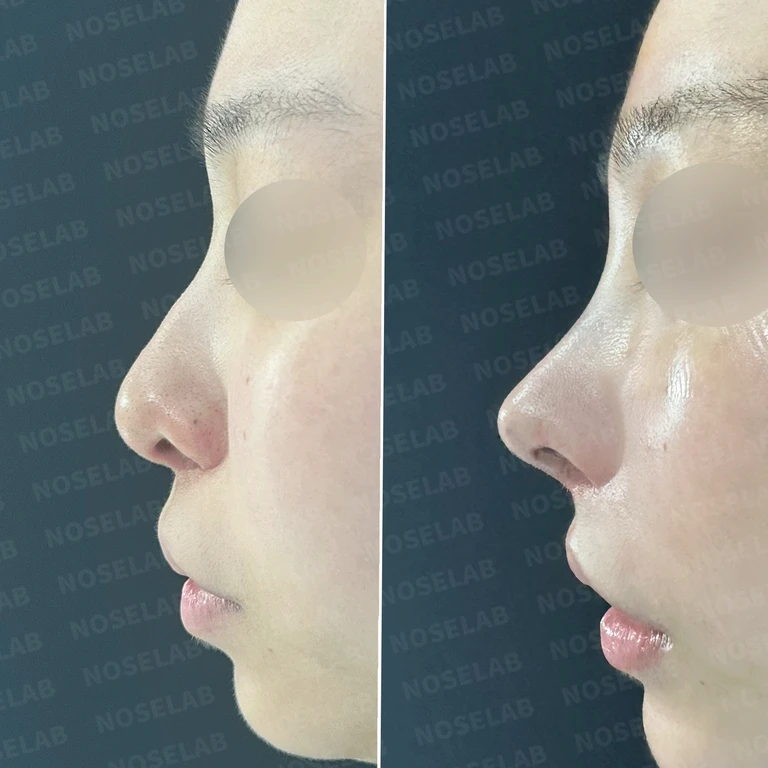
Why a low nasal bridge and bulbous tip persist after multiple surgeries: rib cartilage reconstruction and facial balance — Before-and-after comparison
Before-and-after comparison

Why a low nasal bridge and bulbous tip persist after multiple surgeries: rib cartilage reconstruction and facial balance

A case where a previously placed dermal graft was removed, followed by autologous rib cartilage reconstruction, paranasal augmentation, and chin implant surgery to address a persistent low nasal bridge, bulbous tip, and protruding mouth.

Previous surgeries and procedures · Removed in this surgery

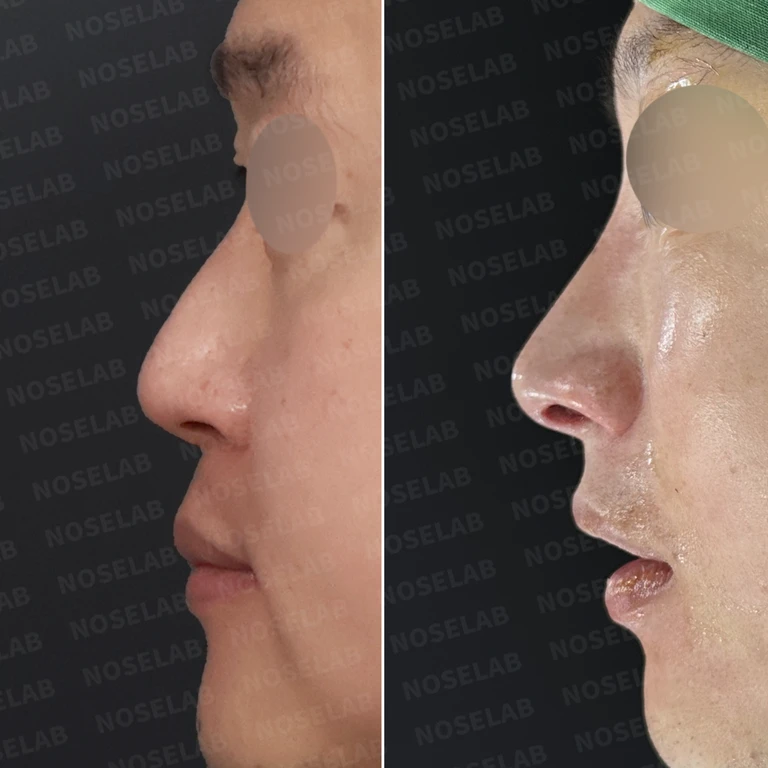
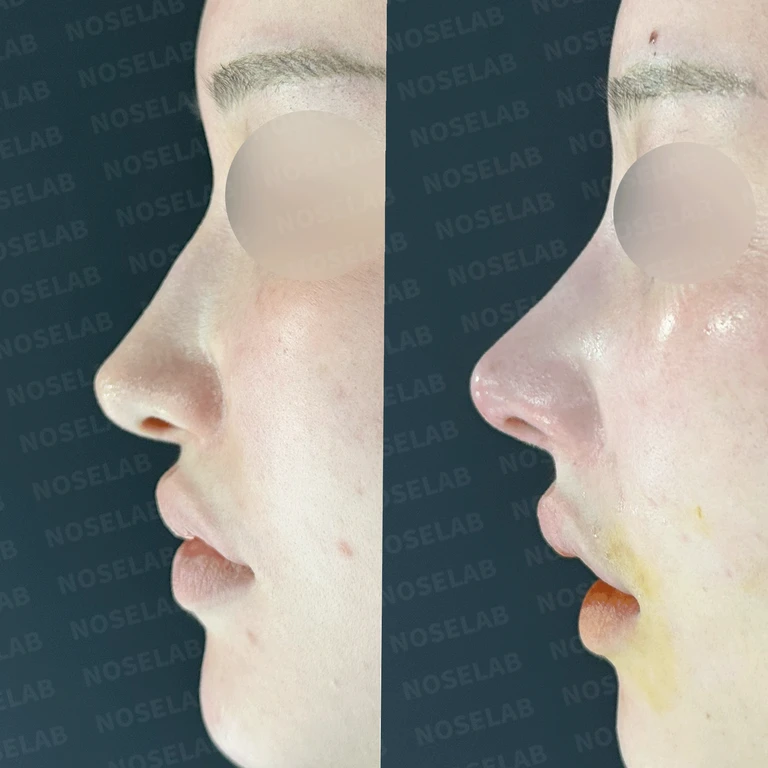
An uneven nasal bridge after a dermal graft: causes and implant-free reconstruction — Before-and-after comparison
Before-and-after comparison

An uneven nasal bridge after a dermal graft: causes and implant-free reconstruction

A case where a previously placed dermal graft had caused an uneven nasal bridge, alongside an unresolved bulbous nose and nostril asymmetry, which were corrected by completely removing the existing dermis and performing a comprehensive reconstruction using autologous rib cartilage.

Previous surgeries and procedures · Removed in this surgery

Septal perforation and nasal tip cartilage show-through after repeated rhinoplasties: how reconstruction is performed — Before-and-after comparison
Before-and-after comparison

Septal perforation and nasal tip cartilage show-through after repeated rhinoplasties: how reconstruction is performed

A case where autologous rib cartilage was used for full septal reconstruction alongside dermis grafting to address repeated surgical history, septal perforation, and thinned nasal tip skin.

Performed or used in this surgery
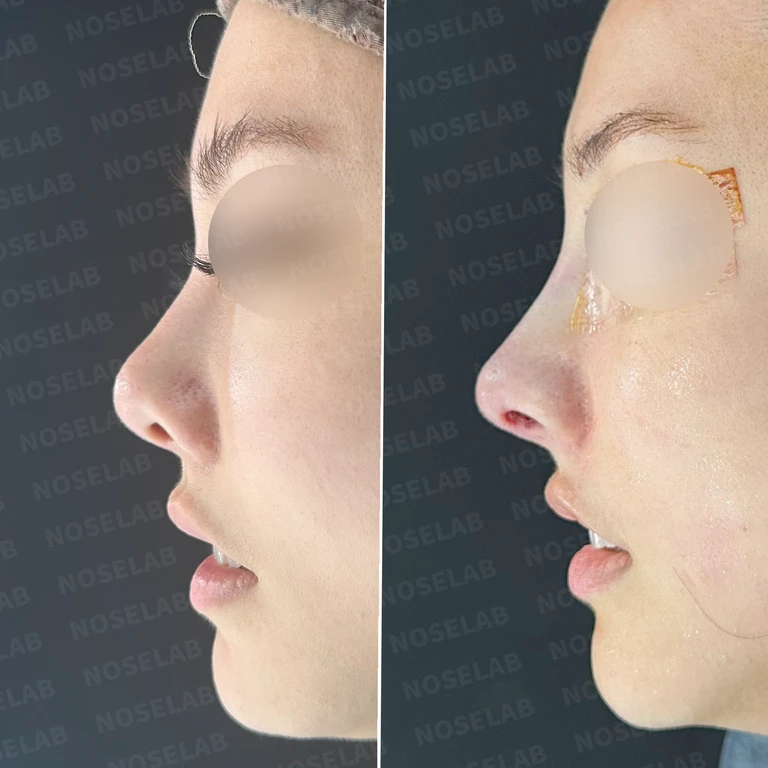
How the nose changes when donor rib cartilage is resorbed, and how autologous rib cartilage reconstruction is performed — Before-and-after comparison
Before-and-after comparison

How the nose changes when donor rib cartilage is resorbed, and how autologous rib cartilage reconstruction is performed

For a patient whose nasal tip had shrunk, whose alae appeared pinched, and whose nasal bridge developed scarring due to donor rib cartilage resorption, we performed alar reconstruction with autologous rib cartilage, septal extension, and cartilage and dermal graft reinforcement.

Performed or used in this surgery
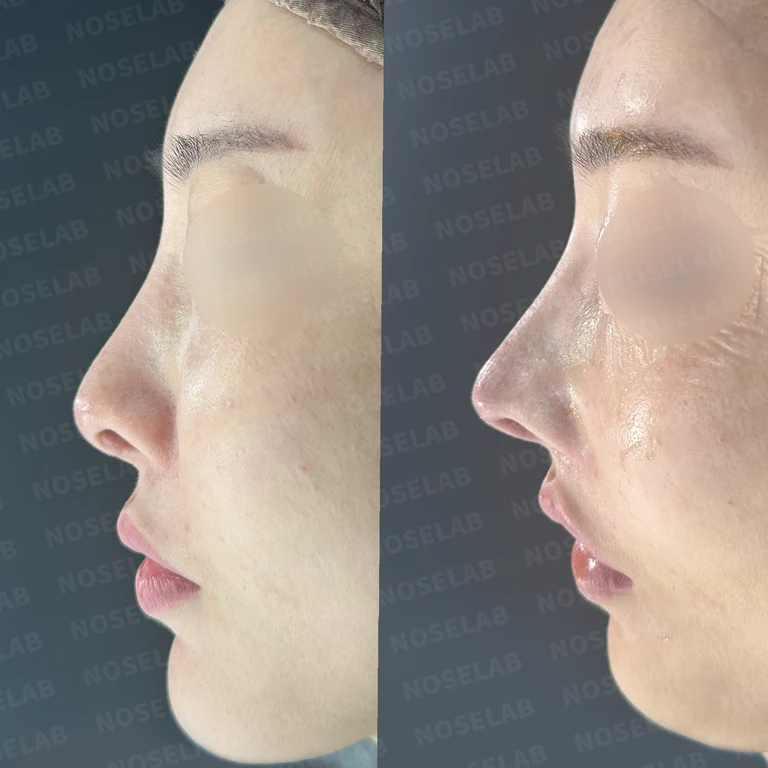
Why long-standing contracted noses and crooked noses occur together, and how reconstruction is performed — Before-and-after comparison
Before-and-after comparison

Why long-standing contracted noses and crooked noses occur together, and how reconstruction is performed

A case correcting a contracted nose, crooked nose, and pinched nostrils that developed after repeated surgeries, using silicone implant and scar tissue removal, nasal tip reconstruction with autologous rib cartilage, alar reconstruction with ear cartilage, and dermal grafting.

Performed or used in this surgery
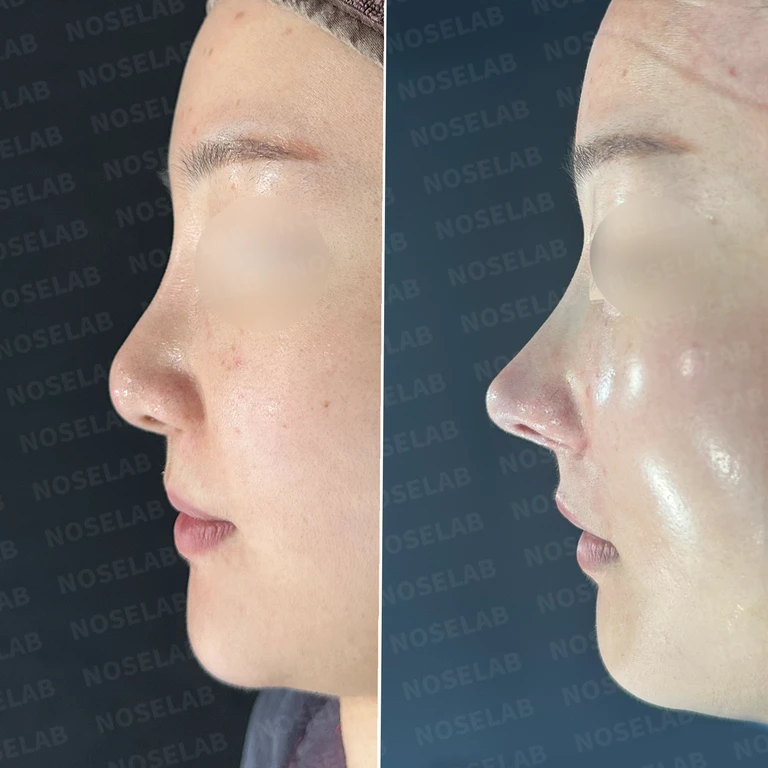
No search results found

Please try searching with different keywords.

Scroll to keep reading

1 / 3Next case

Common questions before reading the cases

If it says dermis reinforcement, does that mean autologous dermis was used?

That phrasing alone does not confirm autologous dermis. Among actual surgical records, some simply state that the nasal tip skin was reinforced with dermal tissue. Cases where terms like autologous dermis or artificial dermis are clearly specified can be read under those corresponding topics, and statements that do not specify the material are best understood within what is documented.

Are there cases where the nose remained low or uneven after a dermal graft?

There is a record noting that sufficient height was not achieved after a prior dermal graft, as well as a record where dermis on an uneven nasal bridge was removed and replaced with autologous rib cartilage. These two records represent revision situations in different patients. Rather than grouping insufficient height and surface irregularity as the same problem, it helps to distinguish the prior graft site from what was performed in the revision.

Related topics to explore

Autologous dermisArtificial and allogeneic dermisSkin and soft tissue reinforcementThin nasal skin

Surgical records referenced in this guide

  • Why an L-shaped silicone implant gradually causes the nasal tip to become upturned: removal and reconstruction
  • Why a low nasal bridge and bulbous tip persist after multiple surgeries: rib cartilage reconstruction and facial balance
  • An uneven nasal bridge after a dermal graft: causes and implant-free reconstruction
Original article

Read more records

Planning a visit to Seoul?Prepare your consultation with the NOSELAB team.

International patient guideWhatsApp ↗
Dr. Peter C. Kang's Rhinoplasty Stories
Rhinoplasty guideCases by topicDr. Peter C. KangNaver Blog ↗
View original photo
Enlarged photo
WhatsAppChat with NOSELAB↗