Hello, I am Dr. Peter C. Kang.
Today, I would like to share the case of a patient who visited our clinic after suffering from recurrent inflammation and functional problems following multiple rhinoplasties.
🔍 Surgical history
Previous surgical history:
- 8 years ago: Primary rhinoplasty (silicone implant + donor rib cartilage + ear cartilage + Alloderm)
- 2 years ago: Revision rhinoplasty to correct a crooked nose (silicone implant + septum + autologous rib cartilage + ear cartilage + Alloderm)
- 1 year ago: Partial revision surgery to treat inflammation (nasal tip cartilage removal + dermal graft)
Postoperative concerns:
- Inflammation developed at 6 months
- Persistent nasal tip redness despite antibiotic treatment
- Frequent crusting in the right nasal roof area
- Pooling of nasal discharge on the left side
Medical history:
- Preexisting rhinitis and sinusitis
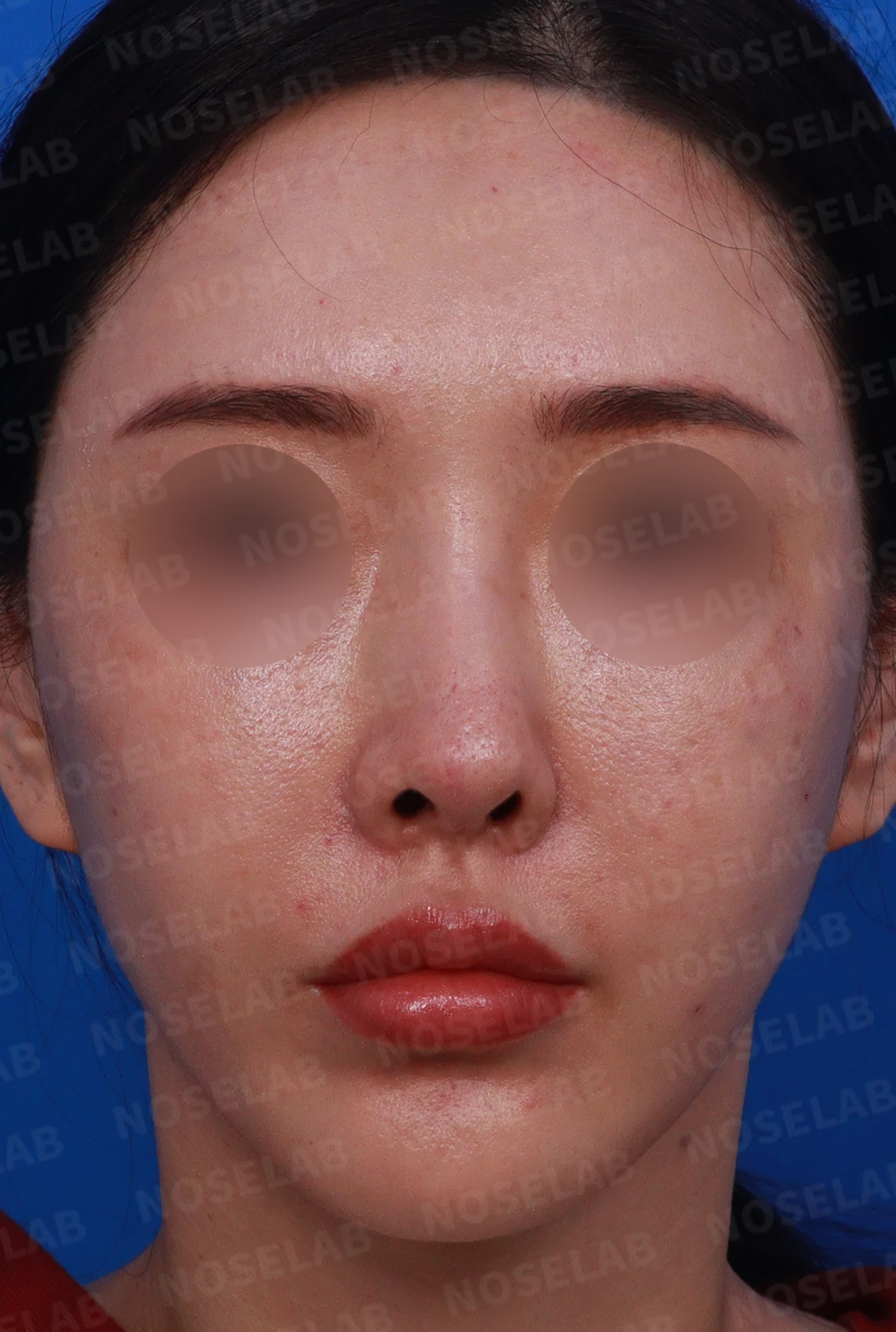
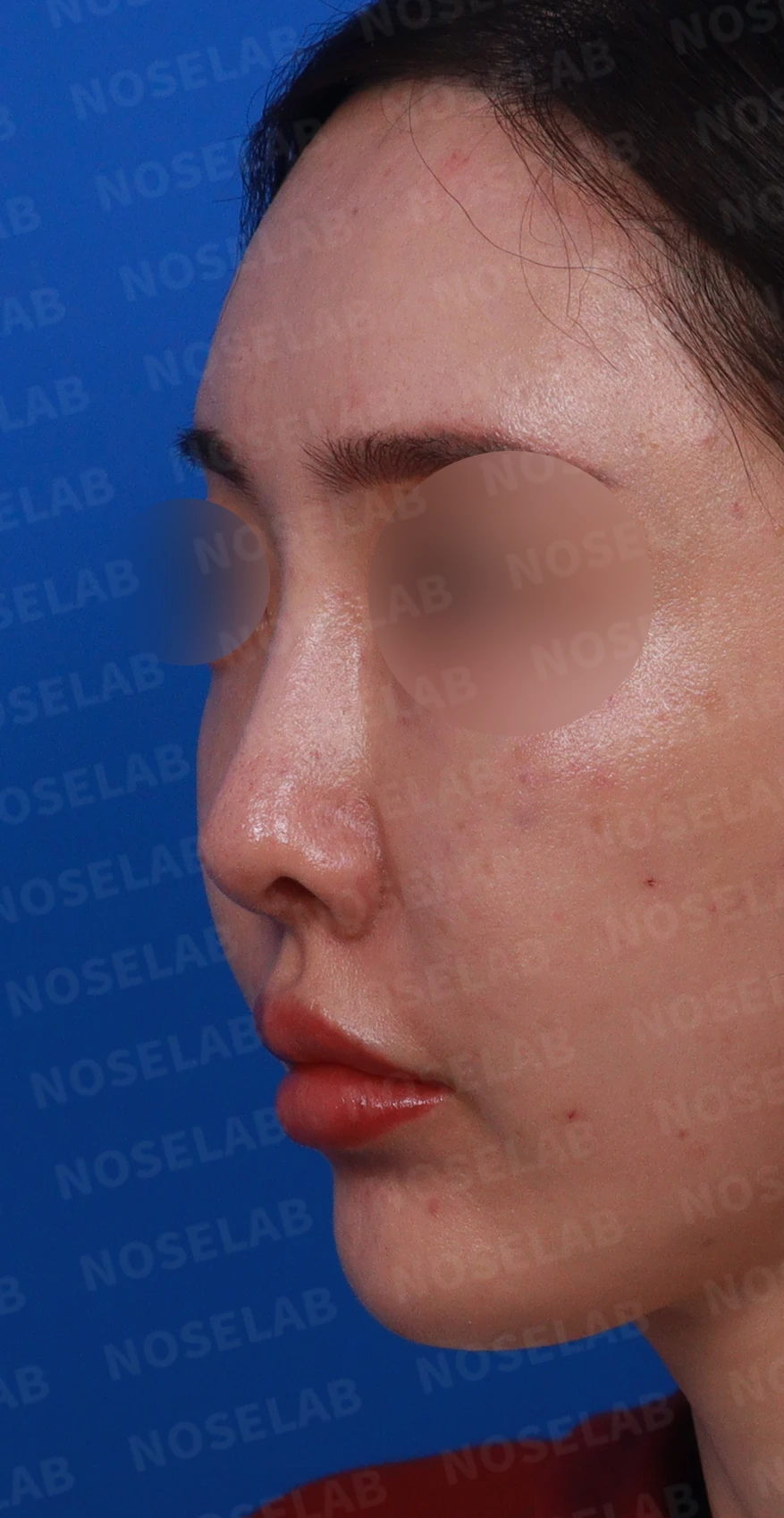
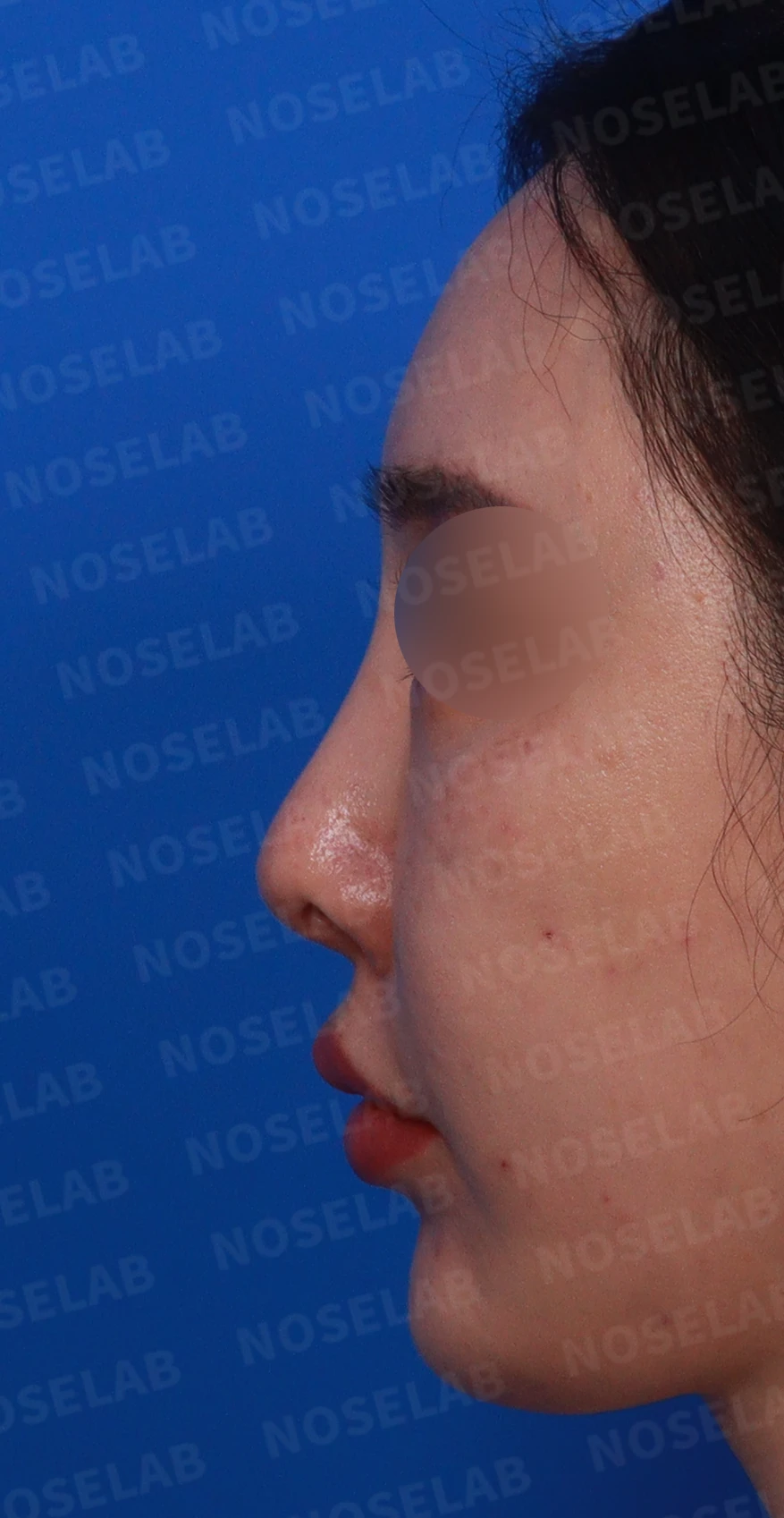
Design consultation: front, left oblique, and profile views.
Patient's requests
Areas requested for improvement:
- Feminine profile line
- Reduced nostril visibility
- Making the midface appear shorter
- Correction of the crooked nose appearance
- Resolution of functional issues
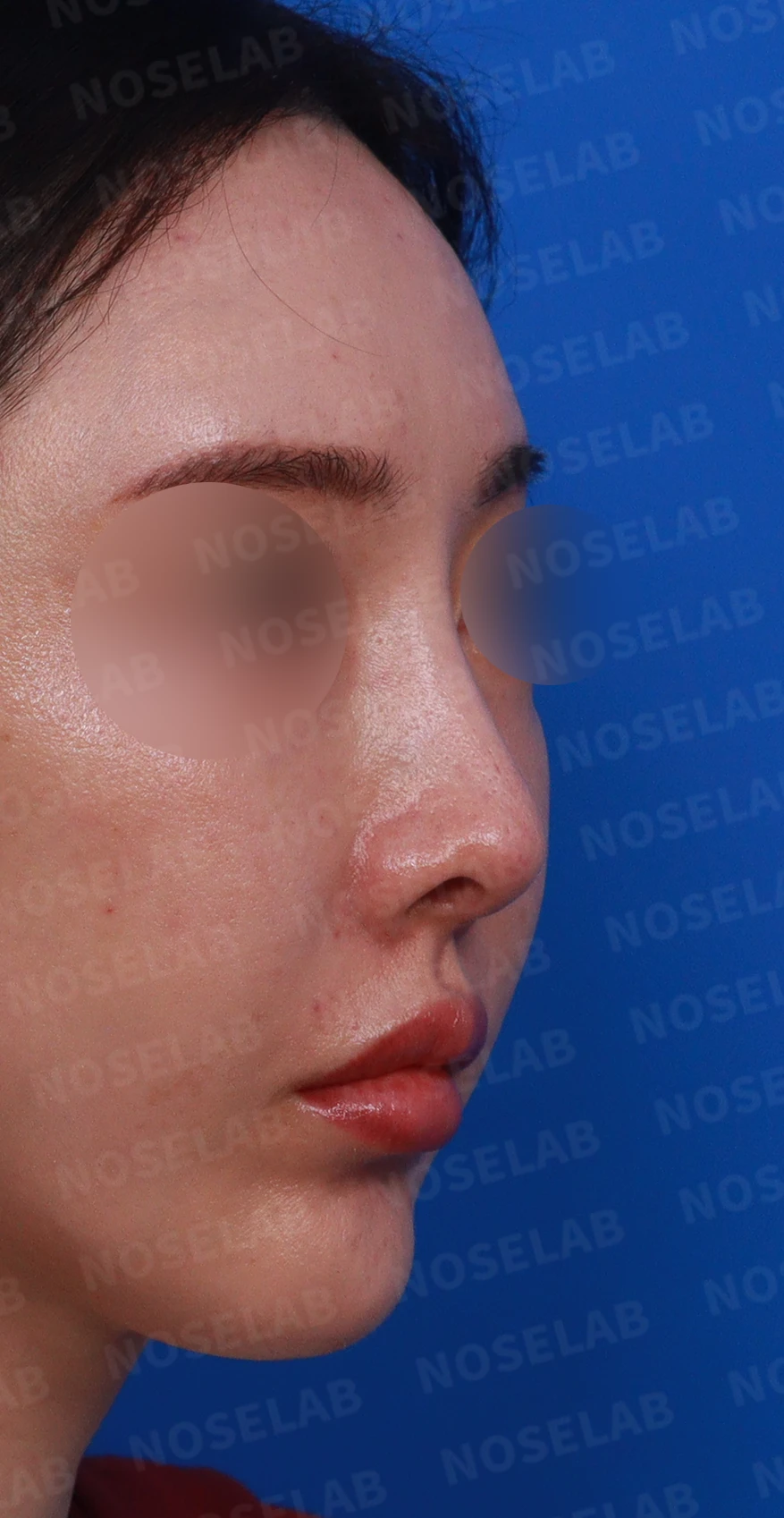
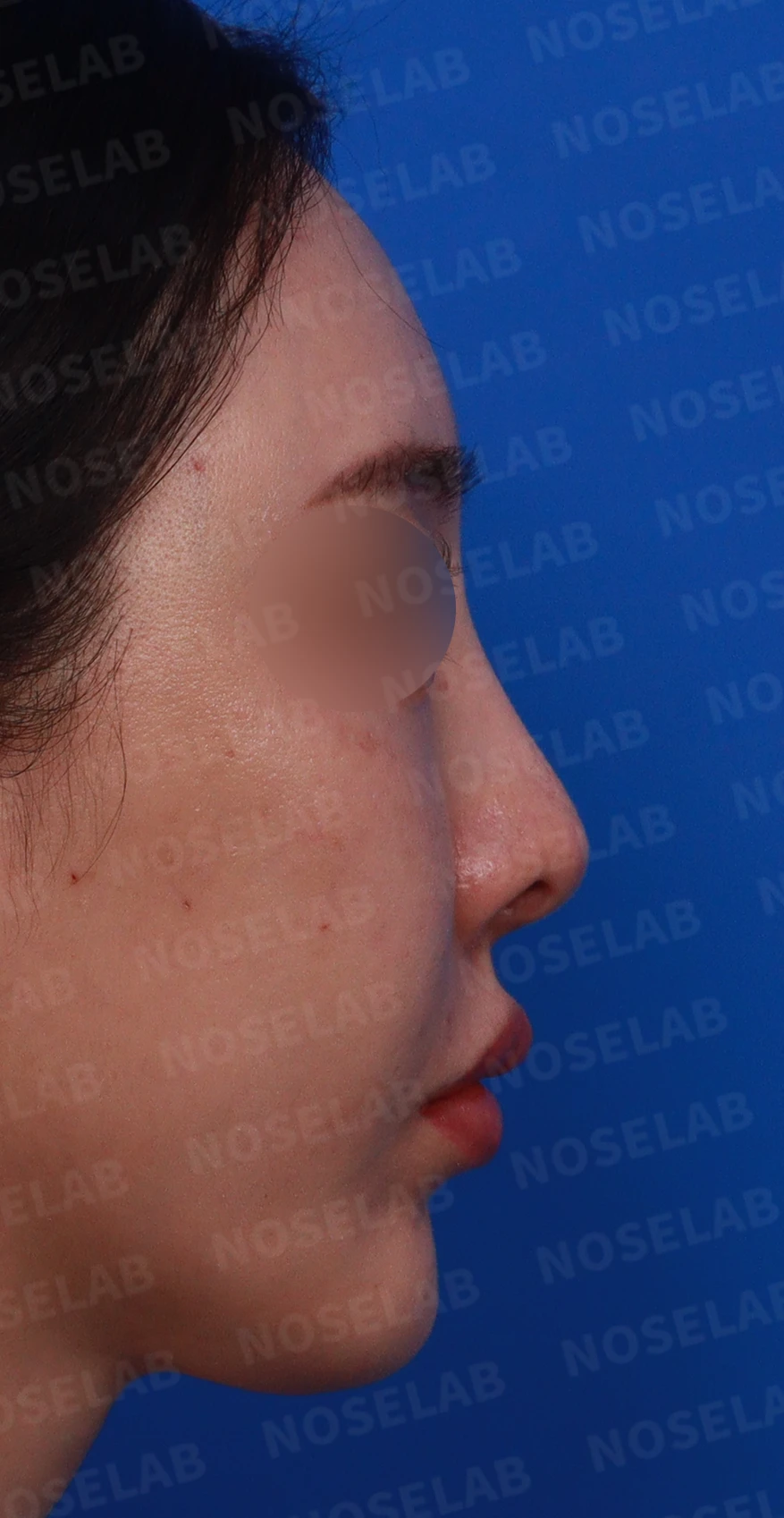
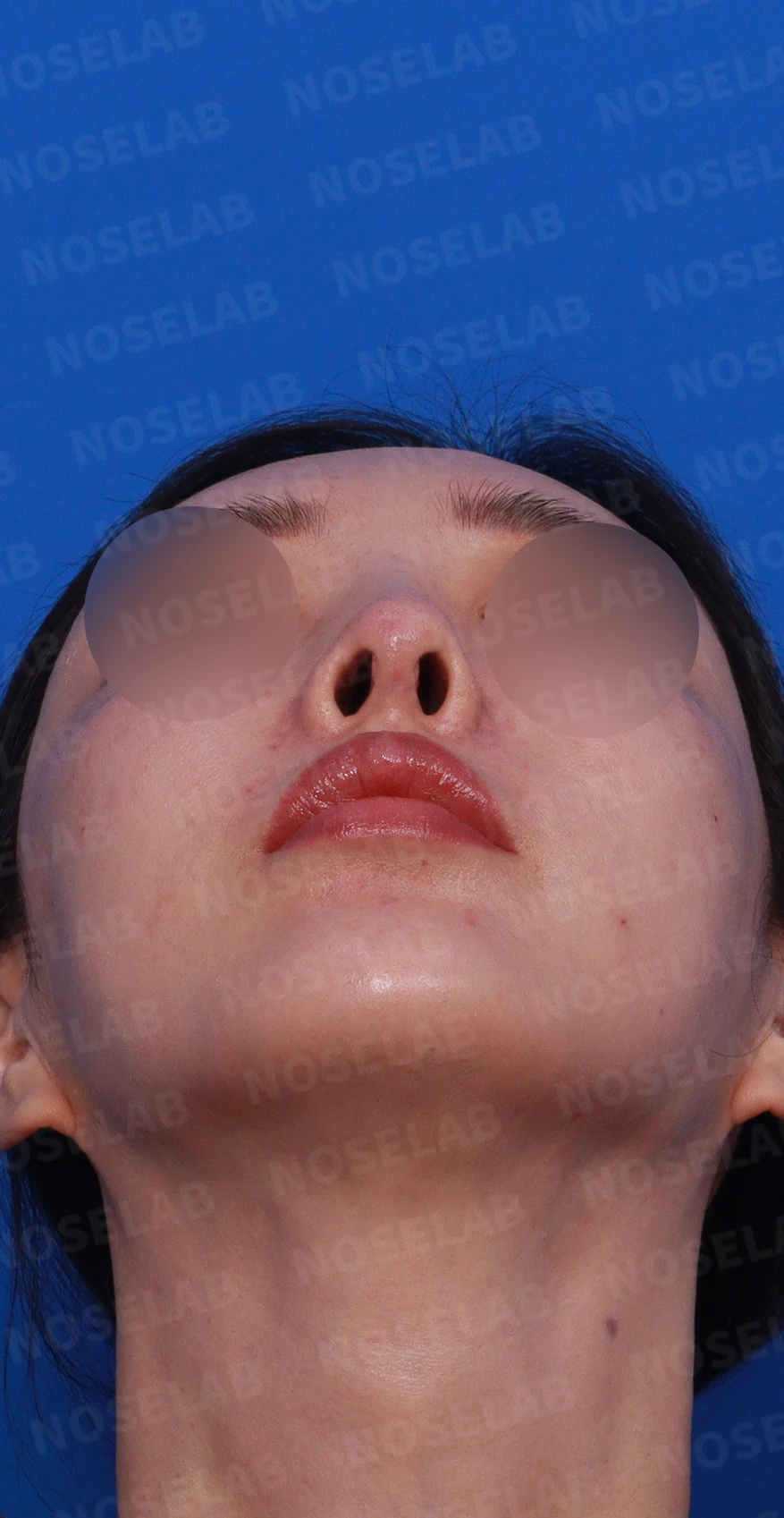
Design consultation: right oblique, profile, and nostril views.
🔧 Surgical plan and procedure
1. Autologous rib cartilage revision rhinoplasty
- Removal of all existing materials carrying inflammation risks
- Nasal tip reconstruction using only autologous tissue
- Minimization of infection risk
- Establishment of a stable structure
2. Septal reconstruction
- Fundamental correction of nasal deviation
- Straightening the central nasal axis
- Improvement of respiratory function
- Securing structural stability
3. Nasolabial angle correction
- Creation of a soft, feminine profile line
- Adjustment of the nostril show angle
- Visual shortening effect on the midface
- Achieving an elegant profile
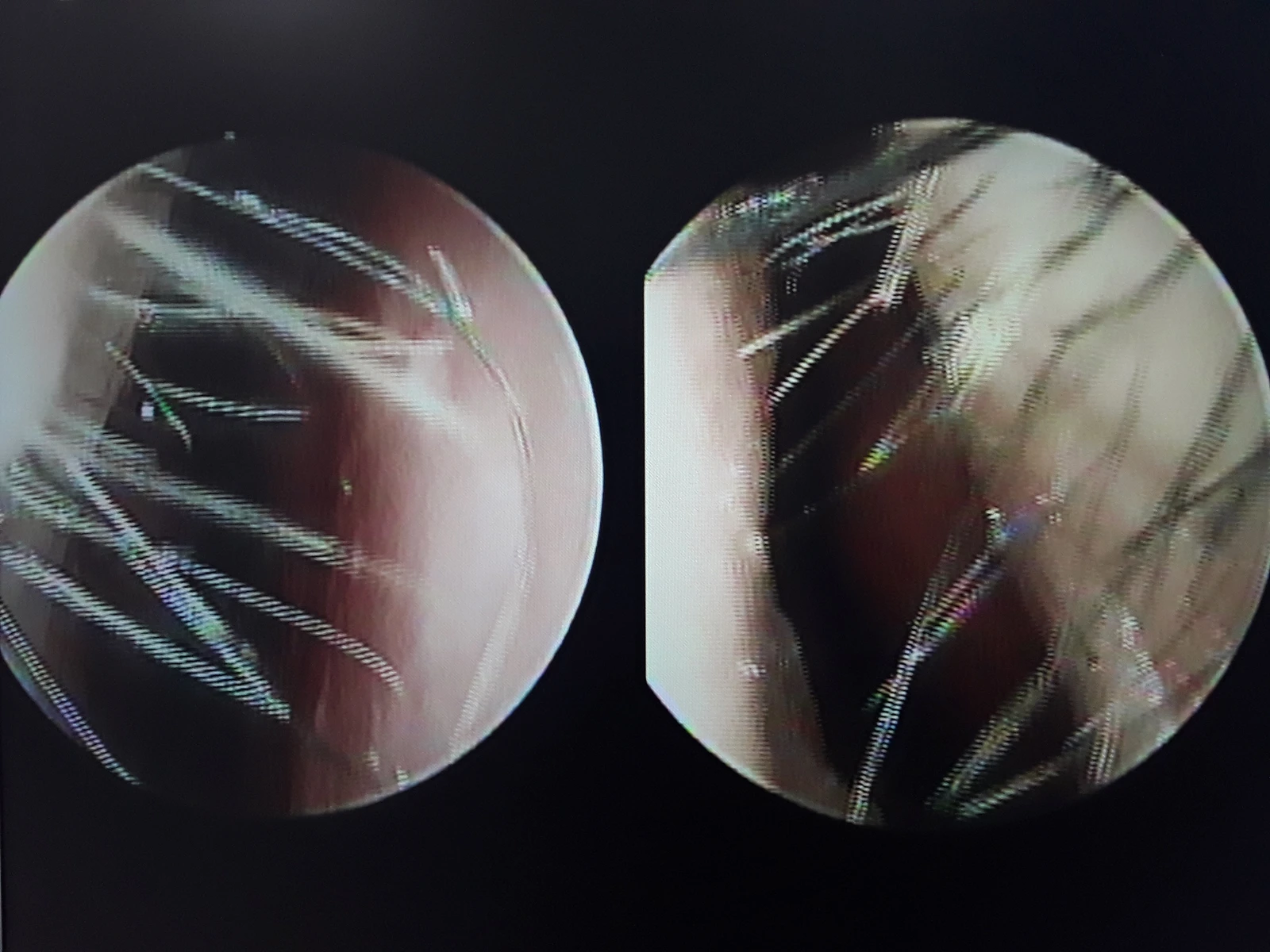
Nasal endoscopy photos.
4. Functional rhinoplasty
- Septoplasty
- Submucosal resection of the inferior turbinate
- Improvement of rhinitis and sinusitis symptoms
- Resolution of crusting and nasal discharge pooling
🌟 Surgical results
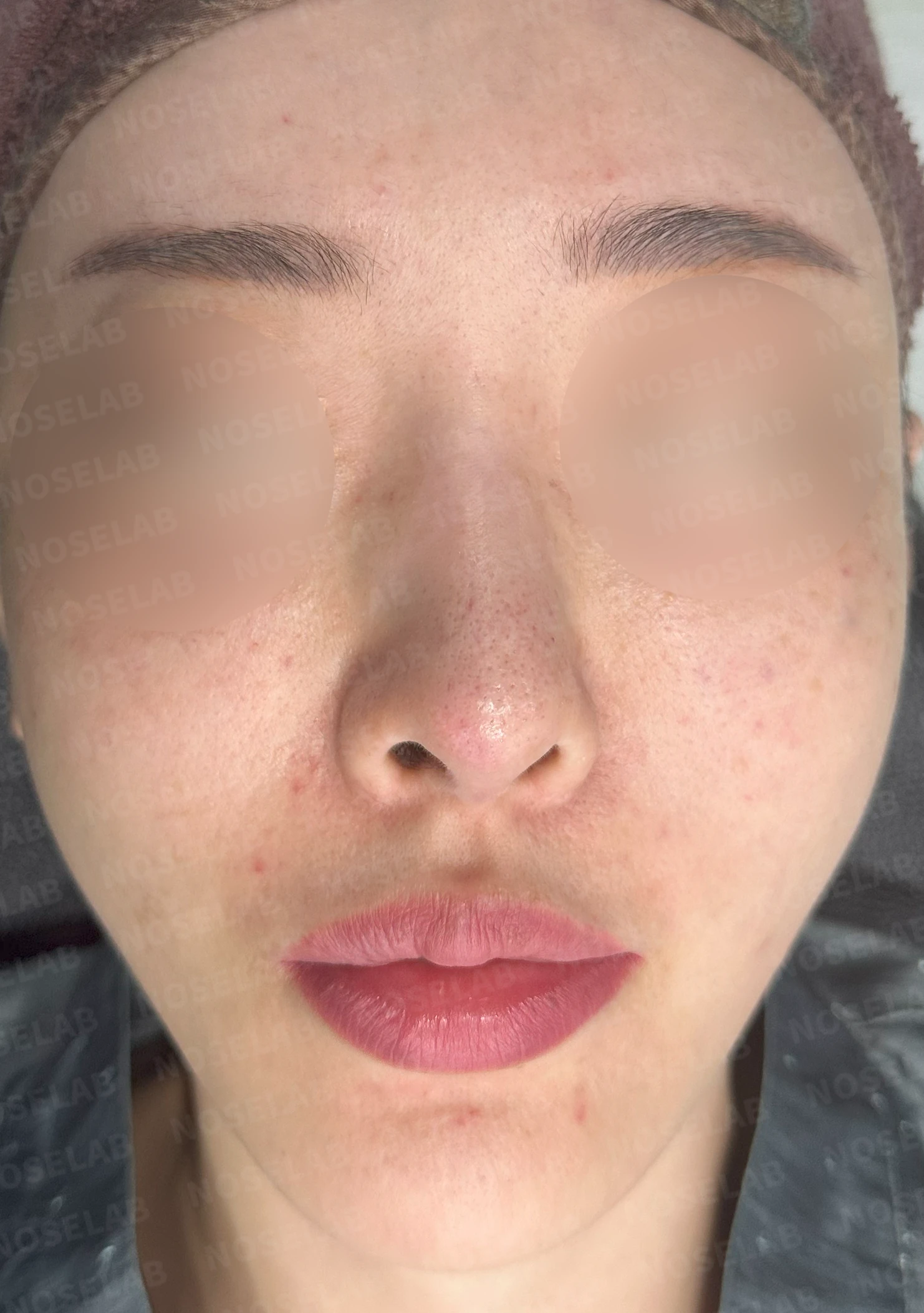
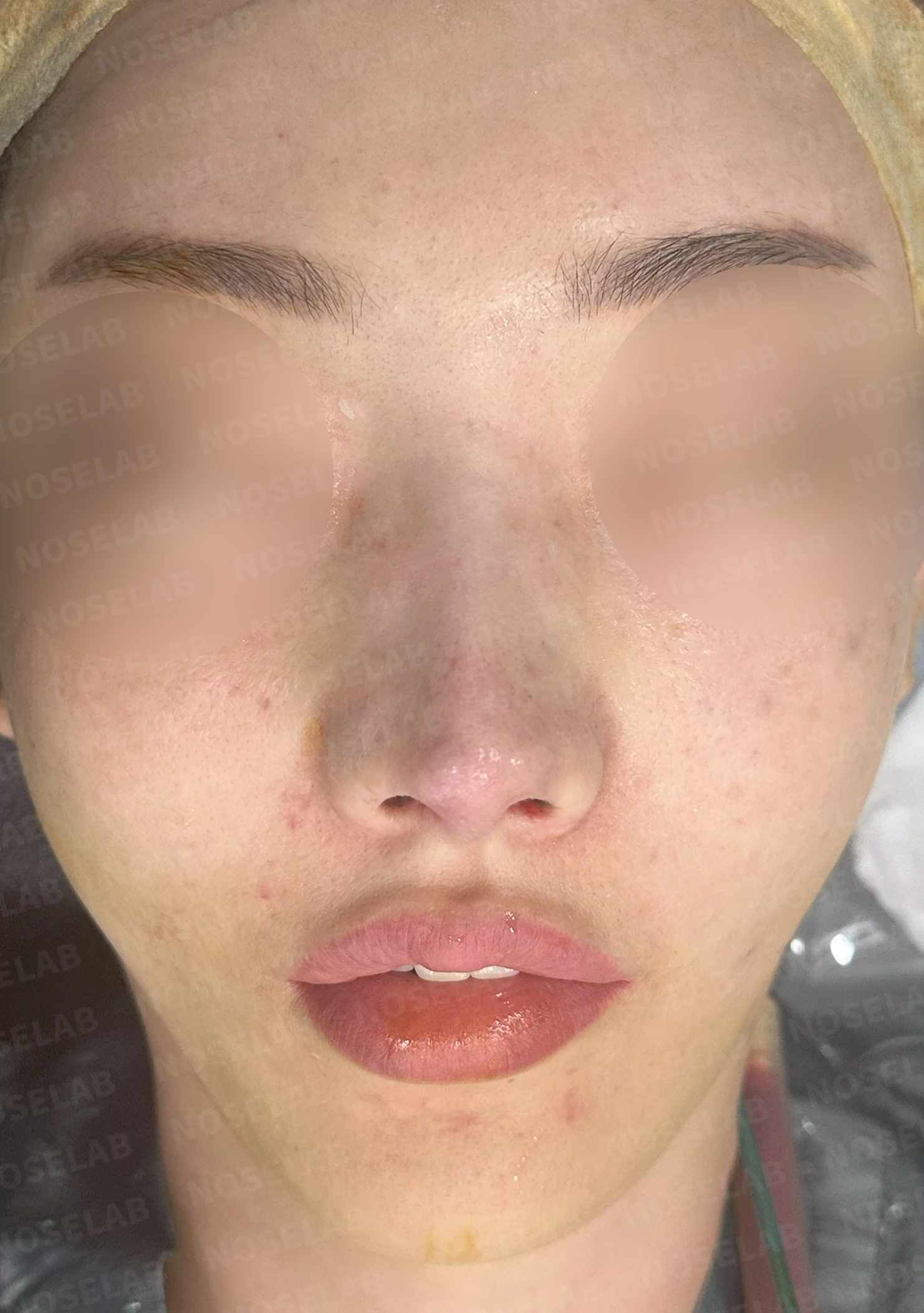
Before surgery / Day 0 immediately after surgery Photos taken immediately after surgery show swelling and may differ from the final result.
1. Resolution of inflammation
- Relieved nasal tip redness
- Stable healing using autologous tissue
- Minimized recurrence risk
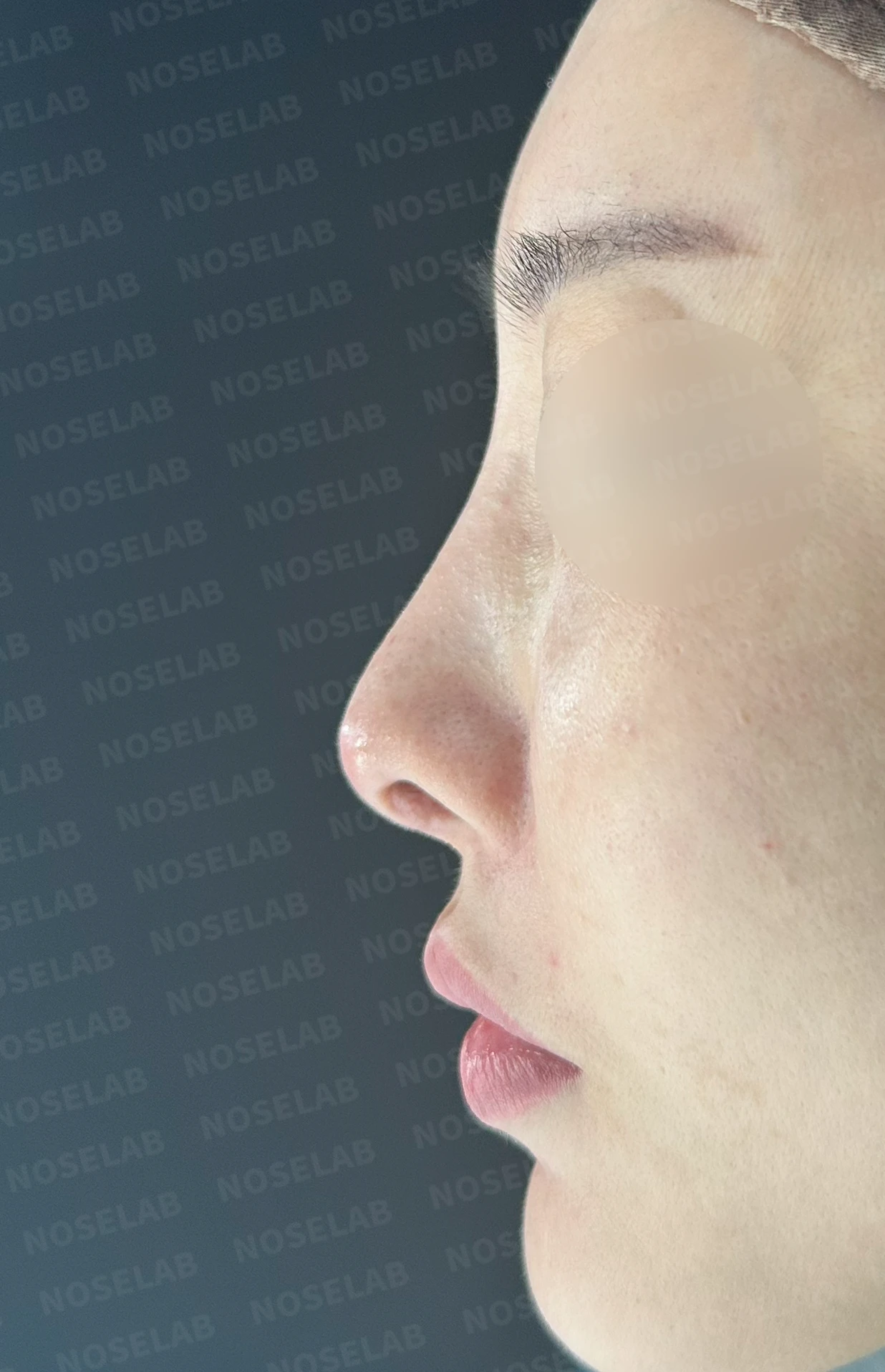
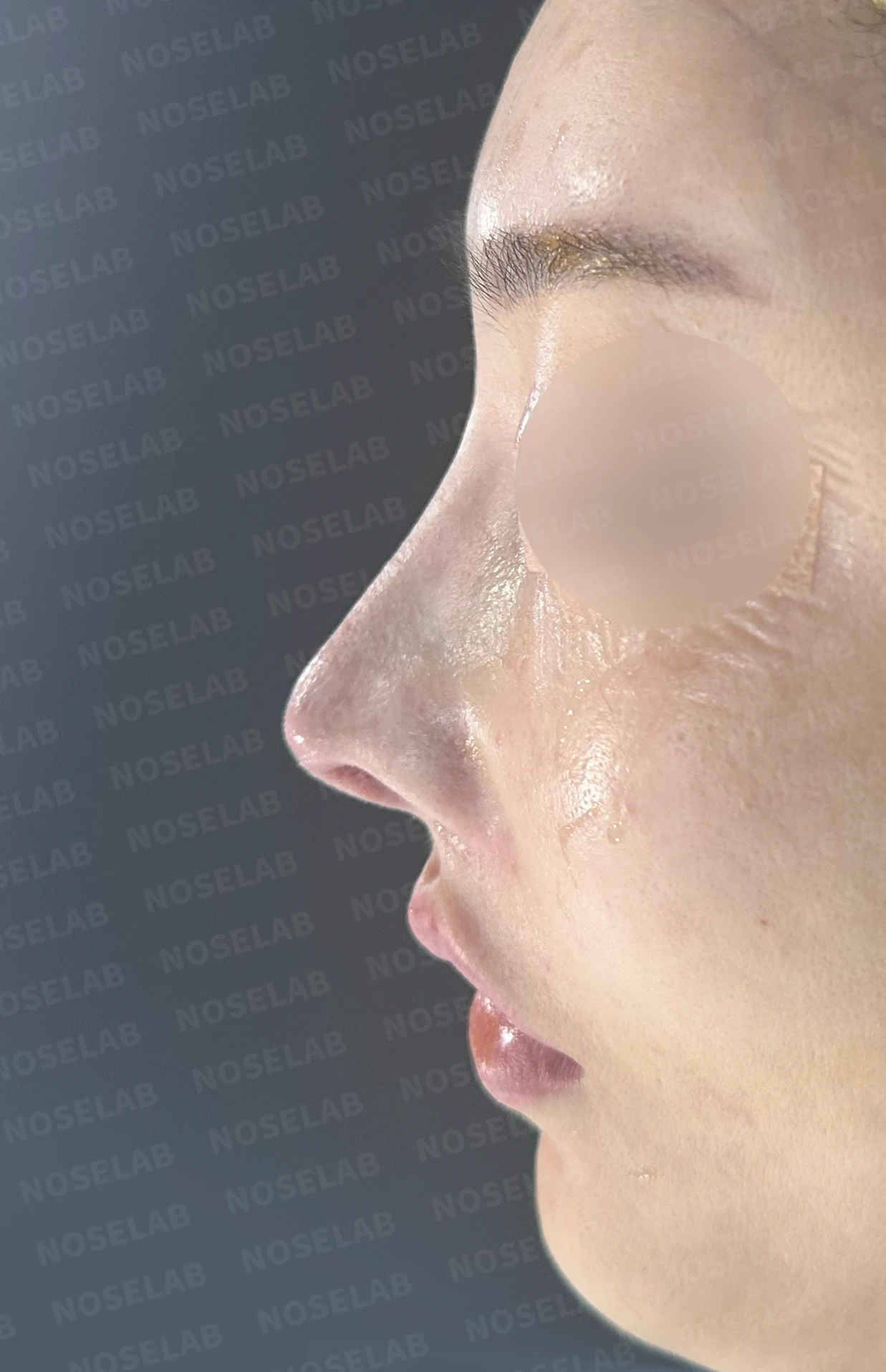
Before surgery / Day 0 immediately after surgery Photos taken immediately after surgery show swelling and may differ from the final result.
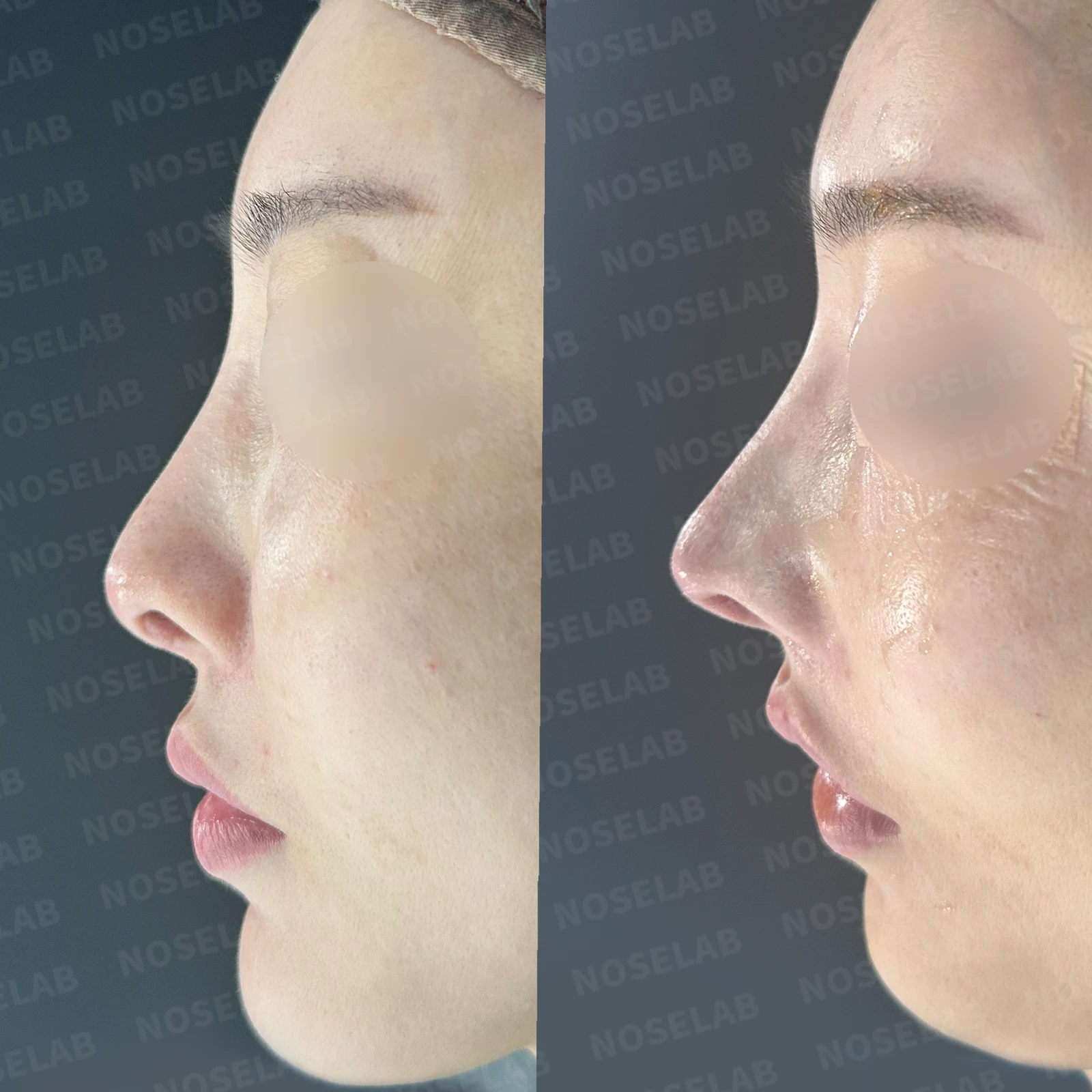
2. Aesthetic improvement
- Soft, feminine nasal line
- Reduction of nostril show
- Visual shortening effect of the midface
- Straight, well-aligned nose without deviation
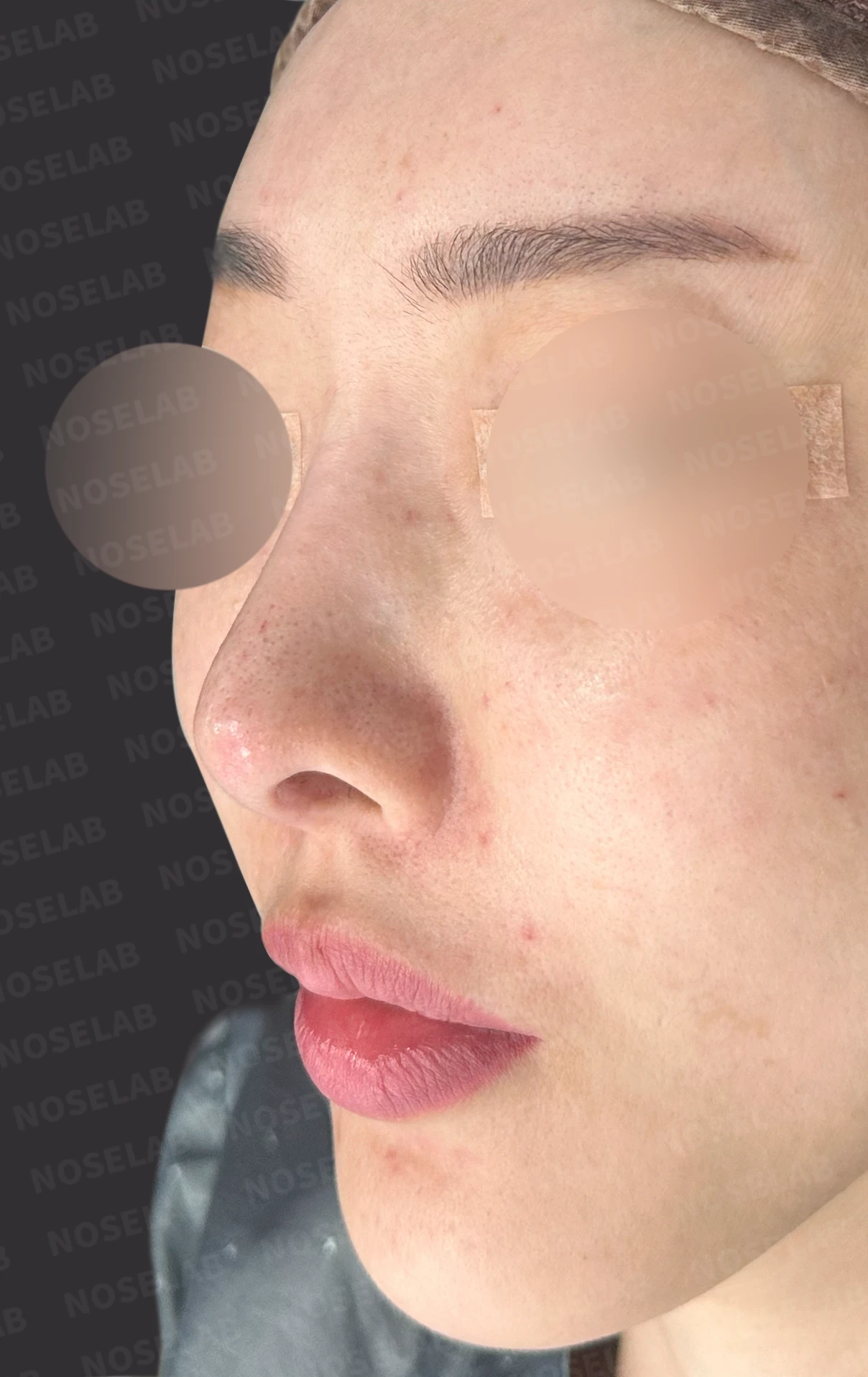
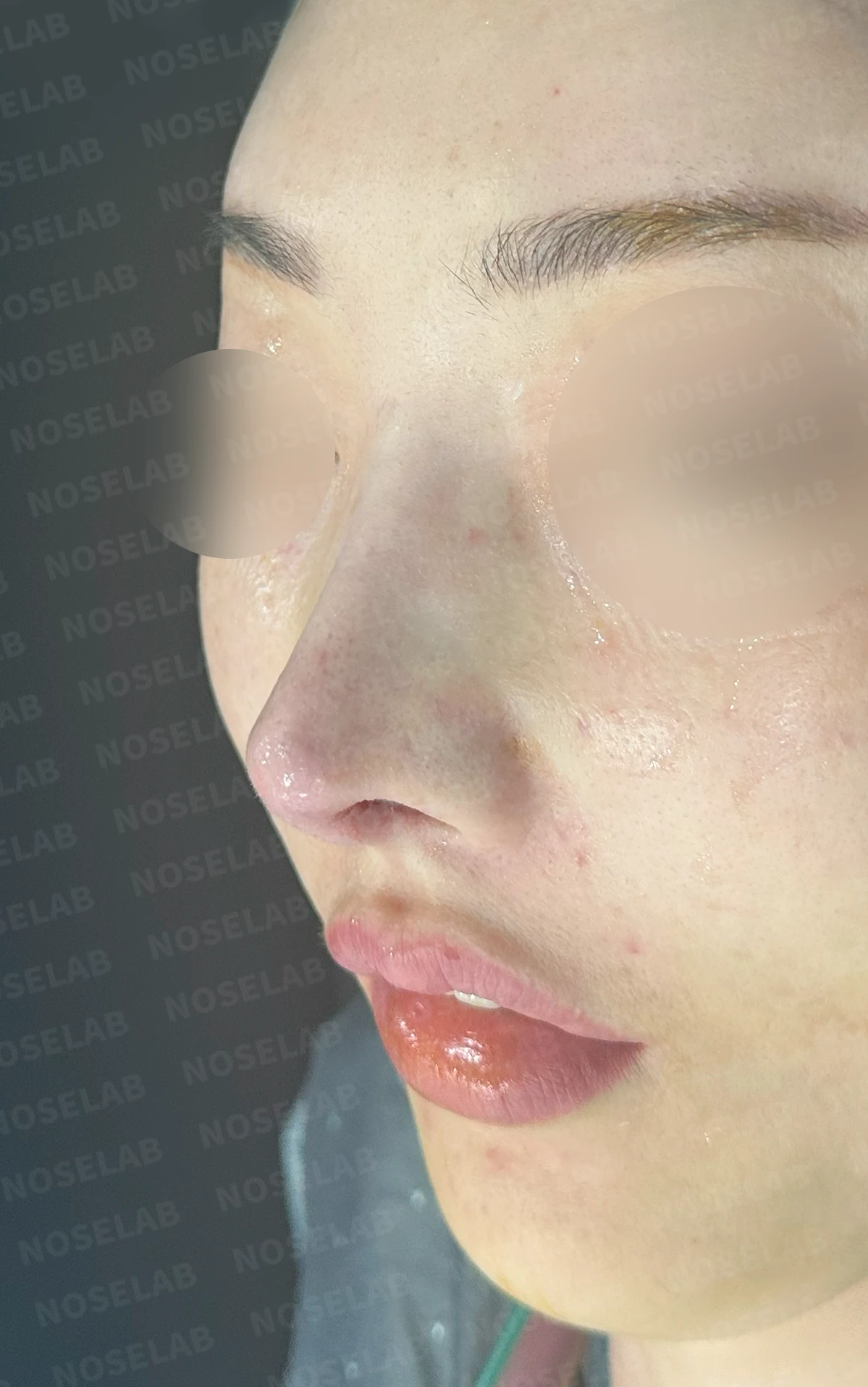
Before surgery / Day 0 immediately after surgery Photos taken immediately after surgery show swelling and may differ from the final result.
3. Functional improvement
- Resolution of nasal discharge pooling
- Comfortable breathing
- Alleviation of sinusitis symptoms
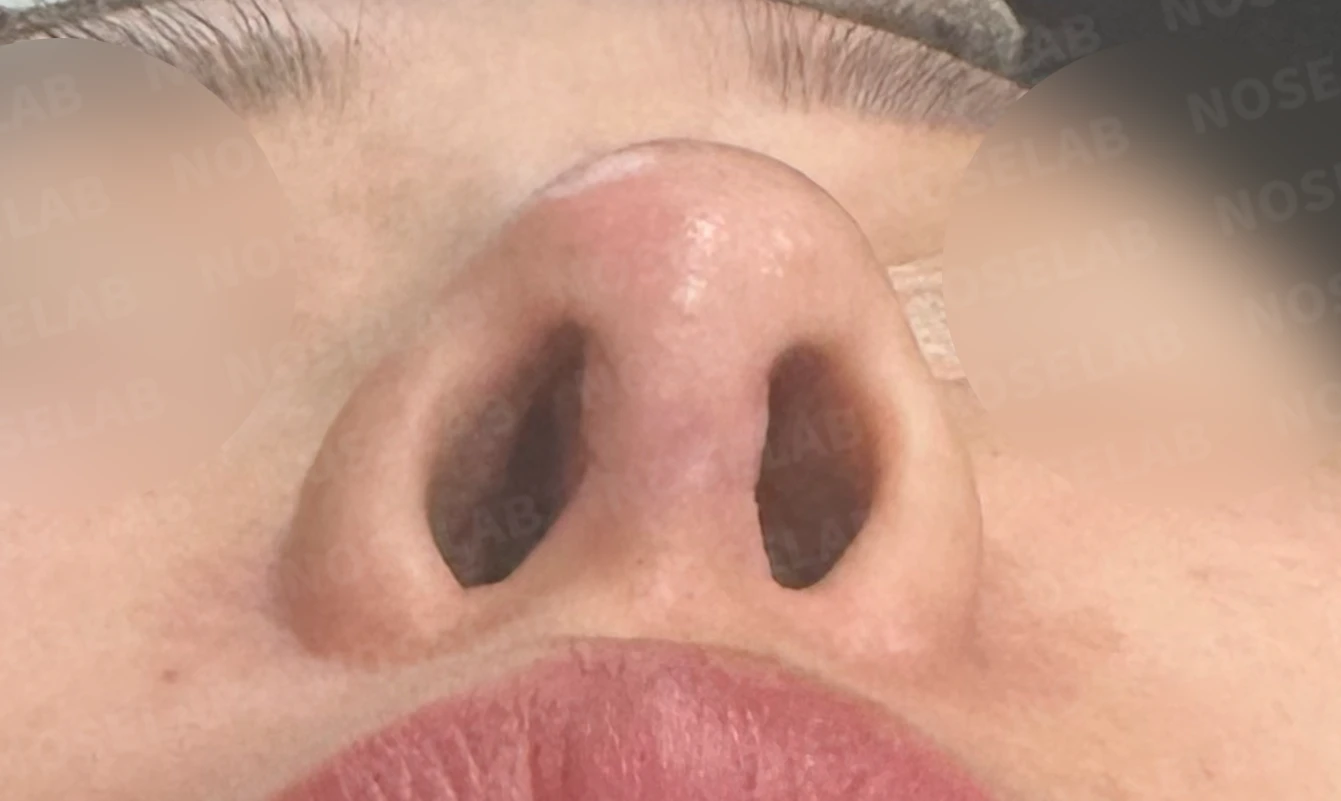
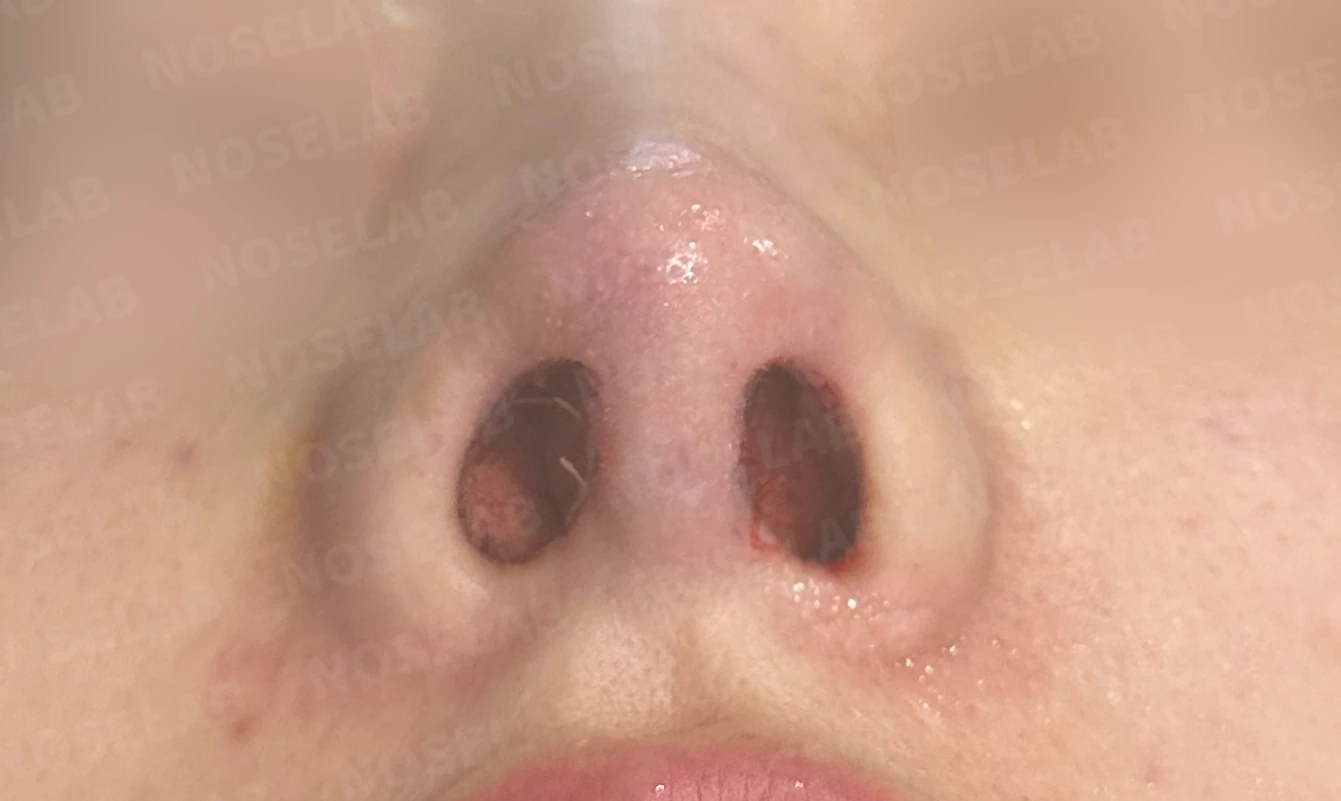
Before surgery / Day 0 immediately after surgery Photos taken immediately after surgery show swelling and may differ from the final result.
💡 Specialist opinion
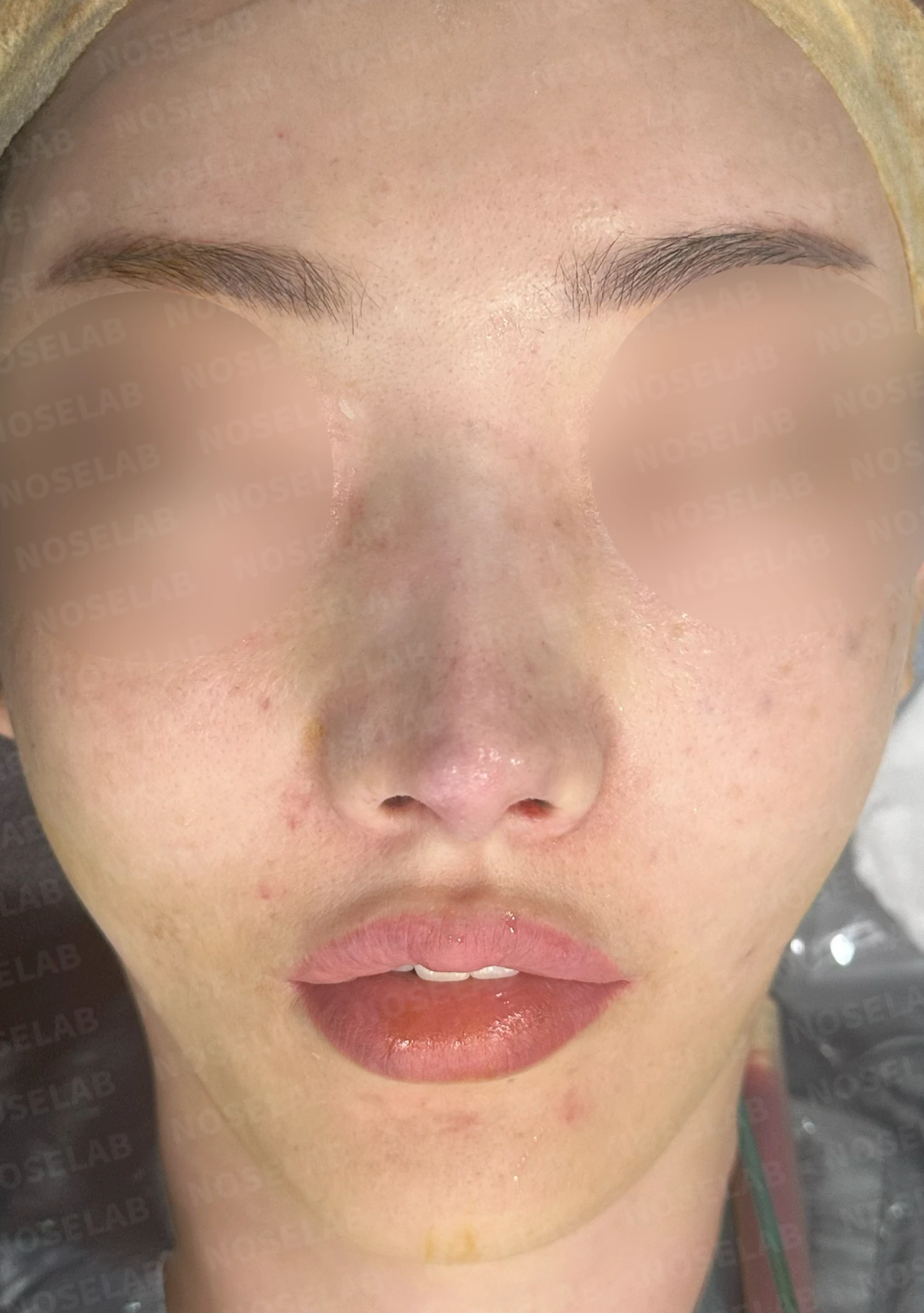
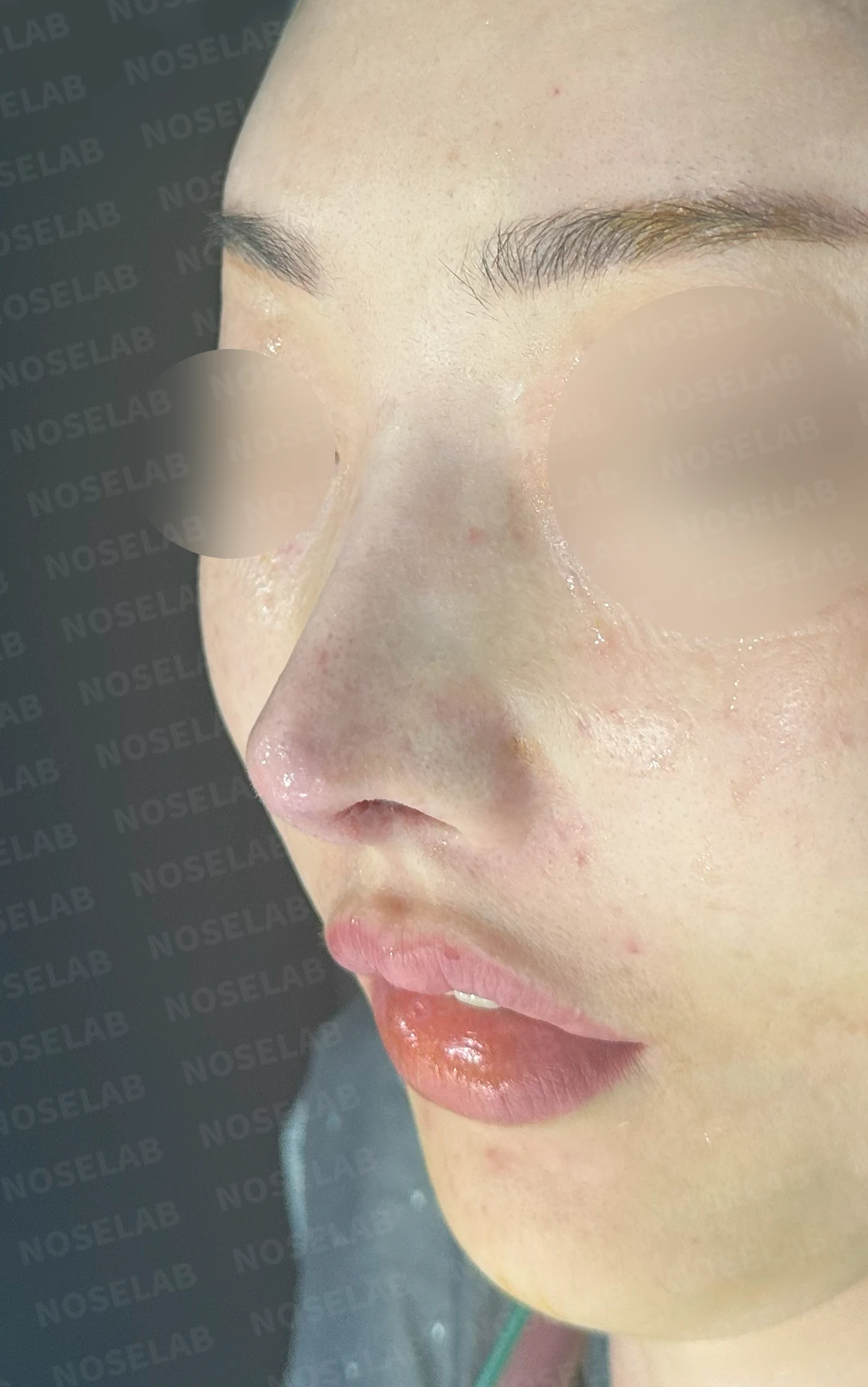
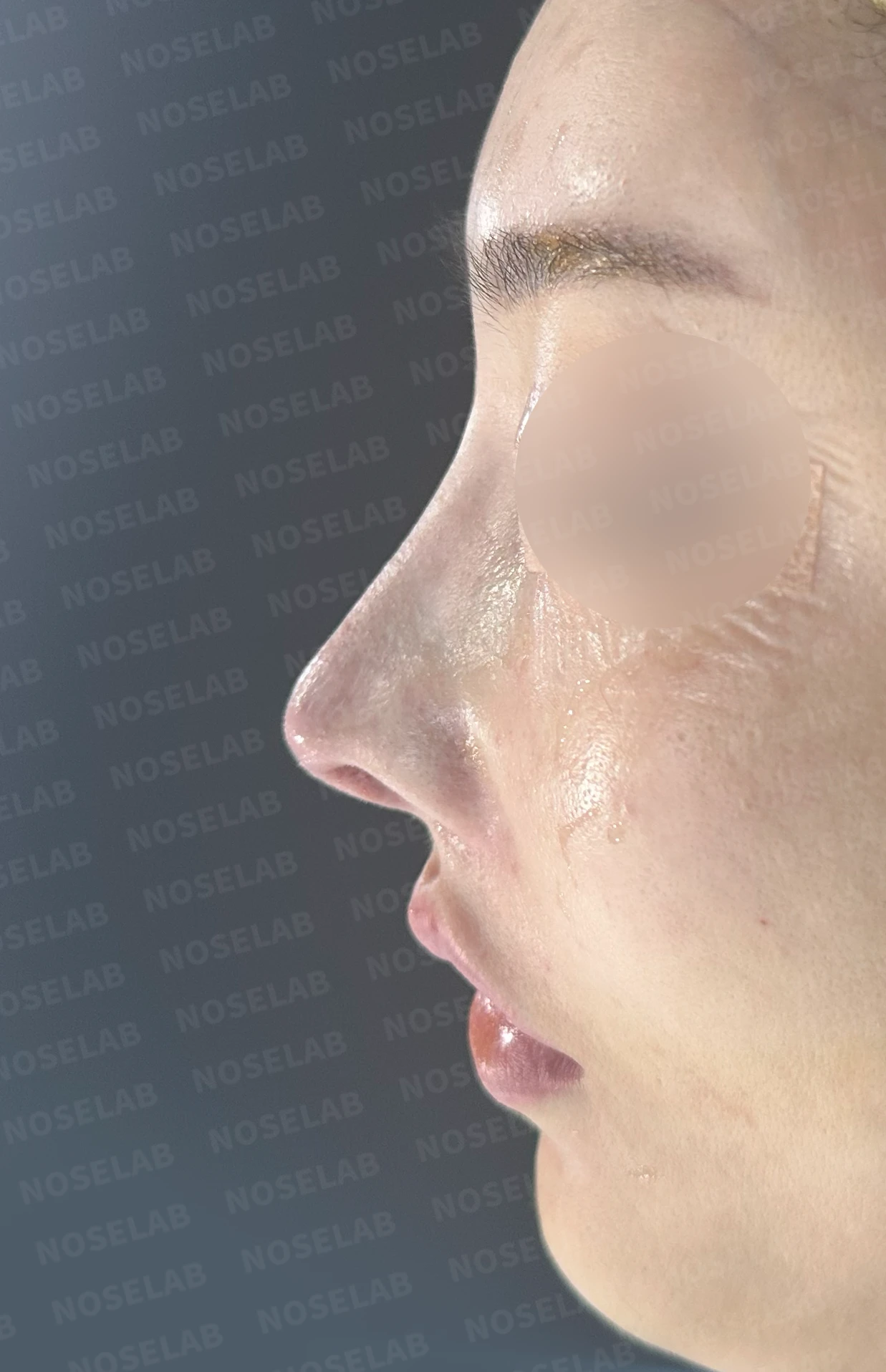
Immediately after surgery (day 0): front, oblique, and profile views. Immediate postoperative photos show swelling and may differ from the final result.
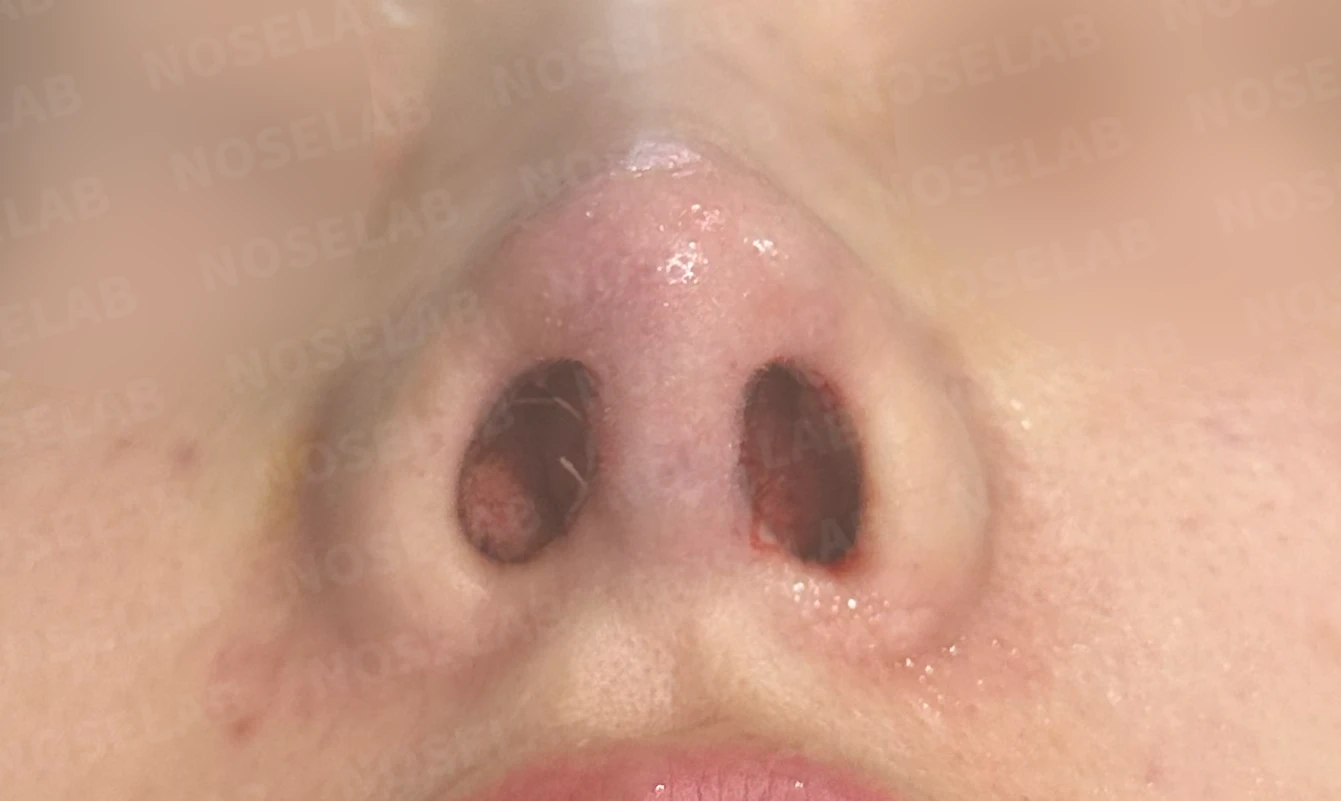
Nostril view on day 0 immediately after surgery. Photos taken immediately after surgery show swelling and may differ from the final result.
This case was particularly challenging due to recurrent inflammation after multiple surgeries. The persistent inflammation despite antibiotic therapy strongly suggested a foreign body reaction. In such situations, removing all existing materials and reconstructing solely with autologous tissue may be the most suitable option.
While allogeneic materials like donor rib cartilage and Alloderm are well-tolerated in most patients, some individuals may develop a foreign body reaction. Because autologous rib cartilage is the patient's own tissue, it eliminates foreign body reactions and supports a stable result over the long term.
The crusting along the right nasal roof and the pooling of discharge on the left were caused by a deviated septum and an unbalanced internal nasal cavity structure. Through septal reconstruction and functional nasal surgery, we were able to address these issues fundamentally.
In accordance with the patient's desire for a feminine line, the nasolabial angle was delicately adjusted, which also produced a visual effect of shortening the midface. Adjusting the angle of nostril show created a more refined appearance from the front as well.
Revision rhinoplasty, especially with a history of inflammation, requires a meticulous approach. At NOSELAB, we strive to achieve safe, satisfactory results even in such complex cases.
This was Dr. Peter C. Kang. Thank you.
#closedrhinoplasty #closedrevisionrhinoplasty #rhinoplastyafterinflammation #autologousribcartilage #septalreconstruction #functionalrhinoplasty #femininenose #rhinitissurgery #sinusitissurgery

Limitations and risks
When autologous rib cartilage is used, scarring and pain may remain at the donor site on the chest, and pneumothorax (pleural injury) can occur rarely. Over time, the grafted cartilage may warp or undergo partial resorption.
When using donor rib cartilage, long-term follow-up is necessary because the grafted cartilage may resorb or warp.
When the septum is corrected at the same time, nasal obstruction may persist or recur, and in rare cases, septal perforation or changes in smell may occur.
Common potential risks include infection, bleeding, asymmetry, scarring, skin necrosis, and insufficient improvement; results vary depending on individual skin condition and previous surgical history.