Hello, I am Dr. Peter C. Kang.
Today, I would like to share the case of a patient who visited our clinic due to a drooping tip and a wide-looking nose after multiple rhinoplasties and double jaw surgery.
🔍 Surgical history
The patient's surgical history:
- 2010: Primary rhinoplasty (silicone implant + septal cartilage)
- 2019: Double jaw surgery
- 2022: Revision rhinoplasty (silicone implant + dermis graft)
As the facial skeletal structure changed after double jaw surgery, the nose appeared relatively wider, and although the patient underwent revision surgery afterward, the drooping tip remained unresolved.
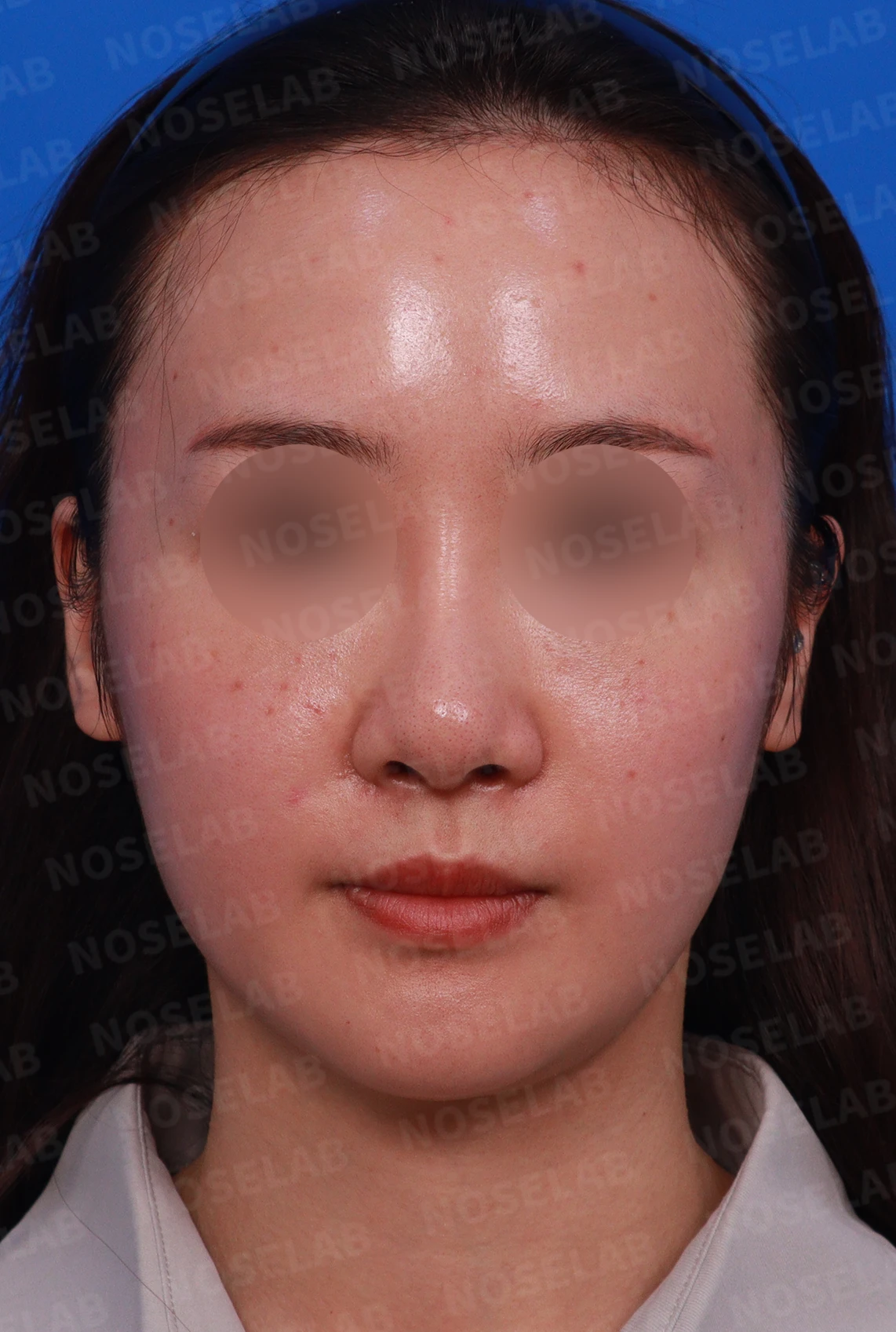
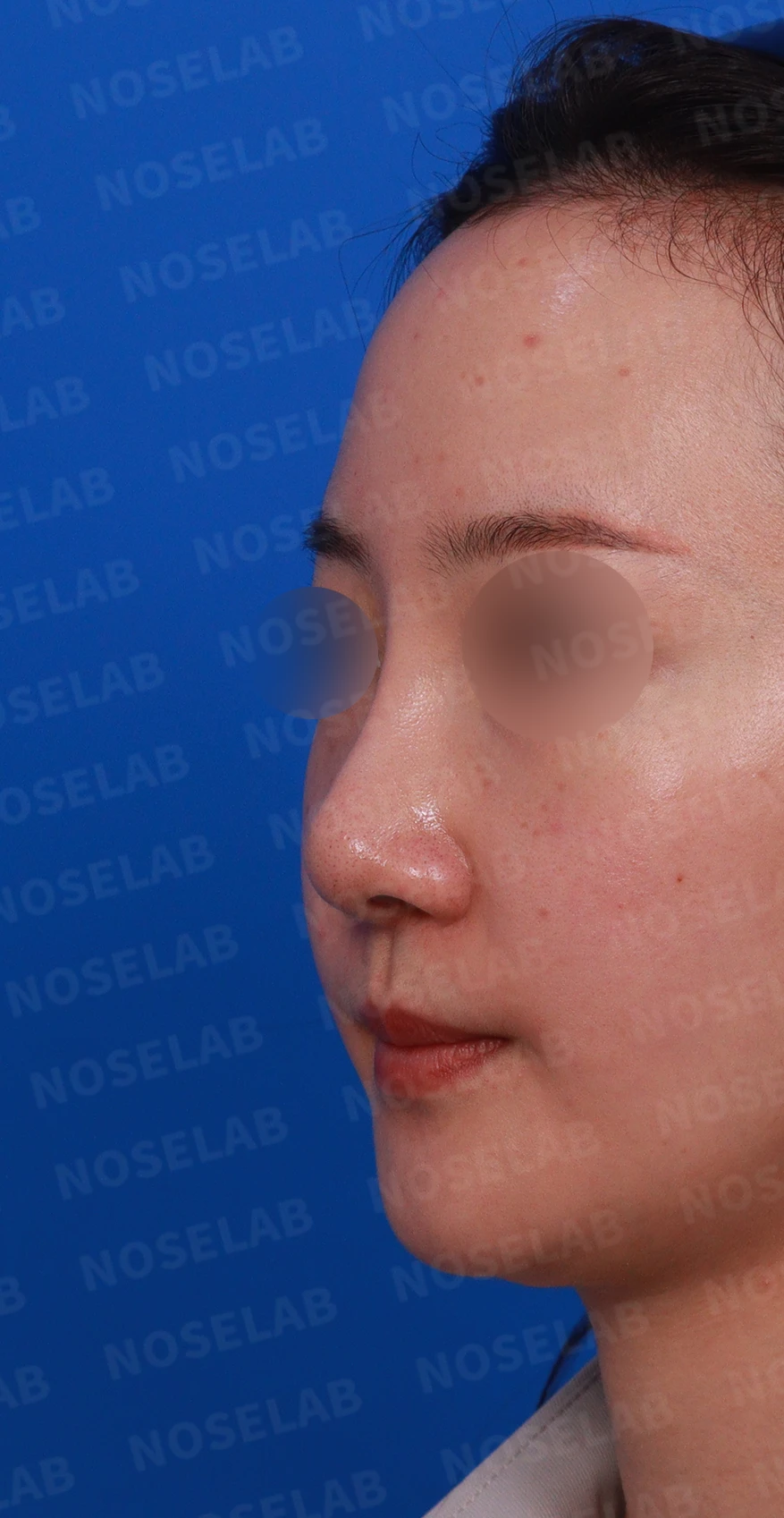
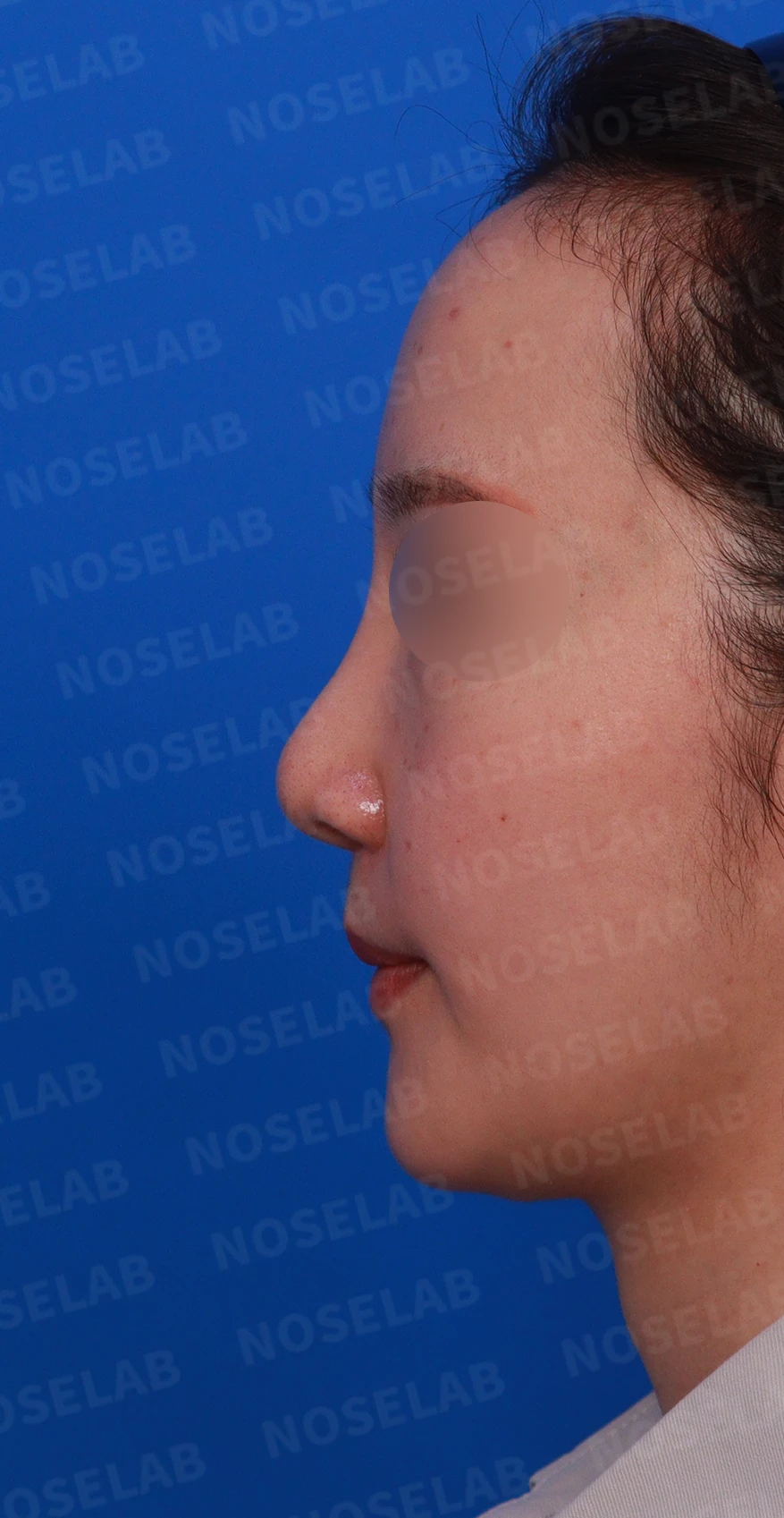
Front, oblique, and profile views from the design consultation.
Patient's requests
Areas requested for improvement:
- Elevating the drooping tip
- Improving the wide-looking nose after double jaw surgery
- Restoring overall facial balance
- Relieving nasal obstruction caused by rhinitis
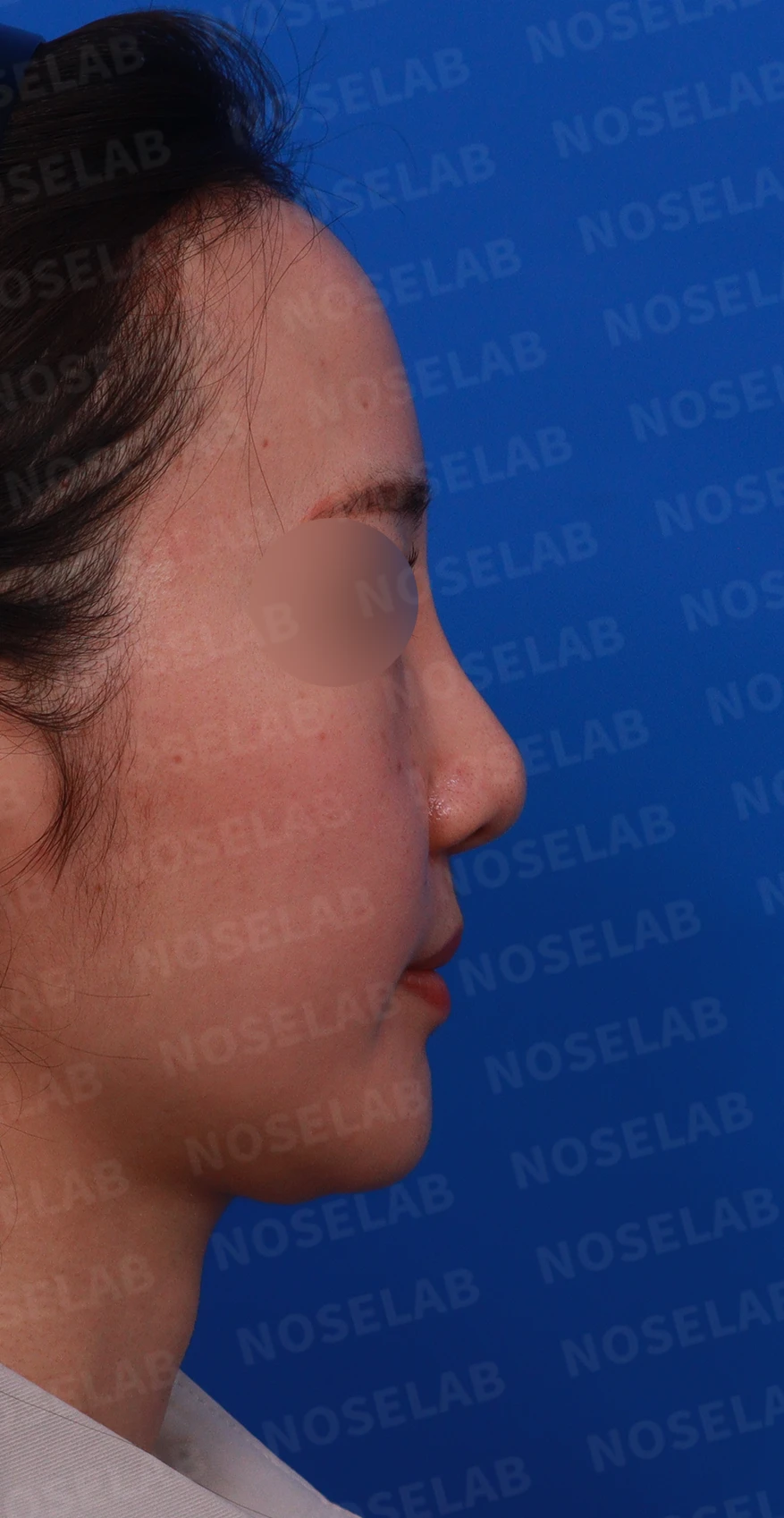
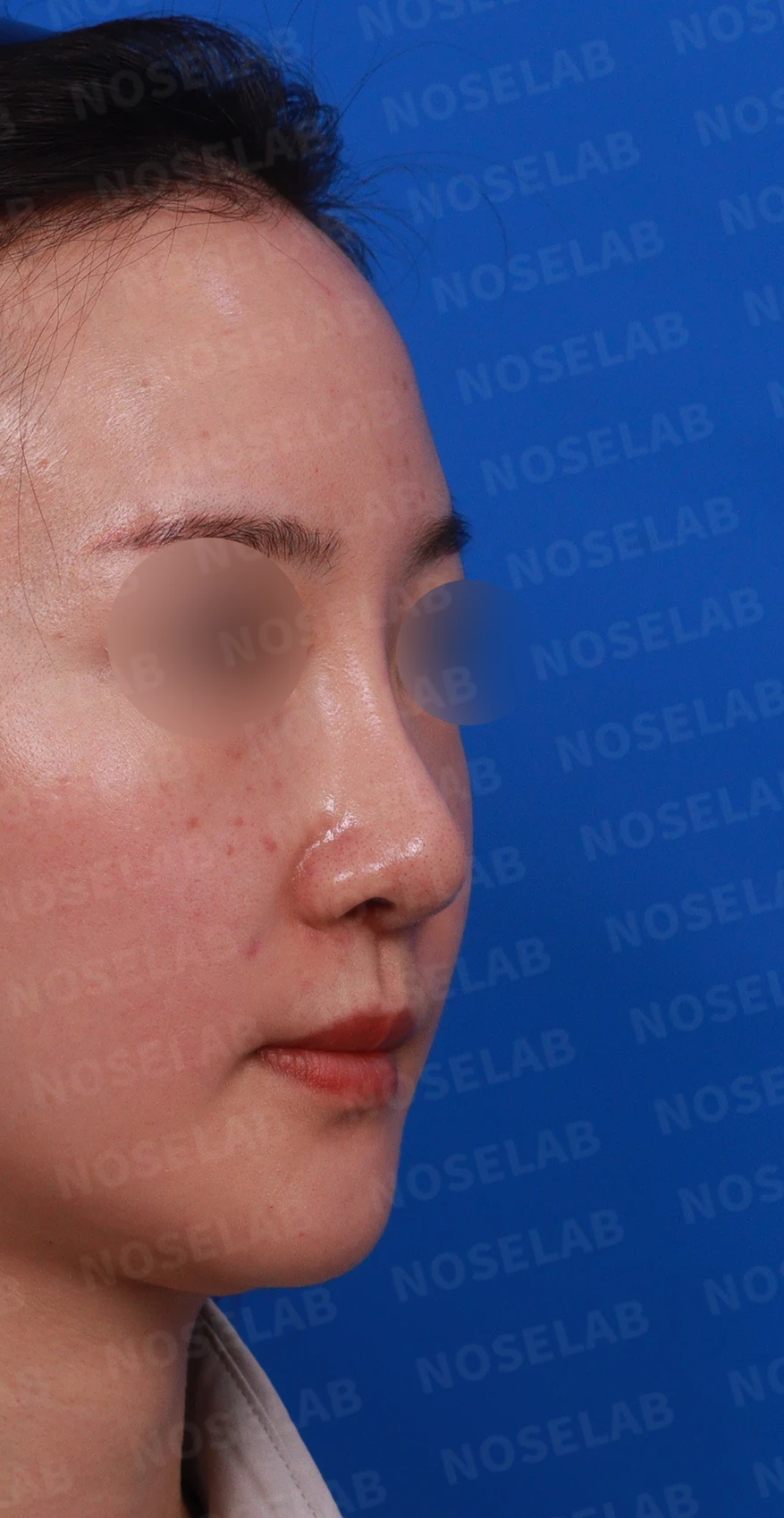
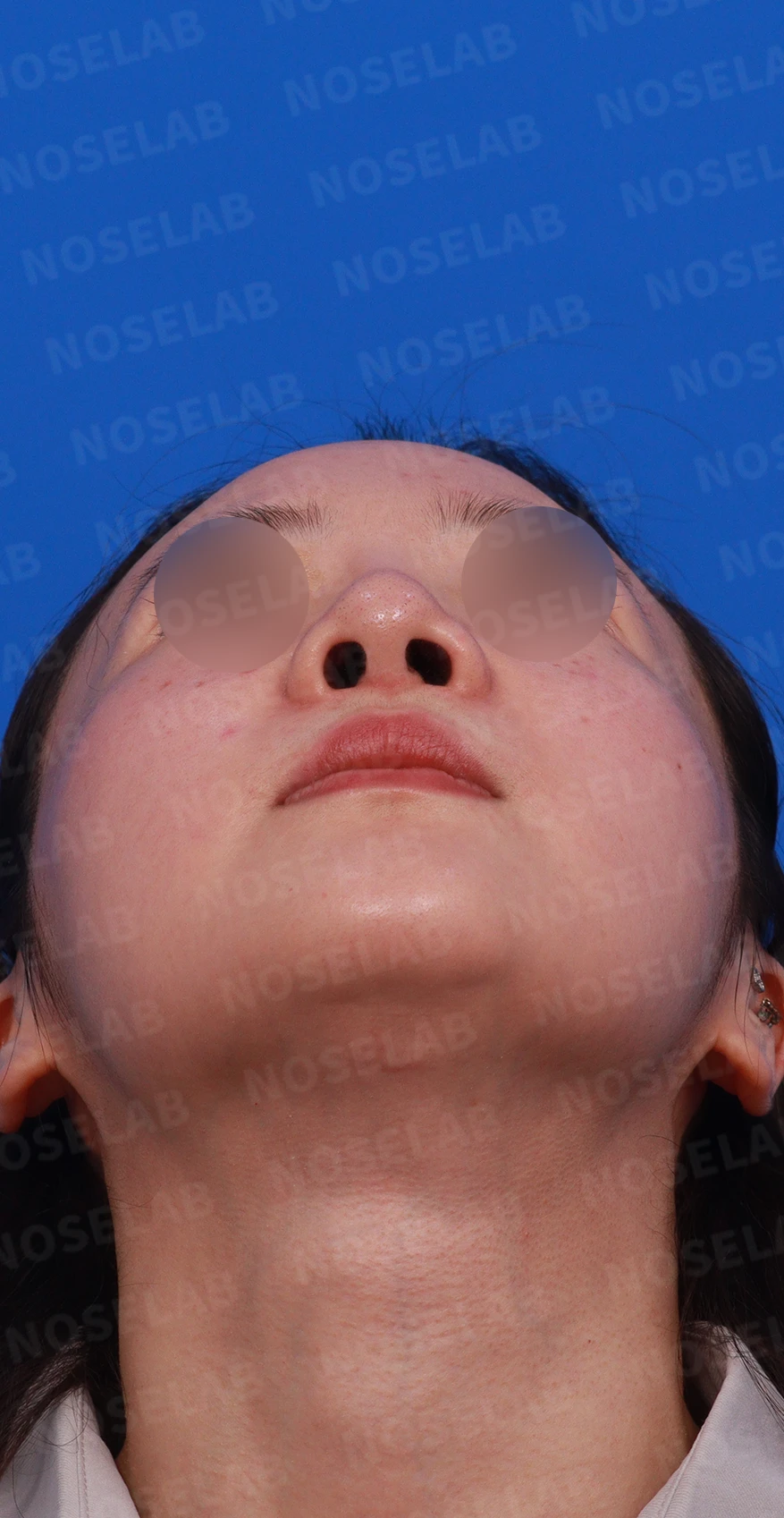
Design consultation: right profile, oblique, and nostril views.
🔧 Surgical plan and procedure
1. Autologous rib cartilage revision rhinoplasty
- Removal of existing silicone implant and dermis
- Harvesting and grafting the patient's own rib cartilage
- Reconstructing a sturdy, stable nasal structure
- Aiming for long-term stability without deformation
2. Septal reconstruction
- Straightening the central nasal axis
- Reinforcing structural support
- Foundational step for correcting the drooping tip
3. Nasal sill reduction
- Reducing wide nasal width
- Creating a slimmer front profile
- Adjusting proportions altered after double jaw surgery
4. Functional improvement (optional)
- Septoplasty
- Submucosal resection of the inferior turbinate
- Intended to relieve rhinitis symptoms and nasal obstruction
🌟 Surgical results
1. Nasal tip improvement
- The drooping tip is naturally elevated
- An appropriate nasolabial angle is created in profile
- A defined, refined tip is achieved
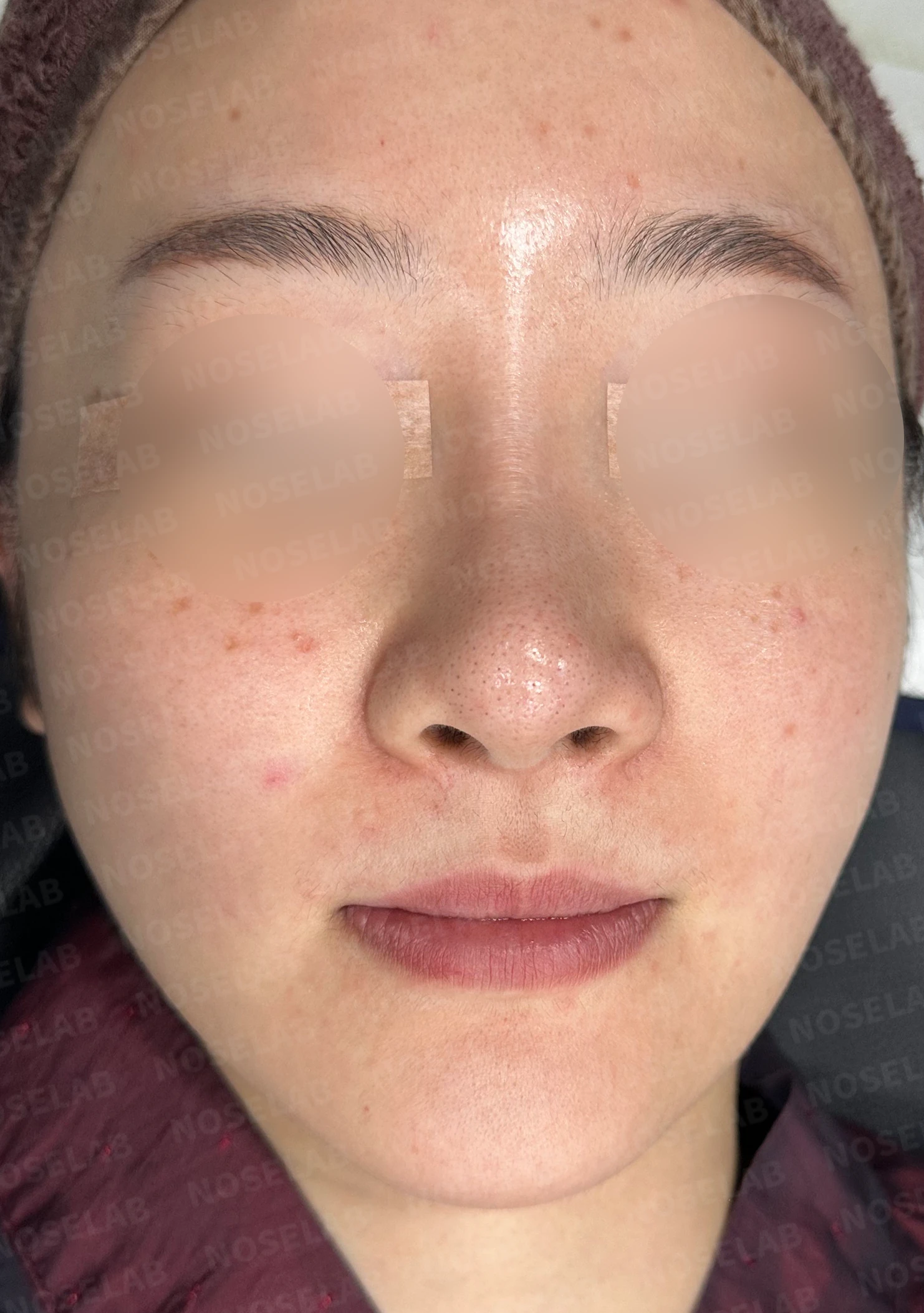
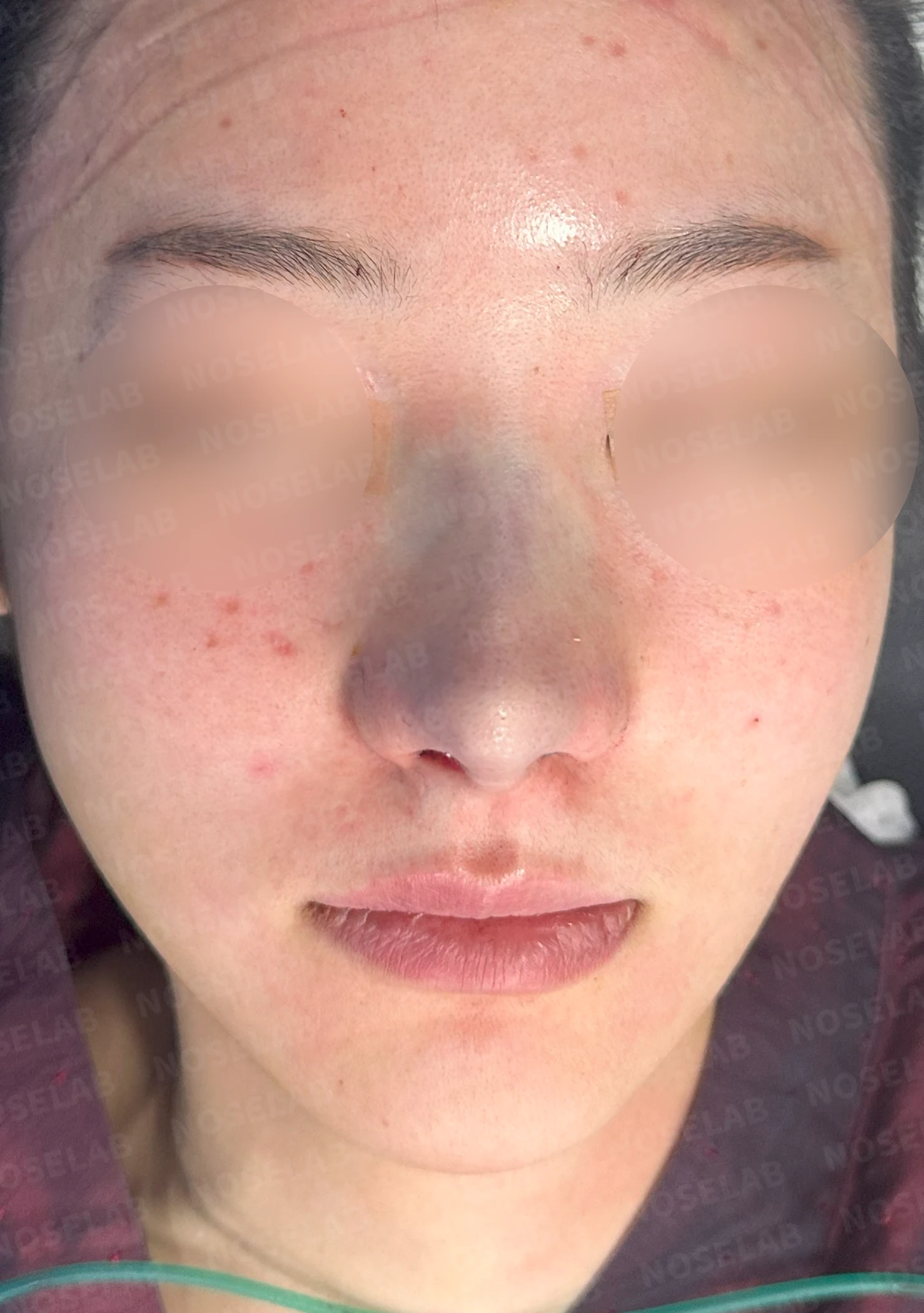
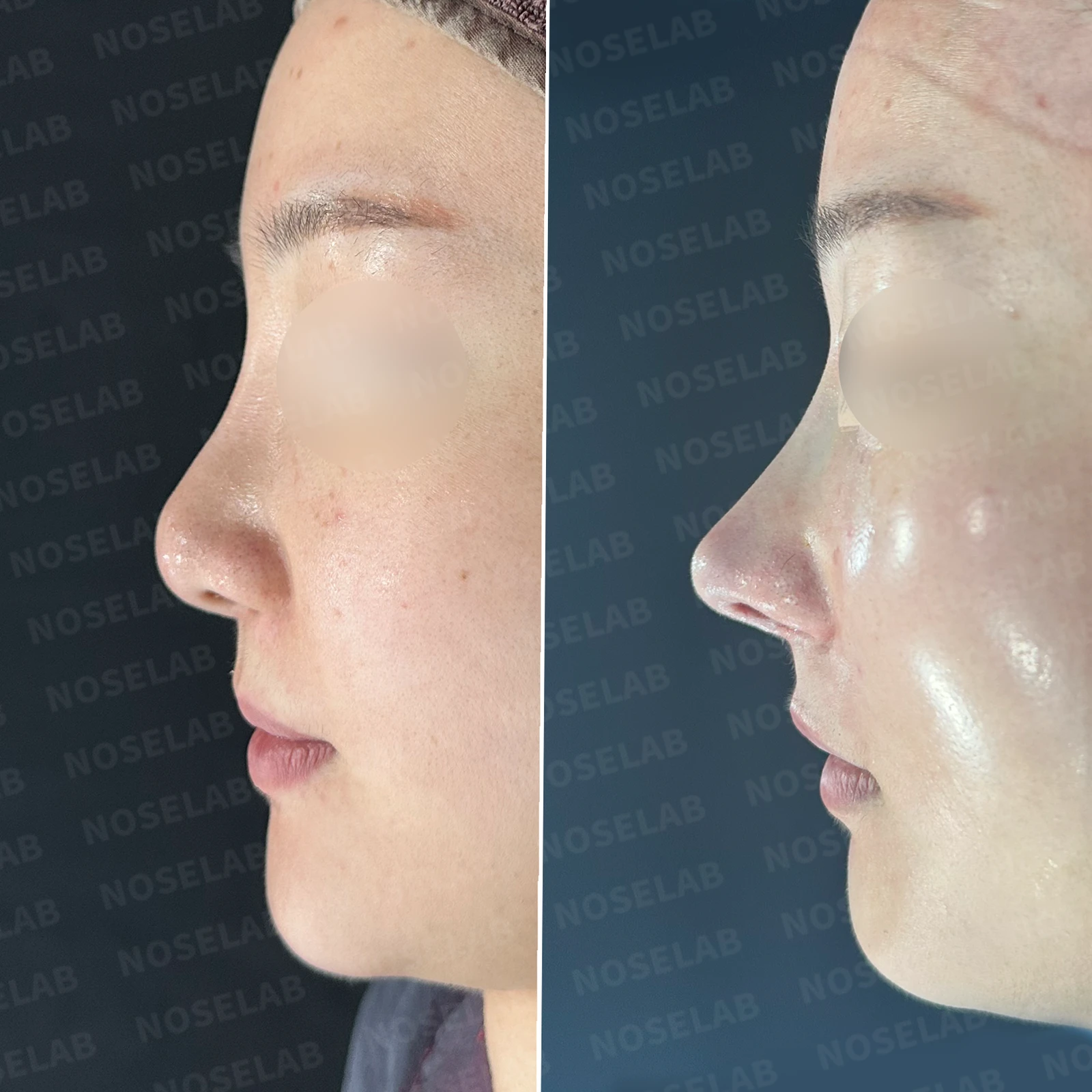
Before surgery / Day 0 immediately after surgery Photos taken immediately after surgery show swelling and may differ from the final result.
2. Overall harmony
- A nose in balance with the facial changes after double jaw surgery
- The previously wide nose is now well-defined
- Satisfying improvement in both front and profile views
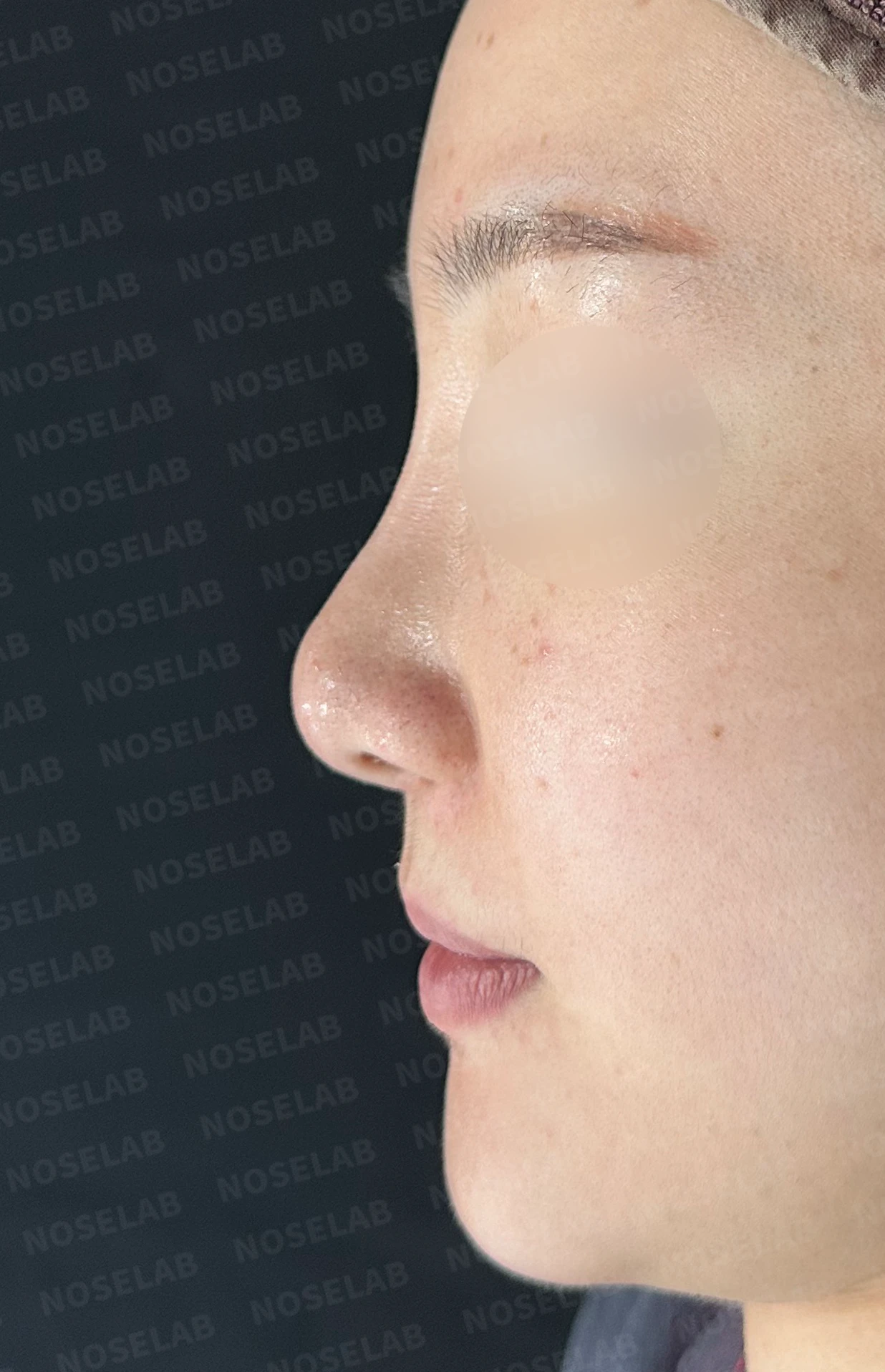
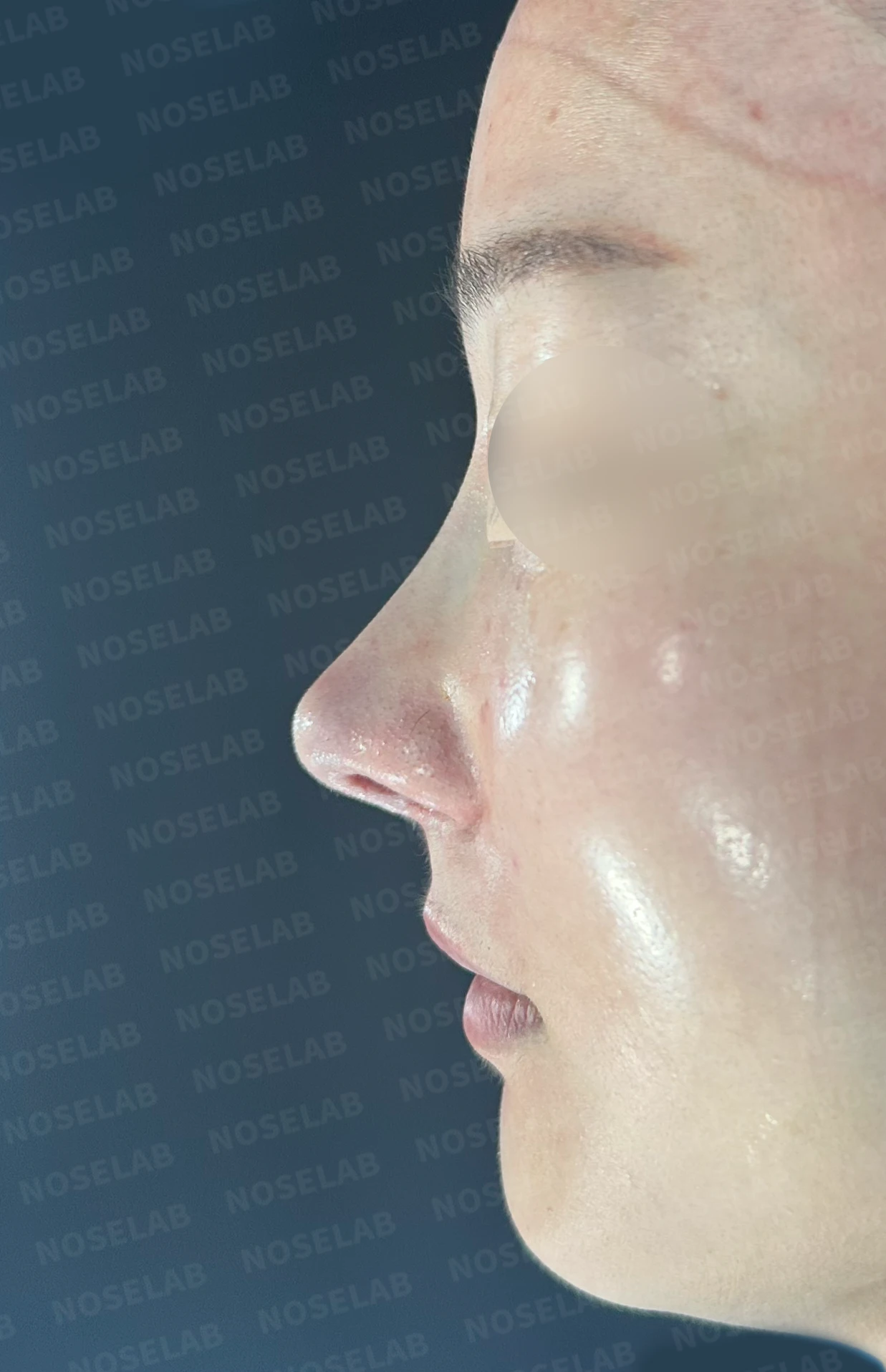
Before surgery / Day 0 immediately after surgery Photos taken immediately after surgery show swelling and may differ from the final result.
3. Functional improvement
- Easier breathing through the nose
- Improvement of rhinitis symptoms
- Improvement in sleep quality
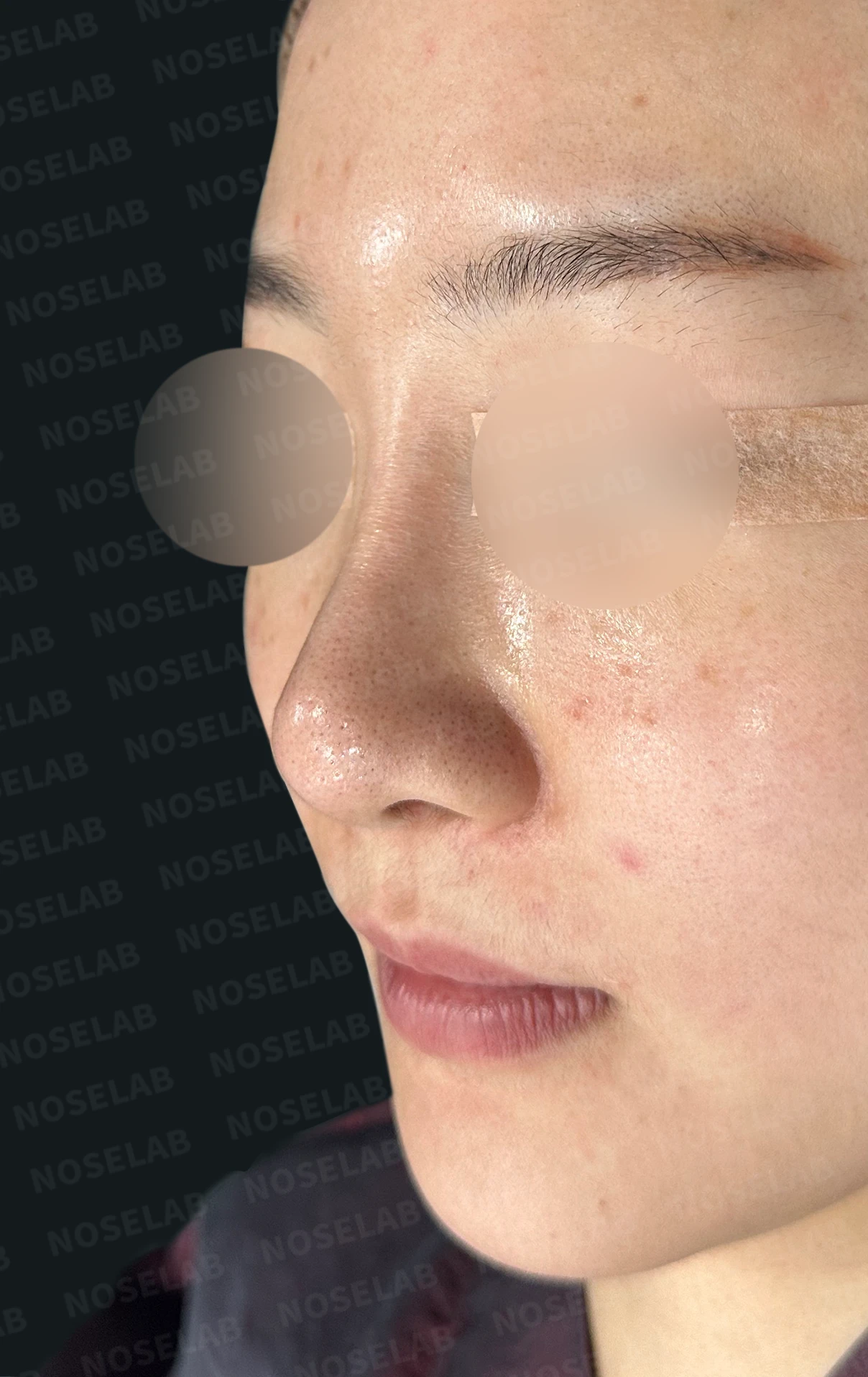
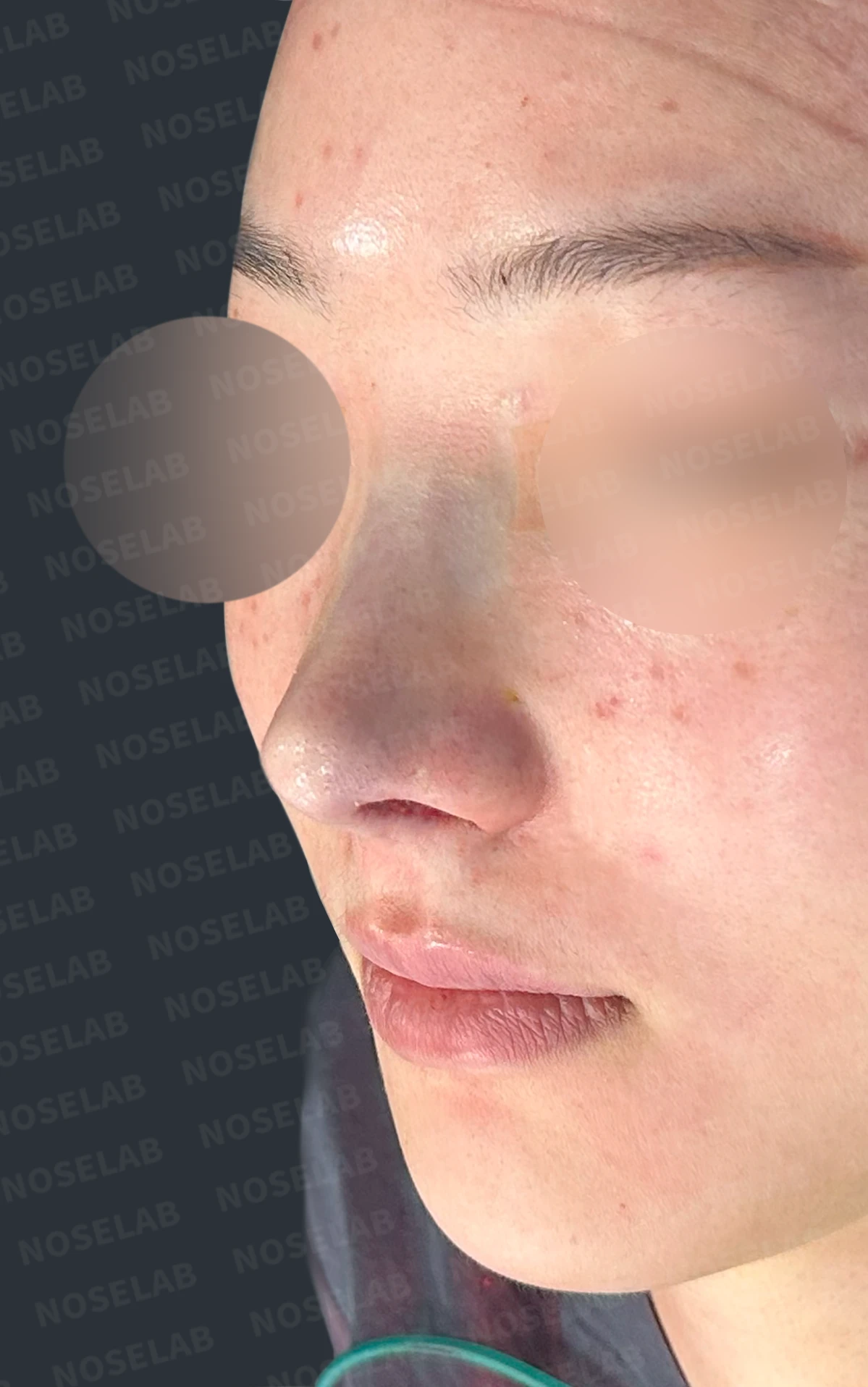
Before surgery / Day 0 immediately after surgery Photos taken immediately after surgery show swelling and may differ from the final result.
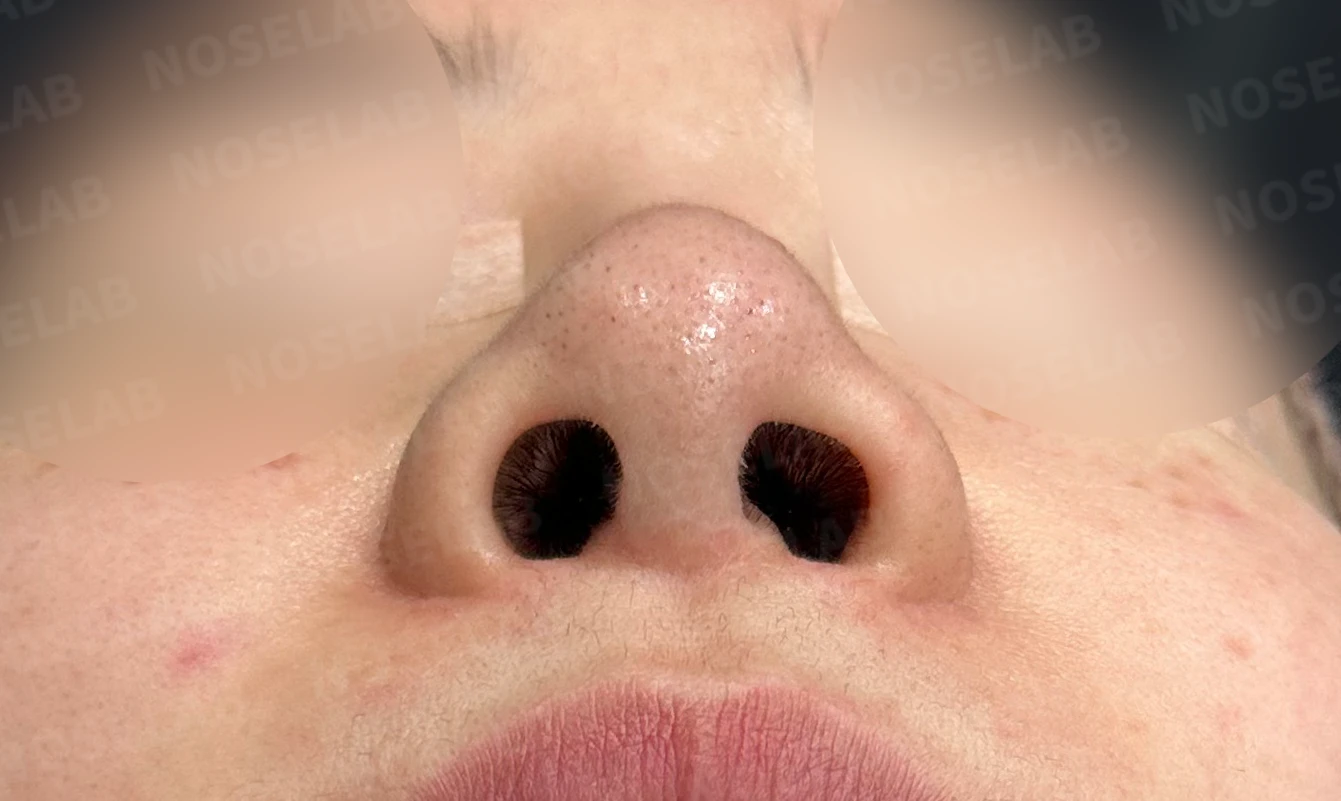
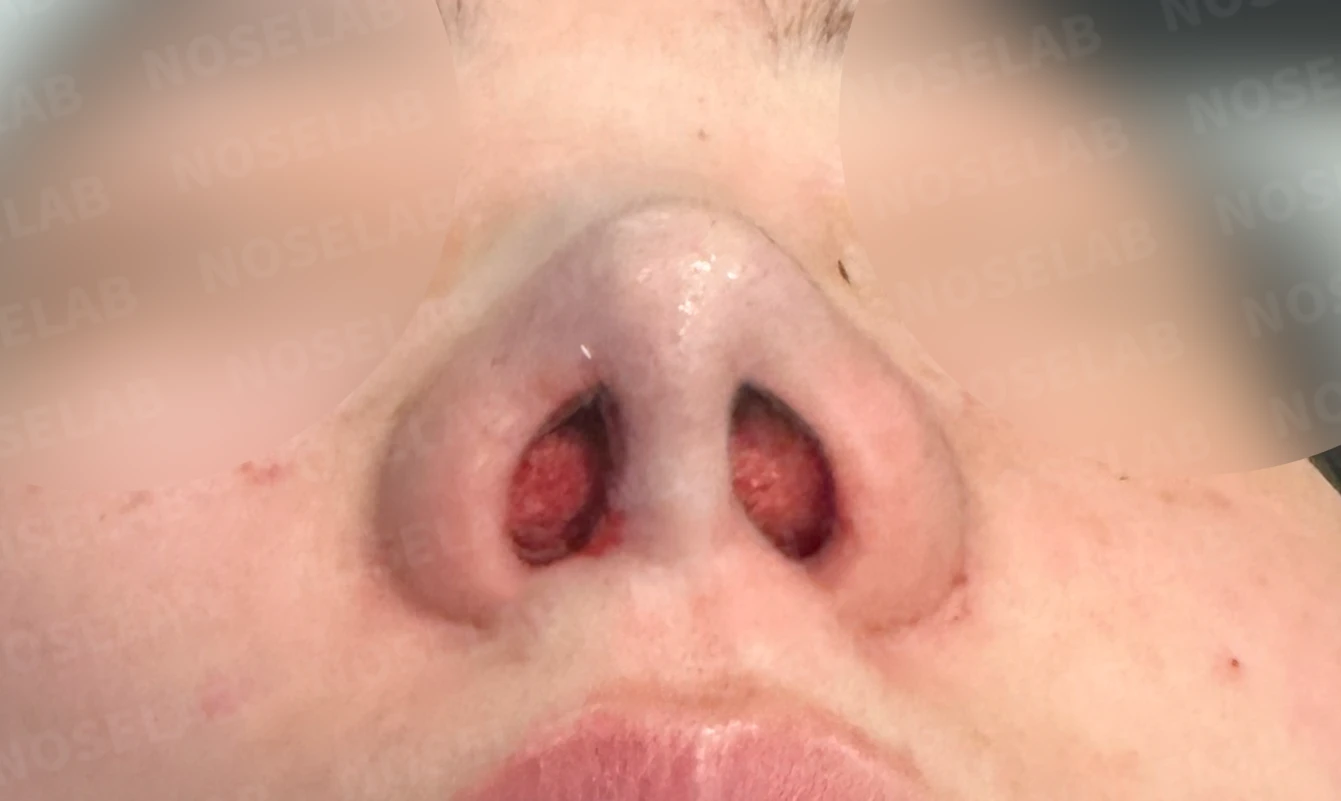
Before surgery / Day 0 immediately after surgery Photos taken immediately after surgery show swelling and may differ from the final result.
💡 Specialist opinion
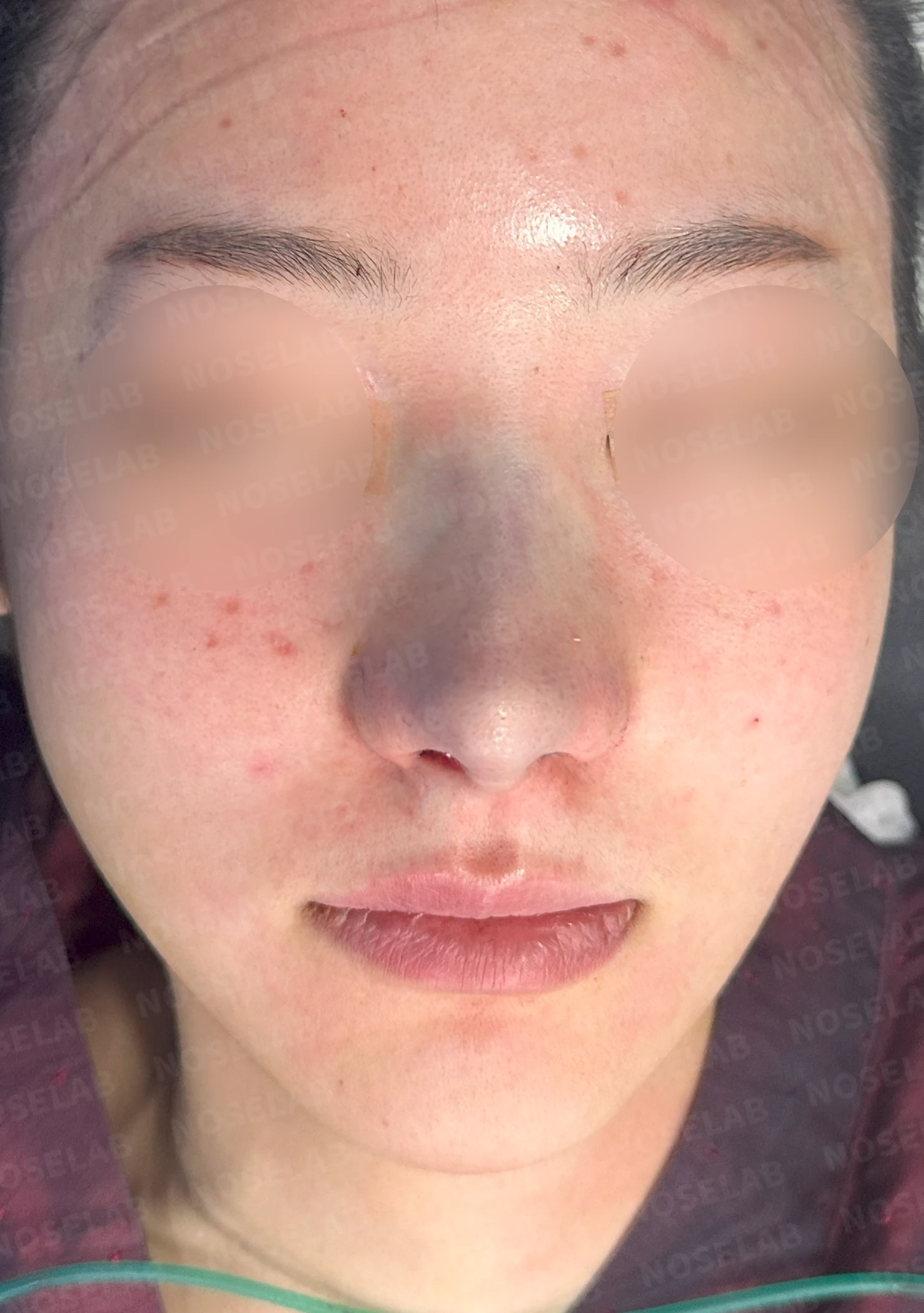
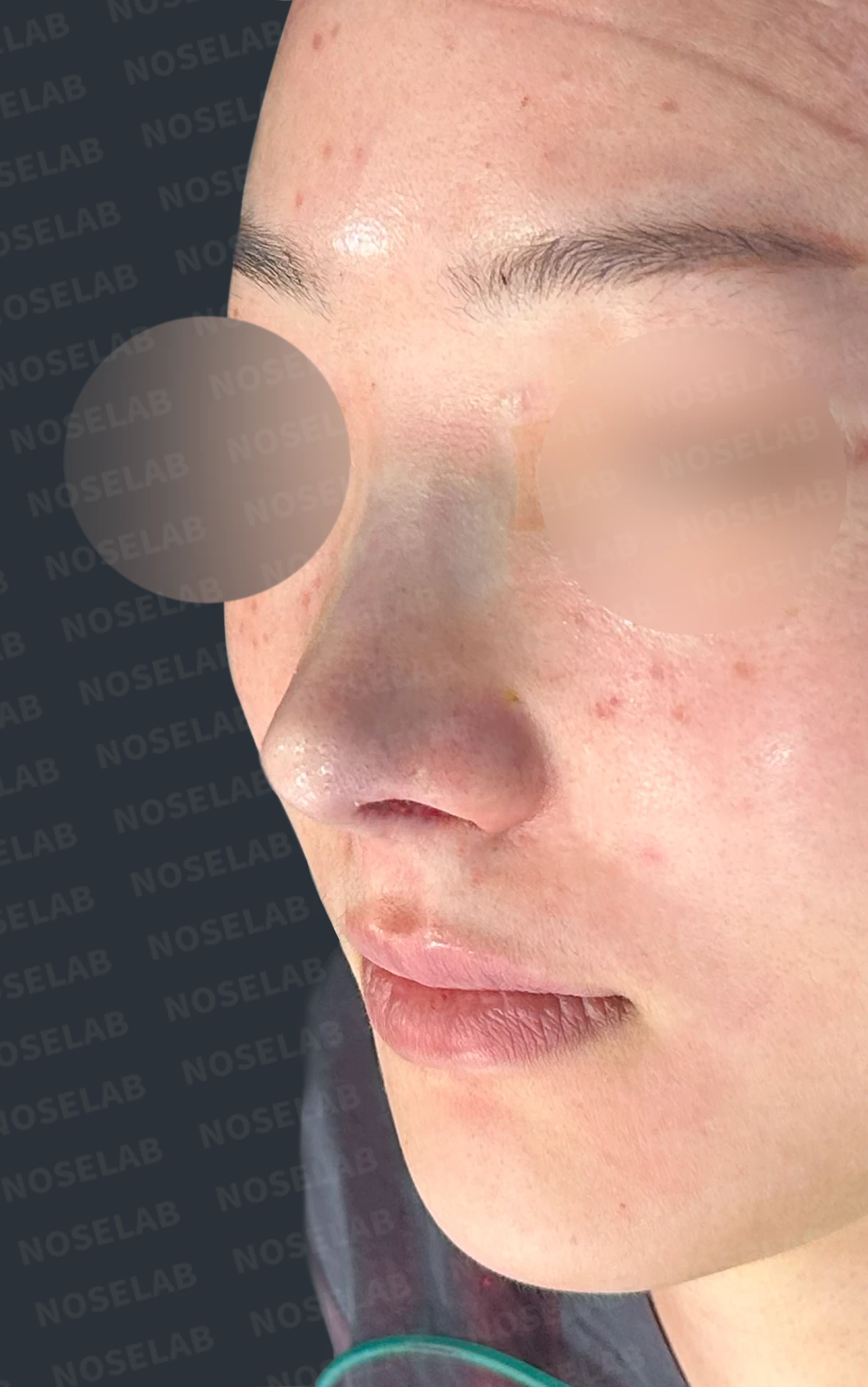
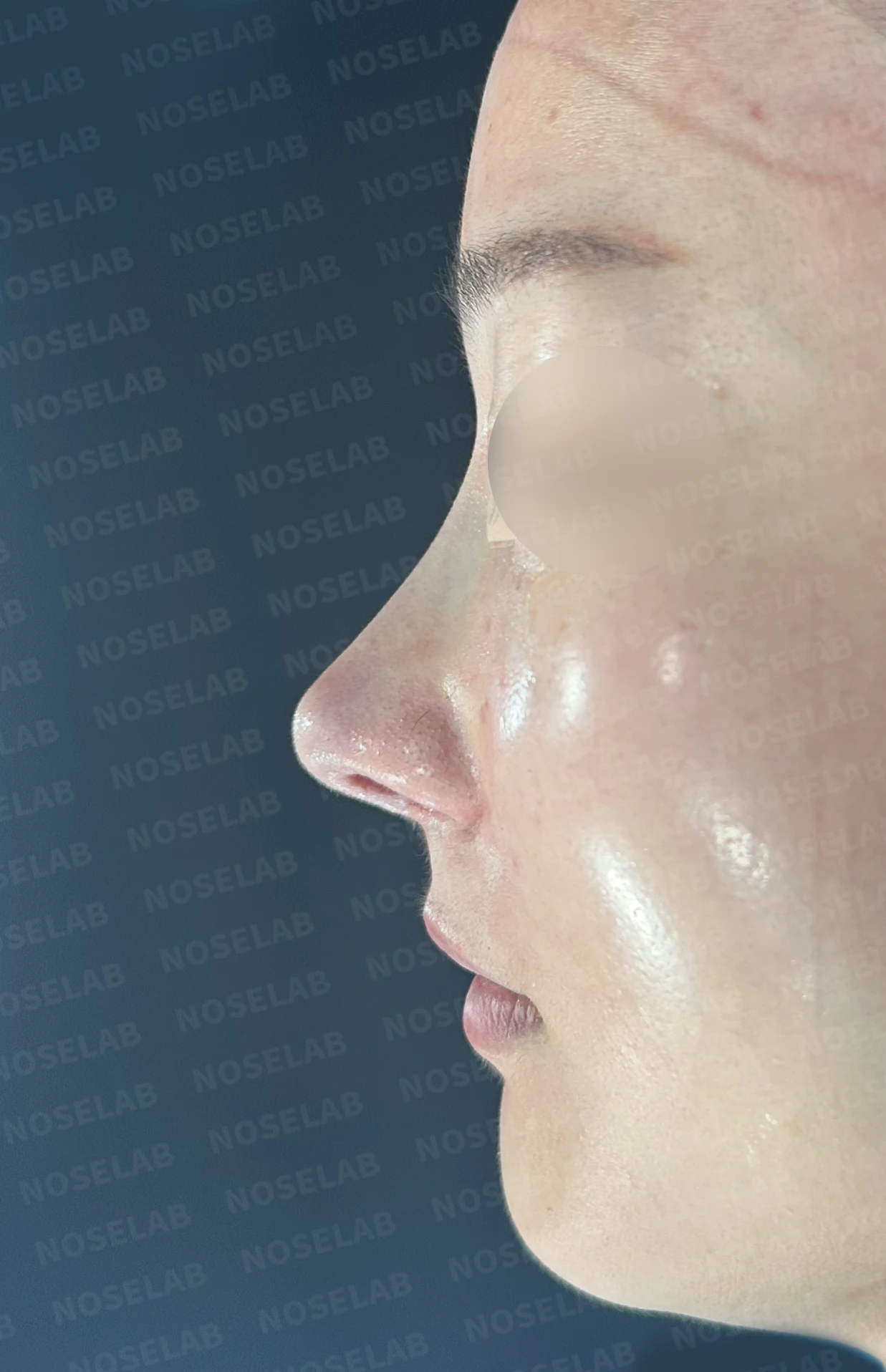
Immediately after surgery (day 0): front, oblique, and profile views. Immediate postoperative photos show swelling and may differ from the final result.
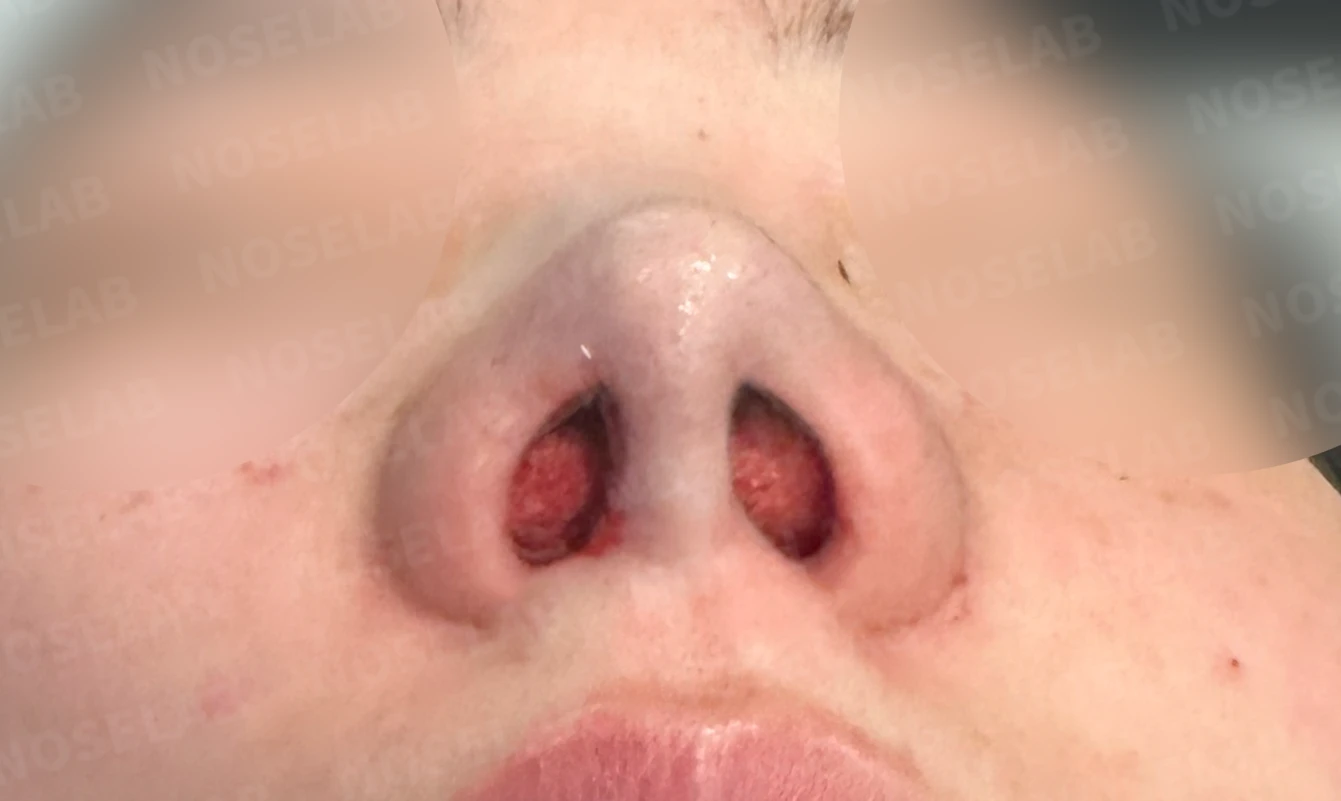
Nostril view on day 0 immediately after surgery. Photos taken immediately after surgery show swelling and may differ from the final result.
Double jaw surgery is a major procedure that alters the entire facial skeletal framework. As the positions of the jaw and cheekbones shift, a nose that previously fit the face well can appear relatively small or wide. In this case, the patient had sought revision surgery to address these changes, but the outcome had not been fully satisfactory.
Particularly in cases with multiple prior procedures, accurately assessing the tissue condition and scar tissue is essential. By removing the existing silicone implant and dermis graft and replacing them with a new silicone implant, we were able to achieve a more stable, natural result.
Septal reconstruction was performed with careful consideration of structural support for the nose.
I will continue to do my best to thoroughly address each patient's concerns, even in complex revision cases.
This was Dr. Peter C. Kang. Thank you.
#closedrhinoplasty #closedrevisionrhinoplasty #rhinoplastyafterdoublejawsurgery #autologousribcartilagerhinoplasty #septalreconstruction #nasalsillreduction #droopingtipcorrection #revisionrhinoplastyspecialist

Limitations and risks
When autologous rib cartilage is used, scarring and pain may remain at the donor site on the chest, and pneumothorax (pleural injury) can occur rarely. Over time, the grafted cartilage may warp or undergo partial resorption.
When revising after implant removal, contracture may progress again after removal, the nasal height and length may decrease, and staged surgery may be necessary depending on the skin condition.
When the septum is corrected at the same time, nasal obstruction may persist or recur, and in rare cases, septal perforation or changes in smell may occur.
Common potential risks include infection, bleeding, asymmetry, scarring, skin necrosis, and insufficient improvement; results vary depending on individual skin condition and previous surgical history.