Hello, I am Dr. Peter C. Kang.
Today, I would like to share the case of a patient who visited our clinic with a nose that had become crooked, drooping, and markedly asymmetrical due to Medpor and Gore-Tex used in a previous surgery. During surgery, examination revealed that the septal cartilage was severely damaged, with almost none of the anterior portion remaining.
🔍 Surgical history
Previous rhinoplasty using Medpor and Gore-Tex
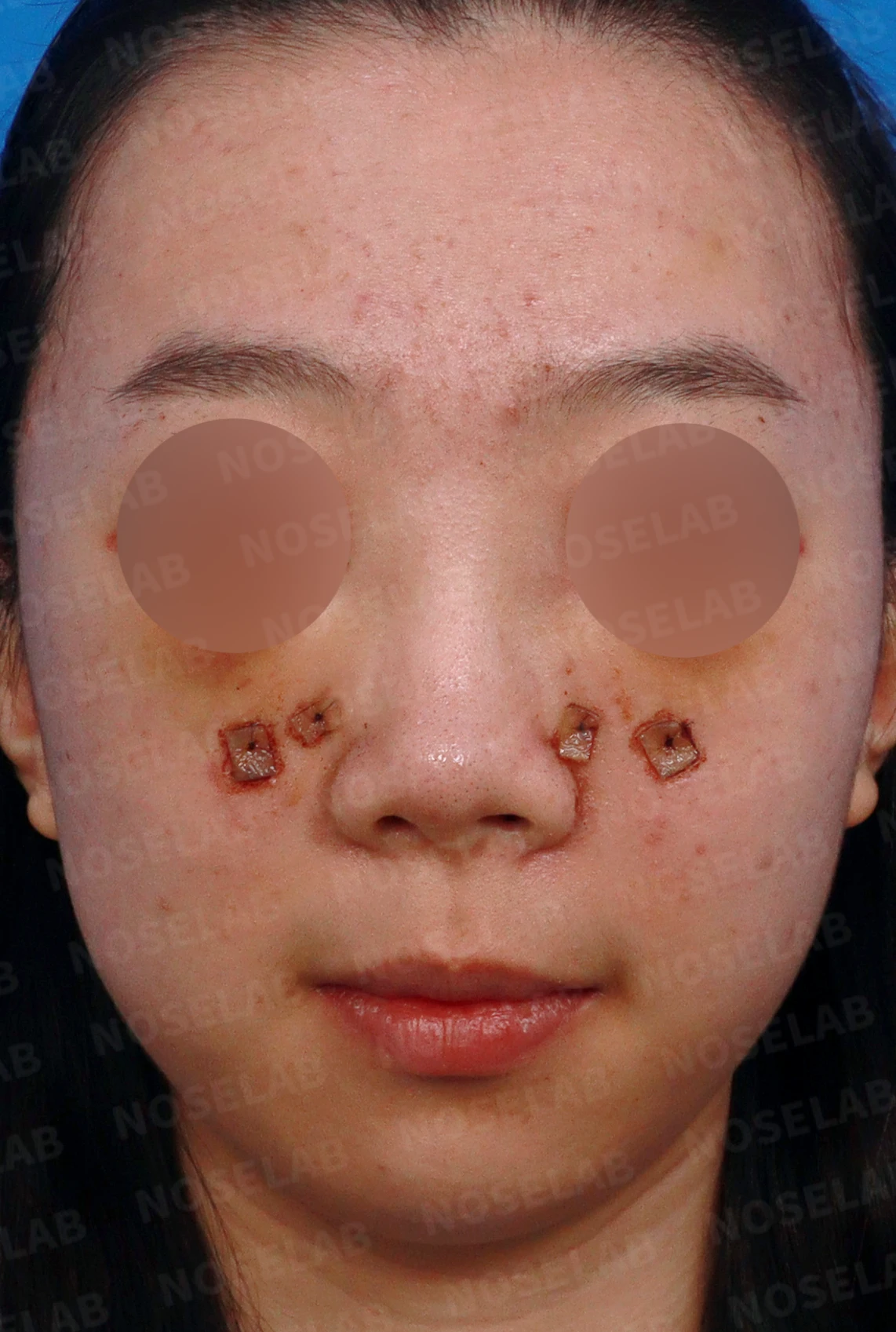
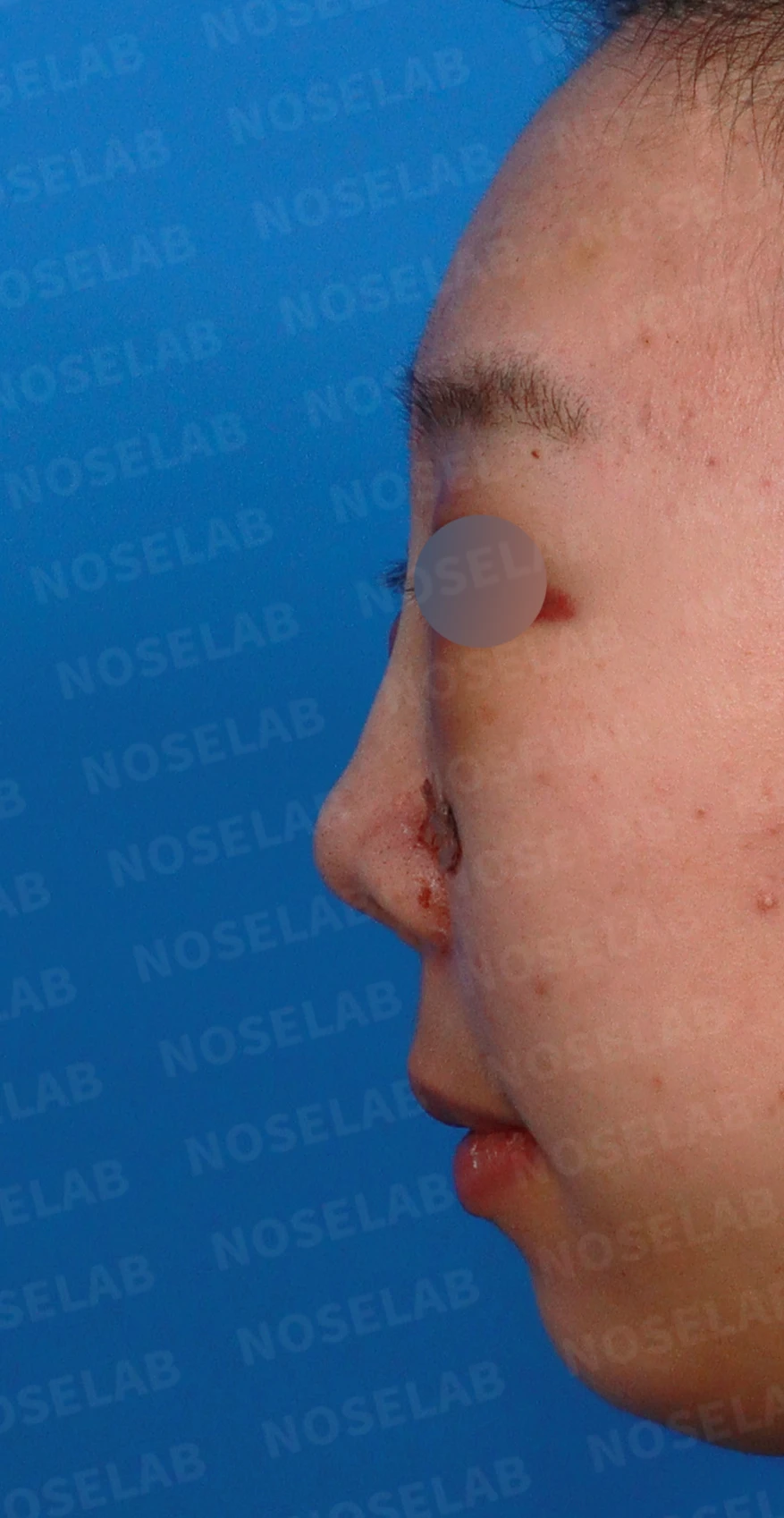
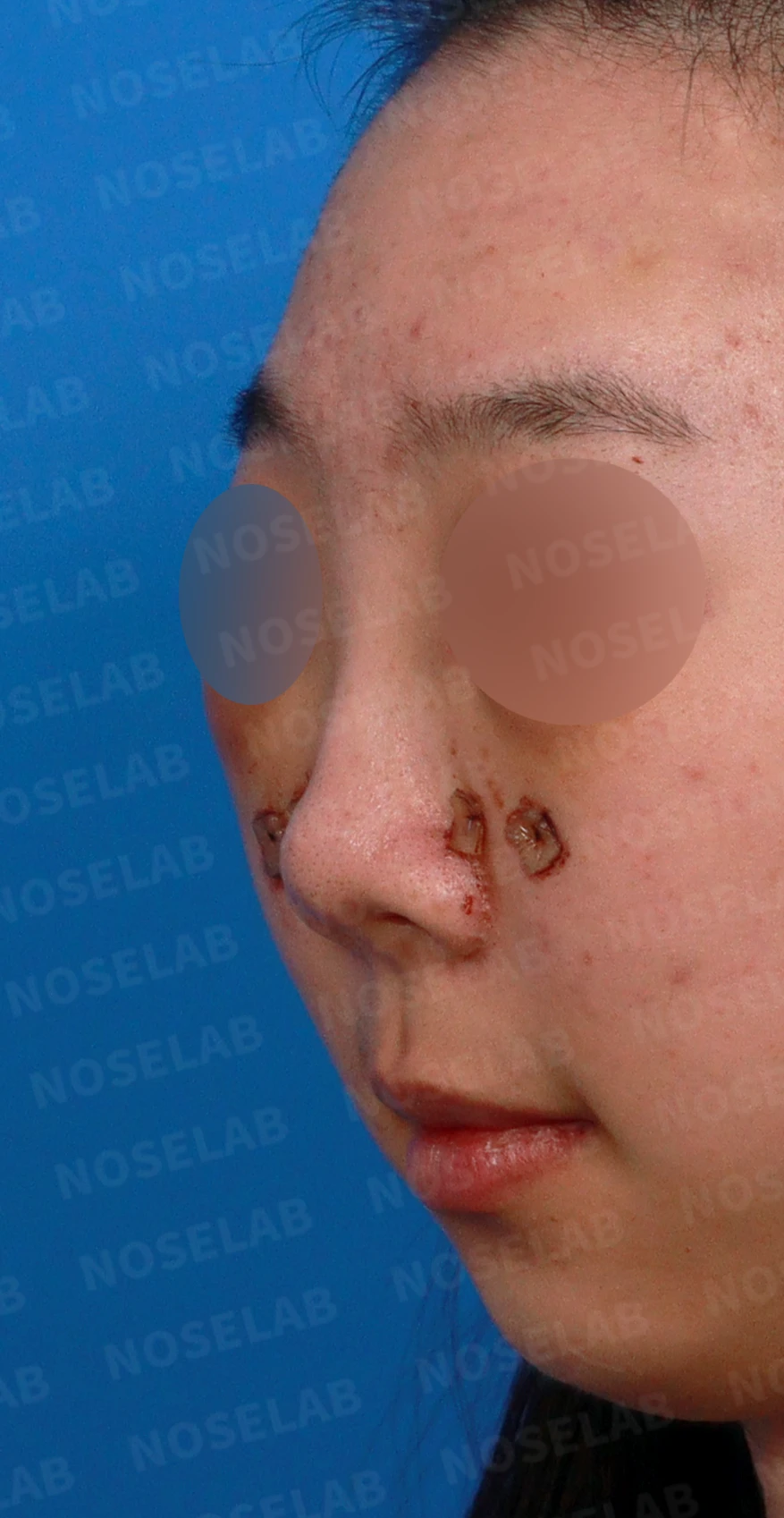
Front, left profile, and oblique views during design consultation.
💉 Patient requests
Correction of a crooked and drooping nasal tip
Improvement of nostril asymmetry
Improvement in the overall nasal line
Relief of severe nasal obstruction
Correction of a receding chin
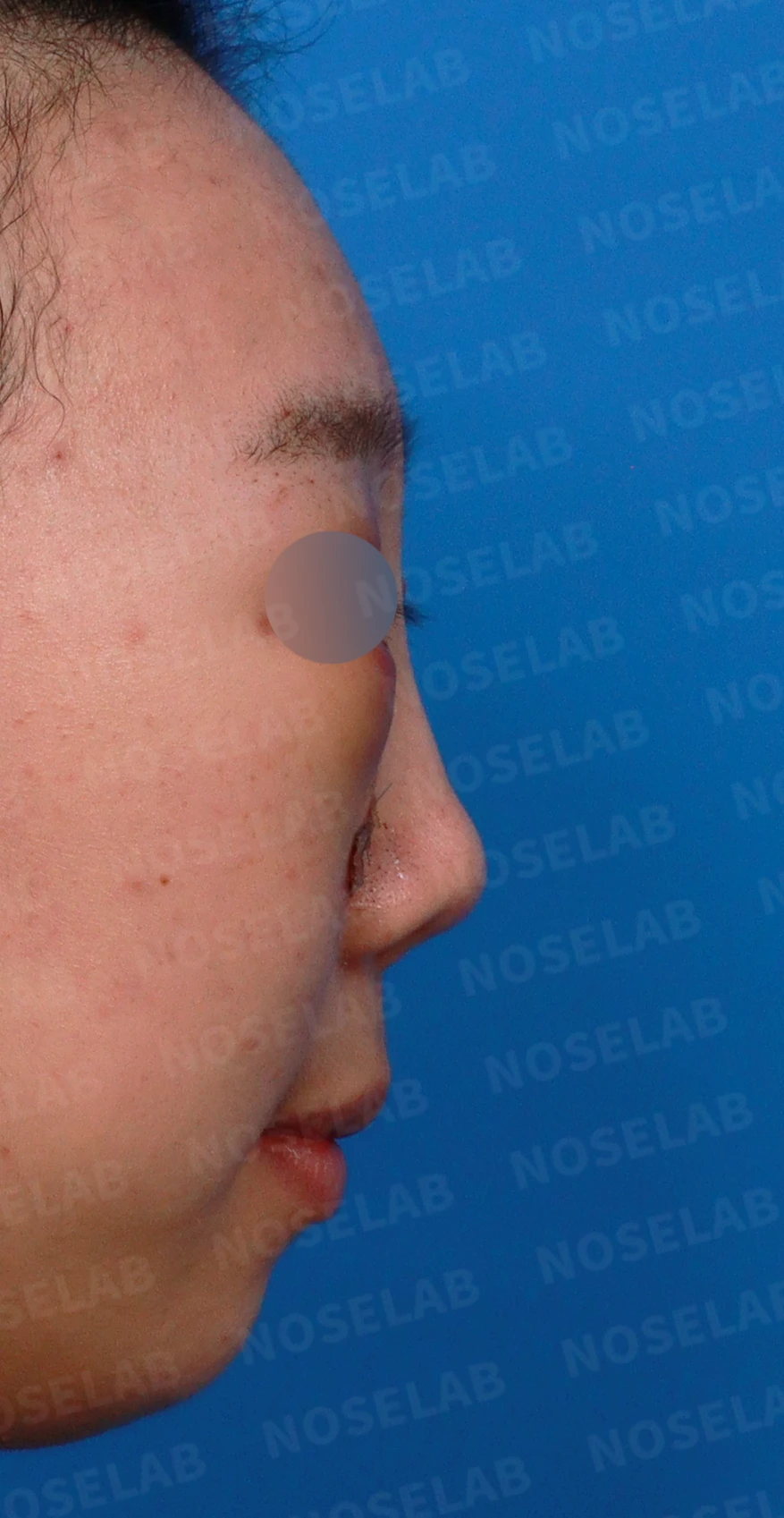
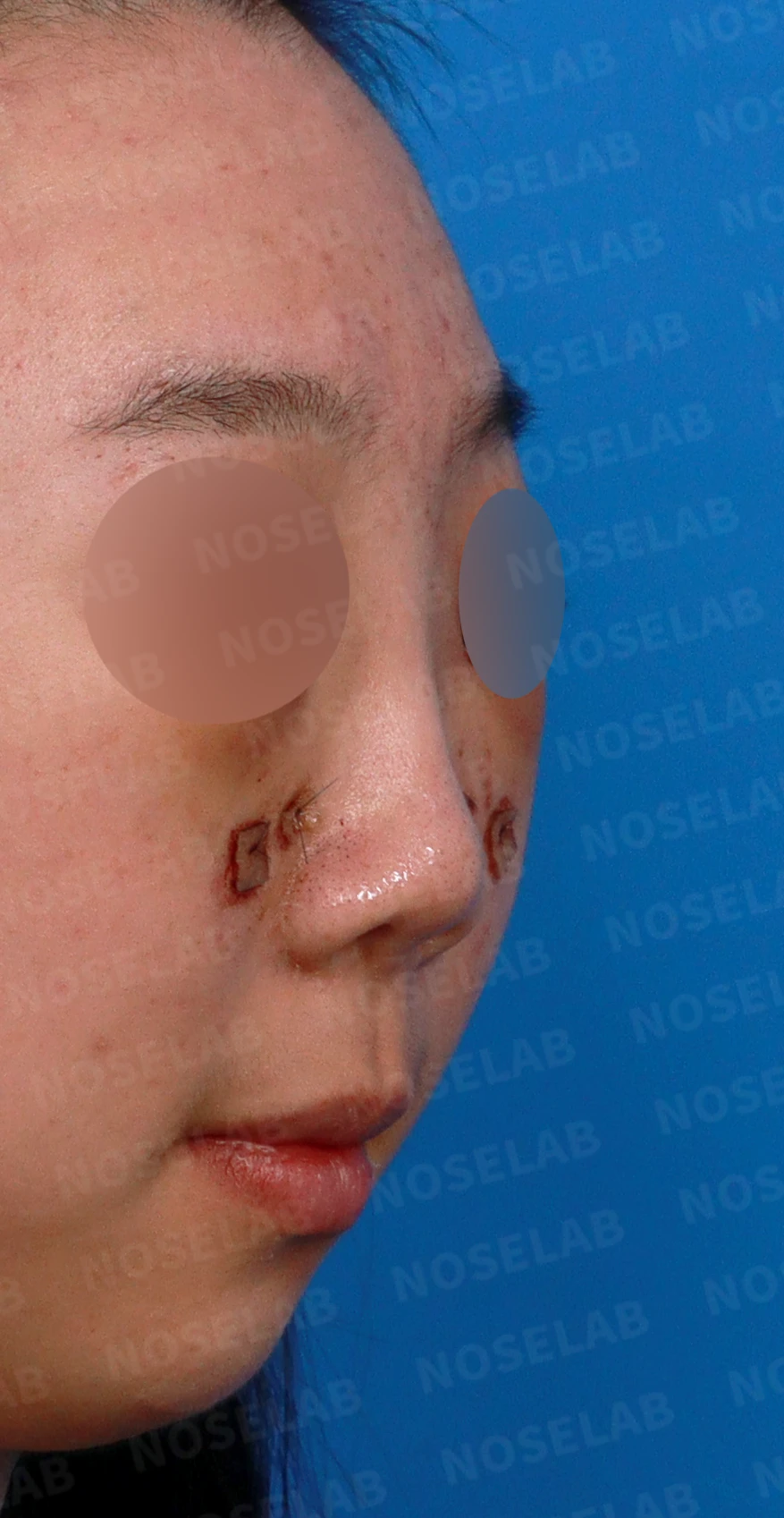
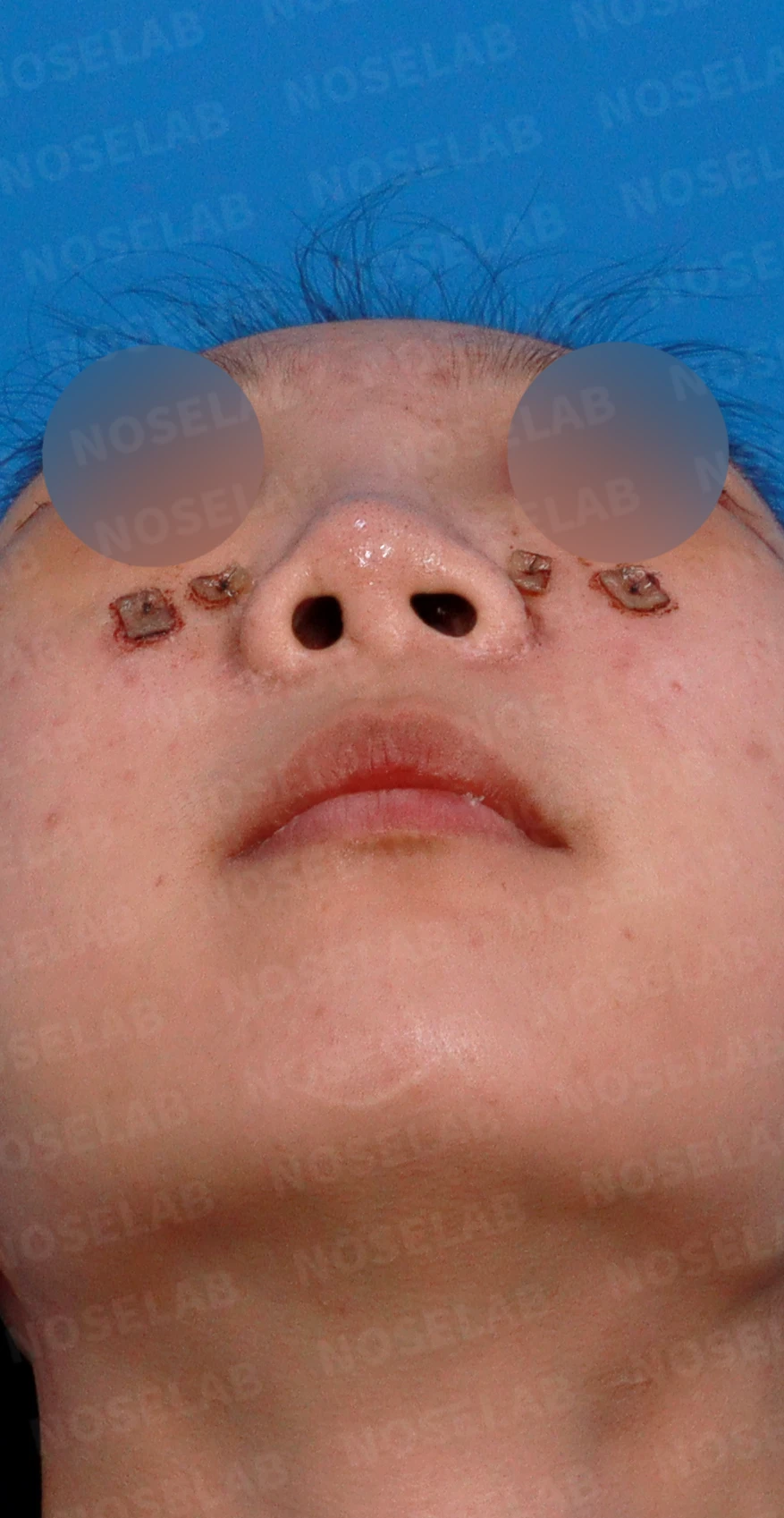
Right profile, oblique, and nostril views during design consultation.
🔧 Surgical plan and procedure
1. Complete removal of Medpor
Thorough removal of Medpor found during surgery
Debridement of tissues damaged by Medpor
Confirmation of near-total loss of the anterior septal cartilage
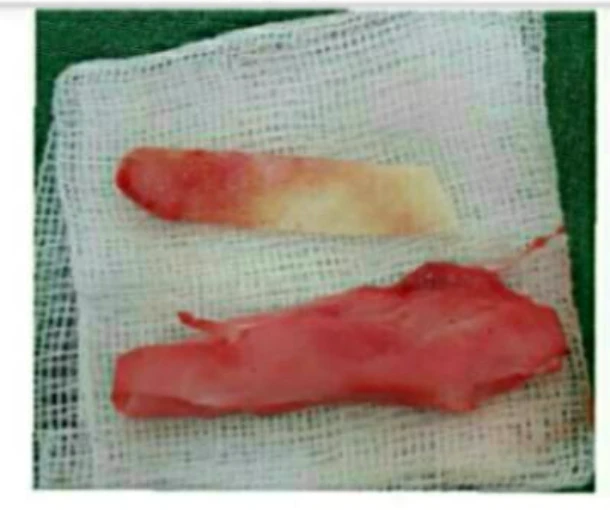
Removed Medpor (top), removed Gore-Tex (bottom)
2. Gore-Tex removal and silicone implant replacement
Removal of Gore-Tex used on the nasal bridge
Replacement with a stable silicone implant
Formation of a natural bridge line
3. Septal reconstruction using autologous rib cartilage
Reconstruction of the damaged, virtually absent anterior septum
Creating a sturdy support structure with autologous rib cartilage
Resolving the underlying cause of the crooked and drooping nasal tip
4. Nasal tip asymmetry correction
Repositioning the nasal tip based on the reconstructed septum
Improvement of nostril asymmetry
Achieving a balanced nasal tip shape
5. Nasal sill reduction
Bringing in a wide-appearing nasal floor
Adjusting the overall nasal width
6. Deviated septum and rhinitis surgery
Relief of severe nasal obstruction
Correction of the deviated septum
Restoration of breathing function through rhinitis surgery
7. Receding chin correction
Correction of the retruded chin point
Enhancing overall facial balance
Harmonious profile line between the nose and chin
🌟 Surgical results
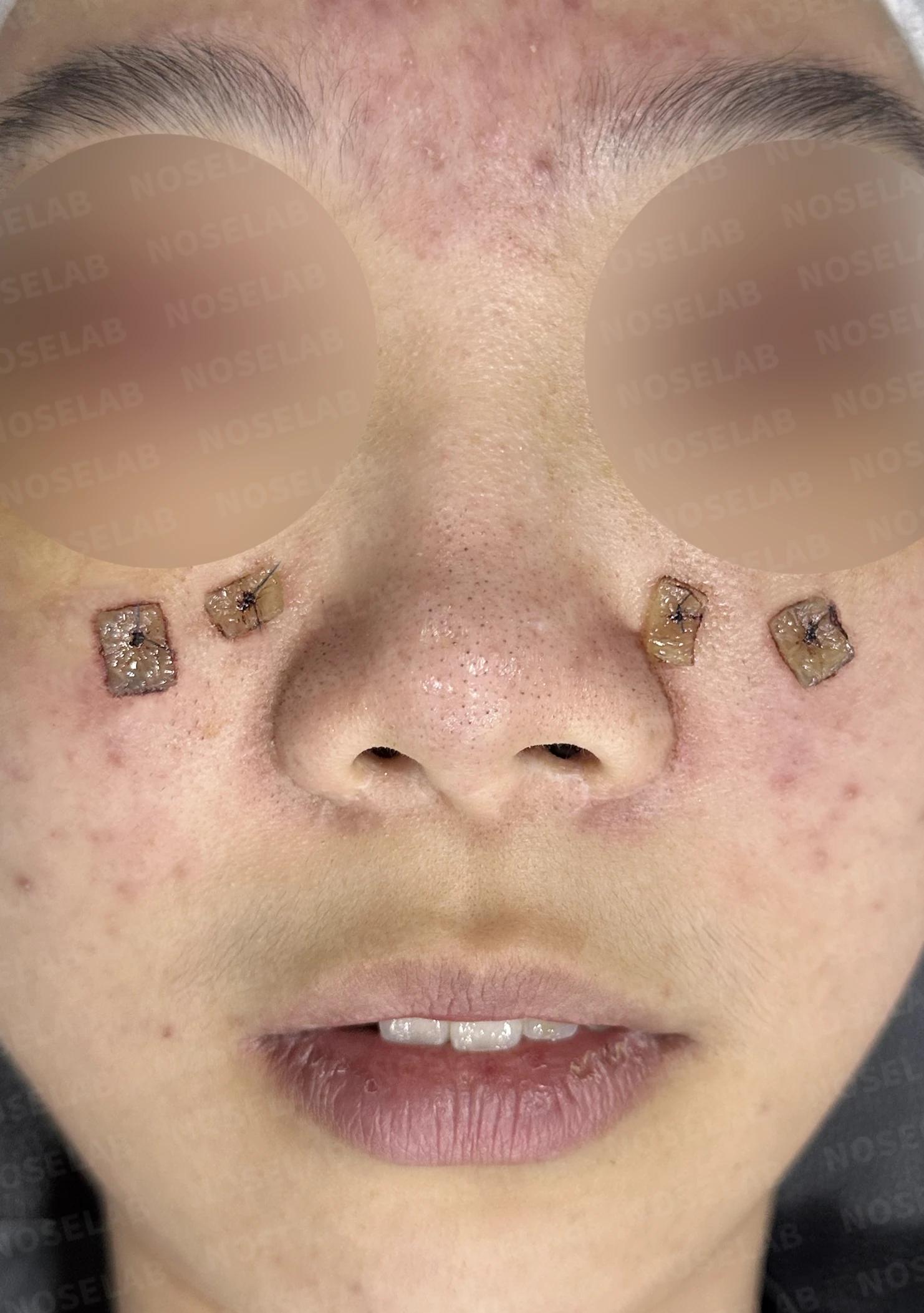
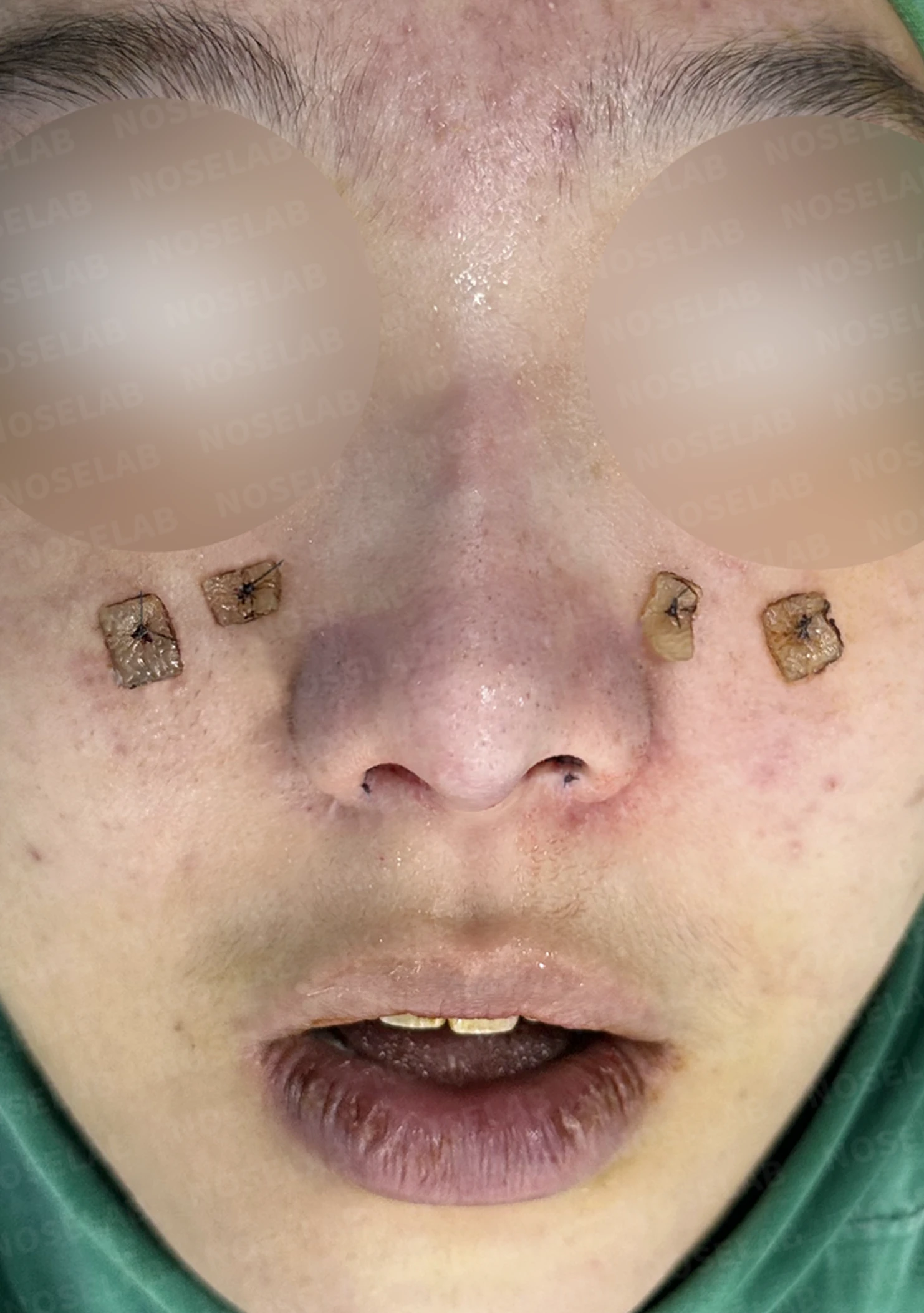
Before surgery / Day 0 immediately after surgery Photos taken immediately after surgery show swelling and may differ from the final result.
1. Frontal changes
The crooked nose was aligned along the midline
Improvement of nostril asymmetry
Overall refined impression as the nasal floor is narrowed
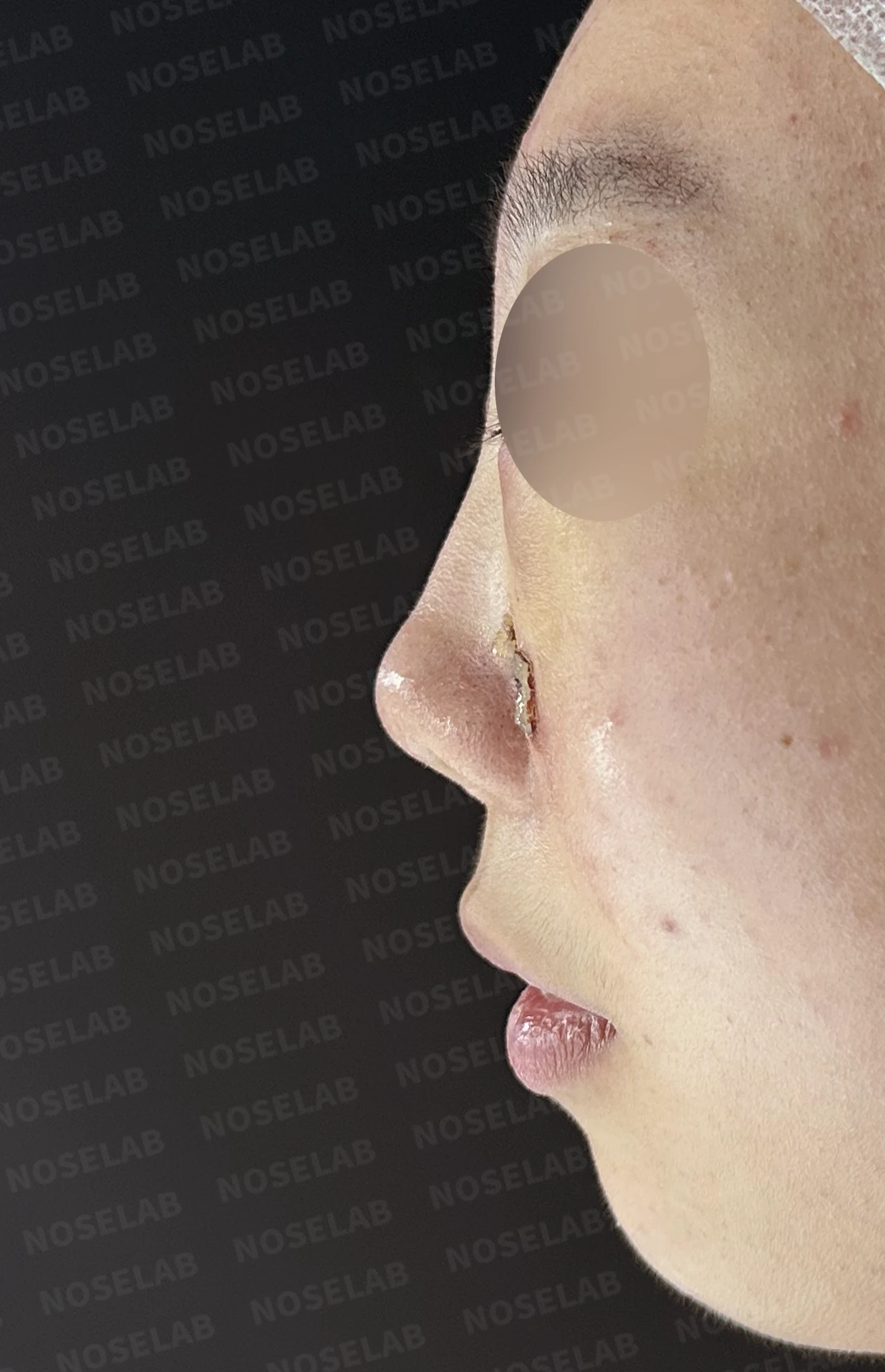
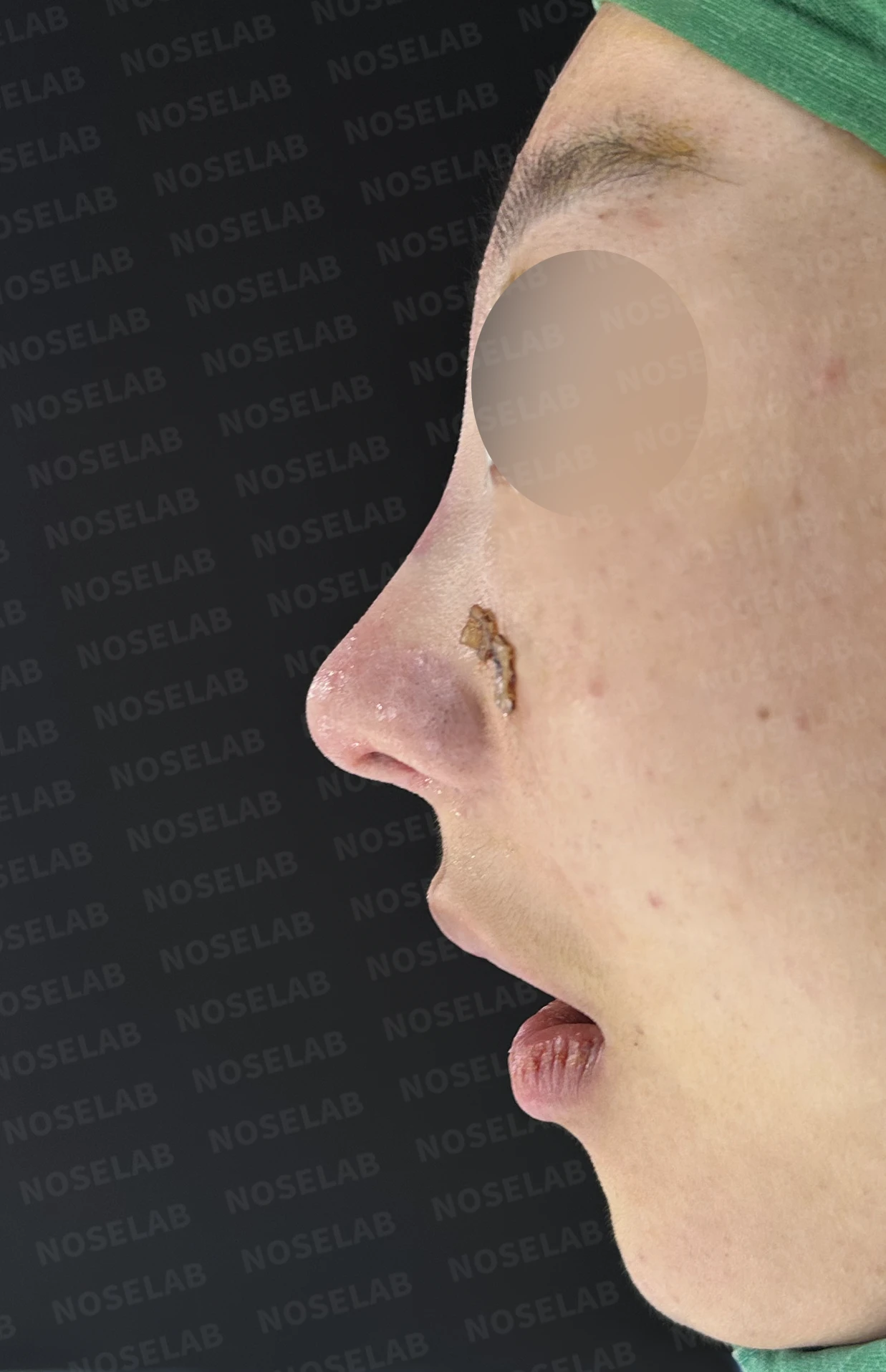
Before surgery / Day 0 immediately after surgery Photos taken immediately after surgery show swelling and may differ from the final result.
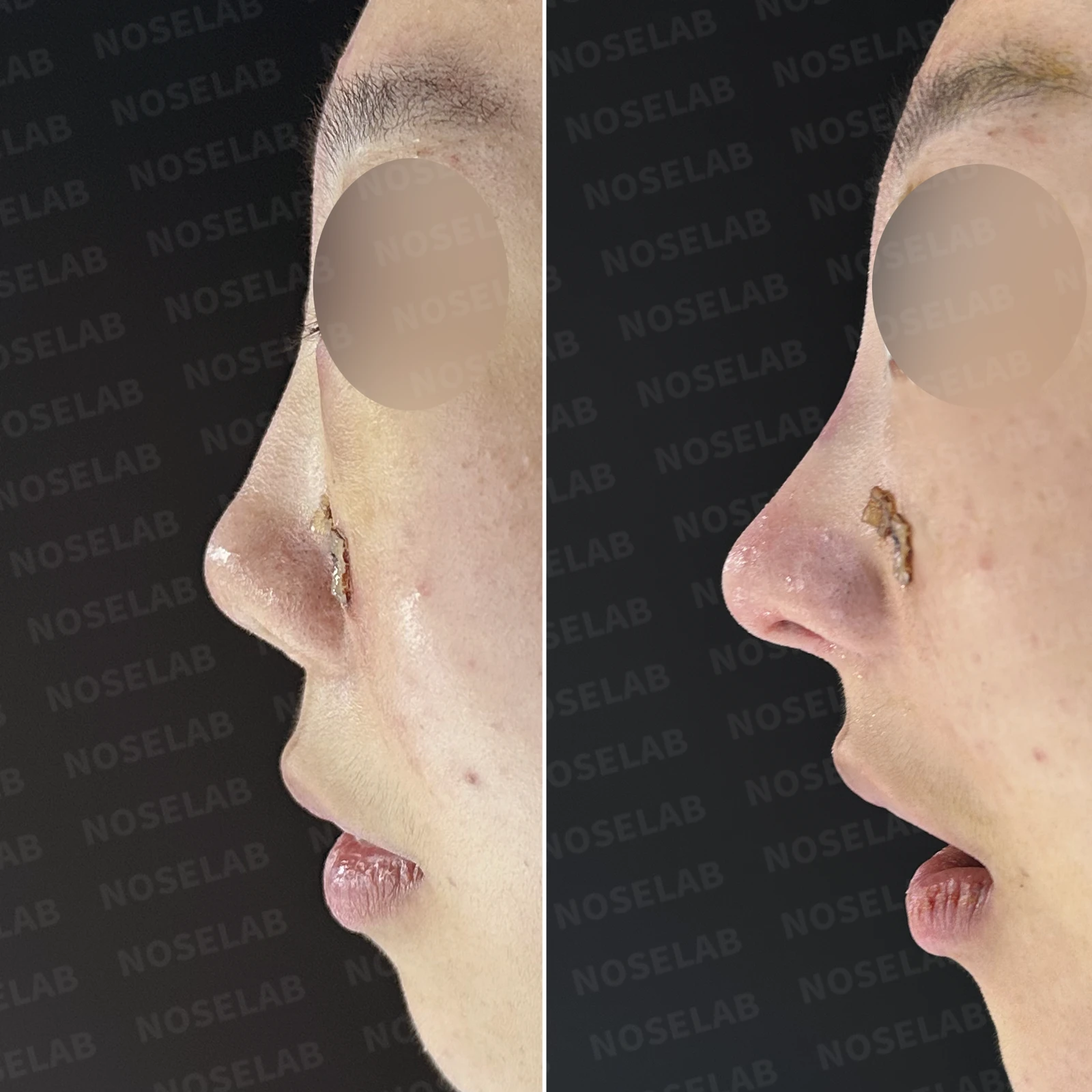
2. Profile changes
The drooping tip was naturally elevated
Balanced profile line achieved through receding chin correction
Harmonious balance between the nose and chin
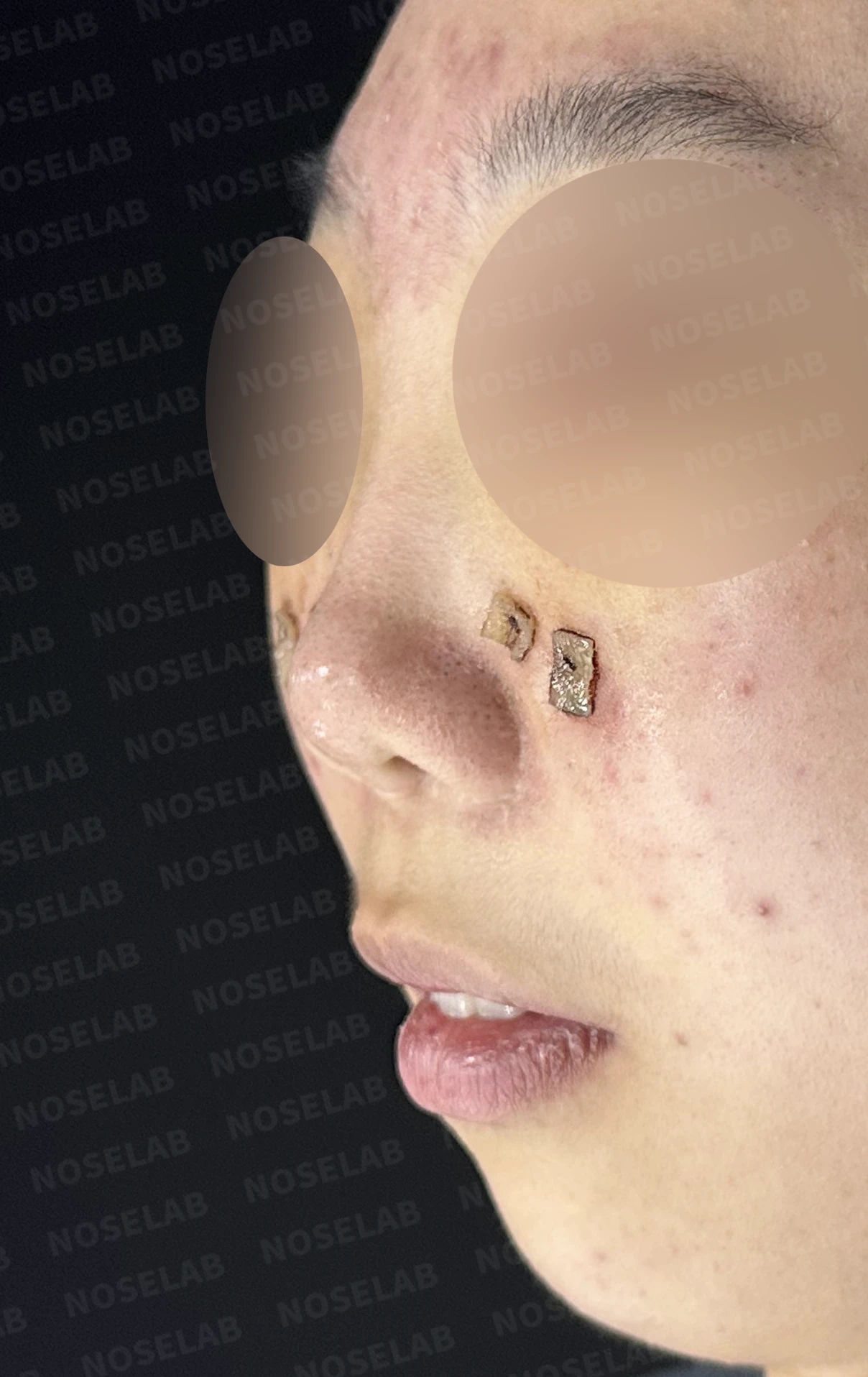
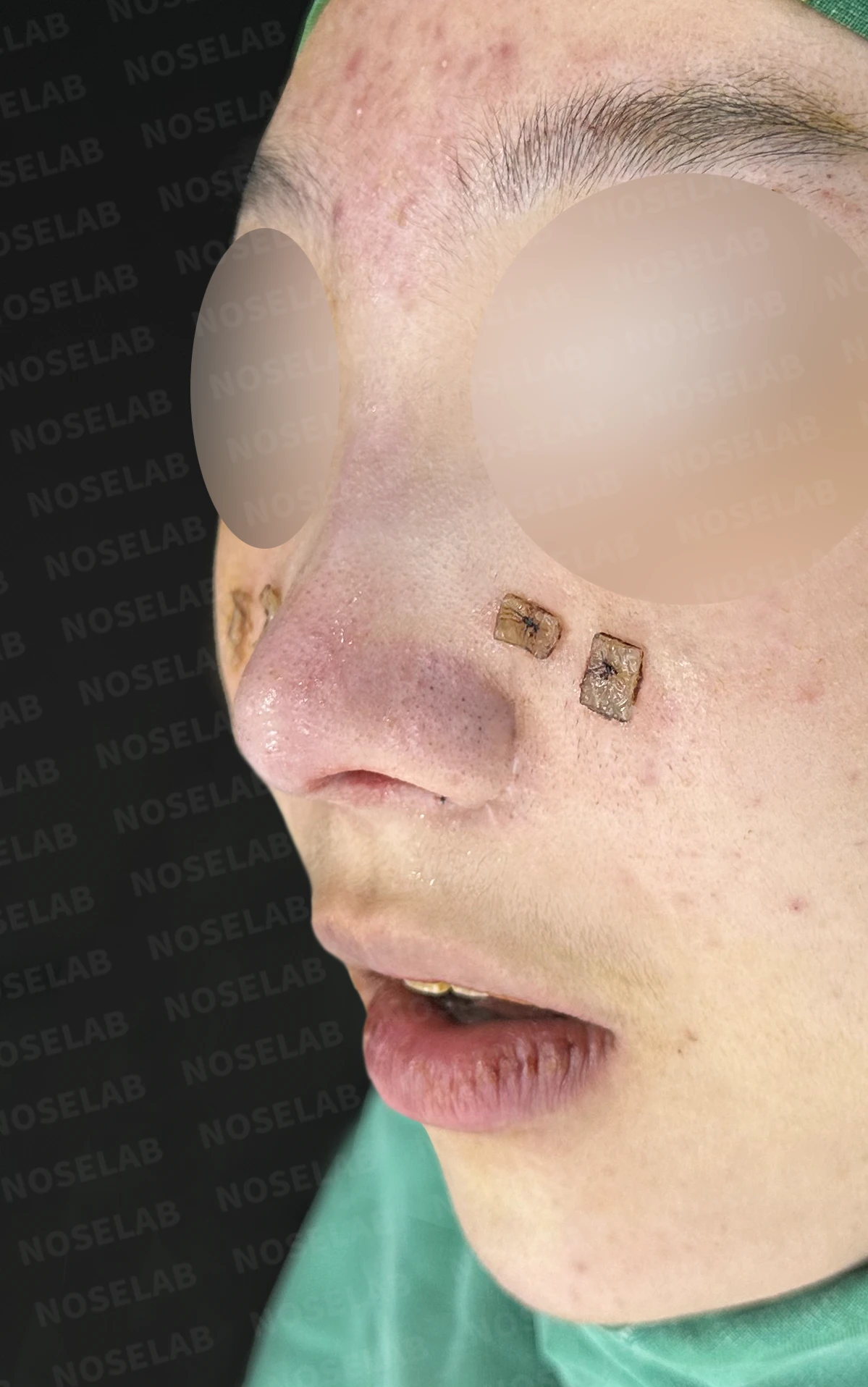
Before surgery / Day 0 immediately after surgery Photos taken immediately after surgery show swelling and may differ from the final result.
3. Nostril changes
Improvement of nostril asymmetry
Balanced nostril shape following nasal sill reduction
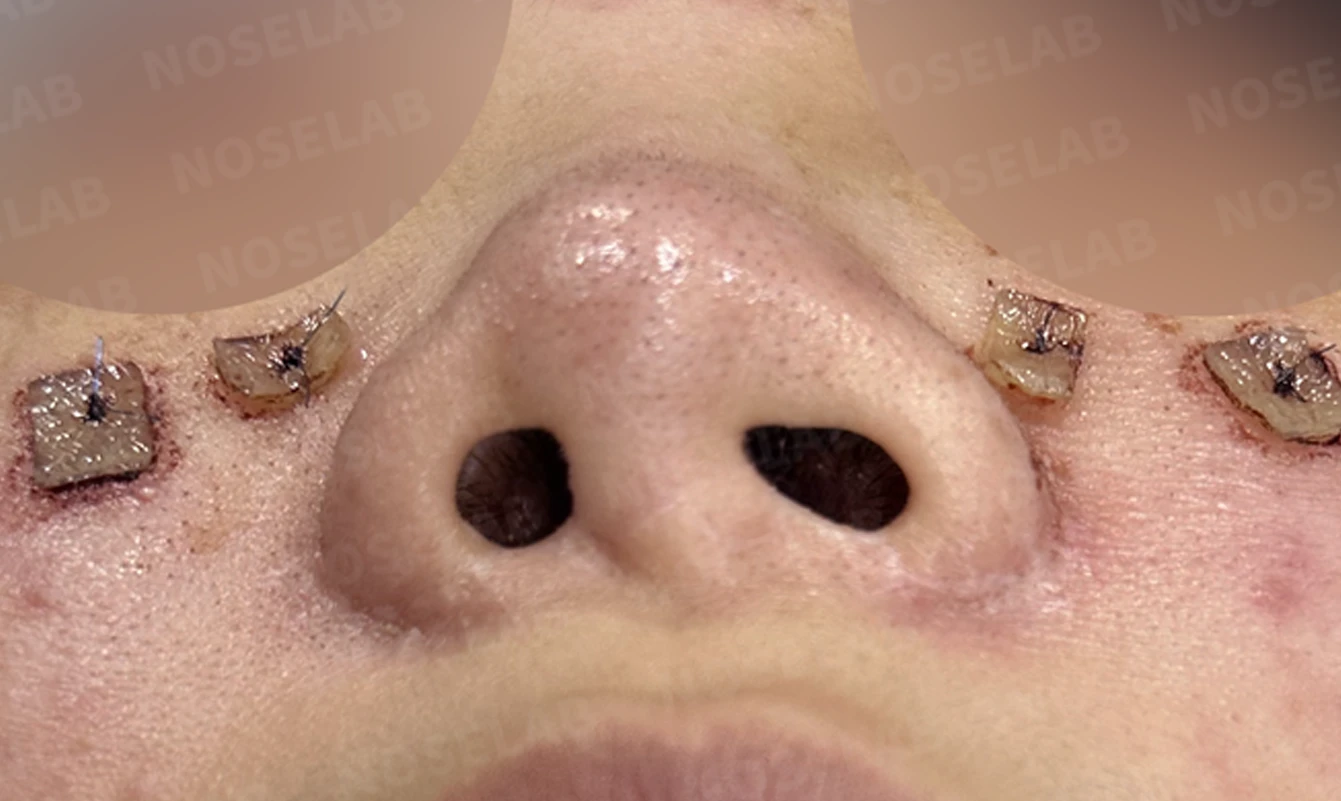
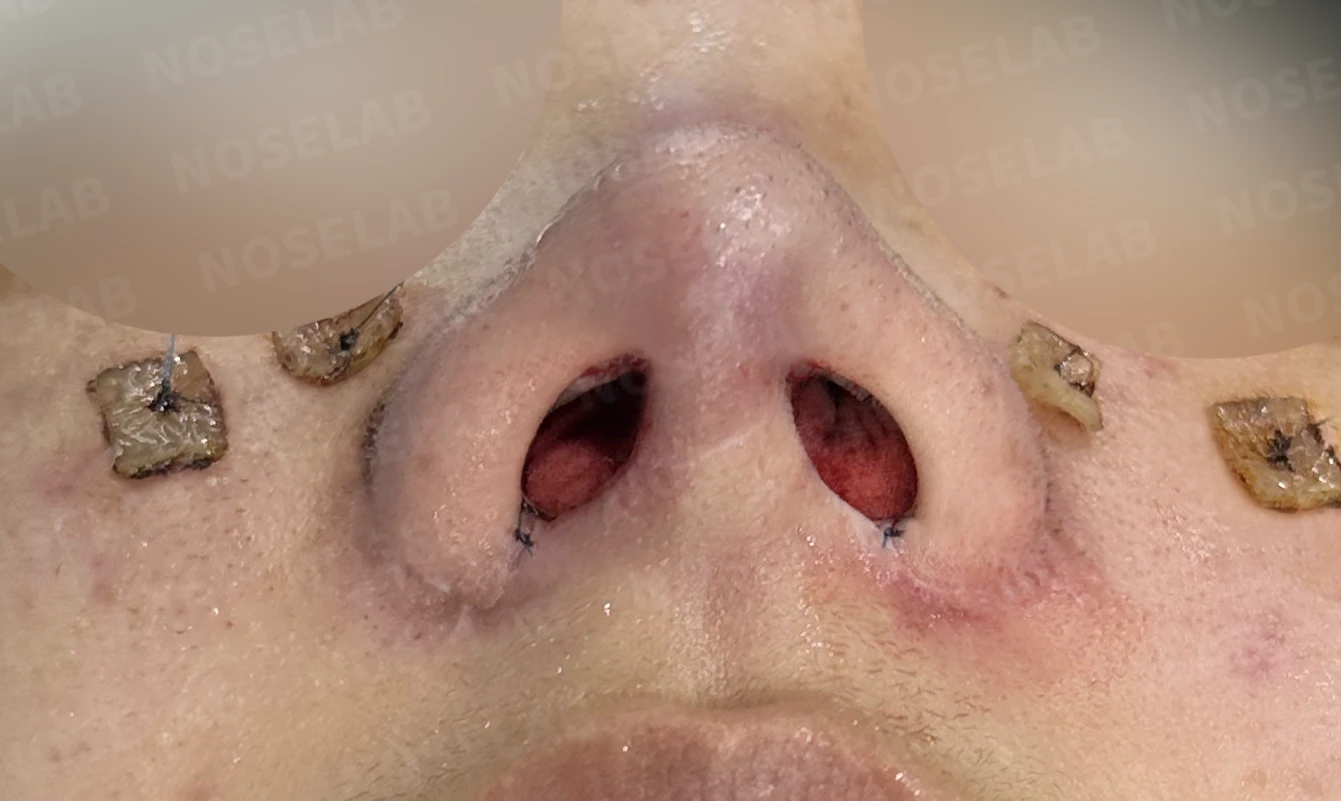
Before surgery / Day 0 immediately after surgery Photos taken immediately after surgery show swelling and may differ from the final result.
💡 Specialist opinion
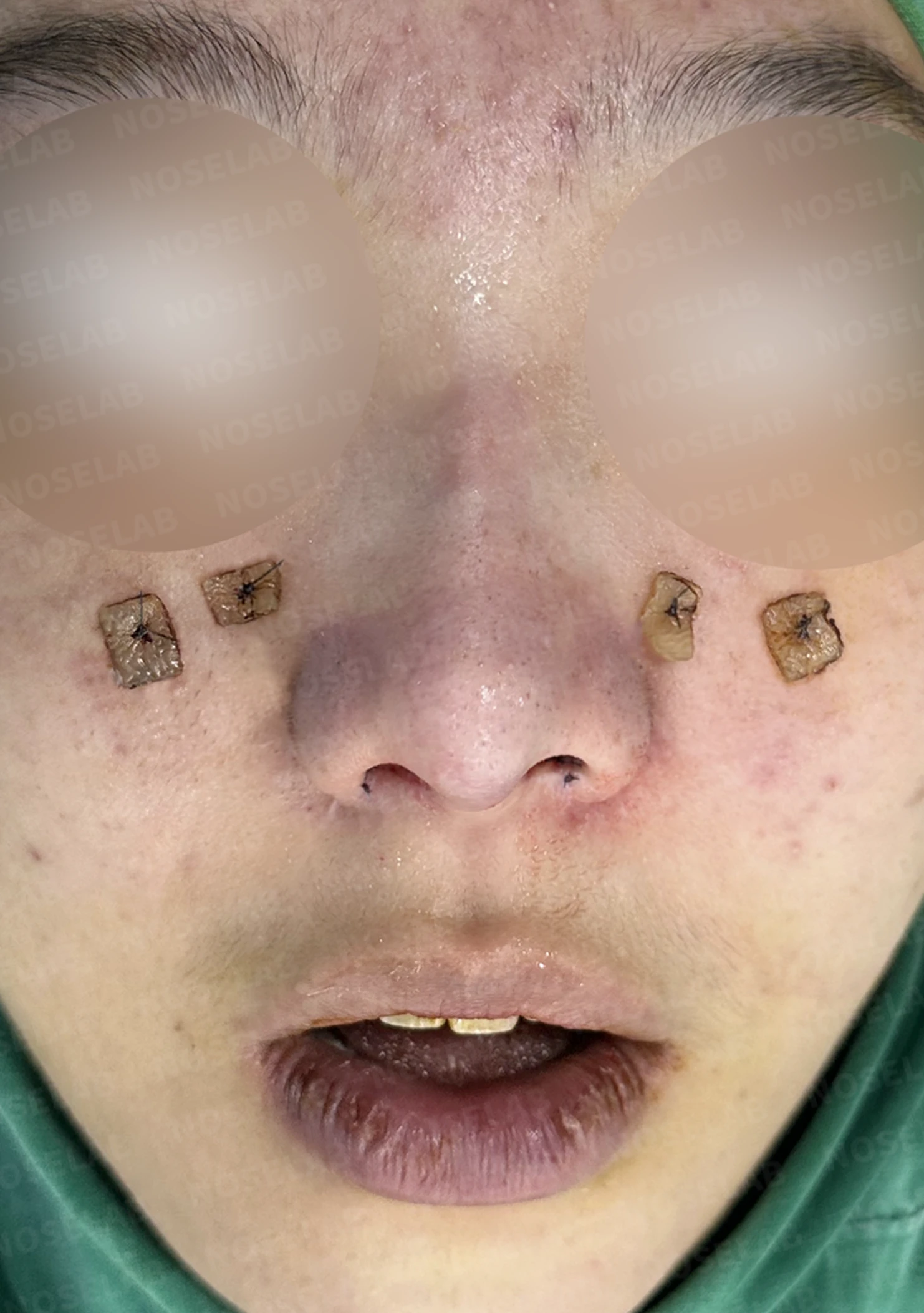
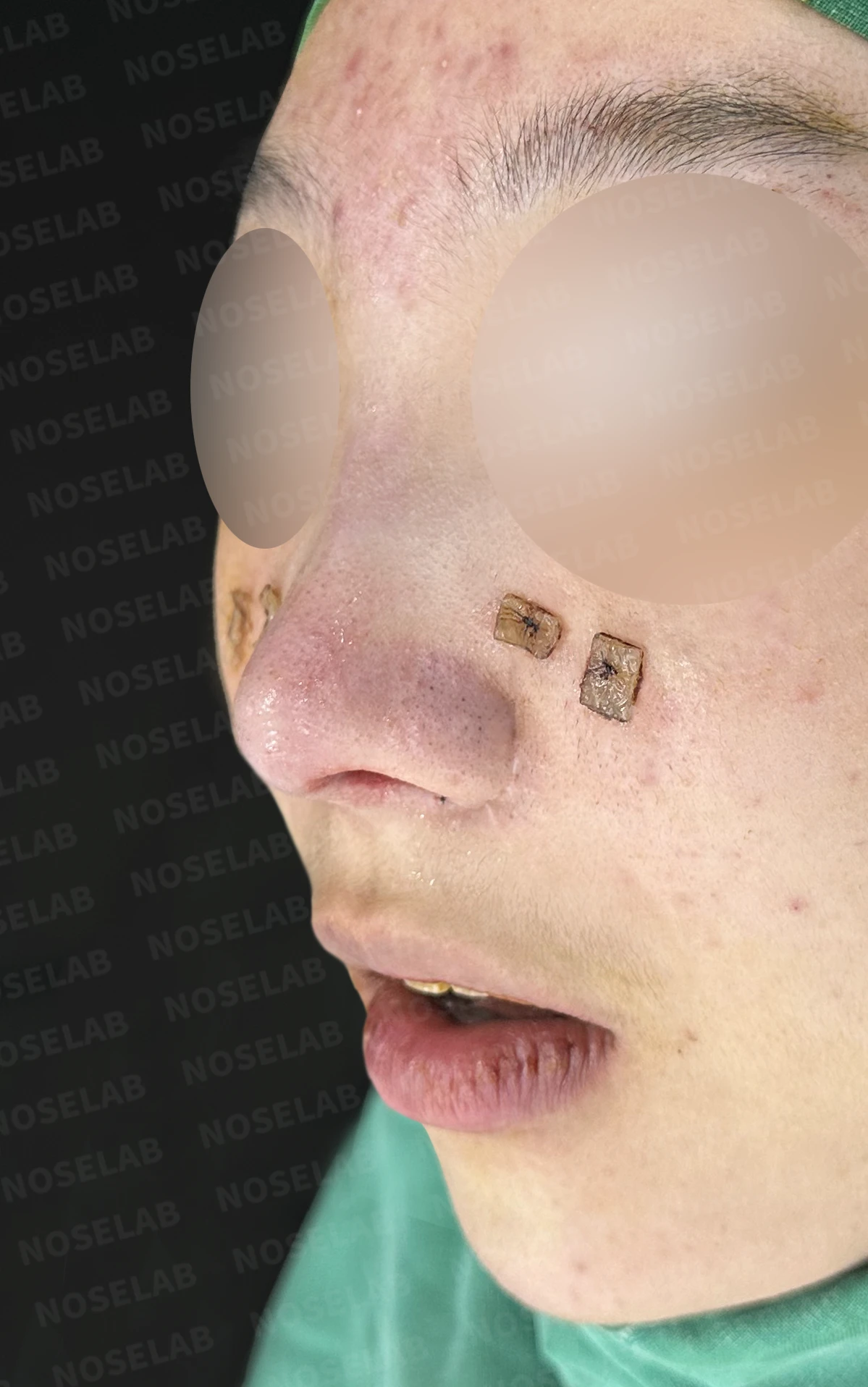
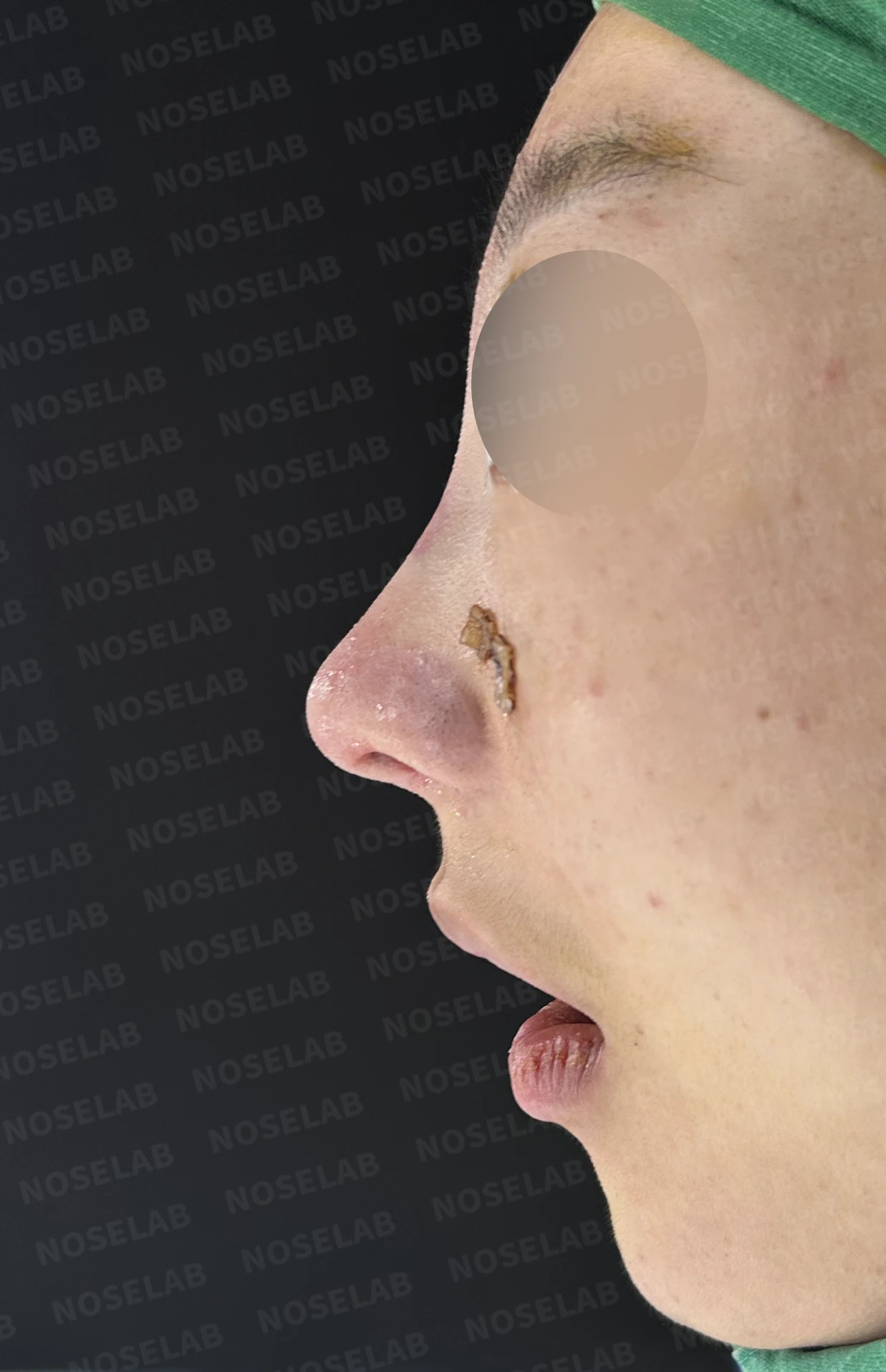
Front, oblique, and profile views on day 0 immediately after surgery. Photos taken immediately after surgery show swelling and may differ from the final result.
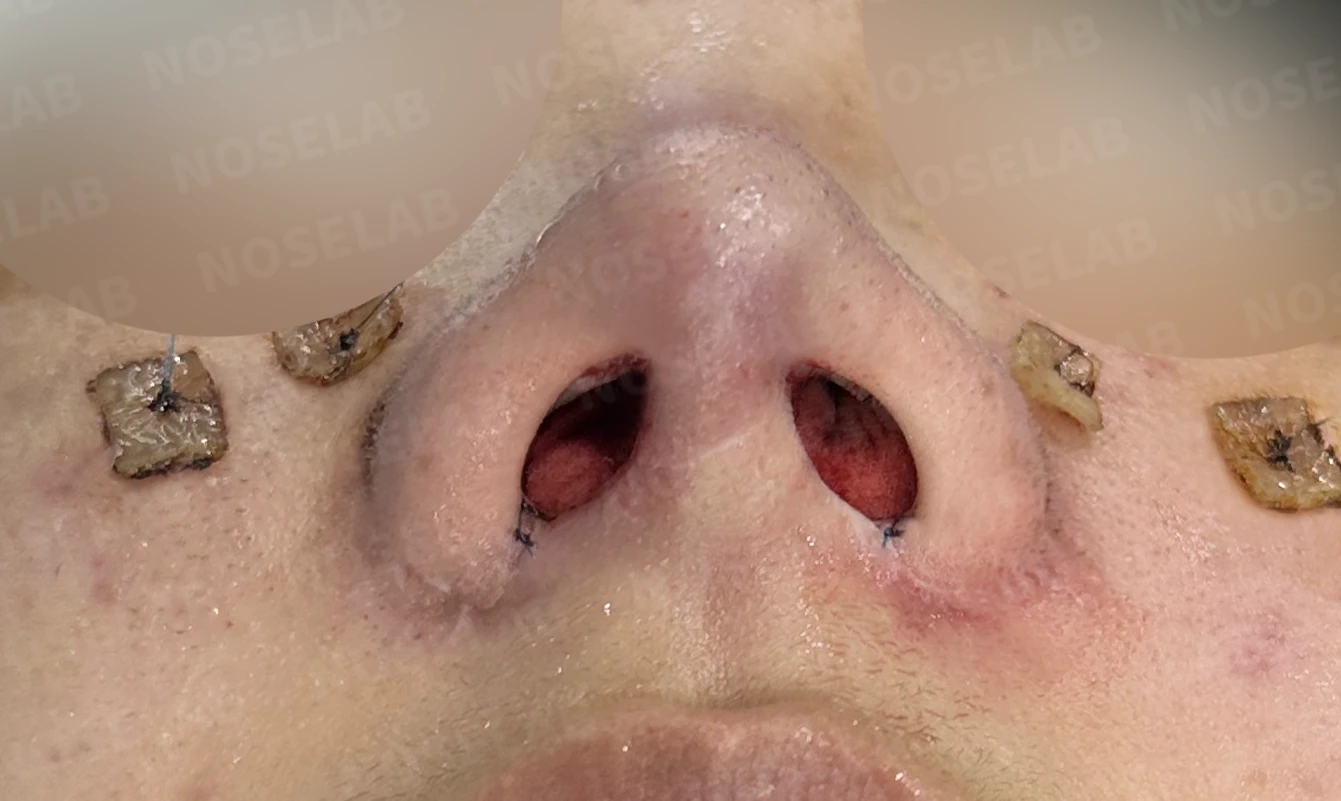
Nostril view on day 0 immediately after surgery. Photos taken immediately after surgery show swelling and may differ from the final result.
This was a case where Medpor severely damaged the septal cartilage, resulting in a nasal tip that was crooked, drooping, and asymmetrical. During surgery, intraoperative findings confirmed that almost no anterior septum remained, leaving no supporting structure for the nasal tip.
Medpor is a porous biomaterial into which tissue ingrowth occurs, making it difficult to remove and capable of damaging surrounding tissues. In this operation, the Medpor was thoroughly removed, and the Gore-Tex on the nasal bridge was also removed and replaced with a stable silicone implant.
The most crucial step was reconstructing the damaged septum. Using autologous rib cartilage, the lost anterior septum was newly recreated, and on this foundation, the crooked, drooping nasal tip was realigned. Proper reconstruction of the septum is essential for the nasal tip shape to remain stable over the long term.
Because the patient also suffered from severe nasal obstruction, deviated septum correction and rhinitis surgery were performed concurrently to improve respiratory function. Additionally, since severe chin retrusion meant that correcting the nose alone could leave the facial profile unbalanced, receding chin surgery was also performed. Harmonizing the relationship between the nose and chin is necessary to complete a balanced profile.
I hope this case provides helpful insight for those struggling with nasal deformities after previous surgeries using materials such as Medpor or Gore-Tex.
This was Dr. Peter C. Kang. Thank you.
#closedrhinoplasty #closedrevisionrhinoplasty #medporremoval #goretexremoval #septalreconstruction #autologousribcartilage #recedingchincorrection #deviatedseptum #nasalobstruction

Limitations and risks
When autologous rib cartilage is used, scarring and pain may remain at the donor site on the chest, and pneumothorax (pleural injury) can occur rarely. Over time, the grafted cartilage may warp or undergo partial resorption.
When revising after implant removal, contracture may progress again after removal, the nasal height and length may decrease, and staged surgery may be necessary depending on the skin condition.
When the septum is corrected at the same time, nasal obstruction may persist or recur, and in rare cases, septal perforation or changes in smell may occur.
Common potential risks include infection, bleeding, asymmetry, scarring, skin necrosis, and insufficient improvement; results vary depending on individual skin condition and previous surgical history.