Hello, I am Dr. Peter C. Kang.
Today, I would like to introduce the case of a patient whose wide nasal tip, nostril asymmetry, and uneven nasal bridge were naturally improved using implant-free autologous rib cartilage.
📍Surgical history
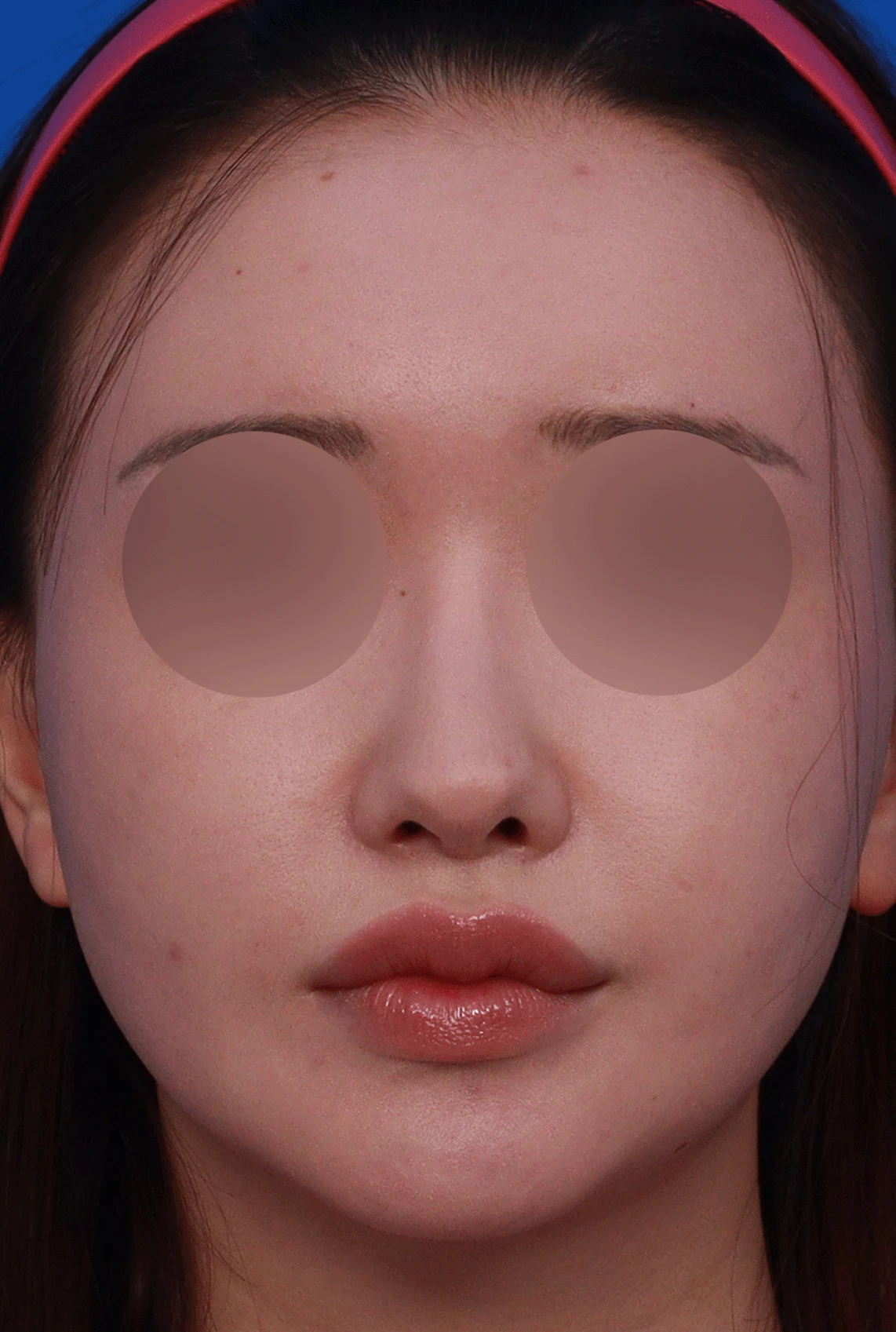
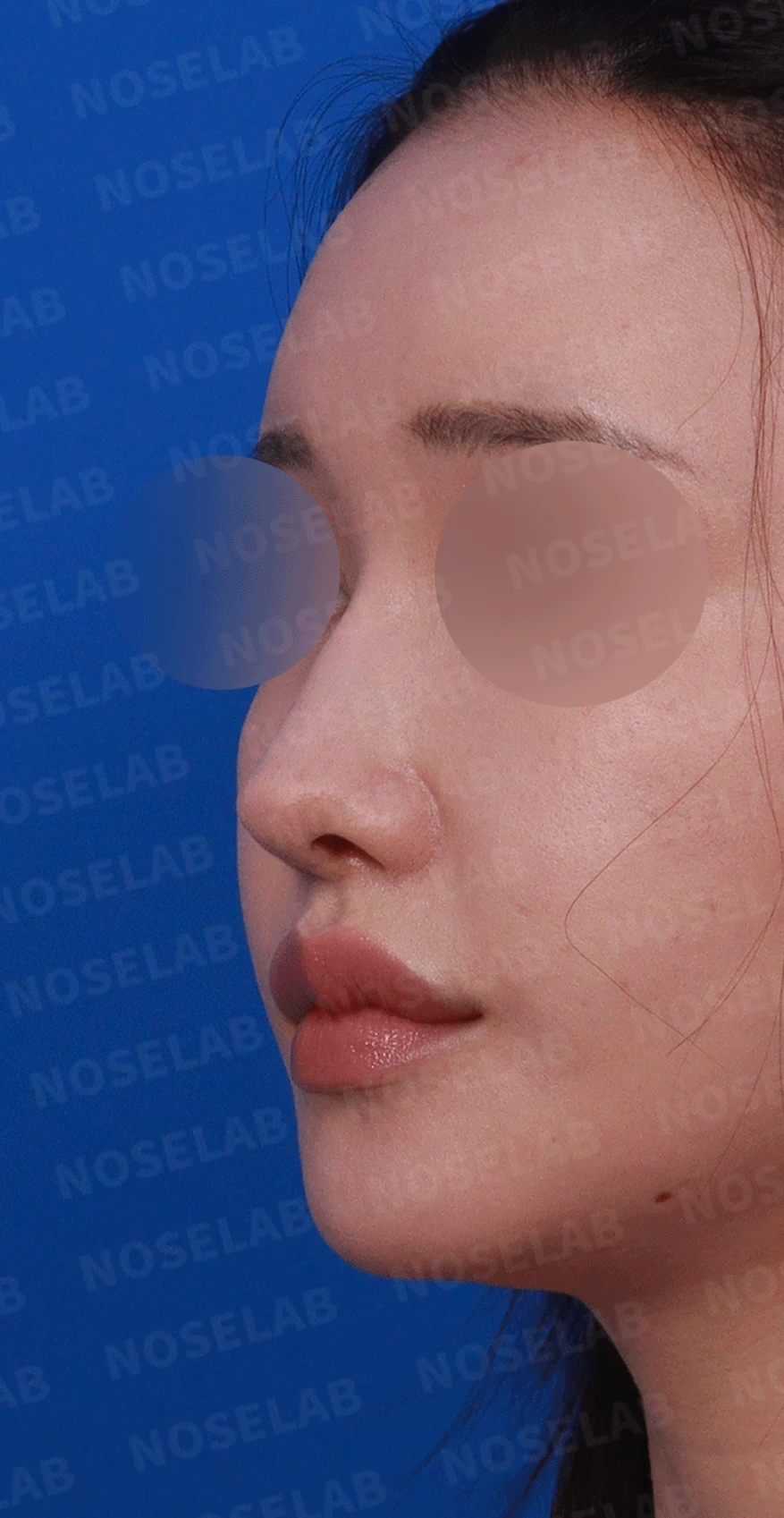
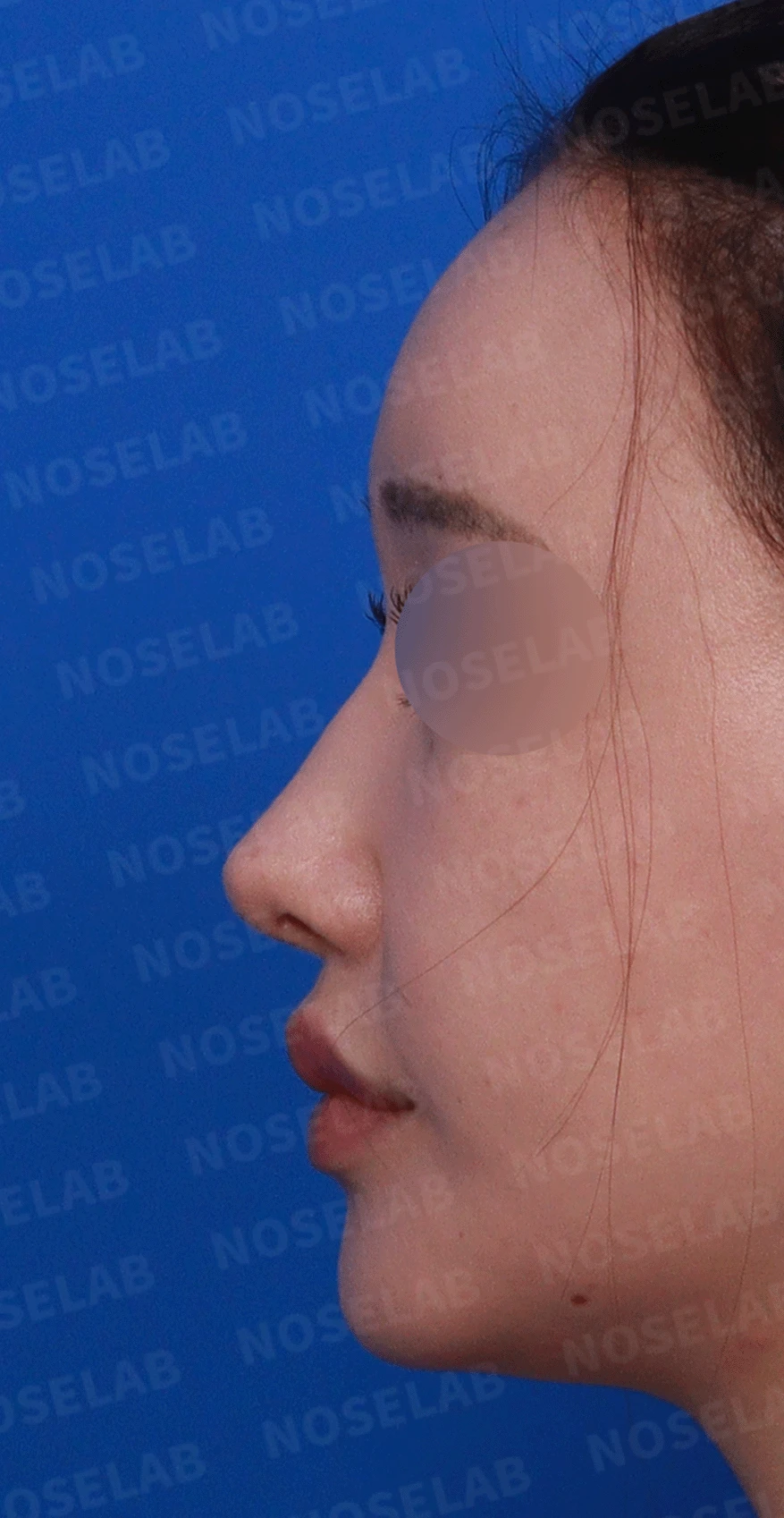
Design consultation: front, left oblique, and profile views.
January 2020
Full rhinoplasty (no implant, ear cartilage at the nasal tip)
March 2022
Dermal graft to the nasal bridge
🔎 Initial consultation findings
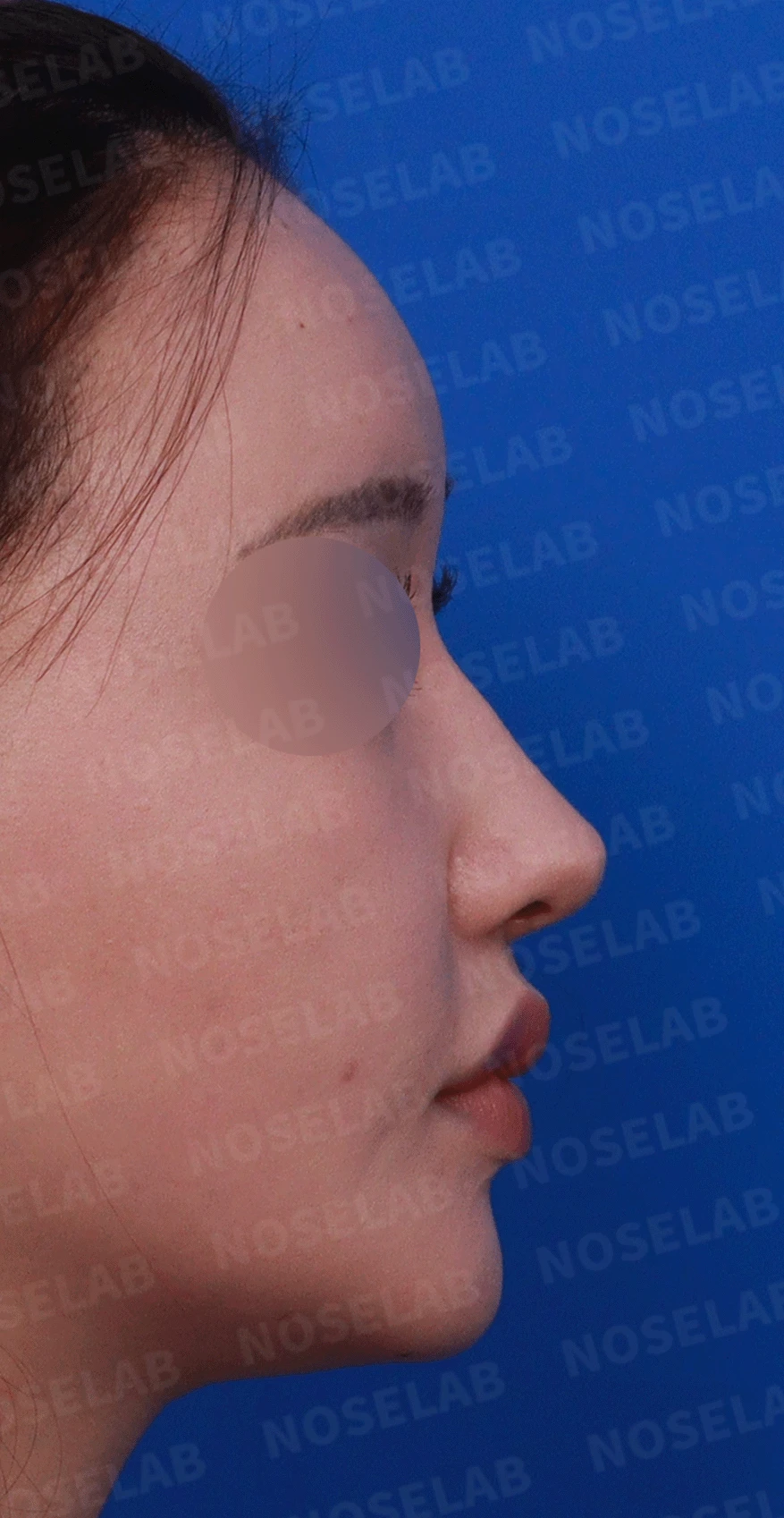
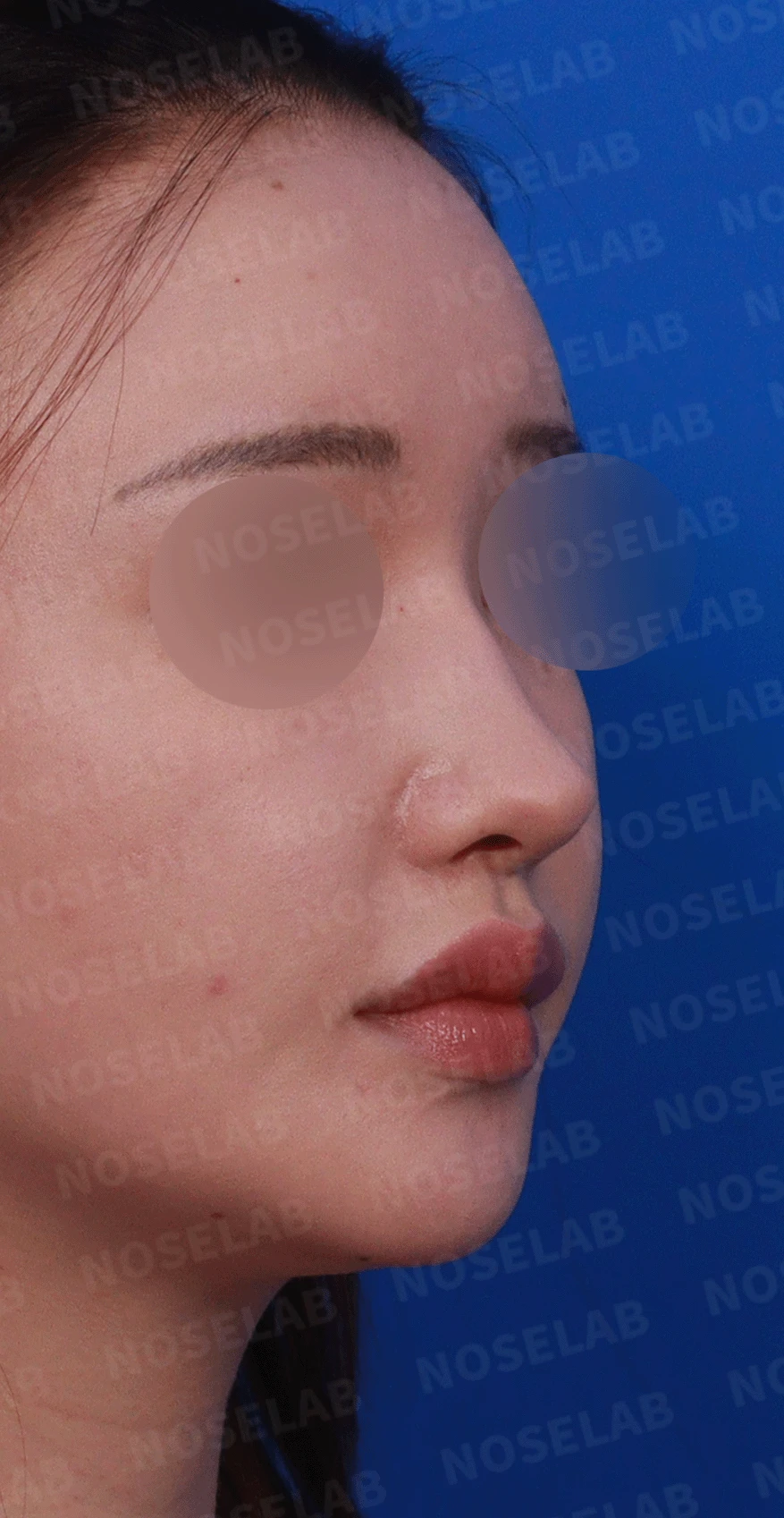
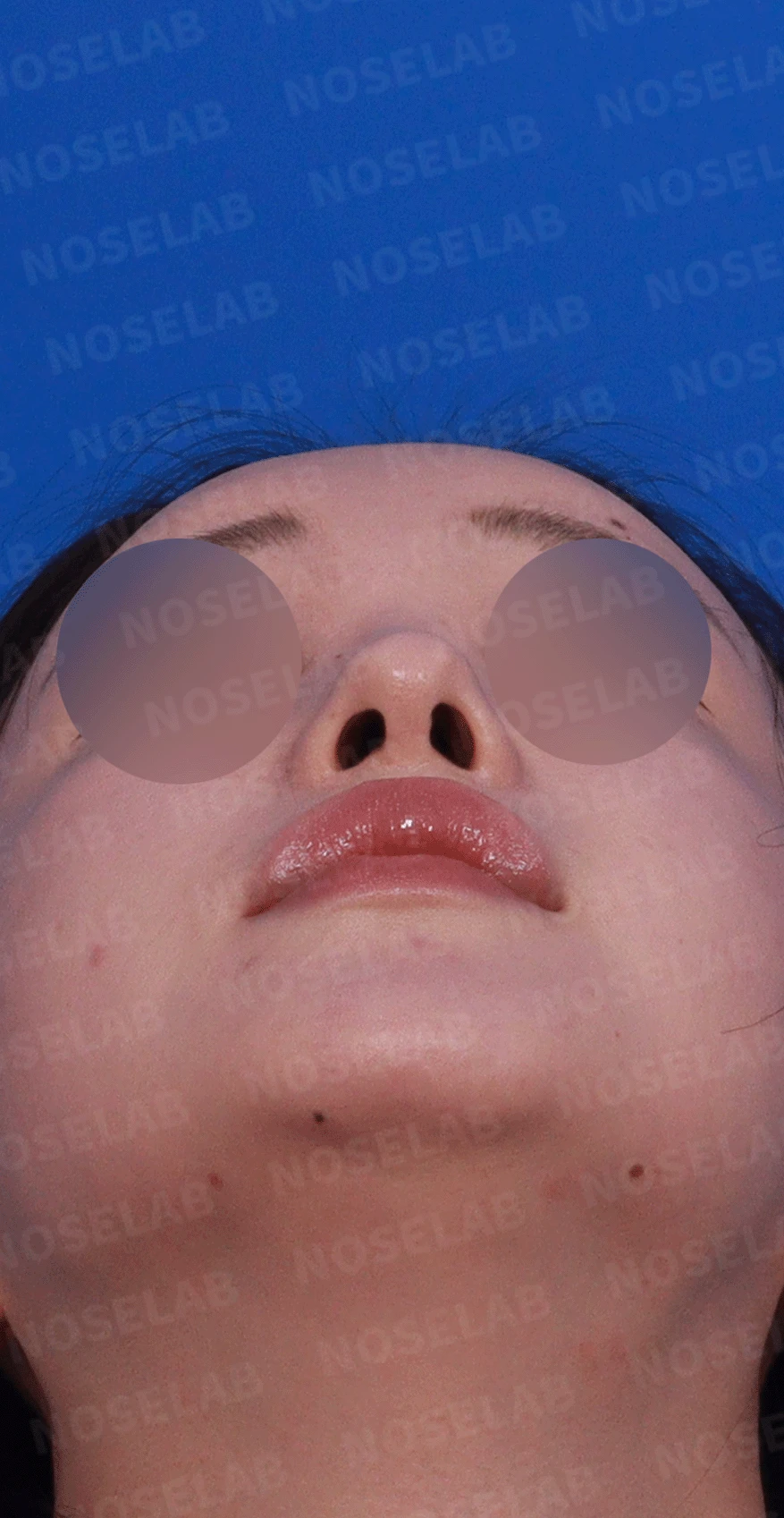
Design consultation: right profile, oblique, and nostril views.
Patient information
Female in her 30s
No history of double jaw surgery, facial contouring, or filler
Primary concerns
Wide, bulbous nasal tip
Nostril asymmetry
Uneven surface of the nasal bridge
Low, sunken glabella
Drooping nose (long nose)
Mildly protruding mouth
Patient's specific requests
Wished for added height, but without an operated look
Strong preference for an implant-free approach
Prioritized a natural result
Problems from the previous surgery
Uneven surface caused by the dermal graft
Persistently low glabella
Unresolved bulbous nose
✨ Patient's requests
Correction of the drooping nose and bulbous tip
Correction of nostril asymmetry
Elevated yet natural nose
Safety through an implant-free approach
💉 Surgical procedure details
Implant-free reconstruction with autologous rib cartilage
Reconstruction of both the nasal bridge and nasal tip using autologous rib cartilage
Complete removal of the existing dermis
Smoothing of the uneven surface
Elevation of the glabella
Reinforcement of glabellar volume using autologous rib cartilage
Natural filling of the sunken glabella
Creation of a smooth transition
Nasal tip reconstruction
Refining the wide nasal tip
Defining the bulbous nasal tip
Securing sufficient structural support
Correction of nostril asymmetry
Securing symmetry by improving the size and shape of both nostrils
Natural nostril shape
Improving frontal aesthetics
Correction of the nasolabial angle
Correction of the drooping nose
Visual shortening effect through tip elevation
Improvement of the mildly protruding mouth
Surface refinement
Smoothing the uneven nasal bridge
Natural nasal line
Creating a gentle curve
✅ Surgical results
Front view
Elevated glabella
Smooth nasal bridge
Symmetric nostrils
Sleek nasal tip
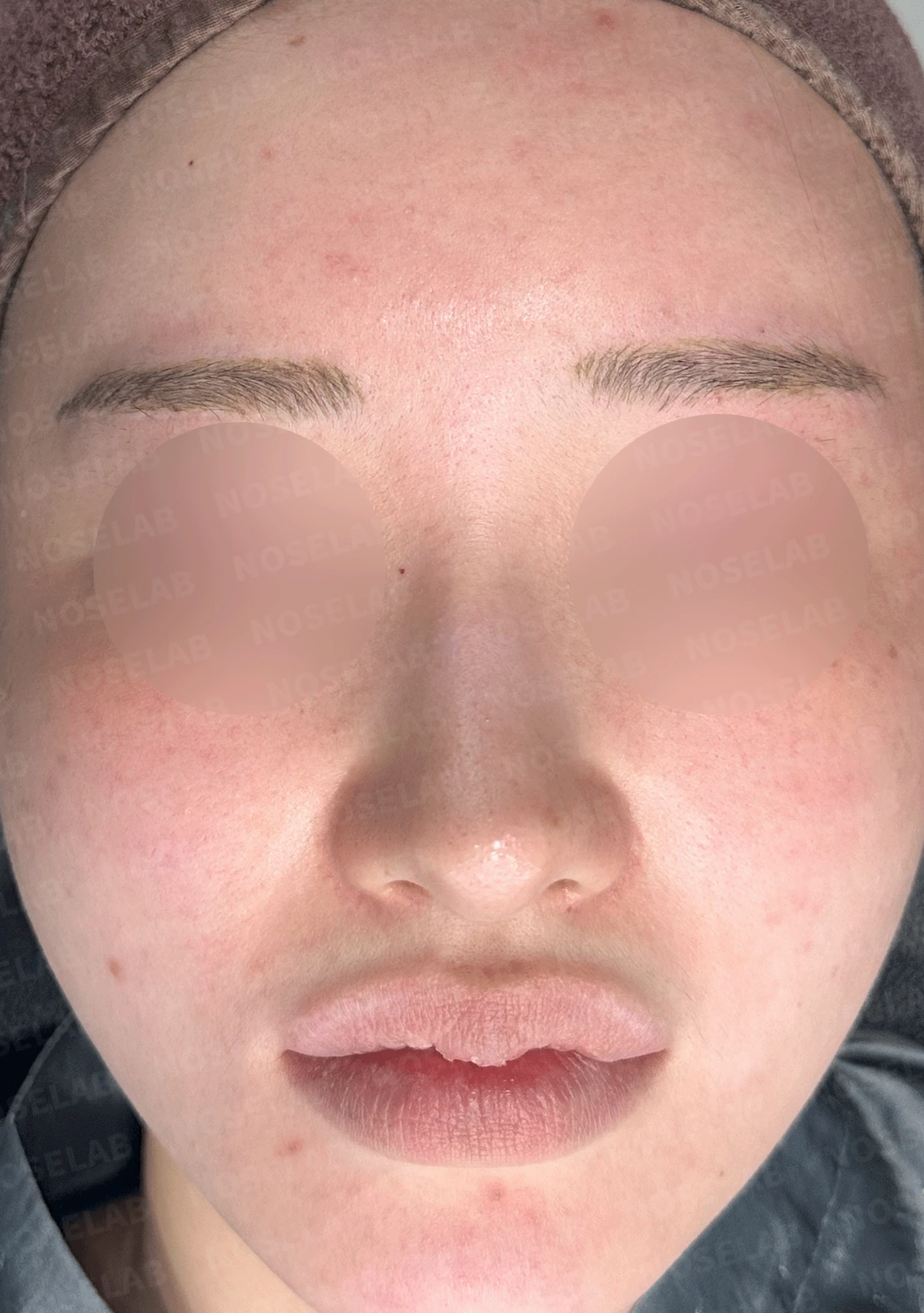
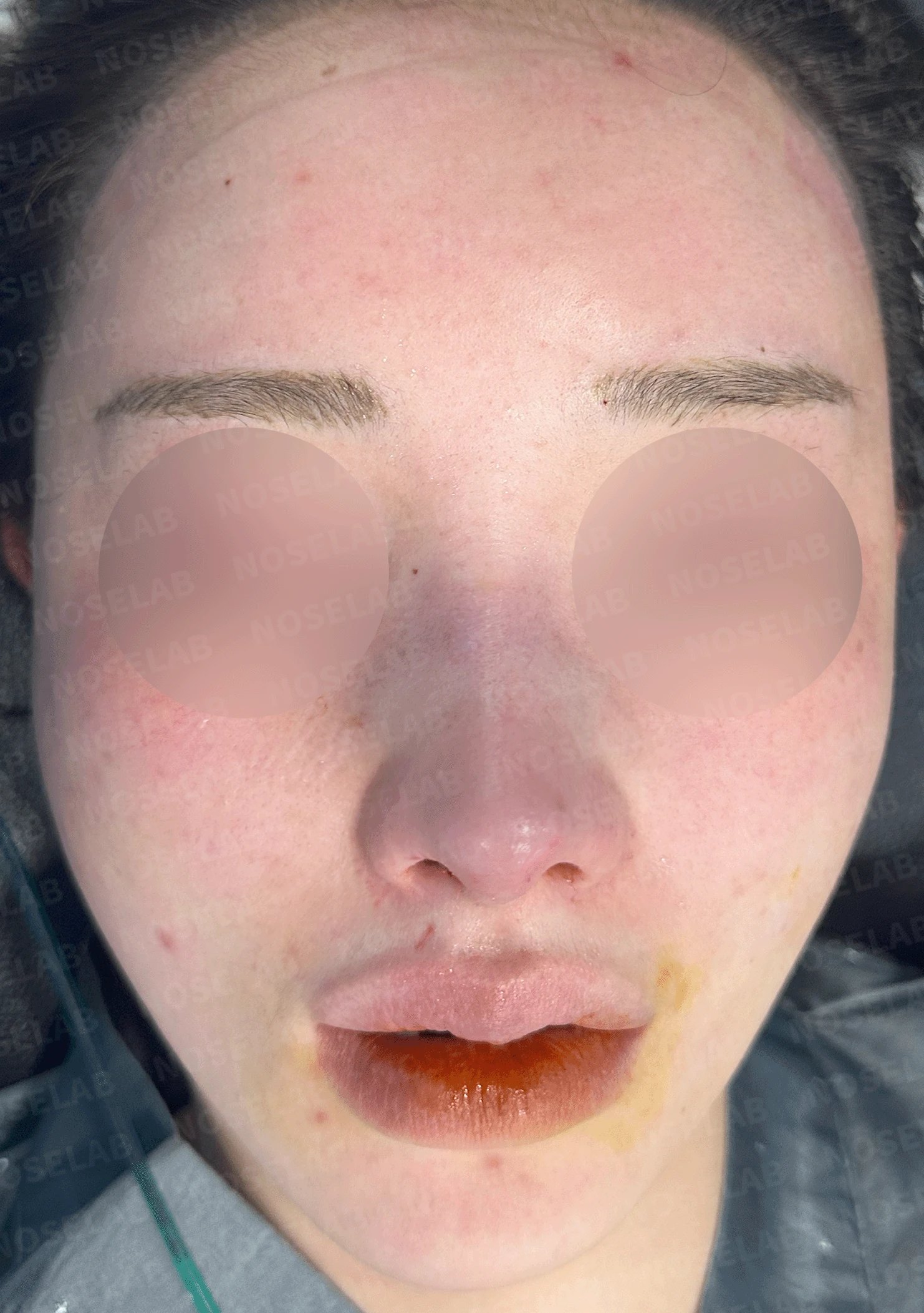
Before surgery / Day 0 immediately after surgery Photos taken immediately after surgery show swelling and may differ from the final result.
Profile view
Natural nasal height
Gentle nasal contour
Improved nasolabial angle
Harmonious profile line
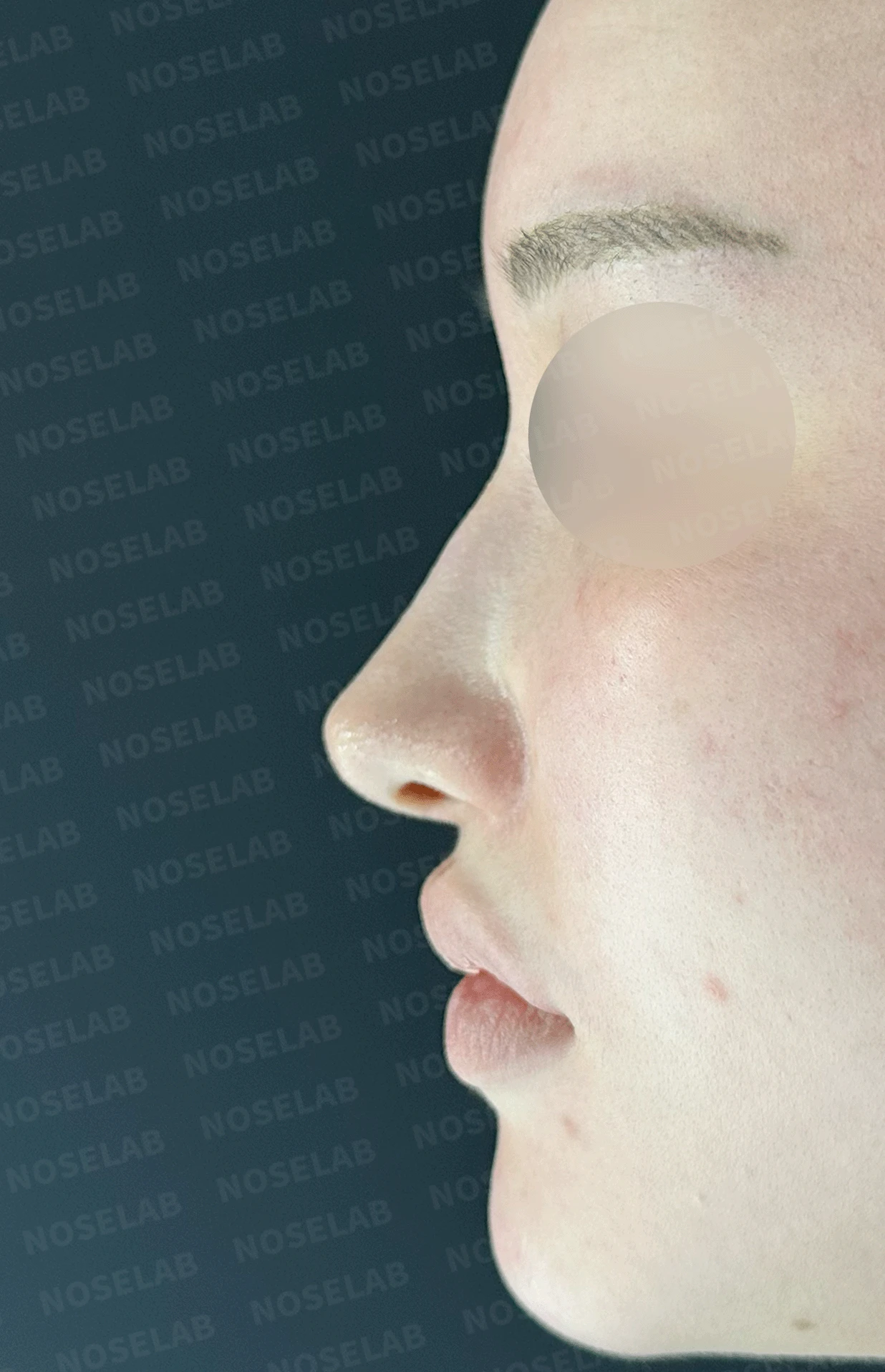
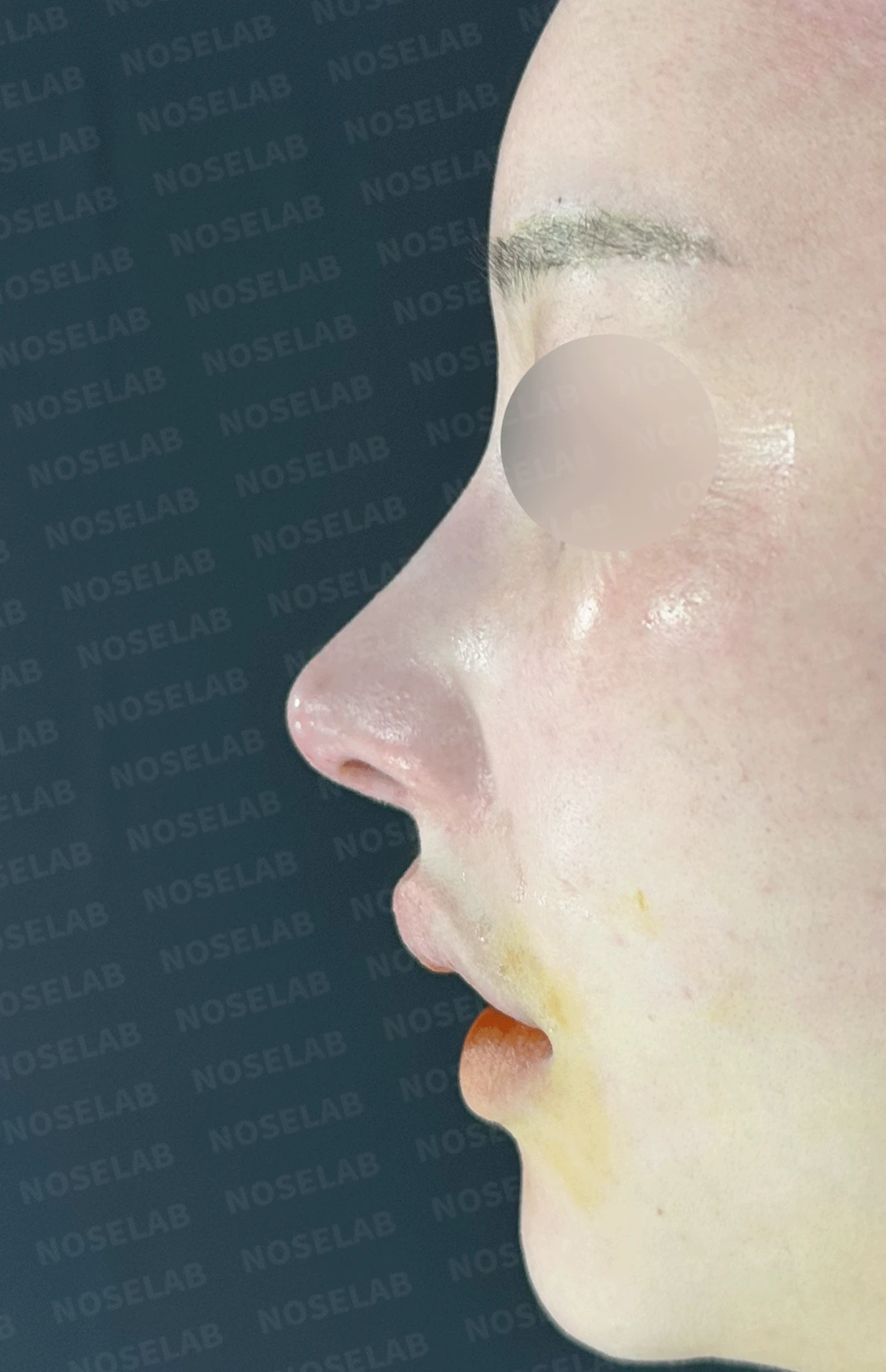
Before surgery / Day 0 immediately after surgery Photos taken immediately after surgery show swelling and may differ from the final result.
Achieving a natural height
Natural height without an operated look
Harmonious proportions with the face
Smooth line from the glabella to the nasal tip
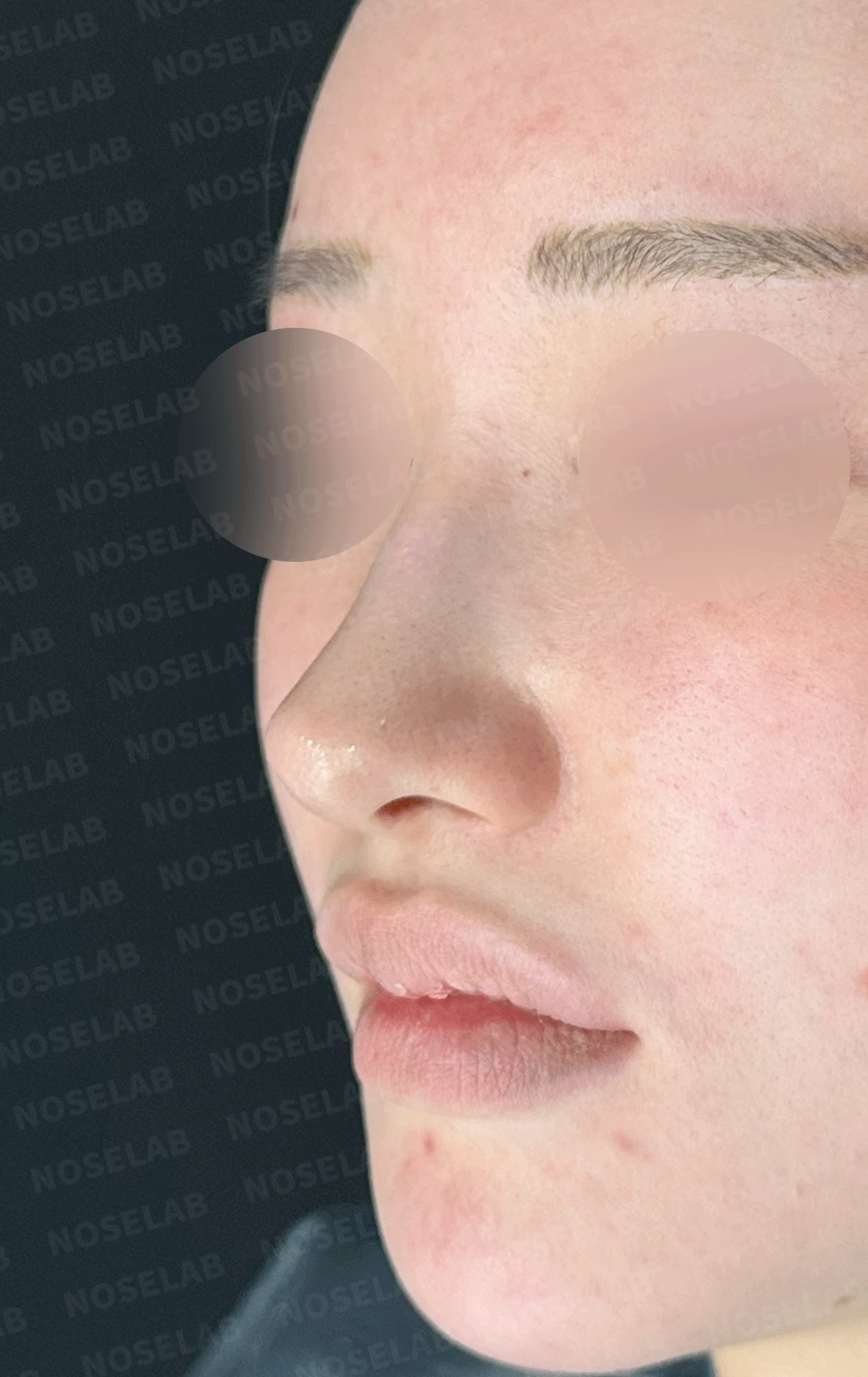
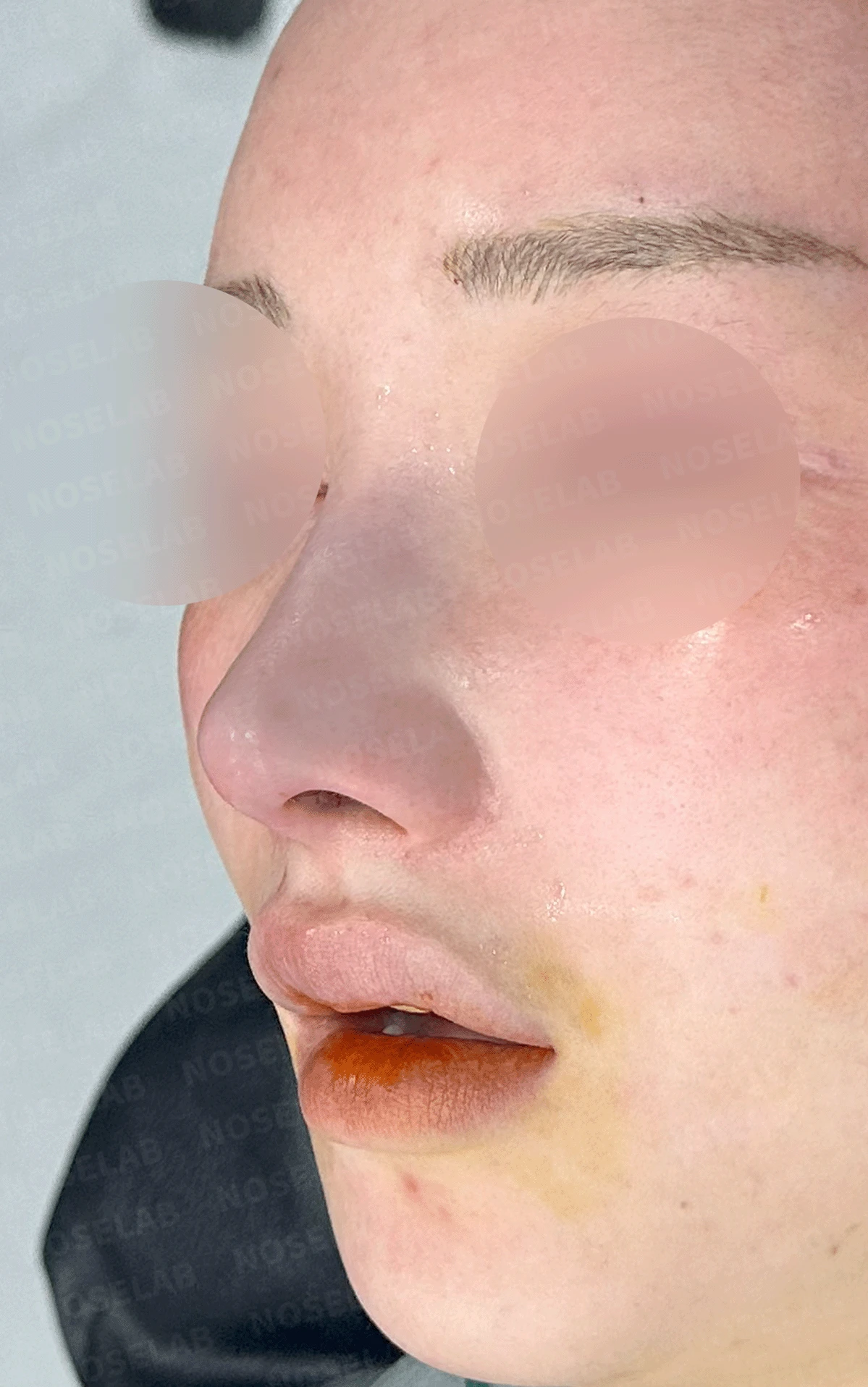
Before surgery / Day 0 immediately after surgery Photos taken immediately after surgery show swelling and may differ from the final result.
Correction of the drooping nose
Shortened appearance through nasolabial angle correction
Youthful, vibrant impression
Improvement of overall facial proportions
Surface improvement
Smooth and natural nasal bridge
Improved unevenness
Smooth skin surface
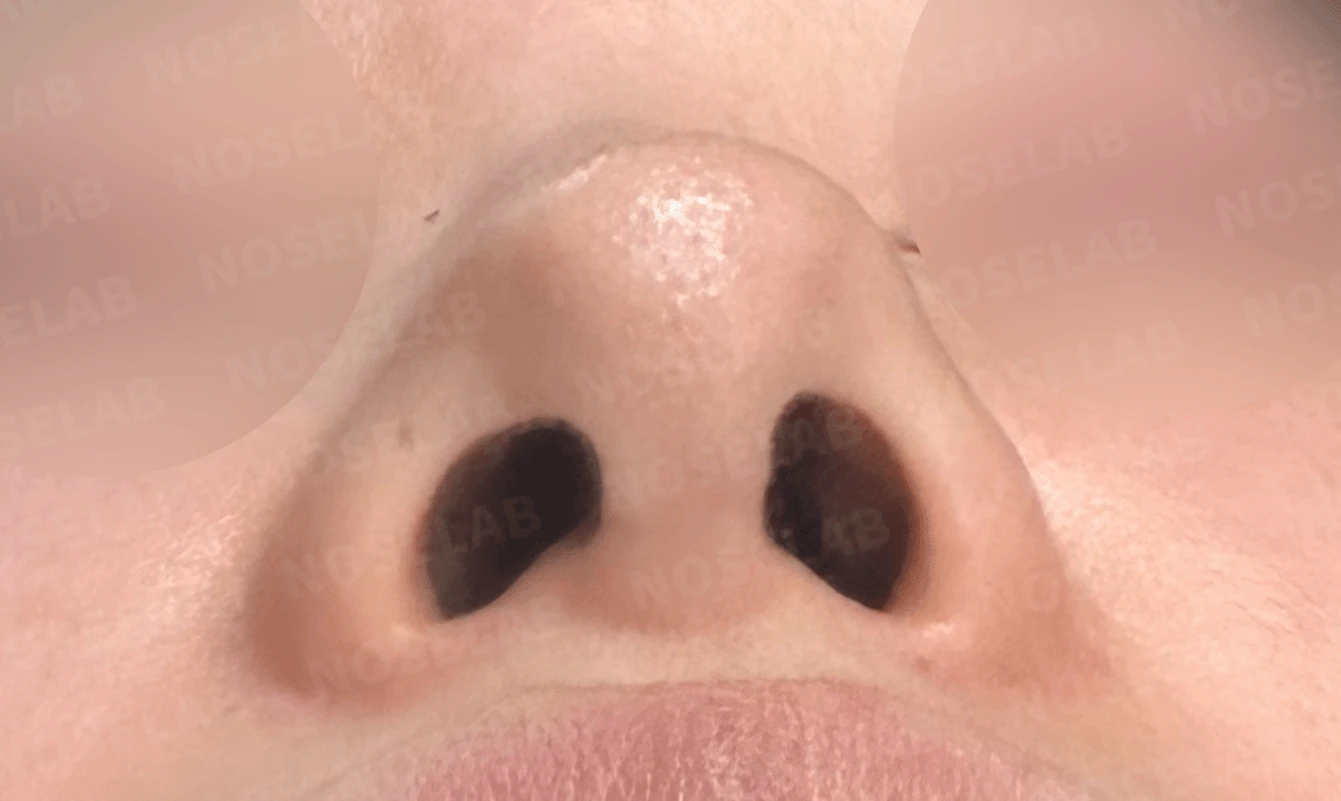
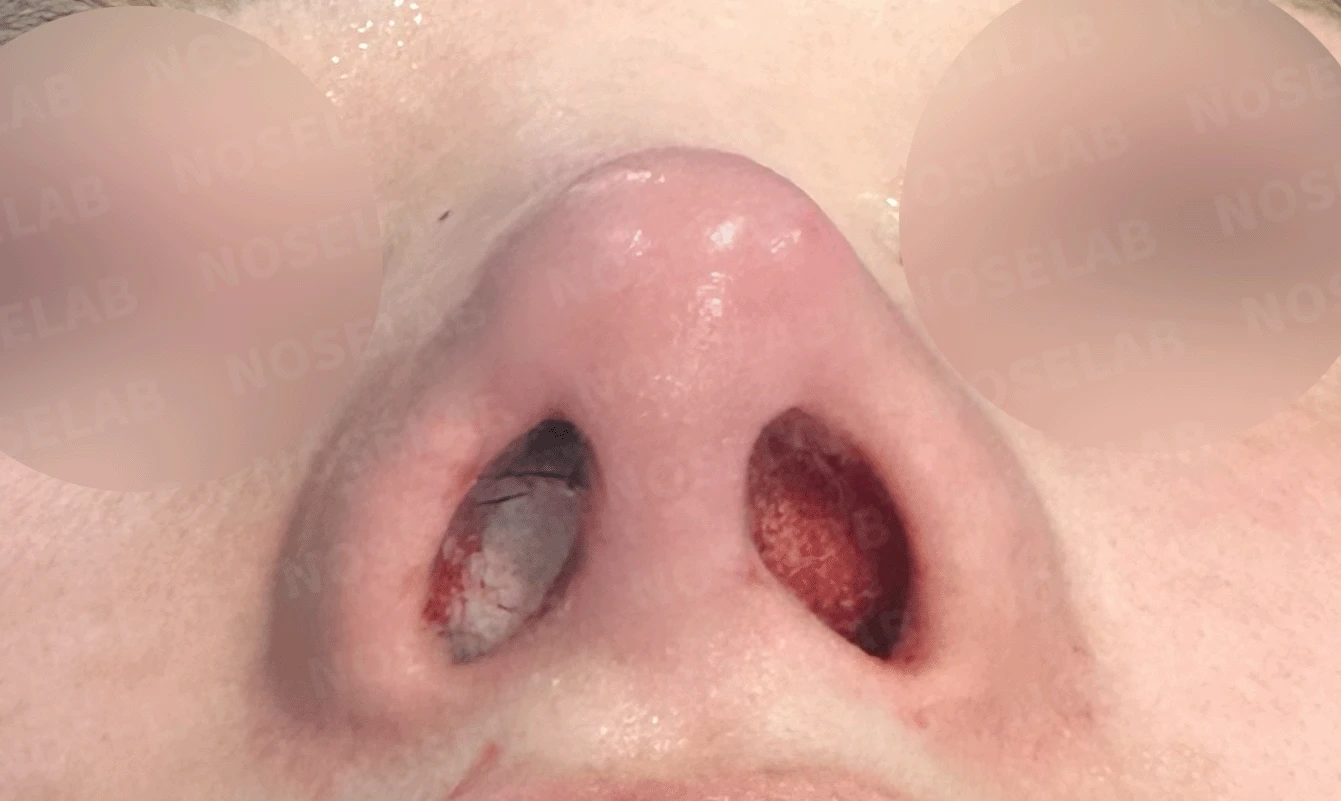
Before surgery / Day 0 immediately after surgery Photos taken immediately after surgery show swelling and may differ from the final result.
Restored nostril symmetry
Balanced nostrils on both sides
Natural shape
Improved frontal aesthetic
Complete correction of the bulbous nose
Noticeably refined wide nasal tip
Sleek, refined nasal tip
Improvement in both frontal and profile views
👨⚕️ Specialist's assessment
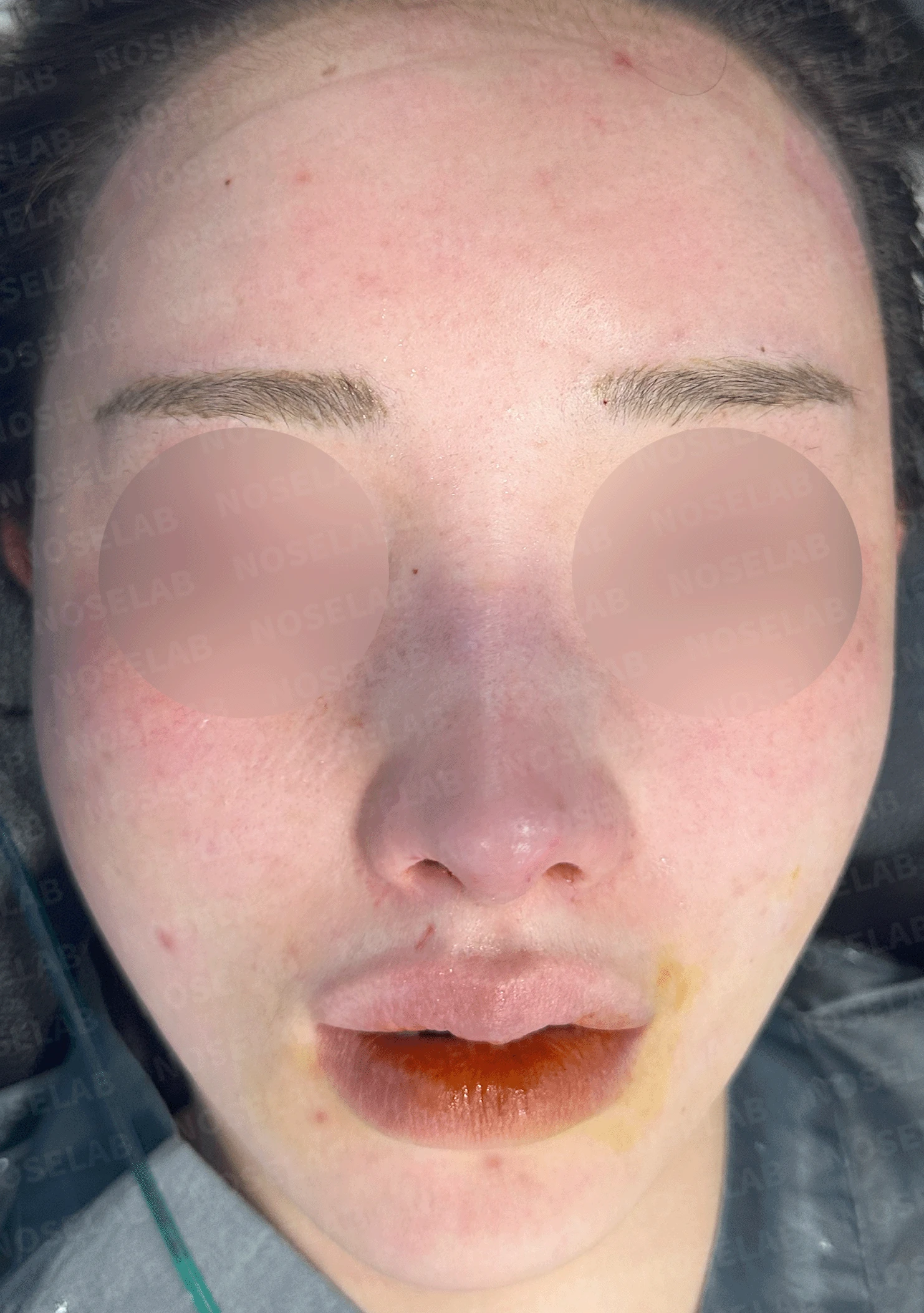
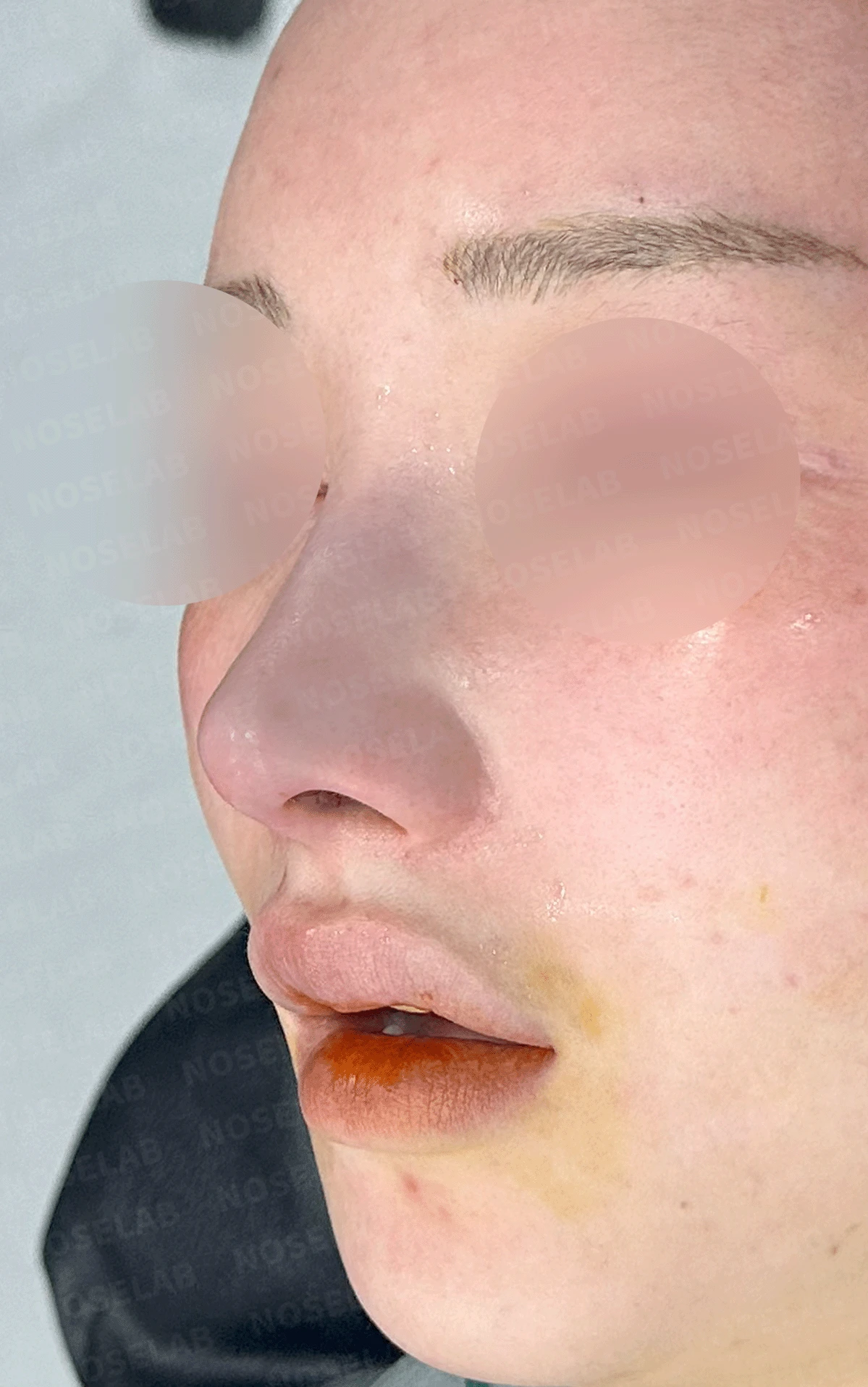
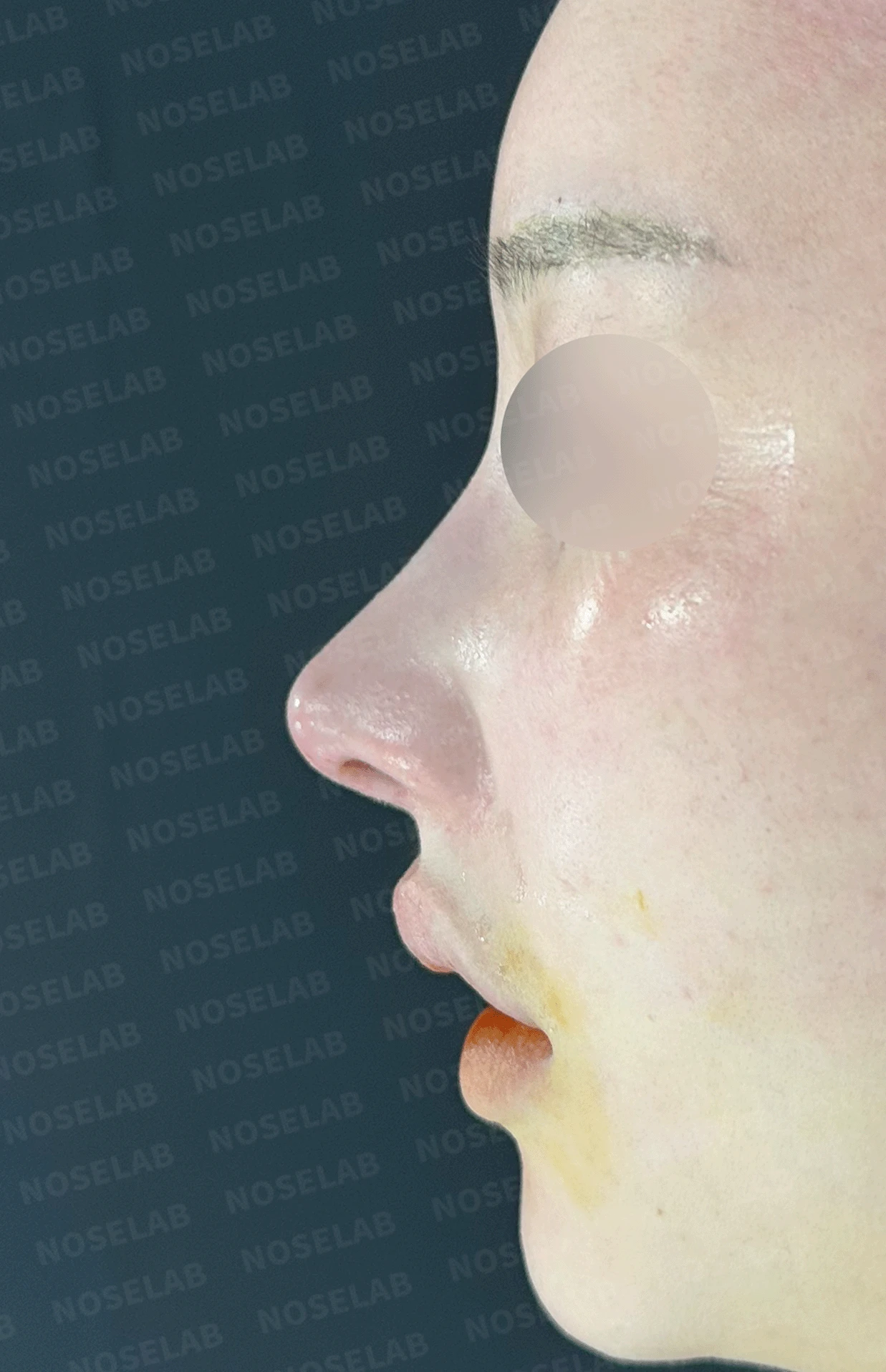
Immediately after surgery (day 0): front, profile, and oblique views. Immediate postoperative photos show swelling and may differ from the final result.
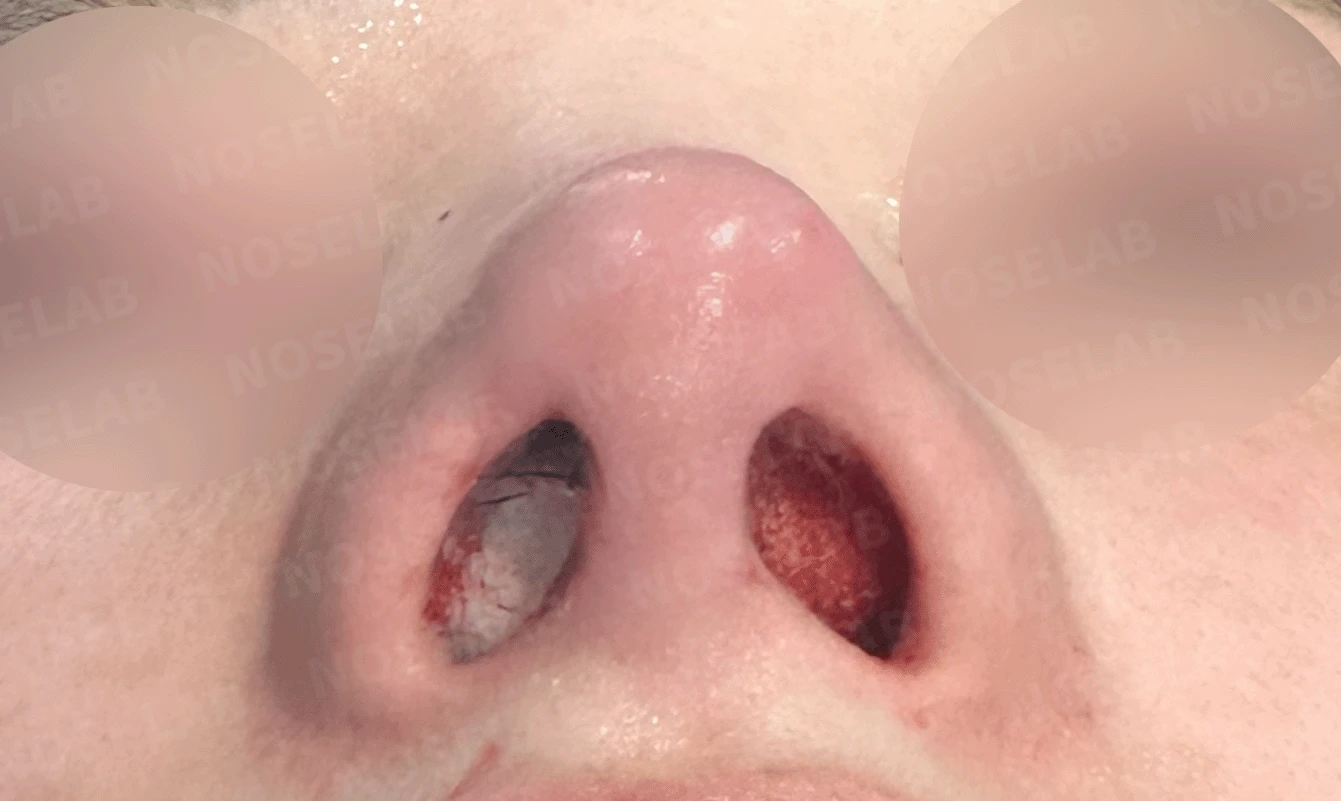
Nostril view on day 0 immediately after surgery. Photos taken immediately after surgery show swelling and may differ from the final result.
This case involved a patient who struggled with an uneven nasal bridge caused by dermis used in a prior surgery, alongside an unresolved bulbous nose and nostril asymmetry. In particular, the patient strongly desired a higher nose while maintaining a natural appearance without looking operated.
The most significant issue, the uneven nasal bridge, stemmed from the inherent limitations of dermal grafts. Over time, dermis can undergo irregular absorption or deformation, resulting in an uneven surface. To resolve this, the dermis was completely removed and replaced with autologous rib cartilage.
Choosing an implant-free approach was a sensible decision. Because autologous rib cartilage is the patient's own tissue, there is no risk of foreign-body reaction or infection, and natural texture and mobility can be preserved. It was a suitable option especially for a patient who desired a natural result without an operated look.
The low and sunken glabella was addressed by adding appropriate volume with autologous rib cartilage. Rather than creating an overly abrupt change, the height was adjusted naturally to harmonize with the face. This precisely fulfilled the patient's request for a nose that is elevated yet natural.
The bulbous nose with a wide, blunt tip was improved by reconstructing the supporting structure with autologous rib cartilage. While refining and defining the nasal tip, an understated, natural shape was maintained.
Nostril asymmetry required delicate correction. By improving the size and shape of both nostrils, symmetry on the frontal view was restored. This was an essential element in refining the overall balance of the nose.
The drooping nose was improved by adjusting the nasolabial angle. Elevating the nasal tip appropriately created the visual impression of a shorter nose, which also helped soften the appearance of the mildly protruding mouth.
Overall, the patient's key priority, naturalness, was placed above all else. While achieving sufficient improvement, we were able to create a natural nose that looked innate, avoiding any artificial look.
Consequently, the uneven nasal bridge became smooth, the low glabella was naturally elevated, the wide tip was refined, and the nostril asymmetry was corrected. Most importantly, we were able to achieve the elevated yet natural nose that the patient had envisioned.
This case serves as a good example demonstrating that implant-free surgery with autologous rib cartilage can produce sound and effective outcomes.
This was Dr. Peter C. Kang. Thank you.
#closedrhinoplasty #revisionrhinoplasty #autologousribcartilage #implantfreerhinoplasty #naturalrhinoplasty #bulbousnosecorrection #nostrilasymmetrycorrection #unevennosecorrection #droopingnosecorrection #naturalresult

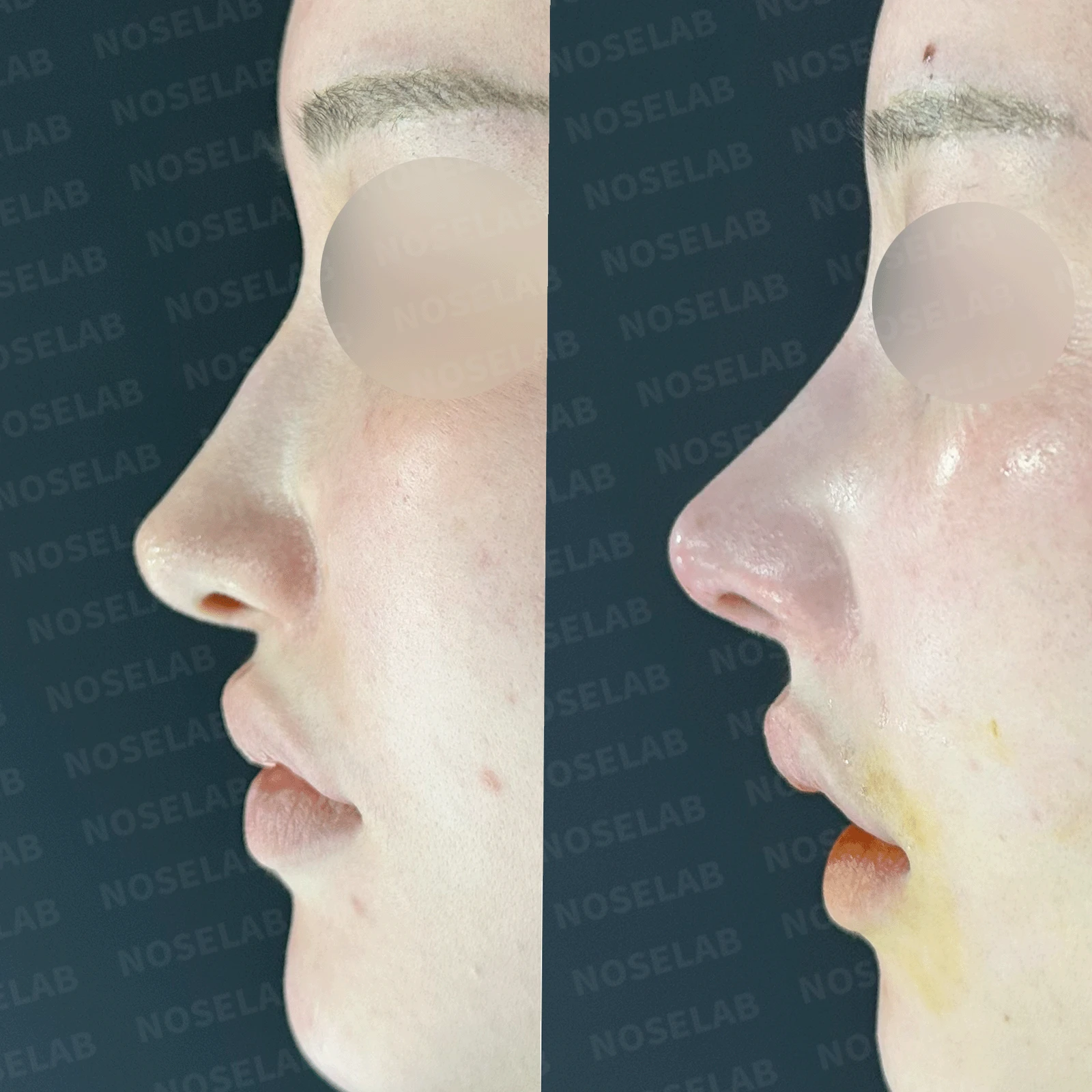
Limitations and risks
When autologous rib cartilage is used, scarring and pain may remain at the donor site on the chest, and pneumothorax (pleural injury) can occur rarely. Over time, the grafted cartilage may warp or undergo partial resorption.
Common potential risks include infection, bleeding, asymmetry, scarring, skin necrosis, and insufficient improvement; results vary depending on individual skin condition and previous surgical history.