Hello, I am Dr. Peter C. Kang.
Today, I would like to introduce a rhinoplasty case of a patient with a long nose, drooping tip, wide nose, and blunt tip.
The patient had previously undergone rhinoplasty using a silicone implant, ear cartilage, and Medpor, and desired a defined yet natural-looking nose.
1. Preoperative design consultation
Let us analyze the patient's preoperative condition in detail:
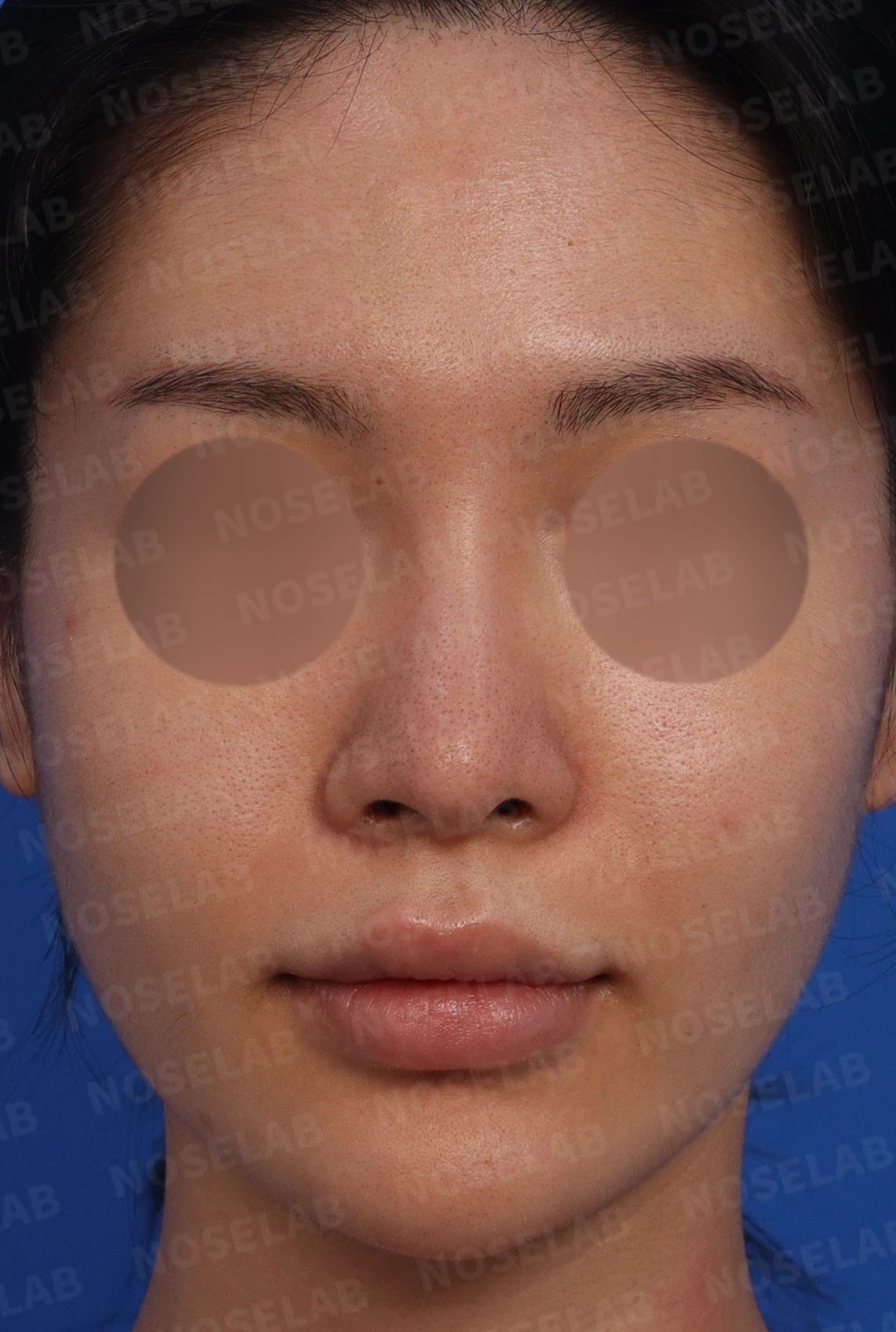
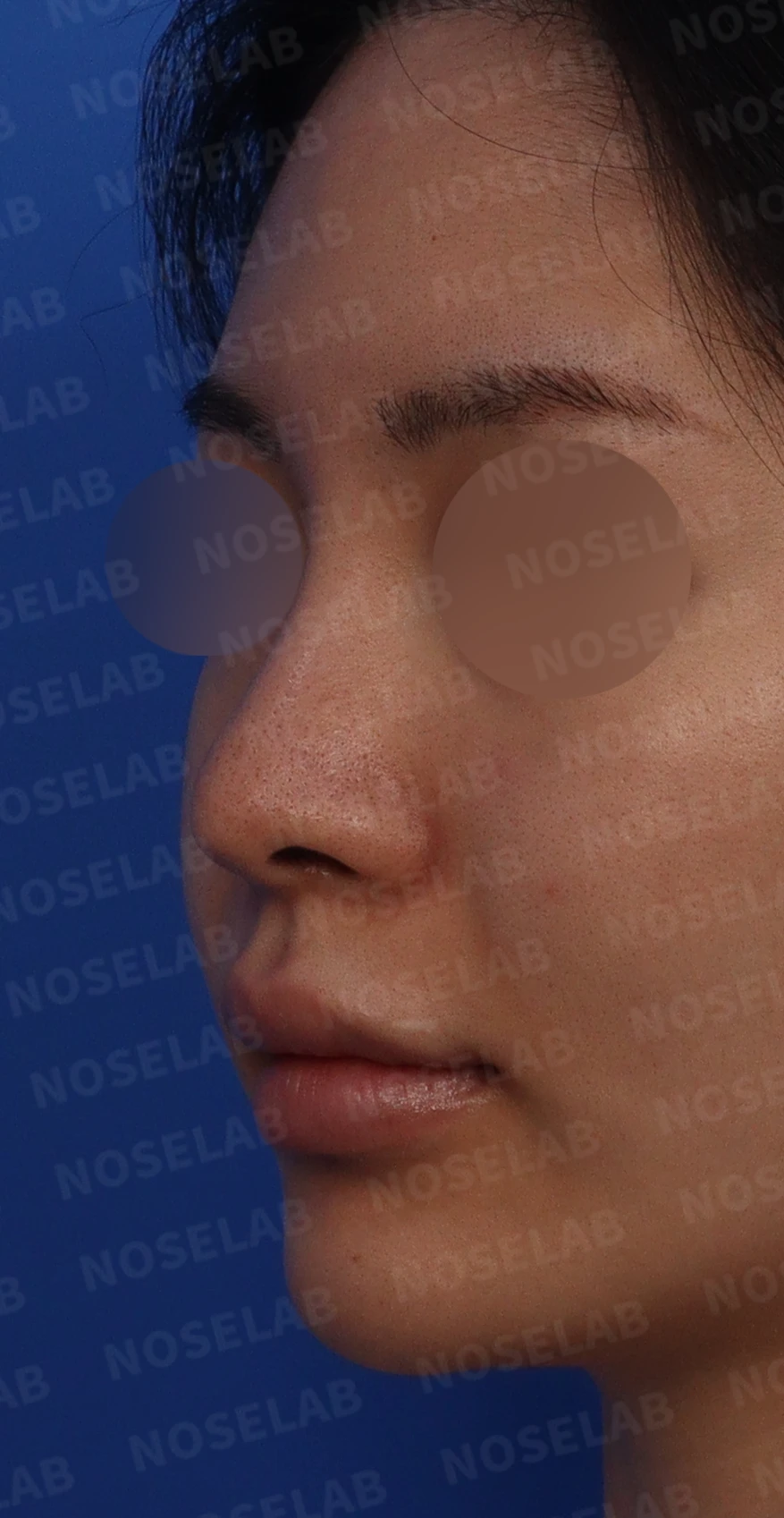
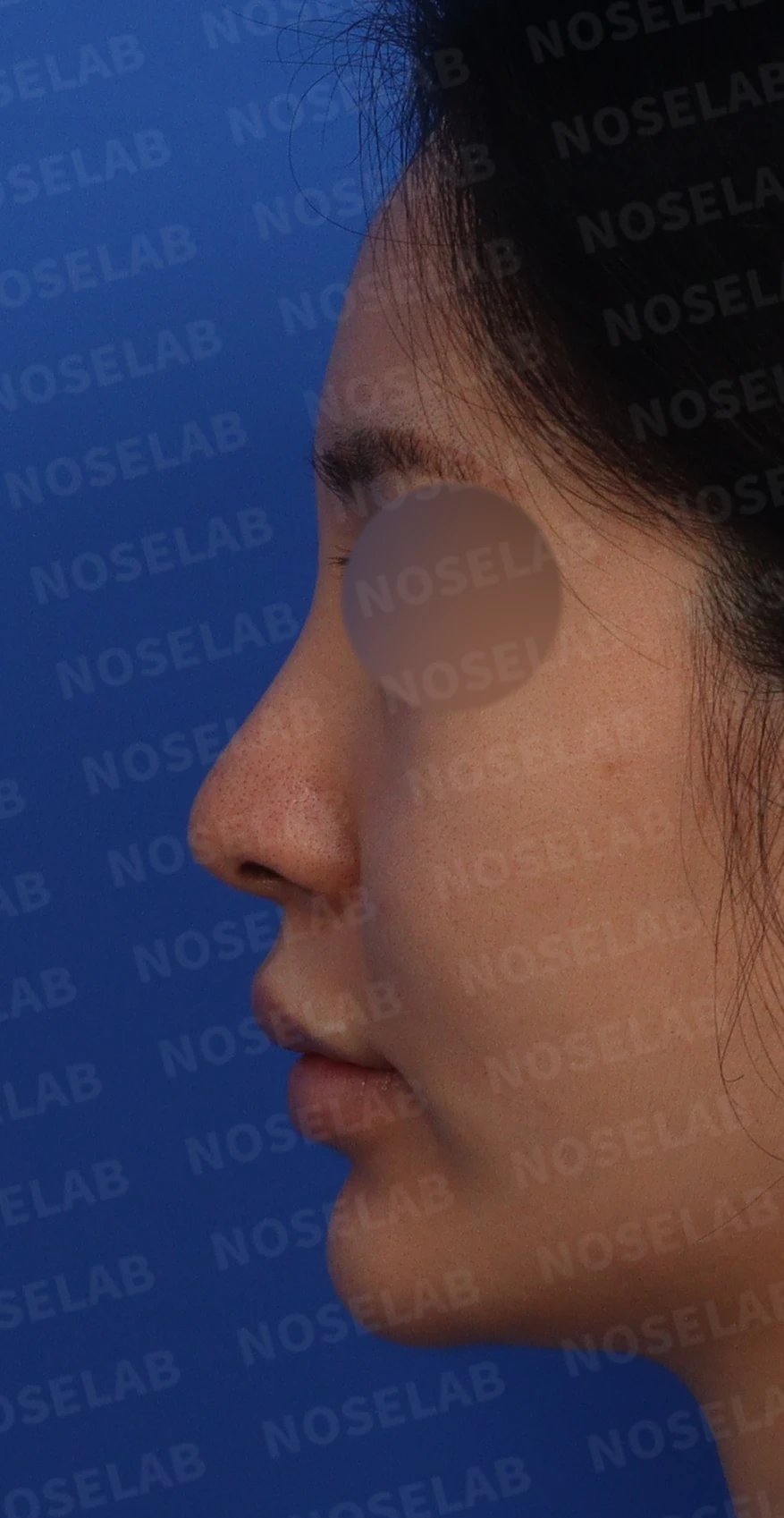
Front, left oblique, and profile views from the preoperative design.
Front view:
- The radix is high
- Marked bulbous tip appearance that looked blunt and wide
- The nose appears long
Profile view:
- The nasal tip is drooping
- The radix is high
- Nasolabial angle (the angle between the nose and upper lip) under 90 degrees, making the nasal tip appear drooping
- Signs of a protruding mouth are visible
Oblique view:
- Noticeably long nose
- The nasal tip appears overly sharp
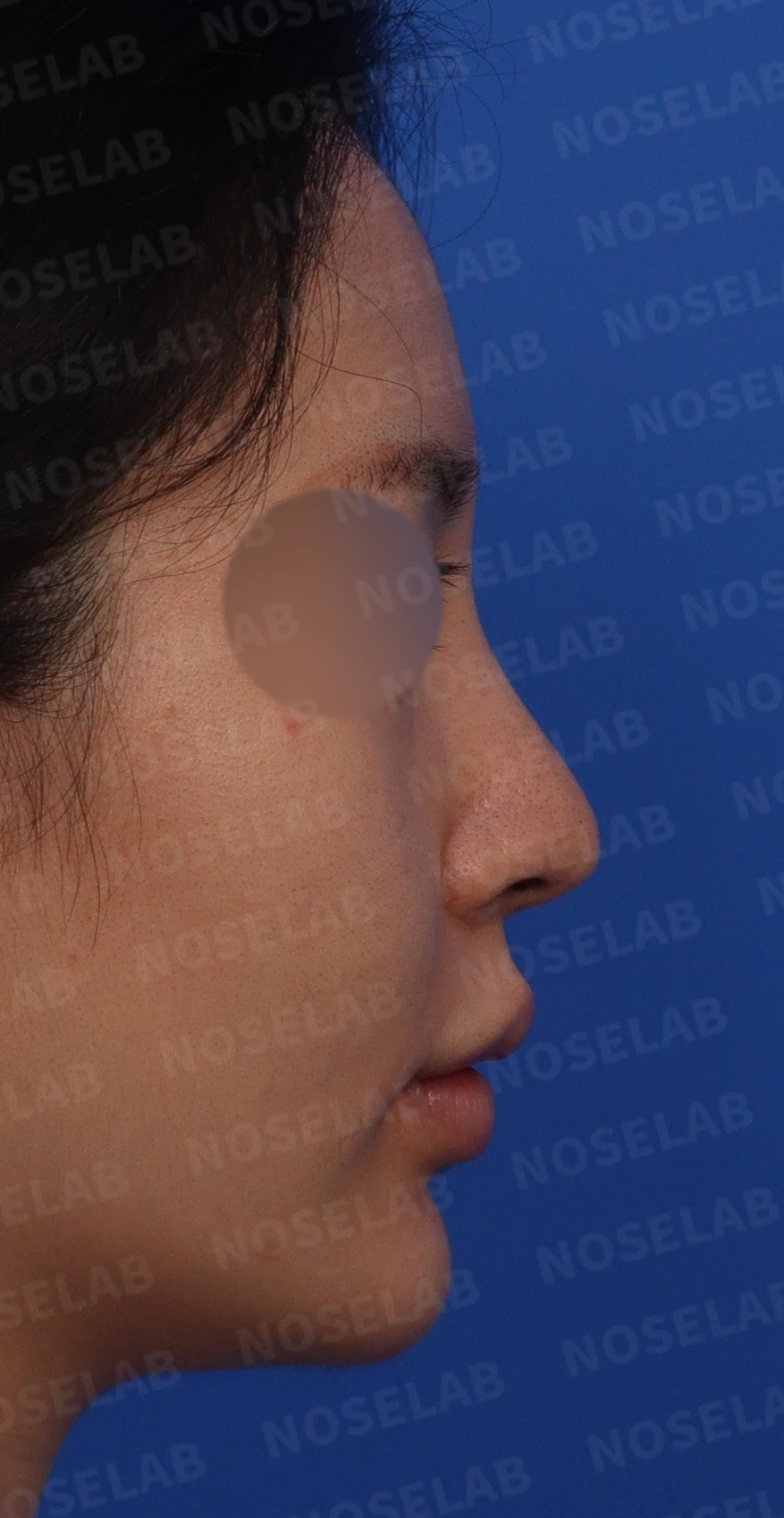
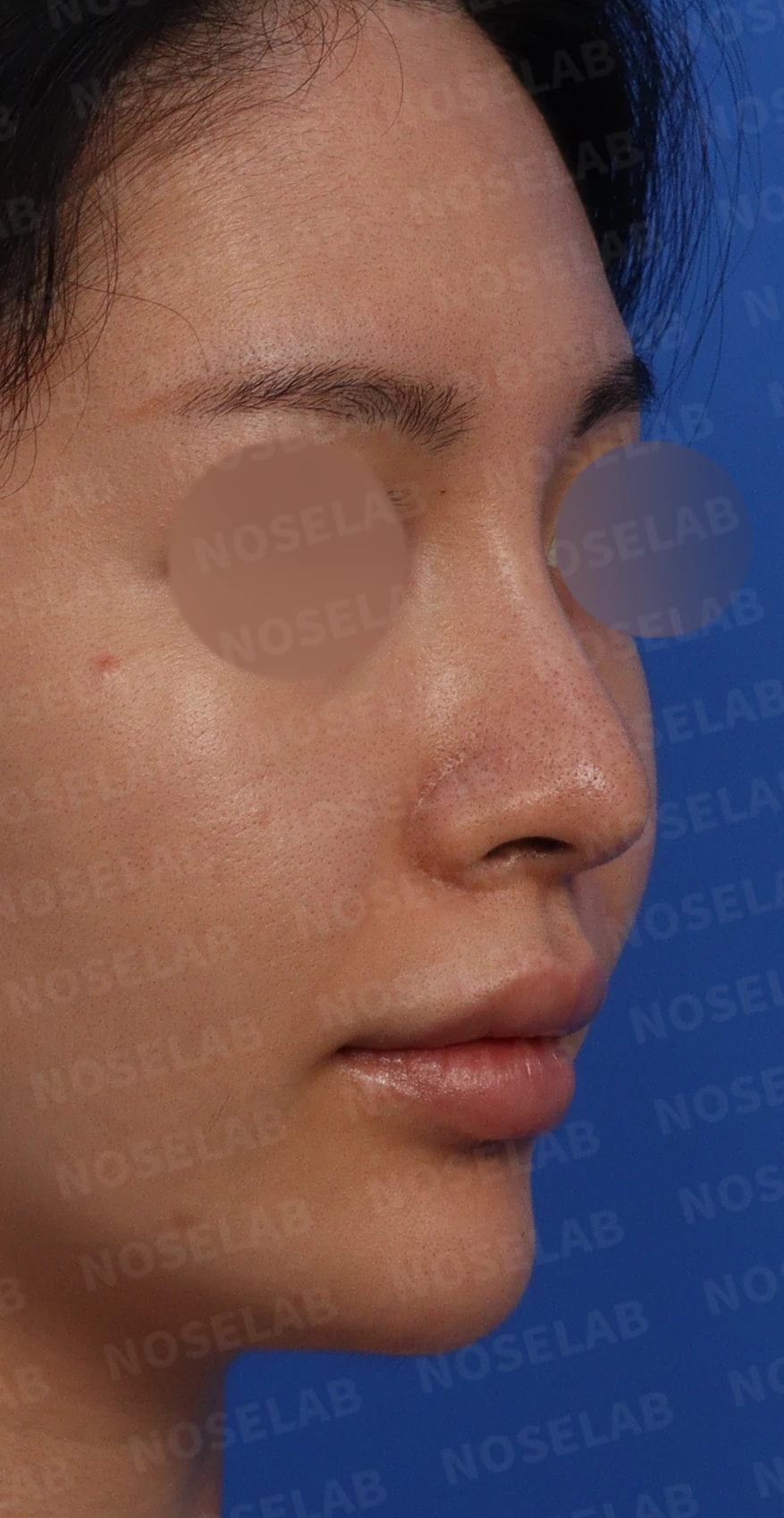
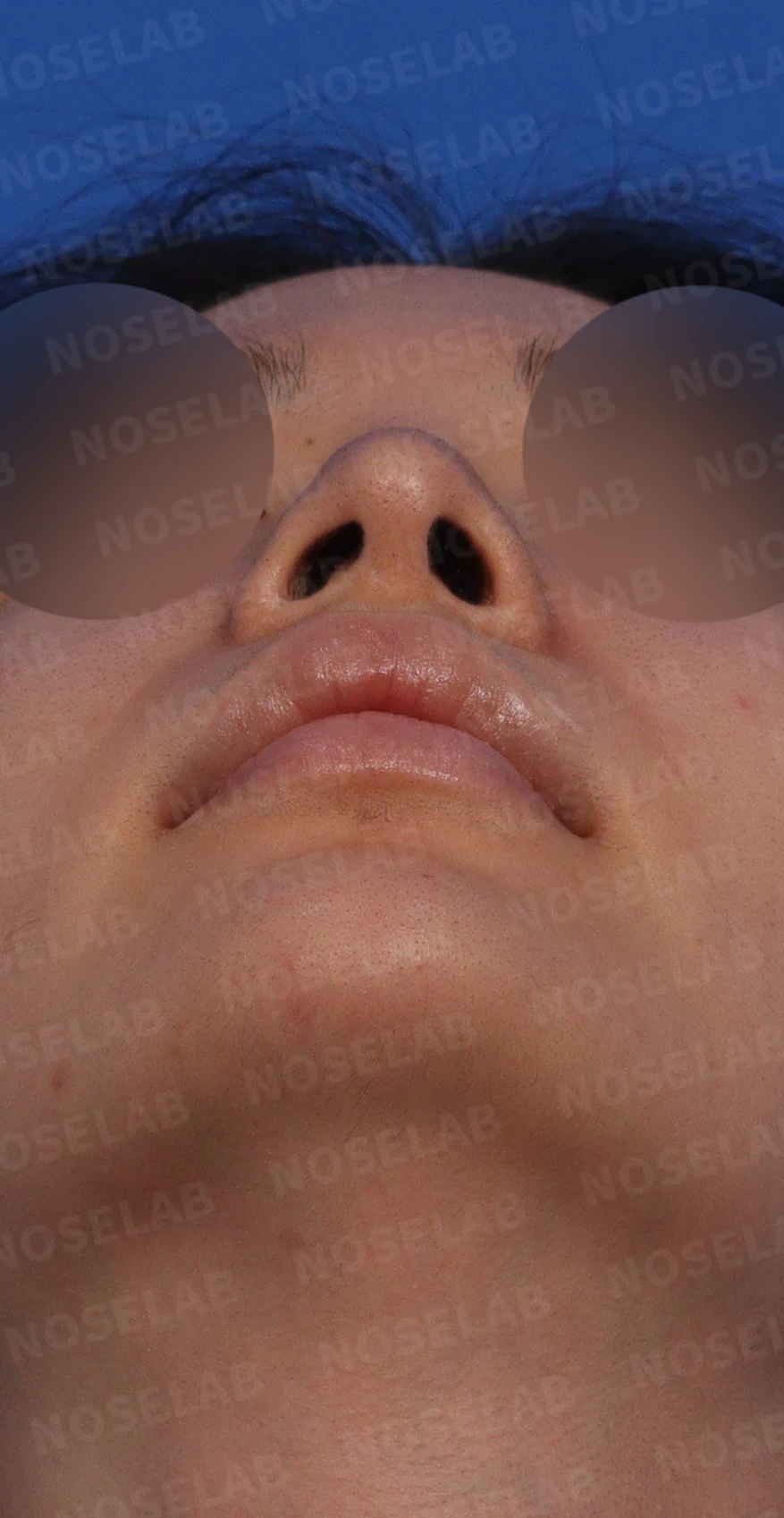
Right profile, right oblique, and basal (nostril) views from the preoperative design consultation.
Nostrils:
- Visible nostril asymmetry
- Columella tilted toward the left
Patient's requests:
a) Reducing nostril width
b) Elevating the drooping tip
c) A defined yet natural-looking contour
2. Surgical plan
Taking into account the patient's condition and requests, the following surgical plan was established:
a) Septal extension using autologous rib cartilage
b) Medpor removal
c) Nasal tip reconstruction (into a soft, rounded shape)
d) Alar base reduction (correcting the wide nose)
e) Lower lateral cartilage repositioning and suture technique (correcting the blunt tip)
f) Correction of the nasolabial angle
3. Surgical procedure
The following procedures were performed using a closed approach:
a) Medpor removal:
- Medpor was identified on both sides of the septum at the nasal tip, placed for the purpose of septal extension.
- The Medpor was completely removed without damaging the existing septal cartilage.
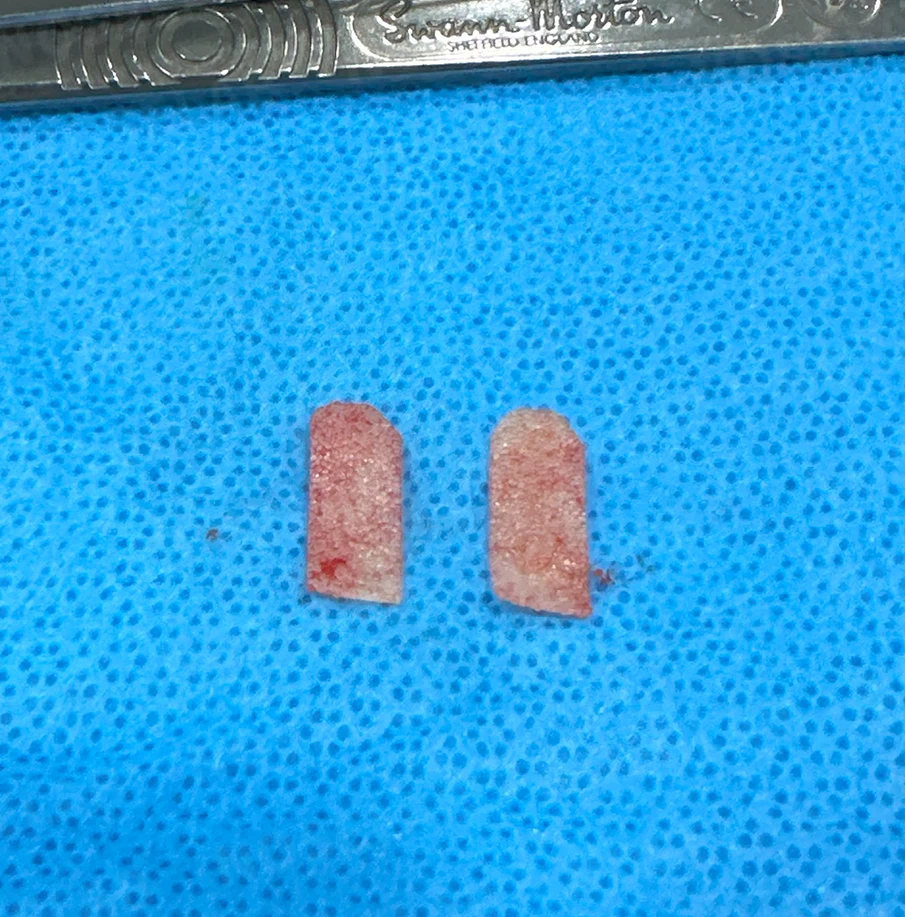
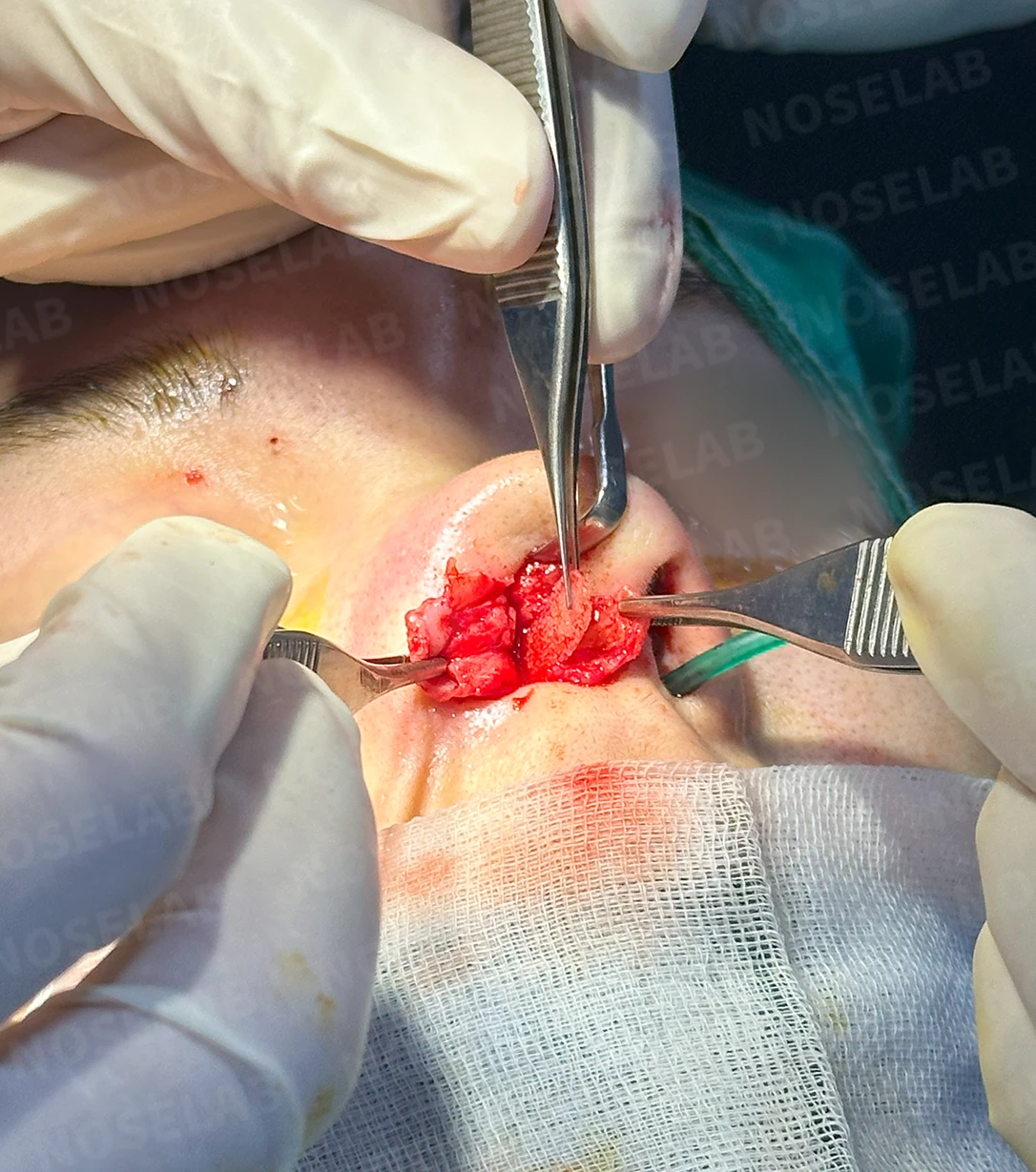
Medpor removed from the nasal tip
b) Septal extension using autologous rib cartilage:
- The patient's rib cartilage was harvested and used for septal extension.
- Through this, the long and drooping appearance was corrected, and the tip deviation, columellar tilt, and nostril asymmetry were improved.
c) Nasal tip reconstruction:
- To create the rounded nasal tip shape desired by the patient, the previously placed ear cartilage and soft tissue were recycled.
- An unnecessarily performed alar rim graft site using ear cartilage was removed, and this tissue was repurposed for tip reconstruction.
d) Alar base reduction:
- Alar base reduction was performed to correct the wide nose.
e) Lower lateral cartilage repositioning and suture technique:
- Lower lateral cartilages were repositioned and cartilage suturing was applied to correct the blunt nasal tip.
f) Correction of the nasolabial angle:
- The nasolabial angle was appropriately adjusted to improve the drooping tip and the appearance of a protruding mouth.
All procedures were performed using a closed approach, completing the surgery without external scars.
4. Comparison of before-and-after photos
Comparing photos taken immediately after surgery on day 0 shows the following improvements: Photos taken immediately after surgery show swelling and may differ from the final result.
Front view:
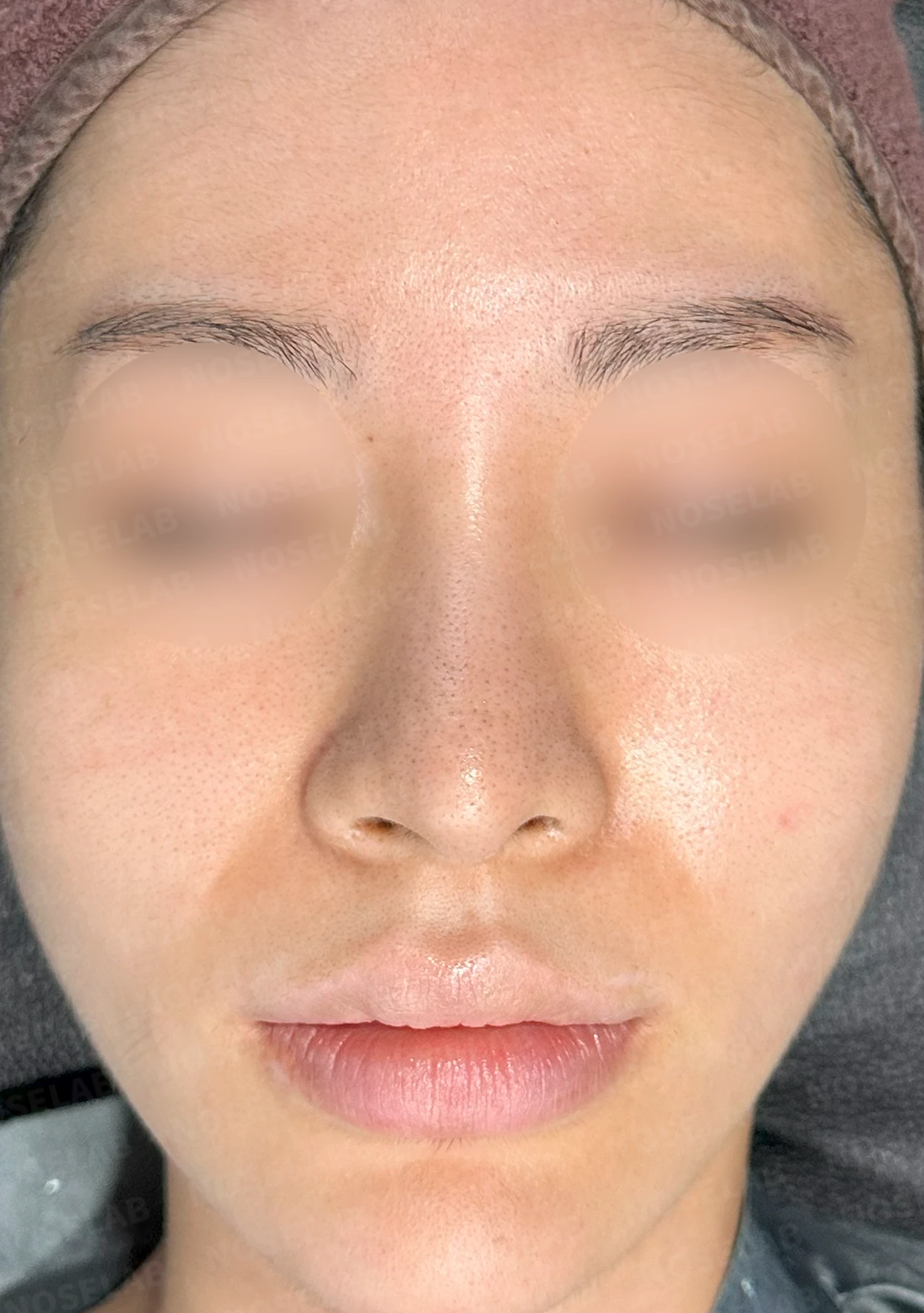
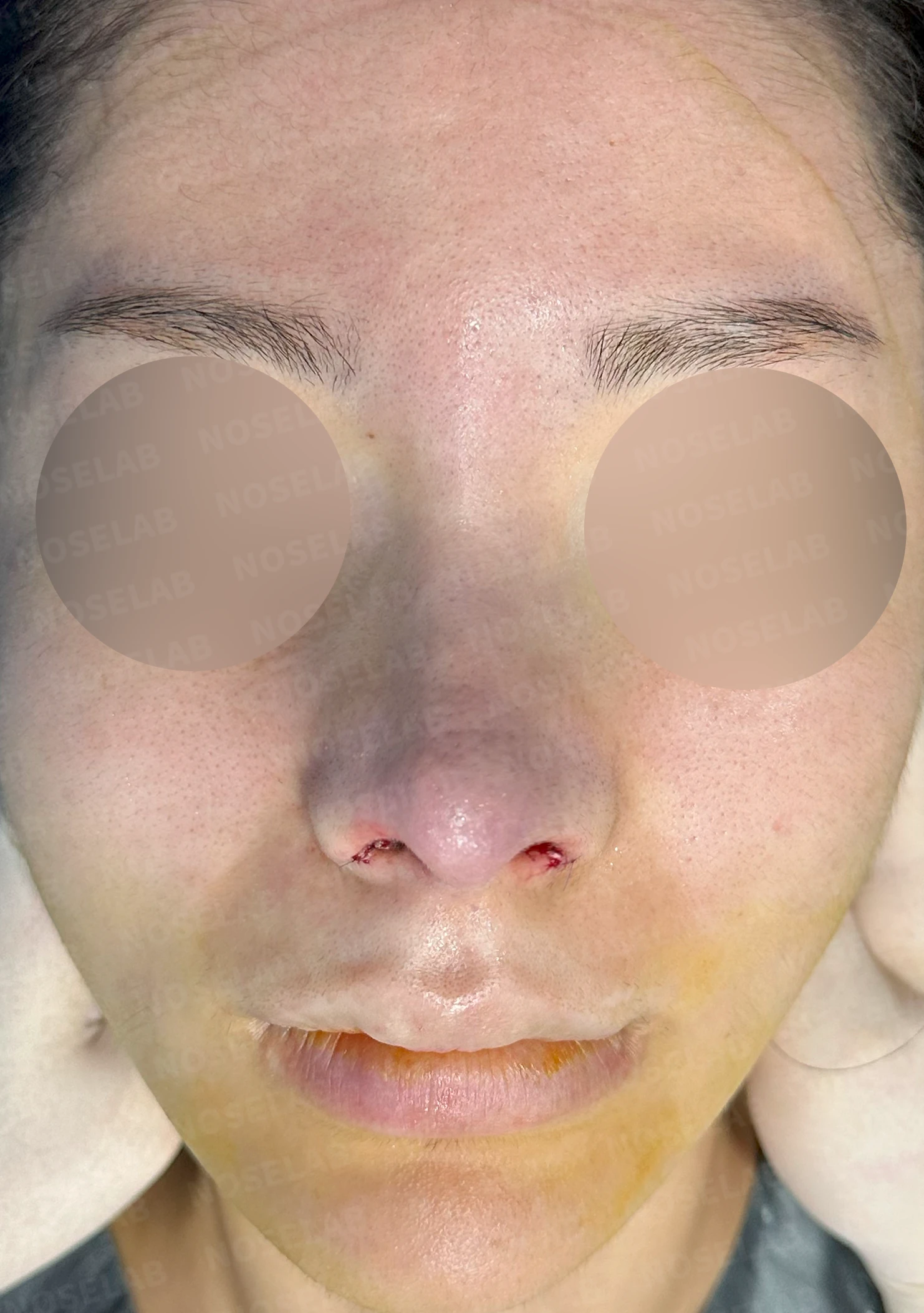
Before surgery / Day 0 immediately after surgery Photos taken immediately after surgery show swelling and may differ from the final result.
- The previously wide-looking nose became slimmer.
- The blunt nasal tip was naturally corrected.
- The starting point at the radix was lowered.
Oblique view:
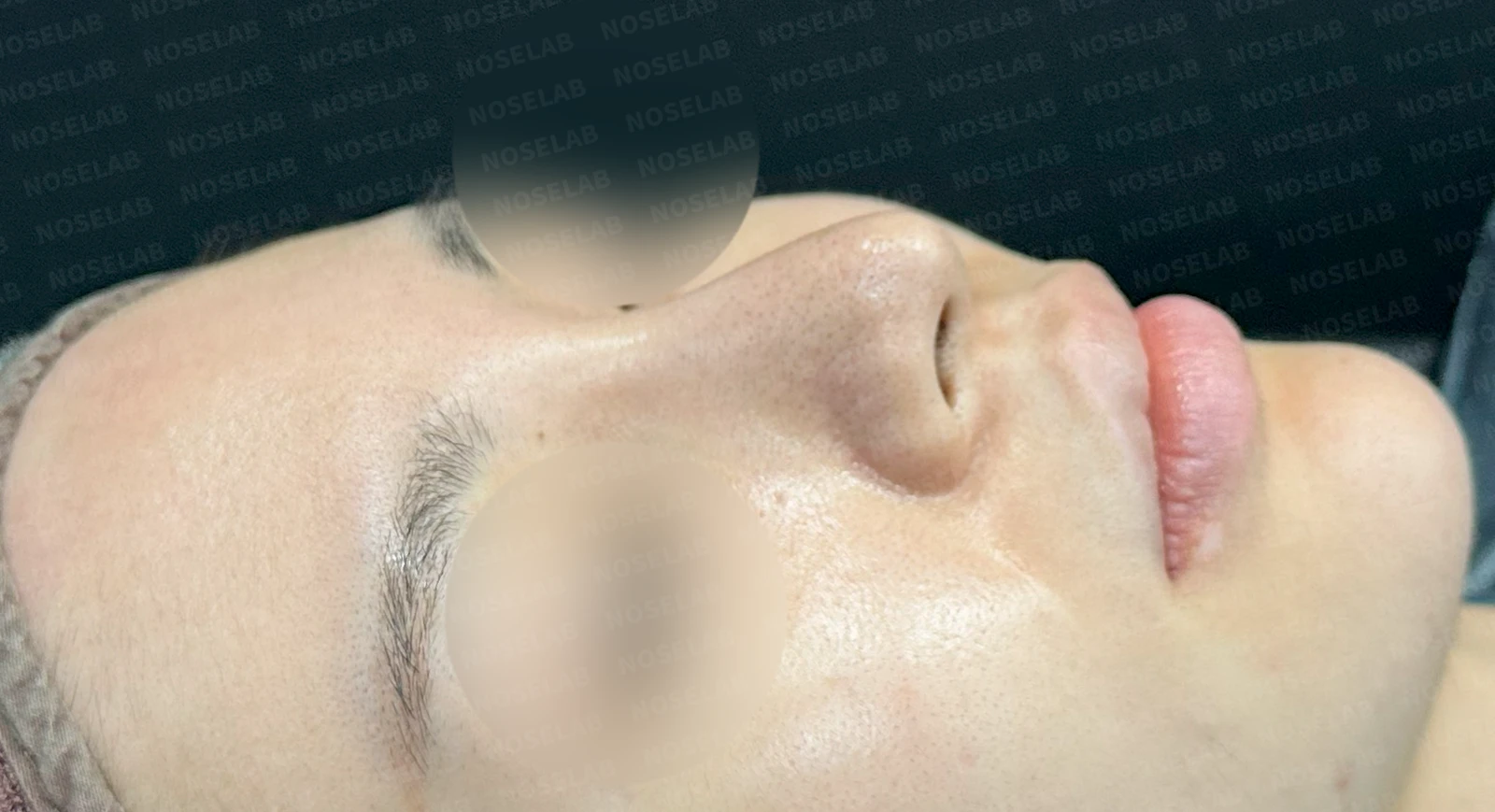
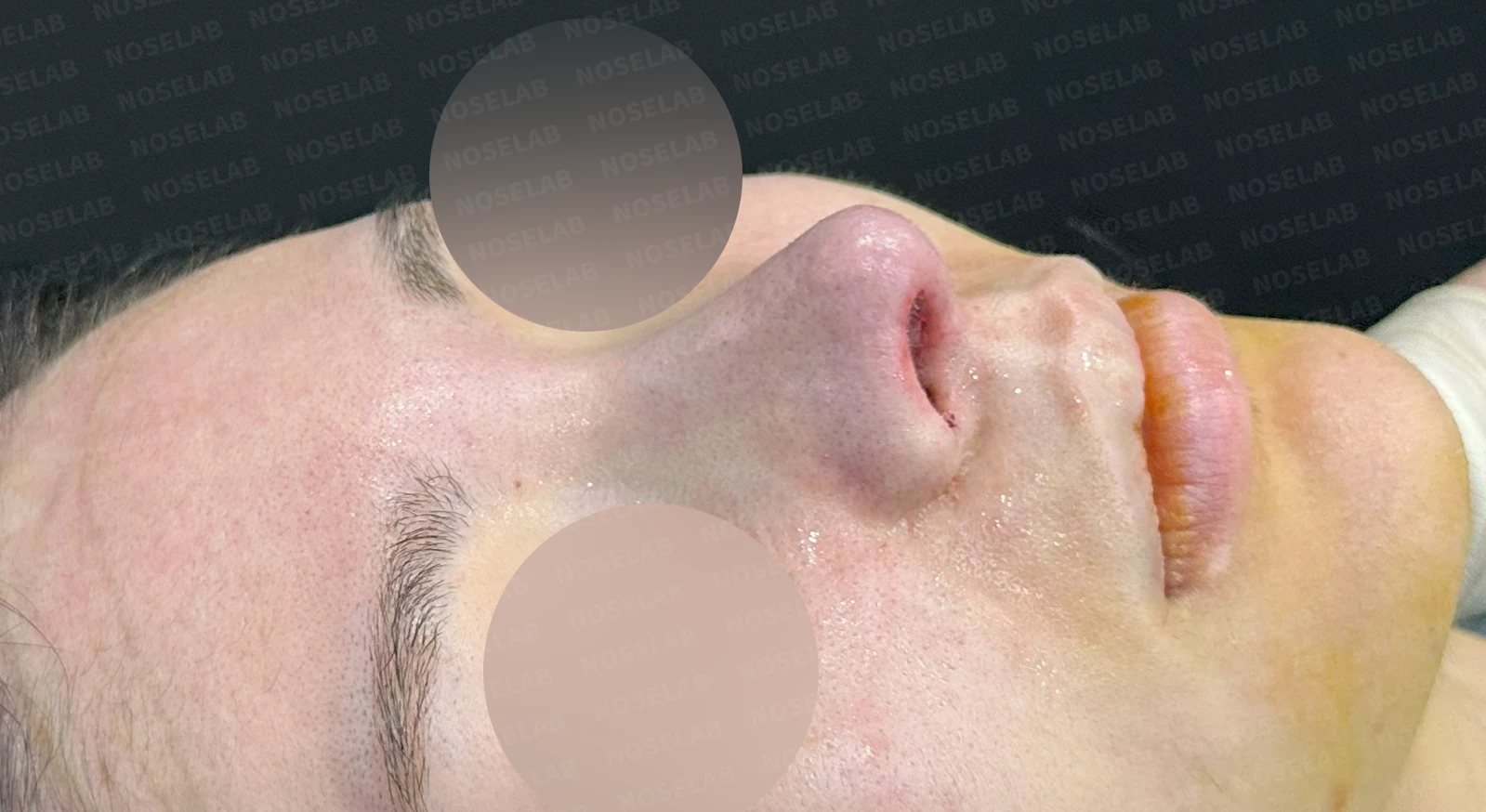
Before surgery / Day 0 immediately after surgery Photos taken immediately after surgery show swelling and may differ from the final result.
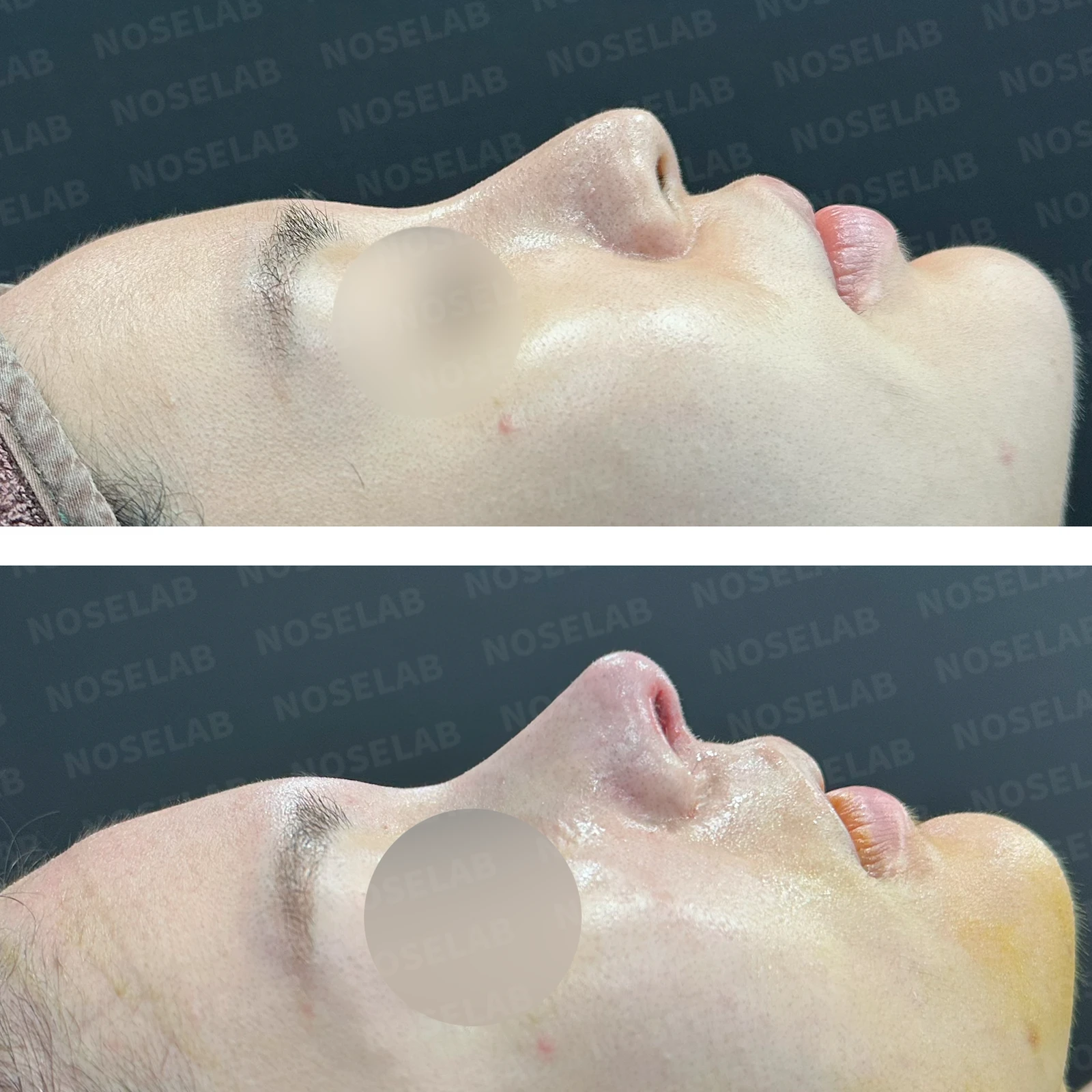
- The drooping nasal tip was naturally elevated.
- The sharp-looking nasal tip was corrected into a rounded, soft contour.
Profile view:
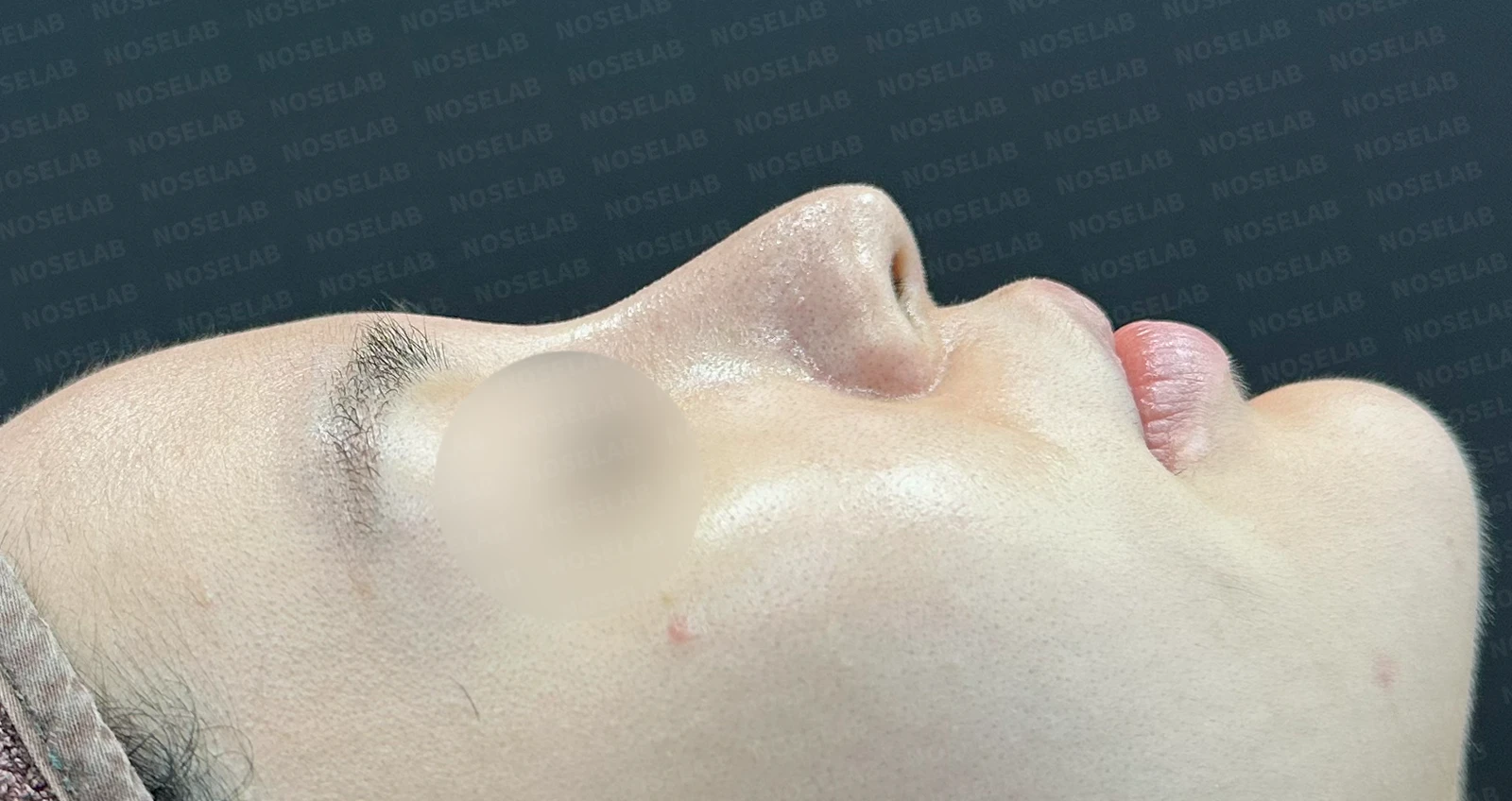
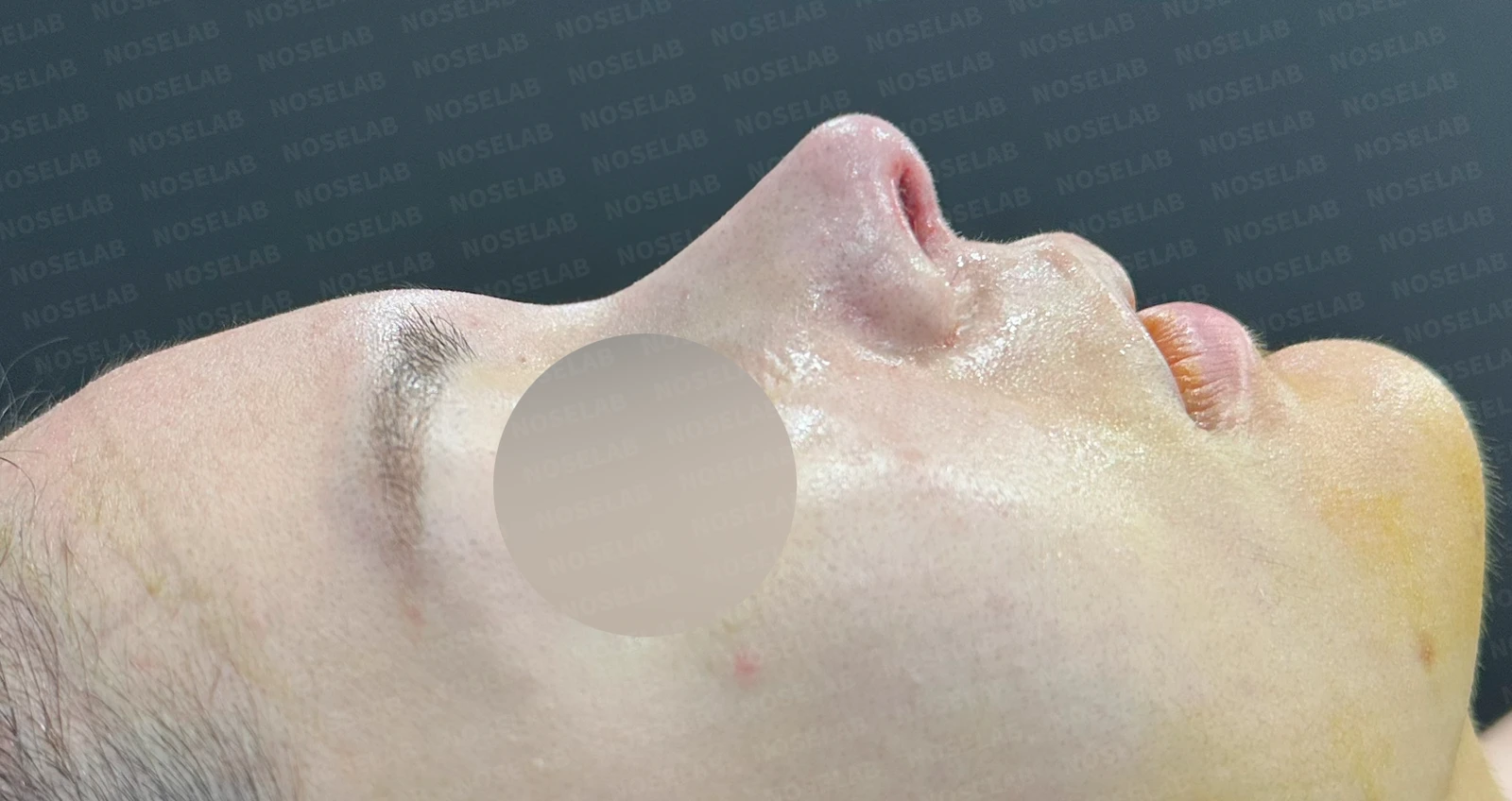
Before surgery / Day 0 immediately after surgery Photos taken immediately after surgery show swelling and may differ from the final result.
- The elongated-looking nose was naturally shortened.
- The nasolabial angle was corrected to approximately 95 degrees, improving the drooping tip.
- The appearance of a protruding mouth was improved.
Nostrils:
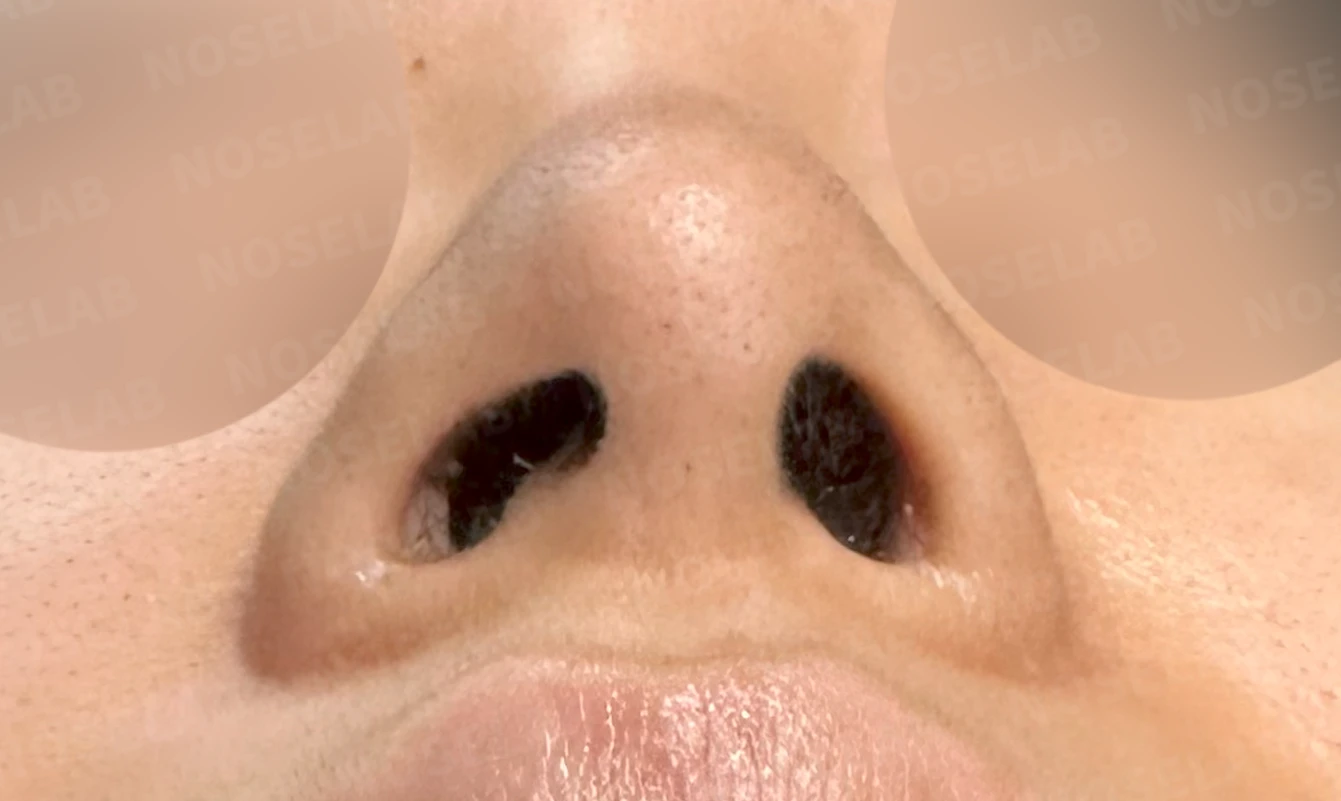
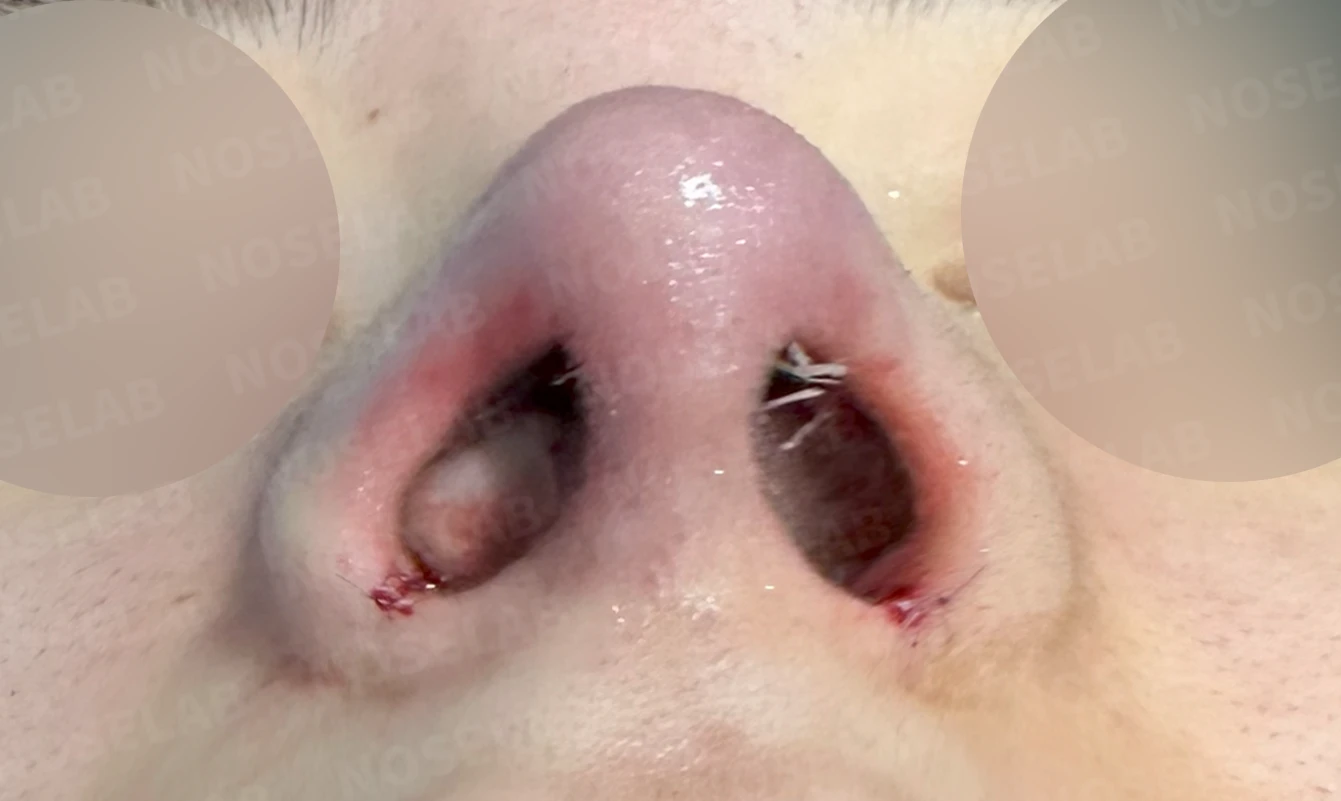
Before surgery / Day 0 immediately after surgery Photos taken immediately after surgery show swelling and may differ from the final result.
- Nostril asymmetry has been corrected.
- The columella, which had appeared tilted to the left, was straightened.
5. Photos immediately after surgery on day 0 Photos taken immediately after surgery show swelling and may differ from the final result.
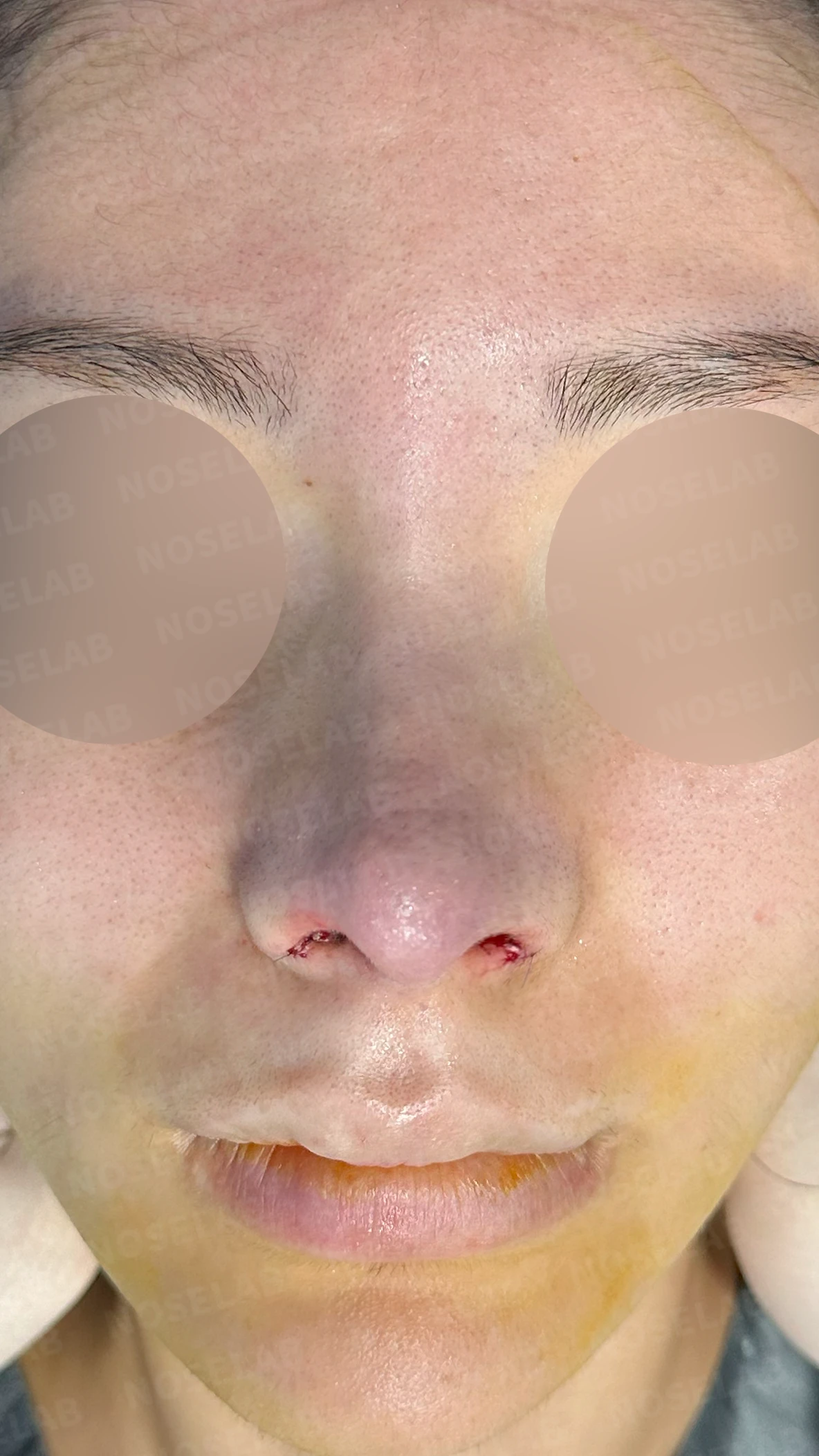
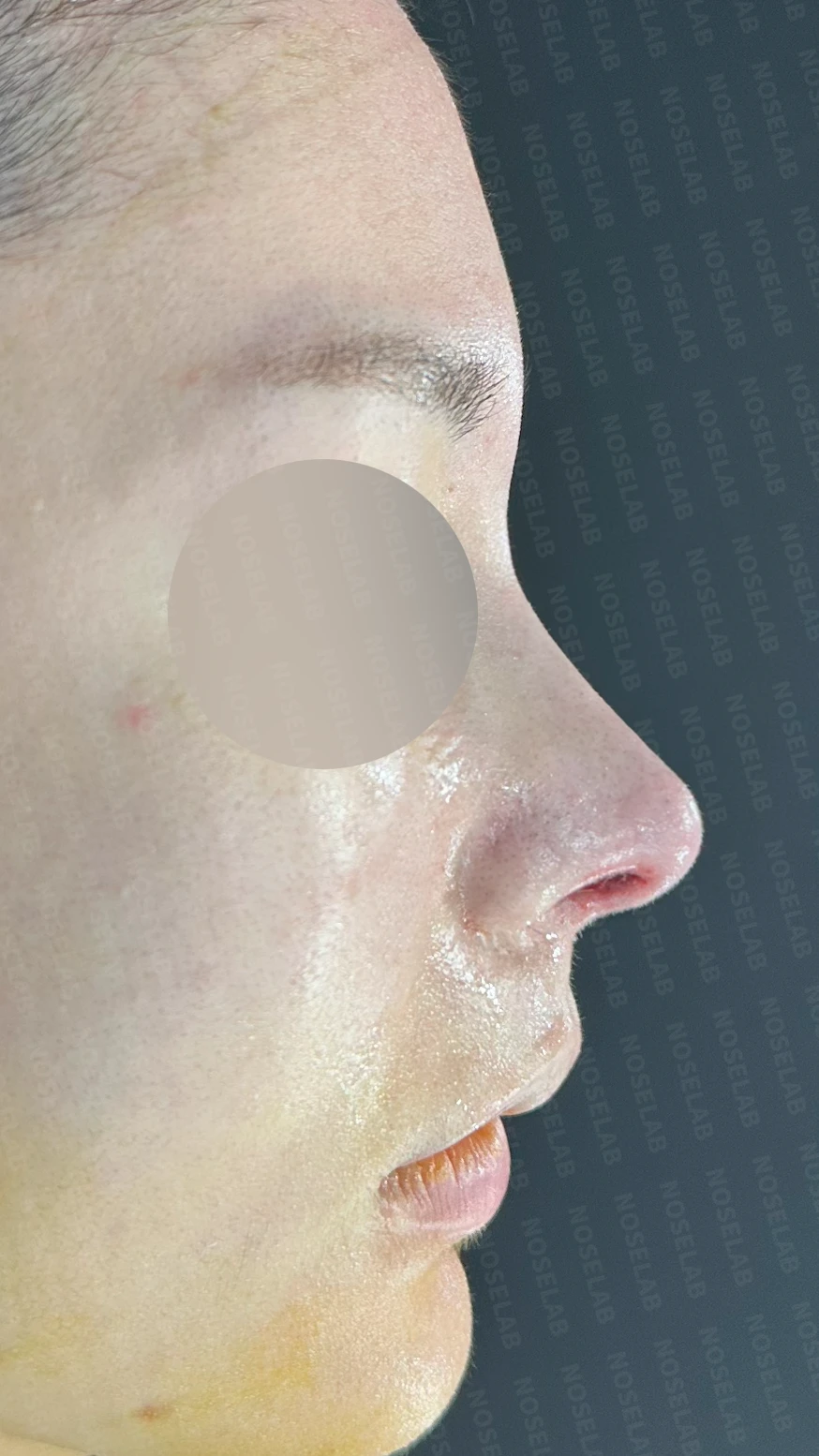
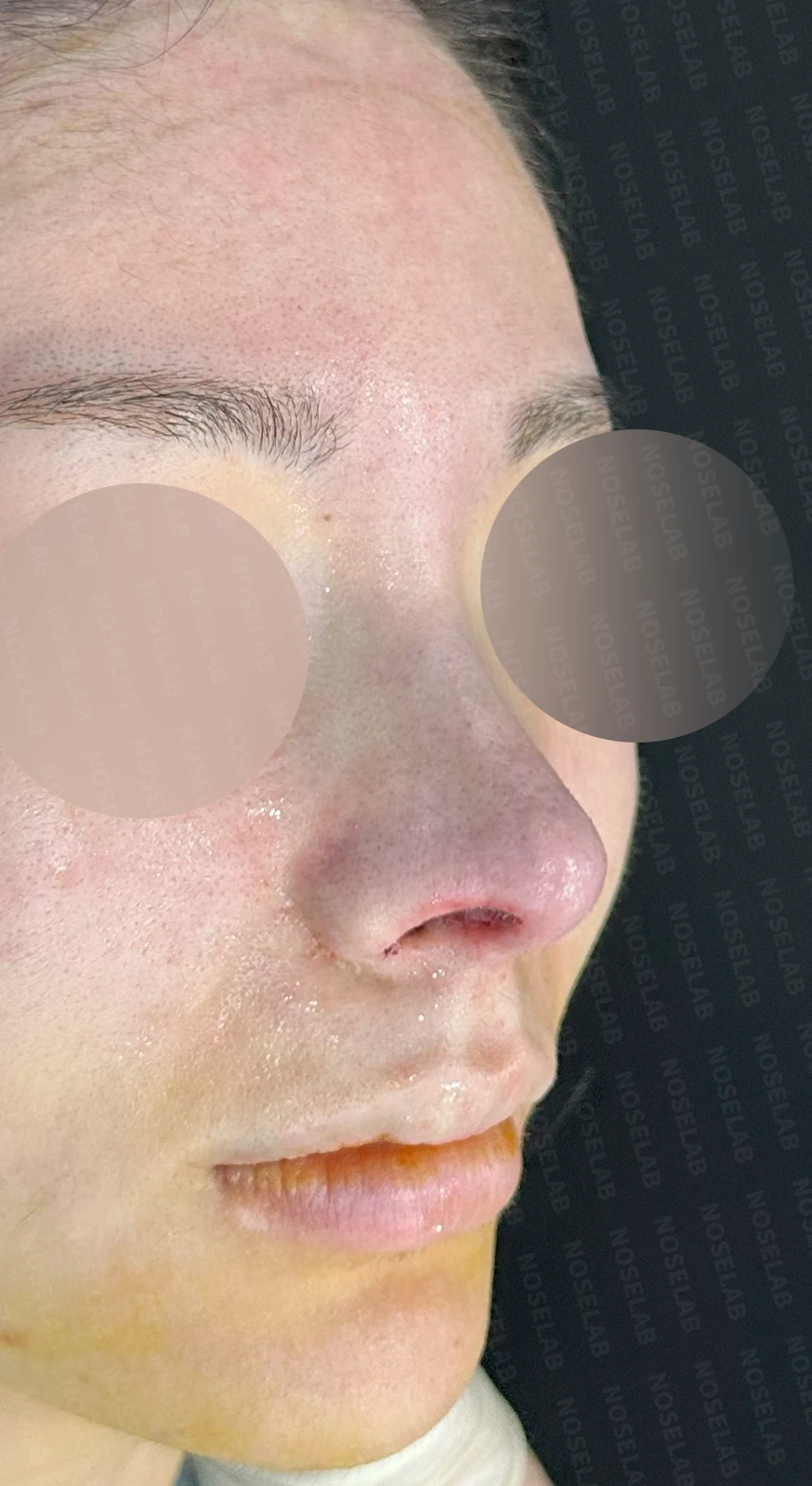
Front, profile, and oblique views taken immediately after surgery (day 0).Immediate postoperative photos show swelling and may differ from the final result.
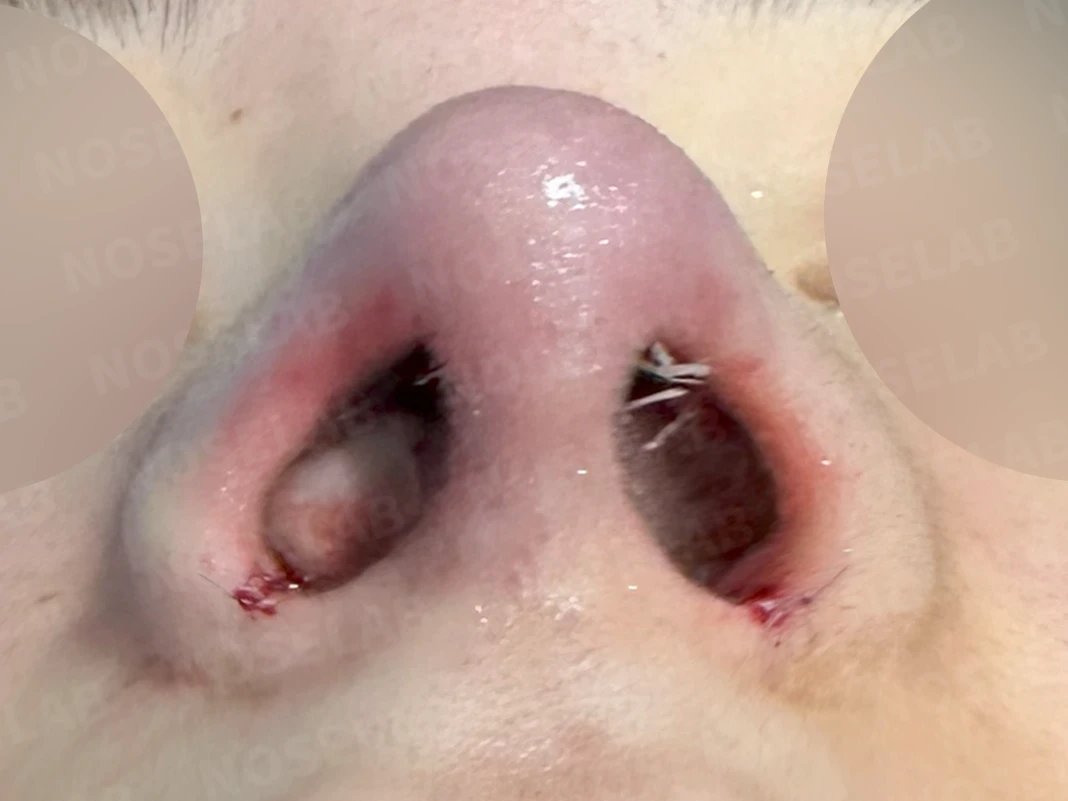
This is the basal (nostril) view.
6. Overall evaluation
This case addressed multiple complex nasal concerns simultaneously. In particular, it is notable that the Medpor used in the previous surgery was removed with care and autologous rib cartilage was used to shape a natural nasal contour.
By improving various concerns—a long nose, drooping tip, wide nose, and blunt tip—in a single surgery, we achieved the defined yet natural result the patient wanted. This was possible through meticulous surgical planning and precise technique.
In this surgery in particular, recycling the previously used ear cartilage and soft tissue to reconstruct the nasal tip was effective. This serves as a good example of reducing unnecessary additional tissue harvest while utilizing existing tissue efficiently.
Improving the drooping tip through nasolabial angle adjustment while simultaneously softening the appearance of a protruding mouth was another major achievement of this surgery. This significantly enhanced overall facial balance.
7. Conclusion
I hope this case offers reassurance to those troubled by complex nasal concerns such as a long nose, drooping tip, wide nose, or blunt tip. Even when multiple concerns coexist, a natural and refined nose can be achieved through appropriate surgical planning and technique.
What I especially want to emphasize through this case is the risk of using foreign materials rather than cartilage in the nasal tip. Artificial materials such as Medpor or mesh placed in the tip are not safe; they carry concerns of inflammation and can increase the risk of contracture. Therefore, complete removal of such foreign materials is advisable.
However, foreign material removal requires a very cautious and delicate procedure. Materials like Medpor and mesh adhere tightly to surrounding tissues, so complete removal demands refined skill and extensive experience. Those considering foreign material removal and revision rhinoplasty should make sure to consult an experienced specialist.
NOSELAB provides customized surgical plans for each patient based on up-to-date medical techniques and extensive clinical experience. If you are considering rhinoplasty, we encourage you to consult with a specialist to find the approach best suited to you.
I will be with you every step of the way to achieve a beautiful and healthy nose.
This was Dr. Peter C. Kang. Thank you.
Thank you.
#rhinoplasty #longnosecorrection #droopingtipcorrection #widenosecorrection #bulboustipcorrection #medporremoval #autologousribcartilagegraft #closedrhinoplasty #revisionrhinoplasty #entrhinoplastyspecialist #rhinoplastyplannedwithsafetyinmind #nasalbridgeaugmentation #tiprhinoplasty #nasolabialanglecorrection

Limitations and risks
When autologous rib cartilage is used, scarring and pain may remain at the donor site on the chest, and pneumothorax (pleural injury) can occur rarely. Over time, the grafted cartilage may warp or undergo partial resorption.
When revising after implant removal, contracture may progress again after removal, the nasal height and length may decrease, and staged surgery may be necessary depending on the skin condition.
When foreign materials such as injected fillers are removed and reconstructed, contracture may recur, nasal height and length may decrease, and staged surgery may be necessary depending on the skin condition.
When the septum is corrected at the same time, nasal obstruction may persist or recur, and in rare cases, septal perforation or changes in smell may occur.
Common potential risks include infection, bleeding, asymmetry, scarring, skin necrosis, and insufficient improvement; results vary depending on individual skin condition and previous surgical history.