English日本語简体中文
Skip to main content
Dr. Peter C. Kang's Rhinoplasty Stories
PrologueBlogMy thoughtsNasal obstructionSurgical journalSurgical photos
About the surgeon

Lowering the columella and columellar correction cases

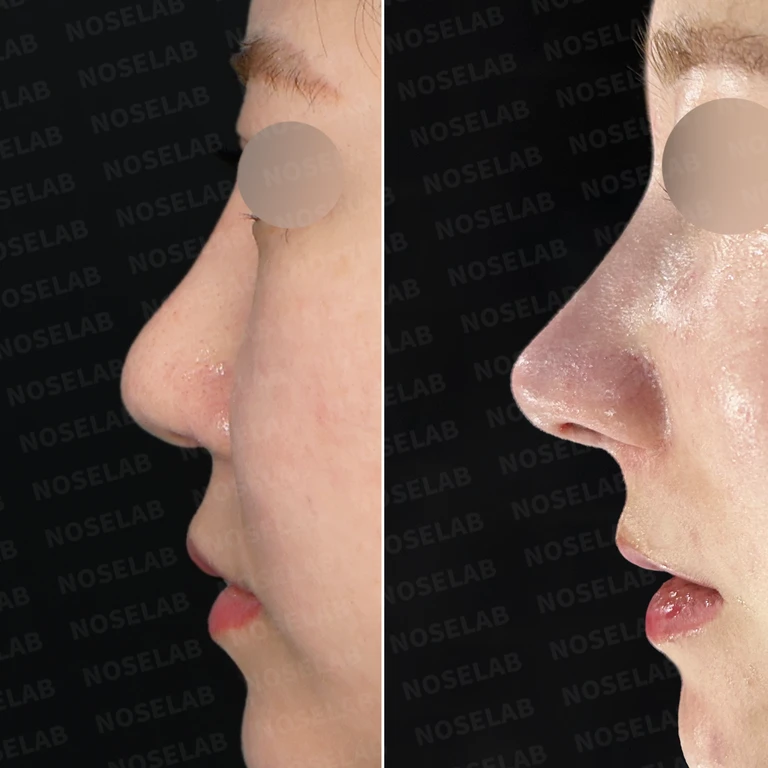
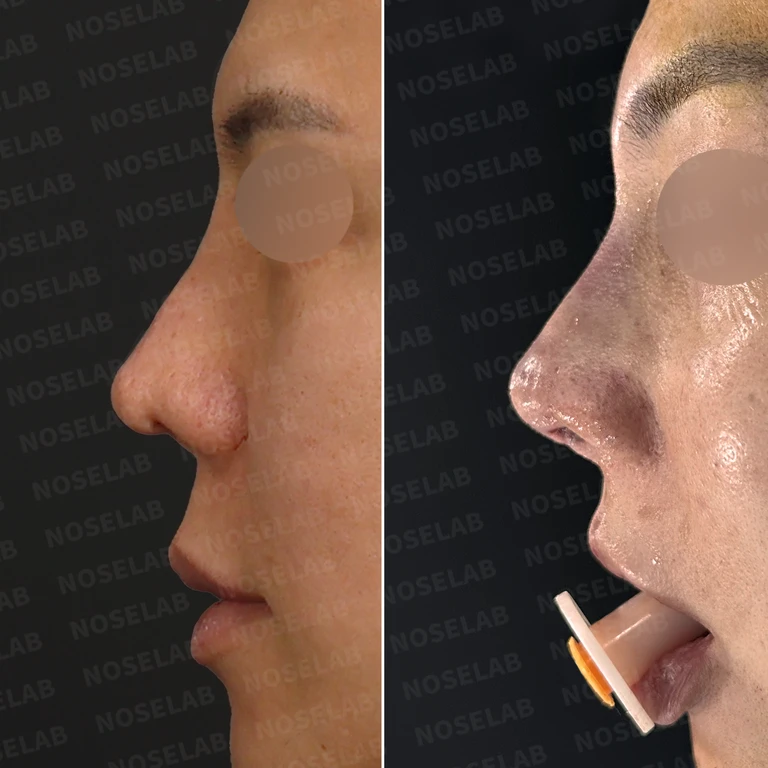
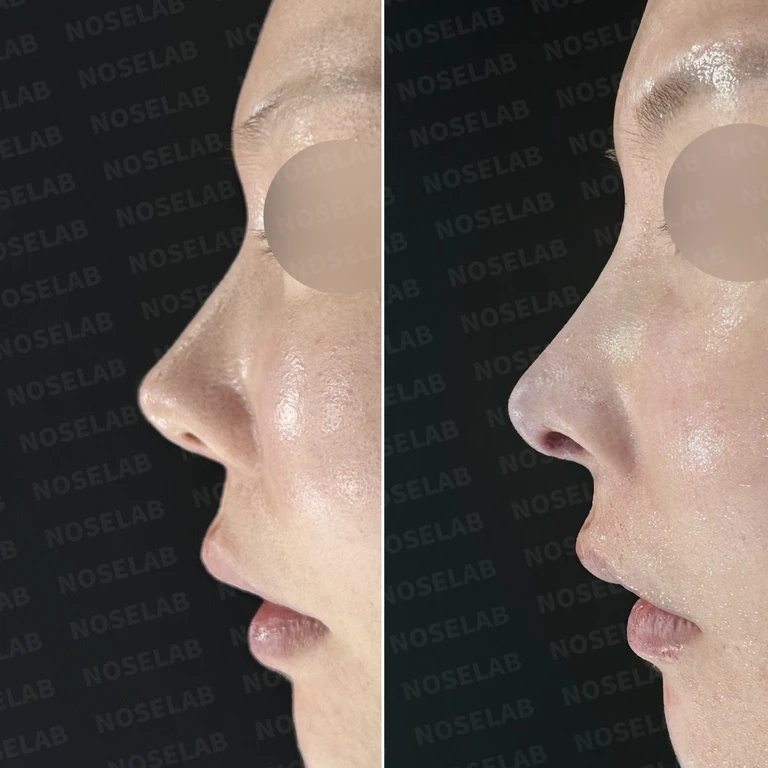
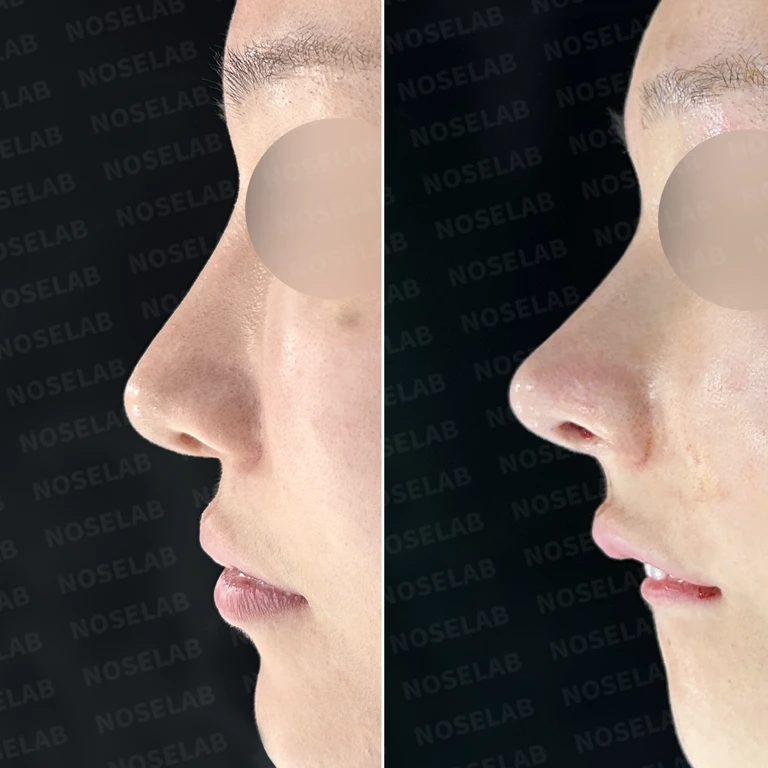
In articles related to lowering the columella, the relationship between the nasal tip and the nostrils is explained alongside the columella's position. There are records where septal extension using autologous rib cartilage, lowering the columella, and nasolabial angle correction were performed simultaneously. Multiple procedure names are listed, but you can read through them by distinguishing which anatomical area each item modifies.

We have also gathered articles where the radix and columella were addressed together during long nose correction, or where nostril surgery was performed concurrently for a pinched nose. Lowering the columella does not mean lengthening the entire nose. Looking for the positional changes described in the text on the front, profile, and nostril views makes it easier to understand the differences among these related procedures.

View before-and-after cases ↓Comprehensive rhinoplasty guide

Searching for surgical cases matching your criteria.
Why a high radix makes the nose look long and overly prominent — Before-and-after comparison
Before-and-after comparison

Why a high radix makes the nose look long and overly prominent

Following prior surgeries, a bulbous and drooping long nose with an excessively high radix and nasal obstruction was corrected using a closed approach. Scar tissue debridement, osteotomy, nasolabial angle correction, and septoplasty were performed concurrently.

Performed or used in this surgery
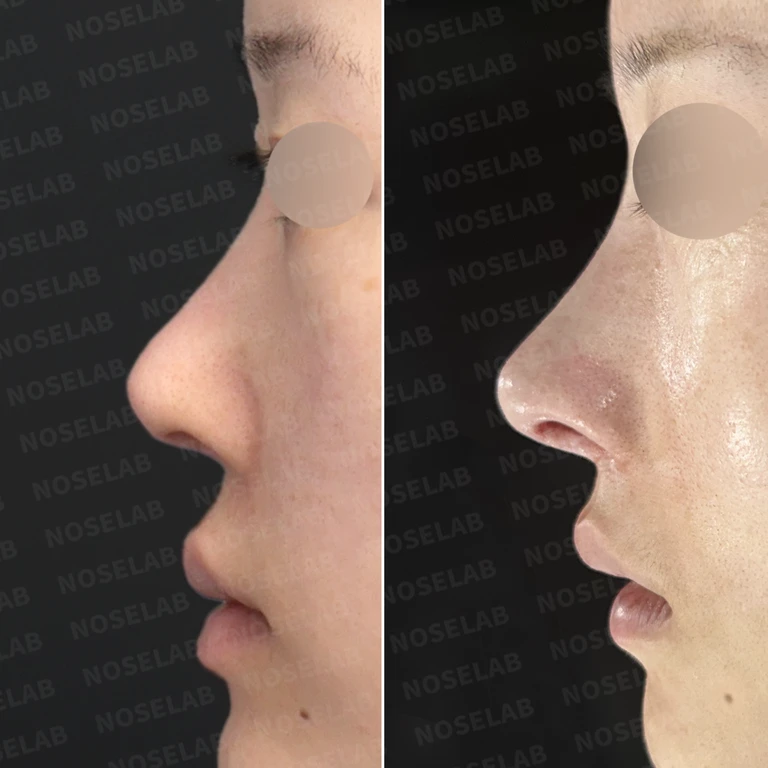
Why a nose becomes upturned and the columella retracts after repeated revisions, and how to reconstruct the septum — Before-and-after comparison
Before-and-after comparison

Why a nose becomes upturned and the columella retracts after repeated revisions, and how to reconstruct the septum

A case where damage from previous surgeries led to collapse of the anterior septum and nostril asymmetry. The septum was reconstructed using autologous rib cartilage, followed by nasal tip rhinoplasty with donor rib cartilage and implant replacement.

Performed or used in this surgery
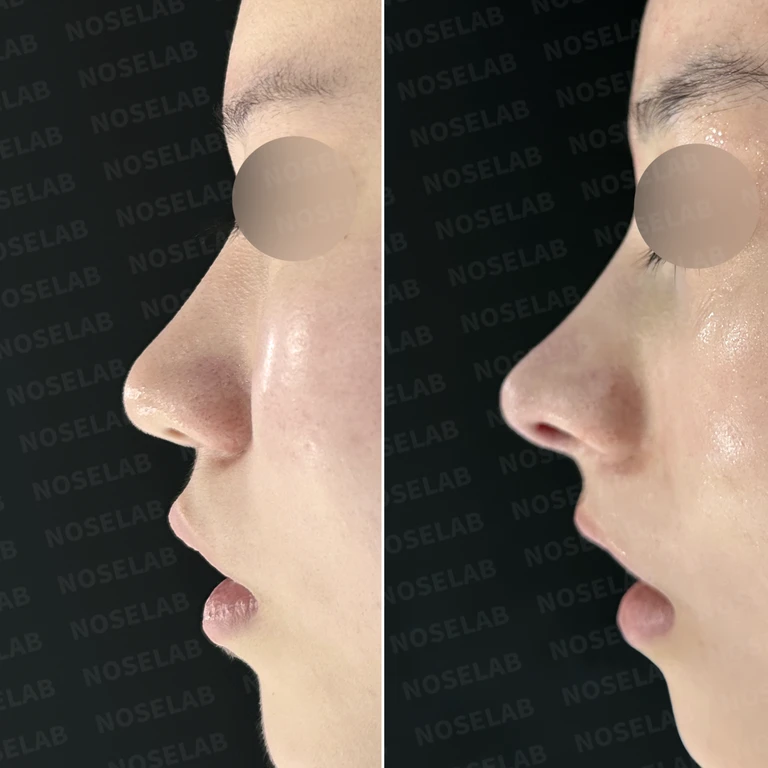
Changes that occur when an implant is positioned high and deviated: methods for replacement and bulbous tip correction — Before-and-after comparison
Before-and-after comparison

Changes that occur when an implant is positioned high and deviated: methods for replacement and bulbous tip correction

A high, deviated silicone implant was replaced to lower the radix, and septal extension was performed using donor rib cartilage. Partial soft tissue resection, cartilage tie, and rhinitis surgery addressed the bulbous tip and nasal obstruction.

Performed or used in this surgery
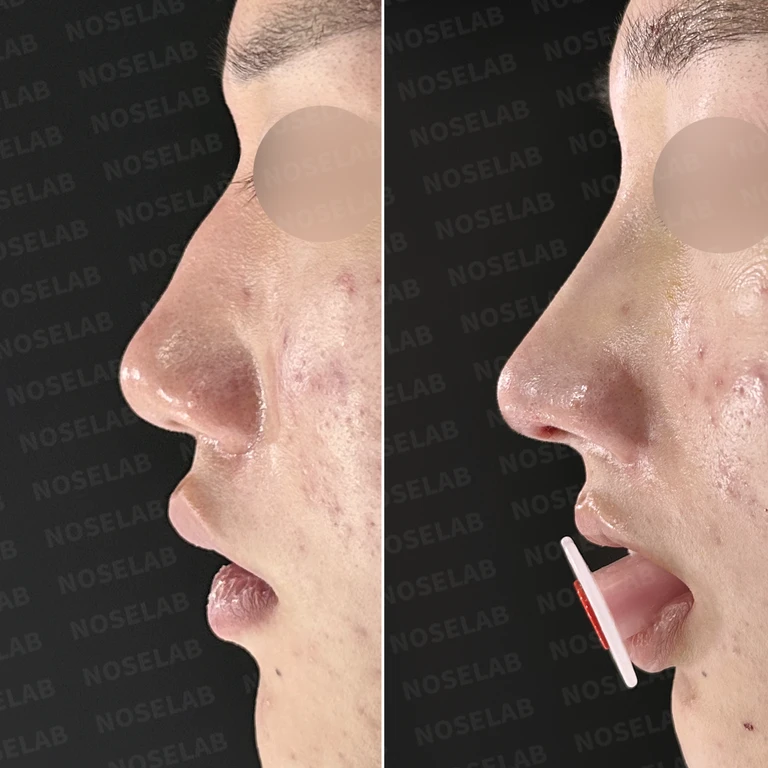
Why contracture remains in multiply operated noses: Reconstructing the columella and support framework — Before-and-after comparison
Before-and-after comparison

Why contracture remains in multiply operated noses: Reconstructing the columella and support framework

Contracture and septal defect resulting from repeated surgeries were reconstructed using autologous rib cartilage. For the retracted columella, retroauricular free skin flap grafting and perichondrium grafting were performed to restore its shape.

Performed or used in this surgery
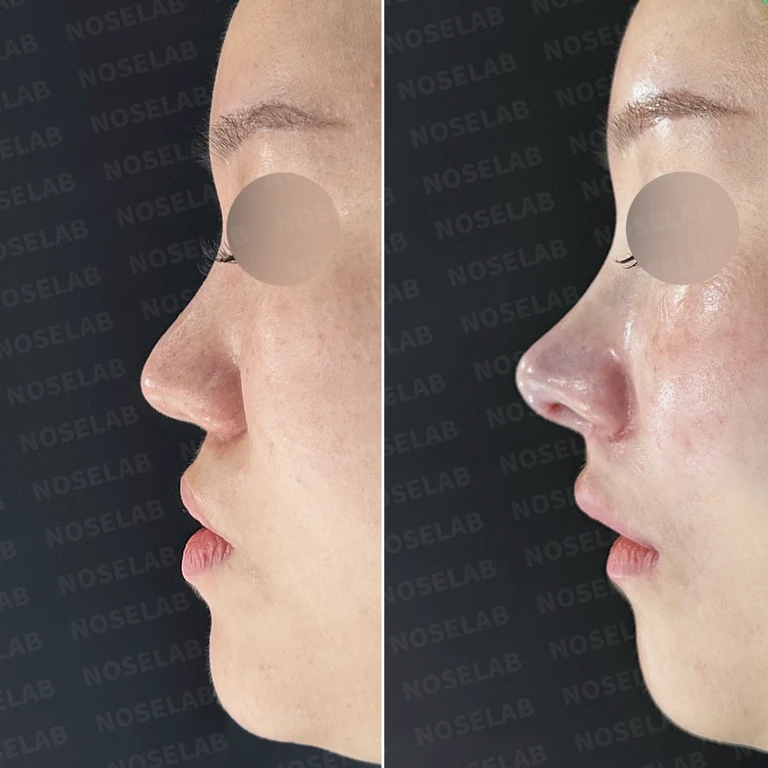
Why the nasal tip can remain upturned after revision rhinoplasty, and when donor rib cartilage is used — Before-and-after comparison
Before-and-after comparison

Why the nasal tip can remain upturned after revision rhinoplasty, and when donor rib cartilage is used

An upturned and deviated nose, accompanied by hesitation toward autologous rib cartilage due to past pneumothorax, was improved without implants using donor rib cartilage, recycled previous rib cartilage, nasal bone rasping, and nasolabial angle correction.

Performed or used in this surgery
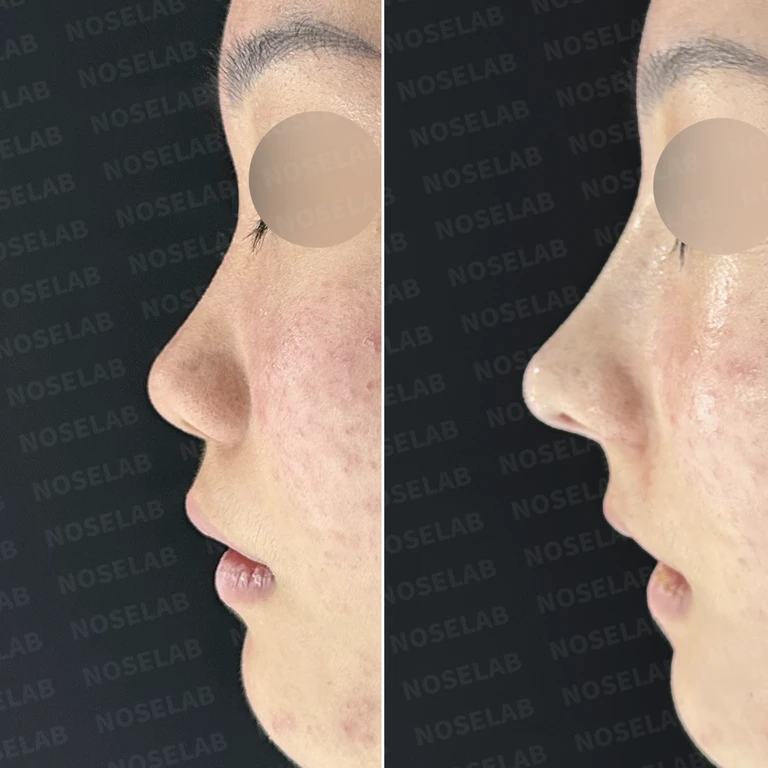
Why a nose looks bulbous or pug-like, and how to refine both the nasal tip cartilage and nasal bones together — Before-and-after comparison
Before-and-after comparison

Why a nose looks bulbous or pug-like, and how to refine both the nasal tip cartilage and nasal bones together

A blunt, pug-like nose, retracted columella, and wide nasal bridge were transformed into a slim, three-dimensional profile using autologous rib cartilage tip plasty, columellar lowering, lateral osteotomy, and cartilage reduction with suturing.

Performed or used in this surgery
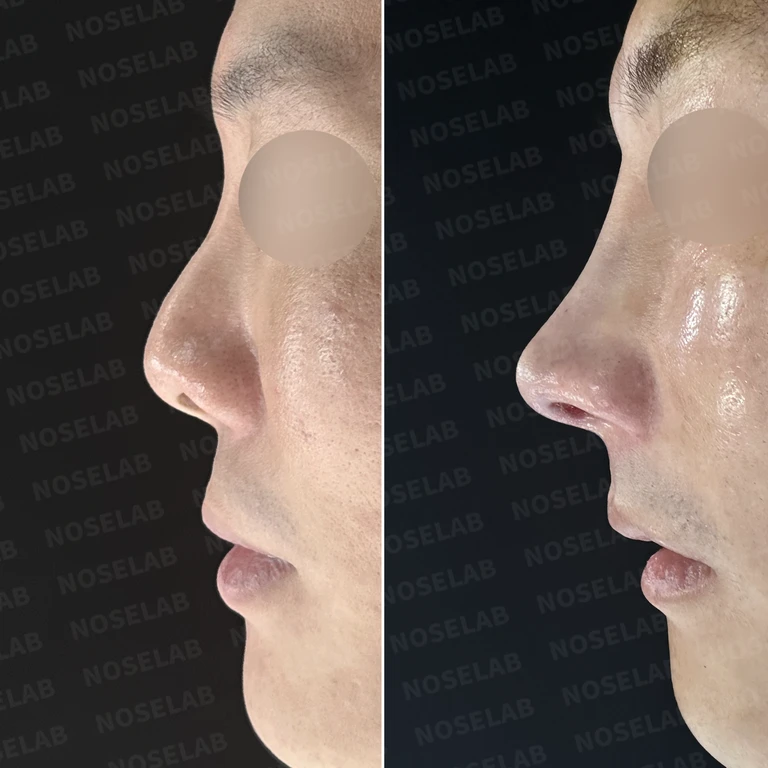
Why a crooked nose and dorsal hump appear together, and how to approach male rhinoplasty — Before-and-after comparison
Before-and-after comparison

Why a crooked nose and dorsal hump appear together, and how to approach male rhinoplasty

In a male patient in his early 20s presenting with a crooked nose, dorsal hump, and nasal obstruction, osteotomy, tip rhinoplasty using donor rib cartilage and septal cartilage, and columellar correction were performed.

Performed or used in this surgery
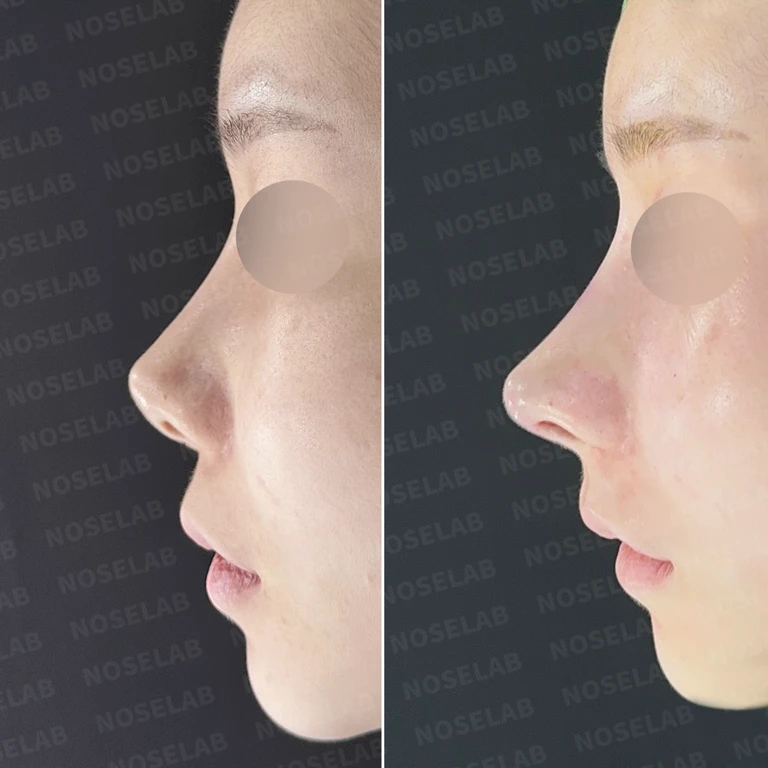
Why the columella retracts and the alar rim looks pinched after rhinoplasty, and how autologous rib cartilage reconstruction is performed — Before-and-after comparison
Before-and-after comparison

Why the columella retracts and the alar rim looks pinched after rhinoplasty, and how autologous rib cartilage reconstruction is performed

In a patient presenting with columellar retraction and a pinched right alar rim following rhinoplasty with silicone and donor rib cartilage, the existing materials were removed and reconstruction of the septum and alar cartilage was performed using autologous rib cartilage.

Performed or used in this surgery
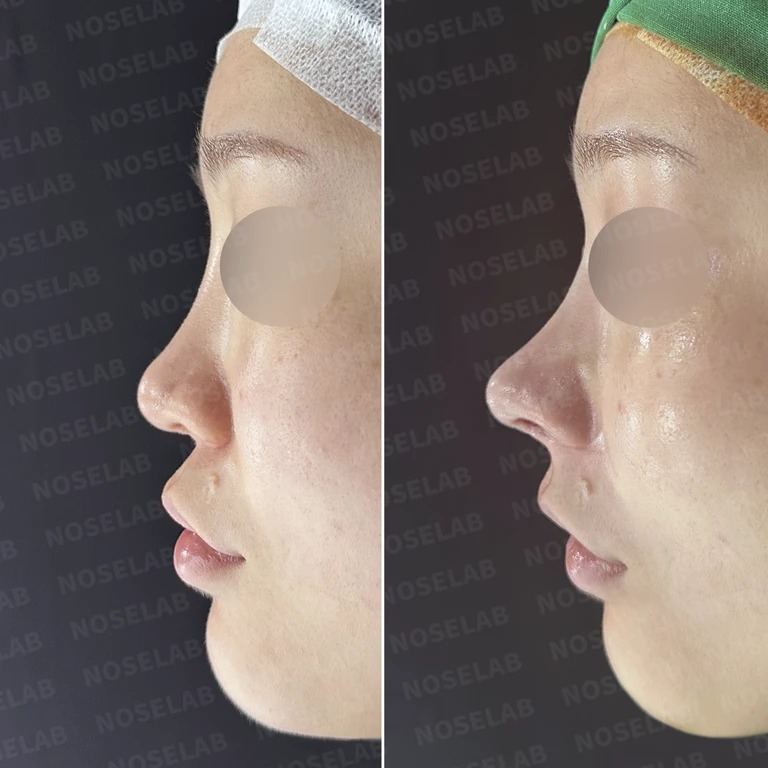
Why the nasal bridge looks low and the tip looks bulbous: how to correct them alongside a retracted columella — Before-and-after comparison
Before-and-after comparison

Why the nasal bridge looks low and the tip looks bulbous: how to correct them alongside a retracted columella

To improve the low, bulbous nasal tip and retracted columella in a patient with no previous surgical history, autologous rib cartilage was used to reinforce the septum, elevate the nasal bridge and nasal tip, and correct the nasolabial angle.

Performed or used in this surgery
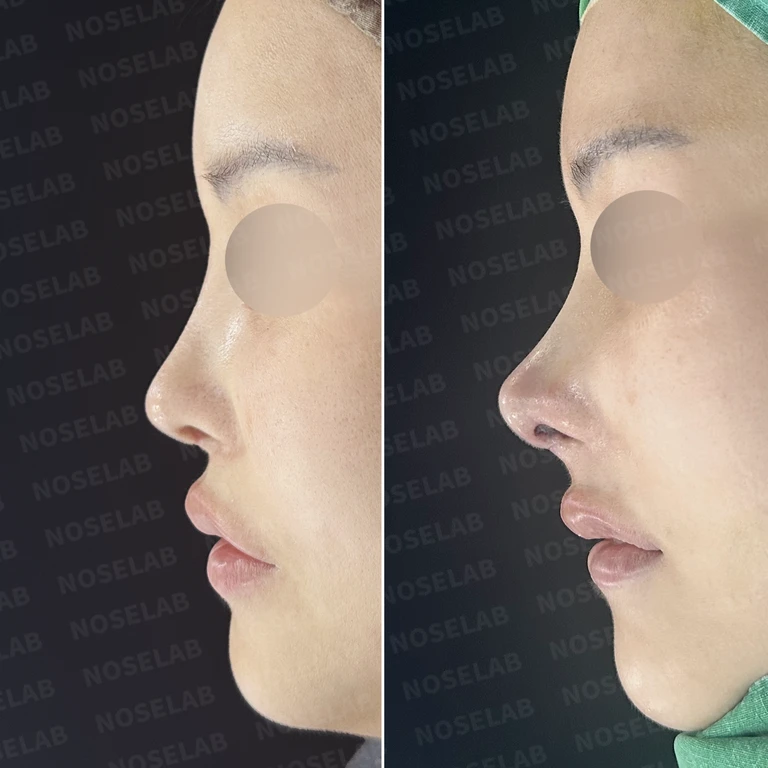
Contracted nose: How contracted tissue removal and autologous rib cartilage reconstruction are performed — Before-and-after comparison
Before-and-after comparison

Contracted nose: How contracted tissue removal and autologous rib cartilage reconstruction are performed

In a nose that became upturned and crooked due to contracture following implant surgery, fibrotic tissue was removed, the nasal tip was reconstructed with autologous rib cartilage, the columella was lowered, and the silicone implant was replaced.

Performed or used in this surgery
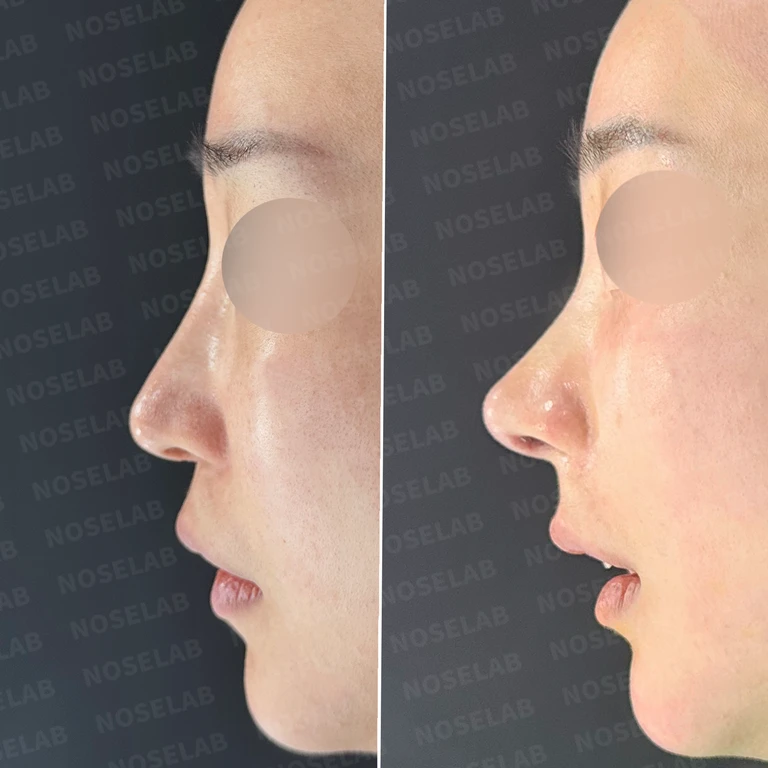
Why the nasal tip appears upturned and the columella looks short after rhinoplasty: methods for lowering the columella and correcting the bridge line — Before-and-after comparison
Before-and-after comparison

Why the nasal tip appears upturned and the columella looks short after rhinoplasty: methods for lowering the columella and correcting the bridge line

An upturned nasal tip, a short columella, and an unnatural silicone bridge line from previous rhinoplasty were improved using autologous rib cartilage septal extension, custom-carved silicone implant replacement, and nasolabial angle correction.

Performed or used in this surgery
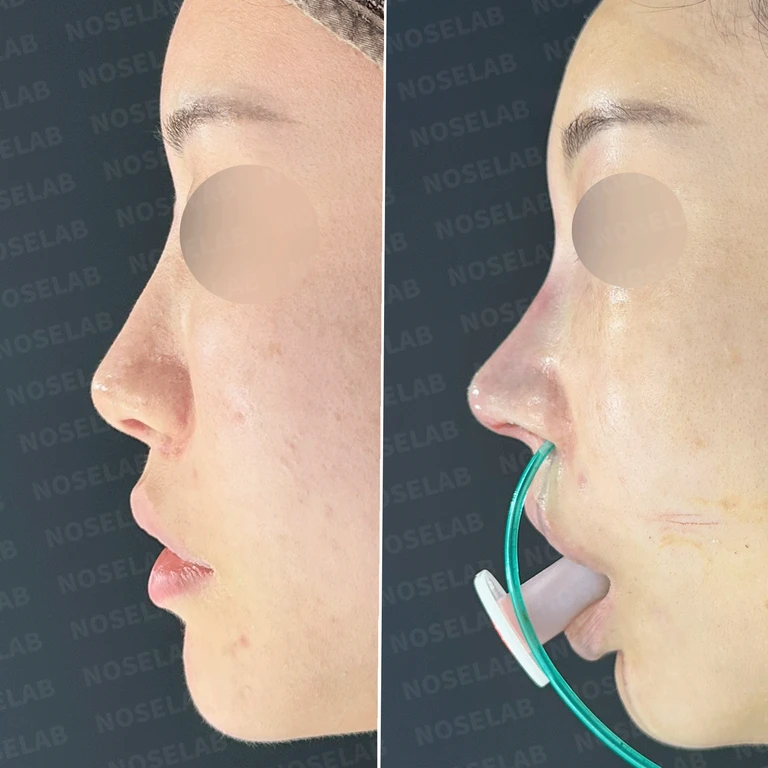
Why cartilage extrudes through the nasal mucosa and methods for restoration and reconstruction — Before-and-after comparison
Before-and-after comparison

Why cartilage extrudes through the nasal mucosa and methods for restoration and reconstruction

Cartilage protruding through the nasal mucosa was removed and the area restored with perichondrium, damaged lower lateral cartilage and a drooping tip were reconstructed using autologous rib cartilage, and the implant was replaced with customized silicone.

Performed or used in this surgery
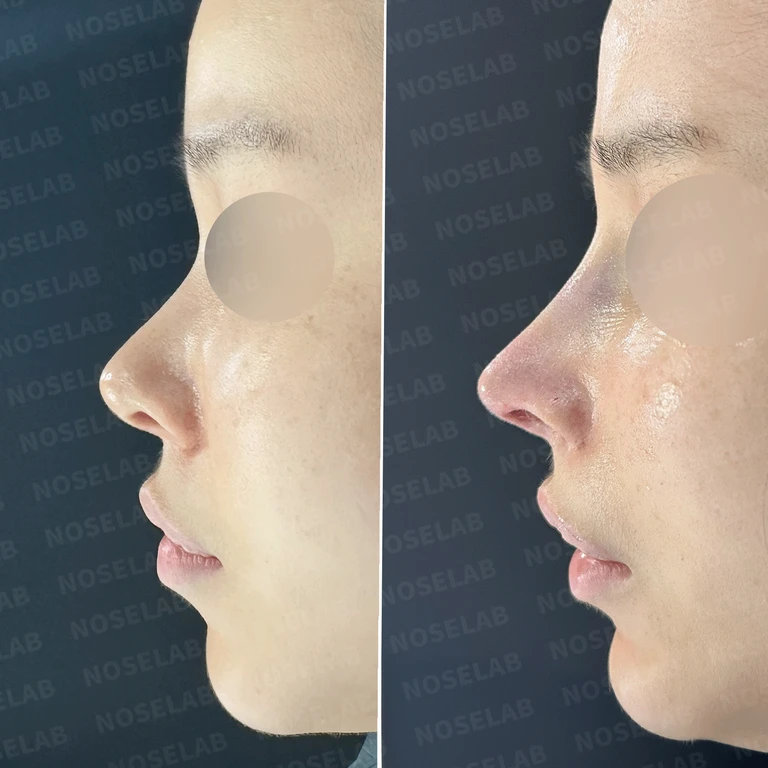
When tip skin is lacking after alar and philtrum reduction, how to determine the elevation limit — Before-and-after comparison
Before-and-after comparison

When tip skin is lacking after alar and philtrum reduction, how to determine the elevation limit

In a patient with limited skin elasticity and mucosal adhesion following multiple nasal surgeries along with alar and philtrum reductions, we performed septal reconstruction with autologous rib cartilage, nasolabial angle correction, columellar extension, and nasal synechia adhesiolysis.

Performed or used in this surgery
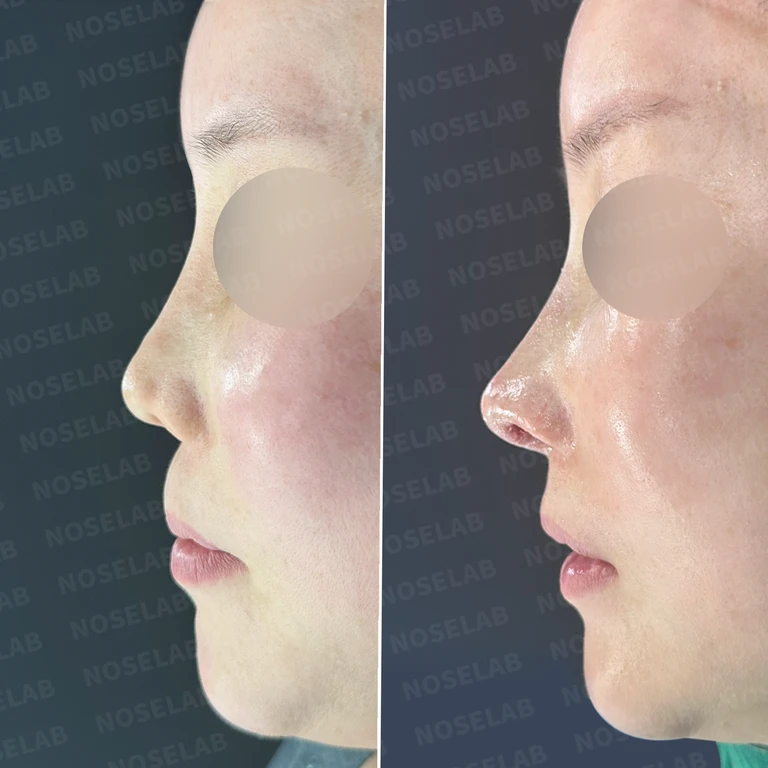
Why the L-strut thins after multiple nose surgeries and how to structurally reconstruct it — Before-and-after comparison
Before-and-after comparison

Why the L-strut thins after multiple nose surgeries and how to structurally reconstruct it

The septal L-strut, thinned after three previous surgeries, was reinforced with autologous rib cartilage, and the crooked nose was reconstructed through lateral osteotomies and columellar lengthening.

Performed or used in this surgery
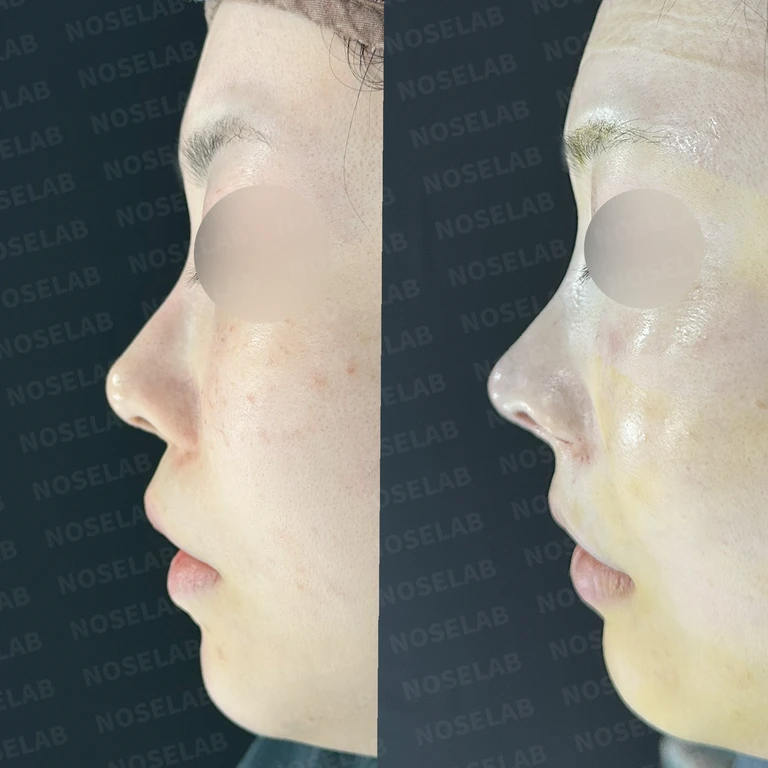
Bulbous nasal tip unresolved by previous surgeries: causes and reconstruction methods — Before-and-after comparison
Before-and-after comparison

Bulbous nasal tip unresolved by previous surgeries: causes and reconstruction methods

A case resolving a persistent bulbous tip, excessive nostril show, and residual filler after previous surgeries by removing the filler and reconstructing the septum and alae using autologous rib cartilage.

Performed or used in this surgery

Changes that occur when supporting the nasal tip with ear cartilage alone and reconstruction methods using rib cartilage — Before-and-after comparison
Before-and-after comparison

Changes that occur when supporting the nasal tip with ear cartilage alone and reconstruction methods using rib cartilage

To resolve persistent nasal obstruction, a crooked nose, and a retracted columella following a prior surgery, complete reconstruction using autologous rib cartilage and septoplasty were performed.

Performed or used in this surgery

Why a paranasal implant migrates into the nasal cavity causing breathing obstruction, and how to reconstruct it — Before-and-after comparison
Before-and-after comparison

Why a paranasal implant migrates into the nasal cavity causing breathing obstruction, and how to reconstruct it

We removed an old paranasal implant that had migrated into the nasal cavity and obstructed breathing, and completely reconstructed the damaged septum and lower lateral cartilages using autologous rib cartilage, improving both breathing function and nasal appearance.

Performed or used in this surgery

Problems caused by excessive harvest of septal cartilage and methods for reconstruction — Before-and-after comparison
Before-and-after comparison

Problems caused by excessive harvest of septal cartilage and methods for reconstruction

In a patient whose septal cartilage had been excessively harvested during previous surgeries, leading to a shortened nasal tip and nostril asymmetry, the septum was solidly reconstructed using autologous rib cartilage to restore nasal length.

Performed or used in this surgery

No search results found

Please try searching with different keywords.

Scroll to keep reading

1 / 5Next case

Common questions before reading the cases

Are there cases where lowering the columella and septal extension were performed together?

There are surgical records documenting that autologous rib cartilage was harvested and used for septal extension, lowering the columella, and nasolabial angle correction. These are cases where the same material was connected across the correction of several structures. Rather than viewing the columella change in isolation, you can observe how the support structure for the nasal tip and the angle between the nose and lips were addressed together.

Are there also records of lowering the columella while correcting a long nose?

There are cases explaining that the radix and columella were lowered together to correct a long nose, and that nostril-related surgery was concurrently performed for a pinched nose. These are records of adjusting the position of each area independently. Rather than assuming how overall nasal length changed based solely on the phrase "lowering the columella," it helps to read through the presurgical shape alongside the other accompanying corrections.

Related topics to explore

Retracted columella / short columellaSeptal extensionNasolabial angle correctionLowering the radix

Surgical records referenced in this guide

  • Bulbous nose correction and lowering the columella
  • Closed correction method for a crooked nose, nasal bridge, and nasal tip using autologous rib cartilage
  • How to lower the radix and columella together
Original article

Read more records

Planning a visit to Seoul?Prepare your consultation with the NOSELAB team.

International patient guideWhatsApp ↗
Dr. Peter C. Kang's Rhinoplasty Stories
Rhinoplasty guideCases by topicDr. Peter C. KangNaver Blog ↗
View original photo
Enlarged photo
WhatsAppChat with NOSELAB↗