Hello.
I am Dr. Peter C. Kang, medical director.
Today, I would like to discuss procedures for lowering the radix and lowering the columella.
Preoperative design
For this type of case, the patient's request was very simple and clear: "I really dislike how high my radix is, and the shape around the nasal tip and columella does not look good. Please correct this."
Cases like this are actually quite difficult to design. That is because the patient has few other complaints but wants to correct only a few specific areas. In particular, lowering the radix requires completely removing the implant and placing a new implant in a new position, while lowering the columella requires revising the entire nasal tip.
In other words, these are areas that can only be adjusted by reworking the entire nose.
Surgical plan
To maximize the effect of lowering the radix, I planned to raise the nasal tip height slightly more than its current level to provide more dimension.
I planned to lower the columella slightly to give the nasal tip a more natural appearance.
I planned to set the tip defining point slightly higher than before so that the nose would not look overly long.
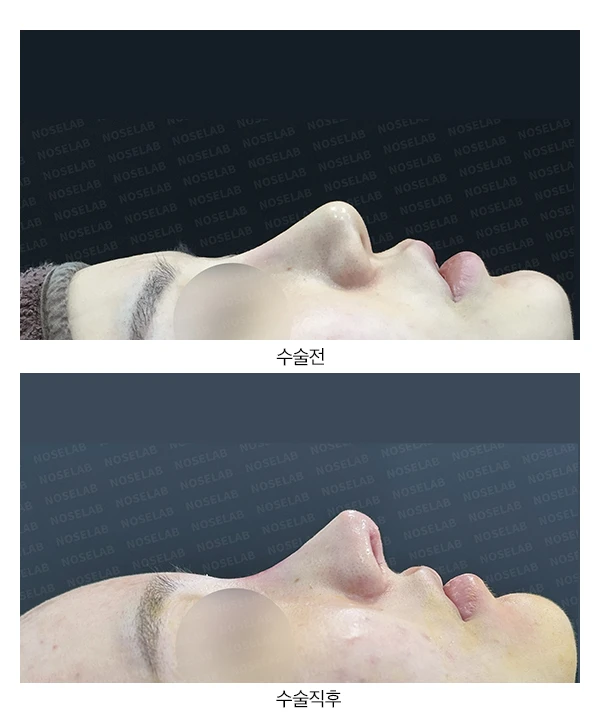
Before surgery vs. immediately after surgery
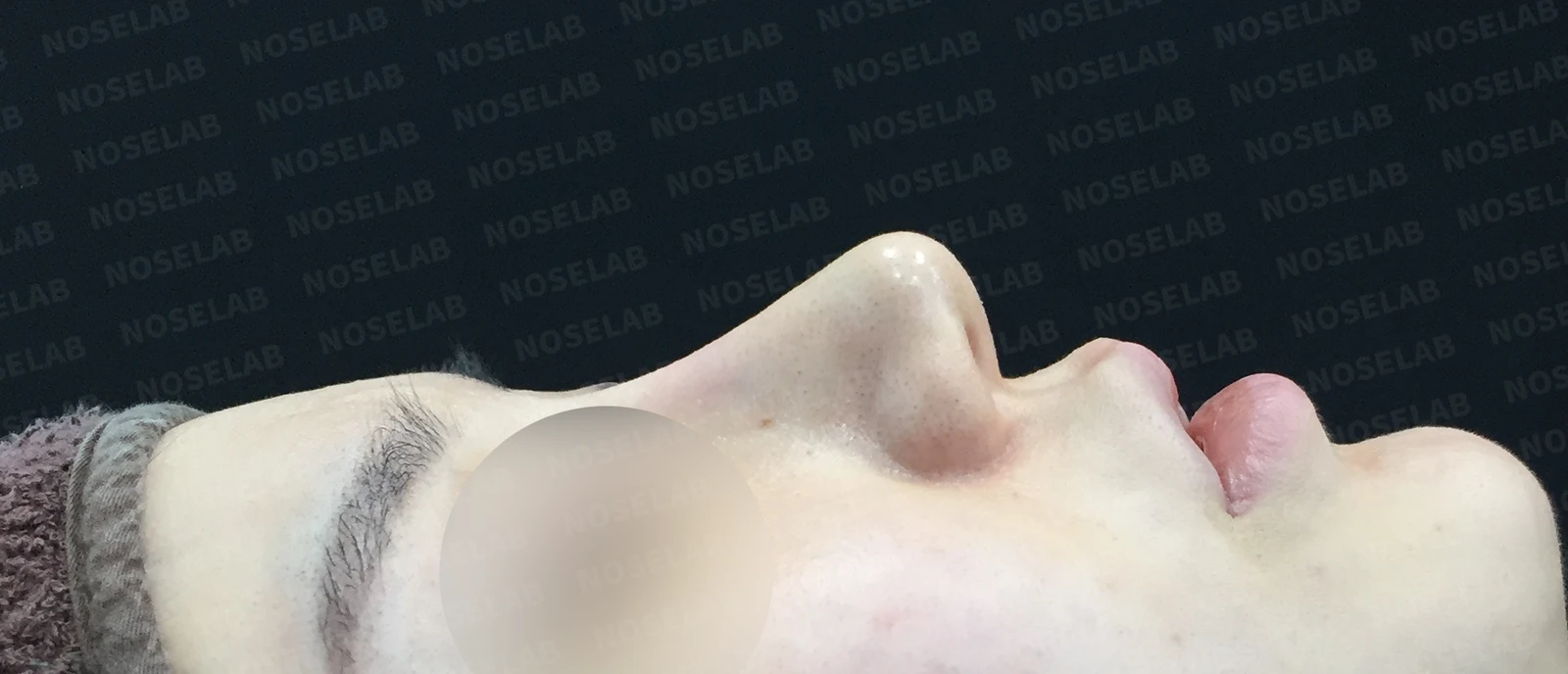
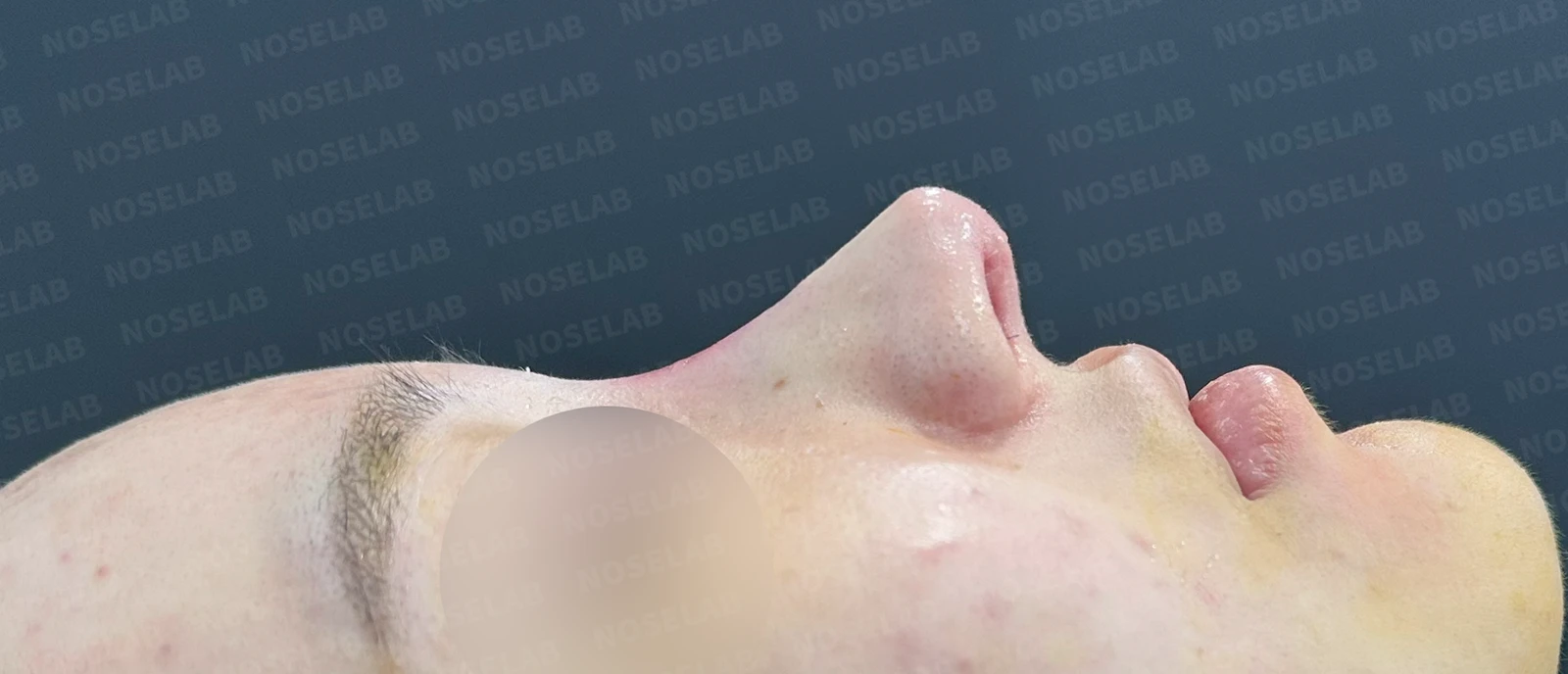
Before surgery / Day 0 immediately after surgery Photos taken immediately after surgery show swelling and may differ from the final result.
Compared to before surgery, the radix was lowered nicely, the tip defining point was shifted slightly higher, and the columellar line became more natural.
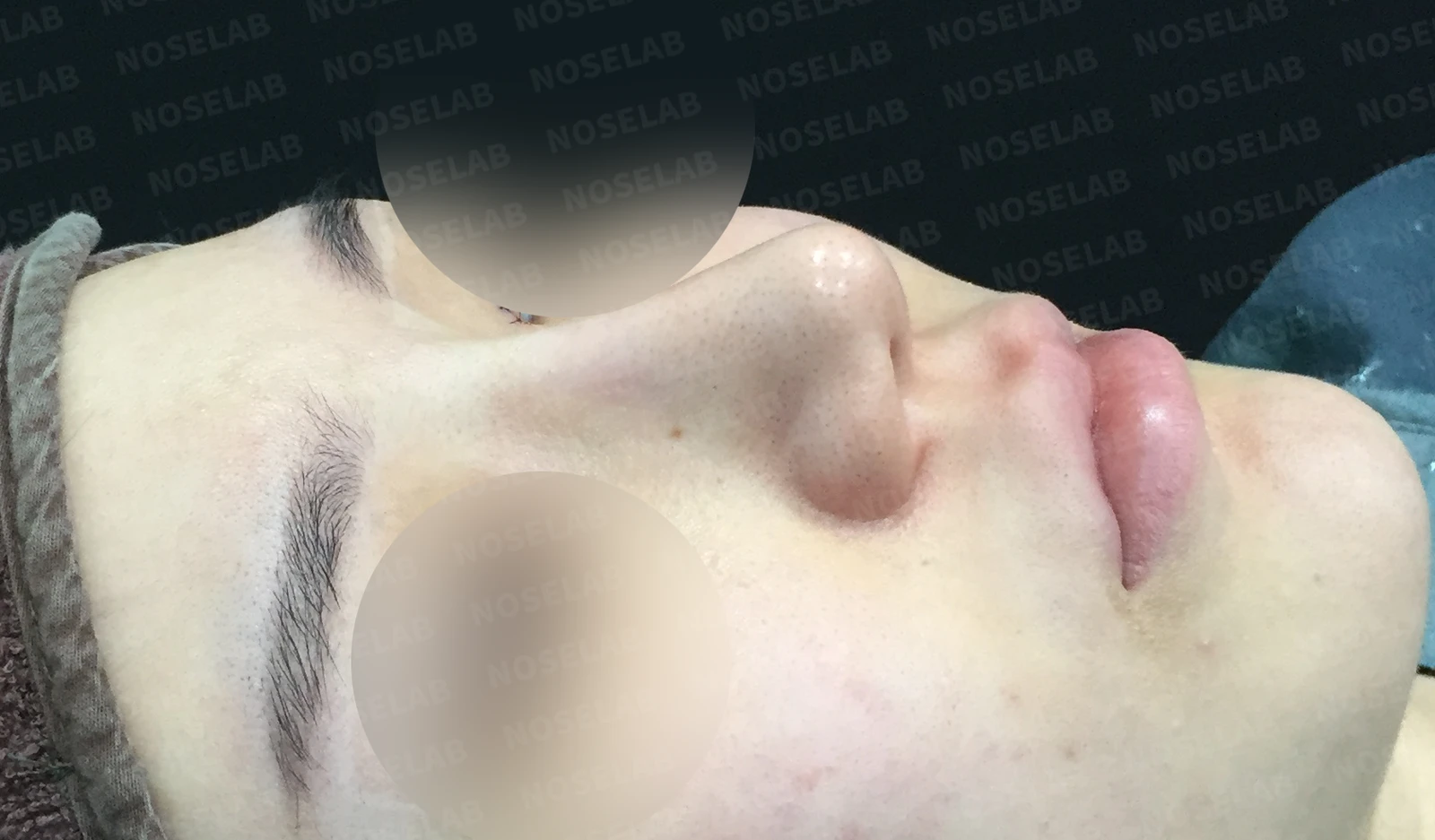
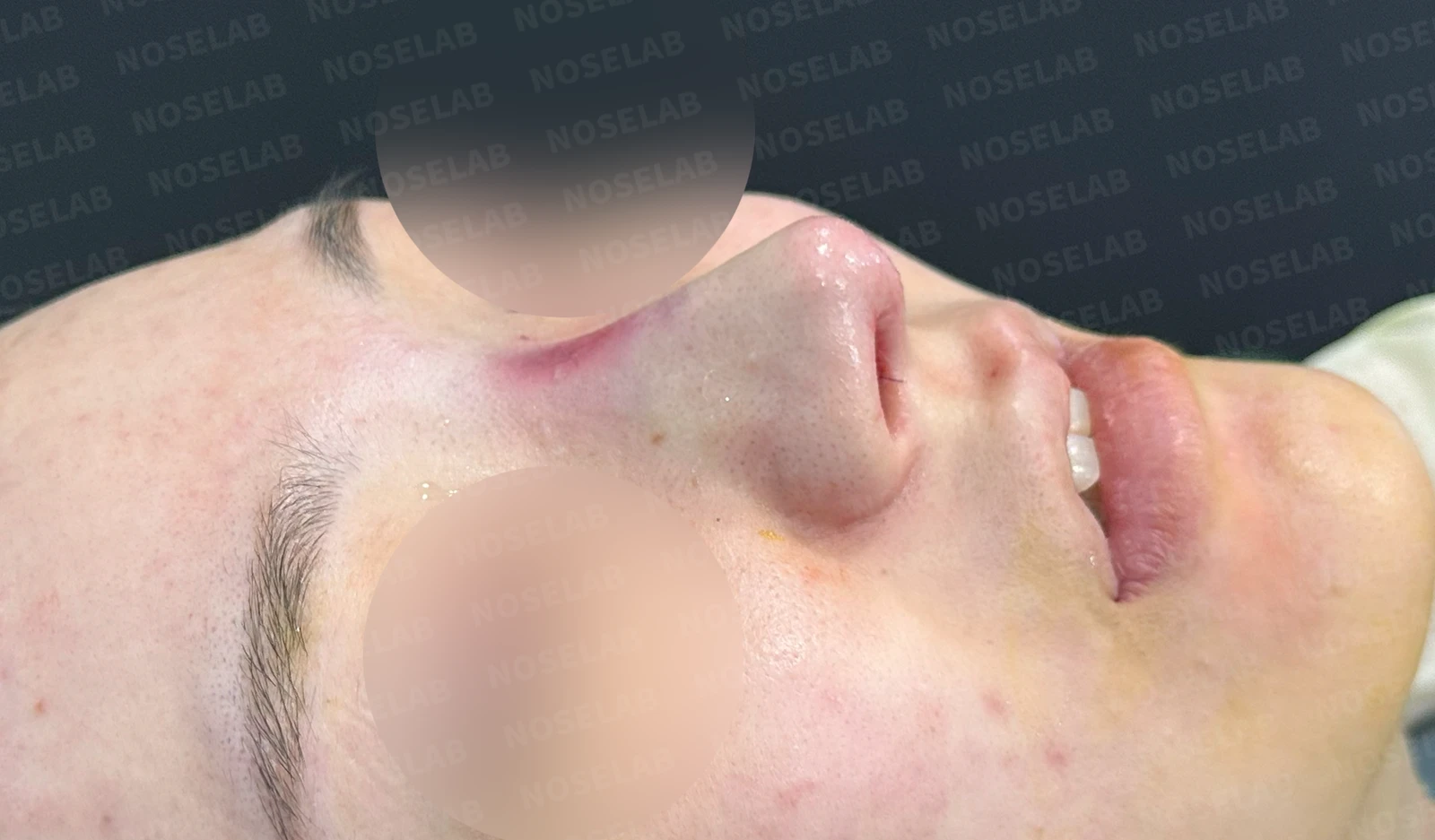
Before surgery / Day 0 immediately after surgery Photos taken immediately after surgery show swelling and may differ from the final result.
The radix was clearly lowered, and the nasal tip became more natural.
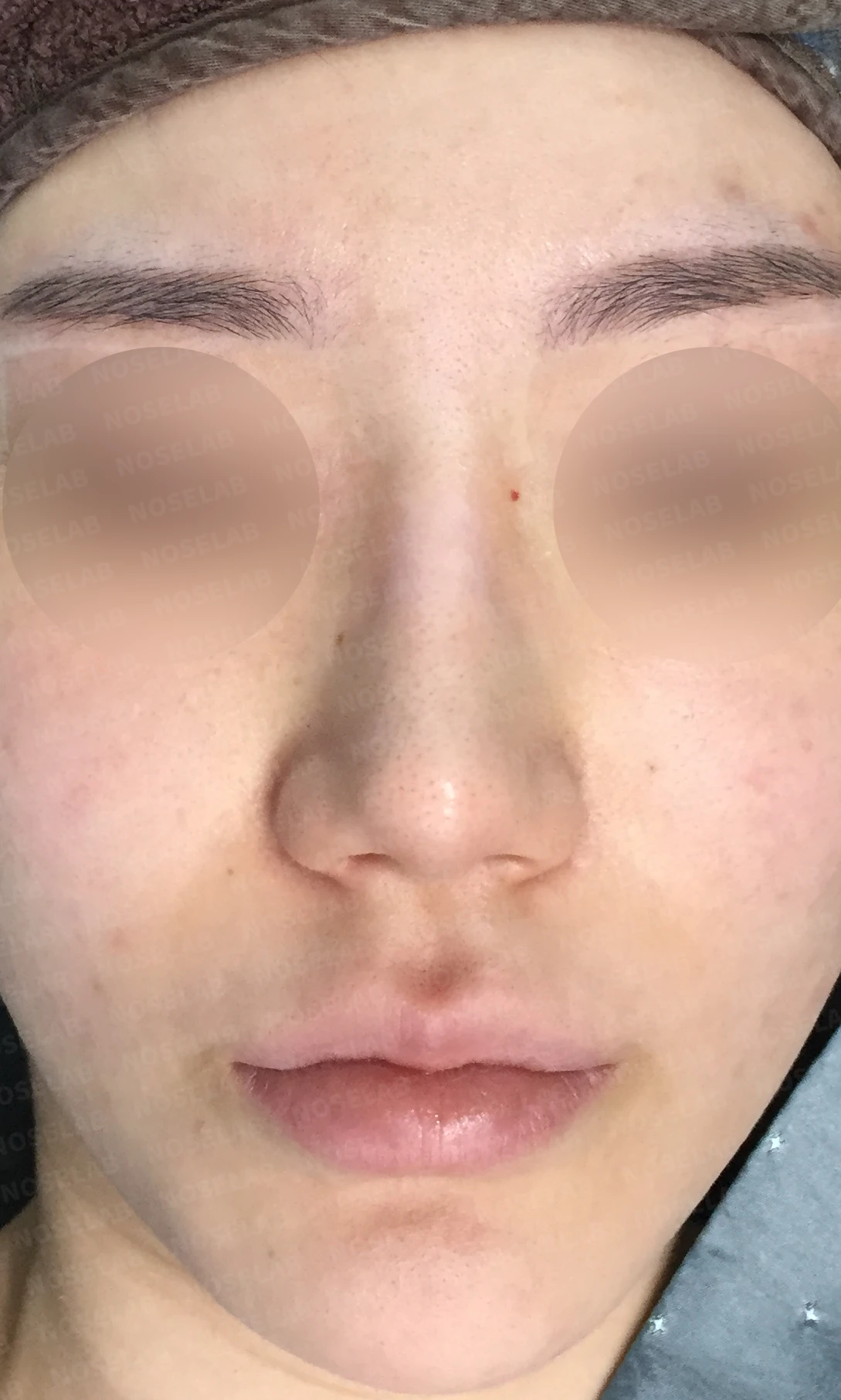
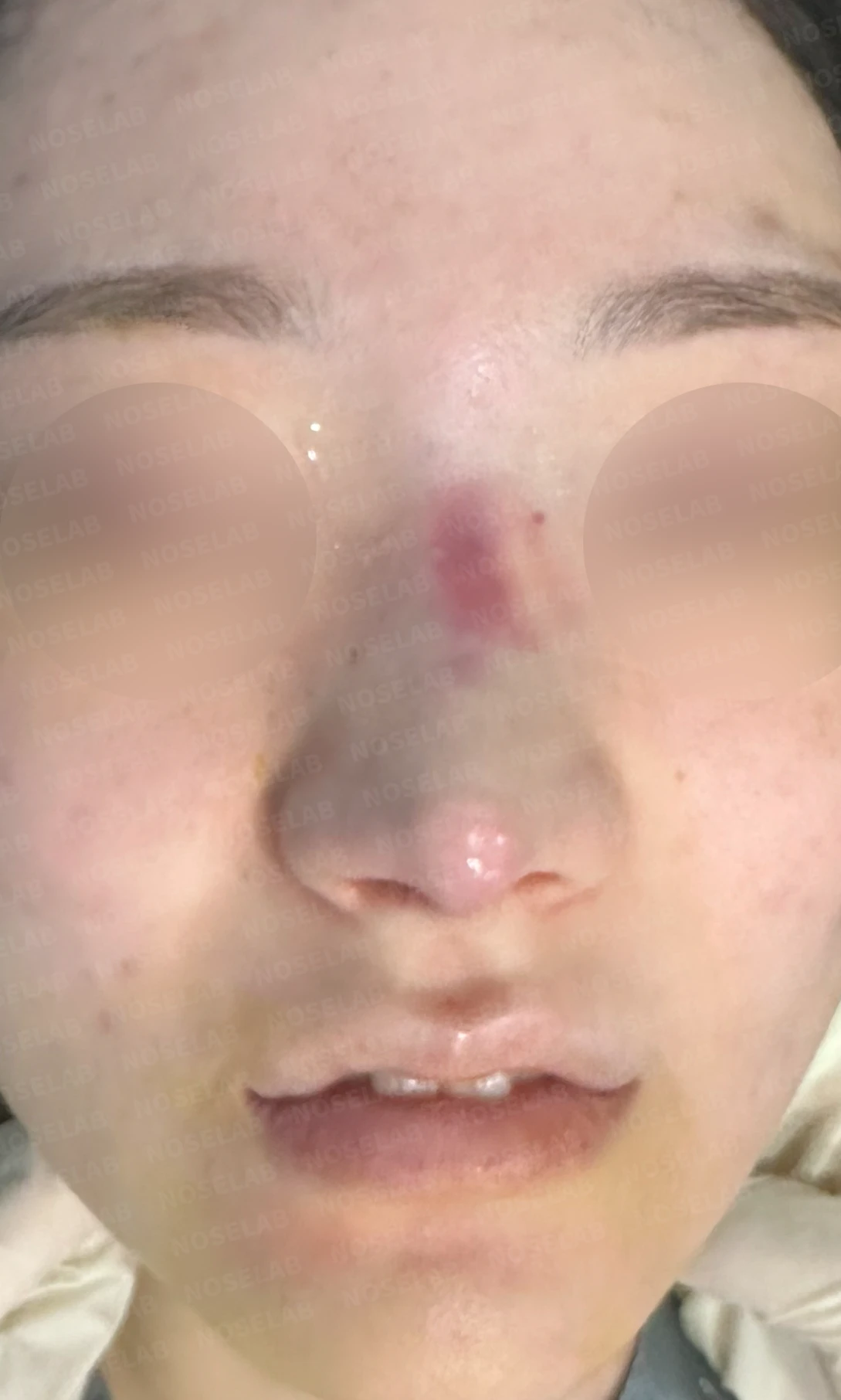
Before surgery / Day 0 immediately after surgery Photos taken immediately after surgery show swelling and may differ from the final result.
The crooked nose was corrected, and you can see that the nasal tip and columella are positioned more naturally downward compared to before surgery.
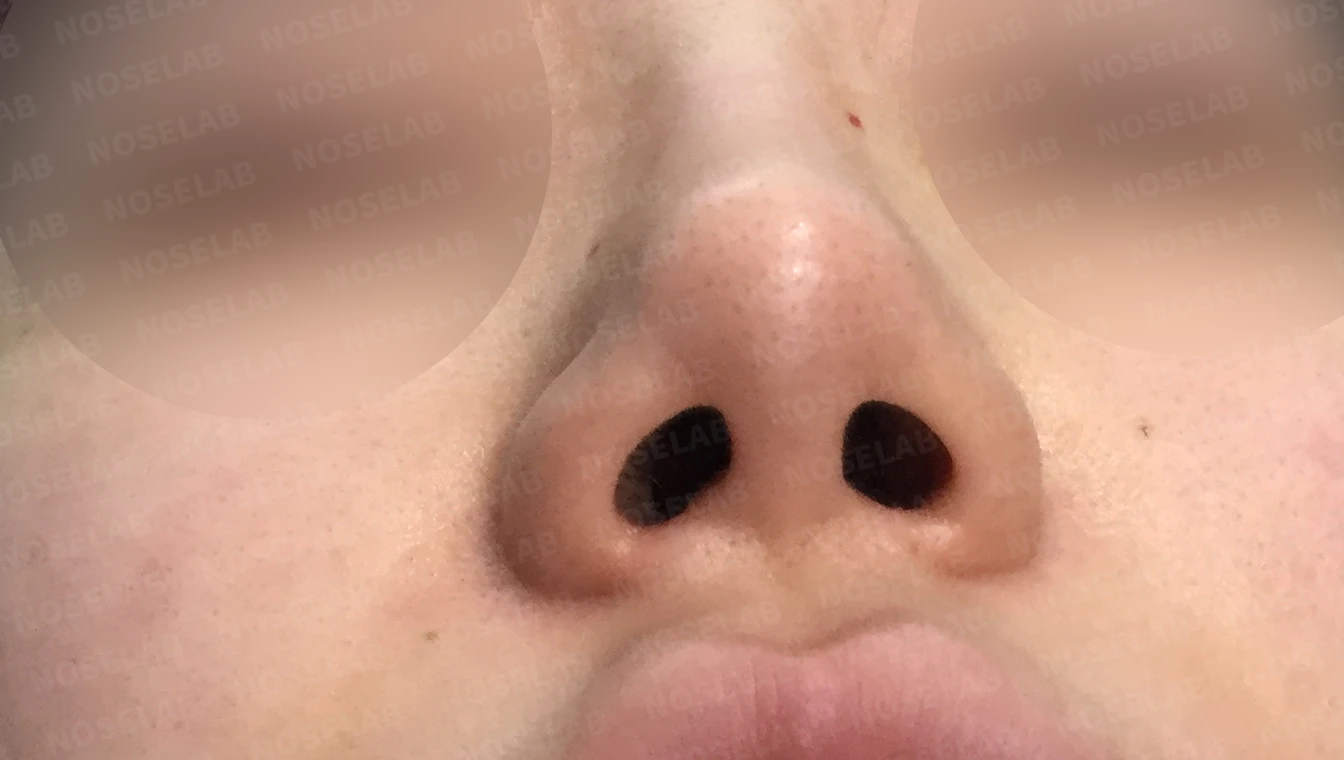
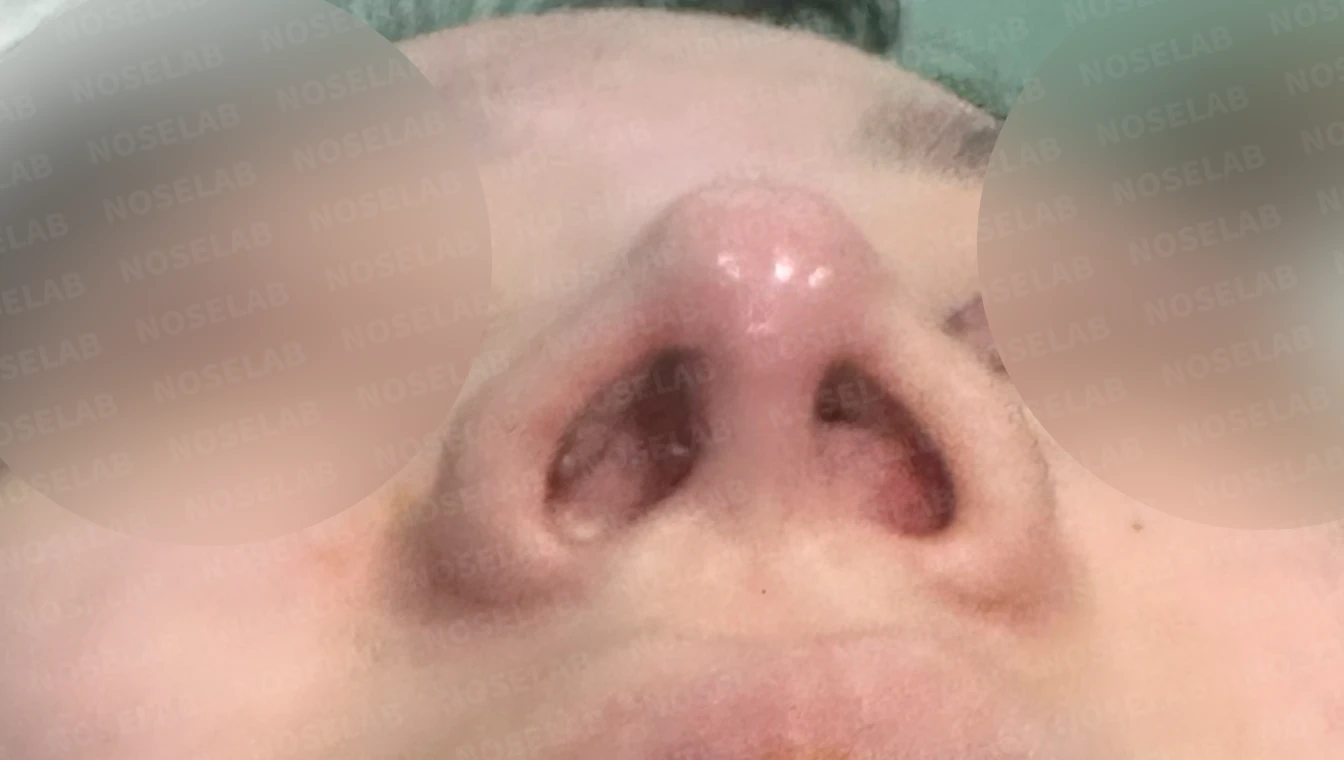
Before surgery / Day 0 immediately after surgery Photos taken immediately after surgery show swelling and may differ from the final result.
You can see improvement in the nostril asymmetry and the pinched area on the right alar wing.
Photos immediately after surgery
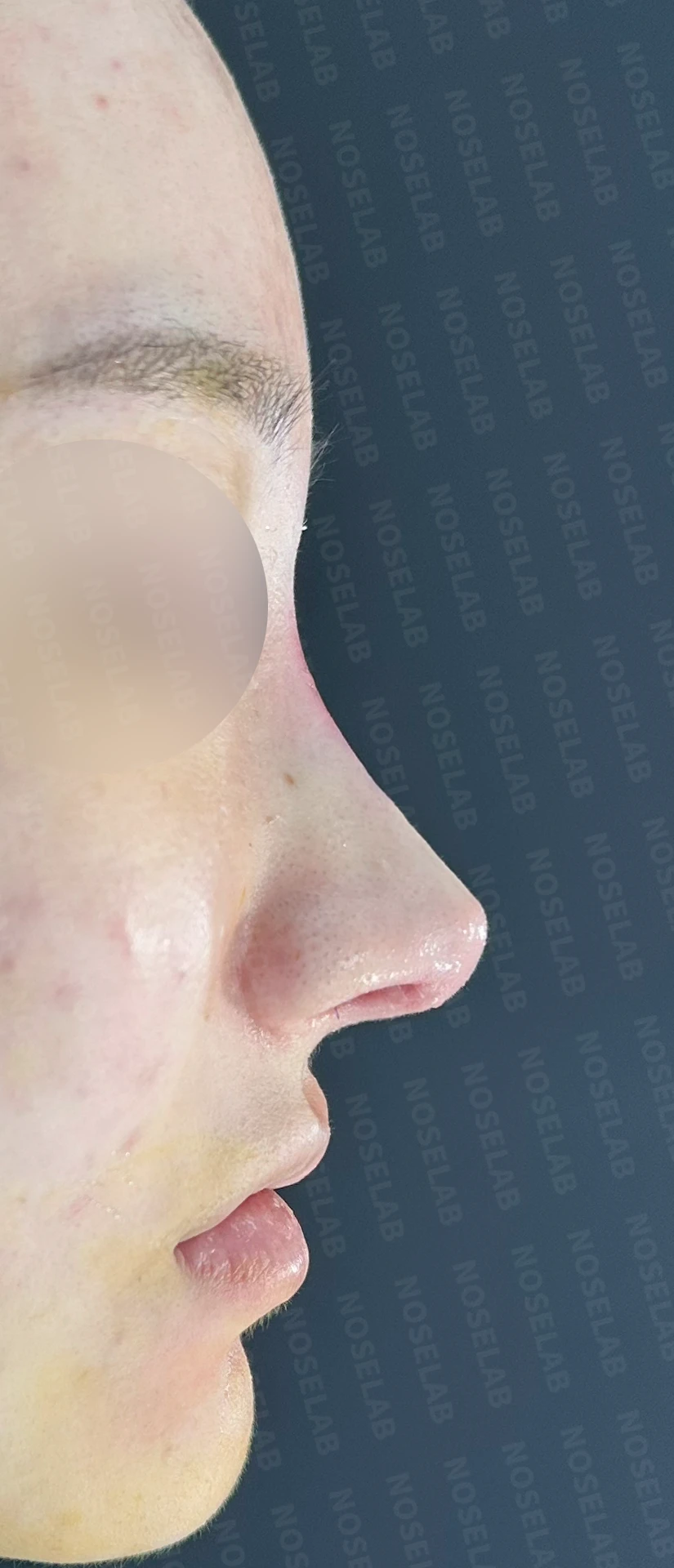
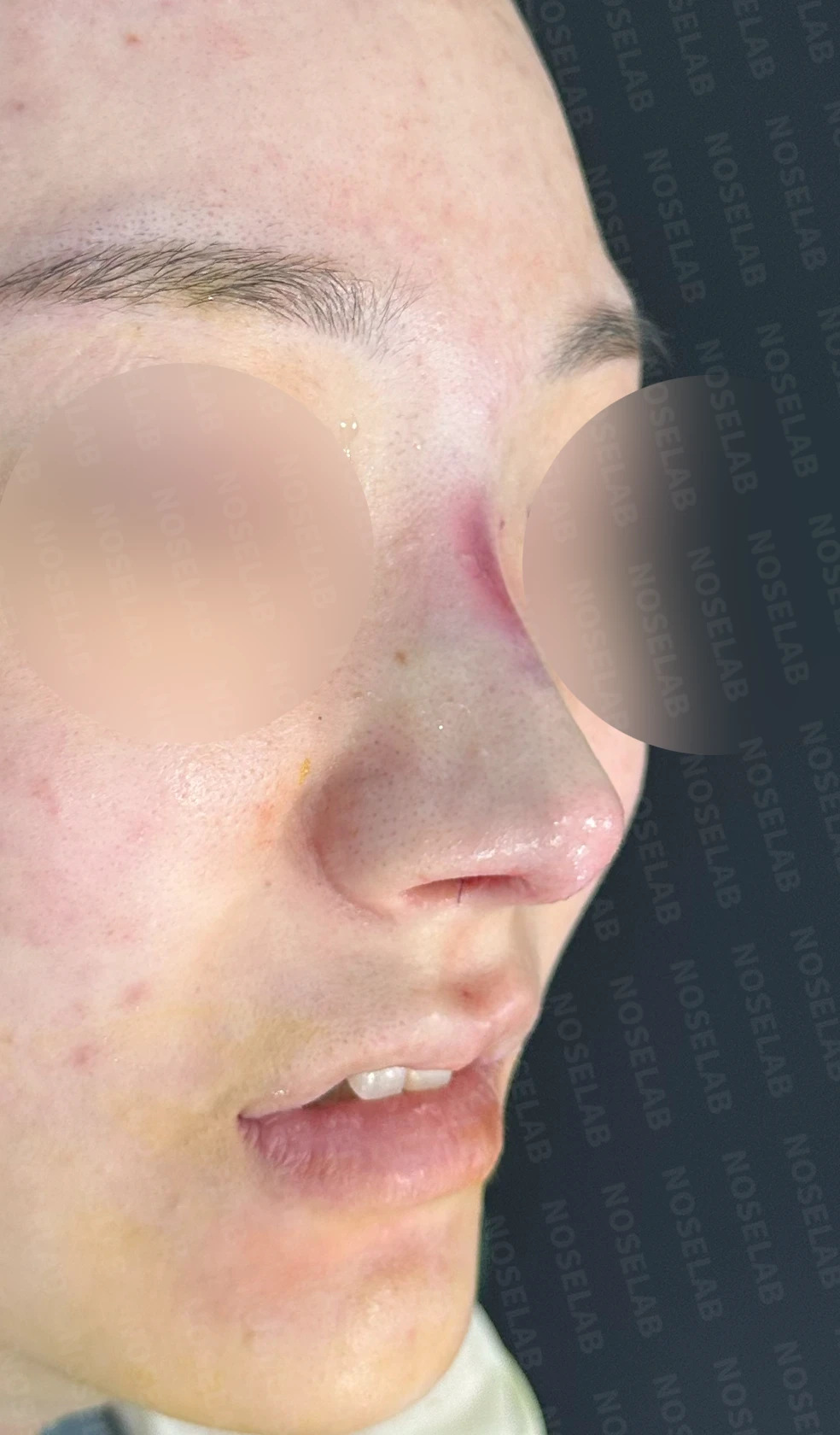
Immediately after surgery (Day 0): 90-degree profile, 45-degree oblique, and front viewImmediate postoperative photos show swelling and may differ from the final result.
Basal (nostril) view immediately after surgery (Day 0)Immediate postoperative photos show swelling and may differ from the final result.
My thoughts on radix lowering and columellar lowering
Lowering the radix plays an important role in controlling the overall length of the nose, and it can also bring about a change in the impression around the eyes. While a high radix has the advantage of making the dorsal line appear distinct, it also has the disadvantage of making the eyes look crowded together or giving a harsh impression.
Lowering the columella is a critical procedure that defines the refinement of the nasal tip. A very subtle difference changes the feel of the nasal tip and can alter the nasolabial angle, which can also help improve the appearance of a protruding mouth.
Today, I shared a brief overview of procedures for lowering the radix and lowering the columella.
This was Dr. Peter C. Kang. Thank you.

Limitations and risks
When revising after implant removal, contracture may progress again after removal, the nasal height and length may decrease, and staged surgery may be necessary depending on the skin condition.
Common potential risks include infection, bleeding, asymmetry, scarring, skin necrosis, and insufficient improvement; results vary depending on individual skin condition and previous surgical history.