Hello, I am Dr. Peter C. Kang.
Today, I would like to introduce the case of a patient who underwent revision rhinoplasty because their bulbous nose did not improve after previous surgeries.
📍 Surgical history
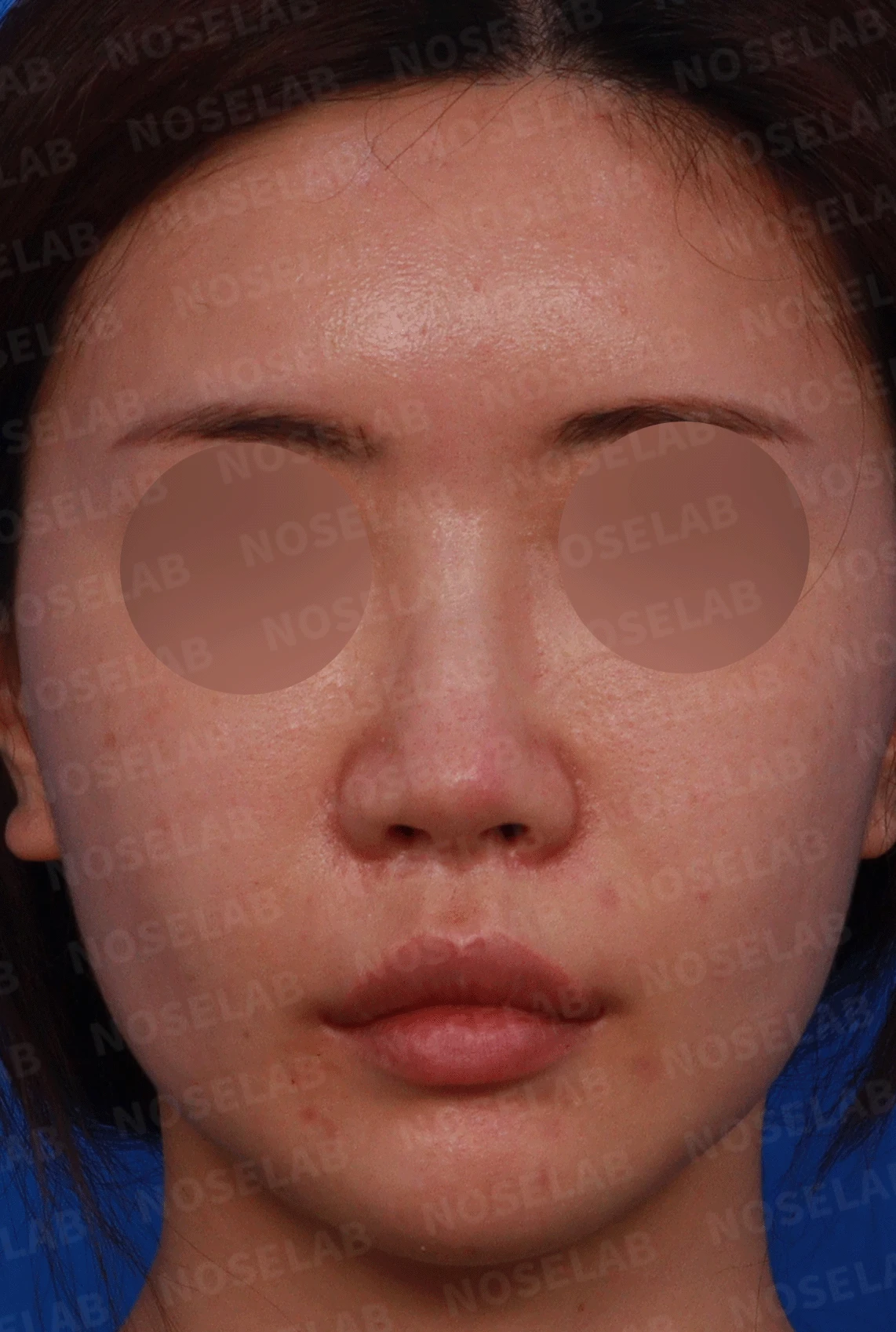
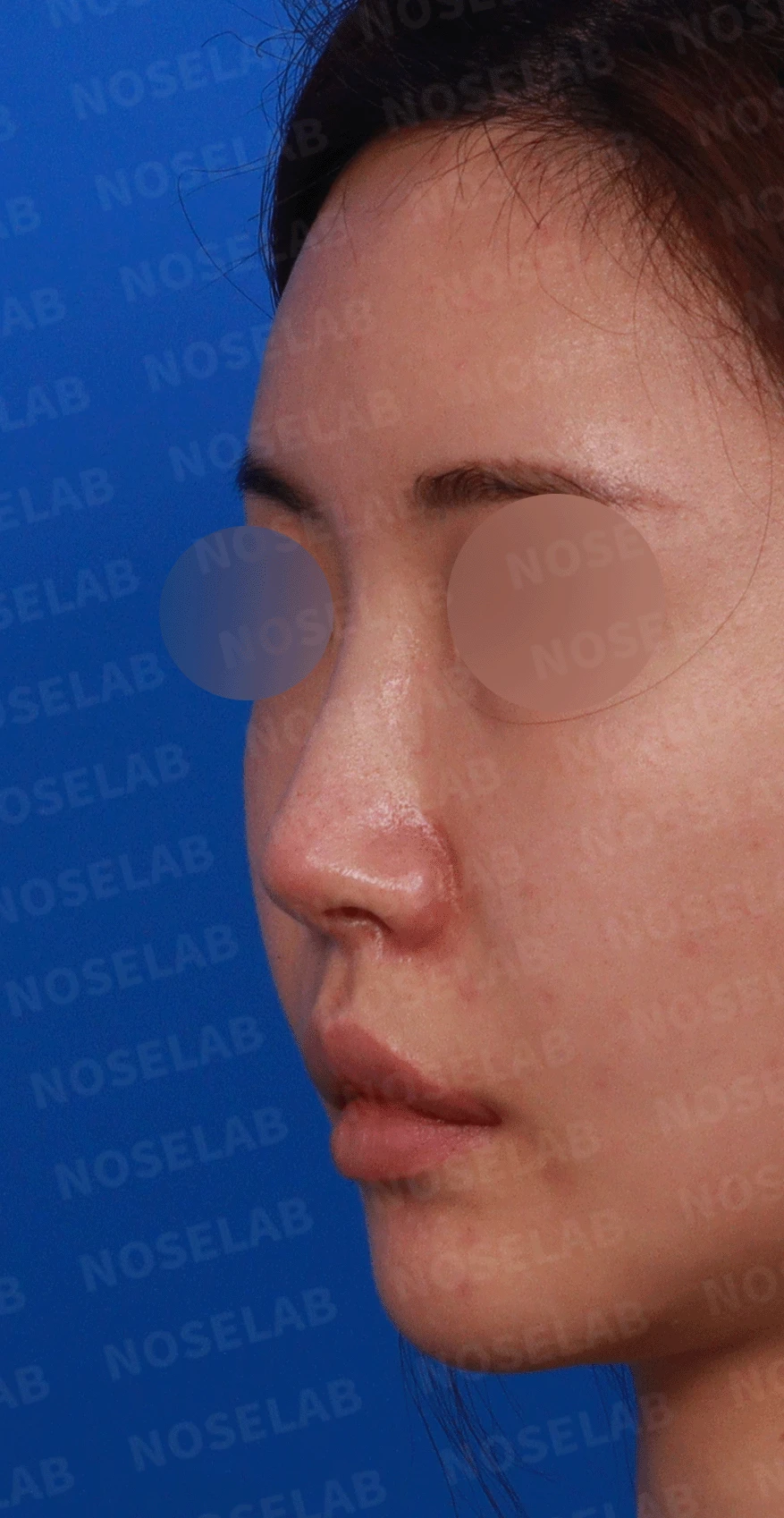
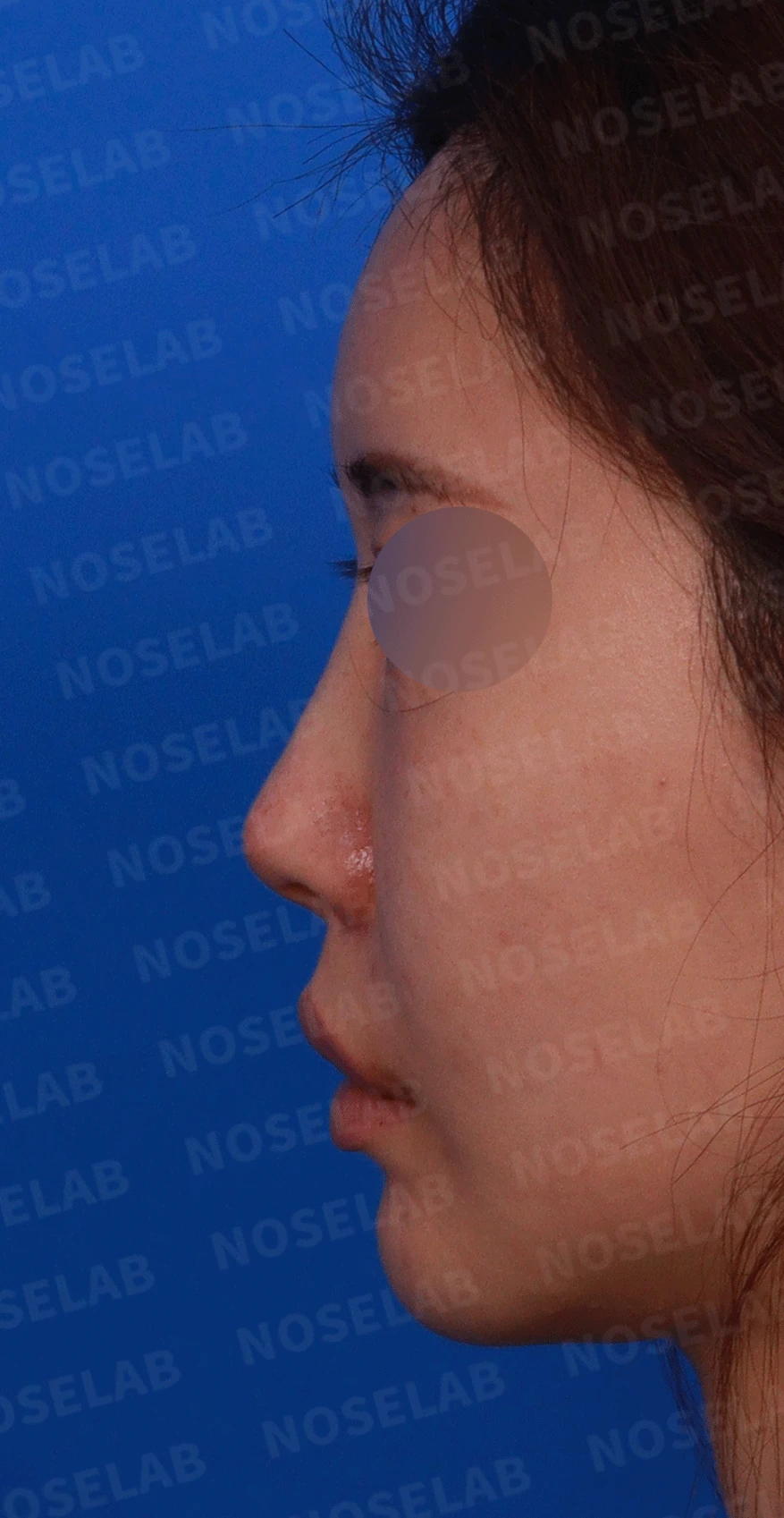
Design consultation: front, left oblique, and profile views.
7 years ago
Silicone implant + septal cartilage
4 years ago
Ear cartilage + silicone implant removal (changed to implant-free)
2 years ago
Philtrum reduction
4 years ago
2 filler treatments (dissolved only 1 time)
🔎 Initial consultation findings
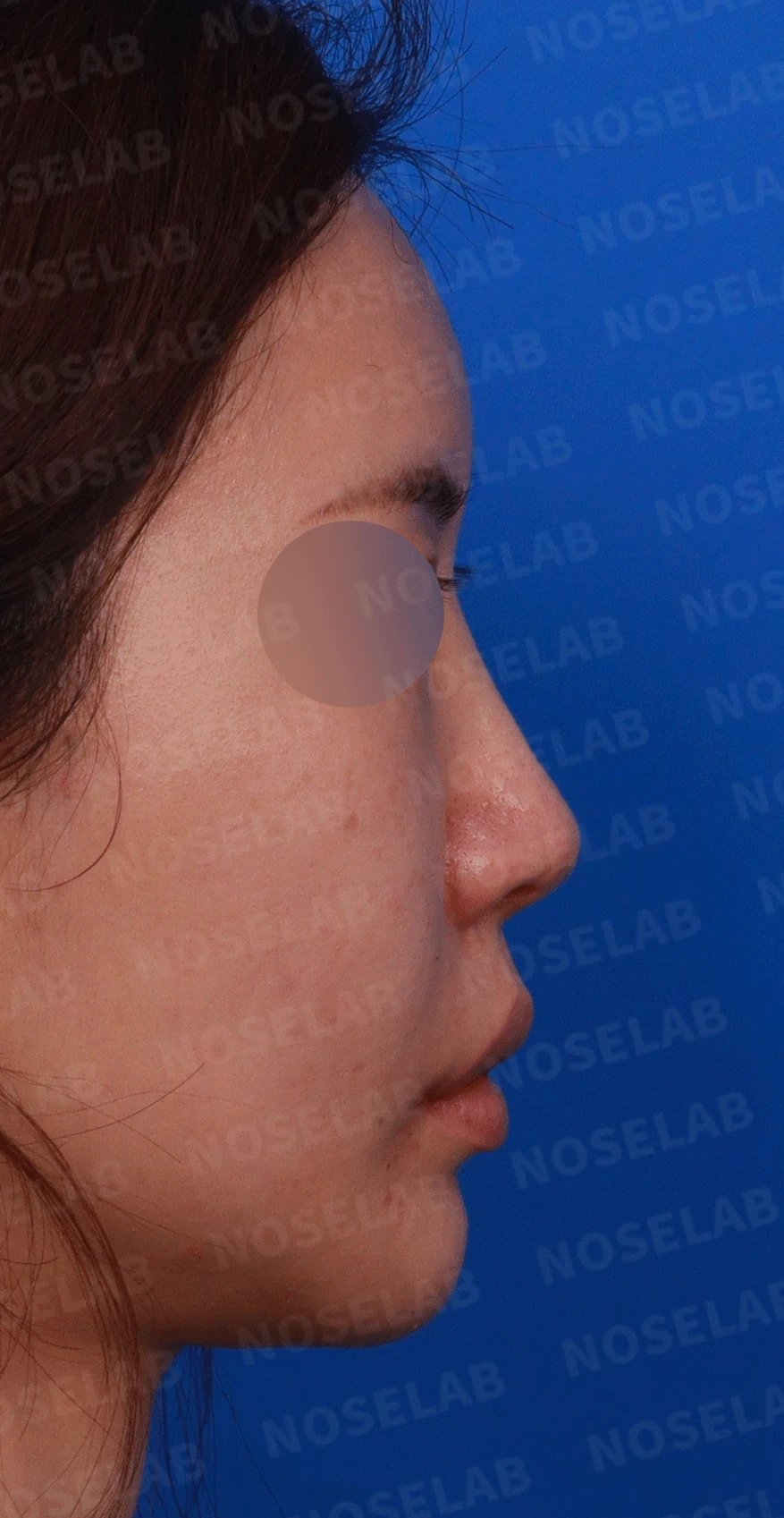
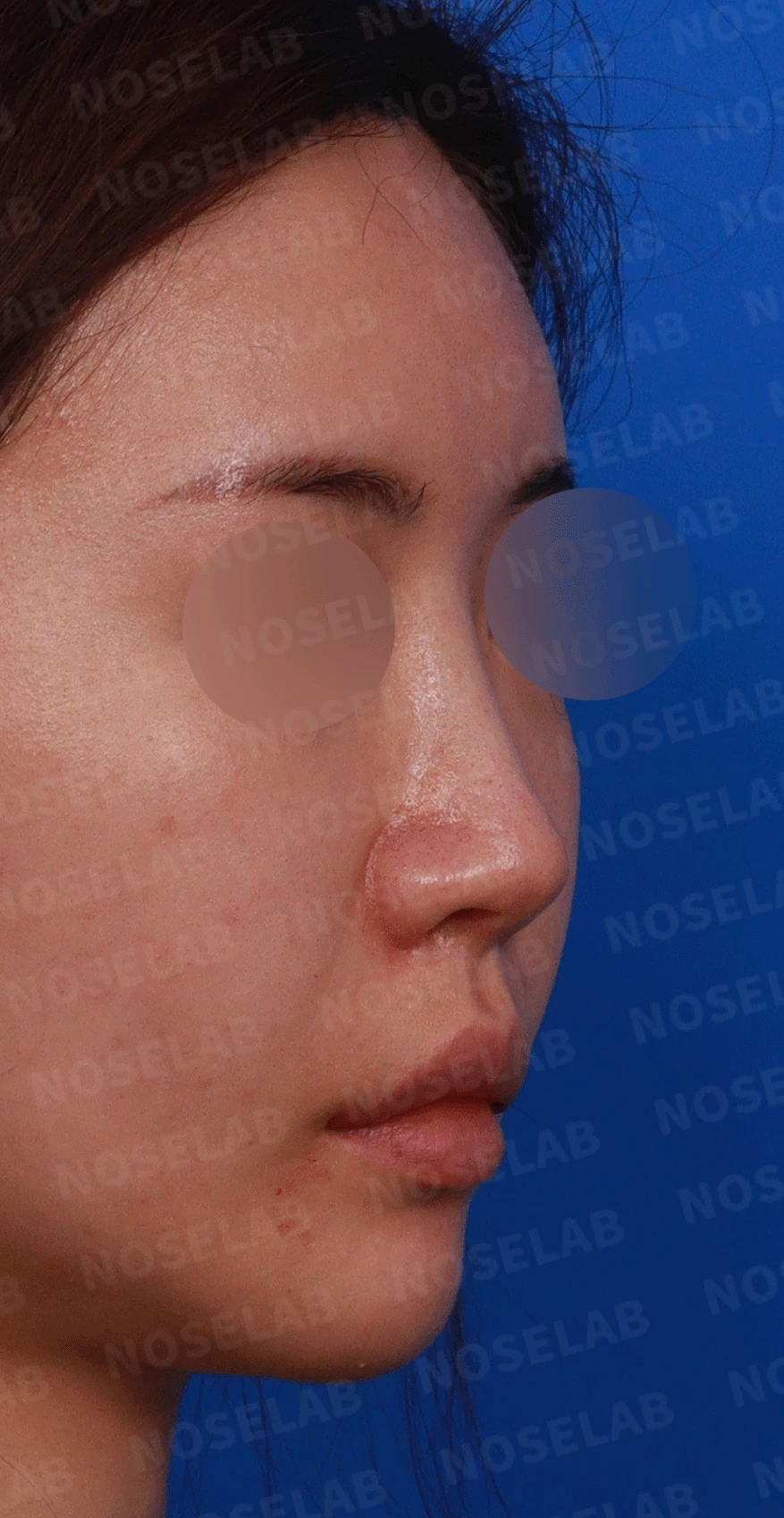
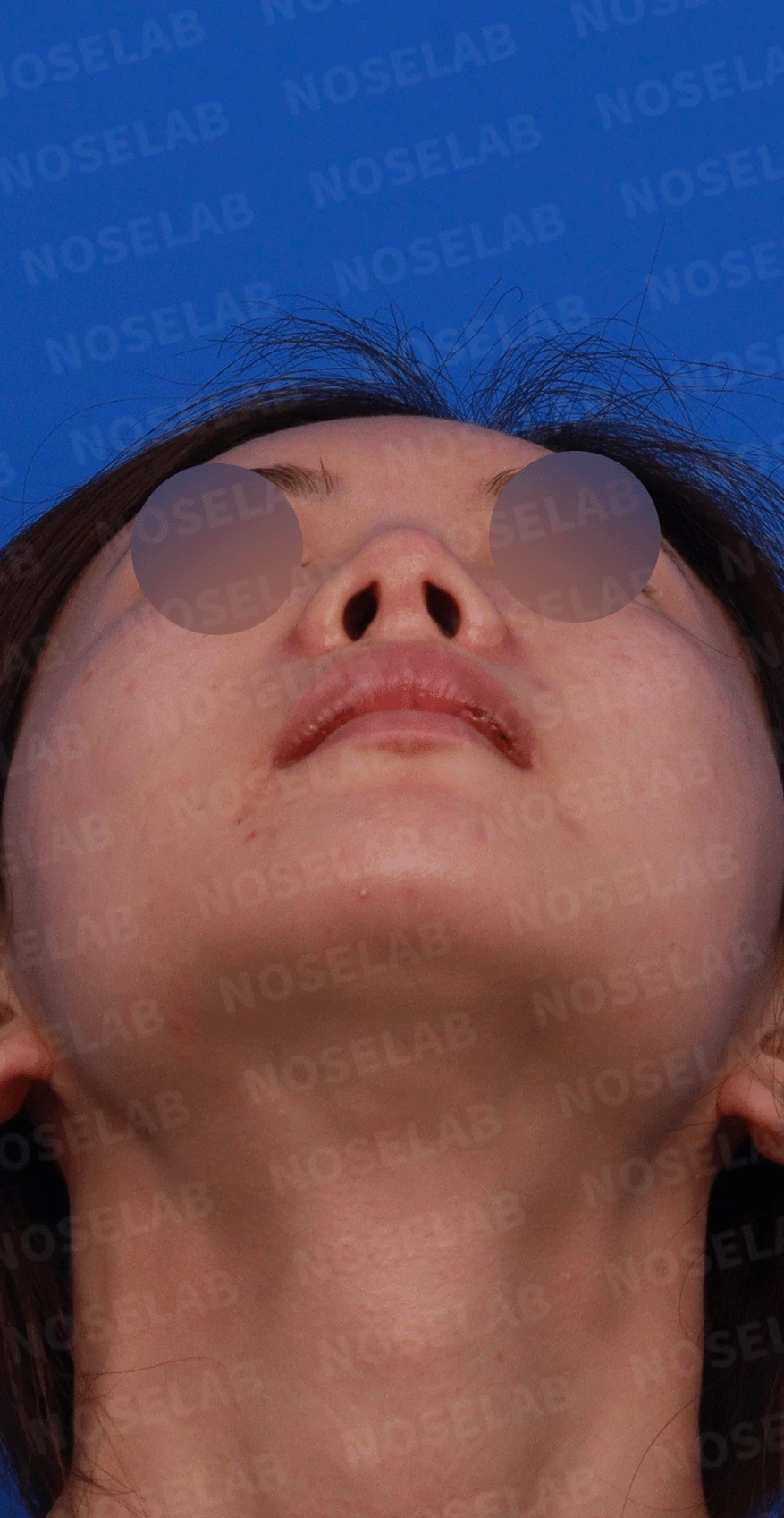
Design consultation: right profile, oblique, and nostril views.
Patient information
Medical conditions: Anemia
Allergies: Hyaluronidase
No functional discomfort
Aesthetic concerns
Bulbous nasal tip (not improved by previous surgeries)
Excessive nostril show
Retracted columella with poor visibility
Overall long-appearing nasal line
Deformity of the right alar cartilage
Protruding mouth findings
Special notes
Subtle deformity caused by residual filler
Structural complexity due to multiple prior surgeries
✨ Patient's requests
Correction of bulbous nose
Reduced nostril show
Correction of the nasolabial angle
Desire for columellar show
Preference for a shorter, refined, and projected look
Natural yet refined outcome
💉 Surgical procedure details
Complete removal of foreign material
Complete removal of residual filler
Debridement of scar tissue from previous surgeries
Septal reconstruction
Septal reconstruction using autologous rib cartilage
Stabilizing the central nasal axis
Optimized respiratory function
Alar reconstruction
Right alar cartilage reconstruction
Improvement of left-right symmetry
Restoration of natural alar contour
Structural reconstruction
Full reconstruction using autologous rib cartilage
Transforming the bulbous tip into a defined, refined tip
Creating a natural columellar appearance
Achieving the desired shorter nasal length
Improvement in shape
Minimizing nostril show
Improvement of protruding mouth through nasolabial angle correction
Adjusting the overall length of the nasal line
A contour harmonious with the patient's face
Functional improvement
Optimizing respiratory function via septoplasty
Improving the internal airway environment via inferior turbinate surgery
Individualized considerations
Considering the patient's nasal tip skin characteristics
Preventing an overly sharp tip from excessive projection
Achieving the desired design while maintaining a natural appearance
Surgical history
Functional improvement
Optimized respiratory function through septal reconstruction
Stabilization of internal structures
Securing long-term respiratory function
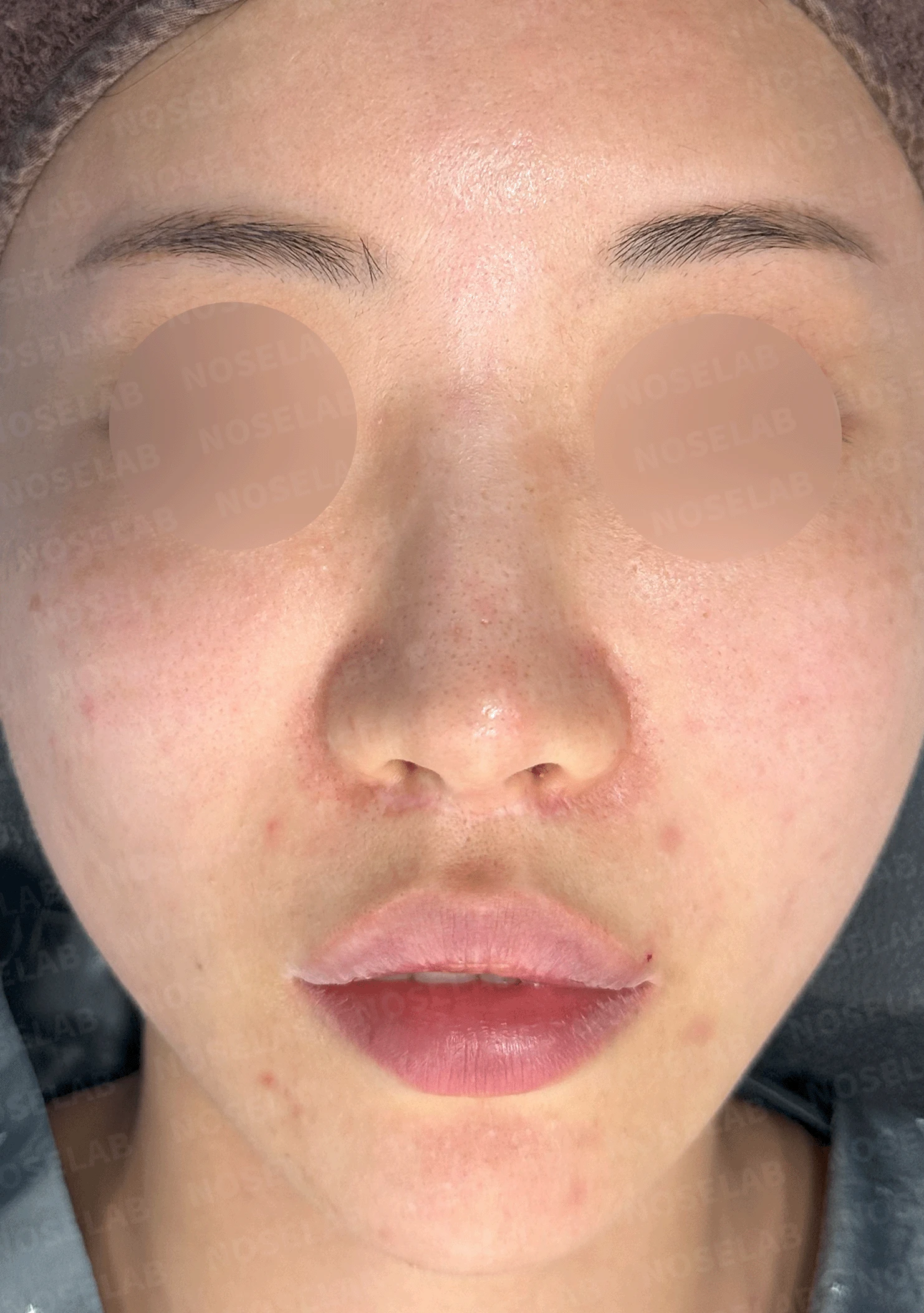
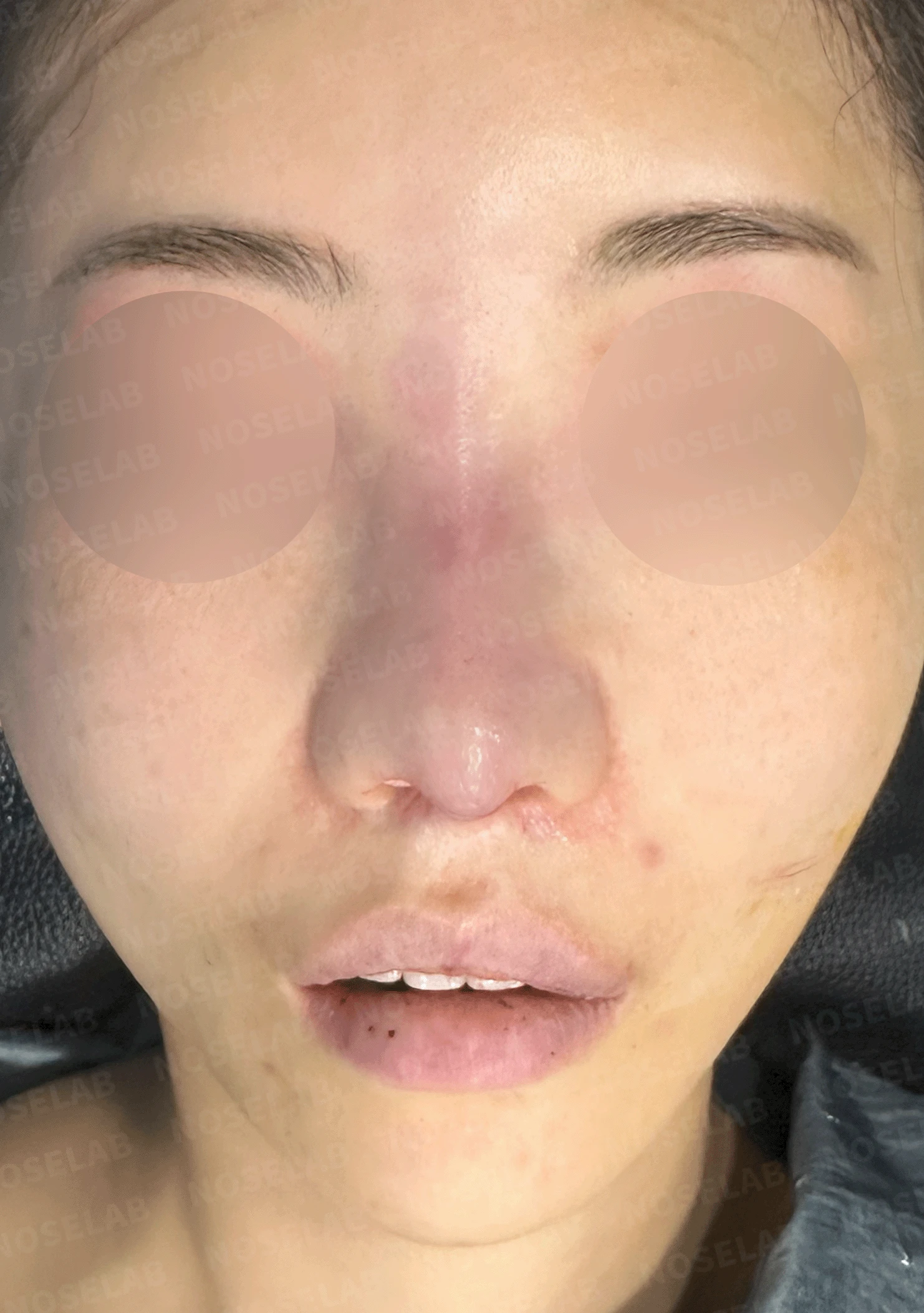
Before surgery / Day 0 immediately after surgery Photos taken immediately after surgery show swelling and may differ from the final result.
Front view
Improvement of the bulbous tip
Improved bilateral balance through right alar reconstruction
Appropriate nostril show
Balanced overall facial proportions
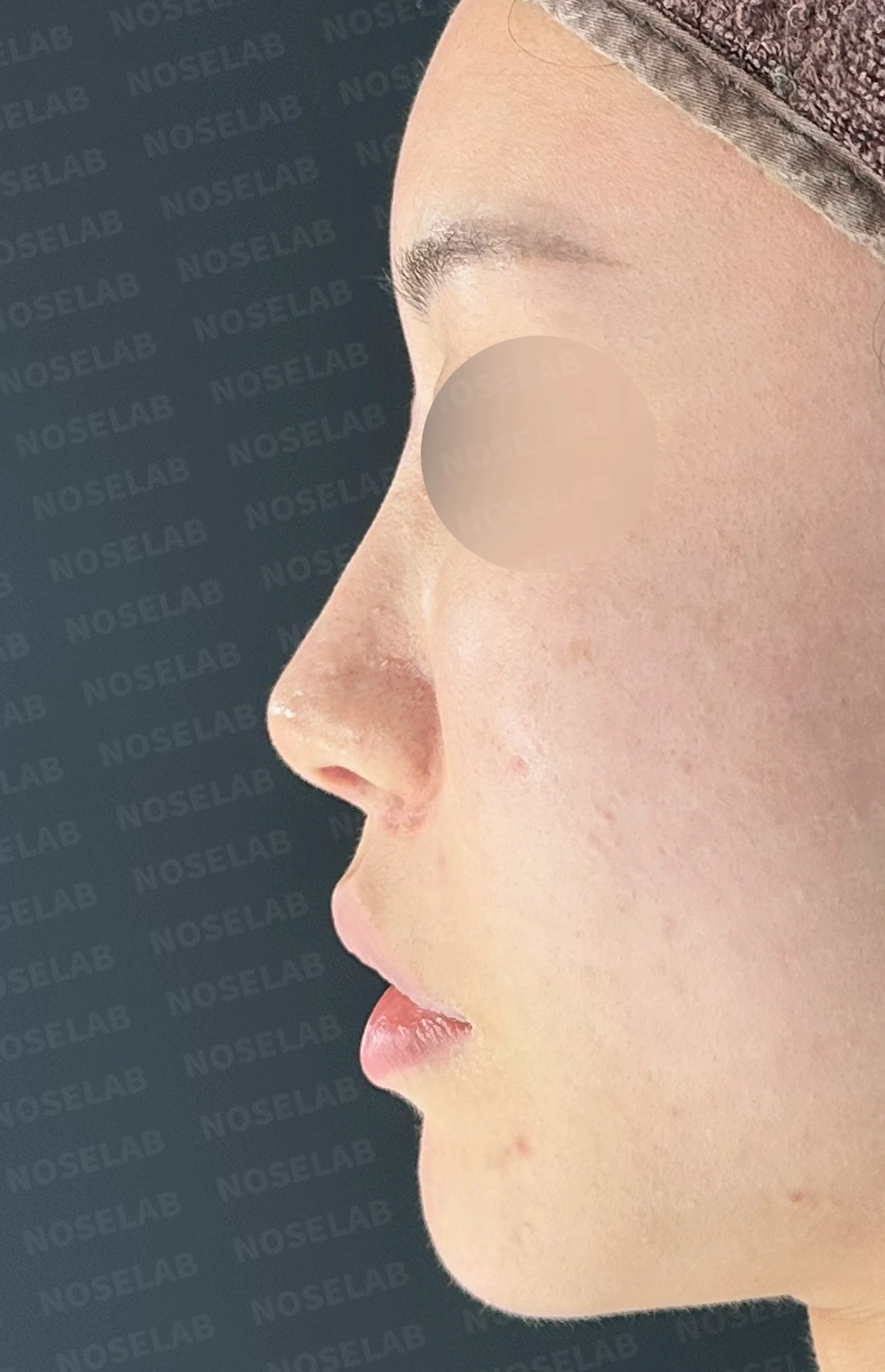
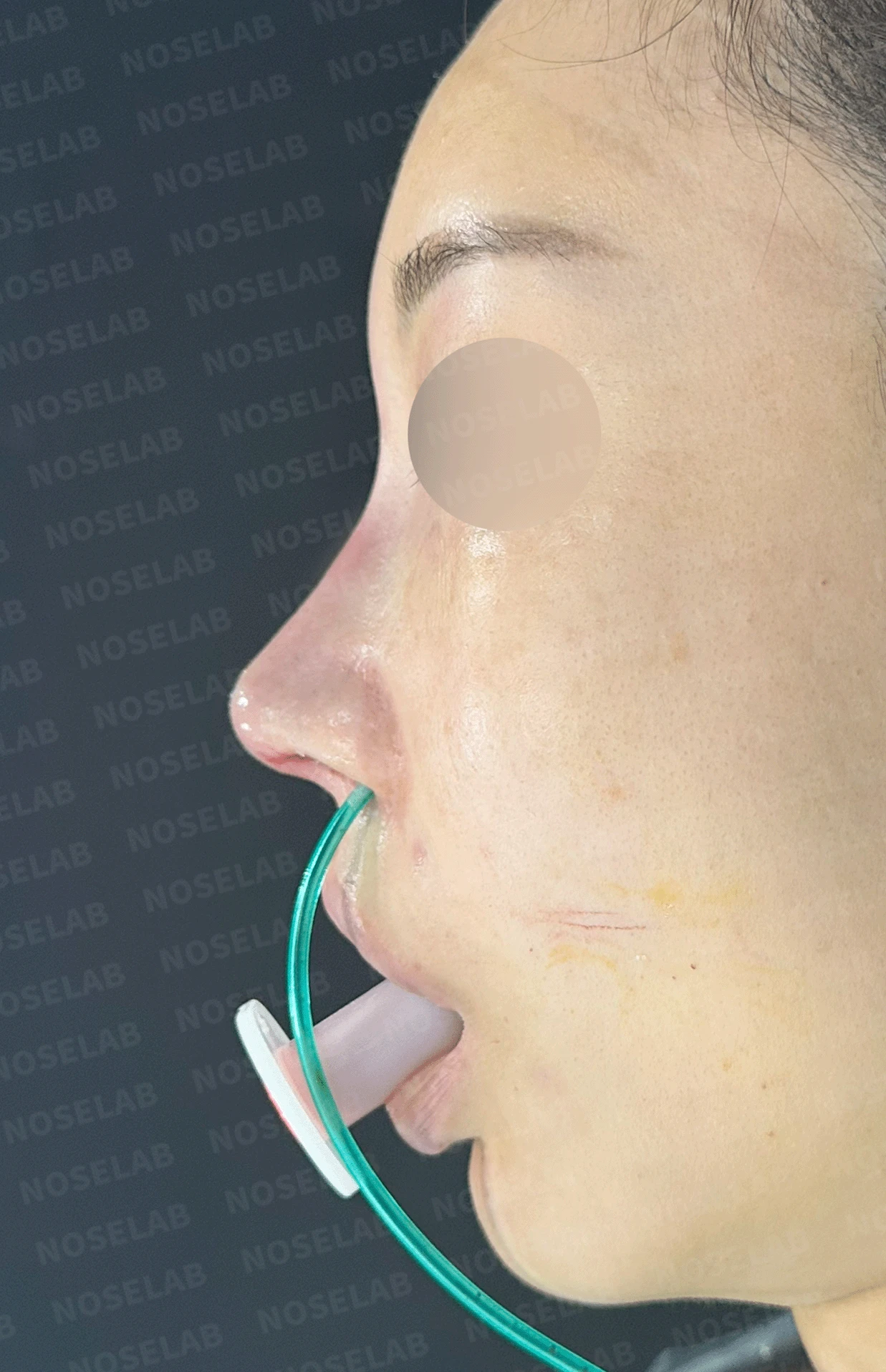
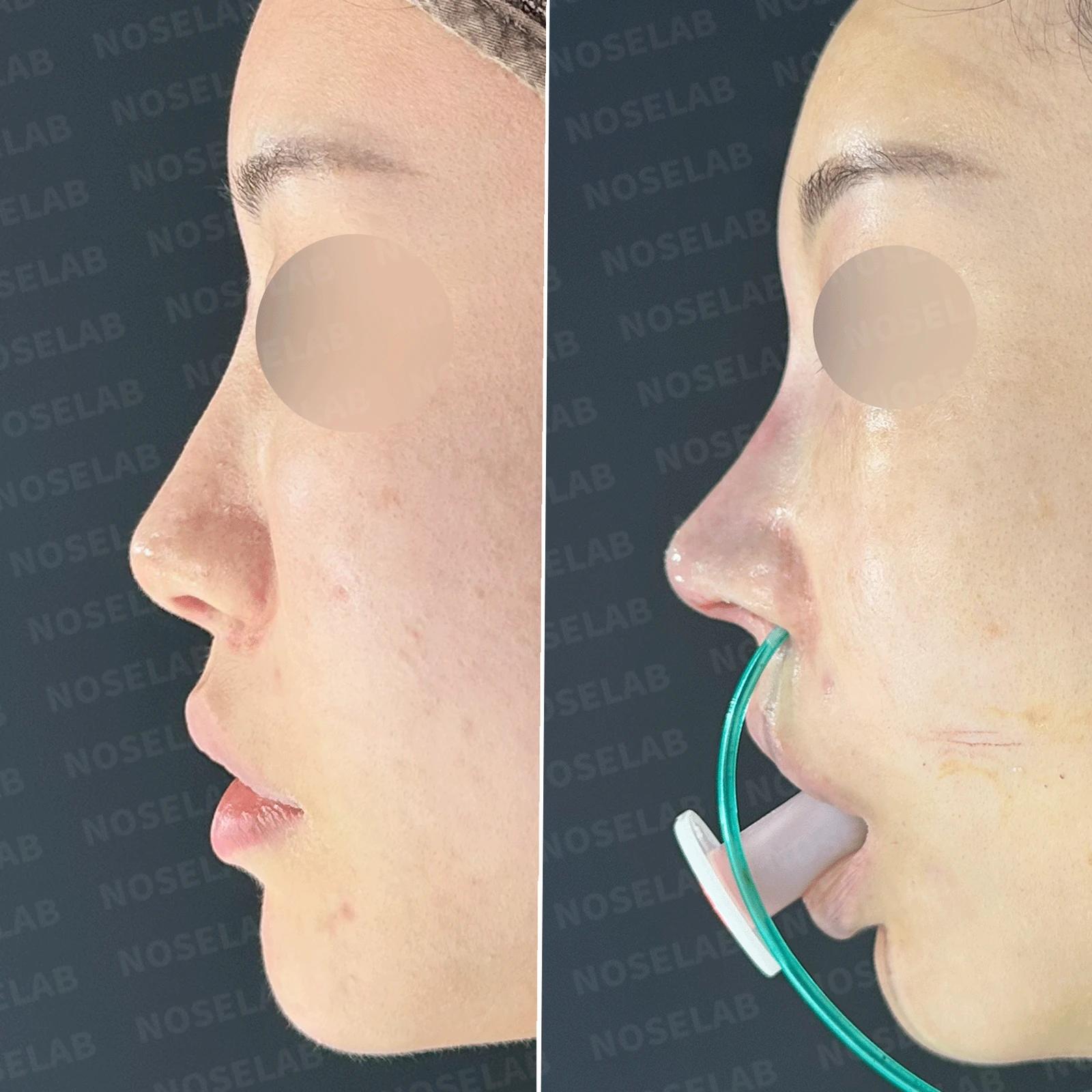
Before surgery / Day 0 immediately after surgery Photos taken immediately after surgery show swelling and may differ from the final result.
Profile view
Natural-appearing columella
Improved nasolabial angle
Softened appearance of a protruding mouth
Shorter, refined nasal line
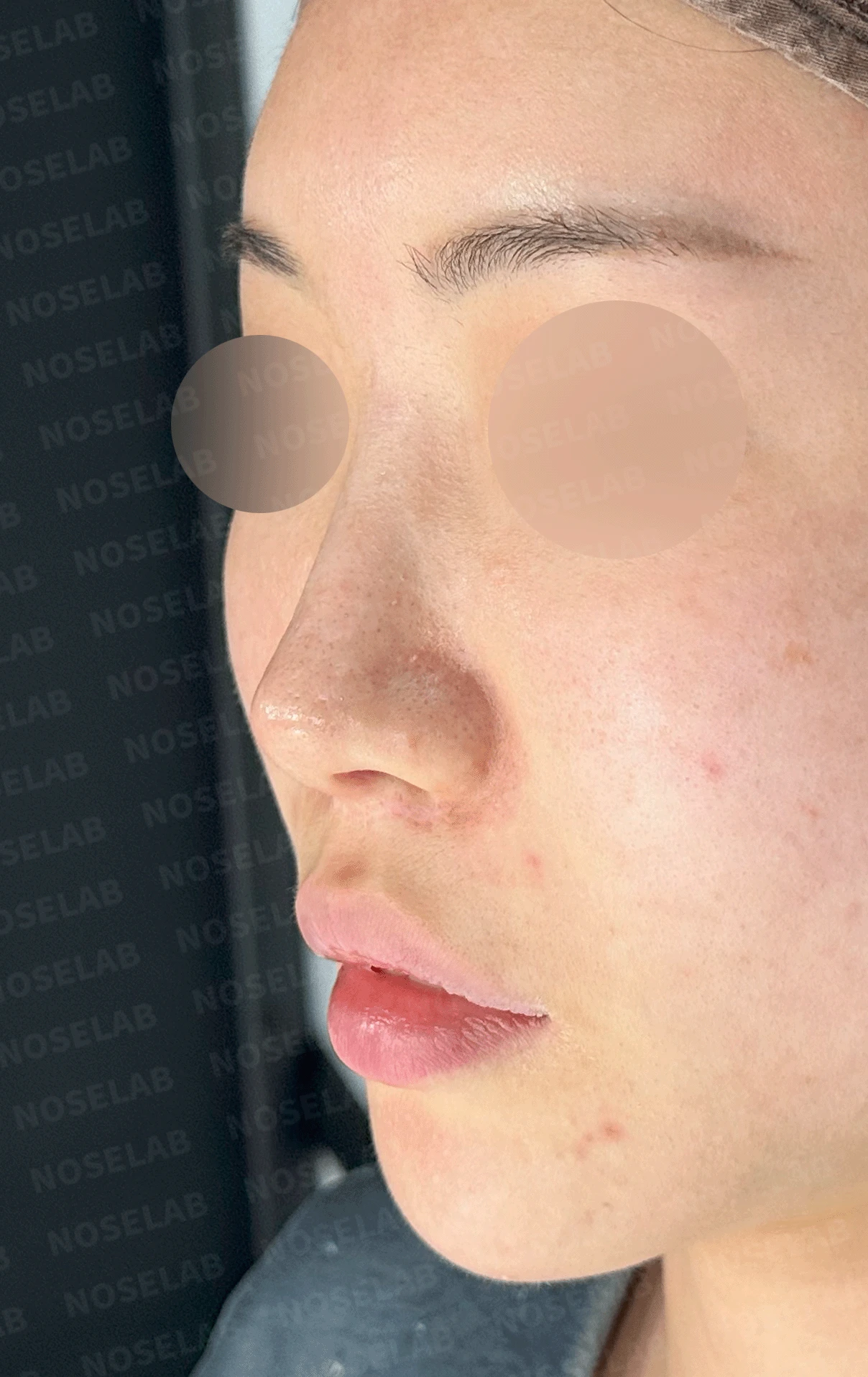
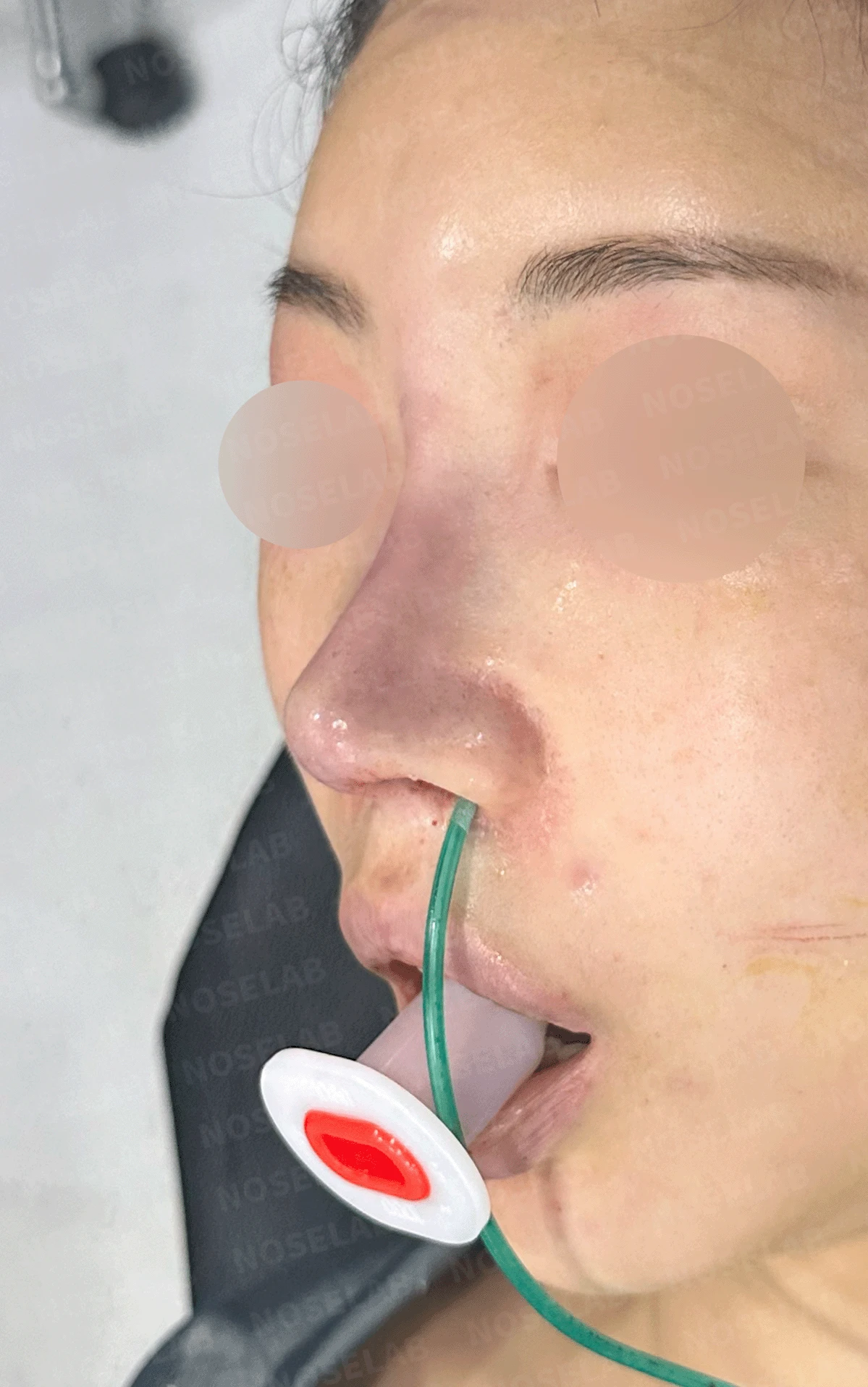
Before surgery / Day 0 immediately after surgery Photos taken immediately after surgery show swelling and may differ from the final result.
Overall changes
Complete resolution of previously persistent bulbous shape
Realization of the projected tip contour desired by the patient
Natural yet refined overall impression
Favorable outcome tailored to individual facial characteristics
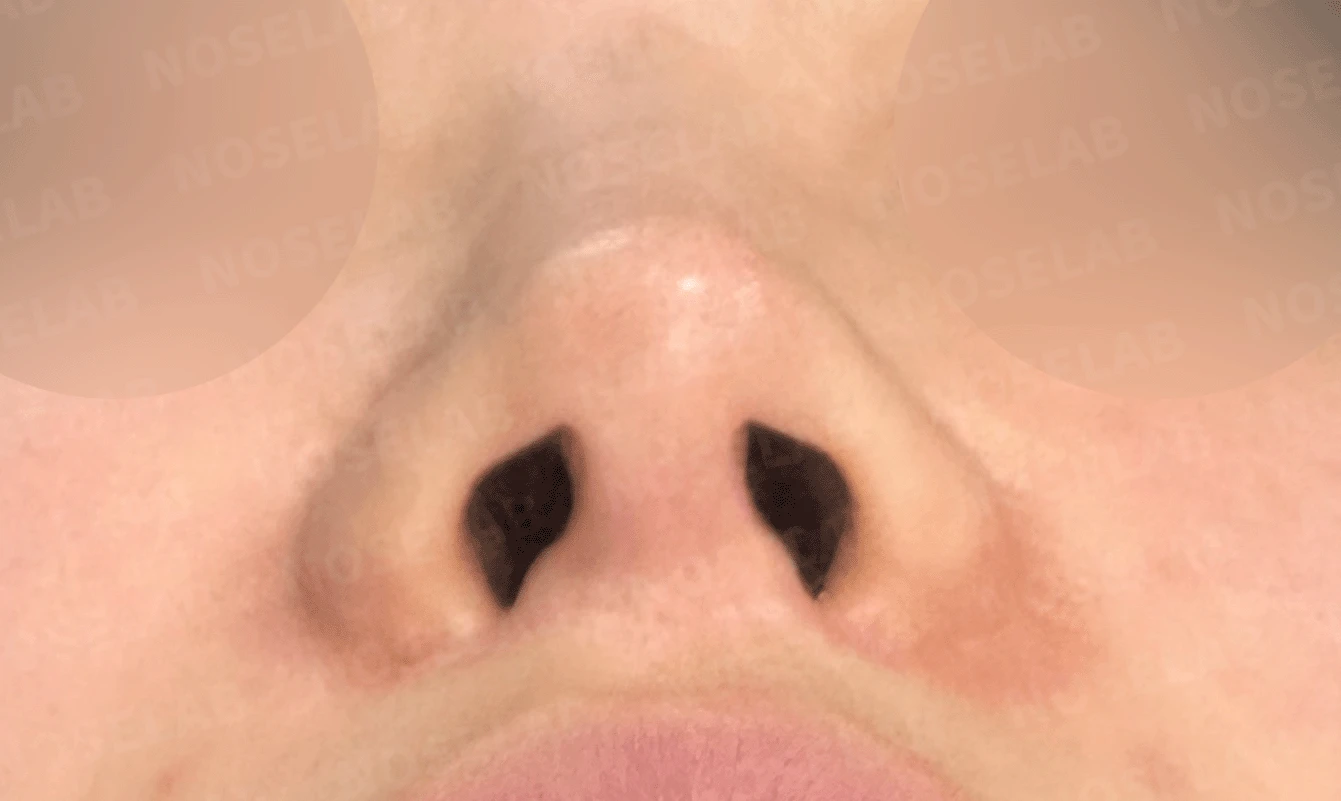
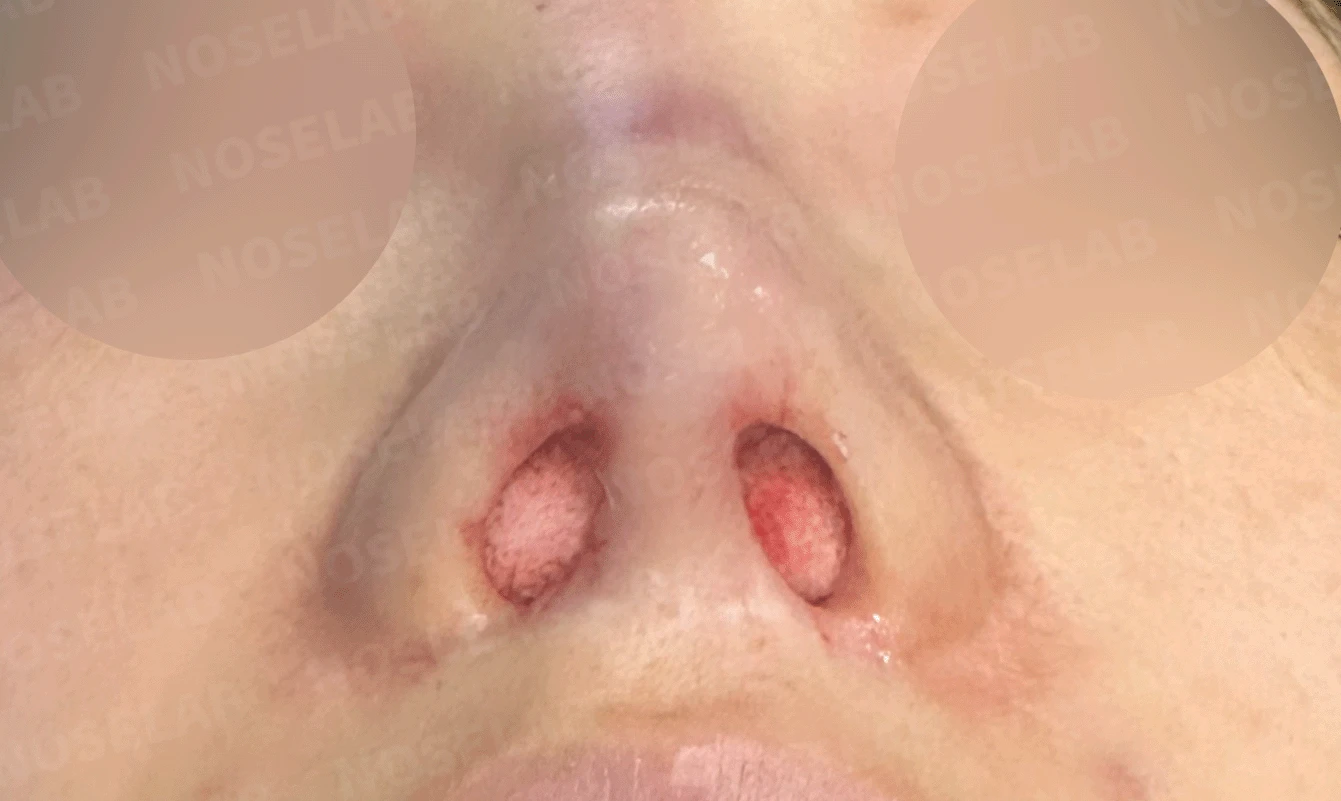
Before surgery / Day 0 immediately after surgery Photos taken immediately after surgery show swelling and may differ from the final result.
Long-term stability
Long-term stability using autologous rib cartilage
Stabilization of the central axis through septal reconstruction
Elimination of risks associated with reusing filler or foreign materials
Lasting and natural results
👨⚕️ Specialist's assessment
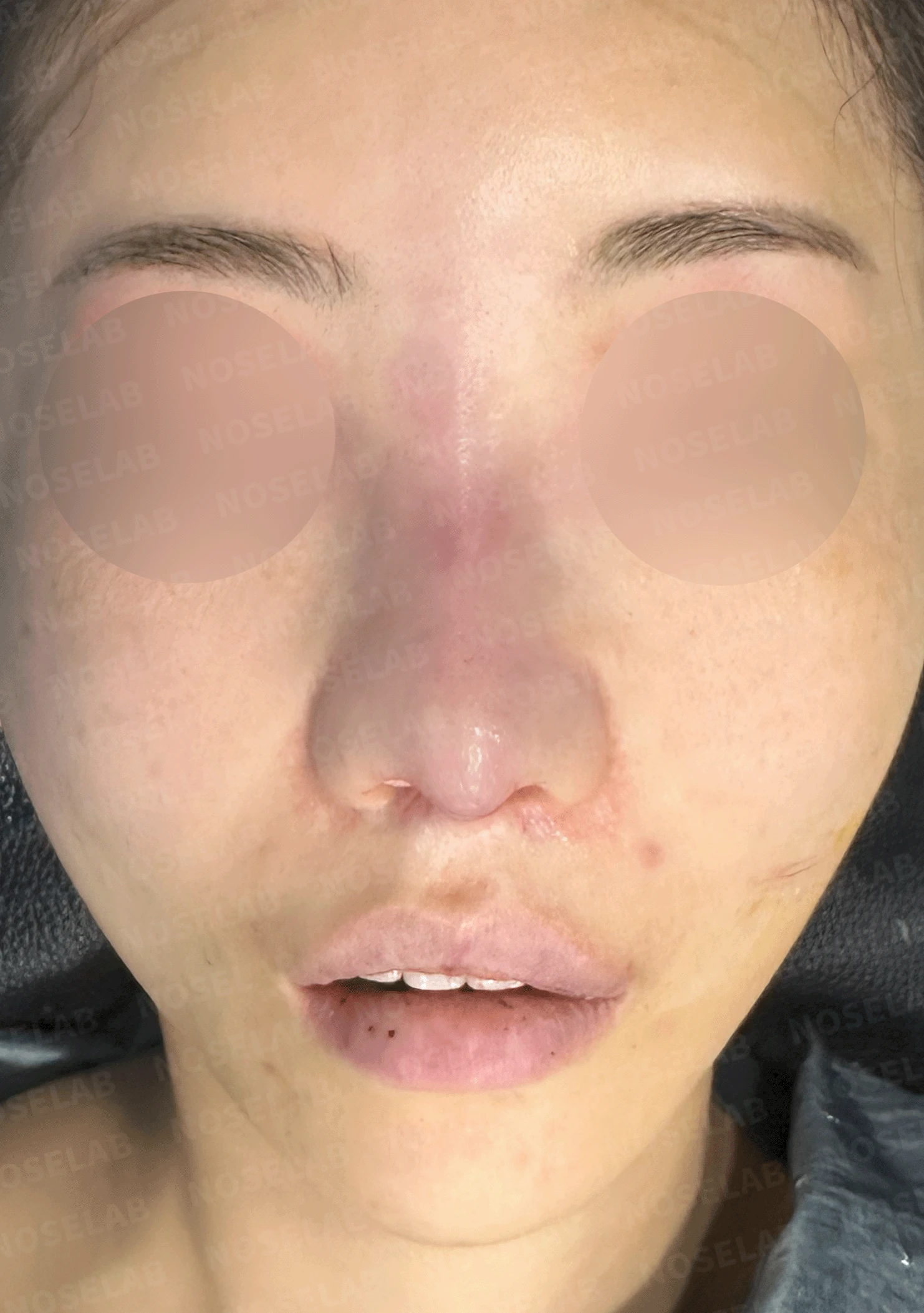
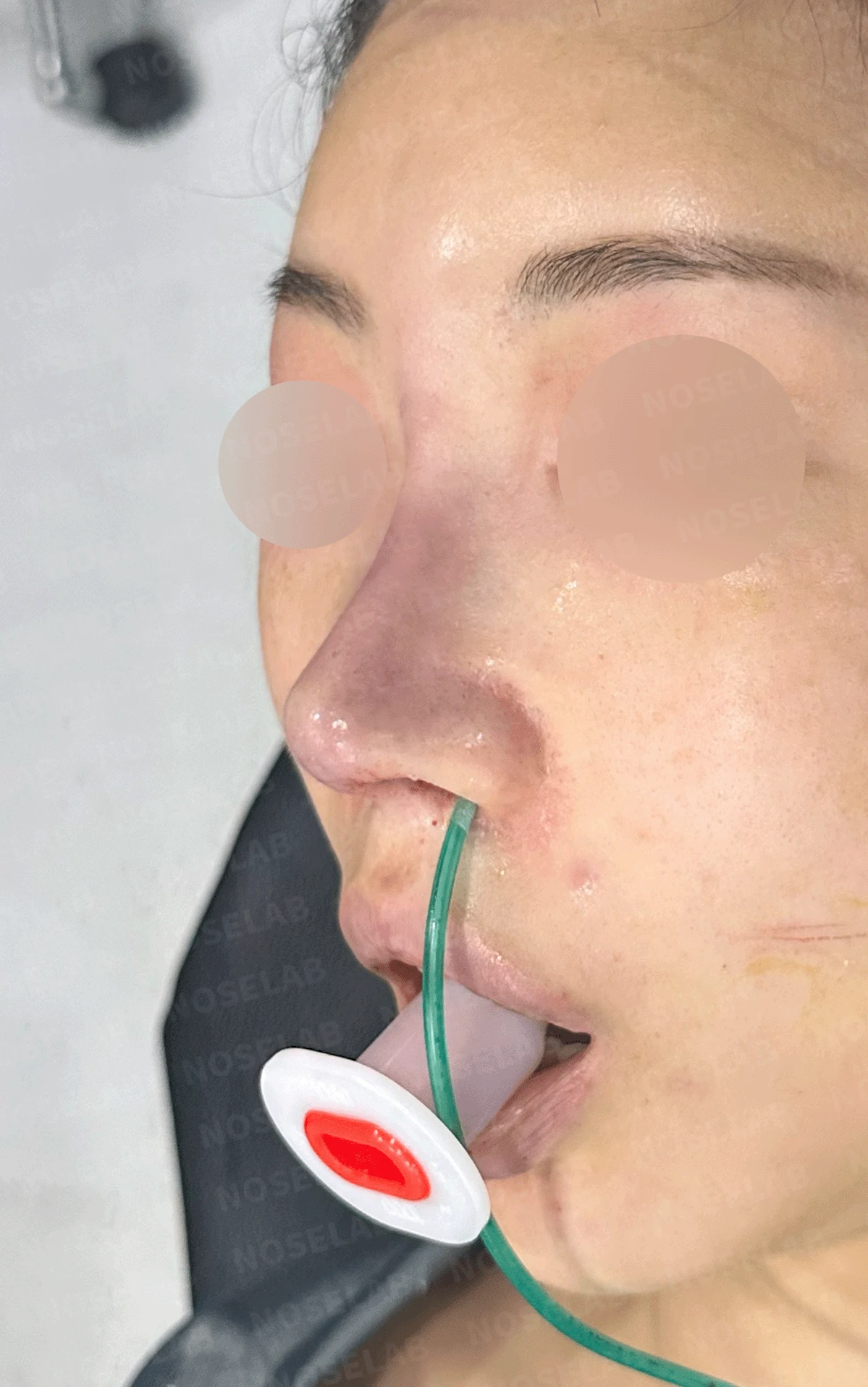
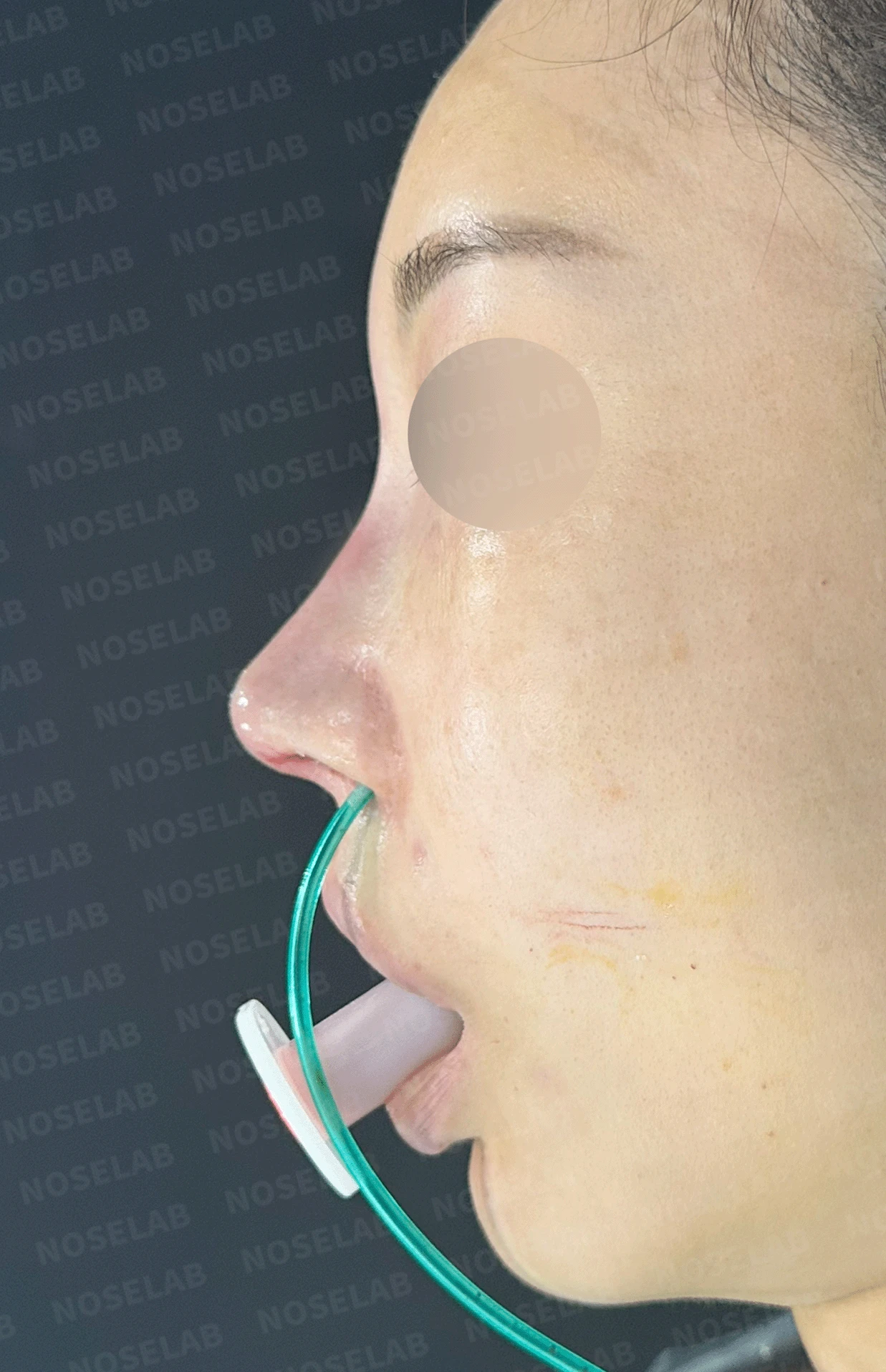
Immediately after surgery (day 0): front, oblique, and profile views. Immediate postoperative photos show swelling and may differ from the final result.
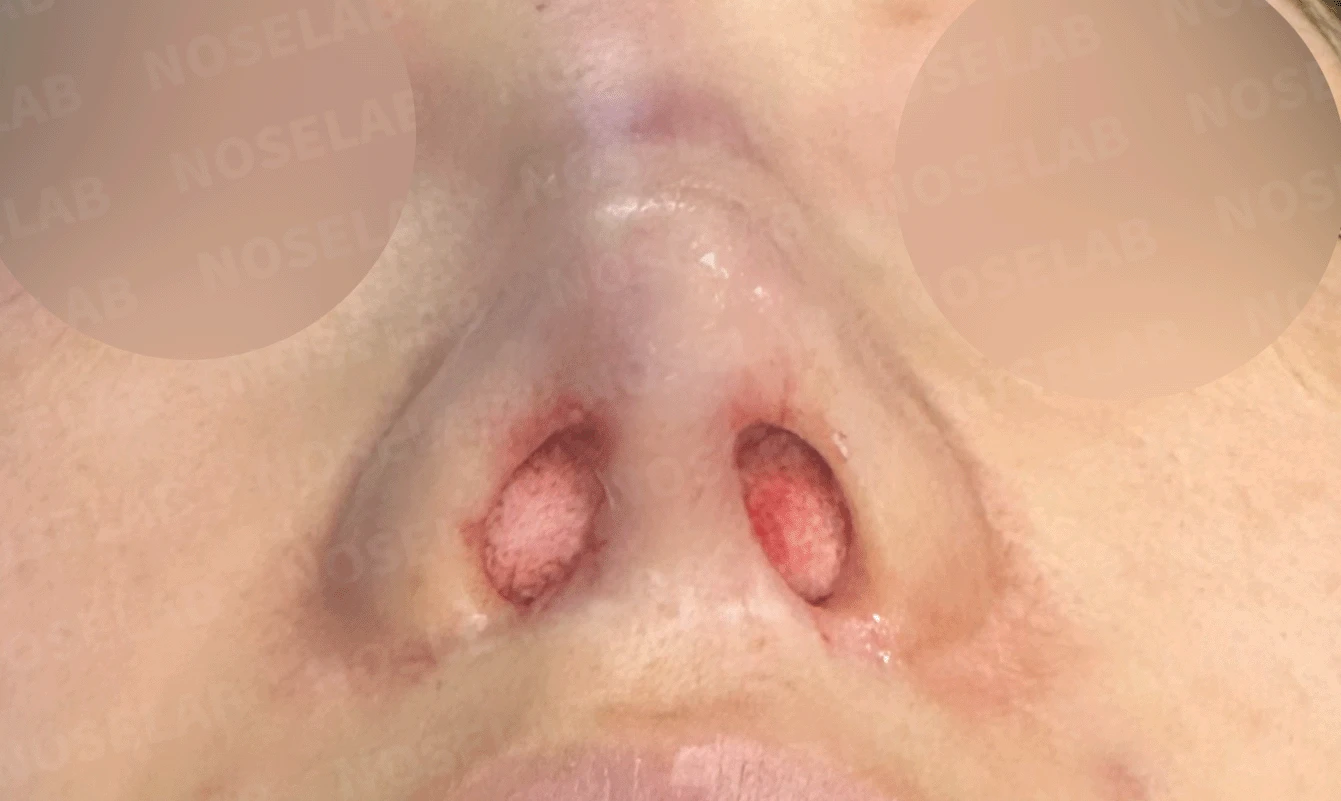
Nostril view on day 0 immediately after surgery. Photos taken immediately after surgery show swelling and may differ from the final result.
This case involved a patient who wished to fundamentally resolve a bulbous nasal tip that previous surgeries had failed to correct. In particular, while the patient preferred a natural line during our consultation 1 year ago, they now desired a more refined, shorter nasal appearance, requiring a completely different surgical plan.
The patient's greatest concern was that despite multiple surgeries, the bulbous appearance had not changed. Although the silicone implant had been removed in a prior surgery to transition to an implant-free nose, ear cartilage alone appeared insufficient to create a refined shape for the nasal tip.
The patient brought reference photos of their desired design, in which the models had notably thick tip skin. Compared with this patient's skin characteristics, pursuing the same level of height could result in an unnatural, overly sharp tip, a point I explained in detail during the consultation.
The most crucial step was completely removing the residual filler. Because only 1 of the filler treatments received 4 years ago had been dissolved, the remaining filler was having a subtle effect on the shape. After completely removing this, we proceeded with full reconstruction using autologous rib cartilage.
Additionally, the right alar cartilage required reconstruction. Because previous surgeries had compromised the shape and symmetry of the right ala, precise reconstruction was performed to balance both sides.
Septal reconstruction was another vital component. Reconstructing the septum with autologous rib cartilage stabilized the central axis of the nose and supported long-term respiratory function.
Achieving the shorter look the patient desired while minimizing nostril show and improving columellar visibility was technically demanding. By utilizing the robust structural support of autologous rib cartilage, the tip was appropriately elevated while maintaining a balanced, natural outcome.
Correcting the nasolabial angle improved the appearance of the protruding mouth and enhanced overall facial harmony. Since the patient had double eyelid surgery scheduled for the following week, designing a nose that considered their overall facial balance was particularly critical.
As a result, the bulbous nasal tip that remained unresolved through previous surgeries was thoroughly corrected. The patient achieved the shorter, refined nasal contour they desired while preserving harmony with their natural facial features, and they are very satisfied.
This was a meaningful case where a completely new surgical plan was established to meet the patient's changed goals, achieving a tailored outcome that carefully accounted for their unique individual characteristics.
This was Dr. Peter C. Kang. Thank you.
Thank you.
#closedrhinoplasty #revisionrhinoplasty #autologousribcartilage #bulbousnosecorrection #fillerremoval #shortnose #septalreconstruction #alarreconstruction #customrhinoplasty

Limitations and risks
When autologous rib cartilage is used, scarring and pain may remain at the donor site on the chest, and pneumothorax (pleural injury) can occur rarely. Over time, the grafted cartilage may warp or undergo partial resorption.
When revising after implant removal, contracture may progress again after removal, the nasal height and length may decrease, and staged surgery may be necessary depending on the skin condition.
When foreign materials such as injected fillers are removed and reconstructed, contracture may recur, nasal height and length may decrease, and staged surgery may be necessary depending on the skin condition.
When the septum is corrected at the same time, nasal obstruction may persist or recur, and in rare cases, septal perforation or changes in smell may occur.
Common potential risks include infection, bleeding, asymmetry, scarring, skin necrosis, and insufficient improvement; results vary depending on individual skin condition and previous surgical history.