Hello, I am Dr. Peter C. Kang.
Today, I would like to share a rhinoplasty case of a patient who was concerned about a retracted columella, bulbous nose, and a blunt, drooping tip.
The patient had previously undergone alar reduction surgery and desired a natural yet well-defined nose.
Preoperative design consultation
Let us analyze the patient's preoperative condition in detail:
Front view:
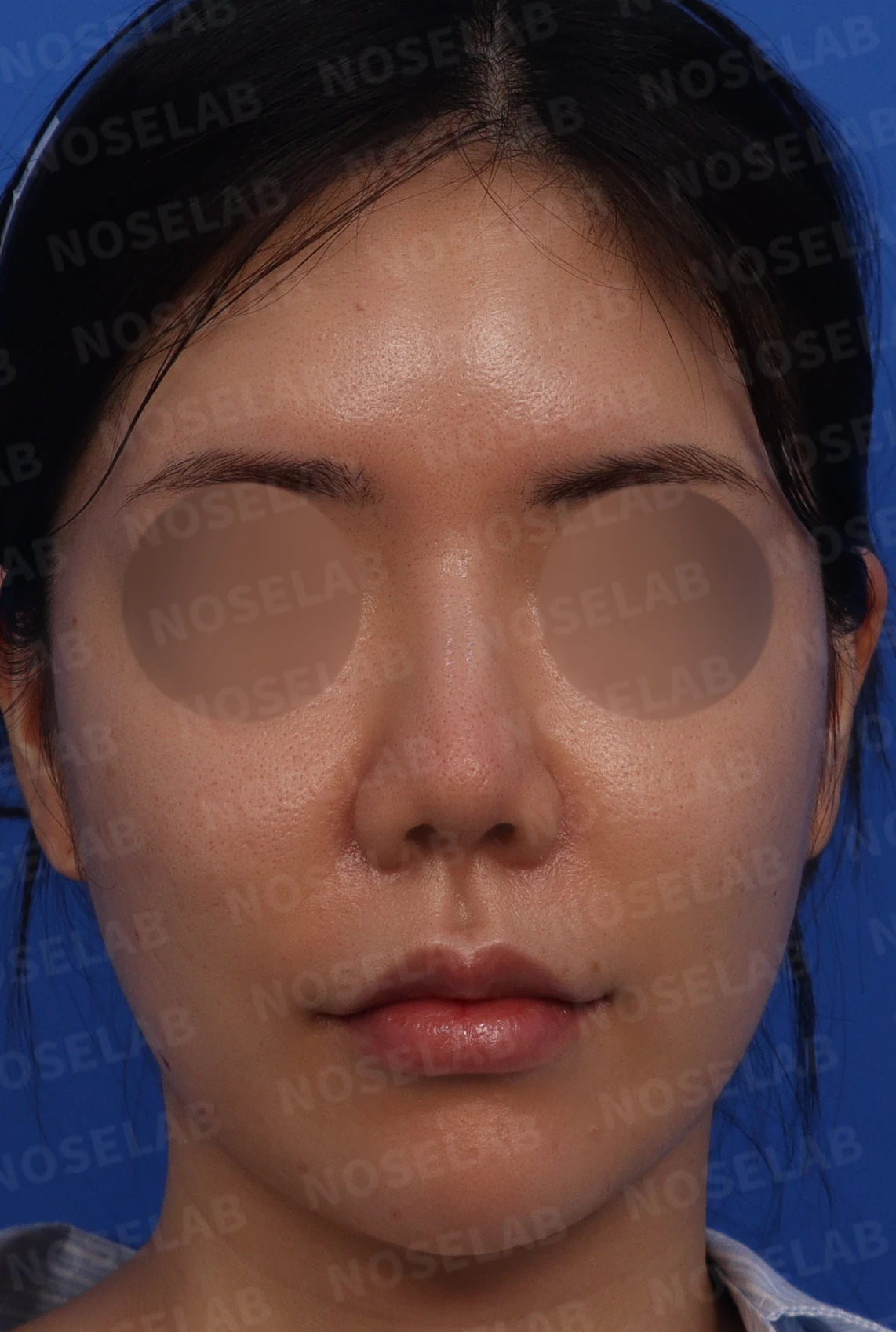
Front view
Nasal tip appears bulbous and broad
Nostrils appeared small and asymmetrical
Nasal width appeared wide
Profile view:
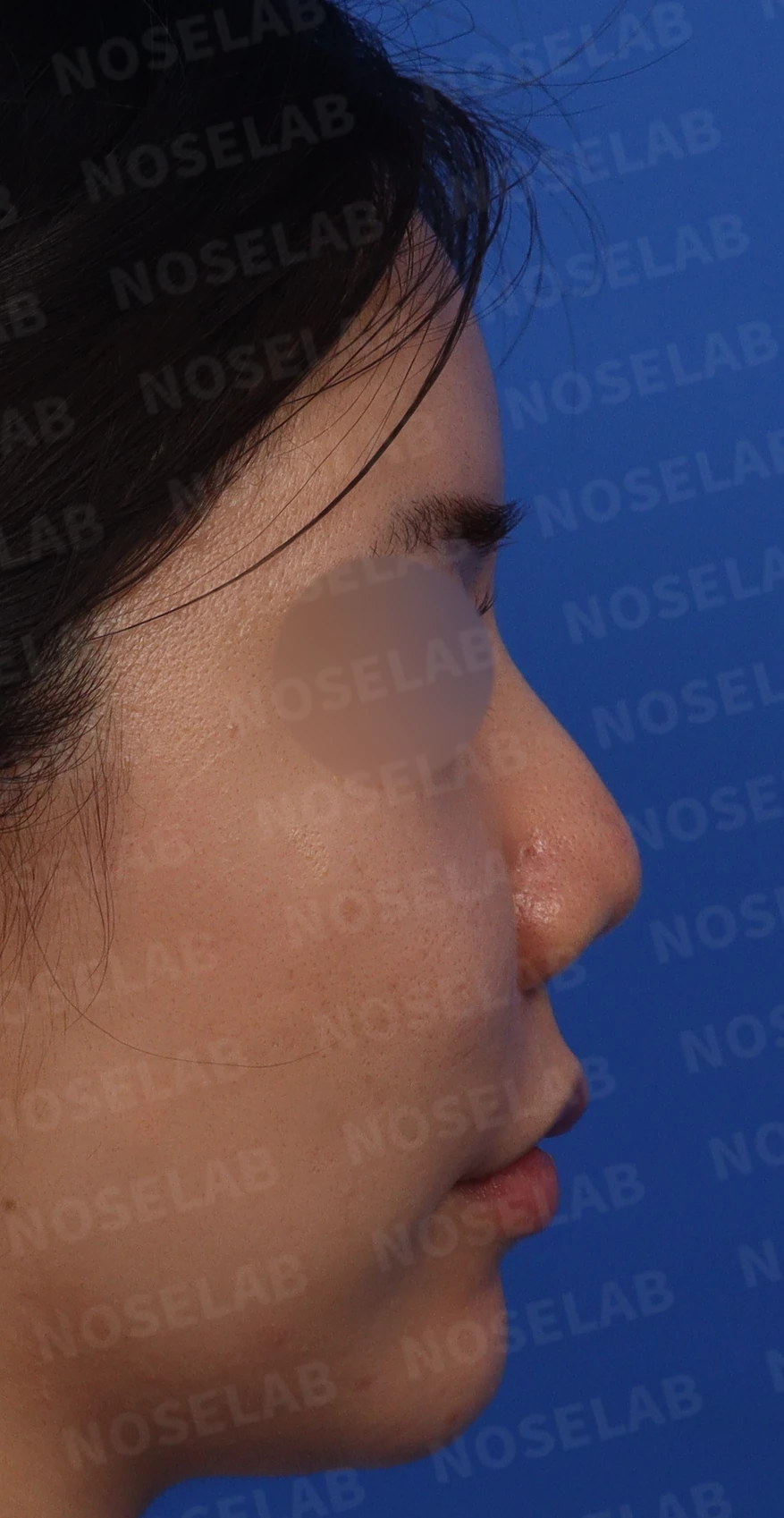
Profile view
The nasal tip was drooping
The columella was retracted, making the alae appear more prominent
Long philtrum and signs of a protruding mouth
Oblique view:
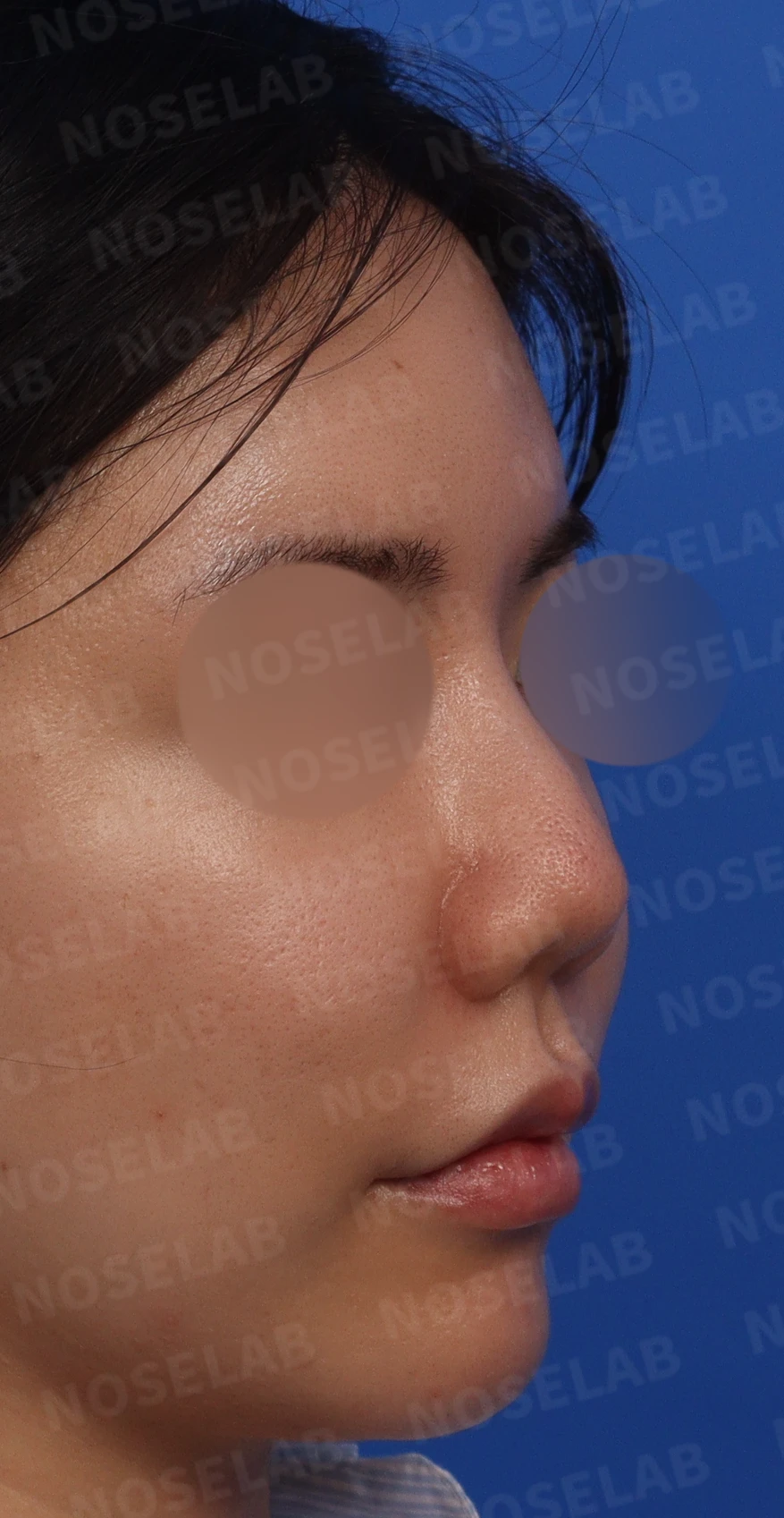
Oblique view
The flattened, spread appearance of the nose was noticeable
Drooping and bluntness of the nasal tip were clearly visible
Nostrils:
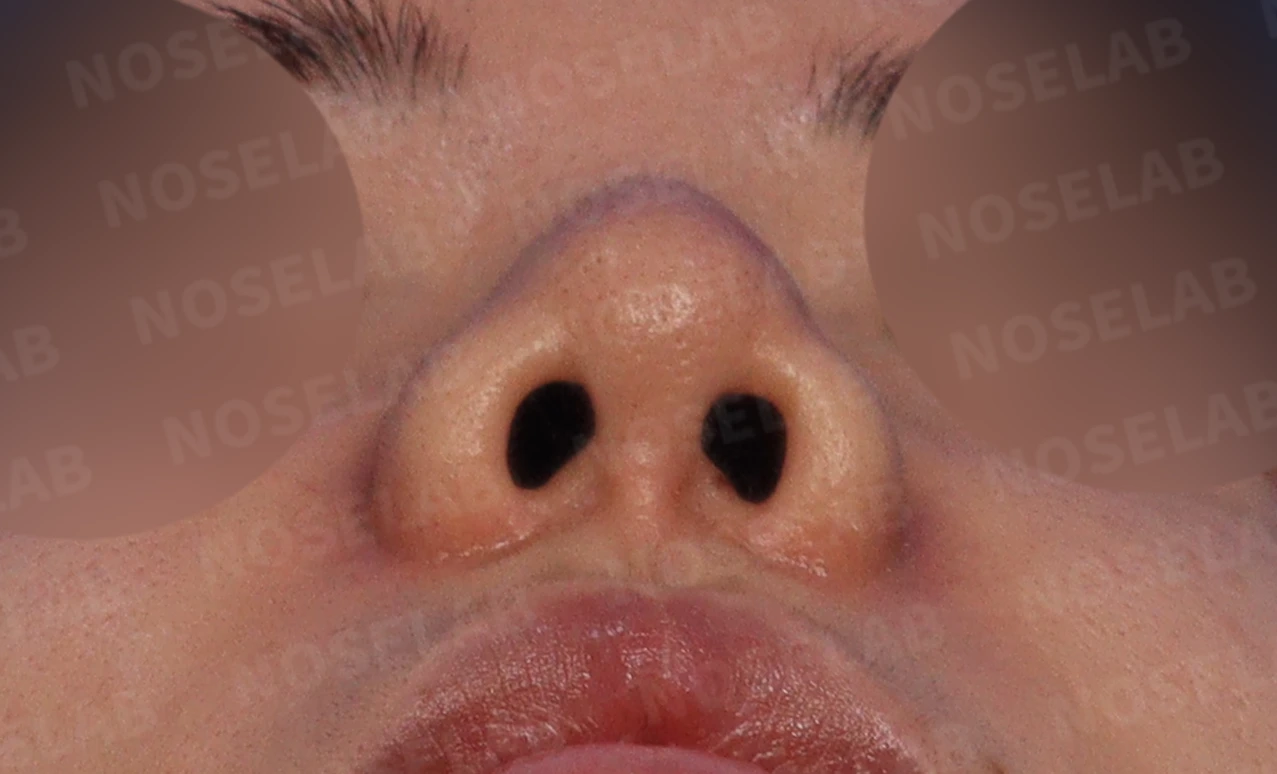
Basal (nostril) view
The nostrils were significantly small due to previous alar reduction surgery
Nostril asymmetry observed
Patient's requests:
Narrow the nasal width
Maintain or improve the current degree of nostril show
Make the midface appear shorter
Lower the radix
Make the philtrum appear visually shorter
Create a straight bridge line
Correction of upturned nose
Achieve a natural yet well-defined look
Surgical plan
Taking into account the patient's condition and requests, the following surgical plan was established:
a) Septal extension graft using autologous rib cartilage
b) Bulbous nose correction surgery
c) Lowering the columella
d) Nasolabial angle correction
e) Removal of foreign material (hyaluronic acid filler) from the nasal bridge and lowering the radix
Surgical procedure
a) Autologous rib cartilage harvest and grafting:
Through a 2.5 cm incision at the patient's right 8th rib cartilage, approximately 4 cm of rib cartilage was harvested and used for septal extension, lowering the columella, and nasolabial angle correction.
b) Septal extension graft:
Autologous rib cartilage was used to extend and reinforce the septum.
This increased structural support for the nasal tip and corrected drooping.
c) Bulbous tip correction:
A portion of the subcutaneous tissue in the nasal tip was removed, and the lower lateral cartilages were repositioned and sutured.
The nasal tip contour became natural and was elevated moderately to achieve overall facial balance.
d) Lowering the columella and correction:
Using autologous rib cartilage, the retracted columella was lowered and reinforced to improve balance with the alae.
This produced the visual effect of shortening the philtrum.
e) Nasolabial angle correction:
To improve the appearance of the protruding mouth, autologous rib cartilage was used to correct the nasolabial angle.
f) Nasal bridge augmentation and radix adjustment:
Foreign material (hyaluronic acid filler) was removed from the nasal bridge, the radix was lowered, and an implant was placed.
All procedures were performed using a closed approach, completing the surgery without external scars.
Before-and-after photo comparison
Comparing photos taken immediately after surgery on day 0 shows the following improvements: Photos taken immediately after surgery show swelling and may differ from the final result.
Front view:
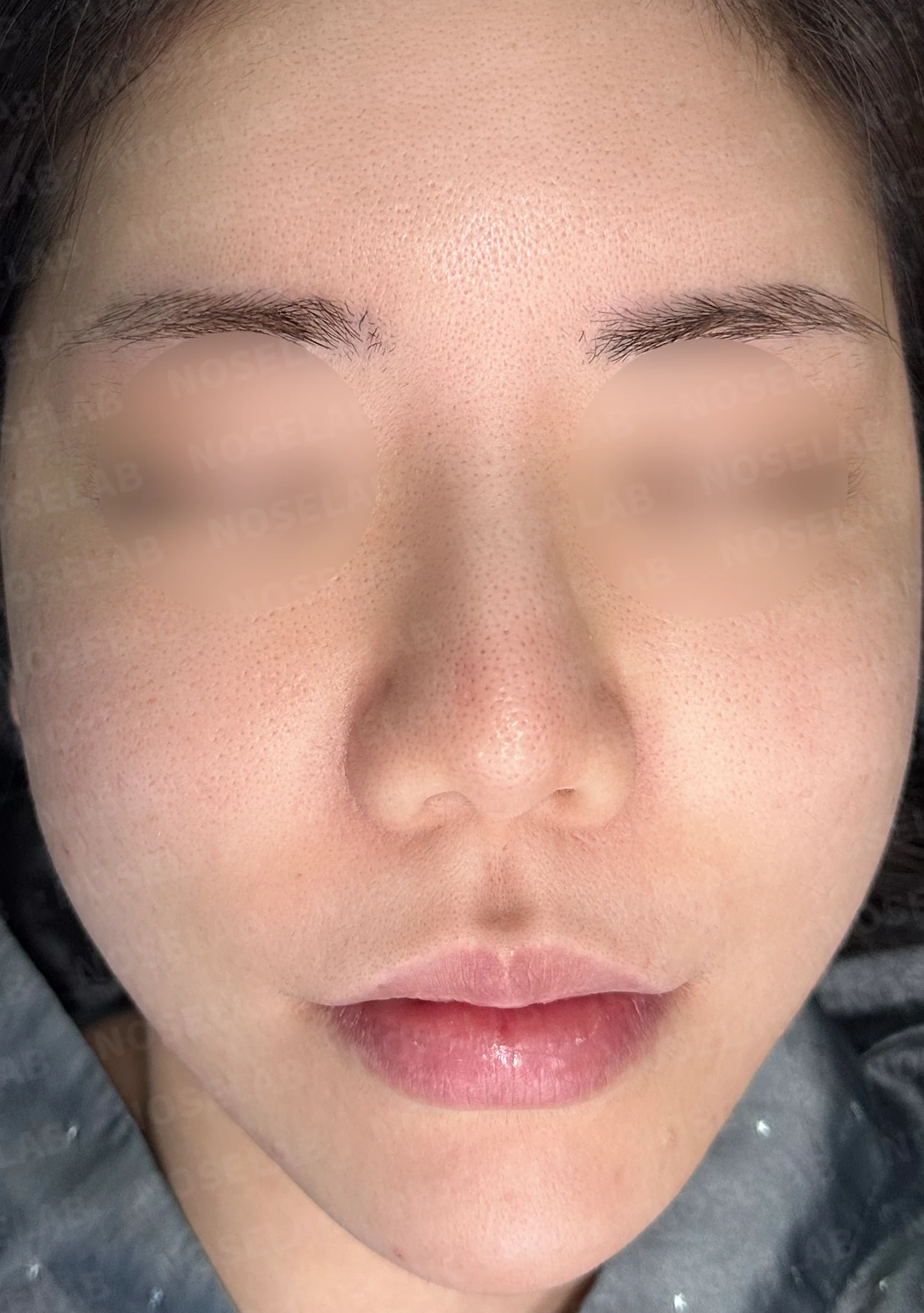
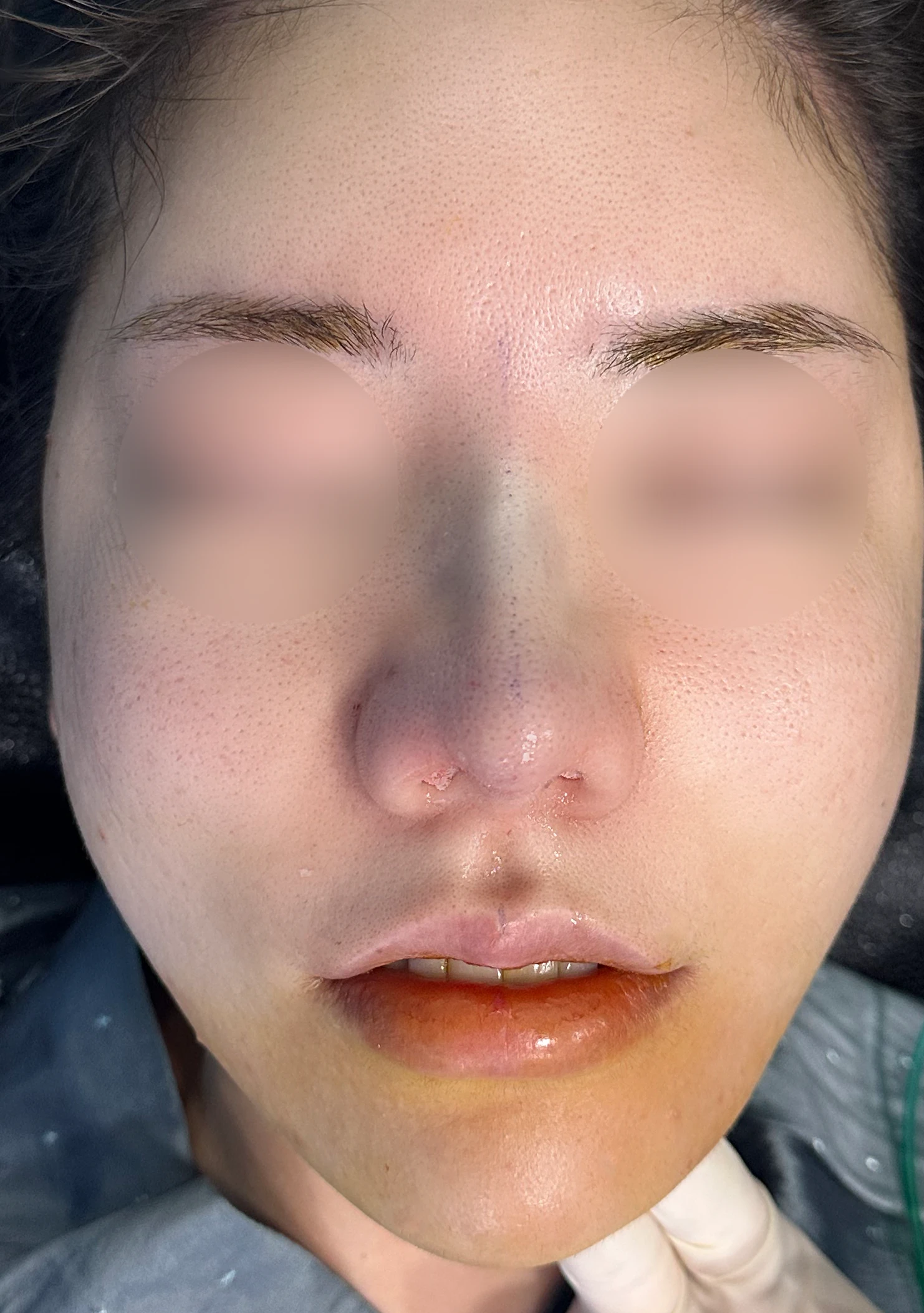
Before surgery / Day 0 immediately after surgery Photos taken immediately after surgery show swelling and may differ from the final result.
The nasal tip, which once appeared blunt and wide, was refined into a delicate and natural shape.
The nasal width was narrowed, giving an overall slimmer appearance.
Nostril asymmetry was improved, and natural nostril show was maintained.
Profile view:
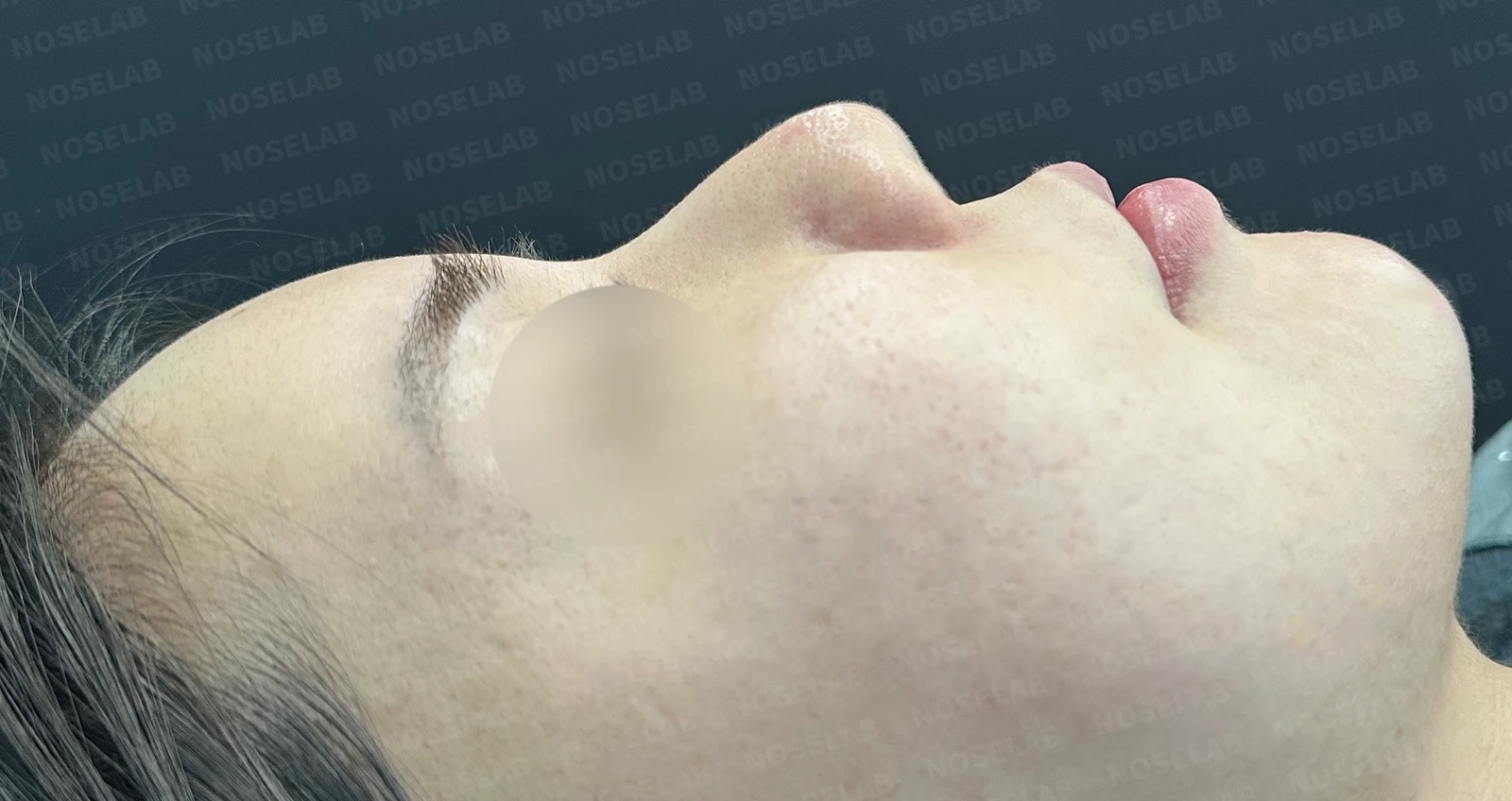
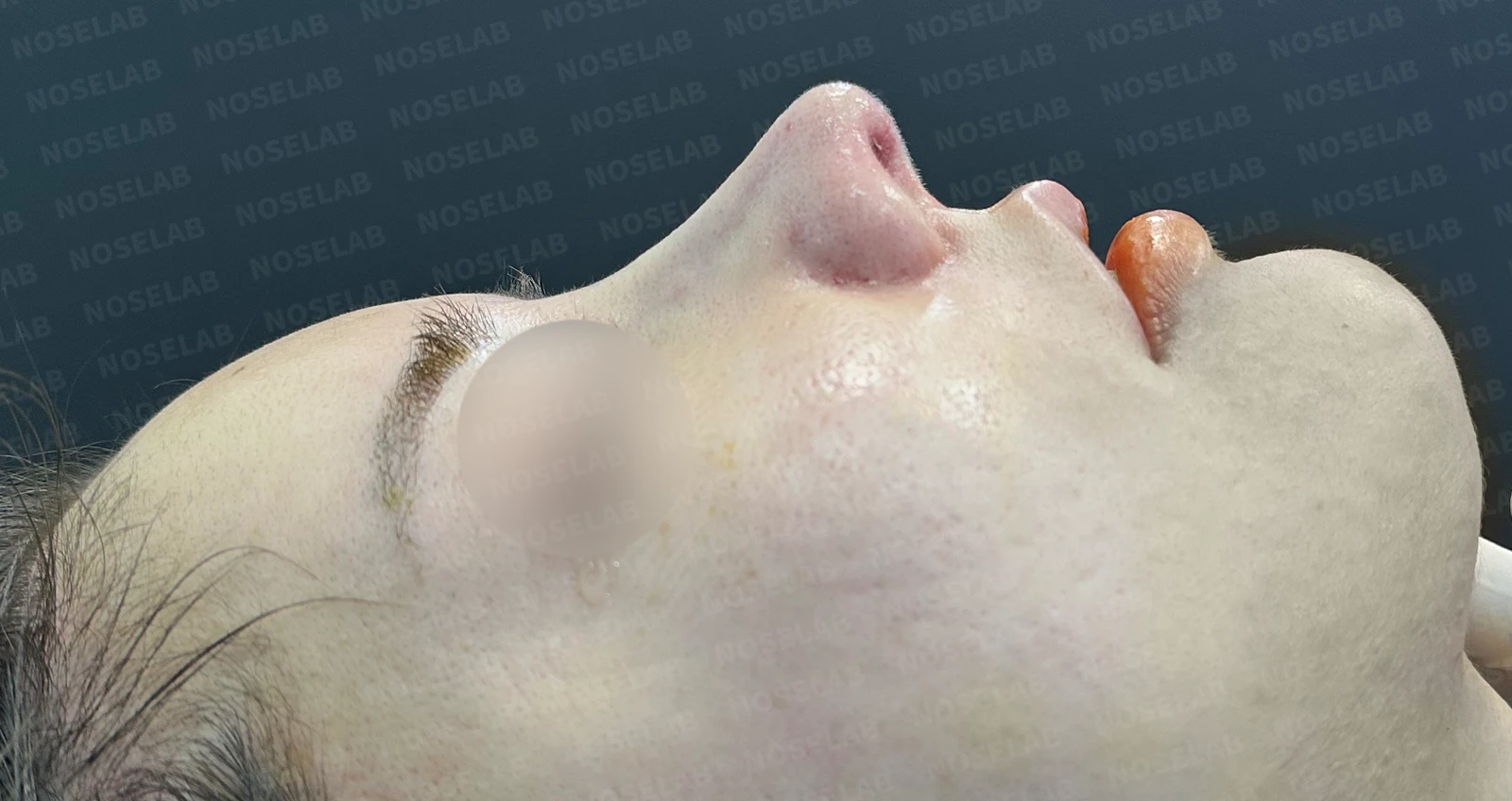
Before surgery / Day 0 immediately after surgery Photos taken immediately after surgery show swelling and may differ from the final result.
The drooping nasal tip was appropriately elevated, improving overall balance.
The retracted columella was brought downward, improving its harmony with the alae.
The philtrum appears visually shorter, and the appearance of the protruding mouth was softened.
Oblique view:
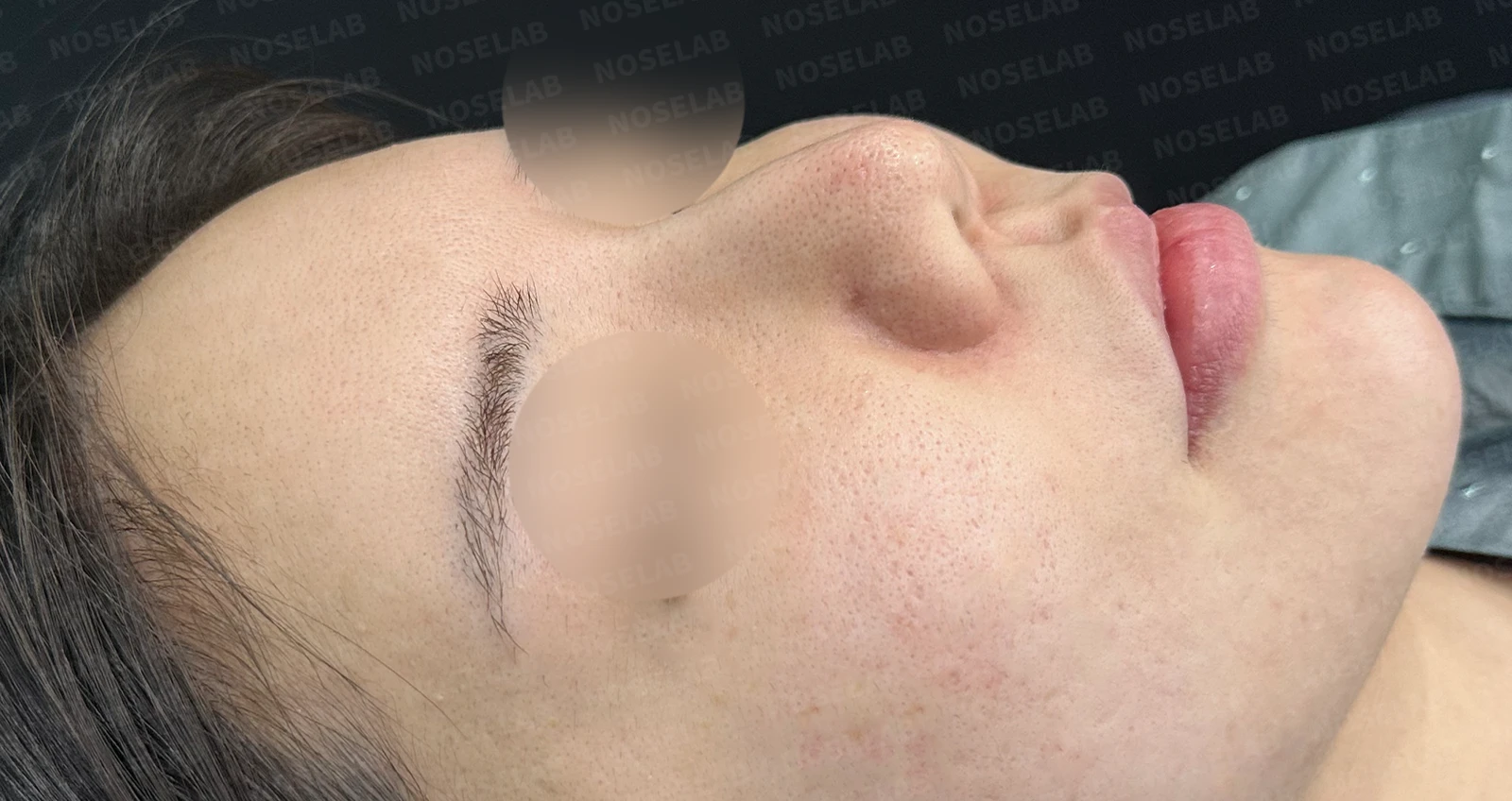
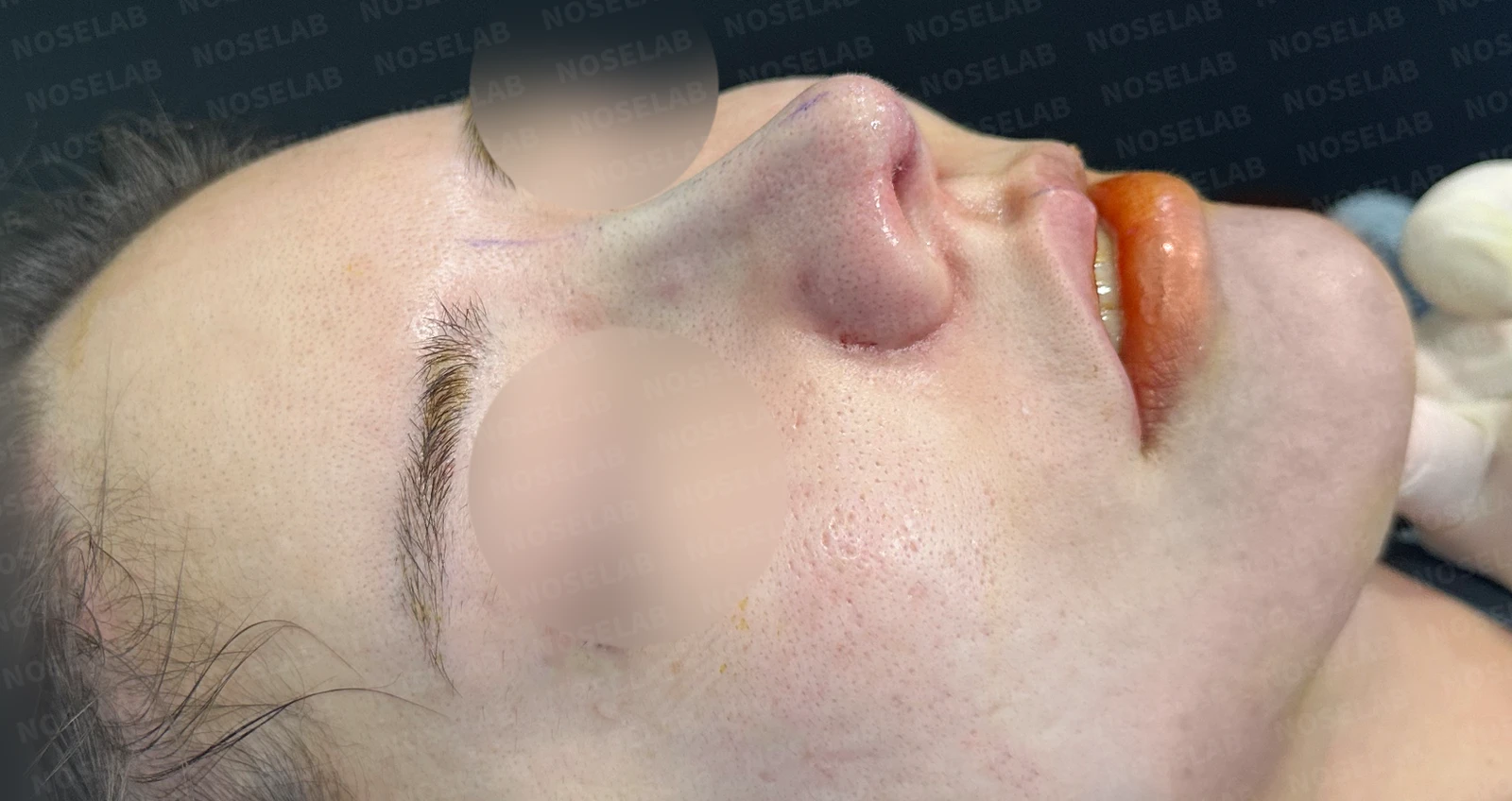
Before surgery / Day 0 immediately after surgery Photos taken immediately after surgery show swelling and may differ from the final result.
The previously flattened nasal contour was refined into a slim, sophisticated shape.
Nasal tip projection improved, enhancing overall facial harmony.
A natural straight bridge line was established.
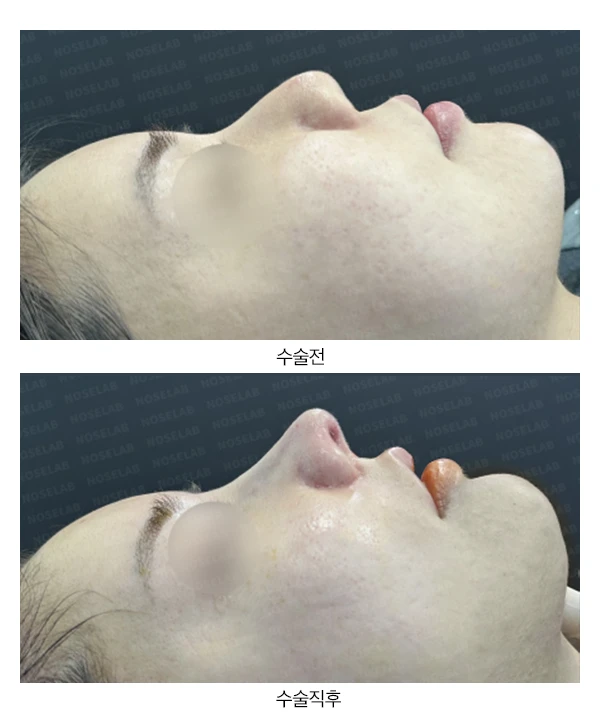
Nostrils:
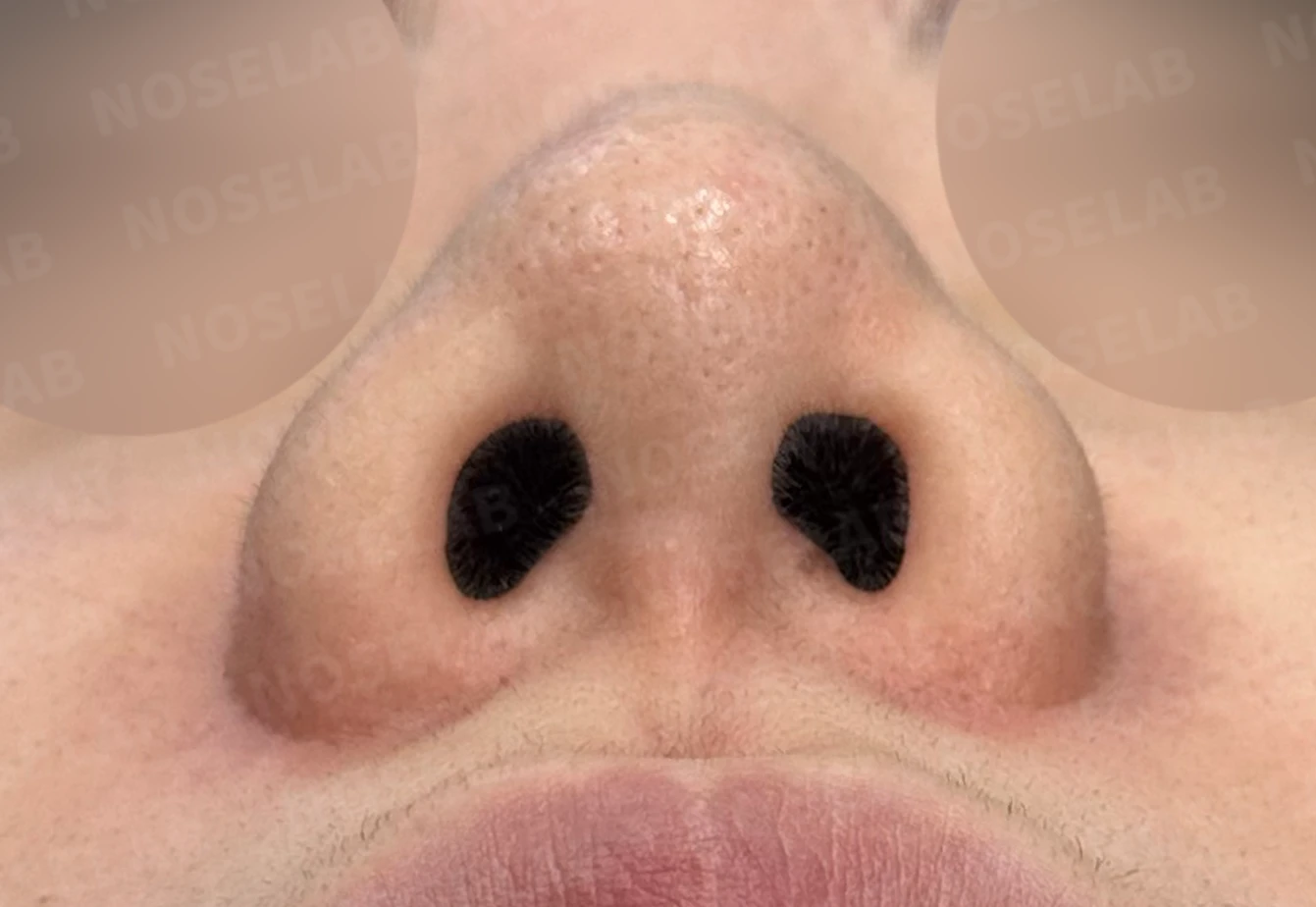
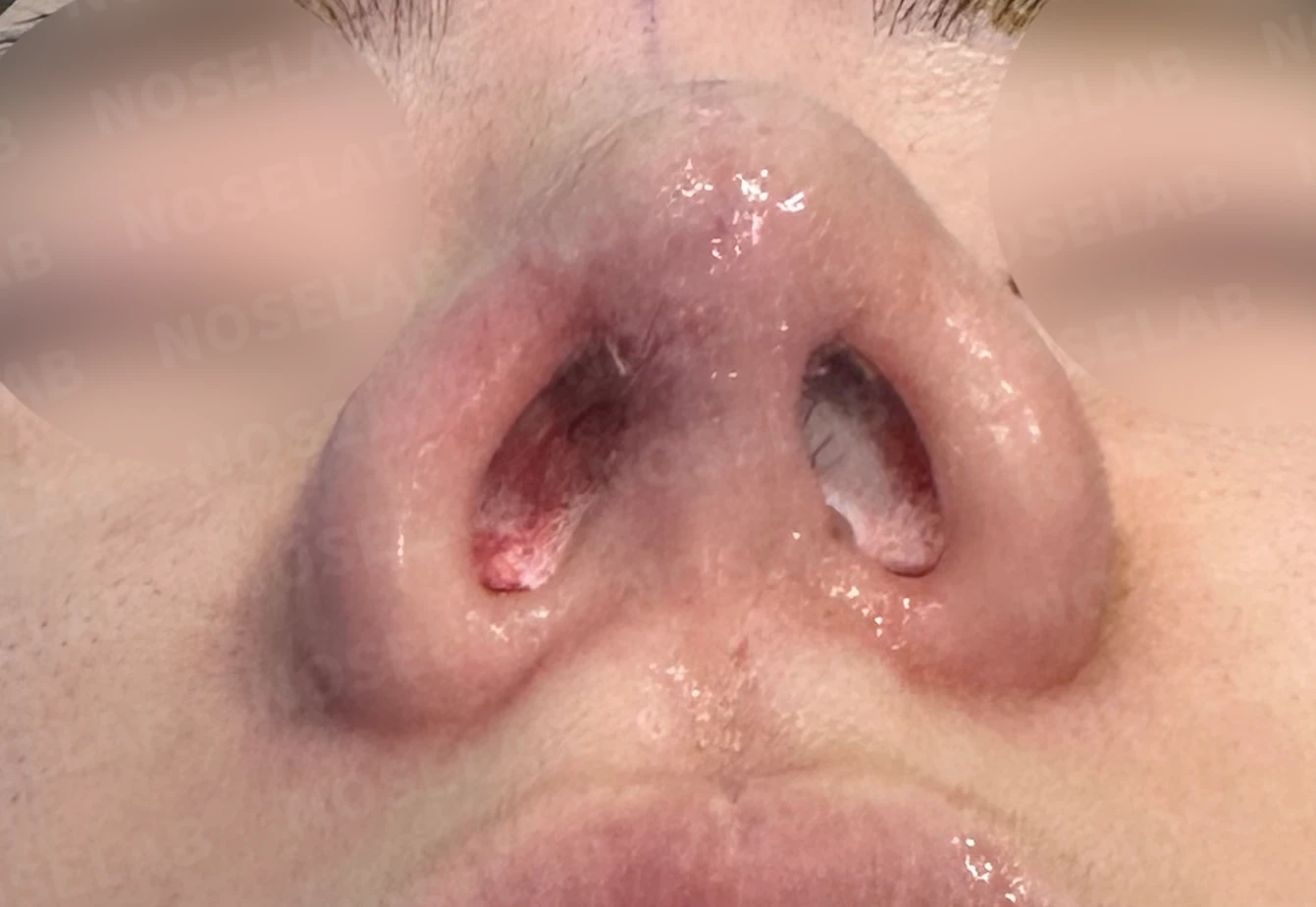
Before surgery / Day 0 immediately after surgery Photos taken immediately after surgery show swelling and may differ from the final result.
While maintaining the small nostril size resulting from previous surgery, the overall shape was improved.
Asymmetry was substantially improved, presenting a balanced look.
Photos immediately after surgery
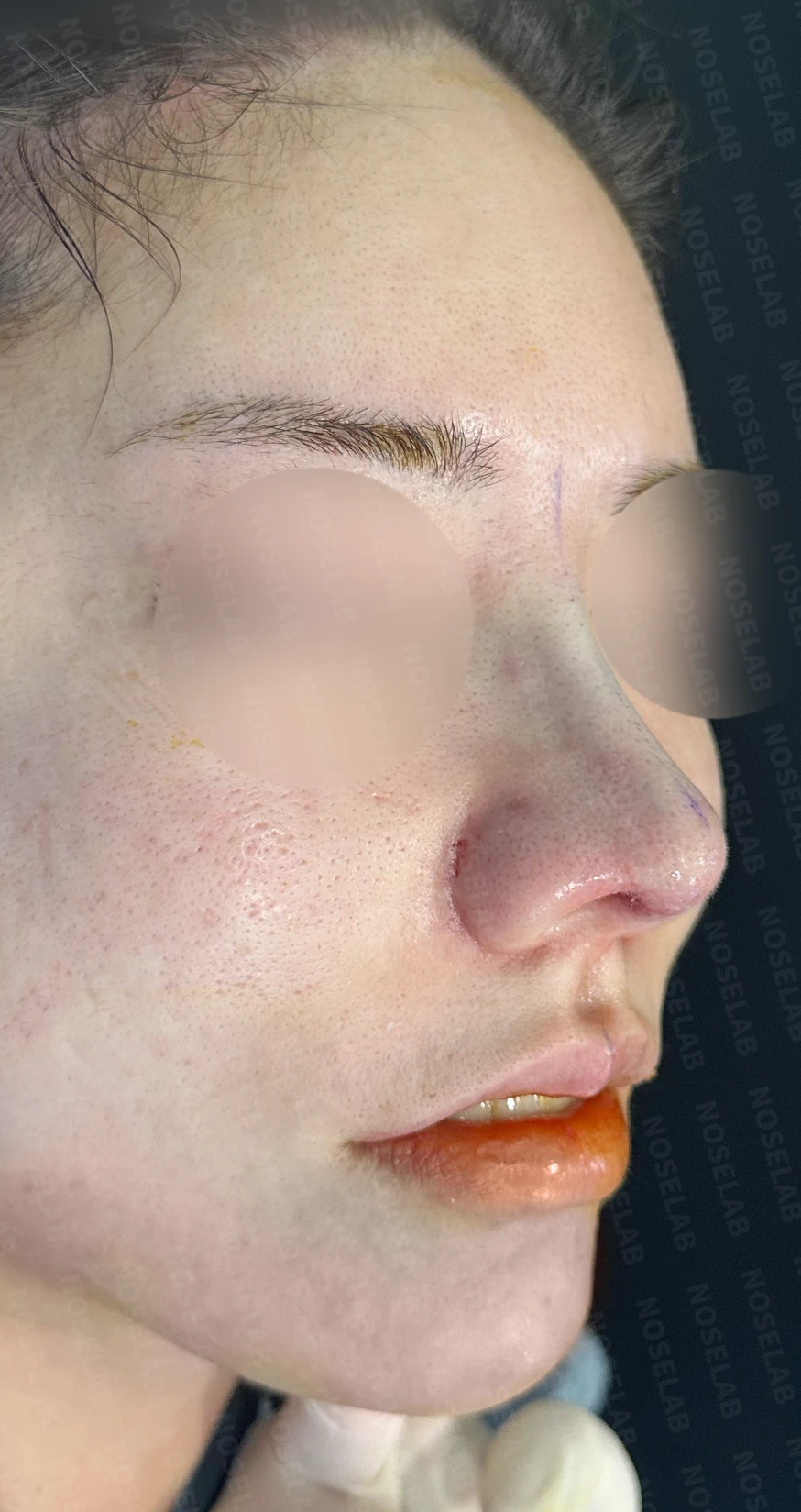
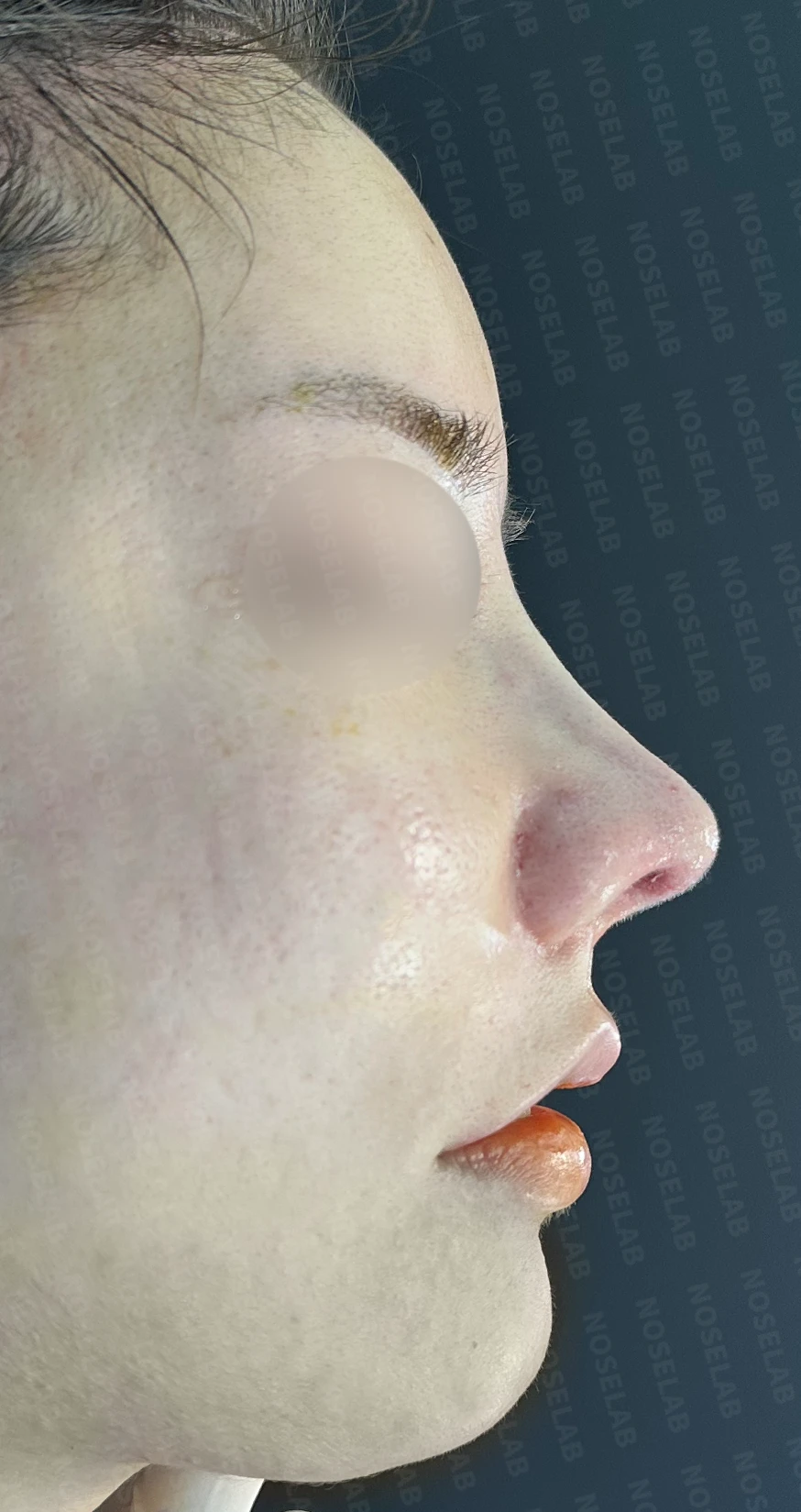
Photos immediately after surgery (Day 0): front, oblique, and profile viewsImmediate postoperative photos show swelling and may differ from the final result.
Basal (nostril) view immediately after surgery (Day 0)Immediate postoperative photos show swelling and may differ from the final result.
Conclusion
This case was a complex rhinoplasty where the patient's diverse requests were addressed despite the constraints imposed by previous alar reduction surgery. By lowering the columella, overall nasal balance was improved, and harmonious results were achieved by simultaneously correcting the nasal tip, augmenting the bridge, and reducing nasal width.
In particular, improving the overall shape of the nose while maintaining the nostril size that had already been reduced from prior surgery was challenging. This was achieved by maximizing the advantages of the closed approach and applying delicate surgical techniques.
The natural yet well-defined look desired by the patient was achieved, and overall facial balance was improved along with the visual shortening of the midface.
Closing remarks
I hope this case offers encouragement to those concerned about a retracted columella, bulbous nose, or a blunt, drooping tip. Even with previous surgical history or complex issues, satisfying outcomes can be achieved with proper surgical planning and technique.
NOSELAB provides customized surgical plans for each patient based on up-to-date medical techniques and extensive clinical experience. If you are considering rhinoplasty, we encourage you to consult with a specialist to find the approach best suited to you.
NOSELAB is here to help you achieve a healthy, aesthetically pleasing nose. Thank you.
FAQ
Q1: What are the effects of lowering the columella?
A1: Lowering the columella improves balance between the alae and the columella and makes the philtrum appear visually shorter. It also corrects a drooping nasal tip and enhances overall nasal balance.
Q2: Can I undergo additional rhinoplasty if I have previously had alar reduction surgery?
A2: Yes, it is possible. However, surgical planning must be conducted carefully considering the conditions left by previous surgery. It is important to determine the appropriate surgical approach through consultation with an experienced specialist.
Q3: What are the advantages of a closed rhinoplasty approach?
A3: A closed rhinoplasty approach leaves no external scars, and the recovery period is relatively short. It also allows for delicate corrections while causing less structural disruption to the nose.
Q4: When can I return to daily activities after surgery?
A4: Recovery varies by individual, but patients can generally return to daily activities after 1-2 weeks. Achieving complete recovery and the final result takes about 3-6 months.
Q5: Which is better, autologous cartilage or artificial implants?
A5: Both options have their pros and cons. Autologous cartilage carries no risk of rejection and yields natural results, but requires a harvesting procedure. Artificial implants are convenient to use, but there may be foreign body reactions. The appropriate method should be selected according to the patient's condition and preferences.
#rhinoplasty #loweringthecolumella #bulbousnosecorrection #blunttipcorrection #droopingtipcorrection #closedrhinoplasty #tipplasty #ENTspecialistrhinoplasty #naturalnose #dorsalaugmentation #nasolabialanglecorrection #nasalwidthreduction

Limitations and risks
When autologous rib cartilage is used, scarring and pain may remain at the donor site on the chest, and pneumothorax (pleural injury) can occur rarely. Over time, the grafted cartilage may warp or undergo partial resorption.
When foreign materials such as injected fillers are removed and reconstructed, contracture may recur, nasal height and length may decrease, and staged surgery may be necessary depending on the skin condition.
When the septum is corrected at the same time, nasal obstruction may persist or recur, and in rare cases, septal perforation or changes in smell may occur.
Common potential risks include infection, bleeding, asymmetry, scarring, skin necrosis, and insufficient improvement; results vary depending on individual skin condition and previous surgical history.