English日本語简体中文
Skip to main content
Dr. Peter C. Kang's Rhinoplasty Stories
PrologueBlogMy thoughtsNasal obstructionSurgical journalSurgical photos
About the surgeon

Nose with implant or cartilage show-through: assessing skin and contour together

For readers researching implant show-through, explanations regarding the skin and surface contour are just as important as the names of the materials used. In one case, previously placed cartilage had clumped together under thinned skin, causing the cartilage to show through; in another record, a silicone implant could be felt sharply above the columella along with redness of the overlying skin.

This topic is organized to separate the general cosmetic impression of an operated look from clinical findings where materials actually show through or can be palpated. In the original case records, there are cases where problematic cartilage was trimmed, support structures were reconstructed, and the skin was reinforced with dermis. Please observe the surface changes, material management, and skin reinforcement individually, without assuming that show-through automatically equates to exposure or necrosis.

View before-and-after cases ↓Comprehensive rhinoplasty guide

Searching for surgical cases matching your criteria.
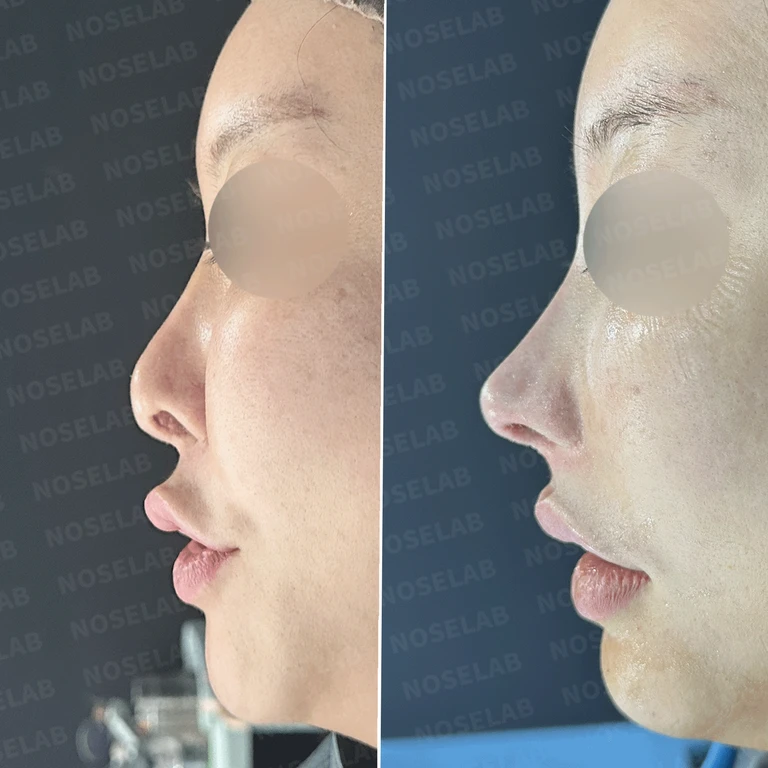
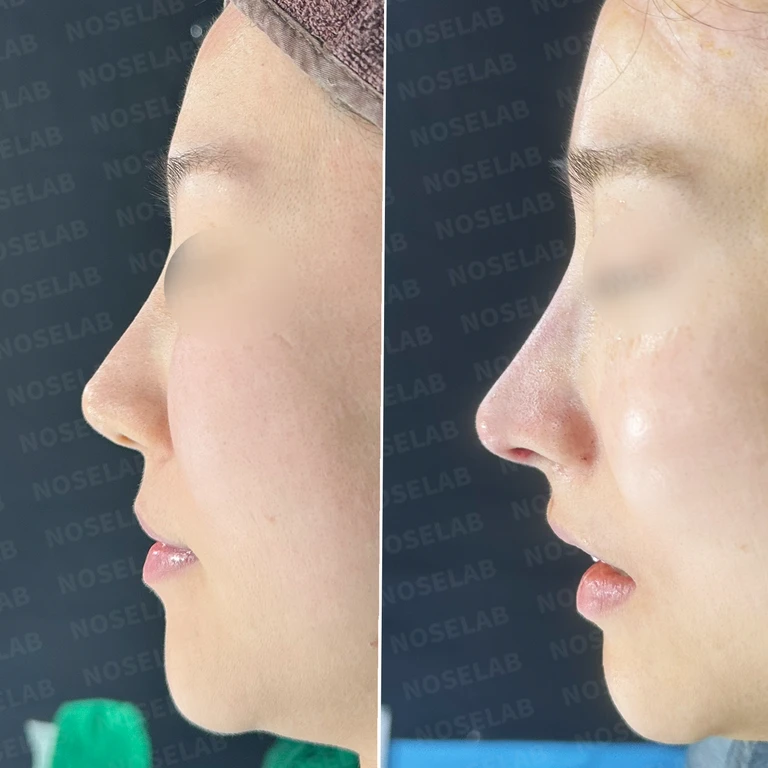
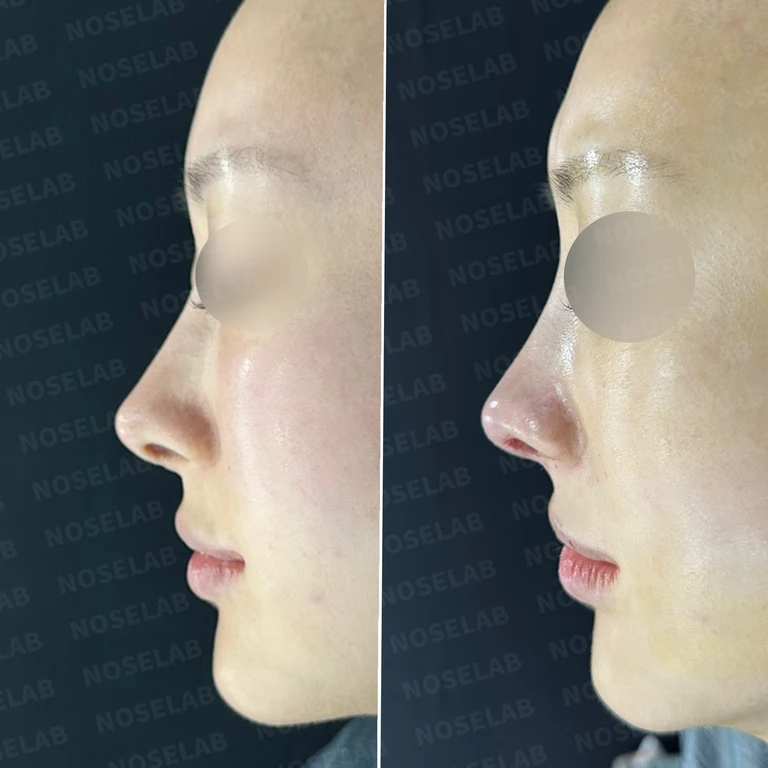
Why an implant is palpable and visible through the nasal tip: rib cartilage reconstruction and dermis reinforcement — Before-and-after comparison
Before-and-after comparison

Why an implant is palpable and visible through the nasal tip: rib cartilage reconstruction and dermis reinforcement

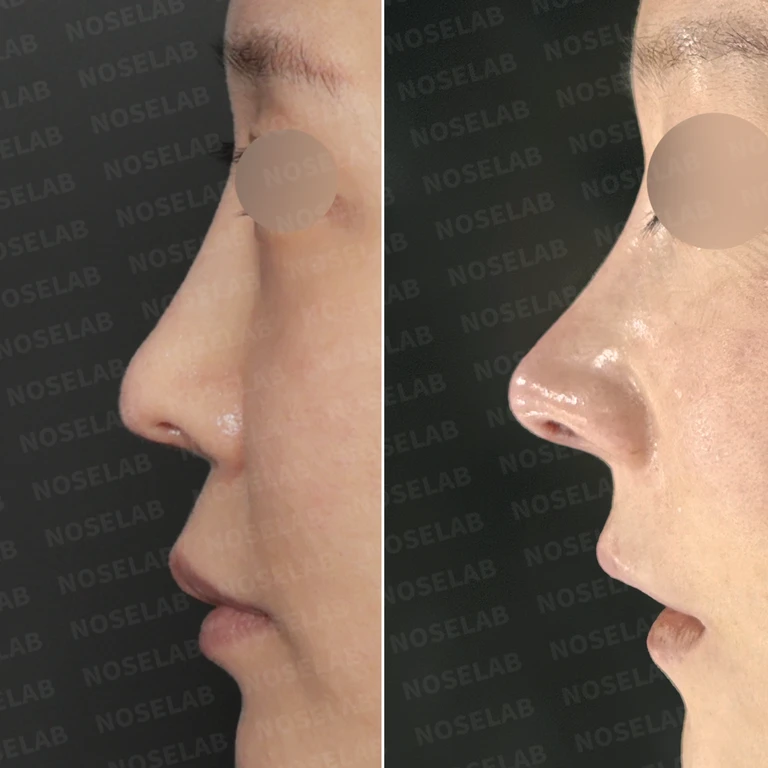
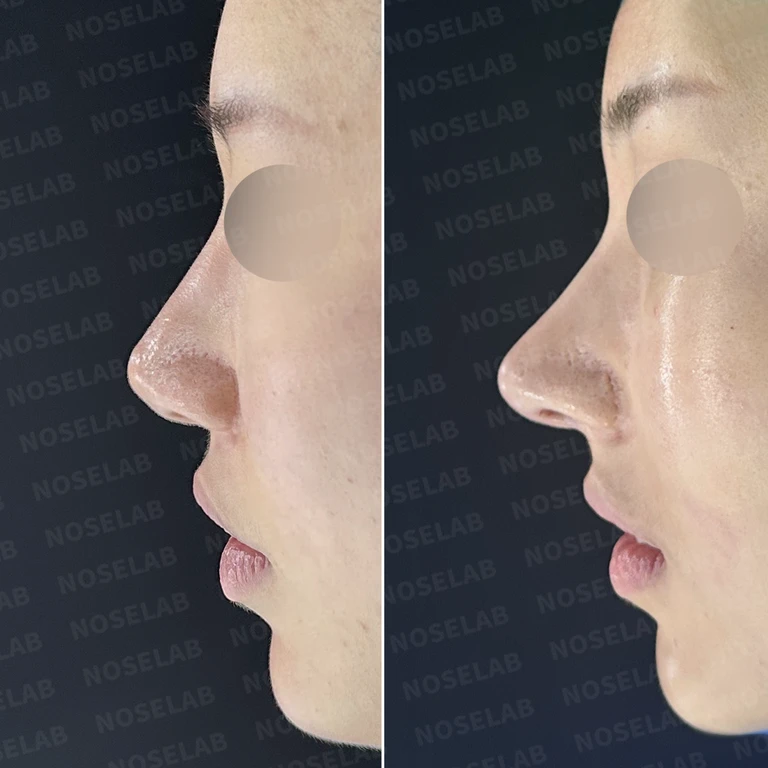
A case where a silicone implant became palpable, the nasal tip skin thinned, and asymmetry developed after a previous rhinoplasty. The implant was removed, the nasal tip and septum were reconstructed using sliced autologous rib cartilage, and artificial dermis was used for reinforcement.

Preoperative condition
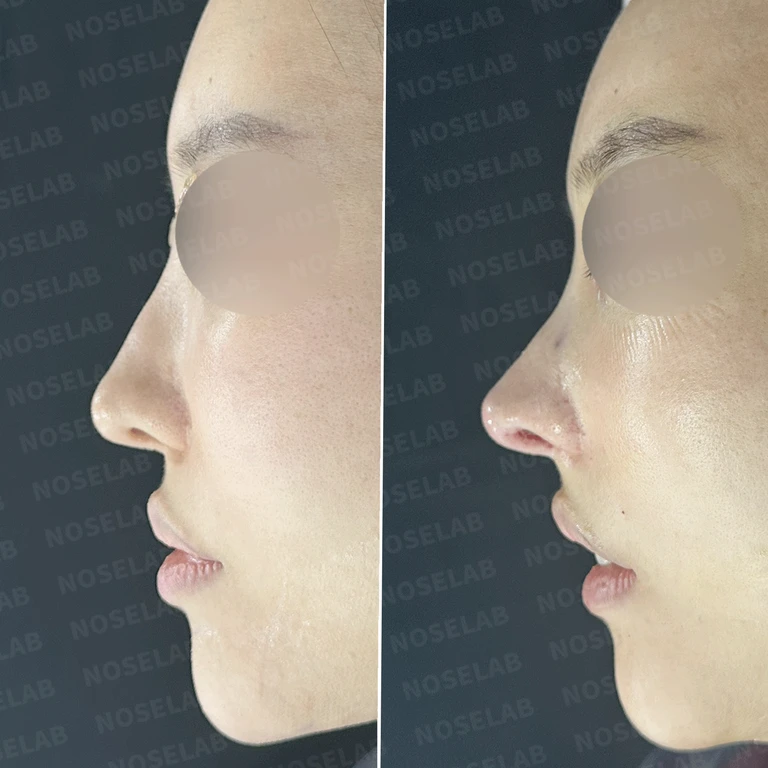
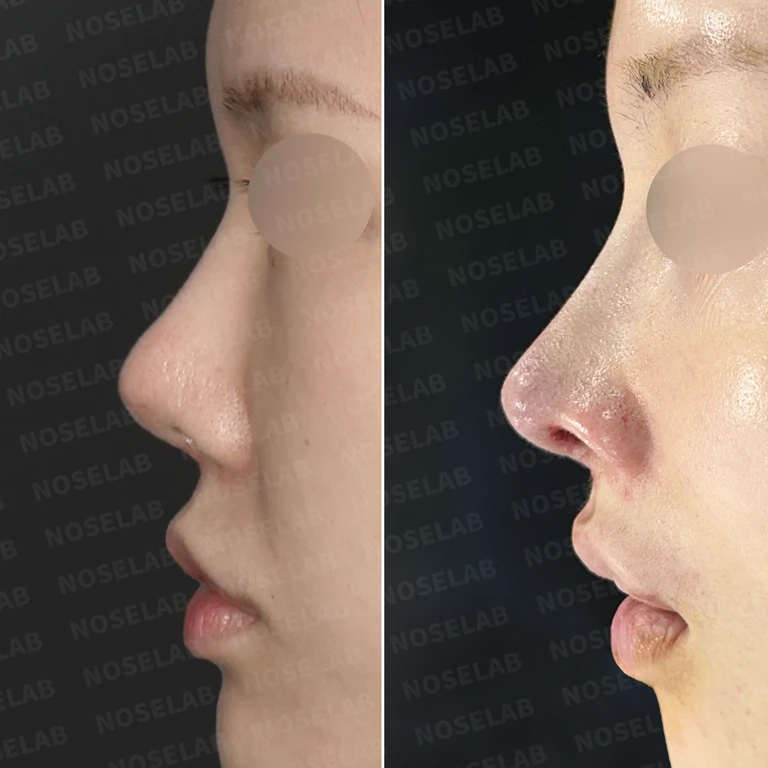
Why a nose becomes upturned and the columella retracts after repeated revisions, and how to reconstruct the septum — Before-and-after comparison
Before-and-after comparison

Why a nose becomes upturned and the columella retracts after repeated revisions, and how to reconstruct the septum

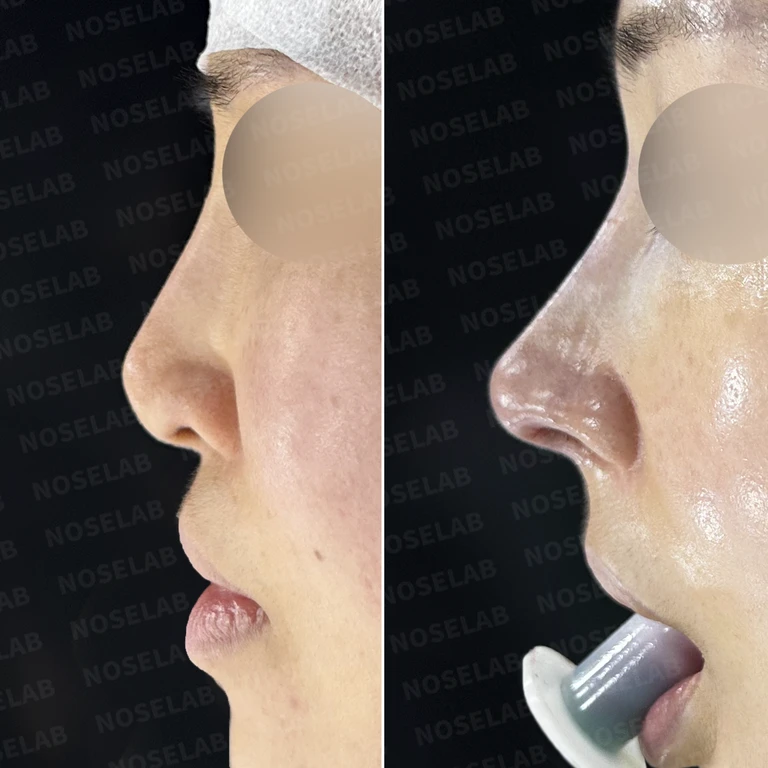
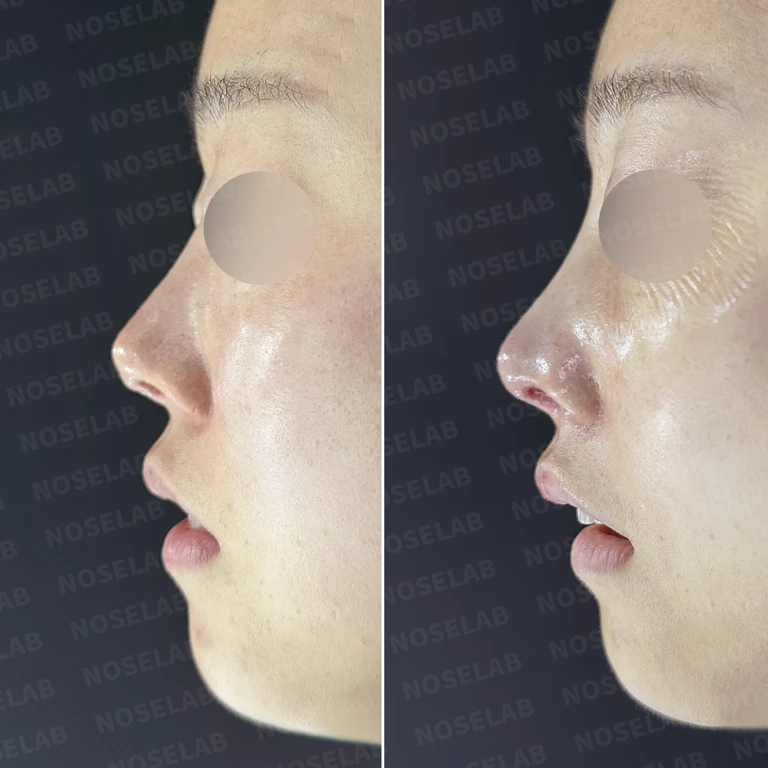
A case where damage from previous surgeries led to collapse of the anterior septum and nostril asymmetry. The septum was reconstructed using autologous rib cartilage, followed by nasal tip rhinoplasty with donor rib cartilage and implant replacement.

Previous surgeries and procedures

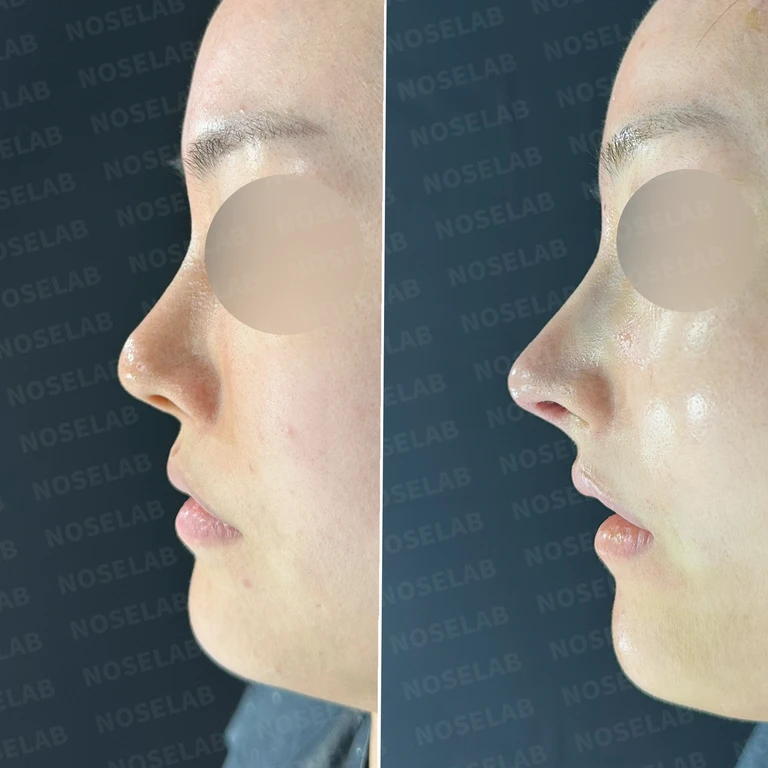
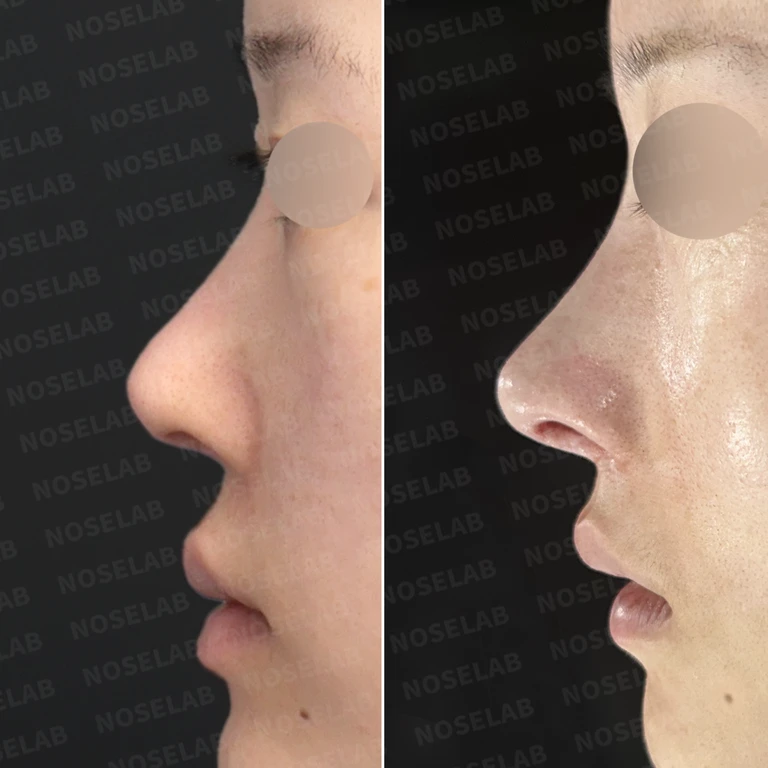
Why nasal tip skin depresses and implants show through after inflammation, and how to reconstruct it — Before-and-after comparison
Before-and-after comparison

Why nasal tip skin depresses and implants show through after inflammation, and how to reconstruct it

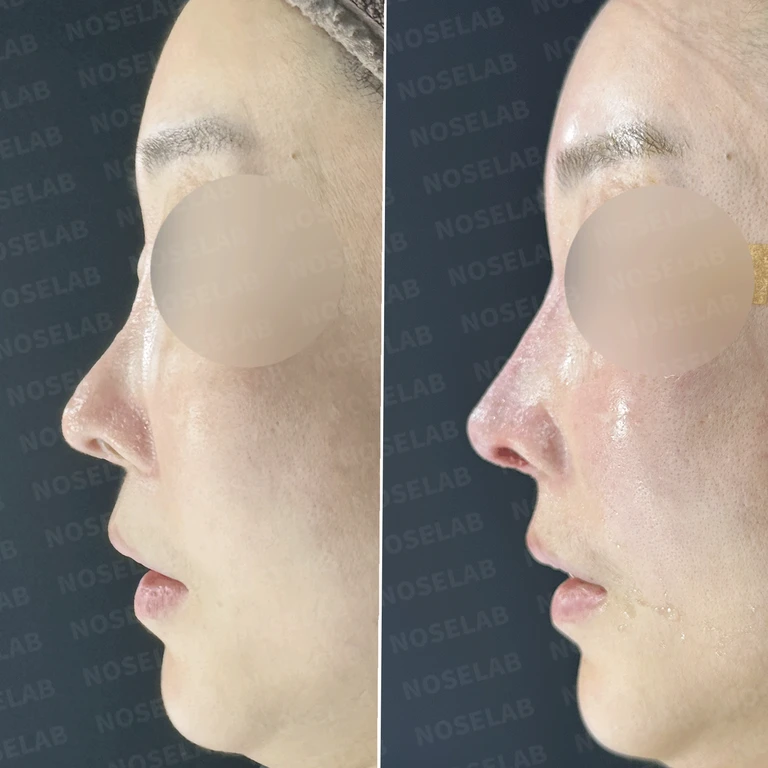
A case where repeated surgeries and inflammation led to depressed nasal tip skin and implant show-through. The damaged skin was revised, dermal and cartilage grafts were placed, the septum was reinforced with autologous rib cartilage, and the implant was replaced.

Preoperative condition
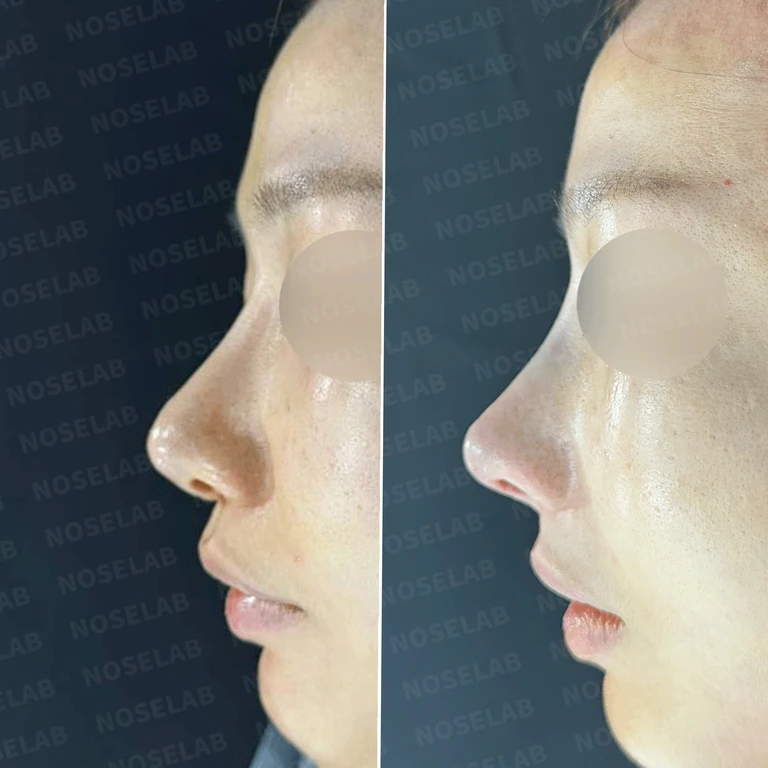
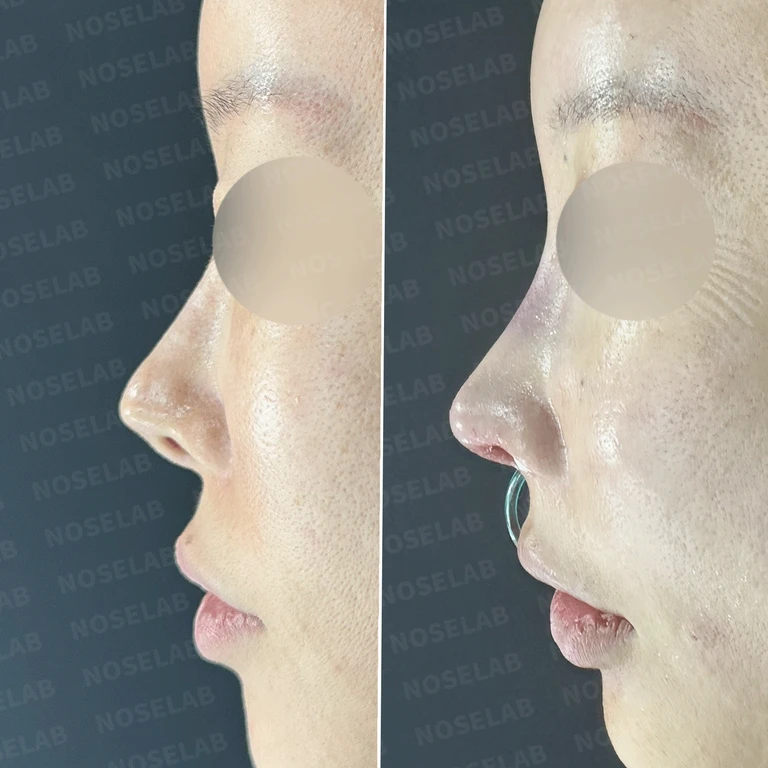
Why implants show through and nostrils look M-shaped, and how to reconstruct them — Before-and-after comparison
Before-and-after comparison

Why implants show through and nostrils look M-shaped, and how to reconstruct them

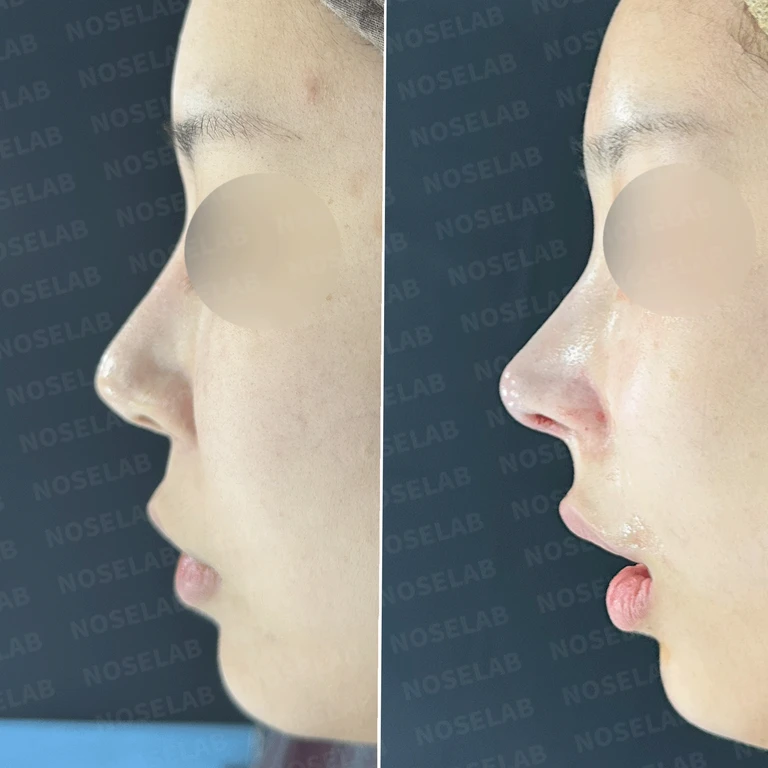
Implant show-through at the nasal tip and thinned skin were reinforced with donor dermis, and foreign substances were removed. The nasal tip was reconstructed using autologous rib cartilage, along with dragon nose correction and lateral osteotomy.

Preoperative condition · Postoperative record
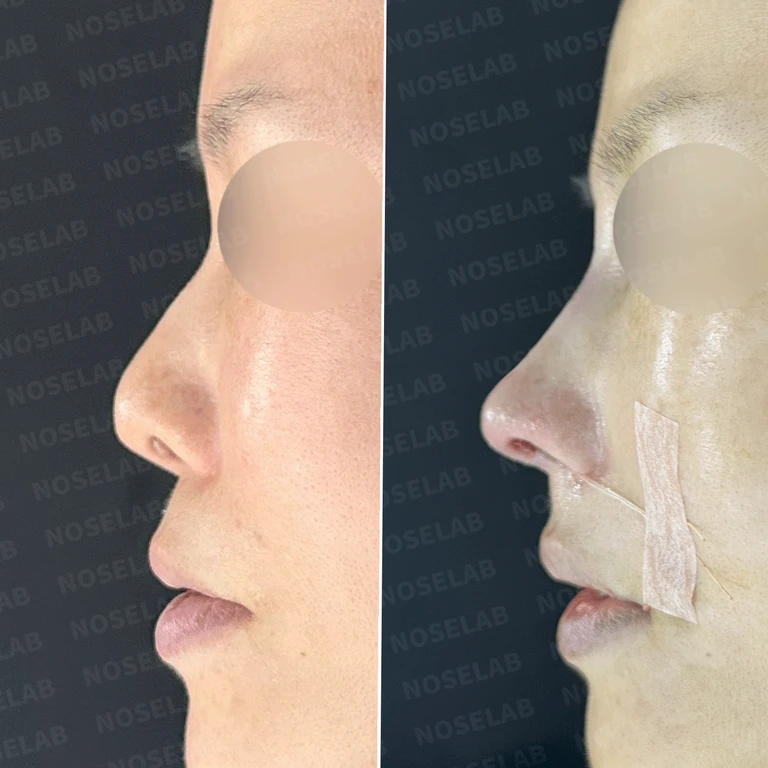
Why nostril asymmetry worsens with repeated revisions, and how to correct the columella — Before-and-after comparison
Before-and-after comparison

Why nostril asymmetry worsens with repeated revisions, and how to correct the columella

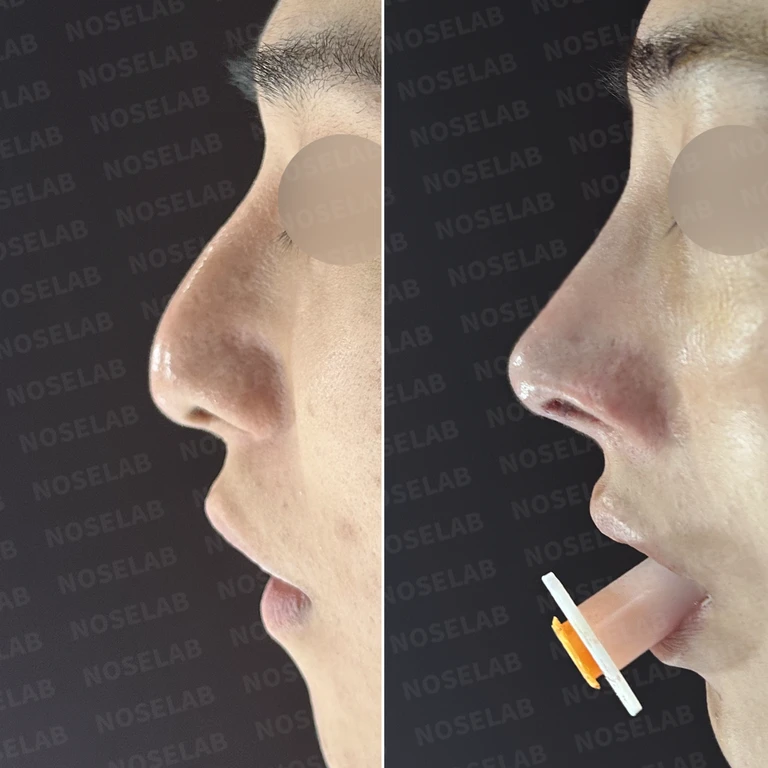
After 6 previous surgeries, a drooping and tilted columella, crooked nose, and nostril asymmetry were stabilized through a closed approach using autologous rib cartilage reinforcement, lateral osteotomy, and columellar alignment correction.

Preoperative condition

Why nasal obstruction worsens when the septum collapses to one side — Before-and-after comparison
Before-and-after comparison

Why nasal obstruction worsens when the septum collapses to one side

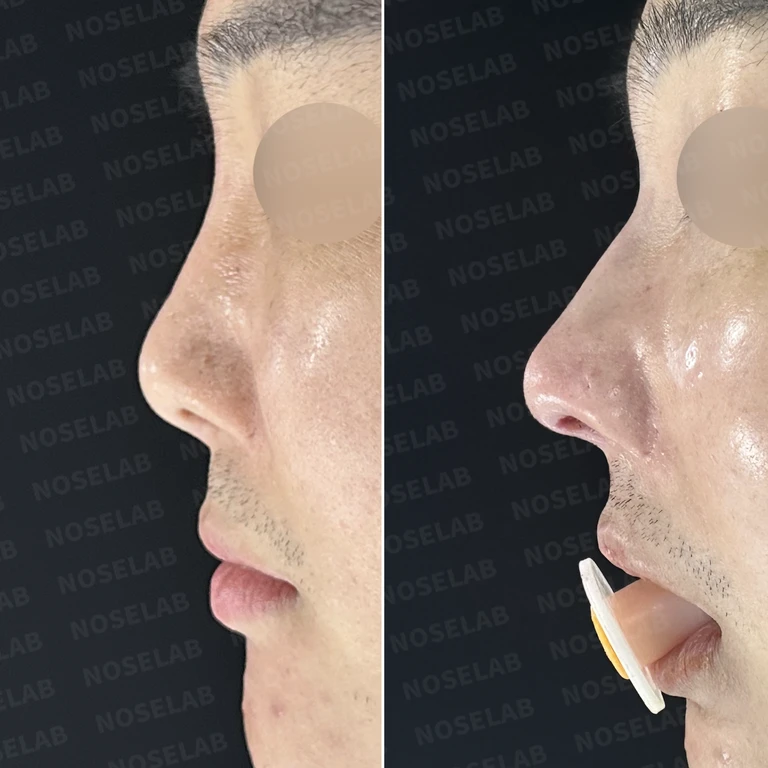
For a male patient presenting with a collapsed septum, severe nasal obstruction, and a drooping tip, autologous rib cartilage septal reconstruction, septal extension, and rhinitis surgery were performed.

Preoperative condition · Postoperative record

Why nasal tip cartilage shows through the skin and how dermis grafting reinforces it — Before-and-after comparison
Before-and-after comparison

Why nasal tip cartilage shows through the skin and how dermis grafting reinforces it

For a nose showing cartilage show-through through thinned skin, a widened nasal bridge, and nasal obstruction 7 years after surgery, autologous dermis reinforcement, autologous rib cartilage tip plasty, lateral osteotomy, and septoplasty were performed.

Preoperative condition · Postoperative record

Why nasal tip skin thins and cartilage shows through, and how skin reinforcement is done — Before-and-after comparison
Before-and-after comparison

Why nasal tip skin thins and cartilage shows through, and how skin reinforcement is done

A case of skin thinning, cartilage show-through, and an upturned nose following contracted nose surgery. The skin was reinforced with dermis and autologous rib perichondrium, along with septal extension.

Preoperative condition

Why saddle nose and nasal valve stenosis occur after repeated revision rhinoplasty, and how total reconstruction is performed — Before-and-after comparison
Before-and-after comparison

Why saddle nose and nasal valve stenosis occur after repeated revision rhinoplasty, and how total reconstruction is performed

This is a case where the nasal bones, septum, and keystone area were damaged after repeated surgeries, causing nasal obstruction due to nasal valve stenosis. Autologous rib cartilage was used to reconstruct the nasal support structure and nasal valve, while correcting bridge depression and asymmetry.

Previous surgeries and procedures

Why cartilage shows through after multiple rhinoplasties and how to restore the mucosa and structure — Before-and-after comparison
Before-and-after comparison

Why cartilage shows through after multiple rhinoplasties and how to restore the mucosa and structure

A case where autologous rib cartilage was used to reinforce soft tissue, reconstruct nasal structure, and perform functional surgery to improve mucosal thinning, lateral cartilage show-through, and nostril asymmetry resulting from repeated surgeries.

Preoperative condition · Postoperative record

Why the nasal tip shows through after dermal graft surgery and how to reconstruct it with autologous rib cartilage — Before-and-after comparison
Before-and-after comparison

Why the nasal tip shows through after dermal graft surgery and how to reconstruct it with autologous rib cartilage

A case where donor dermis previously placed on the nasal dorsum caused tip show-through and made the midface appear elongated; all donor dermis was completely removed, autologous rib cartilage reconstruction was performed, and stem cell therapy was combined.

Preoperative condition · Postoperative record

Septal perforation and nasal tip cartilage show-through after repeated rhinoplasties: how reconstruction is performed — Before-and-after comparison
Before-and-after comparison

Septal perforation and nasal tip cartilage show-through after repeated rhinoplasties: how reconstruction is performed

A case where autologous rib cartilage was used for full septal reconstruction alongside dermis grafting to address repeated surgical history, septal perforation, and thinned nasal tip skin.

Preoperative condition · Postoperative record

Causes of nasal tip show-through and correction methods to lower the tip defining point — Before-and-after comparison
Before-and-after comparison

Causes of nasal tip show-through and correction methods to lower the tip defining point

To correct persistent nasal tip show-through and an upturned nose that remained even after an ear dermis graft, past filler residue was completely removed, the tip defining point was naturally lowered, and nasal tip plasty using autologous rib cartilage was performed.

Preoperative condition · Postoperative record

Why nasal tip cartilage shows through the skin and turns upward: reinforcement and reconstruction methods — Before-and-after comparison
Before-and-after comparison

Why nasal tip cartilage shows through the skin and turns upward: reinforcement and reconstruction methods

For a patient presenting with visible nasal tip cartilage and an upturned nose following previous surgery with a silicone implant and ear cartilage, we performed silicone implant removal, septal extension using autologous rib cartilage, fat grafting, and skin reinforcement with donor dermis.

Preoperative condition · Postoperative record

Why nasal bridge and tip show-through happens after old silicone rhinoplasty: dermal reinforcement and rib cartilage reconstruction — Before-and-after comparison
Before-and-after comparison

Why nasal bridge and tip show-through happens after old silicone rhinoplasty: dermal reinforcement and rib cartilage reconstruction

To resolve show-through of an L-shaped silicone implant and cartilage beneath thinned skin, we removed the previous silicone implant, reinforced the skin with dermis, adjusted the tip height, reconstructed the nasal tip with autologous rib cartilage, and replaced the implant with a new one.

Preoperative condition · Postoperative record

Why repeat rhinoplasty thins the nasal tip skin causing cartilage show-through, and how autologous dermis reinforcement helps — Before-and-after comparison
Before-and-after comparison

Why repeat rhinoplasty thins the nasal tip skin causing cartilage show-through, and how autologous dermis reinforcement helps

To resolve thinned nasal tip skin and cartilage show-through caused by repeated surgeries, retroauricular autologous dermis grafting, lateral osteotomy, and columellar elevation were performed.

Preoperative condition

Why Gore-Tex in the nasal tip causes issues and septal reconstruction using rib cartilage — Before-and-after comparison
Before-and-after comparison

Why Gore-Tex in the nasal tip causes issues and septal reconstruction using rib cartilage

A deviated nose, implant show-through, and pinched tip caused by silicone and nasal tip Gore-Tex were resolved by removing the Gore-Tex, reconstructing the septum with autologous rib cartilage, and correcting the nasolabial angle.

Preoperative condition · Postoperative record

Why an old silicone implant shows through at the nasal tip, and methods for removal and reconstruction — Before-and-after comparison
Before-and-after comparison

Why an old silicone implant shows through at the nasal tip, and methods for removal and reconstruction

Implant show-through at the nasal tip and chronic rhinitis symptoms following an old silicone implant placement were addressed through implant removal, reconstruction of the septum and nasal tip cartilage, and rhinitis surgery.

Preoperative condition · Postoperative record

No search results found

Please try searching with different keywords.

Scroll to keep reading

1 / 3Next case

Common questions before reading the cases

Can cases of cartilage show-through also be found alongside implant show-through?

Yes. This topic includes cases where cartilage visibility was noted, not just silicone implants. One case record describes how cartilage placed during multiple prior surgeries had clumped together, with the overlying skin thinning until its outline showed through. It details the process of trimming the existing cartilage, reconstructing the structural support with autologous rib cartilage, and reinforcing the skin with dermis, showing how both the structural material and the skin envelope were addressed.

Is being palpable under the skin considered the same condition as extruding outward?

They are not grouped under the same definition. One record notes that a silicone implant felt sharp to the touch, the skin had turned red, and it was on the verge of impending extrusion. This is distinct from actual exposure, where the material has already breached the skin or mucosa. Review the observational findings in each case report and compare them with related topics categorized under actual exposure or extrusion risk.

Related topics to explore

Thin nasal skinImplant and cartilage exposureSkin and soft tissue reinforcement

Surgical records referenced in this guide

  • Septal perforation and nasal tip cartilage show-through after repeated rhinoplasties: how reconstruction is performed
  • Foreign body removal and autologous rib cartilage revision rhinoplasty for chronic foreign body reaction and a long nose
Original article

Read more records

Planning a visit to Seoul?Prepare your consultation with the NOSELAB team.

International patient guideWhatsApp ↗
Dr. Peter C. Kang's Rhinoplasty Stories
Rhinoplasty guideCases by topicDr. Peter C. KangNaver Blog ↗
View original photo
Enlarged photo
WhatsAppChat with NOSELAB↗