Hello, I am Dr. Peter C. Kang.
Today, I would like to share the case of a patient who visited our clinic because, despite multiple previous nasal surgeries, the columella gradually drooped and deviated, causing progressively worse nostril asymmetry.
🔍 Surgical history
This patient had undergone a total of 6 prior nasal surgeries.
About 12 years ago: First rhinoplasty using septal cartilage, ear cartilage, and a silicone implant
About 6 years ago: Revision rhinoplasty using autologous rib cartilage, a silicone implant, and ear cartilage (the nose became crooked immediately after surgery)
Followed by 1 alar rim elevation surgery
About 4 years ago: Implant-free revision rhinoplasty using autologous rib cartilage, along with functional surgery
About 3 years ago: Additional revision rhinoplasty using banked autologous rib cartilage
About 1 year and 6 months ago: Nostril elongation surgery using ear cartilage
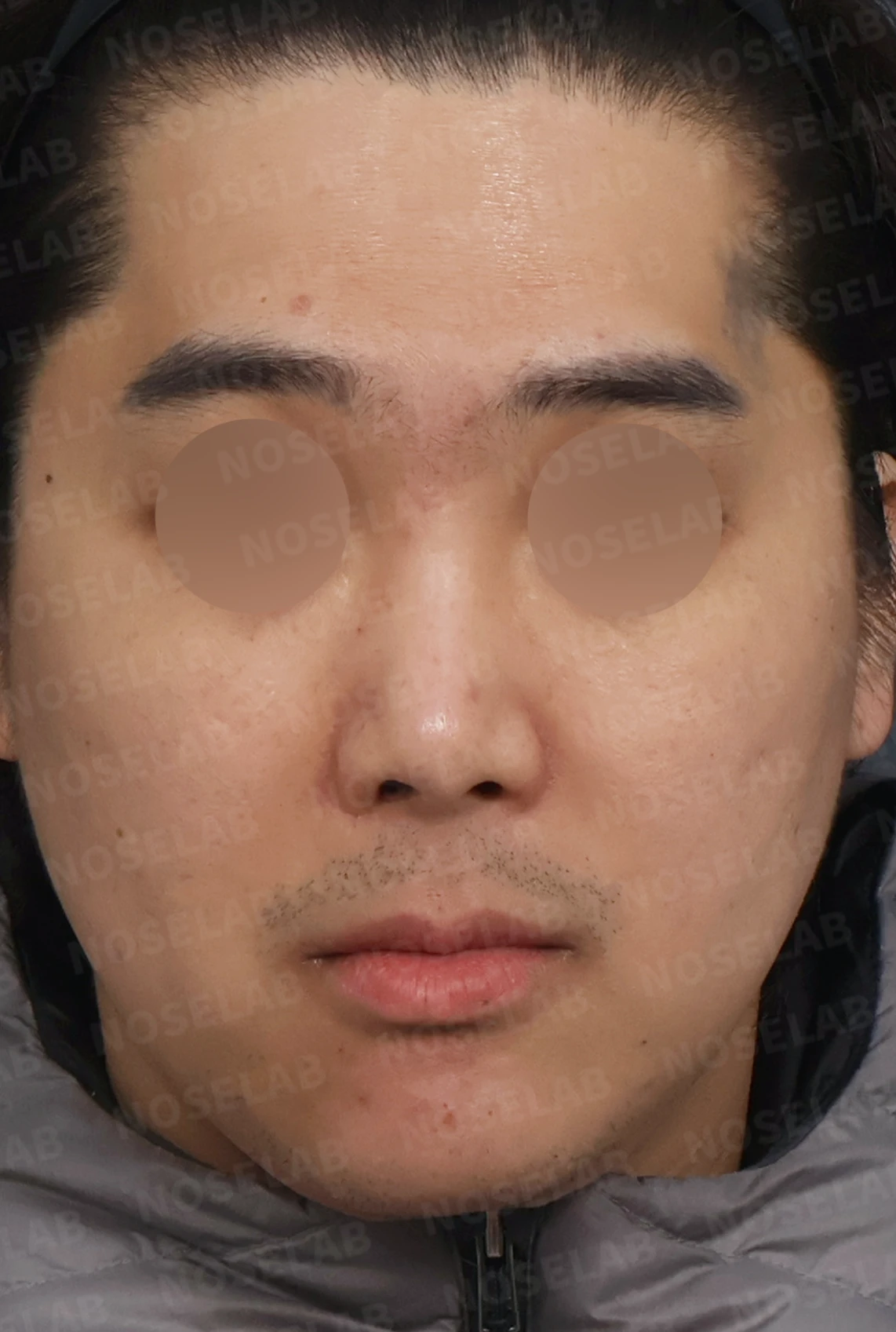
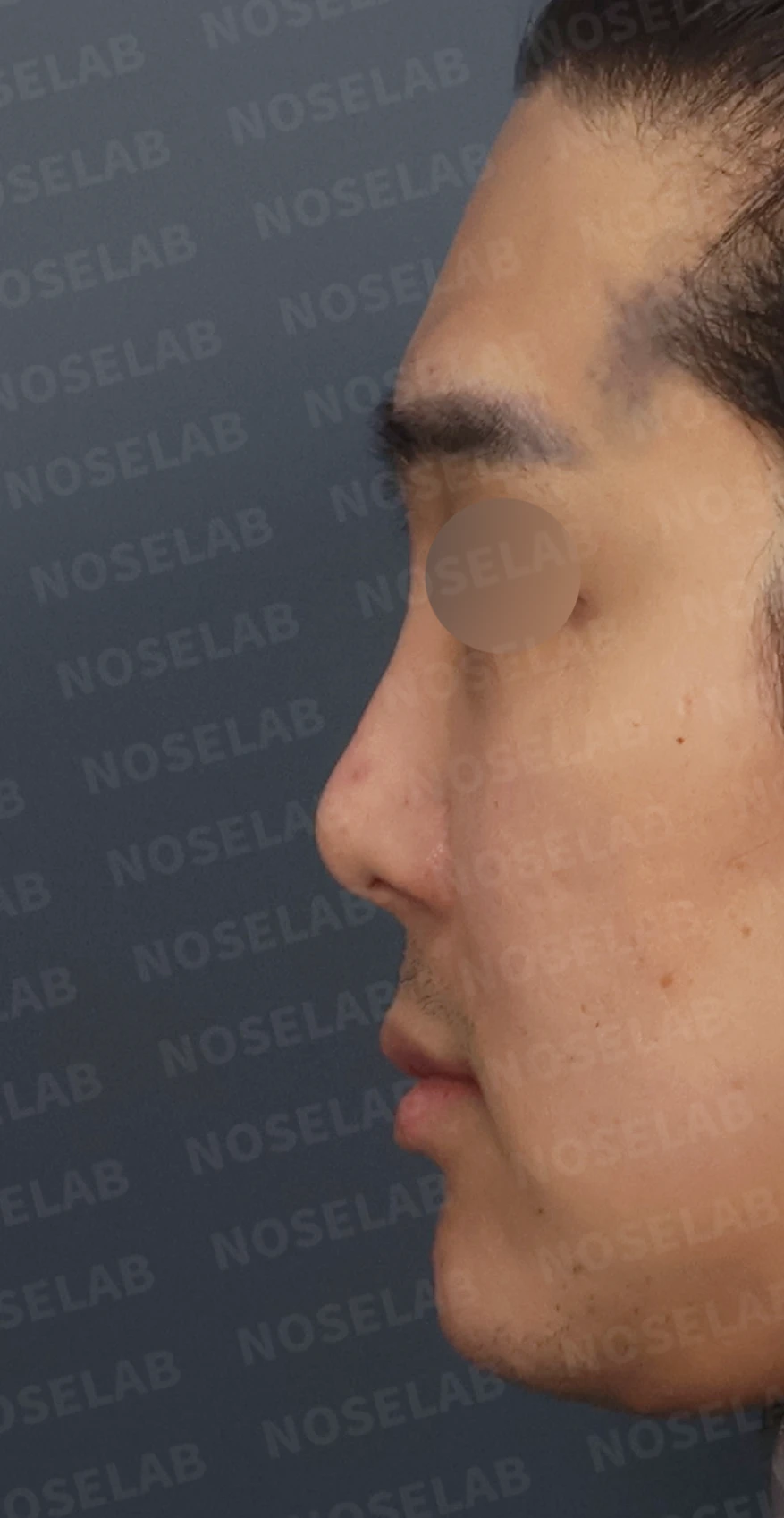
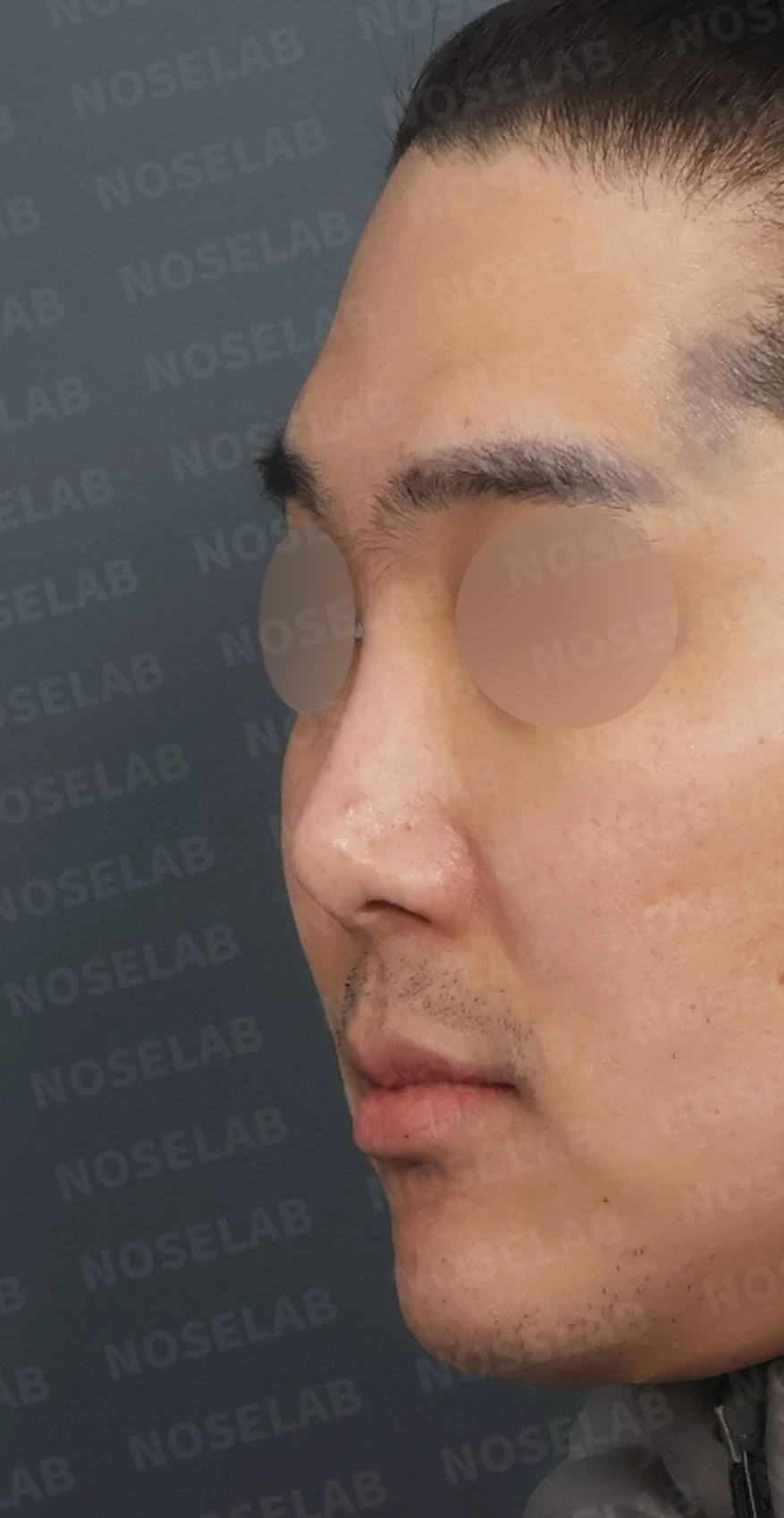
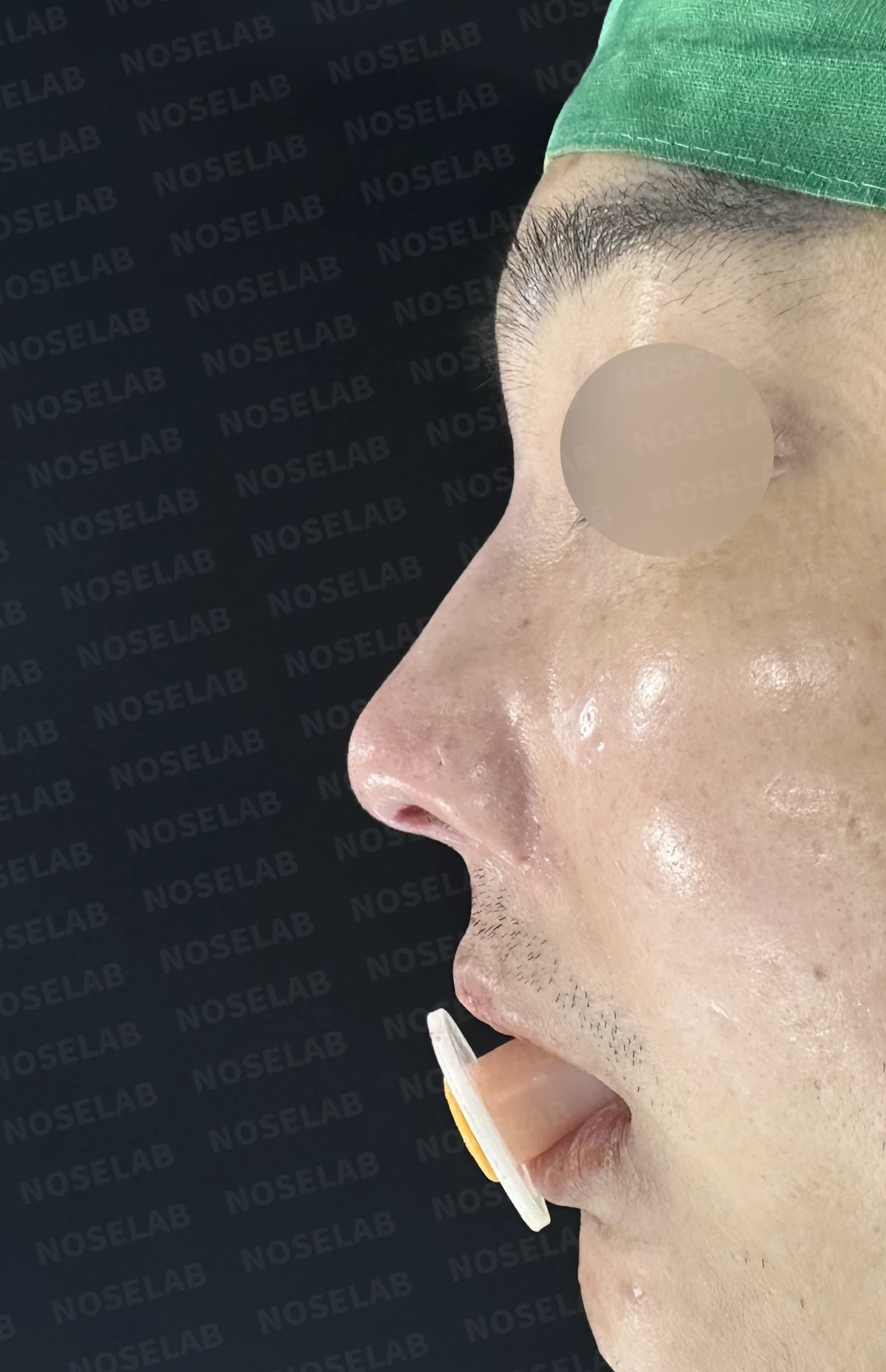
Front, left profile, and oblique views during design consultation.
💉 Patient requests
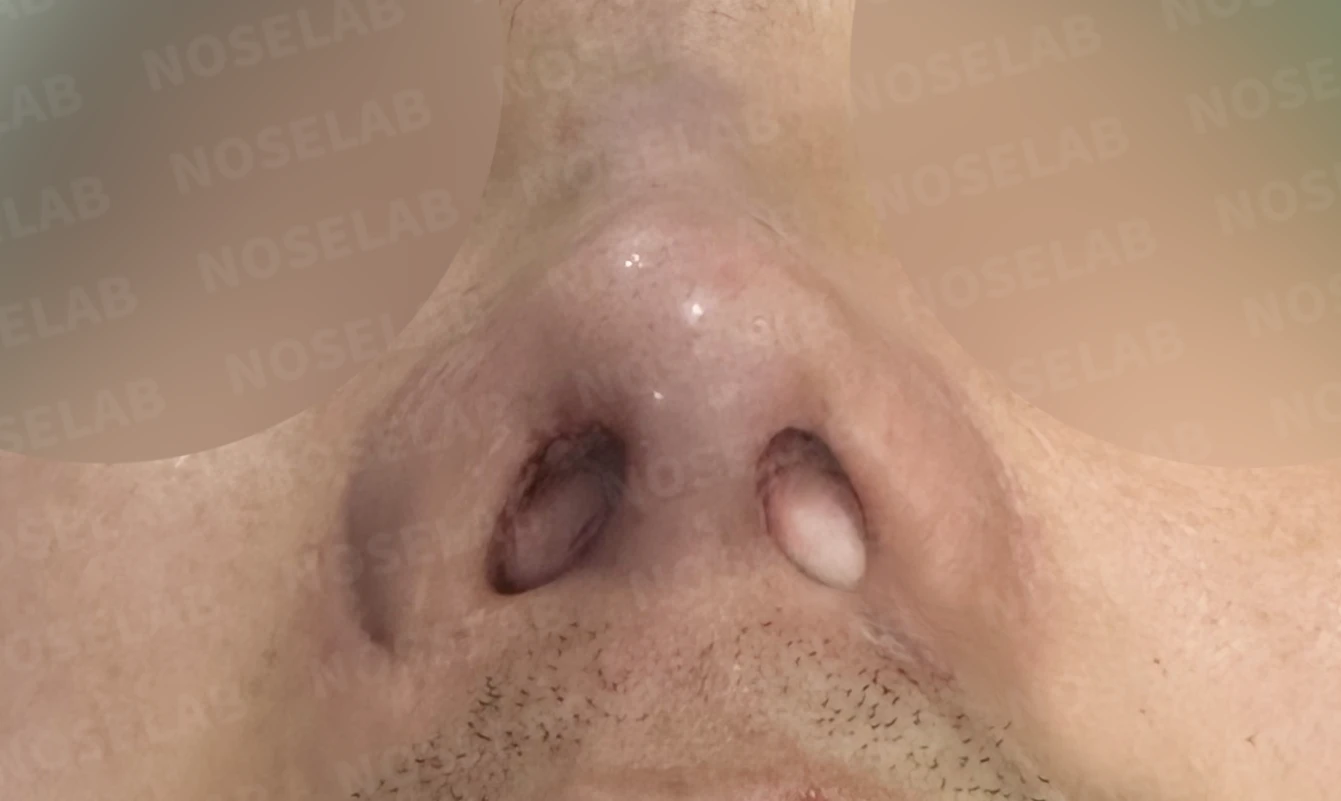
The patient's greatest concern was improving the nostril asymmetry. The primary complaint was that as the columella gradually descended and tilted to one side, the asymmetry became increasingly severe. While satisfied with the overall shape of the nose, the patient was bothered by the cartilage showing through and feeling palpable at the columellar tip, as well as the noticeable difference between the left and right nostrils.
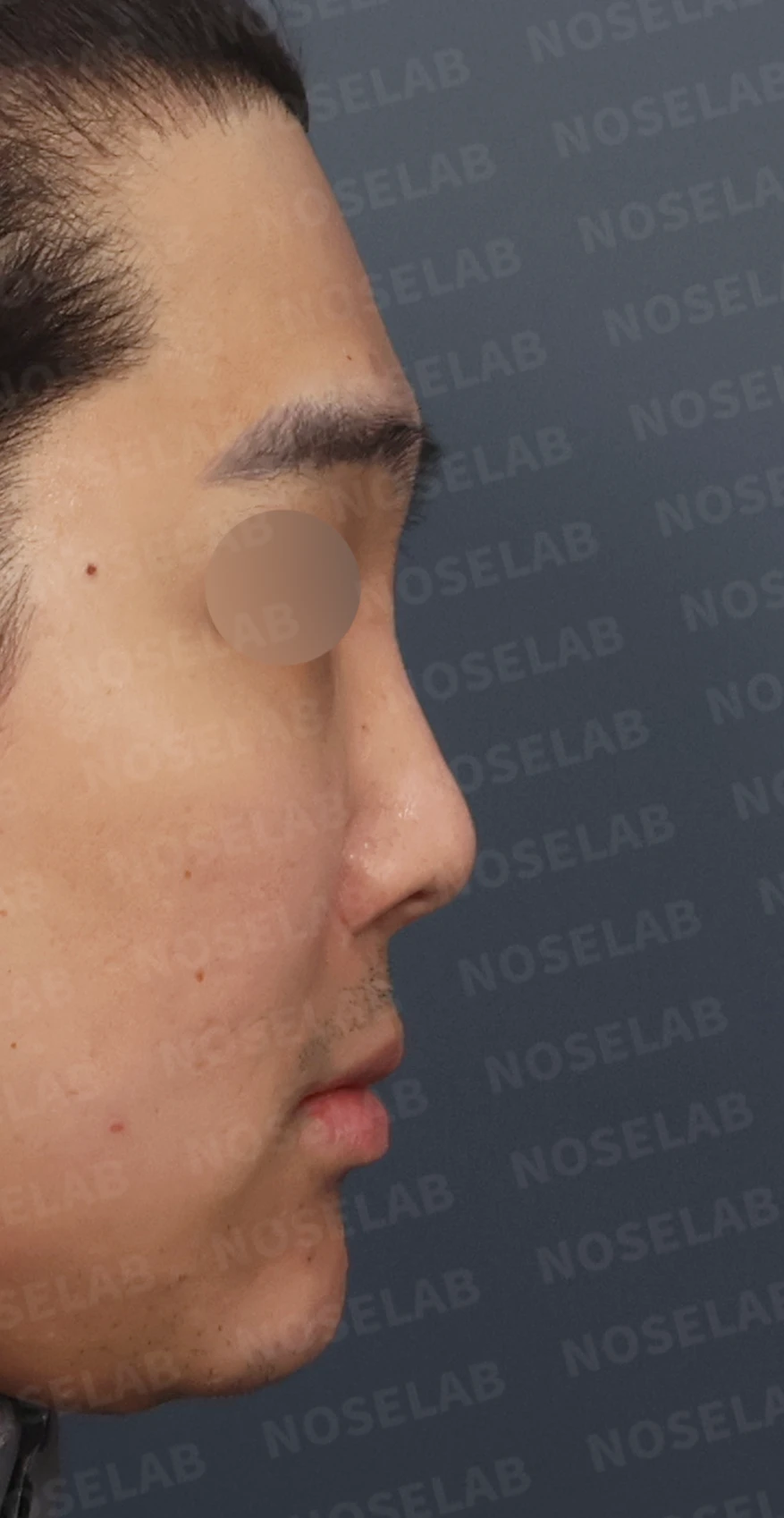
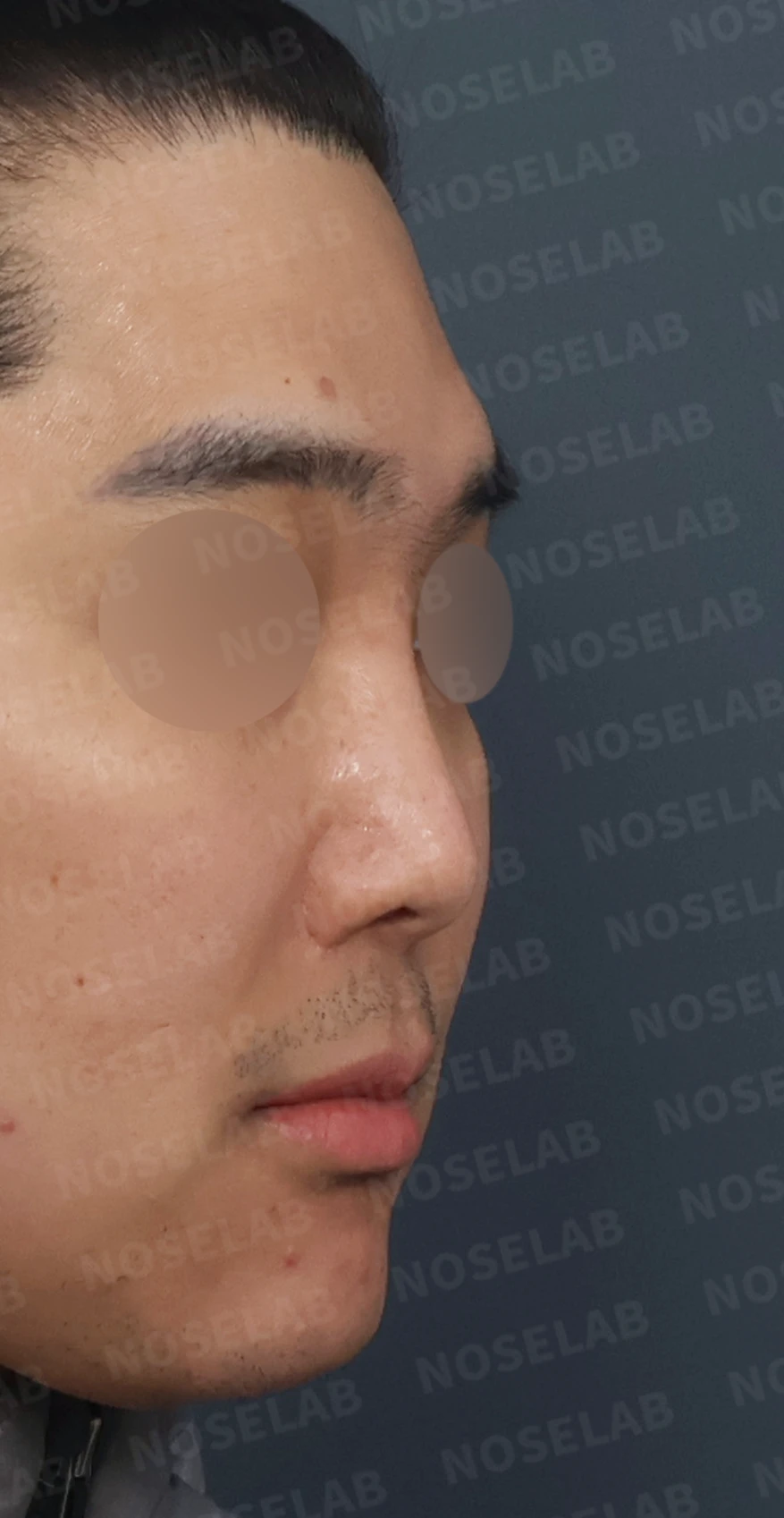
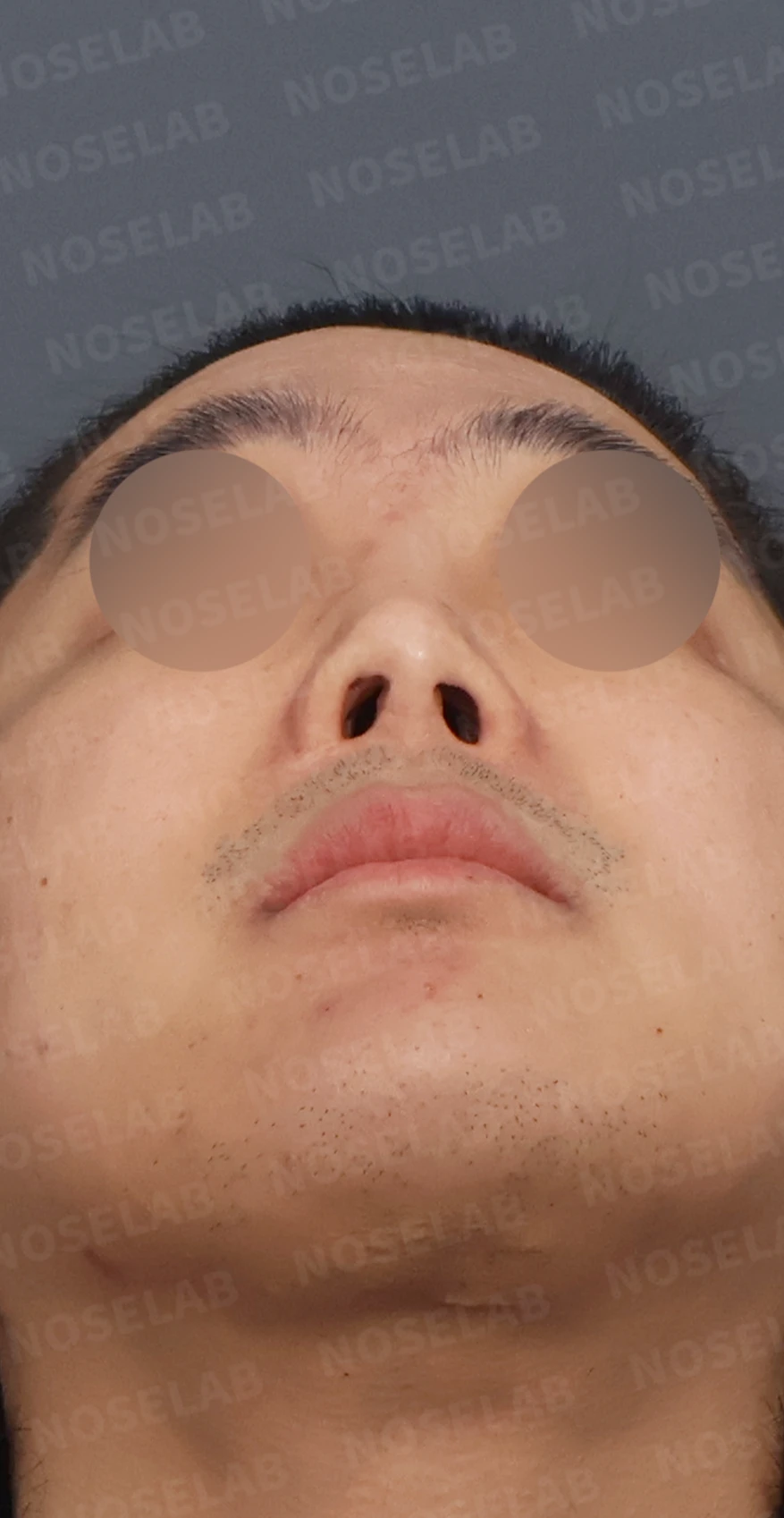
Right profile, oblique, and nostril views during design consultation.
🔧 Surgical plan and procedure
Surgery was performed through a closed approach as follows.
1. Reinforcement of the nasal bridge and nasal tip using autologous rib cartilage
Using autologous rib cartilage, the nasal bridge and nasal tip were naturally elevated to secure a stable supporting structure.
2. Lateral osteotomy for crooked nose correction
To correct the deviation of the nasal bridge, a lateral osteotomy was performed to realign the nasal bones.
3. Columellar correction to address nostril asymmetry
In many cases, nostril asymmetry occurs because the columella tilts to one side. The direction of the columella was realigned to restore balance between the left and right sides.
🌟 Surgical results
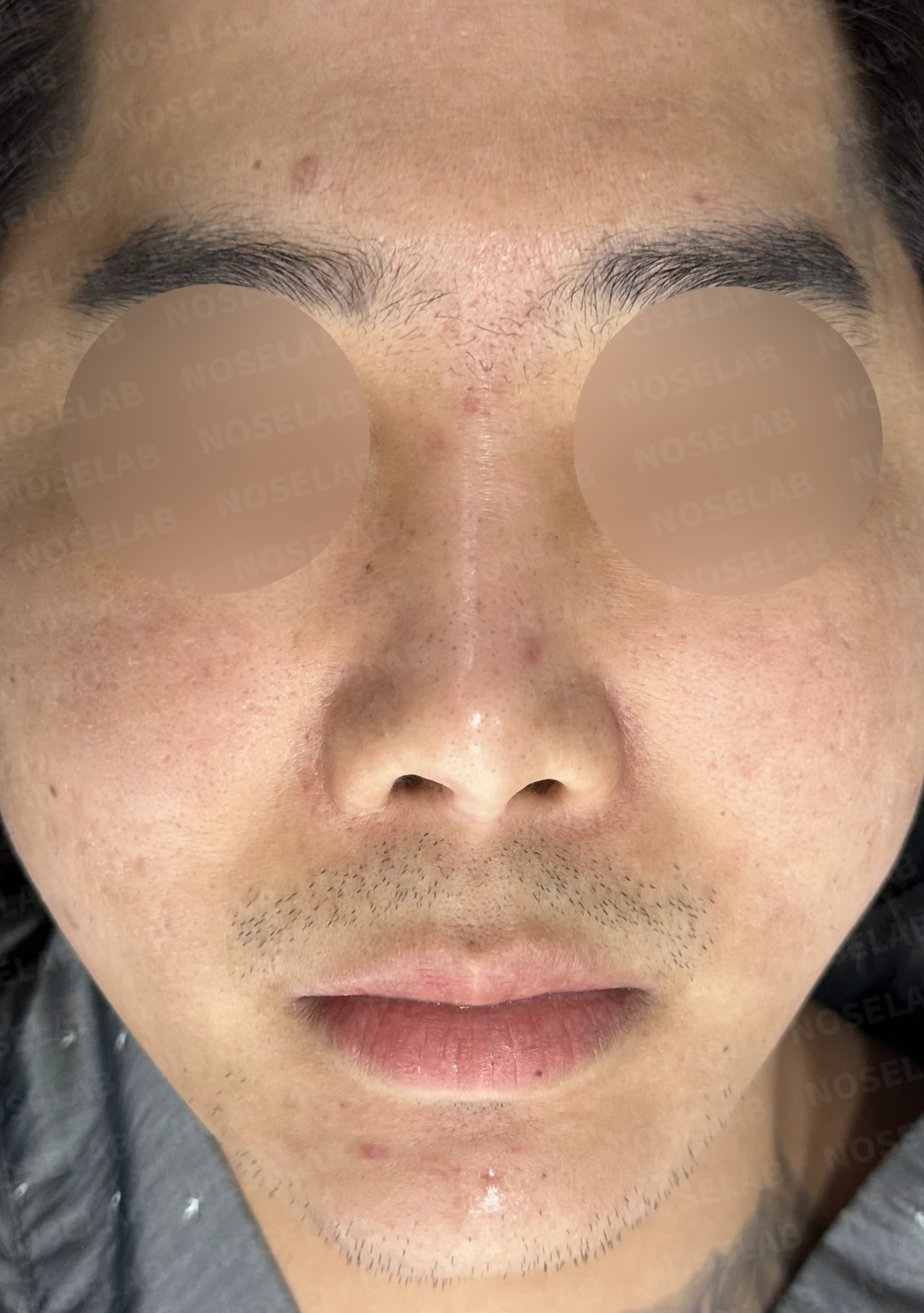
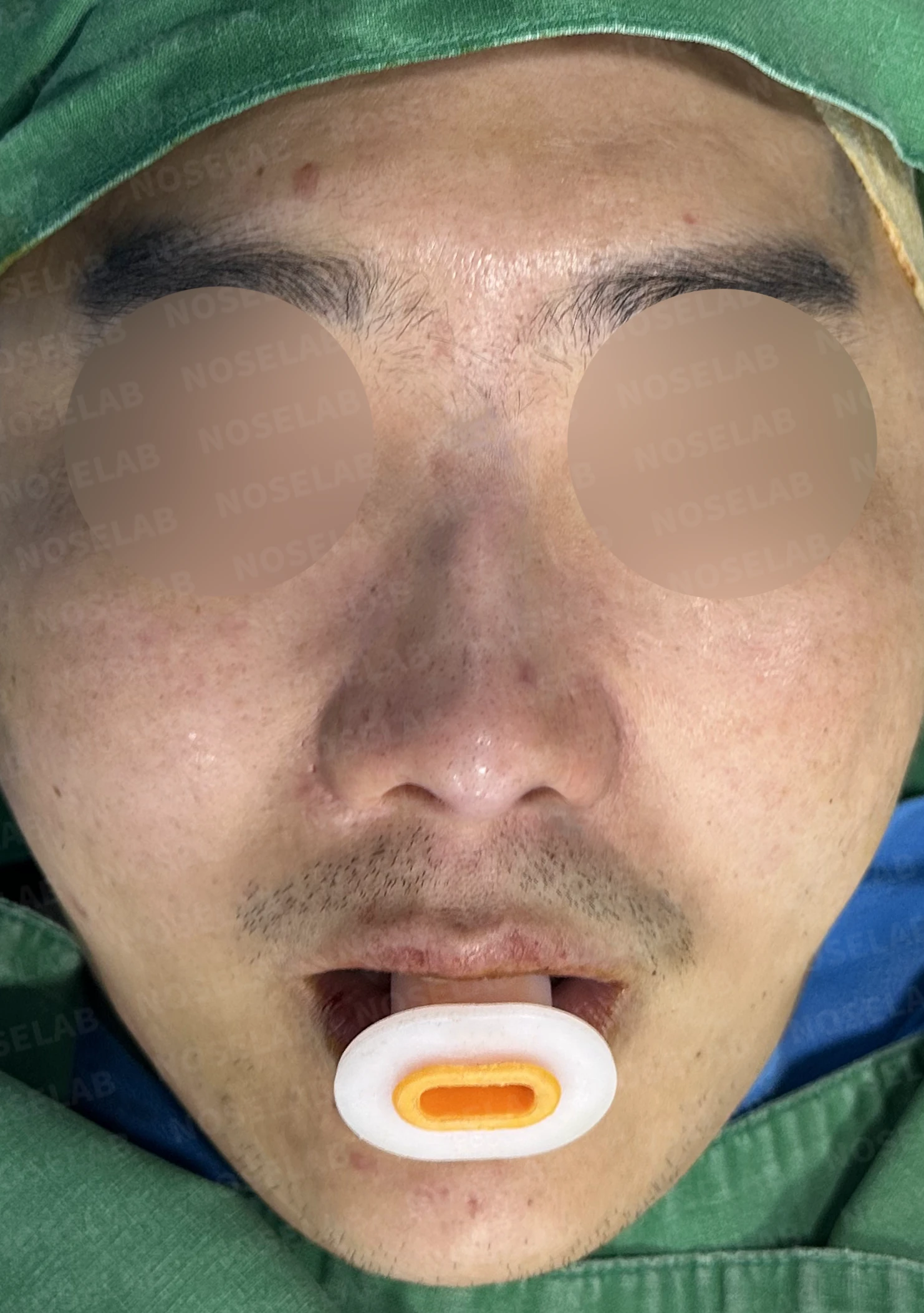
Before surgery / Day 0 immediately after surgery Photos taken immediately after surgery show swelling and may differ from the final result.
Front view changes:
The deviated nasal bridge was straightened
Left-right nostril symmetry was significantly improved
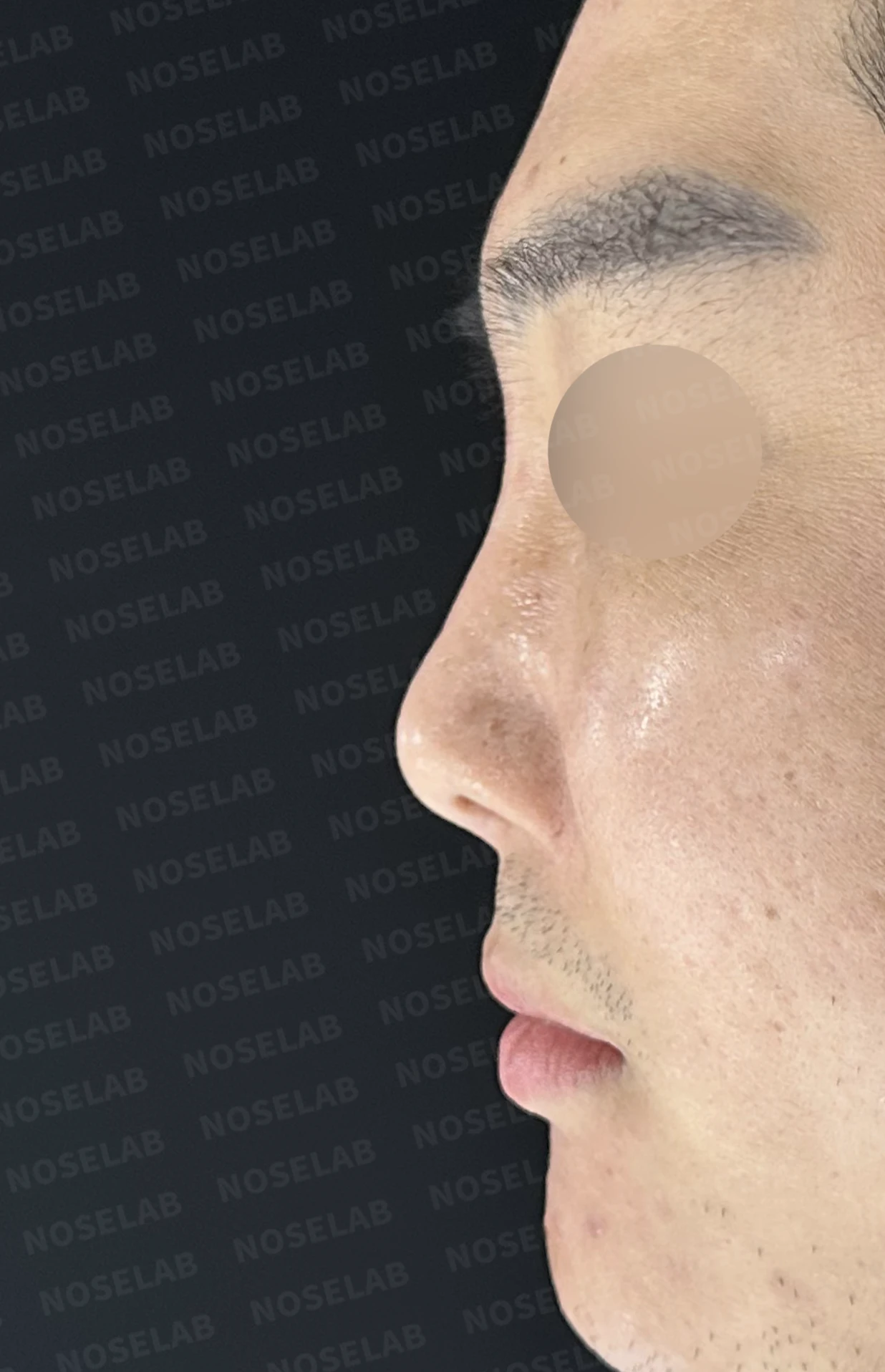
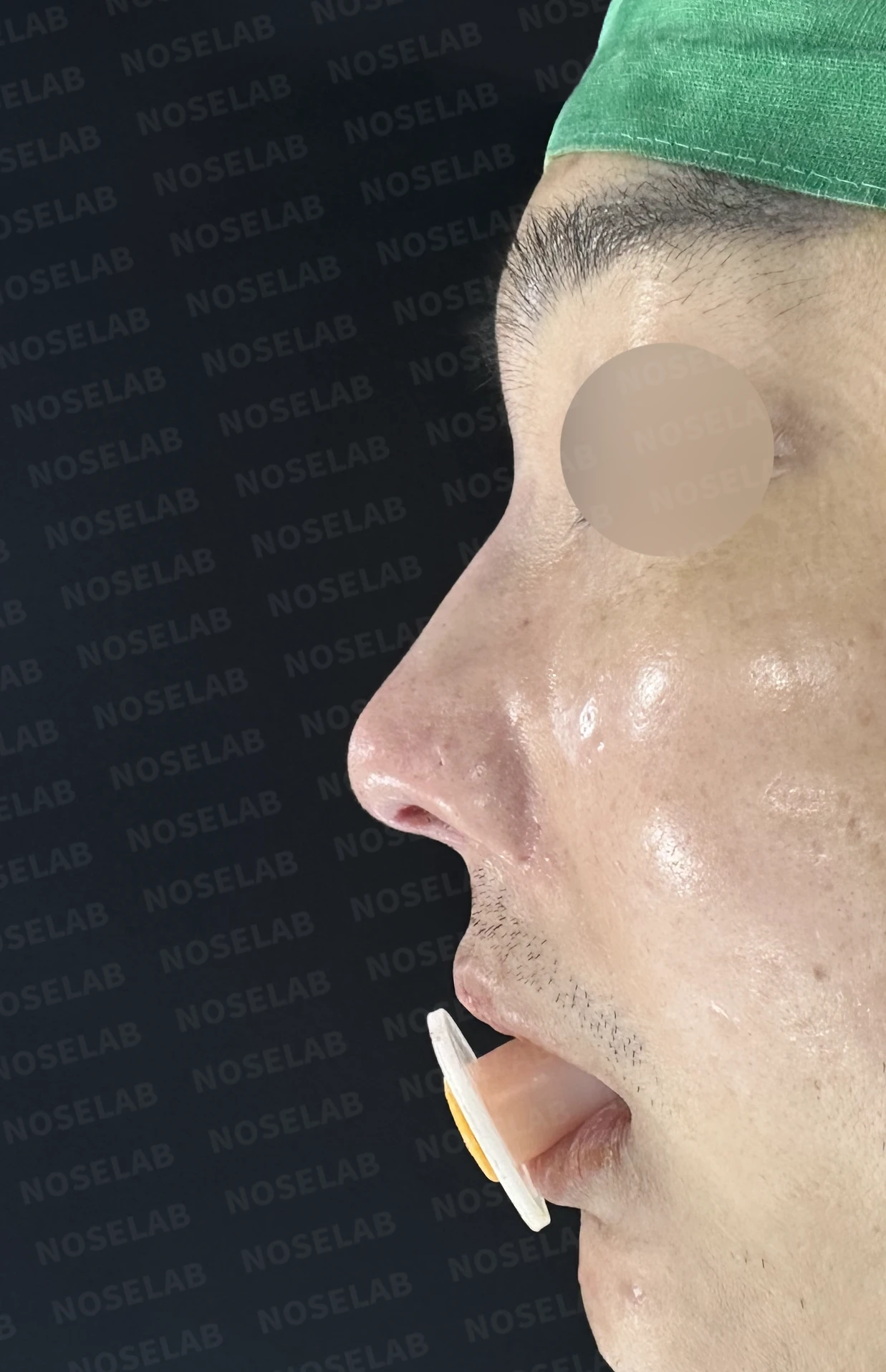
Before surgery / Day 0 immediately after surgery Photos taken immediately after surgery show swelling and may differ from the final result.
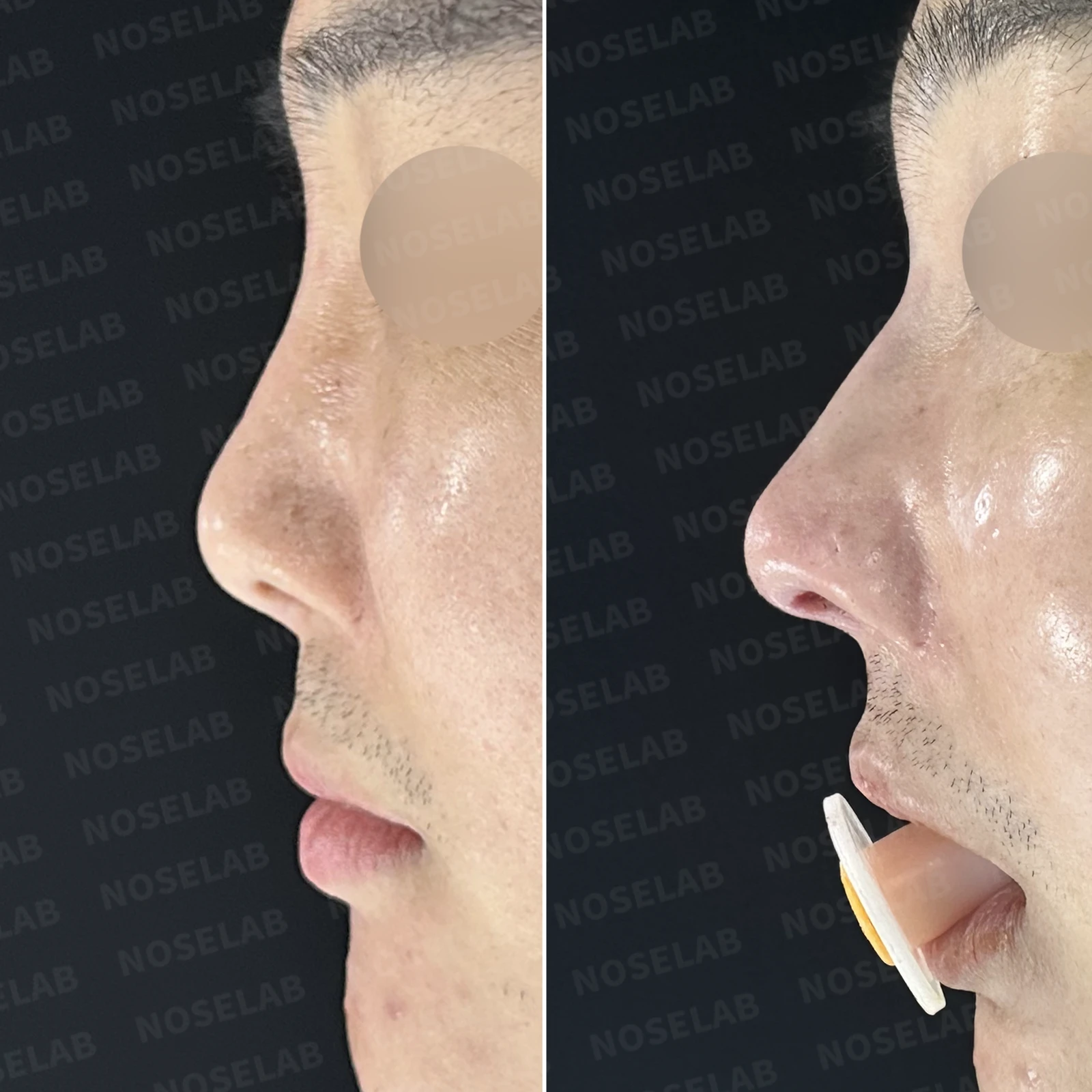
Profile view changes:
A natural and stable nasal bridge line was achieved
Columellar drooping and deviation were improved
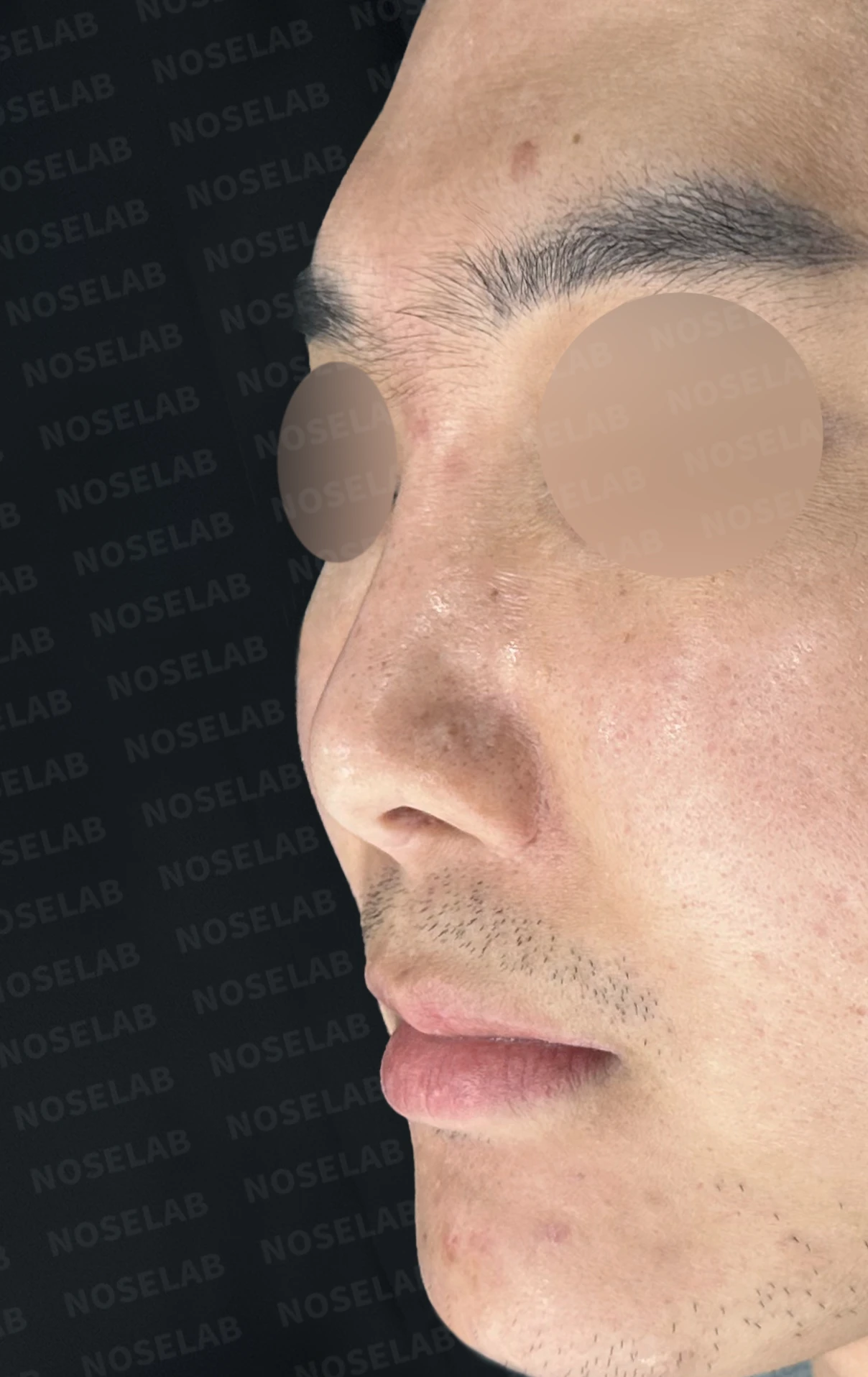
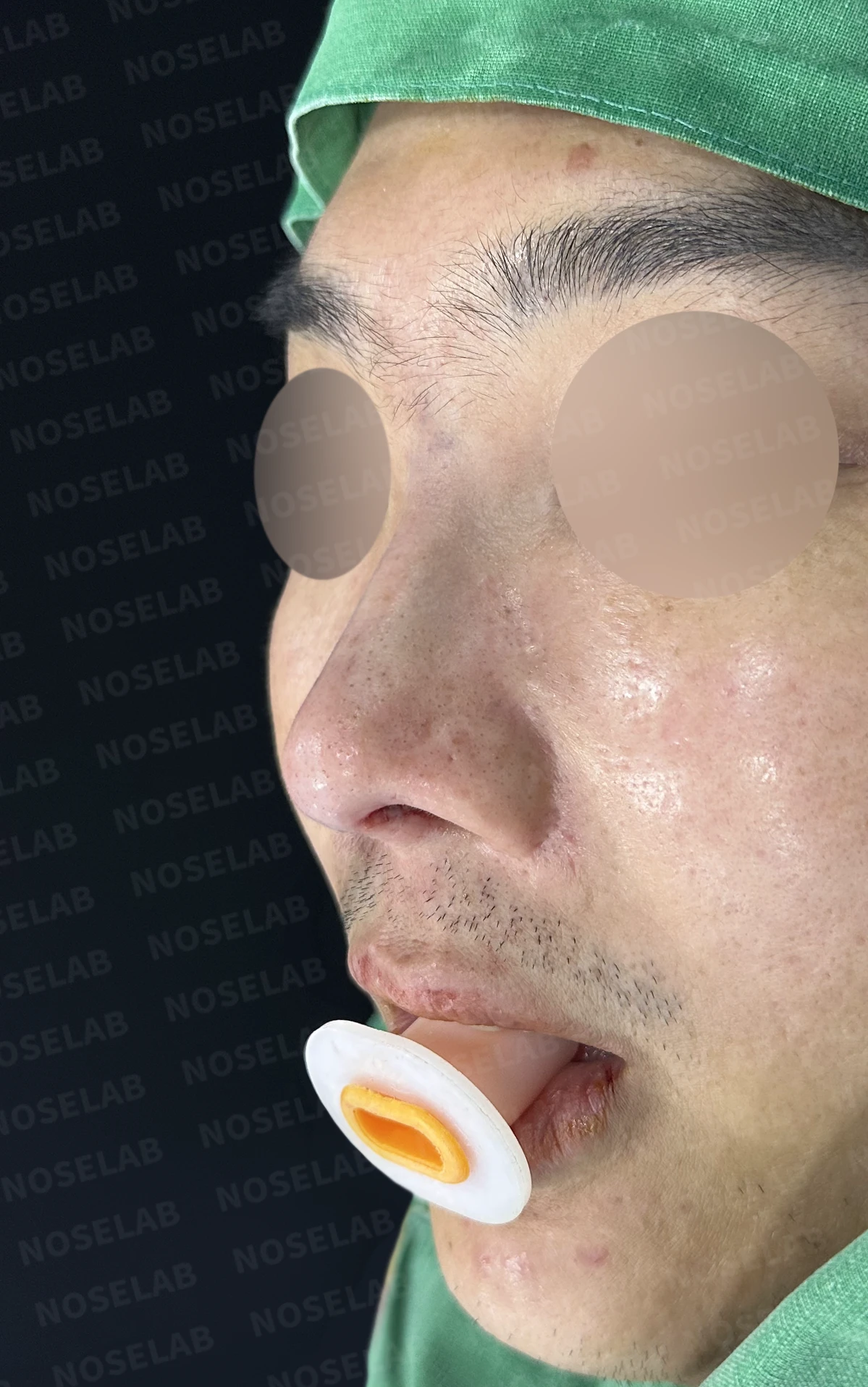
Before surgery / Day 0 immediately after surgery Photos taken immediately after surgery show swelling and may differ from the final result.
Nostril view changes:
The columella that tilted to one side was straightened
Left-right balance of nostril size was improved
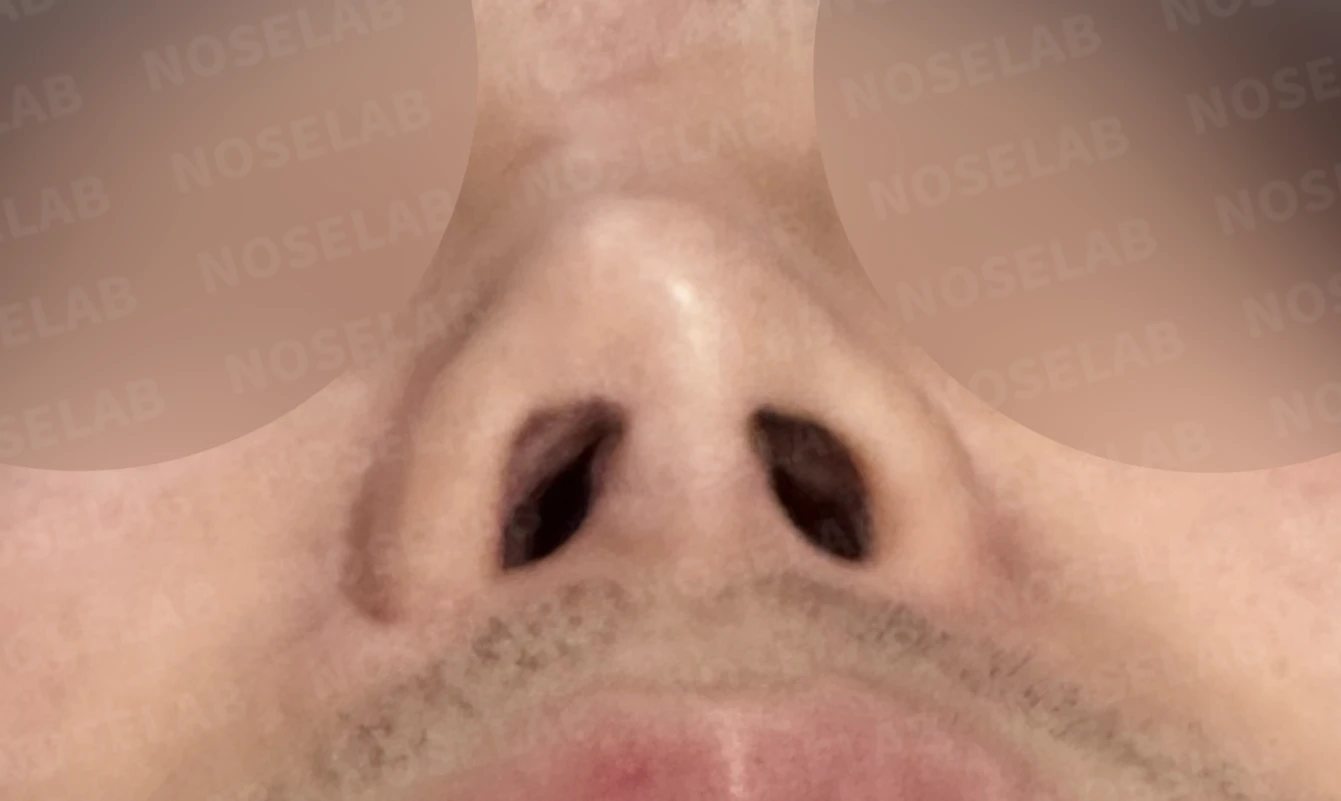
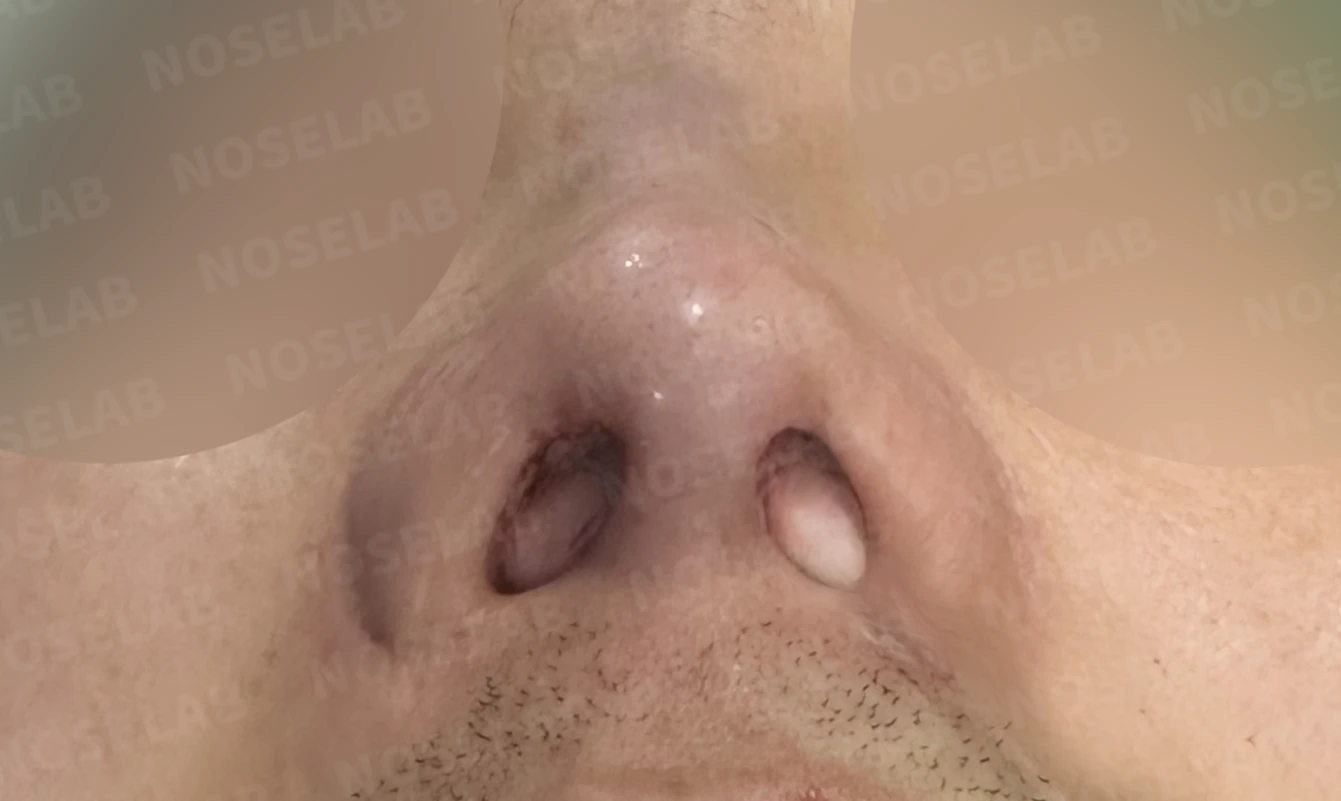
Before surgery / Day 0 immediately after surgery Photos taken immediately after surgery show swelling and may differ from the final result.
💡 Specialist opinion
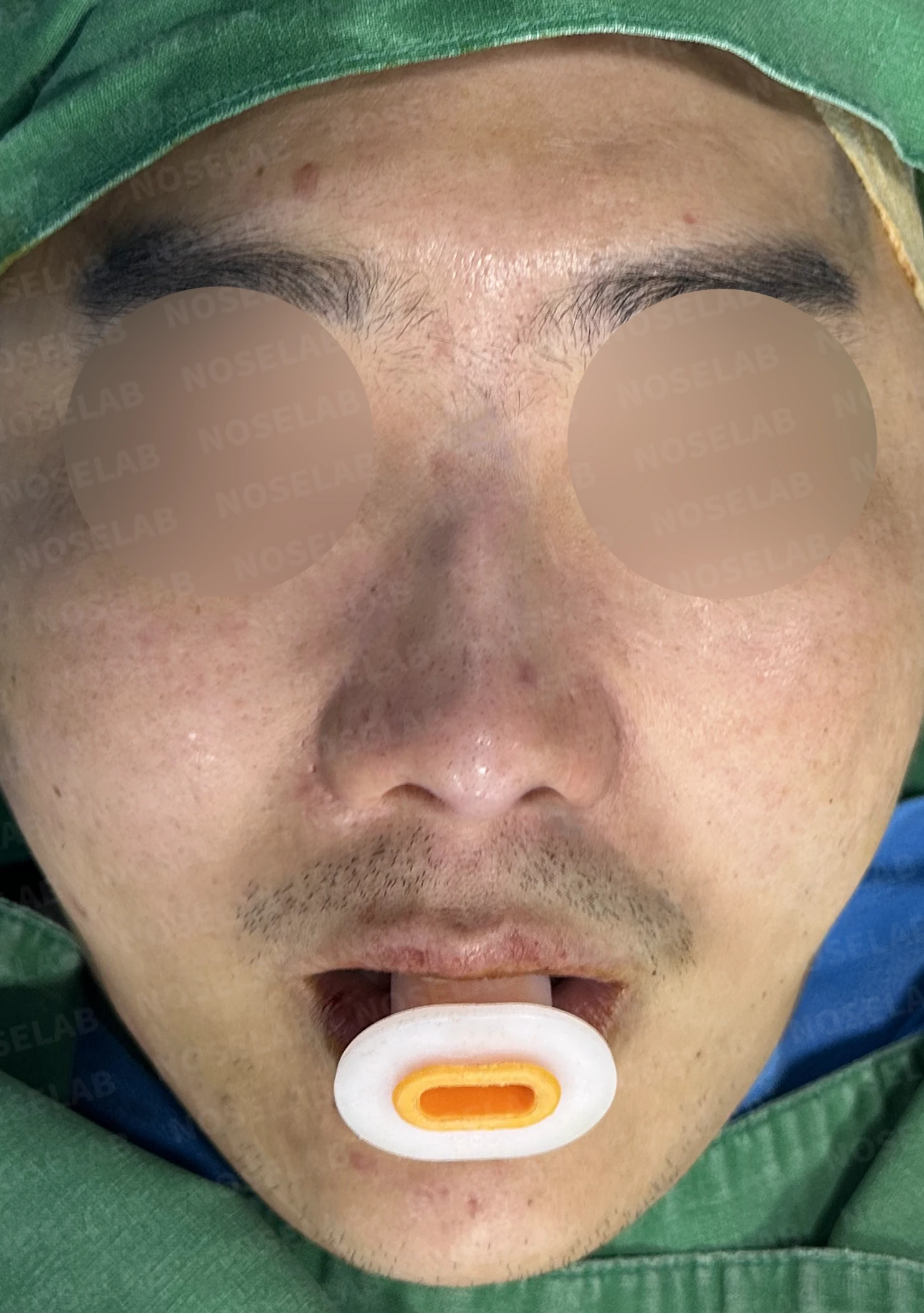
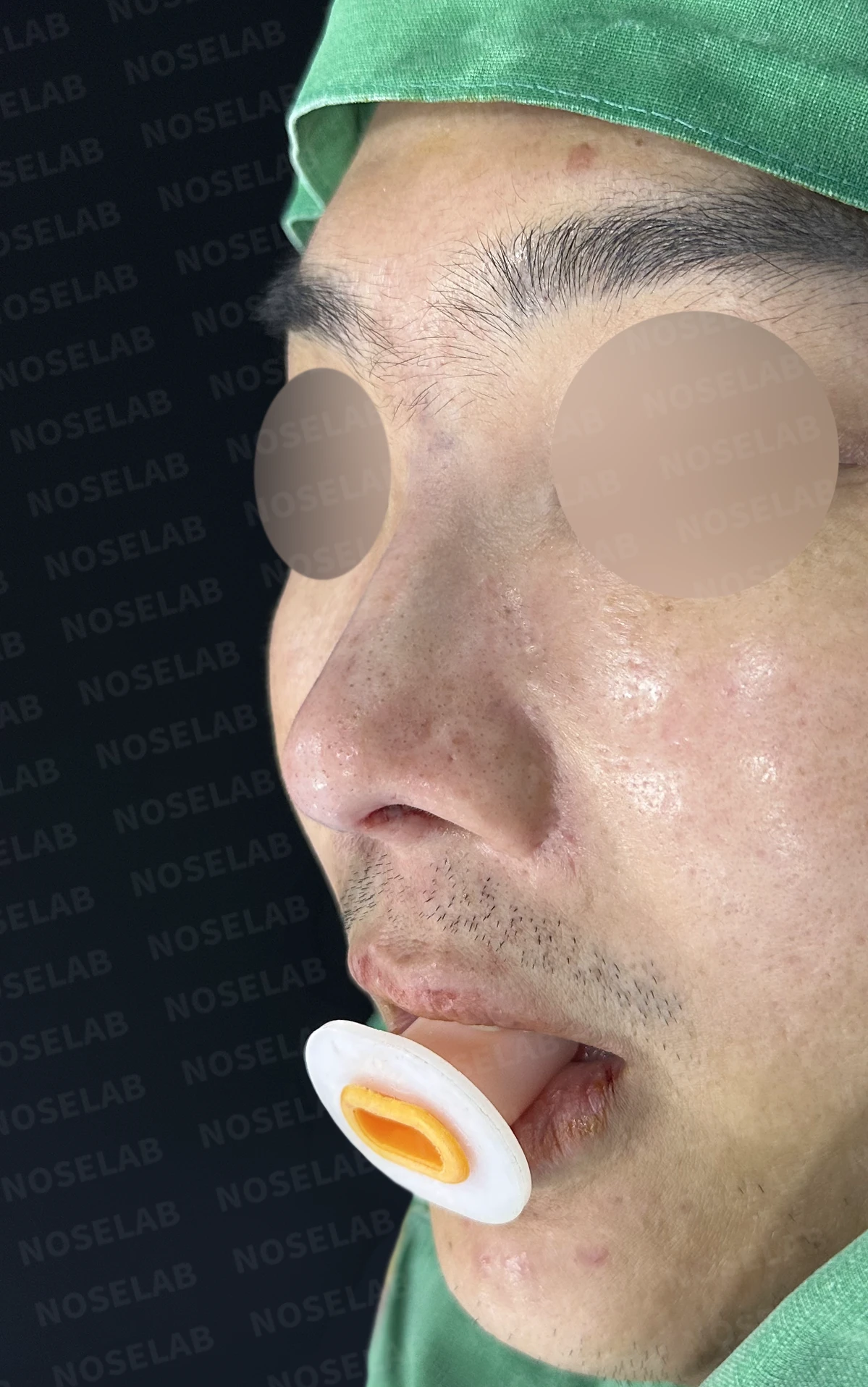
Front, oblique, and profile views on day 0 immediately after surgery. Photos taken immediately after surgery show swelling and may differ from the final result.
Nostril view on day 0 immediately after surgery. Photos taken immediately after surgery show swelling and may differ from the final result.
When a patient has undergone multiple revisions, the internal tissue condition is complex, necessitating a more meticulous approach. In particular, although nostril asymmetry may appear simply as a difference in nostril size, it actually involves a combination of the columella's direction and the positioning of the nasal tip cartilage.
In this surgery, the focus was on fundamentally correcting the asymmetry caused by the columella tilting to one side. By reinforcing the supporting framework with autologous rib cartilage, the structure was rebuilt to maintain stable results over time.
This was Dr. Peter C. Kang. Thank you.
#closedrhinoplasty #closedrevisionrhinoplasty #crookednosecorrection #nostrilasymmetry #autologousribcartilage #revisionrhinoplasty #columellacorrection #lateralosteotomy

Limitations and risks
When autologous rib cartilage is used, scarring and pain may remain at the donor site on the chest, and pneumothorax (pleural injury) can occur rarely. Over time, the grafted cartilage may warp or undergo partial resorption.
When the septum is corrected at the same time, nasal obstruction may persist or recur, and in rare cases, septal perforation or changes in smell may occur.
Common potential risks include infection, bleeding, asymmetry, scarring, skin necrosis, and insufficient improvement; results vary depending on individual skin condition and previous surgical history.