English日本語简体中文
Skip to main content
Dr. Peter C. Kang's Rhinoplasty Stories
PrologueBlogMy thoughtsNasal obstructionSurgical journalSurgical photos
About the surgeon

Primary rhinoplasty cases: anatomical starting points that differed from the outset

Even among primary rhinoplasty records, the starting points vary widely. For patients with no prior surgical history, some presented with a combination of a dorsal hump, a crooked nasal bridge, and nasal obstruction caused by a deviated septum, while others had small lower lateral cartilages and a drooping tip as their primary concerns. Surgical history and the nose's shape and function are separate factors that must be evaluated individually.

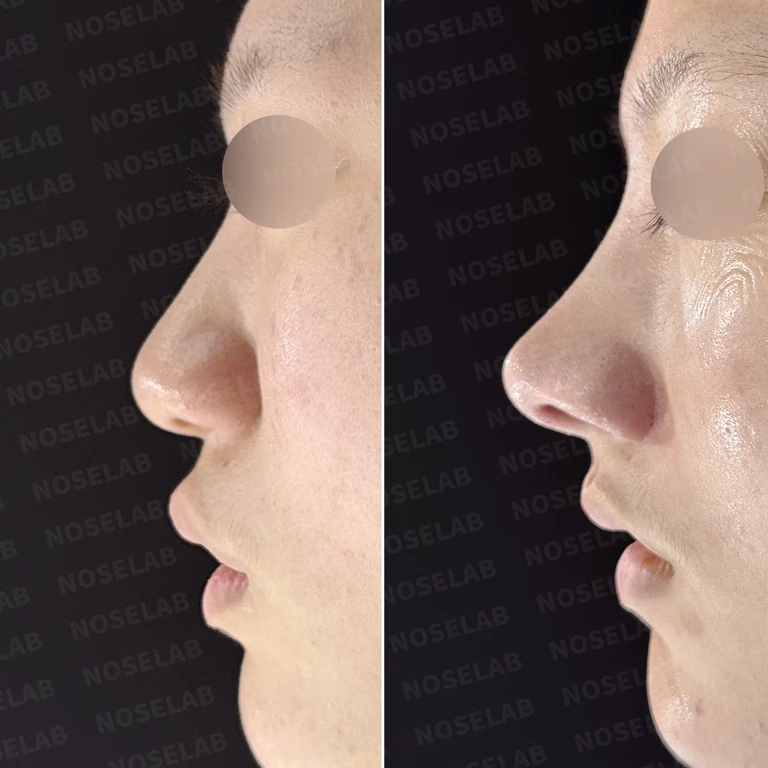
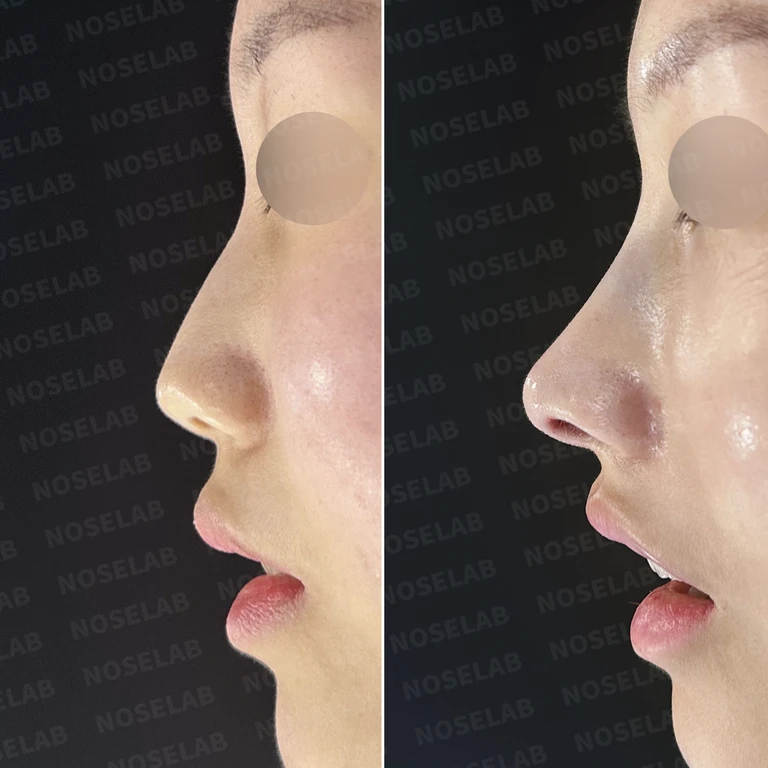
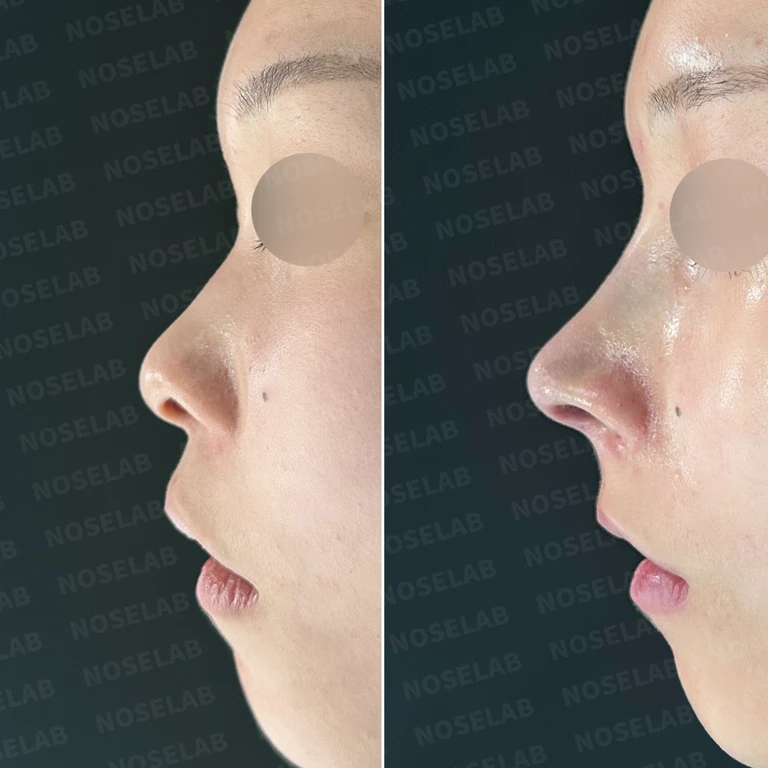
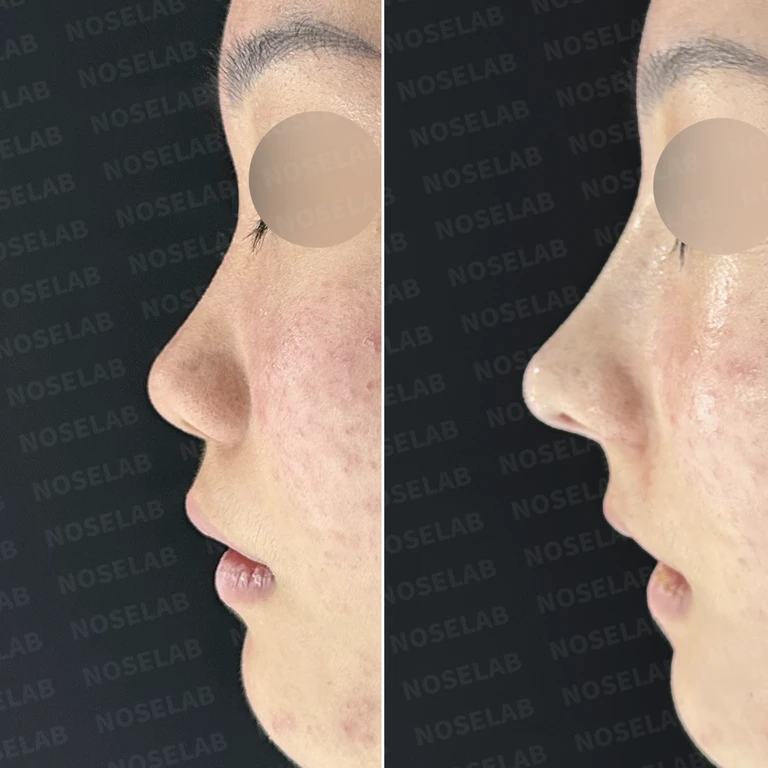
This collection presents both what primary rhinoplasty patients wished to change and the clinical findings I identified. Some cases feature multiple concurrent characteristics, such as an upturned nasal tip, a hanging columella, and excessive nostril show. Rather than simply checking whether the outcome resembles your ideal nose photo, observe how the preoperative front and profile views compare with your own concerns.

View before-and-after cases ↓Comprehensive rhinoplasty guide

Searching for surgical cases matching your criteria.
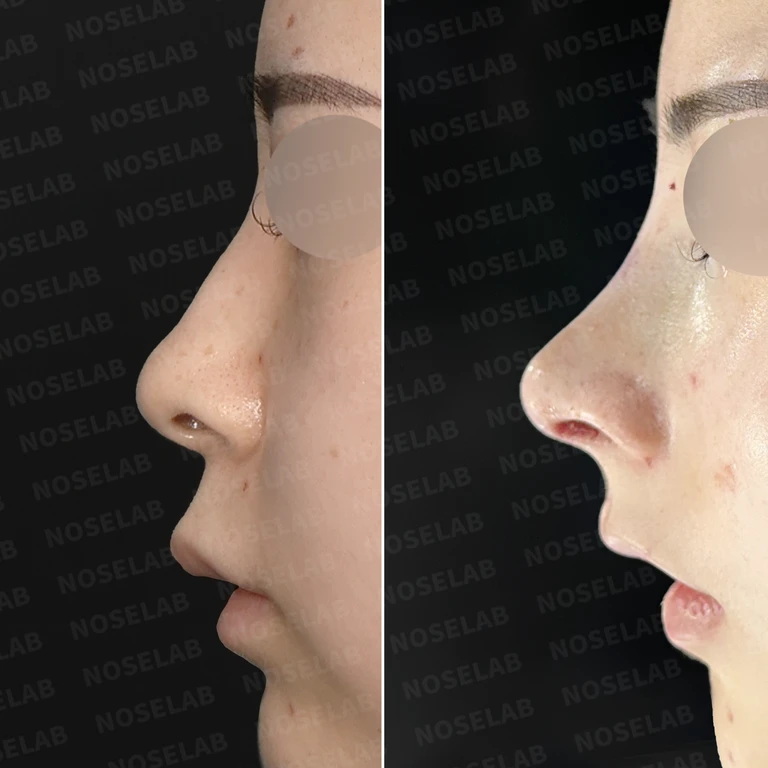
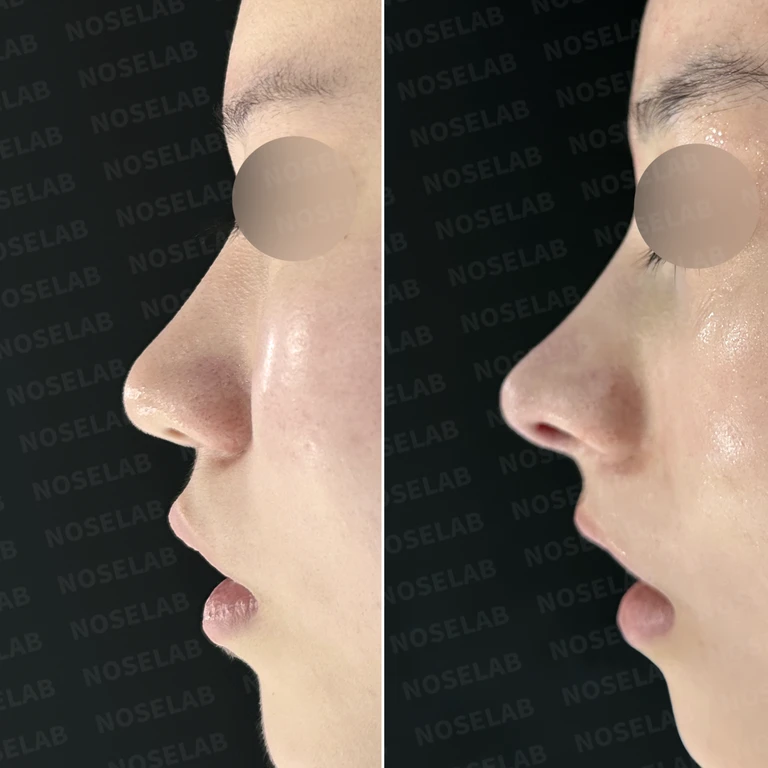
Why the nasal tip turns up and the columella droops, and how septal extension is performed — Before-and-after comparison
Before-and-after comparison

Why the nasal tip turns up and the columella droops, and how septal extension is performed

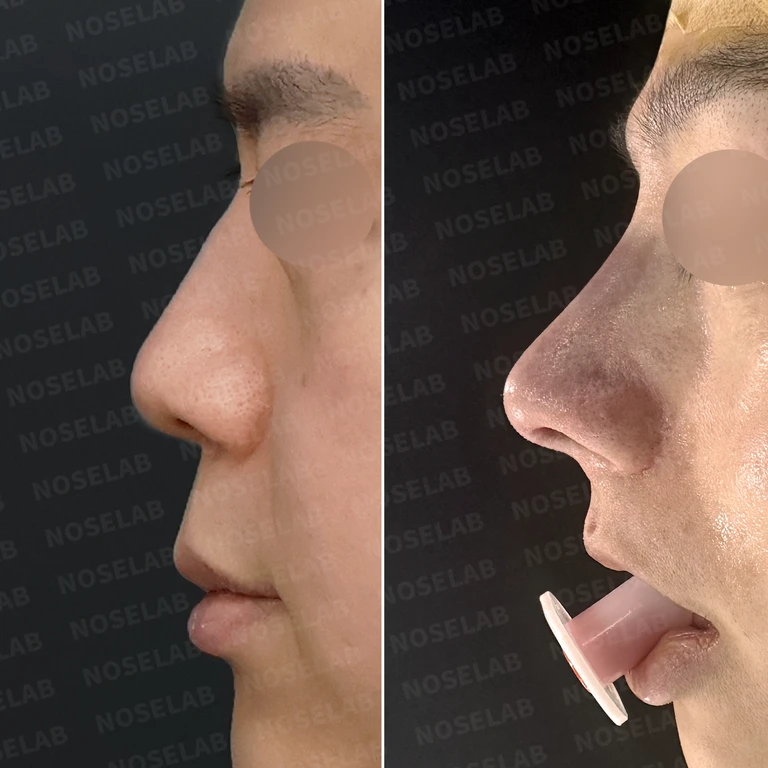
A case where a short, upturned nasal tip and a drooping columella in an unoperated nose were corrected through septal extension. A strut was built using donor rib cartilage and septal cartilage, accompanied by columellar elevation and silicone implant placement.

Preoperative condition
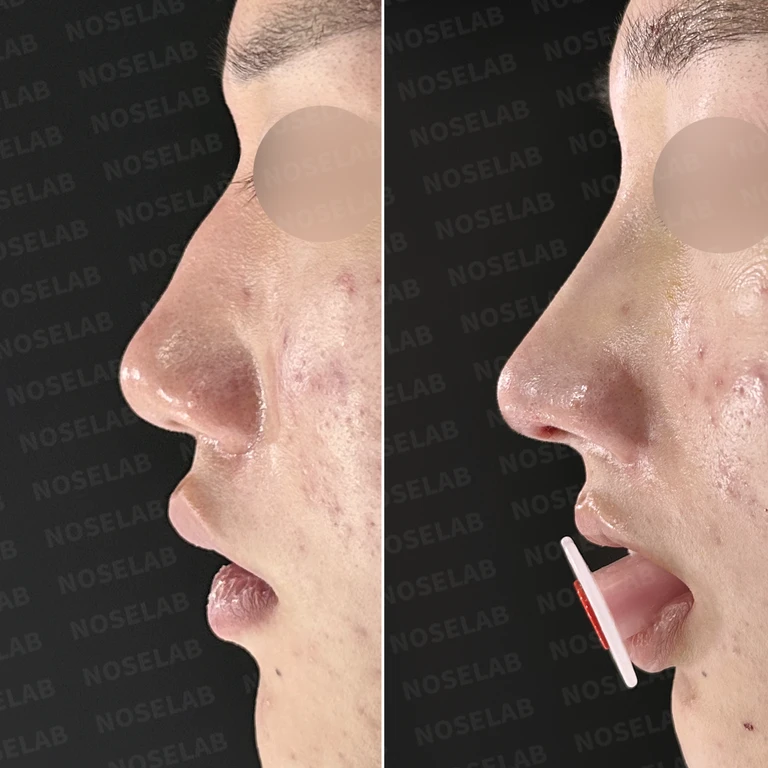
Why implants alone should not be placed in a small, low nose and nasal tip support structure — Before-and-after comparison
Before-and-after comparison

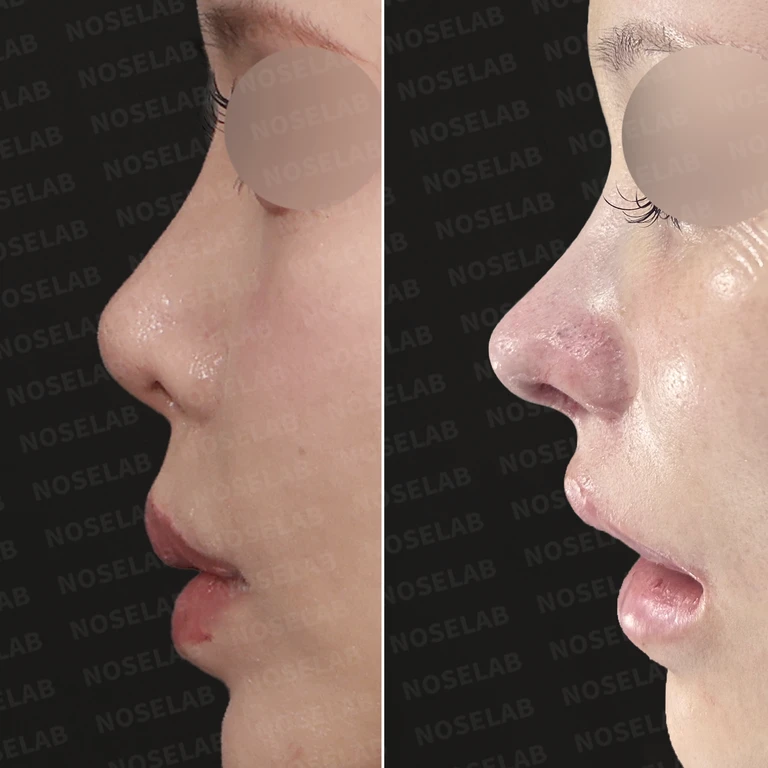
Why implants alone should not be placed in a small, low nose and nasal tip support structure

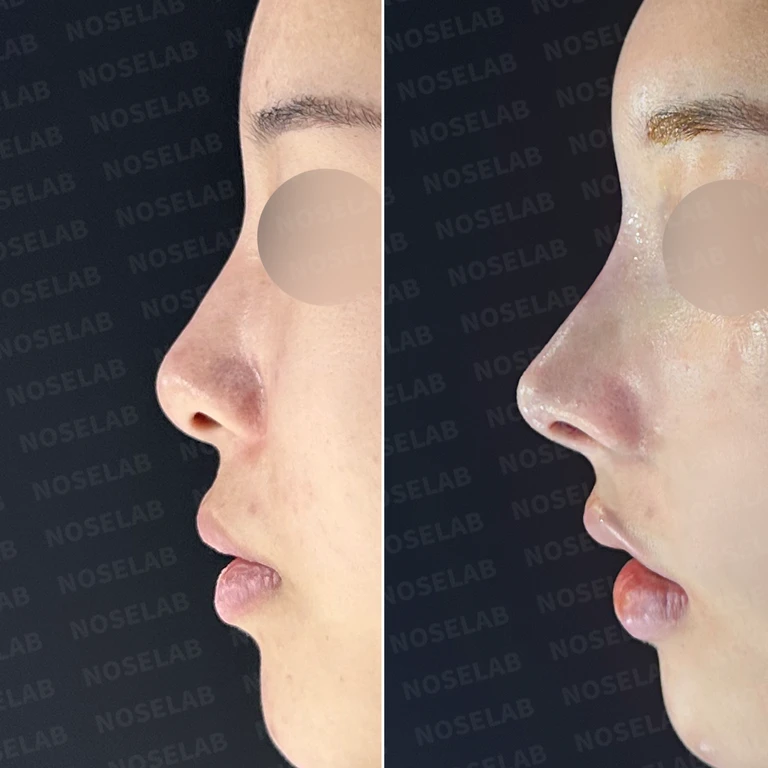
A primary rhinoplasty case involving a small, low nose and an upturned tip causing excessive nostril show. Using a closed approach, septal reconstruction with autologous rib cartilage, nasolabial angle correction, artificial dermis skin reinforcement, and a silicone implant were performed.

Preoperative condition
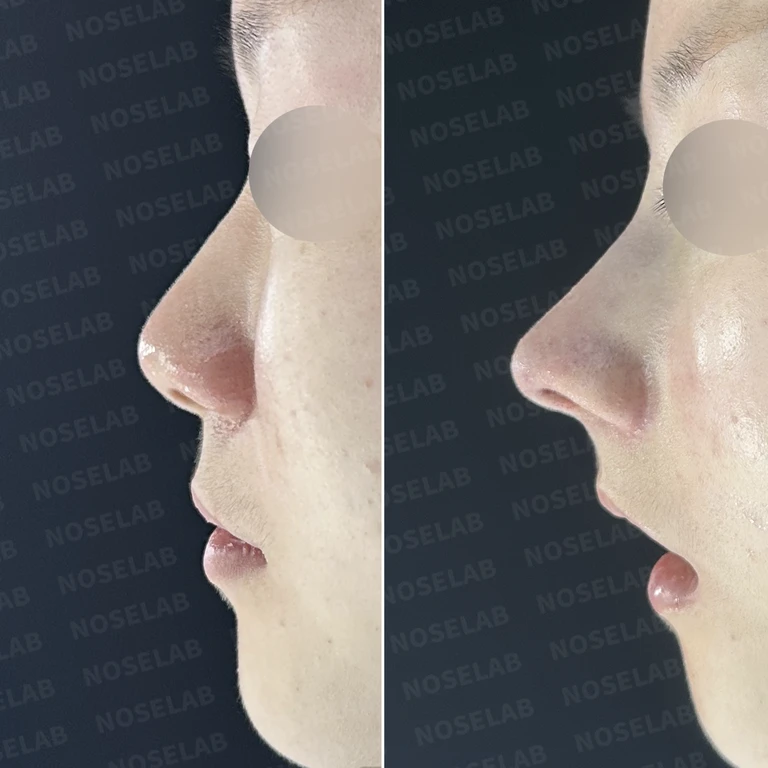
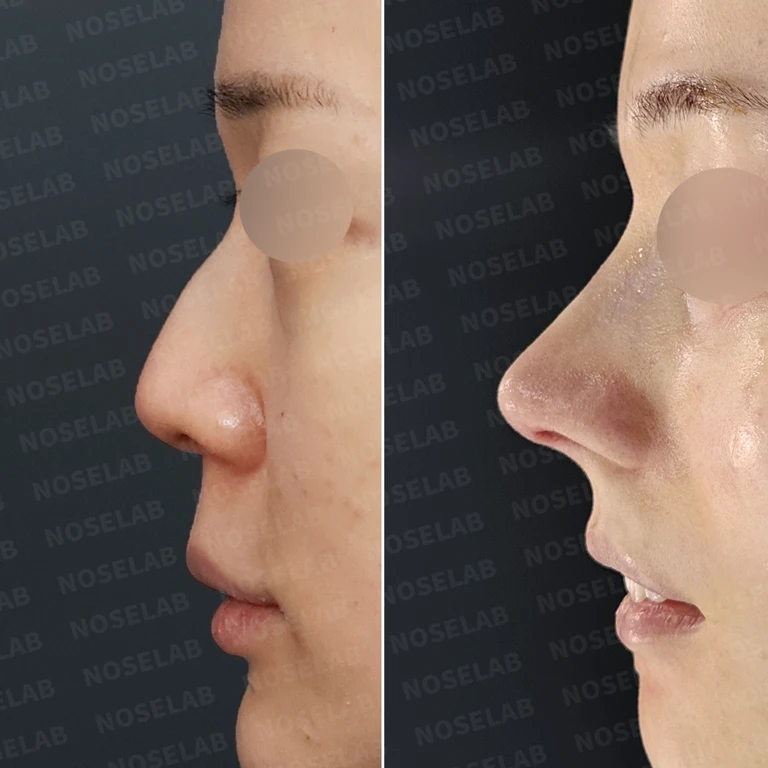
Why a narrow nasolabial angle with a dorsal hump makes the mouth appear protruding and how to correct it — Before-and-after comparison
Before-and-after comparison

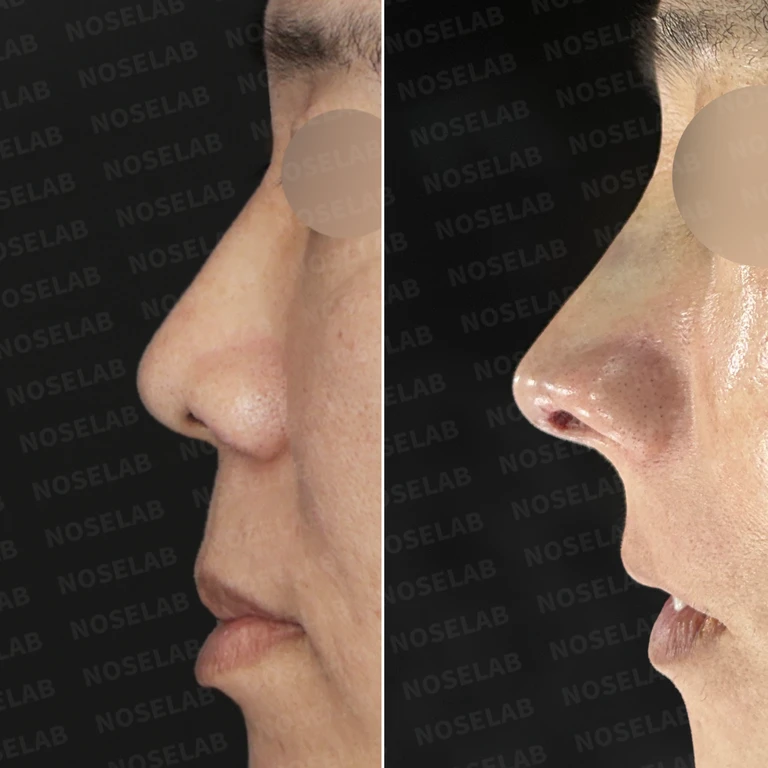
Why a narrow nasolabial angle with a dorsal hump makes the mouth appear protruding and how to correct it

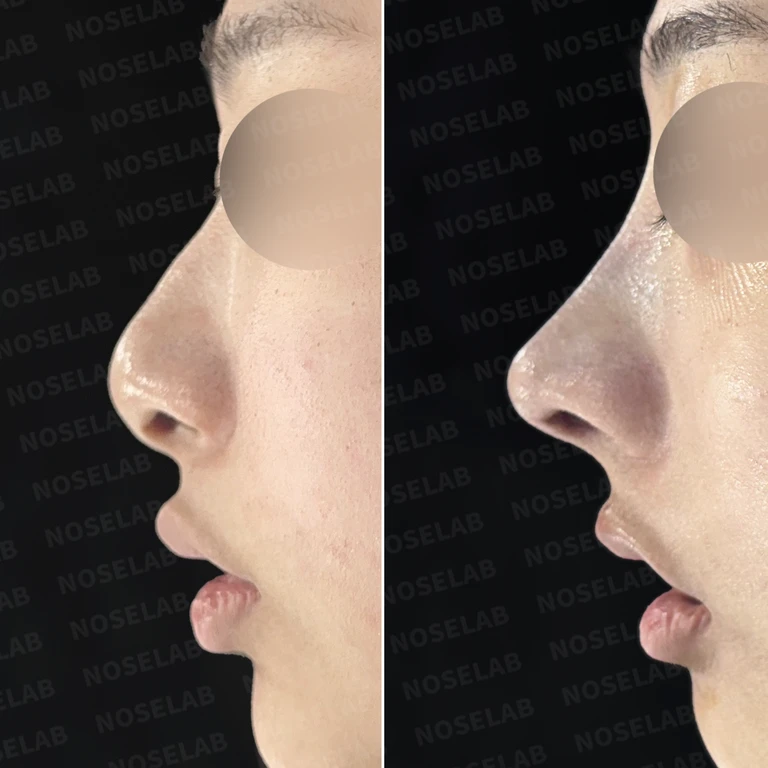
This is a primary rhinoplasty case correcting an irregular dorsal hump and an acute nasolabial angle. Using a closed approach, we refined the dorsal hump, performed nasal tip plasty with autologous rib cartilage, reconstructed the septum, placed a silicone implant, and corrected the nasolabial angle.

Previous surgeries and procedures

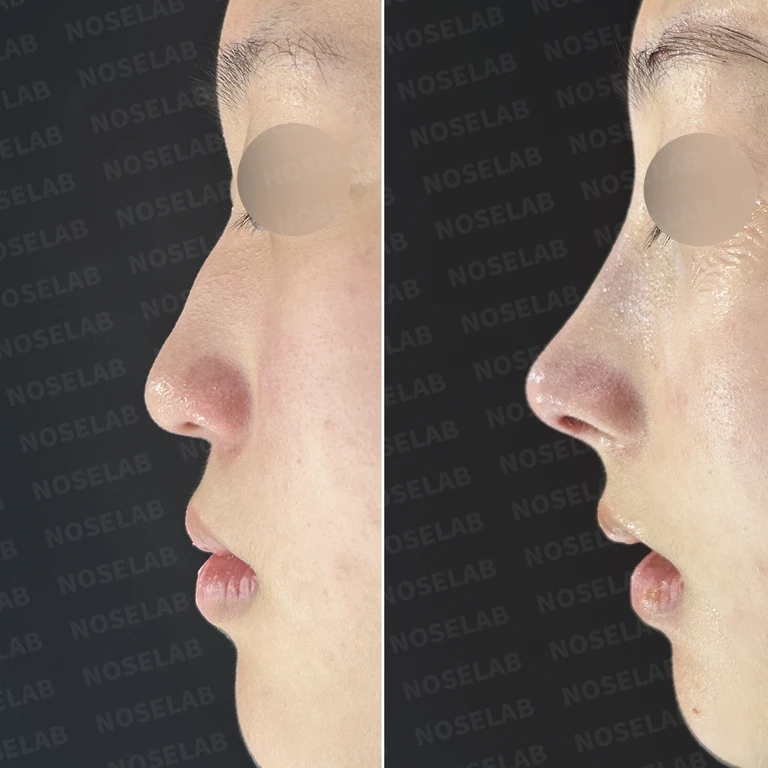
Why rib cartilage reconstruction is needed when the septum is weak, even in primary rhinoplasty — Before-and-after comparison
Before-and-after comparison

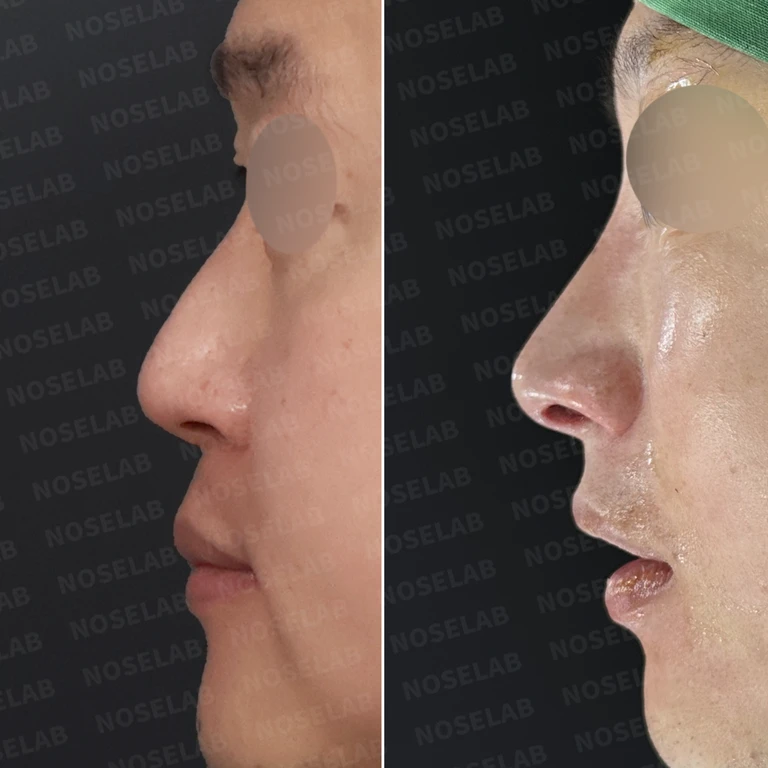
Why rib cartilage reconstruction is needed when the septum is weak, even in primary rhinoplasty

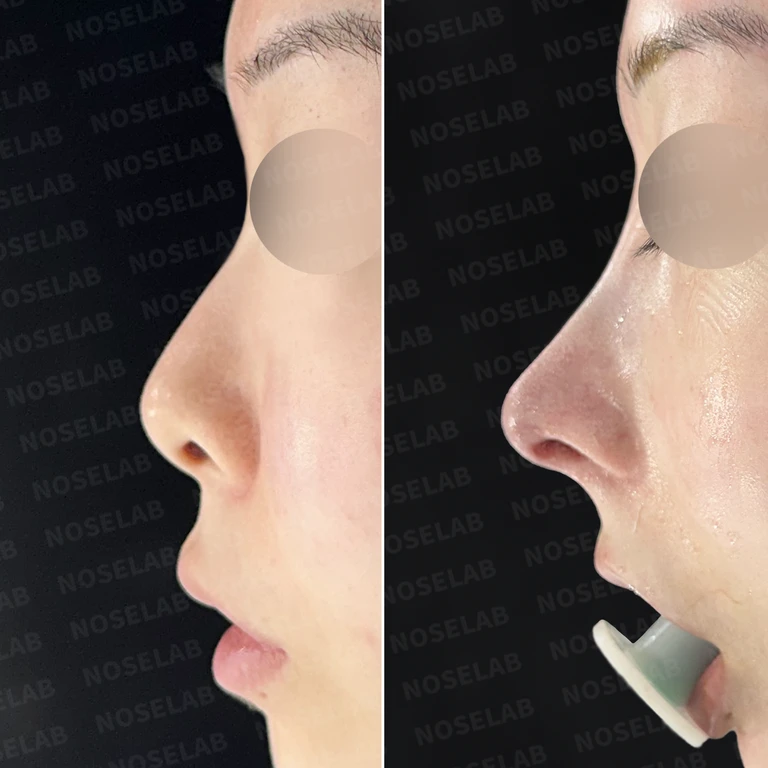
A case of correcting a short, upturned nasal tip and a pinched nostril caused by congenital septal cartilage weakness. Autologous rib cartilage was used to reconstruct the septum and lower lateral cartilage, combined with lowering the nostril rim and lateral osteotomy.

Preoperative condition
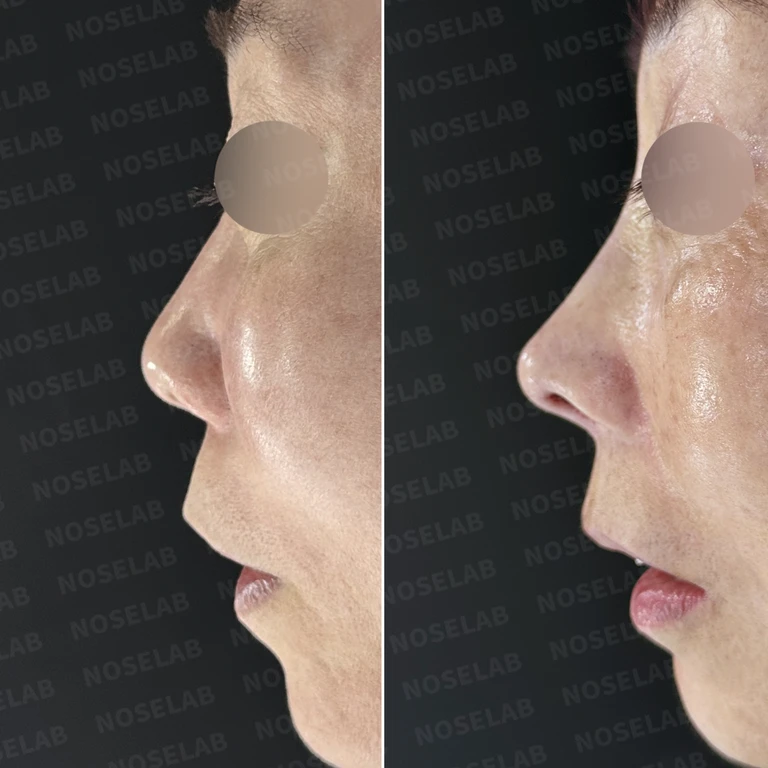
Why a short, upturned nose makes the philtrum look long and septal extension graft — Before-and-after comparison
Before-and-after comparison

Why a short, upturned nose makes the philtrum look long and septal extension graft

We extended the septum with autologous rib cartilage and corrected the nasolabial angle to improve an upturned nasal tip and a long philtrum. Lateral osteotomy, a custom silicone implant, and rhinitis surgery were performed concurrently.

Previous surgeries and procedures

Nasal obstruction from a severely deviated septum: why cartilage reconstruction is necessary — Before-and-after comparison
Before-and-after comparison

Nasal obstruction from a severely deviated septum: why cartilage reconstruction is necessary

In a primary rhinoplasty patient, a severely deviated septum was reconstructed using autologous rib cartilage, and hypertrophied inferior turbinates were reduced. Dermis was grafted into the depressed alar region, and the nasolabial angle was adjusted.

Previous surgeries and procedures

Why a nose looks bulbous or pug-like, and how to refine both the nasal tip cartilage and nasal bones together — Before-and-after comparison
Before-and-after comparison

Why a nose looks bulbous or pug-like, and how to refine both the nasal tip cartilage and nasal bones together

A blunt, pug-like nose, retracted columella, and wide nasal bridge were transformed into a slim, three-dimensional profile using autologous rib cartilage tip plasty, columellar lowering, lateral osteotomy, and cartilage reduction with suturing.

Previous surgeries and procedures

Why a crooked nose and dorsal hump appear together, and how to approach male rhinoplasty — Before-and-after comparison
Before-and-after comparison

Why a crooked nose and dorsal hump appear together, and how to approach male rhinoplasty

In a male patient in his early 20s presenting with a crooked nose, dorsal hump, and nasal obstruction, osteotomy, tip rhinoplasty using donor rib cartilage and septal cartilage, and columellar correction were performed.

Preoperative condition

Why dorsal humps and drooping tips appear together, and how hump reduction and osteotomy are performed — Before-and-after comparison
Before-and-after comparison

Why dorsal humps and drooping tips appear together, and how hump reduction and osteotomy are performed

A dorsal hump and drooping tip were smoothly refined through a closed approach using autologous rib cartilage tip plasty, hump reduction, lateral osteotomy, and nasolabial angle correction.

Previous surgeries and procedures

Why small lower lateral cartilages cause a drooping tip: rib cartilage reinforcement and osteotomy methods — Before-and-after comparison
Before-and-after comparison

Why small lower lateral cartilages cause a drooping tip: rib cartilage reinforcement and osteotomy methods

A drooping nasal tip and crooked dorsal hump caused by small lower lateral cartilages were refined through autologous rib cartilage support reinforcement, lateral osteotomy, a silicone implant, and nasolabial angle correction.

Previous surgeries and procedures

Why the nasal tip looks bulbous and spread out, and how septal extension is performed — Before-and-after comparison
Before-and-after comparison

Why the nasal tip looks bulbous and spread out, and how septal extension is performed

A bulbous, spread-out nasal tip and deviated septum were refined with autologous rib cartilage septal extension, nasolabial angle correction, a silicone implant on the nasal dorsum, and functional nasal surgery.

Previous surgeries and procedures

Why the nasal bridge deviates and the tip appears drooping: How to correct it using only cartilage without implants — Before-and-after comparison
Before-and-after comparison

Why the nasal bridge deviates and the tip appears drooping: How to correct it using only cartilage without implants

For a patient who wanted primary rhinoplasty without artificial implants, lateral osteotomy was performed to straighten the deviated nasal bones, and donor rib cartilage and septal cartilage were used to reinforce the bridge and reshape the nasal tip.

Preoperative condition

Why a nose looks low and wide: surgical technique starting from the nasal tip structure — Before-and-after comparison
Before-and-after comparison

Why a nose looks low and wide: surgical technique starting from the nasal tip structure

To improve an inherently low and wide nose along with rhinitis symptoms, primary rhinoplasty was performed using donor rib cartilage for tip support, a customized silicone implant for the bridge, and septoplasty.

Previous surgeries and procedures

Why the nasal bridge looks low and the tip looks bulbous: how to correct them alongside a retracted columella — Before-and-after comparison
Before-and-after comparison

Why the nasal bridge looks low and the tip looks bulbous: how to correct them alongside a retracted columella

To improve the low, bulbous nasal tip and retracted columella in a patient with no previous surgical history, autologous rib cartilage was used to reinforce the septum, elevate the nasal bridge and nasal tip, and correct the nasolabial angle.

Previous surgeries and procedures

Why a dorsal hump and a crooked nose often occur together, and correction methods using osteotomy and autologous rib cartilage — Before-and-after comparison
Before-and-after comparison

Why a dorsal hump and a crooked nose often occur together, and correction methods using osteotomy and autologous rib cartilage

For a male primary rhinoplasty patient with a bulbous, crooked nose with a dorsal hump, lateral osteotomy, cartilage tying, nasal tip plasty with autologous rib cartilage, and a customized silicone implant were performed.

Previous surgeries and procedures

Why the nasal bridge looks wide and uneven, and how osteotomy and rib cartilage tip surgery are performed — Before-and-after comparison
Before-and-after comparison

Why the nasal bridge looks wide and uneven, and how osteotomy and rib cartilage tip surgery are performed

Foreign material was removed from the nasal bridge, and lateral osteotomy, a custom-carved silicone implant, and donor rib cartilage were used to eliminate the dorsal step-off, creating a slim, straight bridge line.

Preoperative condition

Why the nasal bridge looks wide and the tip looks bulbous: how osteotomy and autologous rib cartilage correction work — Before-and-after comparison
Before-and-after comparison

Why the nasal bridge looks wide and the tip looks bulbous: how osteotomy and autologous rib cartilage correction work

A case of minimally correcting a deviated, small, and thin septum, then refining a wide nasal bridge and bulbous tip using lateral osteotomy, a custom-carved silicone implant, and autologous rib cartilage tip plasty.

Previous surgeries and procedures

Why one nostril shows more from the front and how to reconstruct the nasal tip — Before-and-after comparison
Before-and-after comparison

Why one nostril shows more from the front and how to reconstruct the nasal tip

To correct nasal tip deformity and asymmetrical nostril show, the nasal tip was supported with donor rib cartilage and septal cartilage, accompanied by right alar rim lowering and a customized silicone implant placement.

Previous surgeries and procedures

No search results found

Please try searching with different keywords.

Scroll to keep reading

1 / 2Next case

Common questions before reading the cases

Are there primary rhinoplasty cases that also addressed nasal obstruction?

Yes. Among the primary rhinoplasty cases, some records note not only a crooked nasal bridge on the front view and a dorsal hump on the profile view, but also nasal obstruction resulting from a deviated septum. In these articles, cosmetic concerns and functional discomfort are explained separately. This is why primary rhinoplasty cases are not categorized merely as cosmetic shape changes simply because they are first-time procedures.

Can we view primary rhinoplasties with an upturned tip separately from those with a drooping tip?

You can distinguish them by the clinical findings documented in the original records. One primary rhinoplasty record describes small lower lateral cartilages, weak structural support, and a drooping nasal tip. Another article documents an upturned nasal tip, significant nostril show, and a hanging columella together. Rather than focusing solely on the shared condition of a first surgery, compare which specific areas were identified as concerns.

Related topics to explore

Dorsal humpCrooked noseInsufficient tip supportNasal obstruction and breathing discomfort

Surgical records referenced in this guide

  • Why a crooked nose and dorsal hump appear together, and how to approach male rhinoplasty
  • Why small lower lateral cartilages cause a drooping tip: rib cartilage reinforcement and osteotomy methods
  • Why the nasal tip turns up and the columella droops, and how septal extension is performed
Original article

Read more records

Planning a visit to Seoul?Prepare your consultation with the NOSELAB team.

International patient guideWhatsApp ↗
Dr. Peter C. Kang's Rhinoplasty Stories
Rhinoplasty guideCases by topicDr. Peter C. KangNaver Blog ↗
View original photo
Enlarged photo
WhatsAppChat with NOSELAB↗