Hello, I am Dr. Peter C. Kang.
Today, I would like to share the case of a patient who visited our clinic seeking correction for a bulbous, spread-out nasal tip.
🔍 Surgical history
This was a primary rhinoplasty case, as the patient had never undergone any prior nasal surgery or procedure. The patient had a congenitally bulbous, spread-out tip shape, and the primary concern was that the nose looked bulky overall. In addition, nasal obstruction caused by a deviated septum was present.
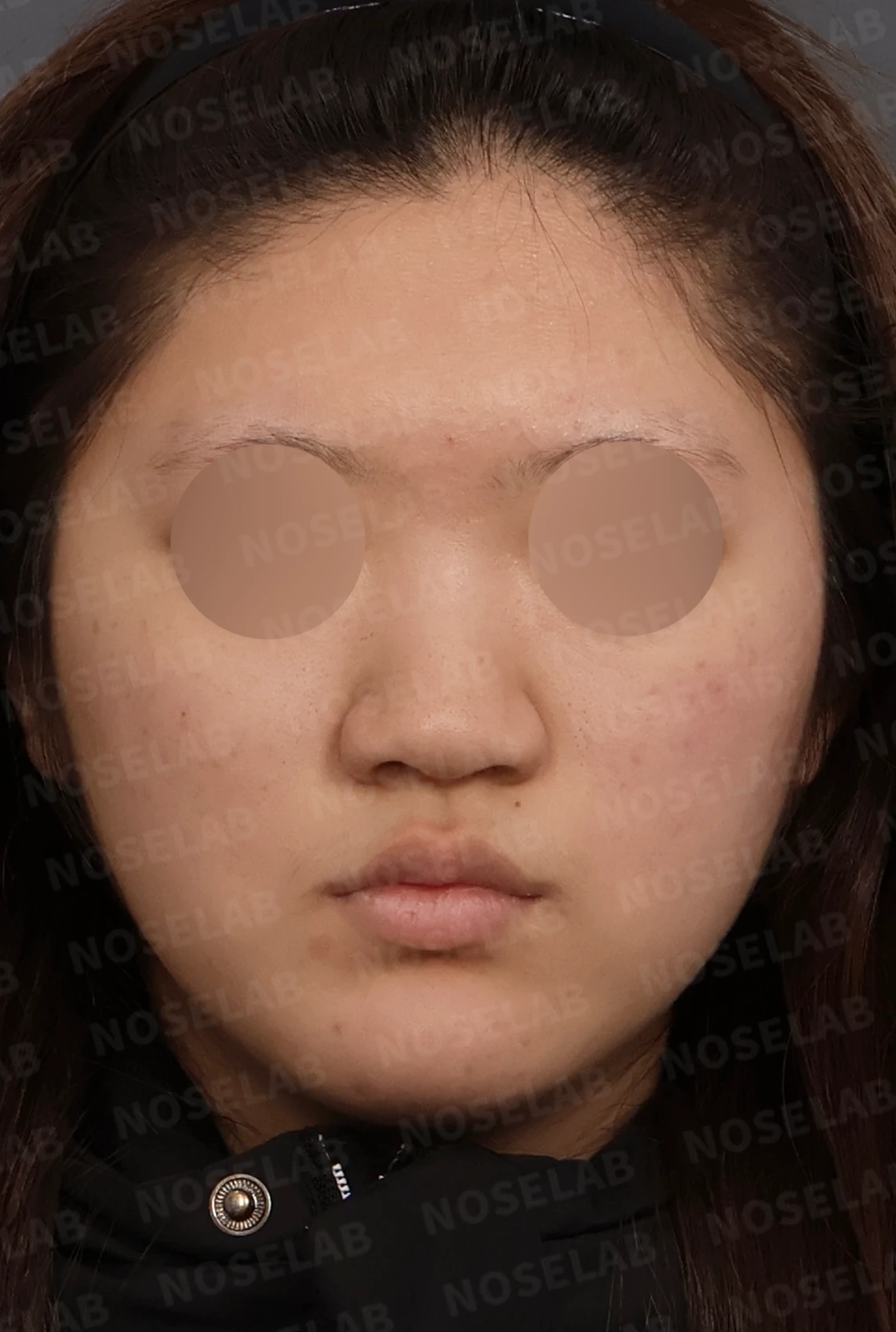
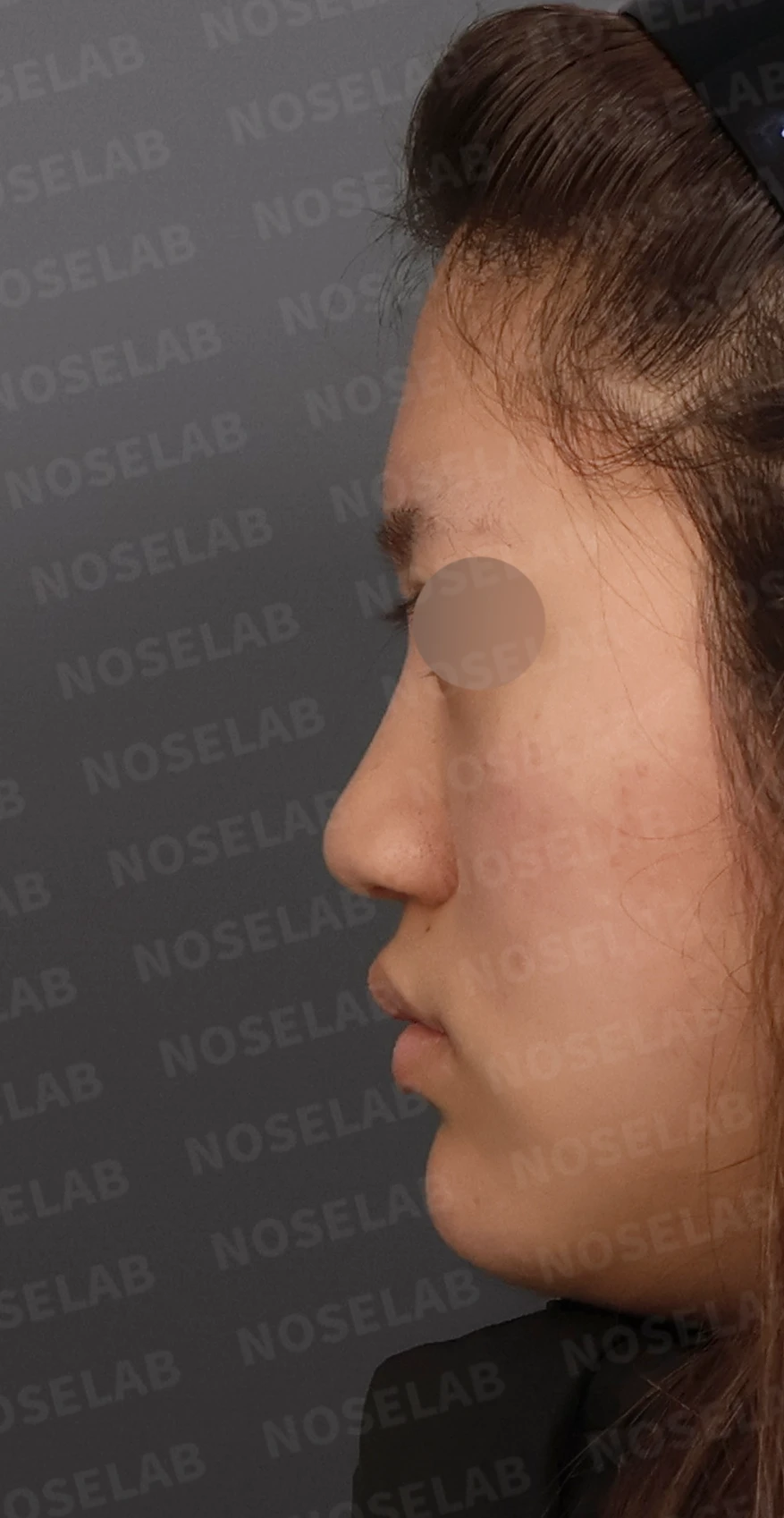
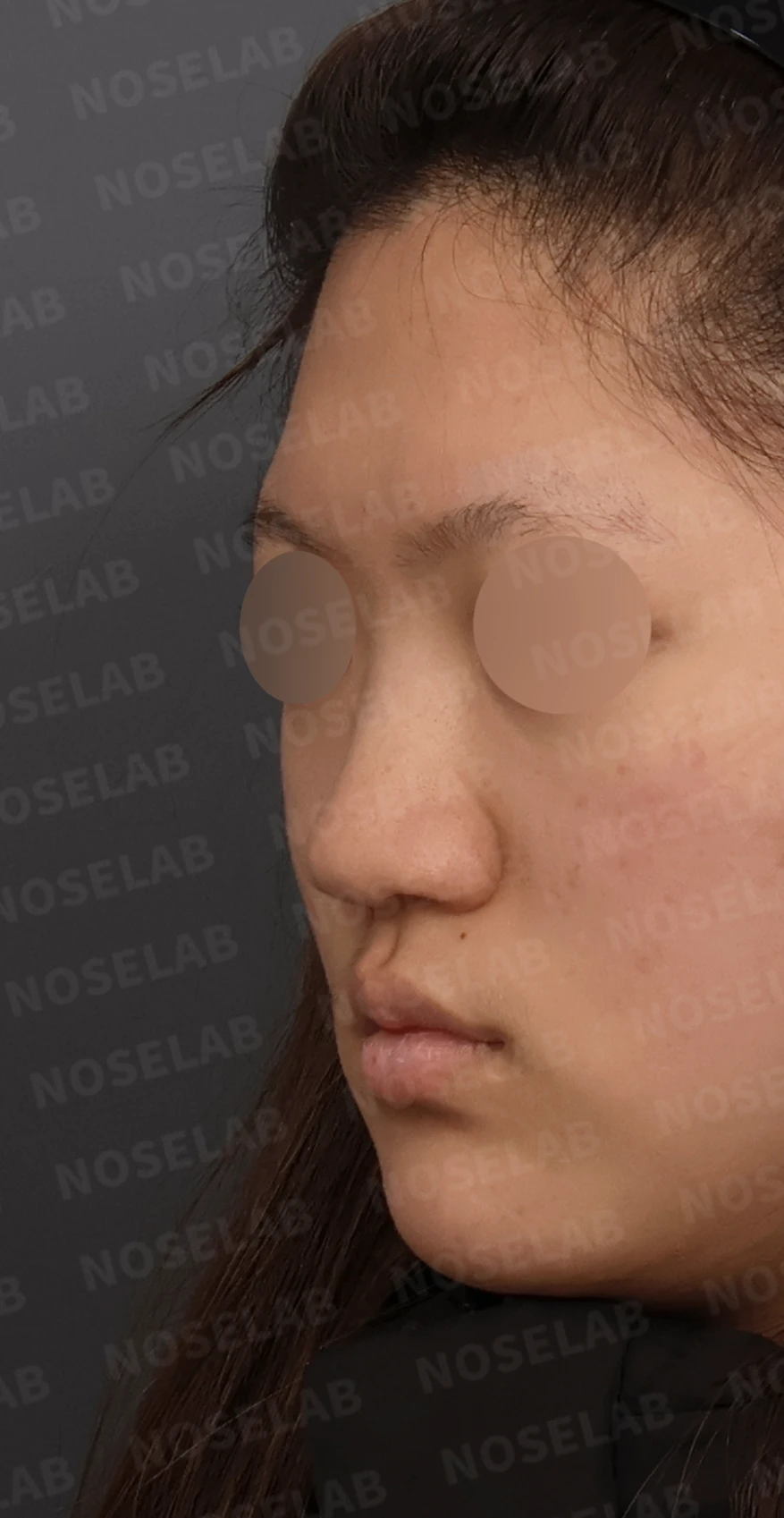
Front, left profile, and oblique views during design consultation.
💉 Patient requests
The patient's specific requests were as follows:
Natural yet defined nasal line
A naturally elevated tip rather than a sharp, pointy one
Correction of a bulbous, spread-out nasal tip
Improvement in nasal obstruction symptoms
The patient specifically preferred a refined yet natural appearance rather than a sharp, overly projected tip. The surgical plan was designed to create a defined yet non-artificial nasal contour that harmonizes naturally with the face.
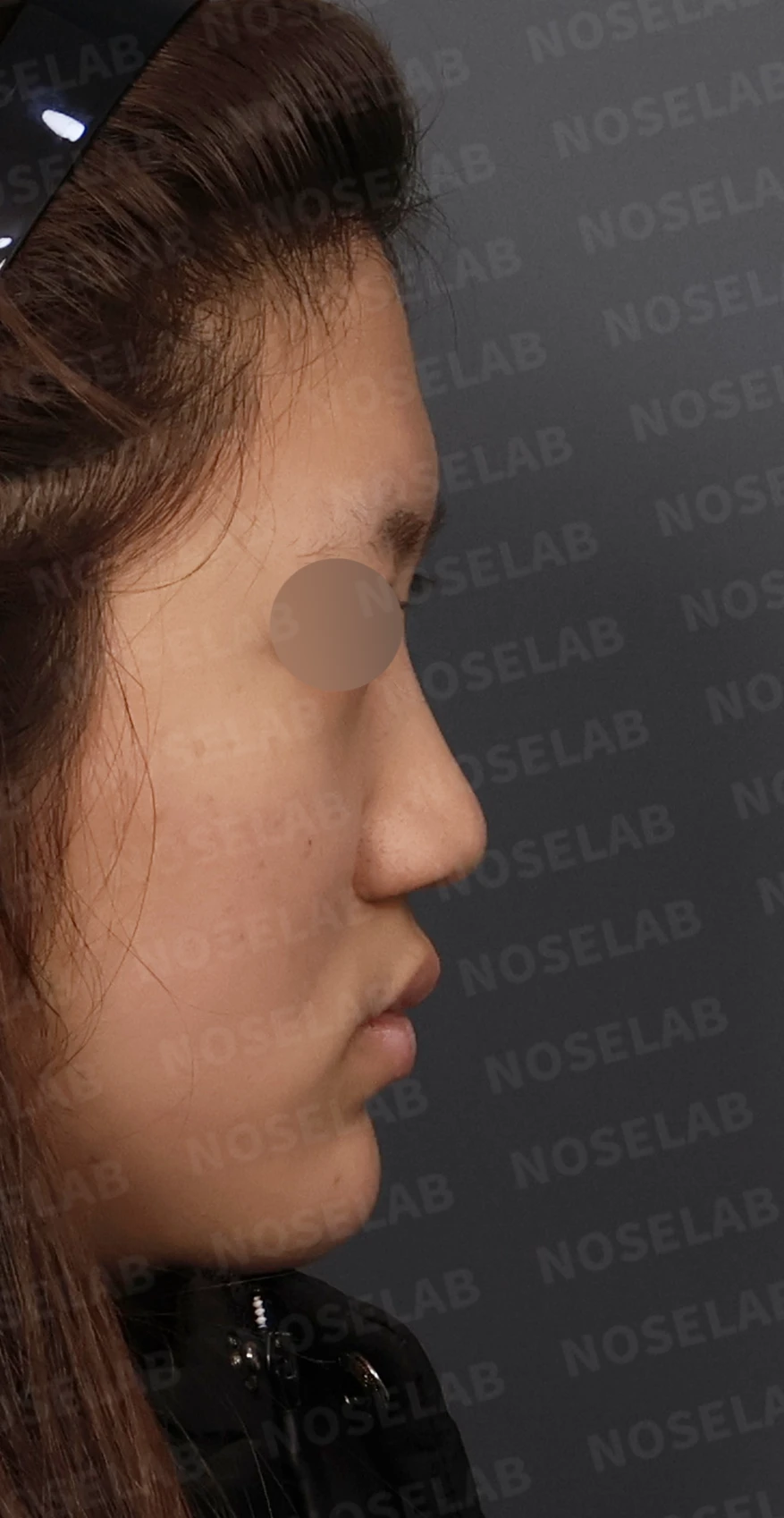
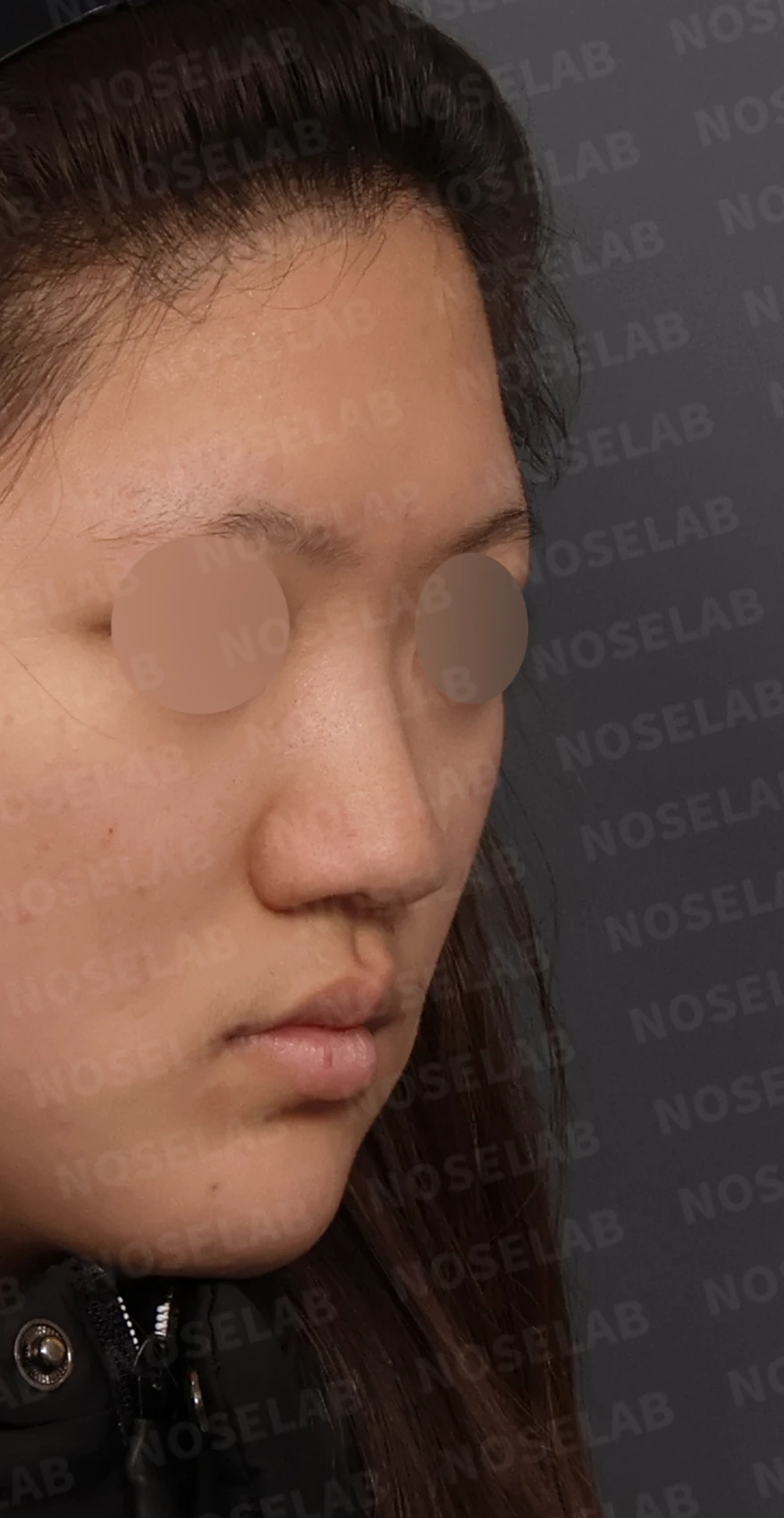
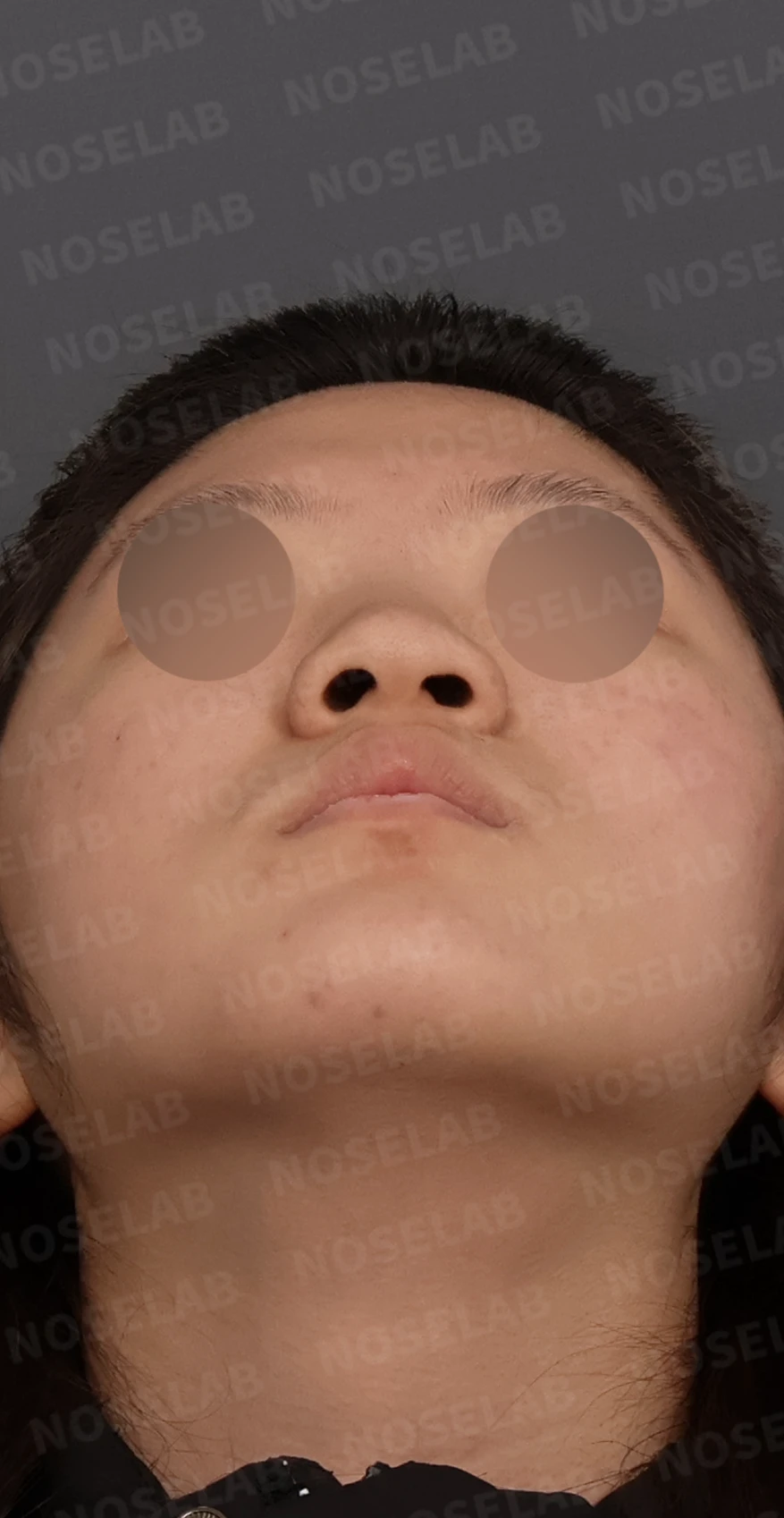
Right profile, oblique, and nostril views during design consultation.
🔧 Surgical plan and procedure
1. Septal extension using autologous rib cartilage
Septal extension to correct the bulbous, spread-out nasal tip
Reinforcing tip support to create an elevated, natural nasal tip
Achieving a soft tip contour that is not sharp
2. Nasolabial angle correction
Appropriate adjustment of the nasolabial angle between the nasal tip and the upper lip
Creation of a natural columellar line
Completing a refined profile view
3. Nasal bridge augmentation using a silicone implant
Precisely carving a silicone implant to fit the nasal bone closely
Placing it strictly over the nasal dorsum to add natural height
Setting a bridge line that transitions smoothly into the nasal tip
4. Corrective surgery for deviated septum and rhinitis
Straightening the deviated septum through septoplasty
Alleviating rhinitis symptoms through inferior turbinate reduction
Breathing function normalized through relief of nasal obstruction
🌟 Surgical results
Front view changes
The previously bulbous nasal tip has become naturally slimmer
The spread-out tip is gathered into a refined shape
An overall well-balanced nasal contour
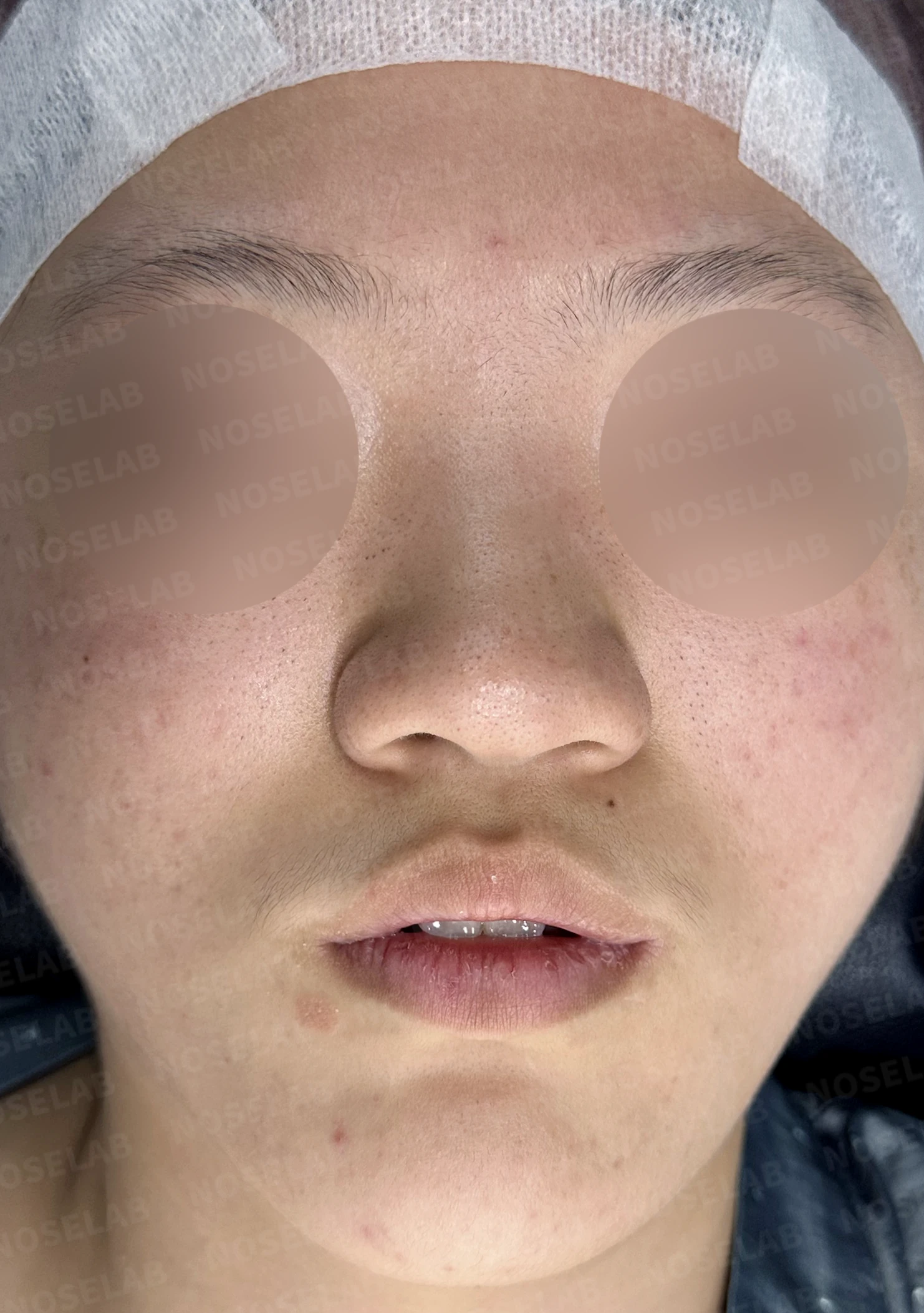
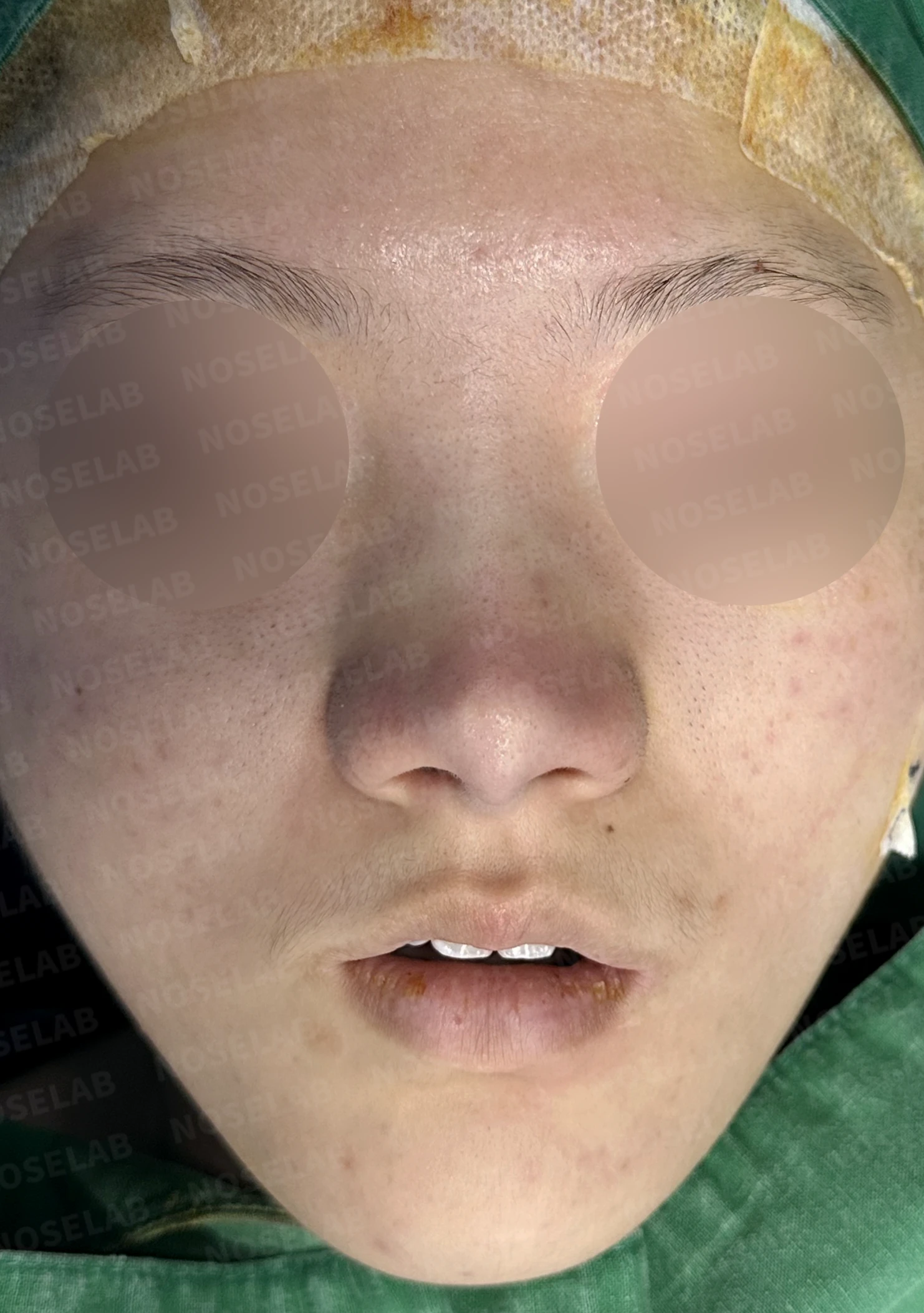
Before surgery / Day 0 immediately after surgery Photos taken immediately after surgery show swelling and may differ from the final result.
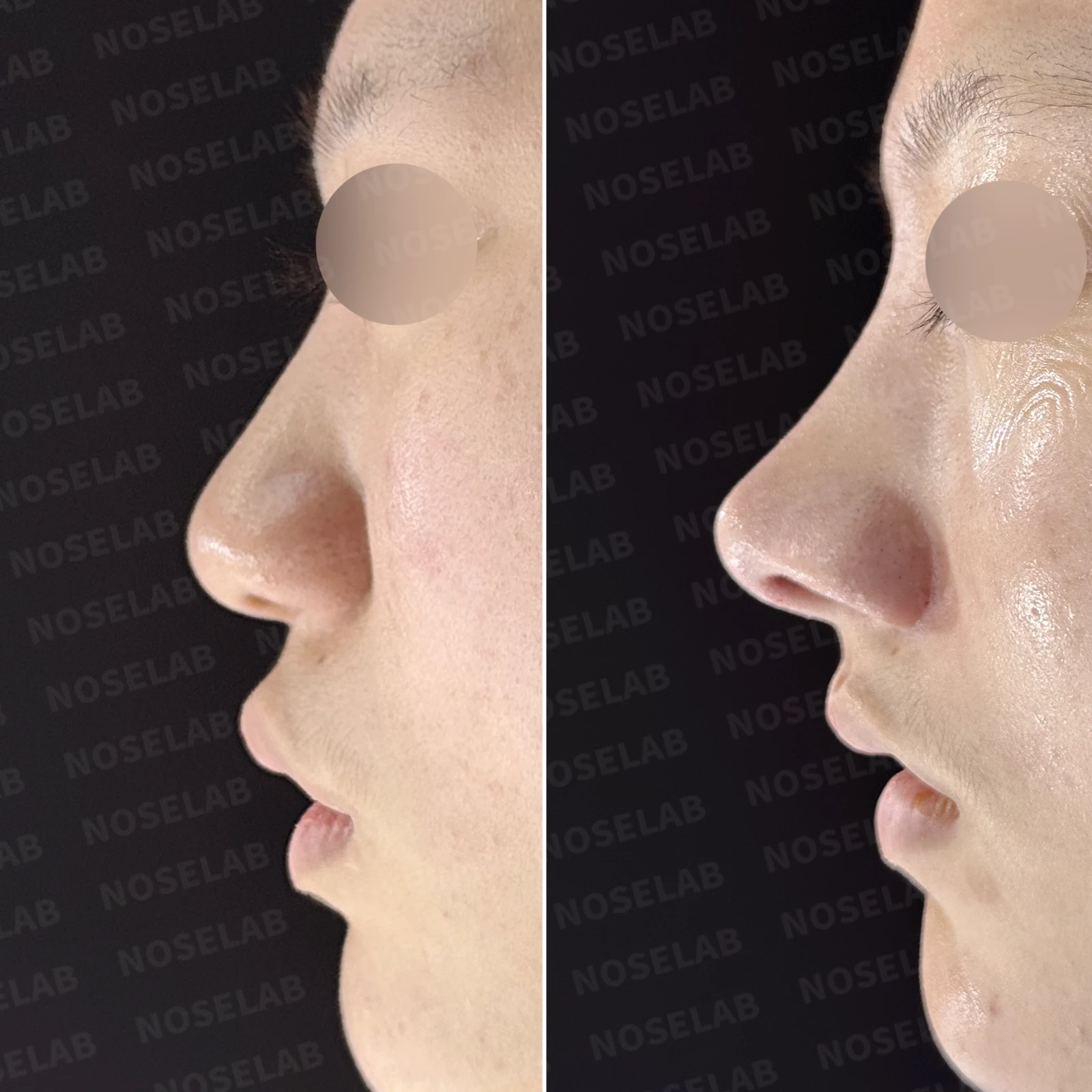
Profile view changes
A naturally elevated, well-projected tip achieved through septal extension
A refined columellar line formed by correcting the nasolabial angle
A smooth line seamlessly connecting the nasal bridge and tip
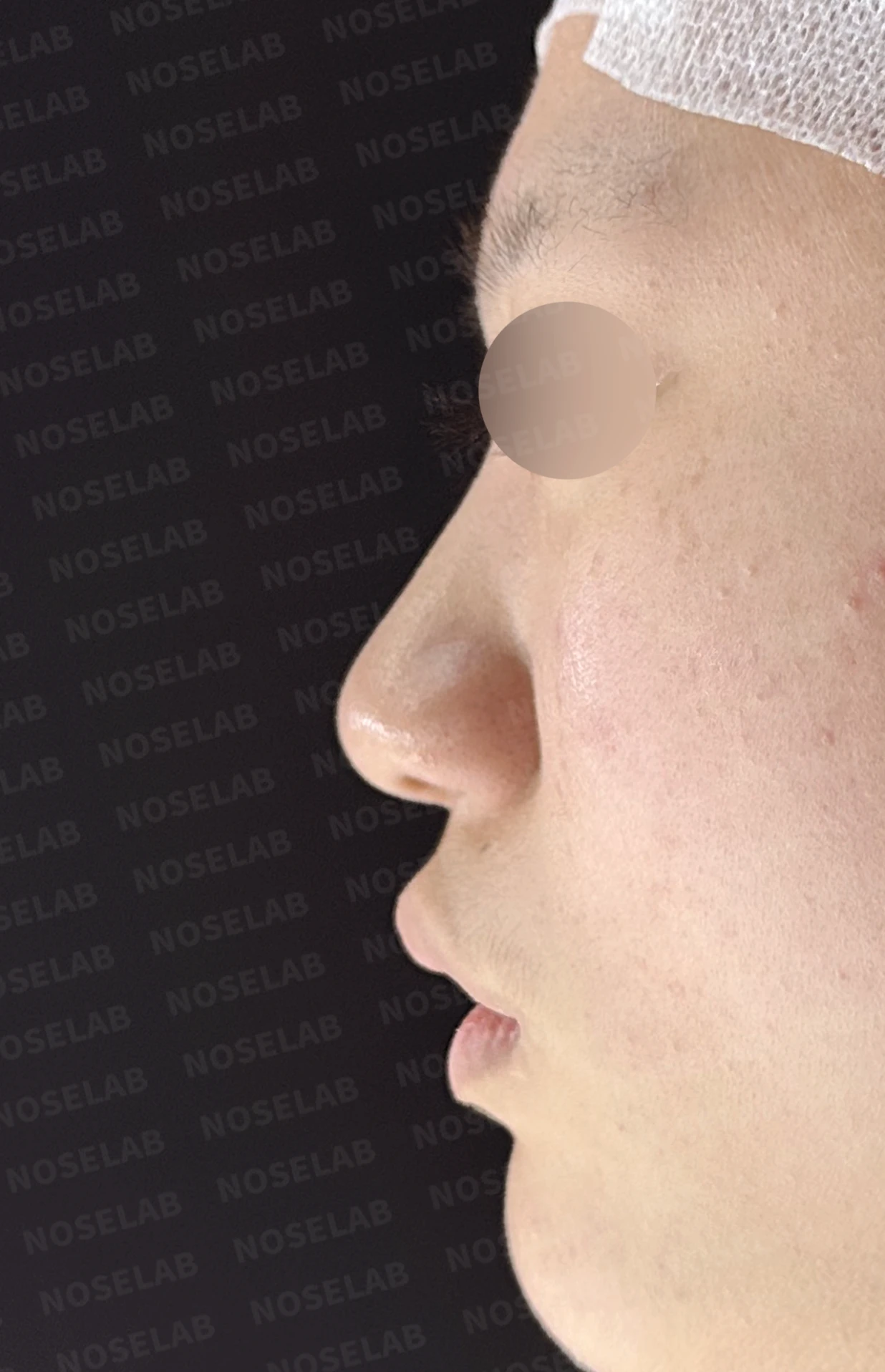
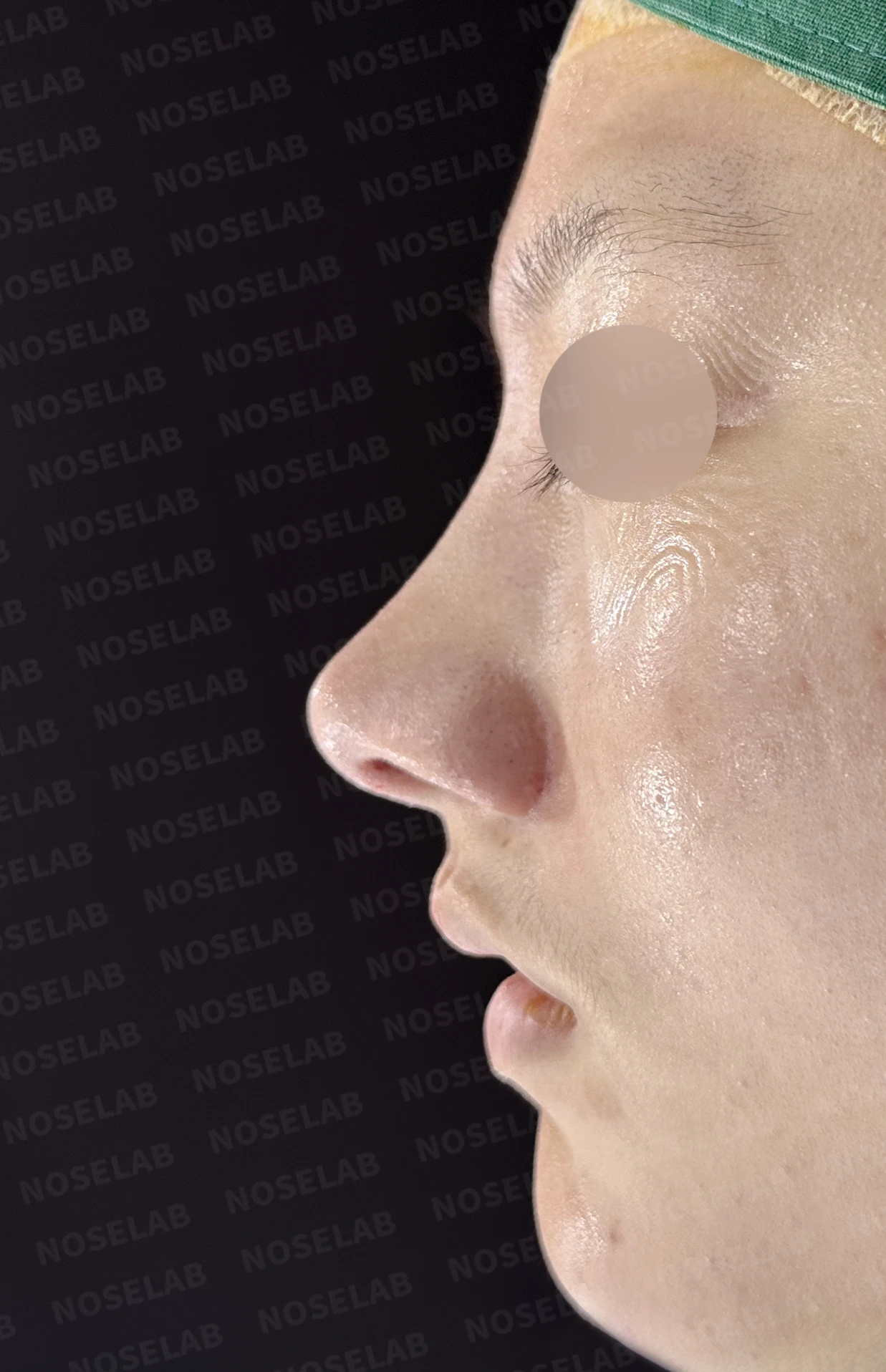
Before surgery / Day 0 immediately after surgery Photos taken immediately after surgery show swelling and may differ from the final result.
Changes on the oblique view
A natural yet defined nasal contour, even from a 45-degree angle
An elevated nasal tip line without sharpness
A refined shape in harmony with the entire face
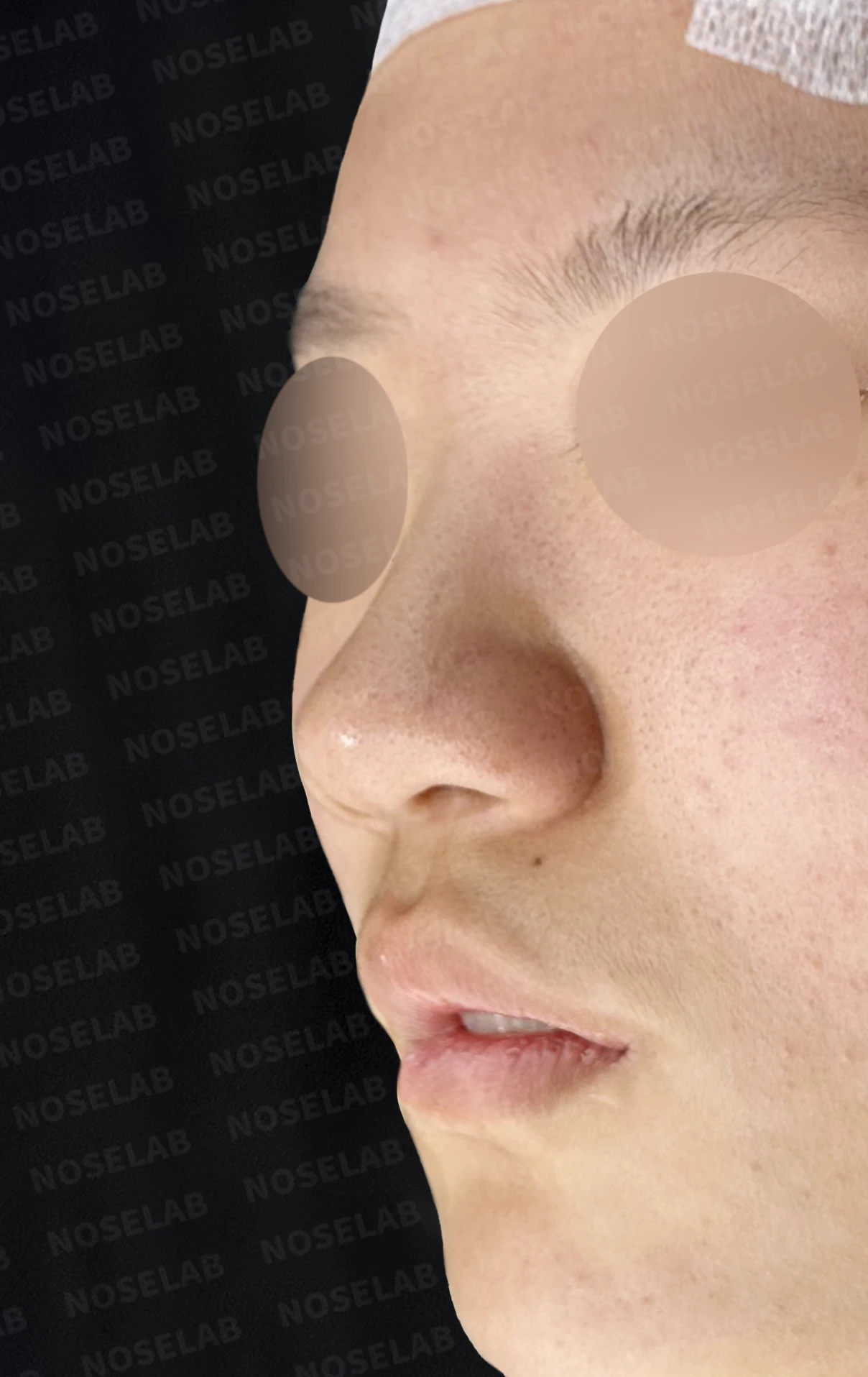
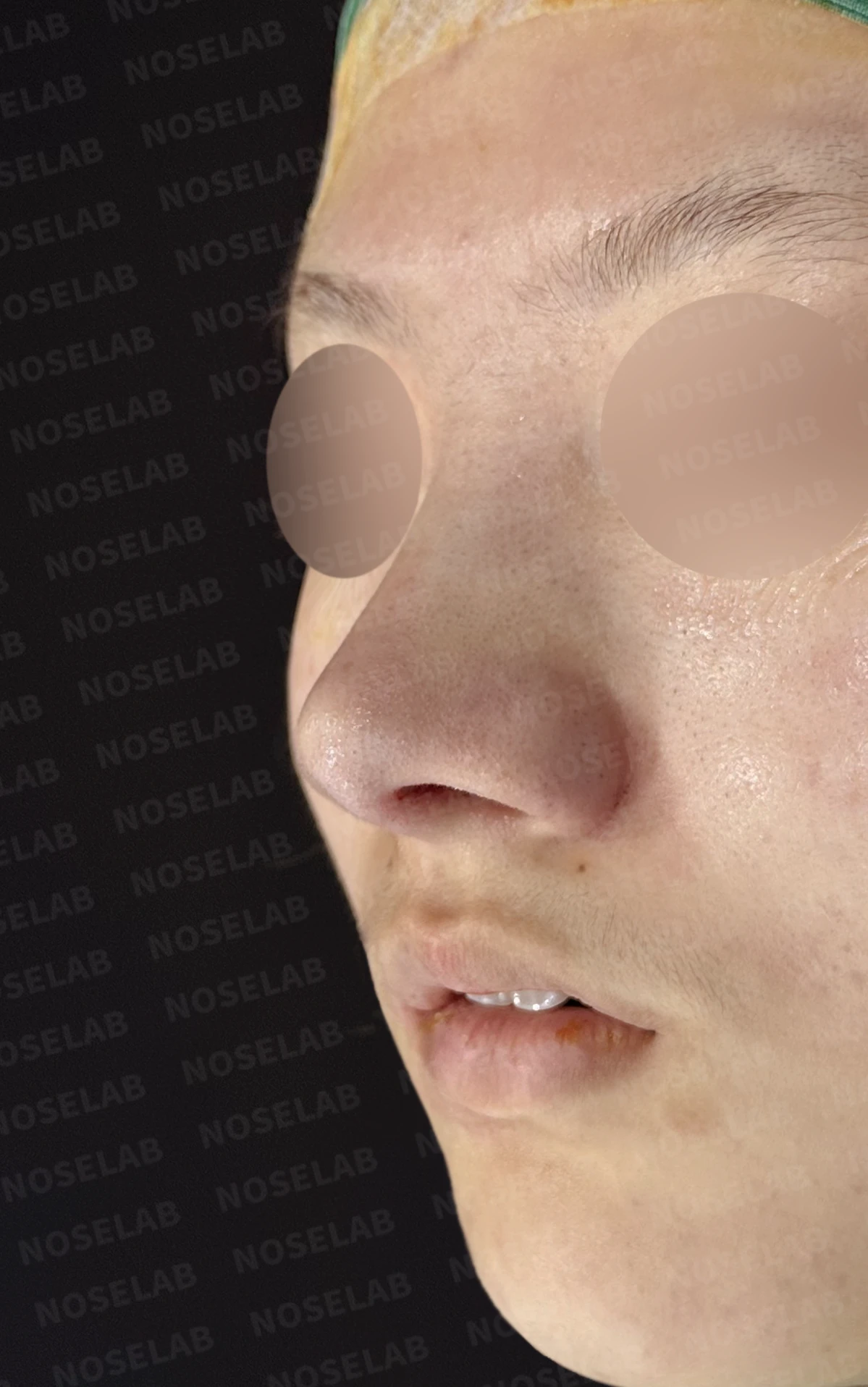
Before surgery / Day 0 immediately after surgery Photos taken immediately after surgery show swelling and may differ from the final result.
Changes in nostril shape
Improved nostril shape as the spread-out nasal tip is gathered
Balanced, symmetric nostril shape
Overall neat and refined nasal base line
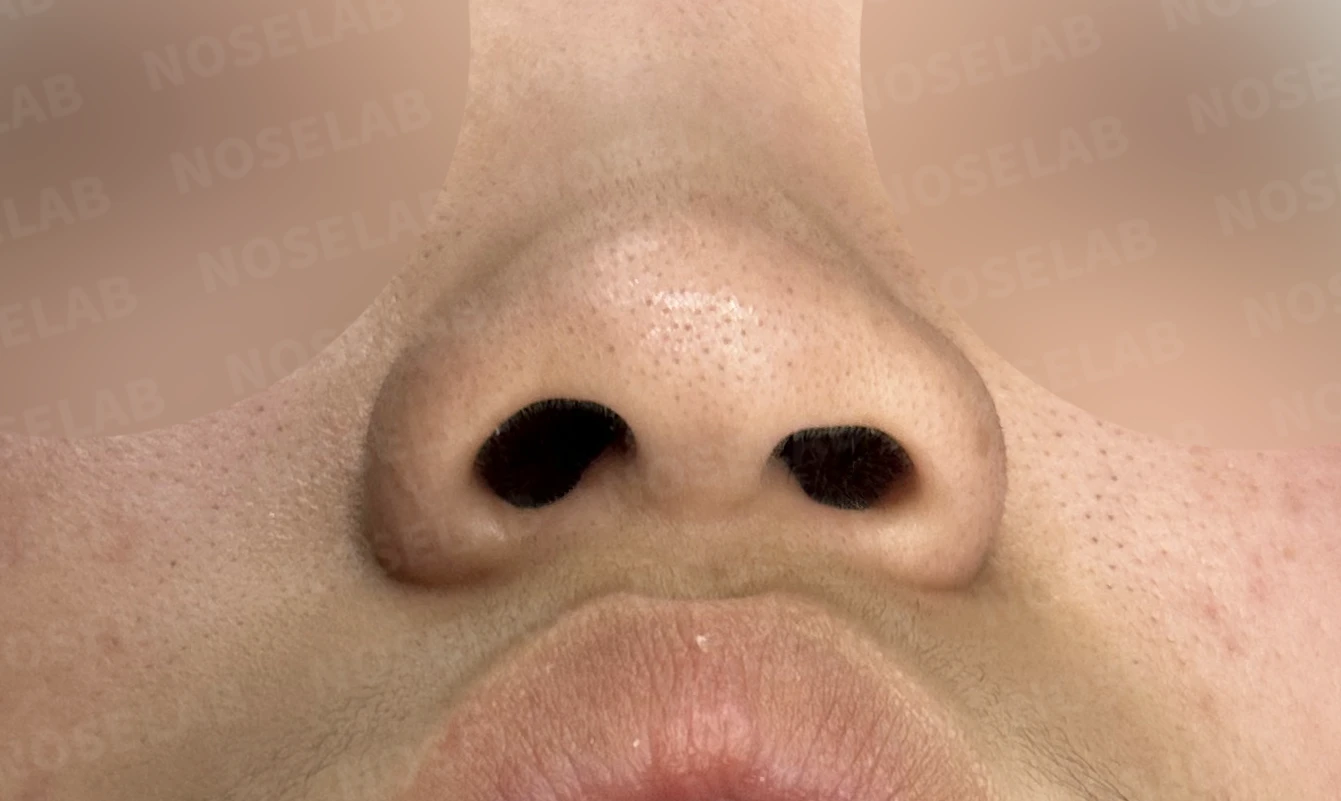
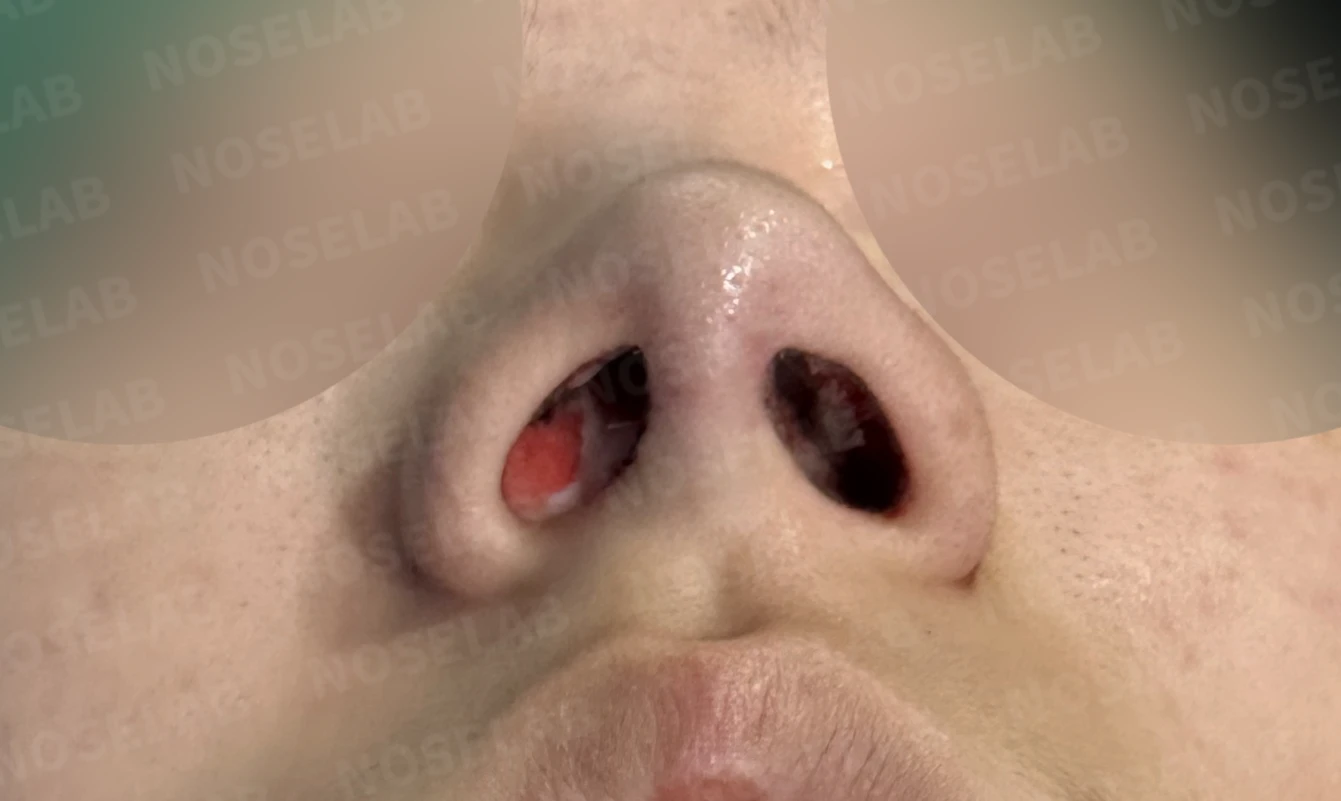
Before surgery / Day 0 immediately after surgery Photos taken immediately after surgery show swelling and may differ from the final result.
💡 Specialist opinion
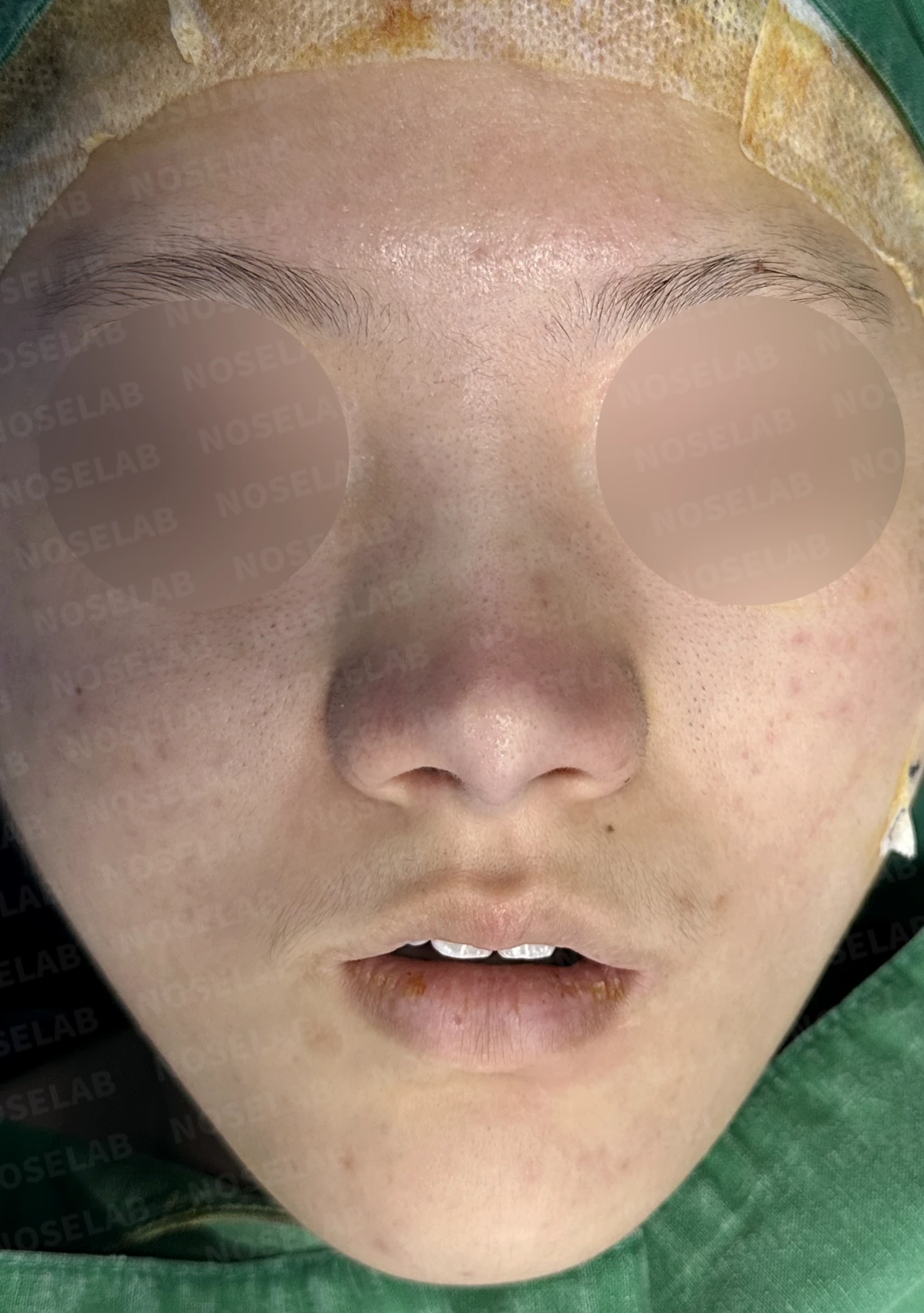
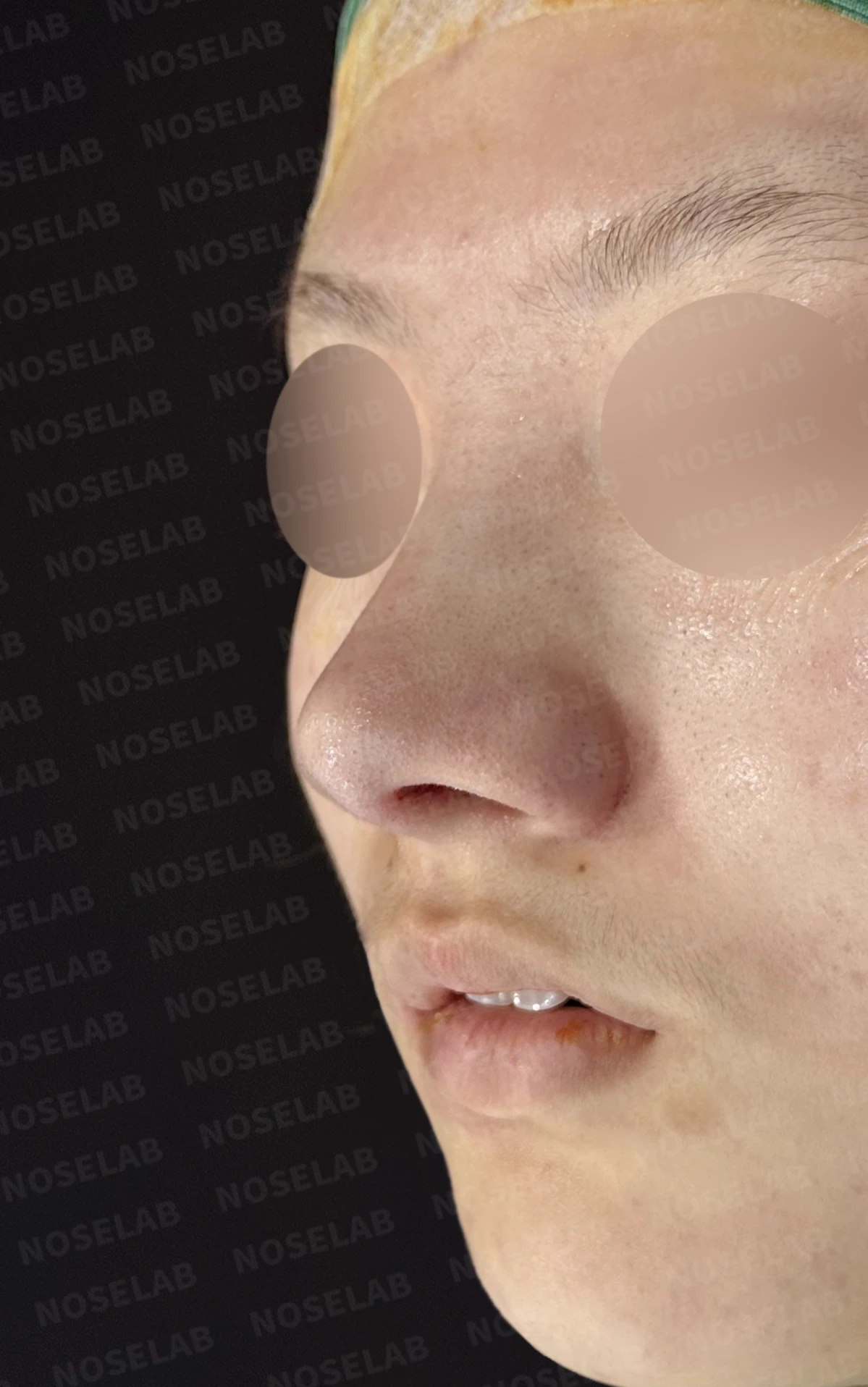
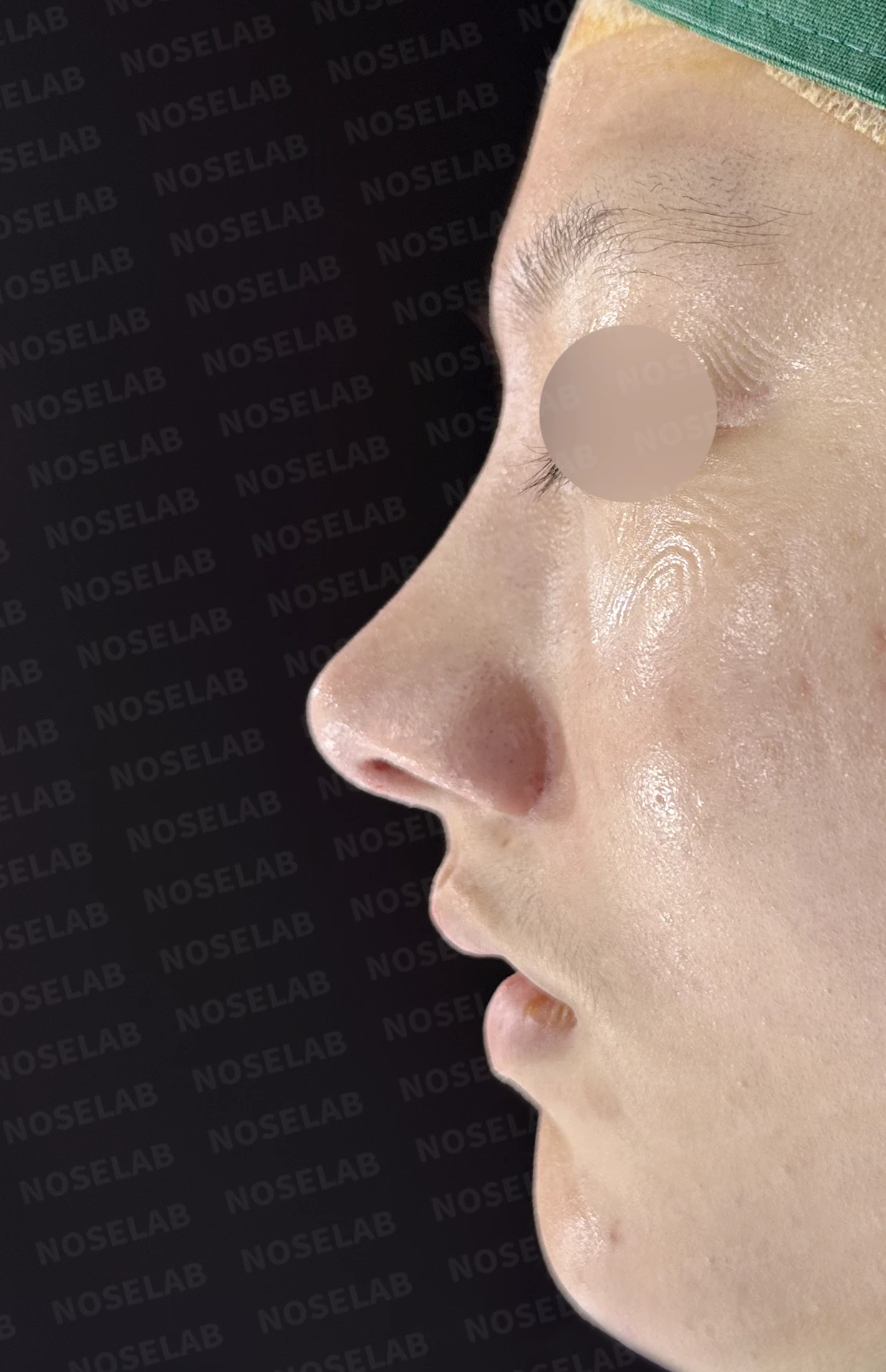
Front, oblique, and profile views on day 0 immediately after surgery. Photos taken immediately after surgery show swelling and may differ from the final result.
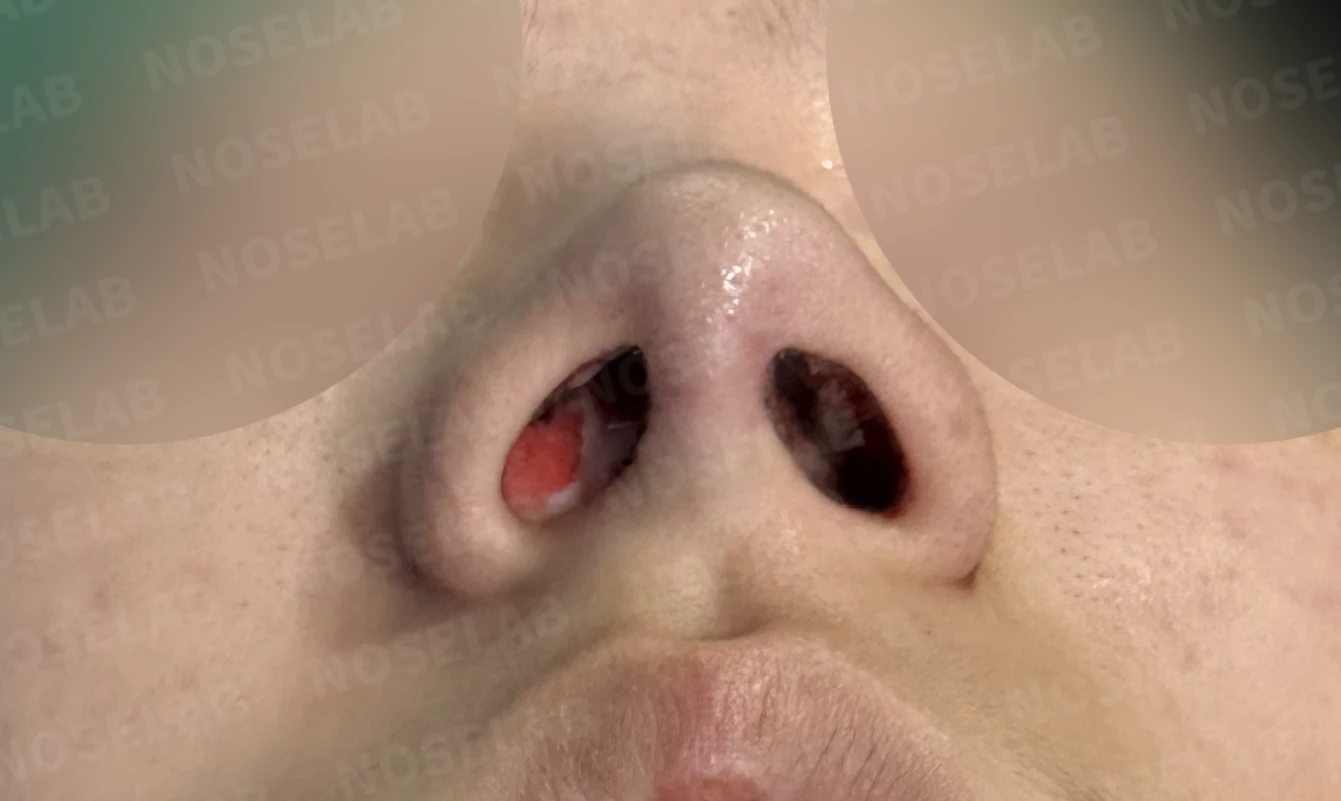
Nostril view on day 0 immediately after surgery. Photos taken immediately after surgery show swelling and may differ from the final result.
A bulbous, spread-out nasal tip is a common anatomical feature among Asian patients. When correcting this type of tip, the most critical factor is securing structural support while shaping a natural contour.
In this surgery, the tip support structure was reinforced through septal extension using autologous rib cartilage. Septal extension is one of the most effective techniques to reliably elevate and support the nasal tip, and using autologous rib cartilage provided sufficient structural strength and stability.
Because the patient did not want a sharp nasal tip, special attention was given to finely adjusting the tip height and angle to create a soft, natural contour. By concurrently correcting the nasolabial angle, a natural columellar line transitioning from the nasal tip to the upper lip was established, completing a defined yet non-artificial nasal profile.
On the nasal bridge, a silicone implant was carved with precision to match the patient's nasal bone and placed strictly along the dorsum. Placing the implant solely on the dorsum creates a seamless connection with the nasal tip while preventing the implant from extending into the tip, preserving a more natural feel and shape.
Surgery for the deviated septum and rhinitis was performed at the same time, resolving the nasal obstruction in a single procedure. Addressing both aesthetic and functional aspects together is an essential factor in improving patient satisfaction.
This was Dr. Peter C. Kang. Thank you.
#closedrhinoplasty #closedrevisionrhinoplasty #tiprhinoplasty #septalextension #autologousribcartilage #nasolabialanglecorrection #bulboustip #spreadouttipcorrection #siliconeimplant #nasalobstructionsurgery

Limitations and risks
When autologous rib cartilage is used, scarring and pain may remain at the donor site on the chest, and pneumothorax (pleural injury) can occur rarely. Over time, the grafted cartilage may warp or undergo partial resorption.
When the septum is corrected at the same time, nasal obstruction may persist or recur, and in rare cases, septal perforation or changes in smell may occur.
Common potential risks include infection, bleeding, asymmetry, scarring, skin necrosis, and insufficient improvement; results vary depending on individual skin condition and previous surgical history.