Hello, I am Dr. Peter C. Kang.
Today, I would like to share a case of a patient who visited our clinic concerned about a bulbous, upturned nasal tip.
🔍 Surgical history
The patient had undergone rhinoplasty and columellar filler injections at another clinic about 2 years ago.
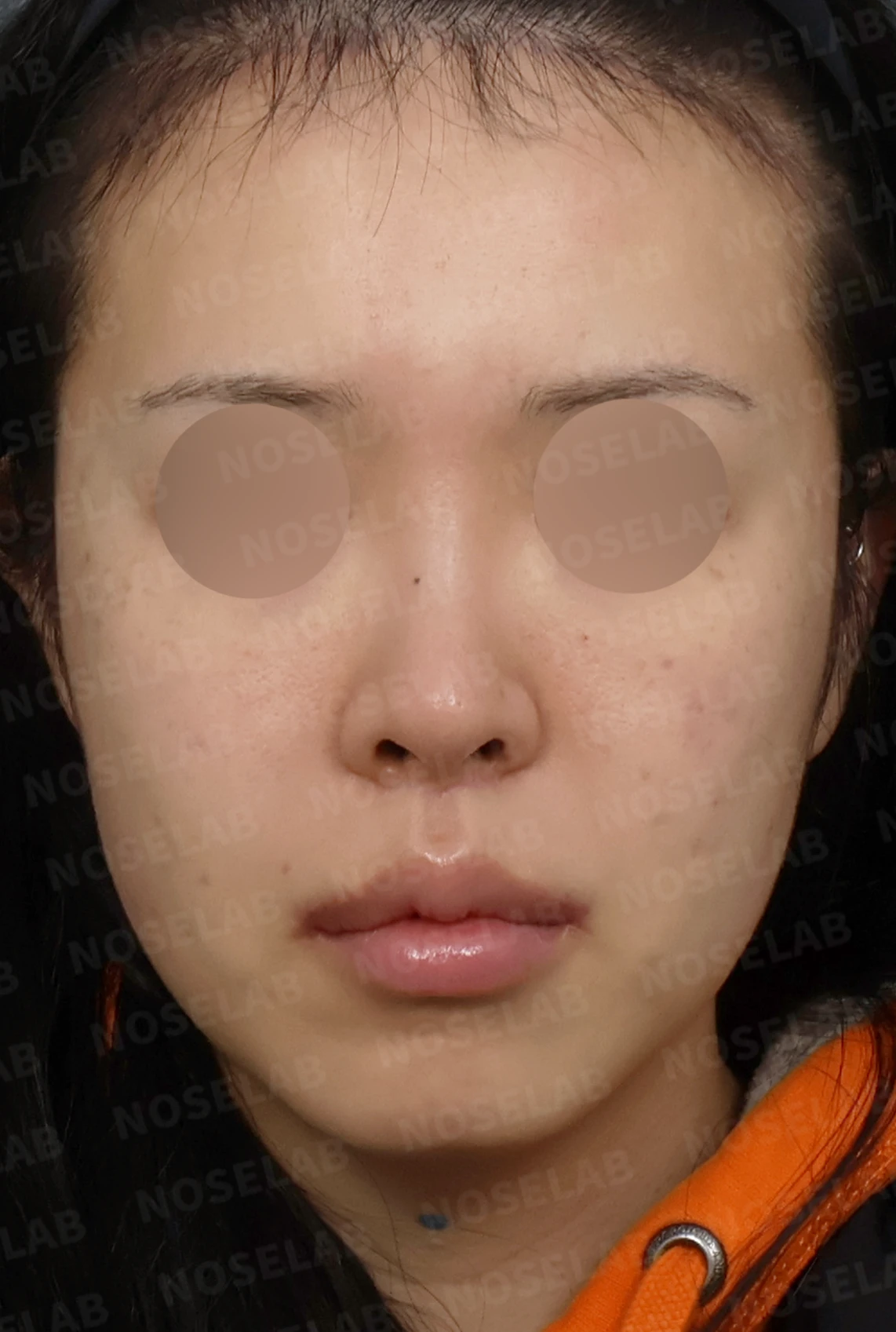
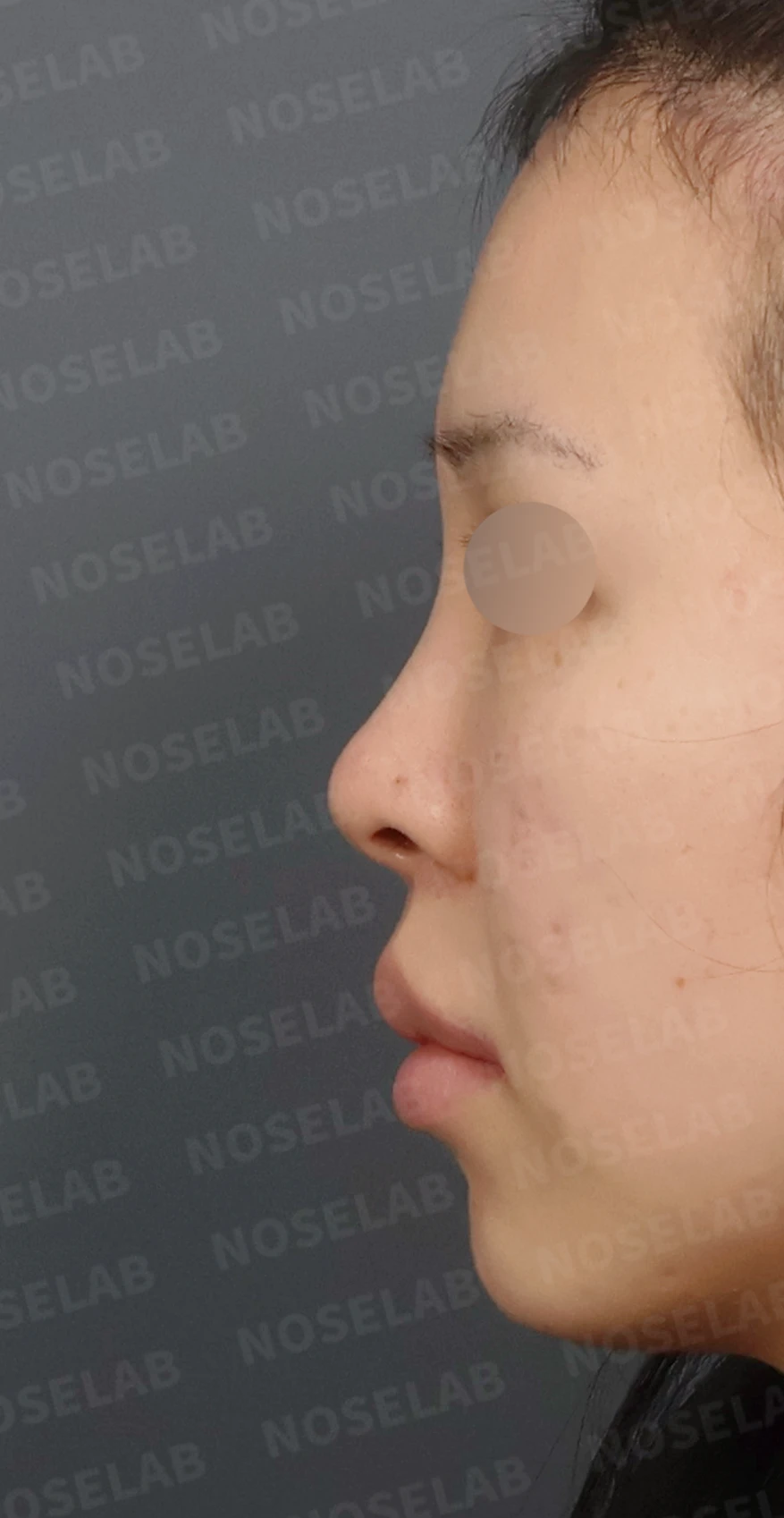
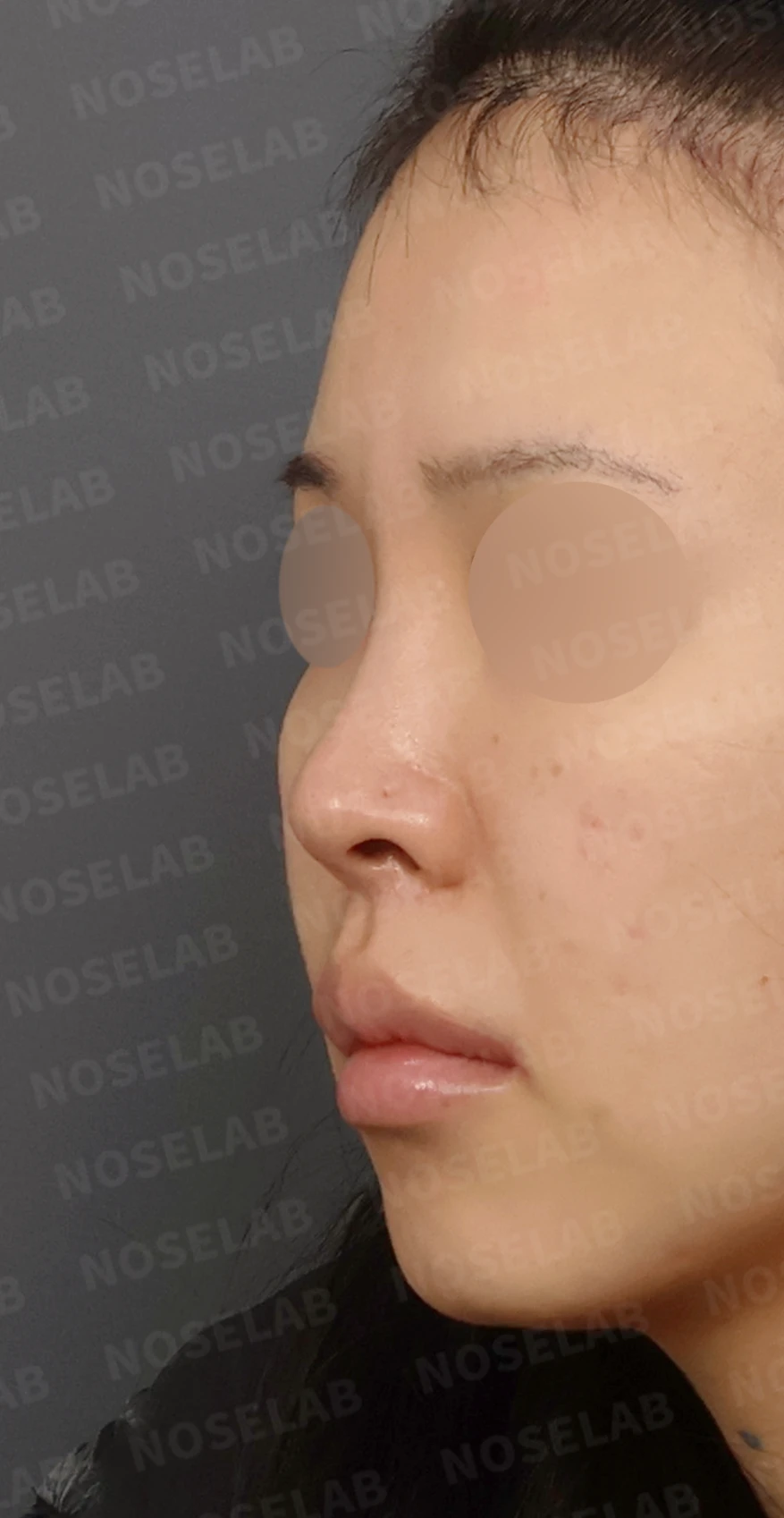
Front, left profile, and oblique views during design consultation.
💉 Patient's requests
The patient wished to correct the bulbous, upturned nasal tip while maintaining a natural feel without an excessive change. The patient desired a defined yet natural nose line and particularly hoped to reduce the appearance of a protruding mouth. Improving symptoms of nasal obstruction was also a key goal.
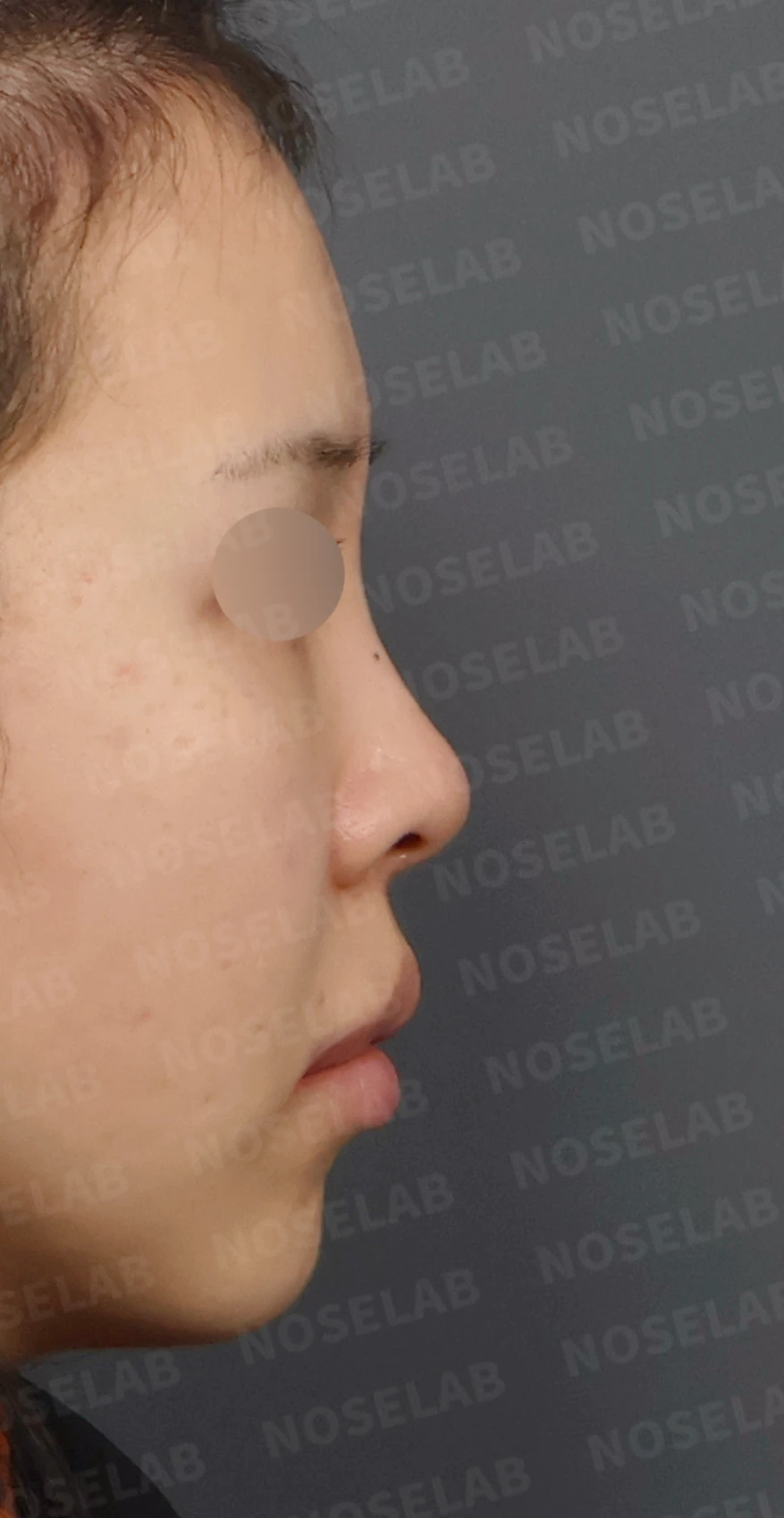
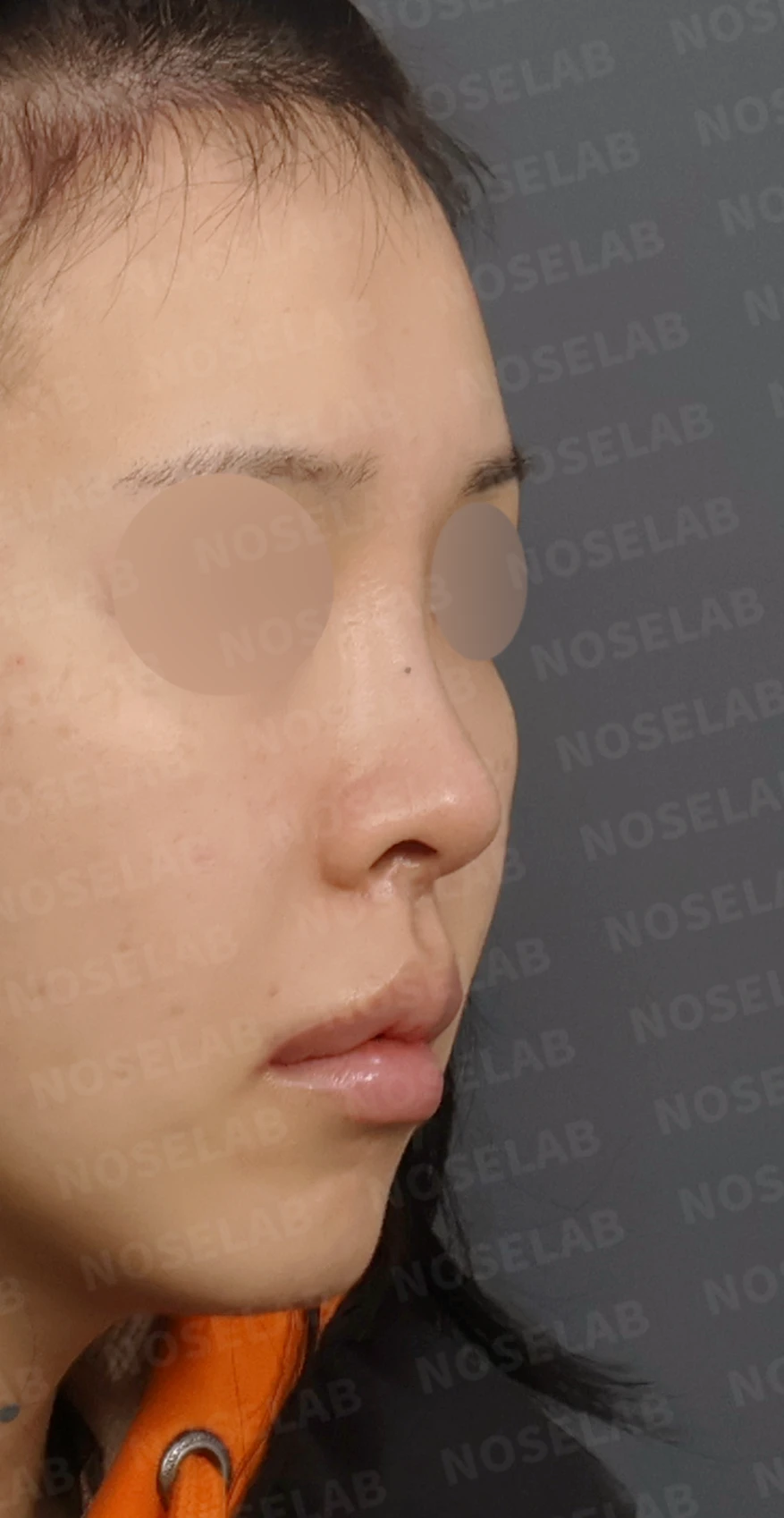
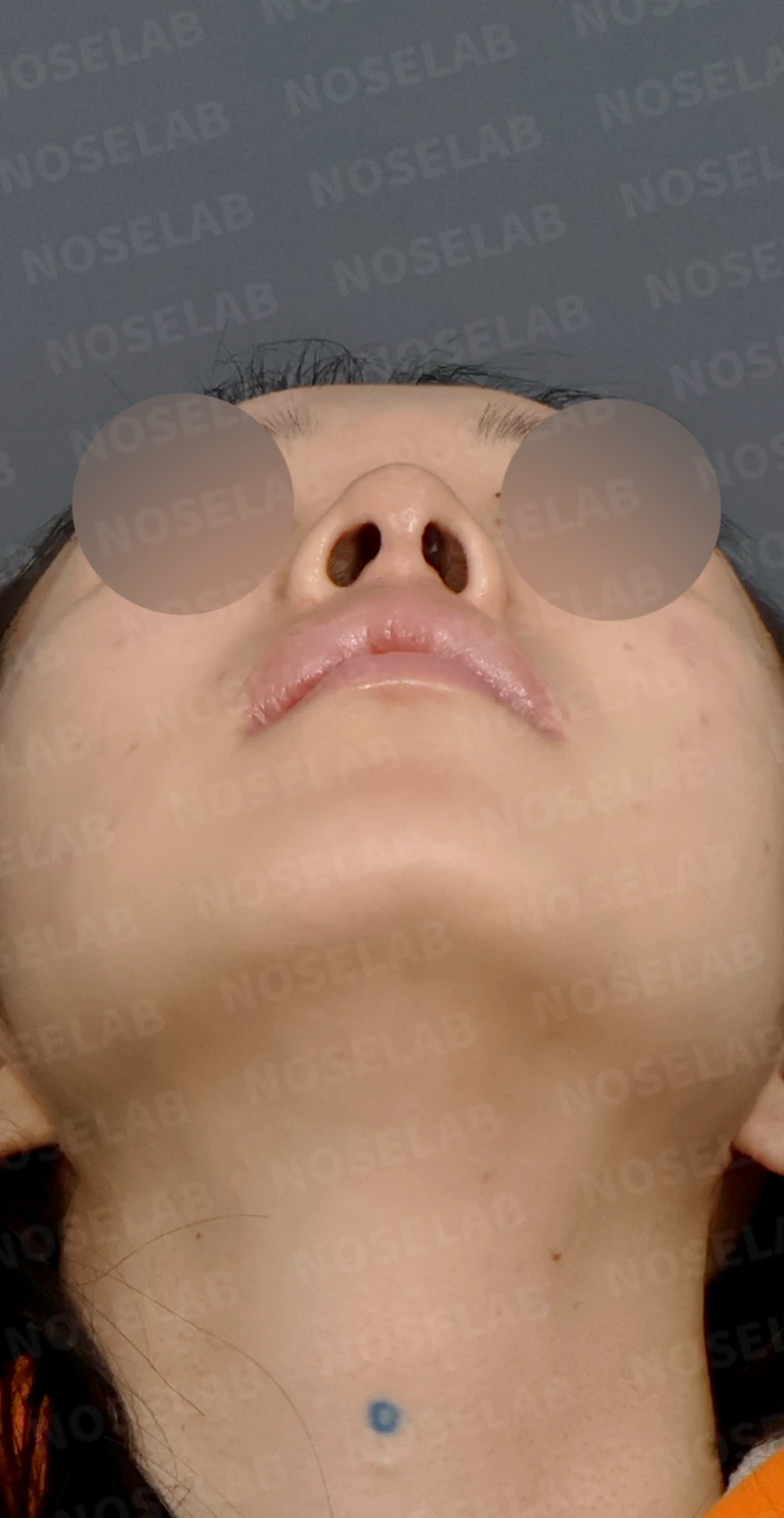
Right profile, oblique, and nostril views during design consultation.
🔧 Surgical plan and procedure
1. Removal of existing filler
The filler previously injected into the columella was safely removed.
2. Nasal tip plasty using autologous rib cartilage
By reinforcing nasal tip support, we established a defined tip height and lowered the upturned tip naturally, achieving the effect of reducing the appearance of a protruding mouth.
3. Custom-carved silicone implant
The implant was precisely carved to match the nasal bone contours, creating a defined straight bridge line flowing from the forehead to the nasal tip.
4. Nasolabial angle correction
Improving the profile silhouette maximized the visual reduction of the protruding mouth.
5. Septoplasty for deviated septum and rhinitis surgery
We corrected the deviated septum causing the nasal obstruction and performed inferior turbinate reduction to secure clear nasal passages.
🌟 Surgical results
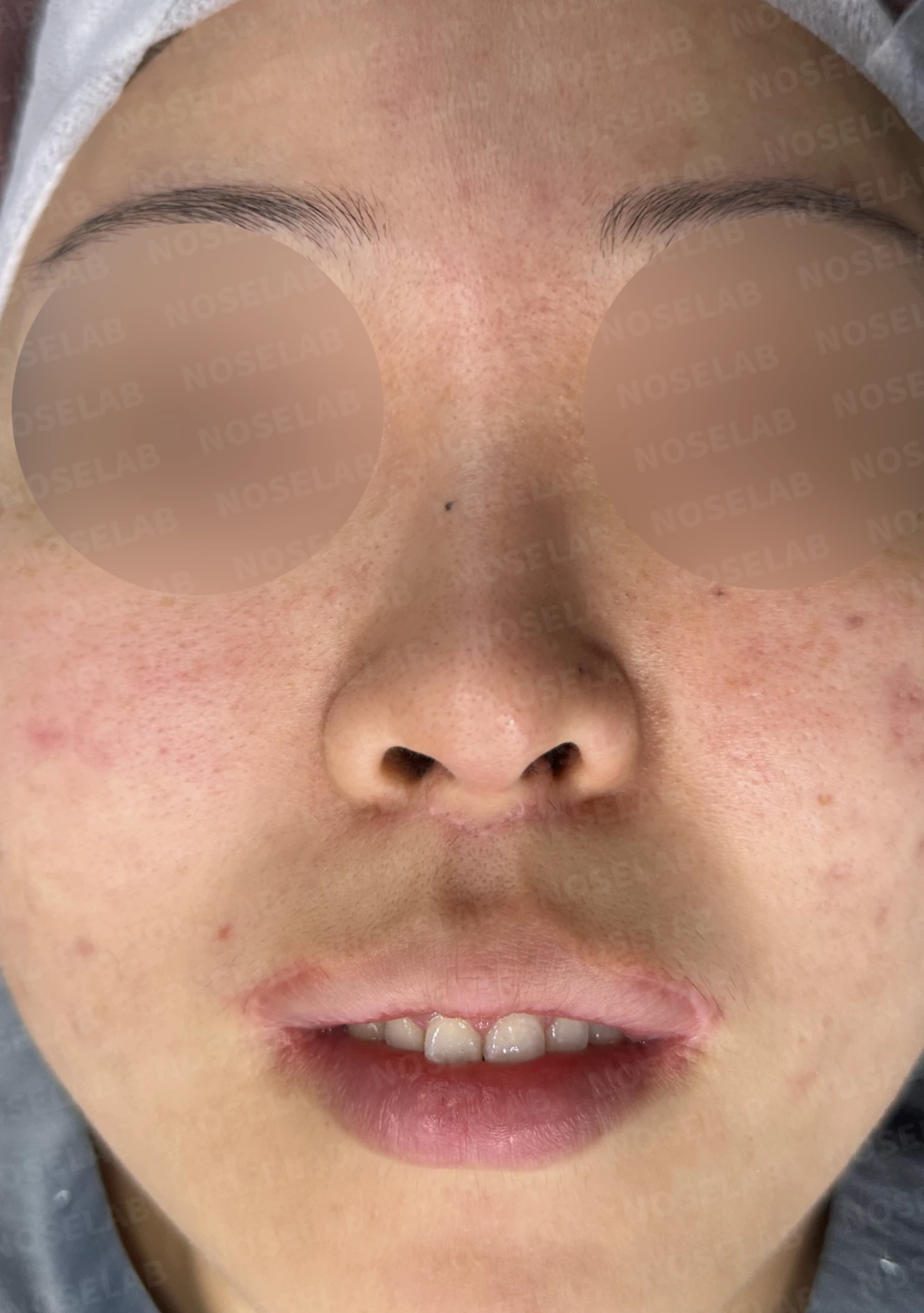
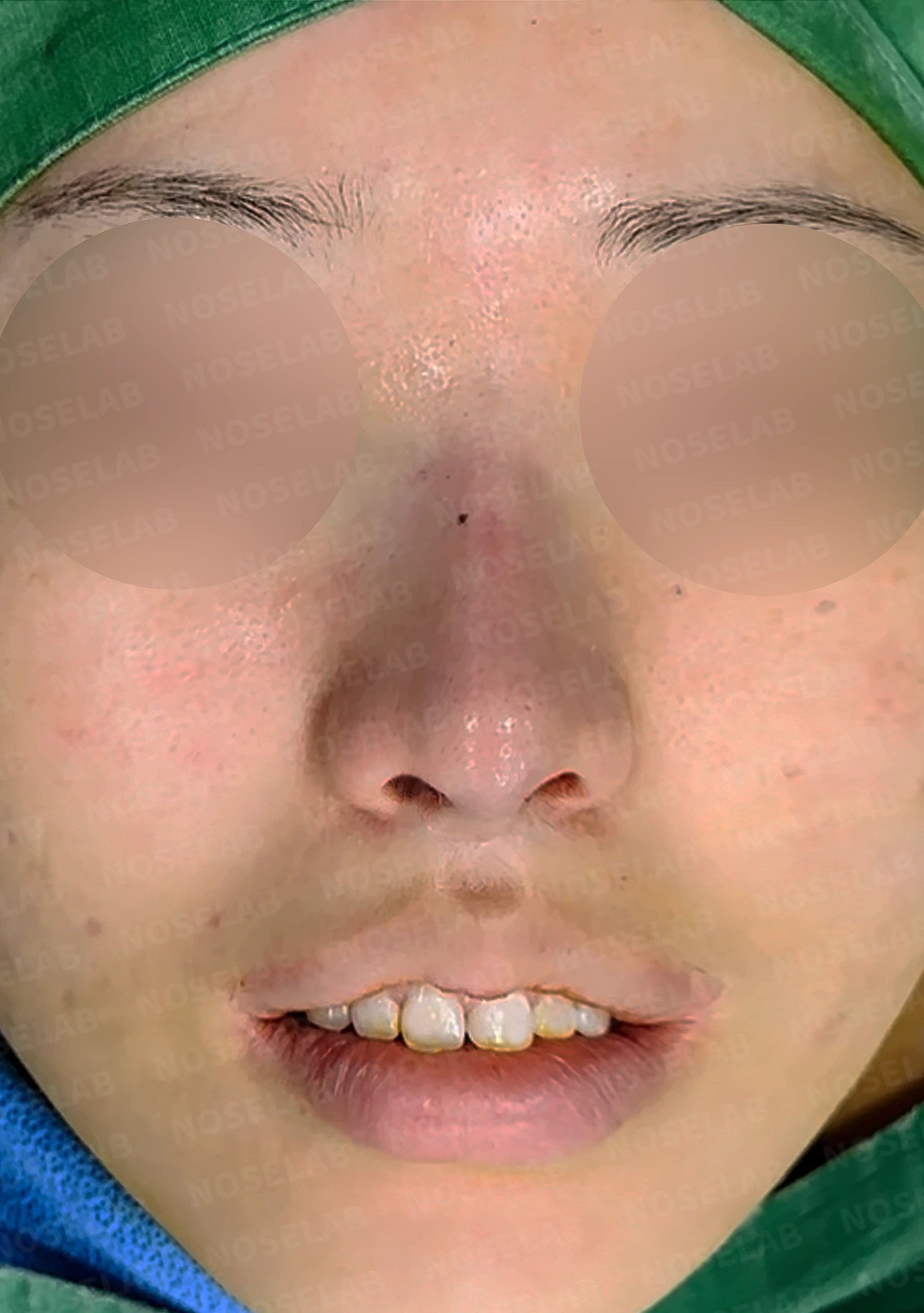
Before surgery / Day 0 immediately after surgery Photos taken immediately after surgery show swelling and may differ from the final result.
Front view changes:
The previously bulbous nasal tip has become defined and refined, creating an overall sophisticated nose line.
Before surgery / Day 0 immediately after surgery Photos taken immediately after surgery show swelling and may differ from the final result.
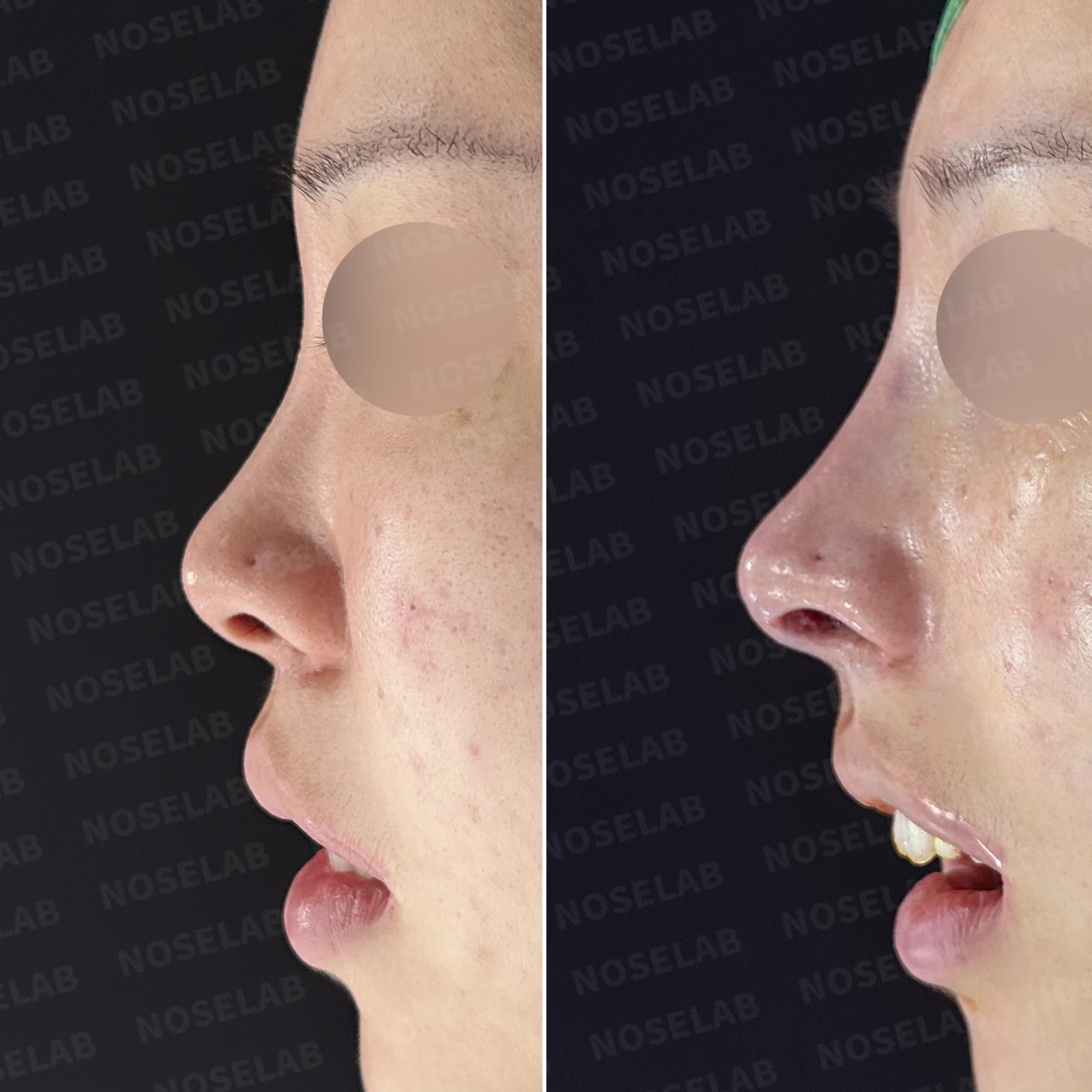
Profile view changes:
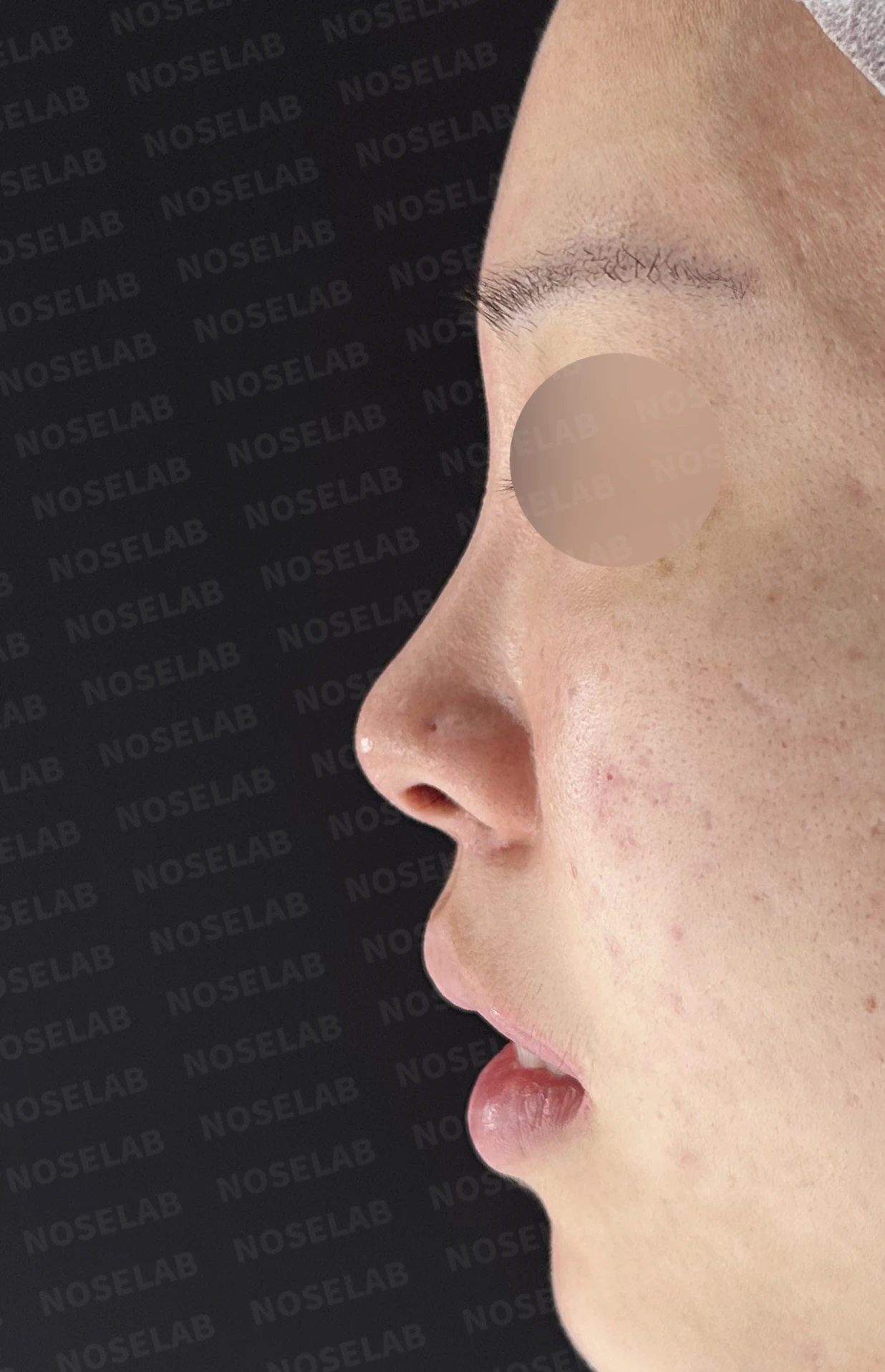
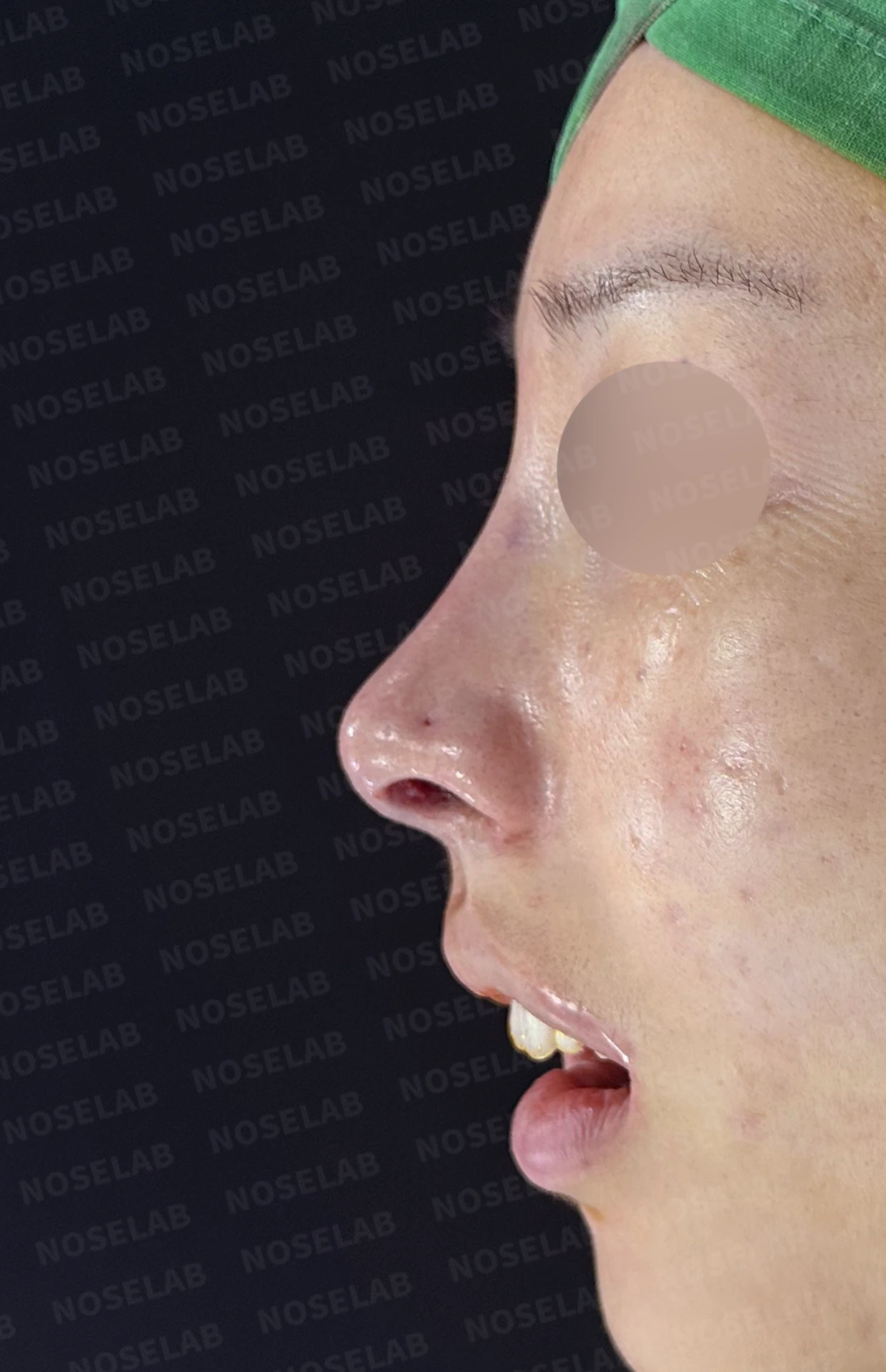
The upturned nasal tip has been naturally brought down, creating a smooth straight bridge line from the forehead to the tip. You can observe a refined profile silhouette with reduced appearance of a protruding mouth.
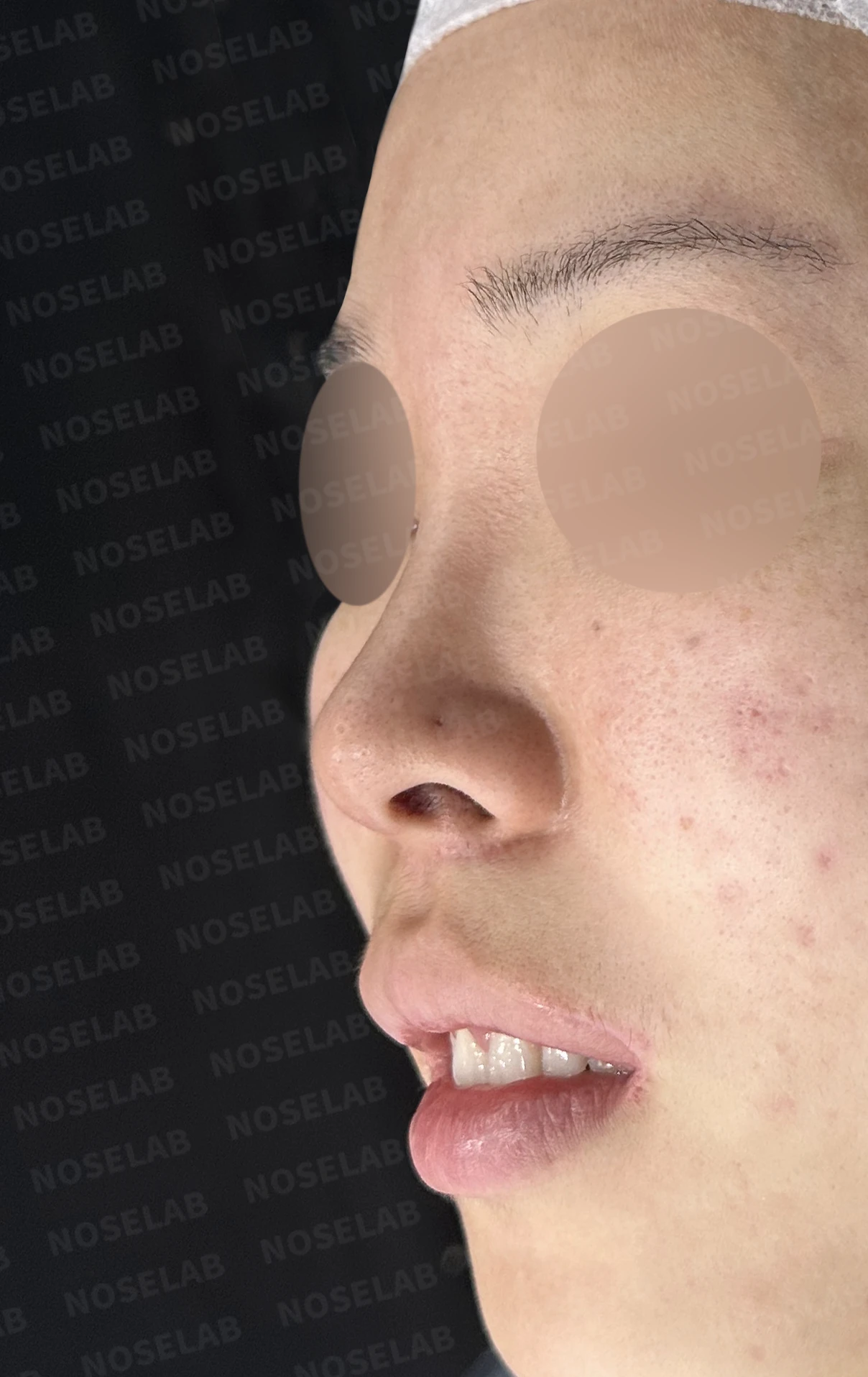
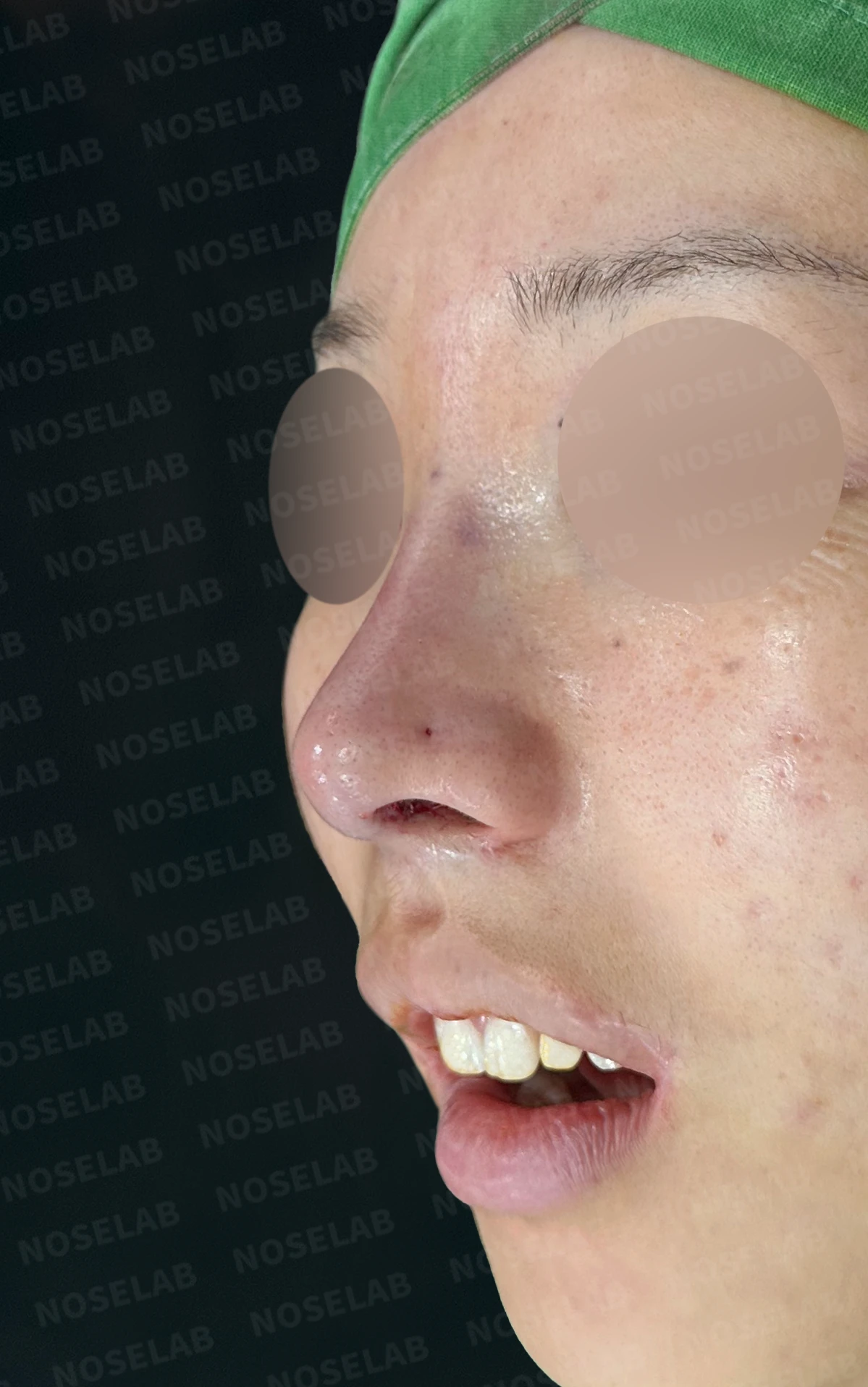
Before surgery / Day 0 immediately after surgery Photos taken immediately after surgery show swelling and may differ from the final result.
Nostril view changes:
Excessive nostril show from the upturned position has decreased, and with the refined nasal tip, the overall nostril shape has improved.
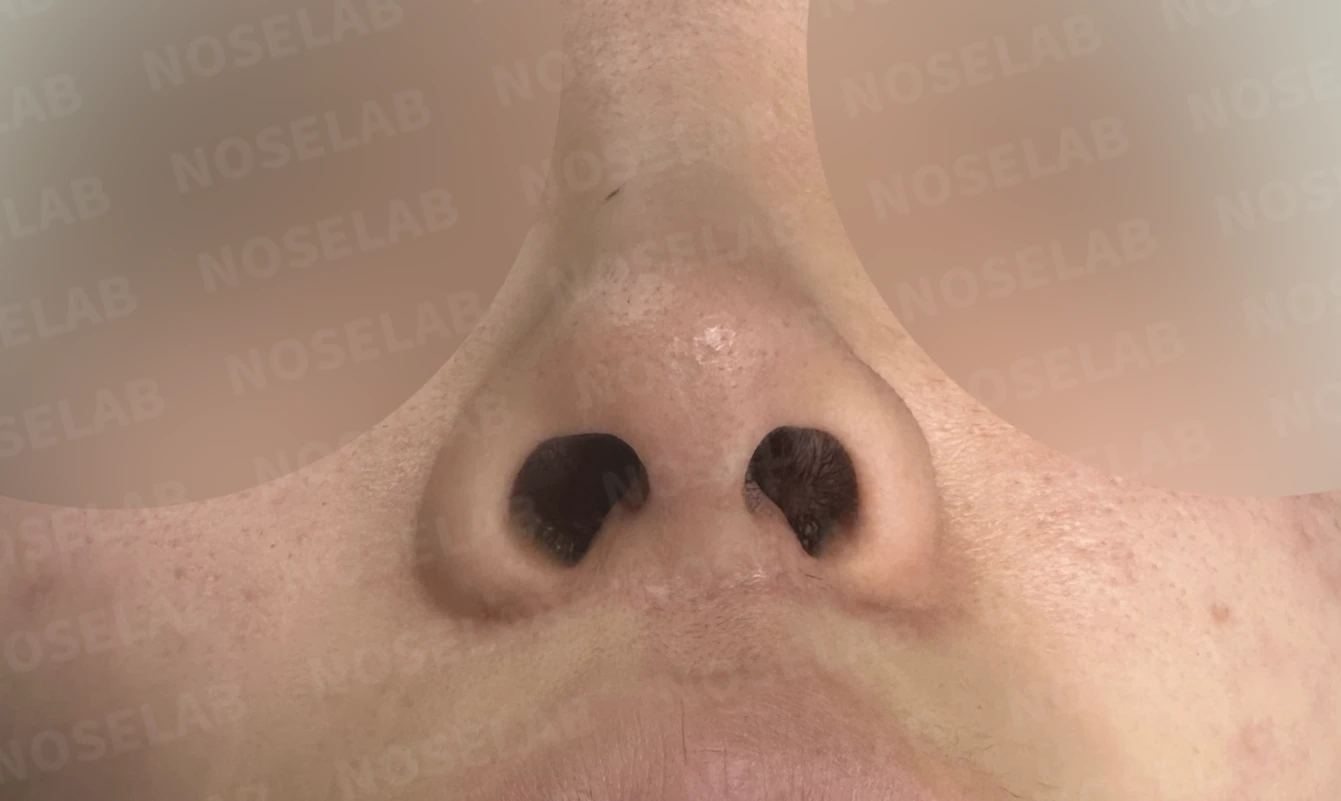
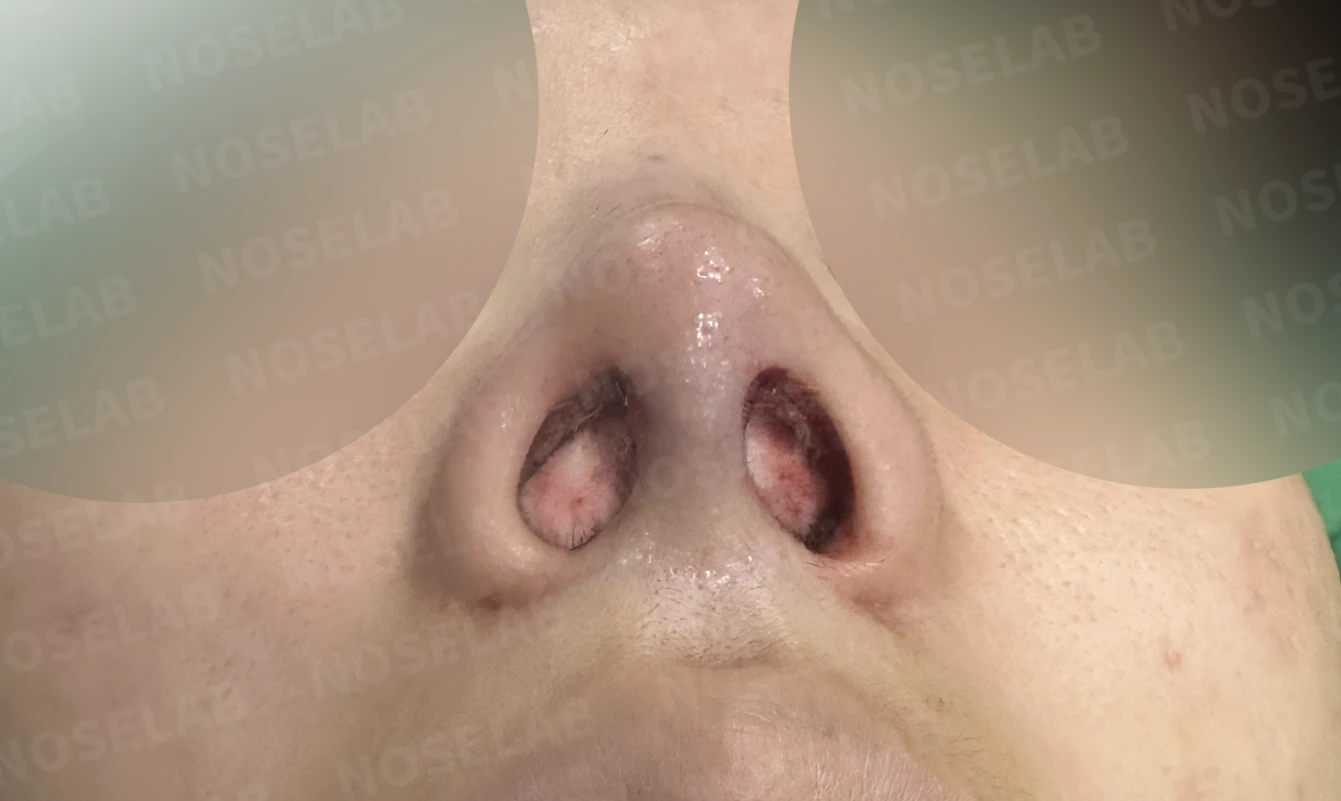
Before surgery / Day 0 immediately after surgery Photos taken immediately after surgery show swelling and may differ from the final result.
💡 Specialist's opinion
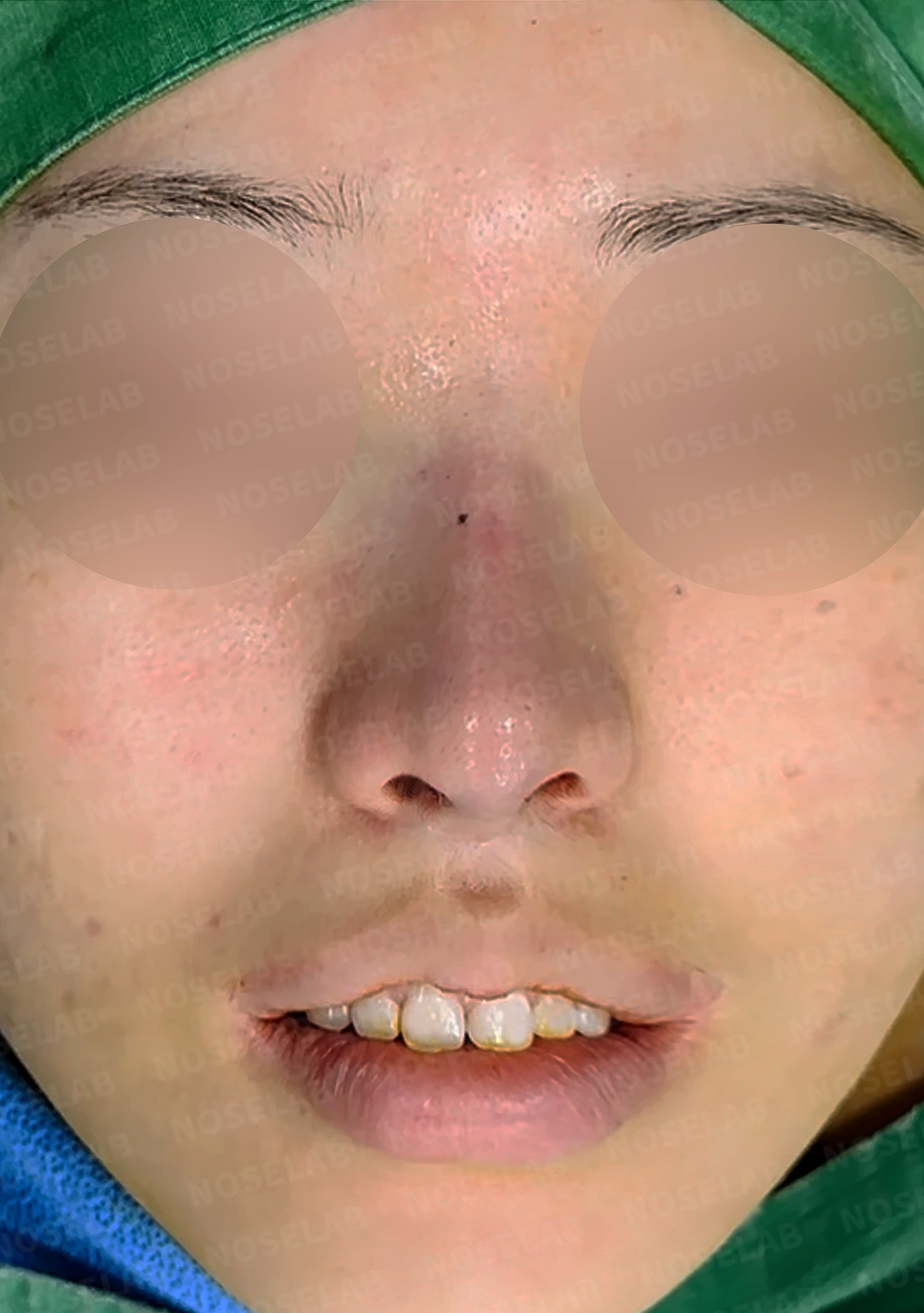
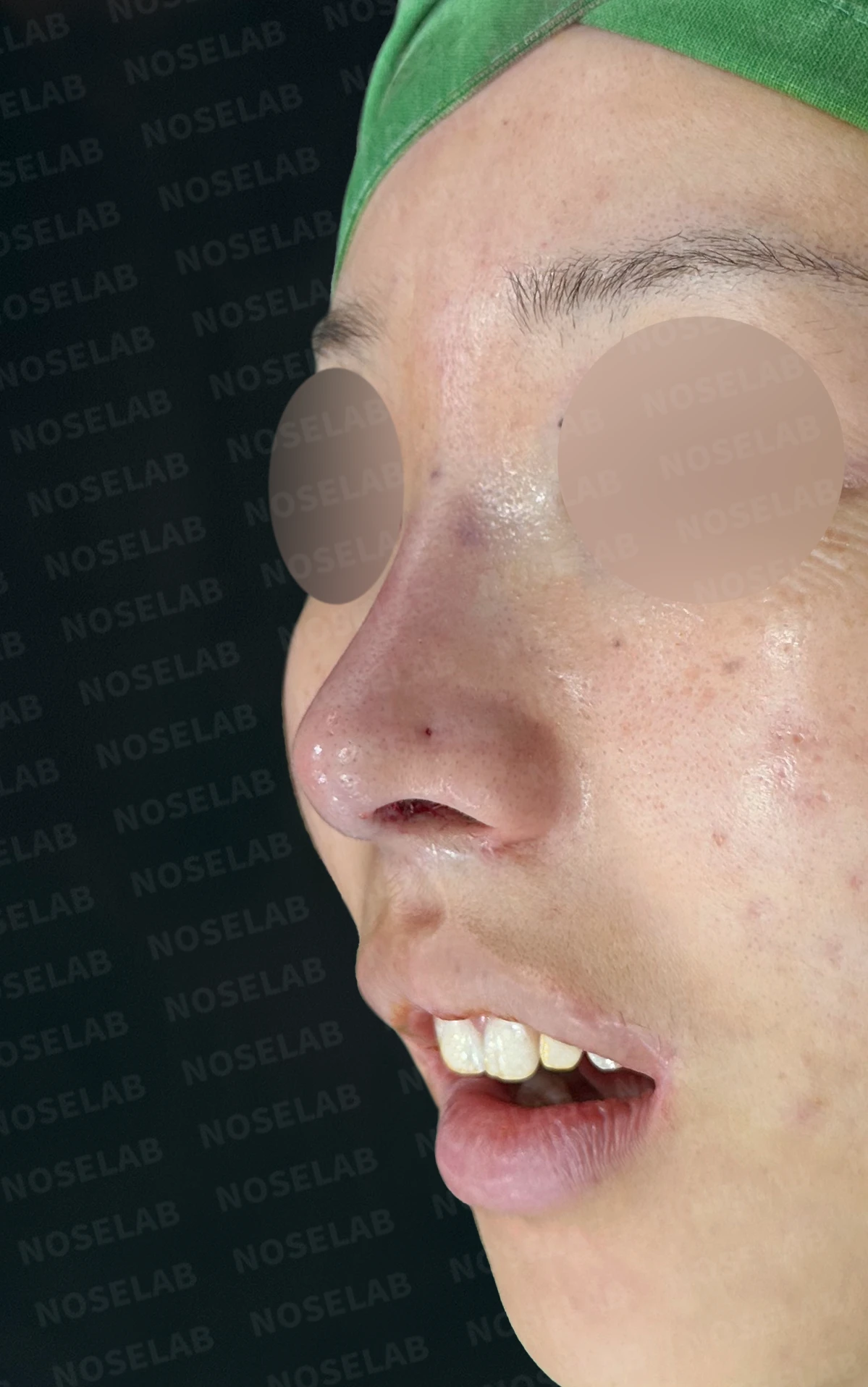
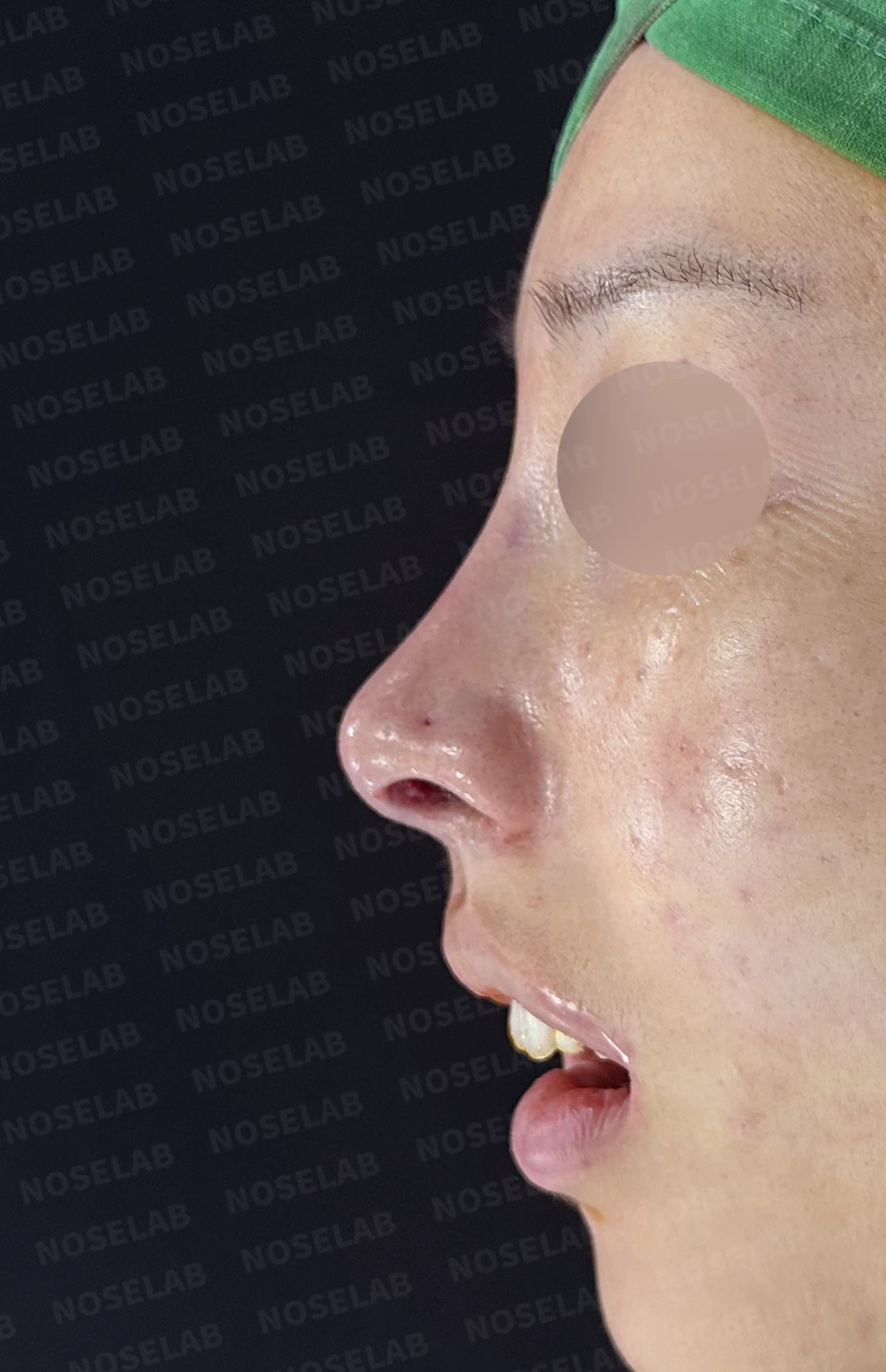
Front, oblique, and profile views on day 0 immediately after surgery. Photos taken immediately after surgery show swelling and may differ from the final result.
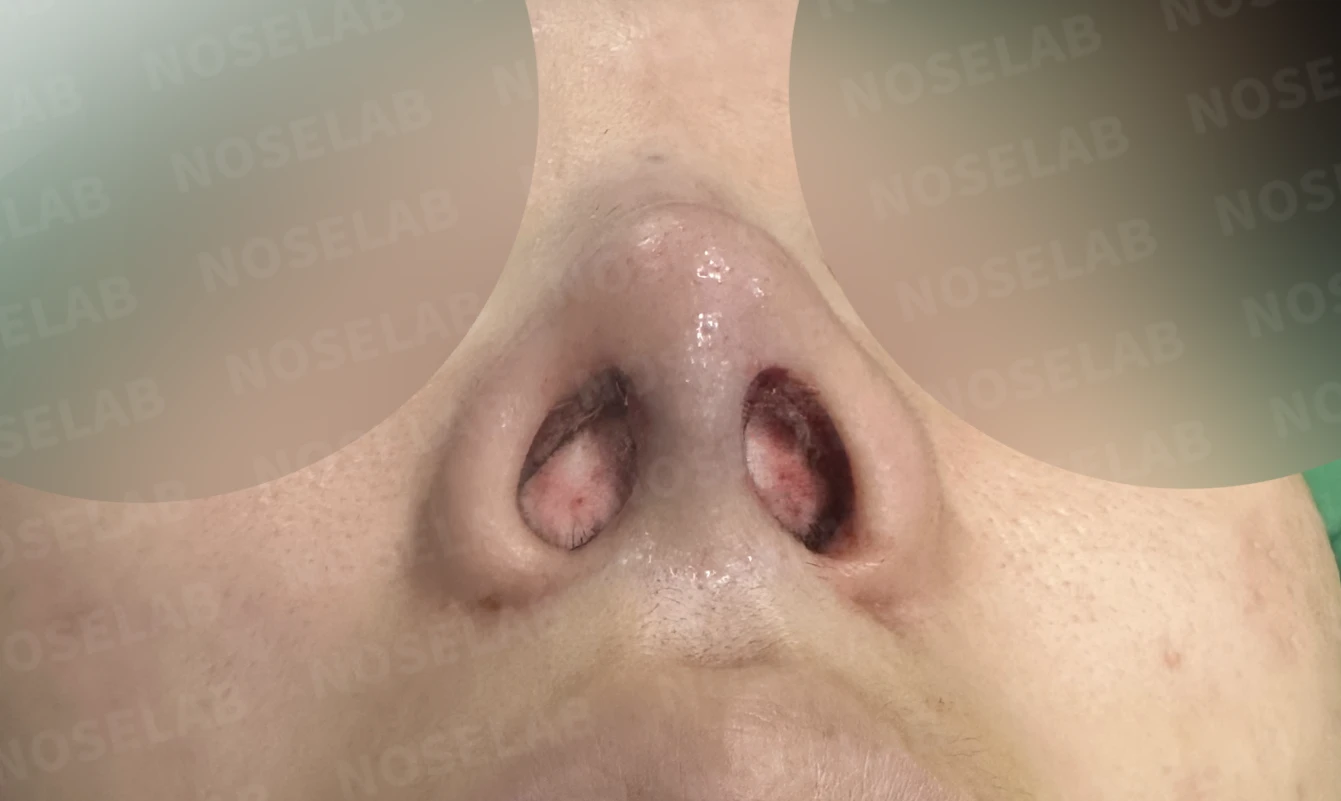
Nostril view on day 0 immediately after surgery. Photos taken immediately after surgery show swelling and may differ from the final result.
An upturned nose and a protruding mouth are closely related. When the nasal tip is turned upward, the mouth relatively appears more prominent; thus, properly adjusting the height and angle of the nasal tip can reduce the look of a protruding mouth on its own.
In this type of case, we reinforced the tip support structure using autologous rib cartilage and carved a silicone implant to fit the nasal bone, creating a straight bridge line that connects naturally from the forehead to the nasal tip. In addition, the functional discomfort of nasal obstruction was addressed simultaneously through deviated septum correction and inferior turbinate reduction.
Achieving aesthetic and functional improvements at the same time is key to patient satisfaction in cases like this.
This was Dr. Peter C. Kang. Thank you.
#closedrhinoplasty #closedrevisionrhinoplasty #upturnednosecorrection #protrudingmouthcorrection #autologousribcartilage #deviatedseptum #revisionrhinoplasty #definednose #straightbridgeline #nasolabialanglecorrection #nasalobstructionsurgery

Limitations and risks
When autologous rib cartilage is used, scarring and pain may remain at the donor site on the chest, and pneumothorax (pleural injury) can occur rarely. Over time, the grafted cartilage may warp or undergo partial resorption.
When foreign materials such as injected fillers are removed and reconstructed, contracture may recur, nasal height and length may decrease, and staged surgery may be necessary depending on the skin condition.
When the septum is corrected at the same time, nasal obstruction may persist or recur, and in rare cases, septal perforation or changes in smell may occur.
Common potential risks include infection, bleeding, asymmetry, scarring, skin necrosis, and insufficient improvement; results vary depending on individual skin condition and previous surgical history.