Hello, I am Dr. Peter C. Kang.
Today, I would like to introduce the case of a patient who visited our clinic concerned about a short, upturned nose and a philtrum that appeared long.
🔍 Surgical history
The patient had no prior nasal surgery and was undergoing primary rhinoplasty. However, because he regularly experienced rhinitis symptoms, he needed both aesthetic improvement and functional correction at the same time.
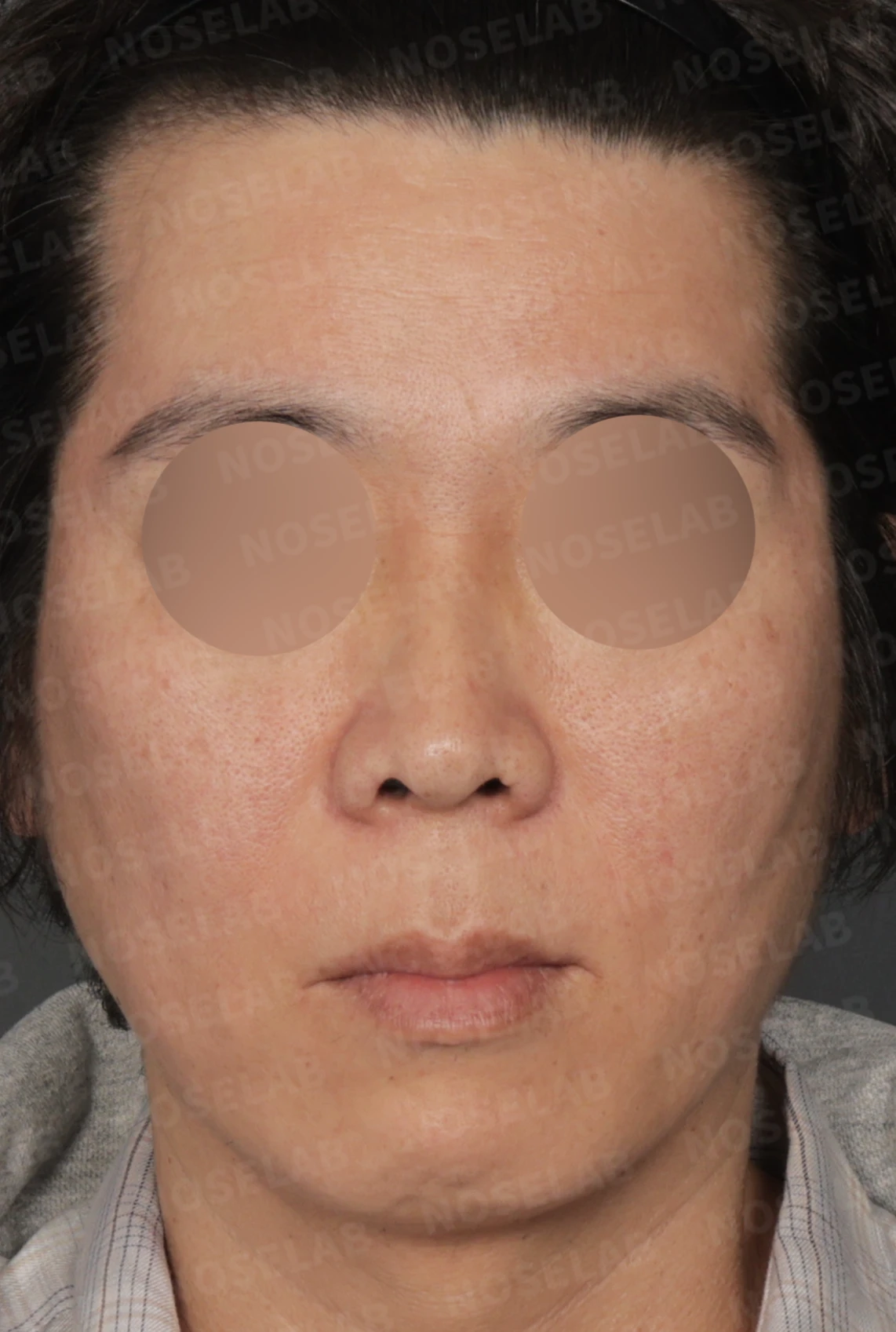
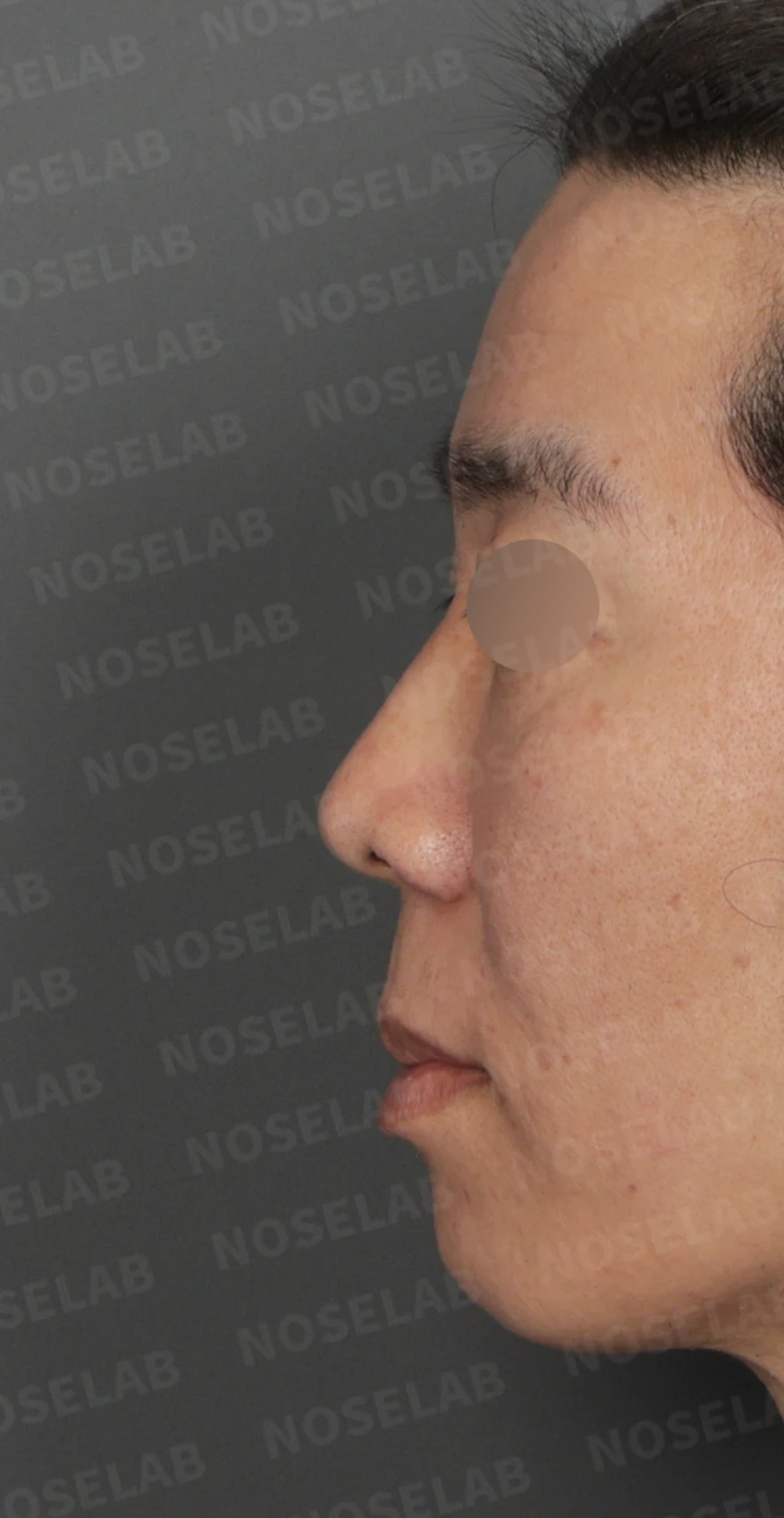
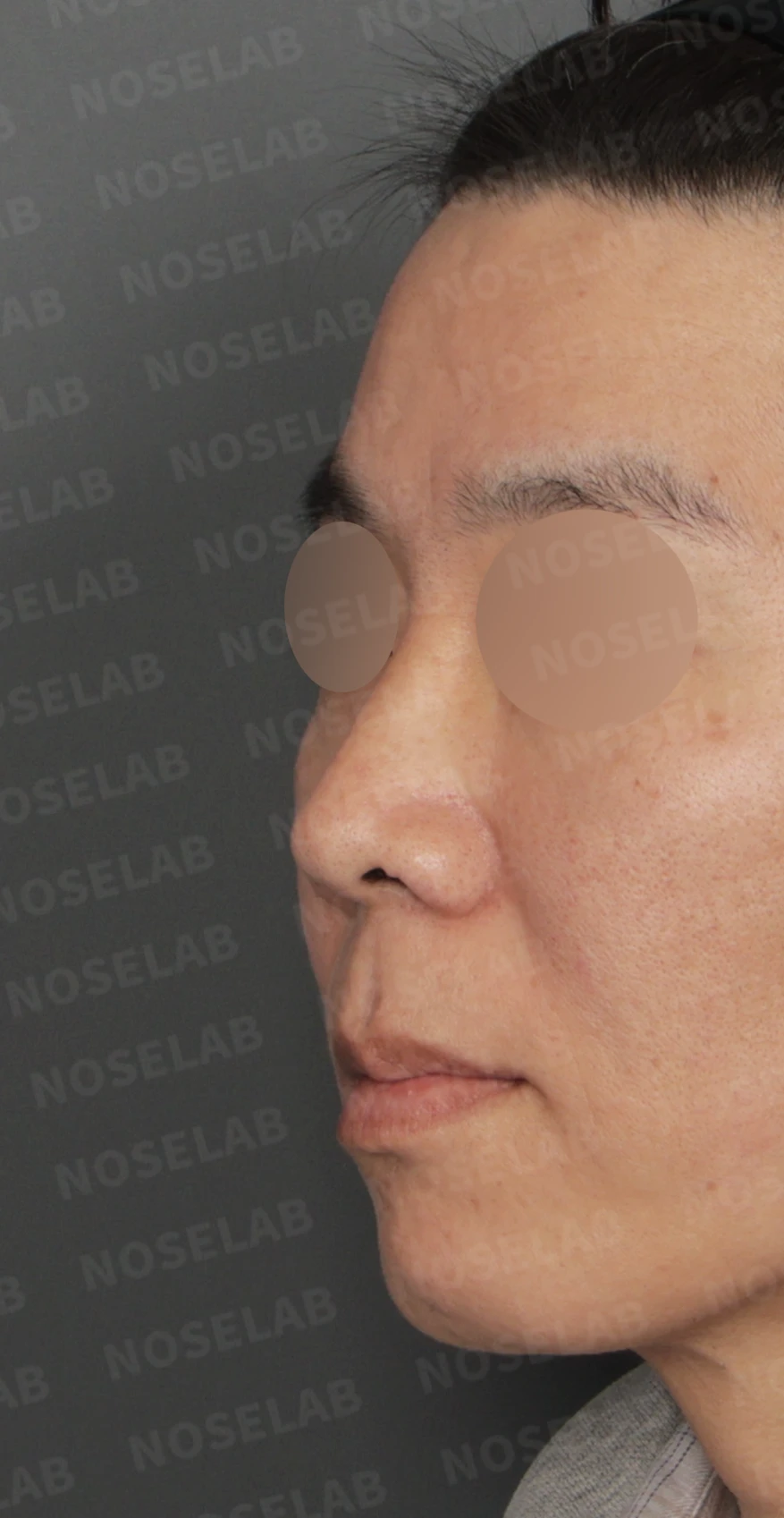
Design consultation: front, left profile, and oblique views
💉 Patient requests
Improvement of excessive nostril show caused by a short and upturned nose
Correction of the appearance of a long philtrum
Desire for a masculine straight line rather than a sharp, pointed nose
Preference for an implant on the nasal bridge with autologous rib cartilage for the nasal tip
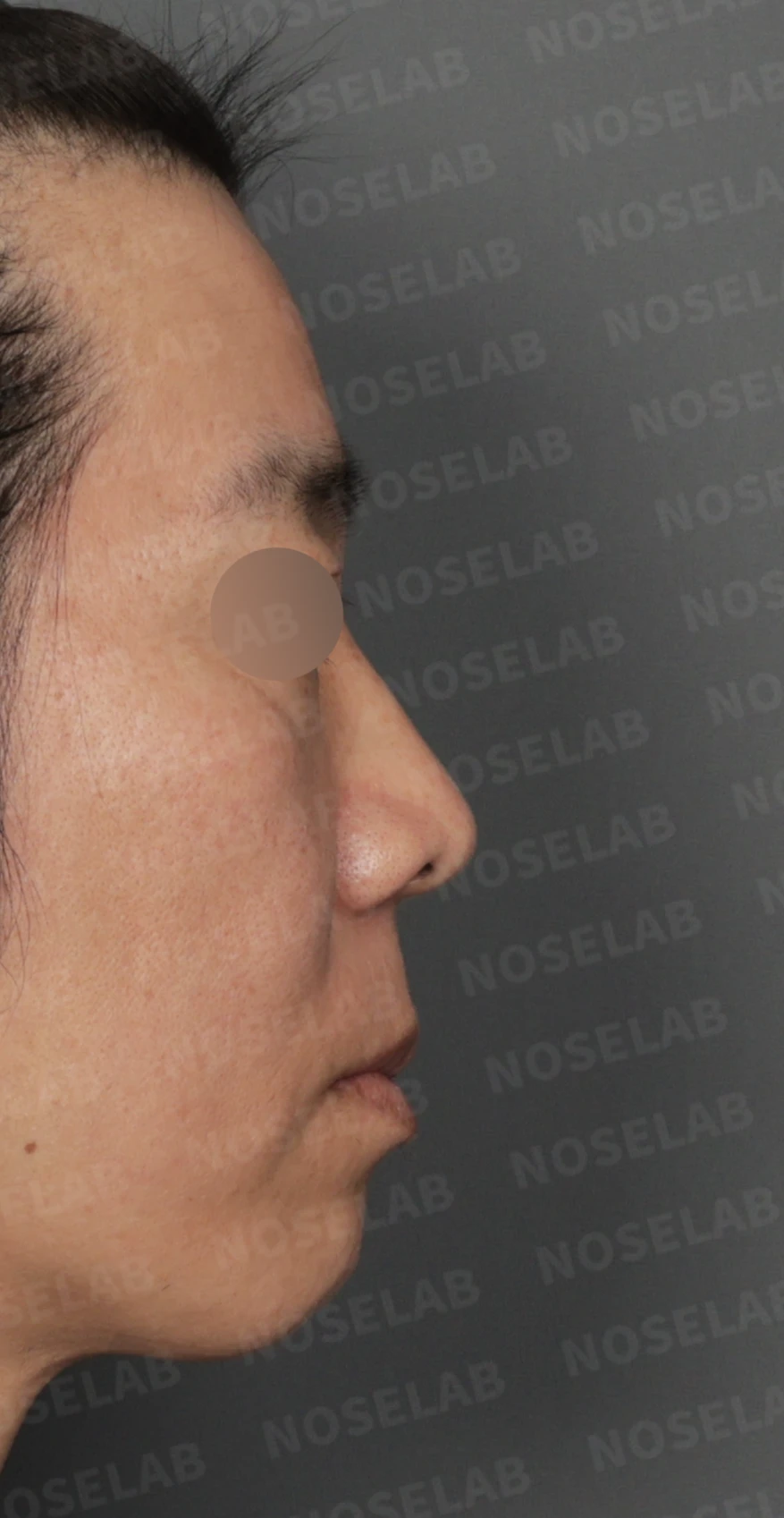
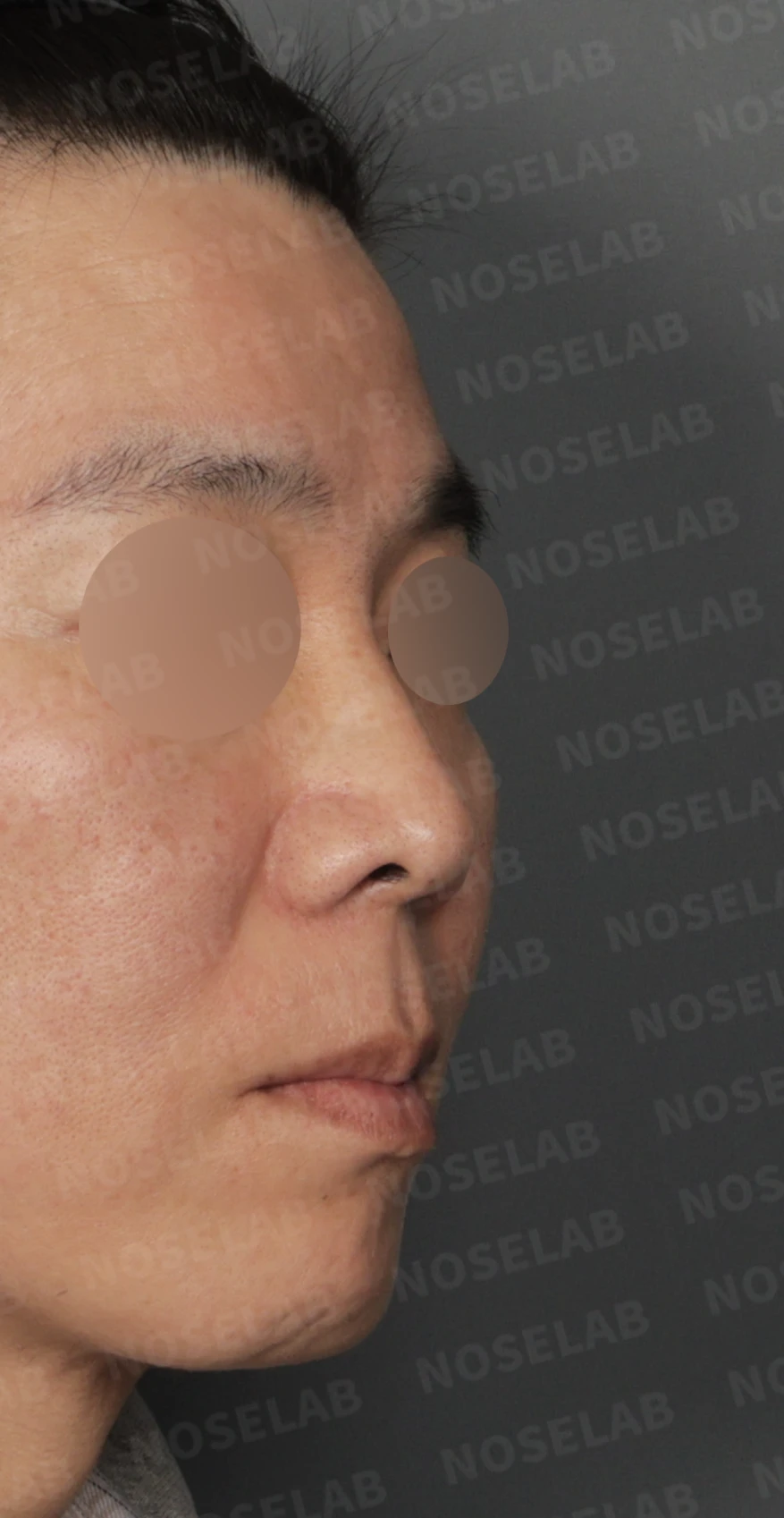
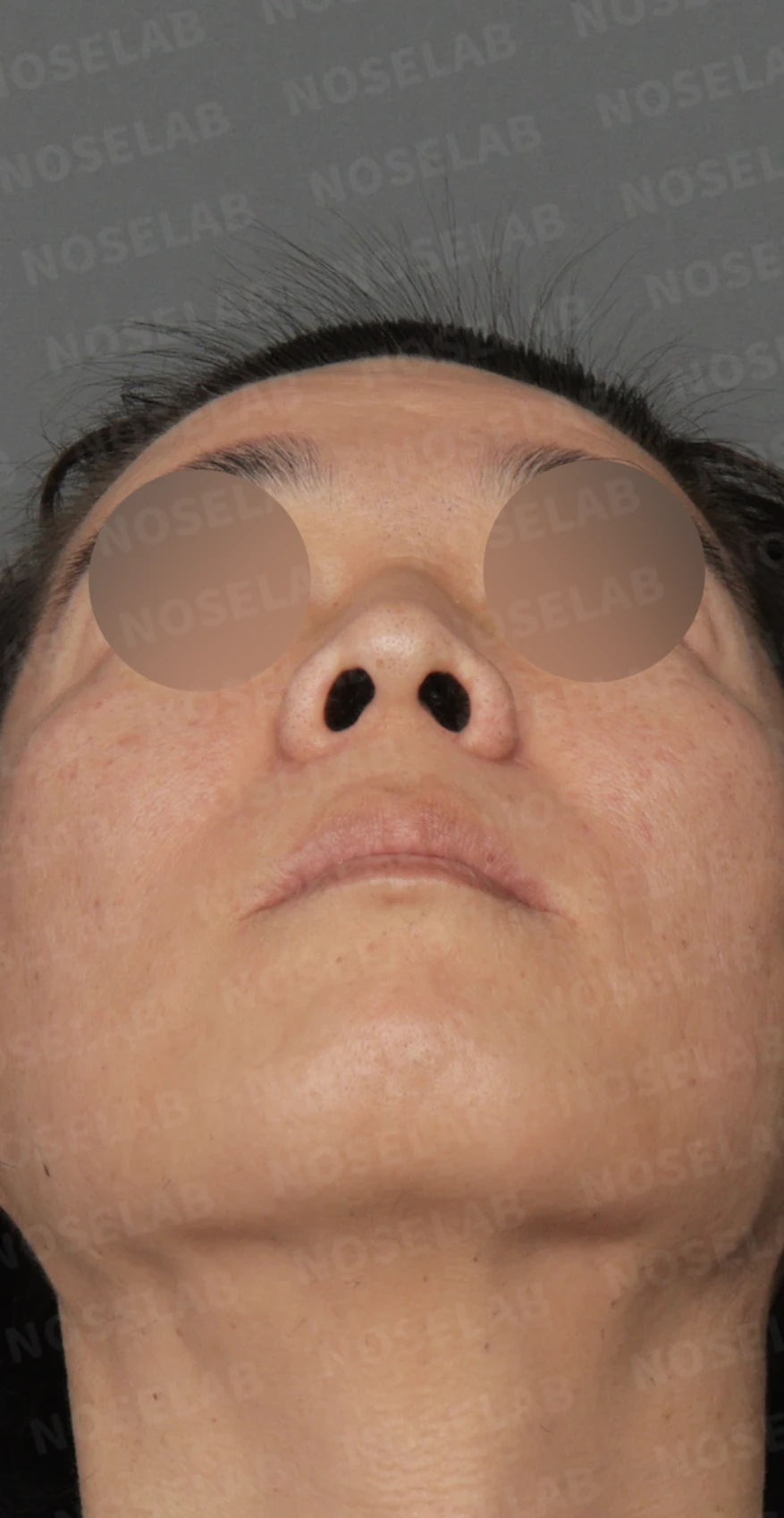
Design consultation: right oblique, profile, and basal (nostril) views
🔧 Surgical plan and procedure
1. Septal extension using autologous rib cartilage
We naturally extend the length of the short, upturned nasal tip and construct a sturdy support strut that resists deformation over time.
2. Correction of the nasolabial angle using autologous rib cartilage
This reduces the elongated appearance of the philtrum and establishes balance in the profile view.
3. Lateral osteotomy of the nasal bones
Correcting the deviated portion restores symmetry and stability to the nasal bones.
4. Nasal bridge design using a silicone implant
By precisely carving the implant to match the patient's nasal bone anatomy, we create a masculine yet soft straight bridge line.
5. Concurrent rhinitis surgery
By improving nasal airway breathing function at the same time, both cosmetic and functional concerns are addressed together.
6. Removal of a small wart on the right nasal ala
A natural finish provides a clean, neat profile impression.
🌟 Surgical results
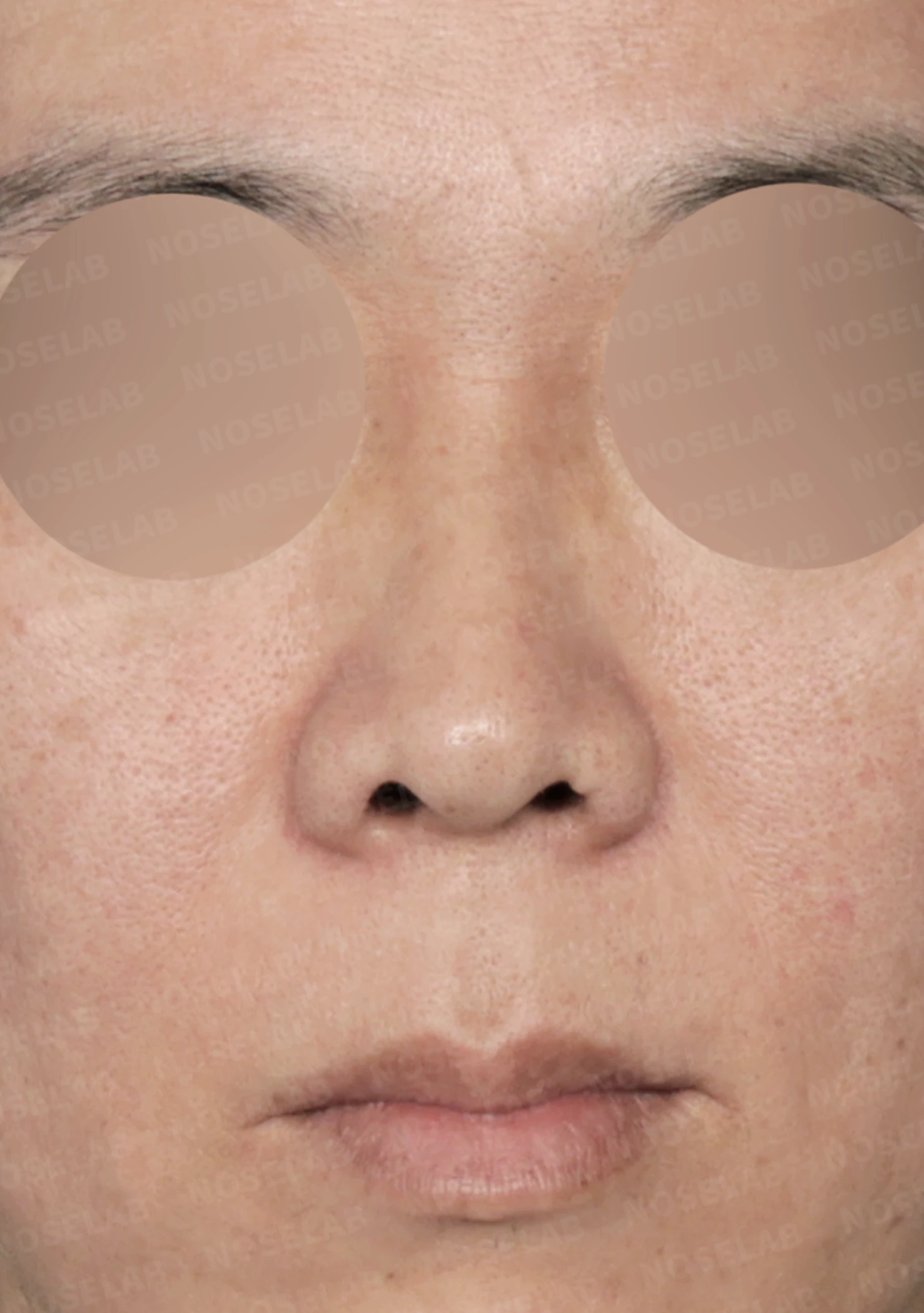
Before surgery / Day 0 immediately after surgery Photos taken immediately after surgery show swelling and may differ from the final result.
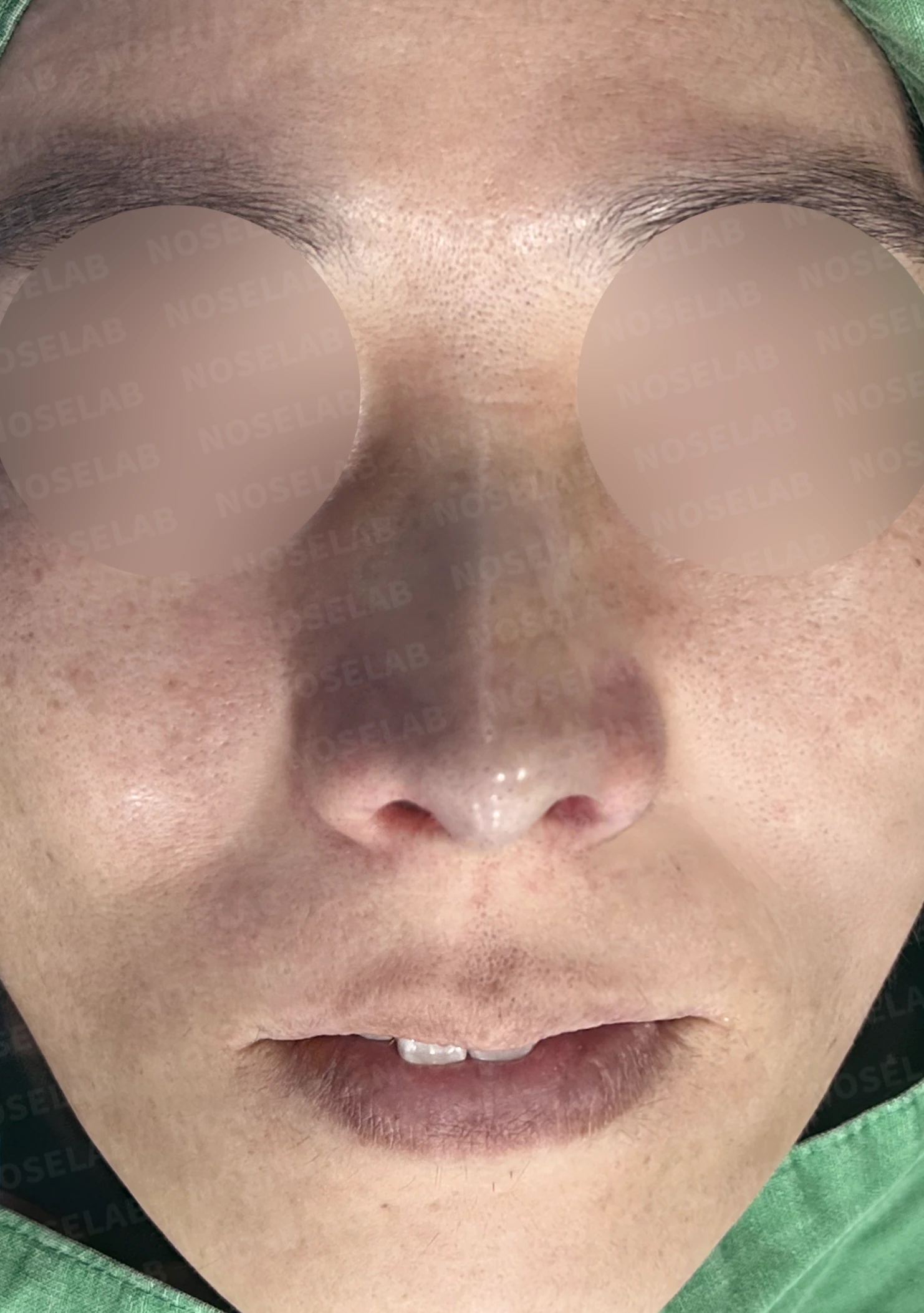
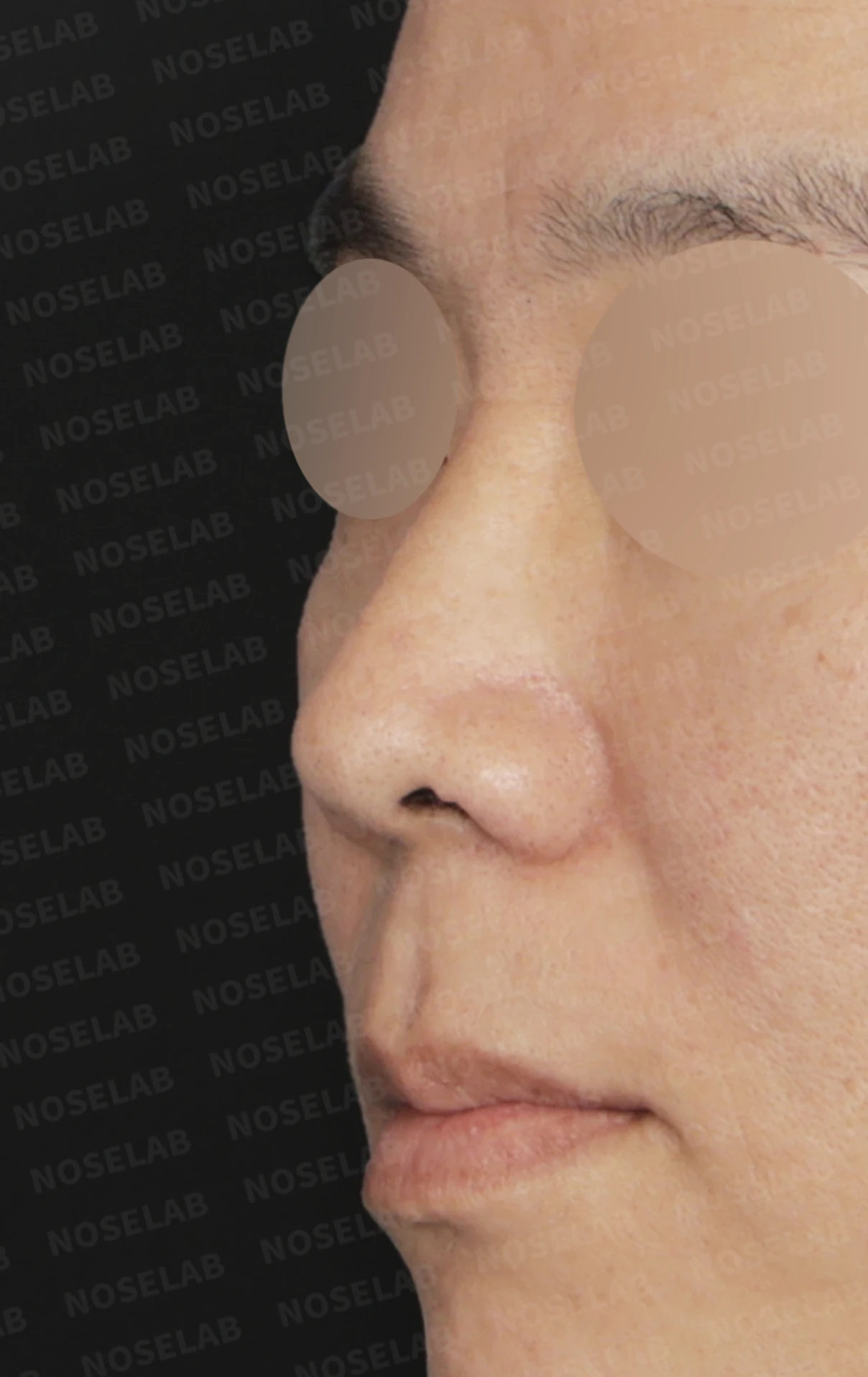
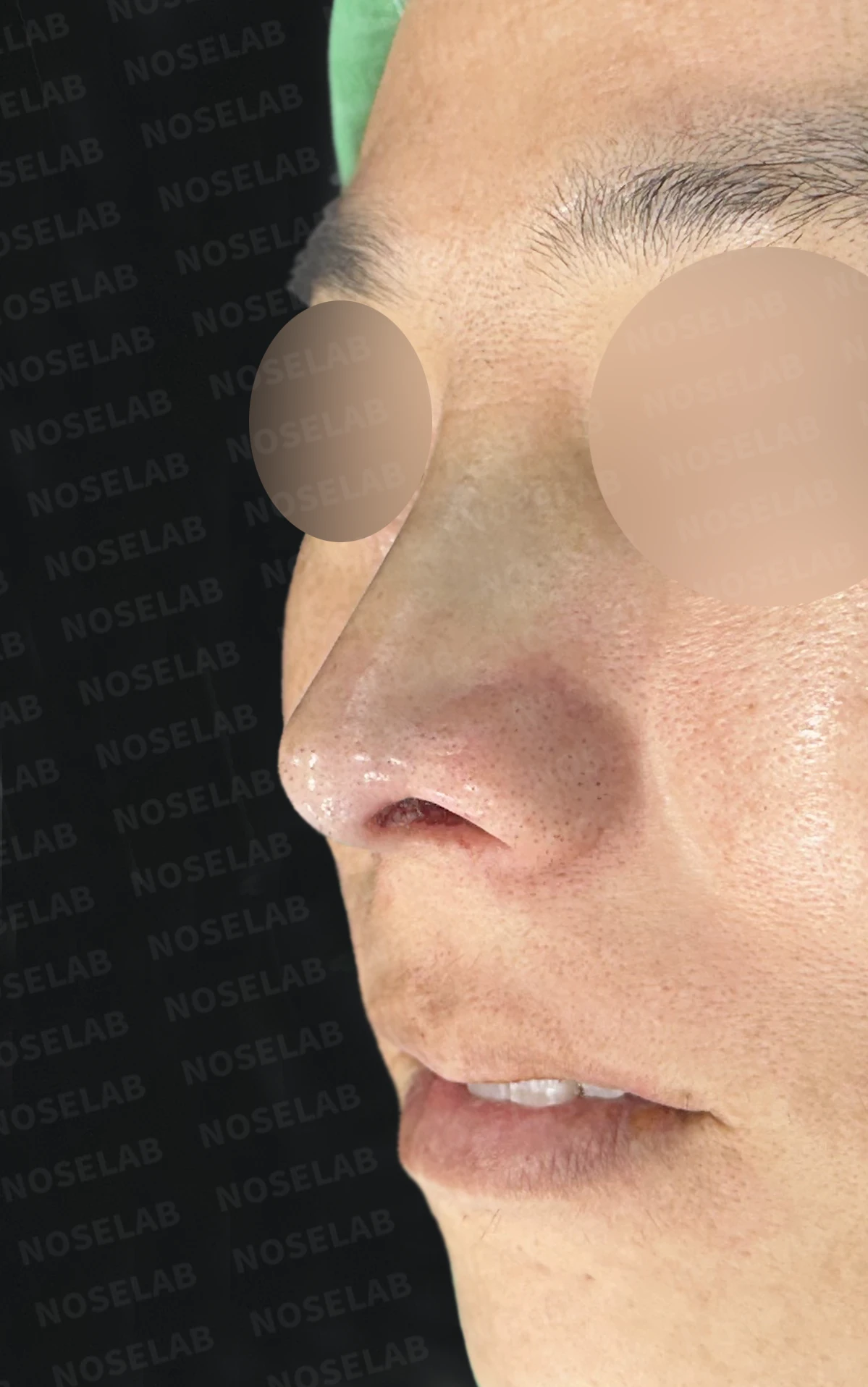
Front view changes: The short, upturned appearance has become much calmer, and the excessive nostril show visible from the front has been naturally refined. The deviated area was also corrected, establishing stable symmetry.
Before surgery / Day 0 immediately after surgery Photos taken immediately after surgery show swelling and may differ from the final result.
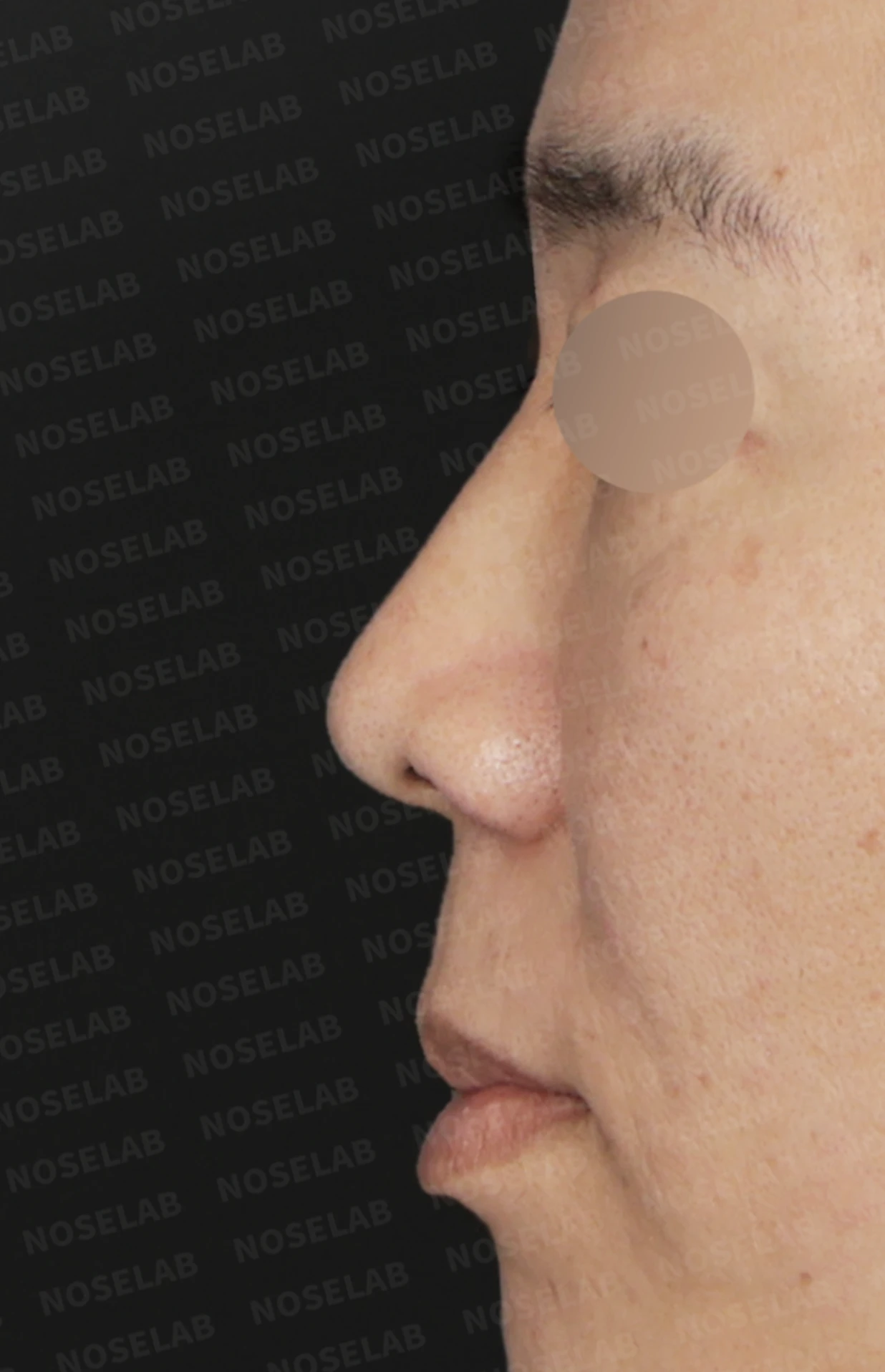
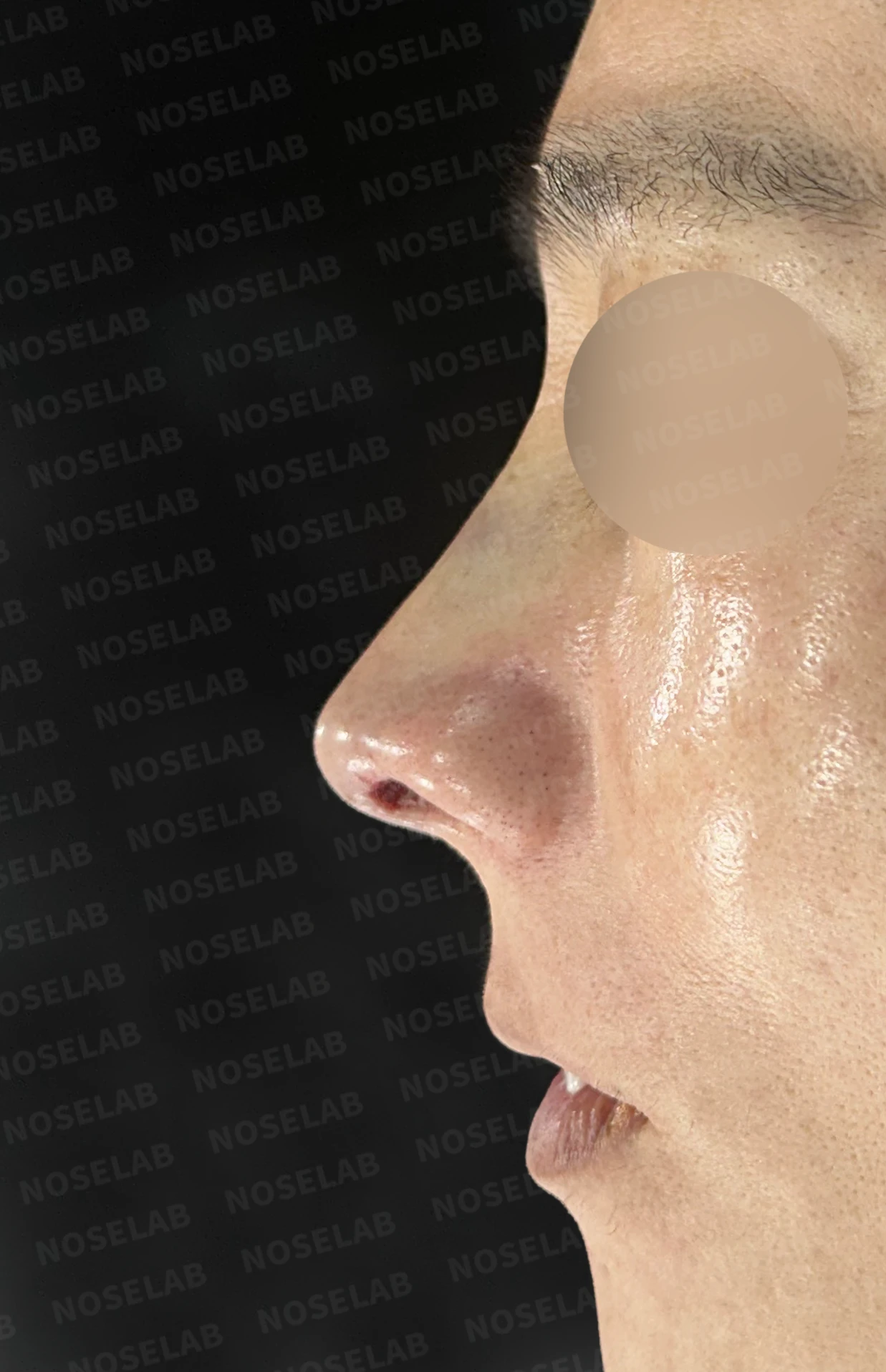
Profile view changes: With properly extended length, a well-proportioned profile line was created, and the elongated appearance of the philtrum was alleviated. The result was finished with a masculine straight bridge that is not overly sharp.
Before surgery / Day 0 immediately after surgery Photos taken immediately after surgery show swelling and may differ from the final result.
Nostril changes: The angle of the nostrils visible from the front was smoothly improved, maintaining a natural nostril shape.
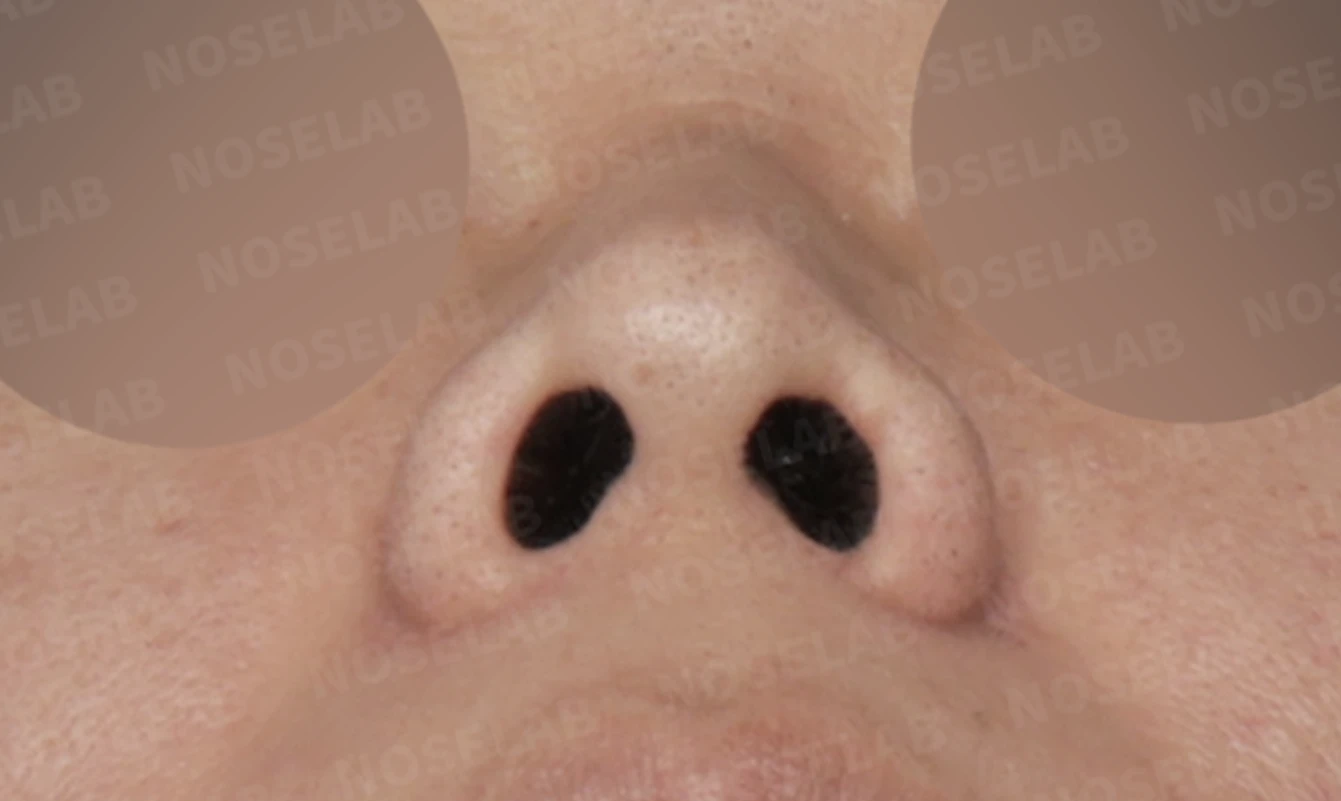
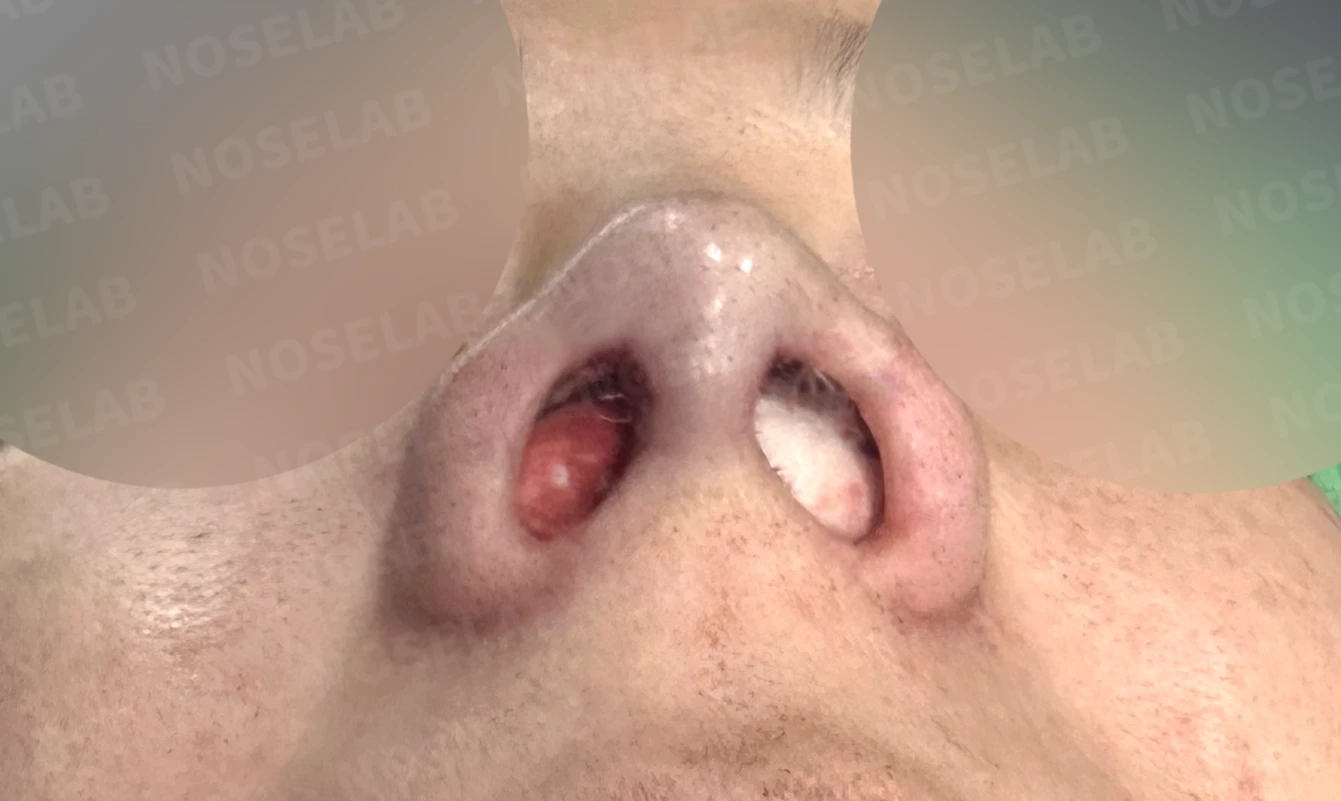
Before surgery / Day 0 immediately after surgery Photos taken immediately after surgery show swelling and may differ from the final result.
💡 Specialist opinion
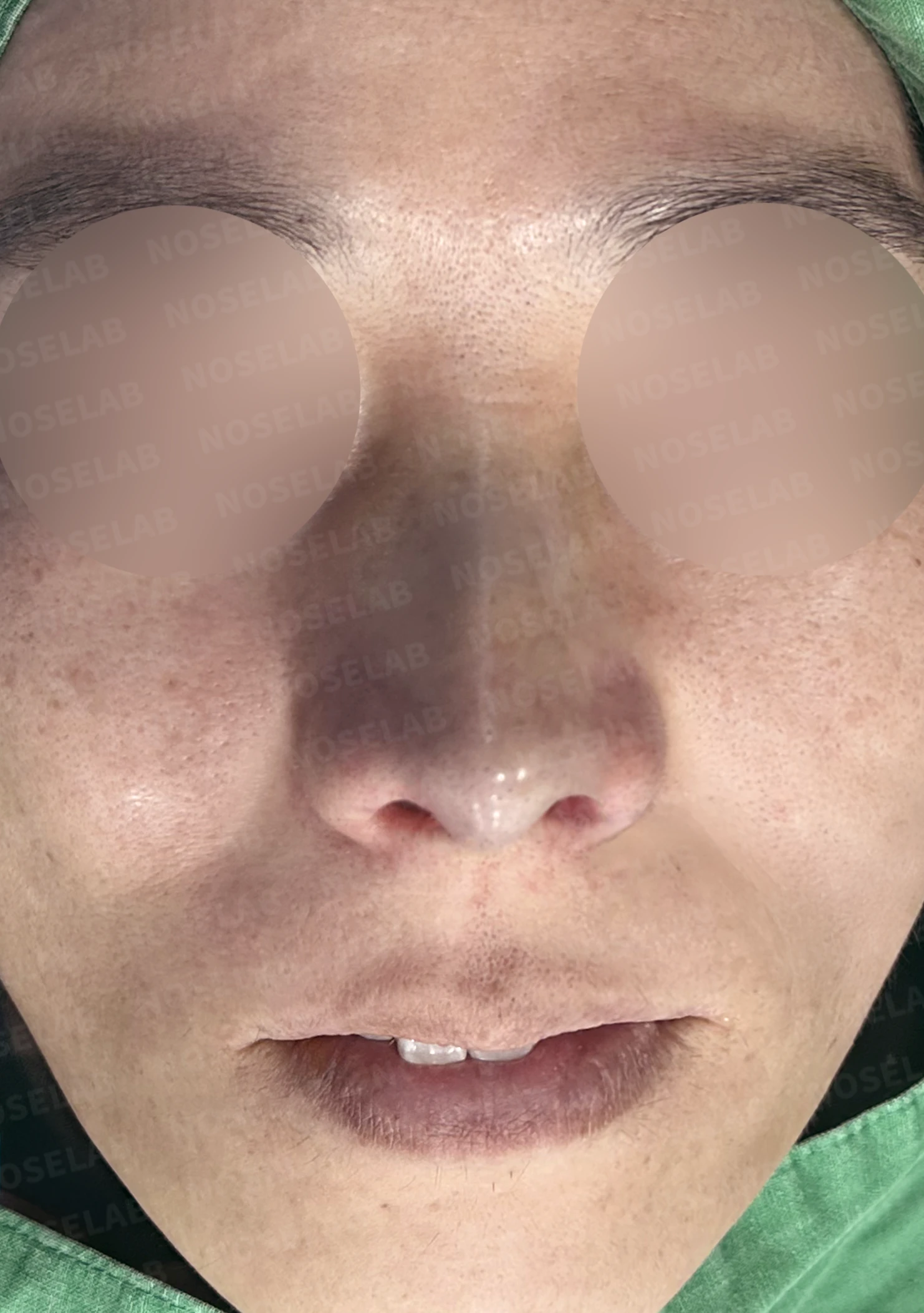
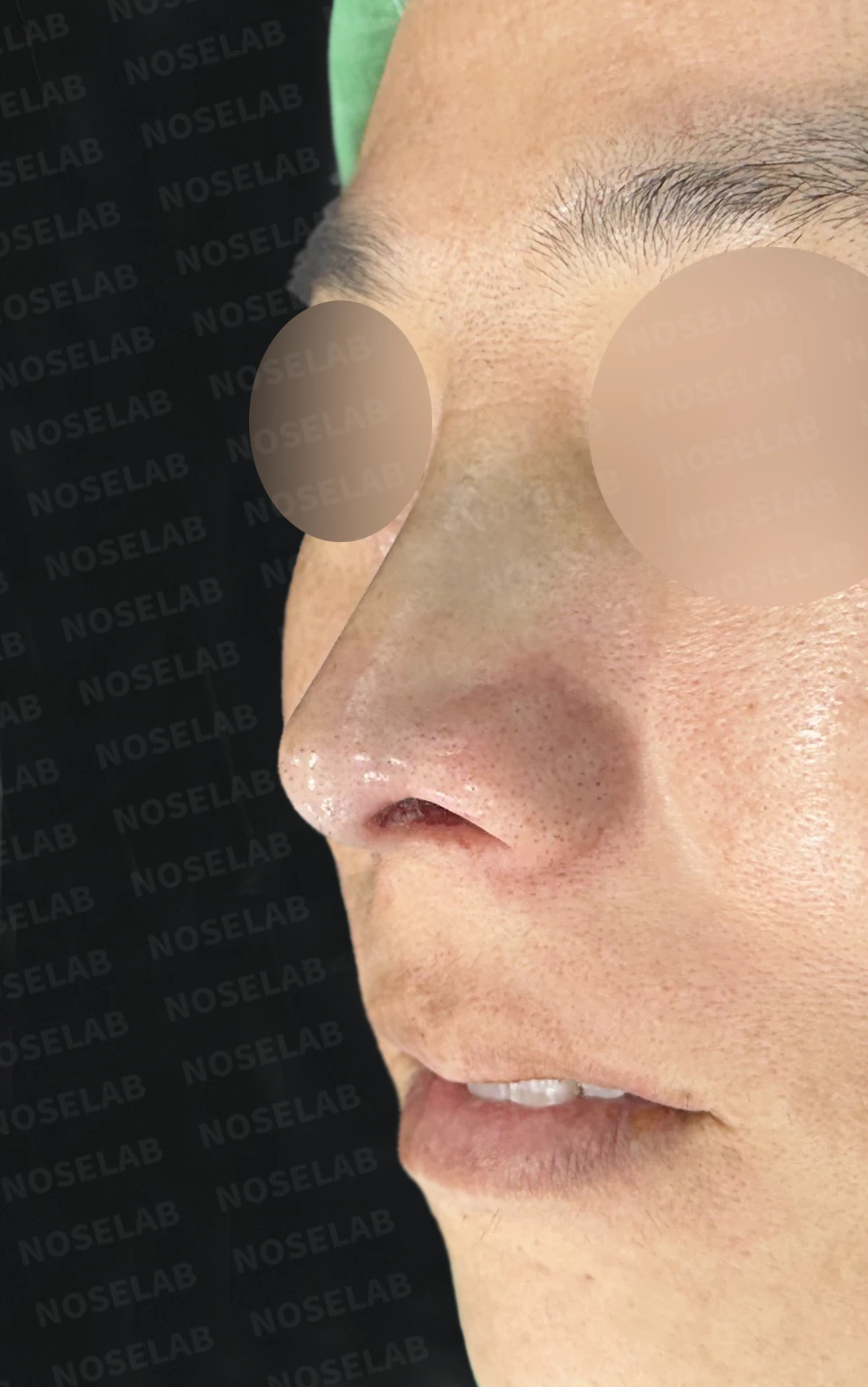
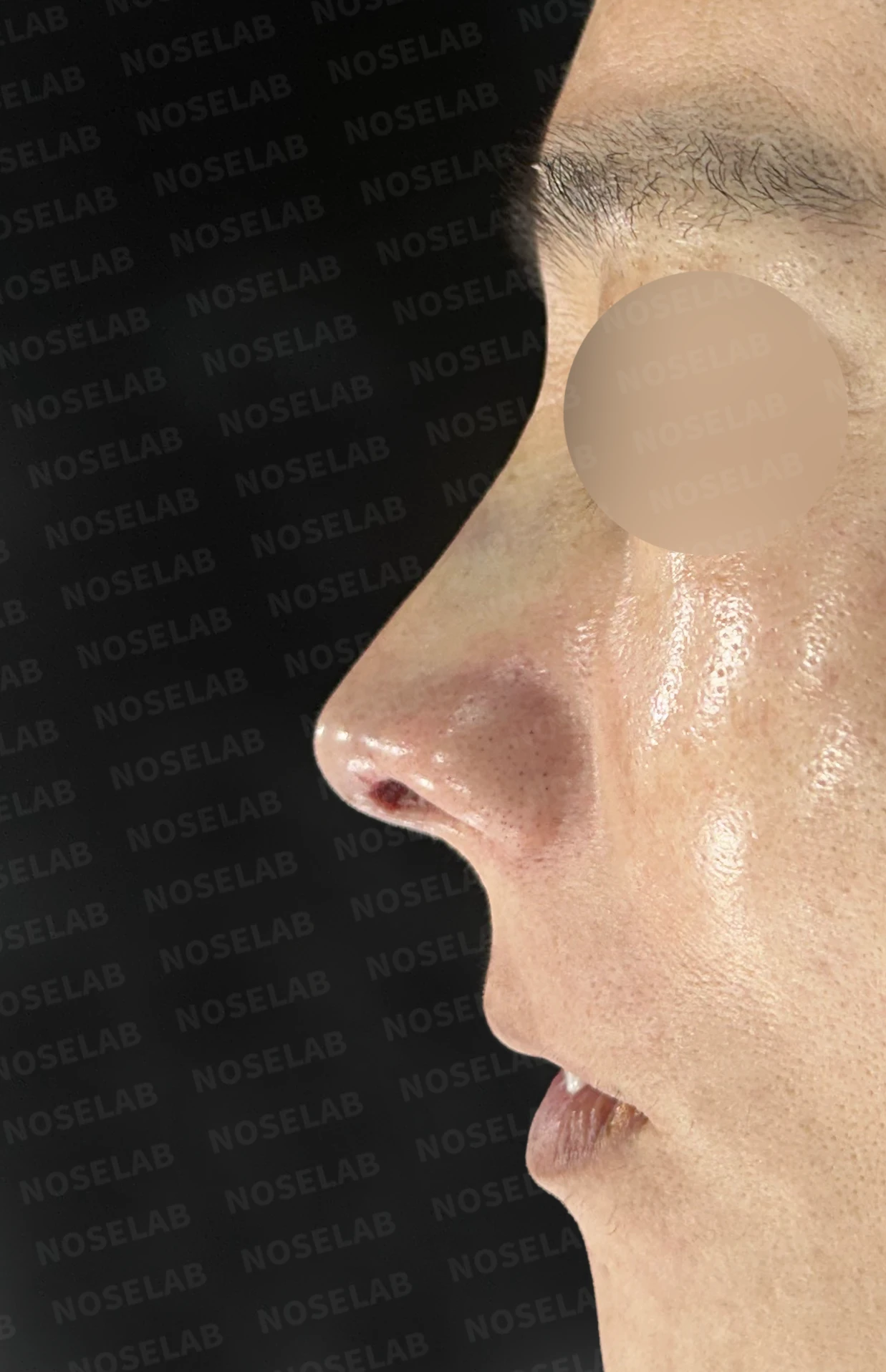
Day 0 immediately after surgery: front, oblique, and profile viewsPhotos taken immediately after surgery show swelling and may differ from the final result.
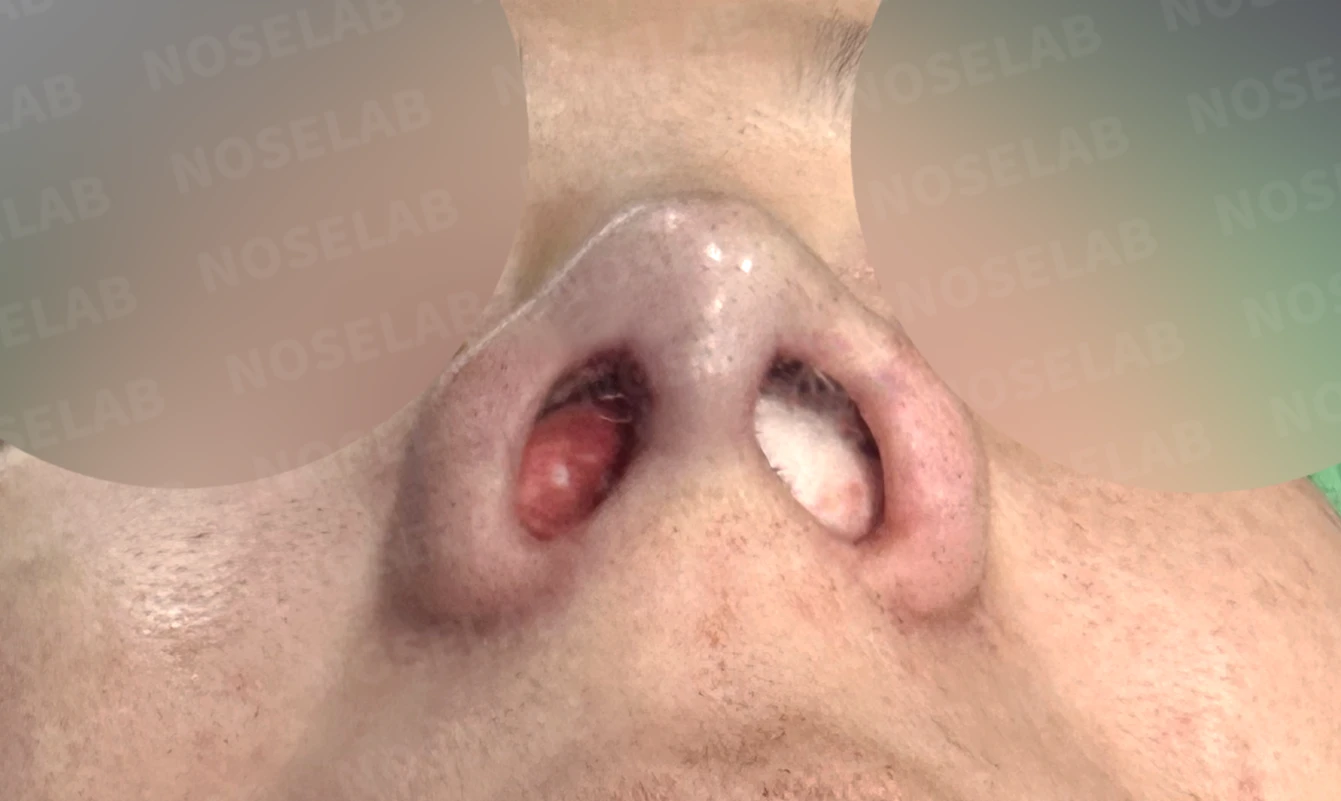
Day 0 immediately after surgery: nostril viewPhotos taken immediately after surgery show swelling and may differ from the final result.
A short, upturned nose cannot be resolved simply by elevating the nasal bridge. If one attempts to lengthen the nose without adequate support at the nasal tip, the tip can become upturned again or deform over time. Therefore, a structural approach utilizing autologous rib cartilage to provide a sturdy support strut is essential.
In this case, to achieve the masculine, non-pointed straight nose requested by the patient, we performed both septal extension and nasolabial angle correction with autologous rib cartilage, naturally adjusting the tip length and angle. In addition, the bridge was sculpted with a silicone implant tailored precisely to his nasal bone anatomy to form a smooth straight line.
Unlike female rhinoplasty, male rhinoplasty focuses on creating a stable line that is neither excessively high nor overly pointed. Addressing functional problems such as rhinitis at the same time offers the advantage of improving both surgical satisfaction and everyday comfort.
I will continue to carry out personalized surgeries tailored to each individual's facial proportions and lifestyle.
This was Dr. Peter C. Kang. Thank you.
#malerhinoplasty #upturnednosecorrection #shortnosecorrection #autologousribcartilage #septalextension #nasolabialanglecorrection #straightnose #rhinitissurgery #bridgeimplant #closedrhinoplasty #closedrevisionrhinoplasty

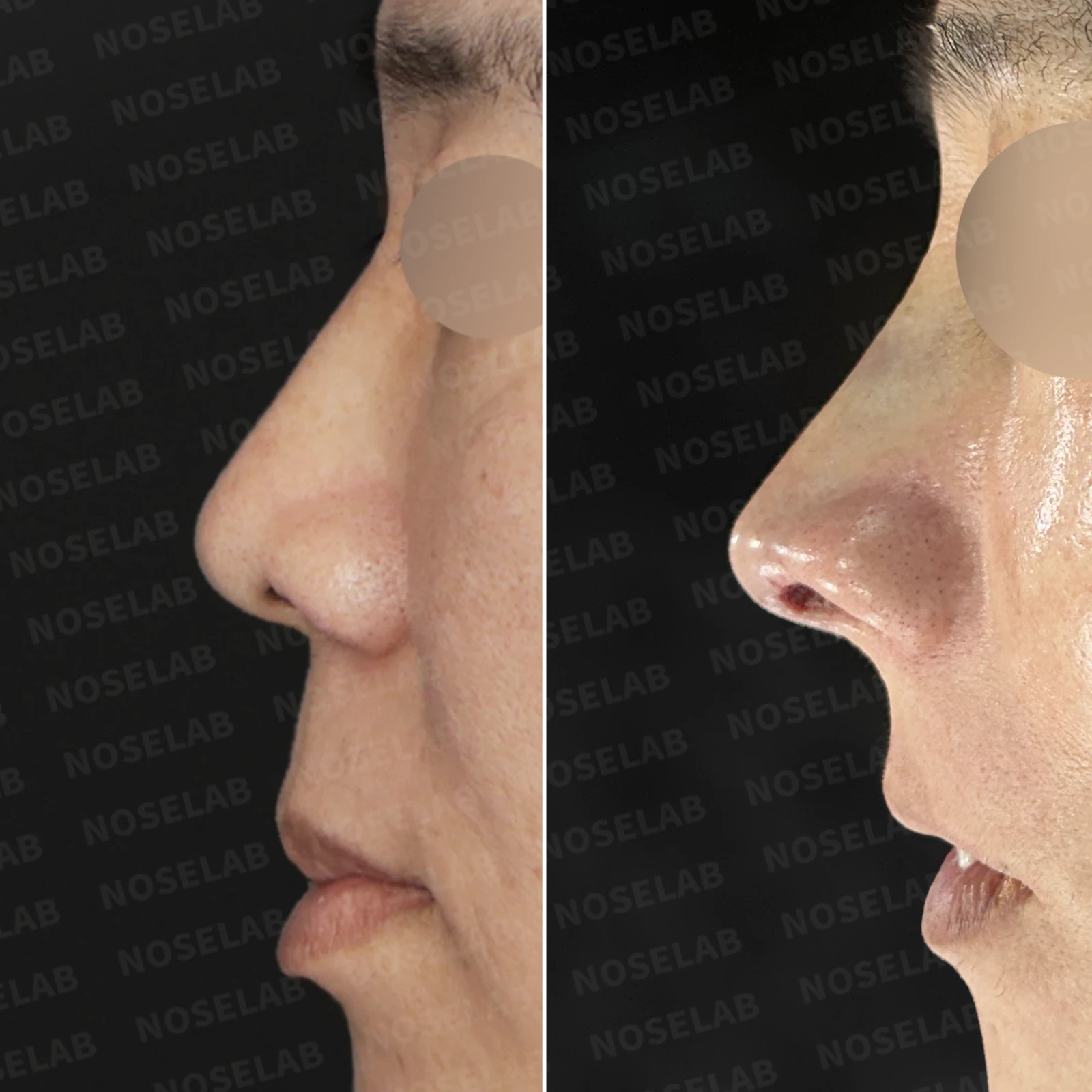
Limitations and risks
When autologous rib cartilage is used, scarring and pain may remain at the donor site on the chest, and pneumothorax (pleural injury) can occur rarely. Over time, the grafted cartilage may warp or undergo partial resorption.
When the septum is corrected at the same time, nasal obstruction may persist or recur, and in rare cases, septal perforation or changes in smell may occur.
Common potential risks include infection, bleeding, asymmetry, scarring, skin necrosis, and insufficient improvement; results vary depending on individual skin condition and previous surgical history.