English日本語简体中文
Skip to main content
Dr. Peter C. Kang's Rhinoplasty Stories
PrologueBlogMy thoughtsNasal obstructionSurgical journalSurgical photos
About the surgeon

Primary rhinoplasty cases: anatomical starting points that differed from the outset

This is page 2 of primary rhinoplasty cases: baseline conditions distinct from the start. Explore surgical records and before-and-after photos 19–28 of 28.

View before-and-after cases ↓Comprehensive rhinoplasty guide

Searching for surgical cases matching your criteria.
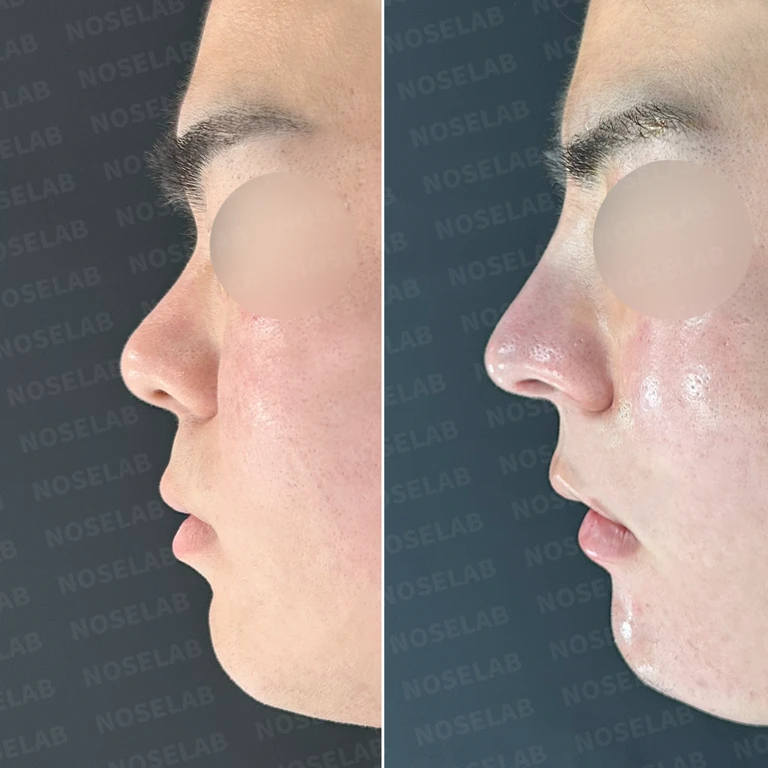
How to correct a small, drooping nose accompanied by nasal obstruction — Before-and-after comparison
Before-and-after comparison

How to correct a small, drooping nose accompanied by nasal obstruction

To improve a small, drooping nose along with nasal obstruction from a deviated septum and rhinitis, autologous rib cartilage was used to firmly elevate the nasal tip, adjust the nasolabial angle, and correct the septum and inferior turbinates at the same time.

Previous surgeries and procedures
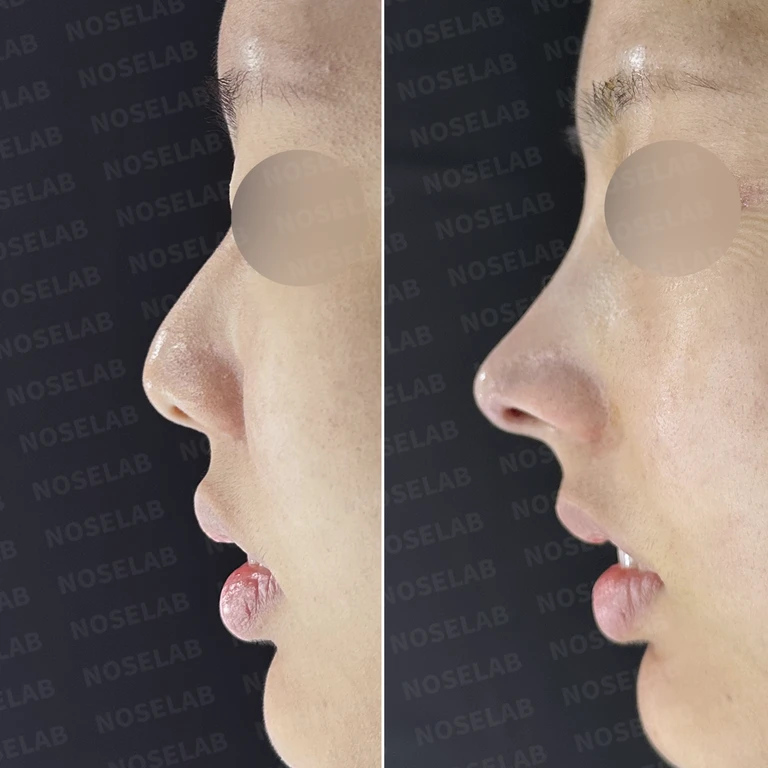
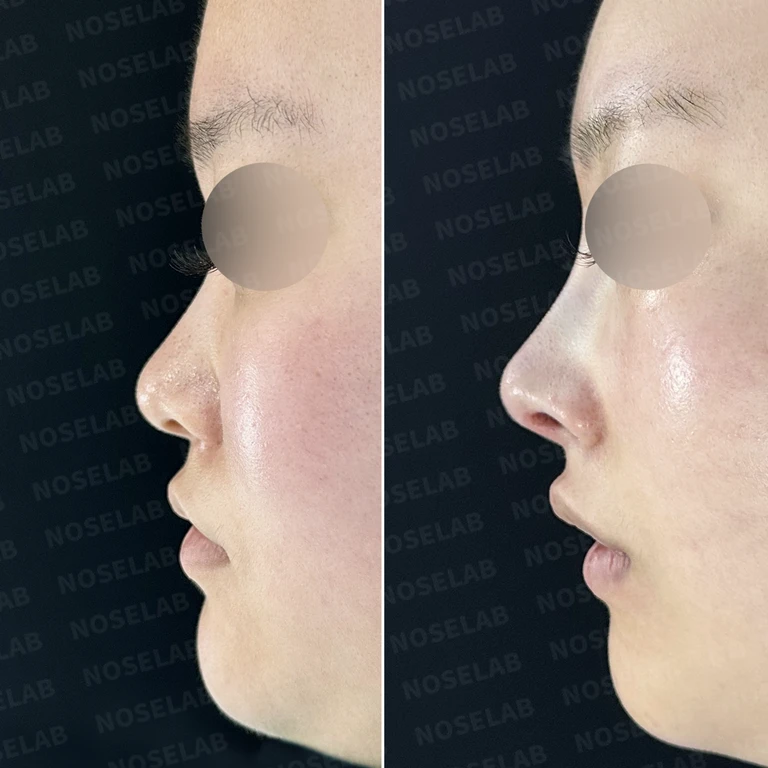
Why a crooked dorsal hump and drooping tip occur, and how septal extension is performed — Before-and-after comparison
Before-and-after comparison

Why a crooked dorsal hump and drooping tip occur, and how septal extension is performed

A crooked dorsal hump, drooping tip, and nasal obstruction were refined using lateral osteotomy, septal extension with donor rib cartilage and septal cartilage, nasal tip volume refinement with ear cartilage, and nasolabial angle correction.

Preoperative condition

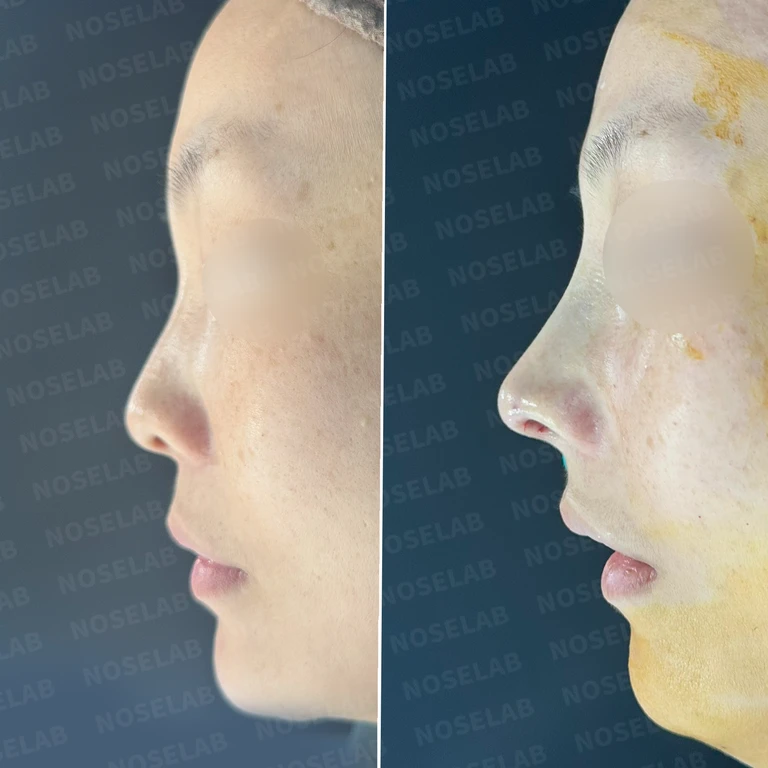
A small, short, and upturned nose: why it should not be raised excessively — Before-and-after comparison
Before-and-after comparison

A small, short, and upturned nose: why it should not be raised excessively

A case of a short, upturned, small nose with no prior rhinoplasty. Considering the skin tension, septal extension was performed using autologous rib cartilage, combined with functional surgery for the septum and turbinates.

Previous surgeries and procedures
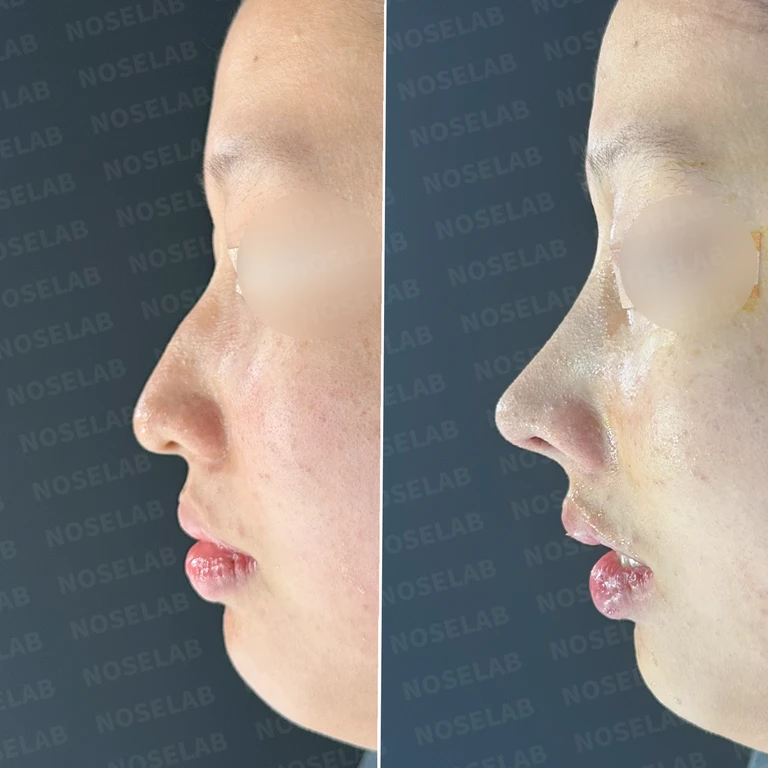
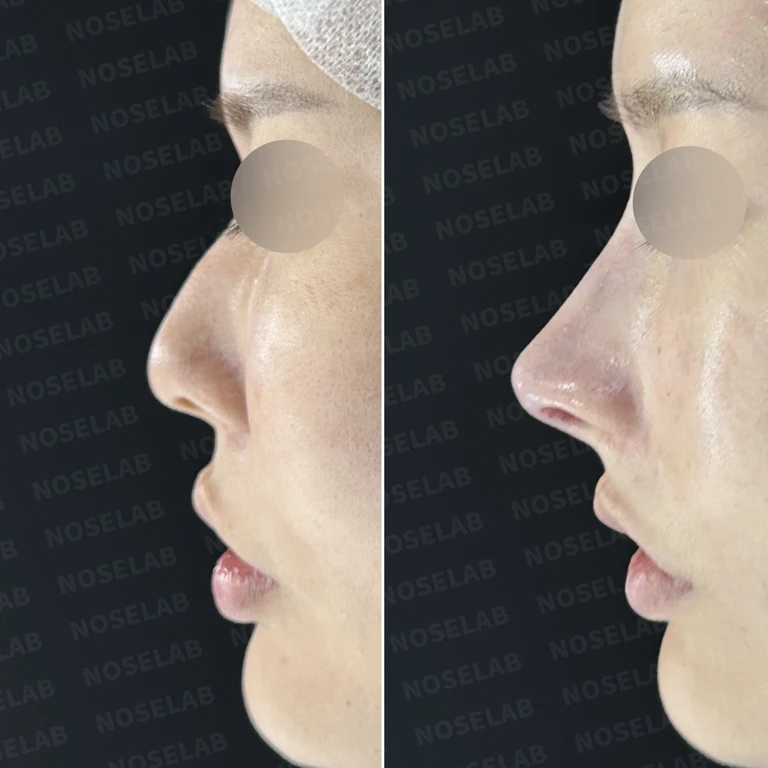
Why the nose looks wide and bulbous, and how to correct it with septal cartilage and ear cartilage — Before-and-after comparison
Before-and-after comparison

Why the nose looks wide and bulbous, and how to correct it with septal cartilage and ear cartilage

A case of a wide, bulbous nasal tip and asymmetry with no prior surgical history. Autologous septal and ear cartilage were used to construct a support strut, and septal and turbinate surgery were performed concurrently.

Previous surgeries and procedures
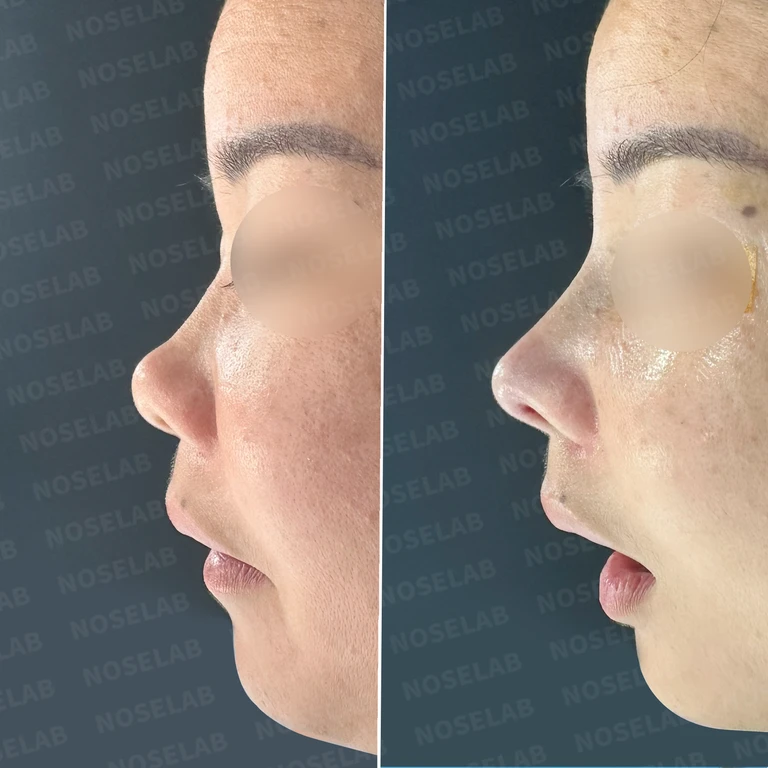
How tip structure and nostril show are addressed in primary rhinoplasty — Before-and-after comparison
Before-and-after comparison

How tip structure and nostril show are addressed in primary rhinoplasty

To achieve a natural nasal contour and reduce nostril show, dorsal augmentation with a silicone implant, tip correction using donor rib cartilage and septal cartilage, and adjustment of the nasolabial angle were performed.

Previous surgeries and procedures
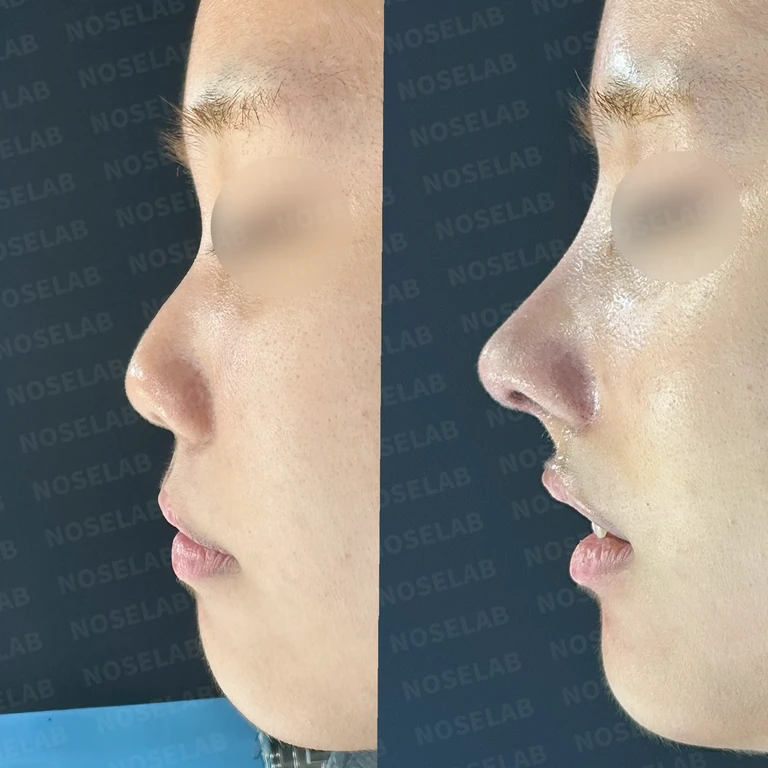
How to balance the nasal bridge and tip when a dorsal hump and drooping tip coexist — Before-and-after comparison
Before-and-after comparison

How to balance the nasal bridge and tip when a dorsal hump and drooping tip coexist

A dorsal hump, drooping tip, and rhinitis-related nasal obstruction were addressed by resecting the hump, combining autologous rib cartilage and a silicone implant, and performing nasolabial angle and septal correction.

Previous surgeries and procedures
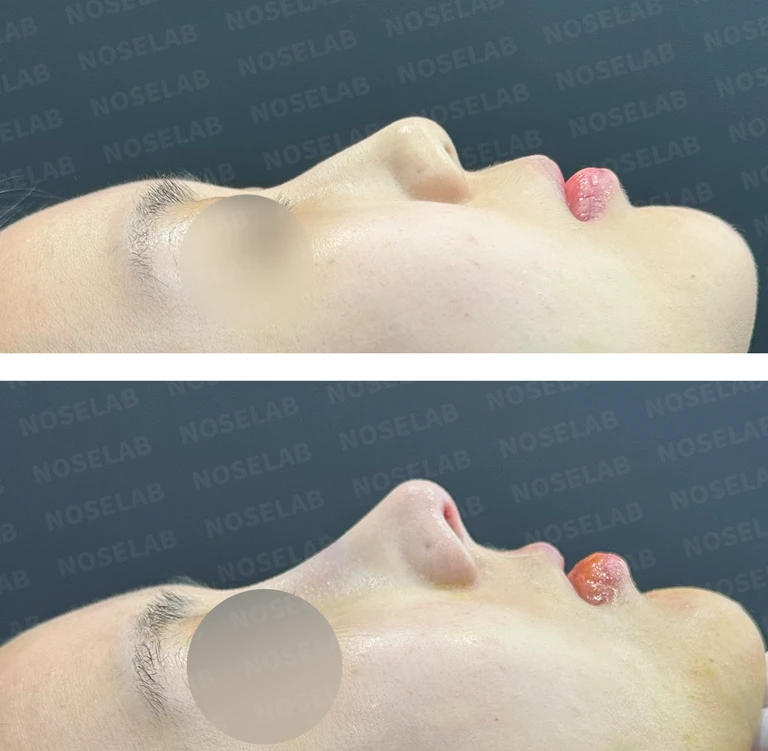
Conditions for a nasal bridge that appears as parallel lines and criteria for shaping the nostrils — Before-and-after comparison
Before-and-after comparison

Conditions for a nasal bridge that appears as parallel lines and criteria for shaping the nostrils

Customized rhinoplasty was performed to achieve a natural nasal bridge line that is not excessively high and oval-shaped nostrils that harmonize with the face shape.

Preoperative condition

How high can a small, blunt nose be raised? — Skin limitations and reconstruction methods — Before-and-after comparison
Before-and-after comparison

How high can a small, blunt nose be raised? — Skin limitations and reconstruction methods

A primary rhinoplasty case for a patient with a small, wide nasal tip, drooping, a minor dorsal hump, and chronic nasal obstruction, treated through gradual expansion accounting for skin elasticity, autologous rib cartilage reconstruction, and septal correction.

Previous surgeries and procedures
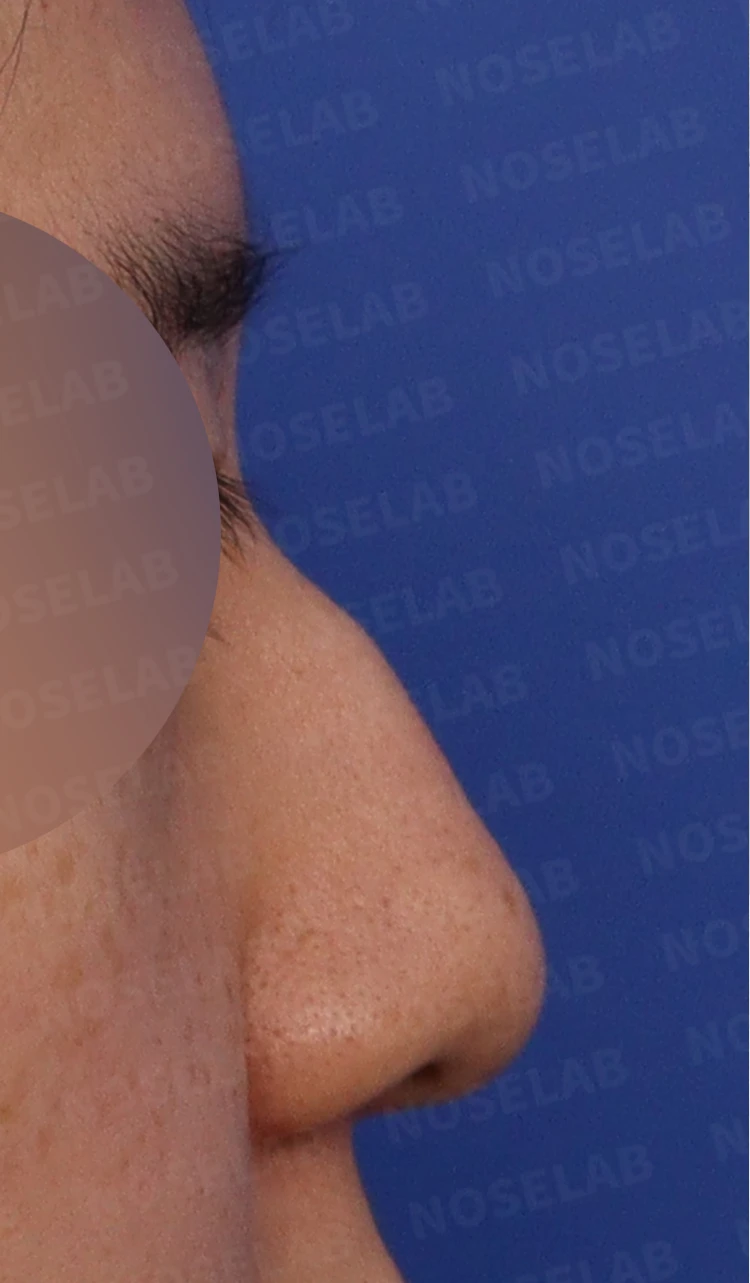
Correction methods addressing a small nose and nostril asymmetry together — Before-and-after comparison
Before-and-after comparison

Correction methods addressing a small nose and nostril asymmetry together

For a primary rhinoplasty patient presenting with a small nose, nostril asymmetry, and a retracted columella, we performed septal extension using septal cartilage and donor rib cartilage, dorsal hump reduction, dermal graft reinforcement, and silicone implant placement.

Previous surgeries and procedures

Surgical techniques for correcting a dorsal hump, crooked nose, bulbous tip, and nostril asymmetry — Before-and-after comparison
Before-and-after comparison

Surgical techniques for correcting a dorsal hump, crooked nose, bulbous tip, and nostril asymmetry

To correct a dorsal hump, drooping tip, crooked nose, and nostril asymmetry, we performed osteotomy, septal correction, lower lateral cartilage repositioning, and functional nasal surgery together.

Performed or used in this surgery

No search results found

Please try searching with different keywords.

Scroll to keep reading

Previous case2 / 2
Original article

Read more records

Planning a visit to Seoul?Prepare your consultation with the NOSELAB team.

International patient guideWhatsApp ↗
Dr. Peter C. Kang's Rhinoplasty Stories
Rhinoplasty guideCases by topicDr. Peter C. KangNaver Blog ↗
View original photo
Enlarged photo
WhatsAppChat with NOSELAB↗