Hello, I am Dr. Peter C. Kang.
Today, I would like to share a closed rhinoplasty case of a 28-year-old female patient.
Through this case, let us examine the precautions and methods for achieving natural results when operating on a small nose.
🔎 Patient information
Age: 28-year-old female
Surgical history: None
Special notes: Allergy to painkillers
Requests: A longer and higher nose
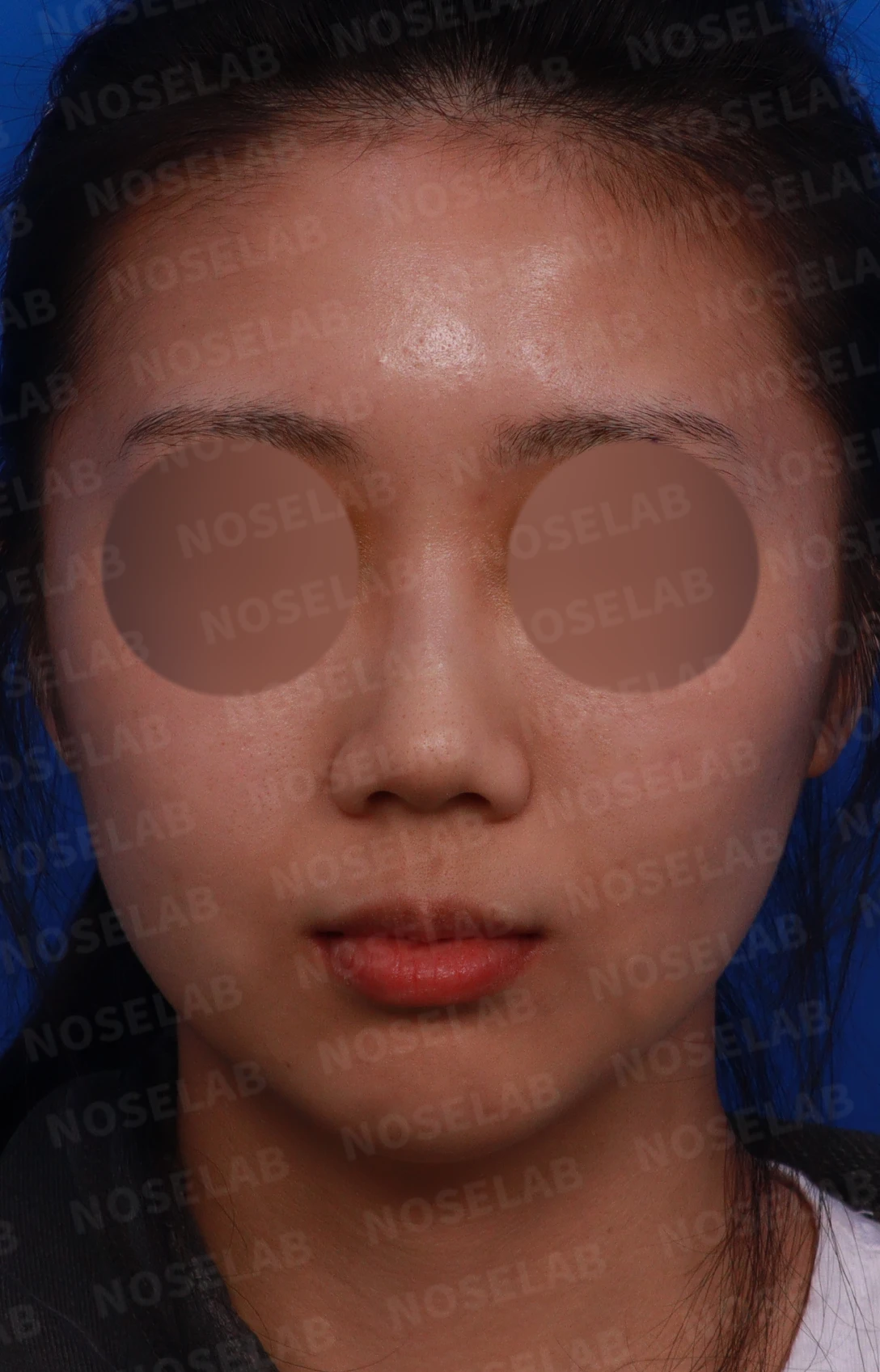
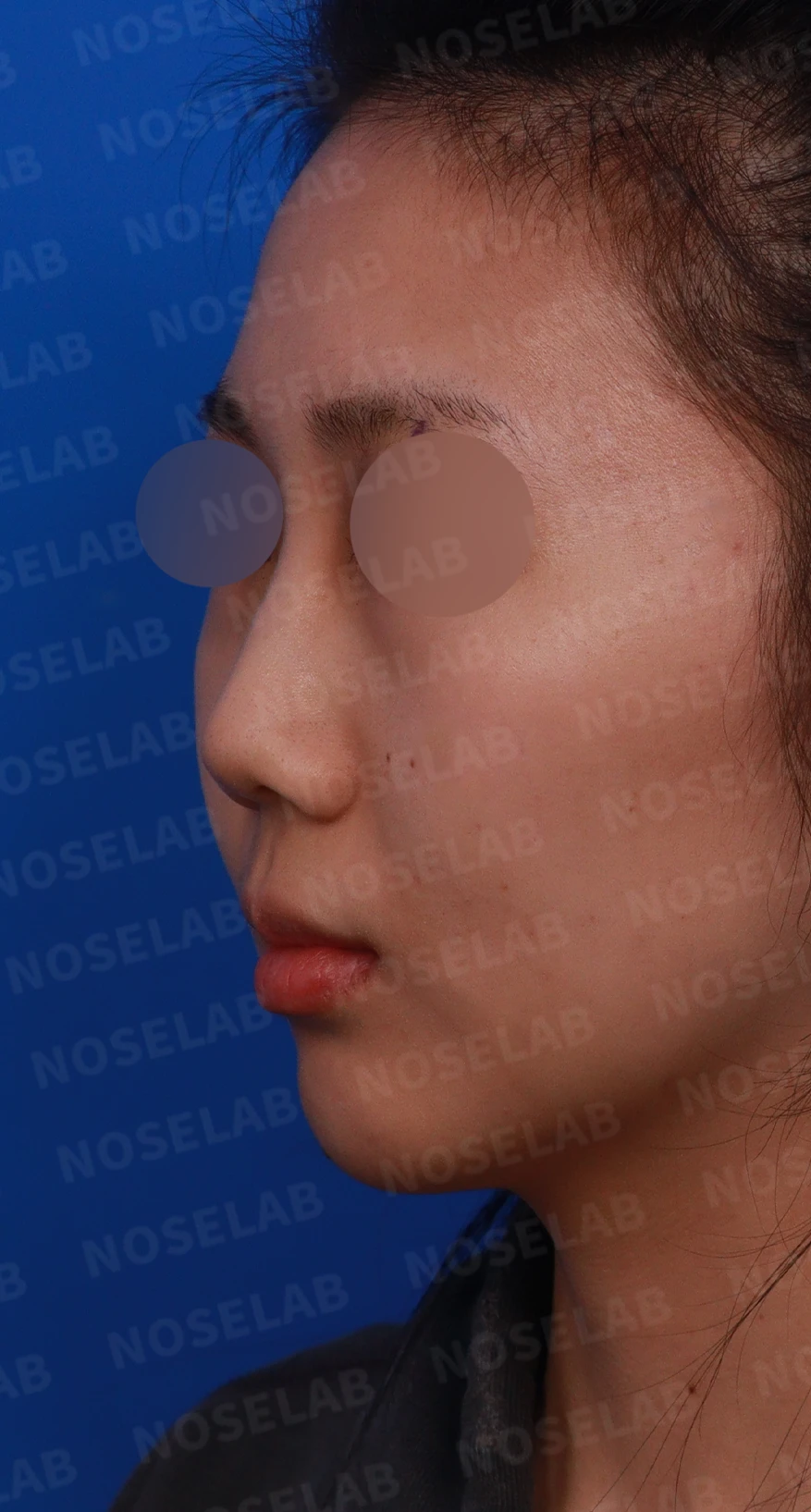
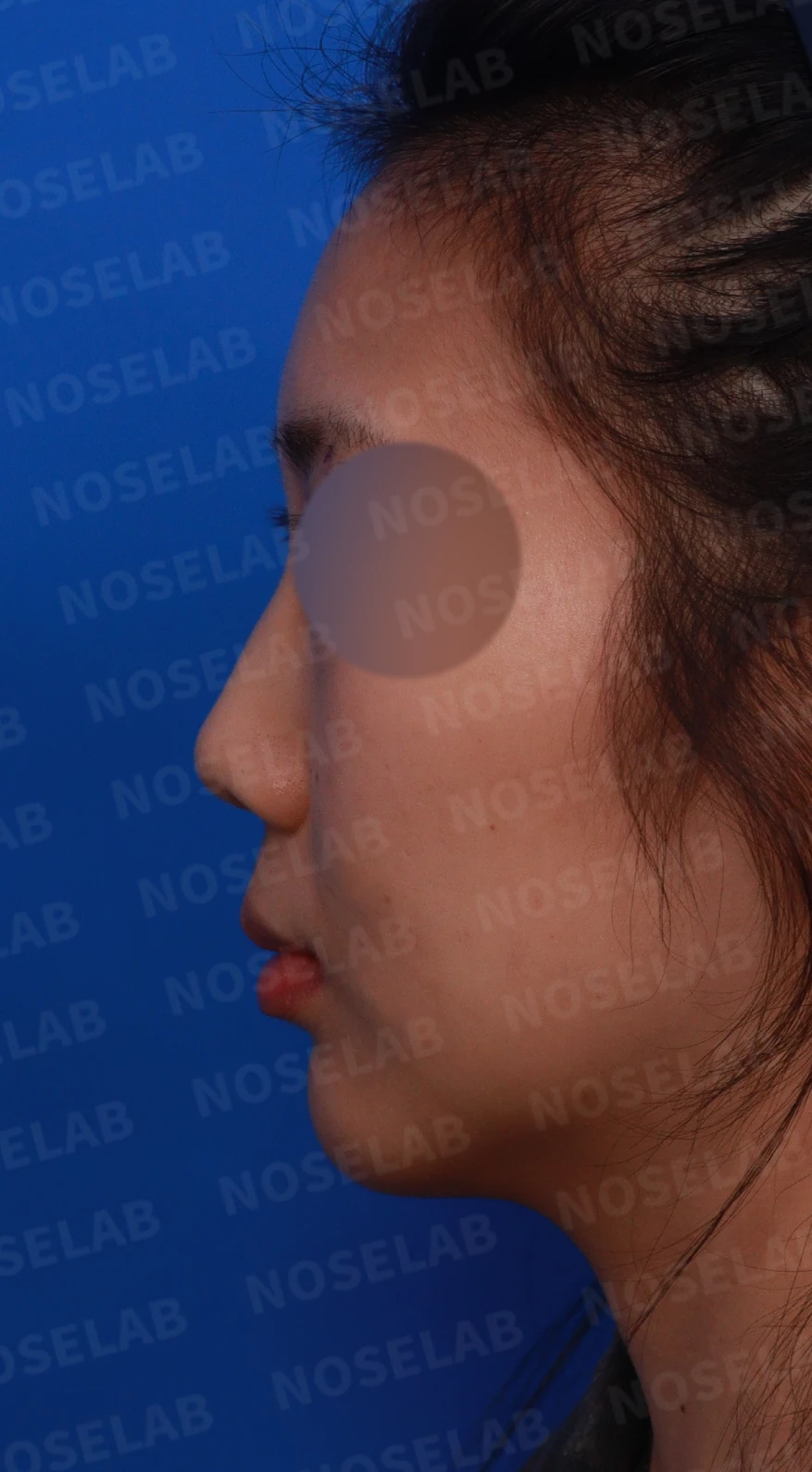
📊 Preoperative analysis
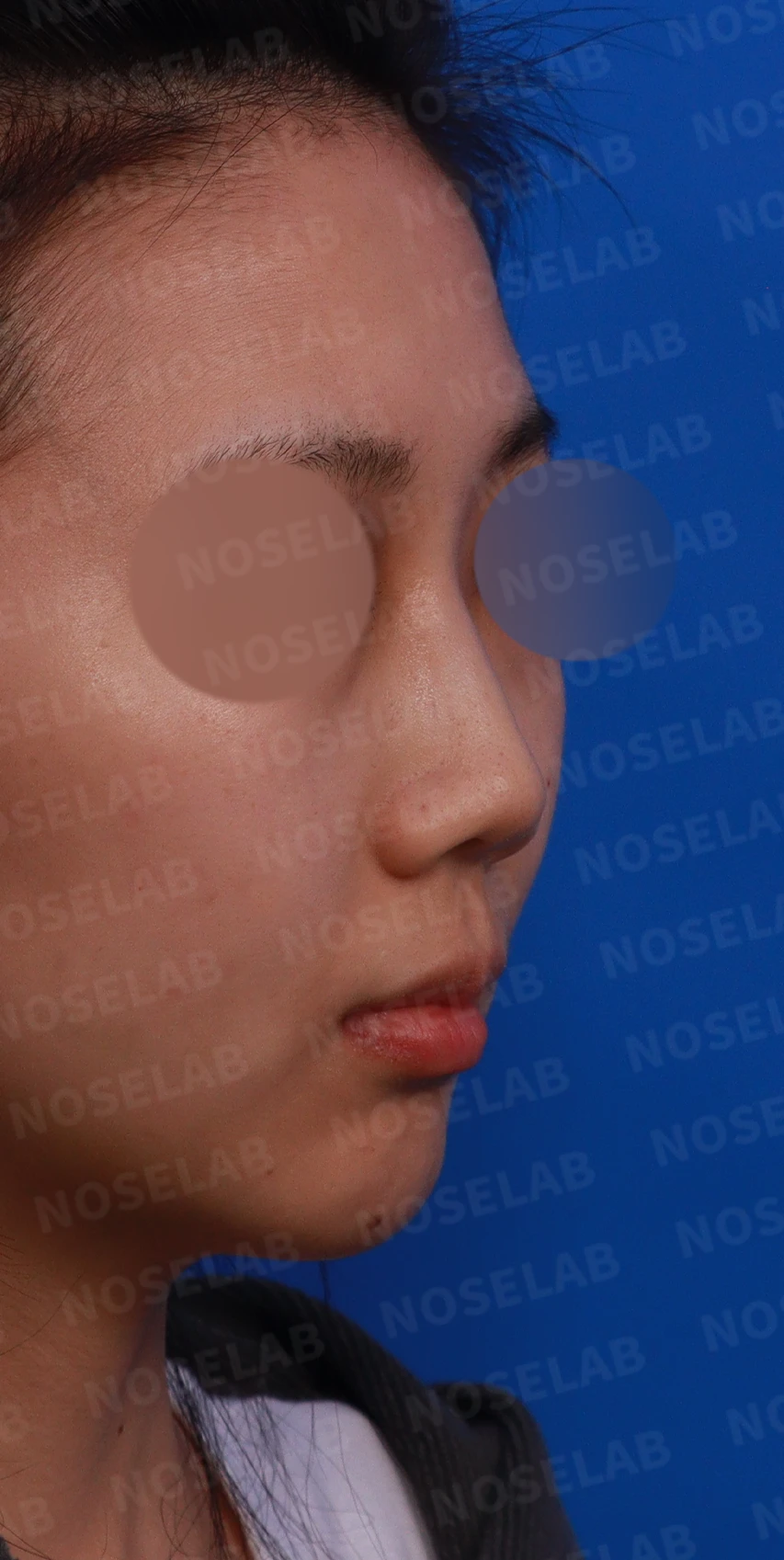
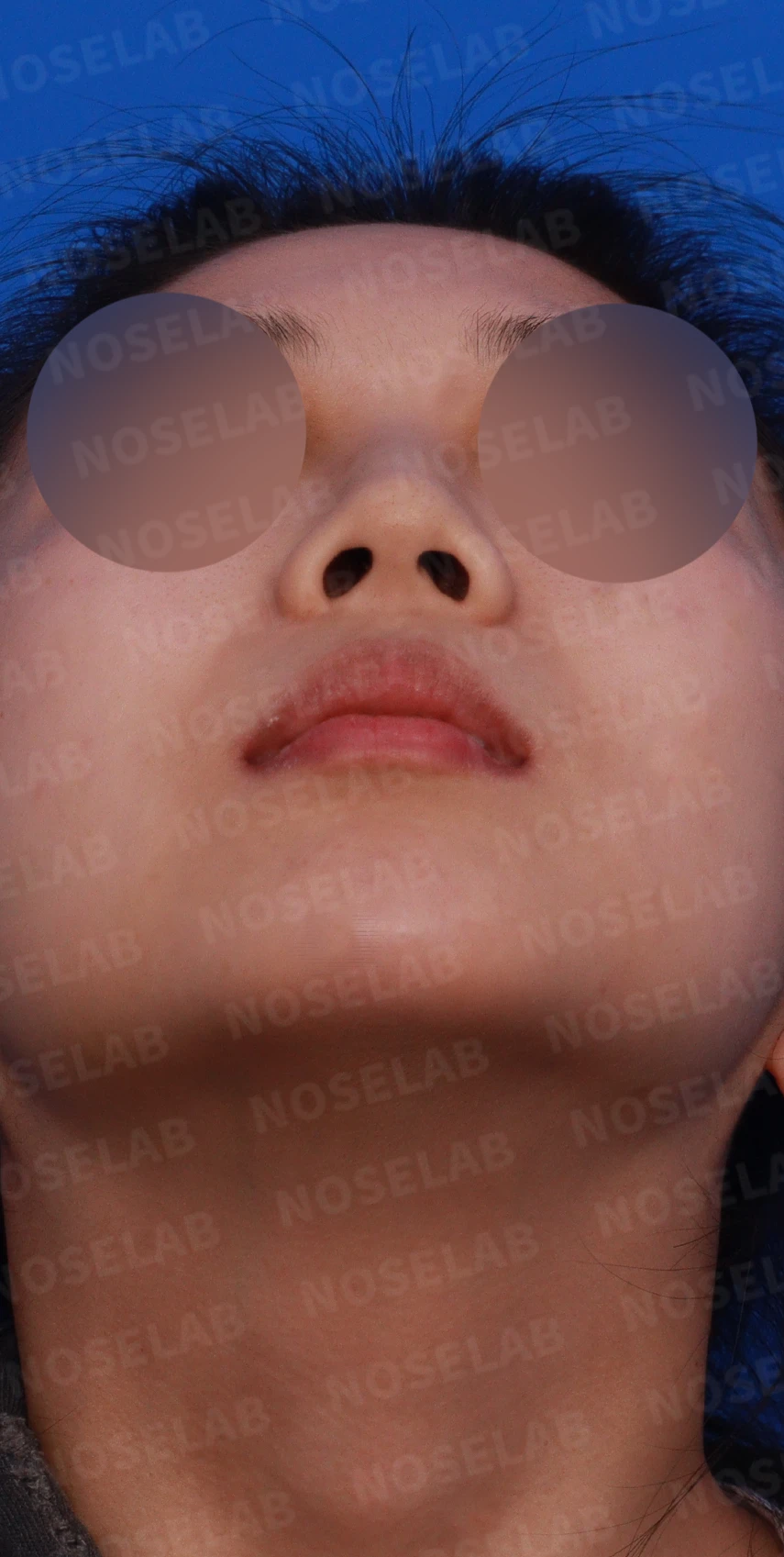
A blunt nasal tip with an overall wide, spread appearance
Retracted columella
The columella is hidden behind the alae and not visible from the profile view
Protruding mouth findings
Irregular nasal bridge
Nostril asymmetry
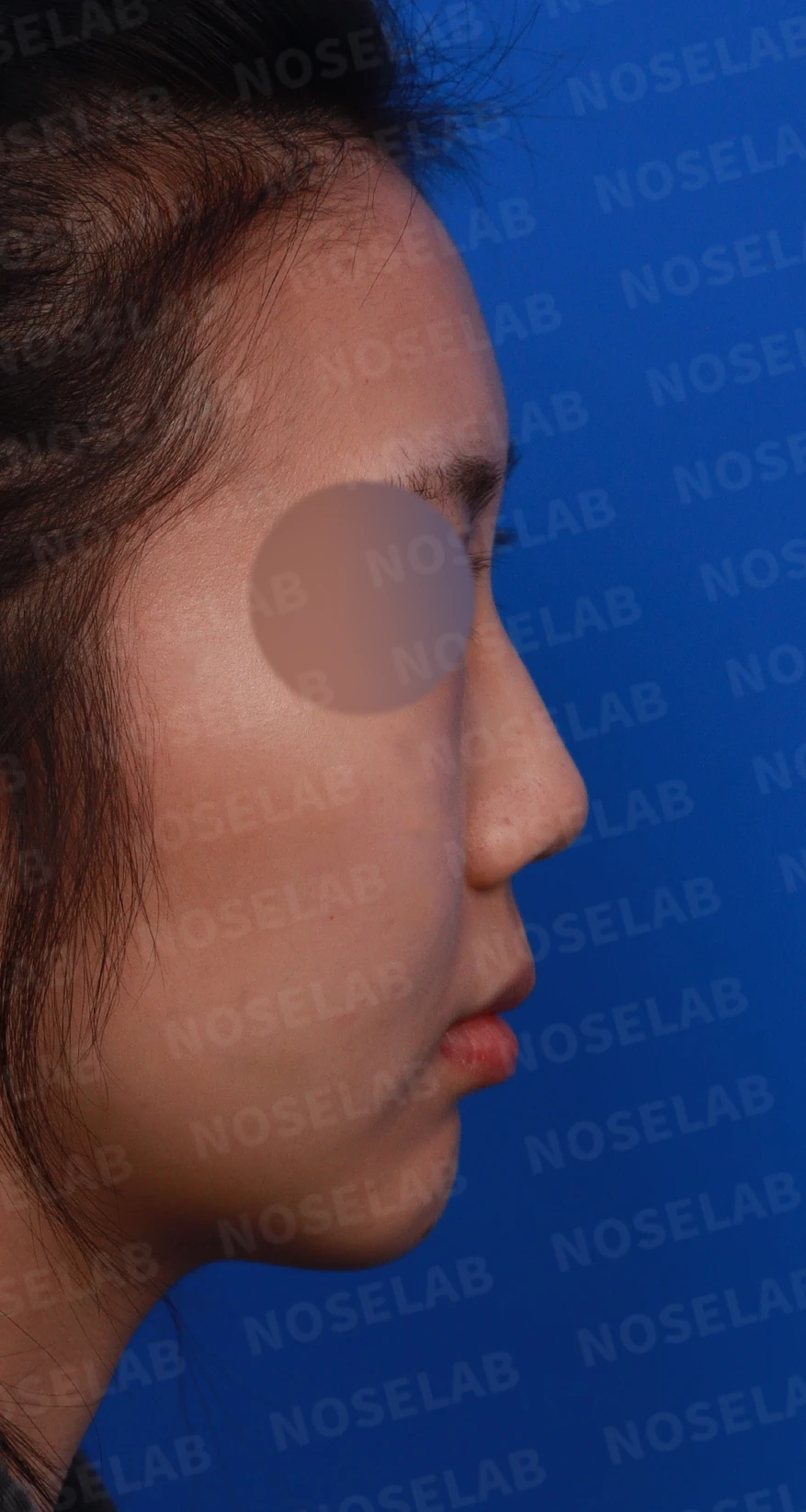
🔧 Surgical plan and procedure
Septal extension using septal cartilage and donor rib cartilage
Projecting the nasal tip and naturally lowering the columella
Gathering the spread nasal tip through cartilage interdome suturing
Repositioning and suturing the lower lateral cartilages to correct the bulbous tip
Improvement of protruding mouth through nasolabial angle correction
Smoothing and refining the nasal dorsum
Placing a silicone implant after dorsal hump reduction
Improving nostril asymmetry through septal extension and lower lateral cartilage suturing
Important note: In cases with a small nose, the skin does not stretch easily, so raising the nasal tip excessively can pose risks. In this case, the tip was elevated only up to about 90% of the skin's stretching limit, and the skin was reinforced with a dermal graft to prevent show-through of the tip cartilage.
🌟 Surgical results
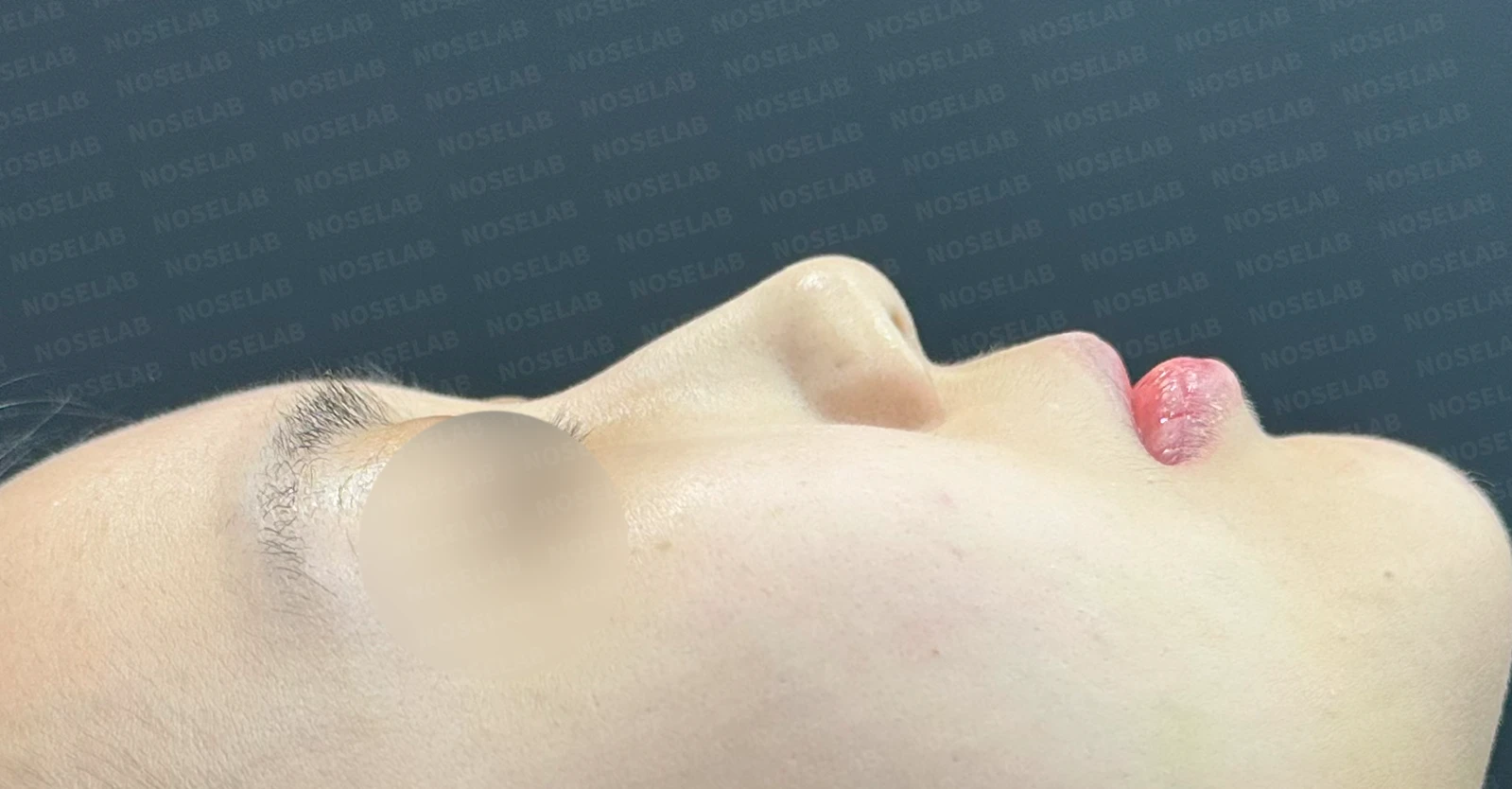
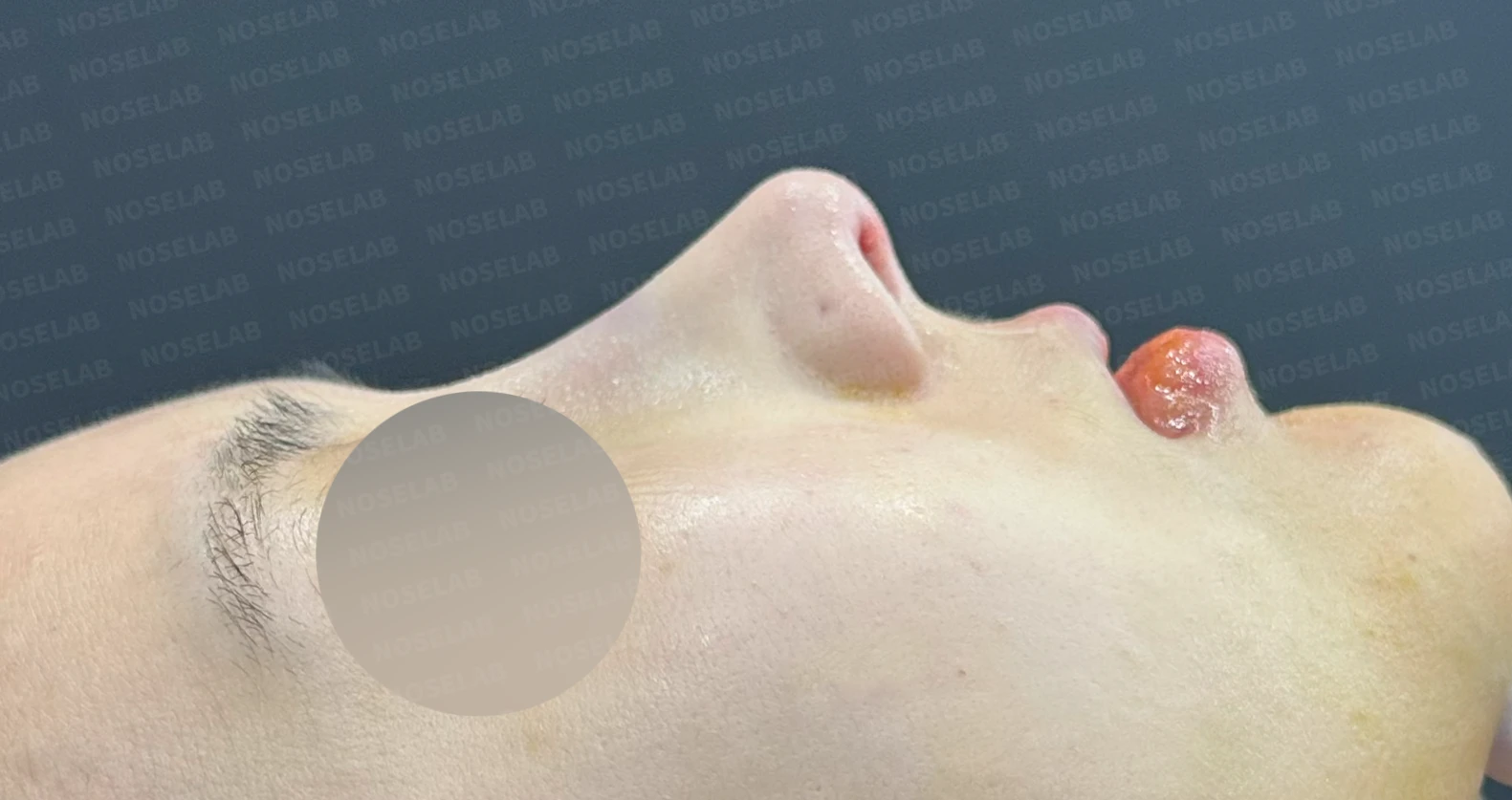
Before surgery / Day 0 immediately after surgery Photos taken immediately after surgery show swelling and may differ from the final result.
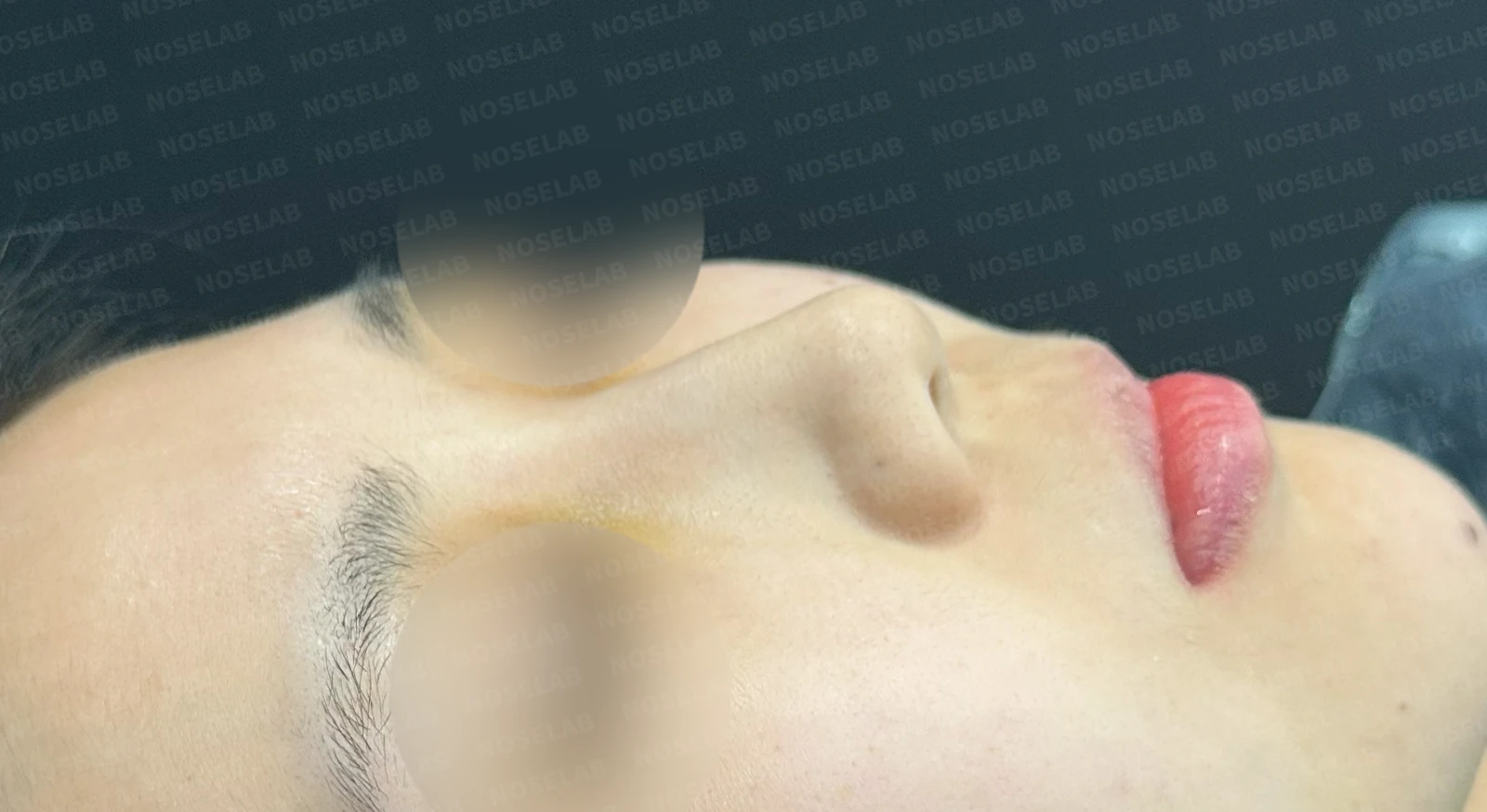
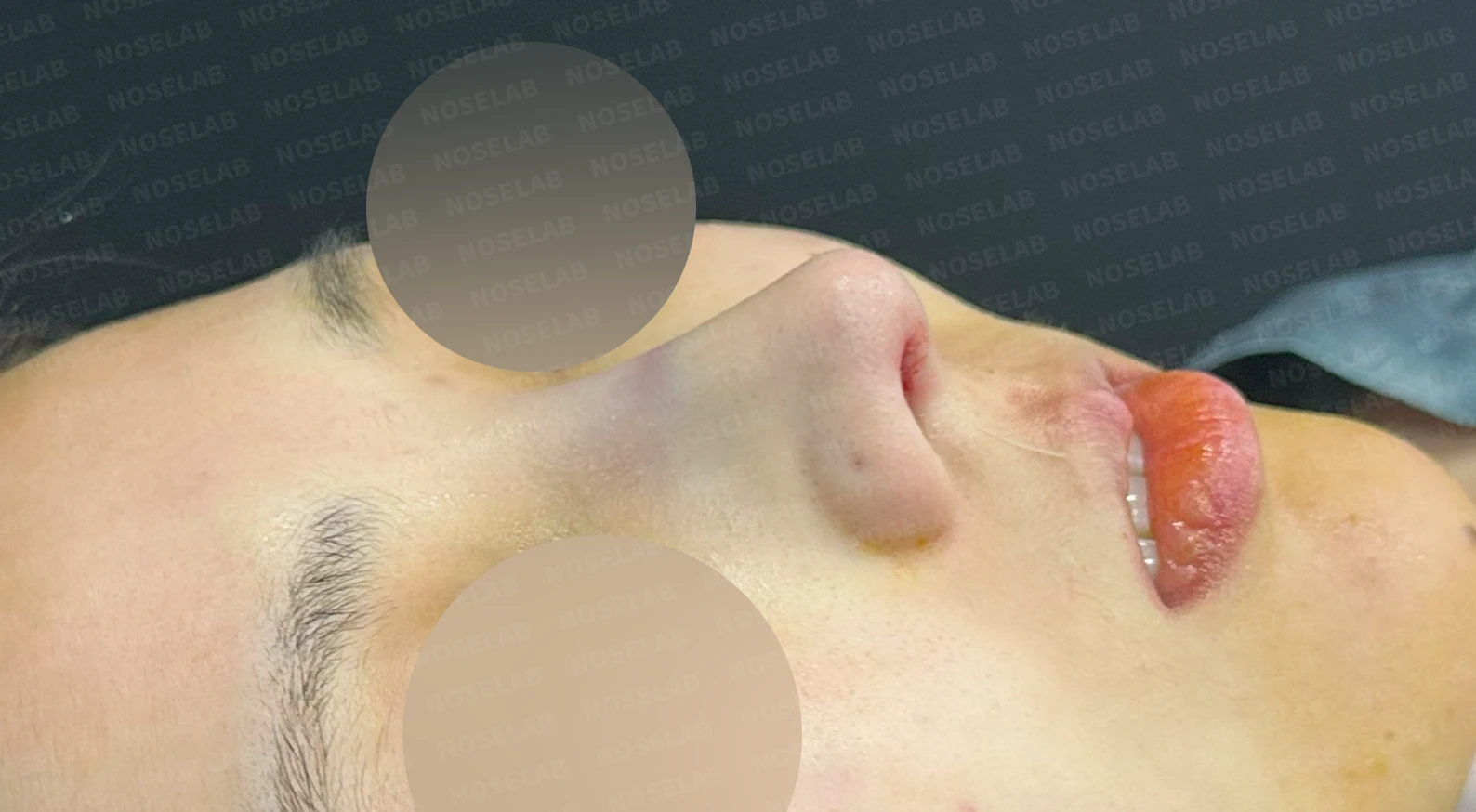
Before surgery / Day 0 immediately after surgery Photos taken immediately after surgery show swelling and may differ from the final result.
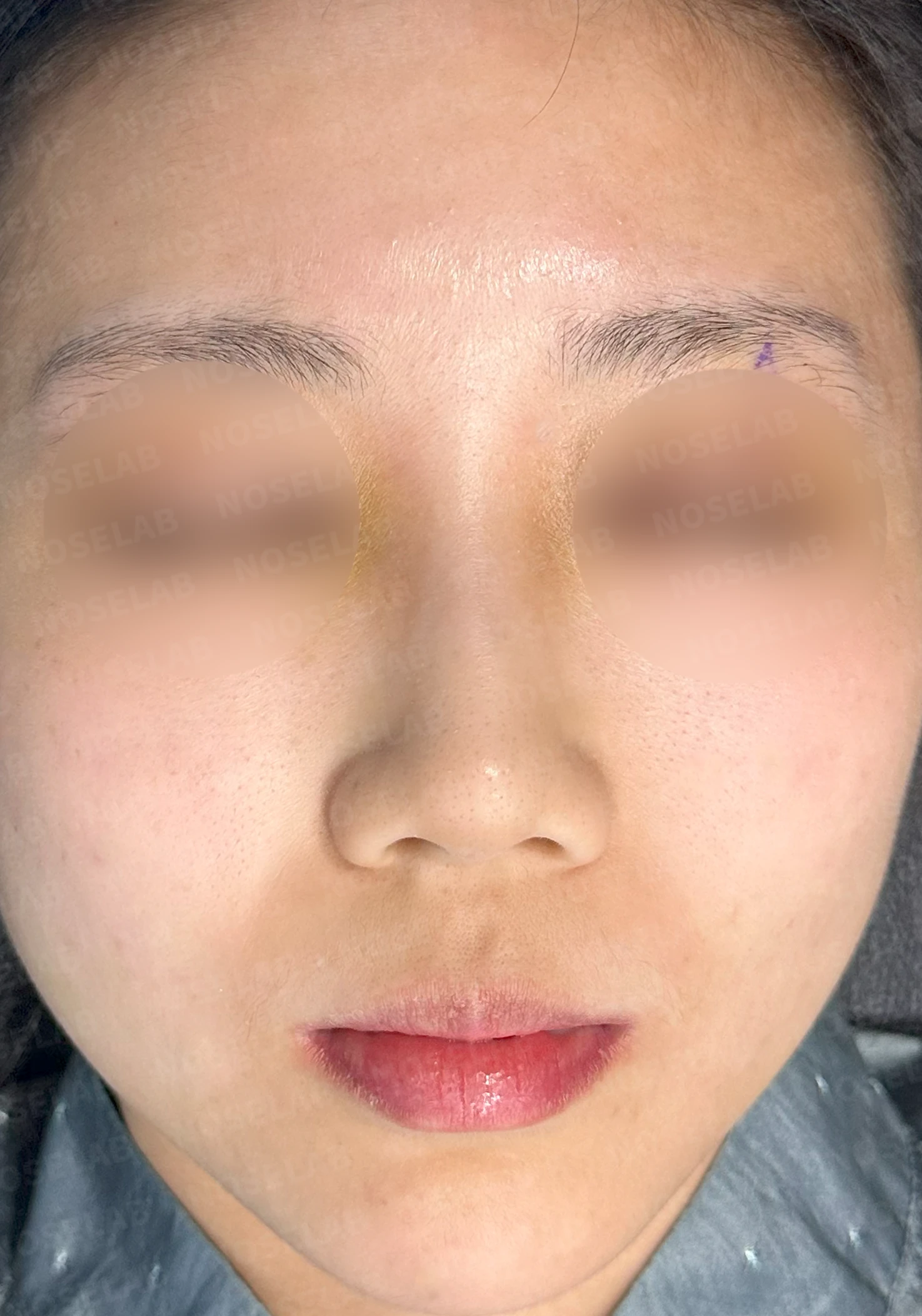
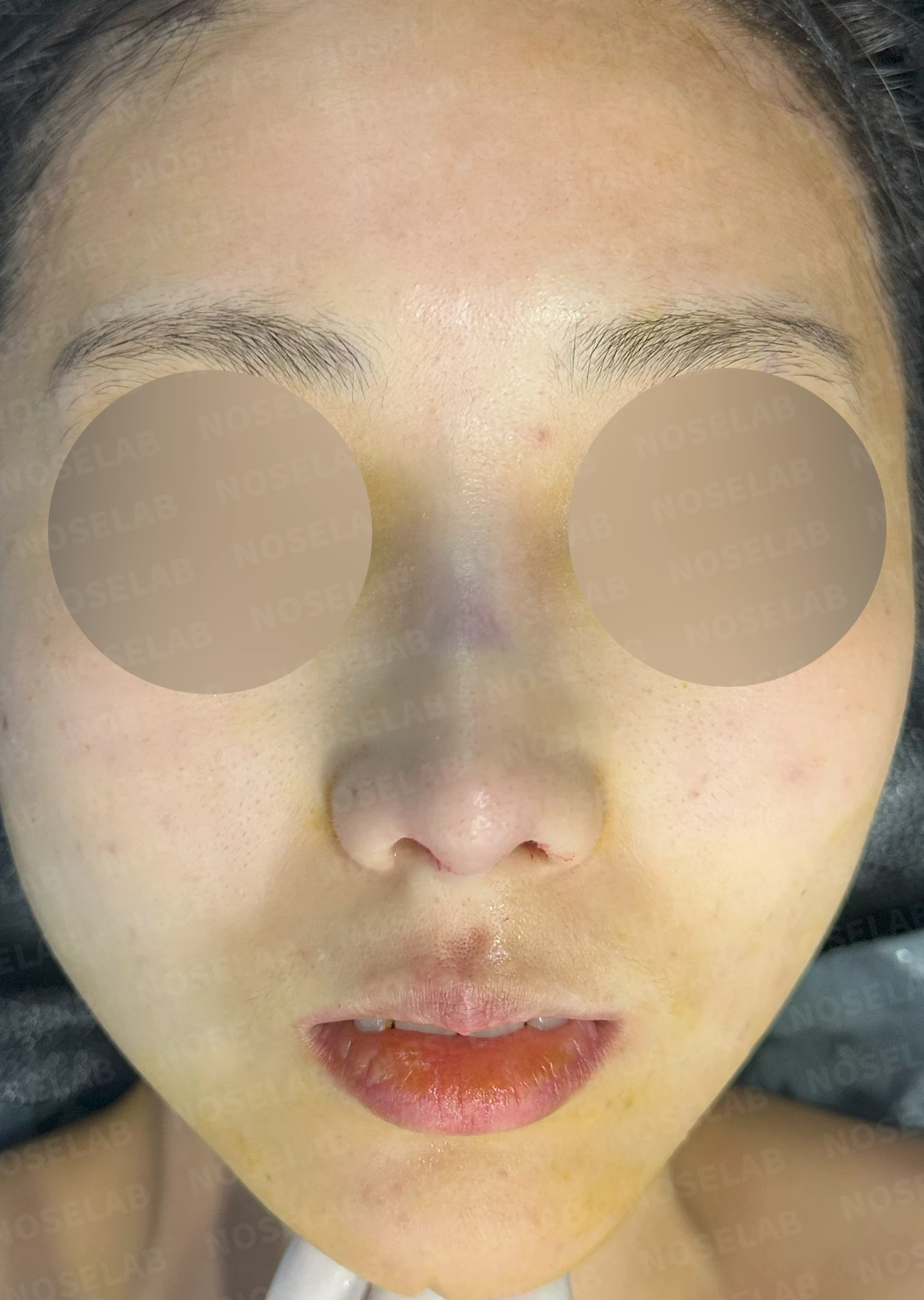
Before surgery / Day 0 immediately after surgery Photos taken immediately after surgery show swelling and may differ from the final result.
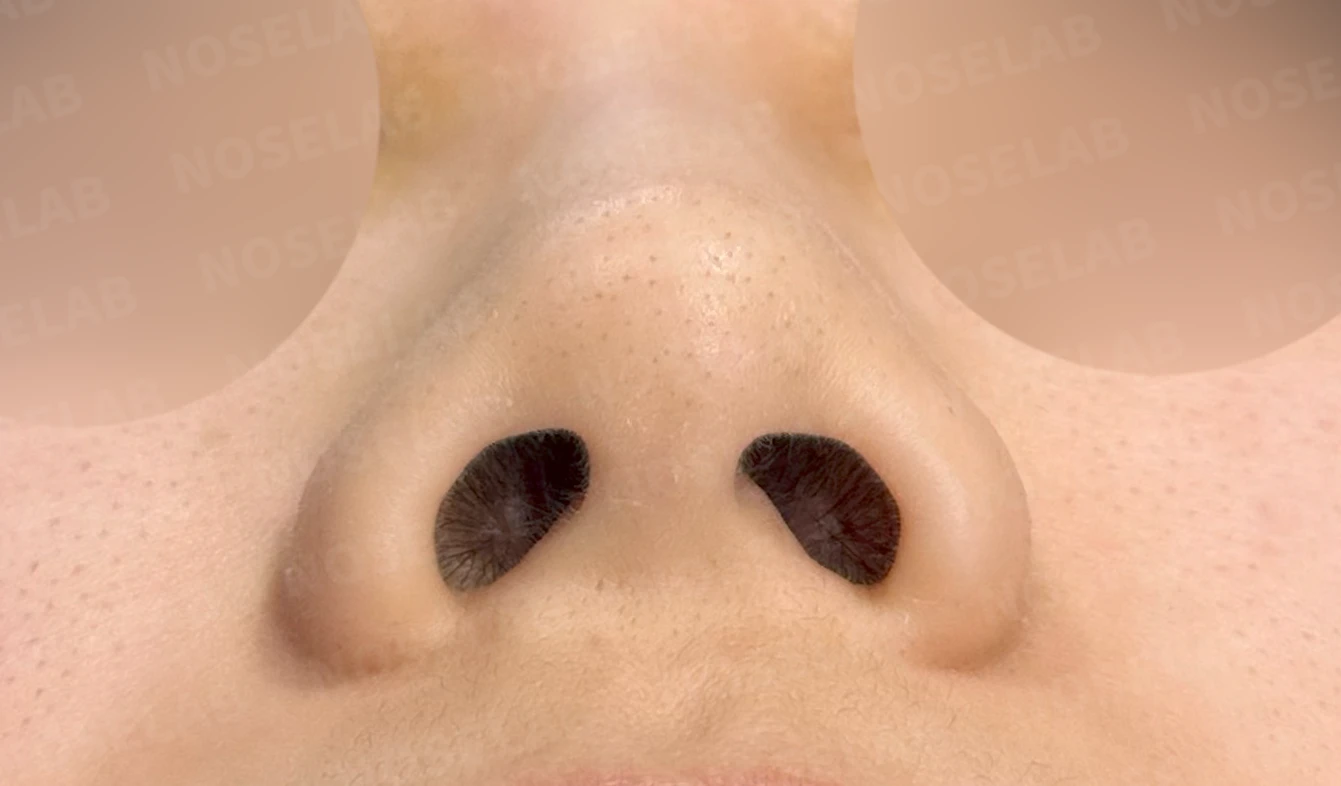
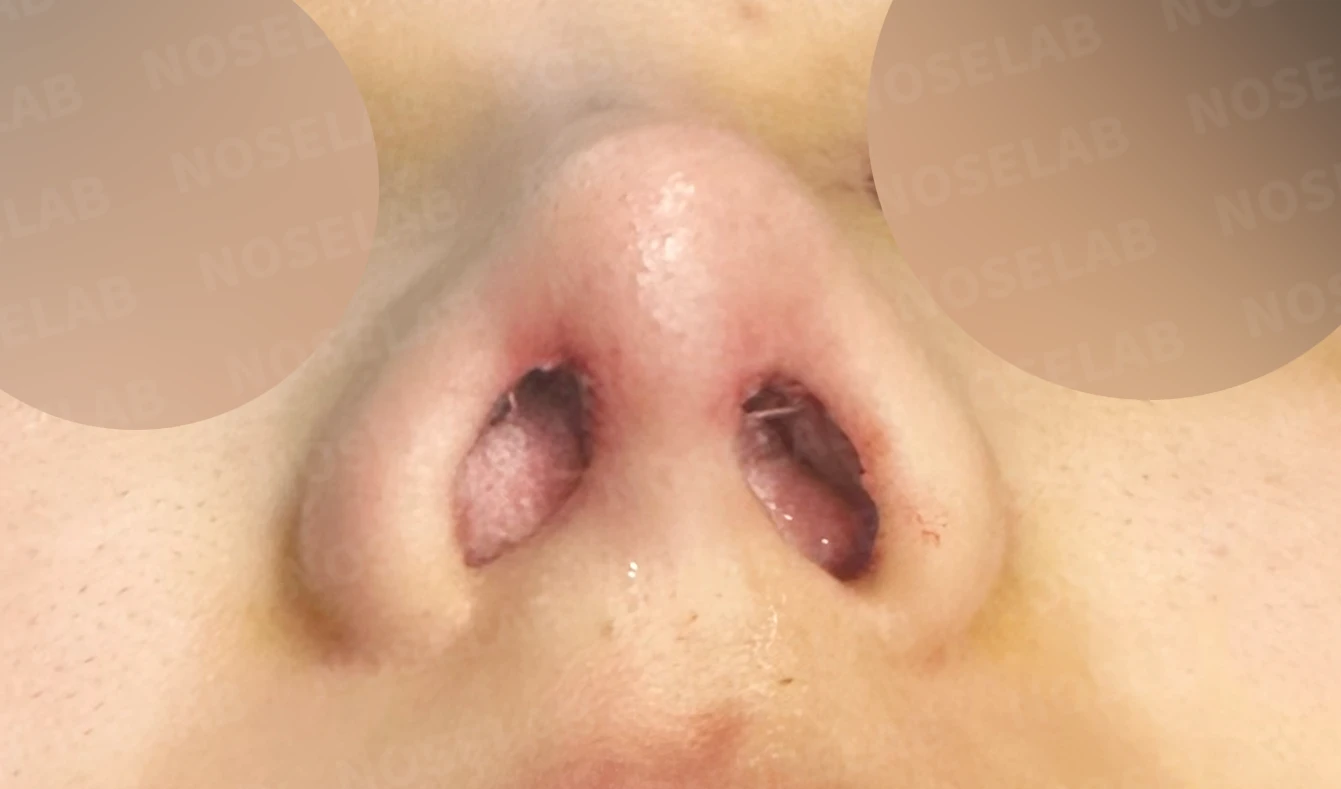
Before surgery / Day 0 immediately after surgery Photos taken immediately after surgery show swelling and may differ from the final result.
Naturally elevated nose (patient request)
Short nasal tip appropriately lengthened (patient request)
Improved tip shape
Corrected nostril asymmetry
Improvement in protruding mouth appearance
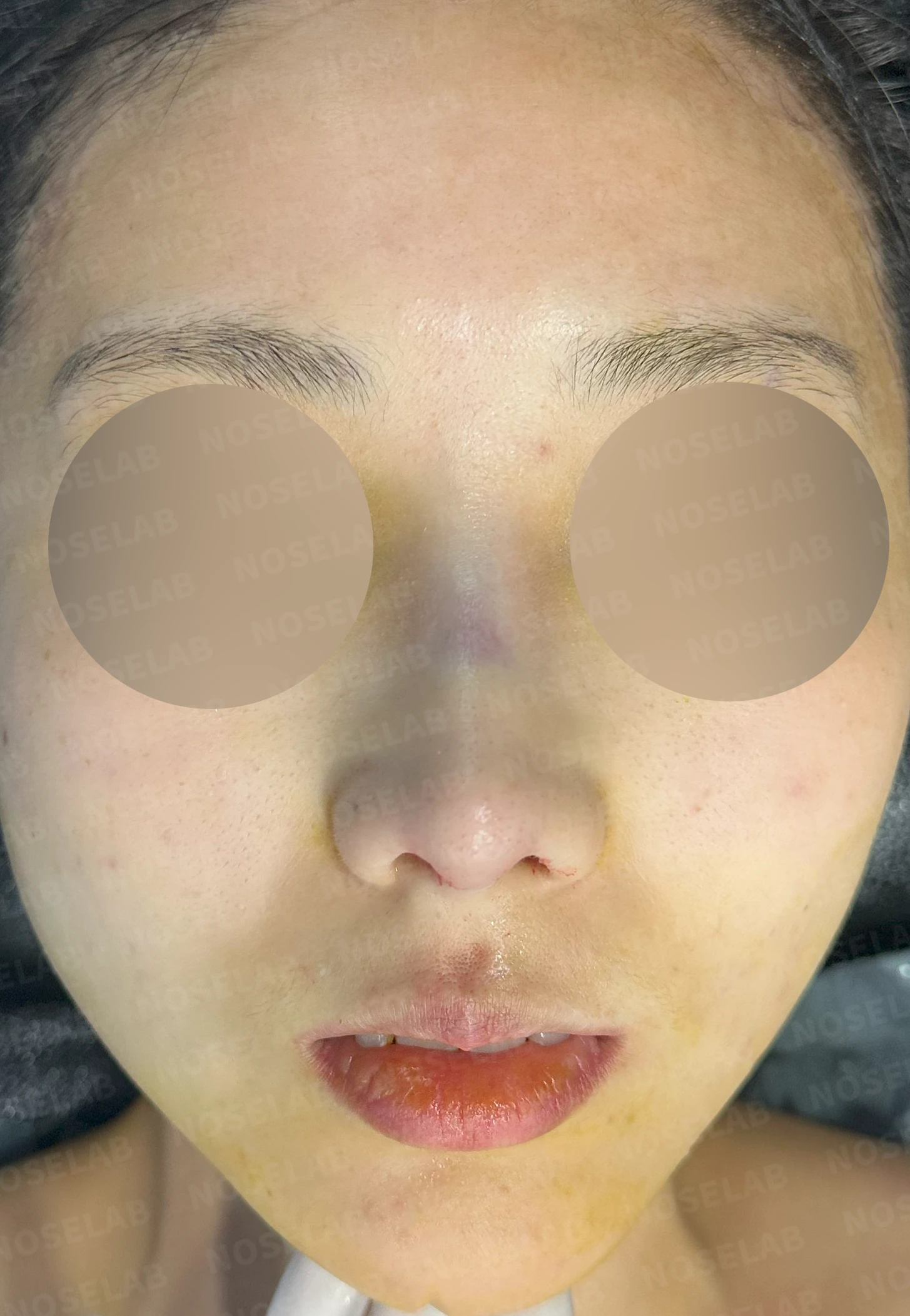
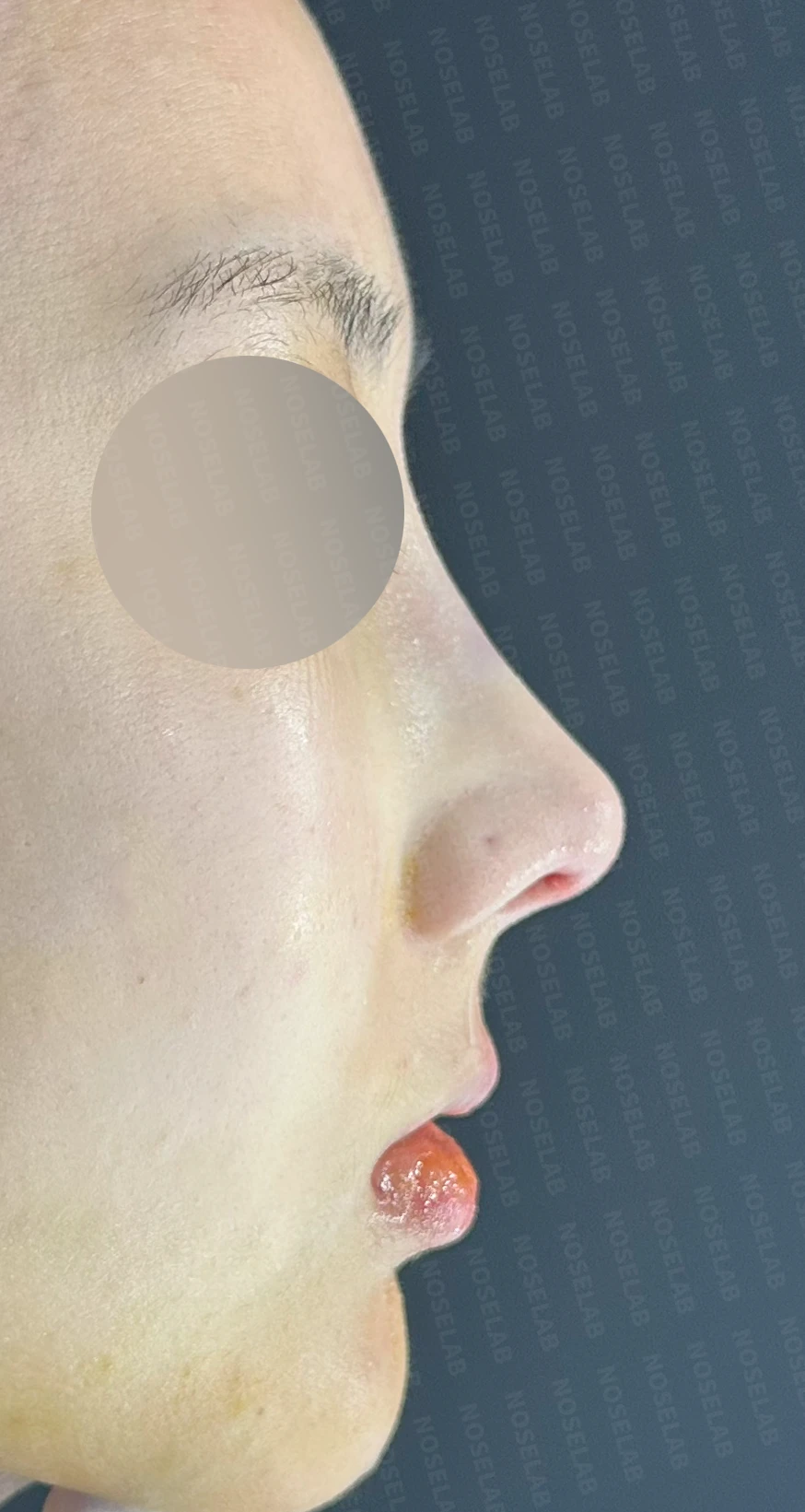
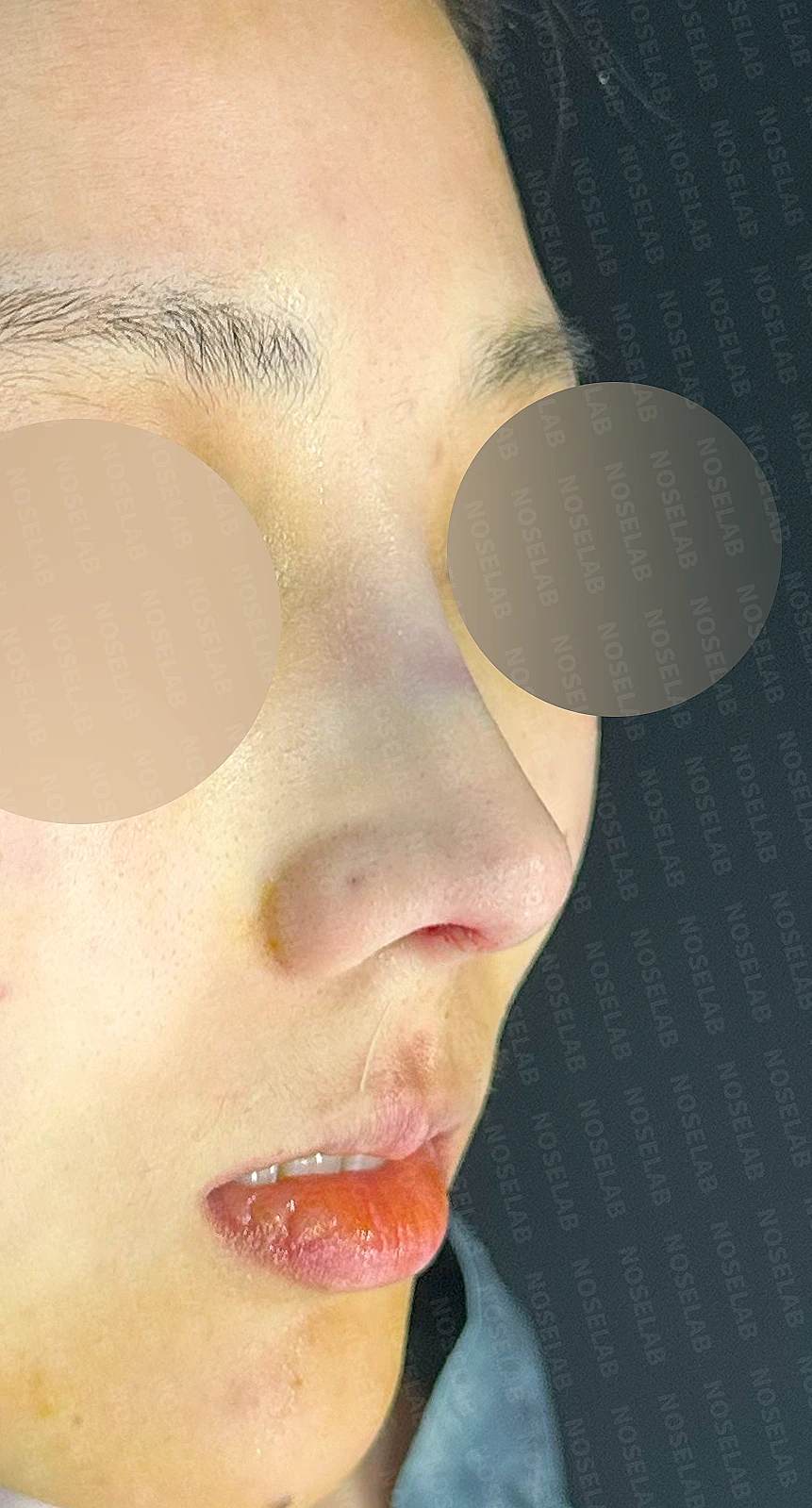
Immediately after surgery (Day 0) front, profile, and oblique viewsImmediate postoperative photos show swelling and may differ from the final result.
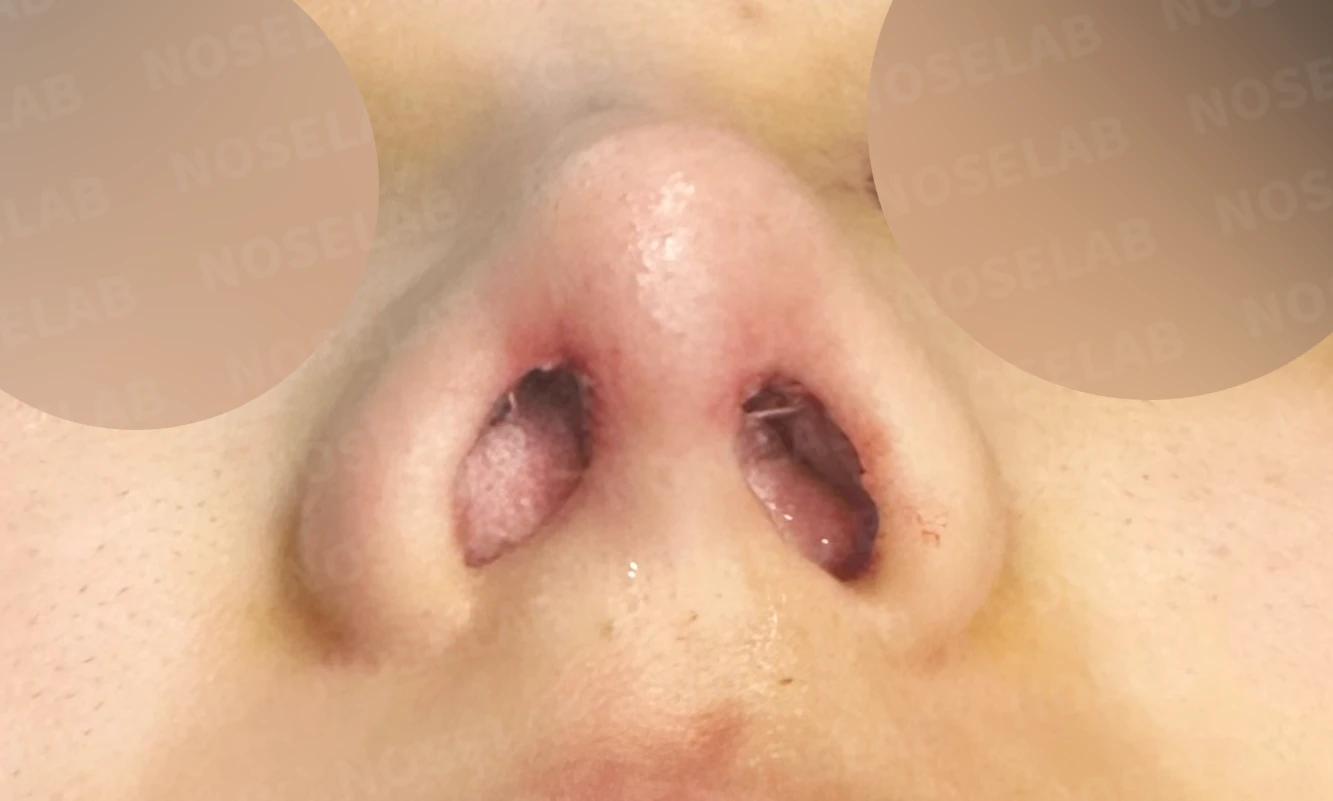
Base view (nostril) photo
Through this case, we could review several key points to consider during rhinoplasty. In particular, this patient had an allergy to specific painkillers. Before surgery, information regarding the patient's current medications and drug allergies is critical. This is because it may lead to issues related to anesthesia during surgery or postoperative complications such as bleeding. Because cosmetic surgery must prioritize safety above all else, this aspect is even more important. Since the patient was allergic to a specific painkiller formulation, an alternative painkiller was prescribed, and injections were administered during surgery to prevent unforeseen allergic reactions, allowing the surgery to conclude safely.
Furthermore, when operating on a small nose, raising the nasal tip excessively can cause issues such as a pinched tip, cartilage show-through, or tip redness, requiring caution. It is always important to consider the patient's tip skin dimensions and thickness to achieve a safe and natural result.
I will always strive to support your aesthetic goals and health. If you have any questions, please feel free to leave a comment at any time.
This was Dr. Peter C. Kang. Thank you.
Thank you.
#closedrhinoplasty #tiprefinement #asymmetrycorrection #smallnoserhinoplasty #naturalrhinoplasty #rhinoplastyprecautions #nasolabialanglecorrection #protrudingmouthcorrection
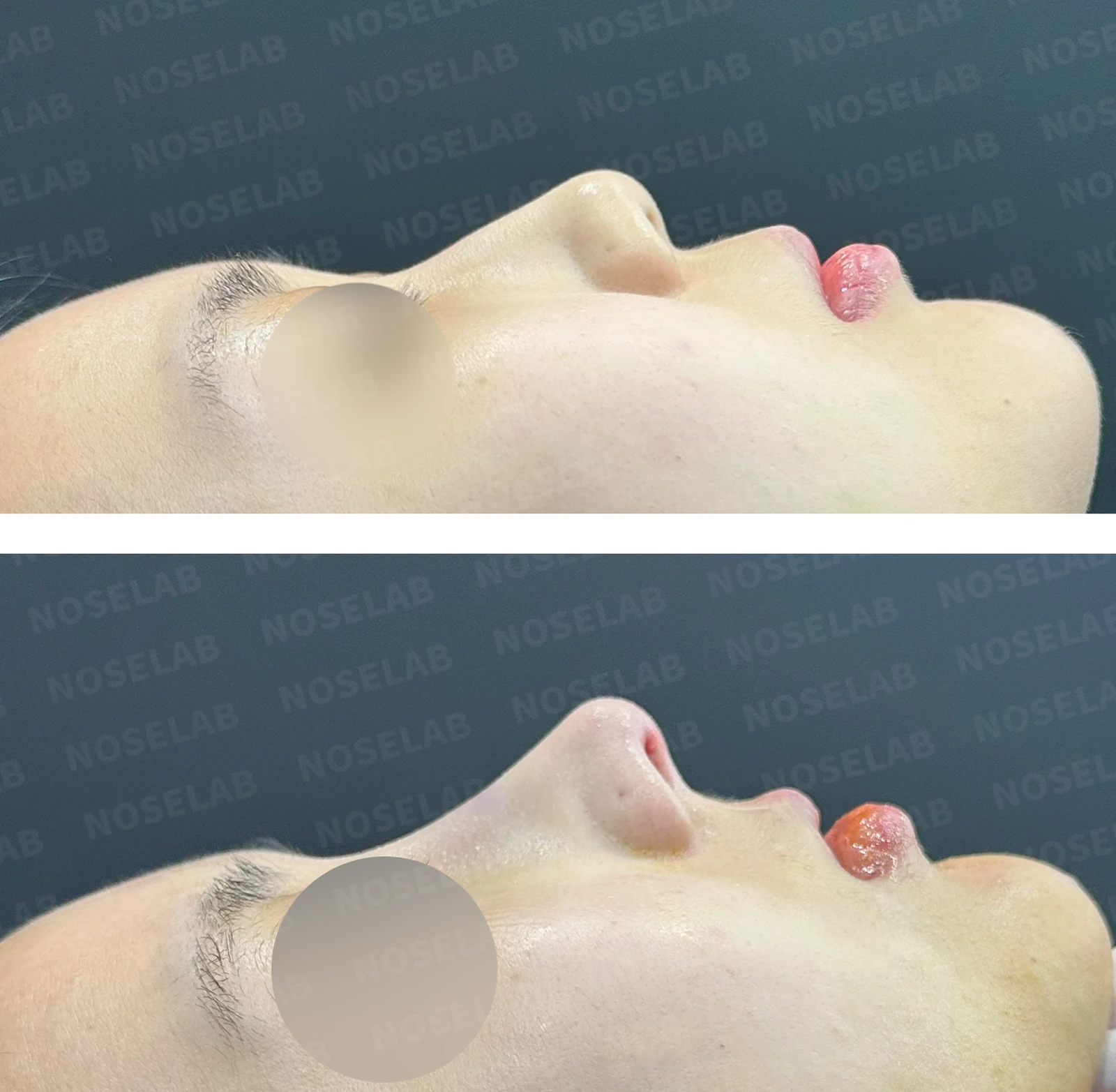
Limitations and risks
When using donor rib cartilage, long-term follow-up is necessary because the grafted cartilage may resorb or warp.
When the septum is corrected at the same time, nasal obstruction may persist or recur, and in rare cases, septal perforation or changes in smell may occur.
Common potential risks include infection, bleeding, asymmetry, scarring, skin necrosis, and insufficient improvement; results vary depending on individual skin condition and previous surgical history.