Hello, I am Dr. Peter C. Kang.
Today, I would like to introduce the case of a patient who visited our clinic concerned about a wide, bulbous nose.
🔍 Surgical history
No prior surgical history
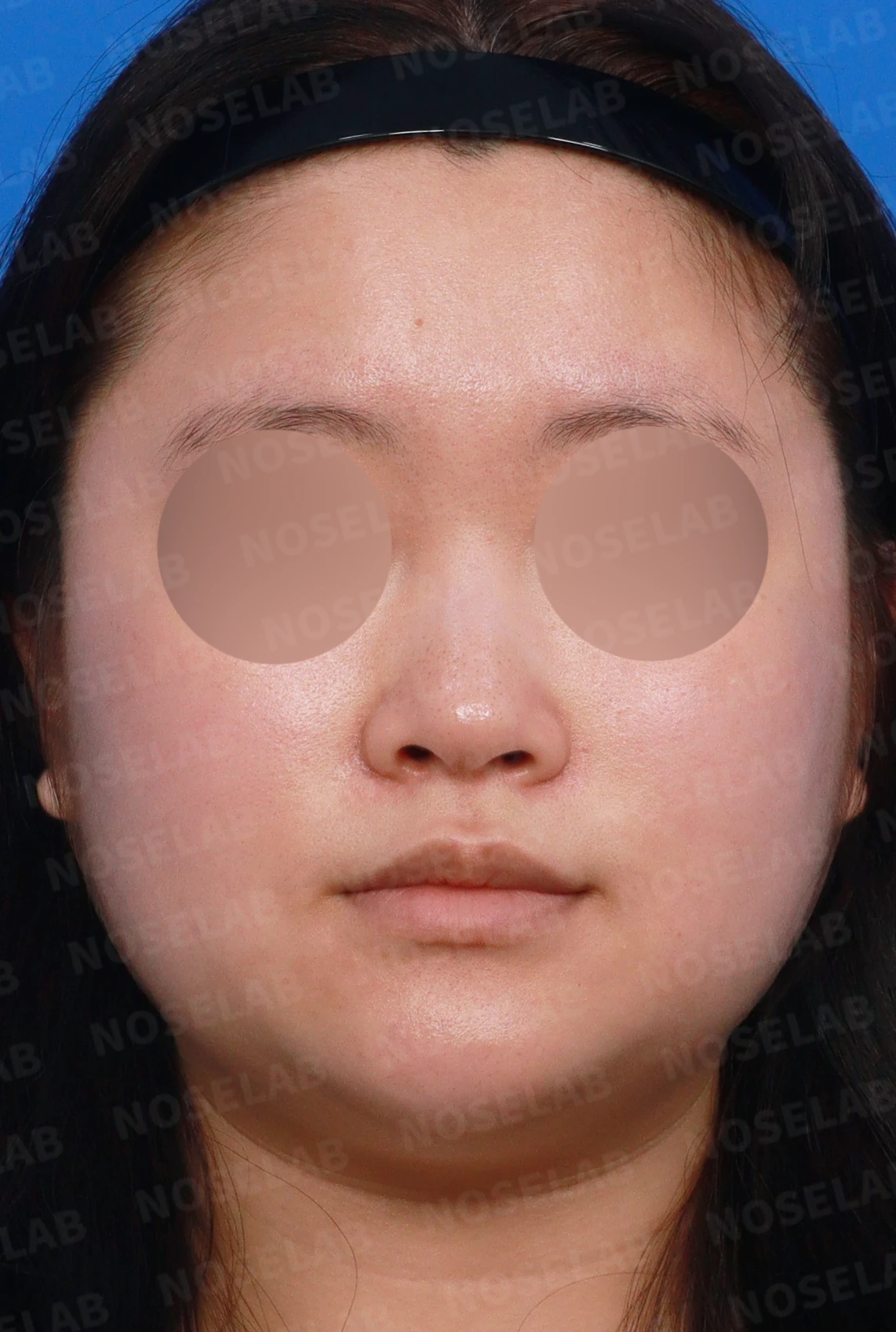
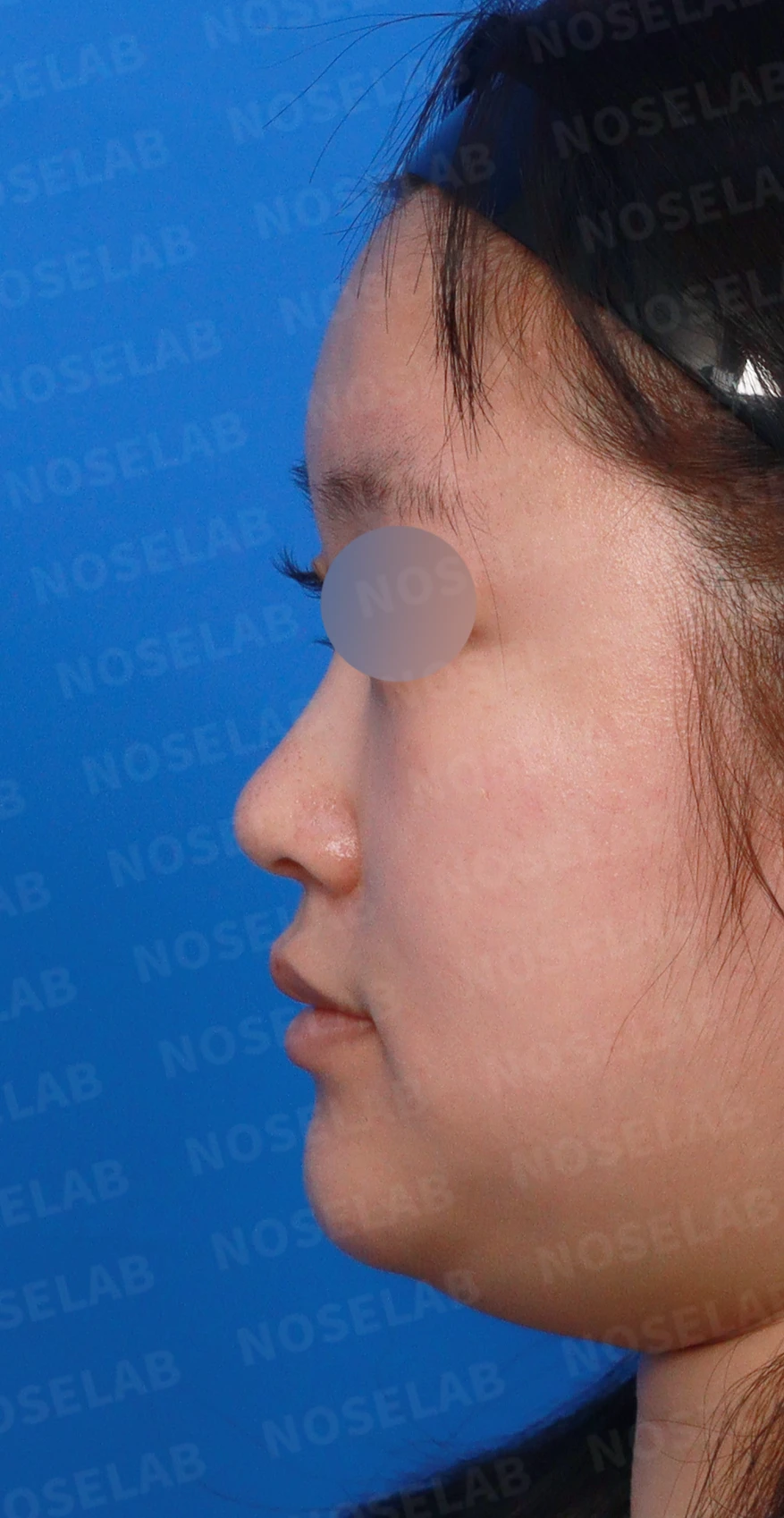
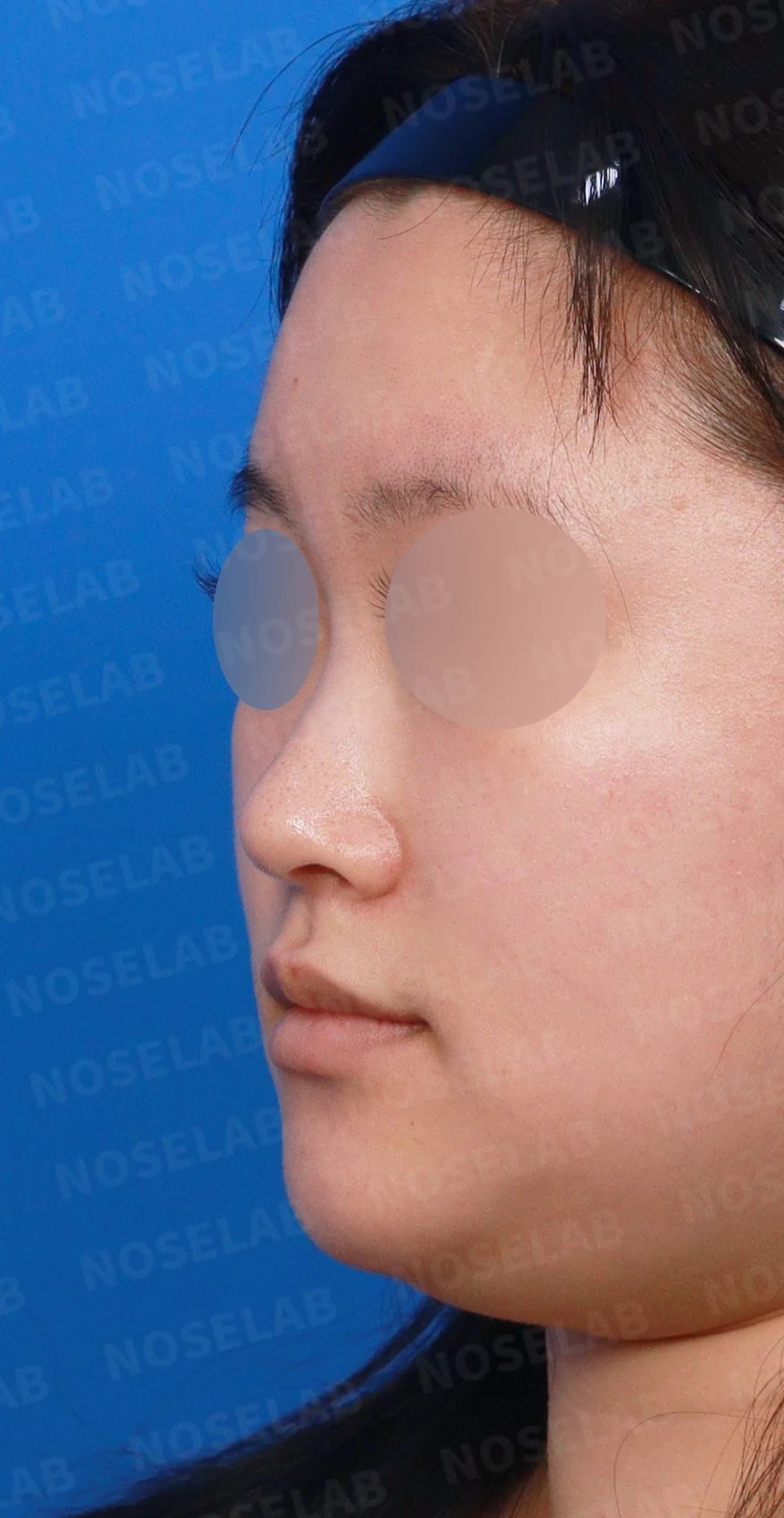
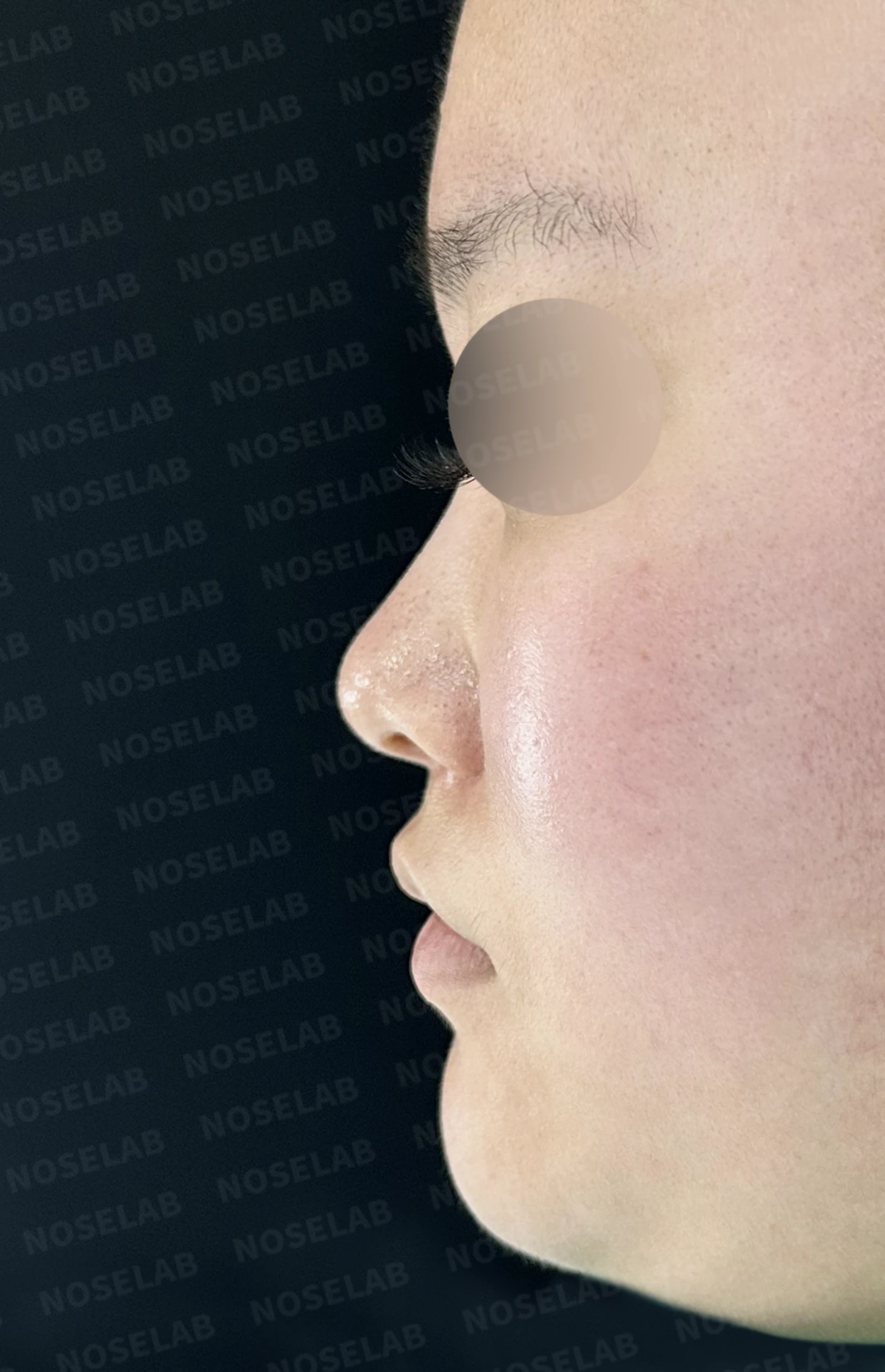
Front, left profile, and oblique views during design consultation.
💉 Patient requests
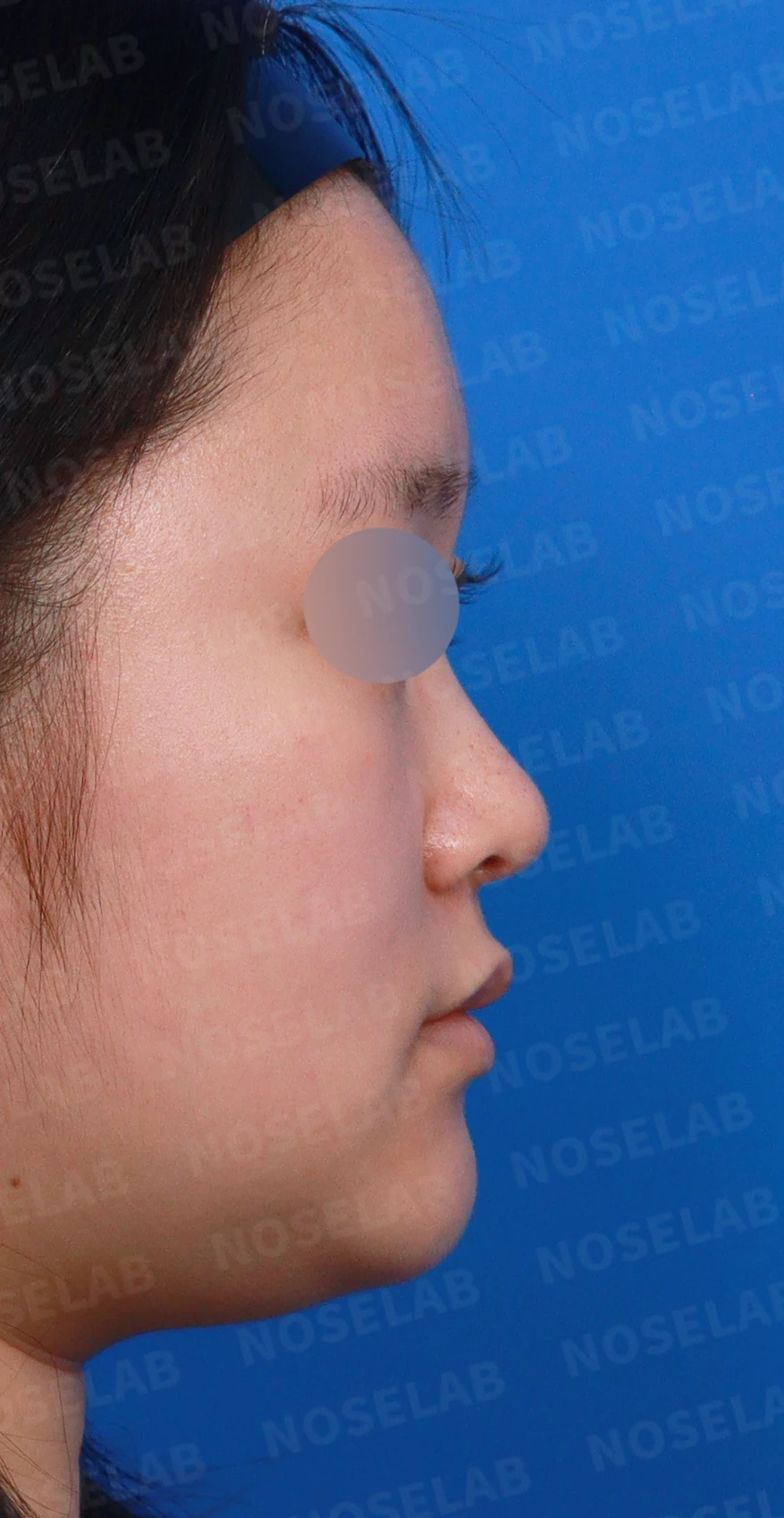
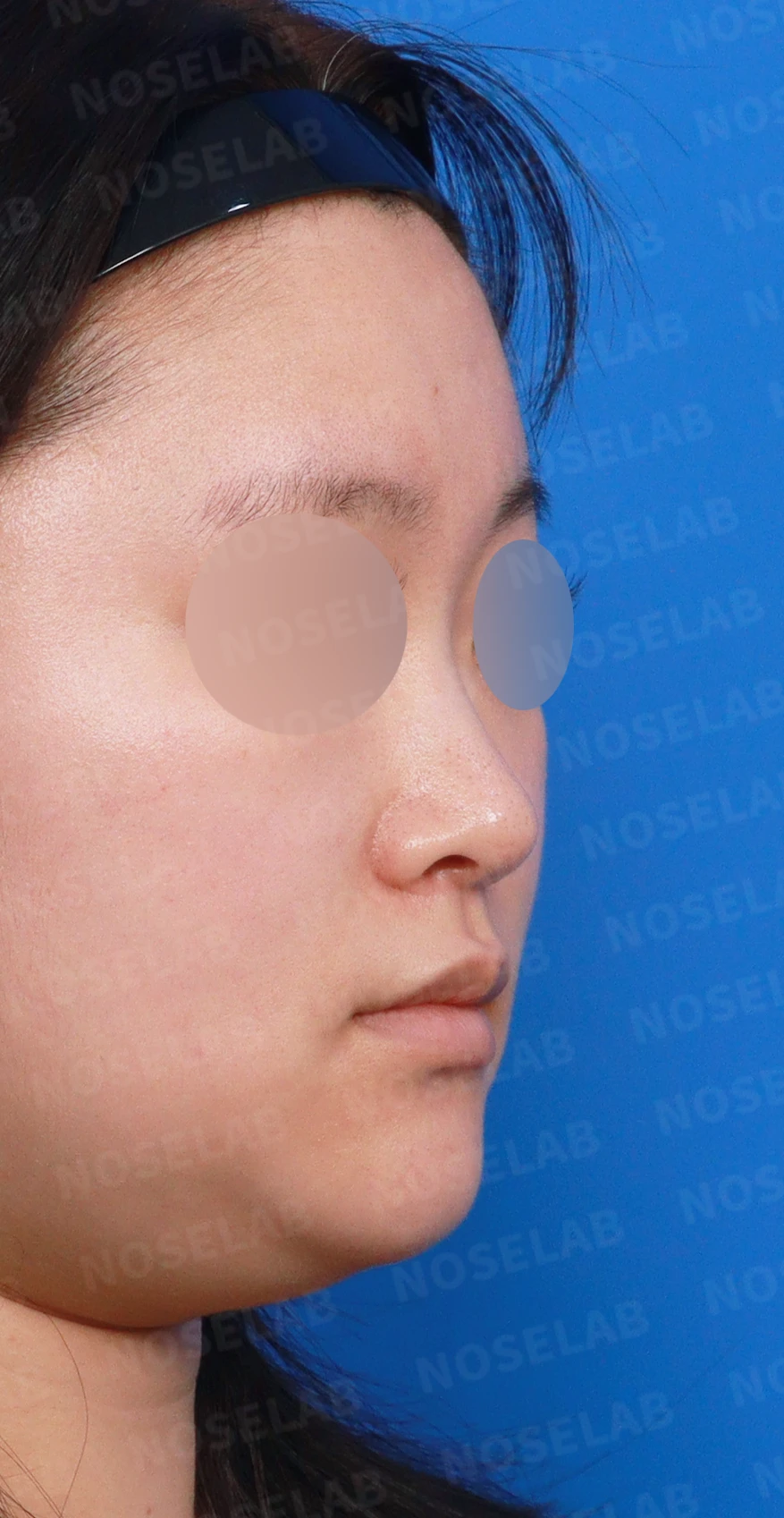
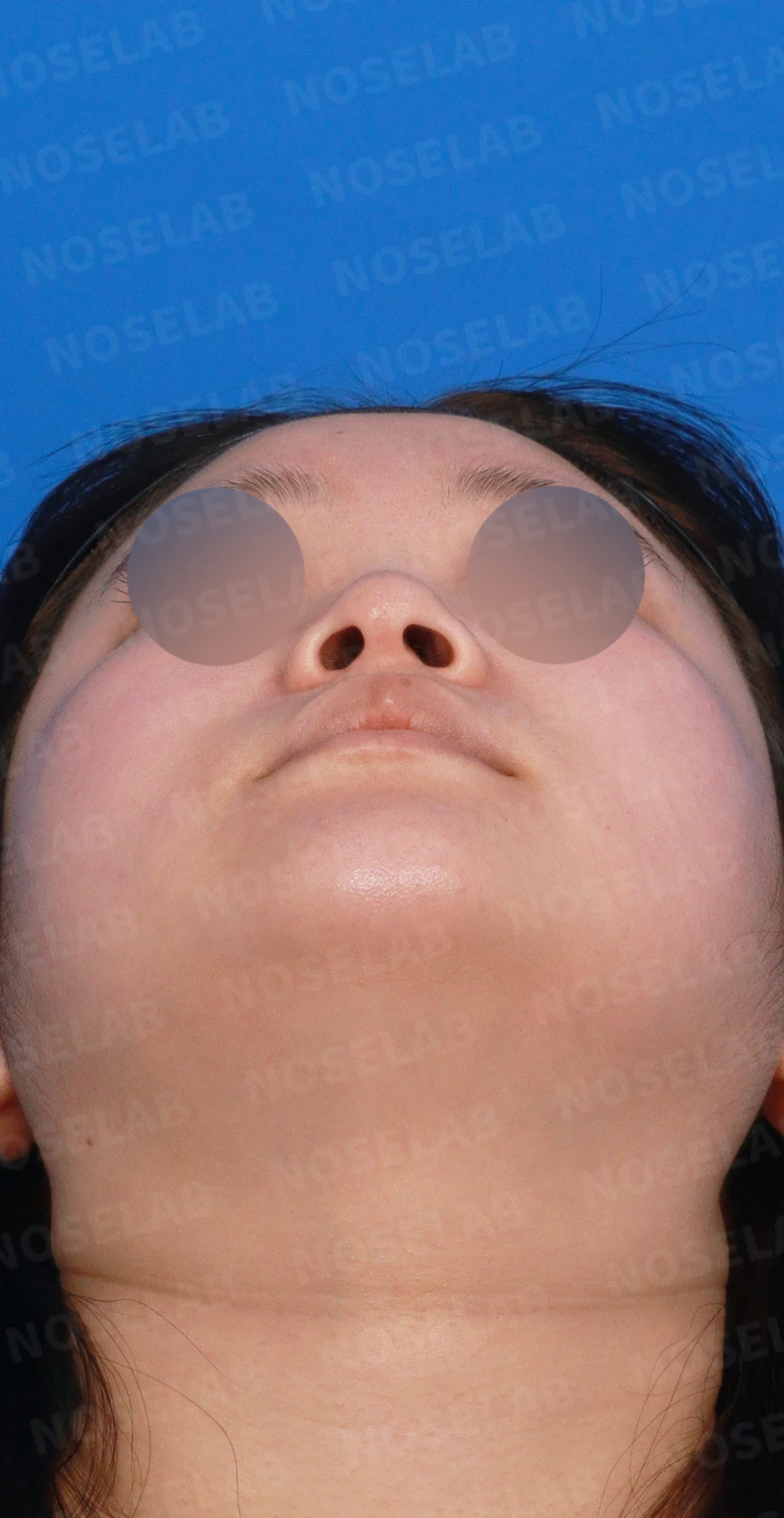
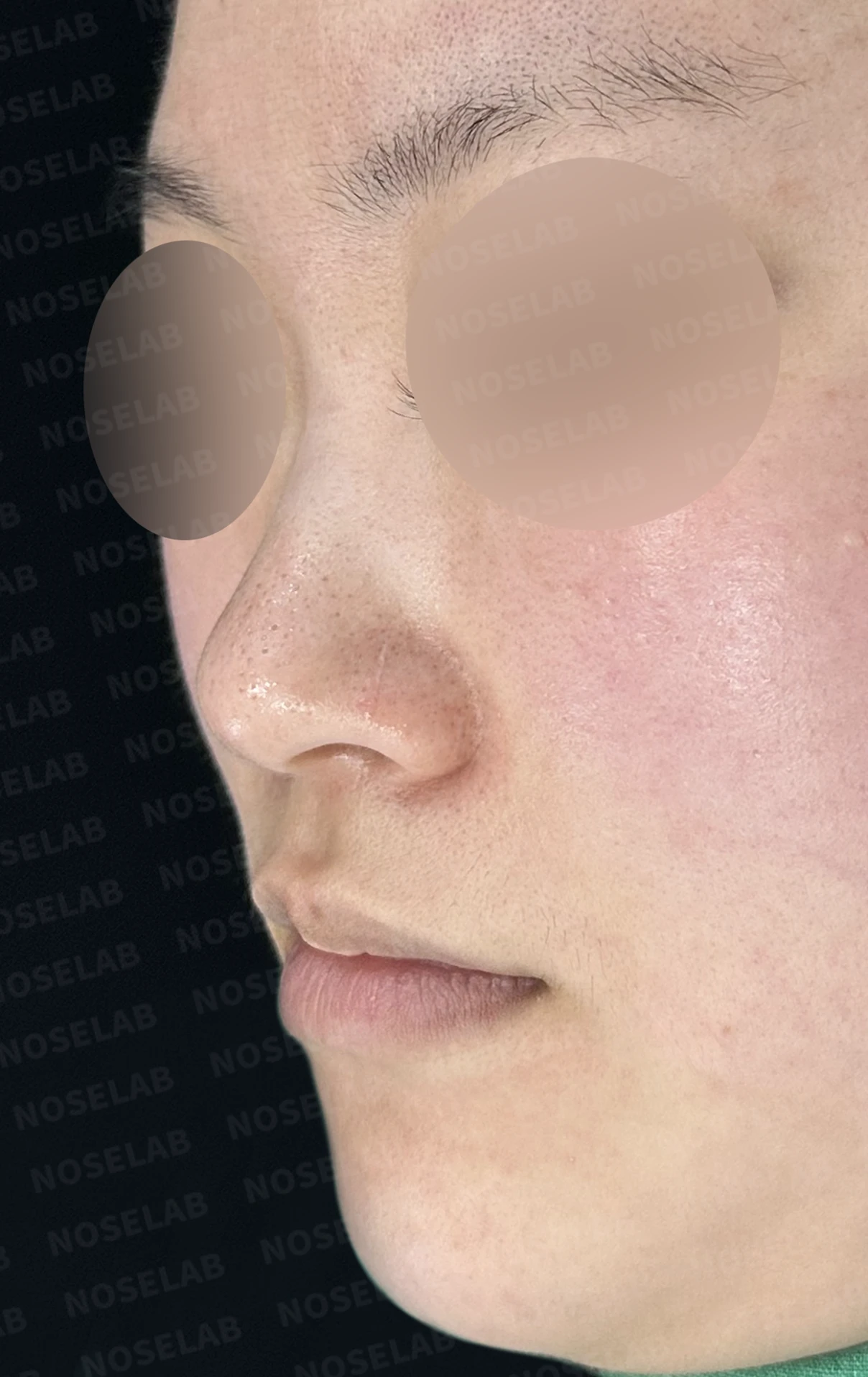
Right profile, oblique, and nostril views during design consultation.
"I want to improve my wide nose"
"I want to improve the asymmetry"
"I want to elevate my bulbous nasal tip naturally"
"I want a defined nasal tip"
🔧 Surgical plan and procedure
Because the patient's septal cartilage was adequately sized, we combined septal cartilage and ear cartilage to achieve a natural result planned with safety in mind.
1. Use of septal cartilage
Harvesting an adequate amount of septal cartilage
Forming a structure to secure tip support
Constructing a stable cartilage framework
Securing long-term stability
2. Reinforcement with ear cartilage
Adding ear cartilage to create a natural contour
Delicately refining the nasal tip shape
Creating a gentle curve
Preserving a natural feel to the touch
3. Nasal tip reconstruction
Elevating the bulbous tip into a defined shape
Creating a natural tip height
A framework that narrows the wide tip
Achieving an elegant tip line
4. Correcting the wide nose
Adjusting nasal width by cartilage repositioning
Well-balanced nasal contour
Achieving natural proportions
Considering overall harmony
5. Asymmetry correction
Balancing left and right symmetry
Forming a symmetrical nasal line
Alignment of the columellar midline
Harmonious nostril shape
6. Natural straight bridge line
A smooth transition from the glabella to the nasal tip
Natural profile silhouette
Harmonious proportions with the face
An elegant, refined line
7. Nasolabial angle correction and functional improvement
A natural angle on profile view
Improved nasal breathing through septal correction
Prioritizing long-term health
🌟 Surgical results
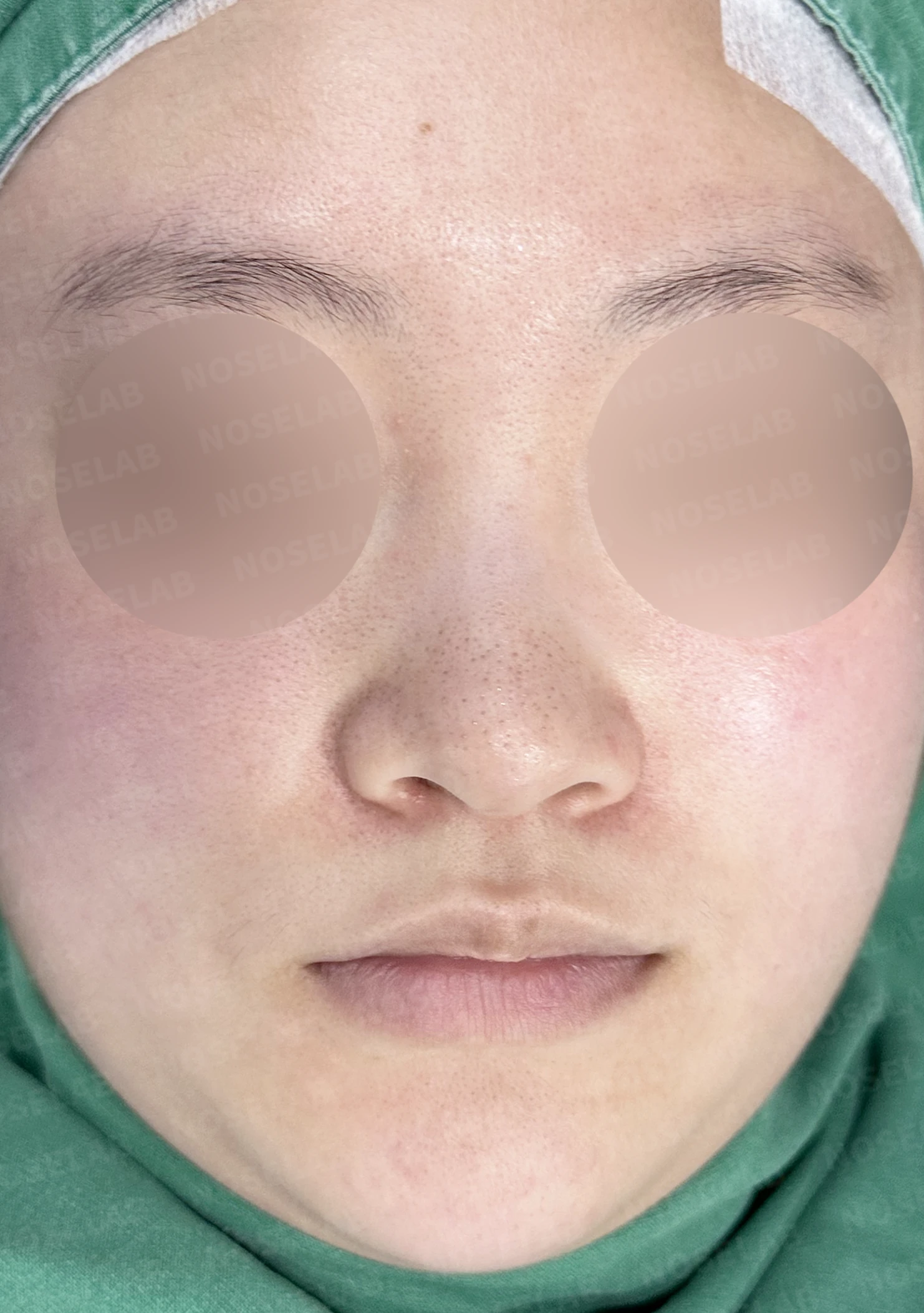
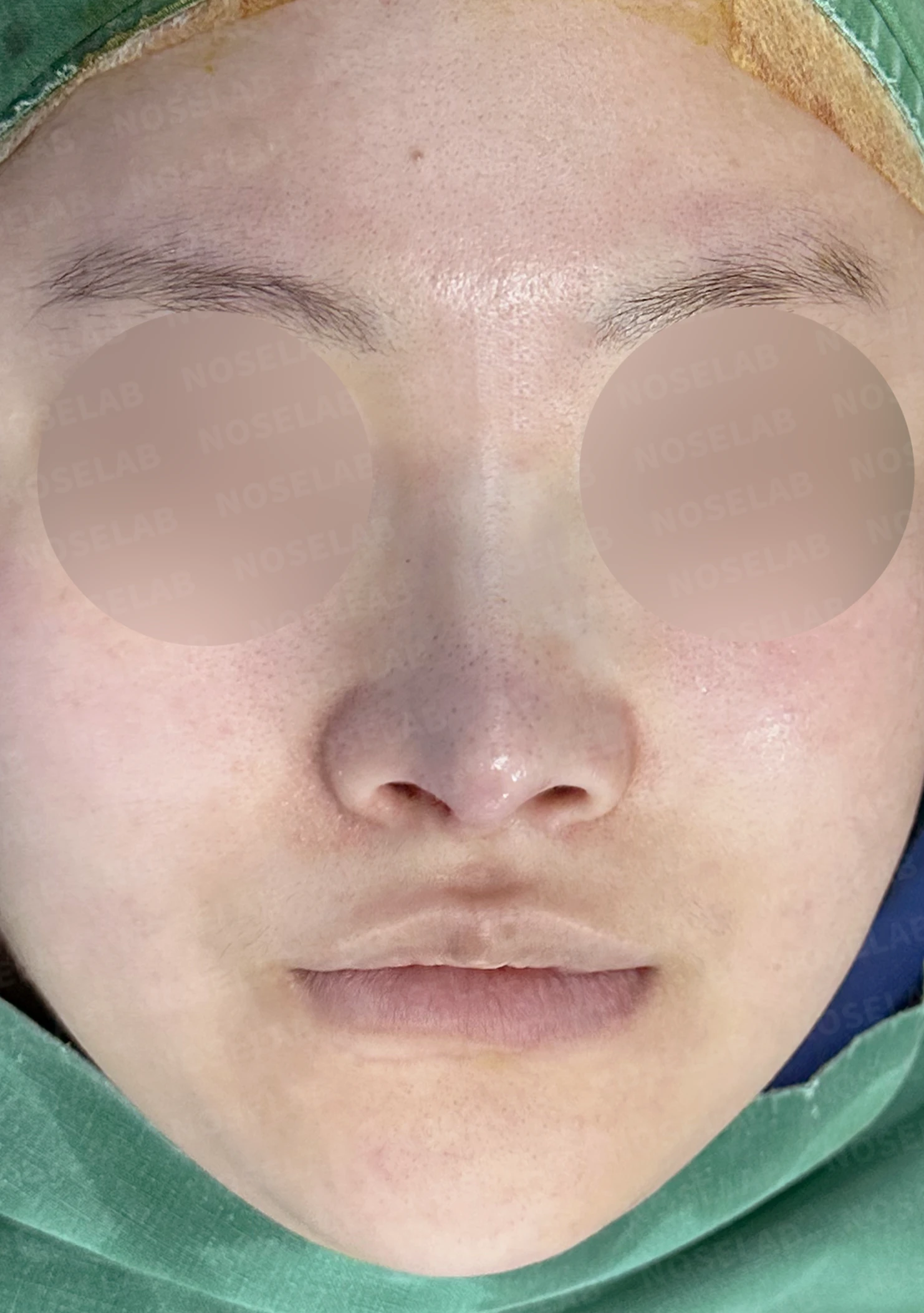
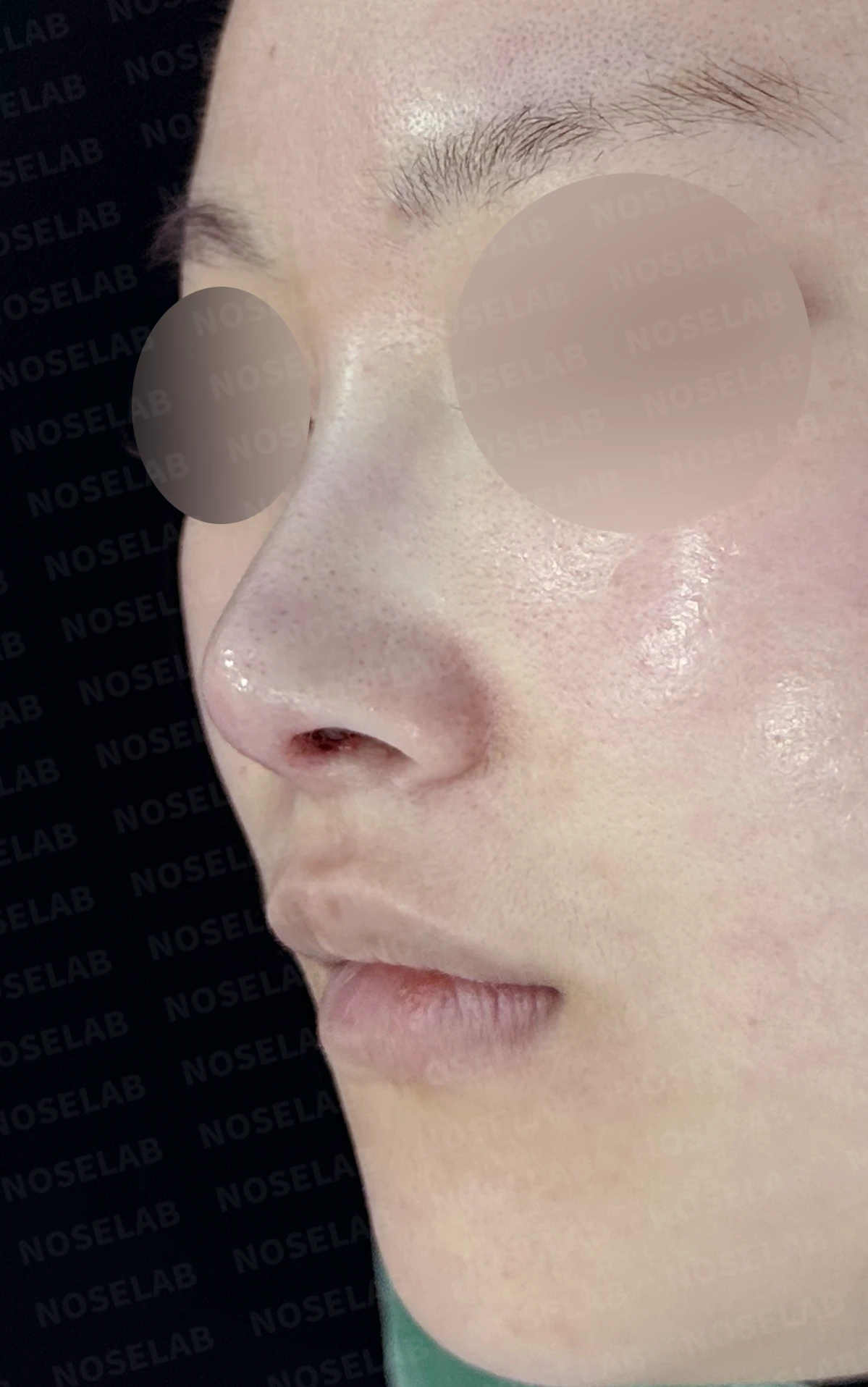
Before surgery / Day 0 immediately after surgery Photos taken immediately after surgery show swelling and may differ from the final result.
Front view changes:
A wide, spread nose was gathered with balanced proportions
The bulbous nasal tip has been raised into a defined shape
Asymmetry naturally improved
Achieving bilateral symmetry
A refined, elegant frontal line
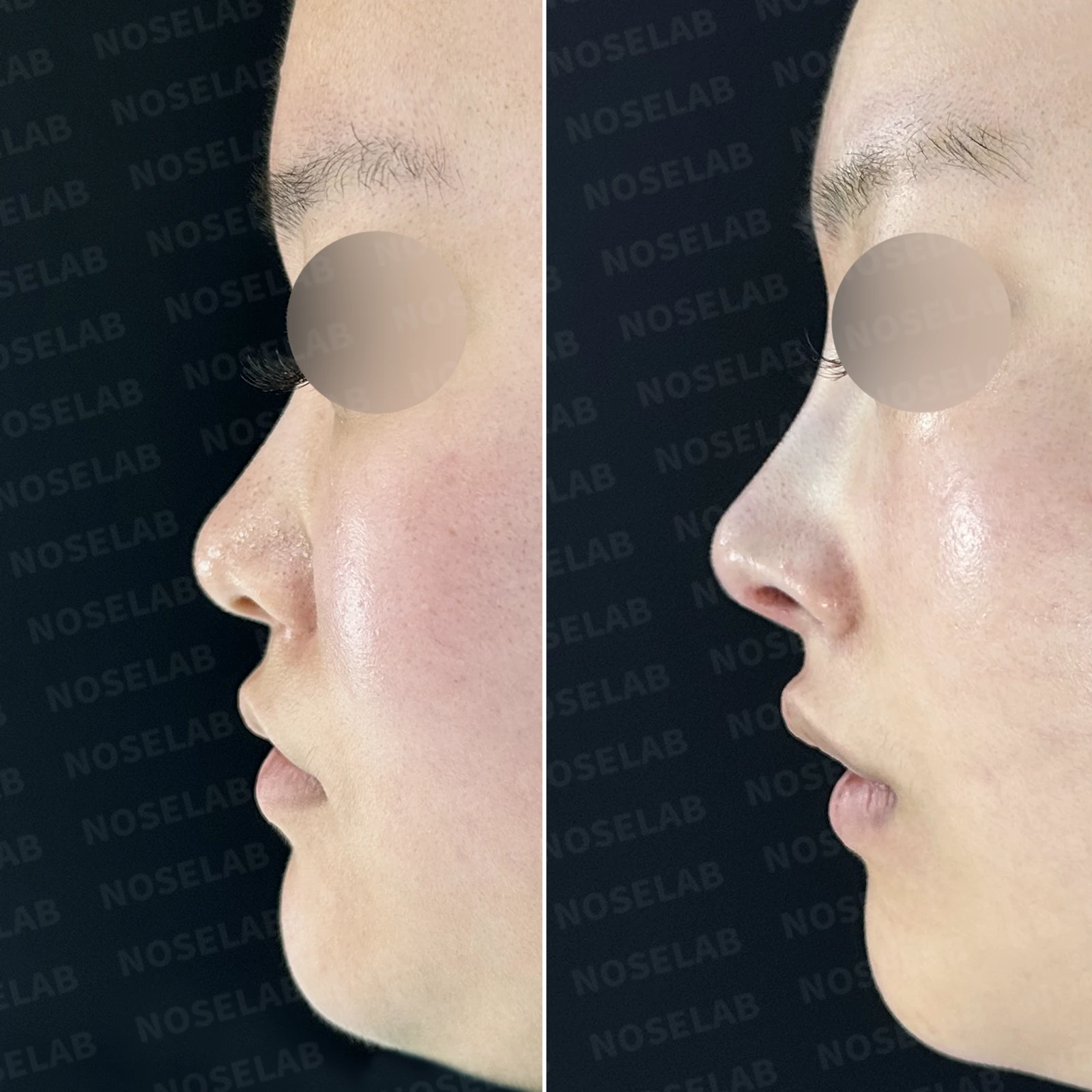
Before surgery / Day 0 immediately after surgery Photos taken immediately after surgery show swelling and may differ from the final result.
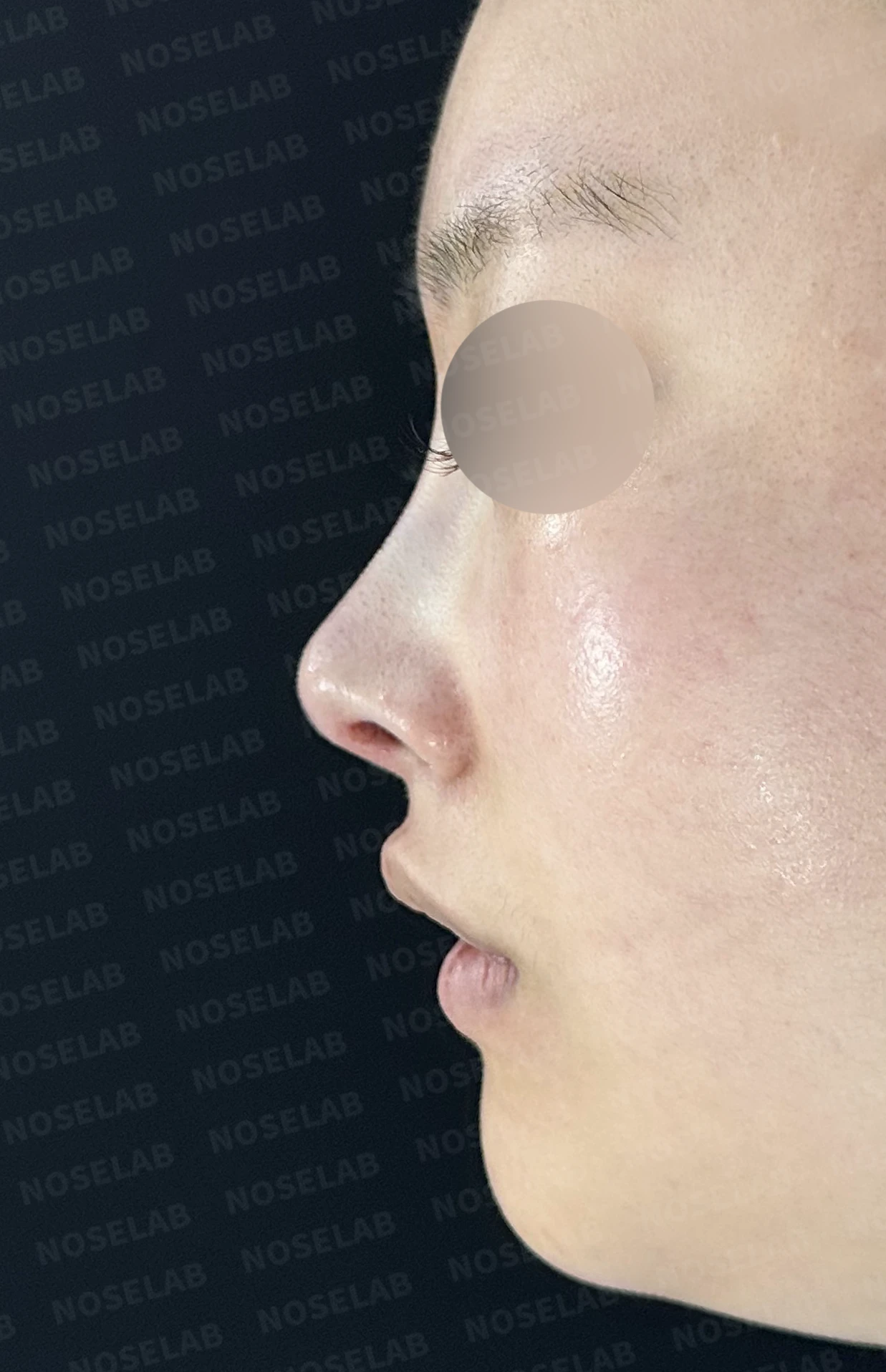
Profile view changes:
Creation of a natural straight bridge line
The nasal tip is elevated and defined
The nasolabial angle is naturally improved
An elegant profile silhouette
Harmonious proportions with the face
Before surgery / Day 0 immediately after surgery Photos taken immediately after surgery show swelling and may differ from the final result.
Nostril view changes:
Improvement of bulbous nasal tip
The wide tip has been brought together
Achieving bilateral symmetry
Natural nostril shape
Alignment of the columellar midline
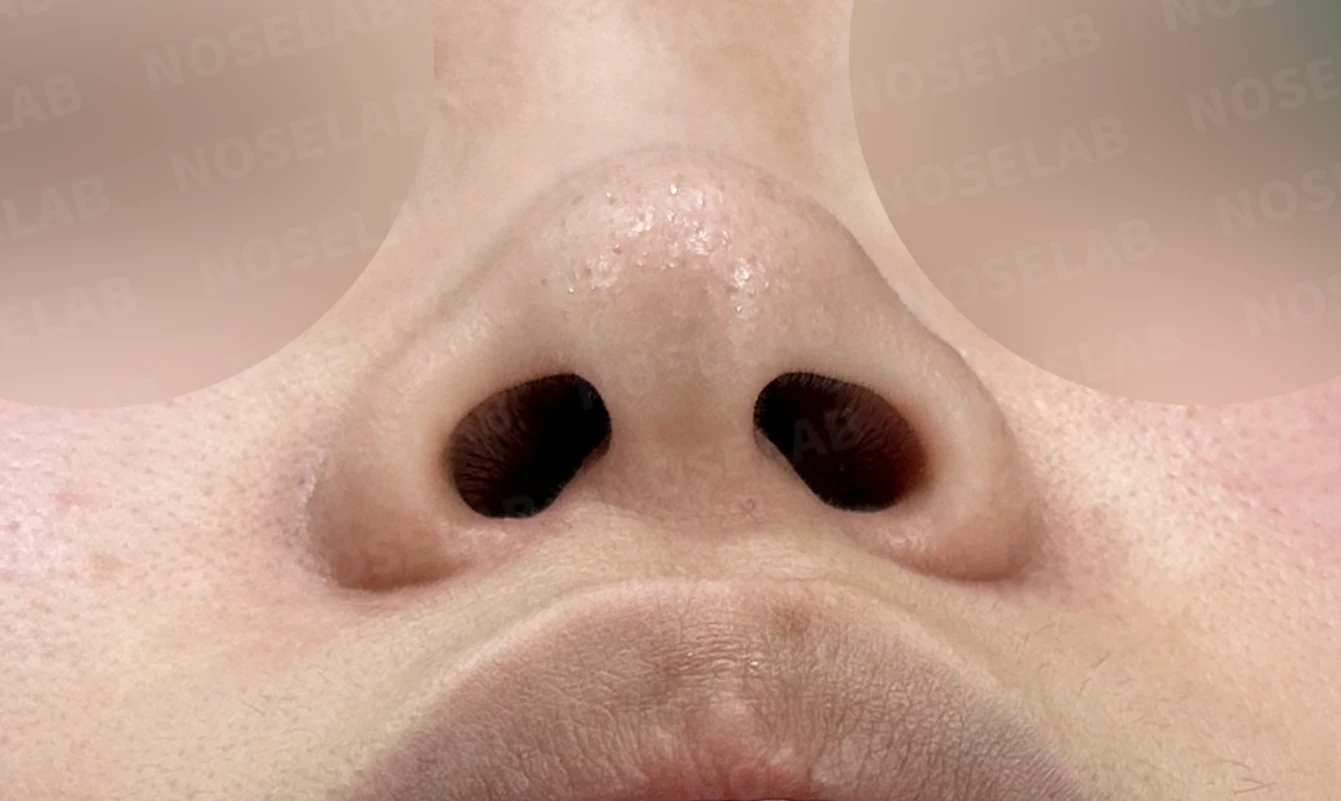
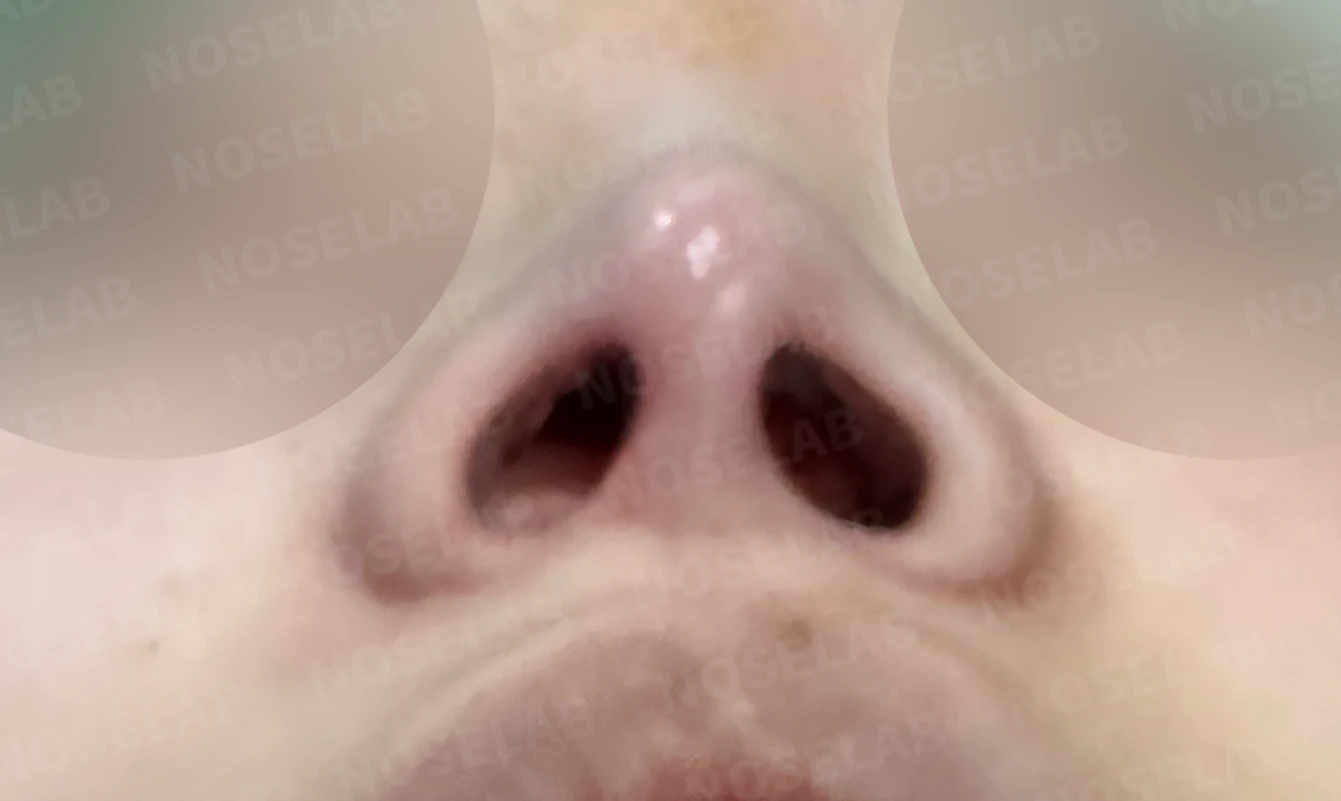
Before surgery / Day 0 immediately after surgery Photos taken immediately after surgery show swelling and may differ from the final result.
💡 Specialist opinion
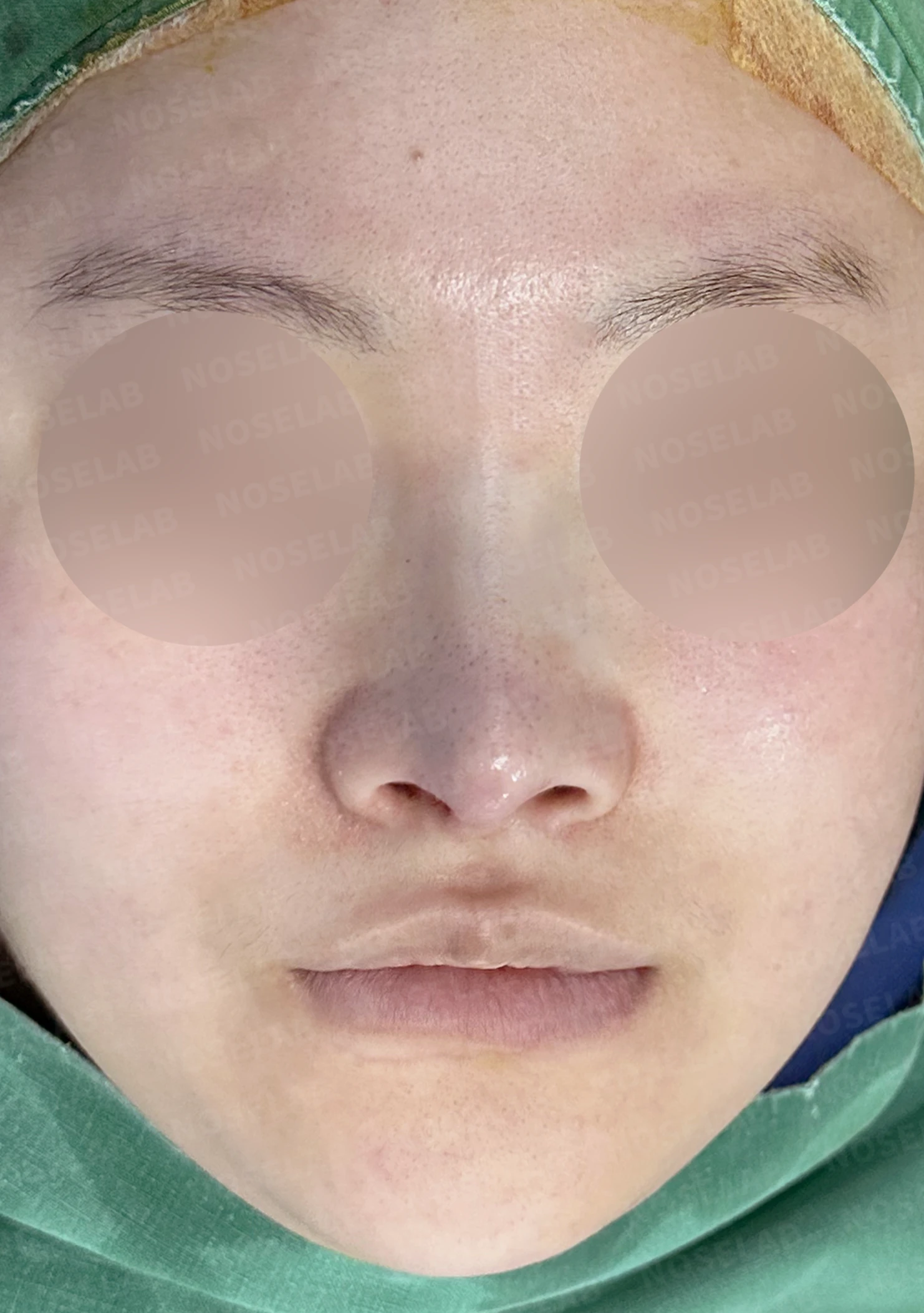
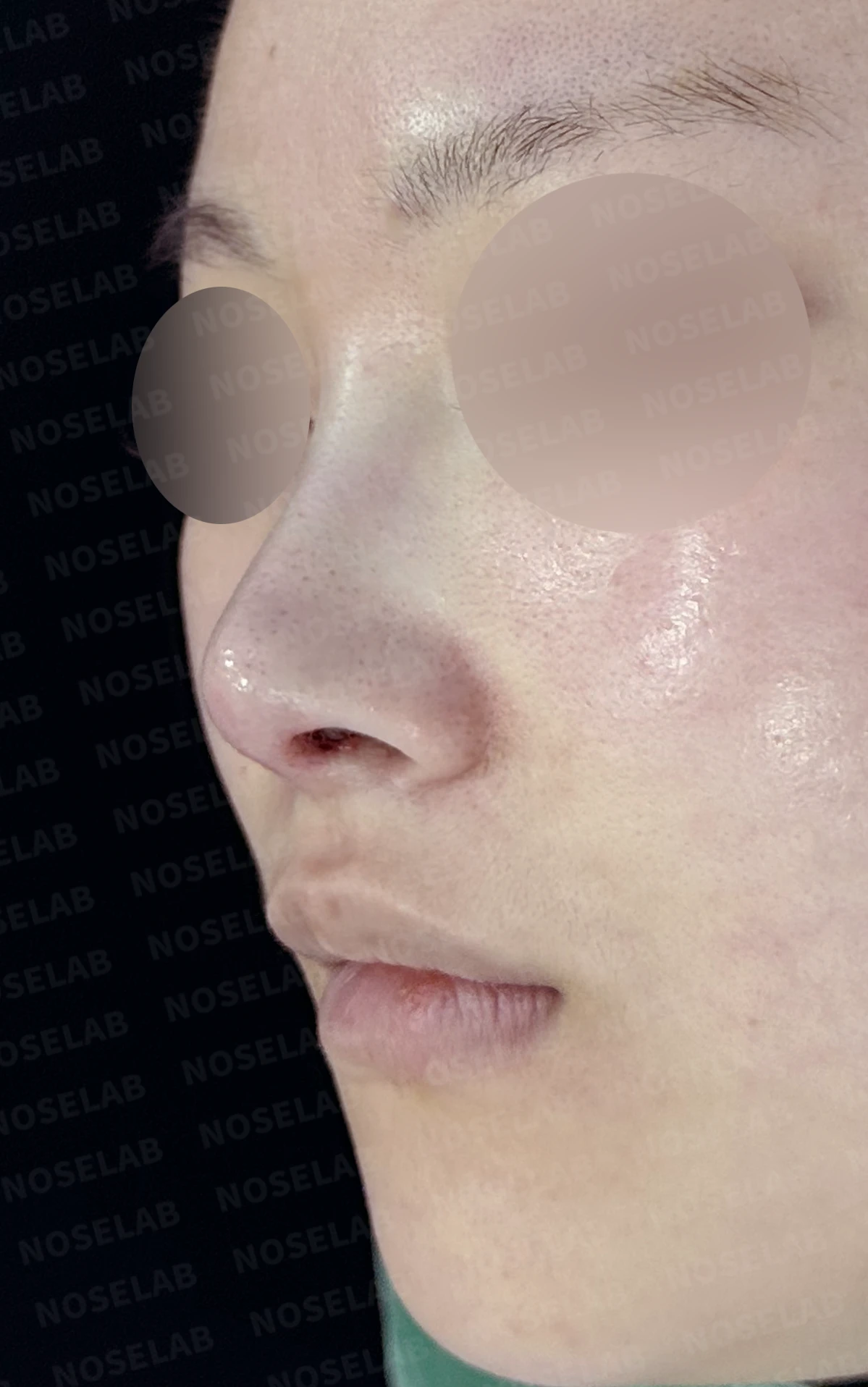
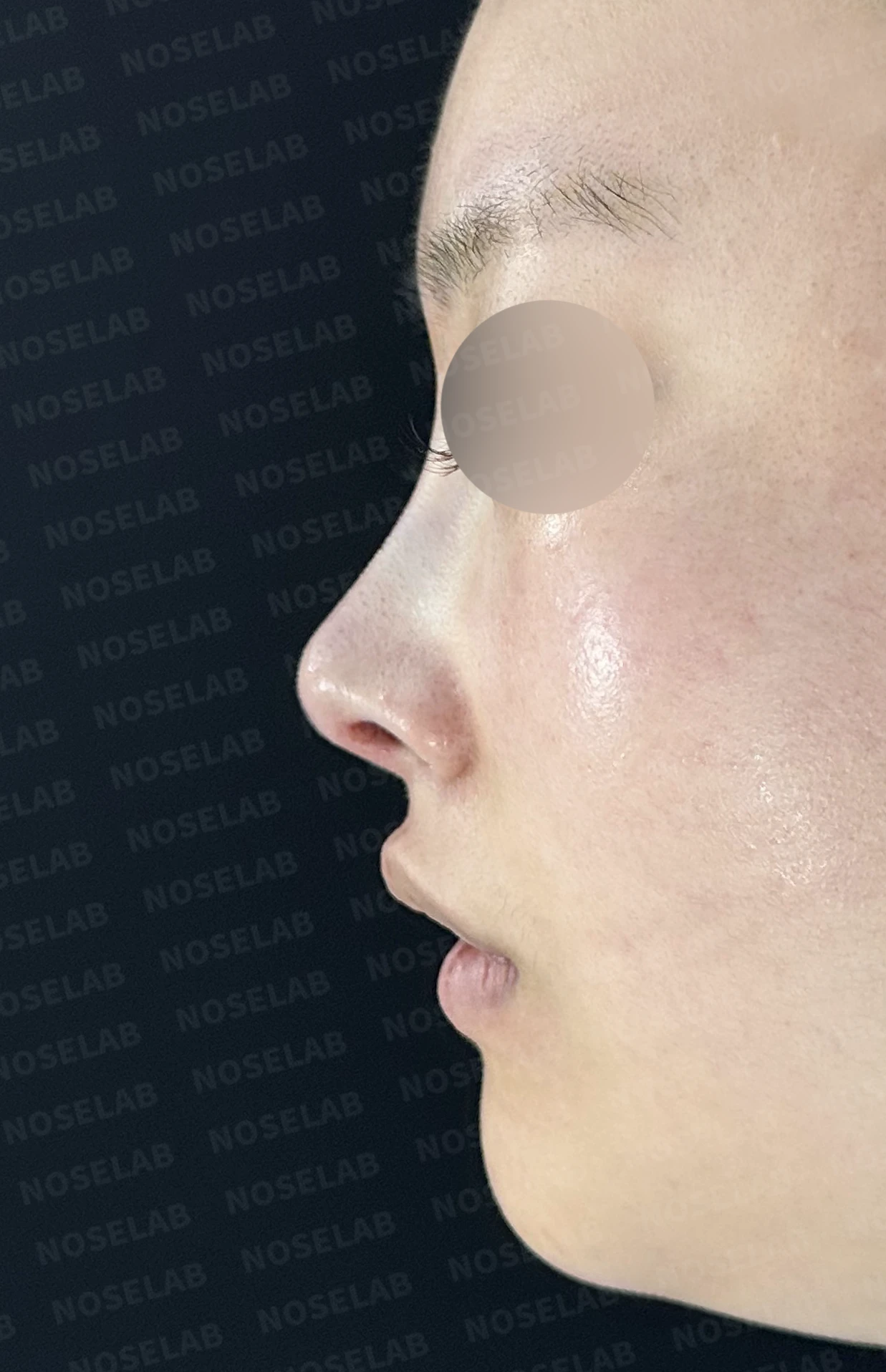
Front, oblique, and profile views on day 0 immediately after surgery. Photos taken immediately after surgery show swelling and may differ from the final result.
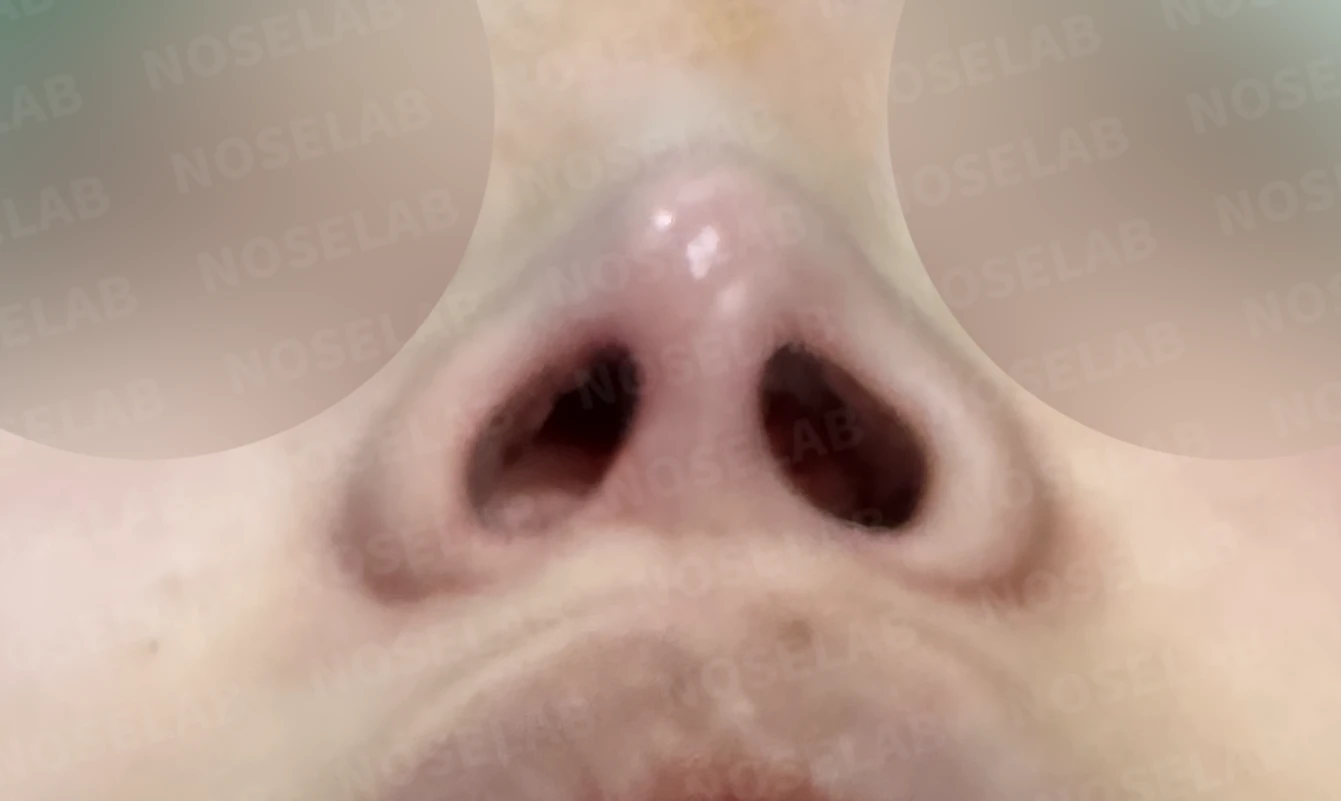
Nostril view on day 0 immediately after surgery. Photos taken immediately after surgery show swelling and may differ from the final result.
Cartilage selection is a critical decision in rhinoplasty. In this case, because the septal cartilage was of sufficient size, we chose a combined approach using septal cartilage as the primary framework material and ear cartilage as a supplementary graft.
Septal cartilage is the most suitable material for creating a stable support structure for the nasal tip. By utilizing an adequately sized piece of septal cartilage, we established a strong tip framework, and by adding ear cartilage over it, we achieved a natural contour and softer feel.
The wide, bulbous tip that concerned the patient was resolved through proper cartilage repositioning and structural restructuring. Rather than simply stacking cartilage grafts, we meticulously engineered the support framework of the nasal tip to create a naturally defined result.
Particular attention was paid to improving asymmetry. By balancing the bilateral lower lateral cartilages and aligning the columellar midline, we secured harmonious symmetry on front view. The straight bridge line seen in profile was another key focus. Creating a smooth transition extending from the glabella to the nasal tip resulted in a natural yet refined profile silhouette. This approach considers balance with the entire face rather than merely raising the nose. Furthermore, through nasolabial angle correction combined with septoplasty and turbinoplasty, breathing function was also improved. This surgery achieved functional enhancement alongside aesthetic improvement.
The greatest advantage of using autologous cartilage is long-term stability. Because both septal cartilage and ear cartilage are the patient's own tissue, the risk of foreign body reactions or complications is very low, and a natural state can be maintained over time.
I will continue to provide customized surgeries that reflect each patient's individuality and requests through this meticulous approach. I hope this helps those with similar concerns.
This was Dr. Peter C. Kang. Thank you.
#septalcartilage #earcartilage #naturalnose #definedtip #widenosecorrection #bulbousnose #asymmetrycorrection #straightbridgeline #autologouscartilage #nasolabialanglecorrection #tiprhinoplasty #naturalnasaltip #closedrhinoplasty

Limitations and risks
When the septum is corrected at the same time, nasal obstruction may persist or recur, and in rare cases, septal perforation or changes in smell may occur.
Common potential risks include infection, bleeding, asymmetry, scarring, skin necrosis, and insufficient improvement; results vary depending on individual skin condition and previous surgical history.