Hello, I am Dr. Peter C. Kang.
Today, I would like to introduce the case of a patient who visited our clinic concerned about nostril asymmetry, a nose that appeared short, and severe nasal obstruction.
🔍 Surgical history
Previous surgical history:
- 10 years ago: Implant-free rhinoplasty using septal cartilage and ear cartilage, combined with alar reduction
- 4 years ago: Alar rim lowering using ear cartilage
Even after two surgeries, the patient continued to feel uncomfortable with asymmetry and the short appearance of the nose, particularly the asymmetrical shape of the nostrils when looking up.
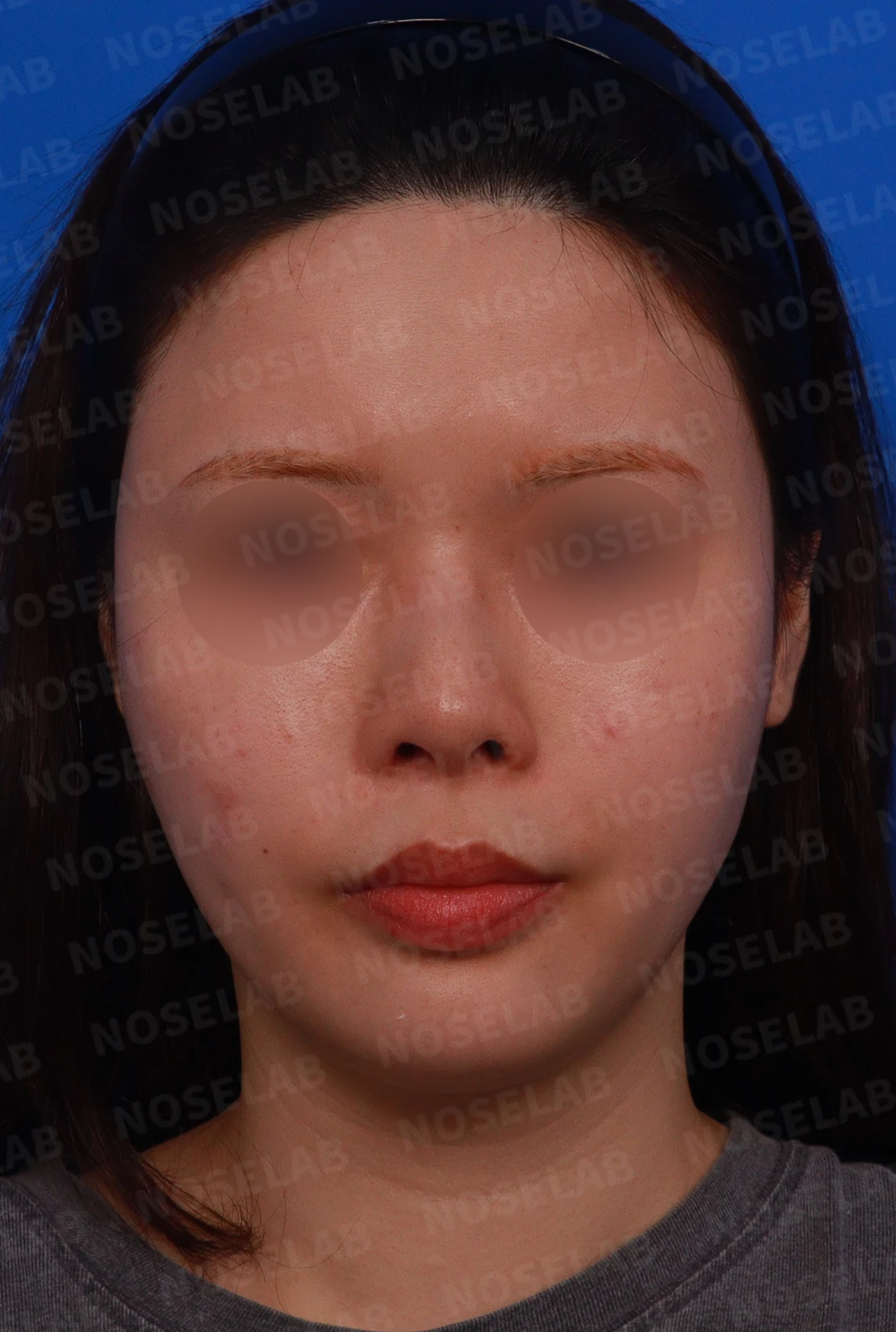
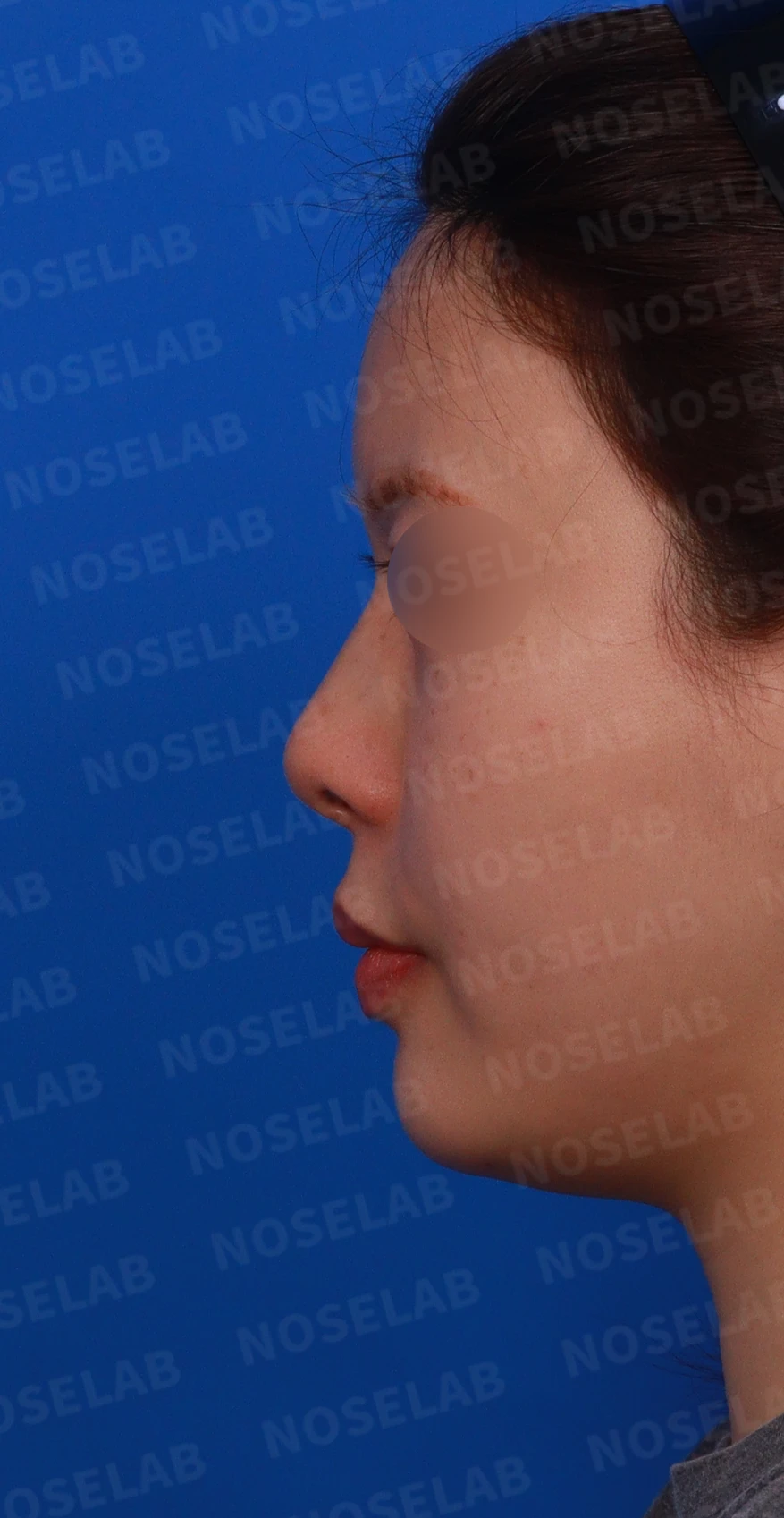
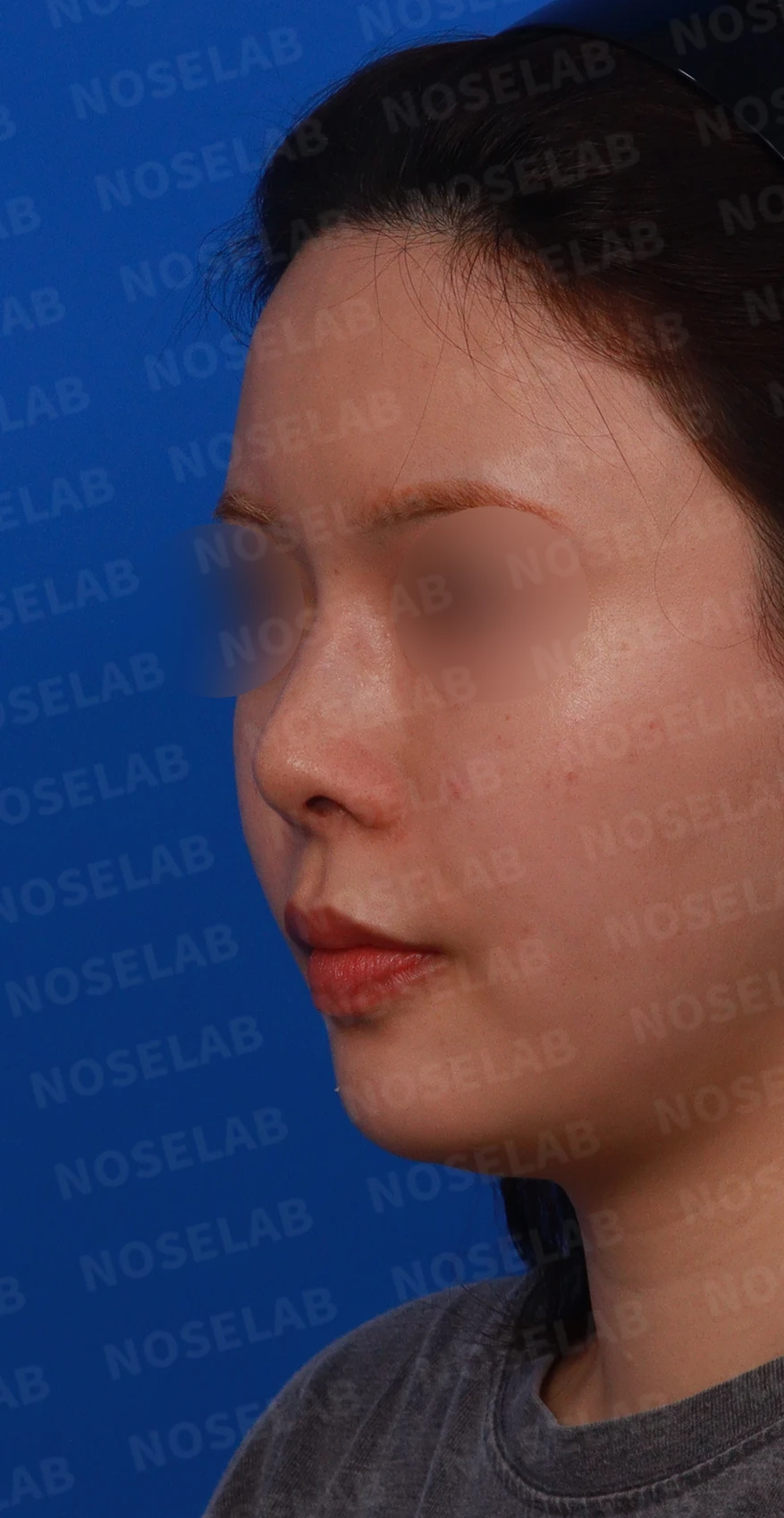
Design consultation: front, left profile, and oblique views.
Patient's requests
Areas needing improvement
- Improving the appearance of a short nasal length
- Correcting nostril asymmetry (especially when tilting the head up)
- Correcting nasal tip deviation to the right
- Refining the bulbous tip
- Desiring a natural height and shape
- Relieving severe nasal obstruction
The patient did not want a sharp or overly high nose, but rather a natural and well-balanced nose.
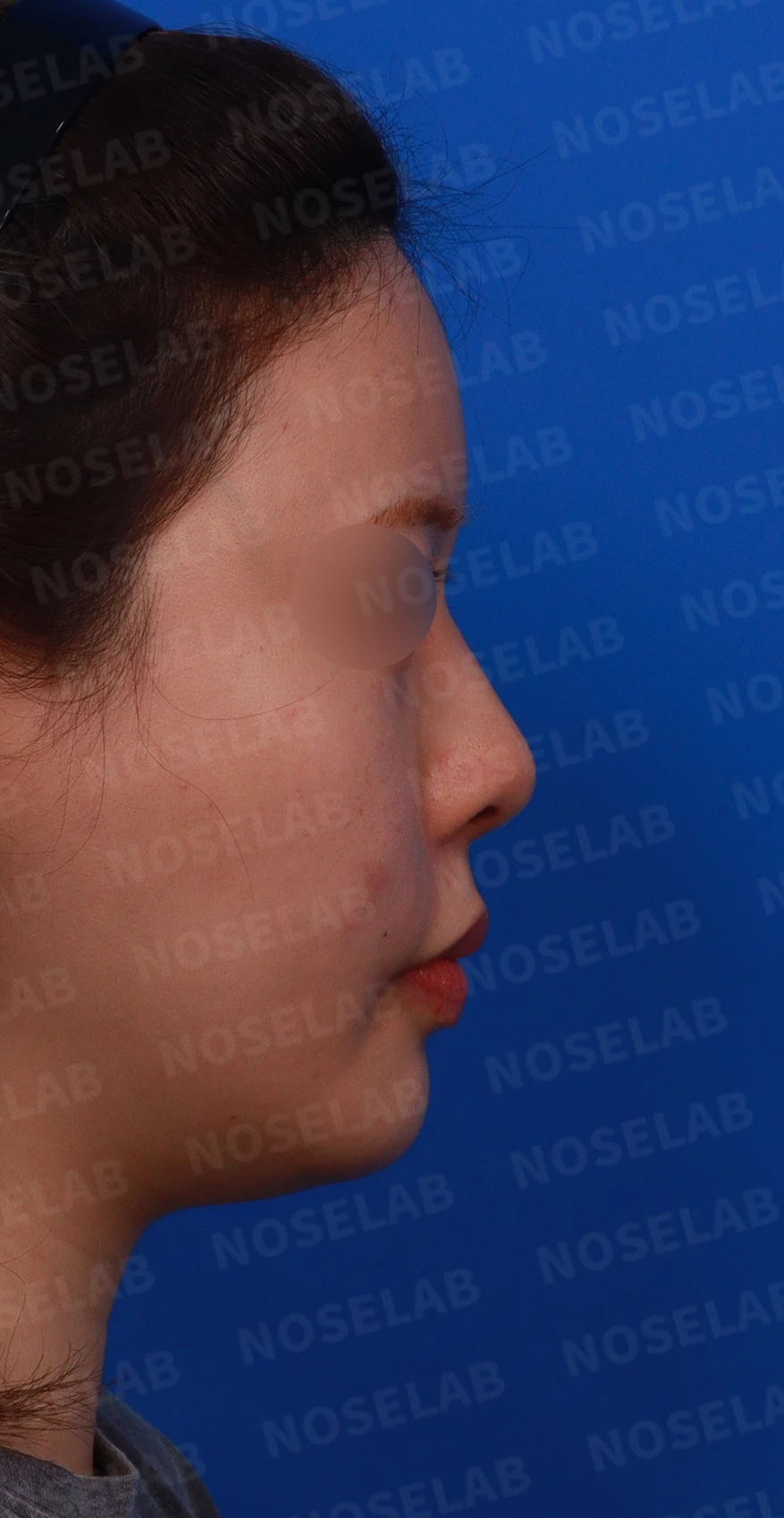
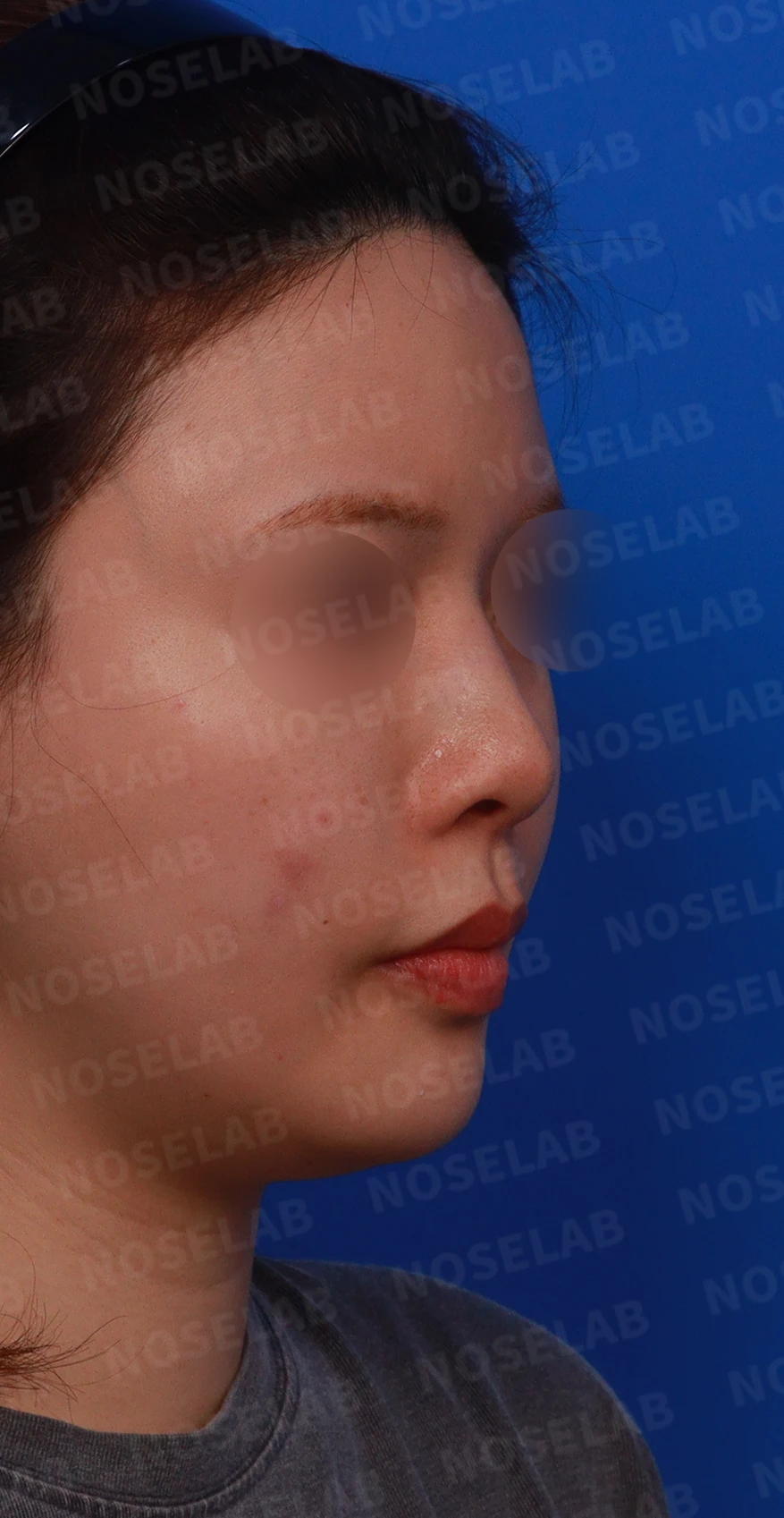
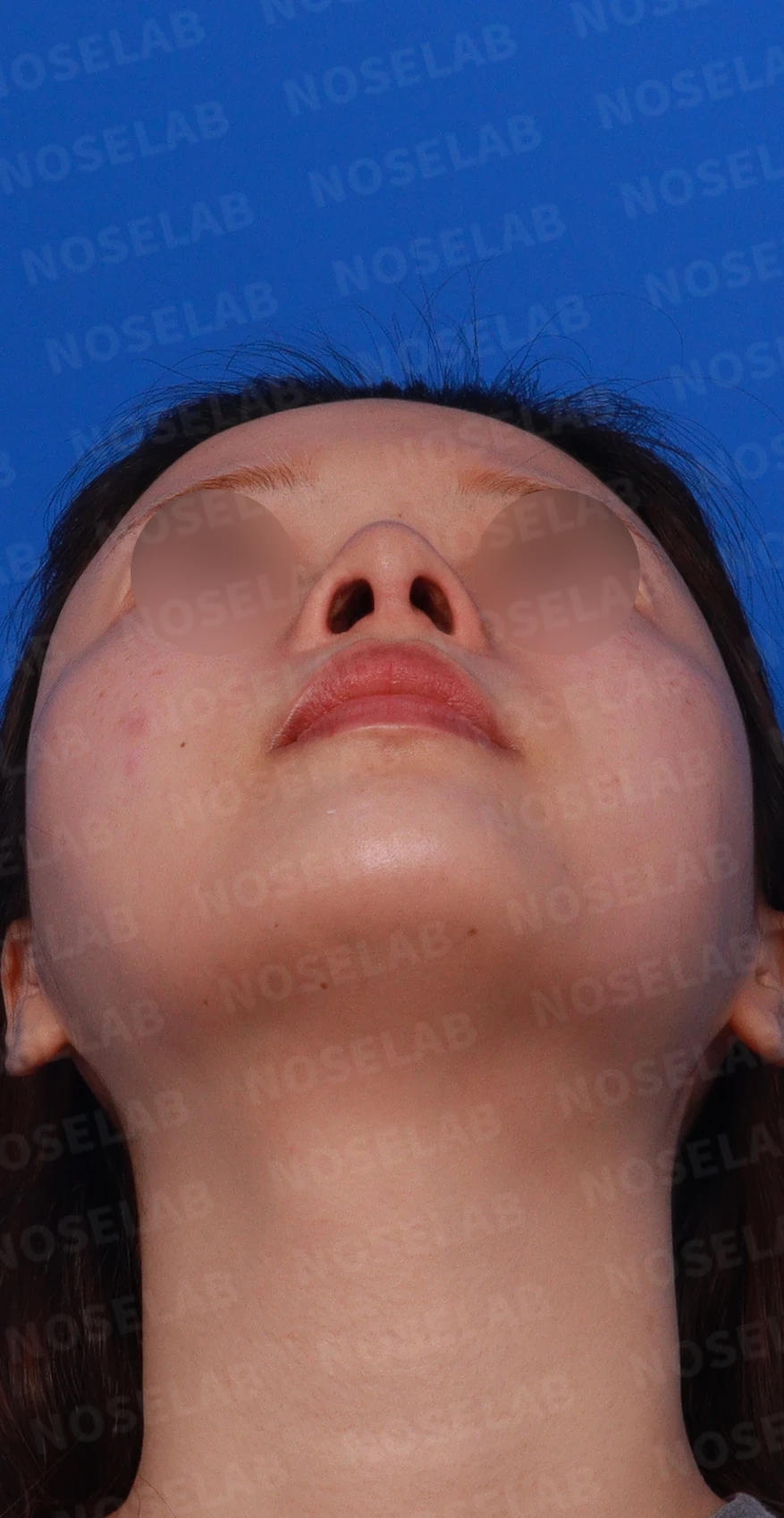
Design consultation: right profile, oblique, and nostril views.
🔧 Surgical plan and procedure
1. Septal reconstruction using autologous rib cartilage
- Resolving structural issues with the existing septum
- Shifting to the right to achieve symmetry
- Reinforcing nasal tip support
2. Implant-free nasal bridge shaping
- Adjusting nasal bridge height using only autologous rib cartilage
- Creating a natural contour
- Soft feel without a foreign body sensation
3. Nasal tip correction
- Repositioning the nasal tip deviated to the left back to the center
- Naturally refining the bulbous tip
- Adjusting to an appropriate, non-excessive height
4. Correction of nasolabial angle
- Improving the appearance of a short nasal length
- Improvement of profile silhouette
5. Functional improvement (deviated septum + rhinitis)
- Relieving nasal obstruction by correcting the deviated septum
- Improving rhinitis through inferior turbinate reduction
- Normalizing breathing function
🌟 Surgical results
1. Frontal changes
- Nostril asymmetry naturally corrected
- Nasal tip aligned to the midline
- Balanced nostril shape
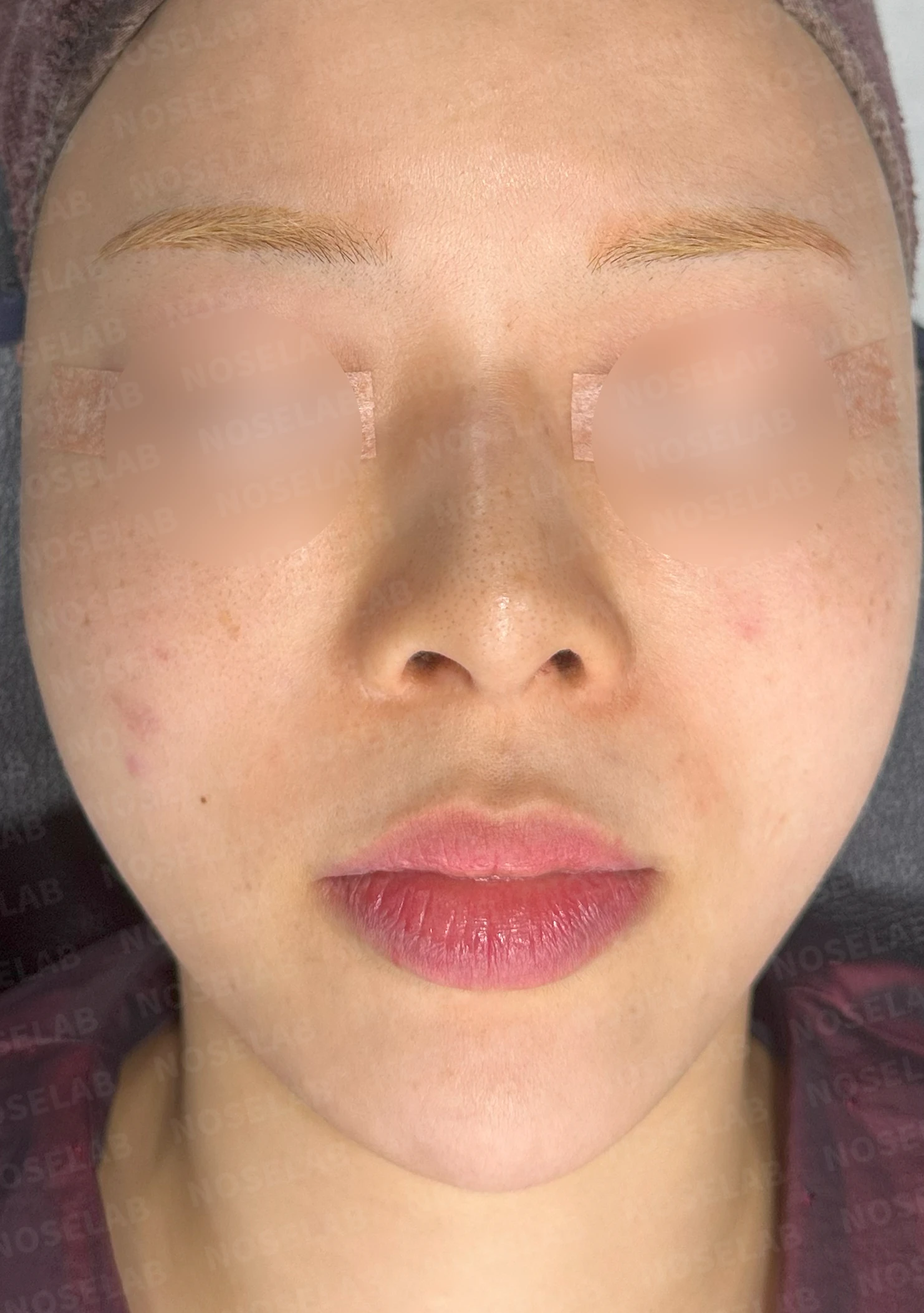
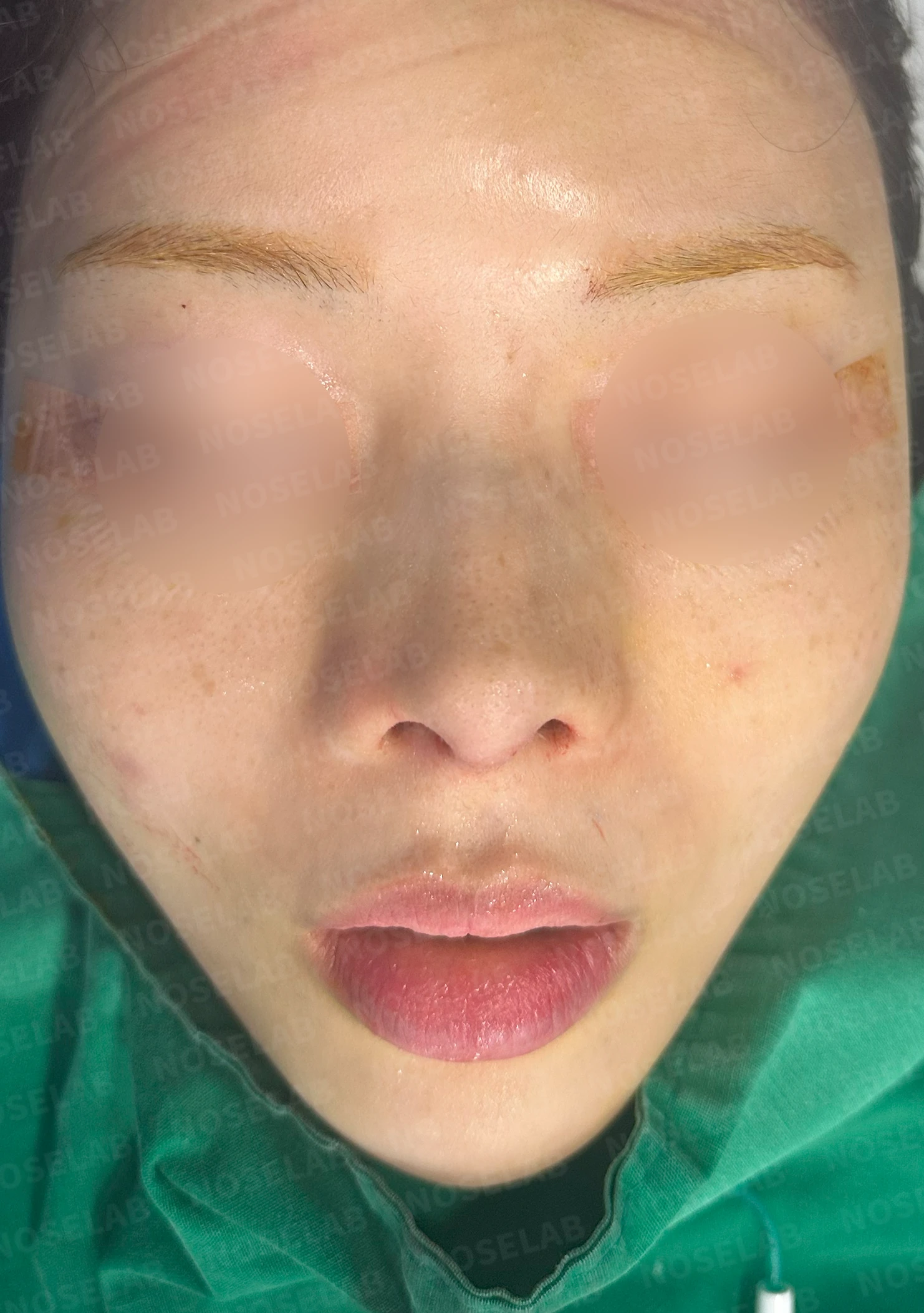
Before surgery / Day 0 immediately after surgery Photos taken immediately after surgery show swelling and may differ from the final result.
2. Profile changes
- Improved nasal length from appearing short
- Formation of a natural nasolabial angle
- Smooth nasal bridge line
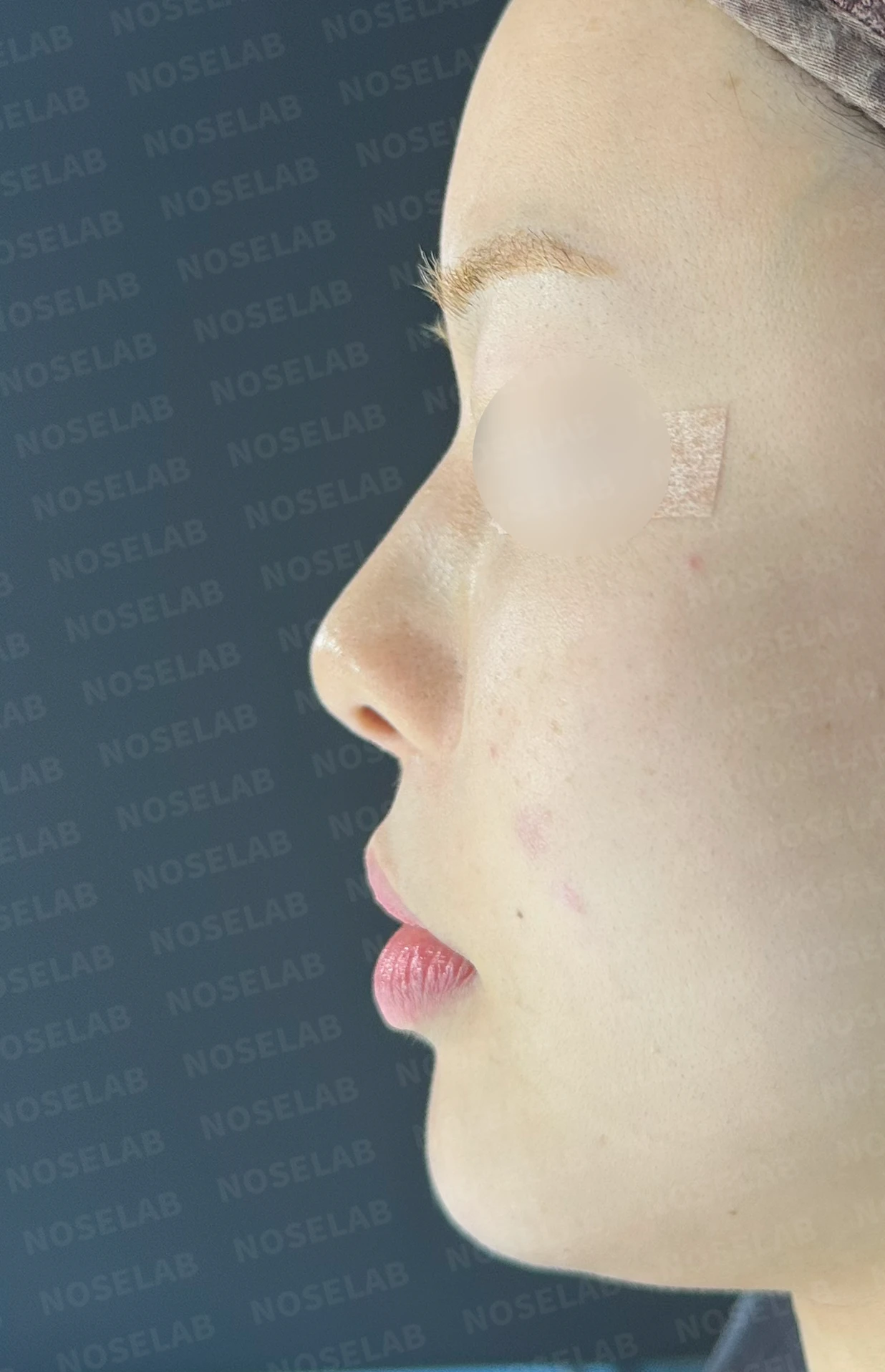
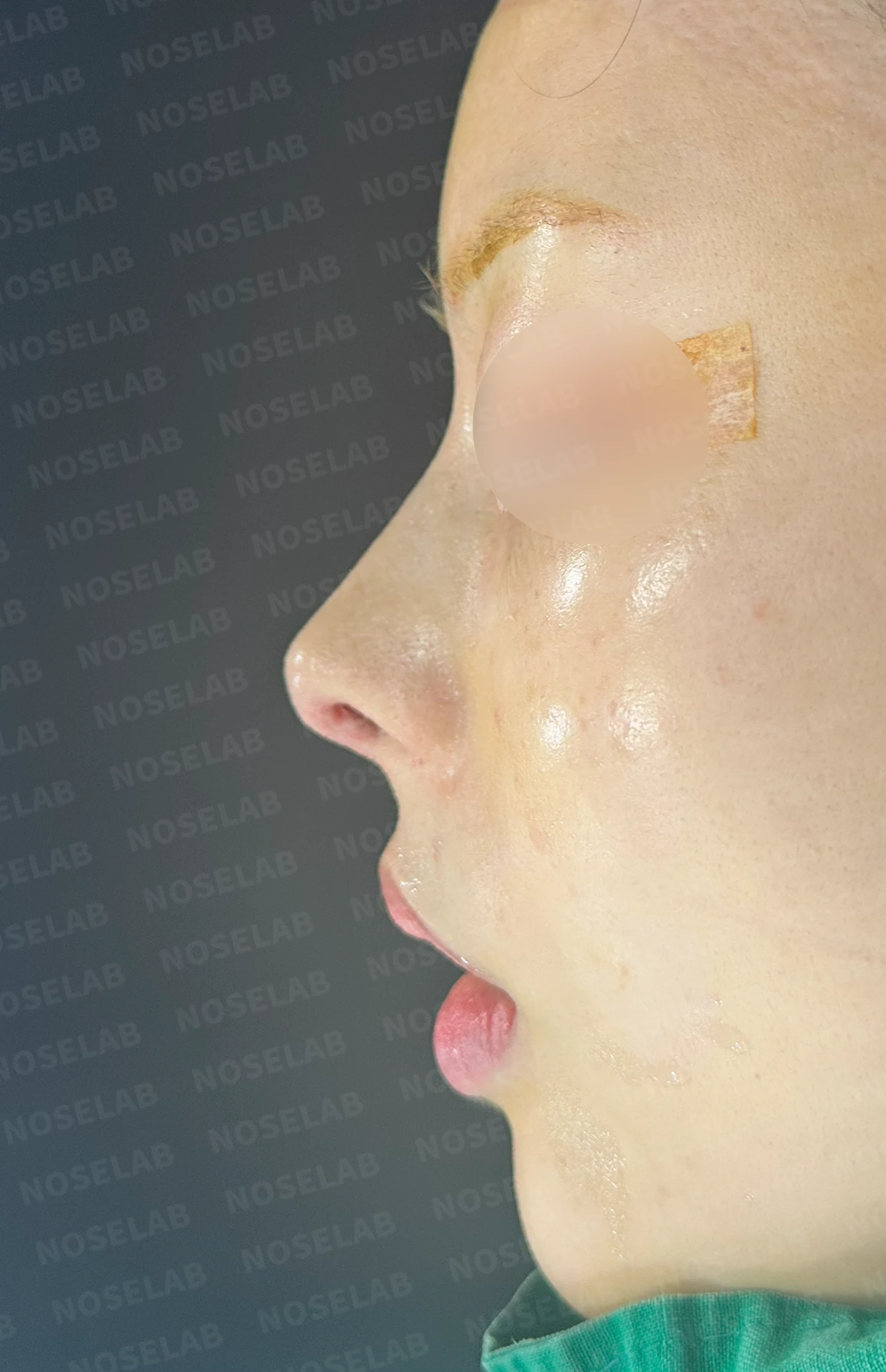
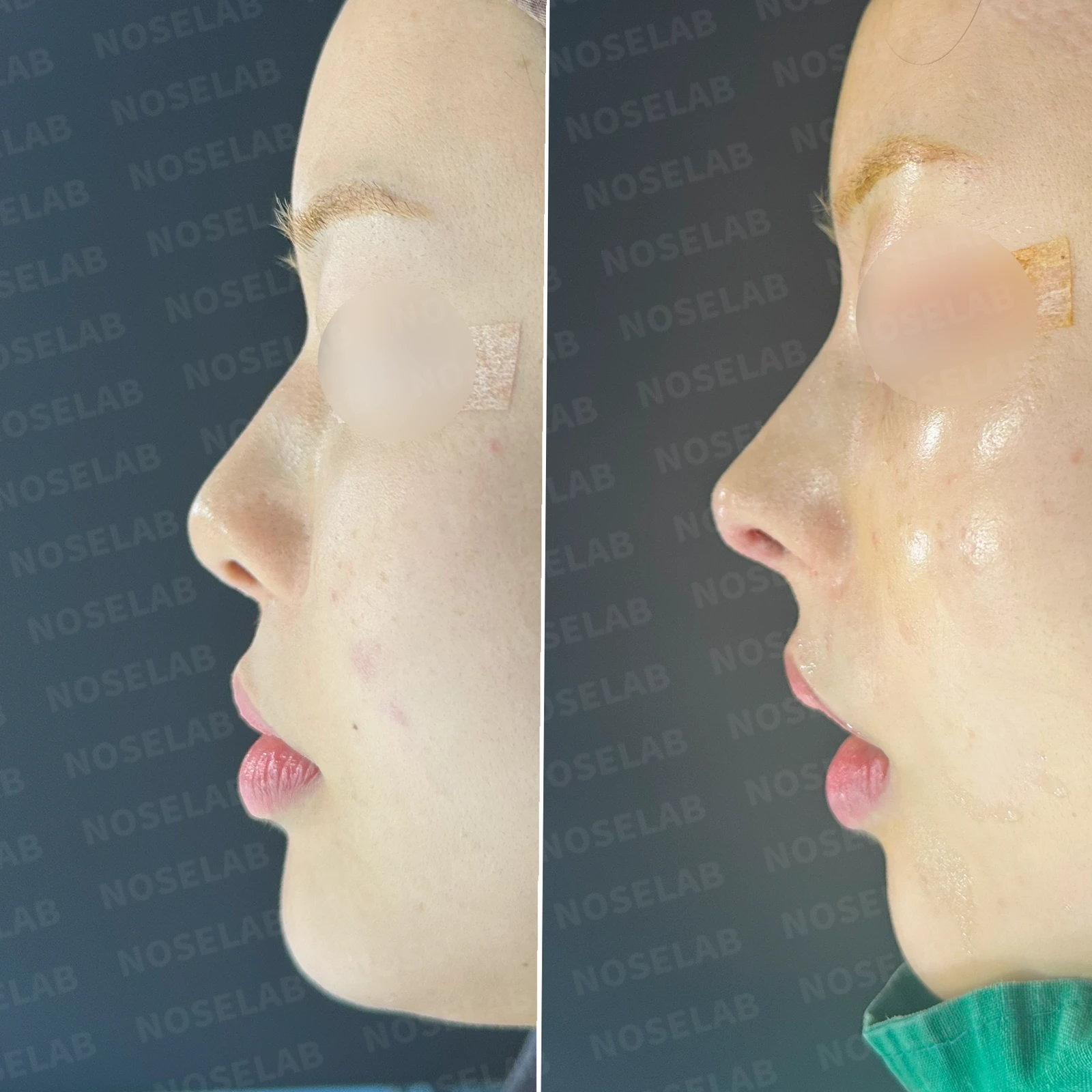
Before surgery / Day 0 immediately after surgery Photos taken immediately after surgery show swelling and may differ from the final result.
3. Functional improvement
- Relief of nasal obstruction symptoms
- Comfortable breathing
- Relief of rhinitis symptoms
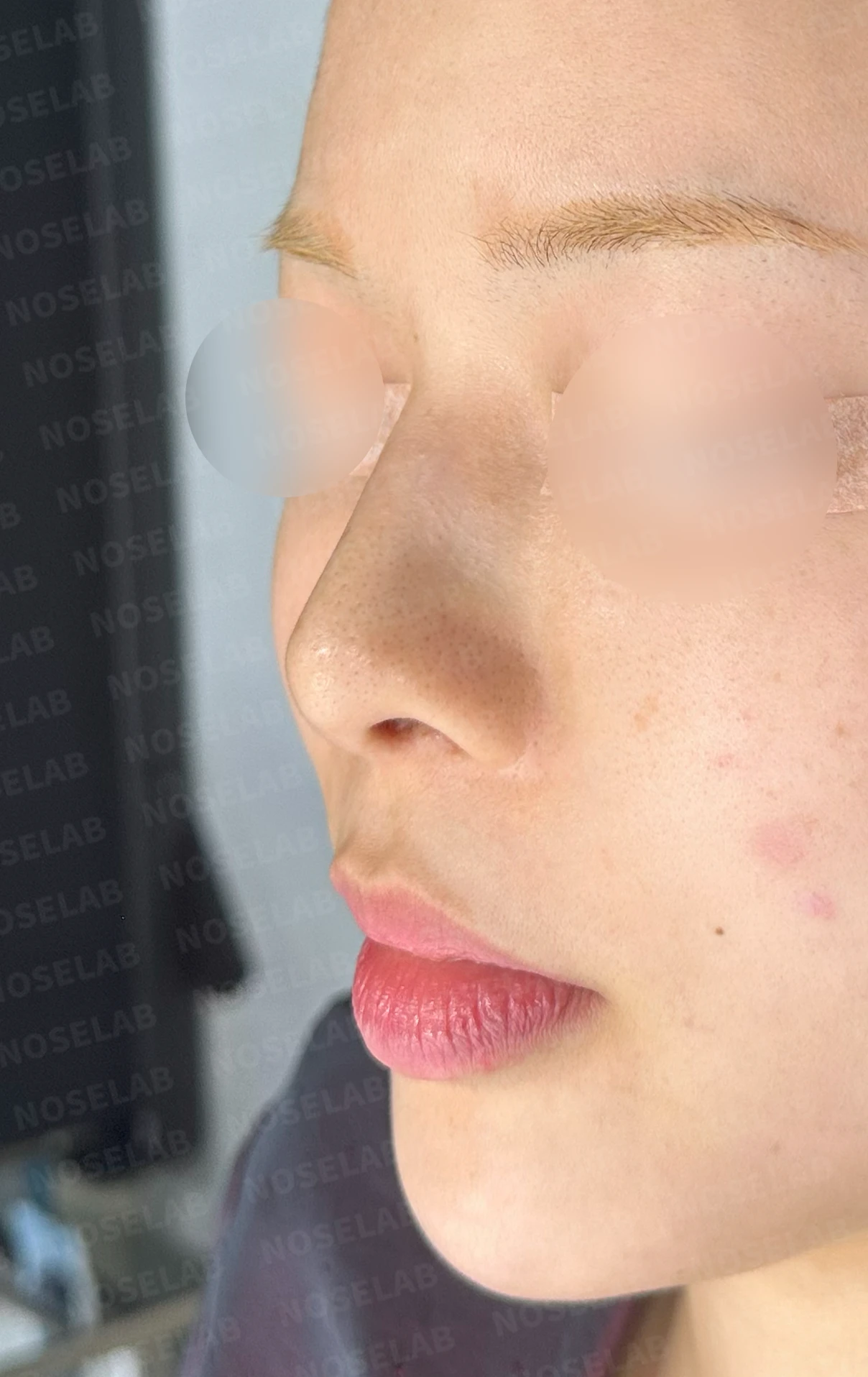
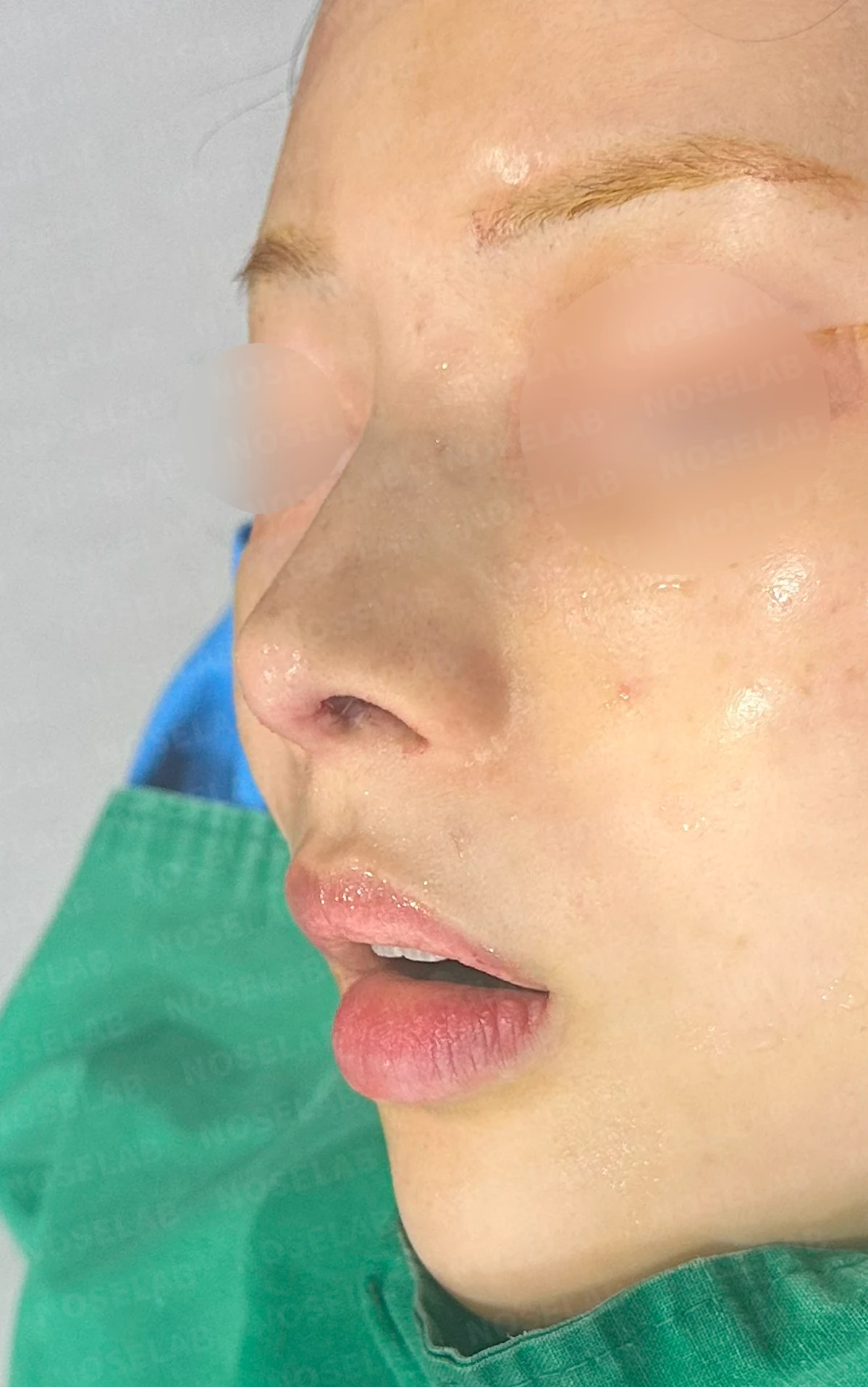
Before surgery / Day 0 immediately after surgery Photos taken immediately after surgery show swelling and may differ from the final result.
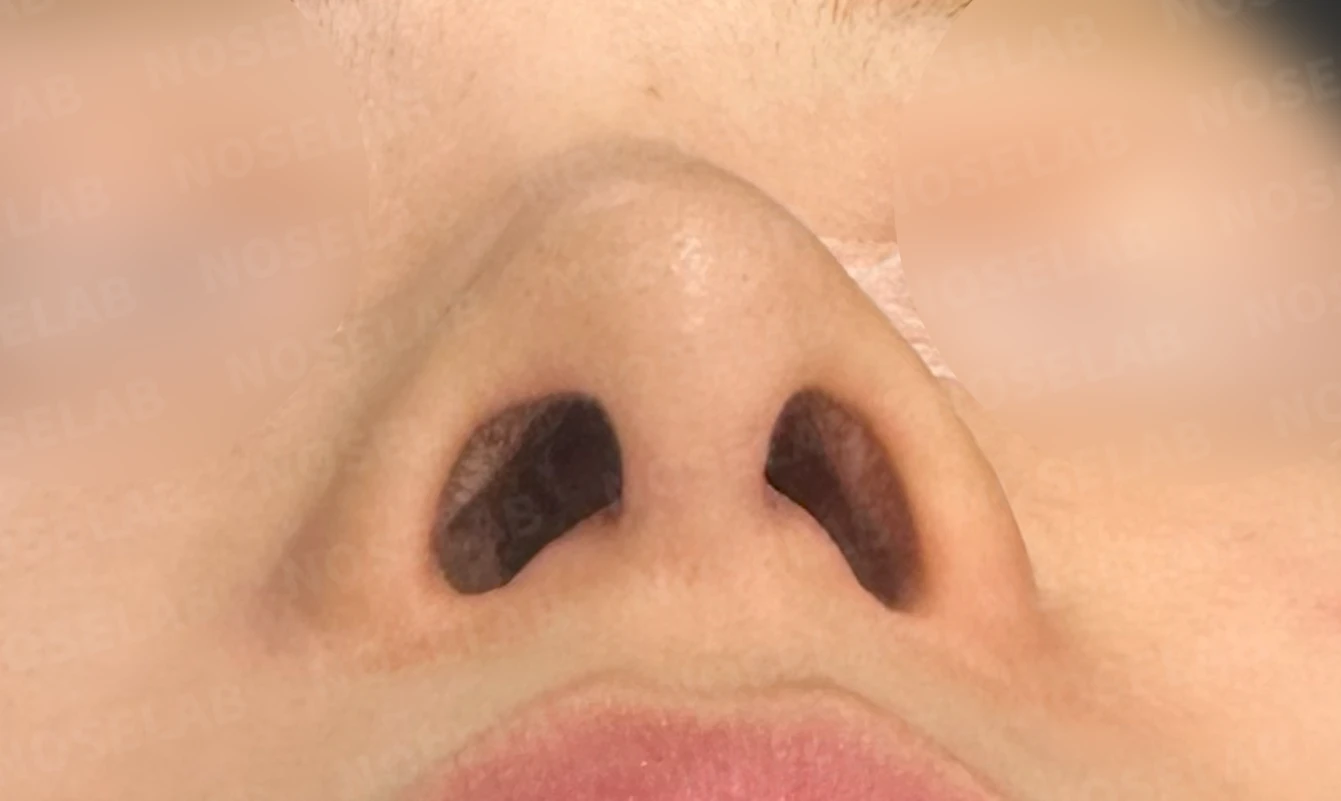
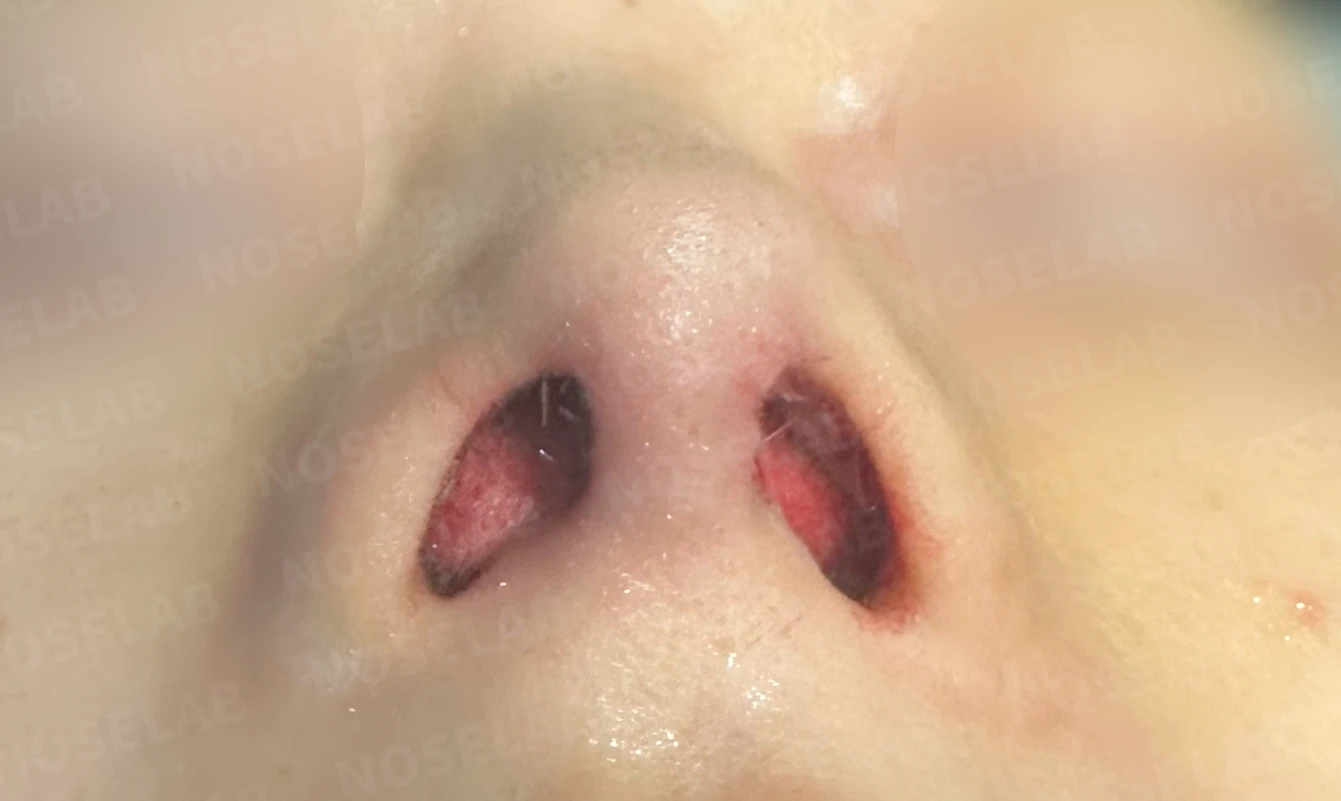
Before surgery / Day 0 immediately after surgery Photos taken immediately after surgery show swelling and may differ from the final result.
💡 Specialist opinion
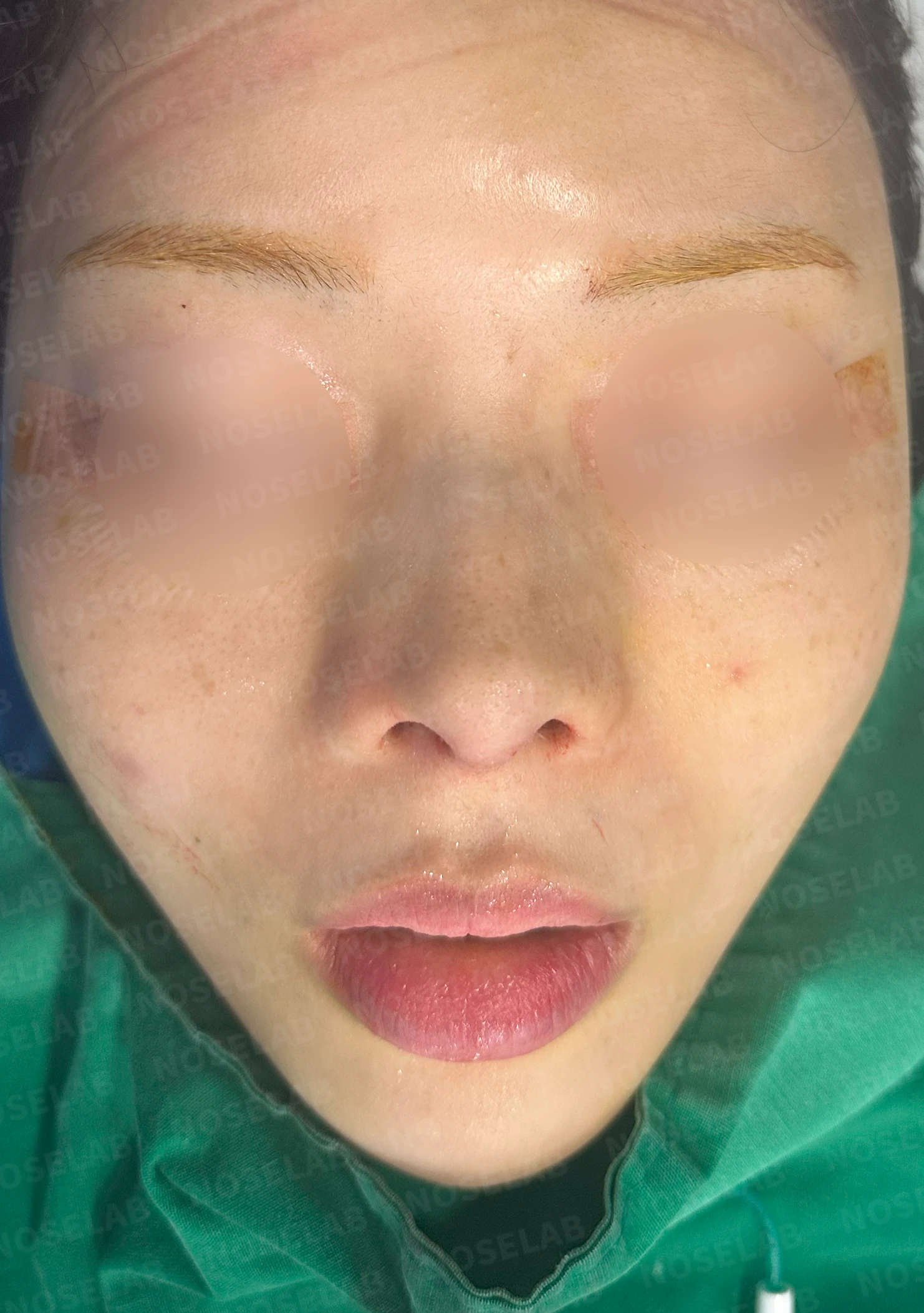
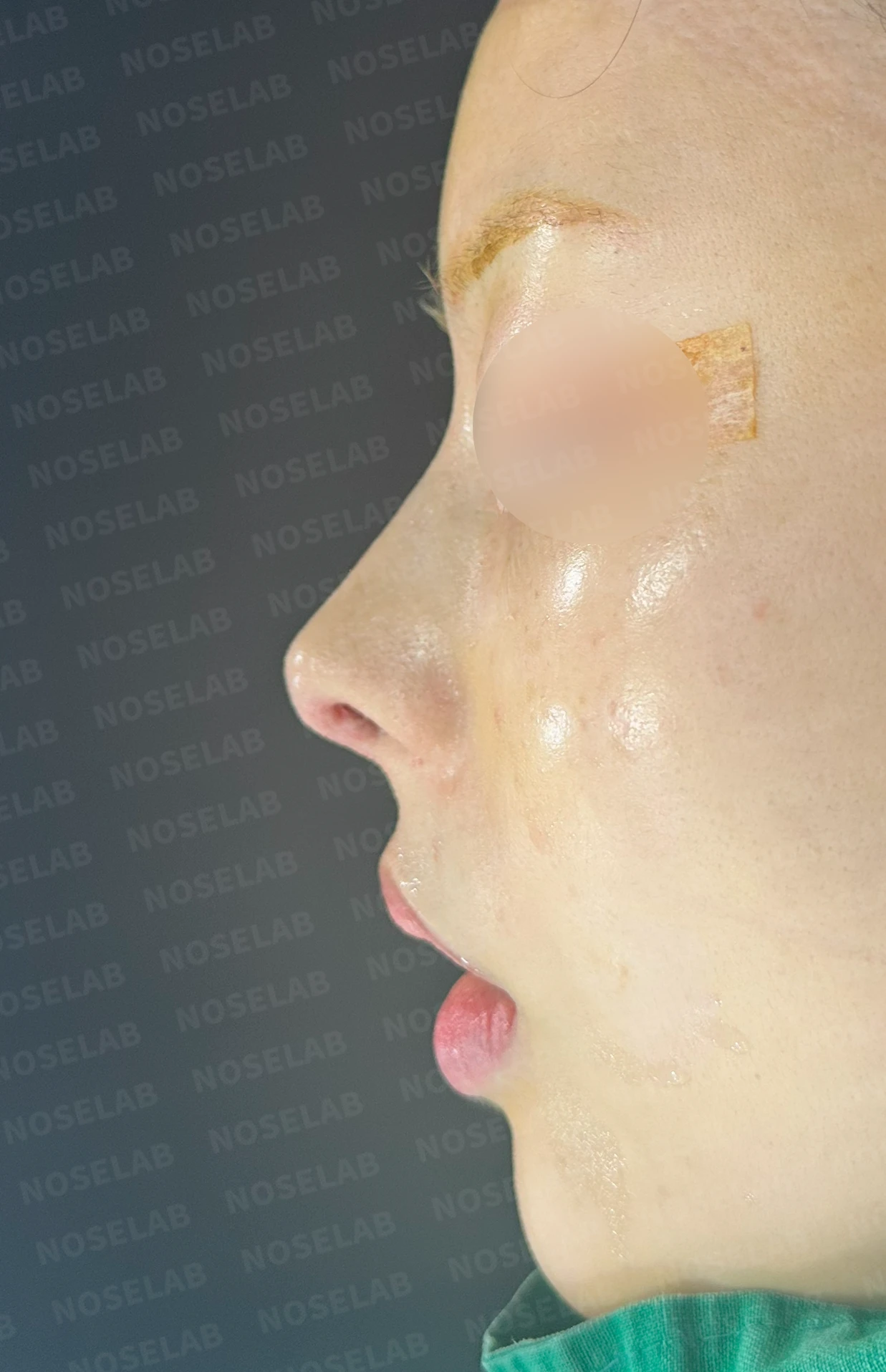
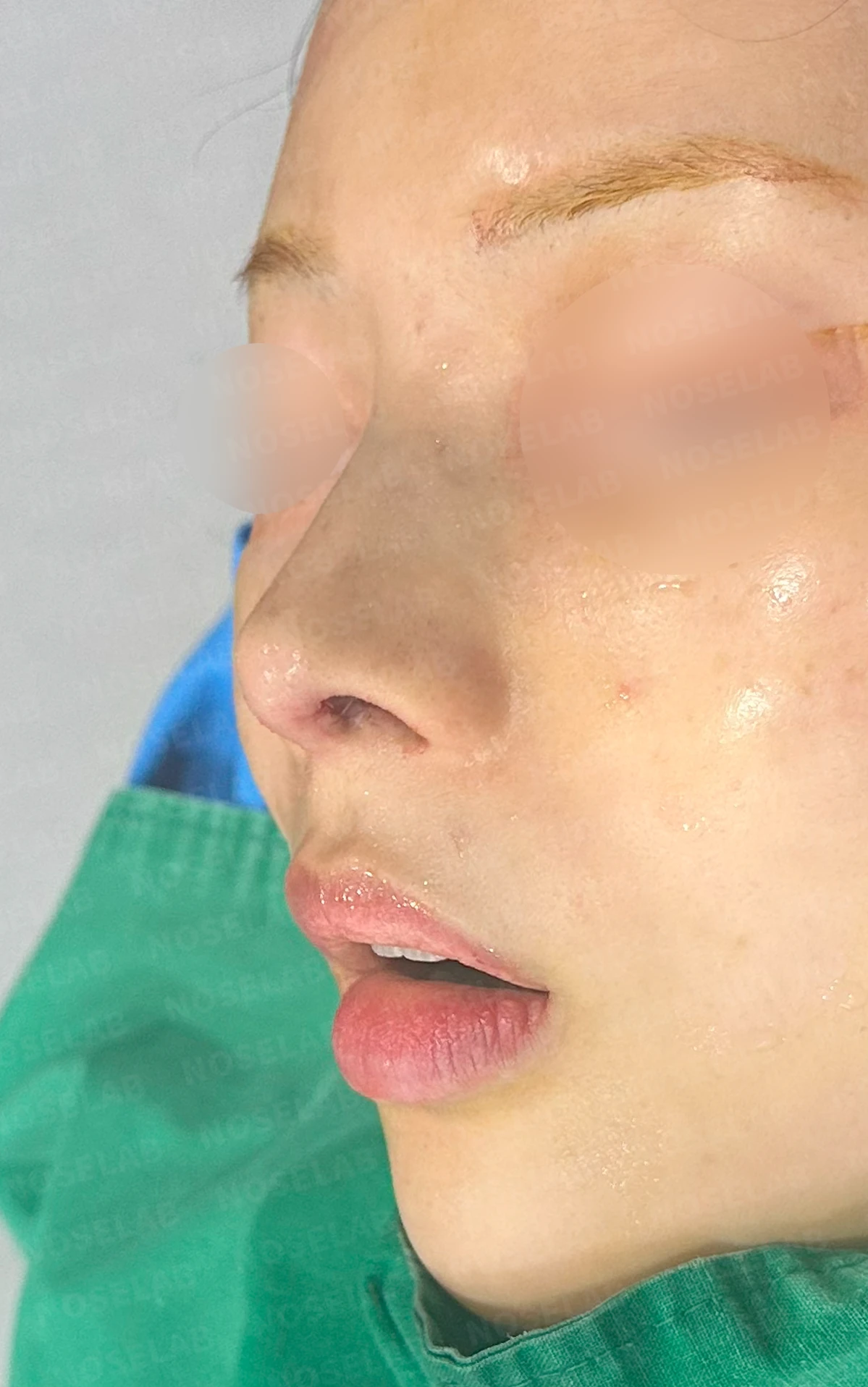
Immediately after surgery (day 0): front, profile, and oblique views. Immediate postoperative photos show swelling and may differ from the final result.
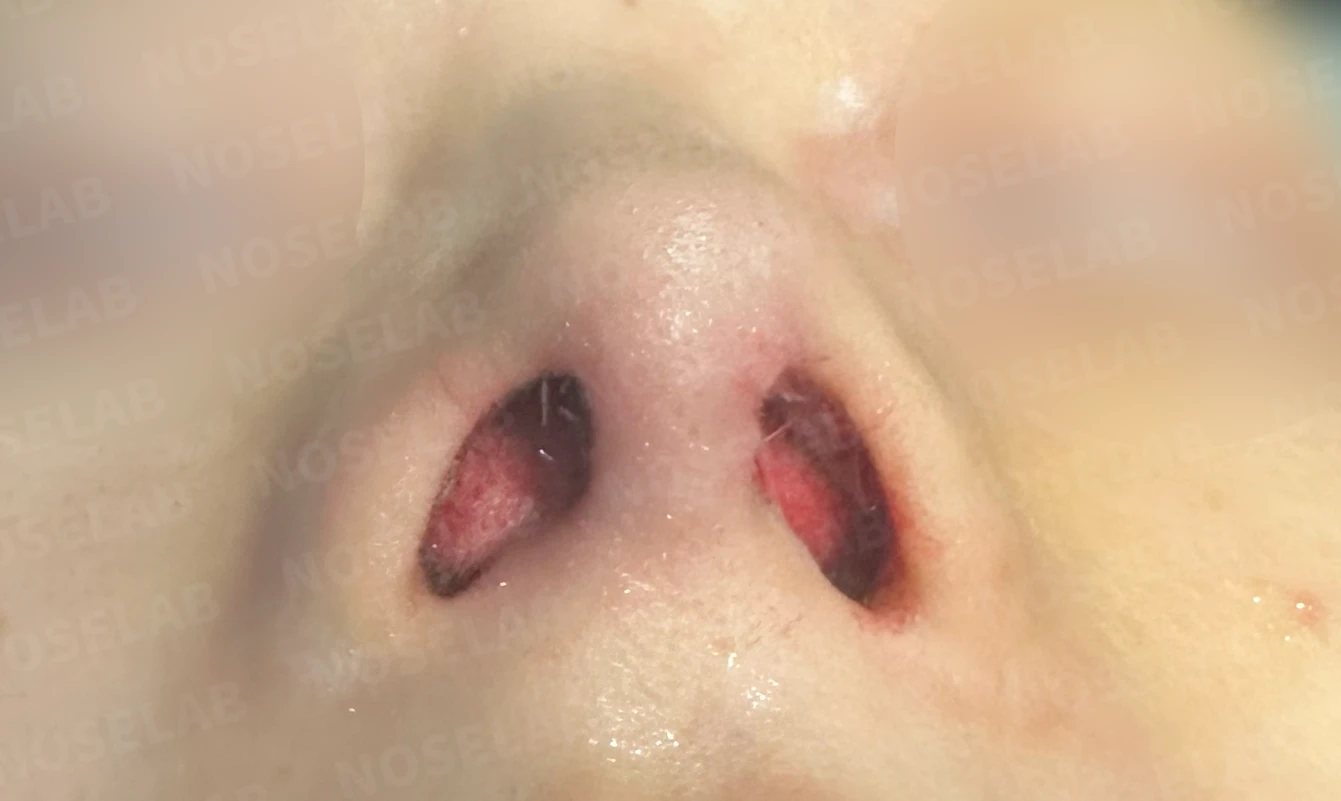
Nostril view on day 0 immediately after surgery. Photos taken immediately after surgery show swelling and may differ from the final result.
This was a complex case requiring revision rhinoplasty while simultaneously resolving functional issues. In particular, the asymmetry and nasal obstruction that remained unresolved after two previous surgeries required a structural approach.
Septal reconstruction using autologous rib cartilage not only provides aesthetic improvement, but also stabilizes the fundamental nasal framework, establishing a foundation that maintains stability over the long term without deforming. In particular, performing this without implants minimized foreign body sensation and the risk of inflammation.
By performing surgery for the deviated septum and rhinitis concurrently, quality of life was substantially improved alongside cosmetic enhancement. While achieving the natural height and shape desired by the patient, the symmetry of the nostrils visible when tilting the head up was also meticulously corrected.
Revision rhinoplasty requires greater experience and skill than a primary procedure. It is crucial to accurately assess scar tissue and structural deformities caused by previous operations, correcting them while taking care not to introduce new complications.
I will continue striving to deliver satisfactory results through an integrated approach that addresses both cosmetic concerns and functional problems simultaneously. This was Medical Director Dr. Peter C. Kang. Thank you.
#closedrhinoplasty #closedrevisionrhinoplasty #nostrilasymmetrycorrection #autologousribcartilage #implantfreerhinoplasty #deviatedseptum #rhinitissurgery #nasalobstructionrelief #naturalrhinoplasty #revisionrhinoplasty

Limitations and risks
When autologous rib cartilage is used, scarring and pain may remain at the donor site on the chest, and pneumothorax (pleural injury) can occur rarely. Over time, the grafted cartilage may warp or undergo partial resorption.
When the septum is corrected at the same time, nasal obstruction may persist or recur, and in rare cases, septal perforation or changes in smell may occur.
Common potential risks include infection, bleeding, asymmetry, scarring, skin necrosis, and insufficient improvement; results vary depending on individual skin condition and previous surgical history.