Hello, I am Dr. Peter C. Kang.
Today, I would like to introduce the case of a patient who visited our clinic seeking a natural yet refined change through primary rhinoplasty.
🔍 Surgical history
This patient was having rhinoplasty for the first time and chose our clinic after careful consideration.
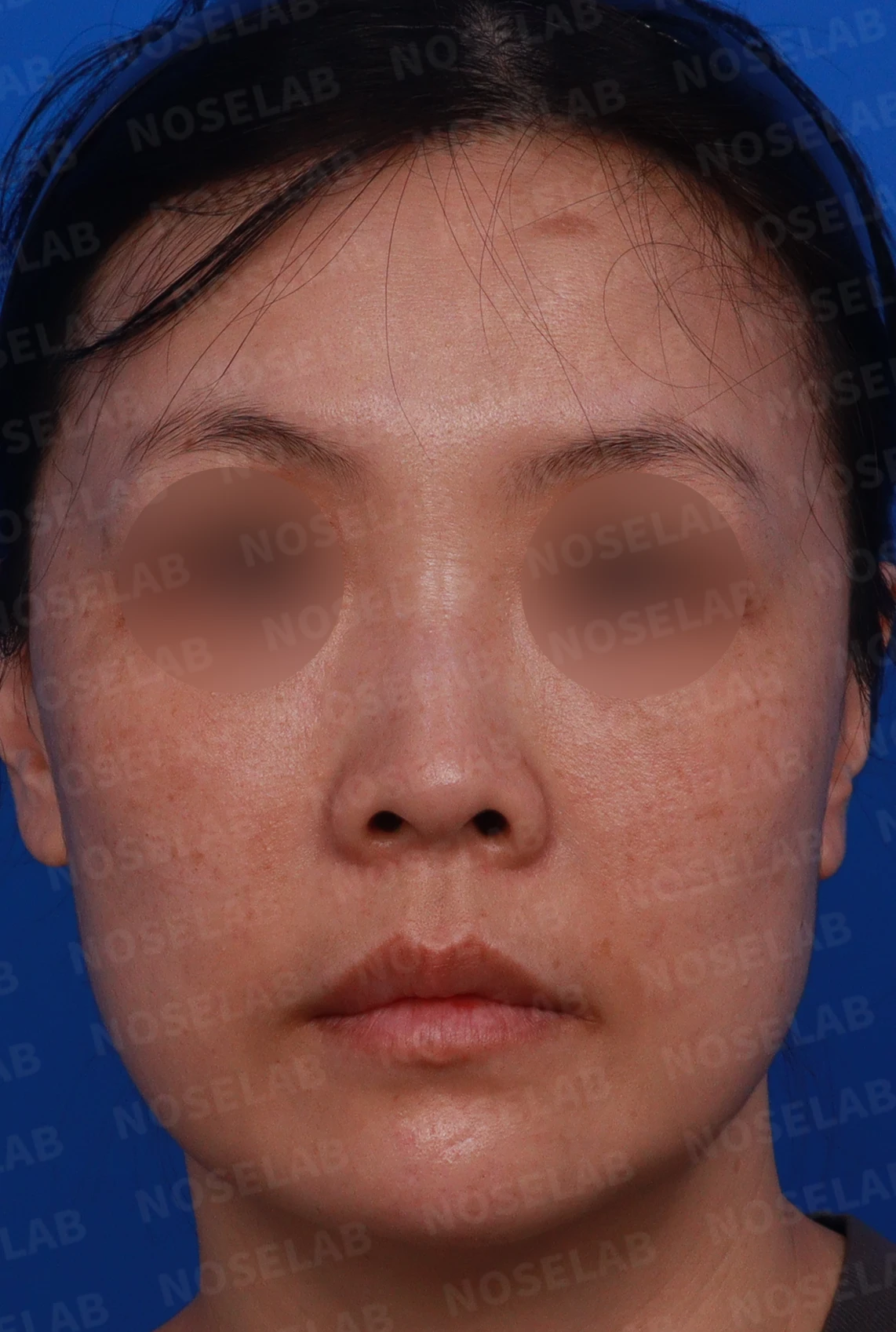
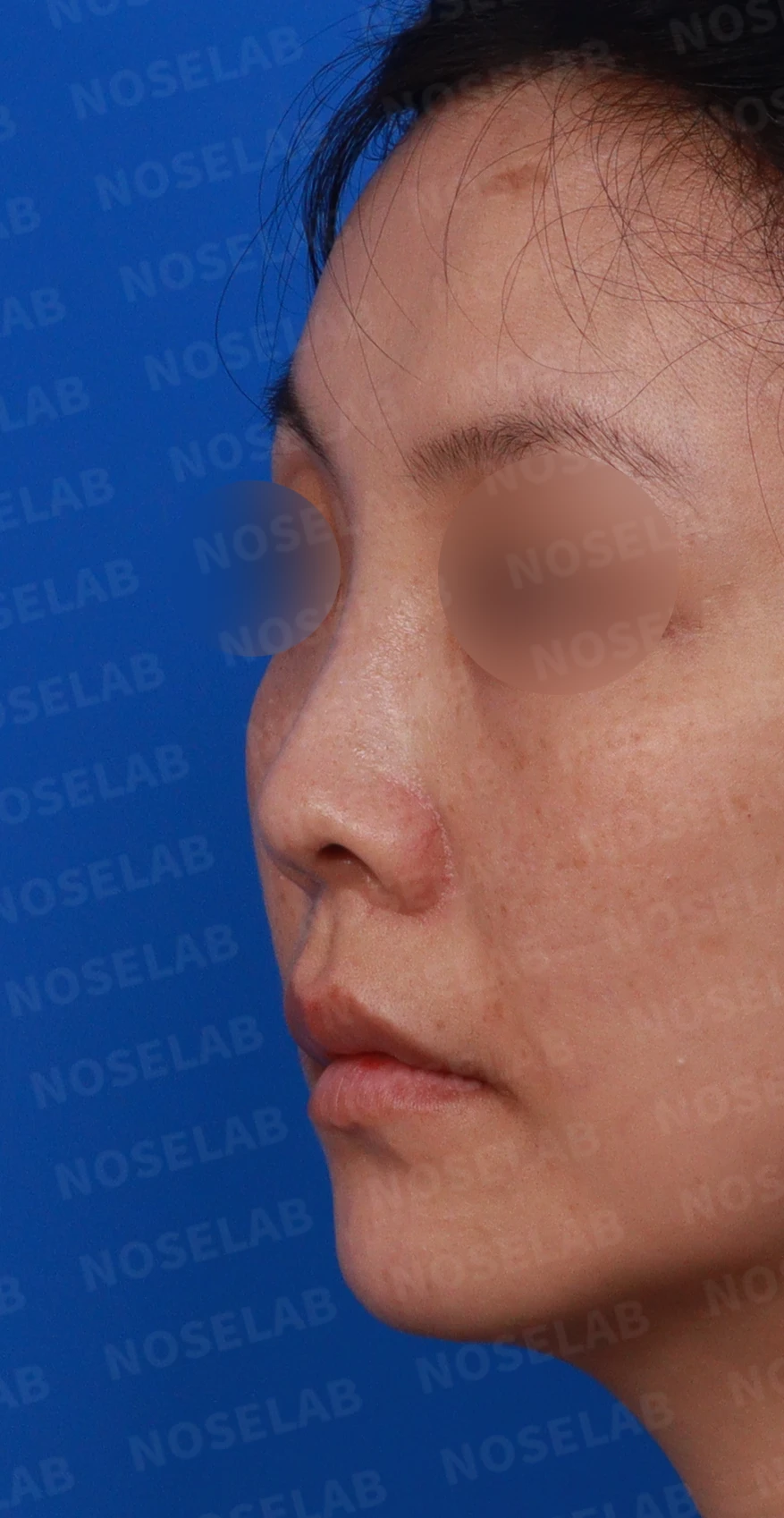
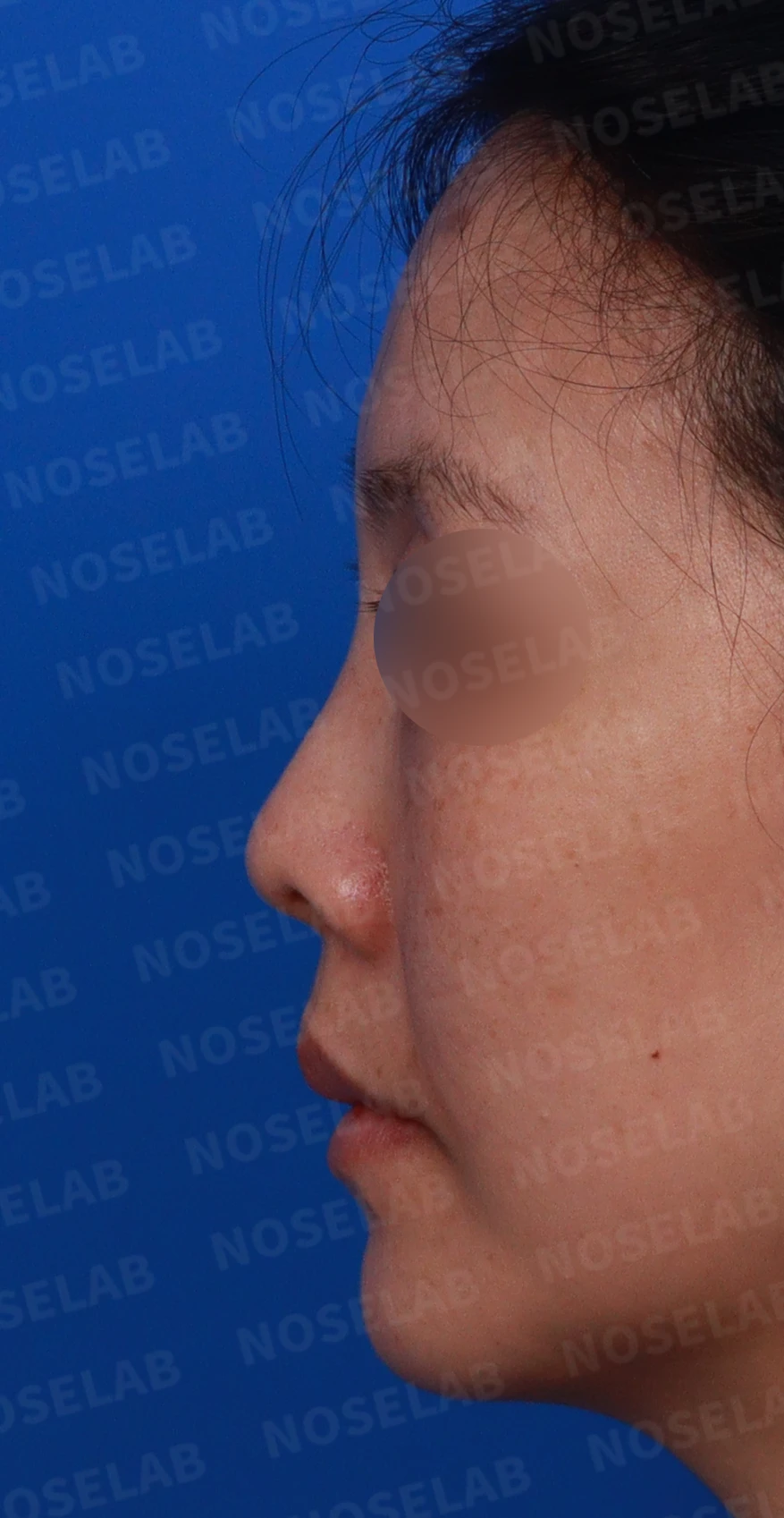
Design consultation: front, left oblique, and profile views.
Health status and considerations:
- Suspected rhinitis symptoms
- Strong focus on safety as a primary surgery
Patient's requests
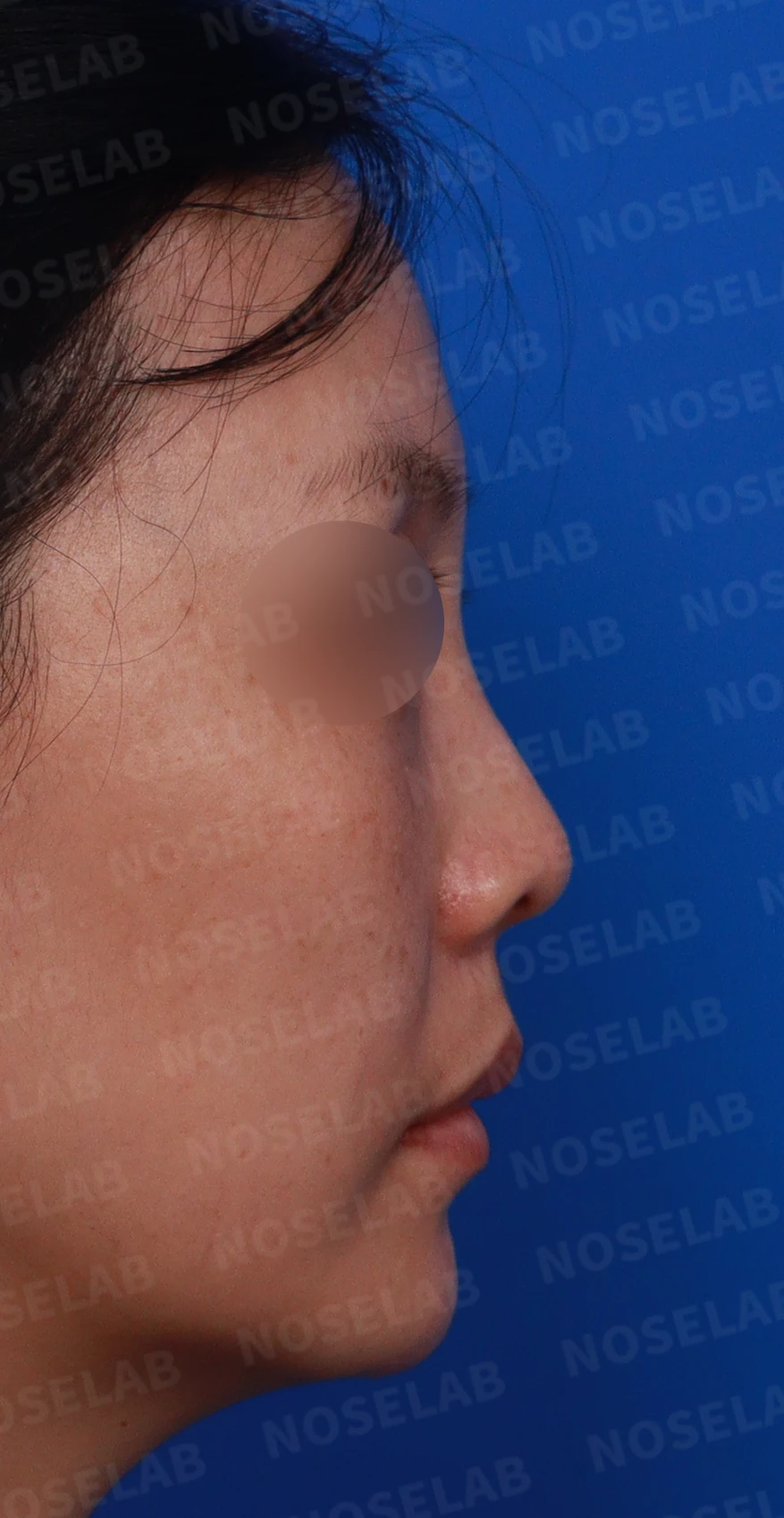
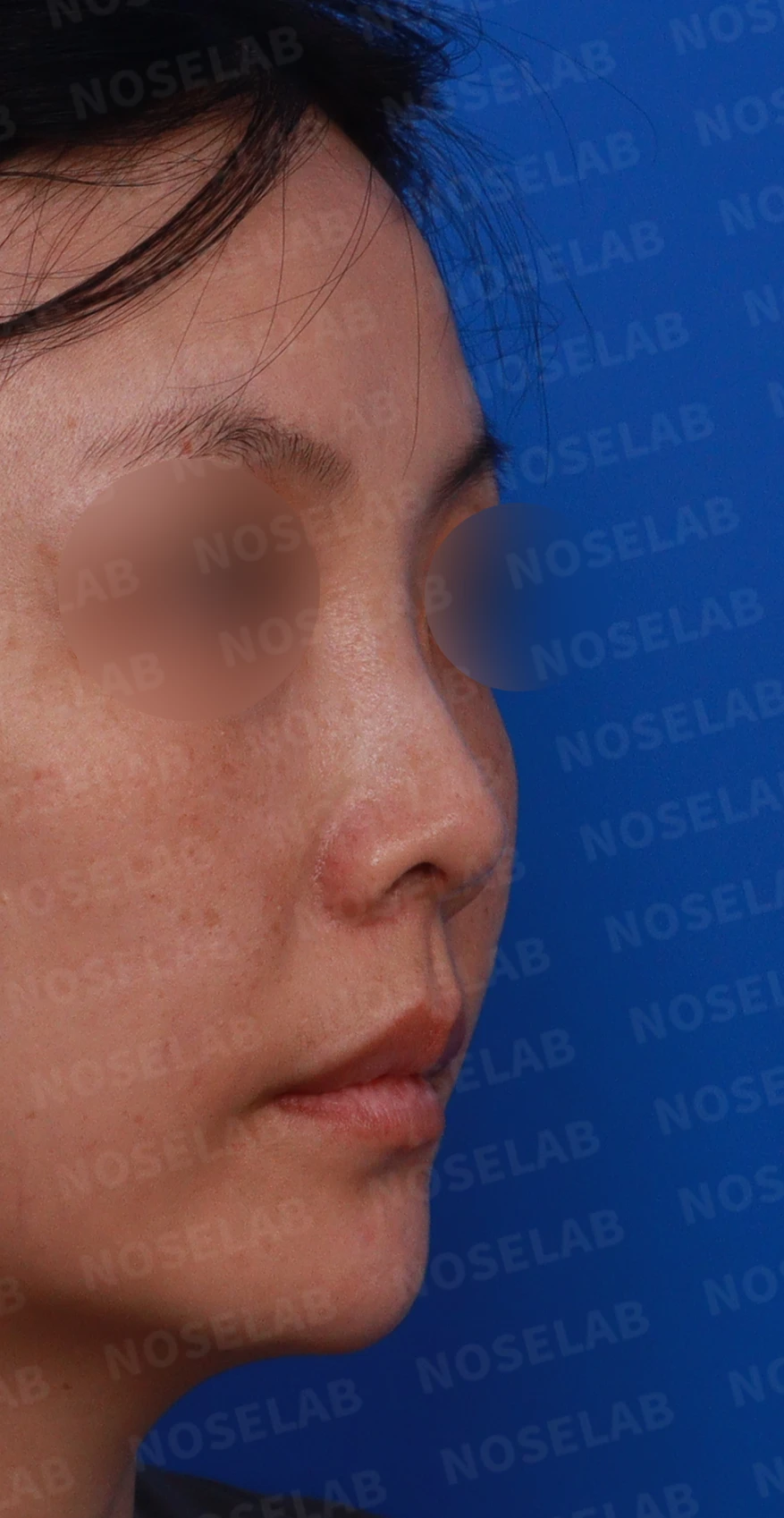
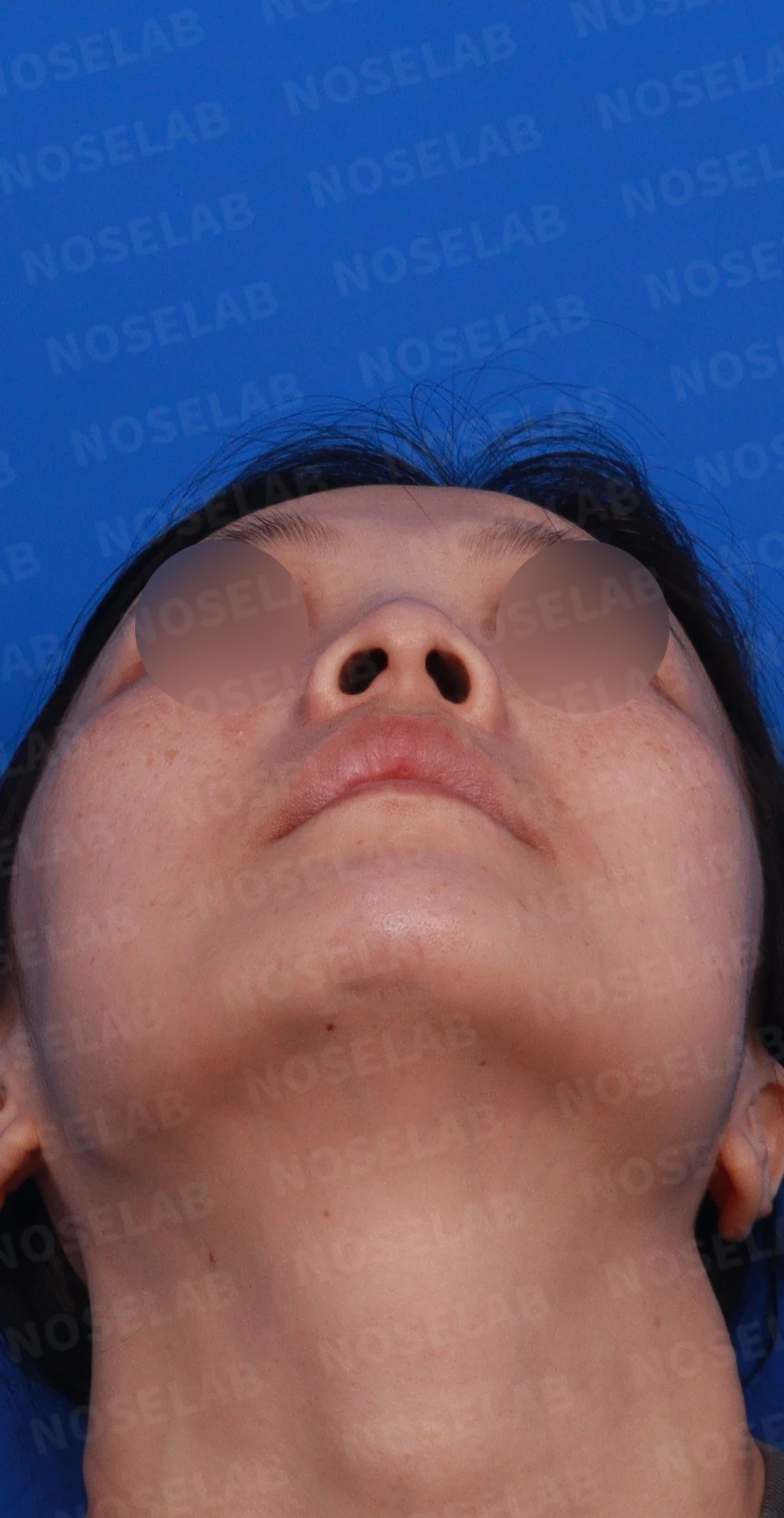
Design consultation: right profile, oblique, and nostril views.
Areas requested for improvement:
- Desired a natural-looking nose
- Open to using a silicone implant
- Desired nasal tip refinement
- Reduced nostril visibility
The patient wanted natural improvement rather than dramatic changes, and considered reducing front-view nostril show to be particularly important.
🔧 Surgical plan and procedure
1. Raising the nasal bridge with a silicone implant
- An appropriate height suited to the face
- A bridge line with a gentle curve
- Natural elevation
- Smooth transition from forehead to nasal tip
2. Nasal tip refinement with septal cartilage and donor rib cartilage
- Establishing the base structure with septal cartilage
- Securing sufficient height and structural support with donor rib cartilage
- A defined yet natural tip
- A stable framework for long-term maintenance
3. Nasolabial angle correction
- Minimizing nostril show
- An ideal angle on the profile view
- Achieving an elegant profile
4. Functional rhinoplasty
- Septoplasty
- Submucosal resection of the inferior turbinate
- Expected improvement in rhinitis symptoms
- Ensuring comfortable breathing
🌟 Surgical results
1. Natural-looking change
- Natural refinement without an artificial appearance
- Harmonious integration with the facial features
- Feedback from others confirming a natural look
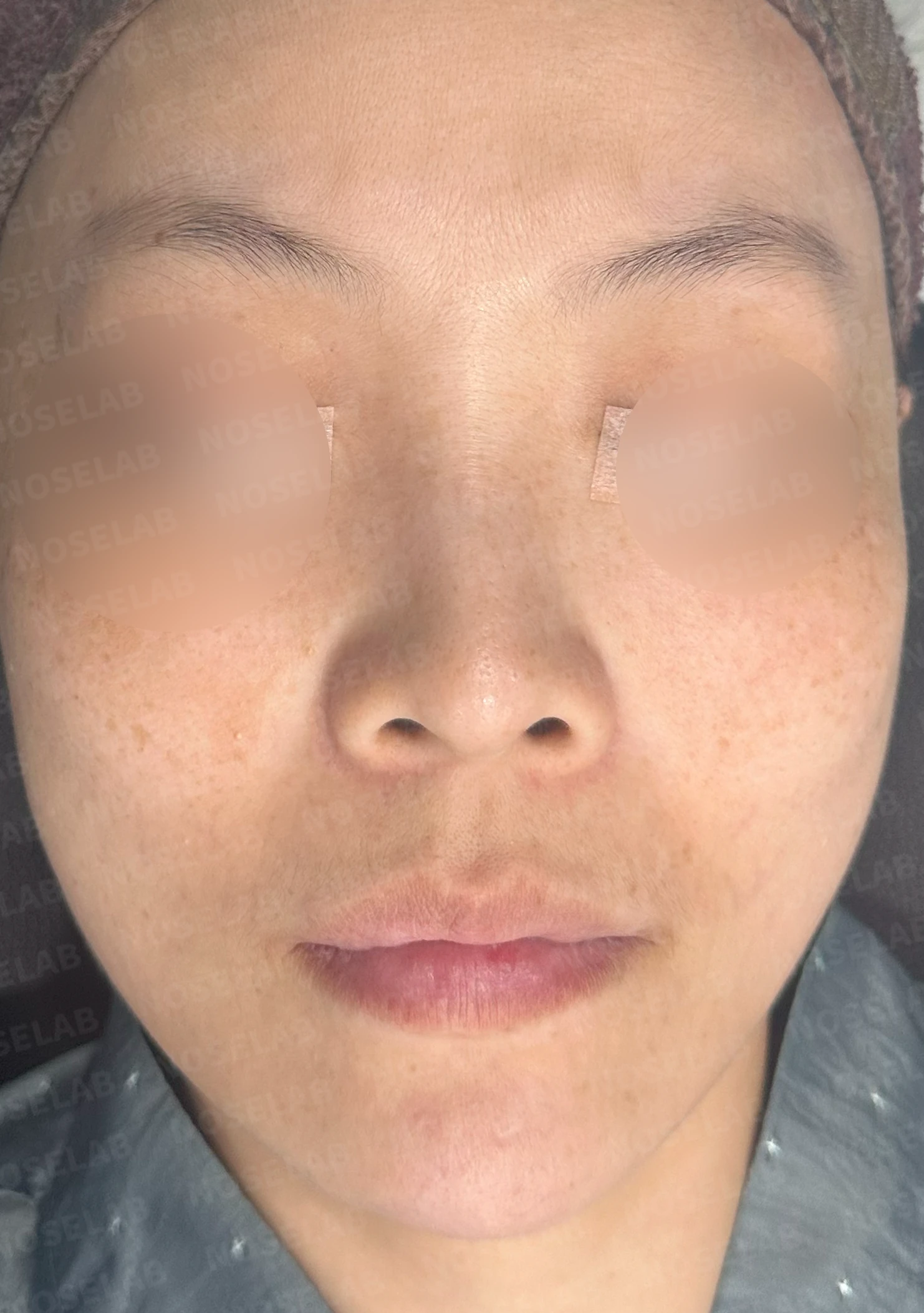
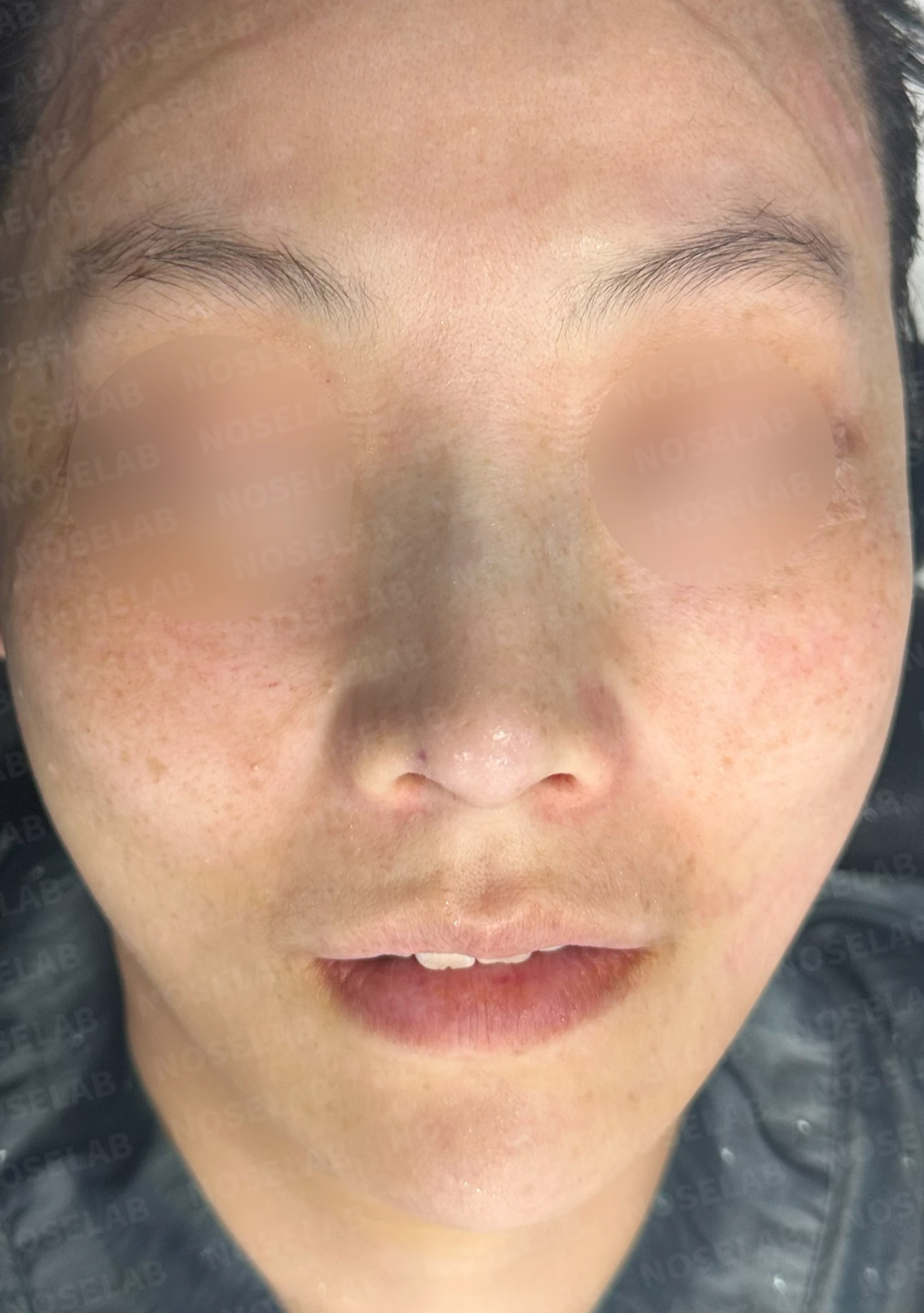
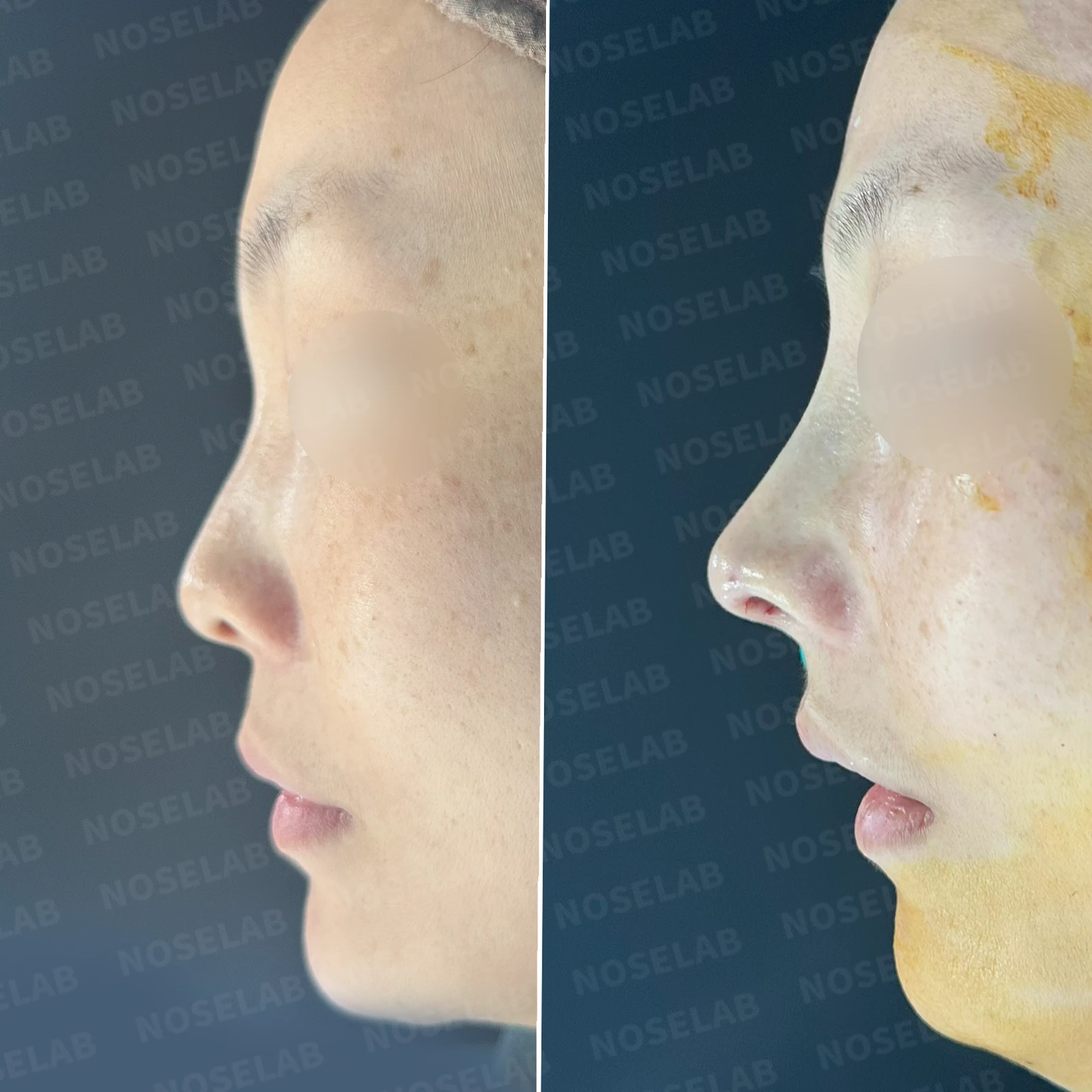
Before surgery / Day 0 immediately after surgery Photos taken immediately after surgery show swelling and may differ from the final result.
2. An ideal nasal tip
- Well-balanced tip projection
- A defined yet soft contour
- A satisfying appearance from both the front and profile views
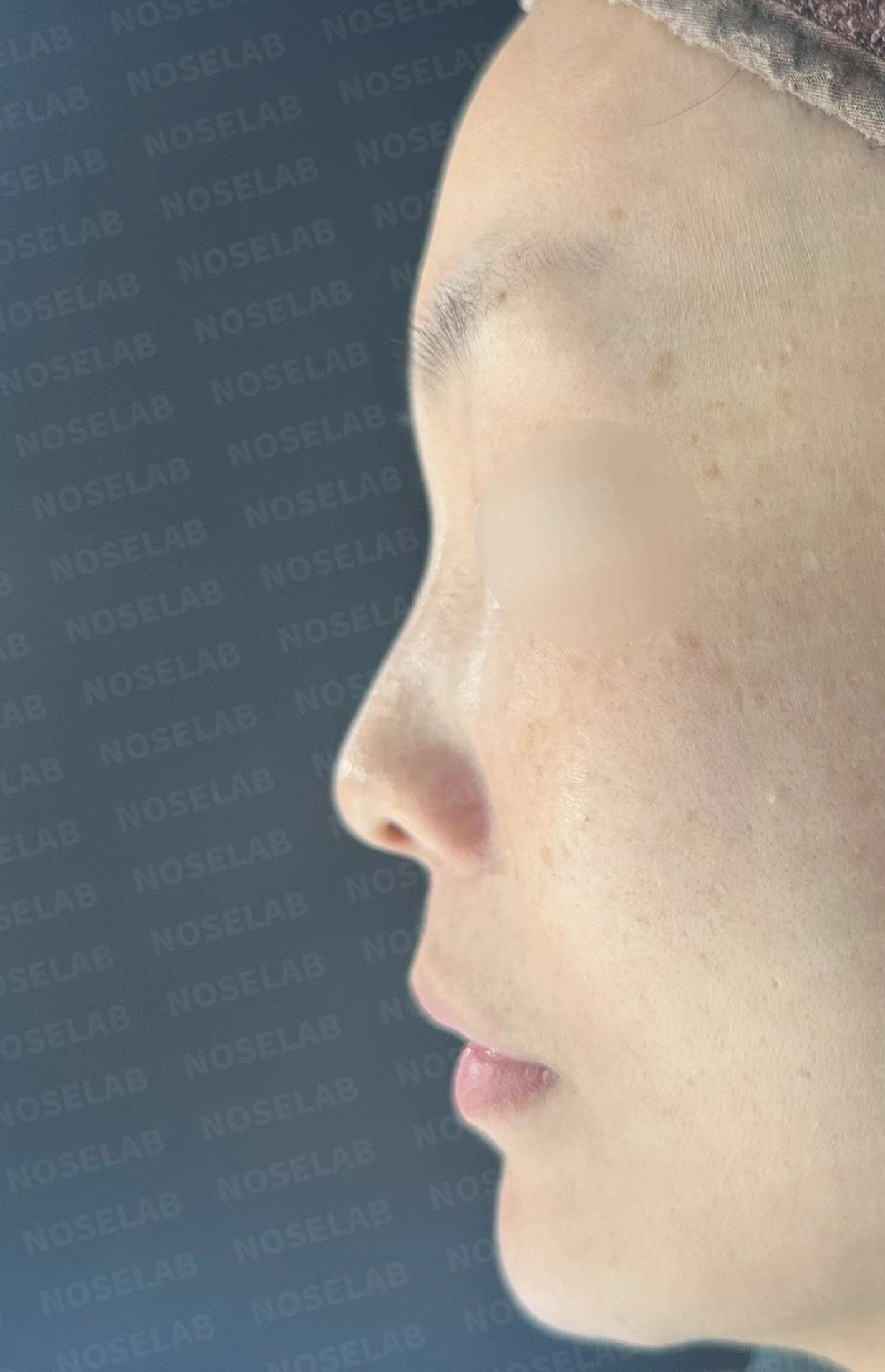
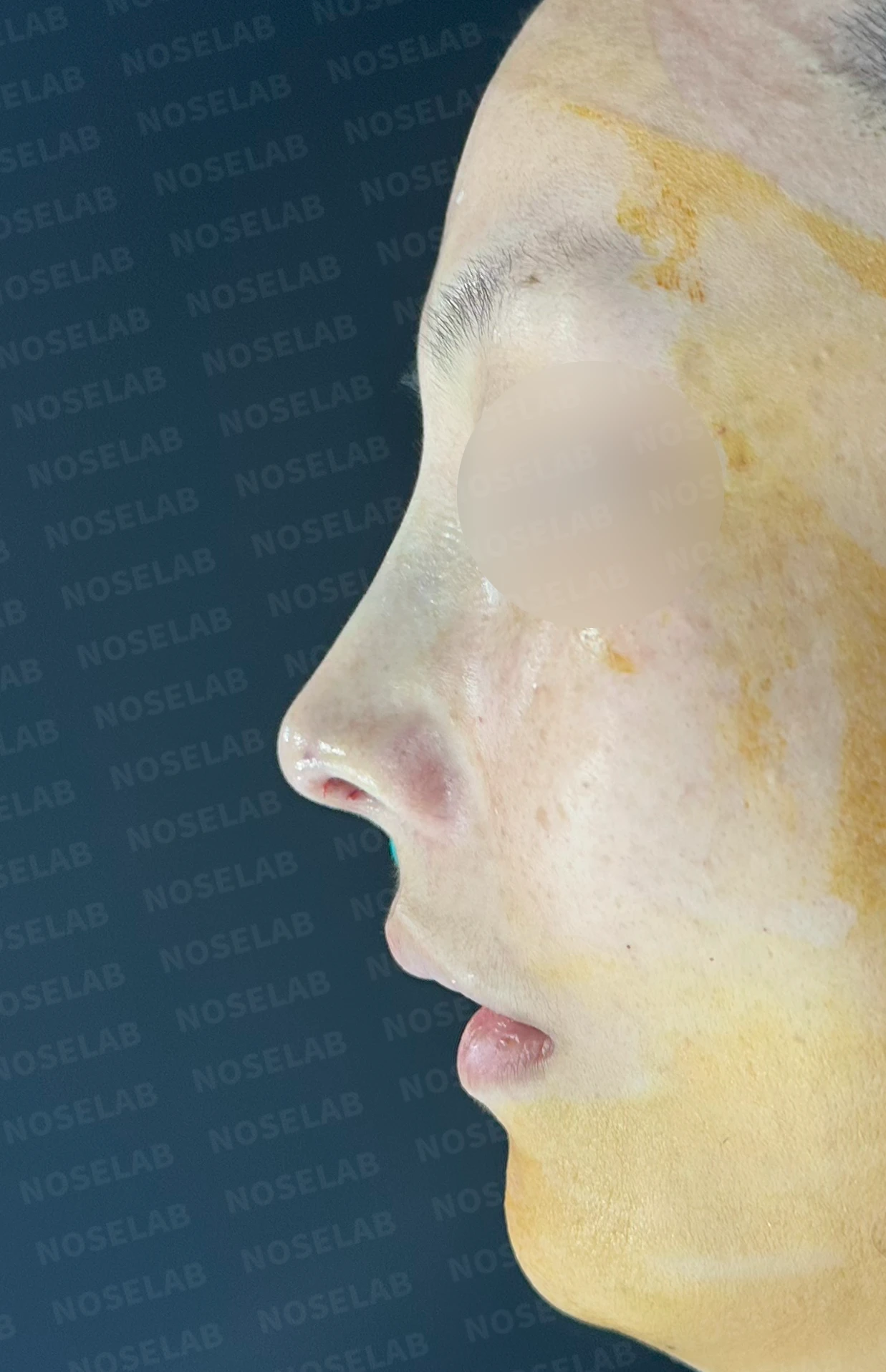
Before surgery / Day 0 immediately after surgery Photos taken immediately after surgery show swelling and may differ from the final result.
3. Improvement in nostril show
- Minimal nostril visibility on the front view
- Maintaining a natural angle
- An overall refined impression
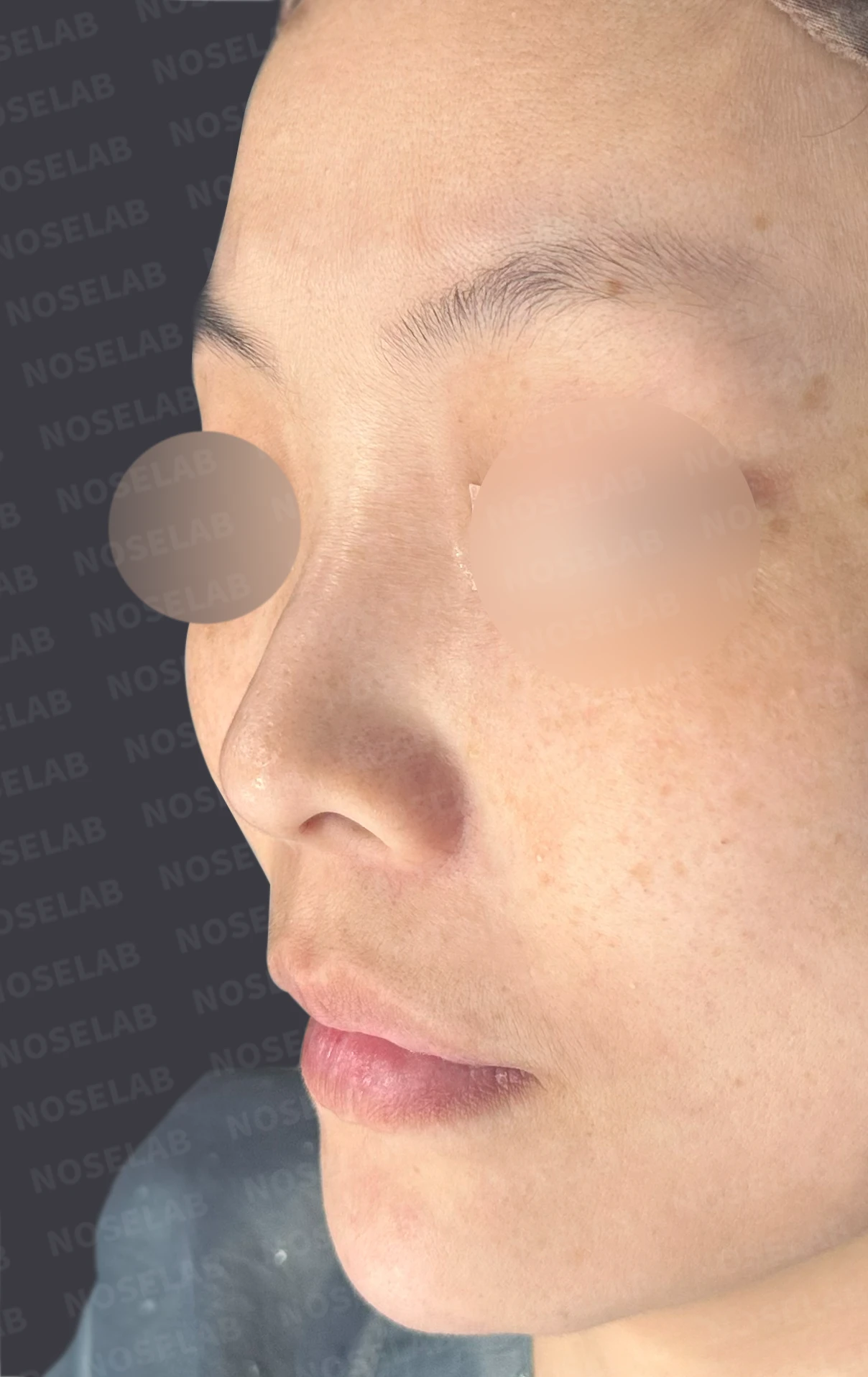
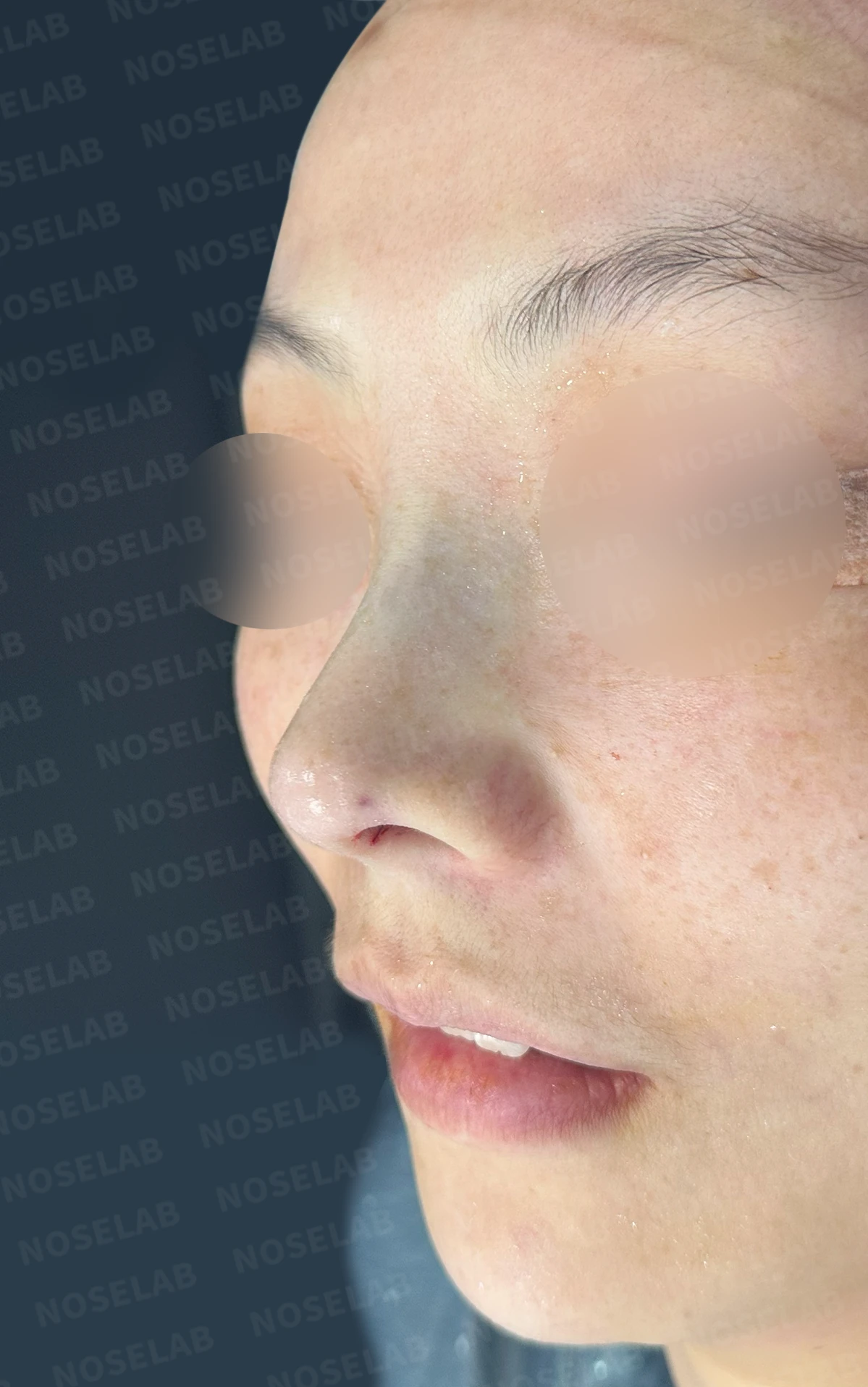
Before surgery / Day 0 immediately after surgery Photos taken immediately after surgery show swelling and may differ from the final result.
4. Functional improvement
- Easier breathing through the nose
- Relief of rhinitis symptoms
- Improved quality of daily life
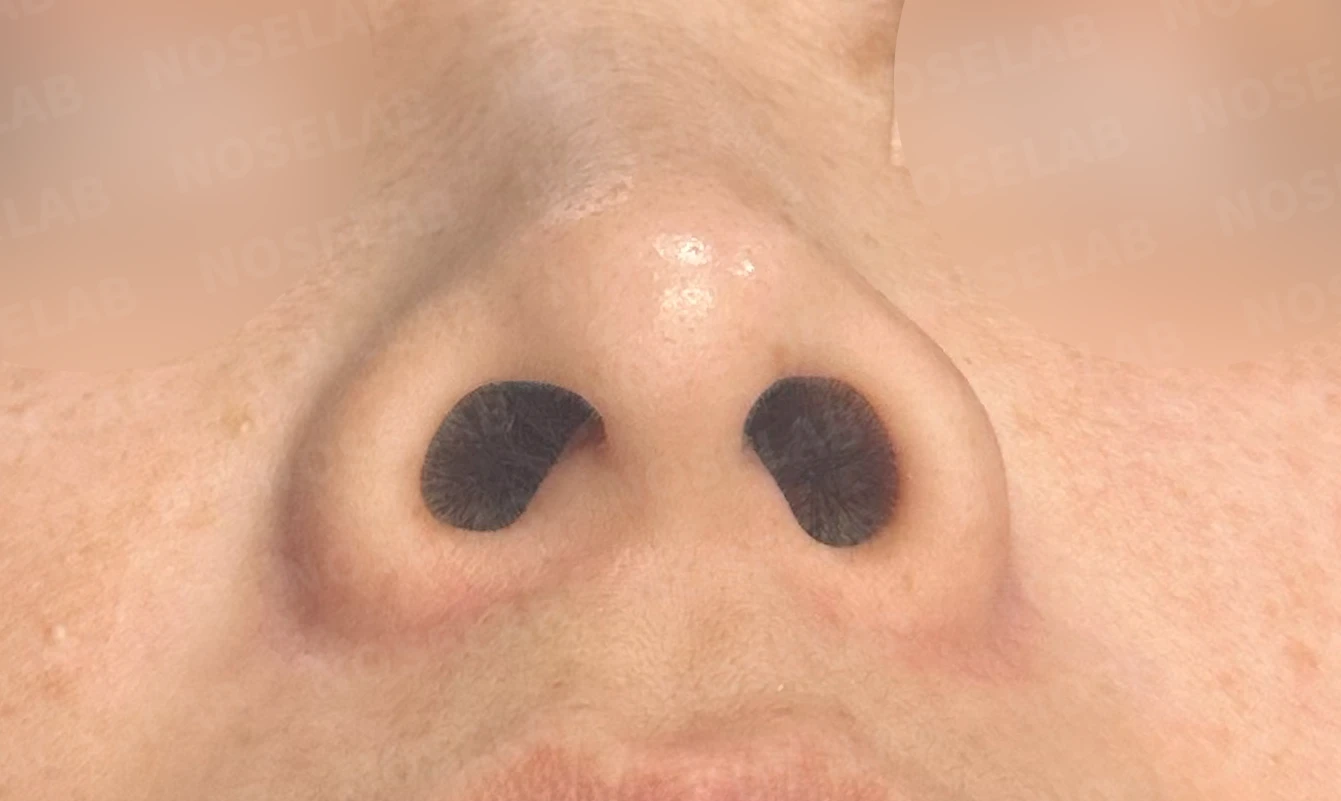
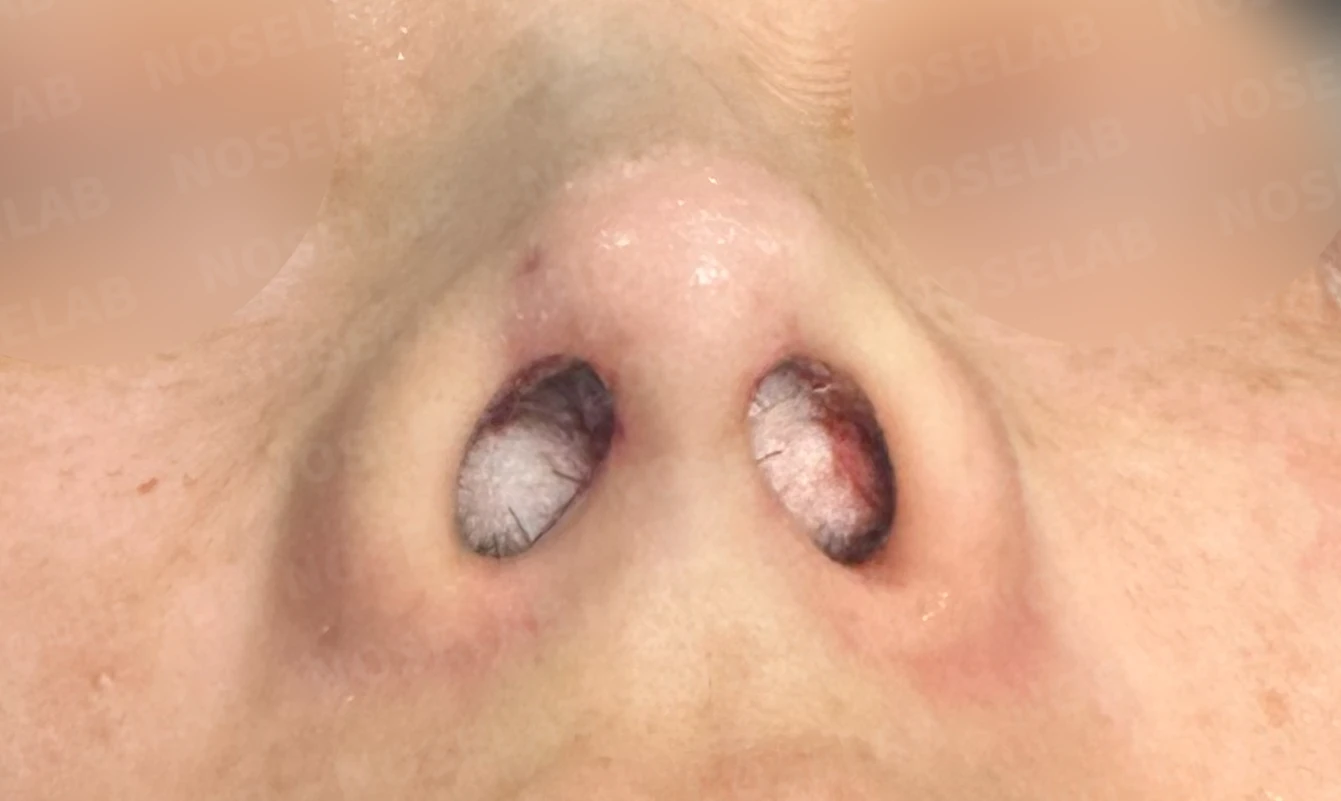
Before surgery / Day 0 immediately after surgery Photos taken immediately after surgery show swelling and may differ from the final result.
💡 Specialist opinion
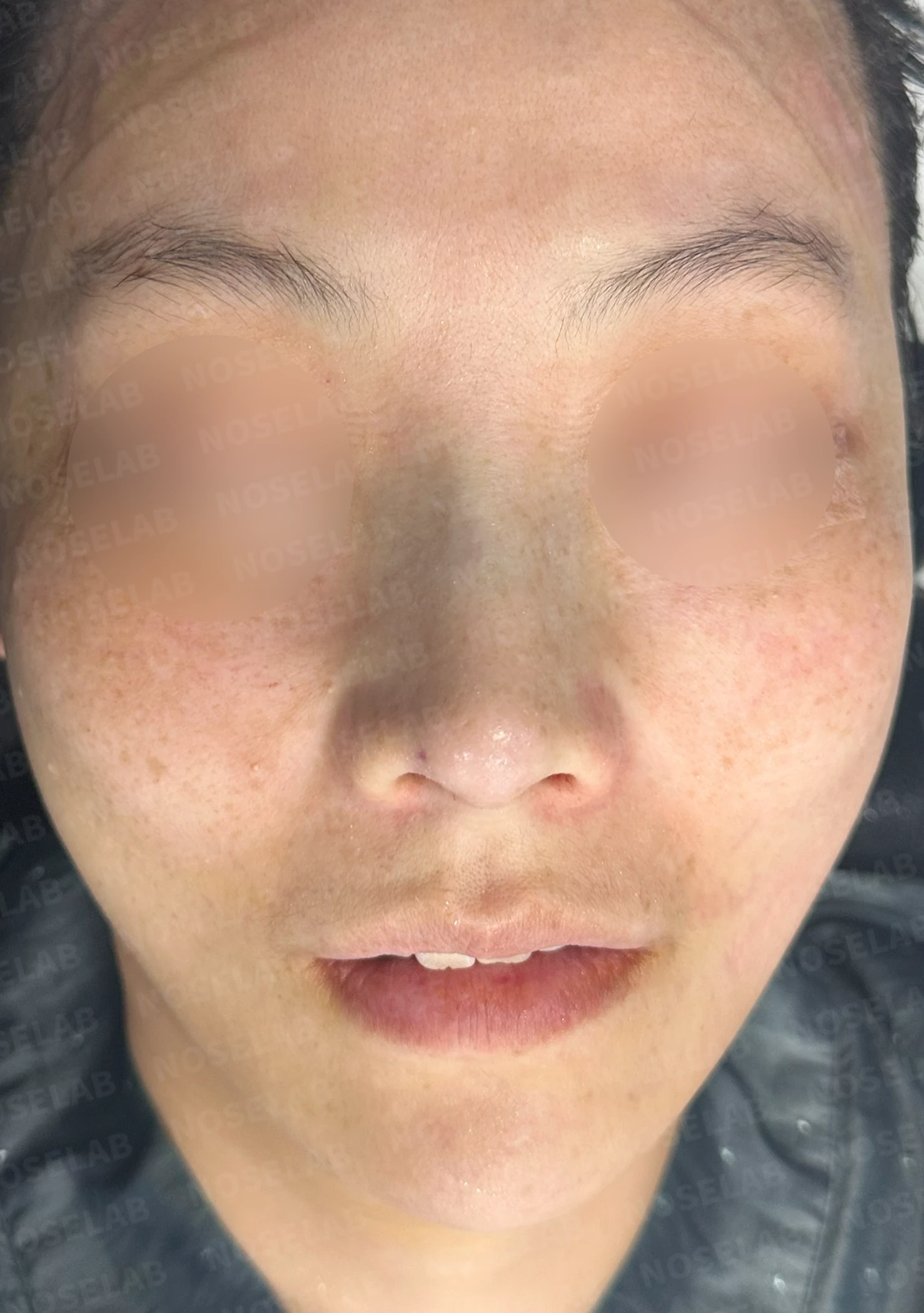
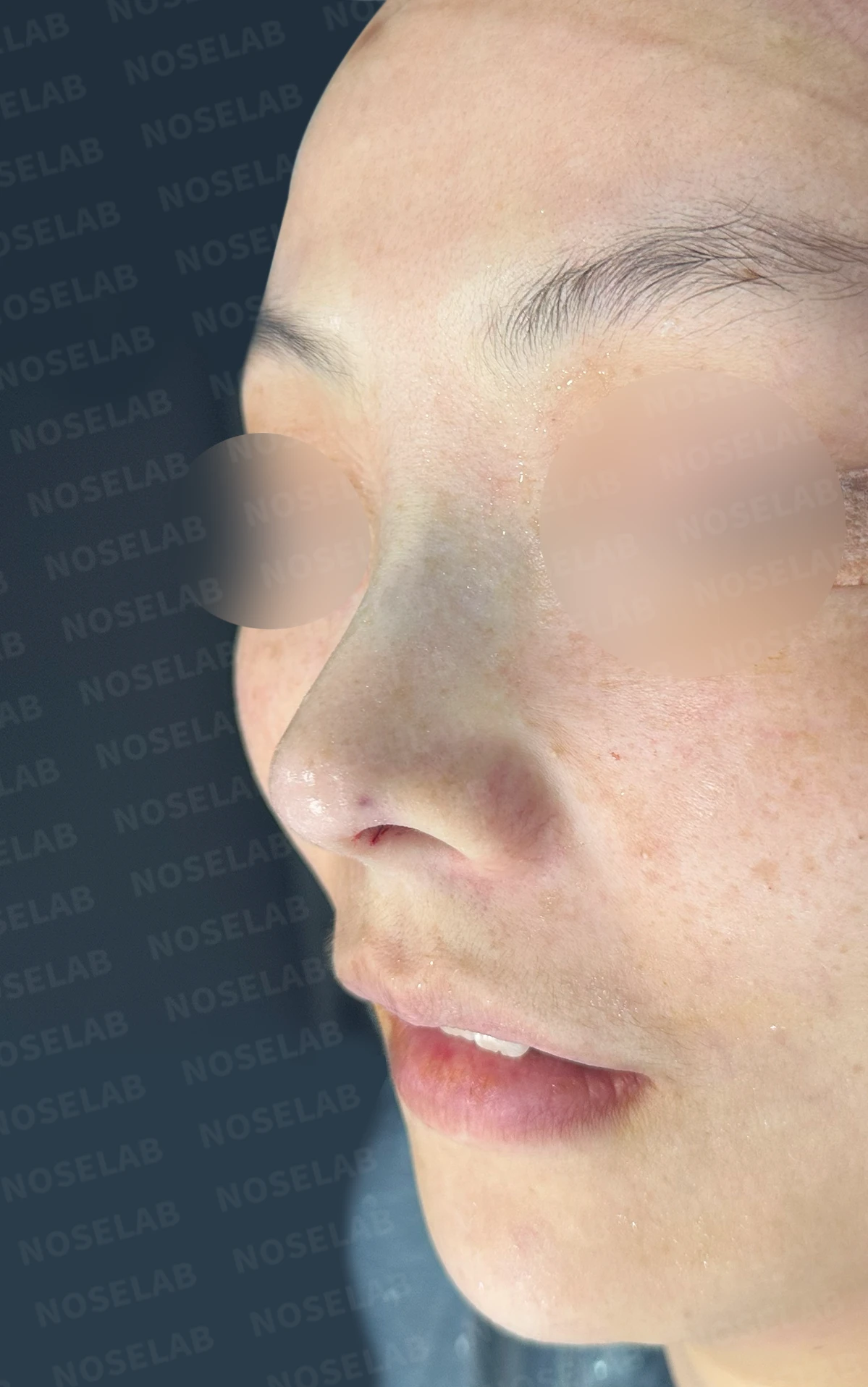
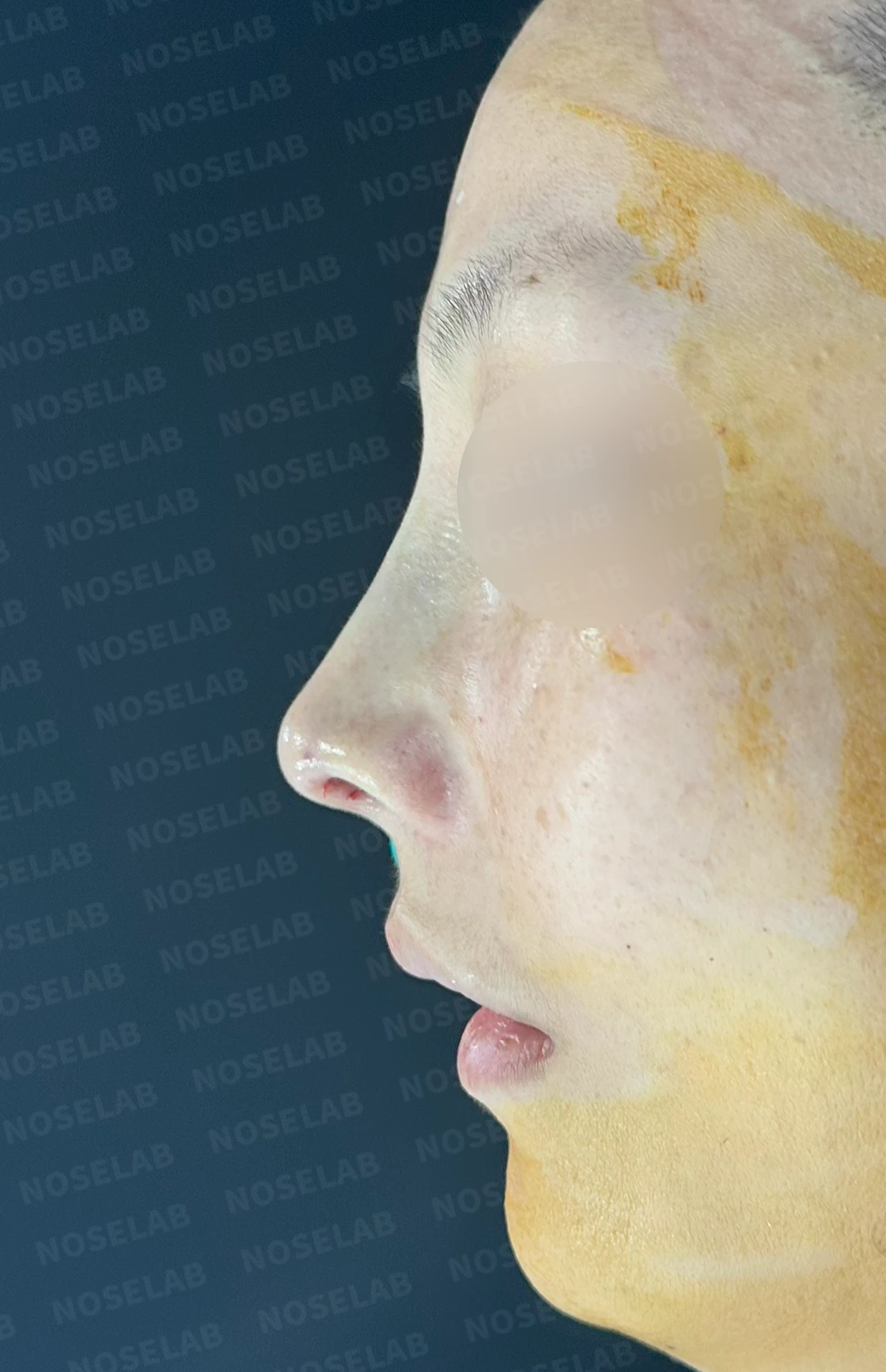
Immediately after surgery (day 0): front, oblique, and profile views. Immediate postoperative photos show swelling and may differ from the final result.
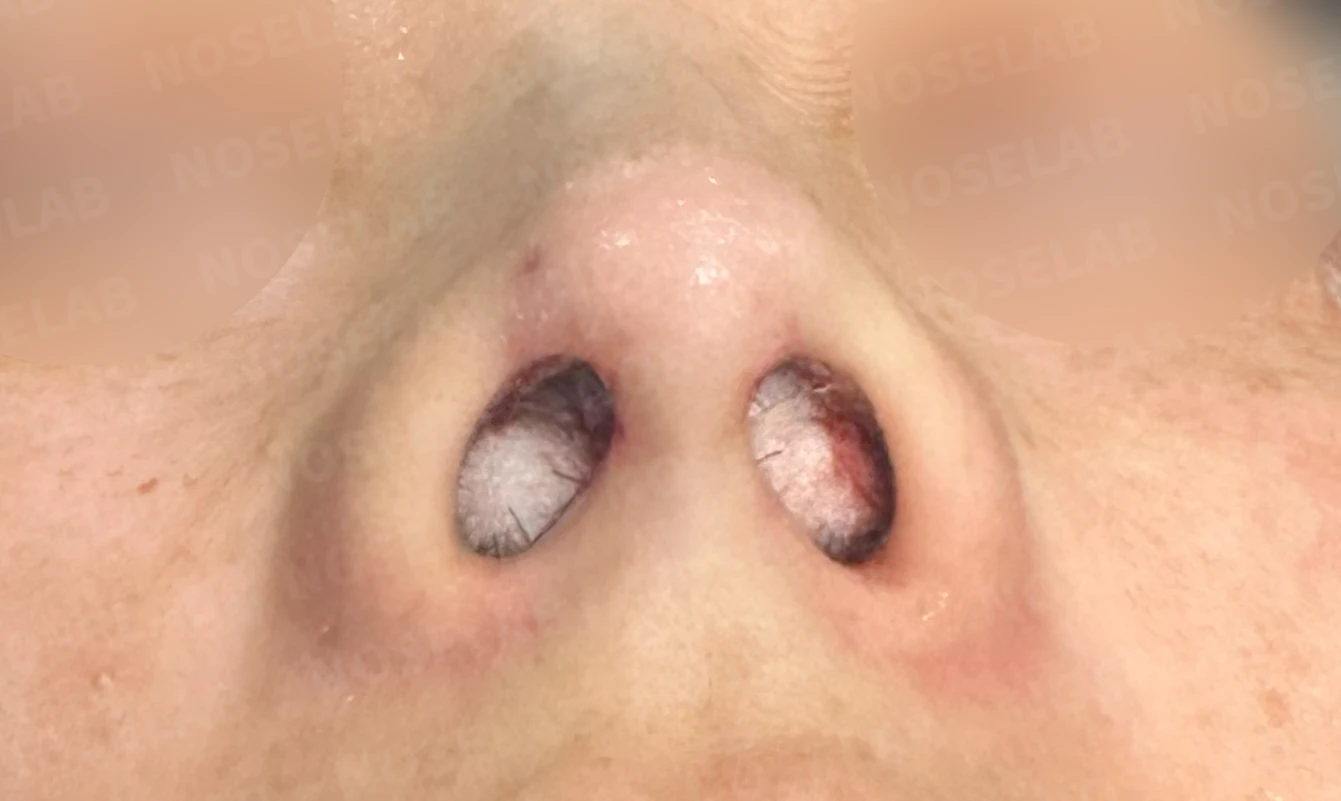
Nostril view on day 0 immediately after surgery. Photos taken immediately after surgery show swelling and may differ from the final result.
In primary rhinoplasty, the native nasal structures remain preserved, which generally makes the surgical process smoother. However, because patients' expectations are correspondingly high, the procedure must be approached with great care.
When a natural result is desired, as in this case, facial harmony is prioritized over dramatic changes. An appropriate bridge height was created with a silicone implant, and septal cartilage combined with donor rib cartilage formed a stable yet natural nasal tip.
Reducing nostril visibility is a common goal for many patients. By properly adjusting the nasolabial angle, nostril show on the front view was minimized while maintaining a pleasing line on the profile view. Lowering the angle excessively can make the nose appear drooping, so finding the right balance is essential.
Compared to autologous rib cartilage, donor rib cartilage does not require a donor-site harvest, offering the advantages of reduced operative time and faster recovery. Advances in processing technology have also made its use very reliable. When combined with septal cartilage, it provides sufficient structural support while producing a natural result.
Performing functional nasal surgery concurrently allows for expected improvement in rhinitis symptoms. Achieving comfortable breathing alongside aesthetic enhancement offers a dual benefit.
I will continue to carefully evaluate each patient's individual characteristics and goals to deliver the most satisfying outcomes possible.
This was Dr. Peter C. Kang. Thank you.
#closedrhinoplasty #primaryrhinoplasty #naturalrhinoplasty #siliconerhinoplasty #donorribcartilage #septalcartilage #earcartilage #nasolabialanglecorrection #nostrilrhinoplasty #functionalnasalsurgery

Limitations and risks
When autologous rib cartilage is used, scarring and pain may remain at the donor site on the chest, and pneumothorax (pleural injury) can occur rarely. Over time, the grafted cartilage may warp or undergo partial resorption.
When using donor rib cartilage, long-term follow-up is necessary because the grafted cartilage may resorb or warp.
When the septum is corrected at the same time, nasal obstruction may persist or recur, and in rare cases, septal perforation or changes in smell may occur.
Common potential risks include infection, bleeding, asymmetry, scarring, skin necrosis, and insufficient improvement; results vary depending on individual skin condition and previous surgical history.