Hello, I am Dr. Peter C. Kang.
Today, I would like to share the case of a patient who visited our clinic with concerns about a low and wide nose.
🔍 Surgical history
This was a primary rhinoplasty case for a patient who had never previously undergone any nasal surgeries or cosmetic procedures. The nose was congenitally low and wide, and the patient came in for a consultation wanting to improve the overall nasal line.
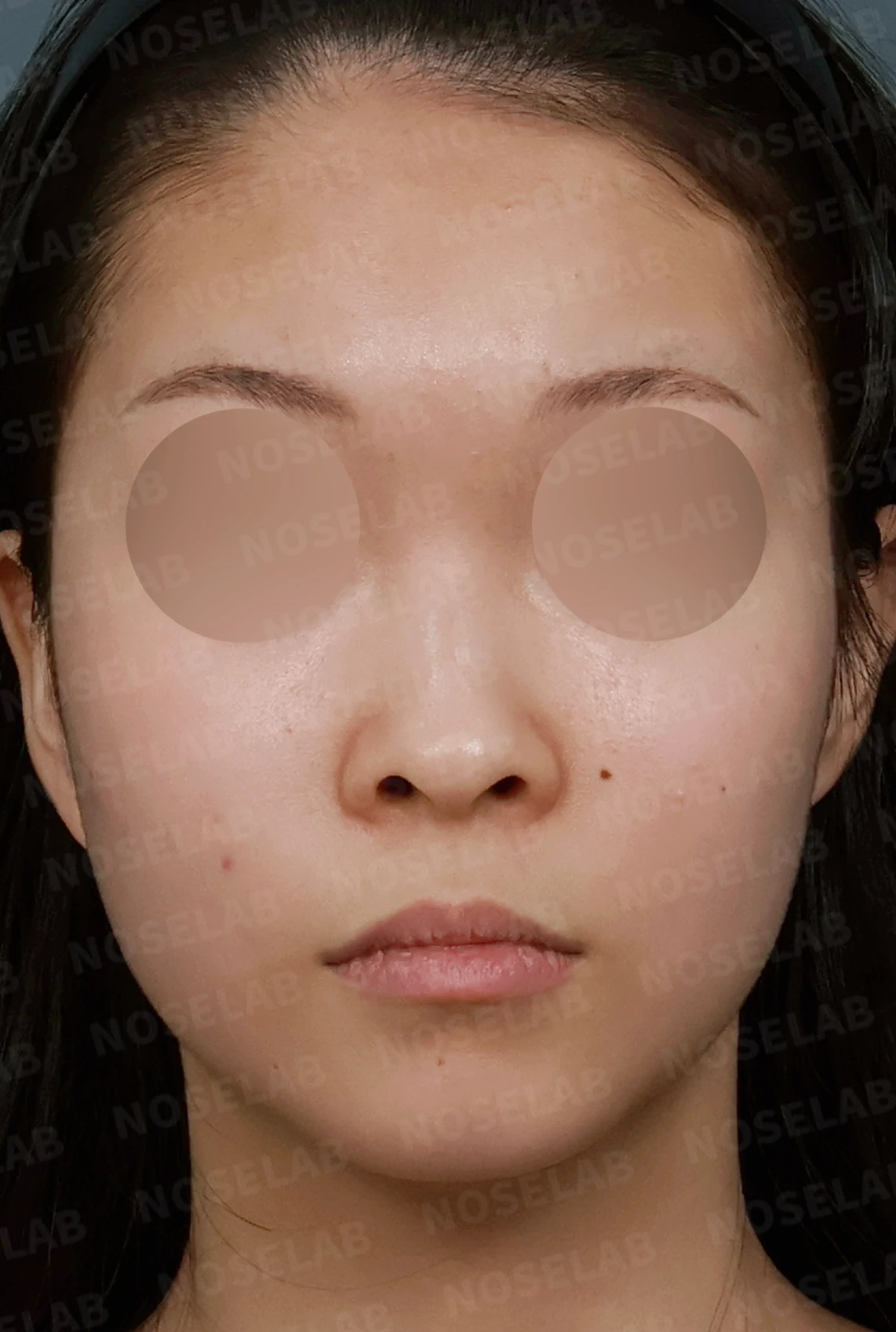
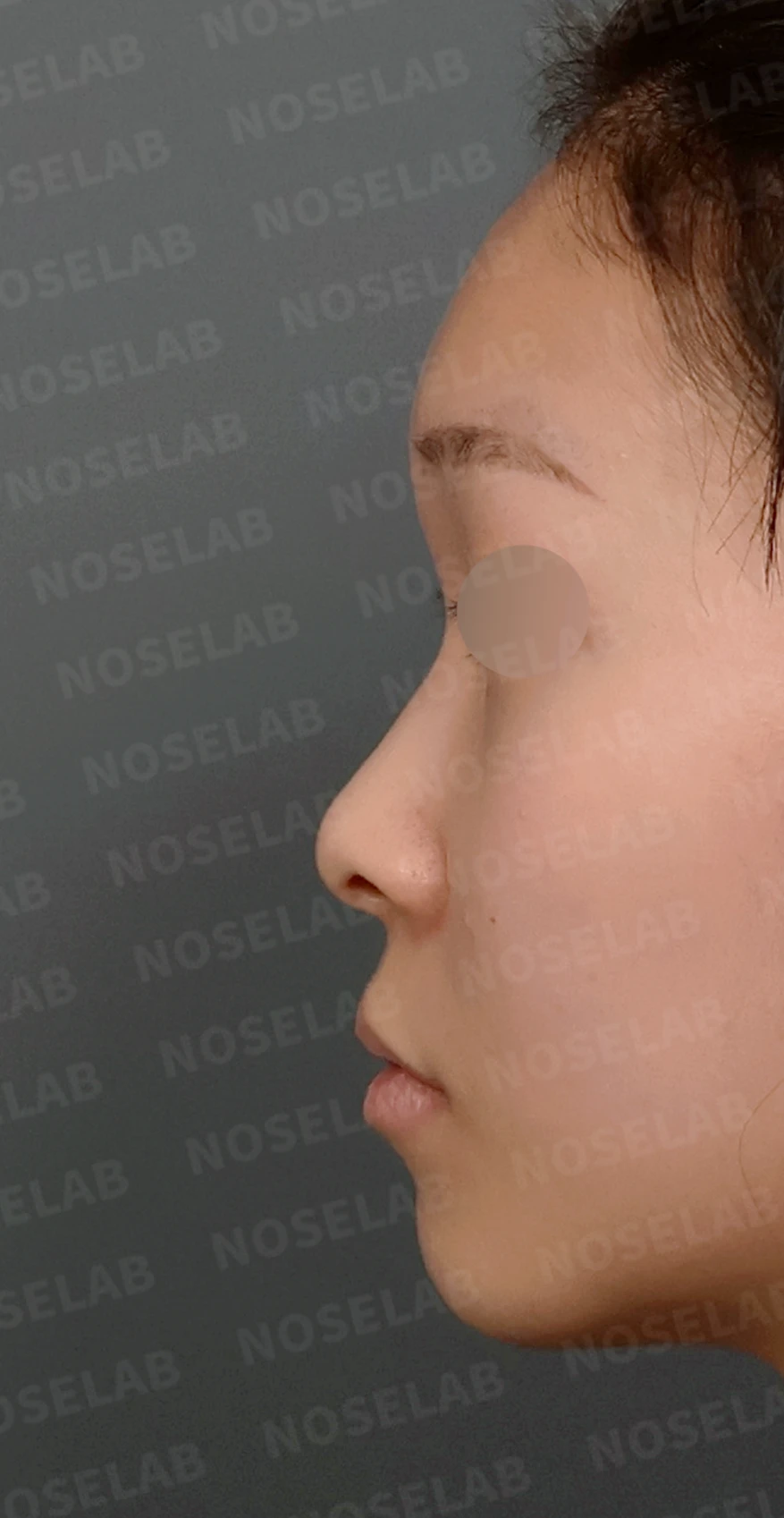
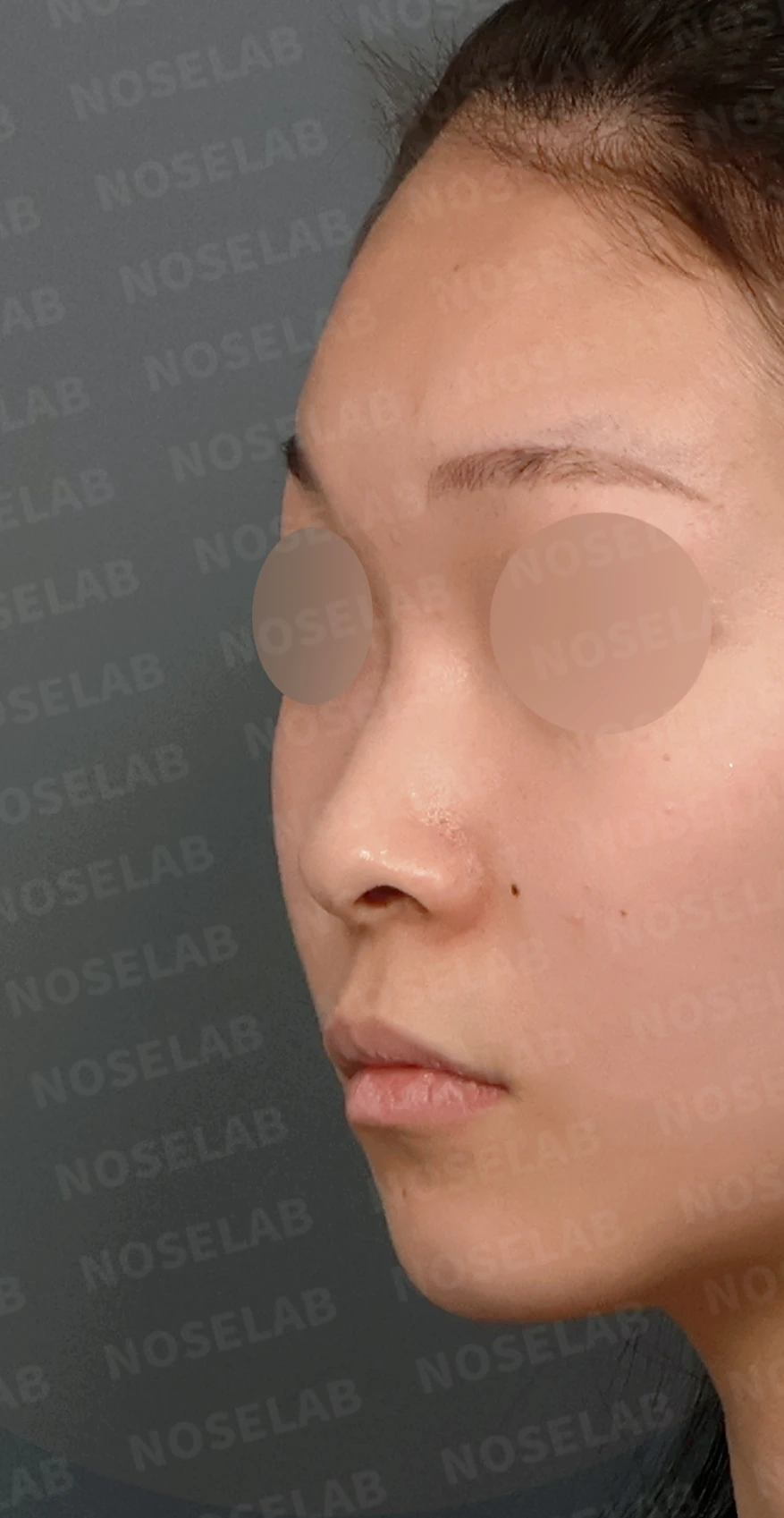
Front, left profile, and oblique views during design consultation.
💉 Patient requests
The patient's specific requests were as follows:
Improving the low nasal height
Narrowing the wide-looking nasal tip
Natural bridge line
Improvement in nasal obstruction (deviated septum and rhinitis symptoms)
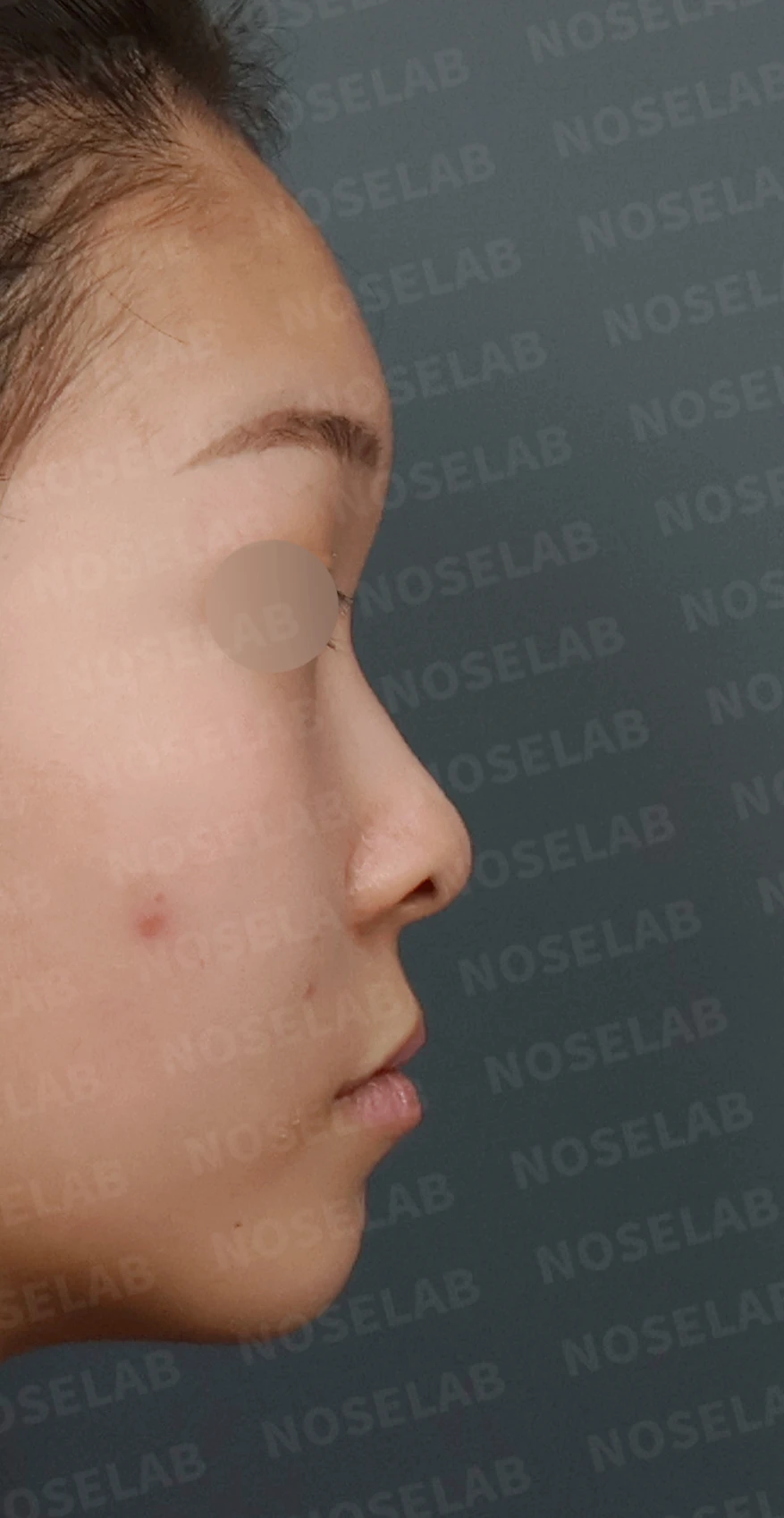
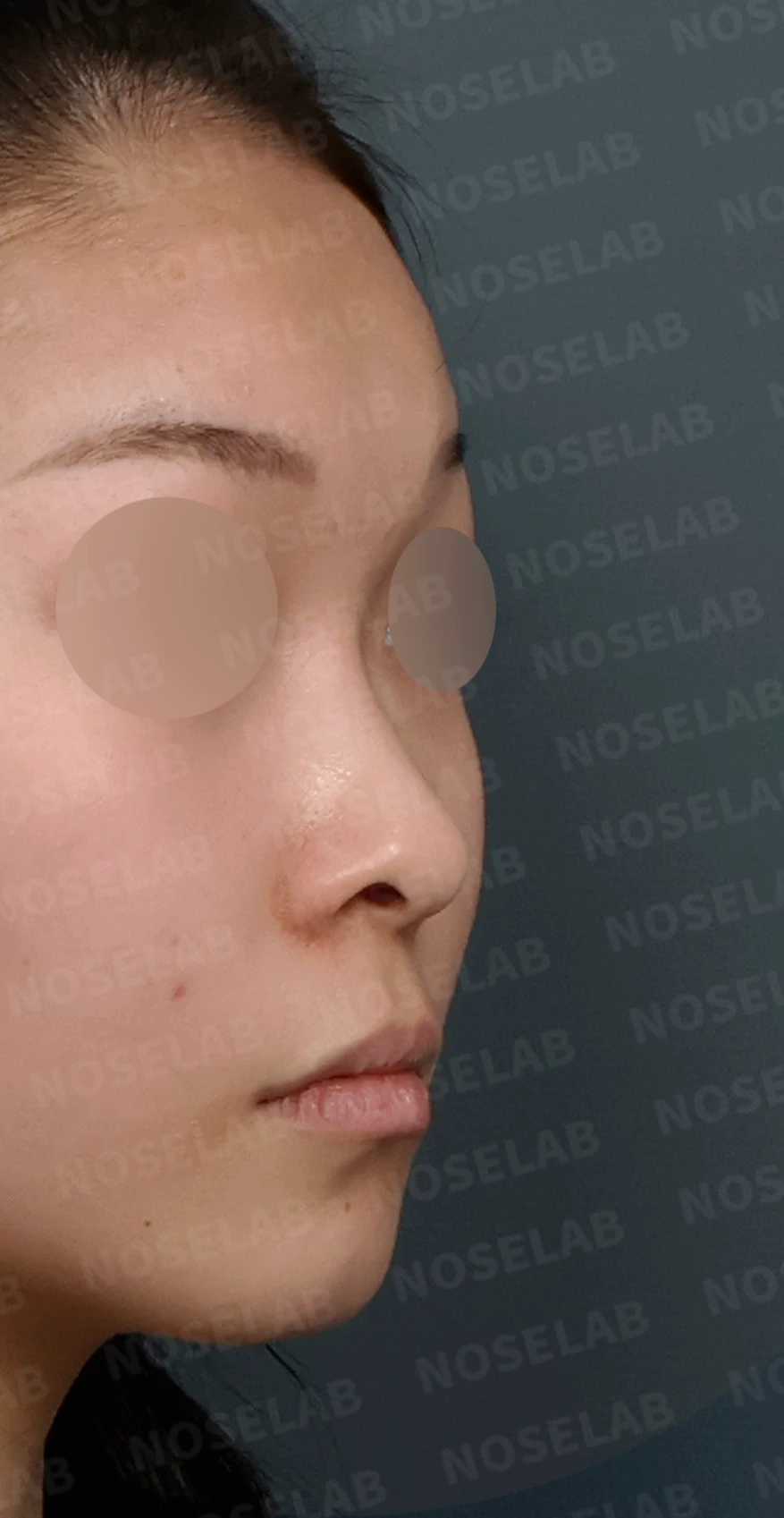
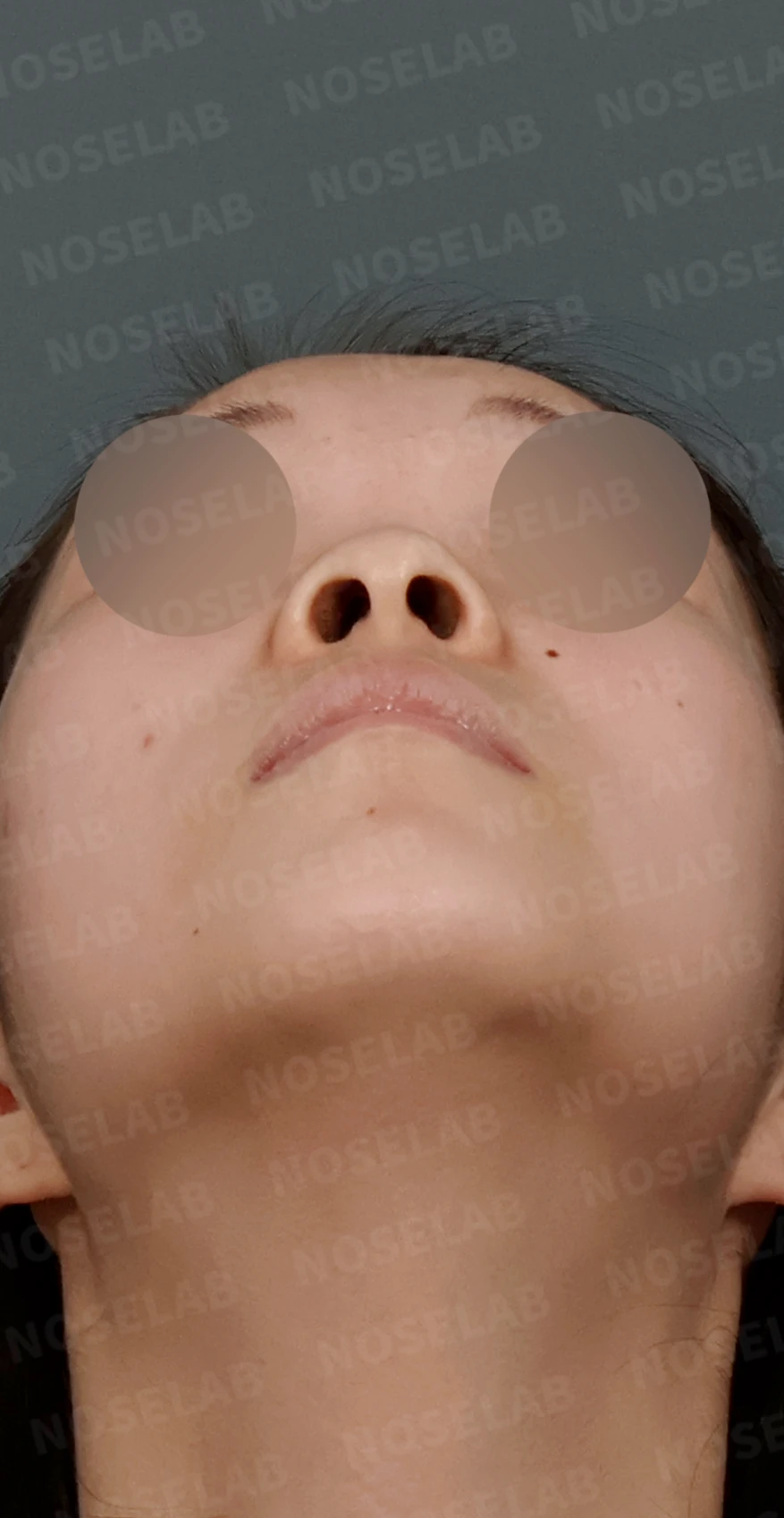
Right profile, oblique, and nostril views during design consultation.
🔧 Surgical plan and procedure
1. Nasal tip plasty using donor rib cartilage
Reinforcing the nasal tip support structure with donor rib cartilage
Bringing together the wide nasal tip for a slimmer definition
Naturally raising the nasal tip height to create a refined line
2. Nasal bridge augmentation using a silicone implant
Silicone implant precisely carved to fit the nasal bone
Naturally connecting the nasal tip and the forehead line
Providing natural height along the dorsum
3. Septoplasty and inferior turbinate reduction
Internal nasal structures realigned by correcting the deviated septum
Rhinitis symptoms improved by reducing hypertrophied inferior turbinates
Restoration of breathing function
🌟 Surgical results
Front view changes
The previously wide-looking nasal tip is gathered into a slimmer shape
The overall width of the nose is naturally reduced
An overall refined and balanced nasal contour
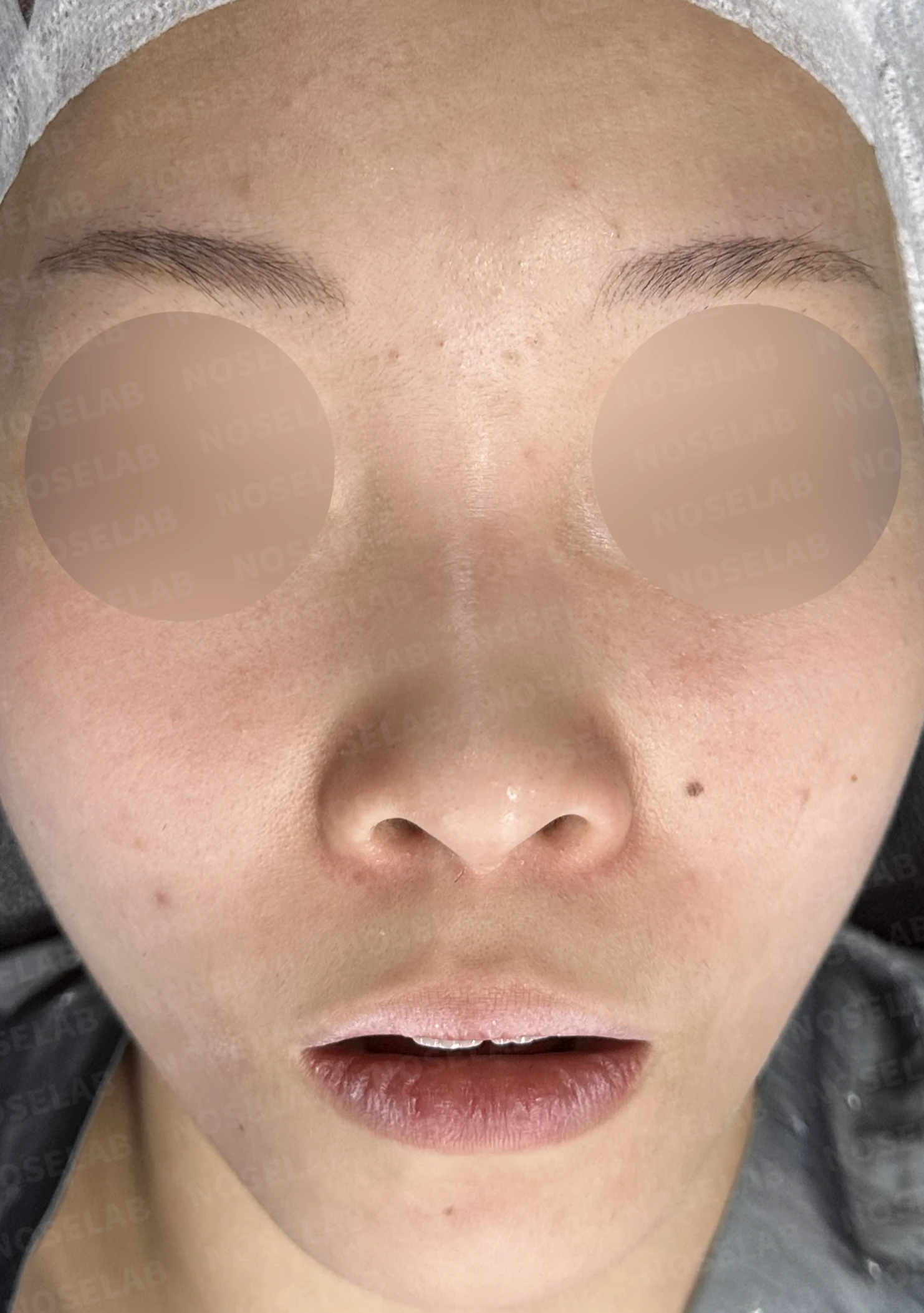
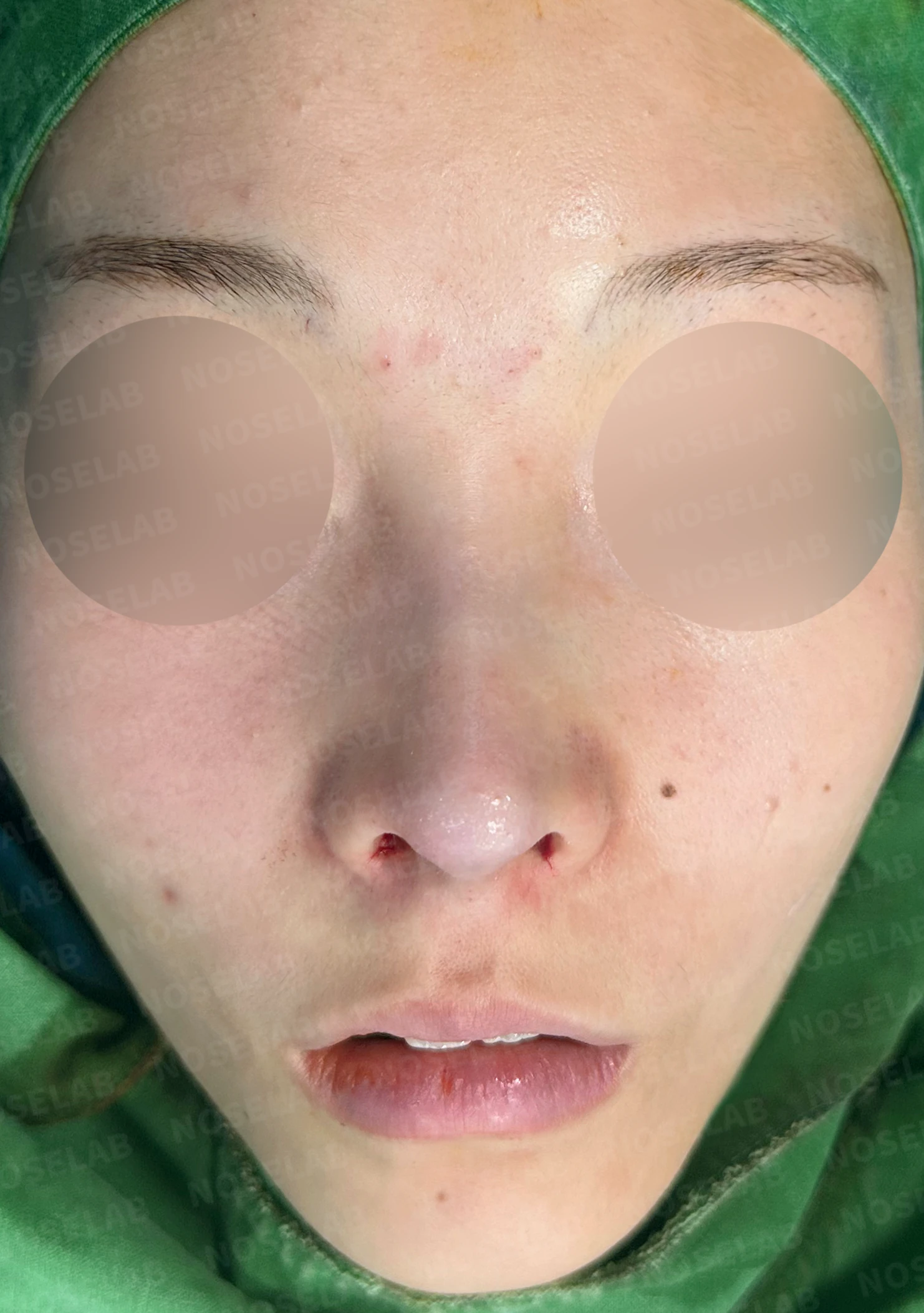
Before surgery / Day 0 immediately after surgery Photos taken immediately after surgery show swelling and may differ from the final result.
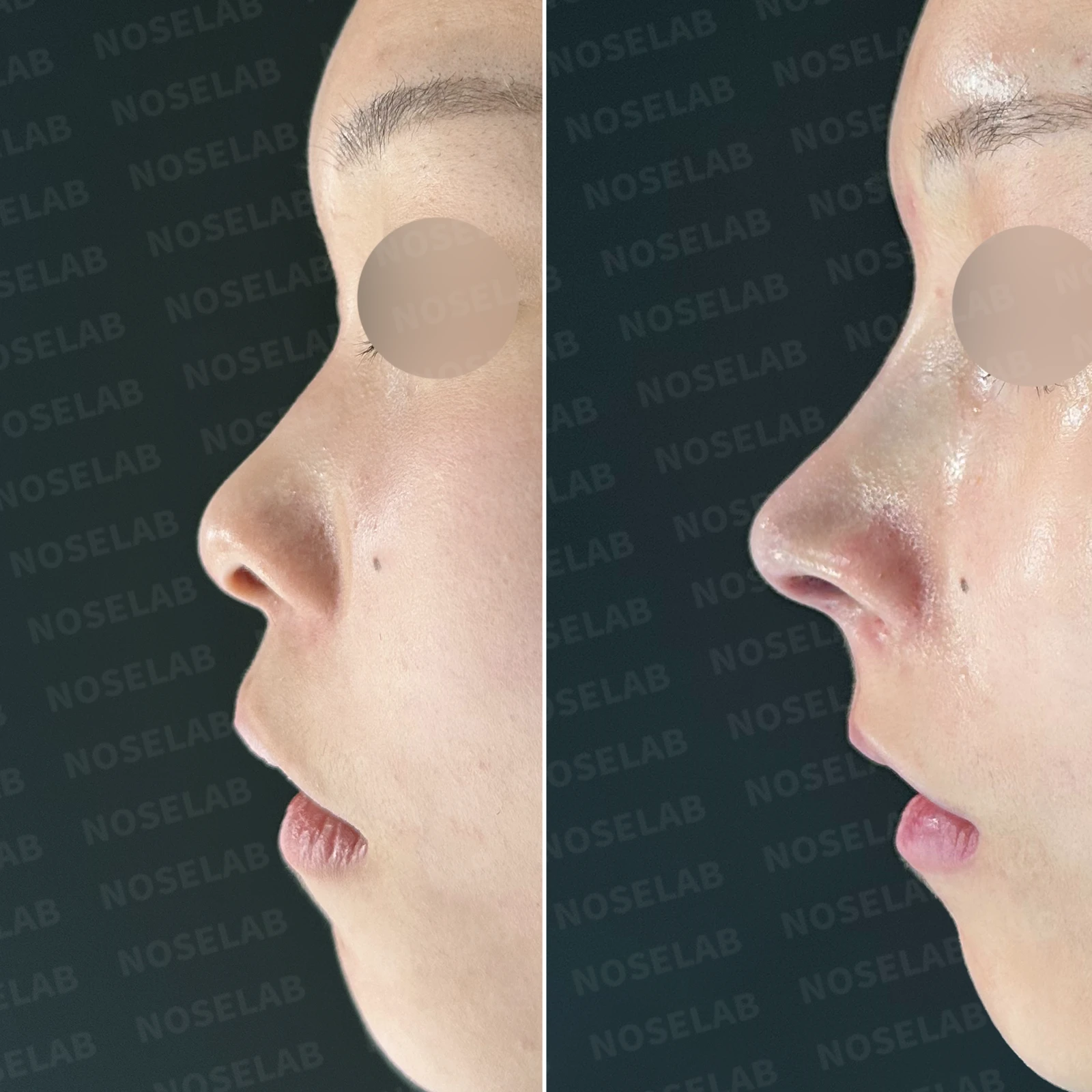
Profile view changes
Previously low nasal bridge naturally elevated
Creating a smoothly transitioning line from the forehead to the nasal tip
The nasal tip is elevated distinctly, completing a refined profile silhouette
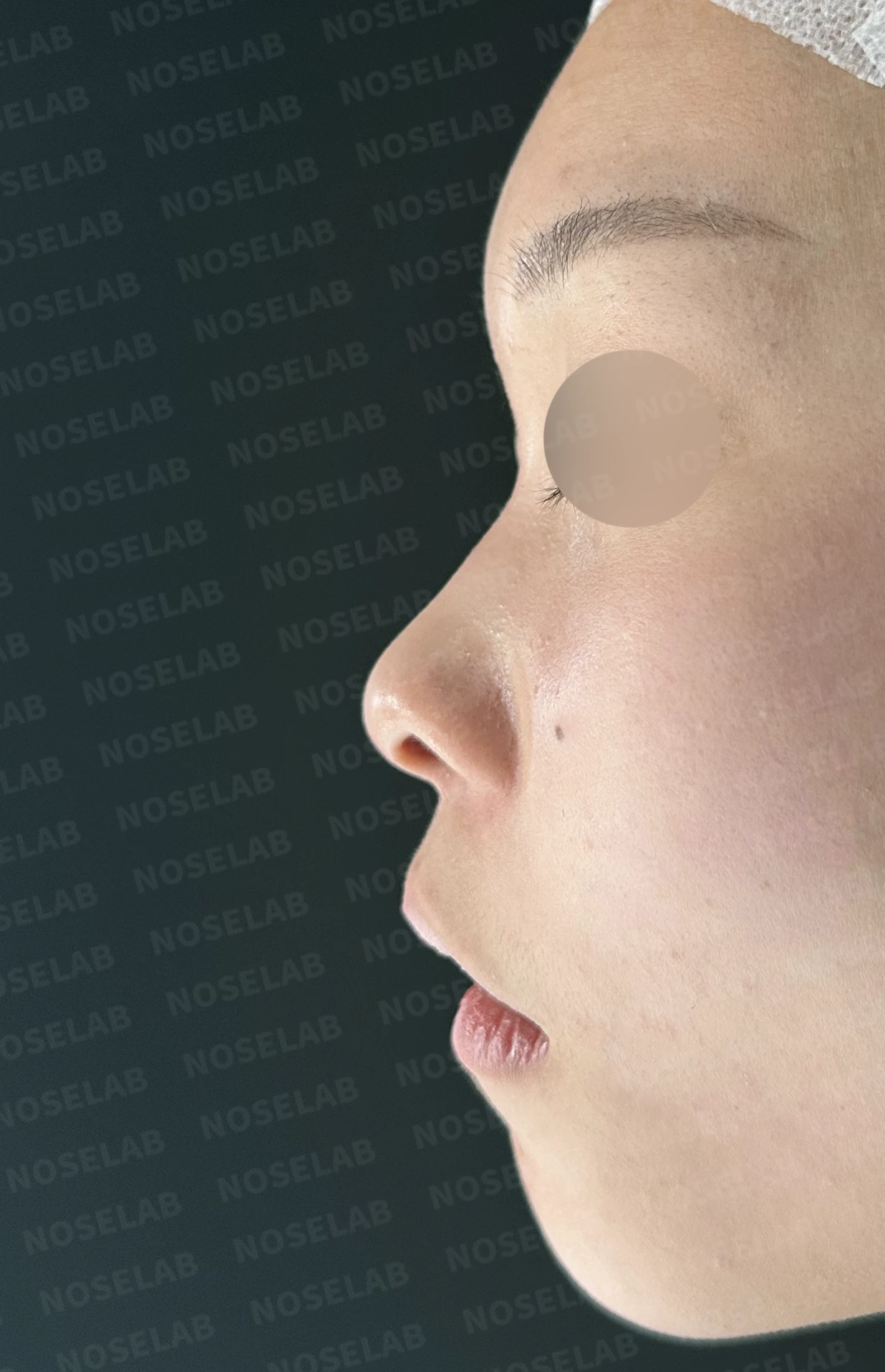
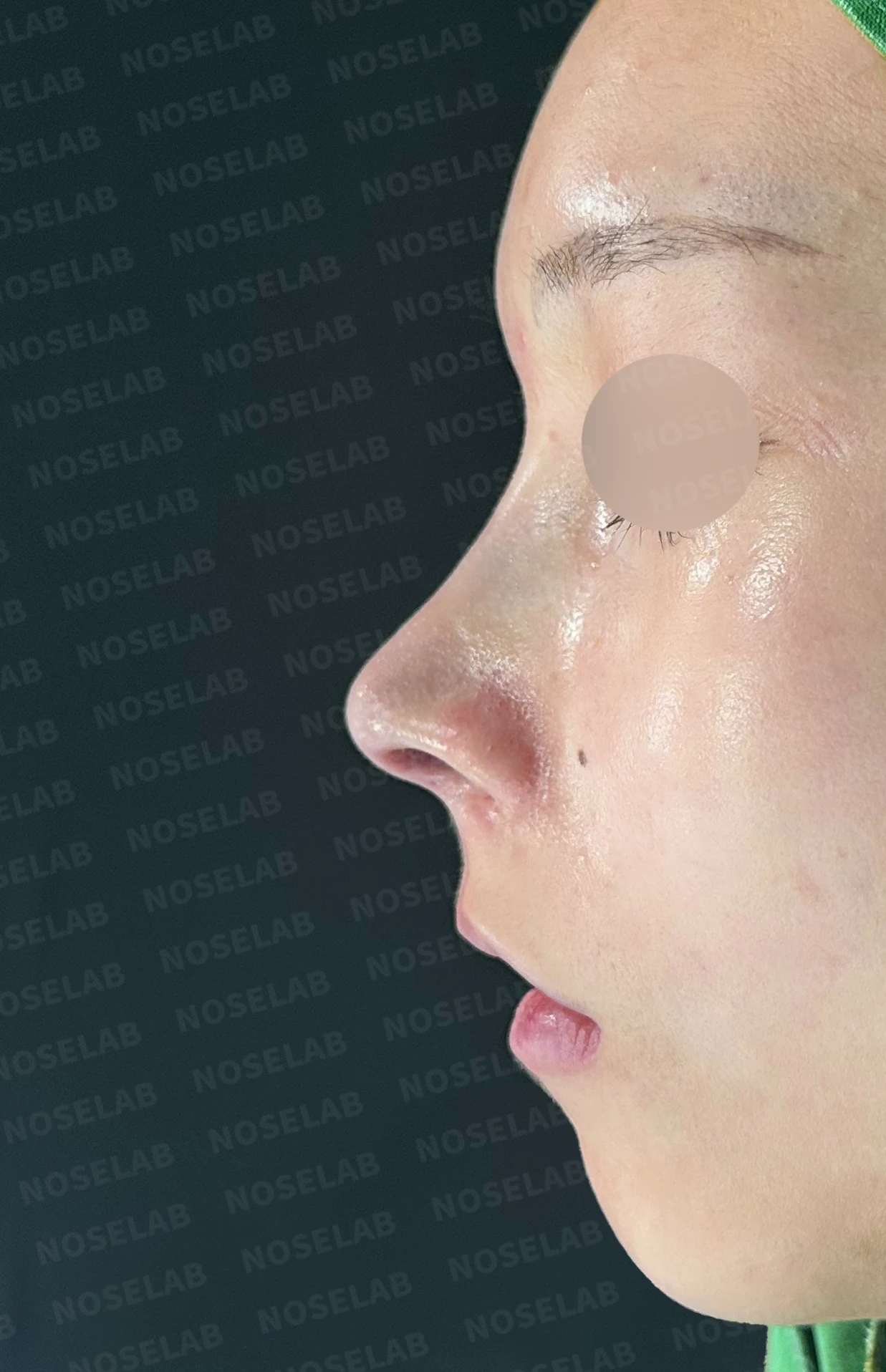
Before surgery / Day 0 immediately after surgery Photos taken immediately after surgery show swelling and may differ from the final result.
Changes on the oblique view
Natural nasal contour visible even at a 45-degree angle
A harmonious line between the elevated bridge and the gathered tip
A sense of balance that suits the entire face
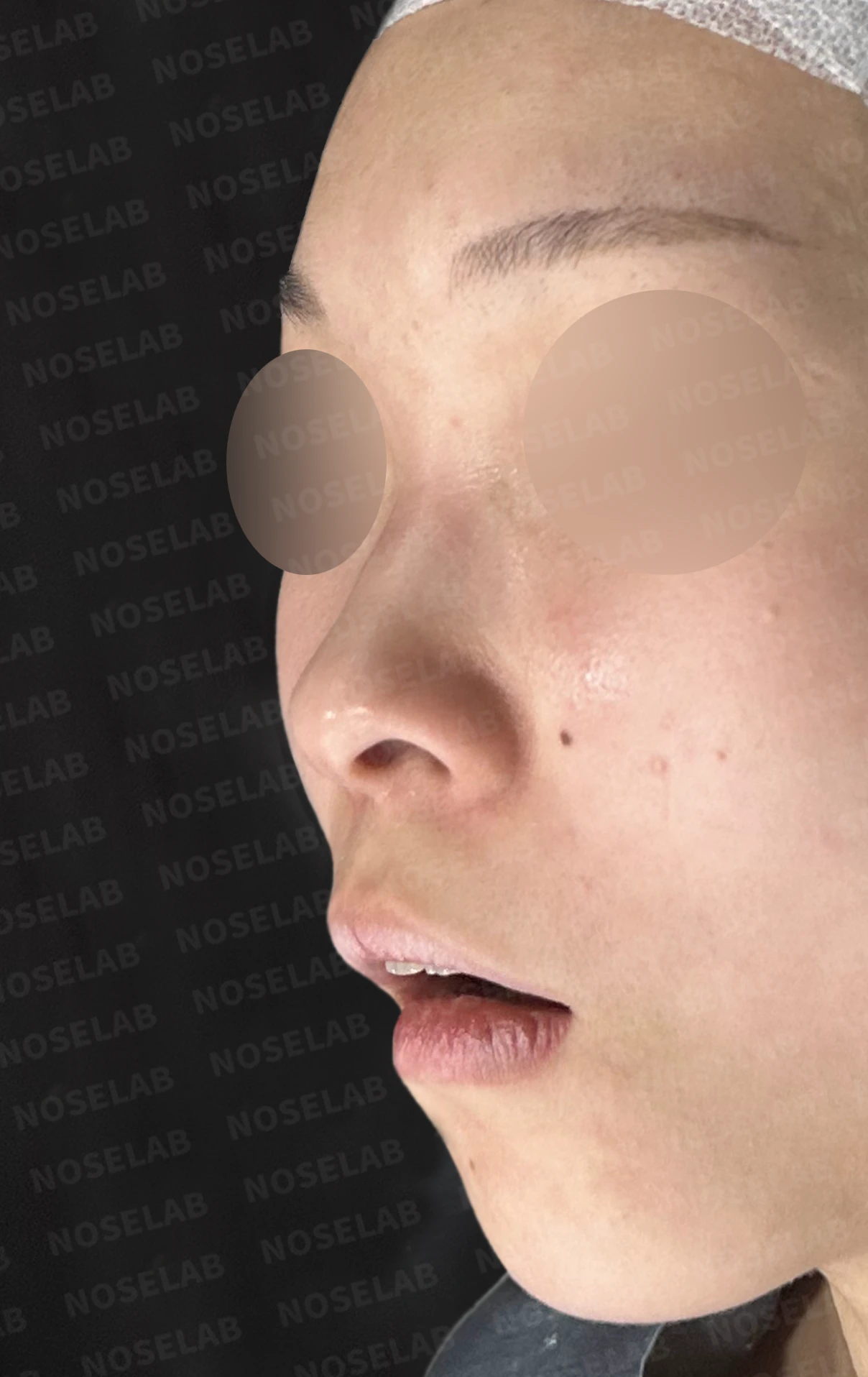
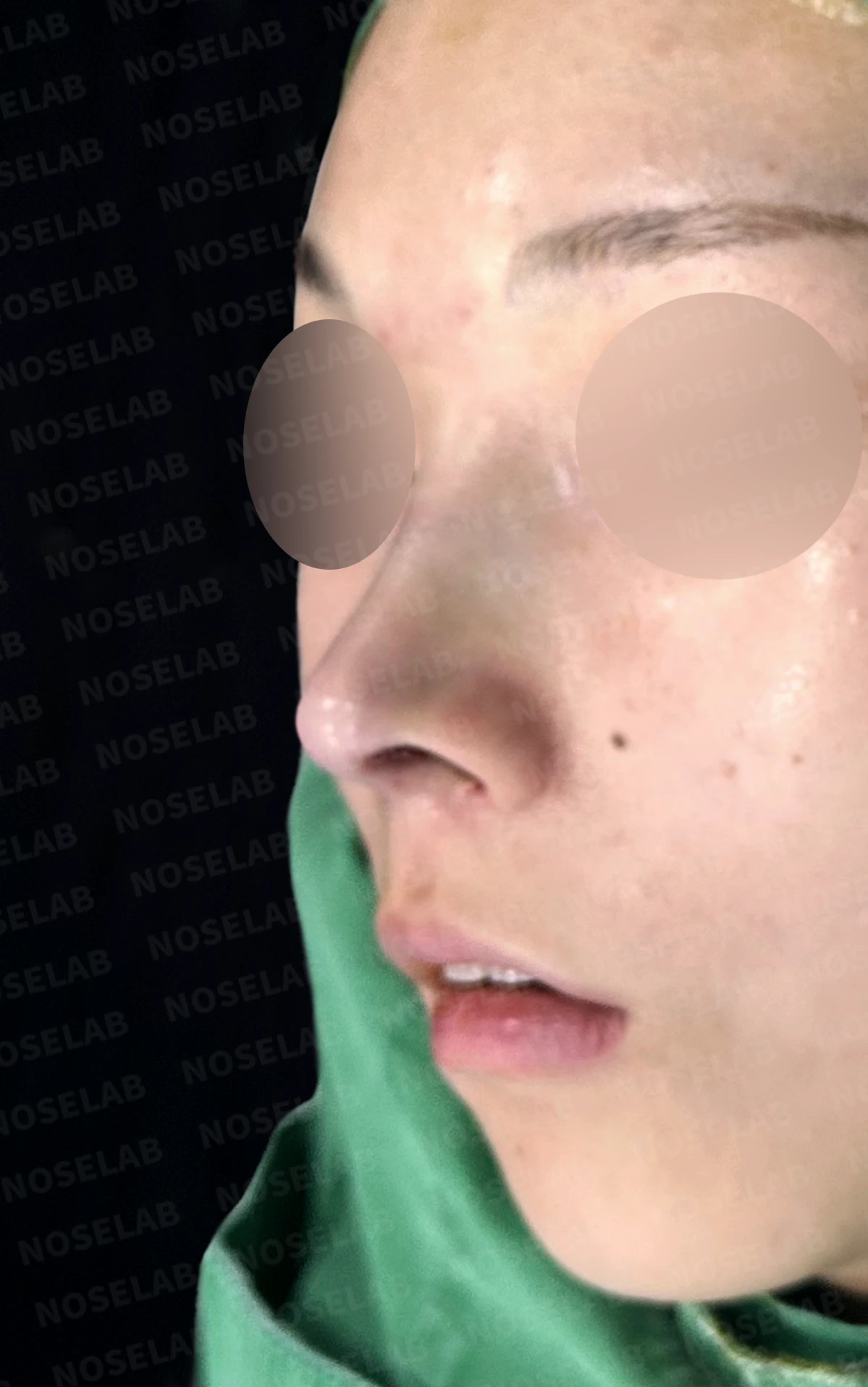
Before surgery / Day 0 immediately after surgery Photos taken immediately after surgery show swelling and may differ from the final result.
Changes in nostril shape
As the wide nasal tip was gathered, the nostril shape also changed naturally
Balanced, symmetric nostril shape
Overall neat and refined nasal base line
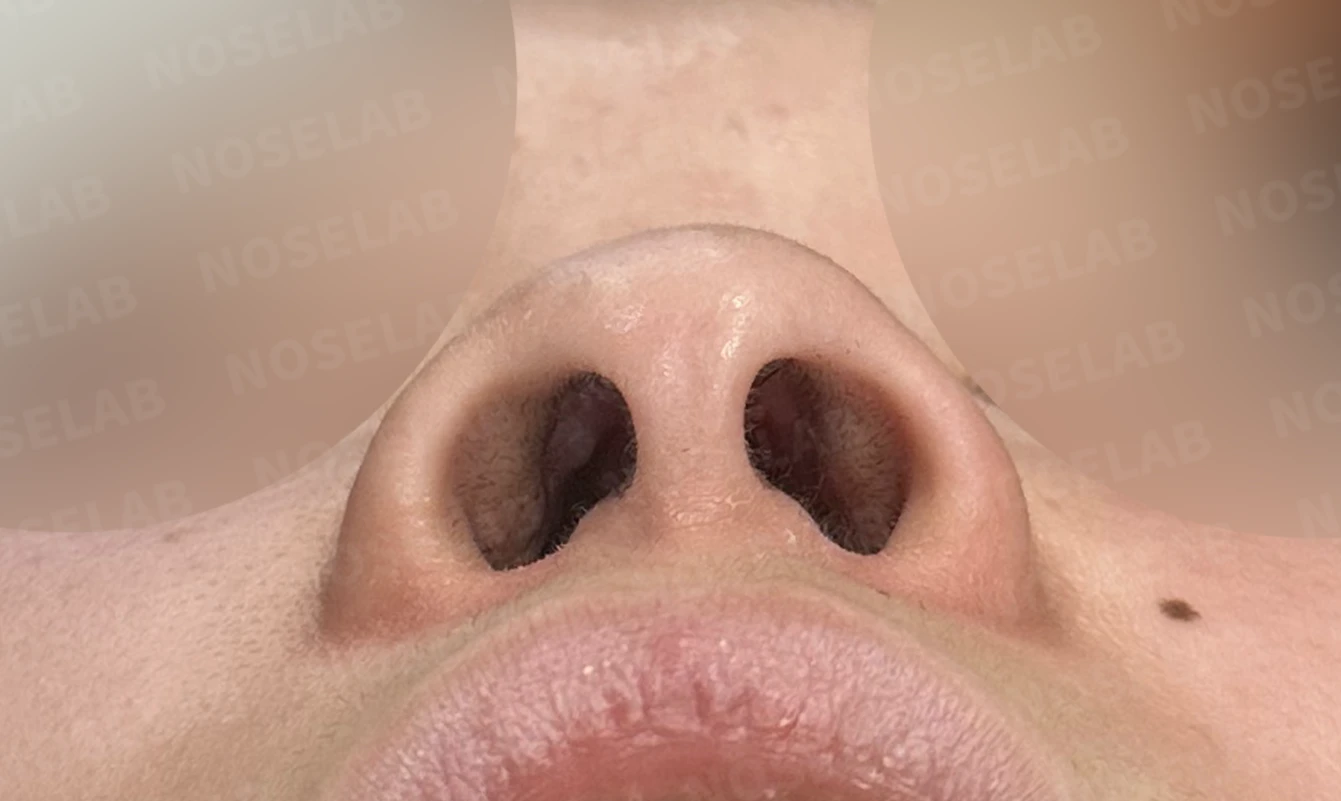
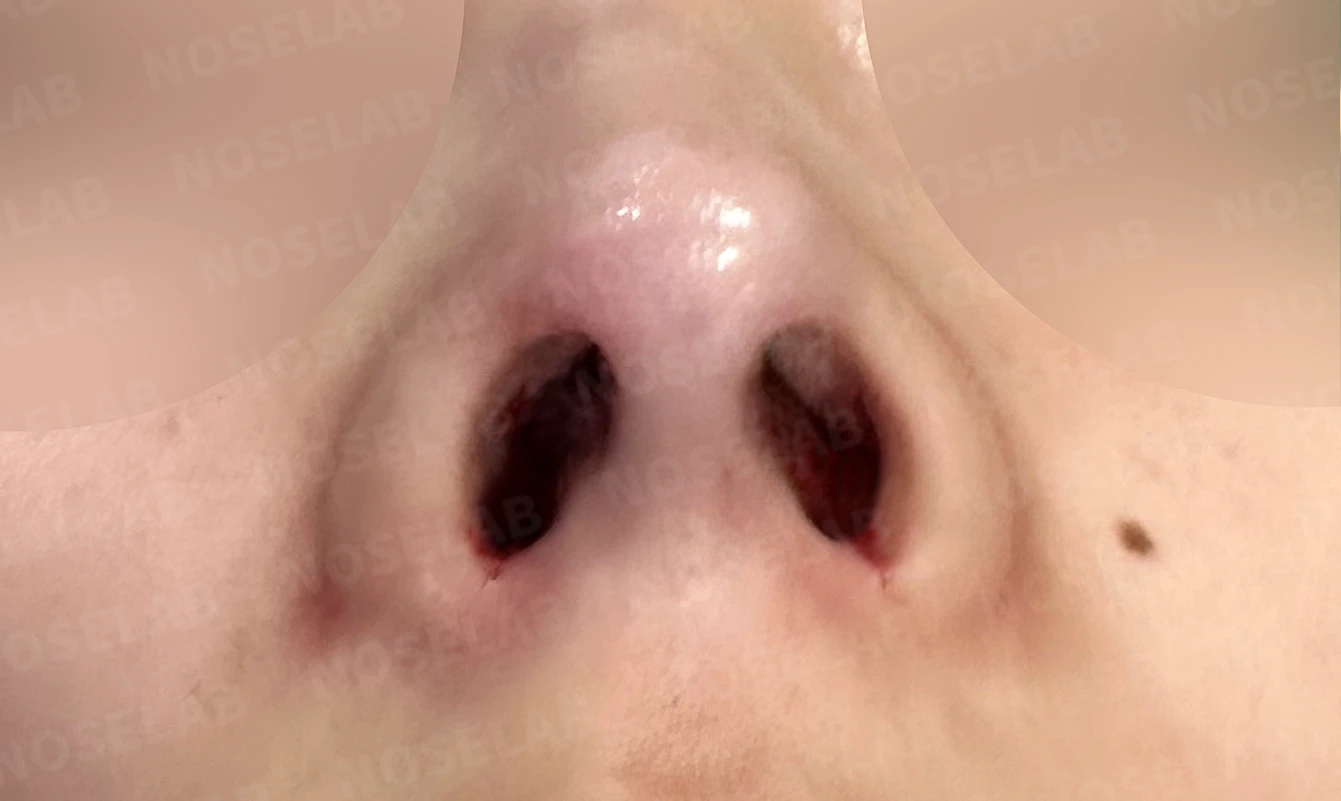
Before surgery / Day 0 immediately after surgery Photos taken immediately after surgery show swelling and may differ from the final result.
💡 Specialist opinion
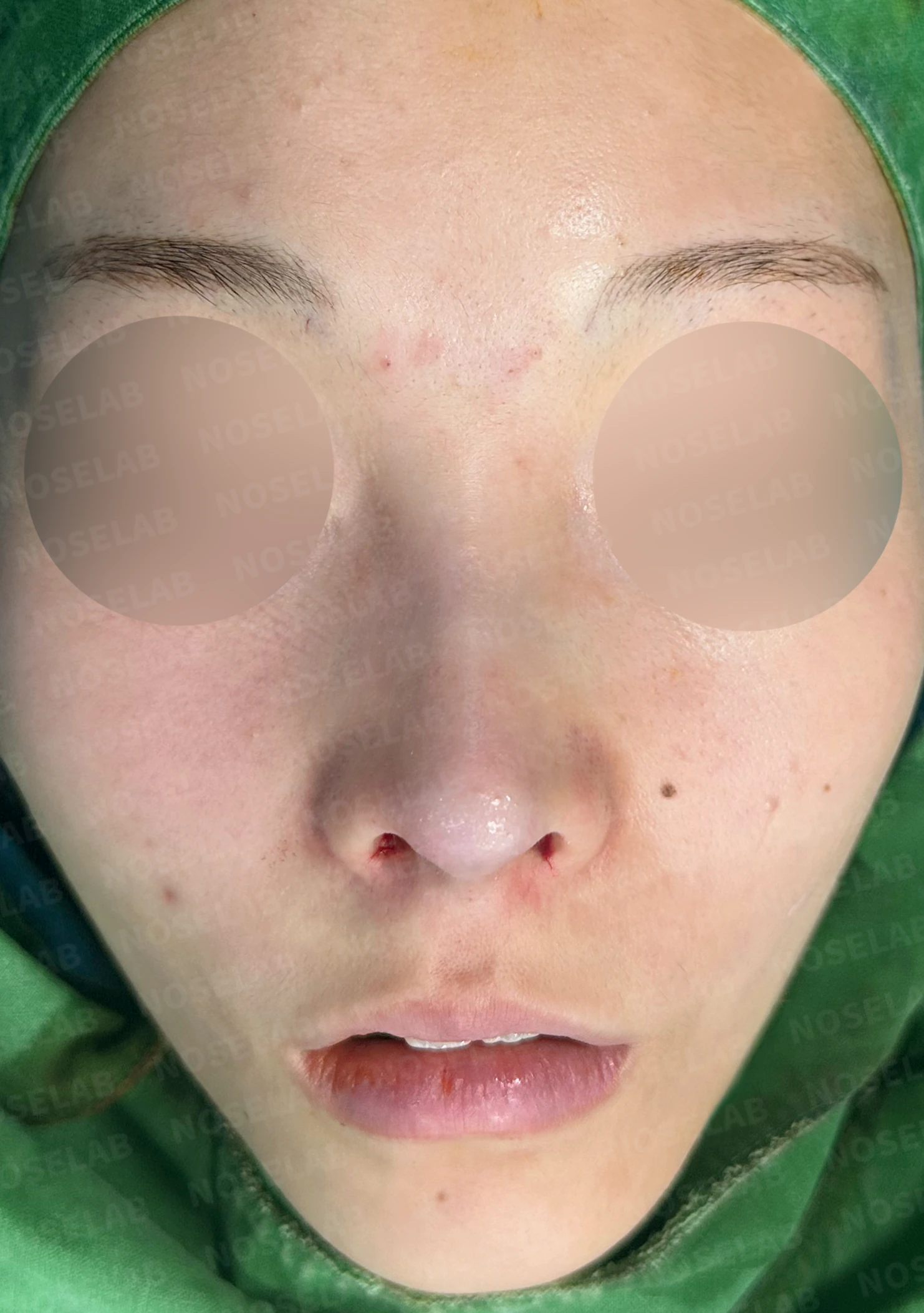
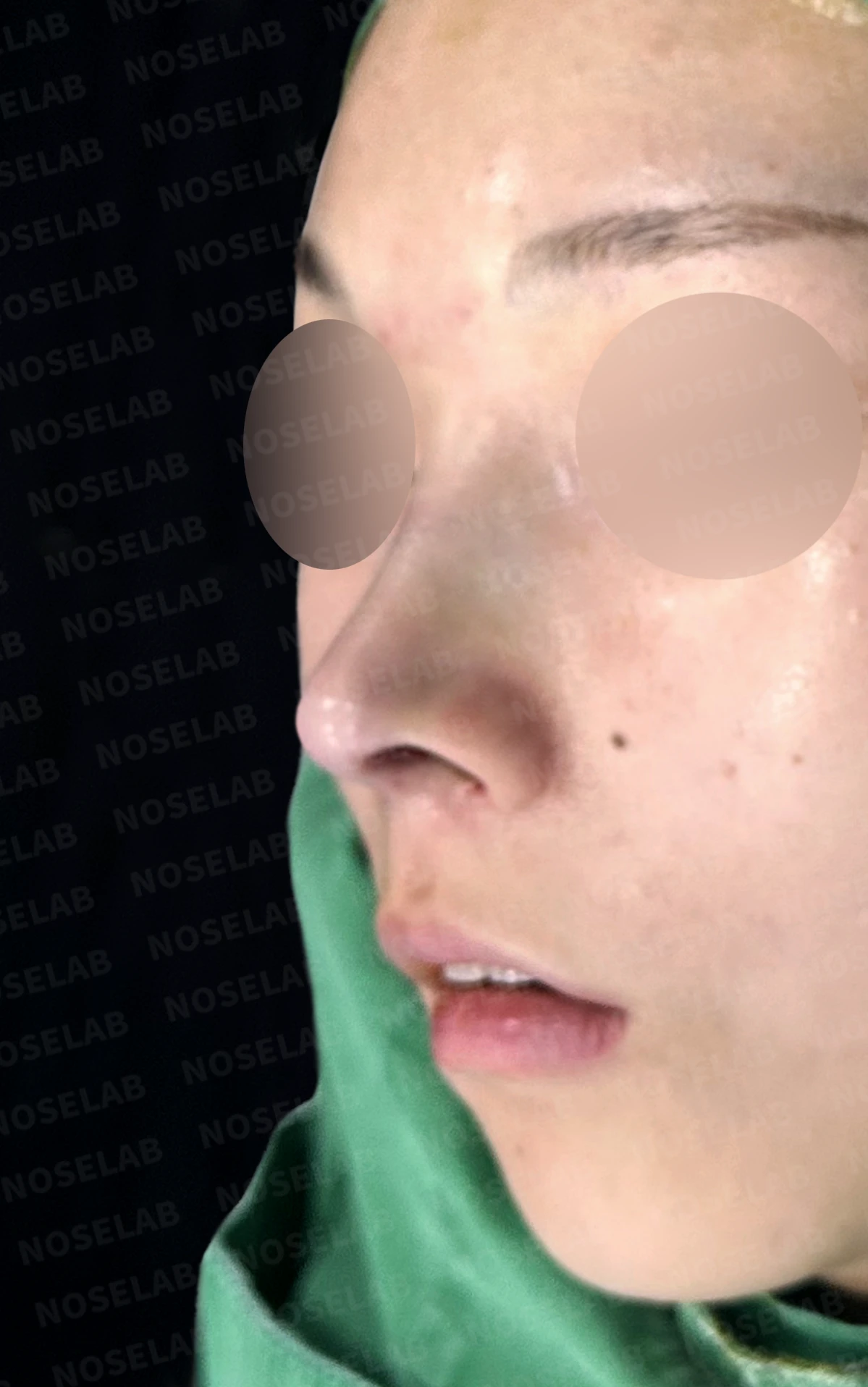
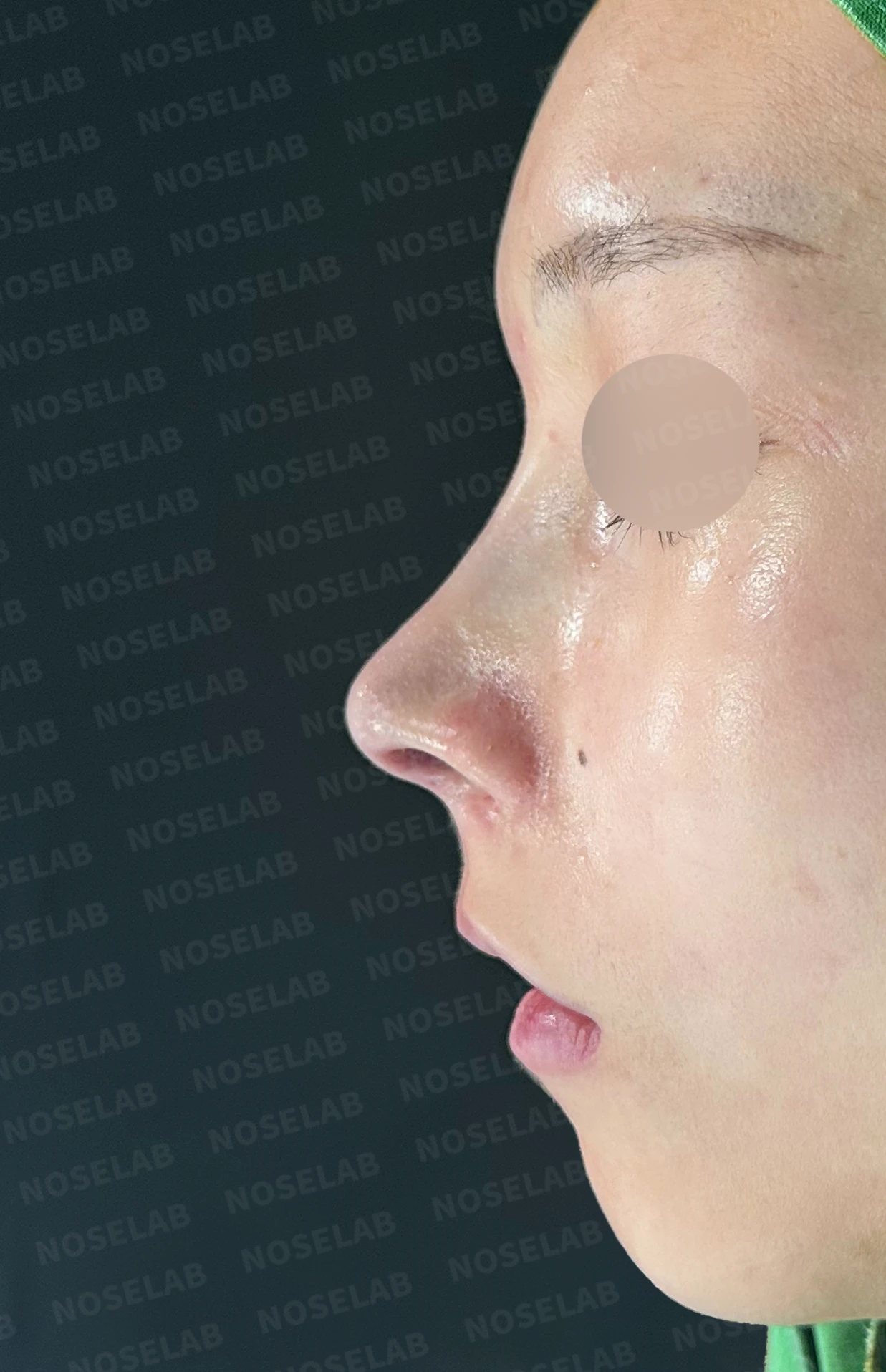
Front, oblique, and profile views on day 0 immediately after surgery. Photos taken immediately after surgery show swelling and may differ from the final result.
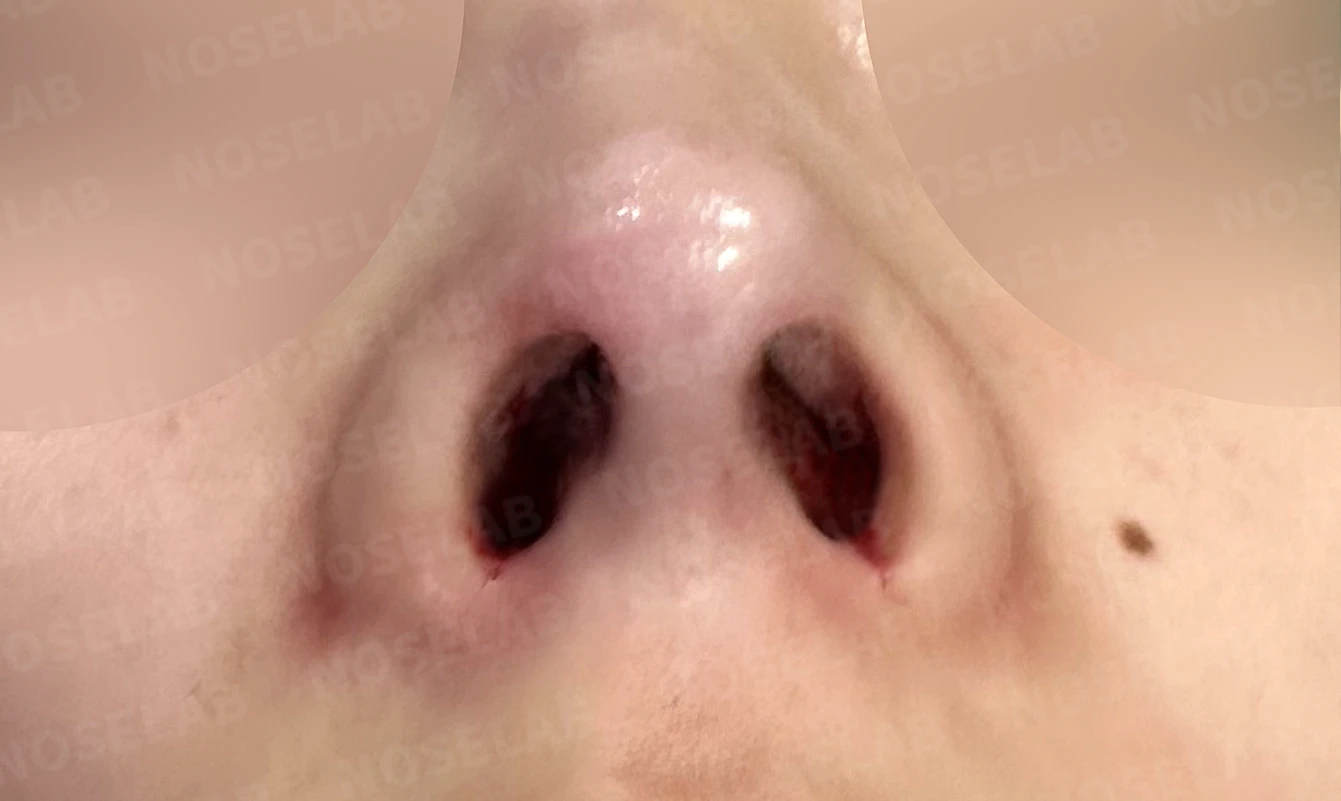
Nostril view on day 0 immediately after surgery. Photos taken immediately after surgery show swelling and may differ from the final result.
A low and wide nose is a common anatomical presentation among Asians. In these cases, rather than simply raising the nasal bridge, it is crucial for a natural result to properly reconstruct the framework of the nasal tip and bring the spread tissues together.
In this surgery, donor rib cartilage was used to reinforce the nasal tip support framework and gather the wide tip into a slimmer profile. Donor rib cartilage provides sufficient structural support without the need to harvest autologous cartilage, which reduces physical burden for the patient while building a stable nasal tip structure.
For the nasal bridge, a silicone implant was carved meticulously to match the contours of the patient's nasal bone and positioned on the dorsum. Rather than focusing merely on height, emphasis was placed on naturally connecting the nasal tip to the forehead line, completing a nasal contour in harmony with the entire face.
In addition, septoplasty and inferior turbinate reduction were performed concurrently to address nasal obstruction. Performing rhinoplasty and functional nasal surgery together is efficient, as it allows both aesthetic refinement and airway improvement to be achieved in a single operation.
For those concerned about a low and wide nose, rather than unconditionally raising the height, it is essential to establish a surgical plan that comprehensively considers the balance between the nasal tip and bridge. At NOSELAB, we analyze each patient's facial shape and nasal characteristics to achieve the most natural result possible.
This was Dr. Peter C. Kang. Thank you.
#closedrhinoplasty #closedrevisionrhinoplasty #lownosecorrection #widenosecorrection #donorribcartilage #tipplasty #deviatedseptum #nasalobstructionsurgery #siliconeimplant

Limitations and risks
When using donor rib cartilage, long-term follow-up is necessary because the grafted cartilage may resorb or warp.
When the septum is corrected at the same time, nasal obstruction may persist or recur, and in rare cases, septal perforation or changes in smell may occur.
Common potential risks include infection, bleeding, asymmetry, scarring, skin necrosis, and insufficient improvement; results vary depending on individual skin condition and previous surgical history.