English日本語简体中文
Skip to main content
Dr. Peter C. Kang's Rhinoplasty Stories
PrologueBlogMy thoughtsNasal obstructionSurgical journalSurgical photos
About the surgeon

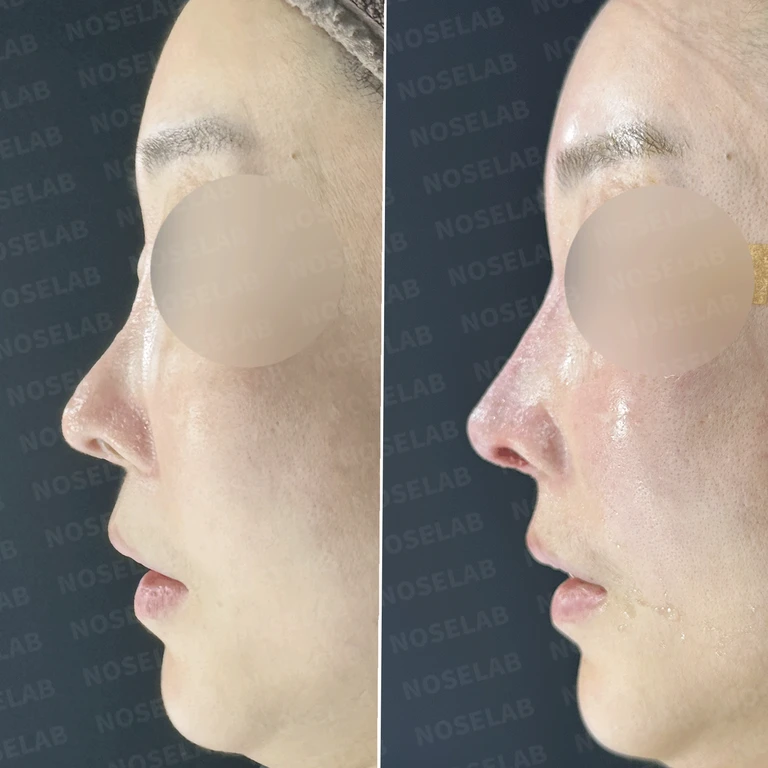
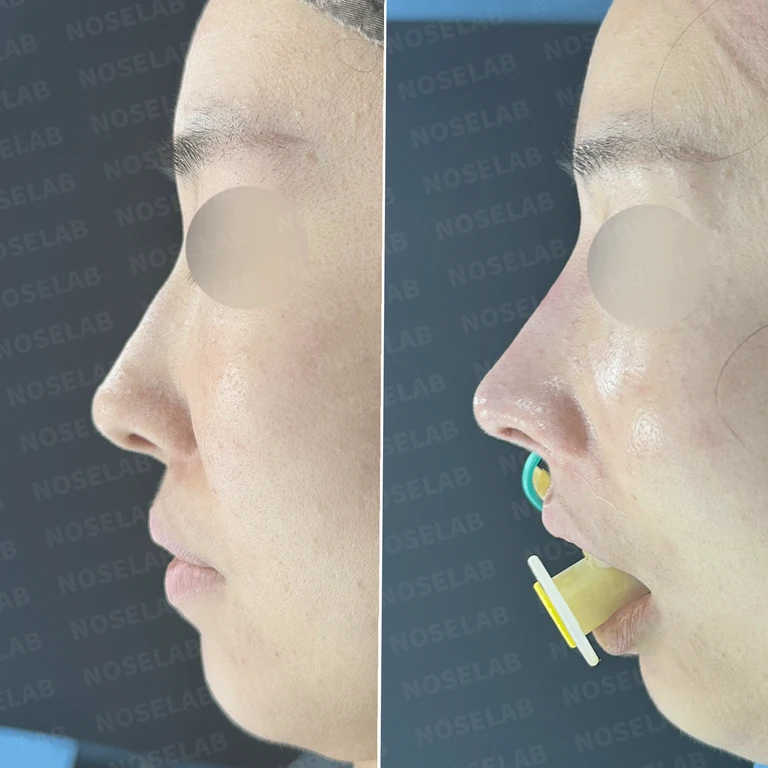
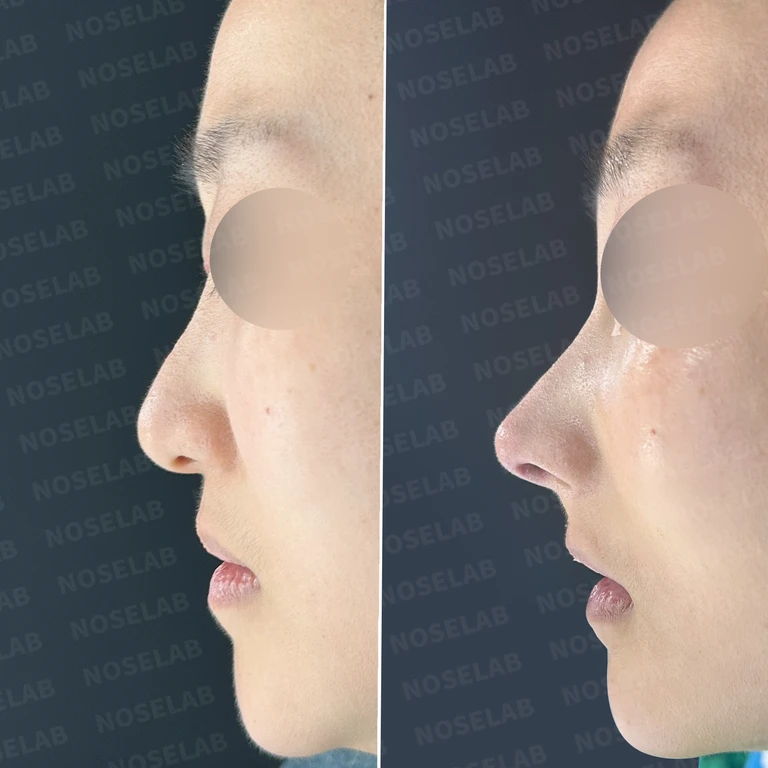
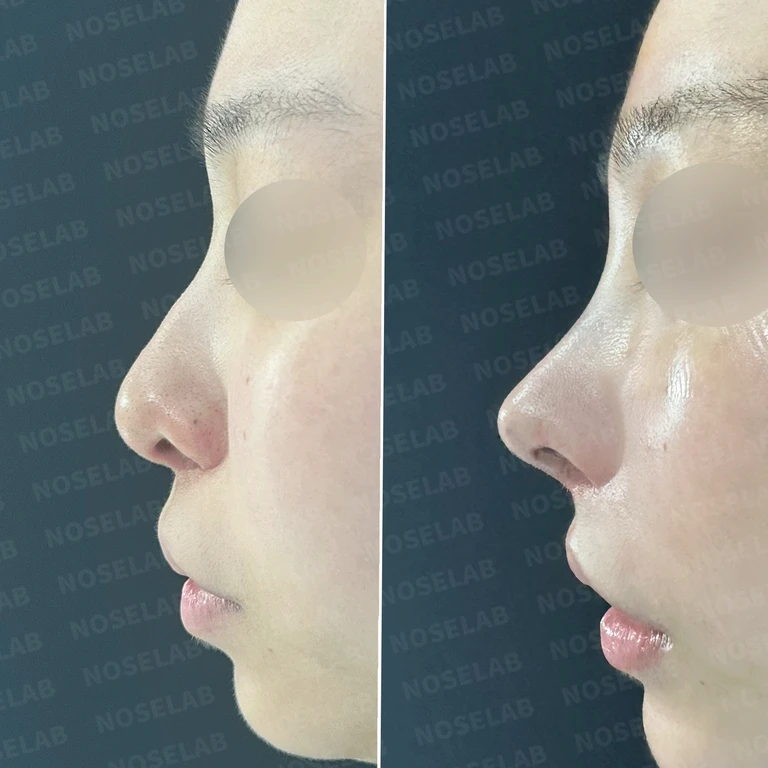
Low and depressed nasal bridge: distinguishing preoperative height from postoperative changes

Among the cases addressing a low nasal bridge (dorsum), some document changes that occurred following previous surgeries. These explain instances where artificial dermis used on the nasal bridge partially absorbed and decreased in height, as well as cases where the bridge appeared spread and depressed after implant removal. This allows you to distinguish between baseline height and changes in height after surgery.

Rather than merely showing how much the nasal bridge was elevated, this collection connects the areas that appeared low with the patient's recorded concerns. Changes in previous materials, the relationship with the starting point between the eyebrows (glabella), and the position or deviation of the nasal tip are all addressed together. Identify which area appeared depressed in the original article first, and then compare the removed materials with the materials used in this surgery.

View before-and-after cases ↓Comprehensive rhinoplasty guide

Searching for surgical cases matching your criteria.
Why the nasal tip turns up and the columella droops, and how septal extension is performed — Before-and-after comparison
Before-and-after comparison

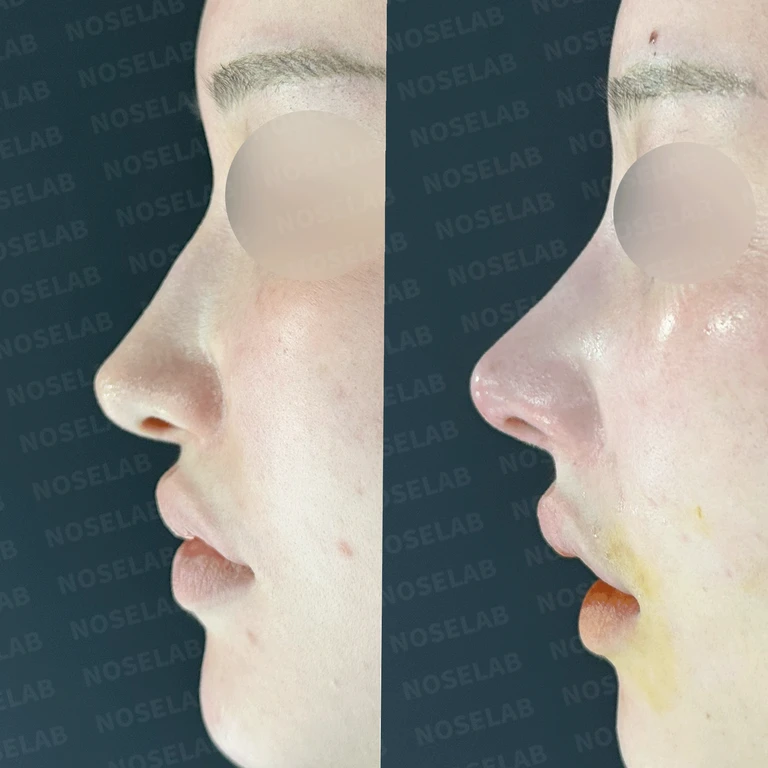
Why the nasal tip turns up and the columella droops, and how septal extension is performed

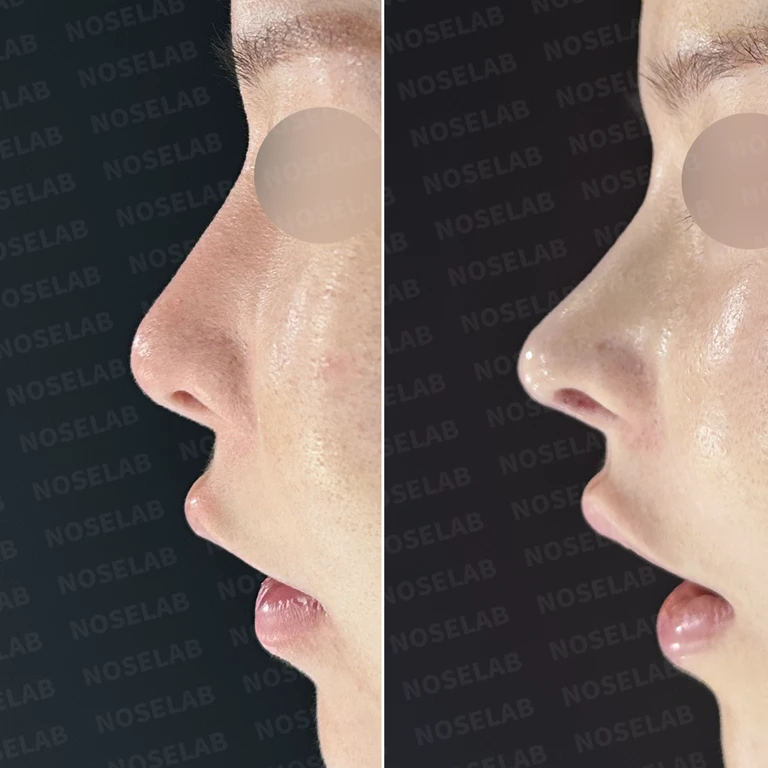
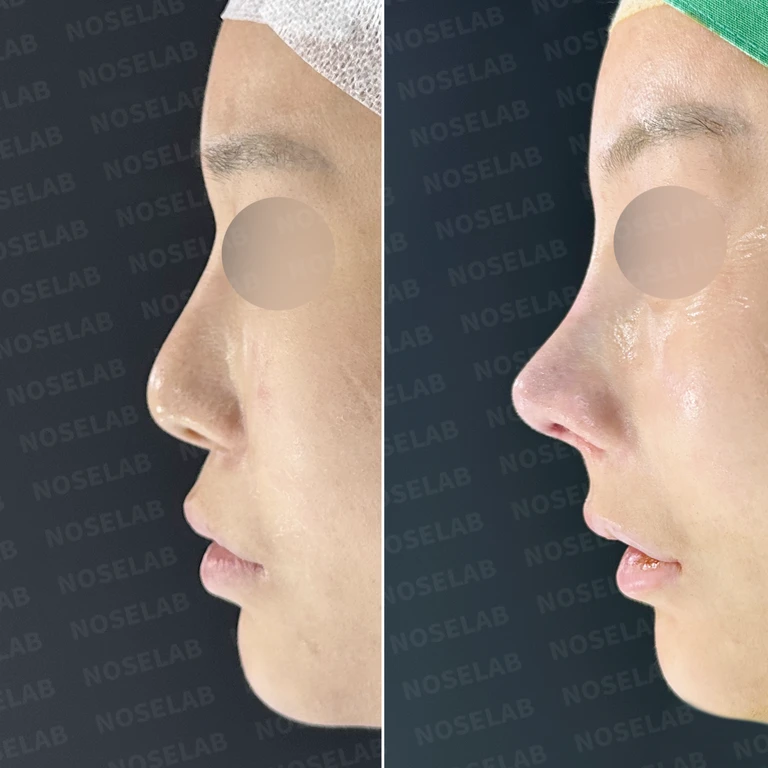
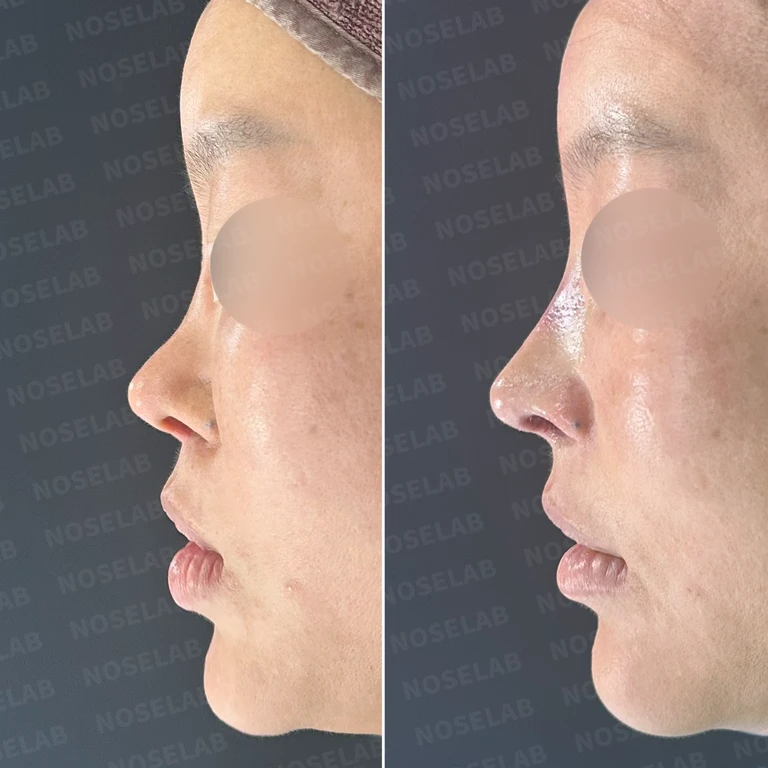
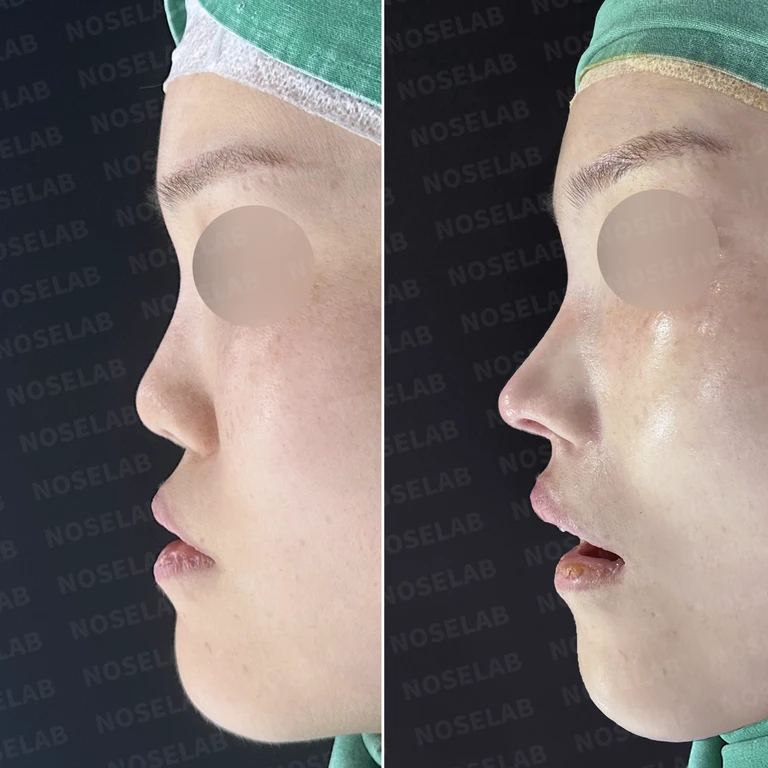
A case where a short, upturned nasal tip and a drooping columella in an unoperated nose were corrected through septal extension. A strut was built using donor rib cartilage and septal cartilage, accompanied by columellar elevation and silicone implant placement.

Preoperative condition · Postoperative record
Why implants alone should not be placed in a small, low nose and nasal tip support structure — Before-and-after comparison
Before-and-after comparison

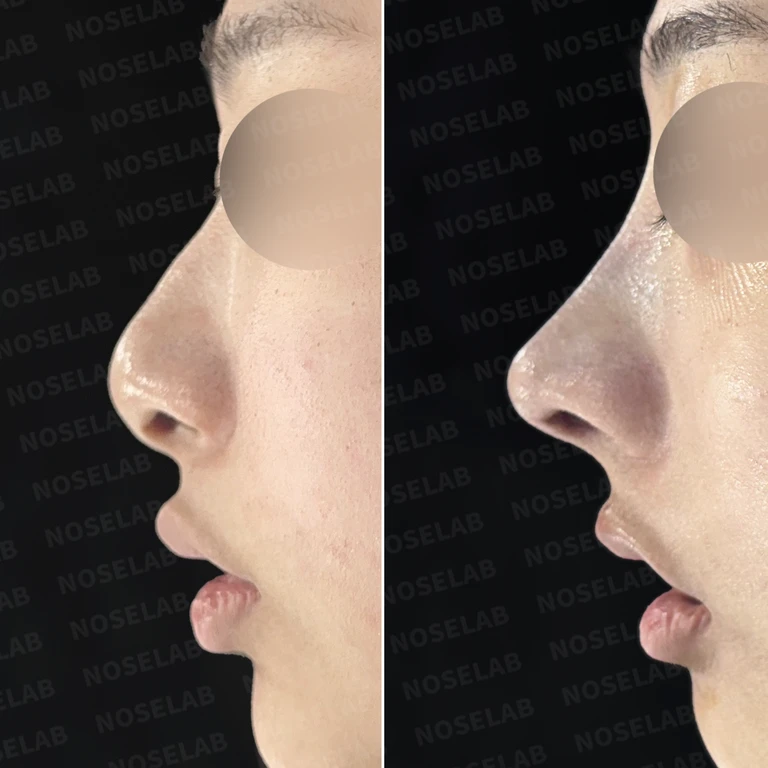
Why implants alone should not be placed in a small, low nose and nasal tip support structure

A primary rhinoplasty case involving a small, low nose and an upturned tip causing excessive nostril show. Using a closed approach, septal reconstruction with autologous rib cartilage, nasolabial angle correction, artificial dermis skin reinforcement, and a silicone implant were performed.

Preoperative condition · Postoperative record
Why a narrow nasolabial angle with a dorsal hump makes the mouth appear protruding and how to correct it — Before-and-after comparison
Before-and-after comparison

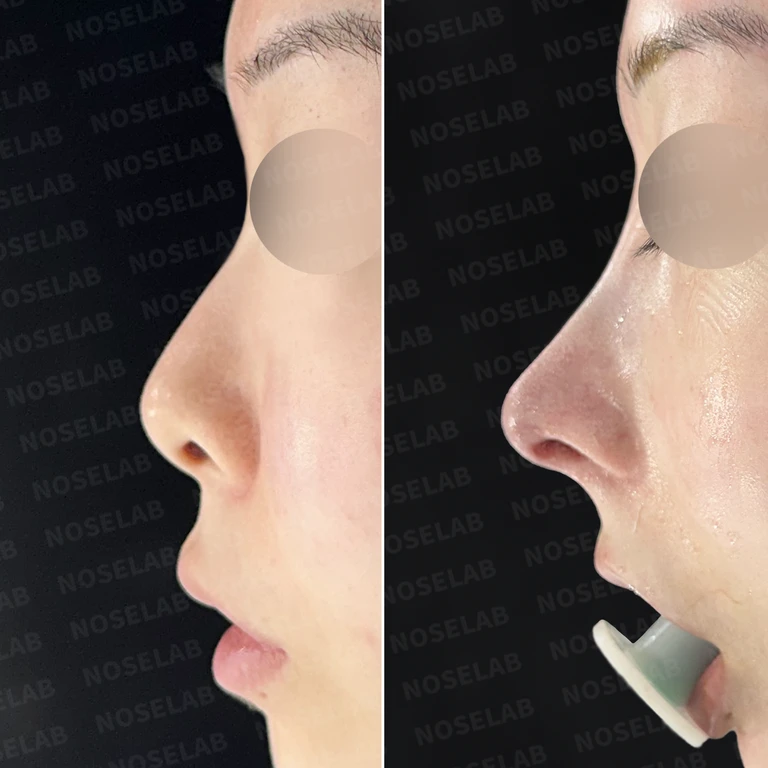
Why a narrow nasolabial angle with a dorsal hump makes the mouth appear protruding and how to correct it

This is a primary rhinoplasty case correcting an irregular dorsal hump and an acute nasolabial angle. Using a closed approach, we refined the dorsal hump, performed nasal tip plasty with autologous rib cartilage, reconstructed the septum, placed a silicone implant, and corrected the nasolabial angle.

Preoperative condition

Why a nose can look short and upturned after repeated surgeries, and how rib cartilage tip extension works — Before-and-after comparison
Before-and-after comparison

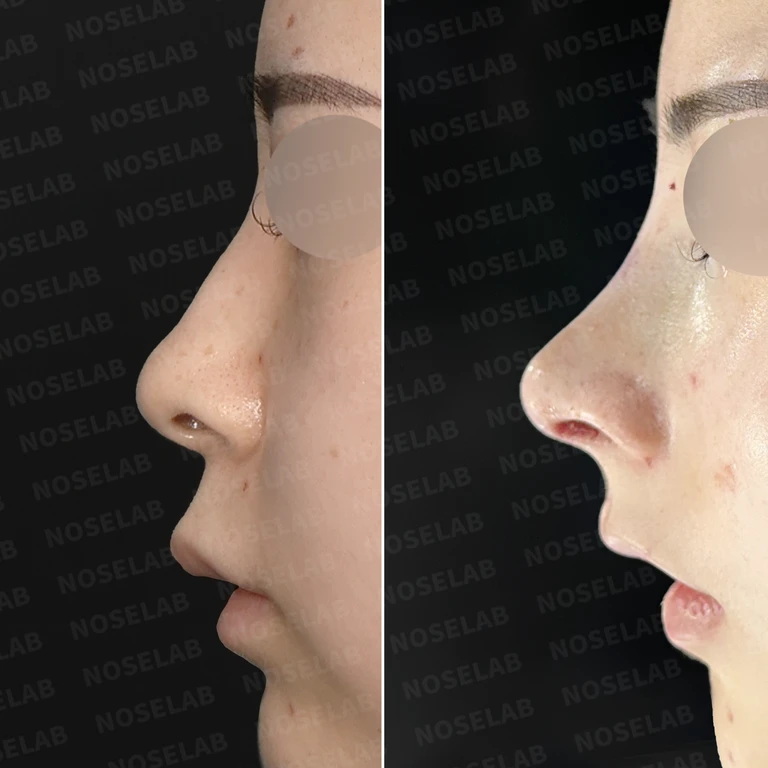
Why a nose can look short and upturned after repeated surgeries, and how rib cartilage tip extension works

Through a closed approach, a nose that became low, upturned, and showed excessive nostril exposure after silicone implant removal was refined using autologous rib cartilage tip extension, nasal bridge height restoration, and correction of the nasolabial angle to 90 degrees.

Preoperative condition

Why a nose looks low and wide: surgical technique starting from the nasal tip structure — Before-and-after comparison
Before-and-after comparison

Why a nose looks low and wide: surgical technique starting from the nasal tip structure

To improve an inherently low and wide nose along with rhinitis symptoms, primary rhinoplasty was performed using donor rib cartilage for tip support, a customized silicone implant for the bridge, and septoplasty.

Preoperative condition · Postoperative record
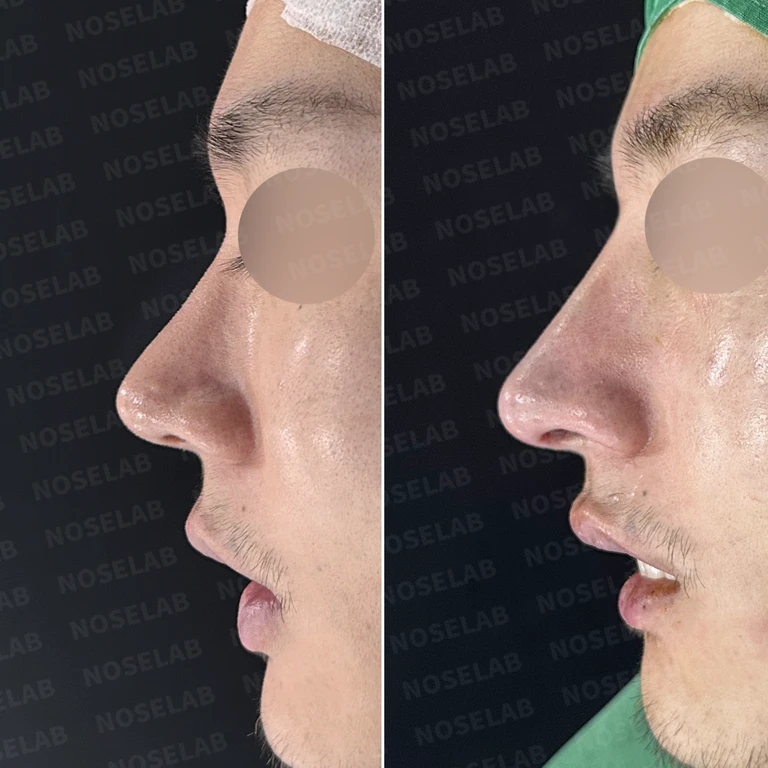
Why nasal obstruction persists after multiple surgeries: How to reconstruct the septum and nasal valve — Before-and-after comparison
Before-and-after comparison

Why nasal obstruction persists after multiple surgeries: How to reconstruct the septum and nasal valve

For a patient whose septum had collapsed after repeated surgeries, causing internal nasal valve stenosis and inferior turbinate adhesions, we performed septal reconstruction with autologous rib cartilage, osteotomy reversal, and adhesiolysis.

Preoperative condition · Postoperative record
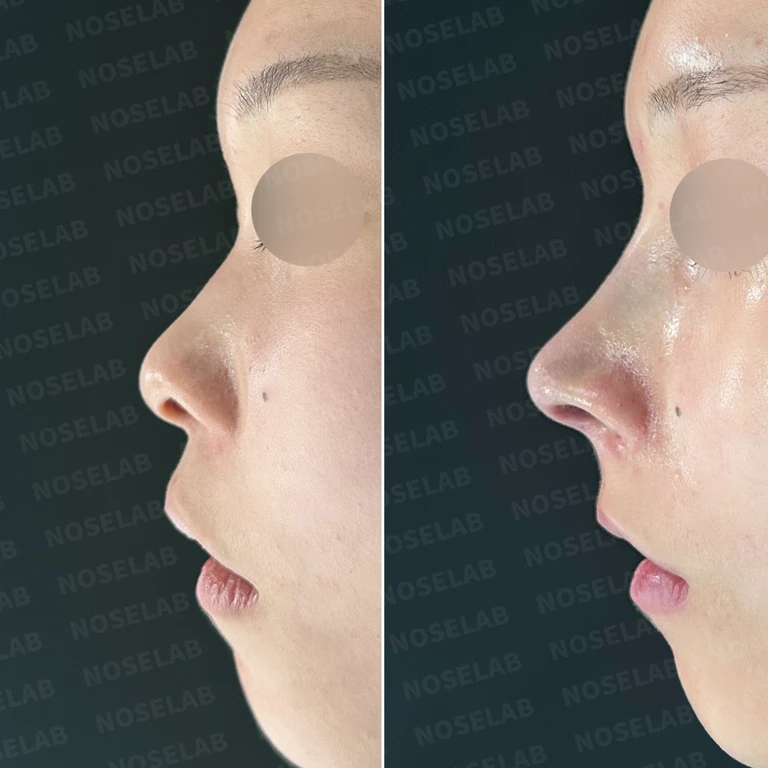
Why the nasal bridge looks low and the tip looks bulbous: how to correct them alongside a retracted columella — Before-and-after comparison
Before-and-after comparison

Why the nasal bridge looks low and the tip looks bulbous: how to correct them alongside a retracted columella

To improve the low, bulbous nasal tip and retracted columella in a patient with no previous surgical history, autologous rib cartilage was used to reinforce the septum, elevate the nasal bridge and nasal tip, and correct the nasolabial angle.

Preoperative condition · Postoperative record
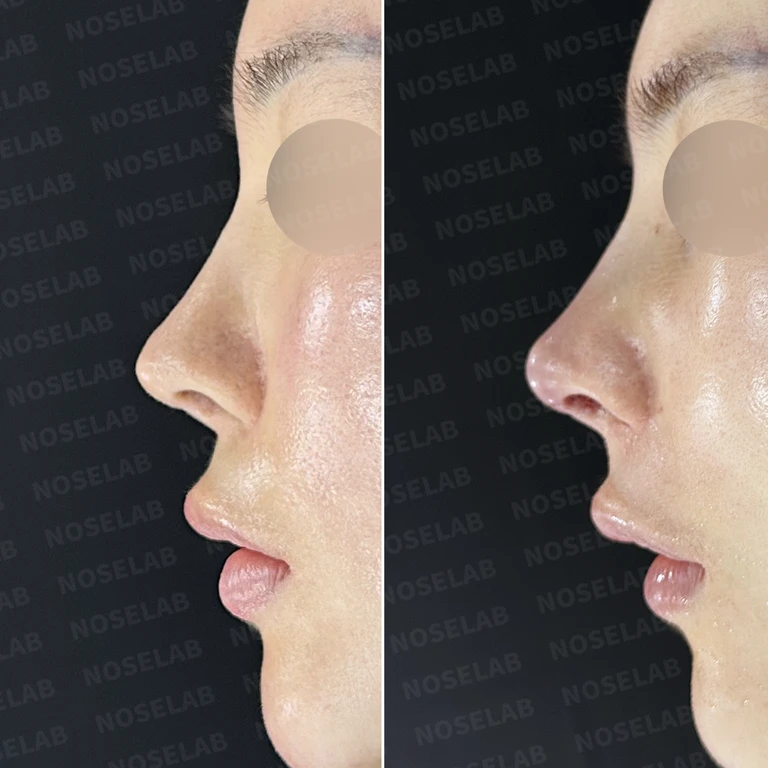
Why a nose appears low and how to build height using autologous rib cartilage — Before-and-after comparison
Before-and-after comparison

Why a nose appears low and how to build height using autologous rib cartilage

For a male patient who had received repeated filler injections for a low nasal bridge, foreign material was removed, followed by nasal tip rhinoplasty using autologous rib cartilage and the insertion of a customized silicone implant.

Preoperative condition

Why internal nasal structures collapse after multiple rhinoplasties and total reconstruction with rib cartilage — Before-and-after comparison
Before-and-after comparison

Why internal nasal structures collapse after multiple rhinoplasties and total reconstruction with rib cartilage

Following four prior rhinoplasties, septal and lower lateral cartilage defects and nasal bone erosion were addressed by treating a chronic foreign body reaction, performing total reconstruction with autologous rib cartilage, and placing a nostril skin graft.

Preoperative condition

Why the nose flattens and widens after double-jaw surgery, and septal reconstruction — Before-and-after comparison
Before-and-after comparison

Why the nose flattens and widens after double-jaw surgery, and septal reconstruction

After double-jaw surgery weakened the septum, the nose became lower and wider; we reinforced it through septal reconstruction with autologous rib cartilage and completed a smooth profile using a customized silicone implant.

Preoperative condition

What problems arise with a septal perforation, and how is it reconstructed? — Before-and-after comparison
Before-and-after comparison

What problems arise with a septal perforation, and how is it reconstructed?

In a case where a 15×10 mm septal perforation and cartilage damage occurred after previous surgery, the perforation was closed with a skin graft and structural support was restored by reconstructing the septum with autologous rib cartilage.

Preoperative condition

Why an autologous dermal graft absorbs, leading to a widened bridge and upturned nose, and how to correct it — Before-and-after comparison
Before-and-after comparison

Why an autologous dermal graft absorbs, leading to a widened bridge and upturned nose, and how to correct it

A case of an upturned nose and widened bridge caused by dermal graft absorption. After removing nasal filler placed 2 years ago, a straight bridge line was established through septal extension, alar rim lowering, and correction of the depressed dorsum.

Preoperative condition

Why short, upturned noses and crooked noses occur together, and how to correct them with septal extension — Before-and-after comparison
Before-and-after comparison

Why short, upturned noses and crooked noses occur together, and how to correct them with septal extension

A short, upturned, crooked nose following an L-shaped silicone implant was lowered using septal extension with autologous rib cartilage, and the airway was improved through nasal valve reconstruction and septal correction.

Preoperative condition

Why saddle nose and nasal valve stenosis occur after repeated revision rhinoplasty, and how total reconstruction is performed — Before-and-after comparison
Before-and-after comparison

Why saddle nose and nasal valve stenosis occur after repeated revision rhinoplasty, and how total reconstruction is performed

This is a case where the nasal bones, septum, and keystone area were damaged after repeated surgeries, causing nasal obstruction due to nasal valve stenosis. Autologous rib cartilage was used to reconstruct the nasal support structure and nasal valve, while correcting bridge depression and asymmetry.

Preoperative condition

Why the nasal bridge sinks and one side becomes blocked after rhinoplasty osteotomy: Internal nasal valve reconstruction and restoration — Before-and-after comparison
Before-and-after comparison

Why the nasal bridge sinks and one side becomes blocked after rhinoplasty osteotomy: Internal nasal valve reconstruction and restoration

A case where nasal bones, the nasal vault, and the septum were reconstructed using autologous rib cartilage to resolve collapsed nasal bones, nasal roof collapse, internal nasal valve stenosis, and pain caused by excessive osteotomy in a previous surgery.

Preoperative condition · Postoperative record
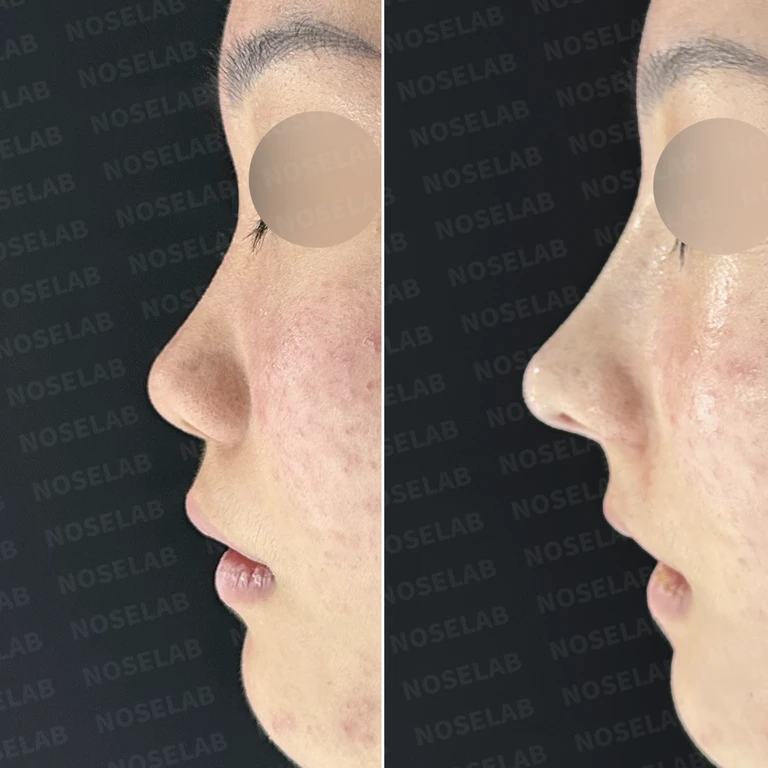
Why the nose looks deviated to one side and feels blocked at night: septal reconstruction and nasal obstruction relief — Before-and-after comparison
Before-and-after comparison

Why the nose looks deviated to one side and feels blocked at night: septal reconstruction and nasal obstruction relief

A case of autologous rib cartilage reconstruction combined with septal and inferior turbinate surgery to address a left-deviated nose, long nose, bulbous tip, severe facial asymmetry, and nasal obstruction.

Preoperative condition

Why a low nasal bridge and bulbous tip persist after multiple surgeries: rib cartilage reconstruction and facial balance — Before-and-after comparison
Before-and-after comparison

Why a low nasal bridge and bulbous tip persist after multiple surgeries: rib cartilage reconstruction and facial balance

A case where a previously placed dermal graft was removed, followed by autologous rib cartilage reconstruction, paranasal augmentation, and chin implant surgery to address a persistent low nasal bridge, bulbous tip, and protruding mouth.

Preoperative condition · Postoperative record
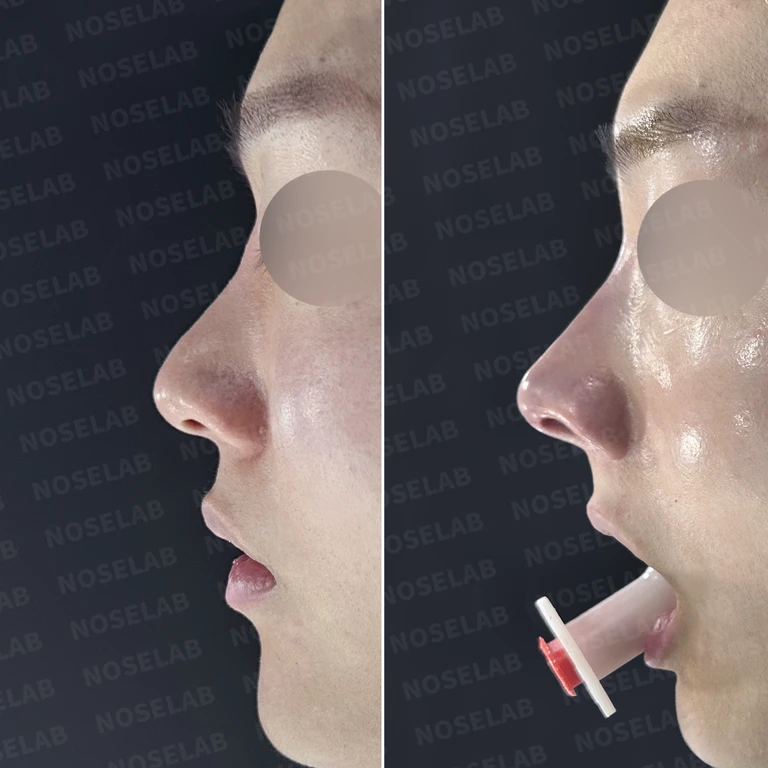
An uneven nasal bridge after a dermal graft: causes and implant-free reconstruction — Before-and-after comparison
Before-and-after comparison

An uneven nasal bridge after a dermal graft: causes and implant-free reconstruction

A case where a previously placed dermal graft had caused an uneven nasal bridge, alongside an unresolved bulbous nose and nostril asymmetry, which were corrected by completely removing the existing dermis and performing a comprehensive reconstruction using autologous rib cartilage.

Preoperative condition · Postoperative record
No search results found

Please try searching with different keywords.

Scroll to keep reading

1 / 5Next case

Common questions before reading the cases

Can I find cases where the nasal bridge became lower after rhinoplasty?

Yes. One original article describes a situation where artificial dermis used on the nasal bridge partially absorbed, causing the bridge to become lower. Another article notes that a spread and depressed nasal bridge after implant removal was the primary concern. Even with a similar presentation of a low bridge, the background behind the change differs, allowing you to review the previous surgical materials and removal history together.

Are the starting point between the eyebrows and nasal deviation also evaluated in low nasal bridge cases?

The relevant original articles document a decrease in nasal bridge height alongside a high-appearing starting point between the eyebrows and a deviation to the right. Cases following implant removal also addressed a depressed nasal bridge and a crooked nose simultaneously. Rather than summarizing the preoperative appearance by height alone, compare the transition between the starting point and bridge along with the midline alignment on the front view.

Related topics to explore

High radixCrooked noseImplant removalArtificial and allogeneic dermis

Surgical records referenced in this guide

  • Why donor dermis absorbs after multiple revision surgeries and how to reconstruct the septum
  • Why the nasal bridge sinks and widens after implant removal, and how to reconstruct it
Original article

Read more records

Planning a visit to Seoul?Prepare your consultation with the NOSELAB team.

International patient guideWhatsApp ↗
Dr. Peter C. Kang's Rhinoplasty Stories
Rhinoplasty guideCases by topicDr. Peter C. KangNaver Blog ↗
View original photo
Enlarged photo
WhatsAppChat with NOSELAB↗