Hello, I am Dr. Peter C. Kang.
Today, I would like to share a revision rhinoplasty case of a male patient who was dissatisfied with his nose looking short and upturned after previous surgeries.
🔍 Surgical history
About 2 years ago, the patient underwent rhinoplasty using a silicone implant and donor rib cartilage, along with osteotomy and deviated septum correction. Later, feeling that the nose was excessively high, he underwent revision surgery about 1 year ago to remove the silicone implant and use new donor rib cartilage. However, after going through two surgeries, the nose became short, upturned, and feminine in appearance, which led him to visit NOSELAB to address this concern.
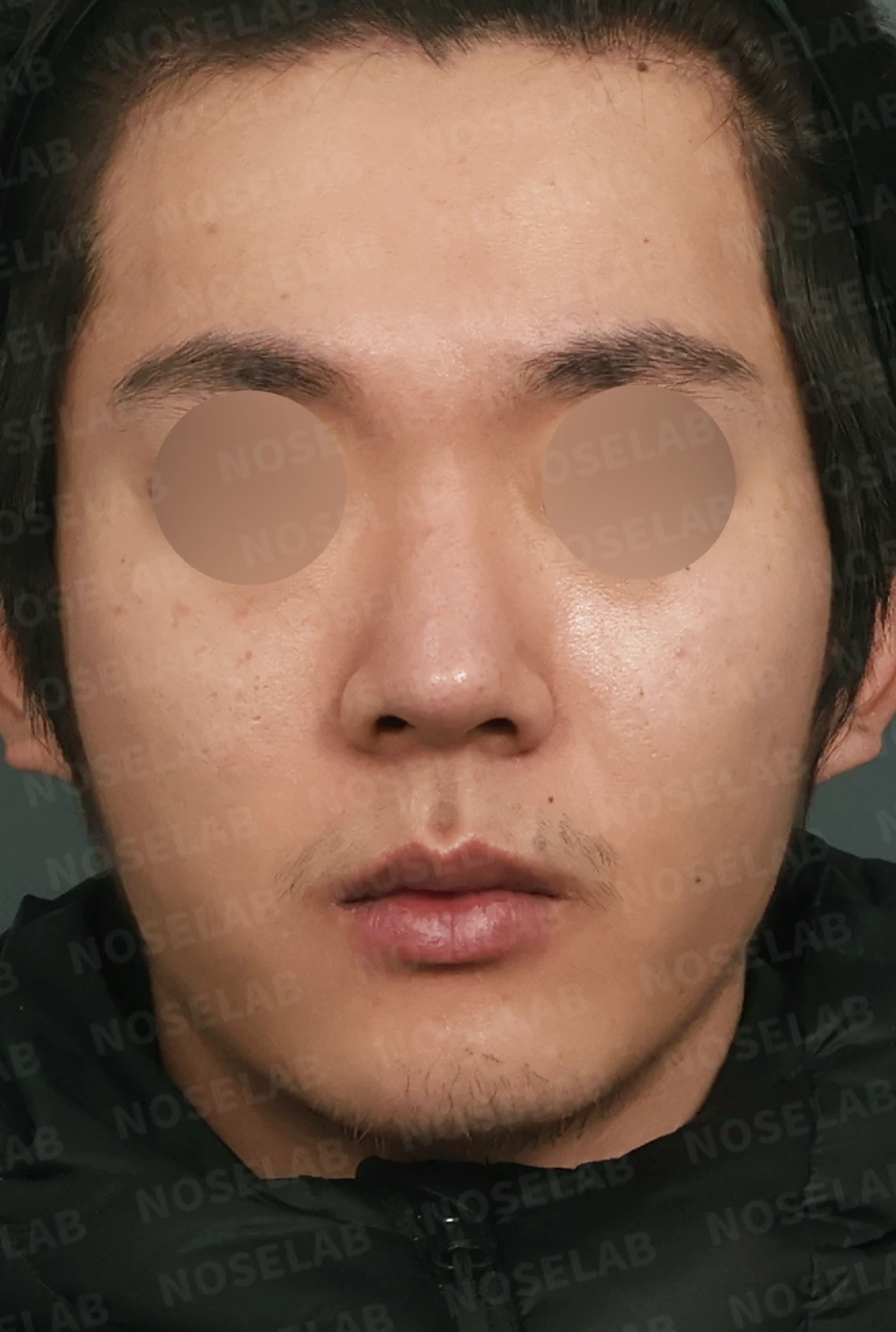
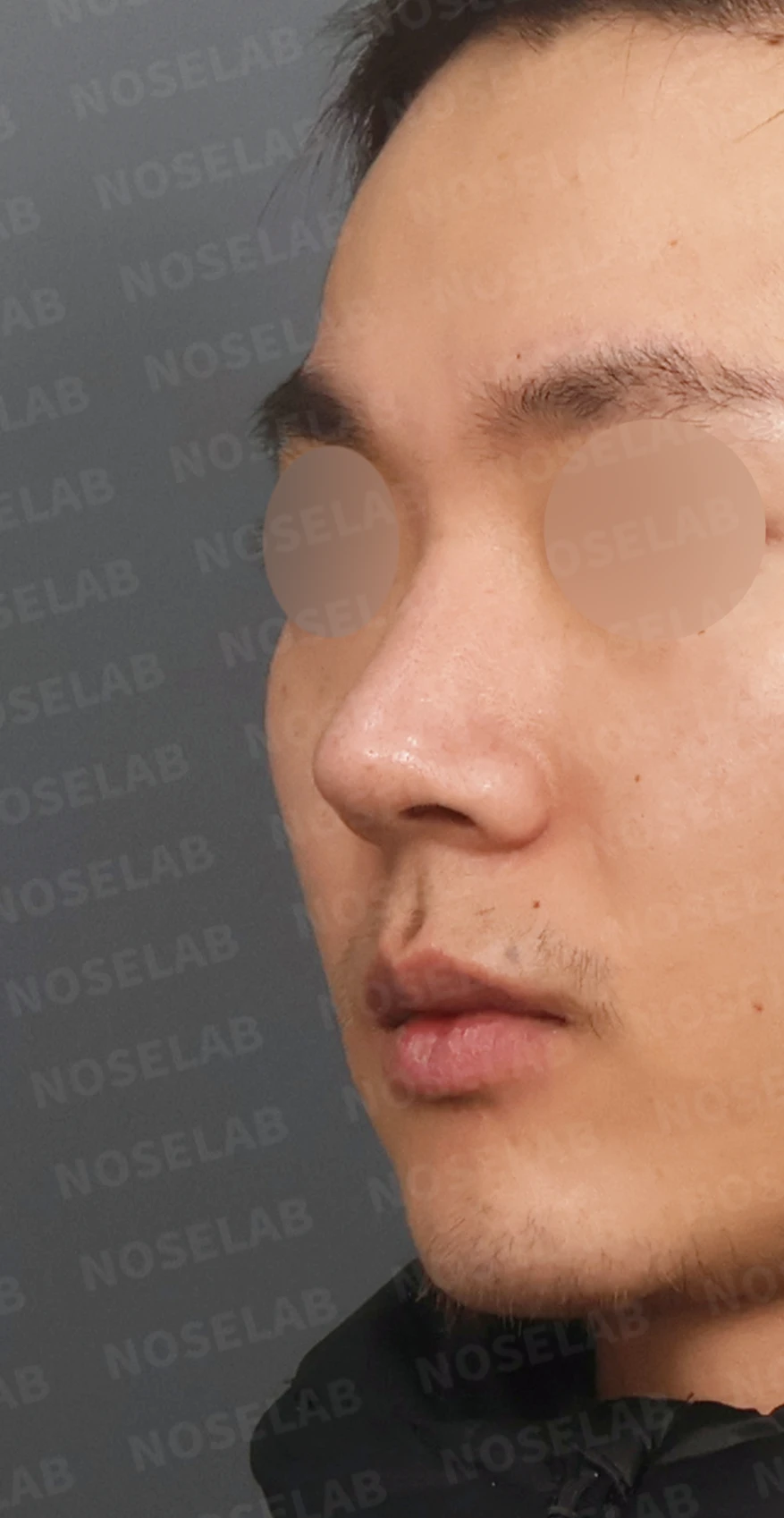
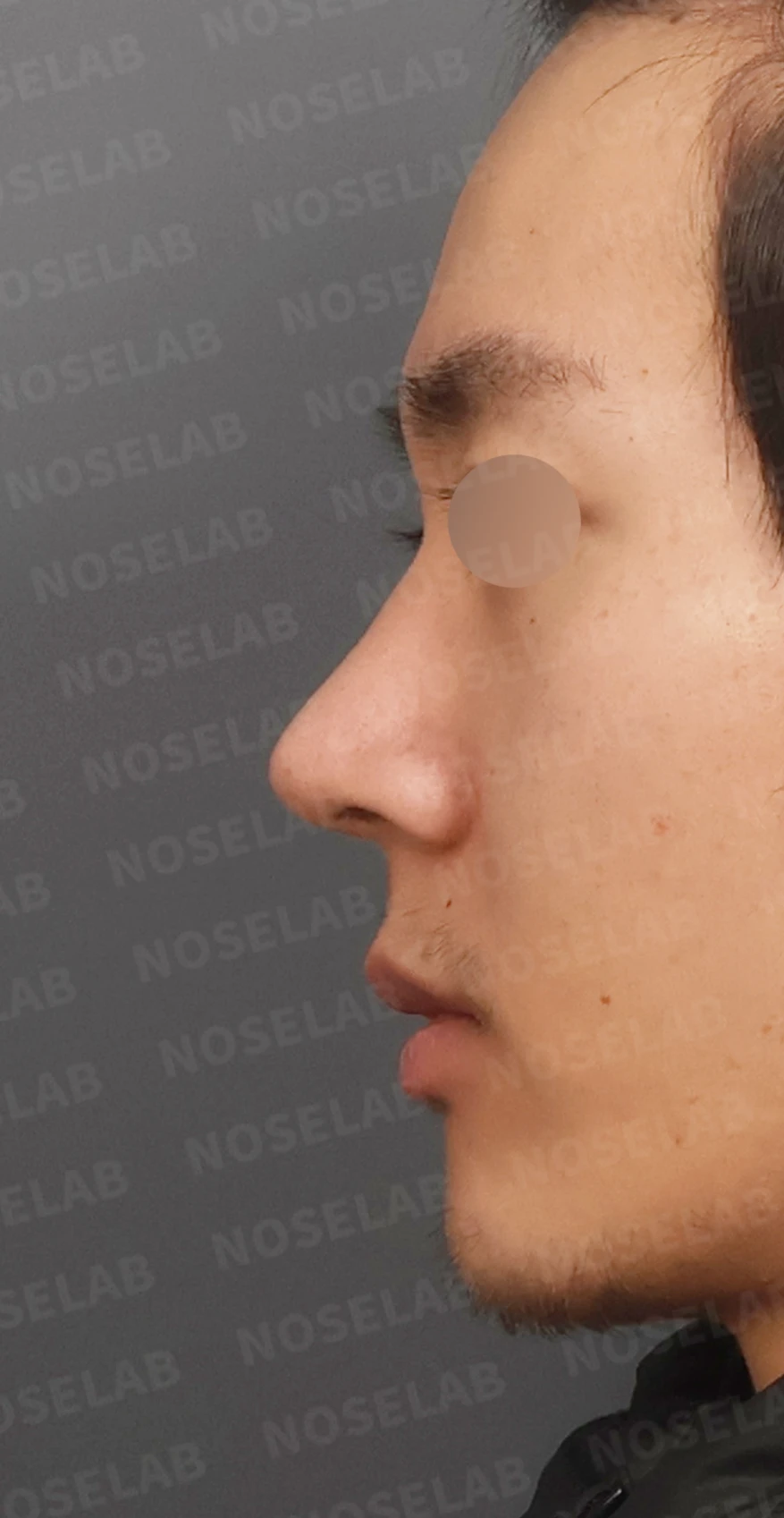
Design consultation photos: front, oblique, and profile views.
💉 Patient requests
The patient's primary concerns were as follows:
Improvement of the lowered nasal bridge after silicone implant removal
Correction of wide nasal bones seen from the front
Desire to reduce noticeable nostril show
Open to using a silicone implant to achieve a masculine straight nose
He wanted a distinct design change from an overall short, upturned, and feminine nose to a masculine line.
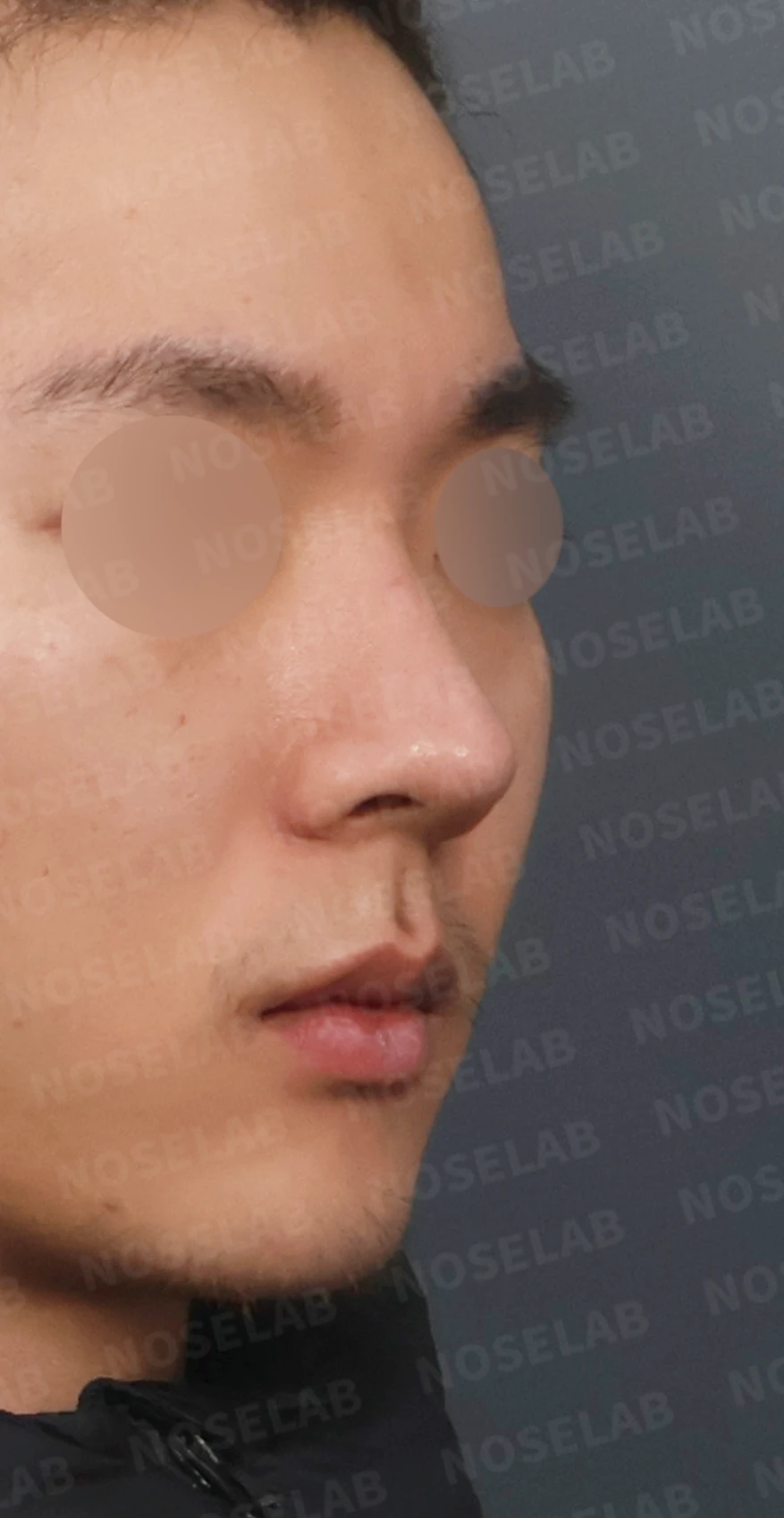
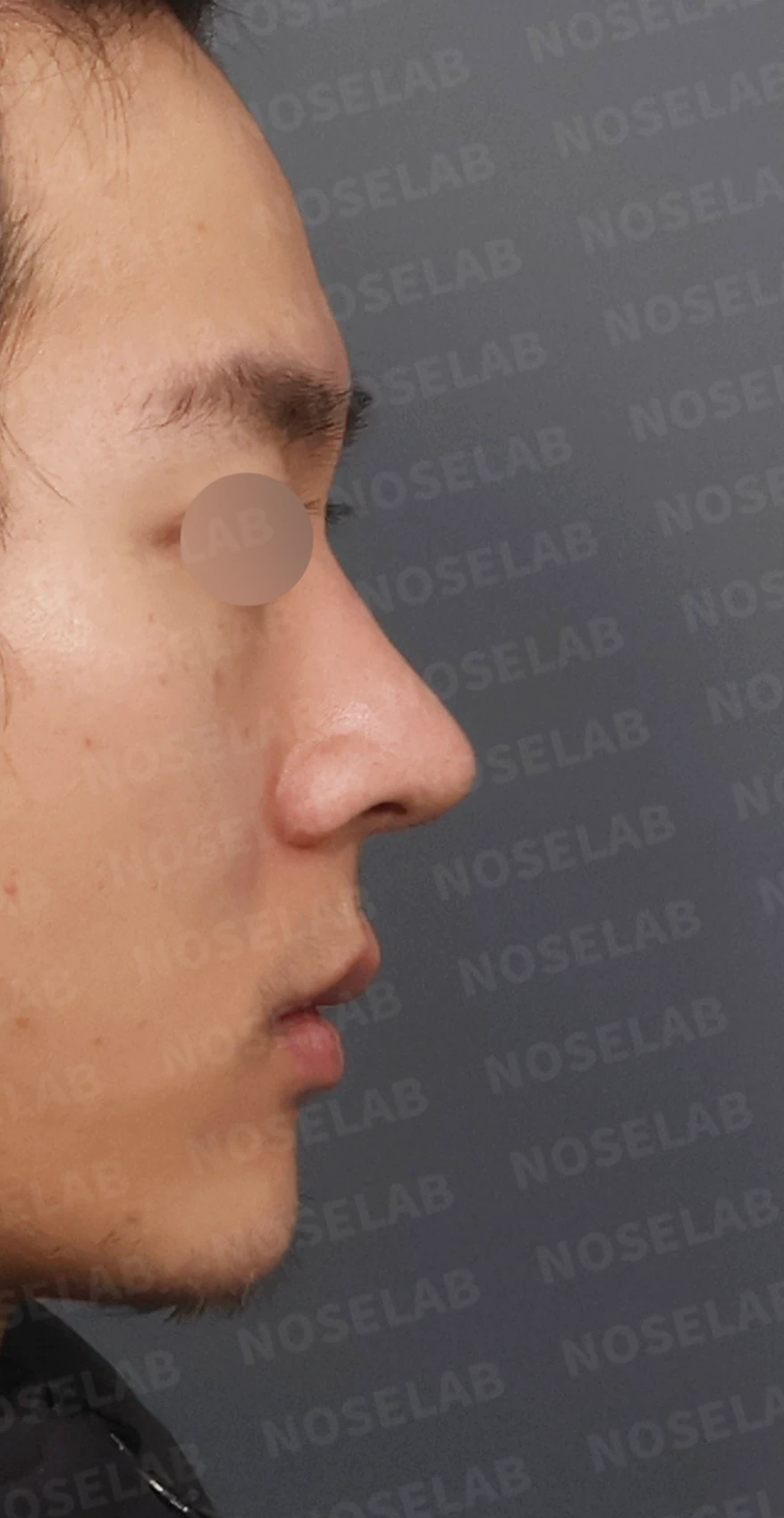
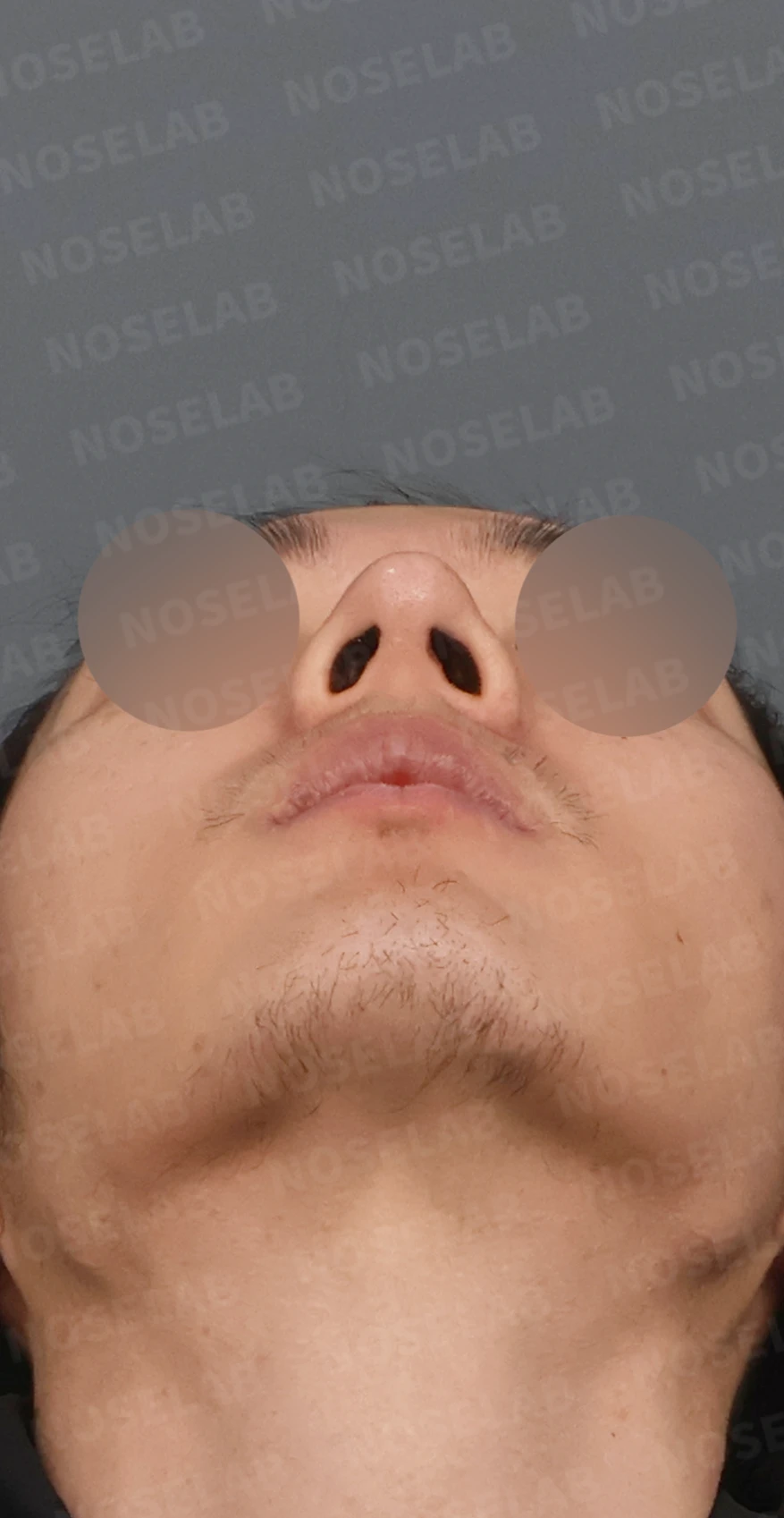
Design consultation: right oblique, profile, and basal (nostril) views.
🔧 Surgical plan and procedure
After thoroughly analyzing the patient's requests and the current condition of the nose, surgery was performed through a closed approach as follows.
1. Nasal tip extension and structural reinforcement using autologous rib cartilage
Naturally lengthening the nose to address the shortened appearance
Lowering the upturned nasal tip to secure a masculine line
2. Restoring overall nasal bridge height
Building overall height from the lowered glabella along the bridge
Achieving a defined yet natural straight line
3. Maintaining a 90-degree nasolabial angle
Setting the nasolabial angle to 90 degrees, a key element of a masculine impression
Creating a straight nasal line extending forward without an upturned look
4. Improving nasal bone width and nostril show
Correcting the wide-looking nasal bones
Reducing nostril show to establish balance on the front view
🌟 Surgical results
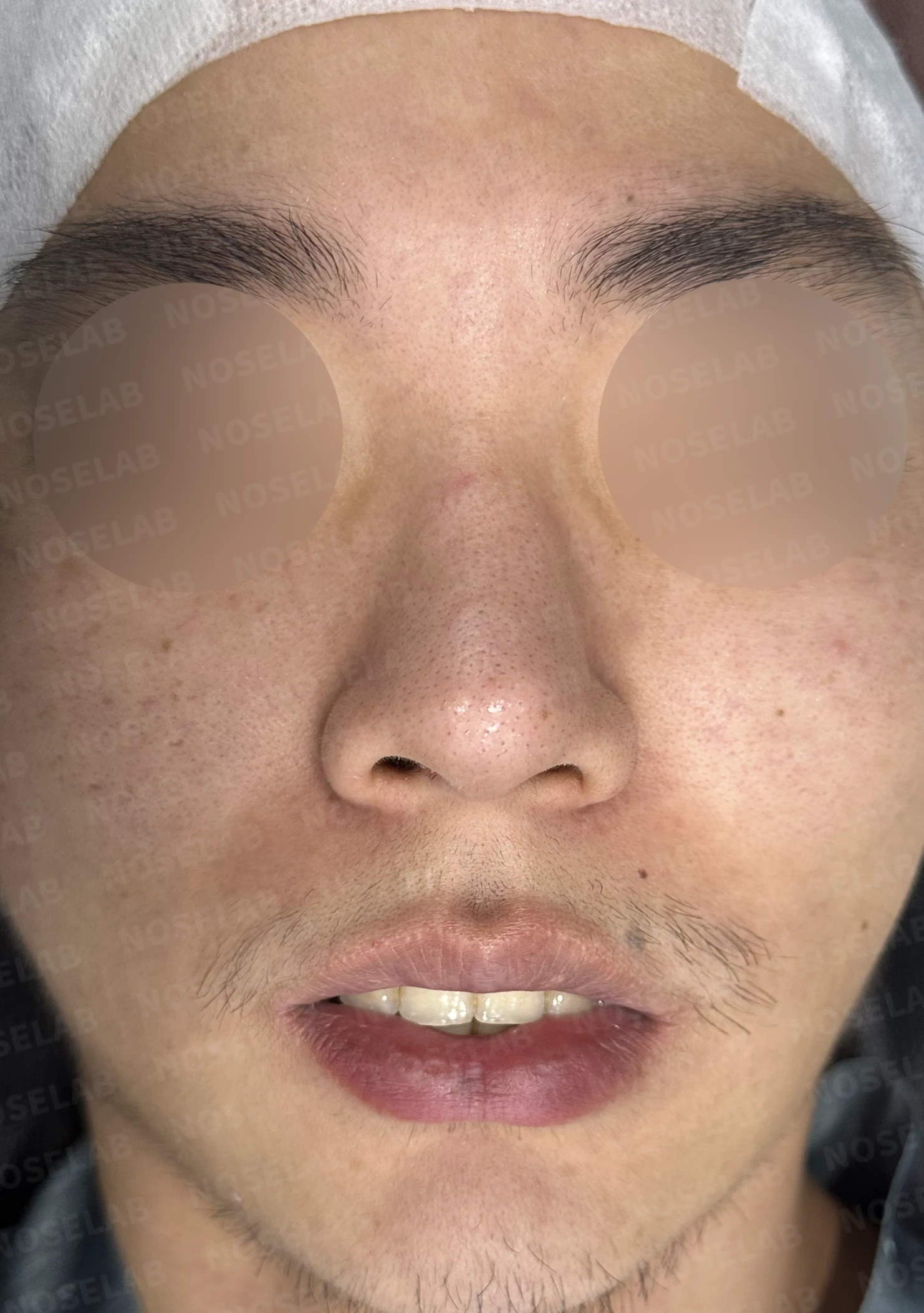
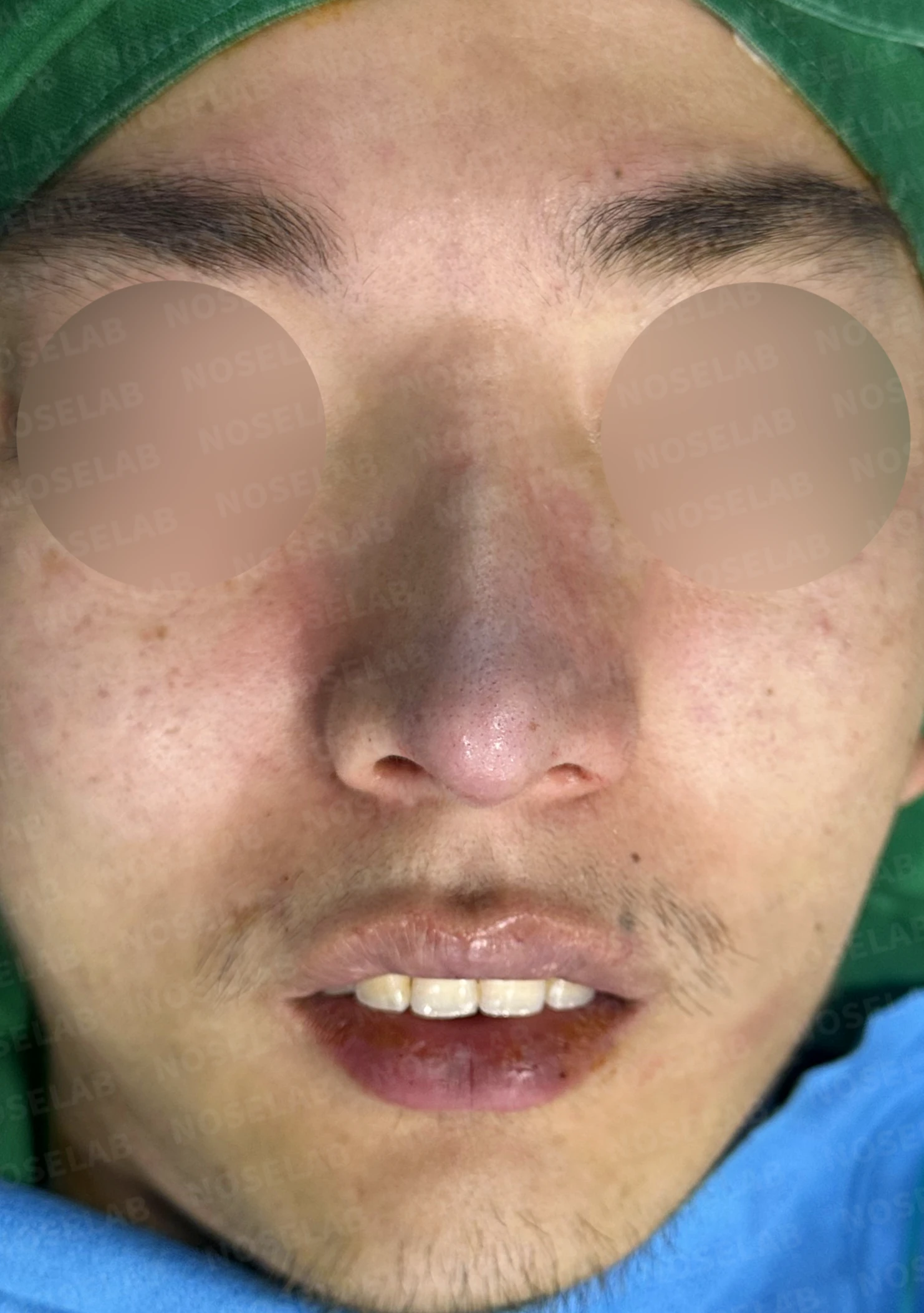
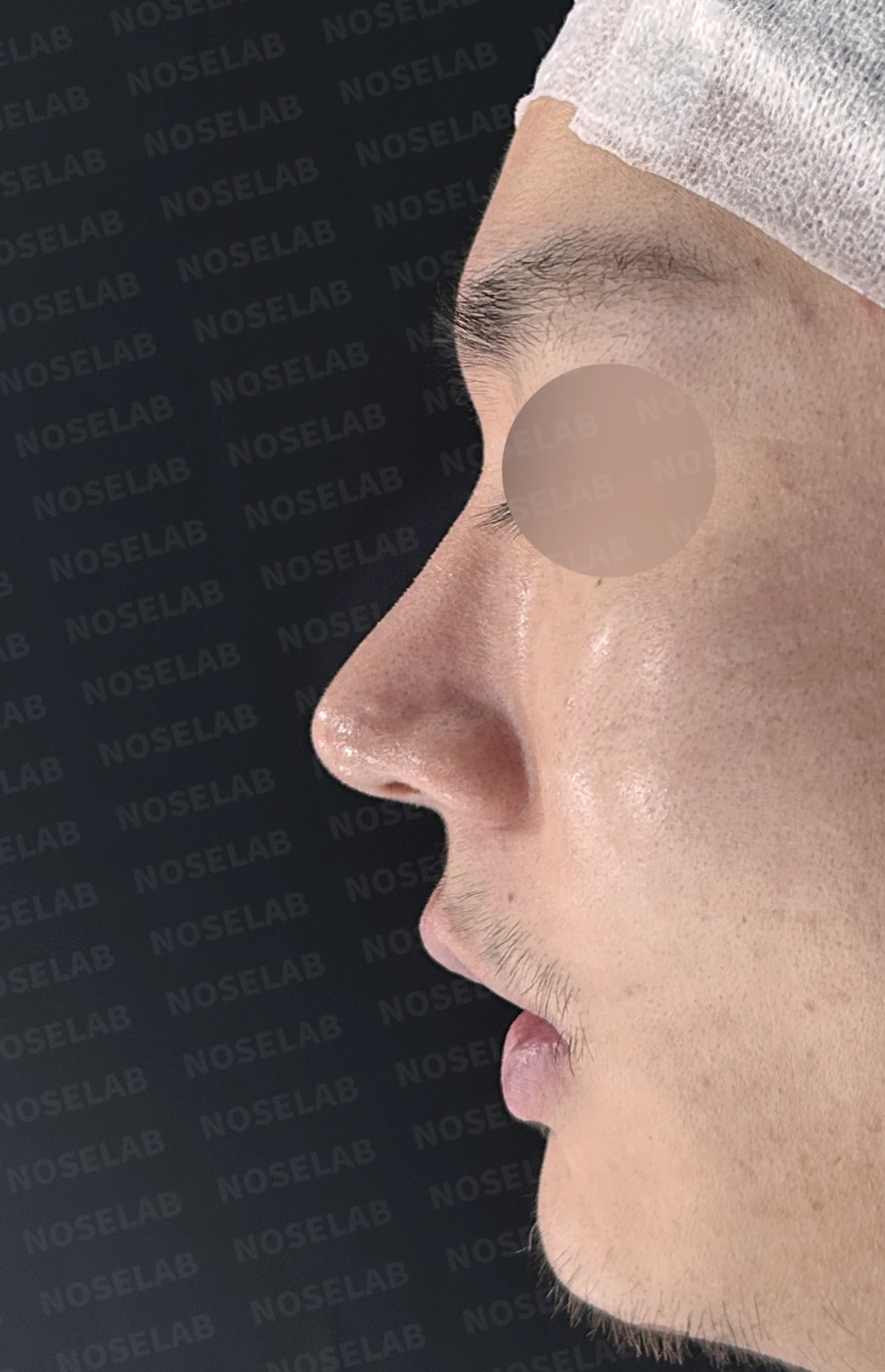
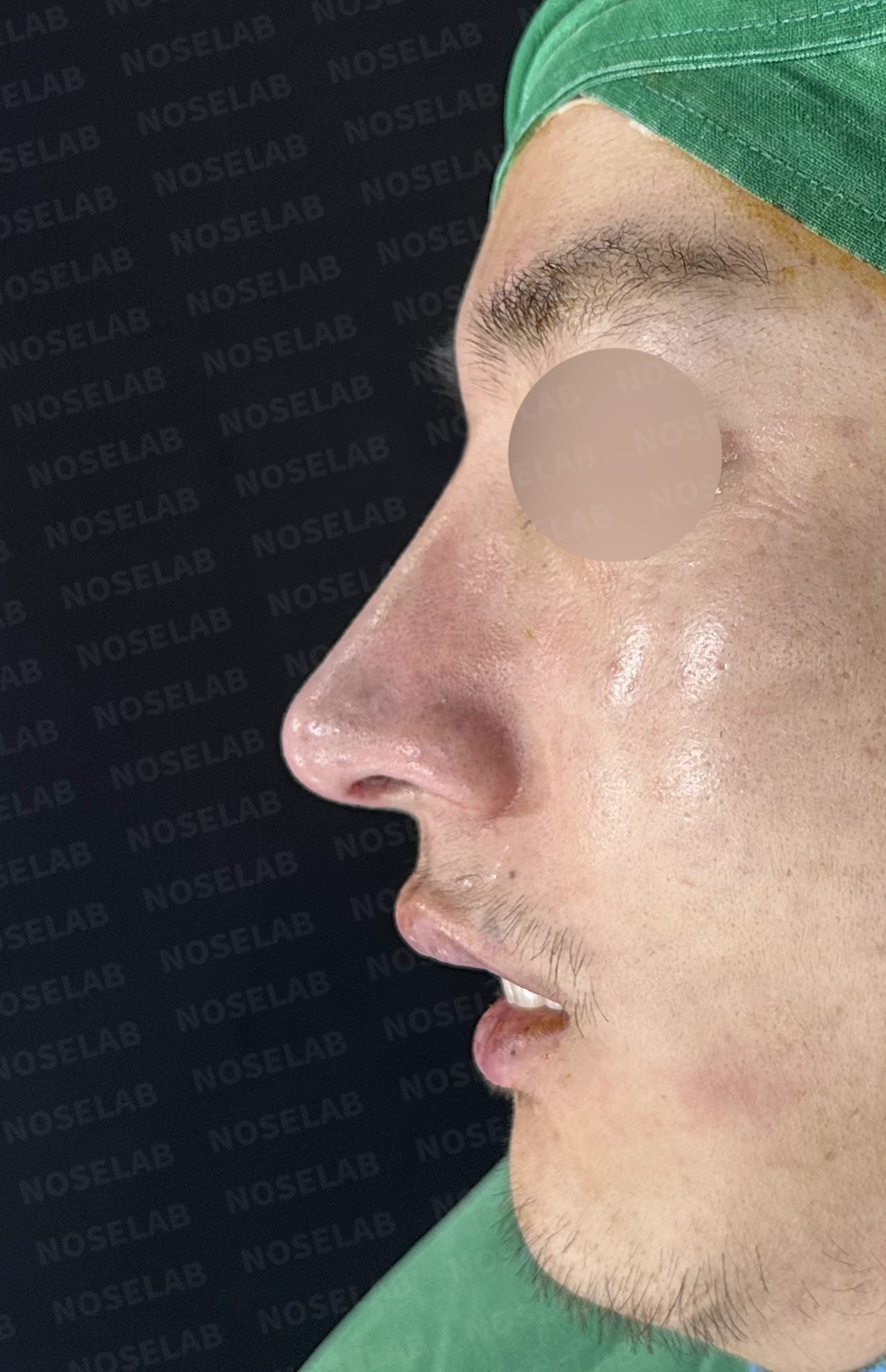
Before surgery / Day 0 immediately after surgery Photos taken immediately after surgery show swelling and may differ from the final result.
1. Frontal changes
A wide-looking nose transformed into a slim, masculine line
Reduced nostril show creating a neater, refined impression
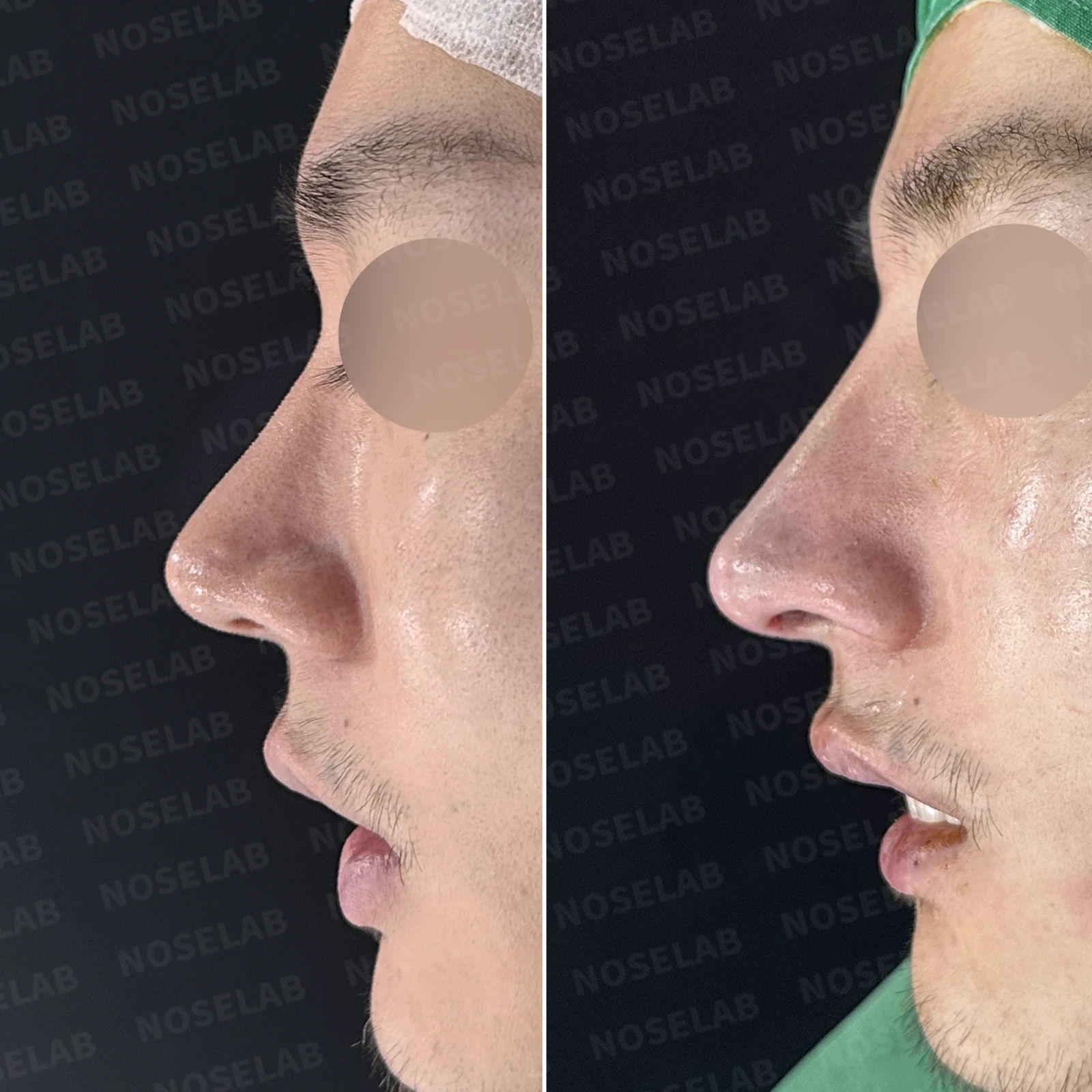
Before surgery / Day 0 immediately after surgery Photos taken immediately after surgery show swelling and may differ from the final result.
2. Profile changes
The short, upturned nose improved into a naturally lengthened, straight line
Maintaining a 90-degree nasolabial angle completing a masculine, refined profile
Securing overall height from the glabella to the nasal tip
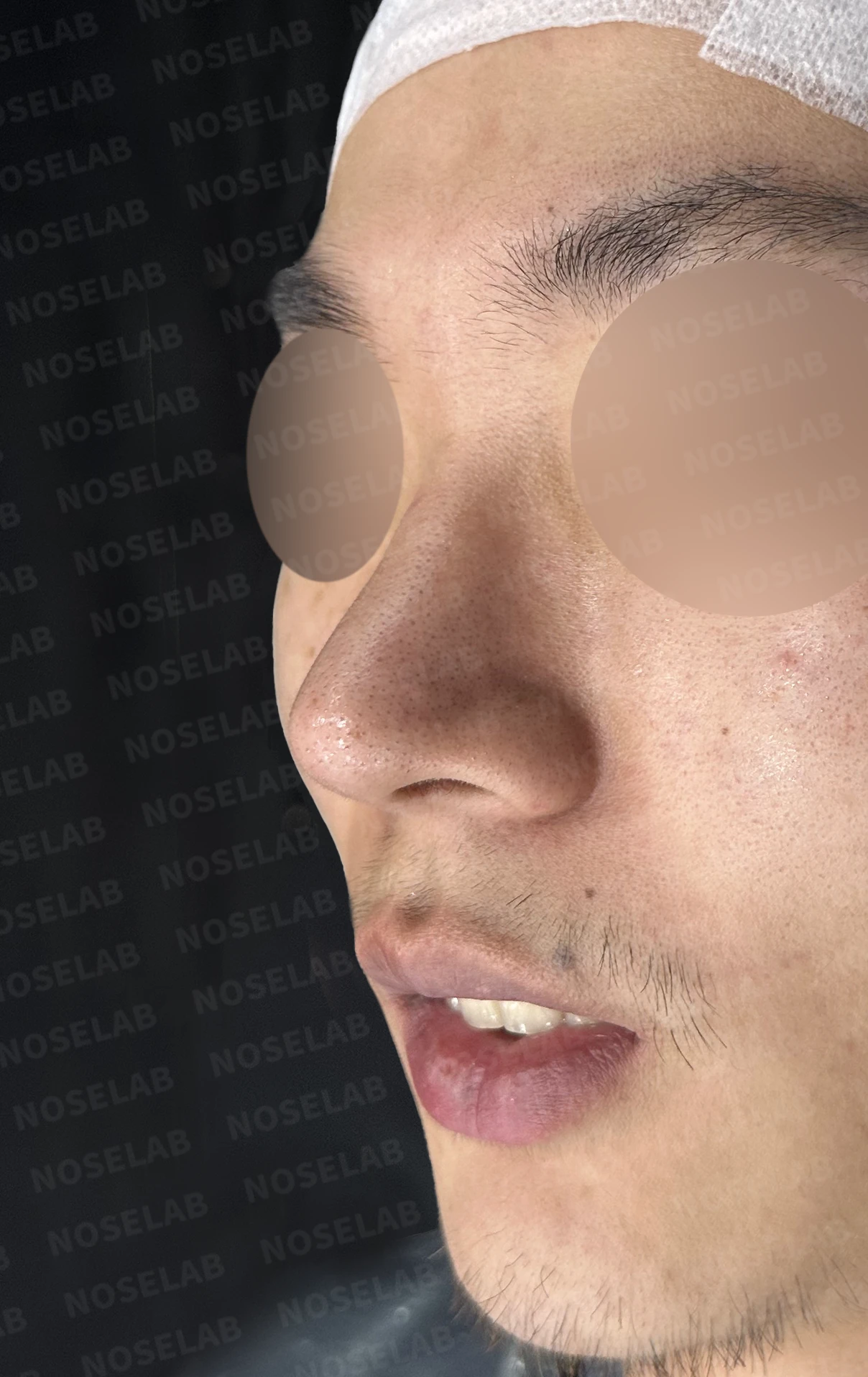
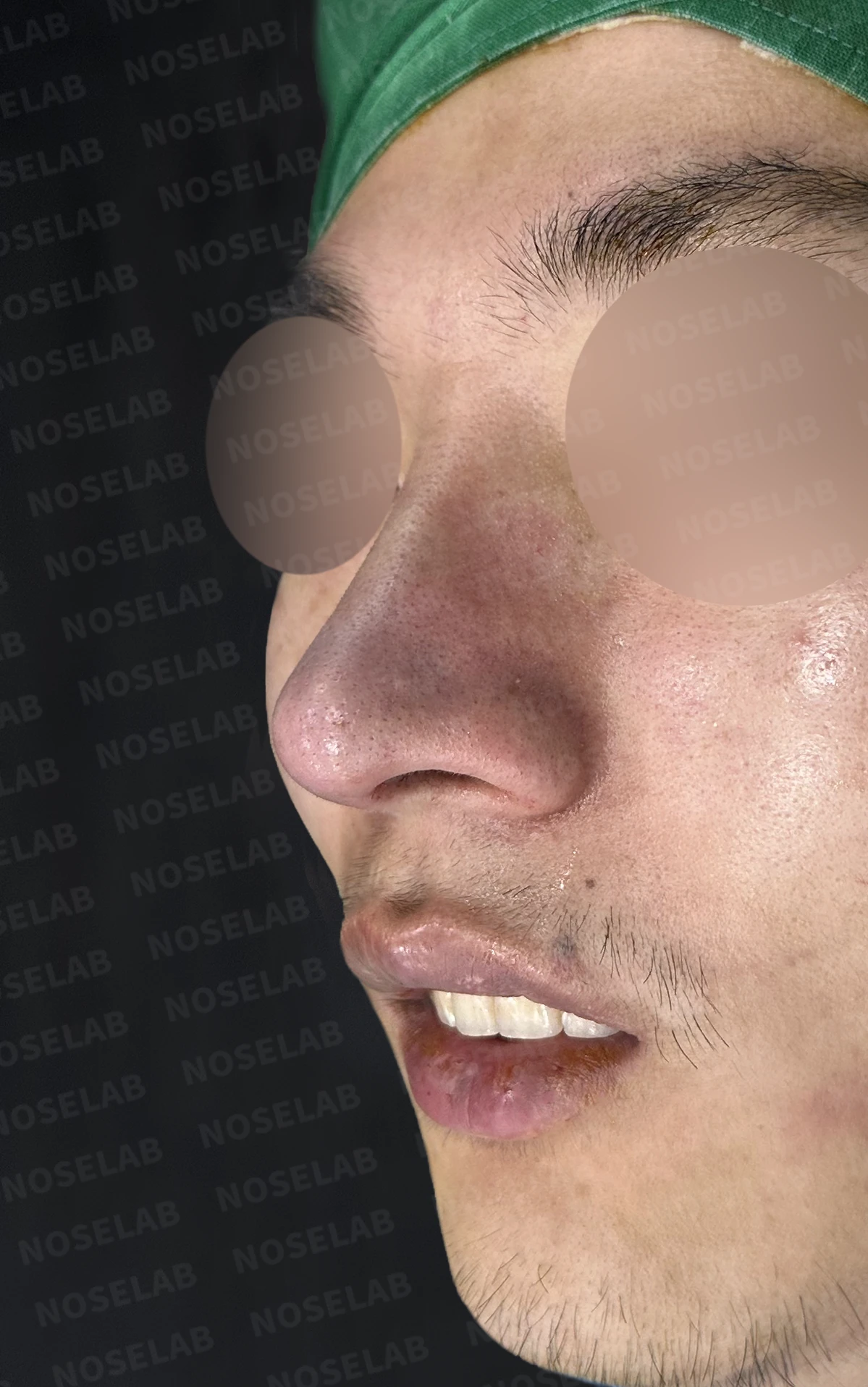
Before surgery / Day 0 immediately after surgery Photos taken immediately after surgery show swelling and may differ from the final result.
3. Nostril changes
Reduced nostril show as the upturned nasal tip is lowered
A natural and balanced contour on the front view
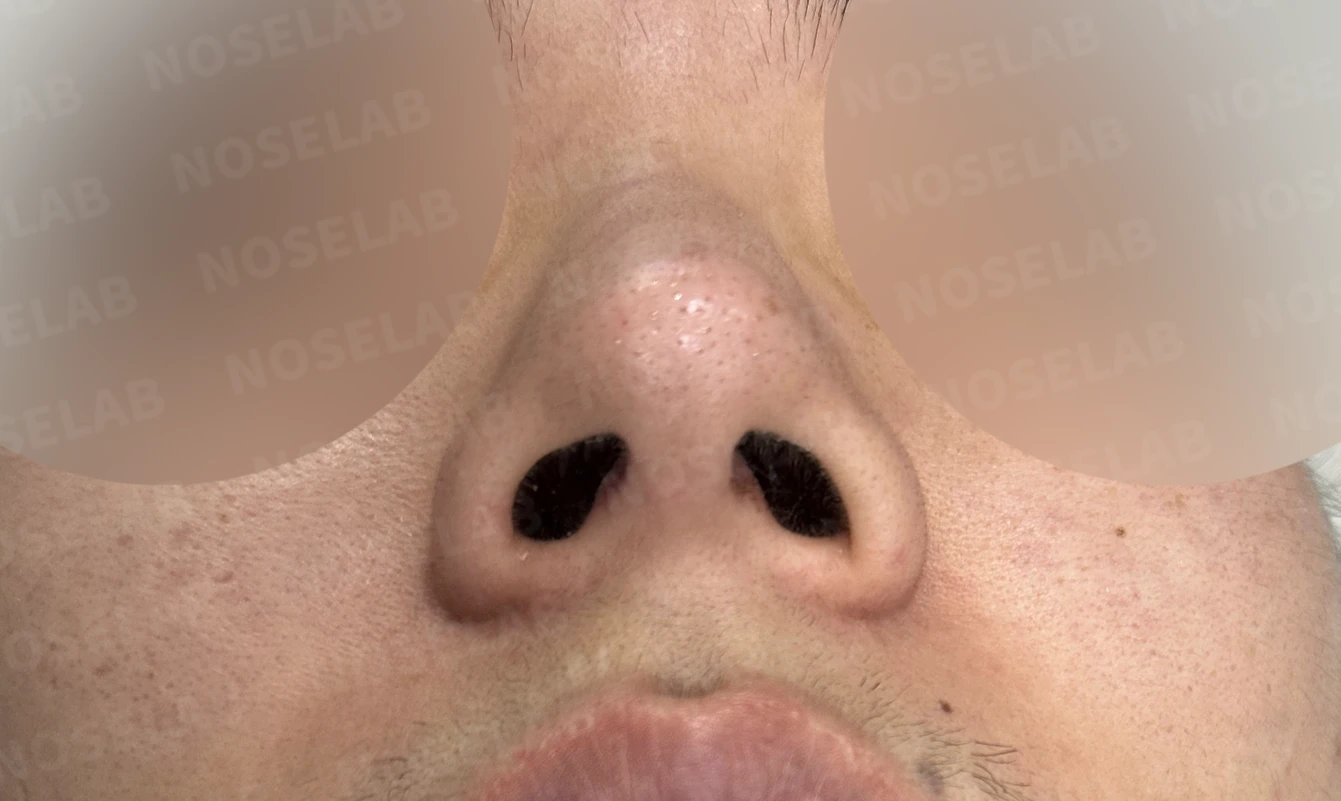
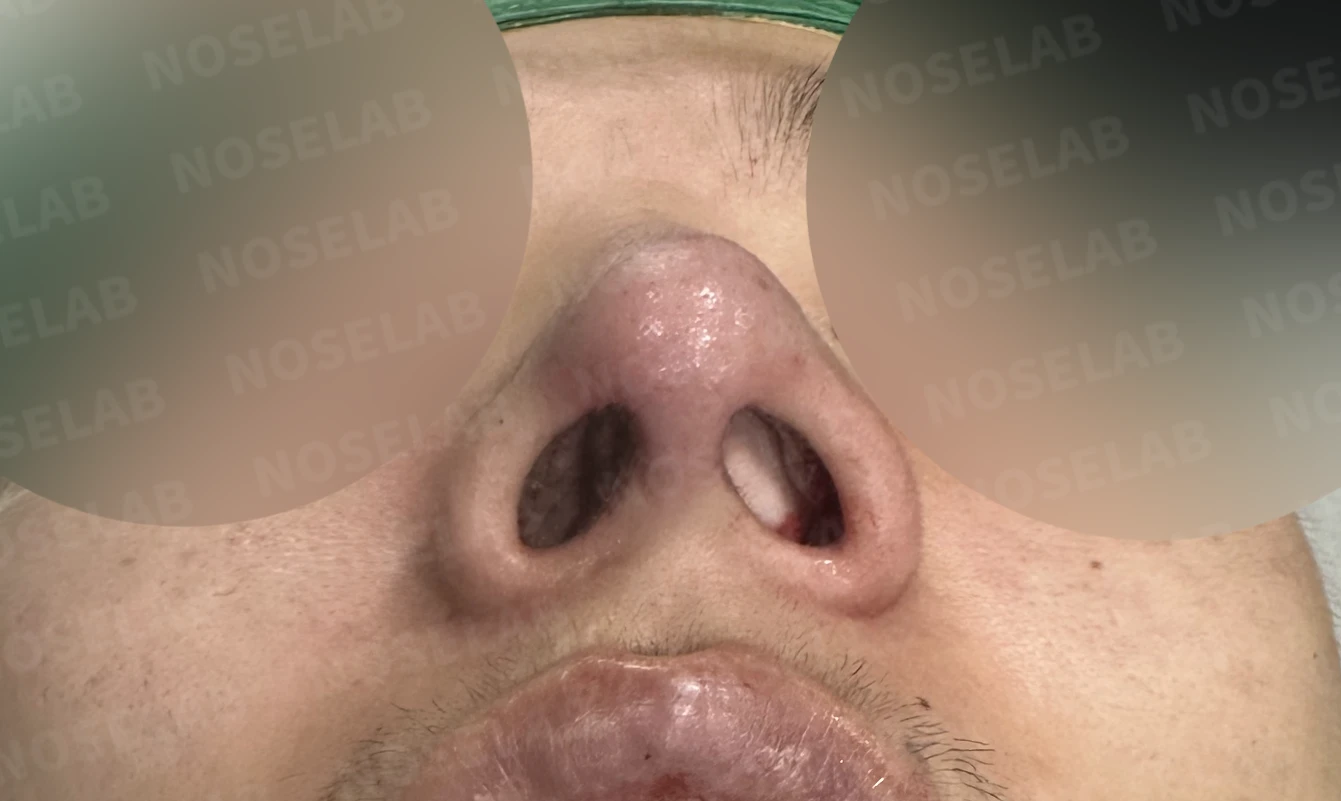
Before surgery / Day 0 immediately after surgery Photos taken immediately after surgery show swelling and may differ from the final result.
💡 Specialist opinion
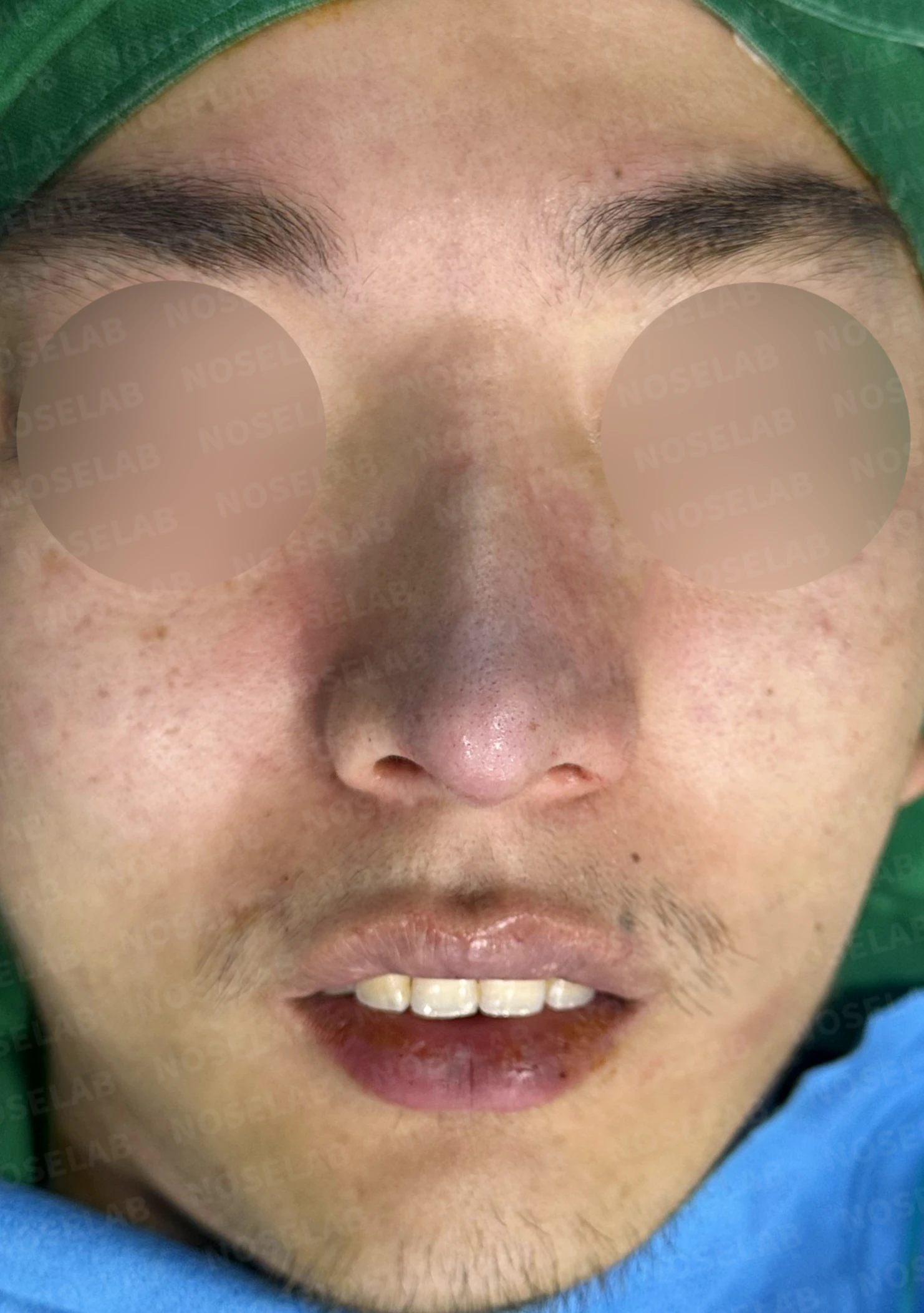
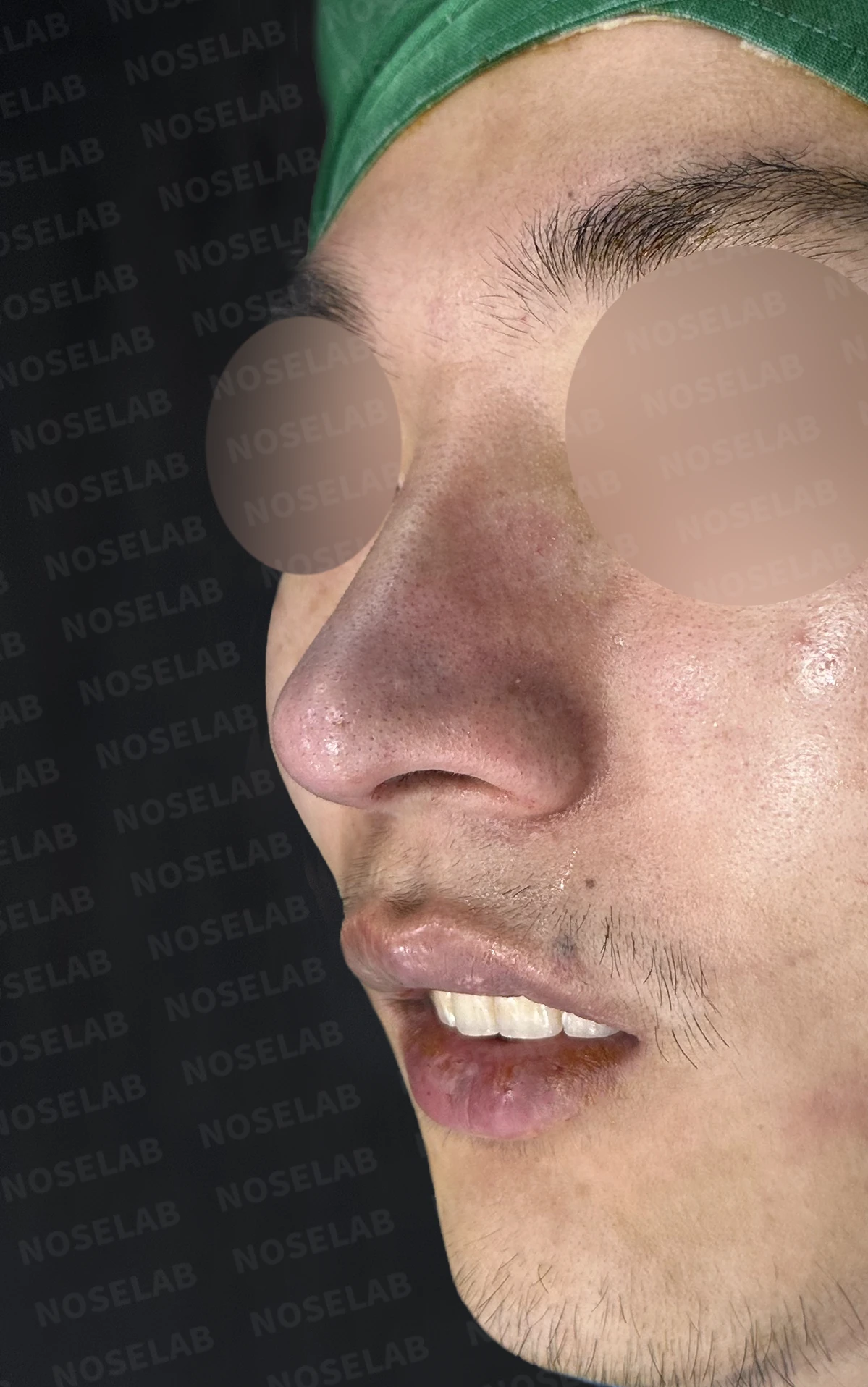
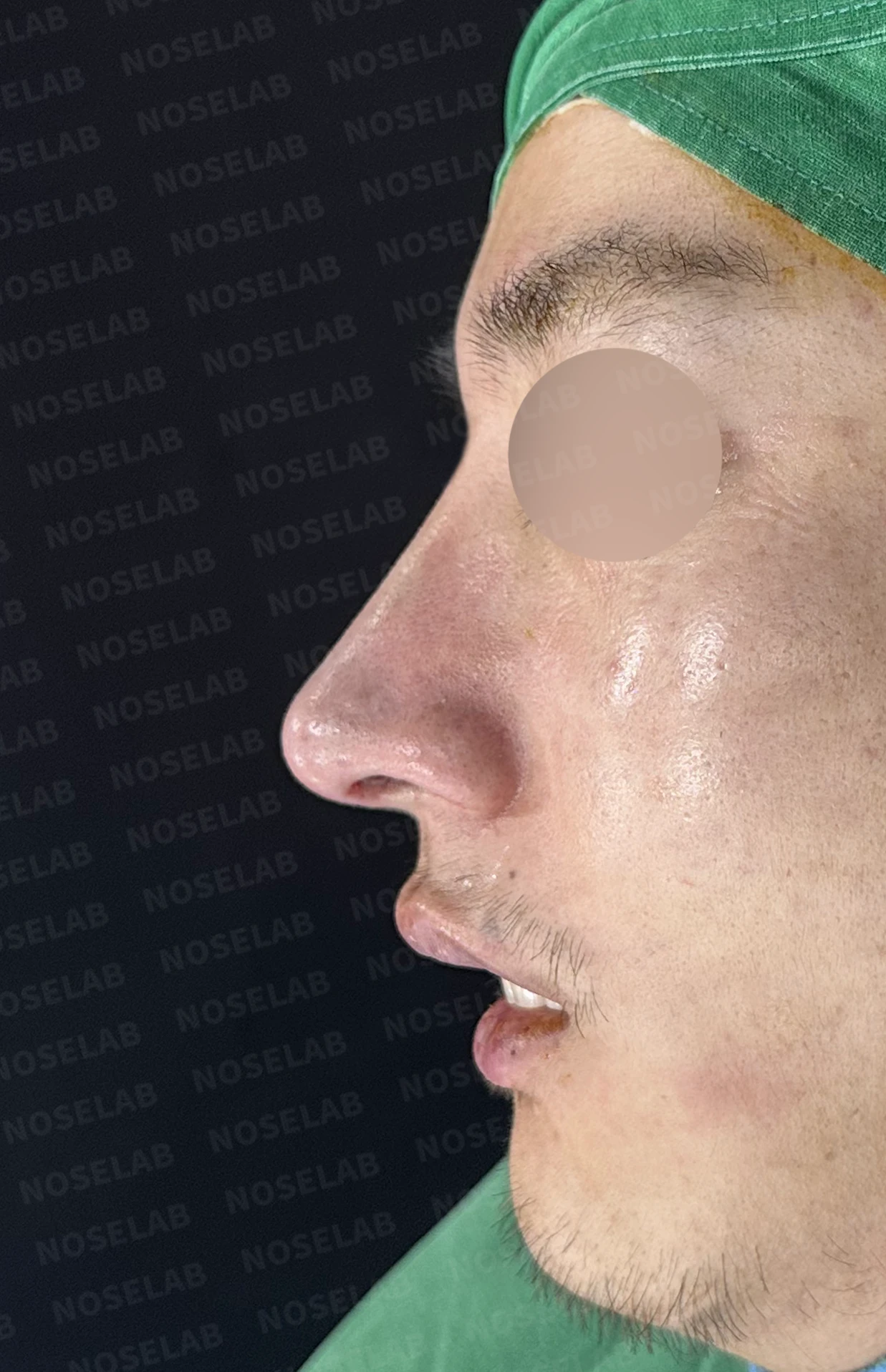
Front, oblique, and profile views on day 0 immediately after surgery. Photos taken immediately after surgery show swelling and may differ from the final result.
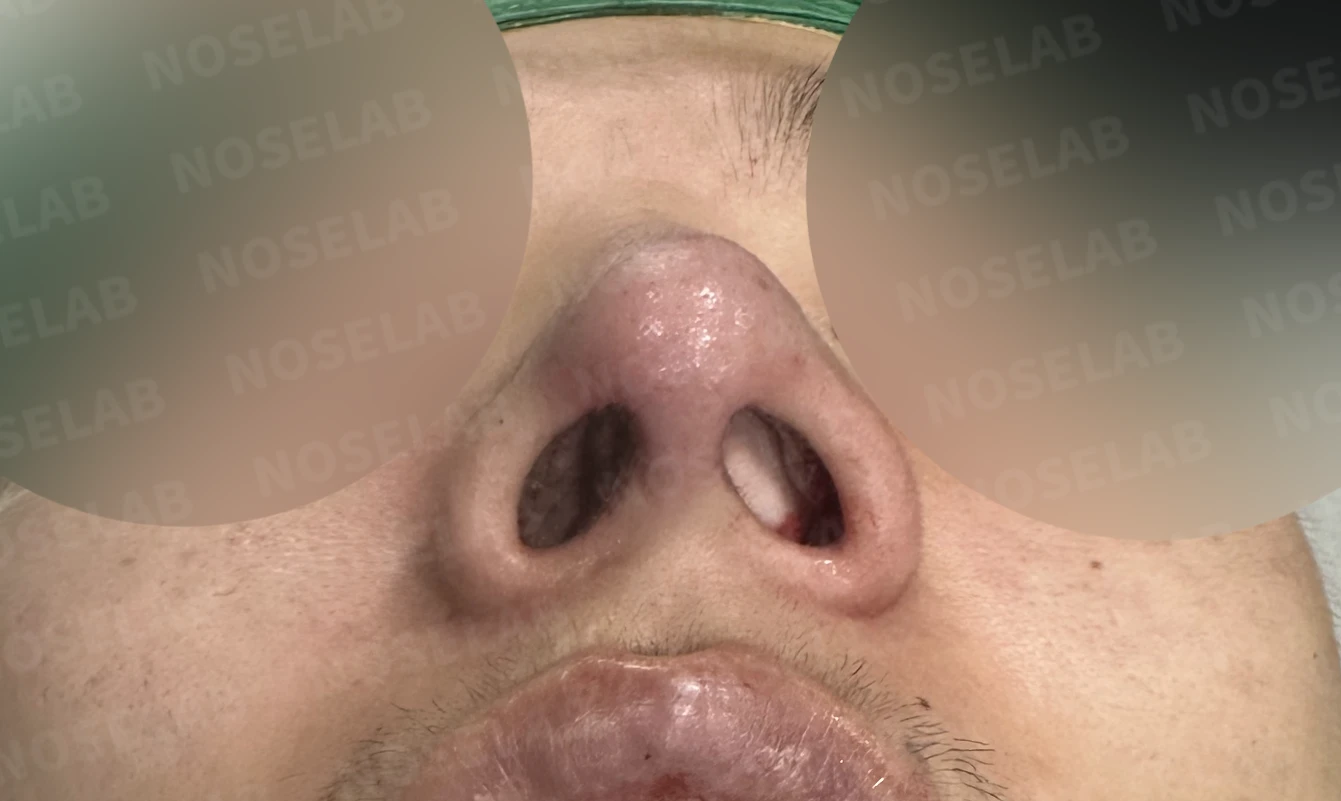
Nostril view on day 0 immediately after surgery. Photos taken immediately after surgery show swelling and may differ from the final result.
The most important aspect of male revision rhinoplasty is accurately understanding and realizing the masculine aesthetic desired by the patient. Unlike female rhinoplasty, key priorities in male rhinoplasty are maintaining the nasolabial angle around 90 degrees and highlighting a straight bridge line.
Particularly in cases of repeated revisions, preexisting tissues may be unstable, making it essential to firmly support the framework using reliable materials such as autologous rib cartilage. In this type of case, utilizing autologous rib cartilage allowed us to transform a short, upturned nose into a masculine straight nose while preserving natural contours.
Because surgical approaches in revision rhinoplasty differ significantly depending on past surgical history and tissue condition, an accurate diagnosis and a customized plan fully reflecting the patient's requests are essential.
This was Dr. Peter C. Kang. Thank you.
#closedrhinoplasty #closedrevisionrhinoplasty #malerhinoplasty #malerevisionrhinoplasty #autologousribcartilage #straightnose #nasolabialanglecorrection #shortnosecorrection #upturnednosecorrection #menrhinoplasty

Limitations and risks
When autologous rib cartilage is used, scarring and pain may remain at the donor site on the chest, and pneumothorax (pleural injury) can occur rarely. Over time, the grafted cartilage may warp or undergo partial resorption.
When using donor rib cartilage, long-term follow-up is necessary because the grafted cartilage may resorb or warp.
When revising after implant removal, contracture may progress again after removal, the nasal height and length may decrease, and staged surgery may be necessary depending on the skin condition.
When the septum is corrected at the same time, nasal obstruction may persist or recur, and in rare cases, septal perforation or changes in smell may occur.
Common potential risks include infection, bleeding, asymmetry, scarring, skin necrosis, and insufficient improvement; results vary depending on individual skin condition and previous surgical history.