English日本語简体中文
Skip to main content
Dr. Peter C. Kang's Rhinoplasty Stories
PrologueBlogMy thoughtsNasal obstructionSurgical journalSurgical photos
About the surgeon

Crooked nose cases: analyzing midline alignment of bridge and tip separately

This is page 15 of case reports on crooked (deviated) nose, assessing the midline of the nasal bridge and nasal tip separately. View surgical records and before-and-after photos for cases 253 to 270 of 272.

View before-and-after cases ↓Comprehensive rhinoplasty guide

Searching for surgical cases matching your criteria.
Will correcting a crooked nose improve facial asymmetry? — Before-and-after comparison
Before-and-after comparison

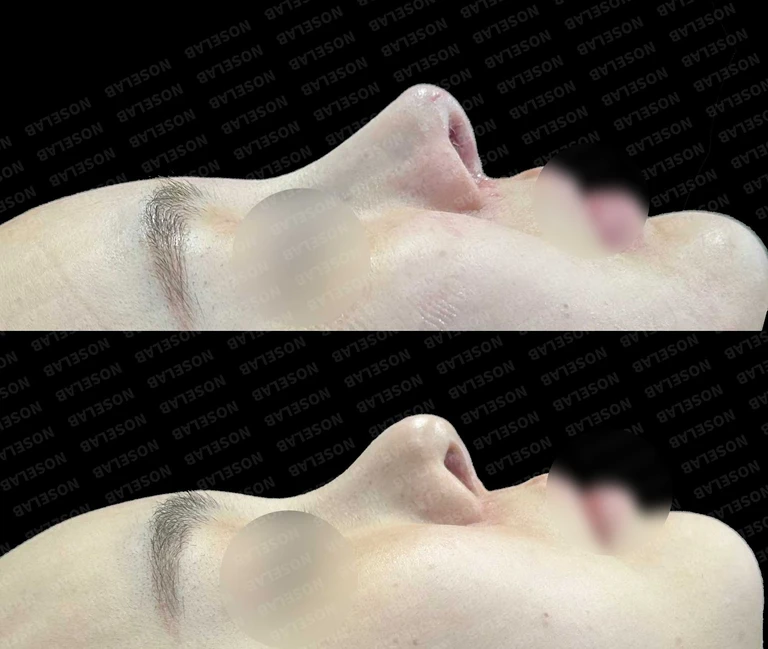
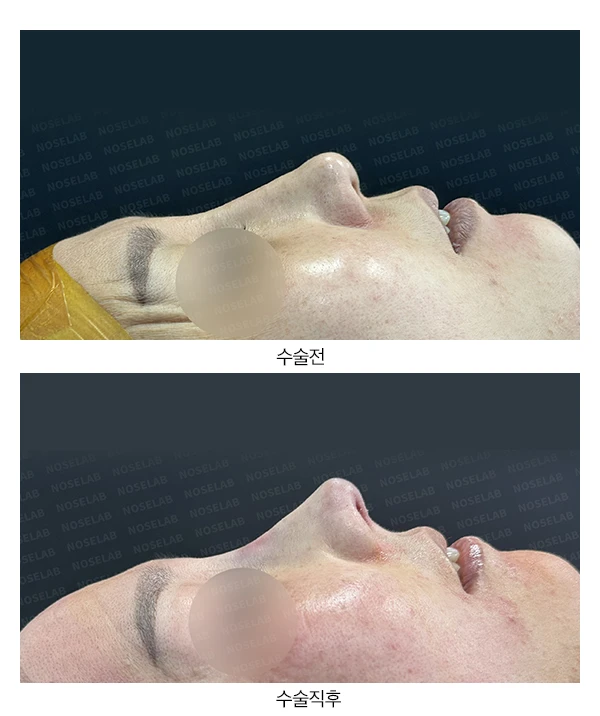
Will correcting a crooked nose improve facial asymmetry?

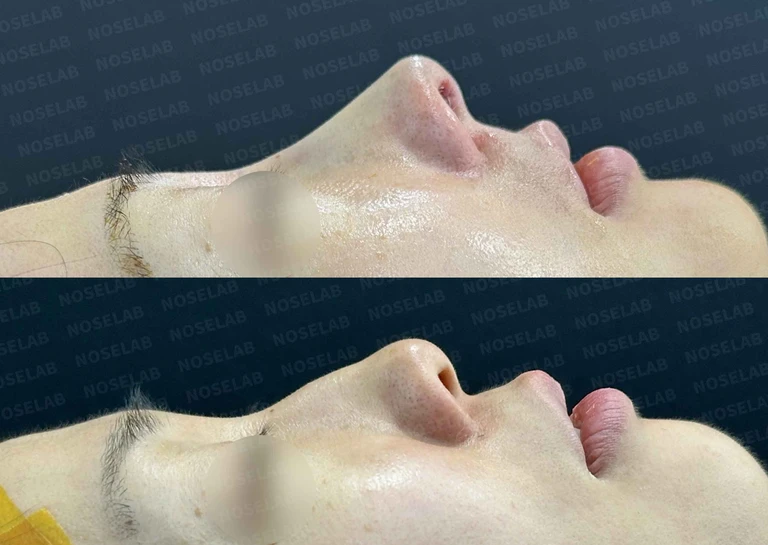
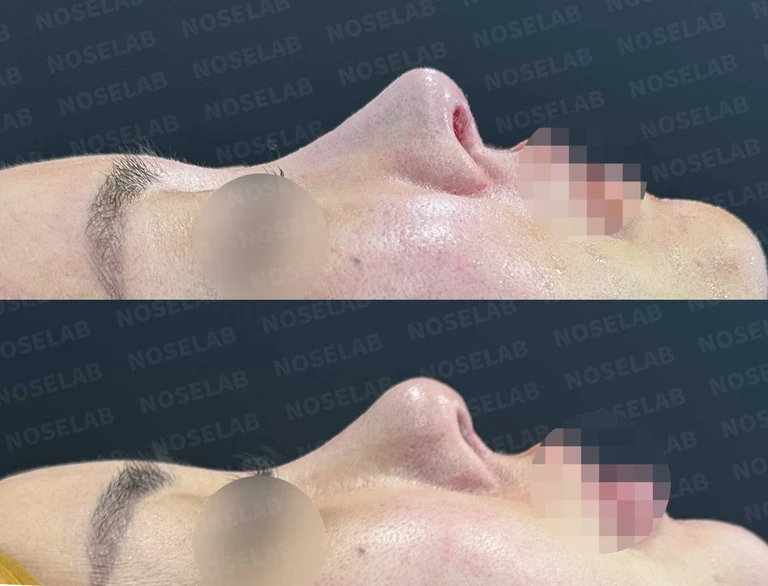
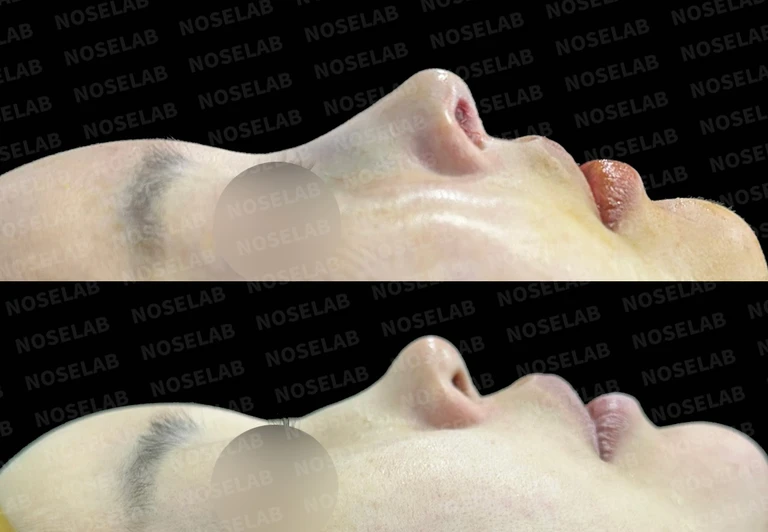
This case presented facial asymmetry accompanied by a nose deviated to the right, a bulbous nasal tip, and a dorsal hump. Osteotomy and septal repositioning were planned, and notes taken immediately after surgery record changes in the deviation and the drooping tip.

Preoperative condition · Postoperative record
How to correct a long nose by lowering the radix — Before-and-after comparison
Before-and-after comparison

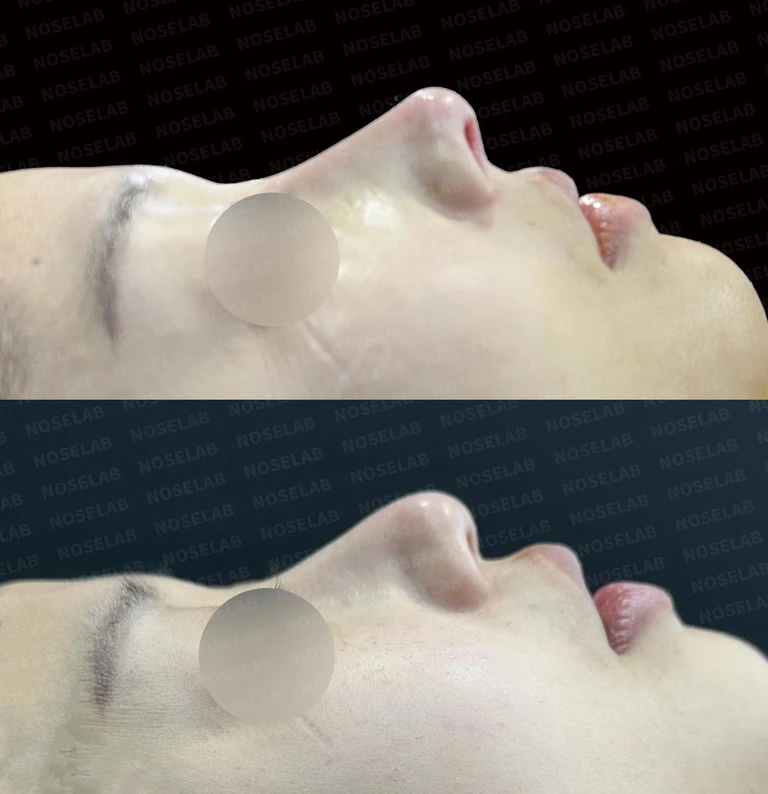
How to correct a long nose by lowering the radix

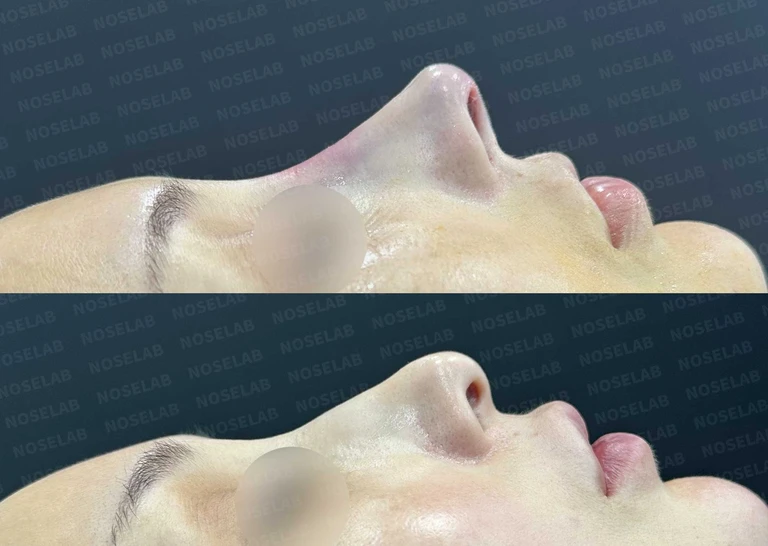
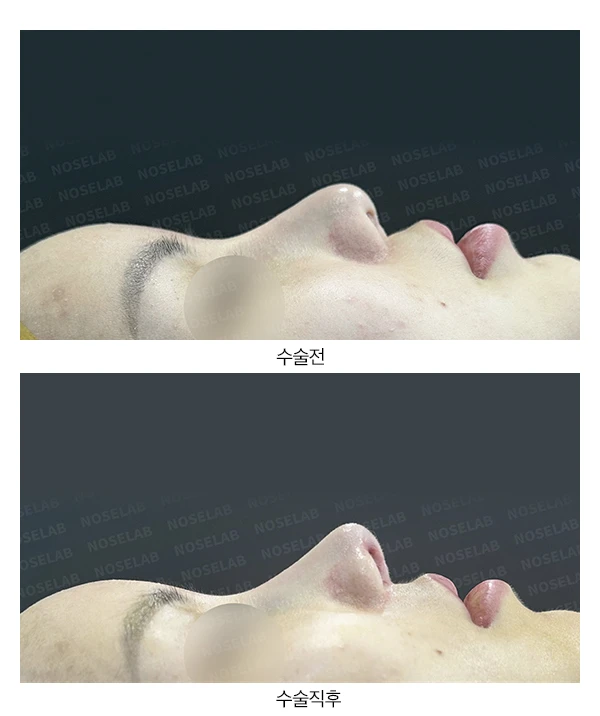
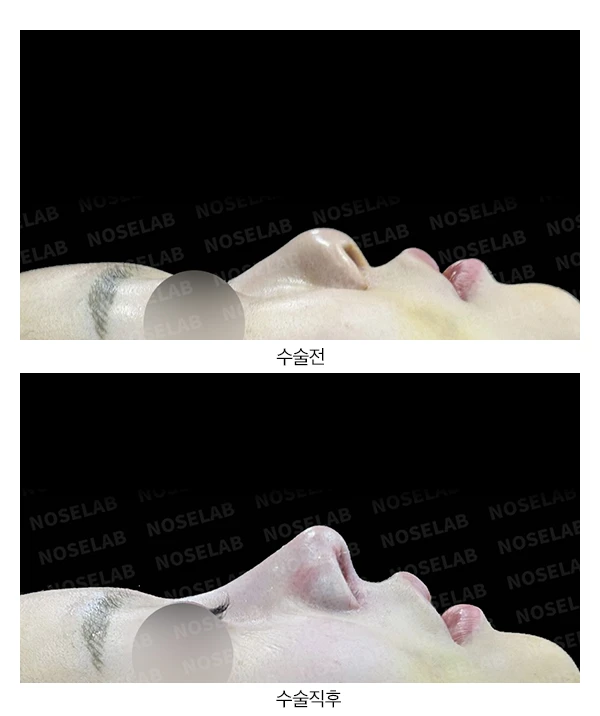
The excessively high Gore-Tex implant was removed from the glabella, the radix was lowered to the pupil line, and the septum and retracted columella were corrected using autologous rib cartilage.

Preoperative condition

How to correct a drooping tip, dorsal hump, and crooked nose with autologous rib cartilage — Before-and-after comparison
Before-and-after comparison

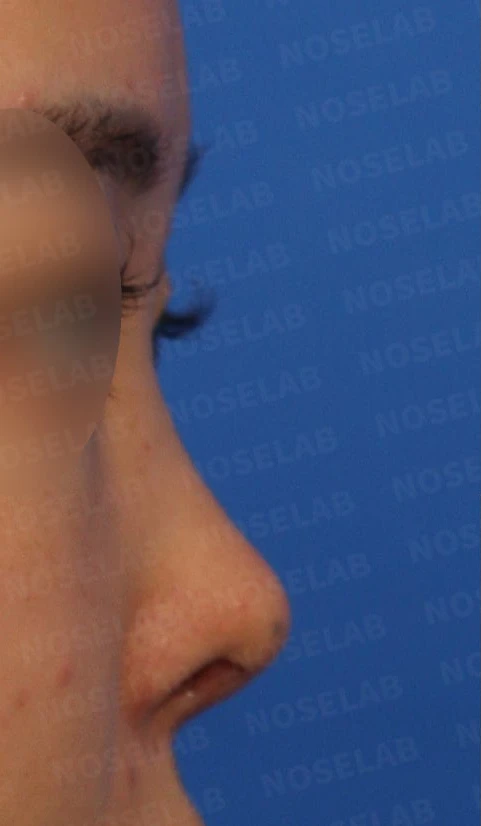
How to correct a drooping tip, dorsal hump, and crooked nose with autologous rib cartilage

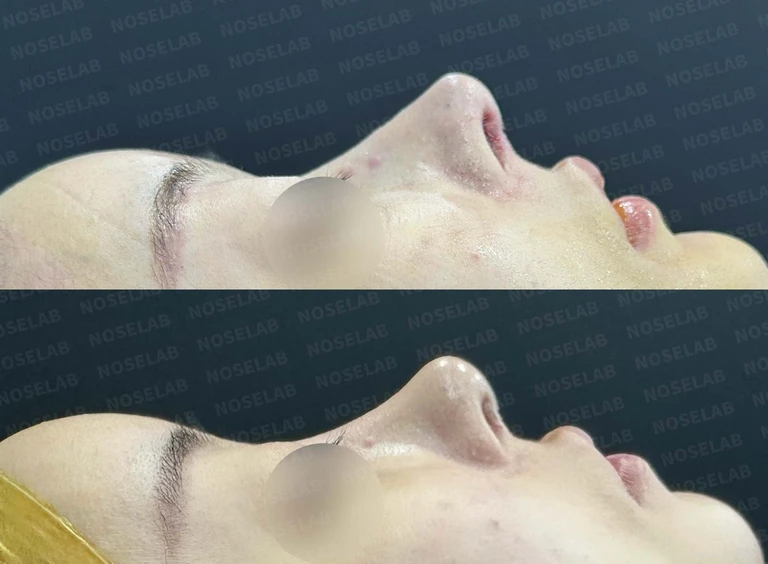
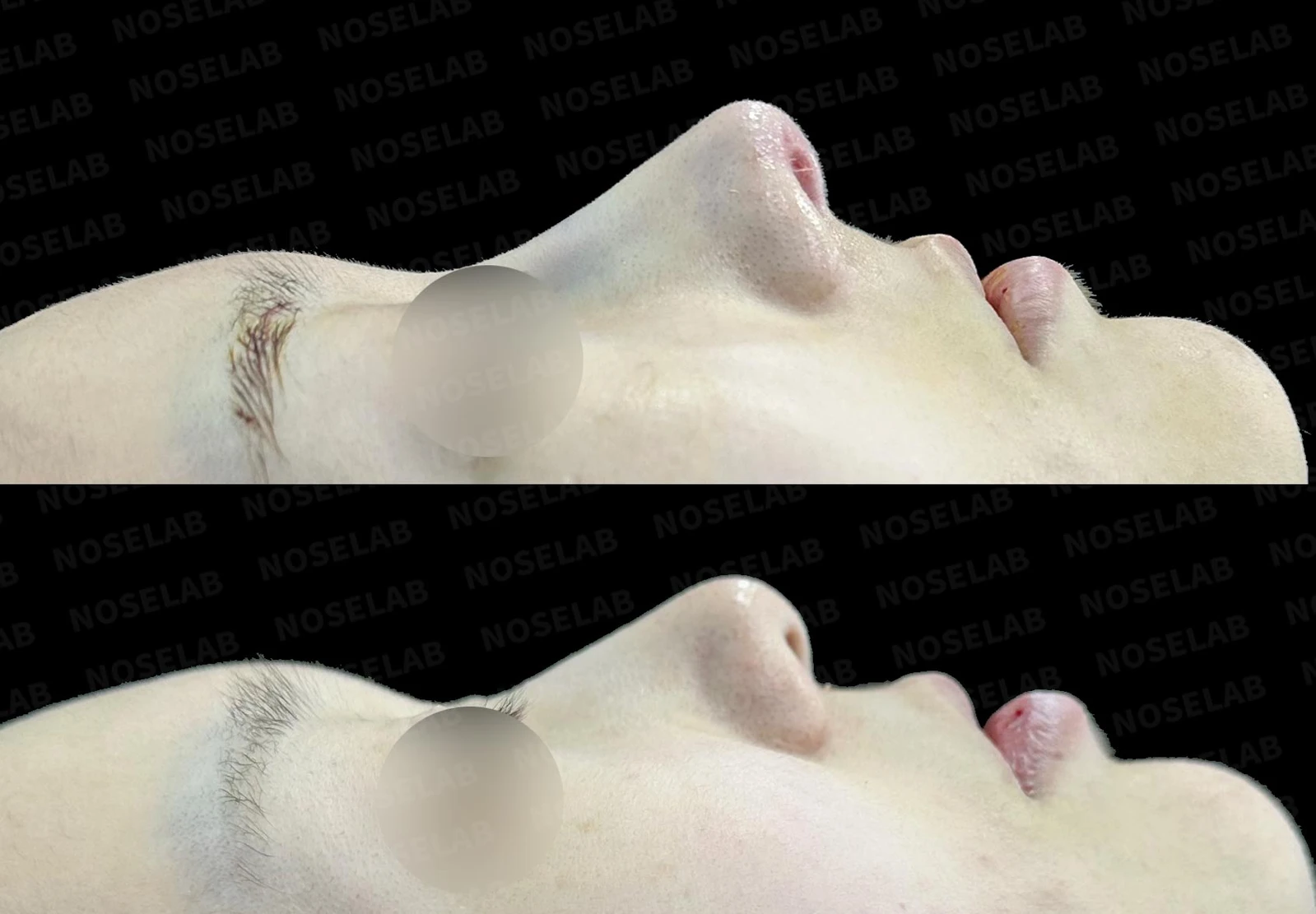
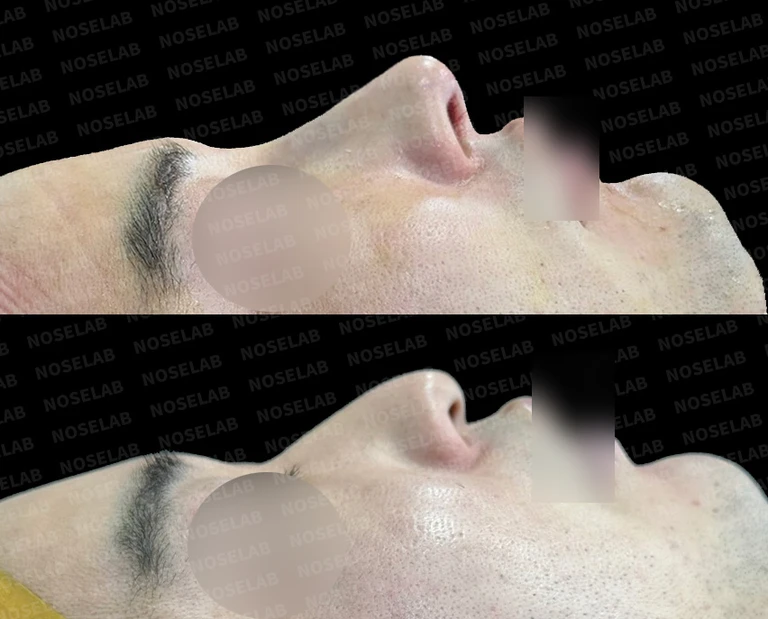
This is a case of a patient concerned about a dorsal hump, a drooping tip, and a crooked nasal bridge. Considering the patient's existing bridge height and thick skin, the plan was adjusted during surgery to shape the nasal bridge by filling in the deficient areas with autologous rib cartilage.

Preoperative condition

Correction of an uneven, crooked, and upturned nose using autologous rib cartilage — Before-and-after comparison
Before-and-after comparison

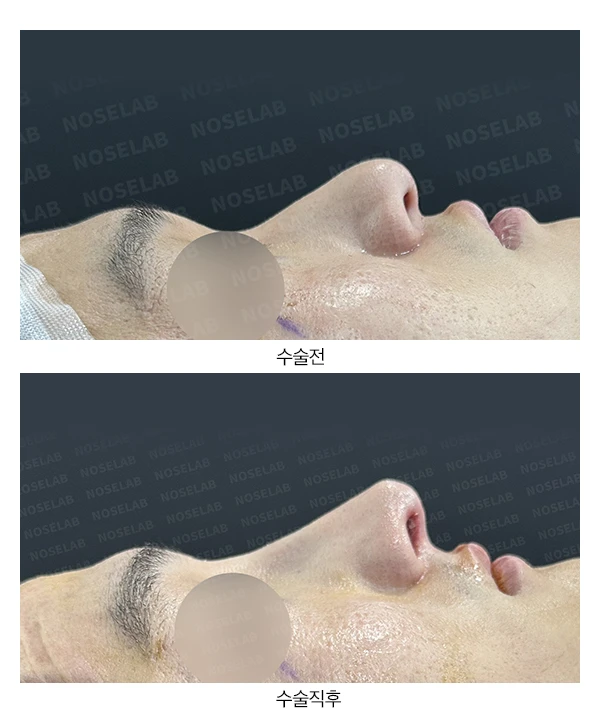
Correction of an uneven, crooked, and upturned nose using autologous rib cartilage

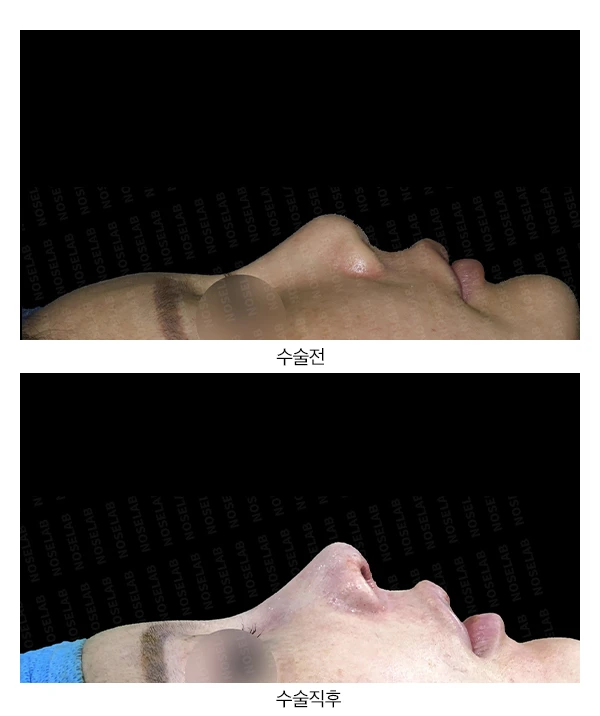
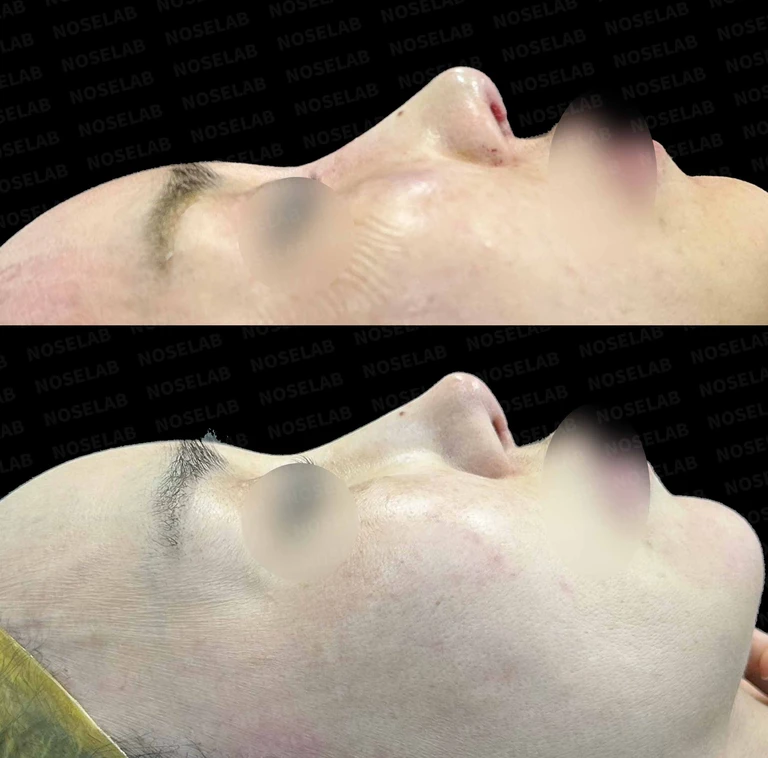
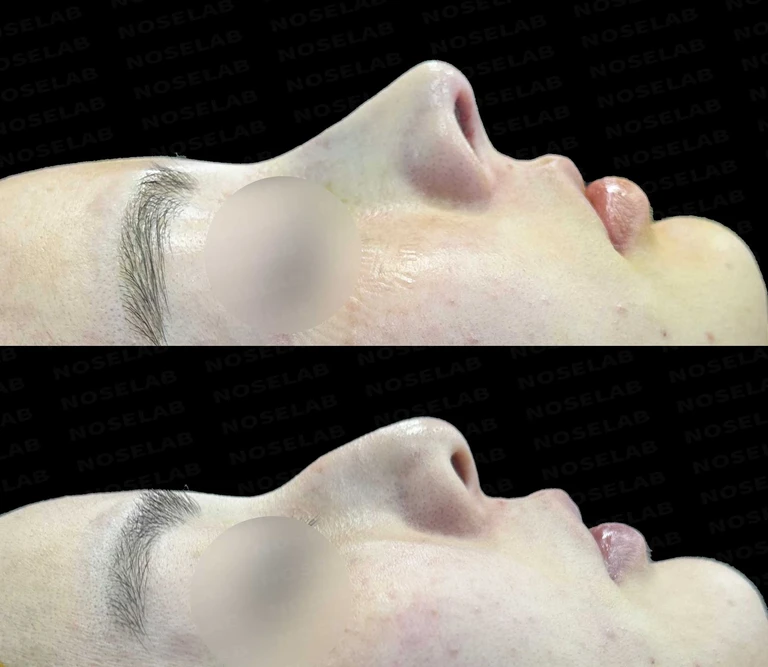
This is a case of a patient concerned about an uneven, wide, crooked nose, prominent nostril show from the front, and a wide nasal floor. Here, I introduce the surgical plan involving lateral osteotomy, tip plasty using autologous rib cartilage, and nasal floor reduction, along with photos taken immediately after surgery.

Preoperative condition

Revision rhinoplasty with autologous rib cartilage and columella correction for a long nose and dorsal hump — Before-and-after comparison
Before-and-after comparison

Revision rhinoplasty with autologous rib cartilage and columella correction for a long nose and dorsal hump

This is a case of a patient concerned about a nose that still looked long due to a residual dorsal hump and a drooping tip even after a previous surgery. The nasal bone and upper lateral cartilage were refined, the nasal tip and columella were corrected, and a thin silicone implant was placed to cover irregularities.

Preoperative condition

Revision rhinoplasty using autologous rib cartilage for an upturned nose, crooked nose, and nostril asymmetry — Before-and-after comparison
Before-and-after comparison

Revision rhinoplasty using autologous rib cartilage for an upturned nose, crooked nose, and nostril asymmetry

This is a case where excessive septal cartilage harvest led to a deviated septum, nasal obstruction, and an upturned, crooked tip, which were corrected by reconstructing the septum with autologous rib cartilage, removing scar tissue, and repositioning the lower lateral cartilages.

Preoperative condition

Nasal reconstruction with autologous rib cartilage for an upturned and crooked (deviated) nose due to contracture — Before-and-after comparison
Before-and-after comparison

Nasal reconstruction with autologous rib cartilage for an upturned and crooked (deviated) nose due to contracture

This is a case where postoperative inflammation led to a depressed and upturned nasal tip along with severe nostril asymmetry. I introduce the reconstruction plan using autologous rib cartilage according to the extent of cartilage damage, along with comparison photos taken immediately after surgery.

Preoperative condition

Revision rhinoplasty with autologous rib cartilage for bulbous tip, crooked nose, and nostril asymmetry — Before-and-after comparison
Before-and-after comparison

Revision rhinoplasty with autologous rib cartilage for bulbous tip, crooked nose, and nostril asymmetry

This is a case of a bulbous nose with thick skin, scar tissue in the nasal tip, and an implant deviated to the right. Removal of scar tissue, reconstruction and repositioning of the lower lateral (alar) cartilage, and nasal tip plasty using autologous rib cartilage were performed, with lateral osteotomy planned.

Preoperative condition

Revision rhinoplasty with autologous rib cartilage for a bulbous and drooping nose, along with columellar and nostril correction — Before-and-after comparison
Before-and-after comparison

Revision rhinoplasty with autologous rib cartilage for a bulbous and drooping nose, along with columellar and nostril correction

A case of a patient who visited our clinic with a bulbous, drooping tip and nostril asymmetry. During surgery, severe damage to the septum and lower lateral cartilages was identified, leading to reconstruction with autologous rib cartilage, while alar rim lowering and lateral osteotomy were included in the surgical plan.

Preoperative condition

Revision rhinoplasty methods using autologous rib cartilage without implants for a crooked and wide nose — Before-and-after comparison
Before-and-after comparison

Revision rhinoplasty methods using autologous rib cartilage without implants for a crooked and wide nose

This is a case of addressing nostril asymmetry and a crooked nasal bridge following past alar reduction. Repositioning of the columella and lower lateral cartilages was performed, alongside planned lateral osteotomy, the use of autologous rib cartilage, and functional nasal surgery for nasal obstruction.

Preoperative condition

Revision rhinoplasty methods for a long nose, cartilage show-through, and nostril asymmetry — Before-and-after comparison
Before-and-after comparison

Revision rhinoplasty methods for a long nose, cartilage show-through, and nostril asymmetry

This is a case where the nose appeared long and deviated after a previous surgery, accompanied by cartilage show-through and nostril asymmetry. After confirming septal deviation, septoplasty was performed to correct the deviated septum and improve the asymmetry.

Preoperative condition

Autologous rib cartilage revision rhinoplasty and nostril correction for an upturned and crooked nose — Before-and-after comparison
Before-and-after comparison

Autologous rib cartilage revision rhinoplasty and nostril correction for an upturned and crooked nose

A case involving nostril asymmetry and excessive nostril show after previous implant removal due to inflammation. Depending on the cartilage condition, autologous rib cartilage reconstruction, lateral osteotomy, and nostril rim extension were planned, documented with photos taken immediately after surgery.

Preoperative condition

Nasal thread removal and correction of a short, upturned nose using autologous rib cartilage — Before-and-after comparison
Before-and-after comparison

Nasal thread removal and correction of a short, upturned nose using autologous rib cartilage

6 dissolvable threads inserted into the nasal bridge were removed, and autologous rib cartilage was used to reconstruct the upturned nasal tip and damaged right lower lateral cartilage, correcting the asymmetry.

Preoperative condition

Surgical methods for correcting a crooked nose and dorsal hump — Before-and-after comparison
Before-and-after comparison

Surgical methods for correcting a crooked nose and dorsal hump

This is a case of a patient who visited due to nasal obstruction and a crooked nose, in whom leftward septal deviation and a narrowed nasal cavity were identified. Lateral osteotomy was used to correct the crooked nasal bones, and septal and inferior turbinate surgery was planned to address the nasal obstruction.

Preoperative condition

No-implant correction method for a large, wide dorsal hump and drooping tip — Before-and-after comparison
Before-and-after comparison

No-implant correction method for a large, wide dorsal hump and drooping tip

A congenitally large, high dorsal hump and drooping tip were corrected and smoothly connected without implants through precise nasal bone rasping and cartilage grafting.

Preoperative condition

Methods for correcting a contracted nose, crooked nose, and drooping tip using autologous rib cartilage — Before-and-after comparison
Before-and-after comparison

Methods for correcting a contracted nose, crooked nose, and drooping tip using autologous rib cartilage

This is a revision rhinoplasty case of a patient who presented with an upturned nose and a drooping tip. The damaged lower lateral cartilages and septum were partially reconstructed using autologous rib cartilage, septal extension was performed to lower the nasal tip, and nostril lowering was included in the plan.

Preoperative condition

Revision rhinoplasty for a crooked nose with a blunt, drooping tip, and correction of the nasolabial angle — Before-and-after comparison
Before-and-after comparison

Revision rhinoplasty for a crooked nose with a blunt, drooping tip, and correction of the nasolabial angle

This is a case where the silicone implant was shifted to the right, along with nasal bone asymmetry and a drooping nasal tip. Here, I document the planning process for lateral osteotomy and septal extension using donor rib cartilage, along with photos taken immediately after surgery.

Preoperative condition

Closed approach correction of a dorsal hump and nasal tip — Before-and-after comparison
Before-and-after comparison

Closed approach correction of a dorsal hump and nasal tip

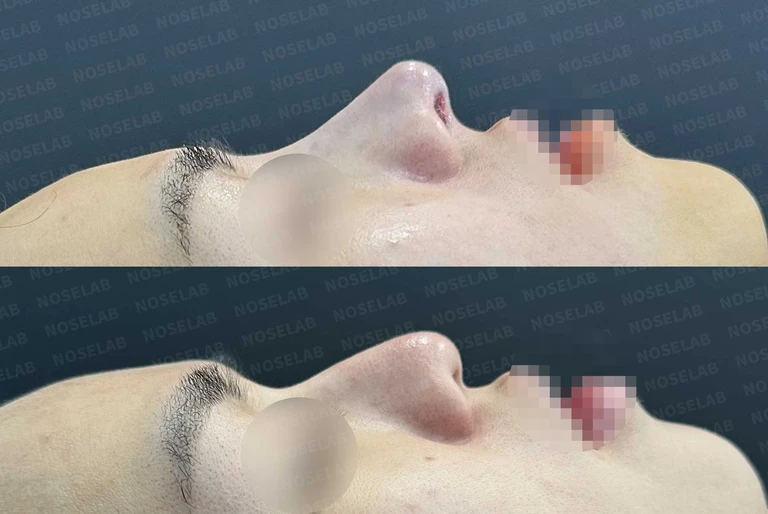
To correct a progressively upturning nose, dorsal hump, nostril asymmetry, and nasal obstruction, revision rhinoplasty using autologous rib cartilage was performed alongside functional nasal surgery through a closed approach.

Preoperative condition · Postoperative record
No search results found

Please try searching with different keywords.

Scroll to keep reading

Previous case15 / 16Next case
Original article

Read more records

Planning a visit to Seoul?Prepare your consultation with the NOSELAB team.

International patient guideWhatsApp ↗
Dr. Peter C. Kang's Rhinoplasty Stories
Rhinoplasty guideCases by topicDr. Peter C. KangNaver Blog ↗
View original photo
Enlarged photo
WhatsAppChat with NOSELAB↗