Hello.
A busy week has passed. This week, I had a same-day business trip to China, leaving at dawn and returning late at night. Perhaps because of that schedule, this week felt especially demanding. I usually try to organize operative photos on the day of surgery, but because of the busy schedule, it was already Sunday evening by the time I finished sorting them. Knowing our patients wait eagerly for these photos, I try to stay on schedule, but I fell behind this week.
Today, I would like to share a long nose correction case where a previous surgery left the glabella excessively high, creating a close-set, harsh appearance around the eyes, with the nose deviated overall to the right. During the preoperative consultation, I explained that the radix was set too high and the nasal bridge was overly elevated, creating an unnatural look.
Preoperative design consultation findings:
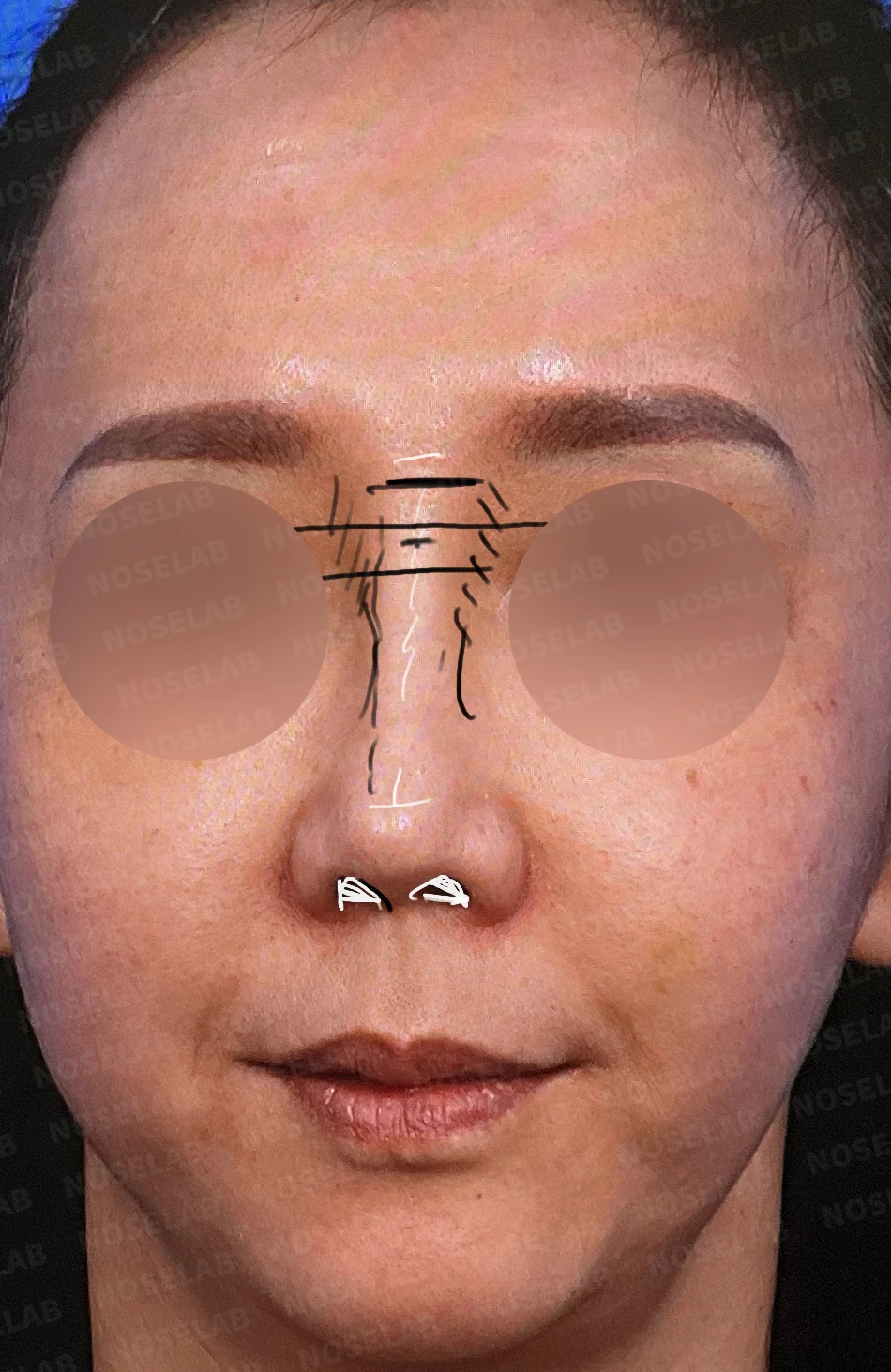
<Front view>
The radix is positioned too high.
The nose is deviated to the right.
There is excessive nostril show and asymmetry.
The nose appears overly long.
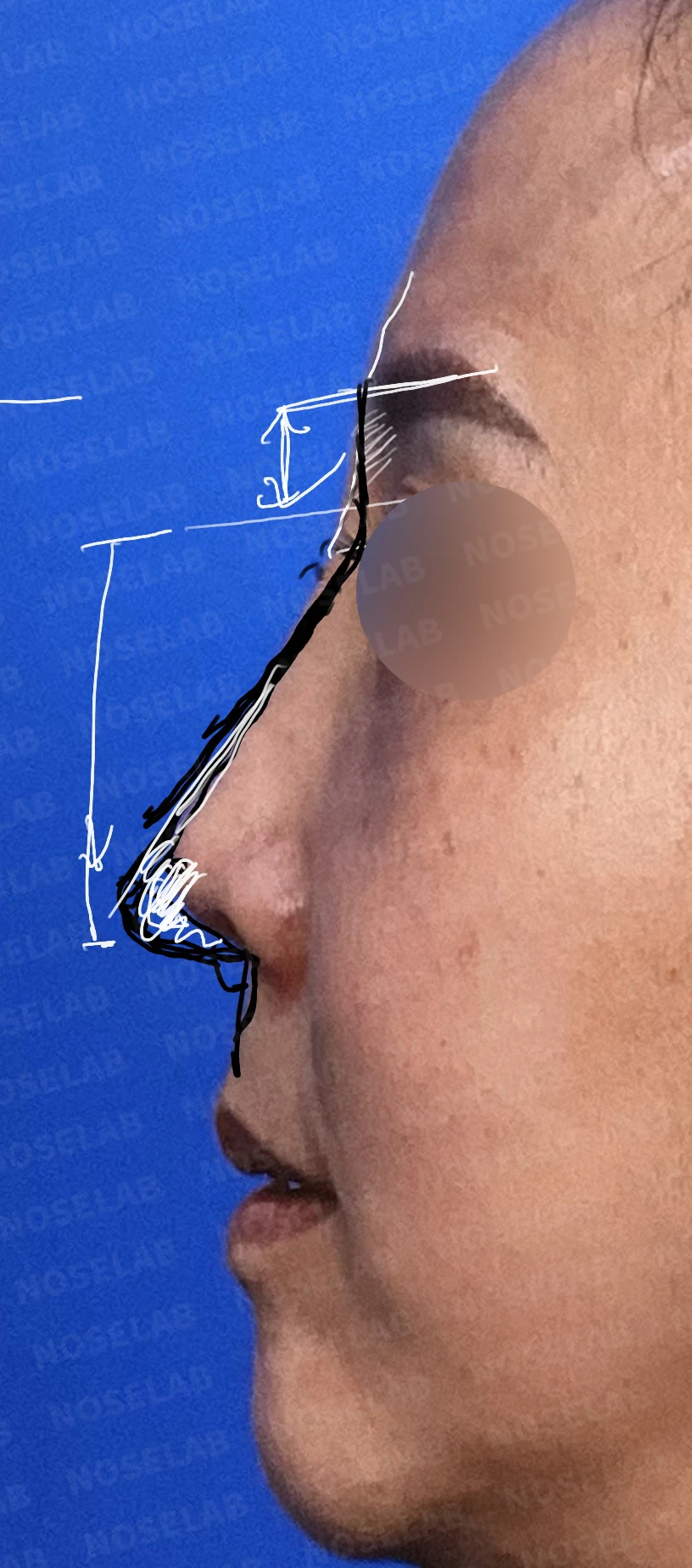
<Profile view>
The transition from the forehead to the glabella is very unnatural.
The nasal tip is drooping and short.
The columella appears retracted, and the alae are hanging low.
The nasolabial angle is obtuse.
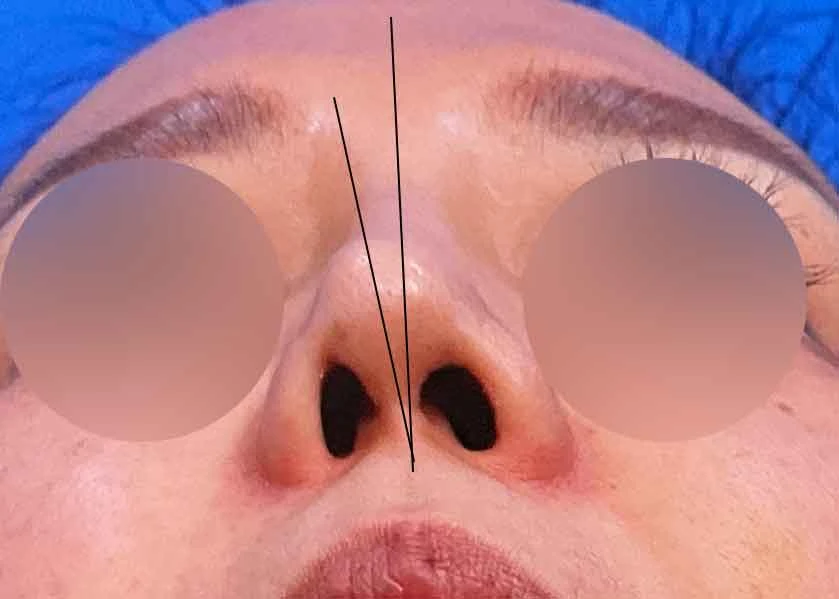
Preoperative design consultation: basal view
<Basal view>
Nostril asymmetry is present.
The columella is tilted toward the right.
The columella is excessively narrow.
To address these issues, the following surgical plan was established:
What is the surgical plan?
Excessively high radix → Lower the radix to the level of the pupil line
Rightward nasal deviation → Lateral osteotomy
Excessive nostril show and asymmetry → Correct the deviated septum using autologous rib cartilage
Long nasal appearance → Lowering the radix is expected to correct the elongated look
Retracted columella and drooping alae → Lower the columella using autologous rib cartilage and adjust the nasolabial angle to approximately 95 degrees
Widen the columellar width; the columellar tilt is expected to improve substantially through septal correction alone
What do the immediate postoperative photos show?
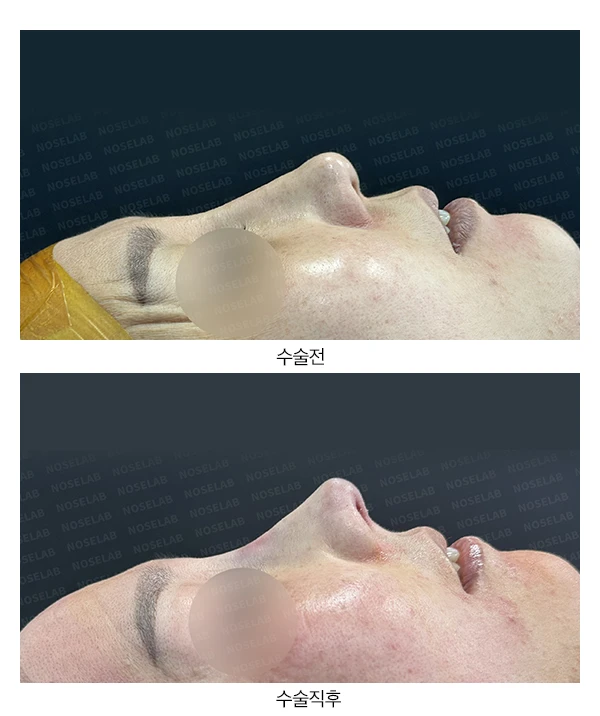
The procedure proceeded smoothly according to the preoperative plan, yielding satisfactory results. Looking at the profile view immediately after surgery, the radix looks much more natural. A Gore-Tex implant was present in the nasal bridge, which was completely and cleanly removed. The irregularities along the bridge improved significantly, and the tip achieved refined projection.
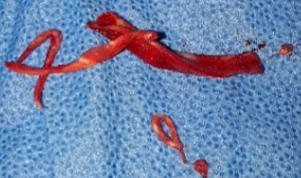
Photo of the removed Gore-Tex implant
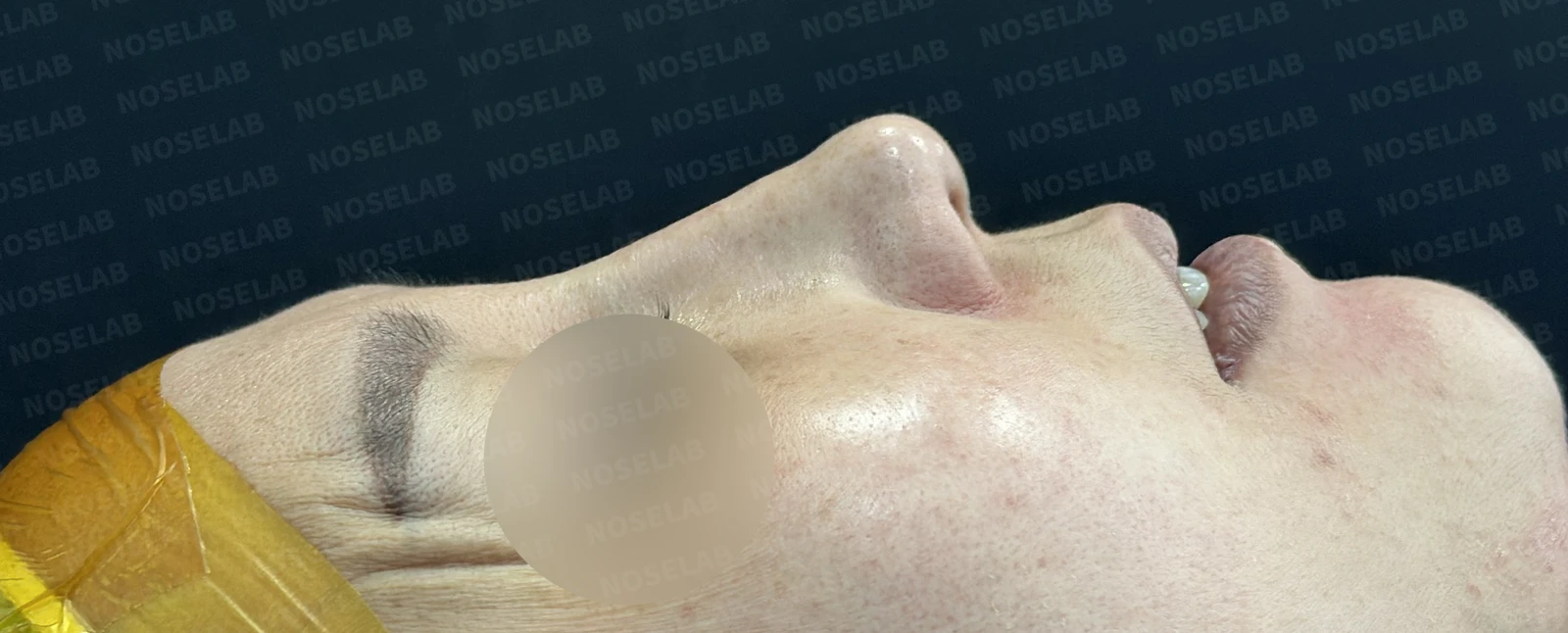
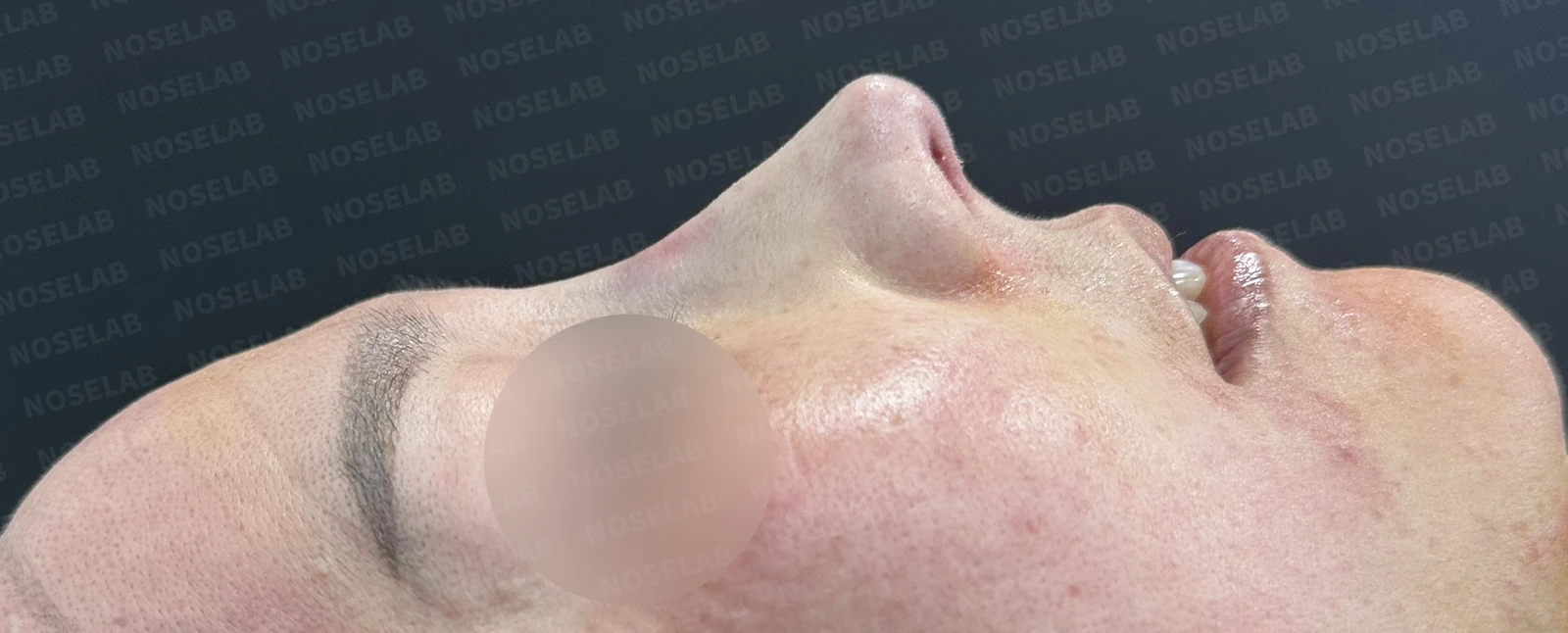
Before surgery / Day 0 immediately after surgery Photos taken immediately after surgery show swelling and may differ from the final result.
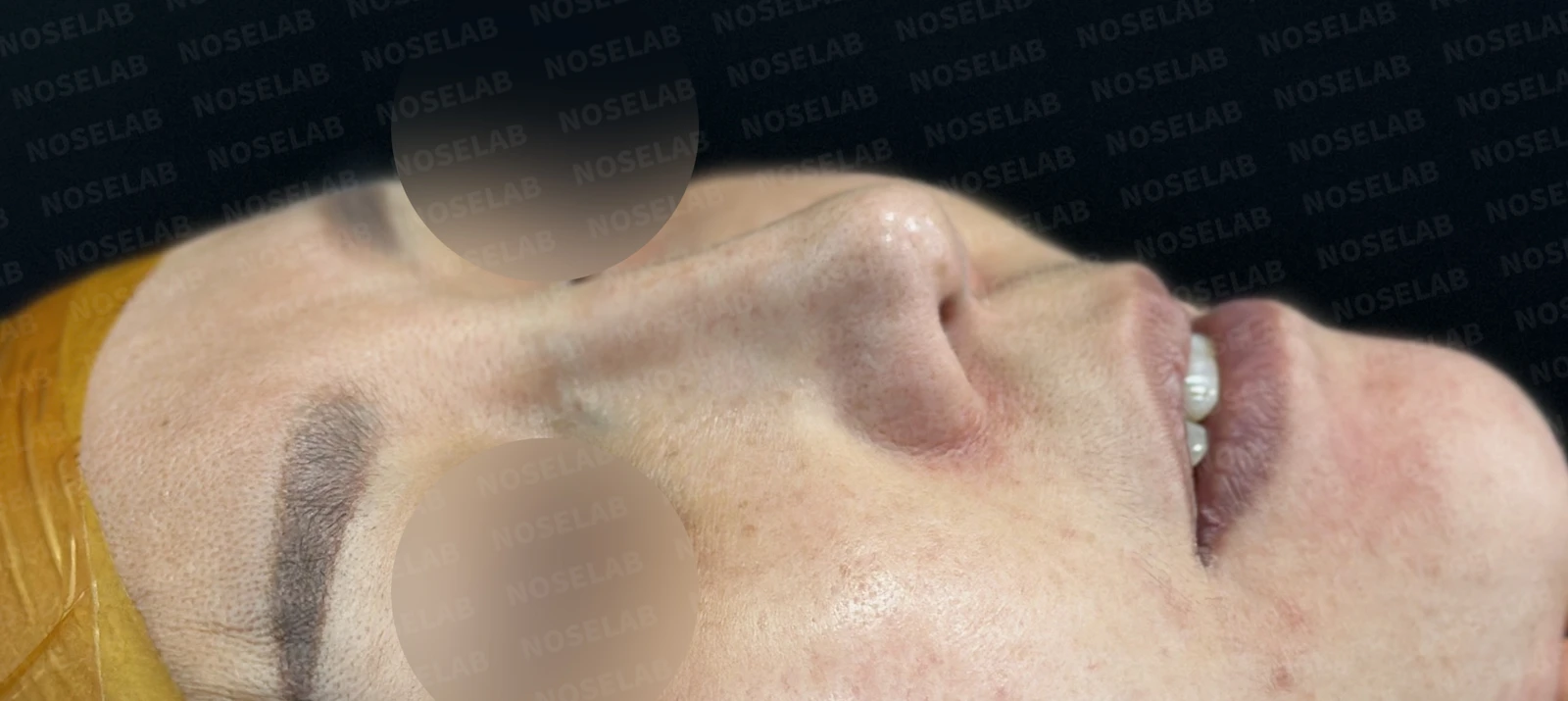
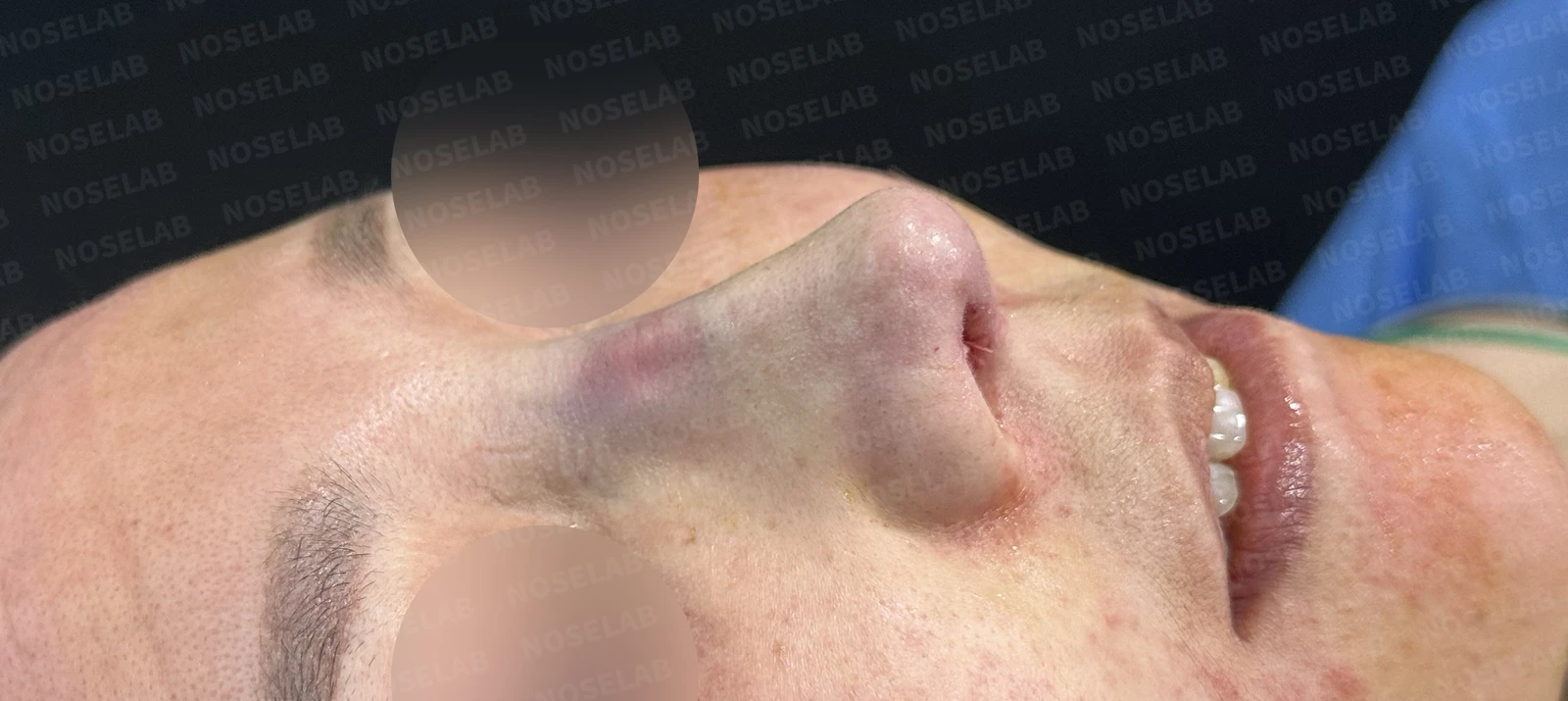
Before surgery / Day 0 immediately after surgery Photos taken immediately after surgery show swelling and may differ from the final result.
On the front view, the glabella was noticeably shifted toward the right before surgery, but immediate postoperative views show substantial improvement, along with refined nostril symmetry.
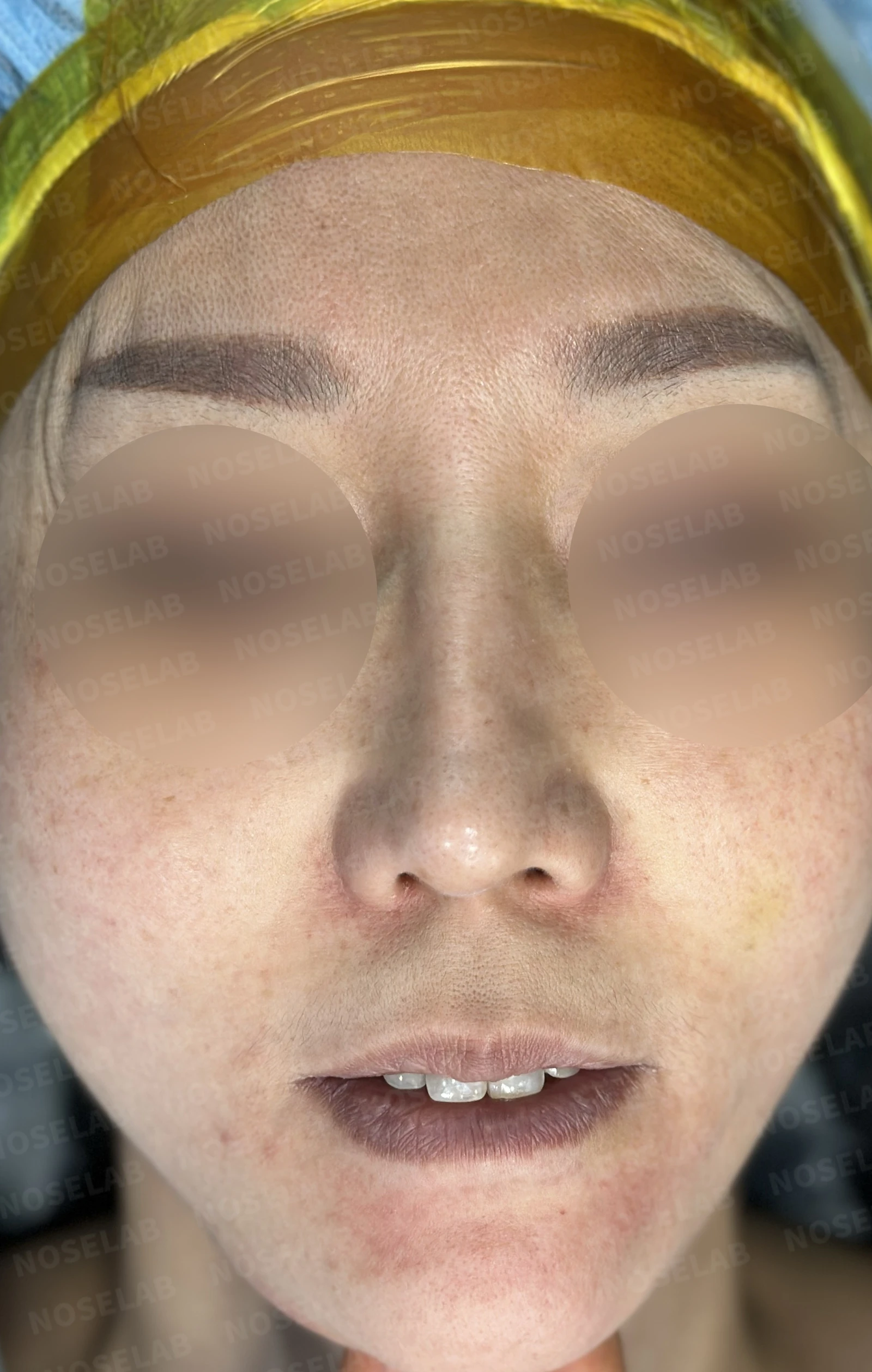
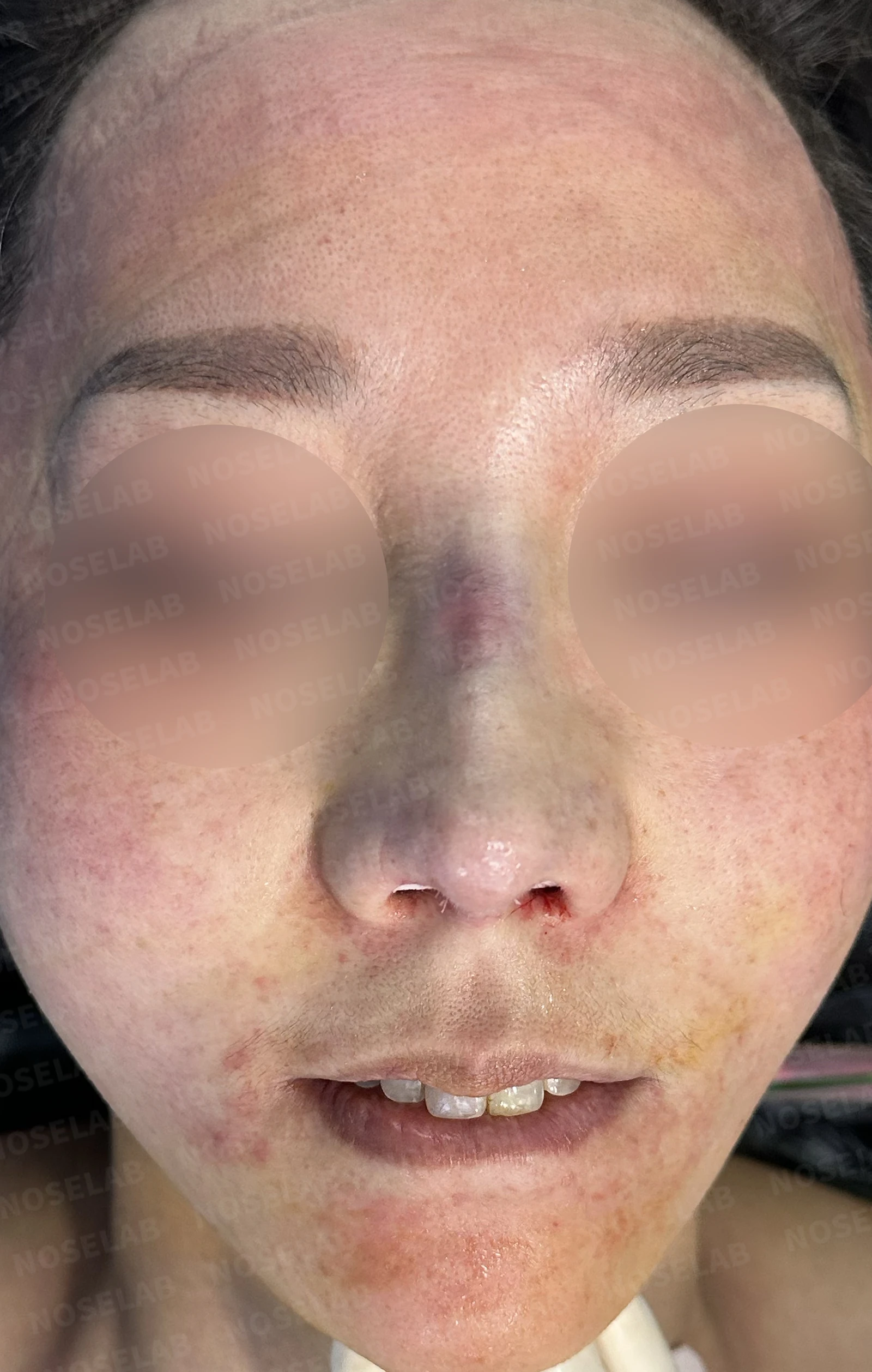
Before surgery / Day 0 immediately after surgery Photos taken immediately after surgery show swelling and may differ from the final result.
Perhaps the most noticeable change is in the nostrils. By bringing the columella—which had deviated entirely to the right—back to the midline, nostril asymmetry improved naturally.
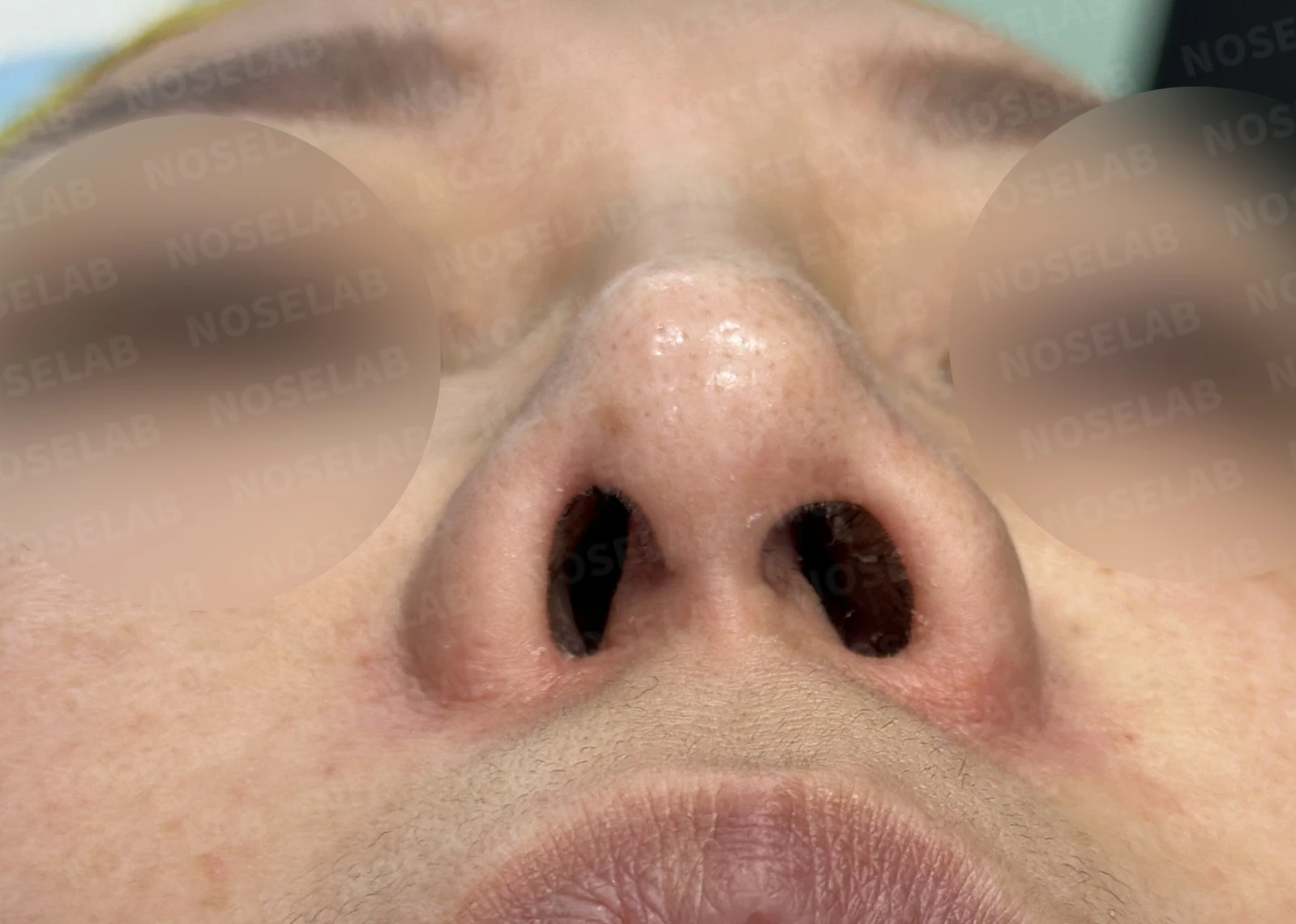
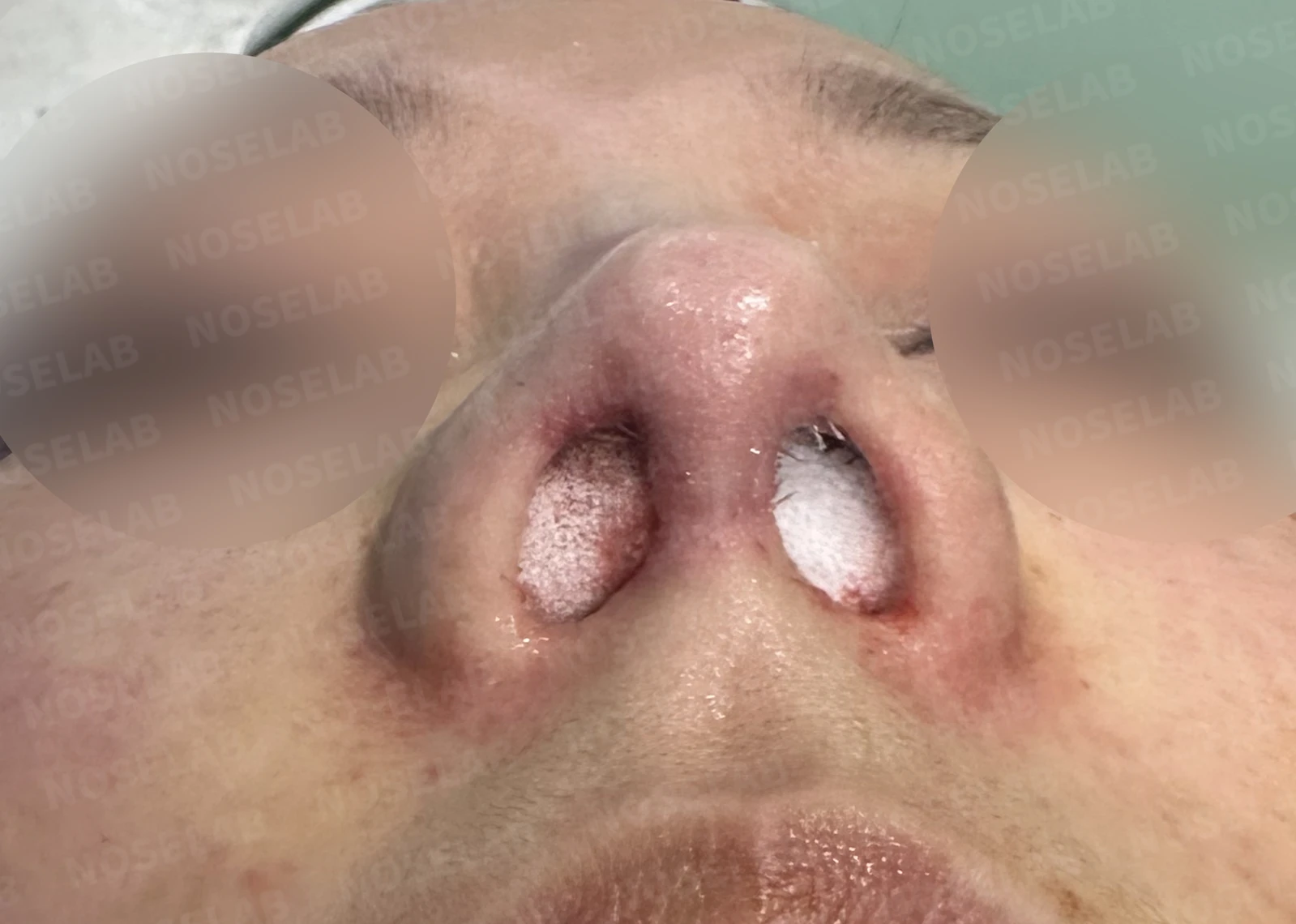
Before surgery / Day 0 immediately after surgery Photos taken immediately after surgery show swelling and may differ from the final result.
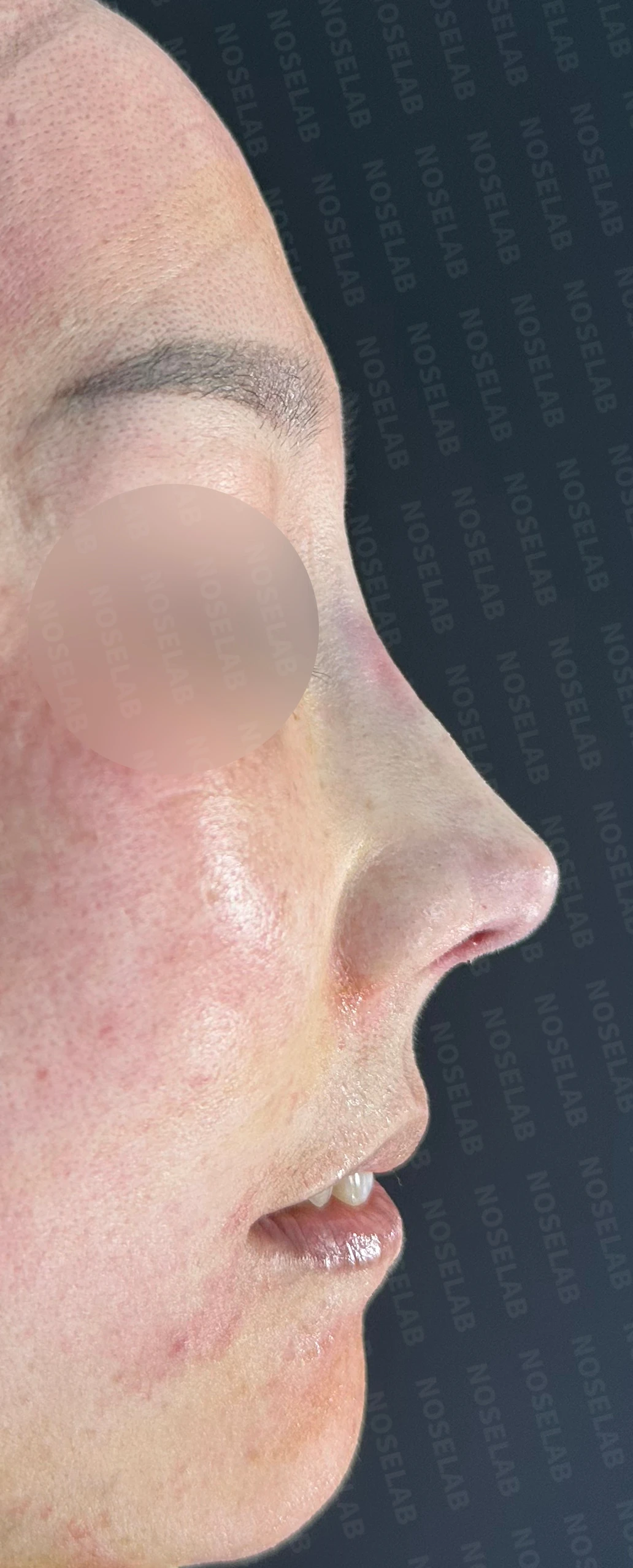
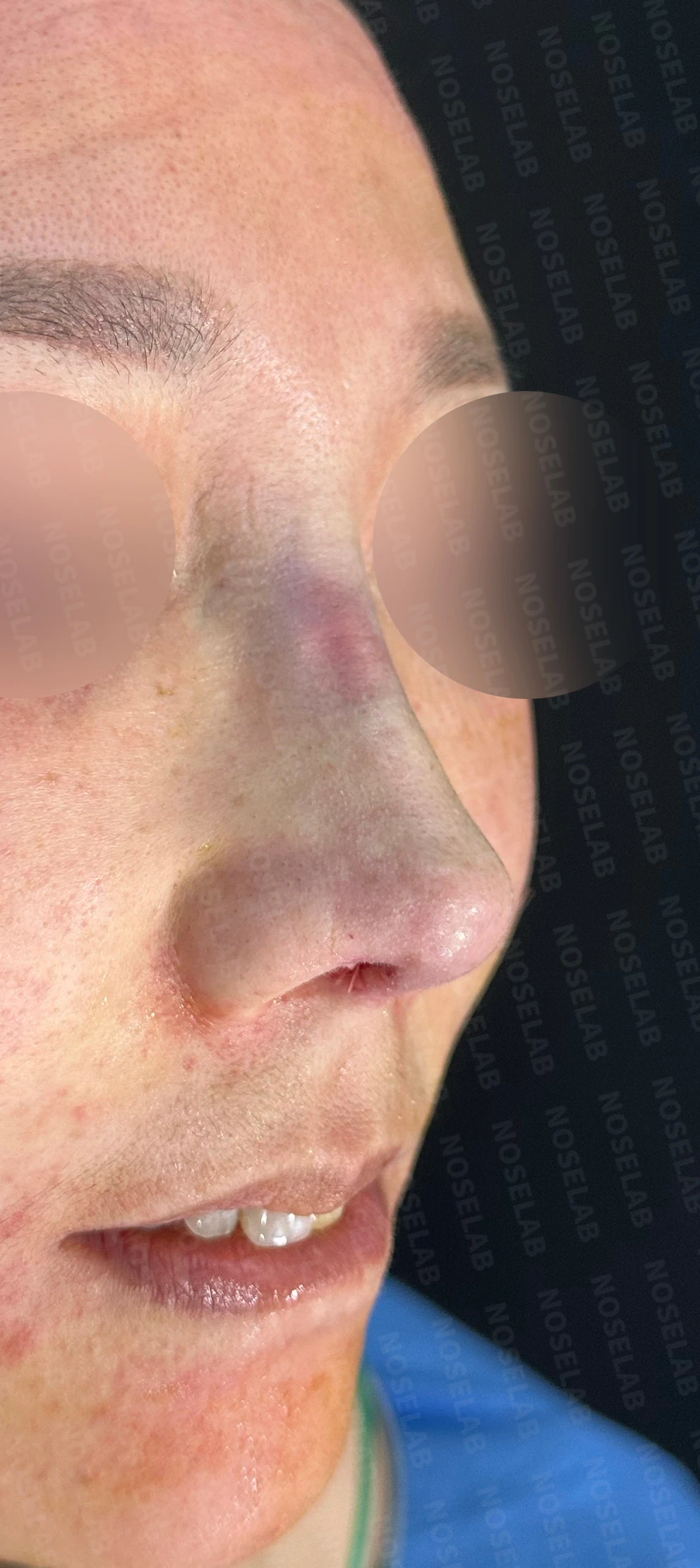
Photos taken immediately after surgery (day 0): 90-degree profile (left), 45-degree oblique (center), front view (right). Immediate postoperative photos show swelling and may differ from the final result.
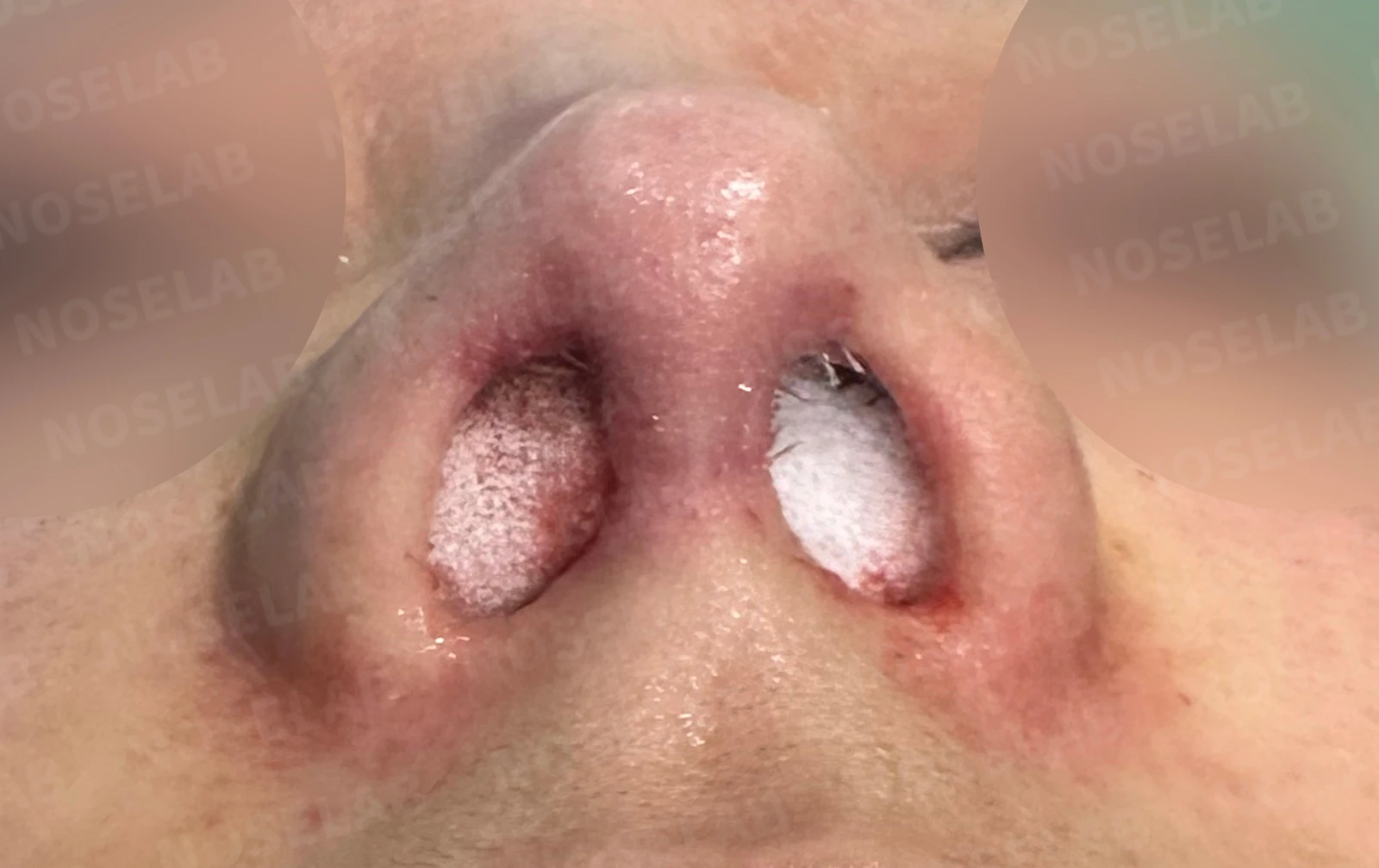
Photo taken immediately after surgery (day 0): basal view of the nostrils. Immediate postoperative photos show swelling and may differ from the final result.
Reviewing the day 0 immediate postoperative photos, the nose looks far more refined compared to before surgery. The perceived length has been reduced, giving a more youthful and feminine impression. Immediate postoperative photos show swelling and may differ from the final result.
What does lowering the radix mean?
I have long discussed the concept of lowering the radix. Traditionally, the starting point of the nose was commonly set around the double eyelid line. You can think of the radix as where the nasal bridge implant begins, or anatomically, where the forehead transitions into the nose. Setting the radix at the eyelid crease makes the bridge appear very distinctly high, but it can make the eyes look crowded together or create a harsh impression. For this reason, we often set it lower today, around the level of the pupil line.
However, lowering the radix is not suitable for every case. Brow bone projection varies from person to person; in patients with prominent brow ridges, lowering the starting point can leave the glabella looking overly depressed and unnatural. In addition, the skin thins rapidly below the pupil line, which can lead to implant edge show-through. Because the implant tends to be very thin at that level, it may fail to smooth over bony irregularities and can lift away from the bone. Above all, in patients who naturally have a high nasal bone, lowering the radix is technically more challenging than one might expect.
Lowering the radix to design a natural glabellar line can be an effective choice, but it must be decided carefully after assessing the height of the patient's brow bone and nasal bone.
Today, we explored the concept of lowering the radix. I hope this explanation provides helpful guidance to anyone considering revision rhinoplasty.
This was Dr. Peter C. Kang. Thank you.

Limitations and risks
When autologous rib cartilage is used, scarring and pain may remain at the donor site on the chest, and pneumothorax (pleural injury) can occur rarely. Over time, the grafted cartilage may warp or undergo partial resorption.
When revising after implant removal, contracture may progress again after removal, the nasal height and length may decrease, and staged surgery may be necessary depending on the skin condition.
When the septum is corrected at the same time, nasal obstruction may persist or recur, and in rare cases, septal perforation or changes in smell may occur.
Common potential risks include infection, bleeding, asymmetry, scarring, skin necrosis, and insufficient improvement; results vary depending on individual skin condition and previous surgical history.