1. Preoperative consultation
The patient visited our clinic seeking correction of an unnatural nasal shape resulting from this type of surgery. Overall, the nose appeared long and crooked, with cartilage show-through at the nasal tip and severe nostril asymmetry.
2. Surgical plan
Findings from the CT scan taken at our clinic revealed a deviated septum. Determining that the septal deviation was directly related to the nostril asymmetry, I planned a septoplasty to correct the deviated septum.
3. Immediately after surgery (Day 0)Immediate postoperative photos show swelling and may differ from the final result.
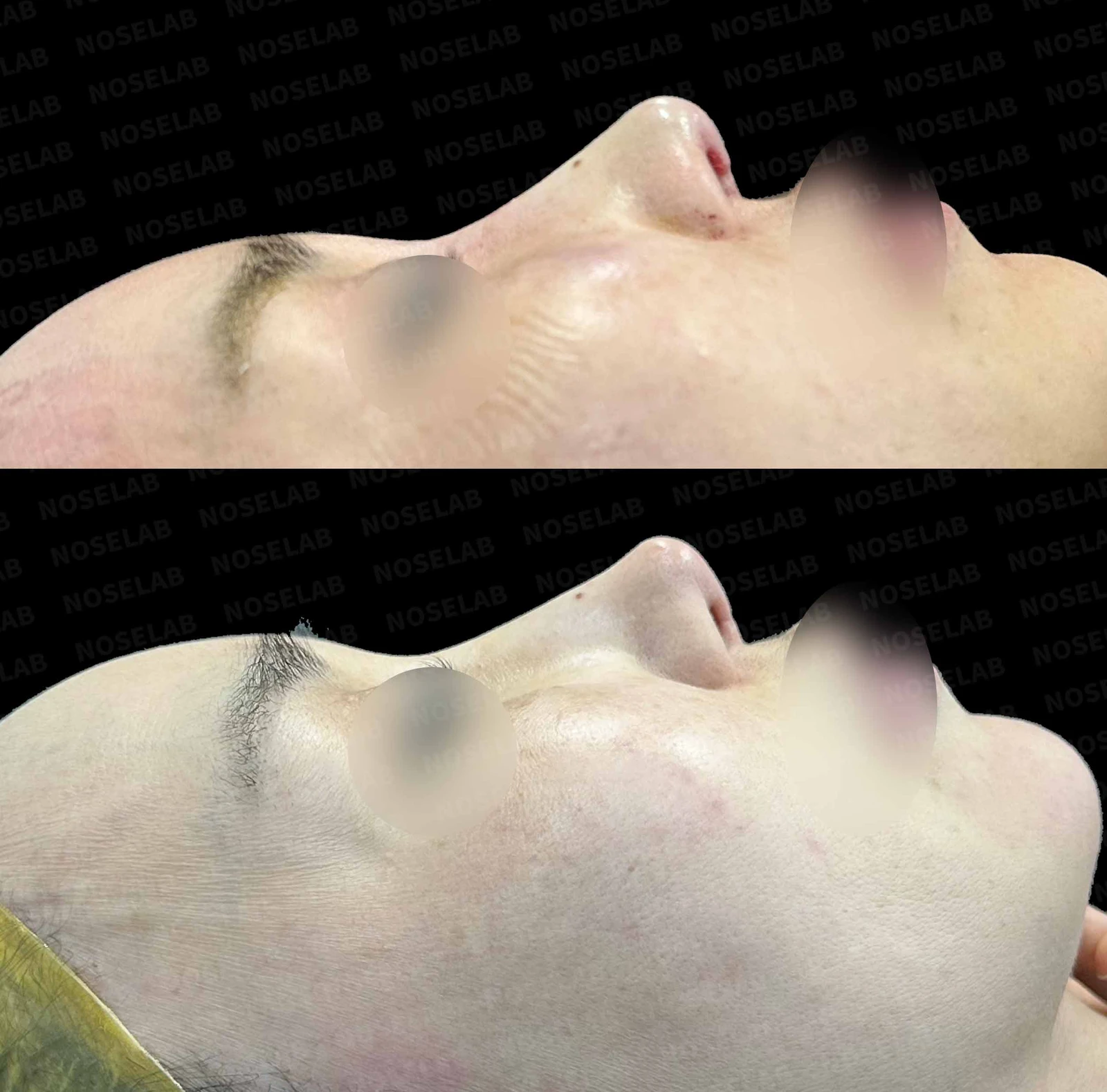
Before surgery / Day 0 immediately after surgery Photos taken immediately after surgery show swelling and may differ from the final result.
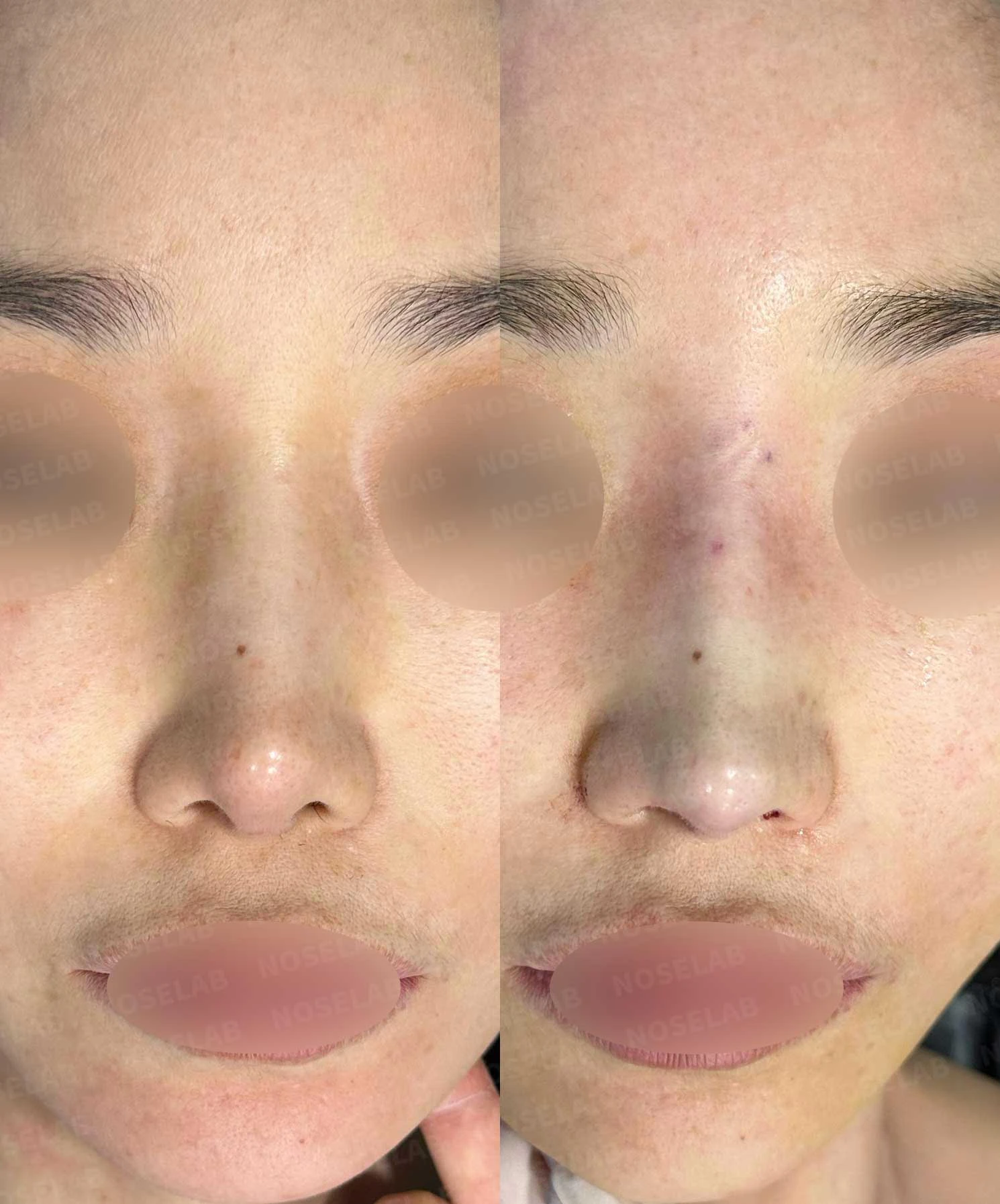
Before surgery / Day 0 immediately after surgery Photos taken immediately after surgery show swelling and may differ from the final result.
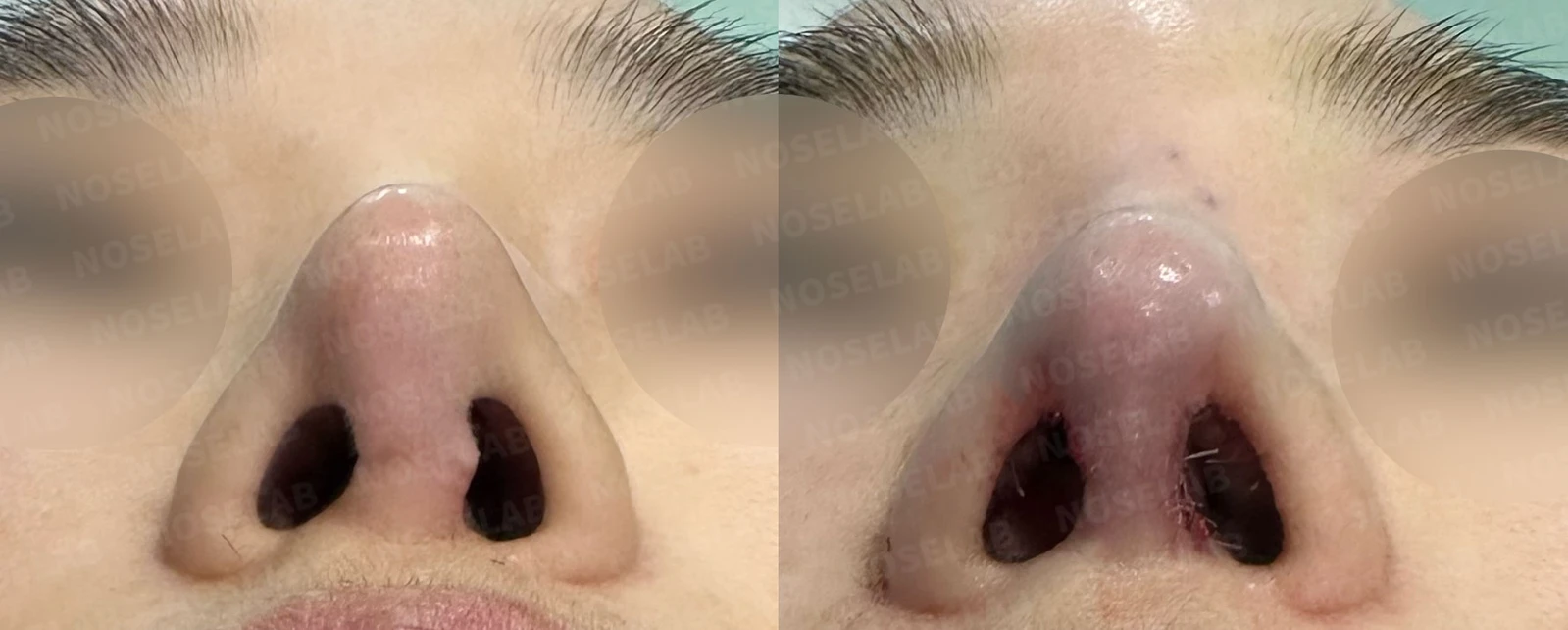
Before surgery / Day 0 immediately after surgery Photos taken immediately after surgery show swelling and may differ from the final result.
4. Conclusion
In revision rhinoplasty cases, nostril asymmetry is often related to a deviated septum. Especially in rhinoplasty utilizing septal extension grafts, deviation of the anterior septal cartilage is very closely linked to tip deviation, columellar tilt, and nostril asymmetry. This patient also had anterior septal deviation, and after correcting this portion, the nostril asymmetry naturally improved.
Dr. Peter C. Kang
Limitations and risks
When the septum is corrected at the same time, nasal obstruction may persist or recur, and in rare cases, septal perforation or changes in smell may occur.
Common potential risks include infection, bleeding, asymmetry, scarring, skin necrosis, and insufficient improvement; results vary depending on individual skin condition and previous surgical history.