1. Preoperative design
This patient was scheduled for a fourth rhinoplasty and visited the clinic to correct an upturned nose. The shape of the upturned nasal tip appeared to be a deformity that developed after mild contracture. The nasal tip was bulbous and drooping, and deviated slightly to the right.
2. Surgical plan
The plan was to assess the extent of cartilage damage in the nasal tip, reconstruct the compromised cartilage, and perform septal extension using autologous rib cartilage. In addition, to correct nostril asymmetry, a nostril lowering procedure was planned by grafting autologous rib cartilage onto both lower lateral cartilages.
3. Immediately after surgery (Day 0)Immediate postoperative photos show swelling and may differ from the final result.
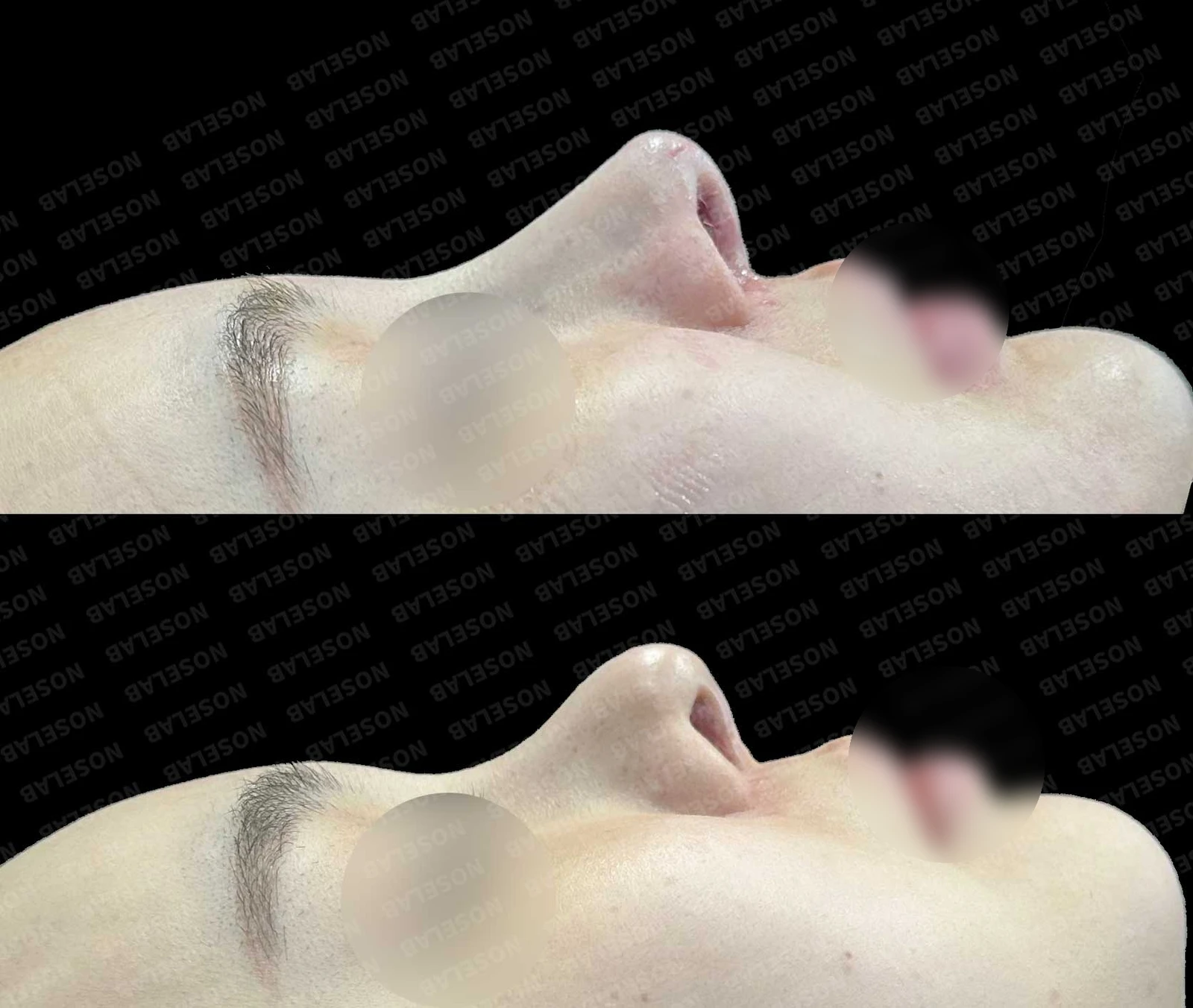
Before surgery / Day 0 immediately after surgery Photos taken immediately after surgery show swelling and may differ from the final result.
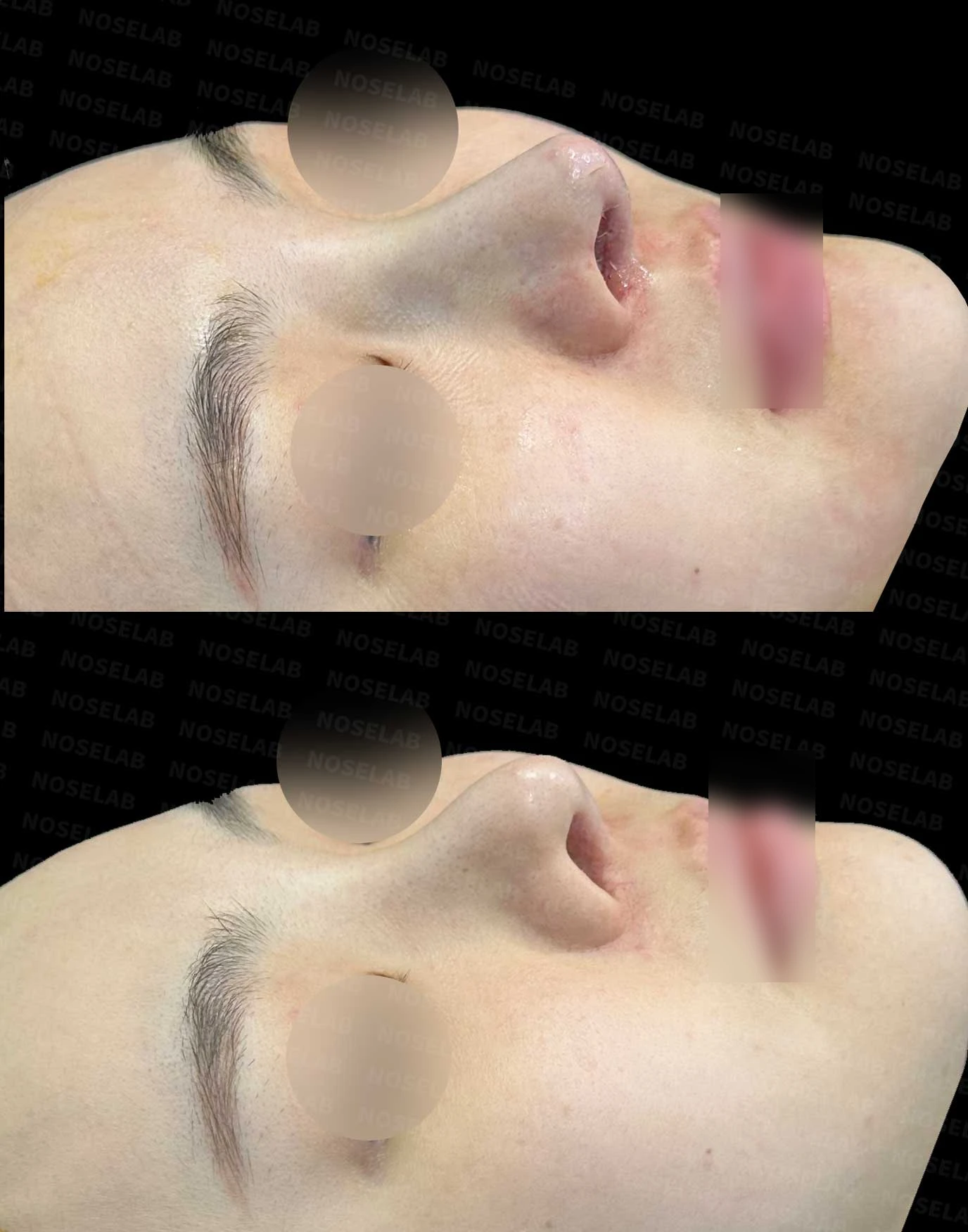
Before surgery / Day 0 immediately after surgery Photos taken immediately after surgery show swelling and may differ from the final result.
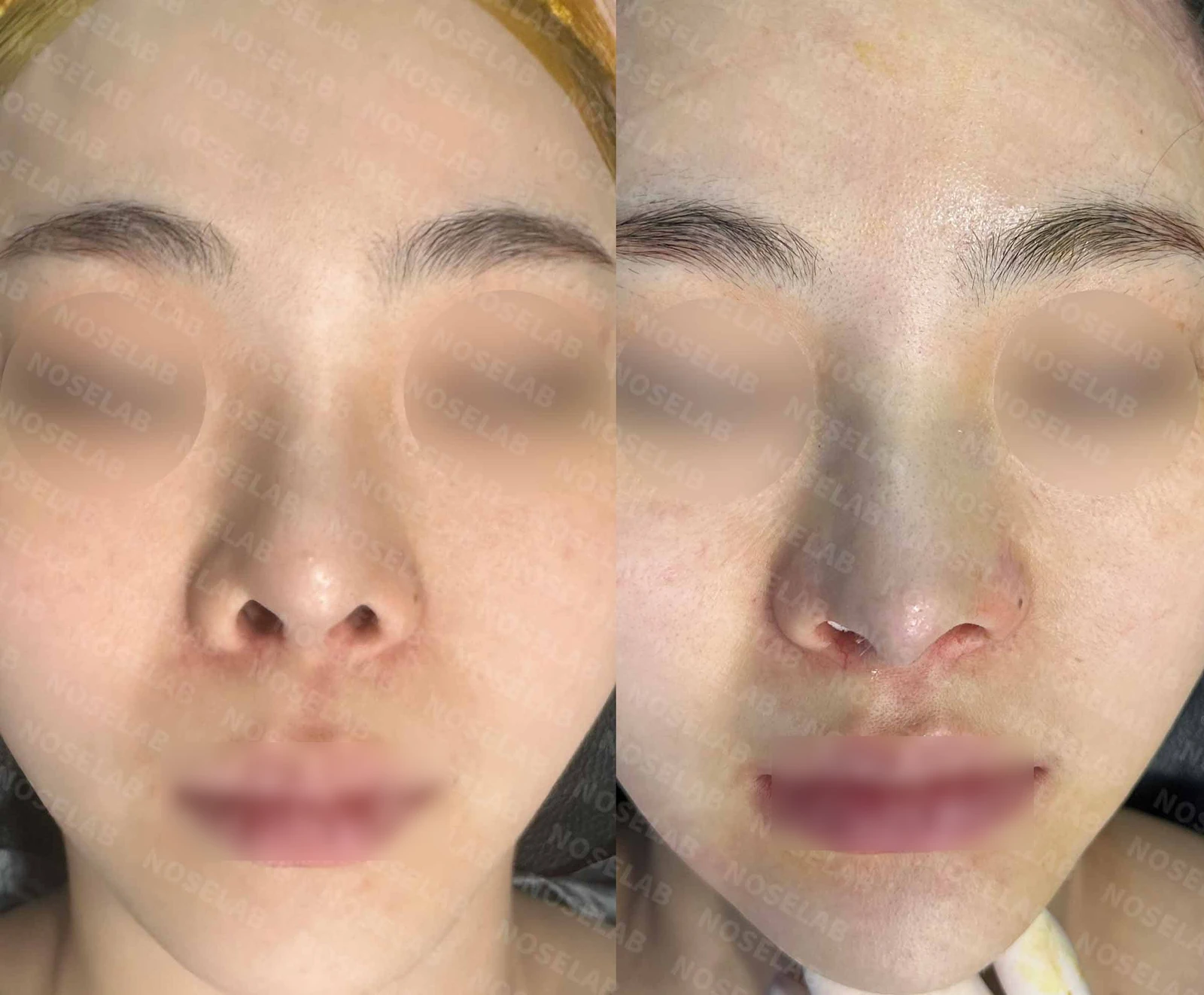
Before surgery / Day 0 immediately after surgery Photos taken immediately after surgery show swelling and may differ from the final result.
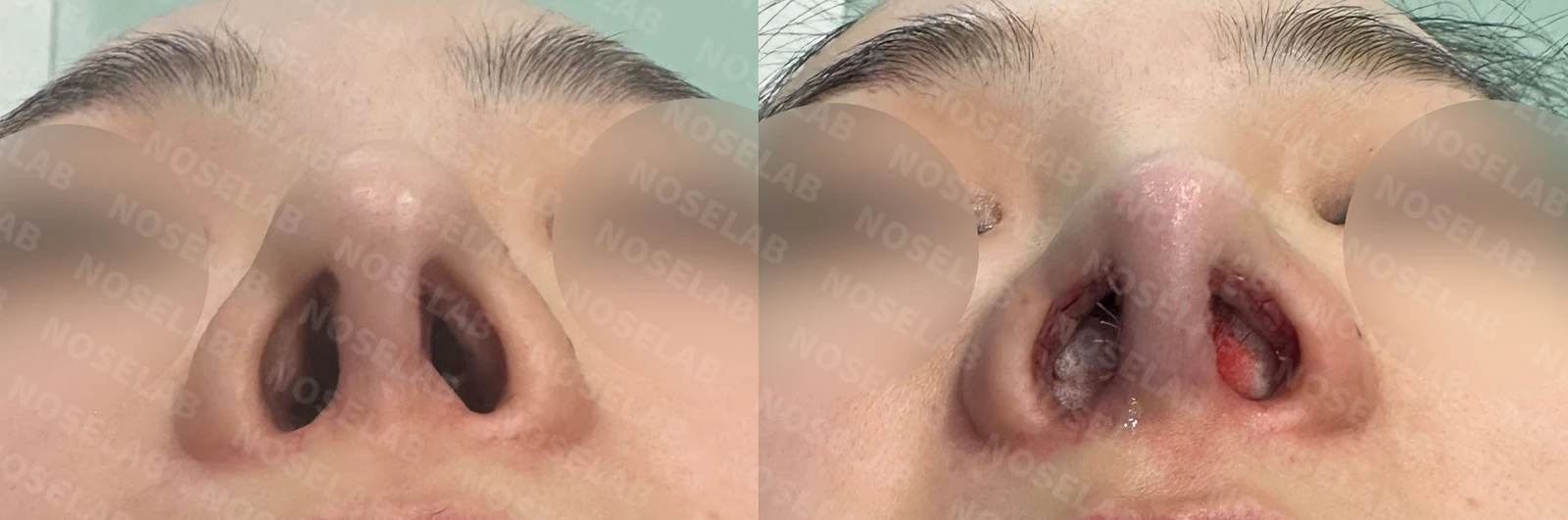
Before surgery / Day 0 immediately after surgery Photos taken immediately after surgery show swelling and may differ from the final result.
4. Conclusion
This surgery corrects an upturned nose caused by mild contracture deformity. In this type of surgery, assessing the extent of damage to normal tissue is of primary importance. Checking the condition of the lower lateral (alar) cartilage and septal cartilage, and reconstructing damaged cartilage as needed, must take priority. In this patient as well, only about 1/3 of the right lower lateral cartilage remained, and approximately the anterior 1/3 of the septal cartilage had been removed. Therefore, using autologous rib cartilage, the lower lateral cartilage and septal cartilage were partially reconstructed, and the nasal tip was lowered sufficiently through septal extension.
Dr. Peter C. Kang
Limitations and risks
When autologous rib cartilage is used, scarring and pain may remain at the donor site on the chest, and pneumothorax (pleural injury) can occur rarely. Over time, the grafted cartilage may warp or undergo partial resorption.
When the septum is corrected at the same time, nasal obstruction may persist or recur, and in rare cases, septal perforation or changes in smell may occur.
Common potential risks include infection, bleeding, asymmetry, scarring, skin necrosis, and insufficient improvement; results vary depending on individual skin condition and previous surgical history.