1. Preoperative design
The patient visited the clinic to correct a nose that appeared crooked overall and nostril asymmetry that developed following alar reduction surgery. The patient did not want a silicone implant in the nasal bridge and wished to correct the uneven, crooked appearance of the bridge. During the design consultation, we decided to slightly raise the overall height and also perform nasolabial angle correction.
2. Surgical plan
To improve the crooked nasal bridge, a lateral osteotomy was planned, and surgery to relieve nasal obstruction was also scheduled due to breathing discomfort. Autologous rib cartilage was chosen for both the nasal bridge and nasal tip.
3. Immediately after surgery (Day 0)Immediate postoperative photos show swelling and may differ from the final result.
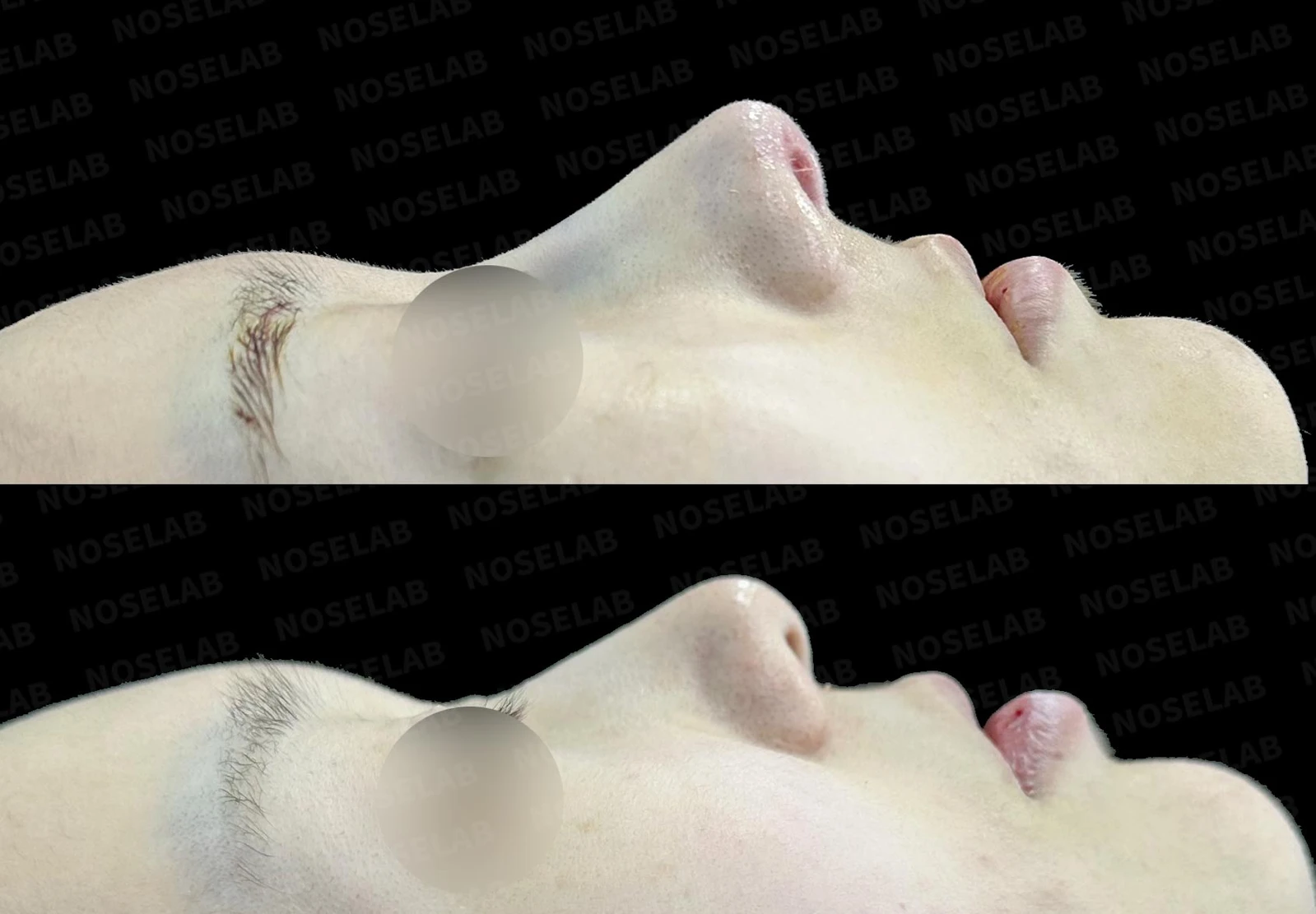
Before surgery / Day 0 immediately after surgery Photos taken immediately after surgery show swelling and may differ from the final result.
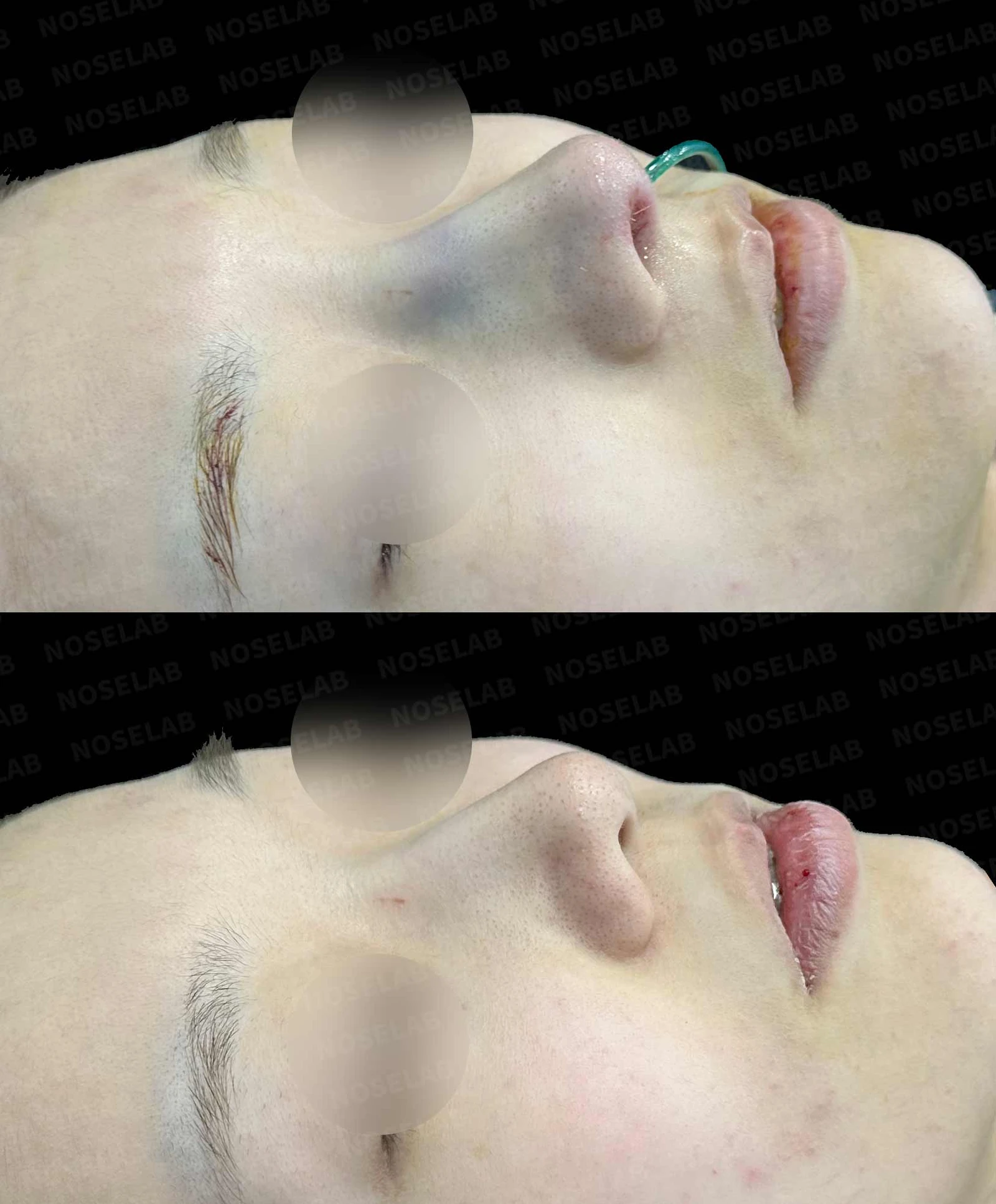
Before surgery / Day 0 immediately after surgery Photos taken immediately after surgery show swelling and may differ from the final result.
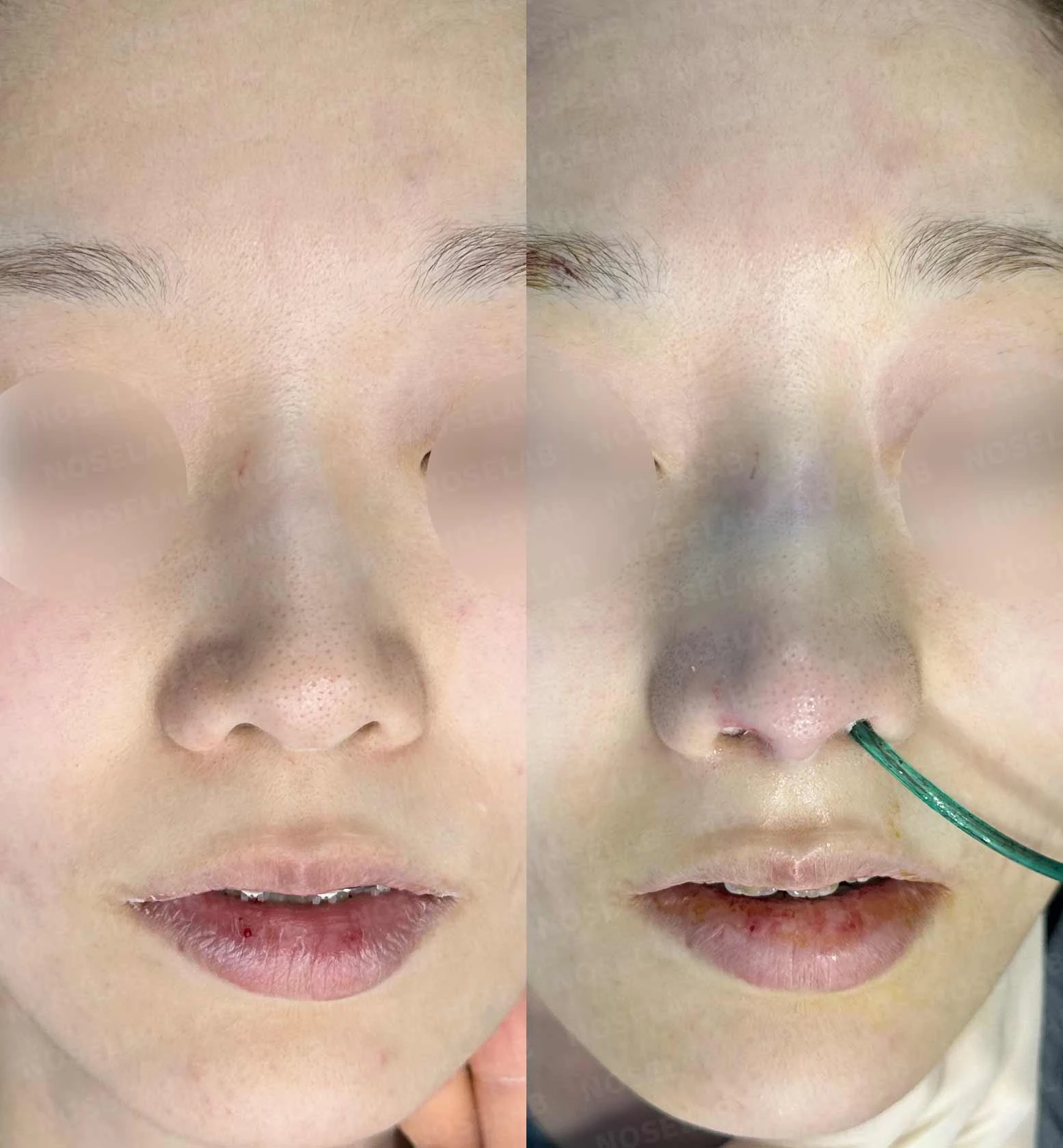
Before surgery / Day 0 immediately after surgery Photos taken immediately after surgery show swelling and may differ from the final result.
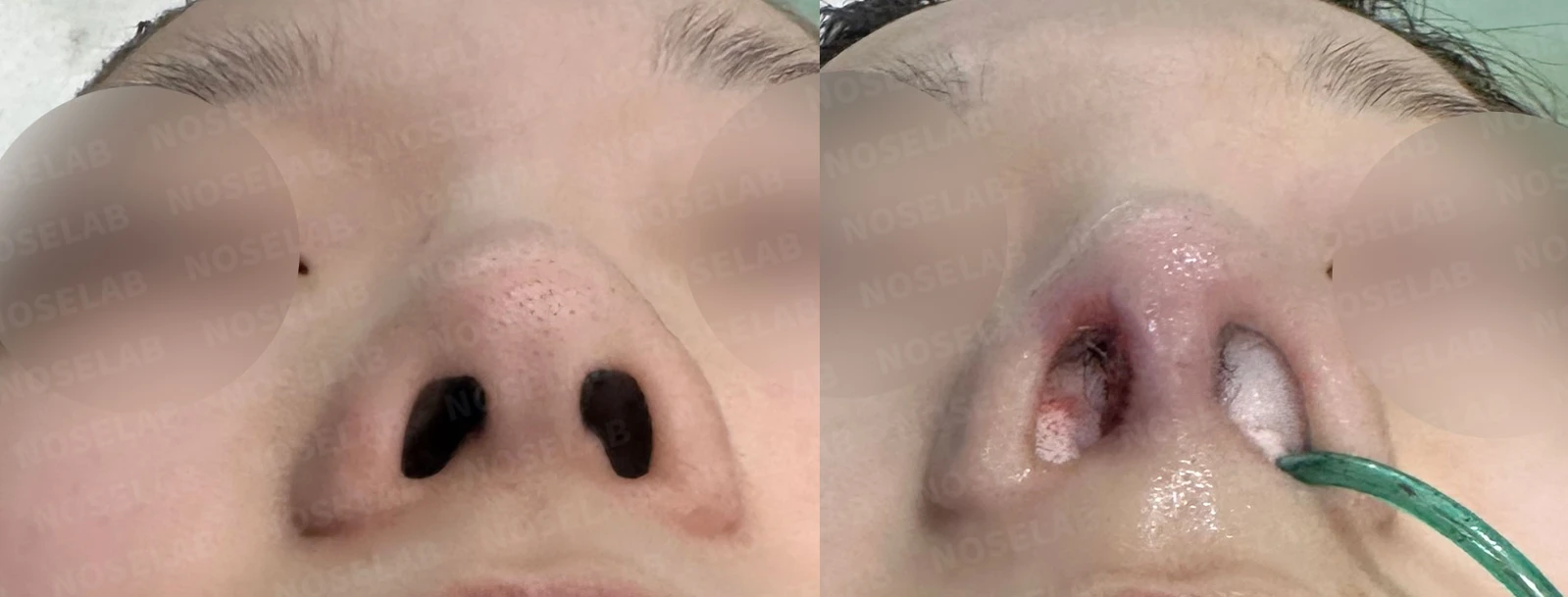
Before surgery / Day 0 immediately after surgery Photos taken immediately after surgery show swelling and may differ from the final result.
4. Conclusion
This surgery corrects nostrils that became asymmetrical following alar reduction surgery. While alar reduction is a relatively simple procedure often planned without much hesitation, its complications are not simple. First, it leaves noticeable scars on both alae that remain for life, and as the nostrils become smaller, nostril asymmetry often develops. The most problematic aspect is that it cannot be restored to its original state, because alar tissue once excised cannot be recreated. As this patient also developed alar asymmetry, surgery was performed to alter the position of the columella and reposition the lower lateral cartilages to conceal the nostril asymmetry as much as possible.
Dr. Peter C. Kang
Limitations and risks
When autologous rib cartilage is used, scarring and pain may remain at the donor site on the chest, and pneumothorax (pleural injury) can occur rarely. Over time, the grafted cartilage may warp or undergo partial resorption.
When the septum is corrected at the same time, nasal obstruction may persist or recur, and in rare cases, septal perforation or changes in smell may occur.
Common potential risks include infection, bleeding, asymmetry, scarring, skin necrosis, and insufficient improvement; results vary depending on individual skin condition and previous surgical history.