Hello.
I am Dr. Peter C. Kang, medical director.
The patient I am introducing today had previously undergone rhinoplasty.
At that time, cartilage suturing using ear cartilage was performed on the nasal tip, and an implant-free rhinoplasty was performed on the nasal bridge. Over time, however, the nasal bridge became excessively low, prompting the patient to receive hyaluronic acid filler injections.
Even after the filler injections, the overall shape remained unnatural, and the patient experienced discomfort from nasal obstruction that developed after the surgery. The patient visited NOSELAB to correct the short nose, upturned nose, and pinched nose.
Design consultation
Let us analyze the patient's condition in detail:
Front view:
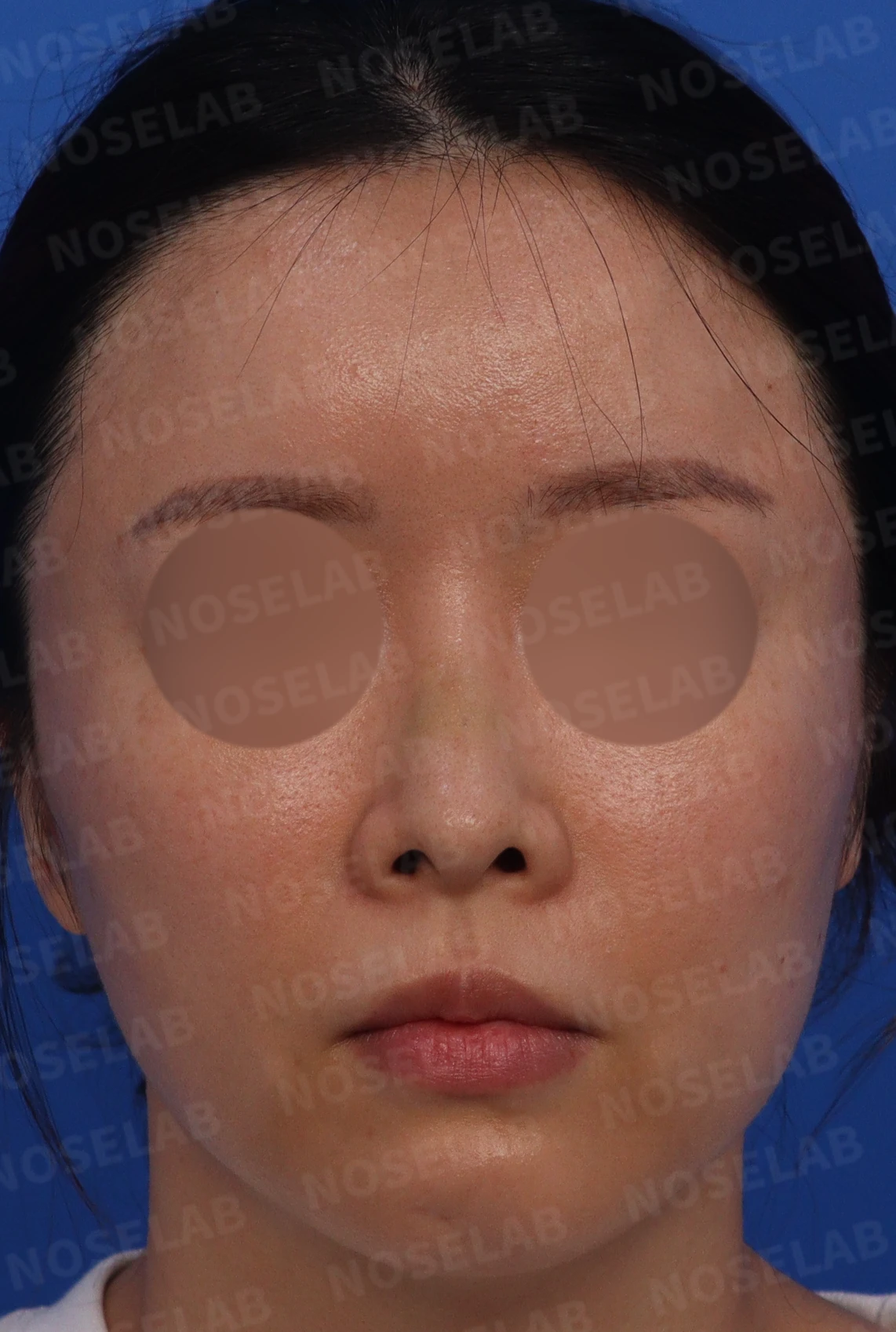
Front view
Excessive nostril show with asymmetry
Deviated nasal bridge appearing blunt and widened due to filler
Findings of pinched alae
Upturned appearance
Profile view:
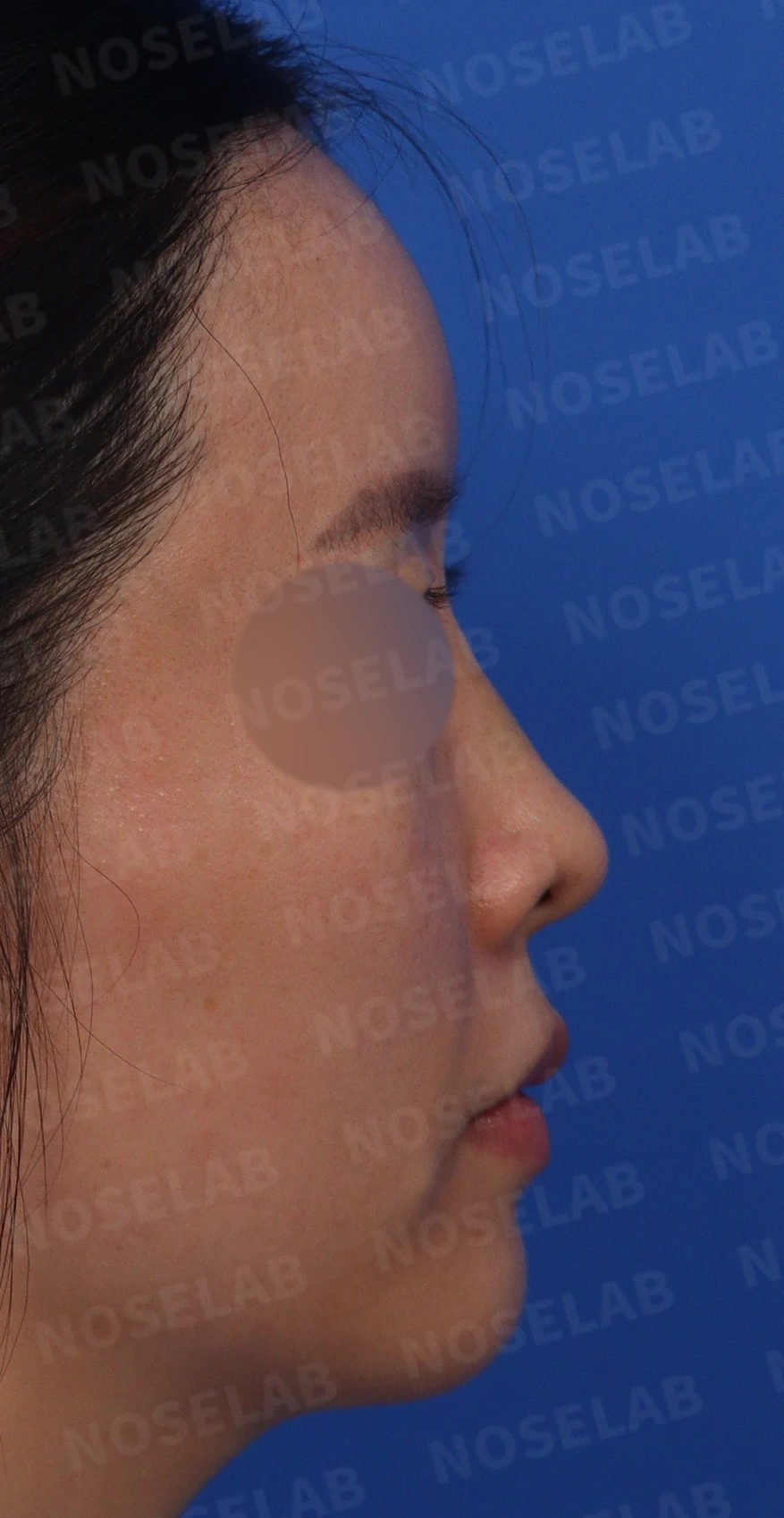
Profile view
High radix
Excessive nostril show visible on the profile view
Irregular nasal bridge
Oblique view:
Injected filler clearly visible along the nasal bridge
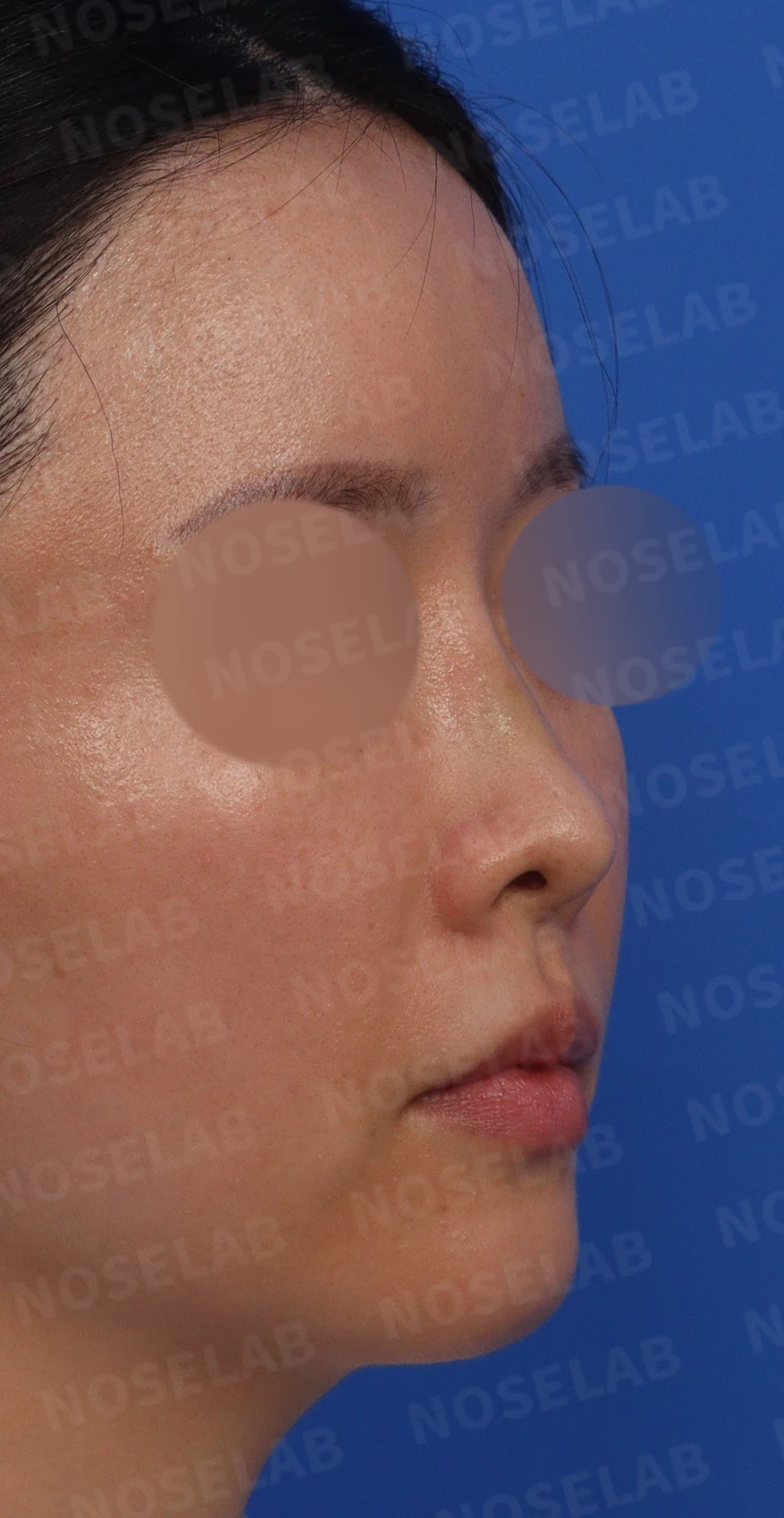
Oblique view
Cartilage show-through visible
Unnatural overall contour (side effect of cartilage suturing)
Nostrils:
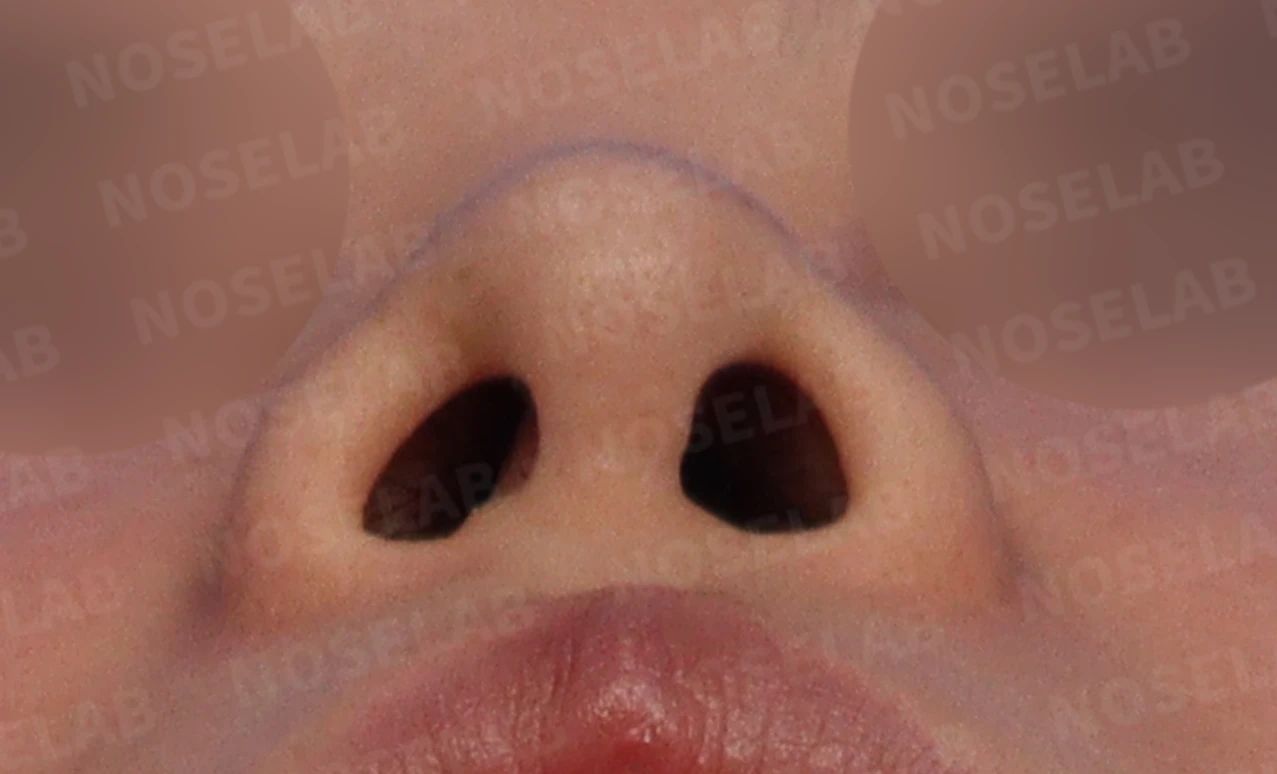
Base view (nostril) photo
The columella tilts to the left
Prominent nostril asymmetry
Cartilage protruding inside the right nostril
Right ala appearing pinched
Patient's main requests:
Implant-free approach after foreign material removal
Lowering the alae
Relief of nasal obstruction
Correction of the protruding cartilage inside the right nostril (side effect of cartilage suturing)
Correction of the pinched and upturned appearance
Surgical plan and procedure details
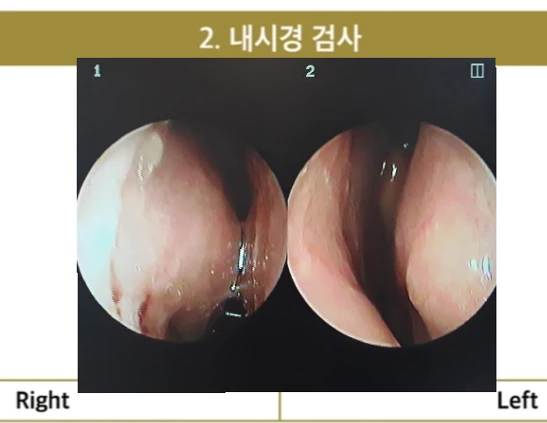
Endoscopic photo
a) Foreign material removal:
Filler, AlloDerm, and nylon sutures in the nasal bridge were all carefully removed.
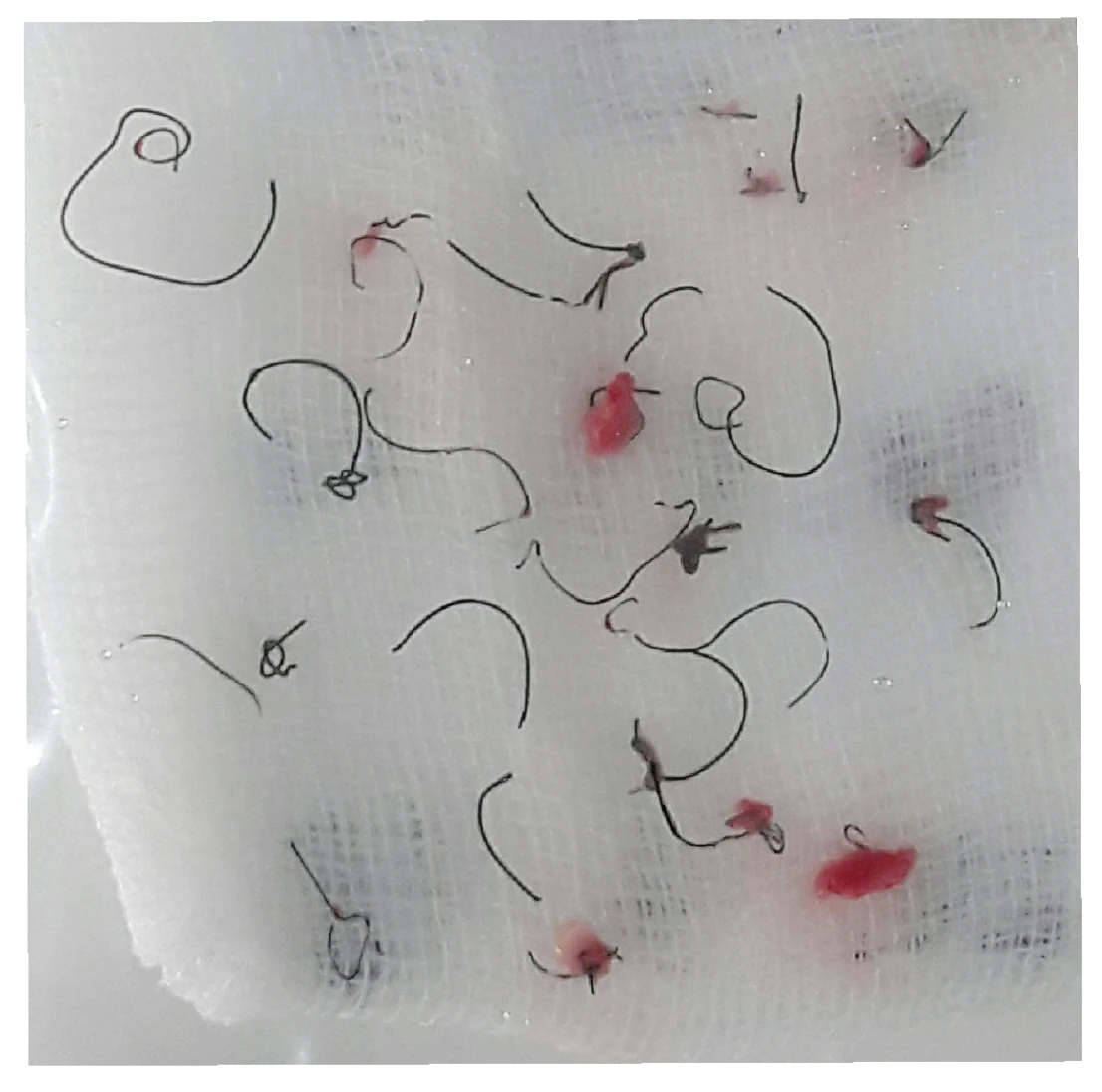
Photo of removed foreign material (nylon suture)
b) Autologous rib cartilage harvest and grafting:
The patient's rib cartilage was harvested to secure an adequate amount of cartilage required for reconstruction.
This was used to naturally augment the nasal bridge and reinforce the structure.
c) Septoplasty and septal extension:
The septum, which was deviated to the right, was straightened.
Septal extension was performed to correct the short nose.
Septal extension increased structural support and improved the overall shape.
d) Nasal bridge augmentation:
Autologous rib cartilage was used to naturally augment the nasal bridge without an artificial implant.
e) Cartilage suture restoration:
The existing nylon sutures were removed, and the cartilage was repositioned and sutured using a new technique to improve its shape.
f) Inferior turbinate reduction:
Submucosal resection of the inferior turbinates using a radiofrequency device was performed to improve nasal obstruction.
The entire procedure was performed via a closed approach, leaving no external scars.
Before-and-after photo comparison
Comparing photos taken immediately after surgery on day 0 shows the following improvements: Photos taken immediately after surgery show swelling and may differ from the final result.
Front view:
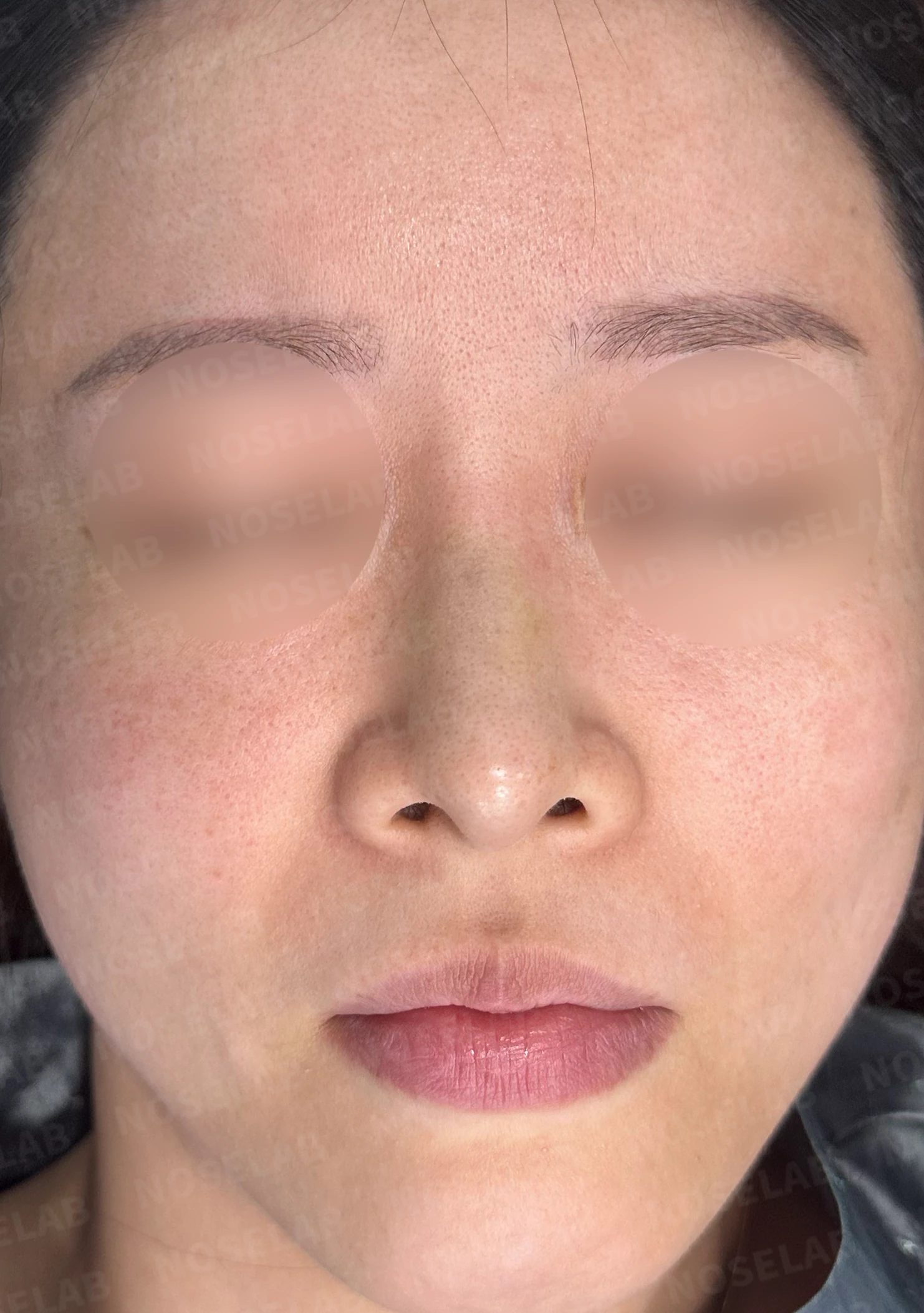
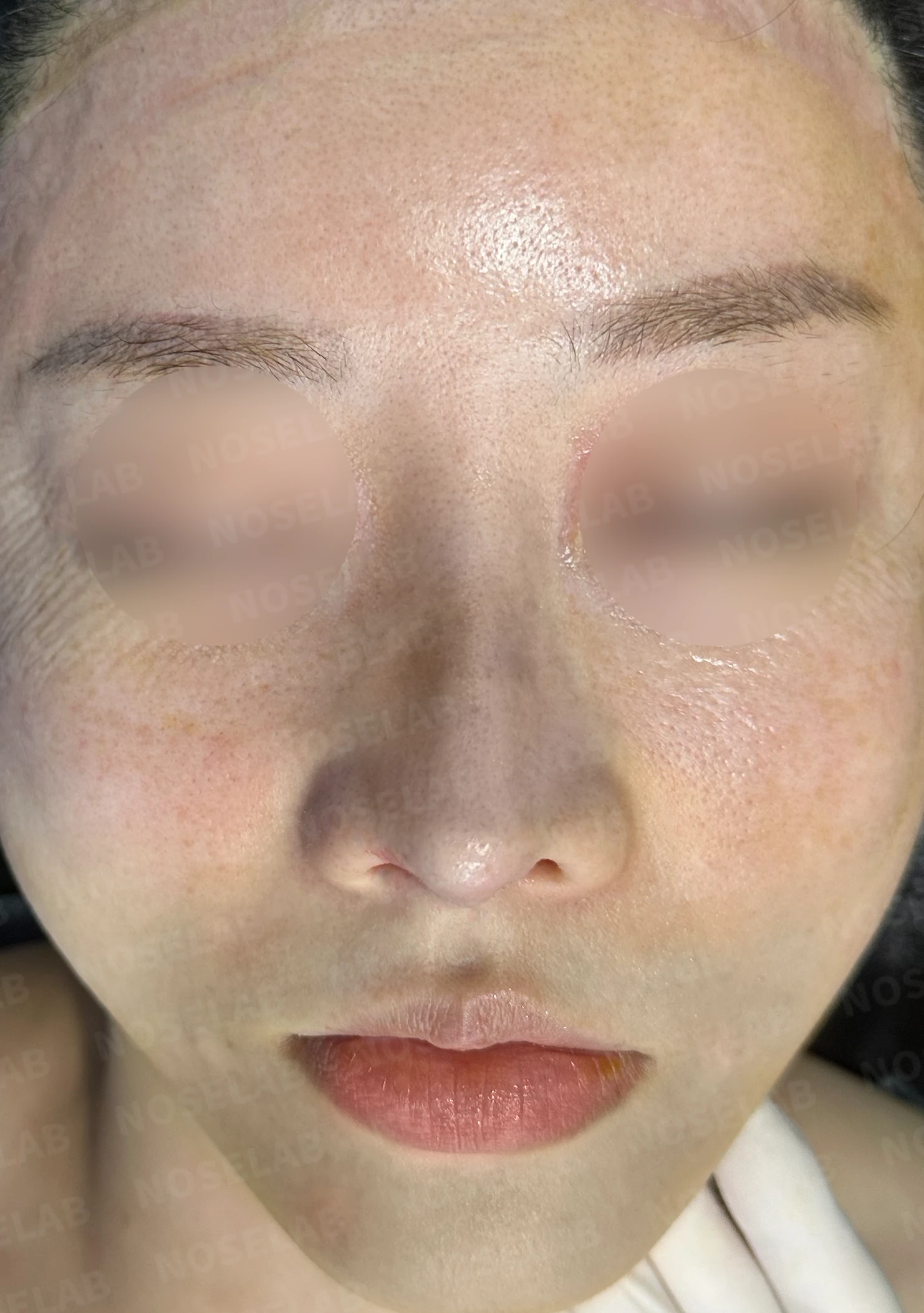
Before surgery / Day 0 immediately after surgery Photos taken immediately after surgery show swelling and may differ from the final result.
Excessive nostril show has been naturally reduced.
Nostril asymmetry improved significantly.
The deviated, blunt nasal bridge has become straight and natural.
The pinched appearance of the alae was improved, achieving a natural look.
The upturned appearance was improved.
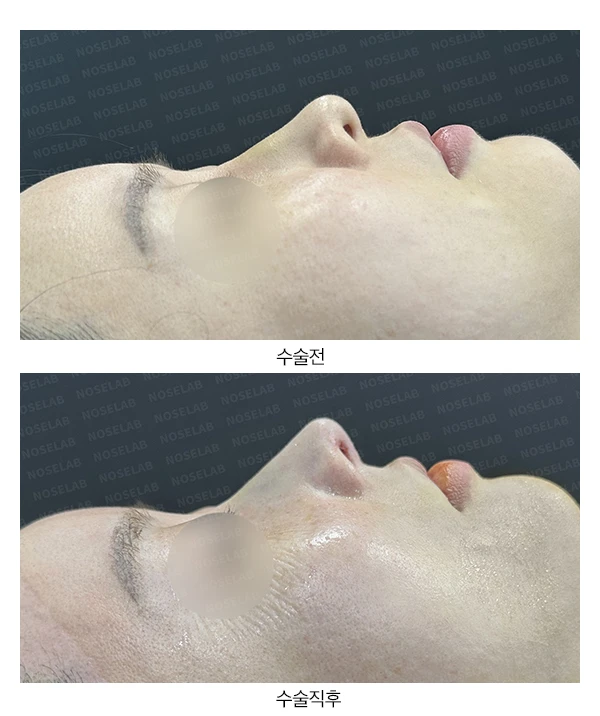
Profile view:
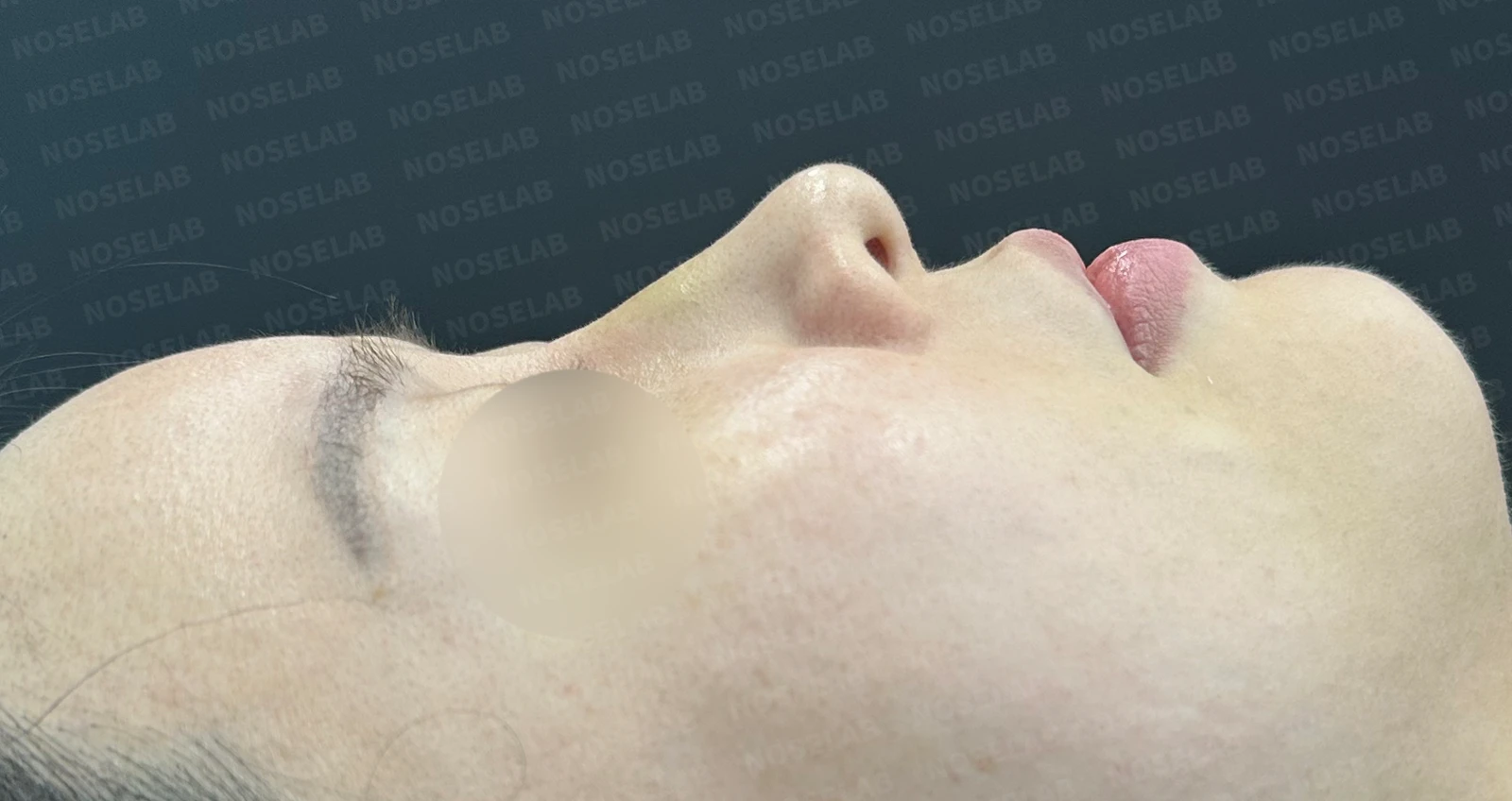
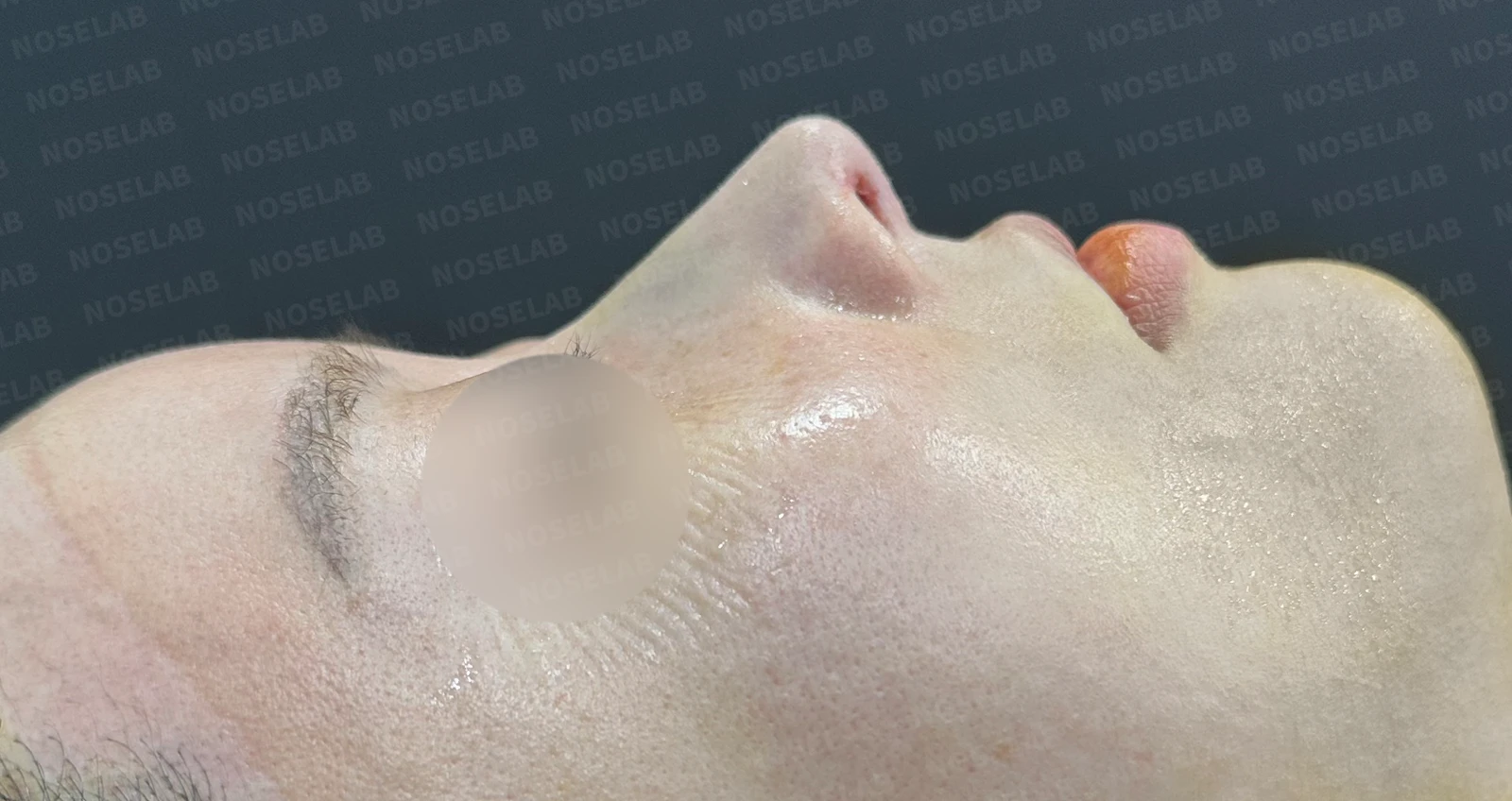
Before surgery / Day 0 immediately after surgery Photos taken immediately after surgery show swelling and may differ from the final result.
The radix starting point was naturally adjusted.
The previously uneven nasal dorsum now displays a smooth, gentle line.
The improved shape created a harmonious change in the overall profile.
Oblique view:
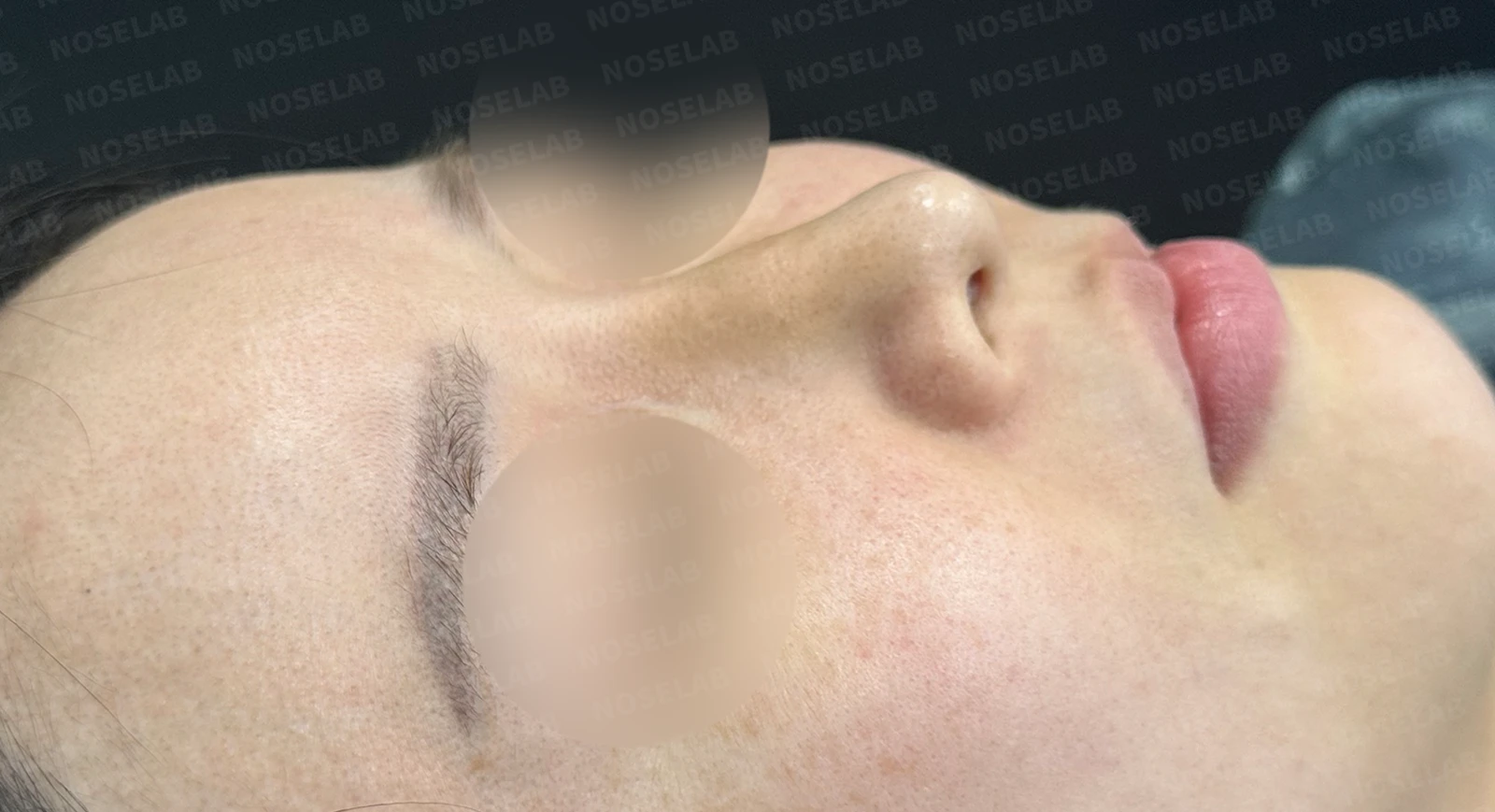
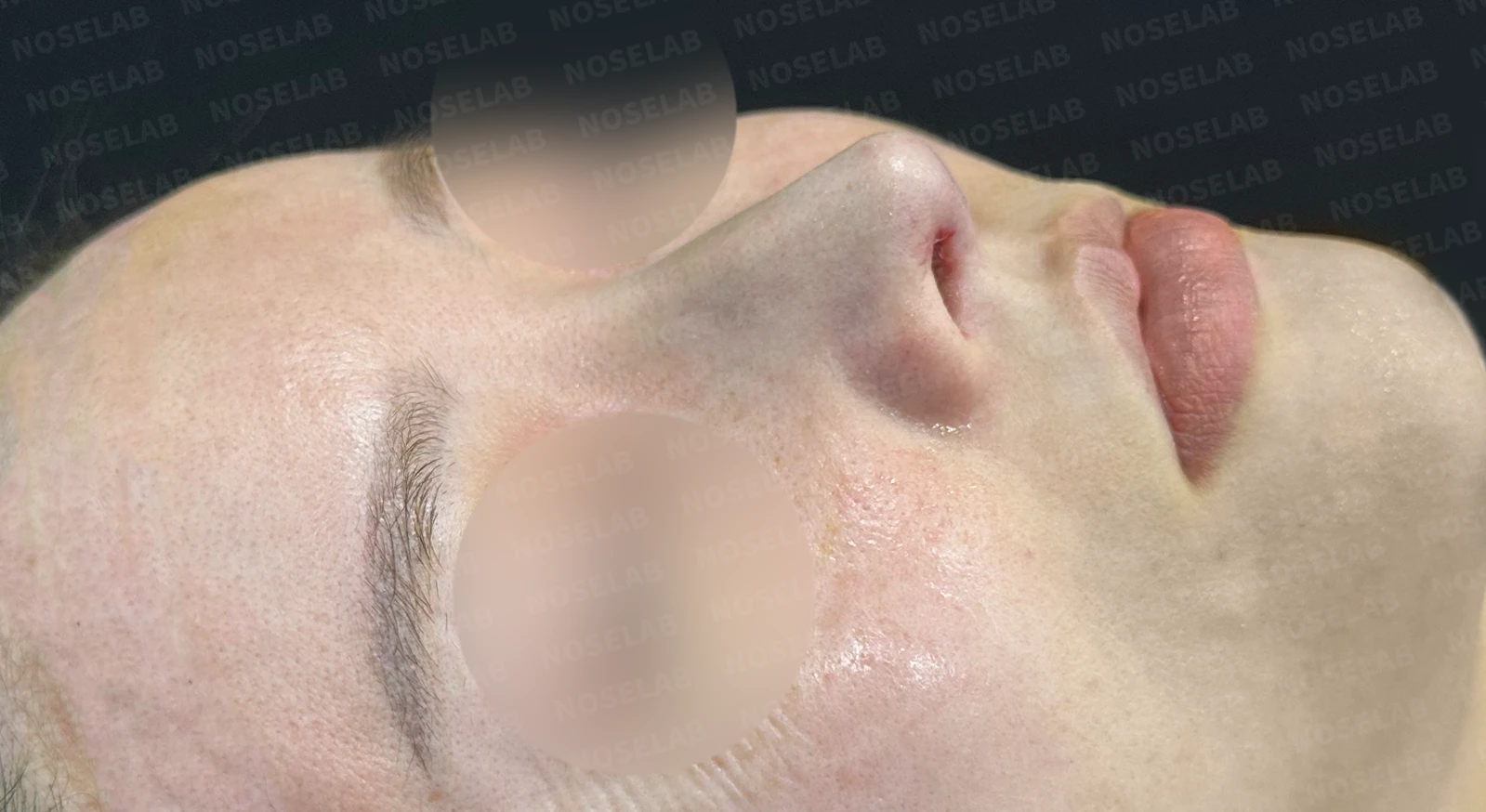
Before surgery / Day 0 immediately after surgery Photos taken immediately after surgery show swelling and may differ from the final result.
The unnatural contour caused by filler visibility was improved.
The overall line has become smooth and natural.
Nostrils:
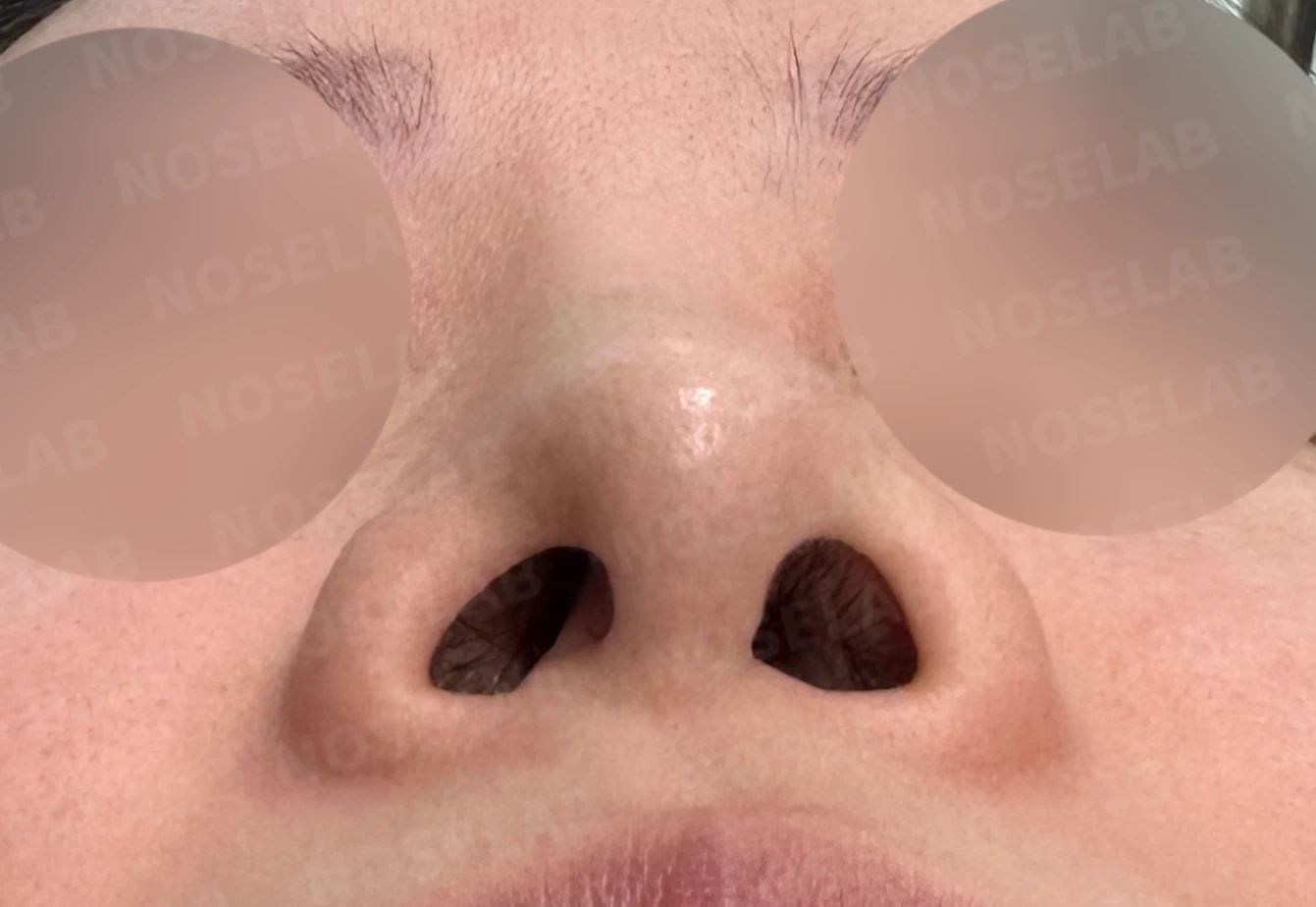
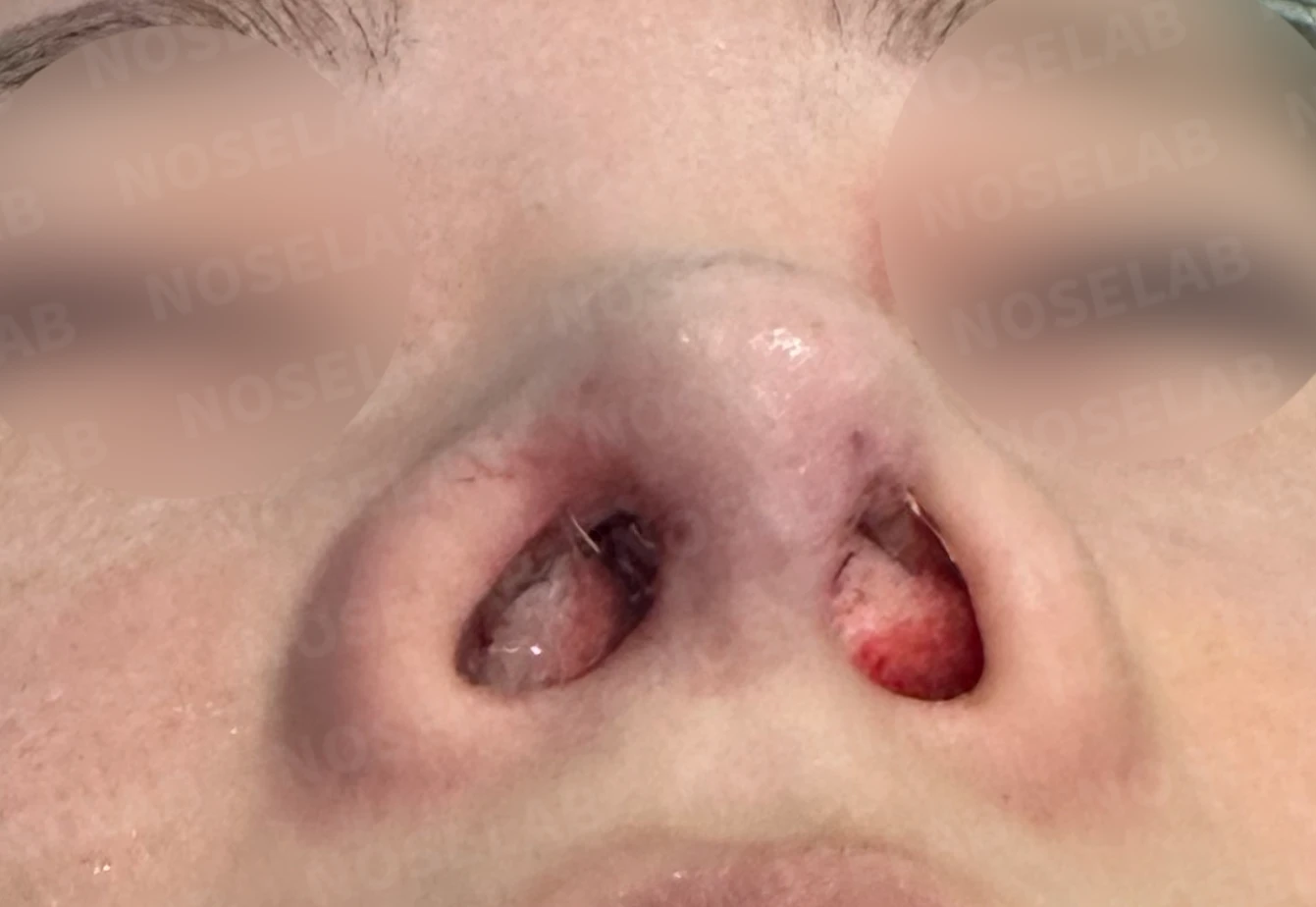
Before surgery / Day 0 immediately after surgery Photos taken immediately after surgery show swelling and may differ from the final result.
The columella, which was tilted to the left, was straightened.
Nostril asymmetry improved significantly.
The cartilage protrusion inside the right nostril was corrected, restoring a natural contour.
Collection of immediate postoperative photos
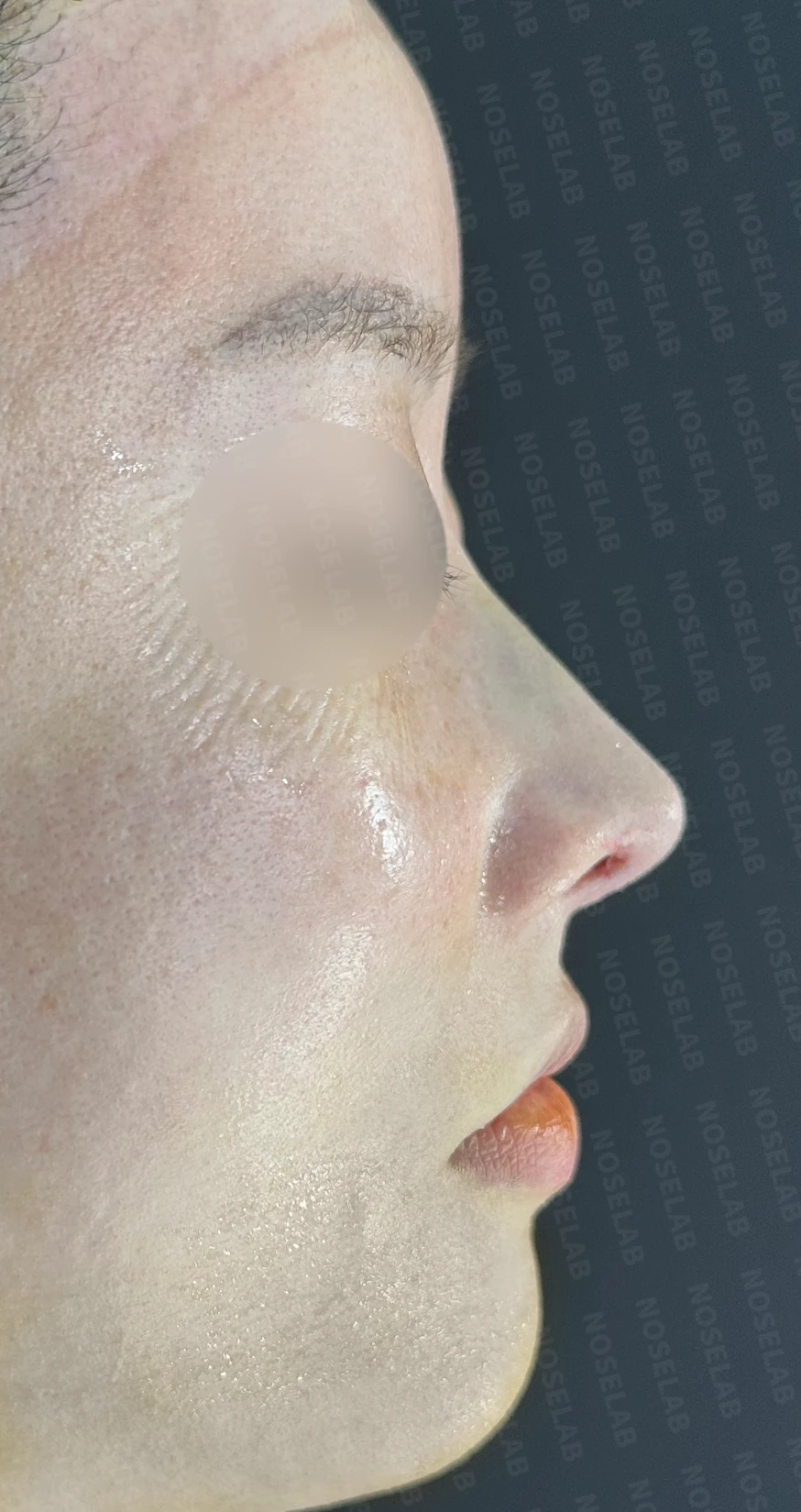
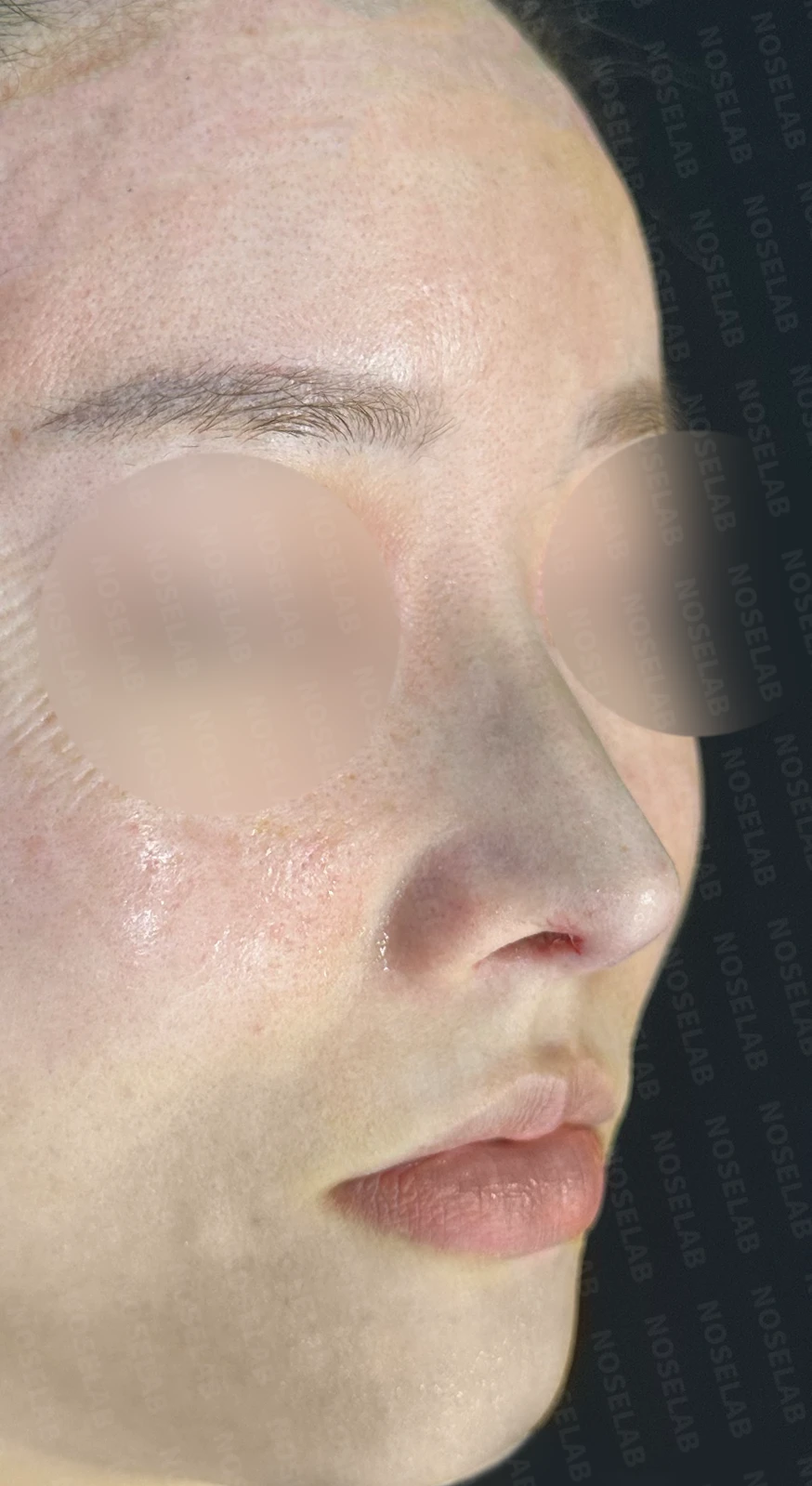
Immediately after surgery (Day 0) front, profile, and oblique viewsImmediate postoperative photos show swelling and may differ from the final result.
Nostril view on day 0 immediately after surgery Photos taken immediately after surgery show swelling and may differ from the final result.
Conclusion
This case demonstrates the resolution of complex issues that can arise after cartilage suturing and filler injection in revision rhinoplasty. In particular, securing structural stability at the nasal tip while creating a natural contour through cartilage suture restoration is notable. Excessive cartilage suturing was the underlying cause of the pinched nose, and correcting this area led to improvement.
Foreign material removal and reconstruction using autologous rib cartilage were suitable choices for achieving a stable long-term result. Using autologous tissue minimized the risk of rejection and provided an adequate volume of cartilage to enable complex reconstructive surgery. Strong septal extension with autologous rib cartilage played an essential role in correcting the short, upturned nose.
Improving nasal obstruction through septoplasty and inferior turbinate reduction is significant not only aesthetically, but also functionally. This highlights the value of specialized expertise as a board-certified otolaryngologist.
An implant-free approach allowed us to achieve a natural outcome, and lowering the radix starting point improved the overall facial balance.
Closing remarks
I hope this case offers reassurance to those troubled by unsatisfactory outcomes following cartilage suturing. In complex revision cases, selecting a surgeon with extensive experience and clinical expertise is vital.
Based on my anatomical expertise and extensive surgical experience as a board-certified otolaryngologist, I provide surgical plans tailored to each individual patient. Through a comprehensive approach that considers both aesthetic and functional improvements, I strive to achieve a refined and healthy nose.
NOSELAB is here to help you achieve a healthy, aesthetically pleasing nose. Thank you.
#shortnose #upturnednose #pinchednose #cartilagesuturesideeffects #cartilagesuturing #foreignmaterialremoval #fillerremoval #contractednosecorrection #autologousribcartilagegraft #closedrhinoplasty #revisionrhinoplasty #entrhinoplasty #rhinoplastyplannedwithsafetyinmind #nasalbridgeaugmentation #tipplasty #nasalobstructionimprovement

Limitations and risks
When autologous rib cartilage is used, scarring and pain may remain at the donor site on the chest, and pneumothorax (pleural injury) can occur rarely. Over time, the grafted cartilage may warp or undergo partial resorption.
When foreign materials such as injected fillers are removed and reconstructed, contracture may recur, nasal height and length may decrease, and staged surgery may be necessary depending on the skin condition.
When the septum is corrected at the same time, nasal obstruction may persist or recur, and in rare cases, septal perforation or changes in smell may occur.
Common potential risks include infection, bleeding, asymmetry, scarring, skin necrosis, and insufficient improvement; results vary depending on individual skin condition and previous surgical history.