1. Preoperative design
The patient visited the clinic to correct this type of nasal obstruction and a crooked nose. A paranasal sinus CT scan taken at the initial visit showed leftward septal deviation, and overall the internal nasal passage on the left side was significantly narrowed.
2. Surgical plan
Lateral osteotomy was planned to correct the crooked nose, and septoplasty along with submucosal resection of the inferior turbinate was planned to improve nasal obstruction.
3. Immediately after surgery (Day 0)Immediate postoperative photos show swelling and may differ from the final result.
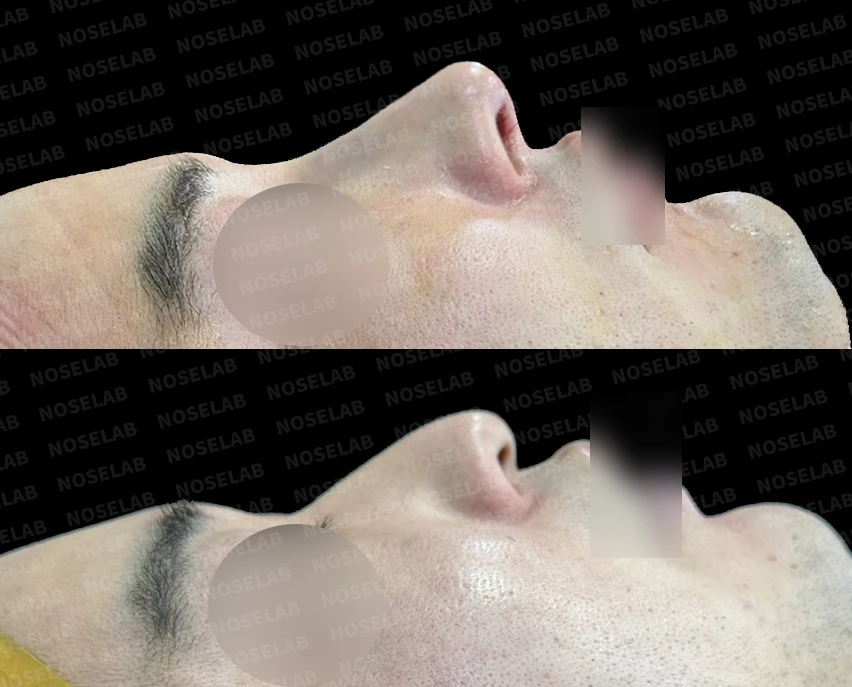
Before surgery / Day 0 immediately after surgery Photos taken immediately after surgery show swelling and may differ from the final result.
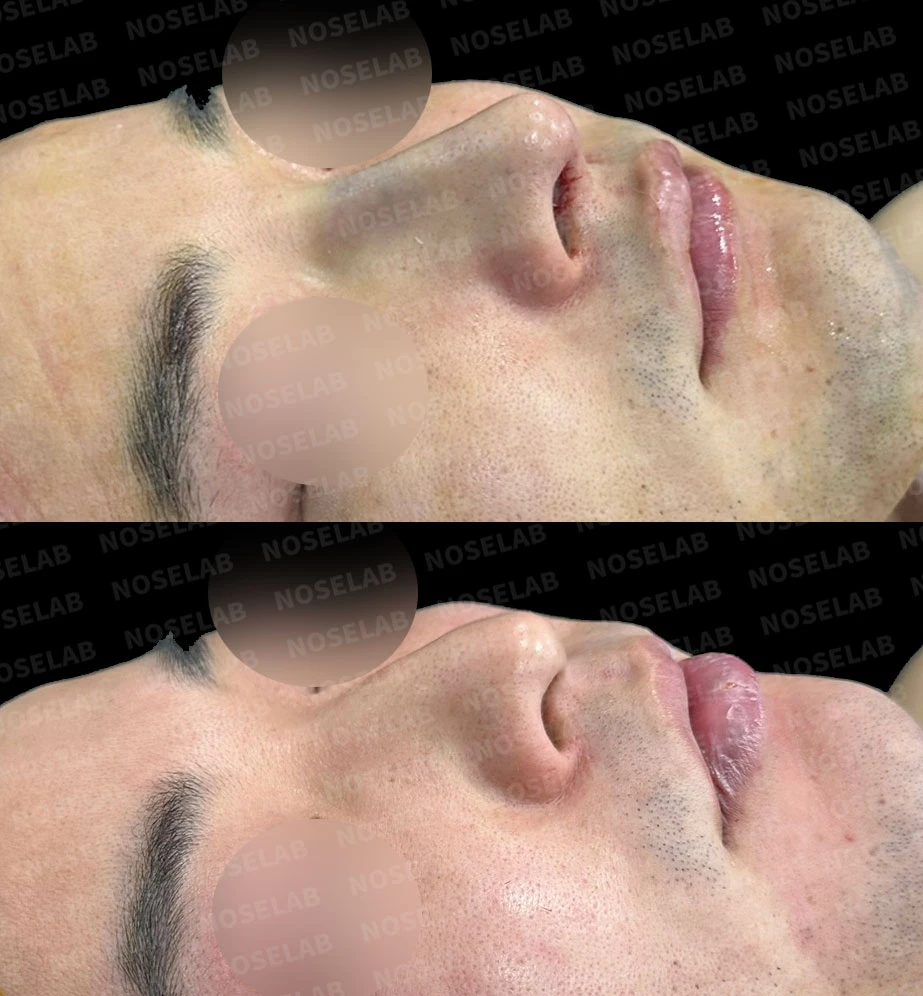
Before surgery / Day 0 immediately after surgery Photos taken immediately after surgery show swelling and may differ from the final result.
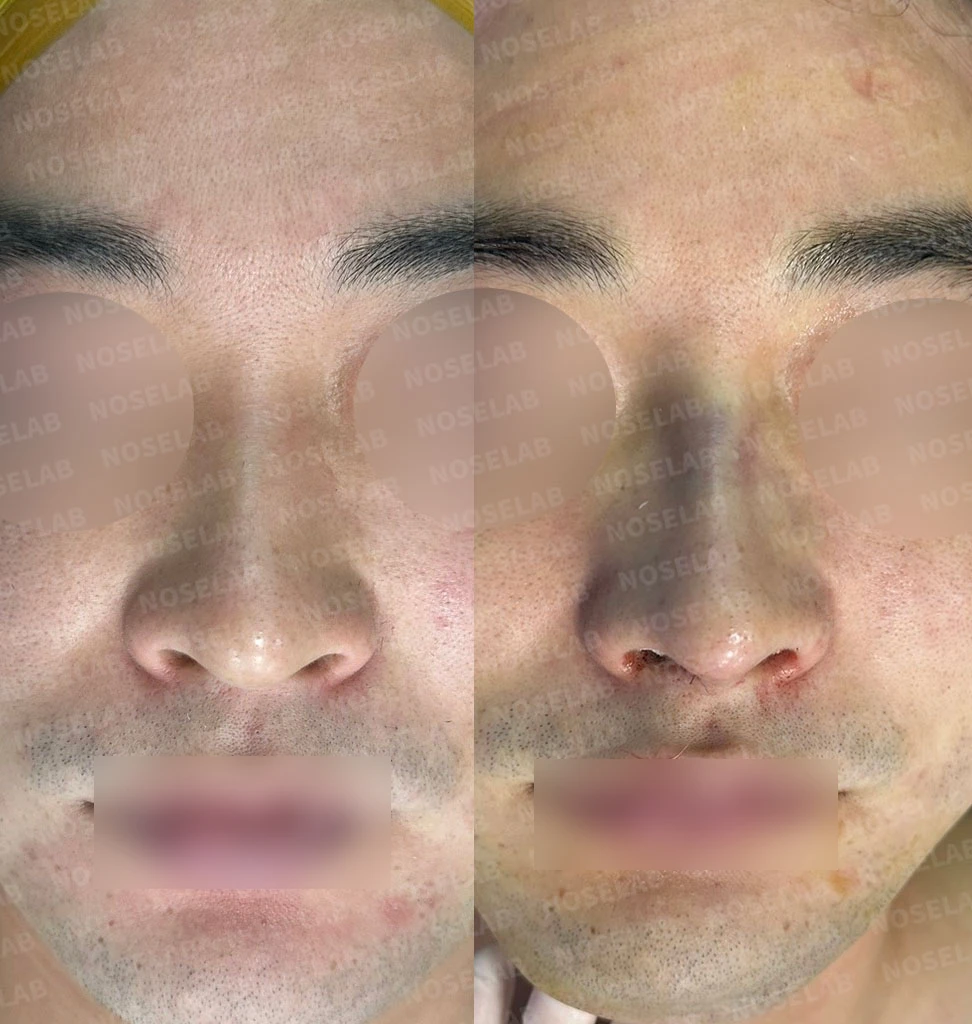
Before surgery / Day 0 immediately after surgery Photos taken immediately after surgery show swelling and may differ from the final result.
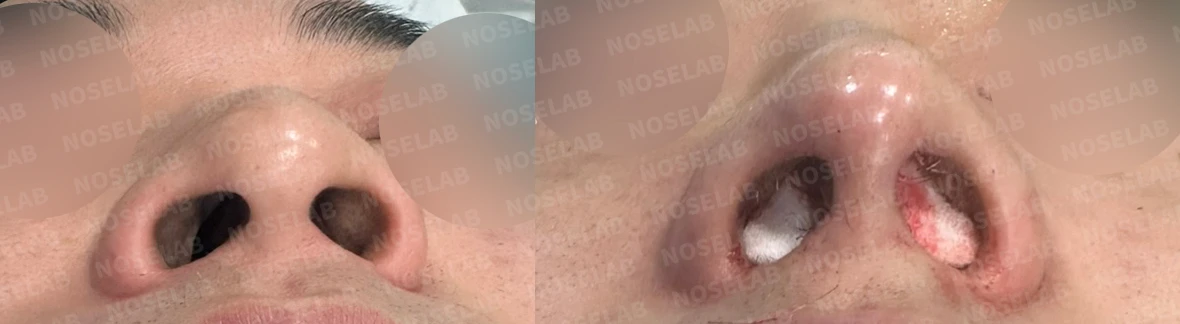
Before surgery / Day 0 immediately after surgery Photos taken immediately after surgery show swelling and may differ from the final result.
4. Conclusion
This is surgery for crooked nose correction. When correcting a crooked nose, it seems most important to design the plan by carefully considering both the deviation of the nasal structure itself and any appearance of crookedness caused by facial asymmetry. Everyone has some degree of facial asymmetry, and more people than one might think have pronounced asymmetry. Because the nose sits at the center of the face and is its highest structure, any curvature appears more accentuated, making crooked nose correction crucial. The nose can be broadly divided into a bony portion (above the hump) and a cartilaginous portion (below the hump), and crookedness can likewise be categorized into the bony portion, the junction where bone and cartilage meet, and the cartilaginous portion. When the bony portion is crooked, it is corrected through a surgical technique called an osteotomy. In this case as well, the asymmetry between the left and right nasal bones was severe, so crooked nose correction was performed using lateral osteotomy. When the cartilaginous portion is deviated, it can be corrected by placing straight, sturdy spreader grafts on both sides along the dorsal aspect of the septal cartilage.
Dr. Peter C. Kang
Limitations and risks
When the septum is corrected at the same time, nasal obstruction may persist or recur, and in rare cases, septal perforation or changes in smell may occur.
Common potential risks include infection, bleeding, asymmetry, scarring, skin necrosis, and insufficient improvement; results vary depending on individual skin condition and previous surgical history.