Hello.
This is Dr. Peter C. Kang. Today, I turned on the air conditioner in the clinic.
Over the past few days, it felt as though the cold winter had passed and warm spring days had arrived, but today it suddenly feels like summer.
Today, I would like to talk about a patient with facial asymmetry. It is no exaggeration to say that practically everyone has some degree of facial asymmetry. Of course, the extent varies. The patient who underwent surgery today also has facial asymmetry, with the left side of the face noticeably slightly larger than the right. The eyebrow, eye, ala, lip, cheekbone, and jawbone are all slightly larger on the left side.
From an embryological standpoint, as we develop in the womb, the right and left sides form separately and meet at the midline. If an issue arises during this process, congenital anomalies such as cleft lip or cleft palate can occur. Because the left and right sides develop separately, differences in size are, in a sense, a natural result.
Is there a way to improve this facial asymmetry? Facial bone surgery can certainly be performed to align the structures. Another approach is to perform rhinoplasty on the nose, which sits at the very center of the face, to help camouflage facial asymmetry. Today, I will discuss this surgical approach.
Design before consultation
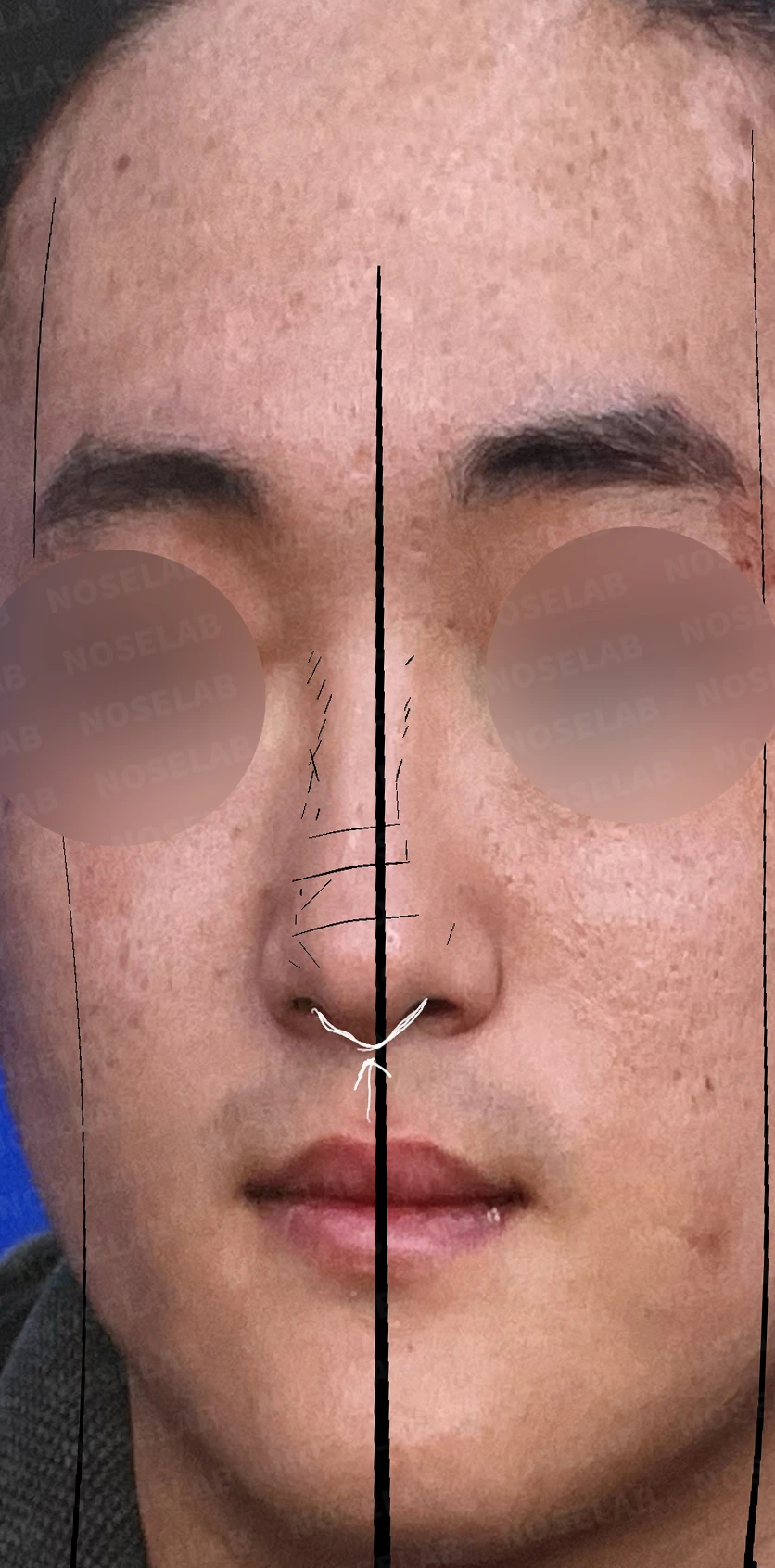
Front view before surgery
From the front, the nose deviates diagonally to the right from the bridge to the tip, and the right ala appears smaller. In addition, the nasal tip was bulbous and wide, and nostril asymmetry was observed.
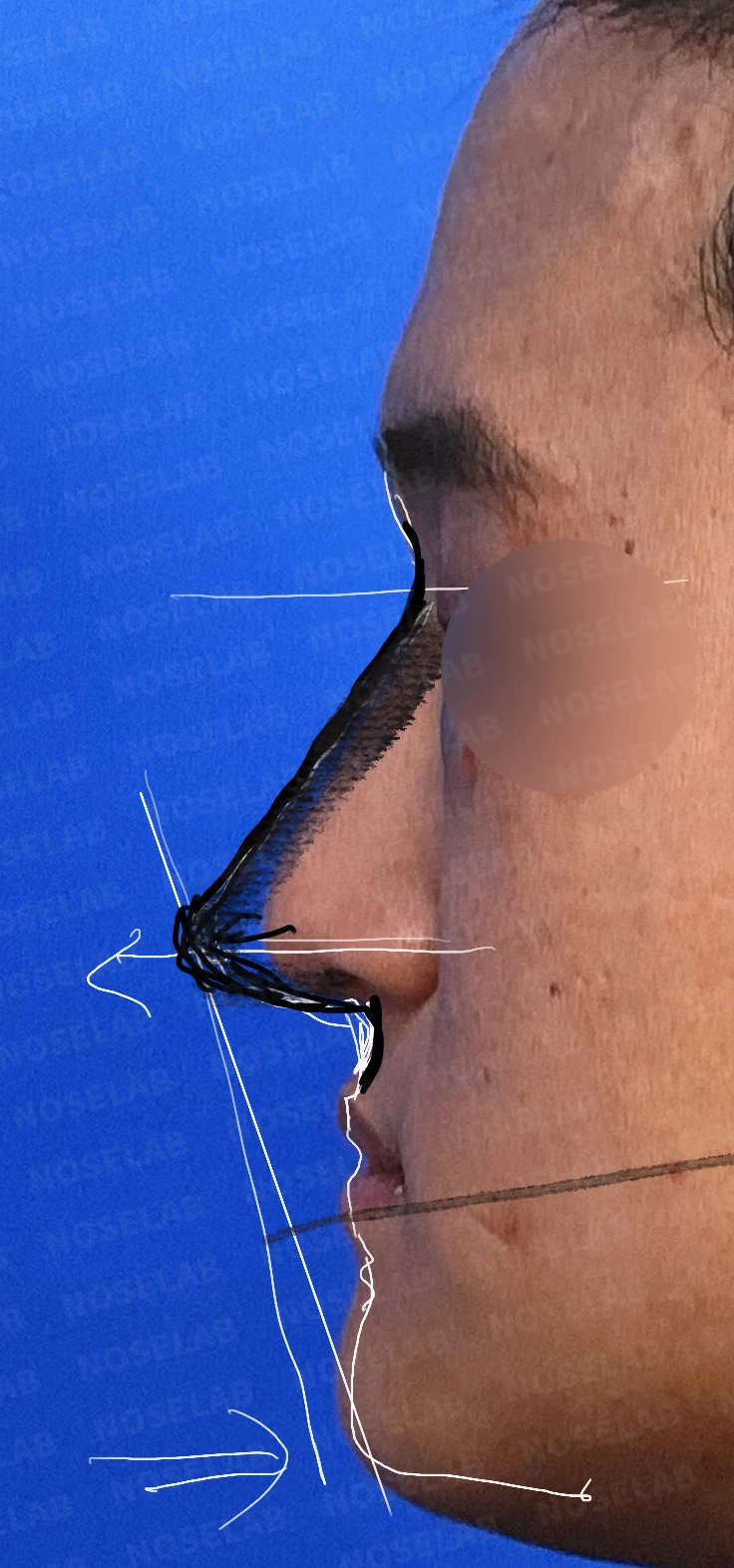
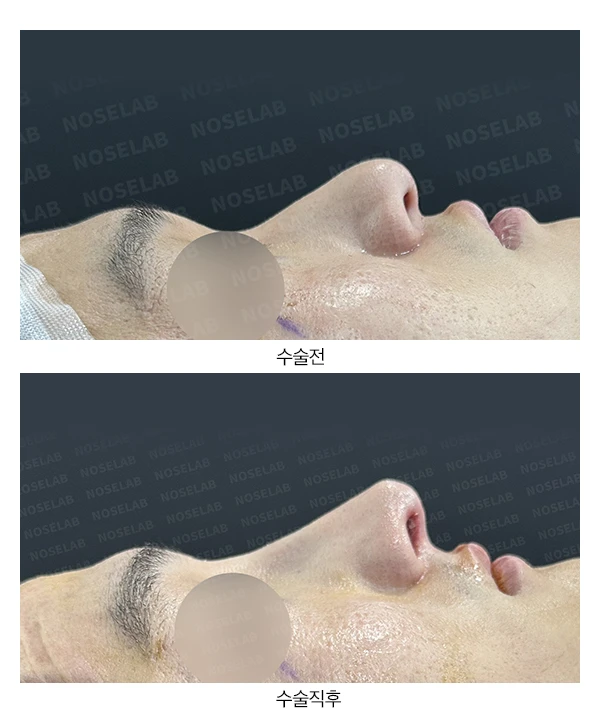
Profile view before surgery
From the profile view, the nasal tip is drooping and the mandible is prominent, giving a slightly prognathic appearance. There is a mild dorsal hump on the nasal bridge, and the glabella is low, creating a flat appearance.
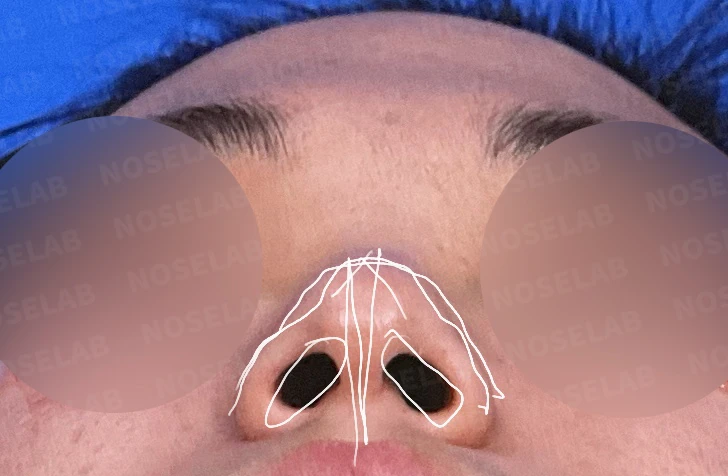
Preoperative basal (nostril) view
In the basal view, the right nostril is smaller than the left and asymmetry is present. The right ala is also smaller. The nasal tip appears bulbous.
What was the surgical plan?
For the nose appearing diagonally deviated from the front: The plan was to use osteotomy to move the nasal bones to the left, and to shift the septal cartilage to the left in the cartilaginous portion, thereby repositioning the nose as a whole toward the left.
For the difference in alar size: Inherent differences in skin dimensions cannot be altered, so the position of the nasal tip is adjusted to make them appear as symmetrical as possible.
For the bulbous and wide nasal tip: To correct the bulbous tip, autologous rib cartilage will be used to project the nasal tip, adding three-dimensional definition.
The nasal tip was bulbous and wide, and nostril asymmetry was observed.
From the profile view, the dorsal hump is rasped down smoothly, and the drooping nasal tip is corrected using autologous rib cartilage.
Photos immediately after surgery
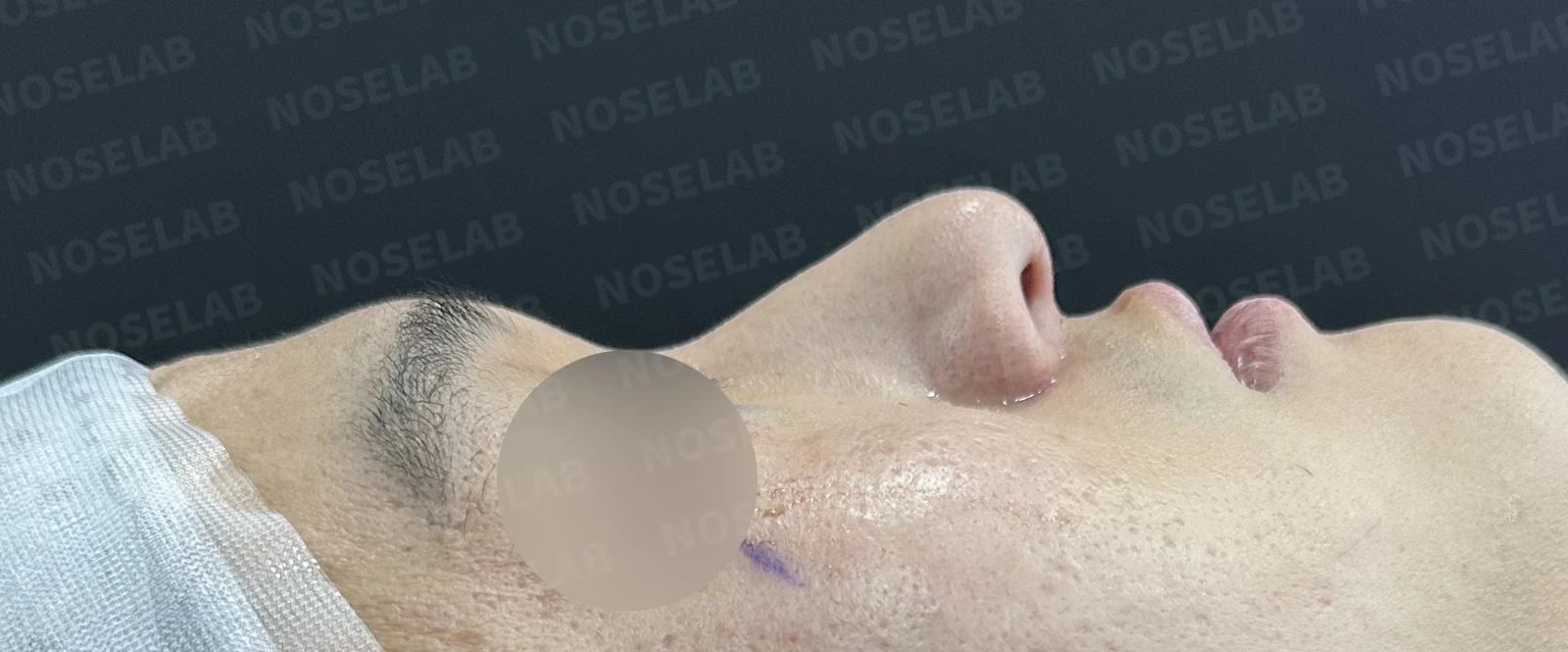
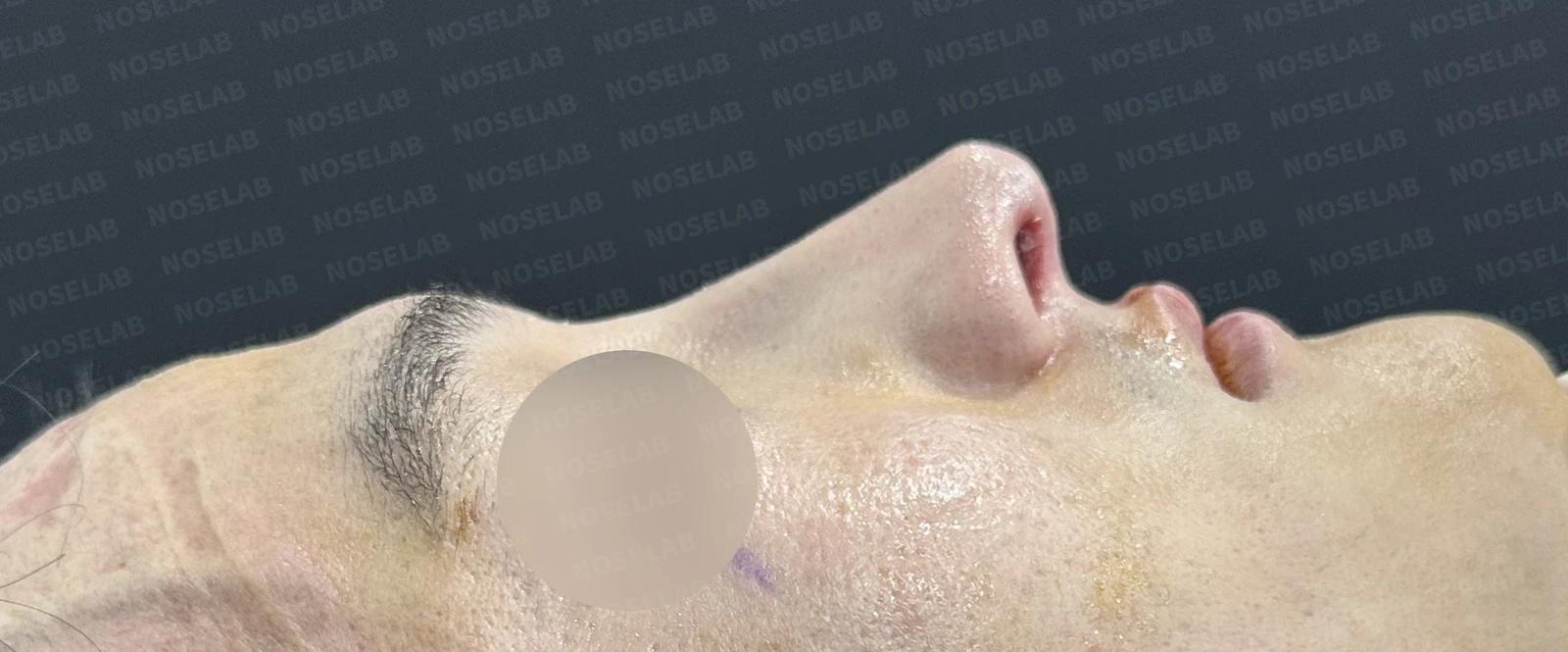
Before surgery / Day 0 immediately after surgery Photos taken immediately after surgery show swelling and may differ from the final result.
From the profile view, the drooping and bulbous appearance of the nasal tip improved substantially, and an increased nasolabial angle visually minimized the prominence of the lower jaw.
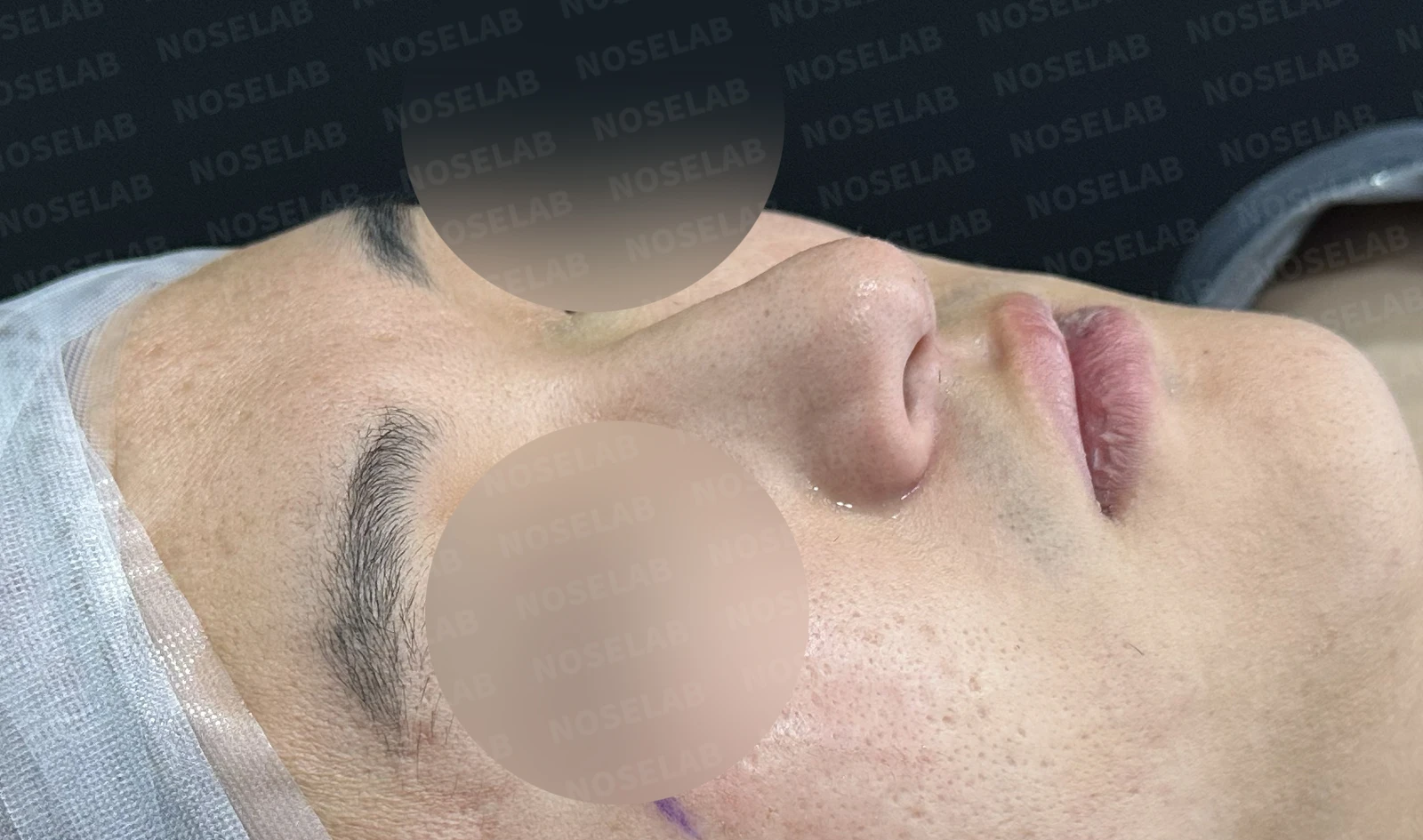
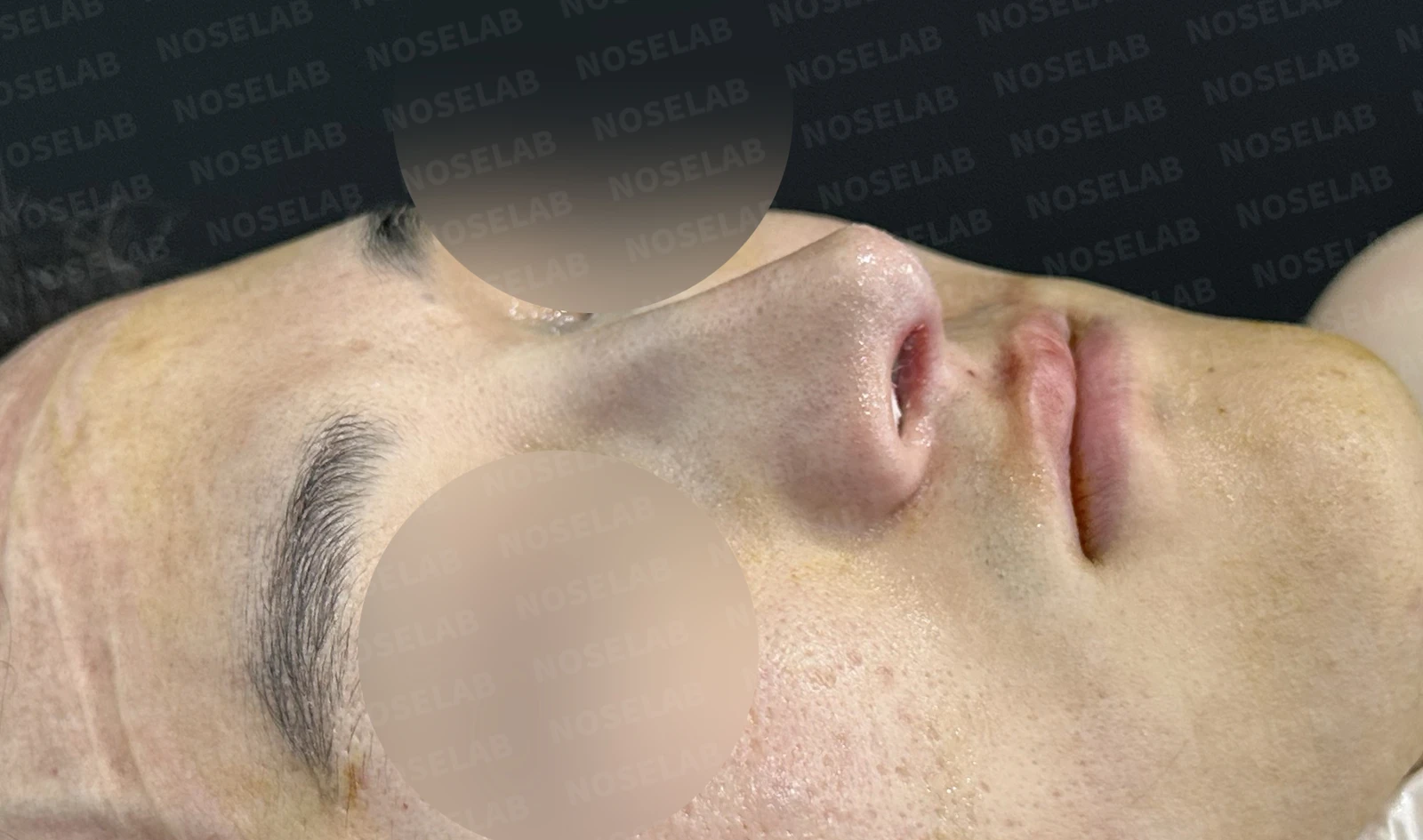
Before surgery / Day 0 immediately after surgery Photos taken immediately after surgery show swelling and may differ from the final result.
With the nasal tip and bridge elevated overall, three-dimensional definition increased, making the face look smaller while creating a natural yet refined contour.
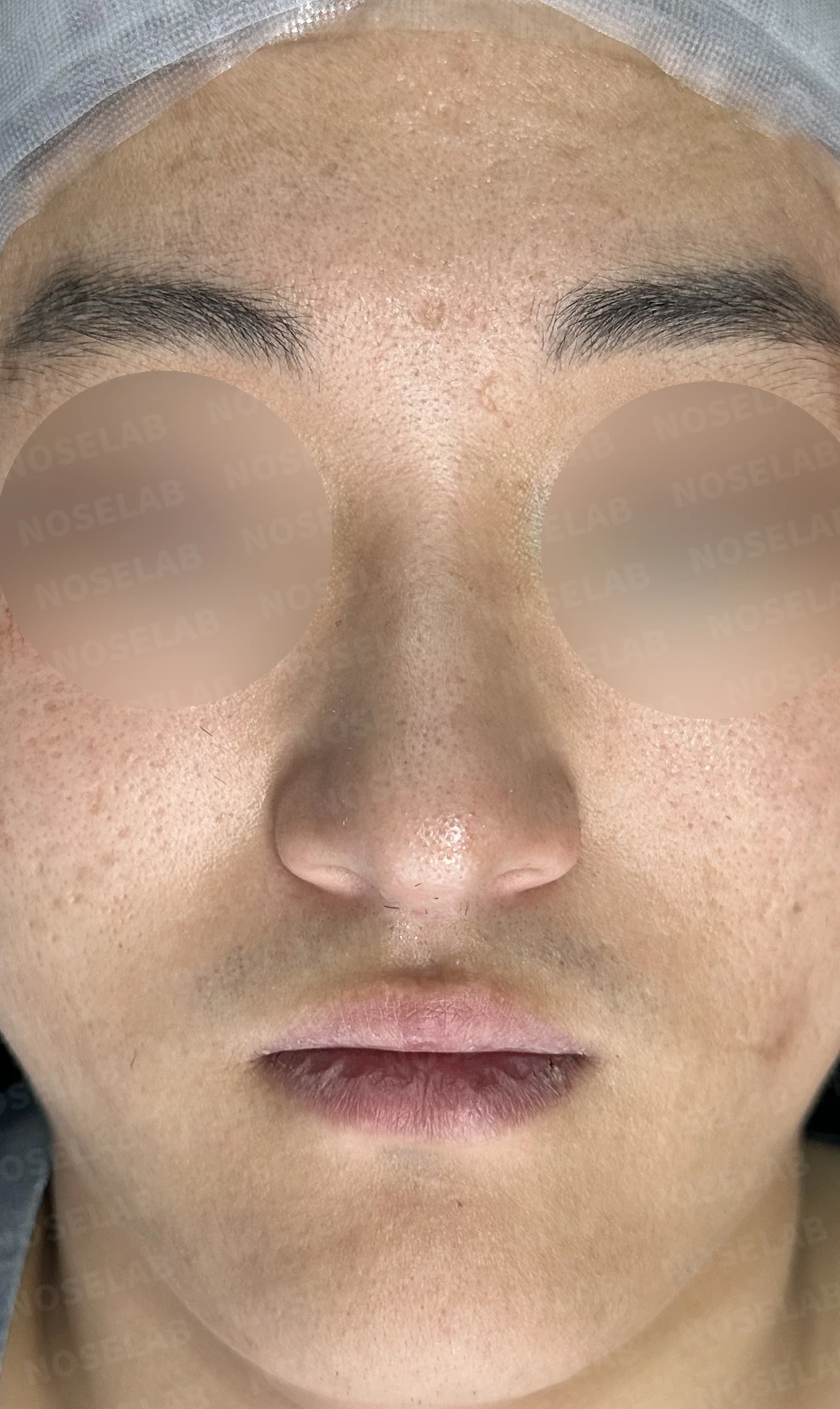
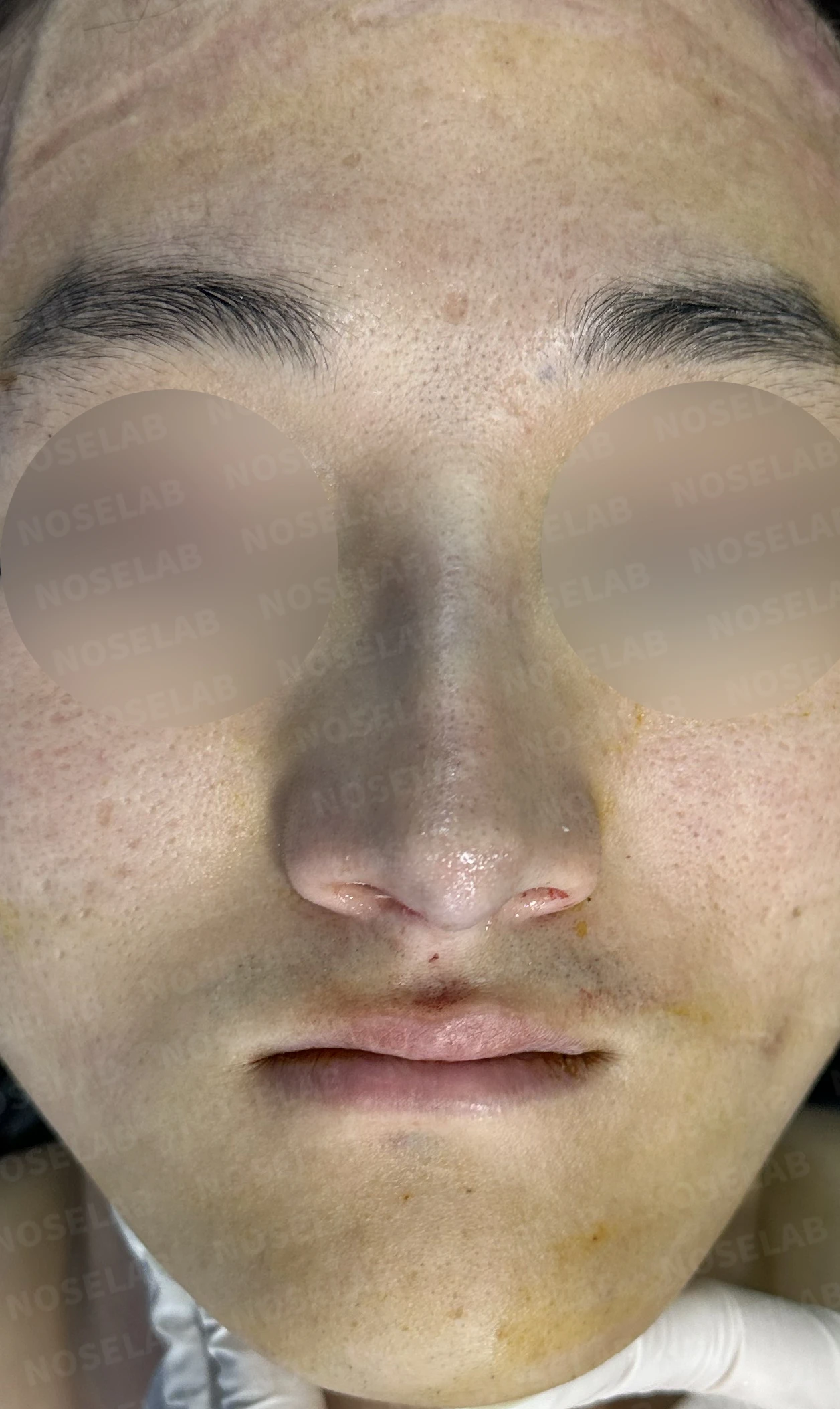
Before surgery / Day 0 immediately after surgery Photos taken immediately after surgery show swelling and may differ from the final result.
The deviation of the nasal tip toward the right was completely corrected, and the smaller appearance of the right ala improved substantially.
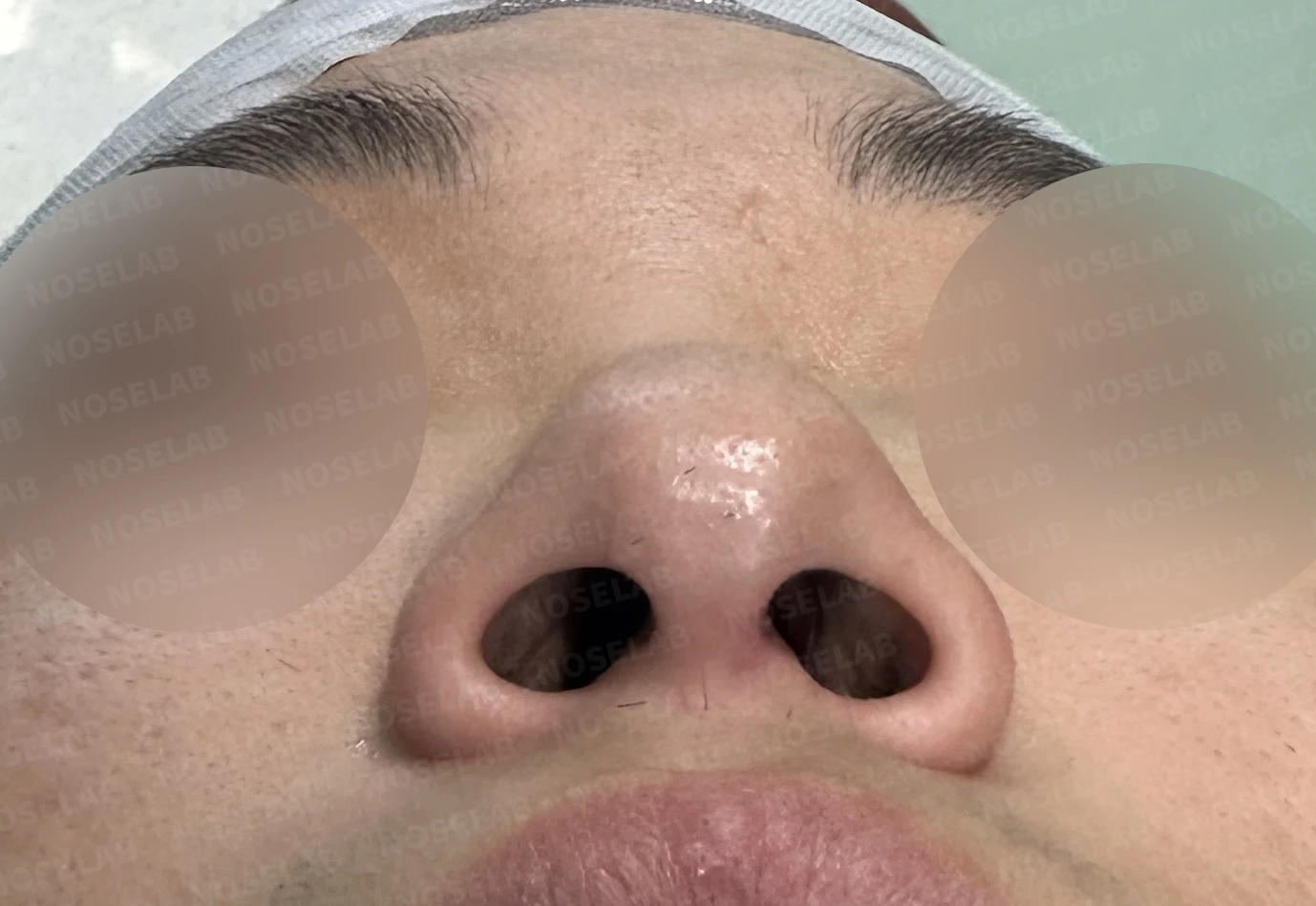
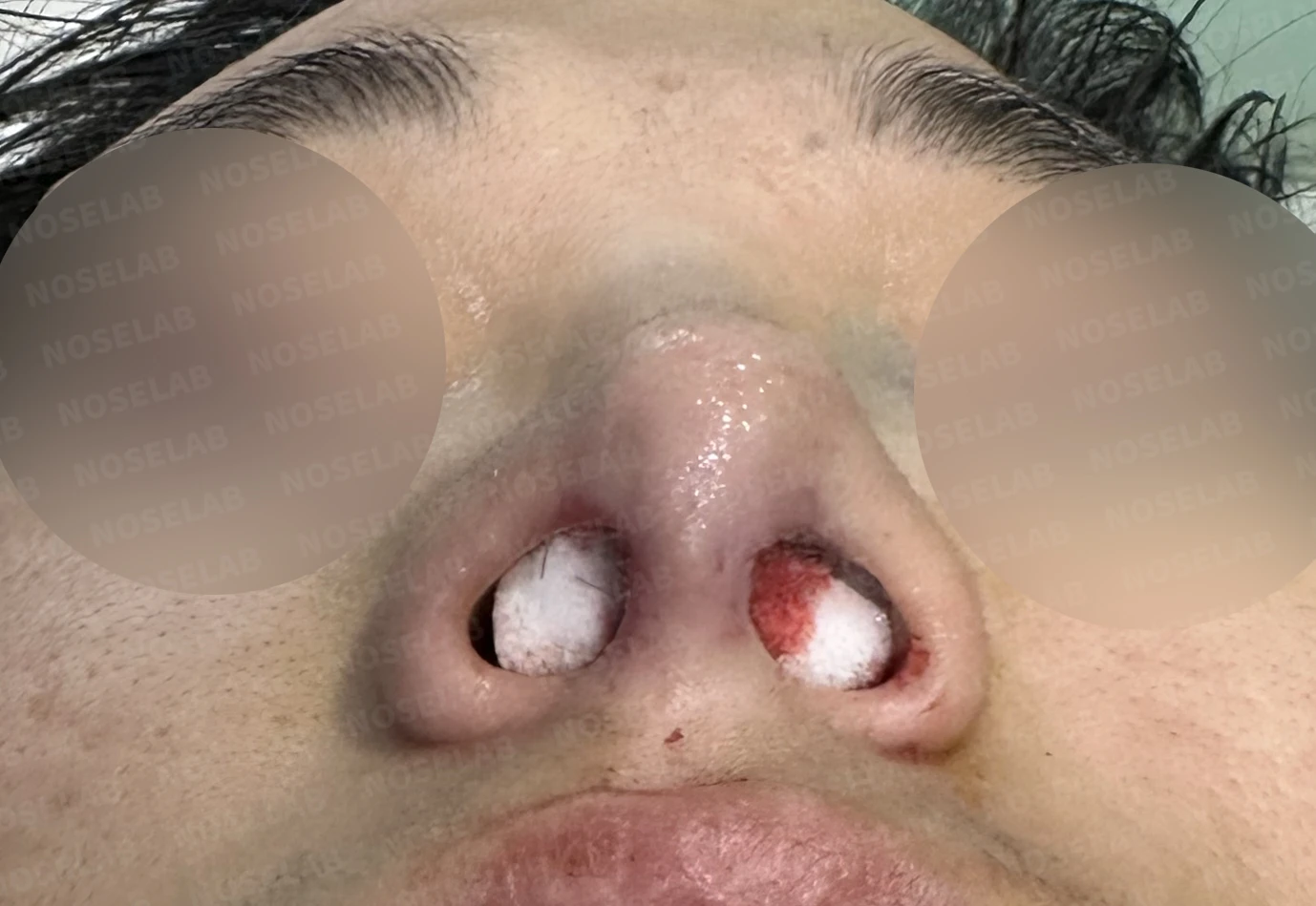
Before surgery / Day 0 immediately after surgery Photos taken immediately after surgery show swelling and may differ from the final result.
The wide and bulbous appearance of the nasal tip also improved substantially.
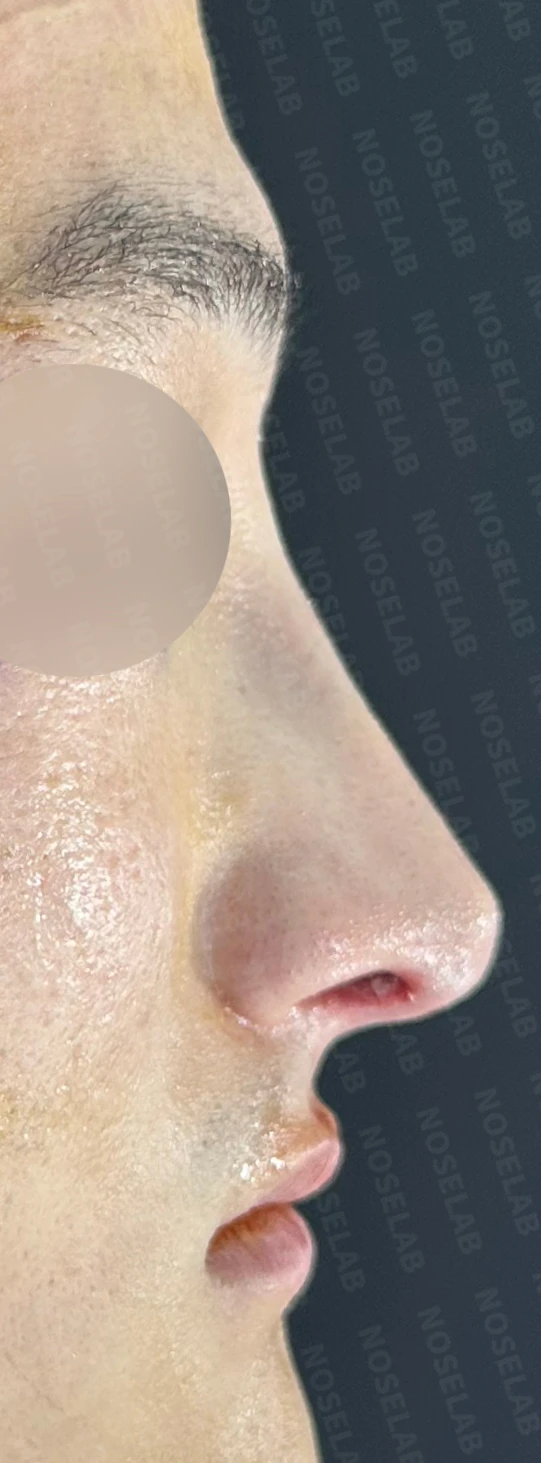
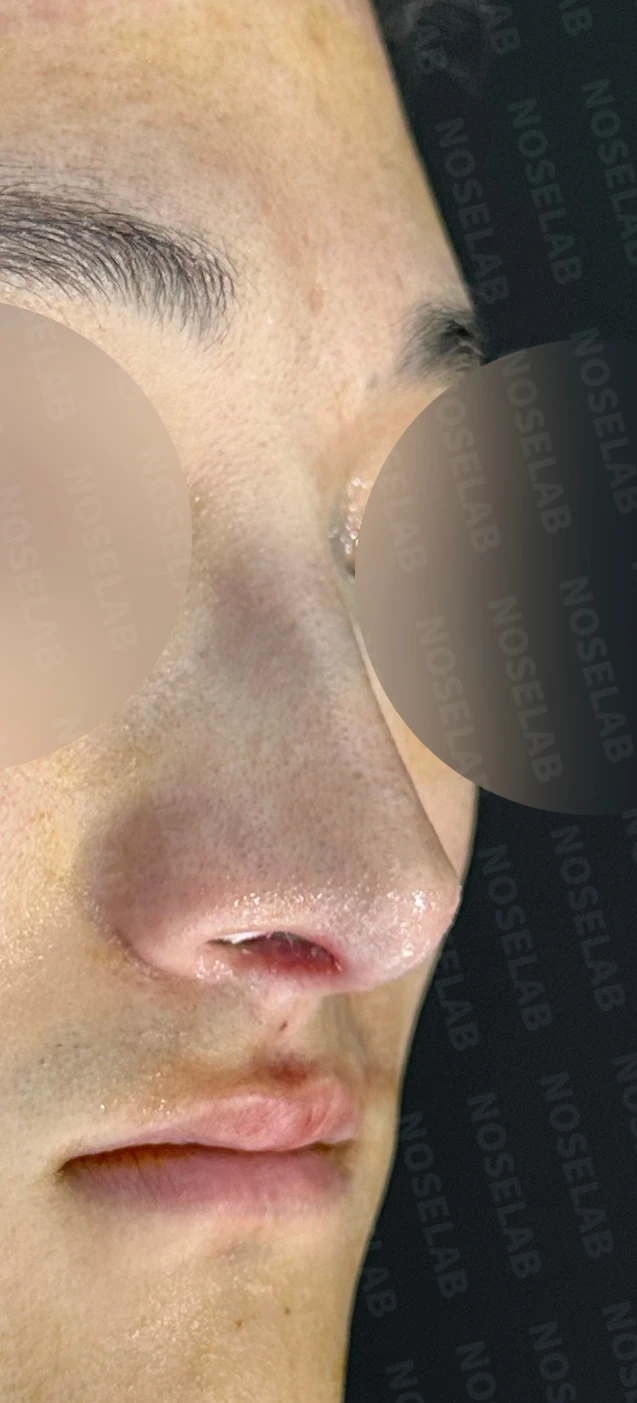
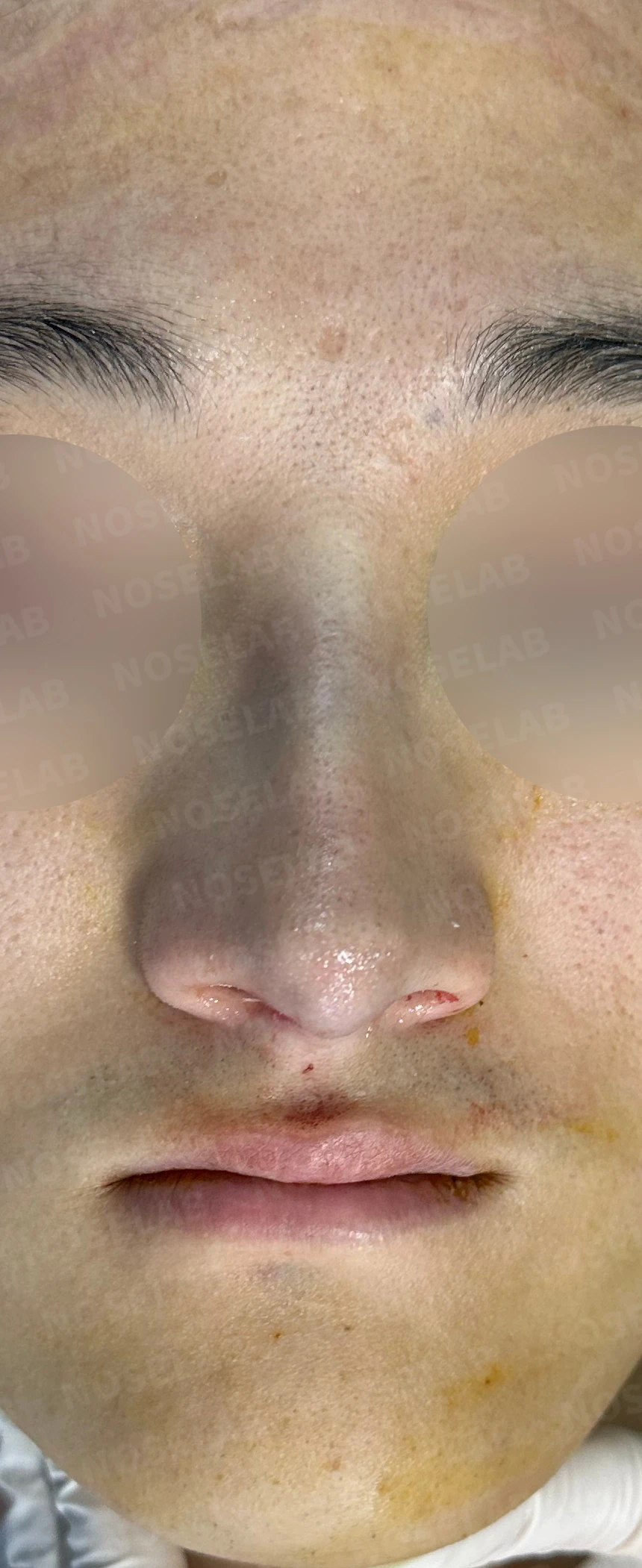
These are photos from day 0 immediately after surgery. Immediate postoperative photos show swelling and may differ from the final result.
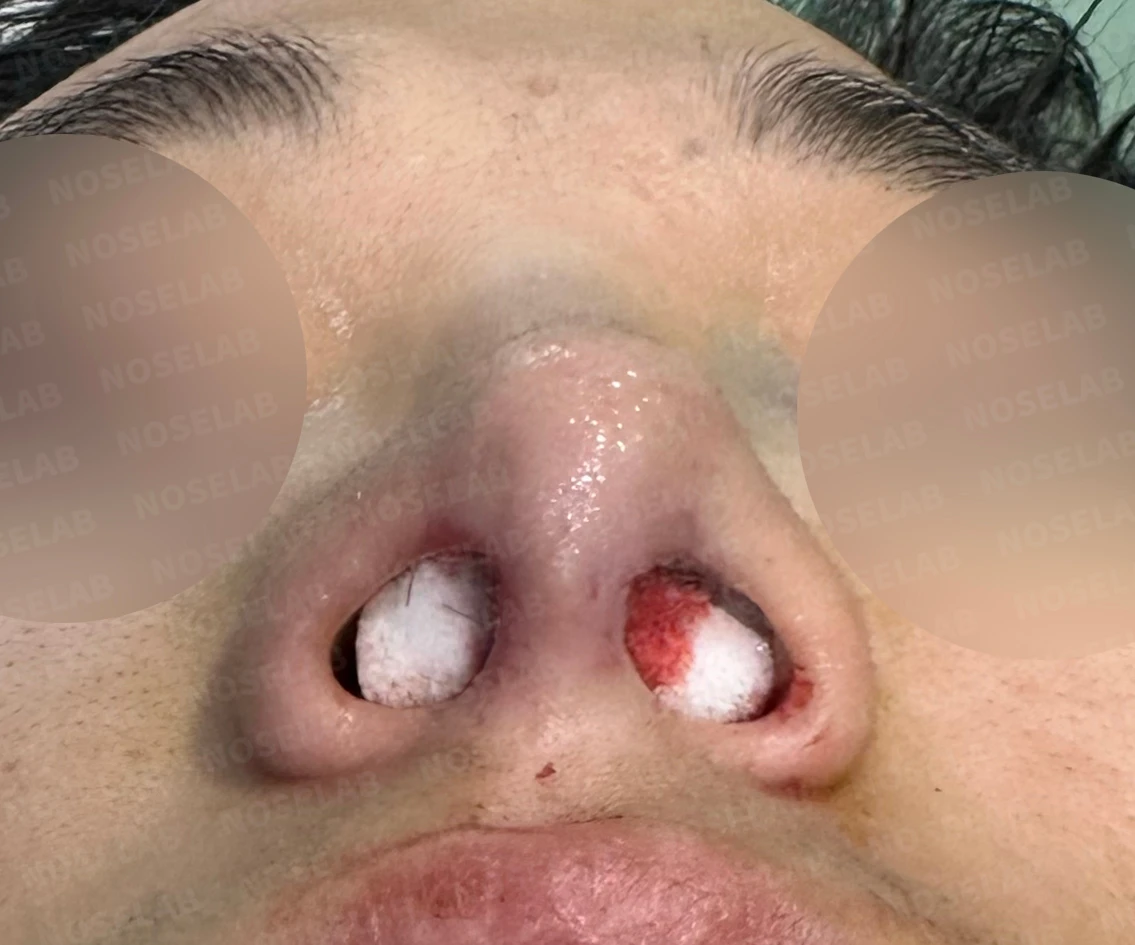
Crooked nose correction vs. facial asymmetry correction
When addressing facial asymmetry, correcting a crooked nose is essential. Various forms of asymmetry exist across the face. Among them, if the nose is deviated, the overall facial asymmetry may appear more pronounced, though in some cases it may not. Whether a nose looks straight or not is largely subjective. In an extreme scenario, if the face itself is tilted symmetrically, the nose might need to follow that slight angle to appear visually straight and keep the facial asymmetry from standing out. Therefore, when correcting a crooked nose, I first locate the central axis of the face and align the nose as closely as possible to that axis. However, regardless of how asymmetric the face may be, the corrected nose must not curve into a 'C' or 'reverse C' shape. In other words, I adhere firmly to the principle that the corrected nose must form a straight line.
To conclude, for those concerned about facial asymmetry, correcting a crooked nose can be helpful in improving the appearance of facial asymmetry.
Today, I discussed crooked nose correction and facial asymmetry. I hope this article provides helpful insight for those seeking crooked nose correction in the presence of facial asymmetry.
This was Dr. Peter C. Kang. Thank you.

Limitations and risks
When autologous rib cartilage is used, scarring and pain may remain at the donor site on the chest, and pneumothorax (pleural injury) can occur rarely. Over time, the grafted cartilage may warp or undergo partial resorption.
When the septum is corrected at the same time, nasal obstruction may persist or recur, and in rare cases, septal perforation or changes in smell may occur.
Common potential risks include infection, bleeding, asymmetry, scarring, skin necrosis, and insufficient improvement; results vary depending on individual skin condition and previous surgical history.