Hello, I am Dr. Peter C. Kang.
Today, I would like to share a rhinoplasty case of a patient with a bulbous, wide nose. The patient wished for a cute, refined nose reminiscent of a doll, and we created a natural, feminine contour using autologous rib cartilage and a silicone implant.
Preoperative design consultation
Let us analyze the patient's preoperative condition:
Front view:
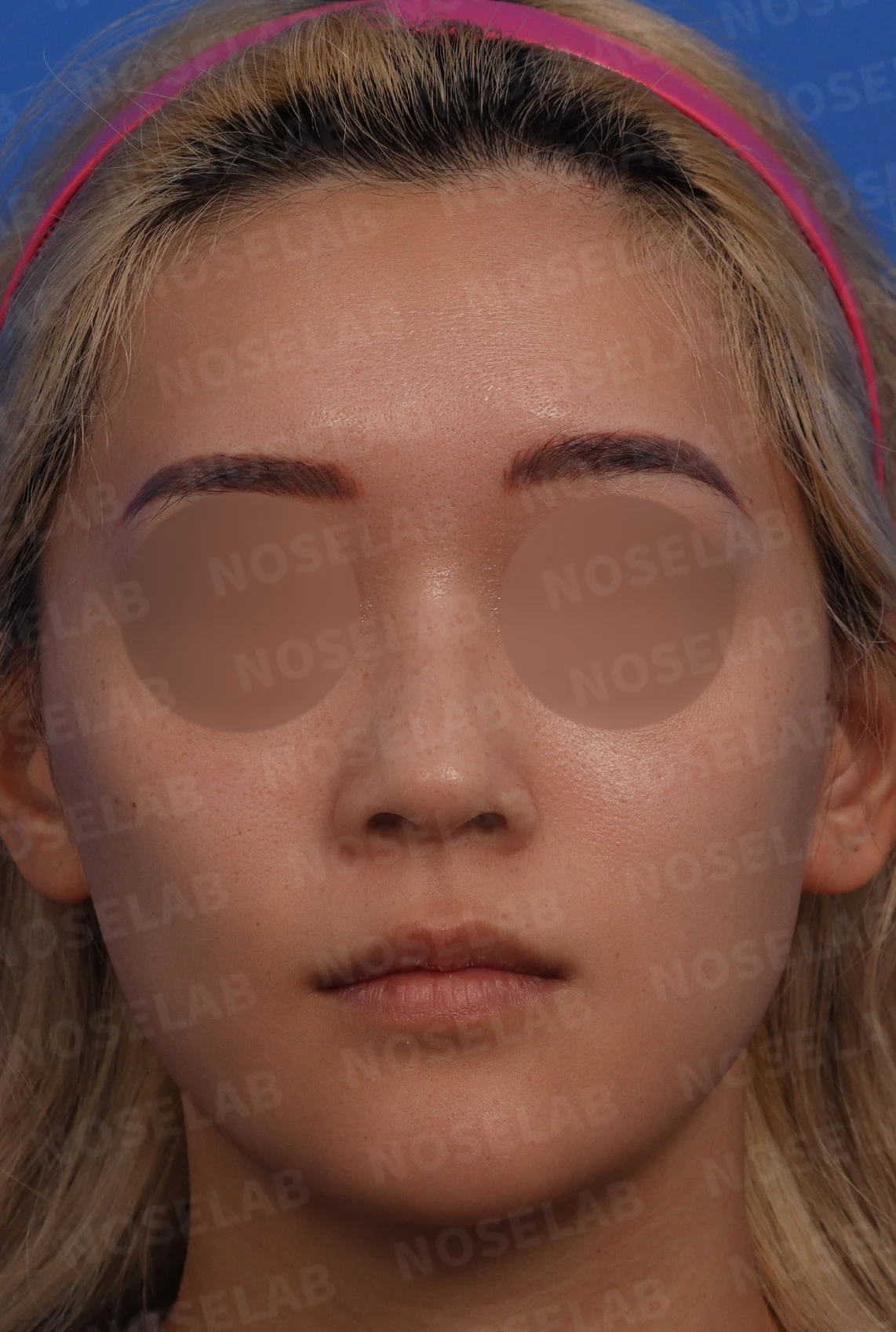
Before surgery: front view
- The nose appears wide overall
- The nasal tip appears bulbous and broad
- Nostrils appeared large and asymmetrical
Profile view:
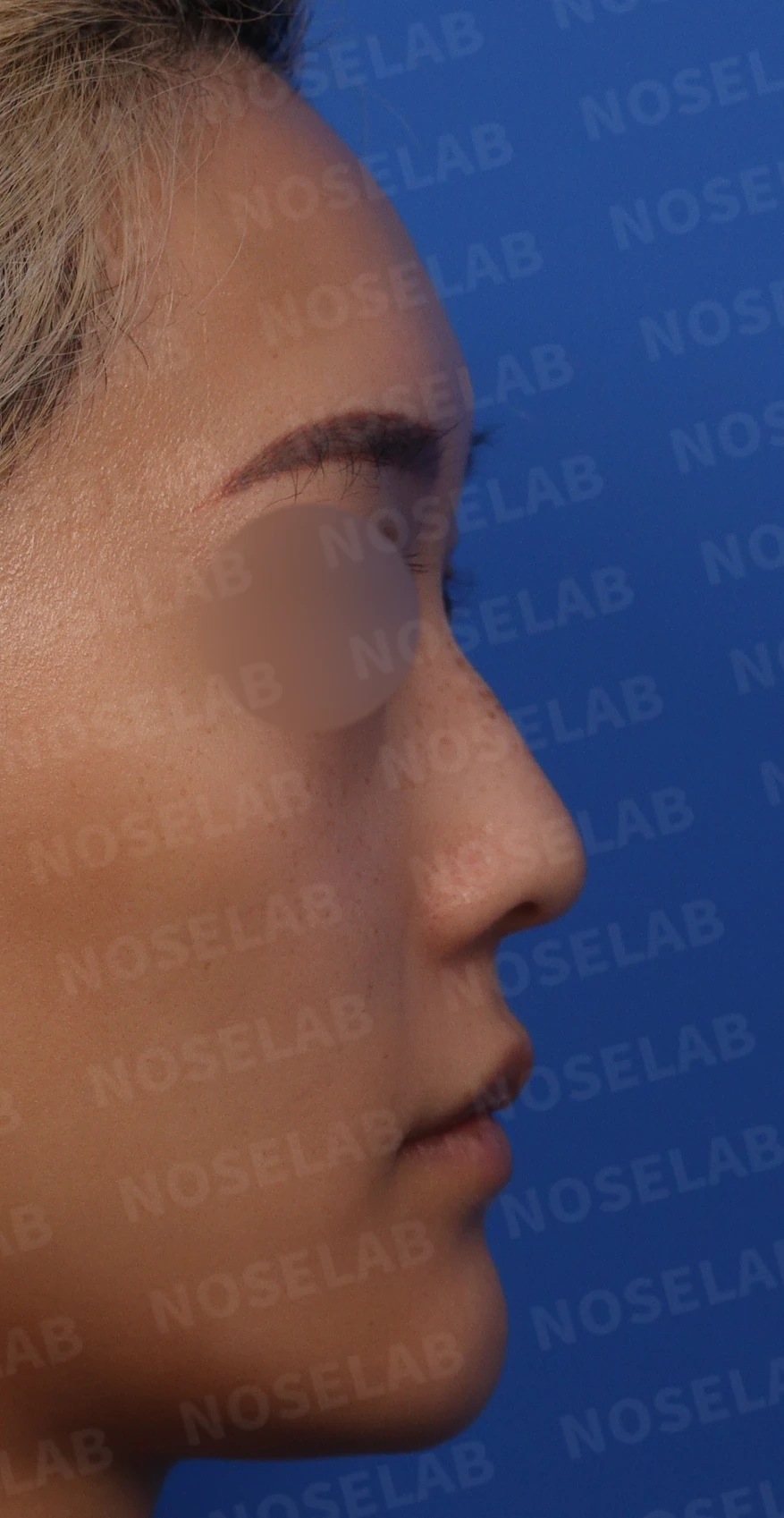
Before surgery: profile view
- The drooping nasal tip made the entire nose appear long
- The nasal bridge appeared low
- Tendency toward a dorsal hump
Oblique view:
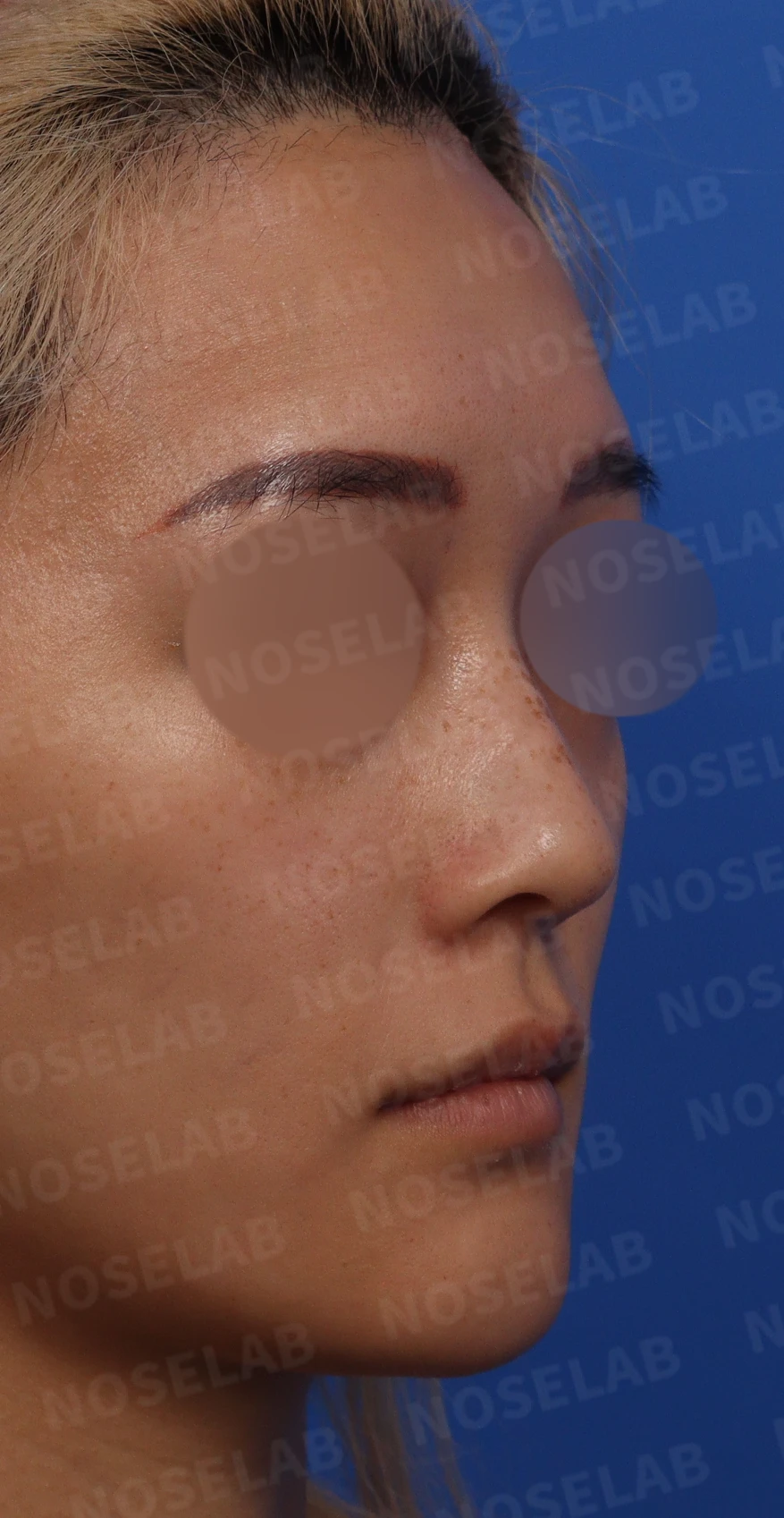
Preoperative oblique view
- The spread-out, wide appearance of the nose was more pronounced
- Bulbousness and drooping of the nasal tip were clearly visible
Nostrils:
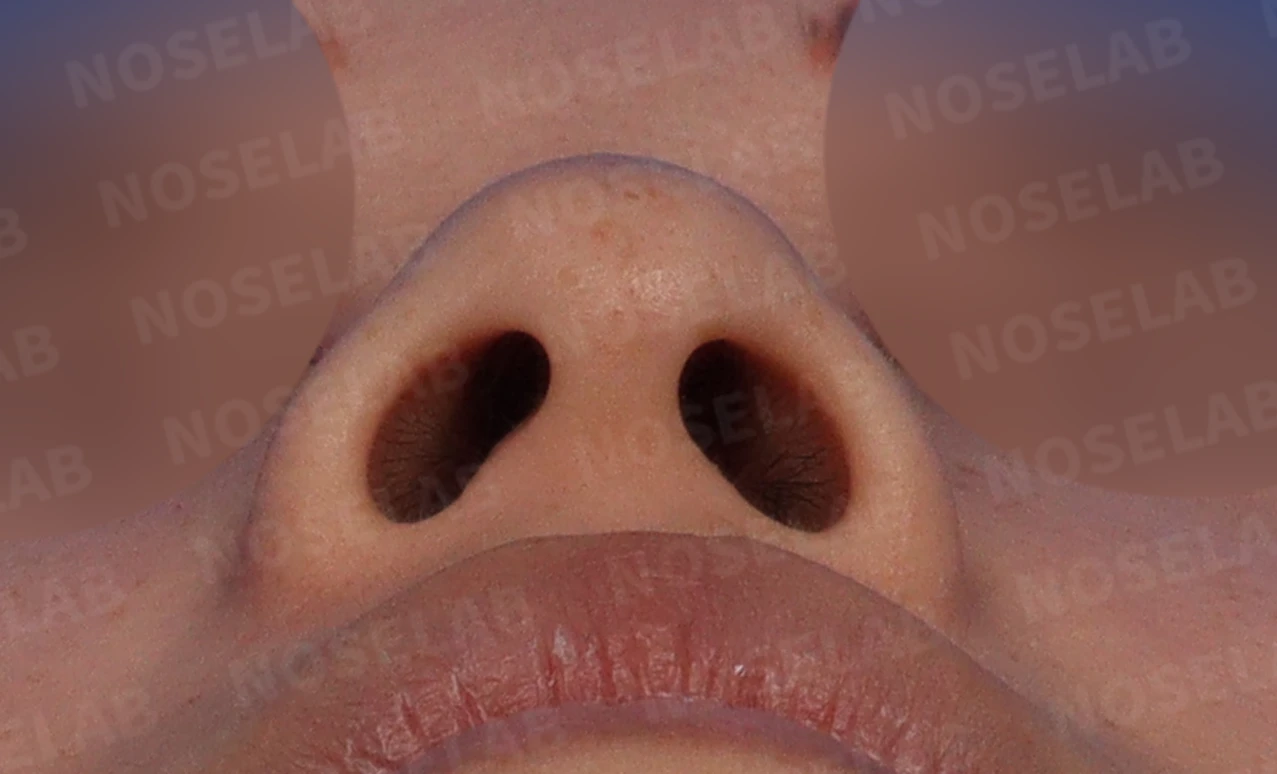
Preoperative basal (nostril) view
- The nostrils were large and asymmetrical
- The definition between the nasal tip and alae was indistinct
Surgical plan
Considering the patient's requests and nasal anatomy, the following surgical plan was established:
a) Nasal tip correction using autologous rib cartilage
b) Nasal bridge augmentation using a silicone implant
c) Nasal tip elevation and projection adjustment
d) Nostril reduction and symmetry improvement
e) Dorsal hump correction
Surgical procedure
The following procedures were performed using a closed approach:
a) Autologous rib cartilage harvest and grafting:
- The patient's rib cartilage was harvested and used for tip correction.
- The rib cartilage was meticulously sculpted to shape the nasal tip.
b) Nasal tip correction:
- The bulbous nasal tip was refined into a delicate, well-defined shape using autologous rib cartilage.
- Nasal tip projection was appropriately adjusted to create a cute, delicate impression.
c) Nasal bridge augmentation:
- A silicone implant was used to naturally elevate the low nasal bridge.
- The overall line of the nose was adjusted to flow smoothly and femininely.
d) Dorsal hump correction:
- Irregularities along the bridge were smoothed to improve the dorsal hump tendency.
e) Nostril correction:
- Nostril size was reduced and symmetry was improved.
- Repositioning of the alar cartilages helped refine the nostril contours.
All procedures were performed using a closed approach, completing the surgery without external scars.
Before-and-after photo comparison
Front view:
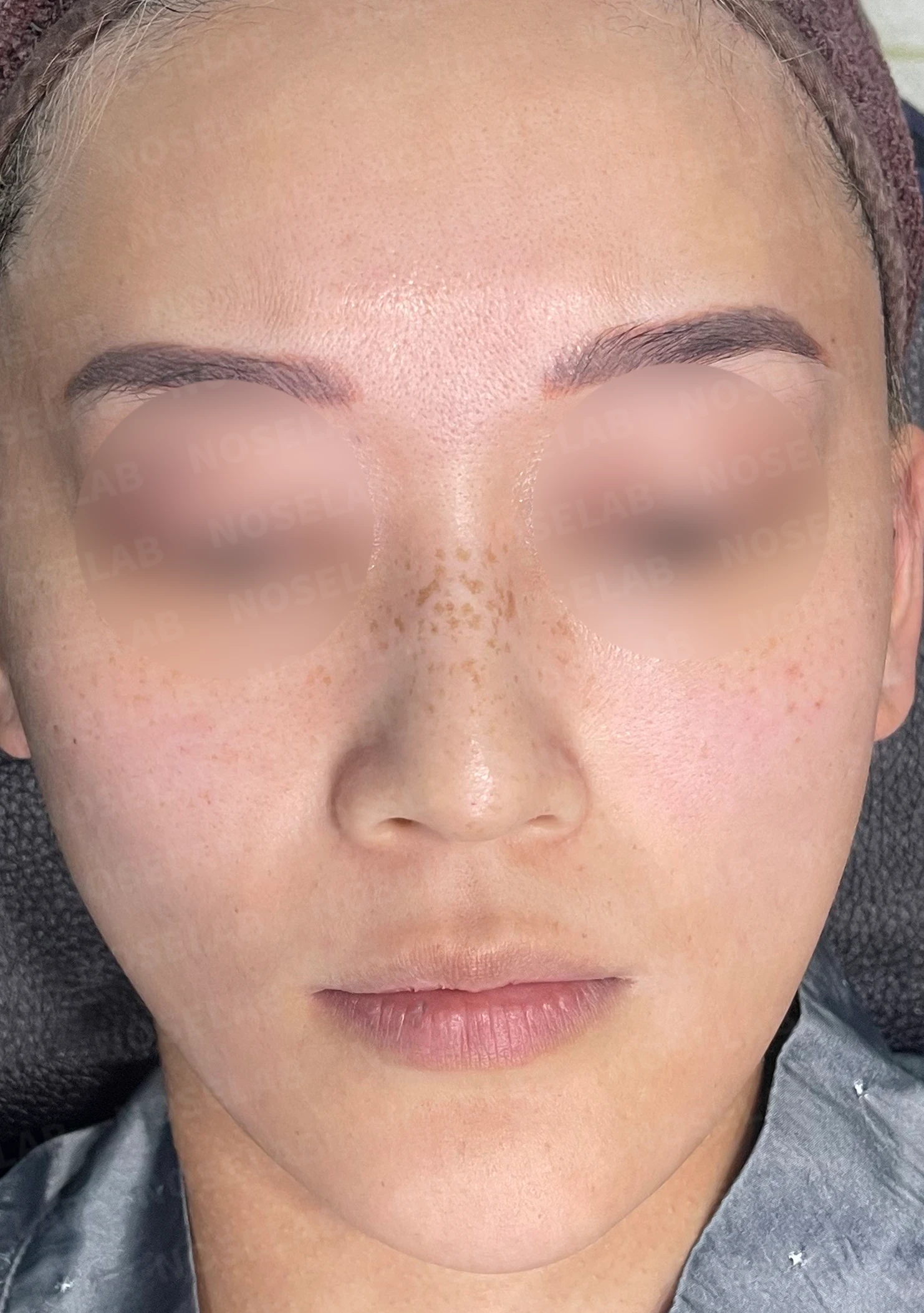
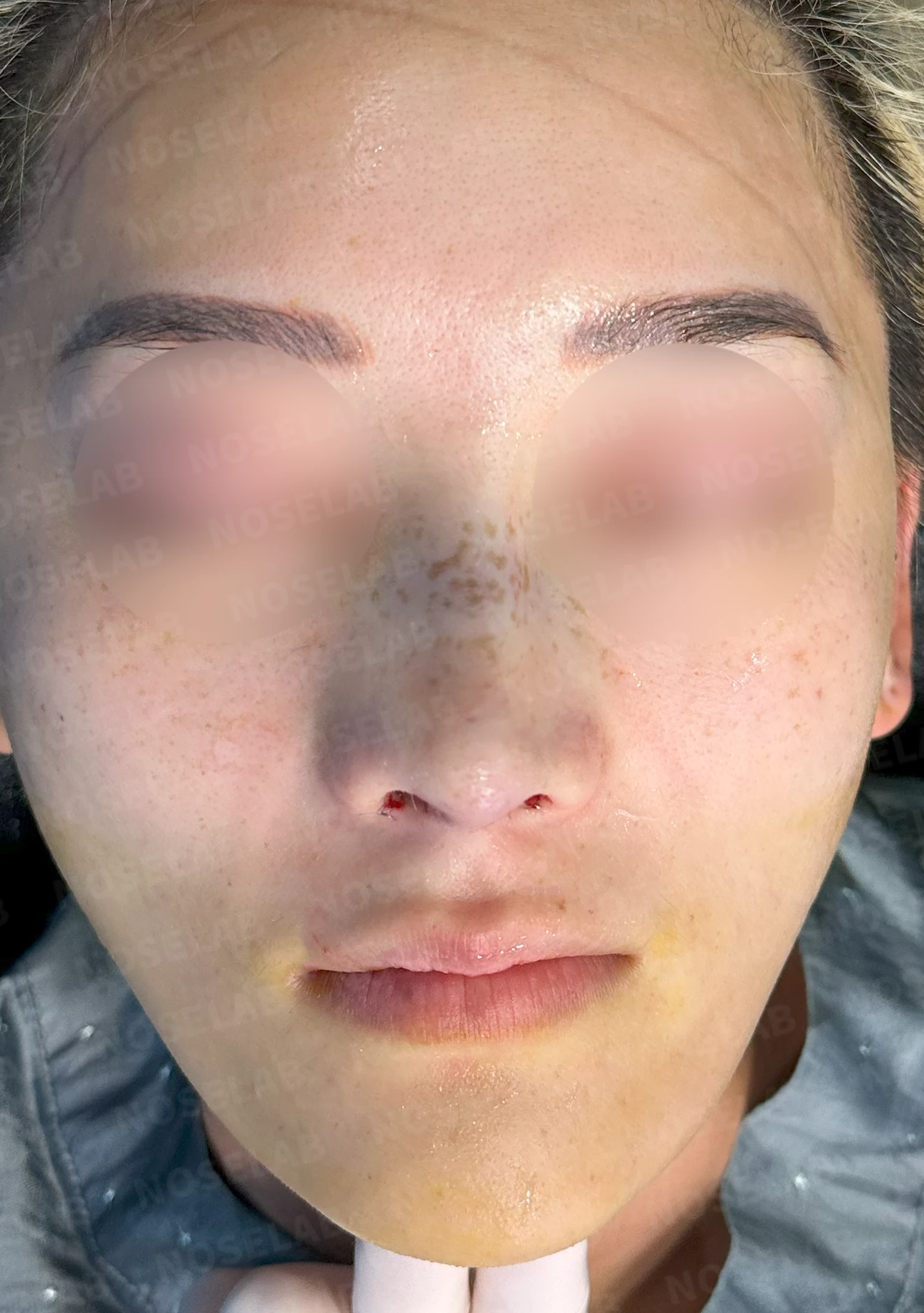
Before surgery / Day 0 immediately after surgery Photos taken immediately after surgery show swelling and may differ from the final result.
- The previously spread-out nose gained an overall slimmer, well-balanced contour.
- The bulbous, wide nasal tip was refined into a delicate and defined shape.
- Nostril size was appropriately reduced with improved symmetry.
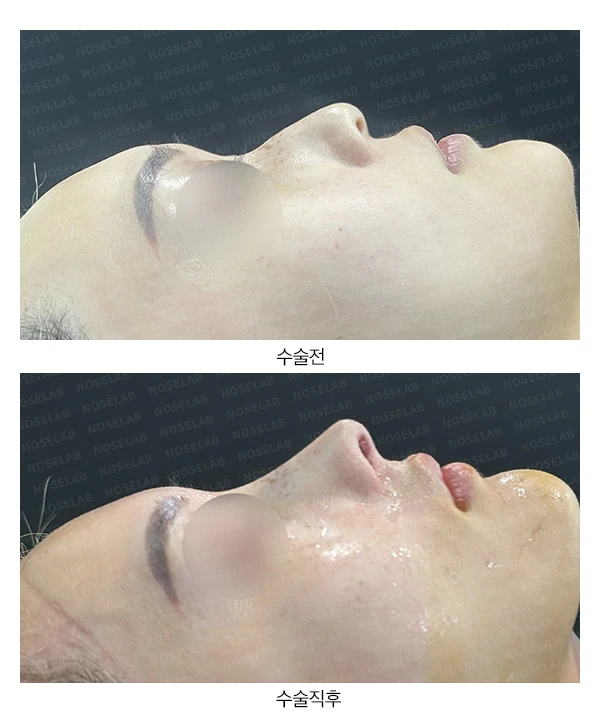
Profile view:
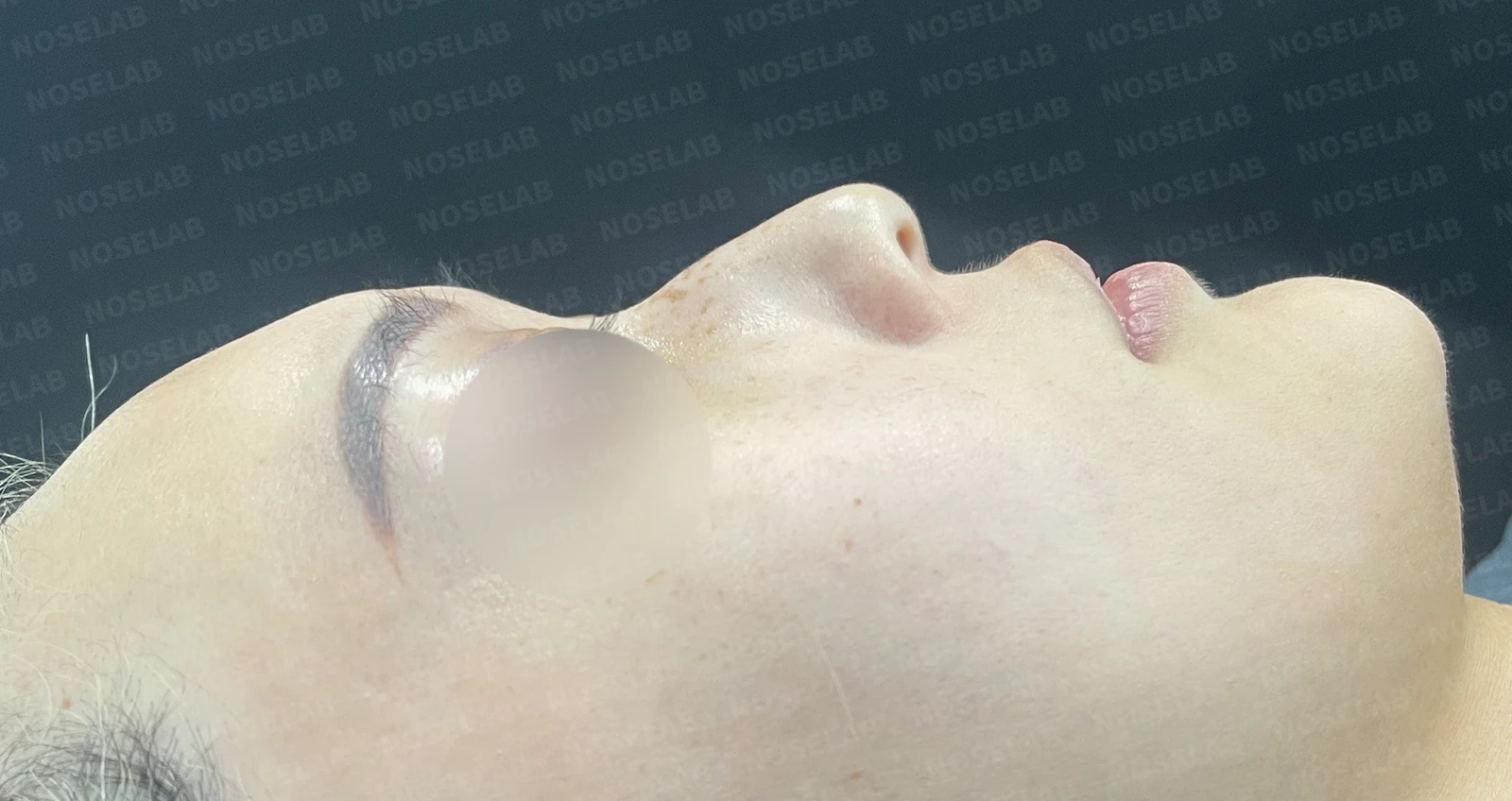
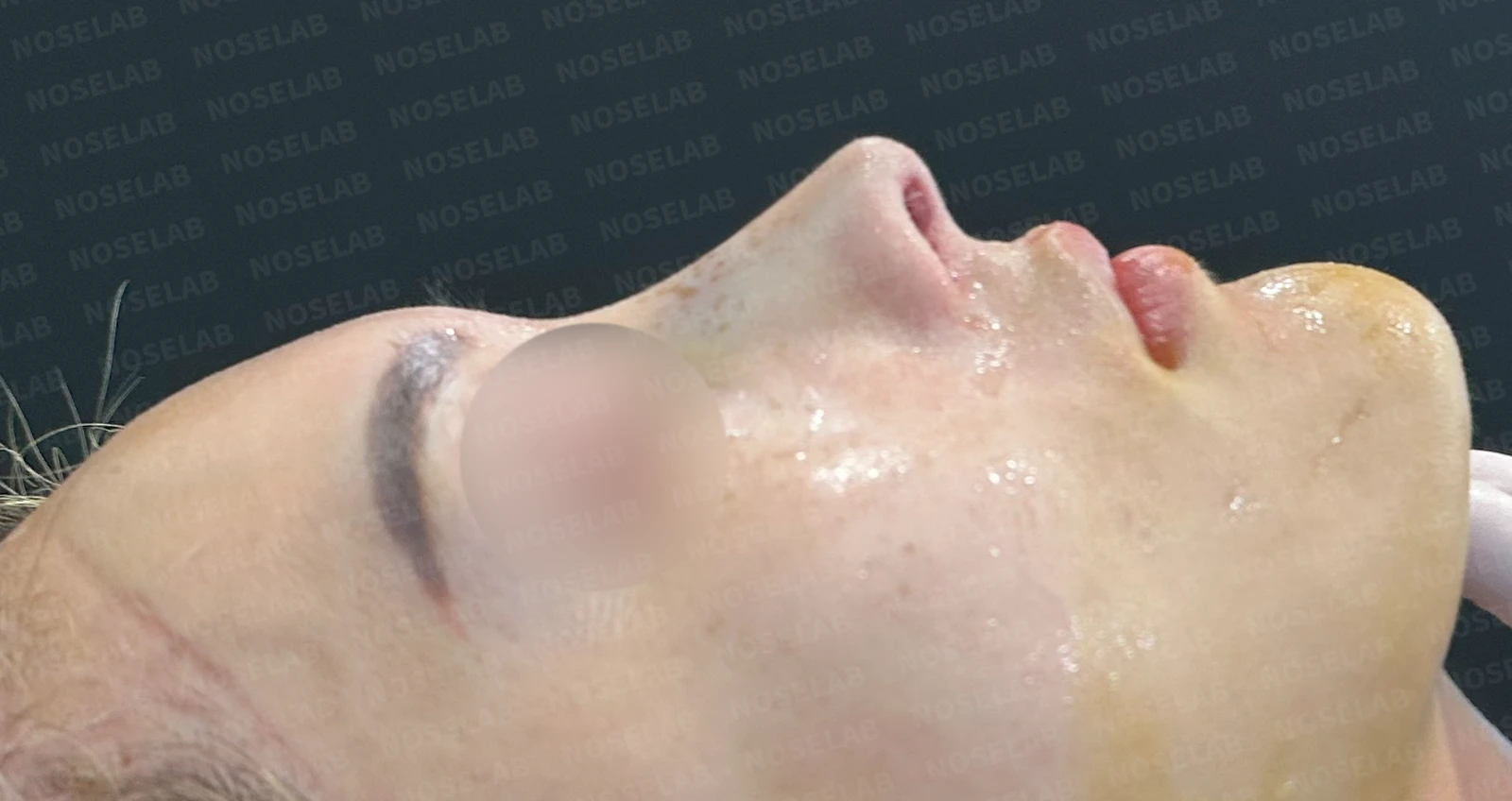
Before surgery / Day 0 immediately after surgery Photos taken immediately after surgery show swelling and may differ from the final result.
- The drooping nasal tip was appropriately elevated, making the overall nasal length appear shorter.
- Elevation of the bridge formed a graceful line from the forehead to the tip.
- The dorsal hump was smoothed, creating a gentle curve.
Oblique view:
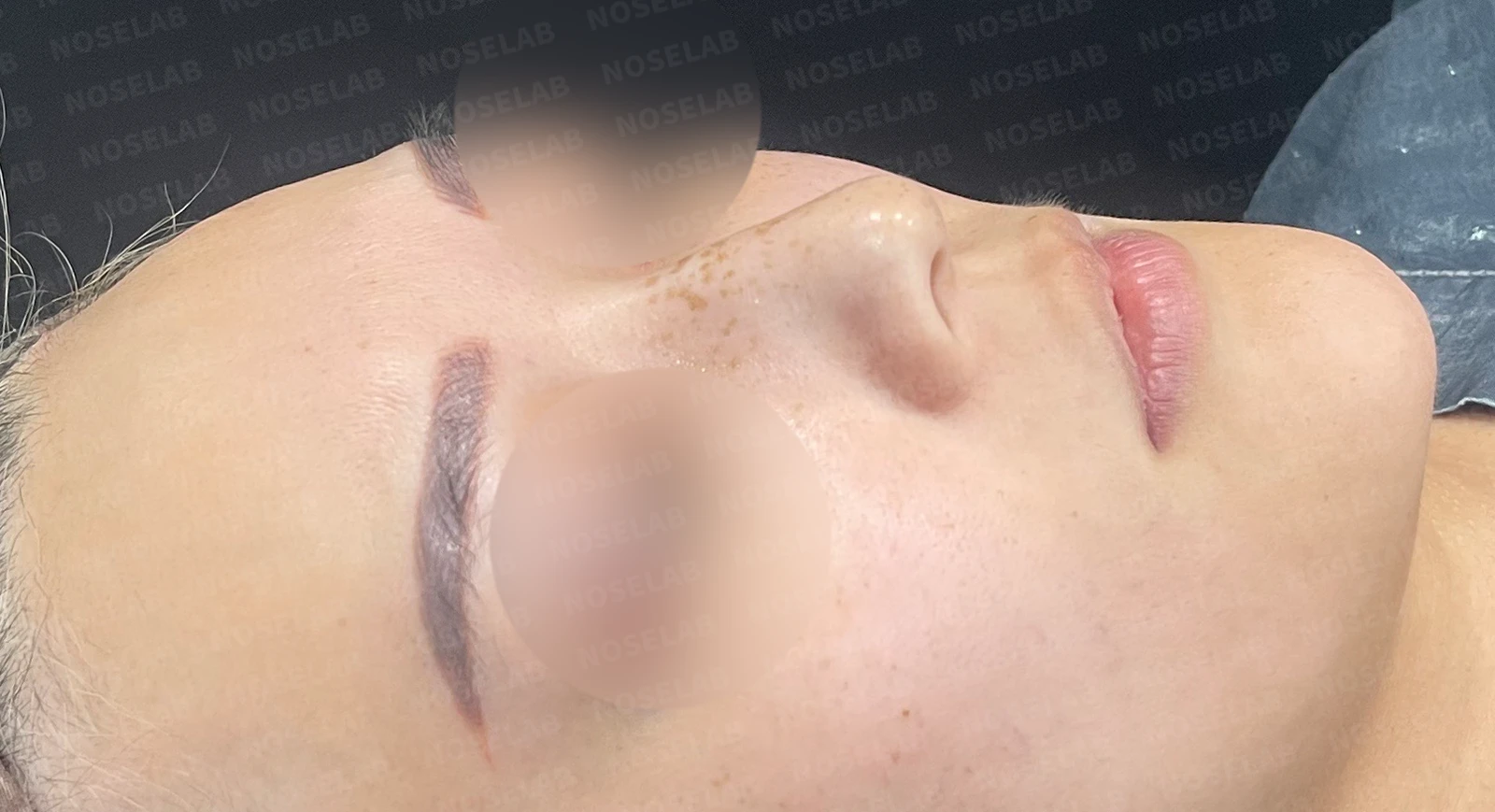
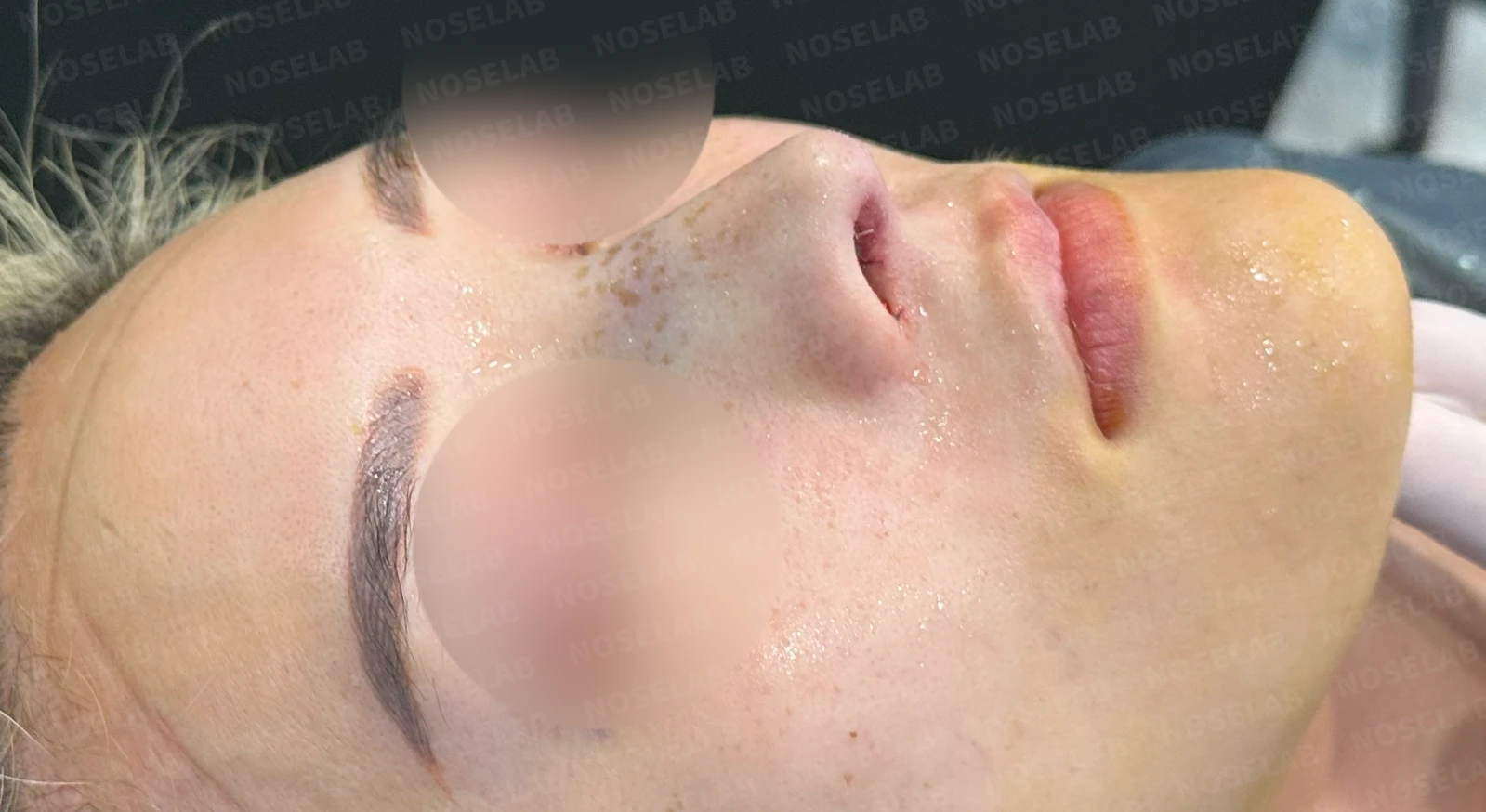
Before surgery / Day 0 immediately after surgery Photos taken immediately after surgery show swelling and may differ from the final result.
- The wide nasal contours became slimmer, creating a refined look.
- Tip projection was naturally enhanced to provide a cute, well-defined impression.
Nostrils:
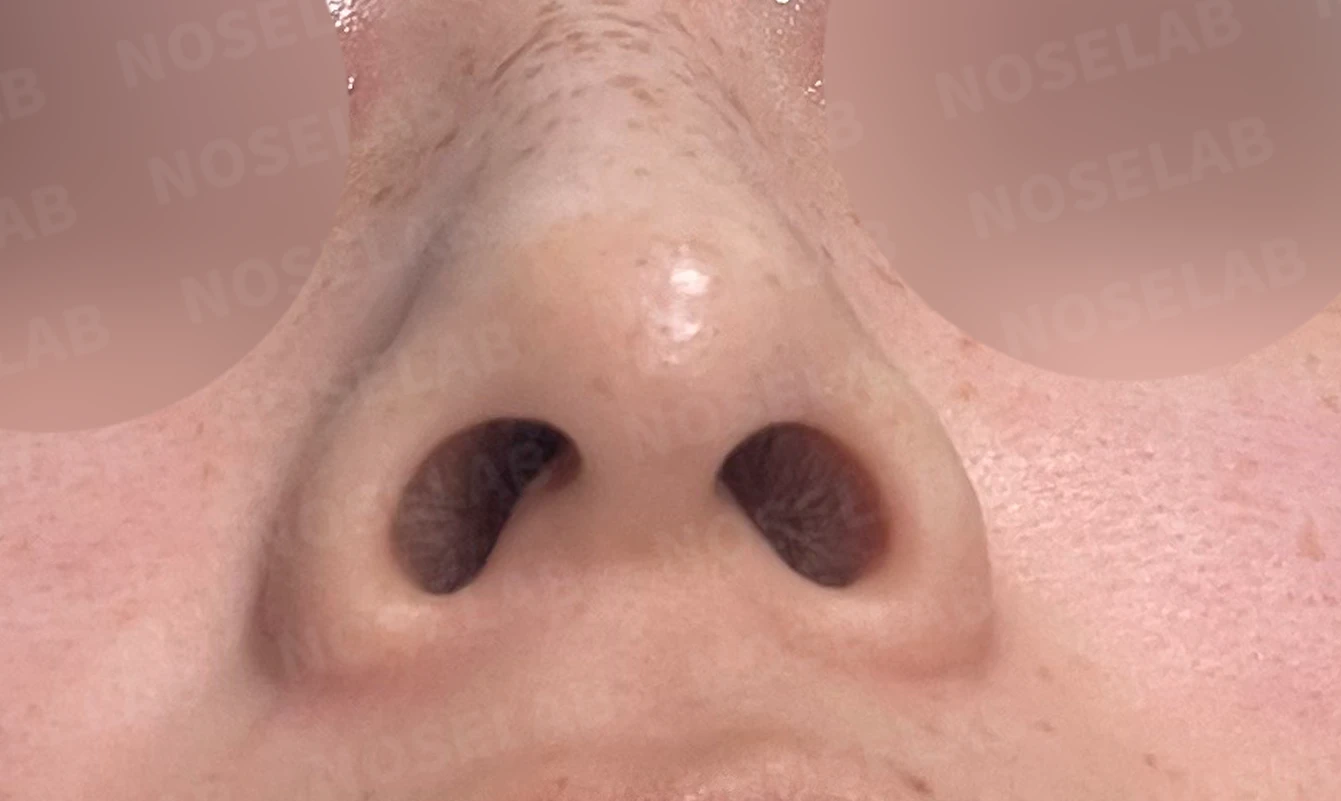
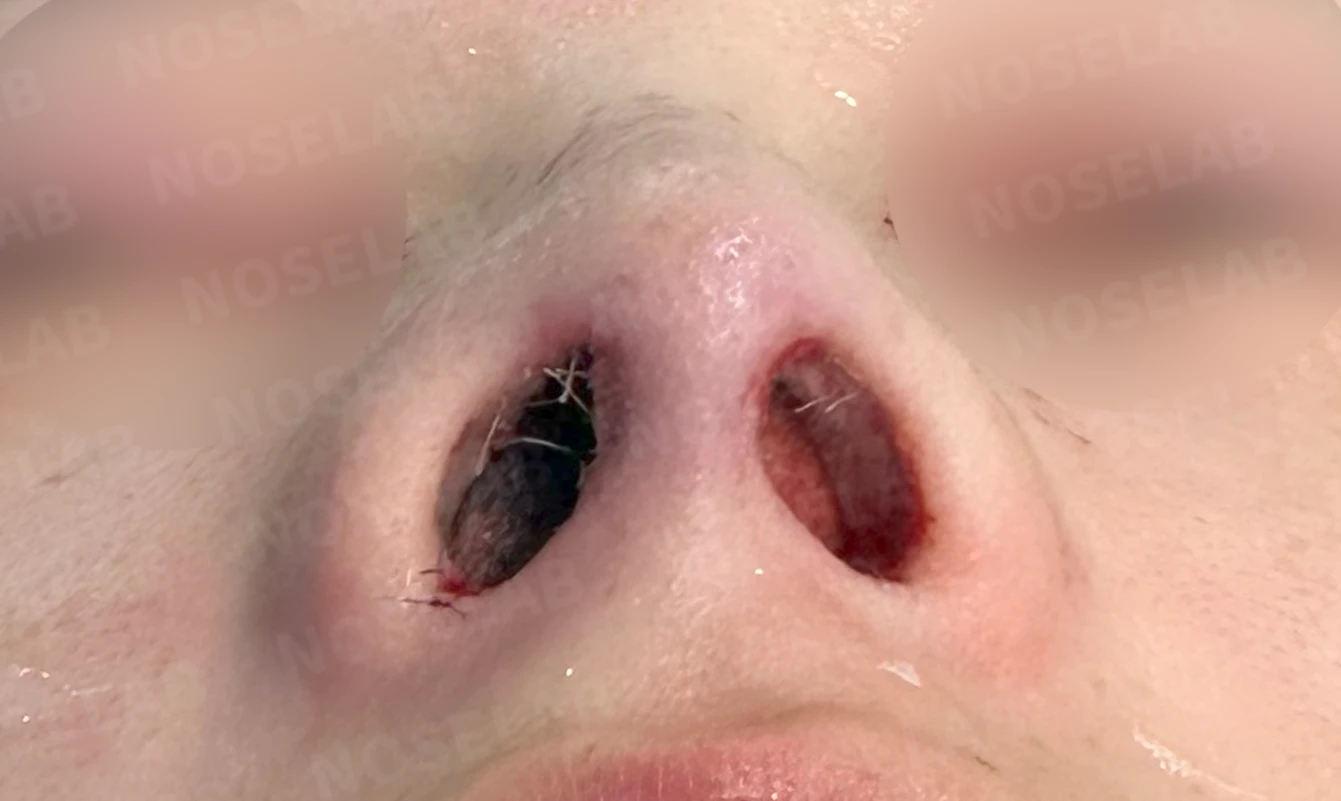
Before surgery / Day 0 immediately after surgery Photos taken immediately after surgery show swelling and may differ from the final result.
- Nostril size was reduced with significantly improved symmetry.
- Definition of the nasal tip cartilages became clearer, resulting in a more refined appearance.
Photos immediately after surgery
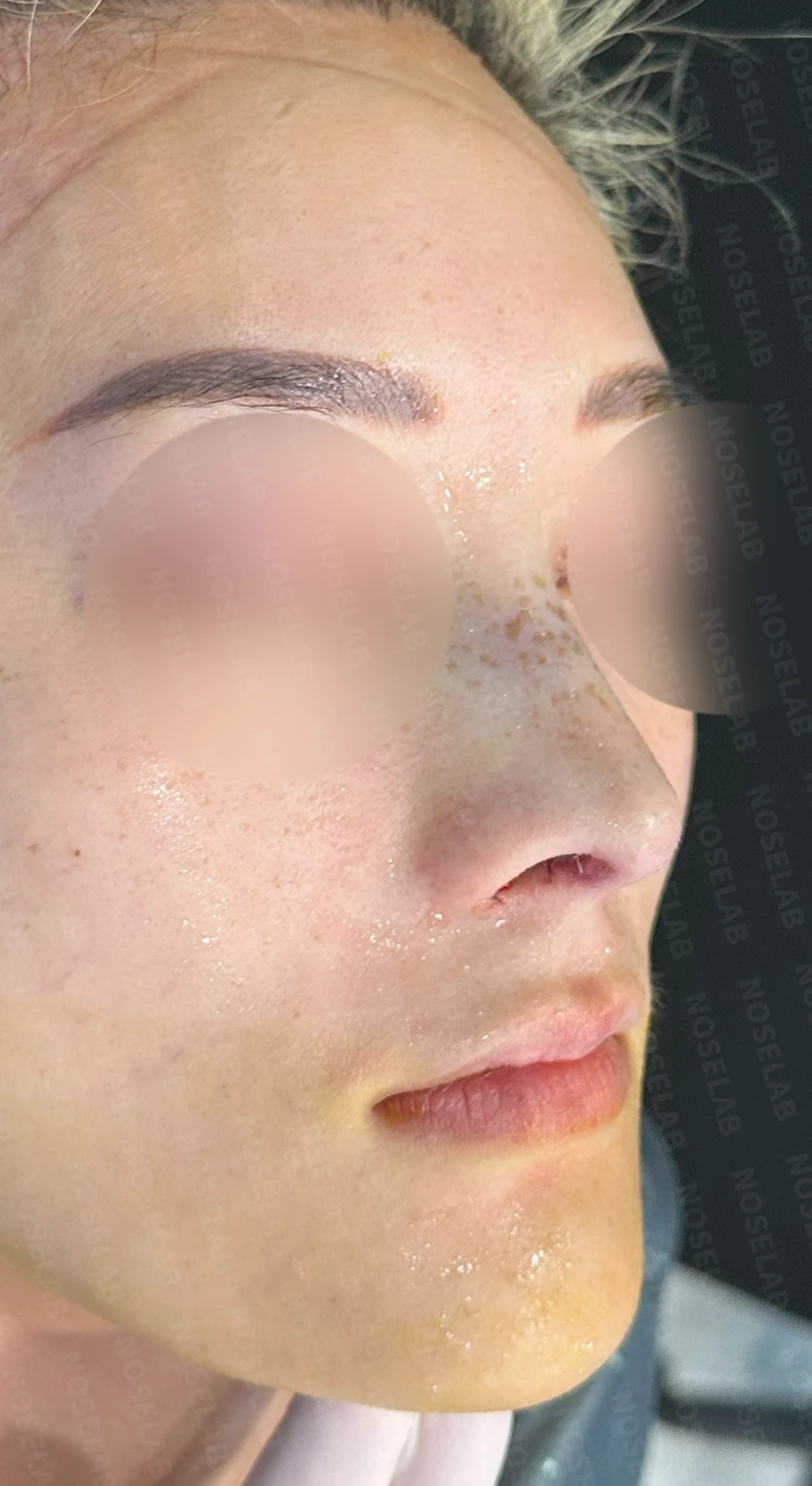
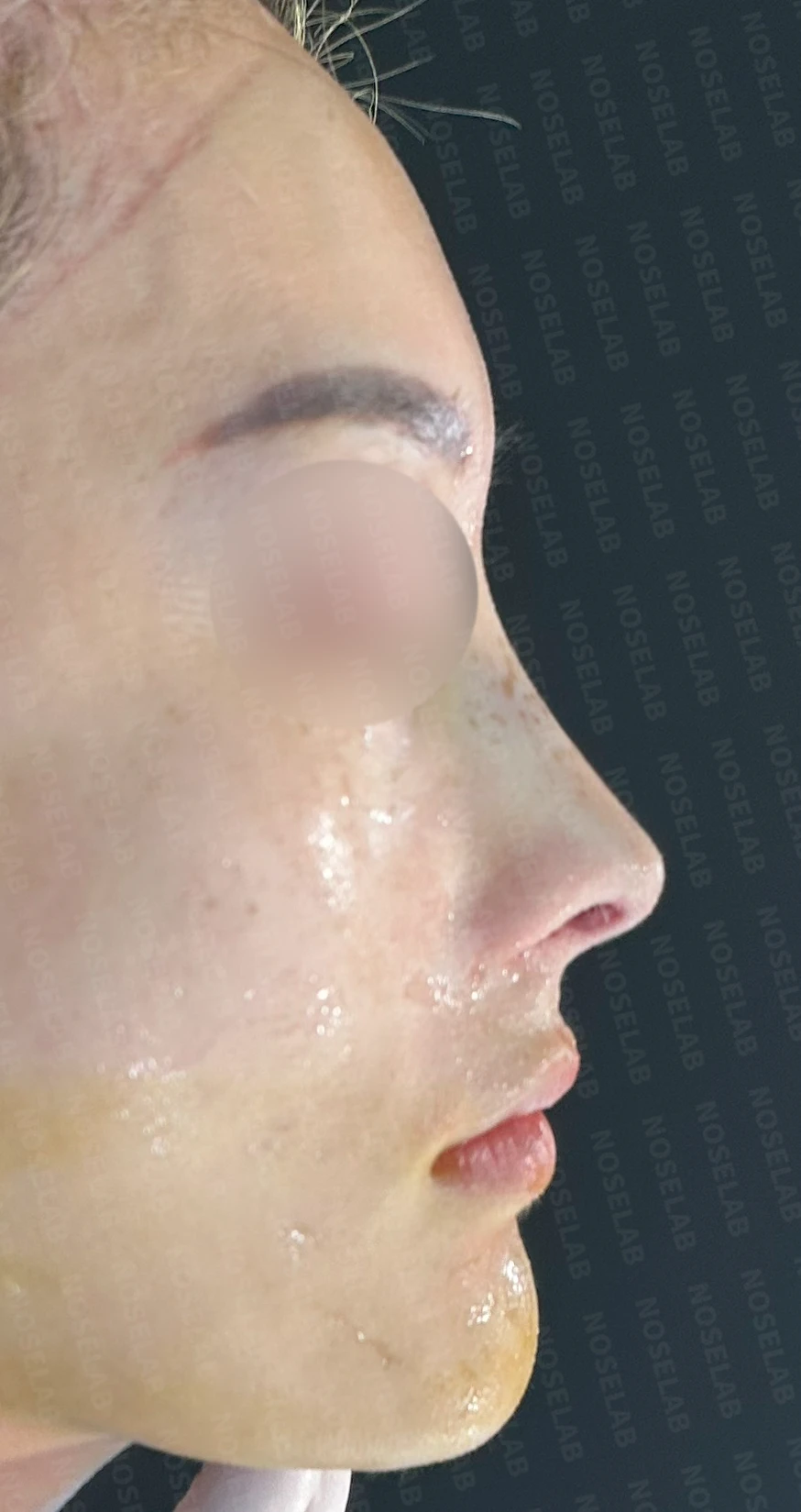
Immediately after surgery on day 0: front, oblique, and profile views. Immediate postoperative photos show swelling and may differ from the final result.
Basal (nostril) view immediately after surgery (Day 0)Immediate postoperative photos show swelling and may differ from the final result.
Conclusion
This case fulfilled the requests of a patient with a bulbous, wide nose while achieving a natural and feminine profile. Because tip correction with autologous rib cartilage uses the patient's own tissue, the risk of rejection is low, supporting a stable long-term result.
Nasal bridge augmentation with a silicone implant played a major role in balancing the overall nose and enhancing a feminine image. Performing the entire procedure through a closed approach allowed us to minimize visible surgical marks and shorten the recovery period.
Delicate tip sculpting and improved nostril symmetry were central to creating the cute, doll-like impression desired by the patient. Simultaneously, smoothing the dorsal hump produced an overall gentle and feminine nasal line.
Closing remarks
I hope this case offers encouragement to those concerned about a bulbous or wide nose. A tailored surgical plan aligned with each patient's facial features and aesthetic goals can achieve a safe and well-proportioned nasal shape.
Drawing upon up-to-date surgical techniques and extensive clinical experience, I always strive to provide patients with the intended result. If you are considering rhinoplasty, I recommend consulting with a specialist to determine the surgical method best suited for you.
NOSELAB is here to help you achieve a healthy, aesthetically pleasing nose. Thank you.
FAQ
Q1: What are the advantages of autologous rib cartilage surgery?
A1: Because autologous rib cartilage is the patient's own tissue, there is no risk of rejection, supporting a stable long-term result. In addition, an adequate amount of cartilage can be harvested, making it useful for a variety of nasal corrections.
Q2: What is the difference between closed and open rhinoplasty?
A2: Closed rhinoplasty involves incisions placed entirely inside the nostrils, leaving no external scars and allowing for a shorter recovery period. Postoperative swelling also tends to be milder compared to the open approach.
Q3: When can I return to daily activities after surgery?
A3: While individual results vary, most patients can return to daily activities after about 1 week. Complete recovery and the emergence of the final result take approximately 3 to 6 months.
Q4: Are silicone implants safe?
A4: Medical-grade silicone implants are materials with well-established clinical safety. However, they must be used appropriately by an experienced specialist. At NOSELAB, implants are carefully selected in size and shape to fit each individual.
Q5: Can nasal obstruction occur after rhinoplasty?
A5: When performed by a qualified specialist, persistent nasal obstruction is rare. In fact, if underlying structural issues such as a deviated septum were present, breathing can often improve following surgery. While temporary swelling immediately after surgery may cause mild breathing discomfort, this resolves as healing progresses.
#rhinoplasty #bulboustipcorrection #widenosecorrection #dorsalhumpcorrection #autologousribcartilage #closedrhinoplasty #bridgeaugmentation #tipplasty #entrhinoplasty #barbienose

Limitations and risks
When autologous rib cartilage is used, scarring and pain may remain at the donor site on the chest, and pneumothorax (pleural injury) can occur rarely. Over time, the grafted cartilage may warp or undergo partial resorption.
When the septum is corrected at the same time, nasal obstruction may persist or recur, and in rare cases, septal perforation or changes in smell may occur.
Common potential risks include infection, bleeding, asymmetry, scarring, skin necrosis, and insufficient improvement; results vary depending on individual skin condition and previous surgical history.