1. Preoperative design
The patient visited the clinic to correct this type of drooping, wide nose. A dorsal hump was present, the nose appeared crooked from the front, and there was nostril asymmetry.
2. Surgical plan
I planned a lateral osteotomy to correct the wide and deviated areas, and determined that supporting and projecting the nasal tip using autologous rib cartilage would improve the blunt and drooping appearance. Because the patient already had sufficient baseline bridge height, I planned to use autologous rib cartilage rather than a silicone implant to raise the bridge naturally.
3. Immediately after surgery (Day 0)Immediate postoperative photos show swelling and may differ from the final result.
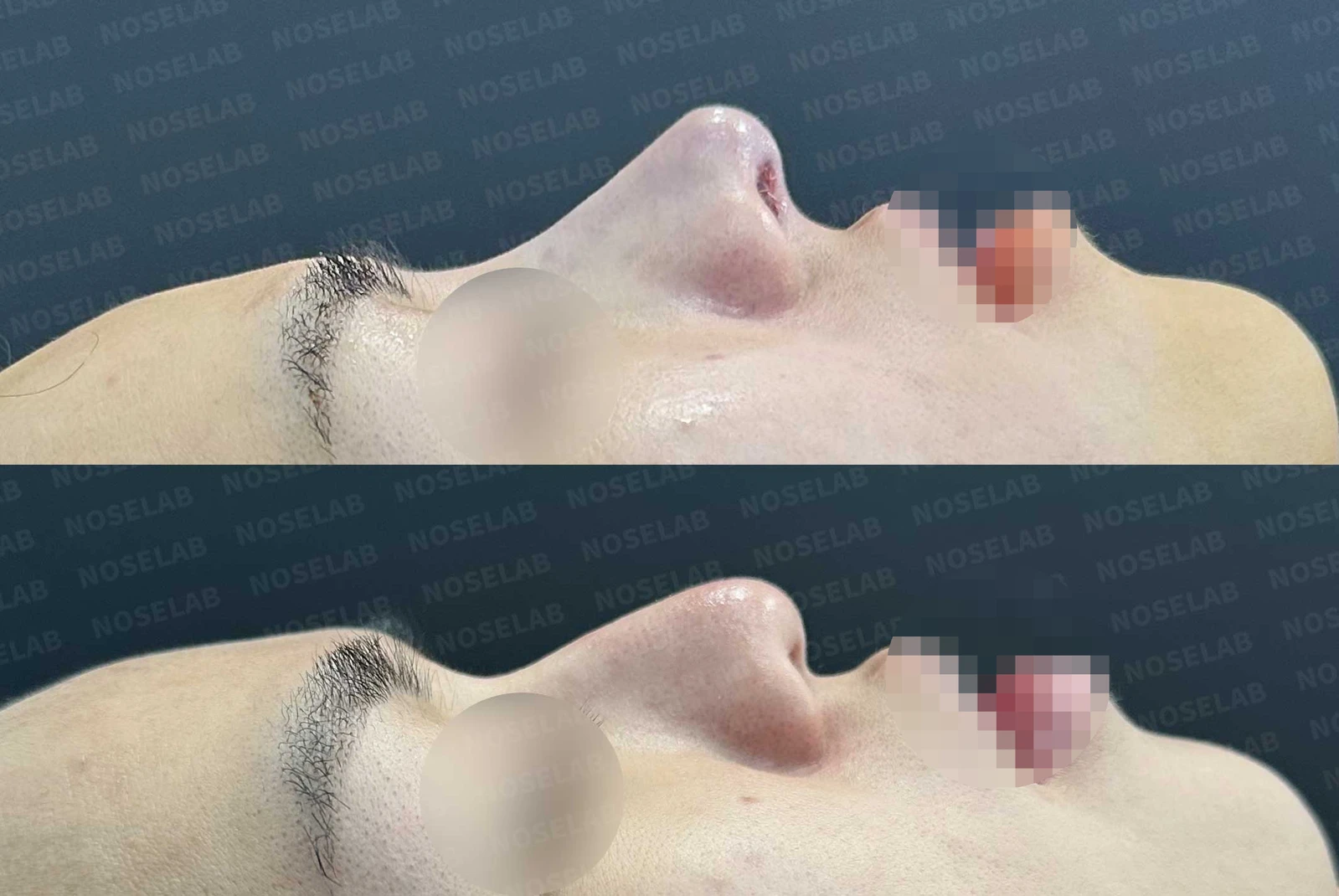
Before surgery / Day 0 immediately after surgery Photos taken immediately after surgery show swelling and may differ from the final result.
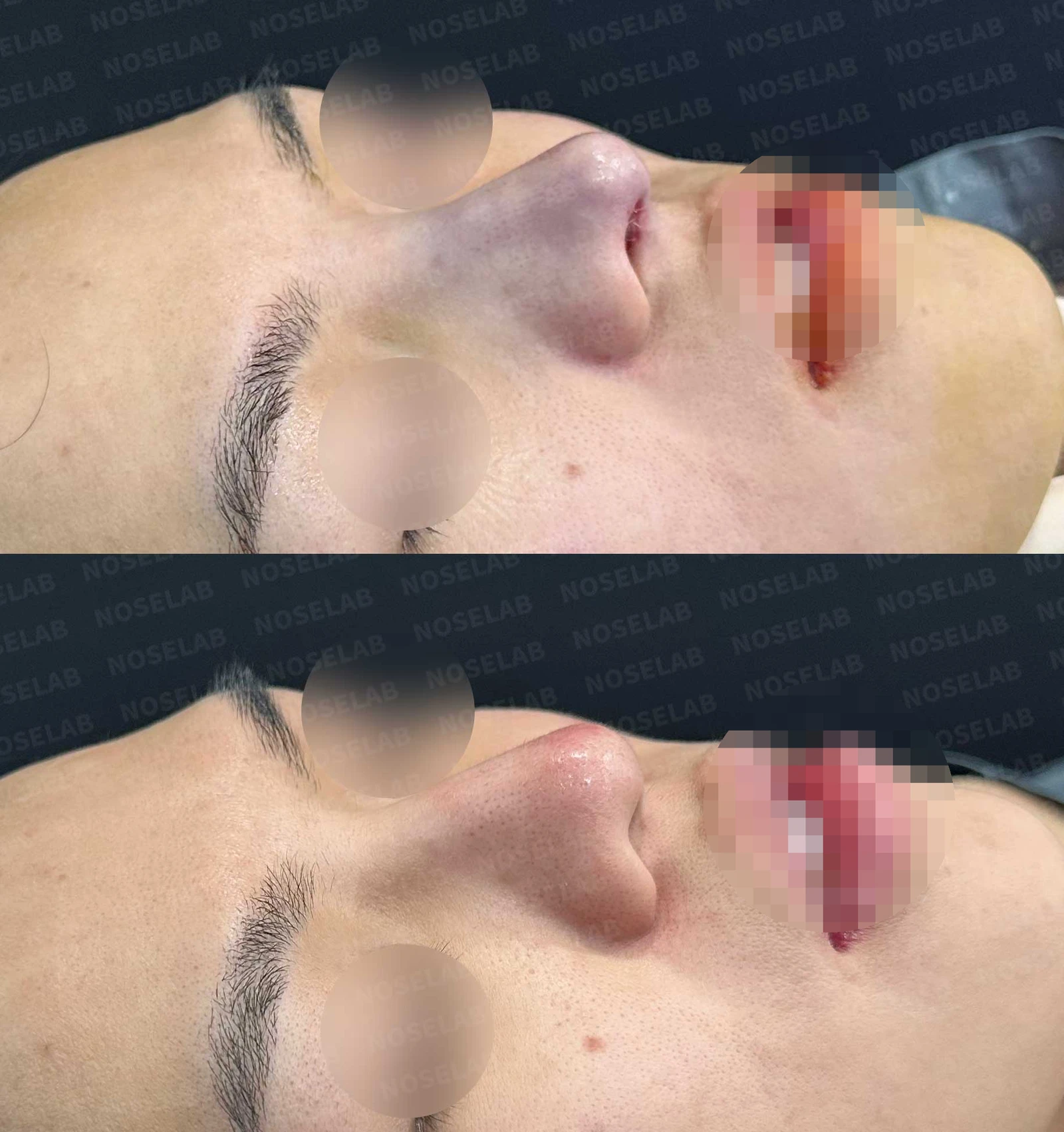
Before surgery / Day 0 immediately after surgery Photos taken immediately after surgery show swelling and may differ from the final result.
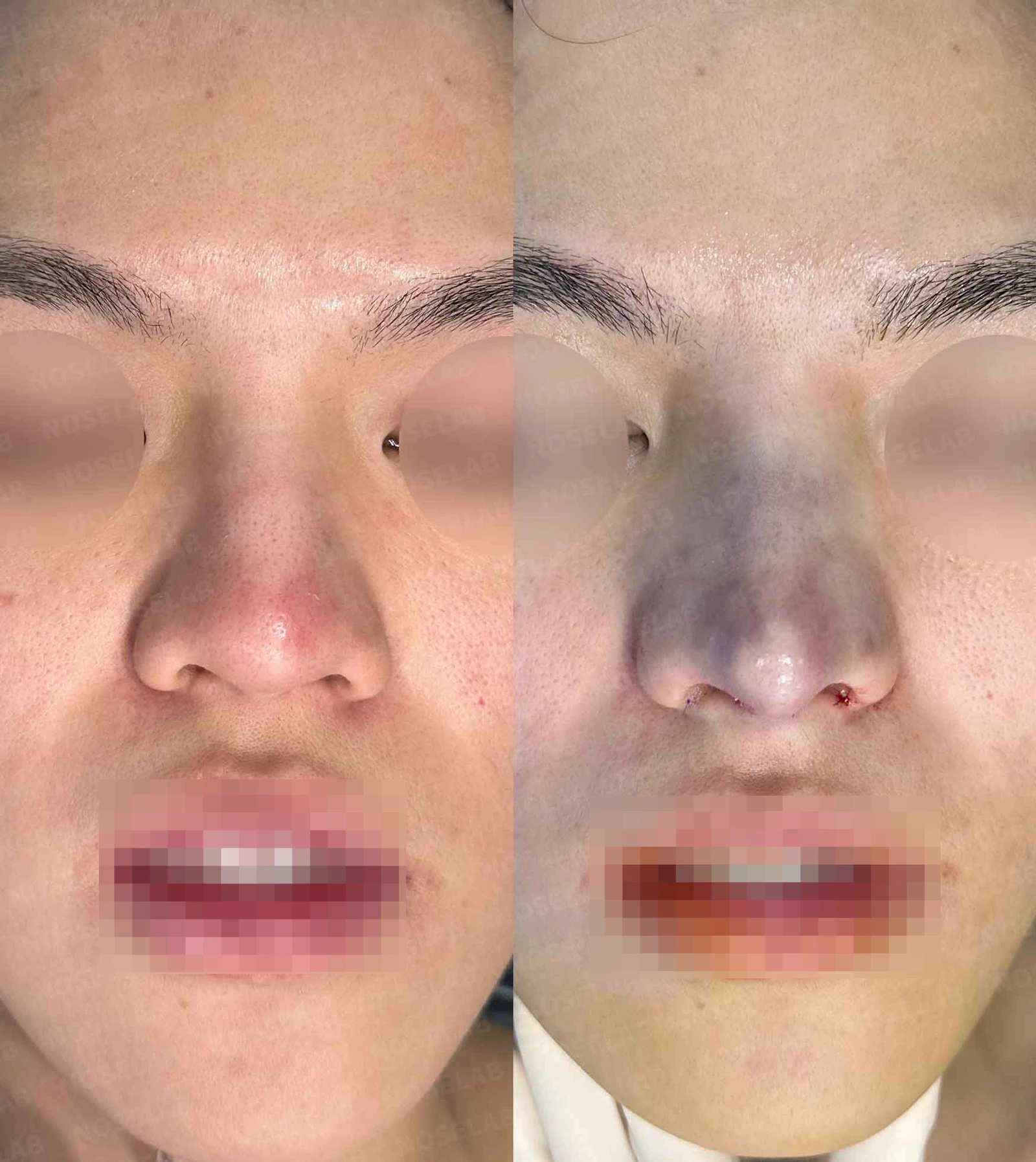
Before surgery / Day 0 immediately after surgery Photos taken immediately after surgery show swelling and may differ from the final result.
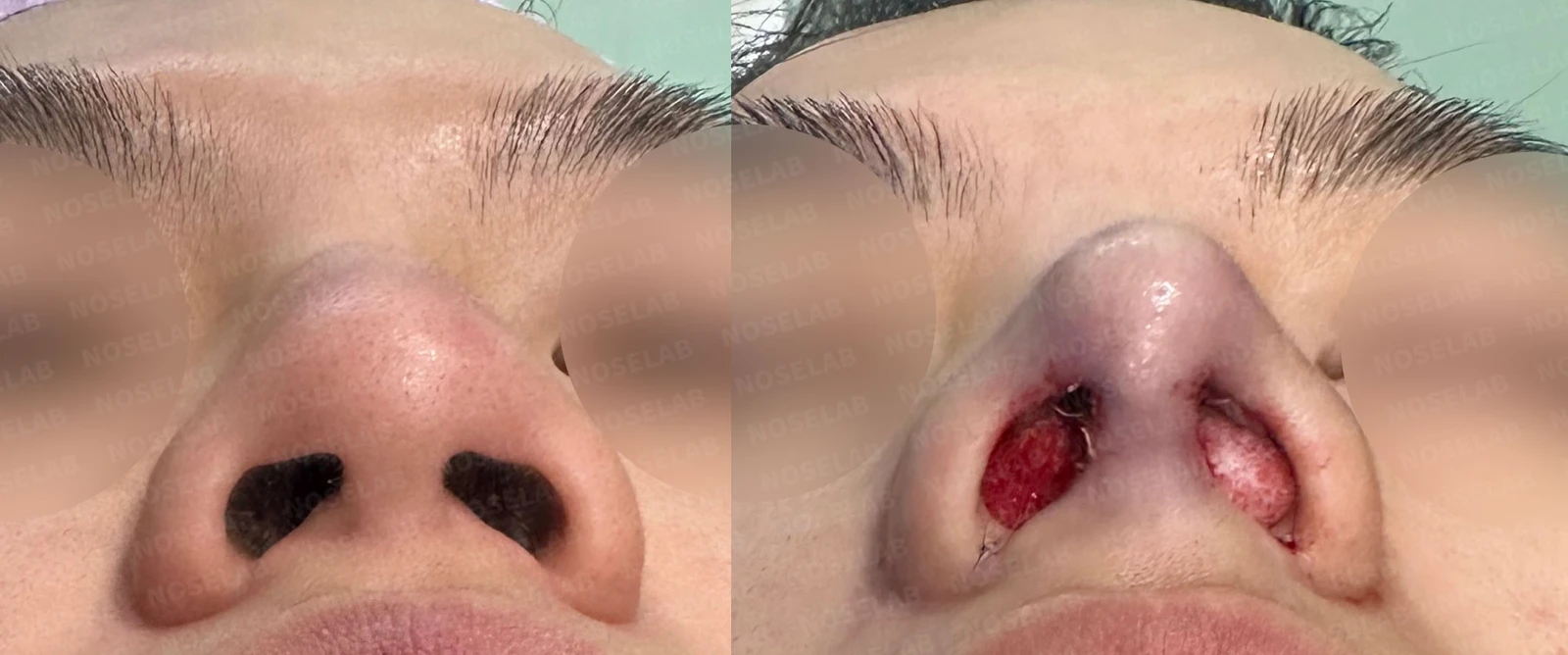
Before surgery / Day 0 immediately after surgery Photos taken immediately after surgery show swelling and may differ from the final result.
4. Conclusion
Because of this baseline bridge height, the plan was to preserve the existing height as much as possible, and autologous rib cartilage was used to shape the nasal bridge. Although a silicone implant was initially considered, the patient had relatively thick skin and a high nasal bridge; therefore, the surgical plan was adjusted intraoperatively to fill in only the deficient areas, raising the bridge with autologous rib cartilage.
Dr. Peter C. Kang

Limitations and risks
When autologous rib cartilage is used, scarring and pain may remain at the donor site on the chest, and pneumothorax (pleural injury) can occur rarely. Over time, the grafted cartilage may warp or undergo partial resorption.
Common potential risks include infection, bleeding, asymmetry, scarring, skin necrosis, and insufficient improvement; results vary depending on individual skin condition and previous surgical history.