1. Preoperative consultation
The patient visited NOSELAB to correct this type of small and short nose. 6 dissolvable threads had been inserted into the nasal bridge, and nostril asymmetry was severe.
2. Surgical plan
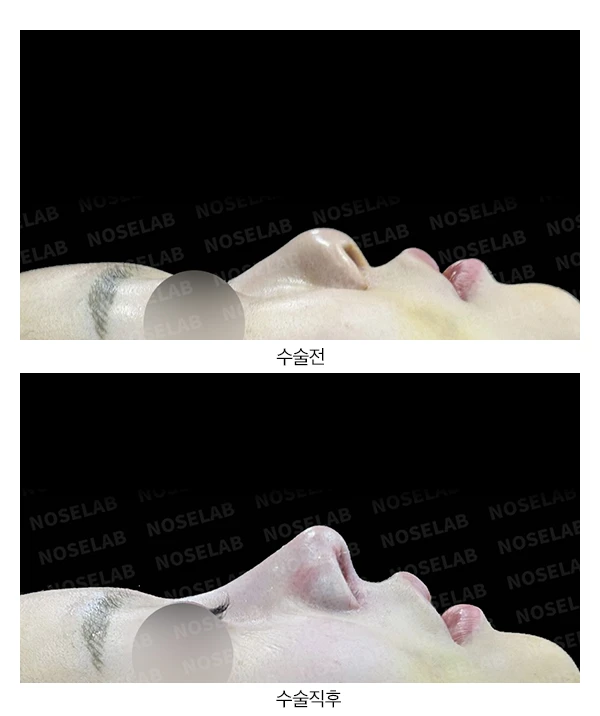
Because the skin was small and relatively thick, limited skin stretching was anticipated. Therefore, the surgical plan focused on balancing proportions and improving asymmetry rather than adding excessive height. Autologous rib cartilage was planned to correct the upturned nasal tip, and after analyzing the shape of the right nostril, damage to the right lower lateral cartilage was suspected, leading to a plan for lower lateral cartilage reconstruction.
3. Immediately after surgery (Day 0)Immediate postoperative photos show swelling and may differ from the final result.
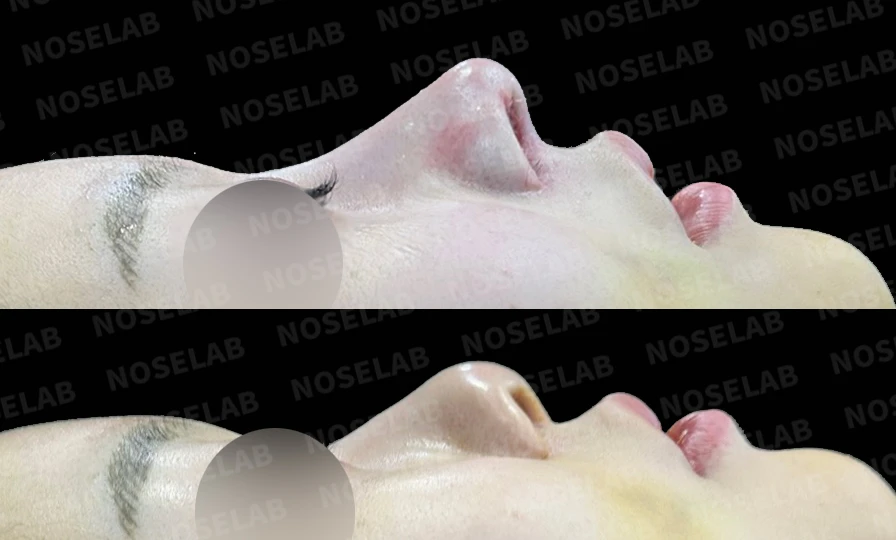
Before surgery / Day 0 immediately after surgery Photos taken immediately after surgery show swelling and may differ from the final result.
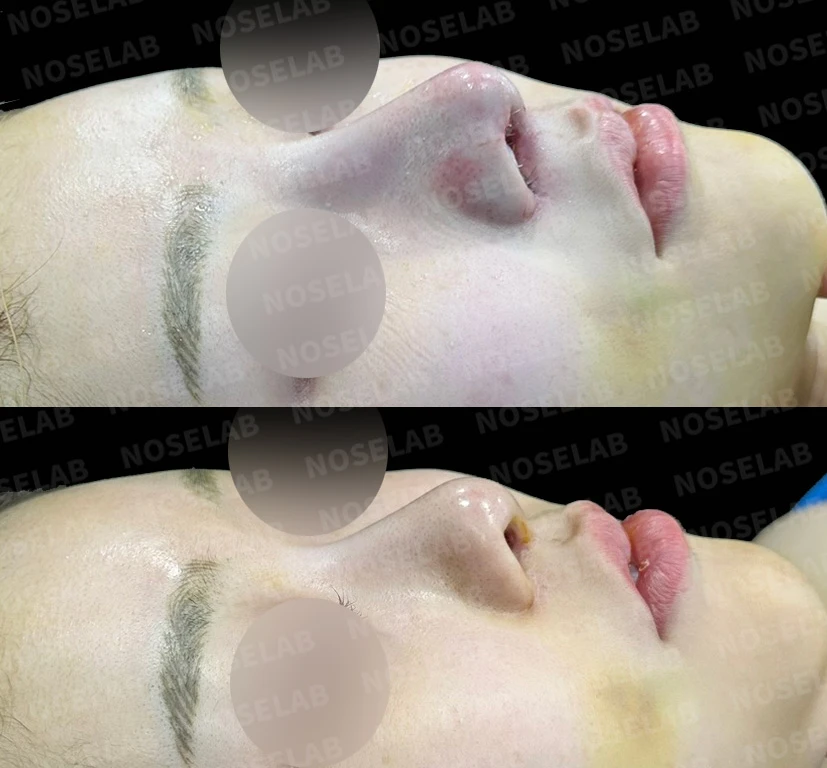
Before surgery / Day 0 immediately after surgery Photos taken immediately after surgery show swelling and may differ from the final result.
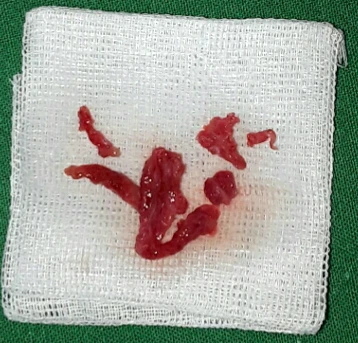
This is a photo of the 6 removed threads. Because they are dissolvable threads, they were partially absorbed, making it difficult to discern their exact shape.
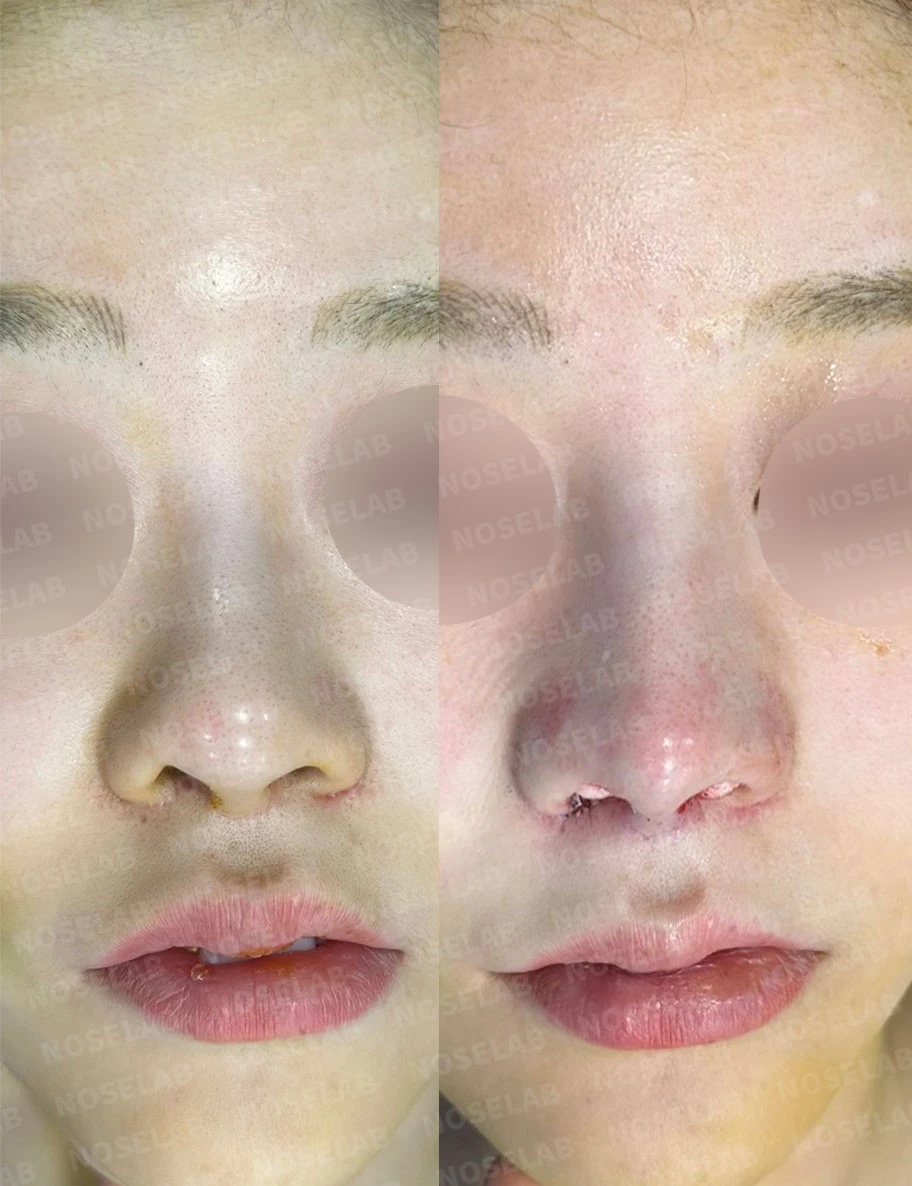
Before surgery / Day 0 immediately after surgery Photos taken immediately after surgery show swelling and may differ from the final result.
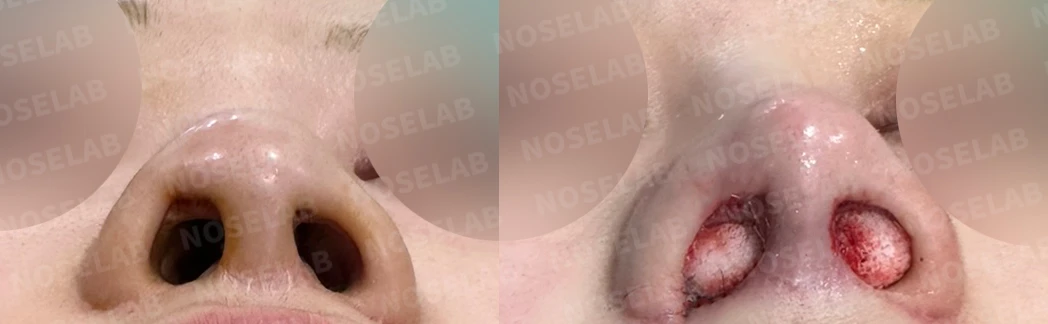
Before surgery / Day 0 immediately after surgery Photos taken immediately after surgery show swelling and may differ from the final result.
4. Conclusion
This is a case of reconstructive surgery for nostril asymmetry caused by an overly aggressive procedure. Due to damage to the right cartilage, the right nostril shape differed significantly from the left. Cartilage reconstruction was performed to restore the structure as closely as possible. Because the nasal tip skin had poor elasticity and the nose itself was small, significant height could not be added, so the design focused on overall proportional correction and a natural, refined nasal shape.
Dr. Peter C. Kang
Limitations and risks
When autologous rib cartilage is used, scarring and pain may remain at the donor site on the chest, and pneumothorax (pleural injury) can occur rarely. Over time, the grafted cartilage may warp or undergo partial resorption.
Common potential risks include infection, bleeding, asymmetry, scarring, skin necrosis, and insufficient improvement; results vary depending on individual skin condition and previous surgical history.