Hello.
I am Dr. Peter C. Kang, medical director.
Today, I would like to introduce the case of a patient undergoing their sixth revision rhinoplasty.
The patient visited the clinic urgently due to a progressively upturning nose, worsening nasal obstruction, and a gradually diminishing sense of smell.
The patient experienced significant stress from dissatisfaction with the side profile and nasal shape, excessive nostril show from the front, and severe nostril asymmetry.
Along with correcting the nostril asymmetry that was a major concern for the patient, autologous rib cartilage was used to perform an overall revision rhinoplasty, combined with 2 types of functional surgeries to relieve nasal obstruction.
Comparison of before-and-after photos
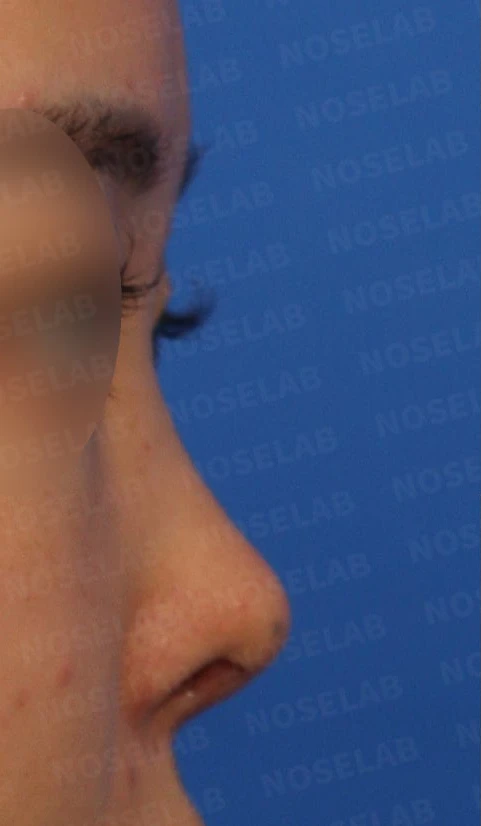
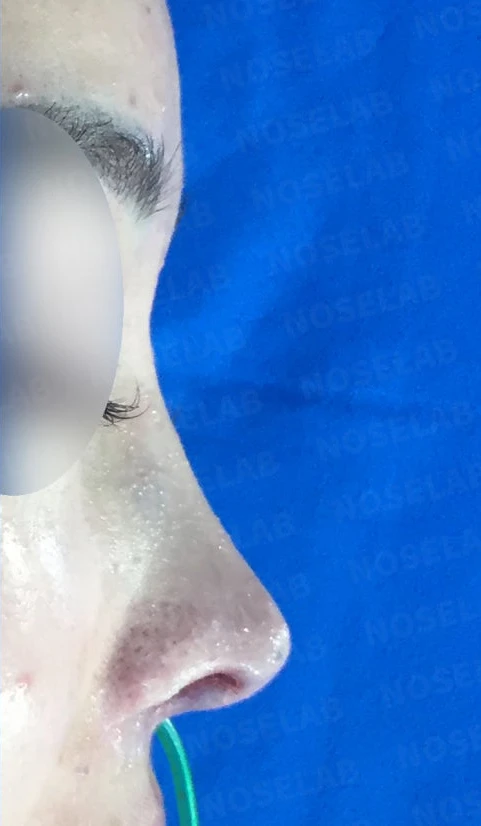
Before surgery / Day 0 immediately after surgery Photos taken immediately after surgery show swelling and may differ from the final result.
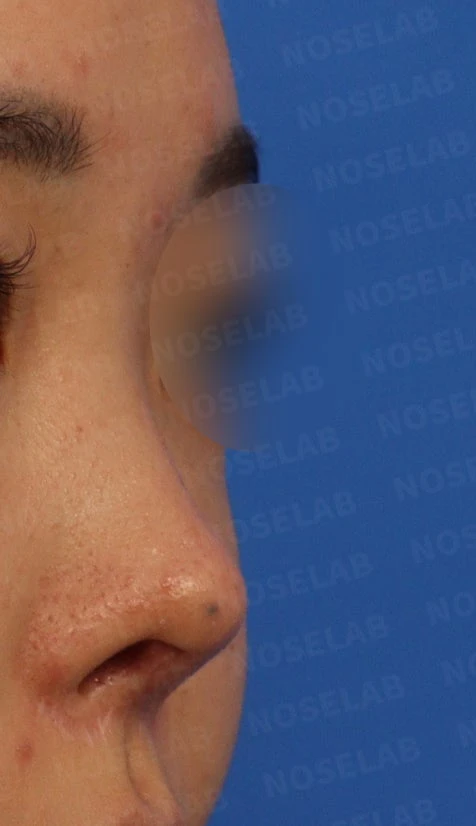
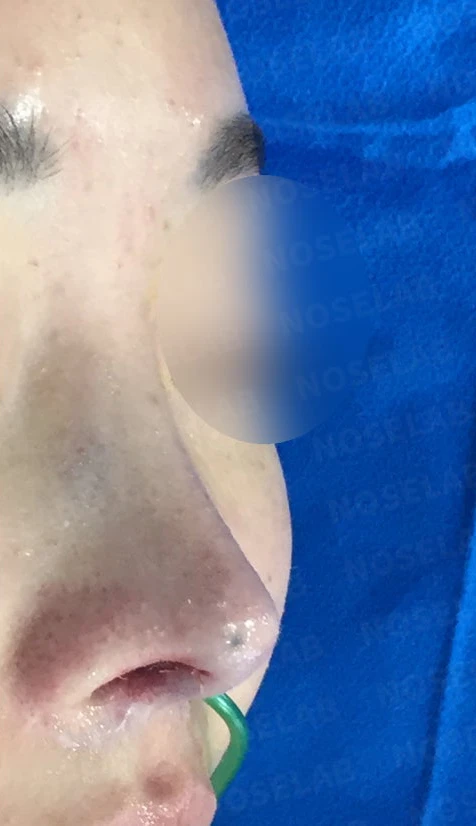
Before surgery / Day 0 immediately after surgery Photos taken immediately after surgery show swelling and may differ from the final result.
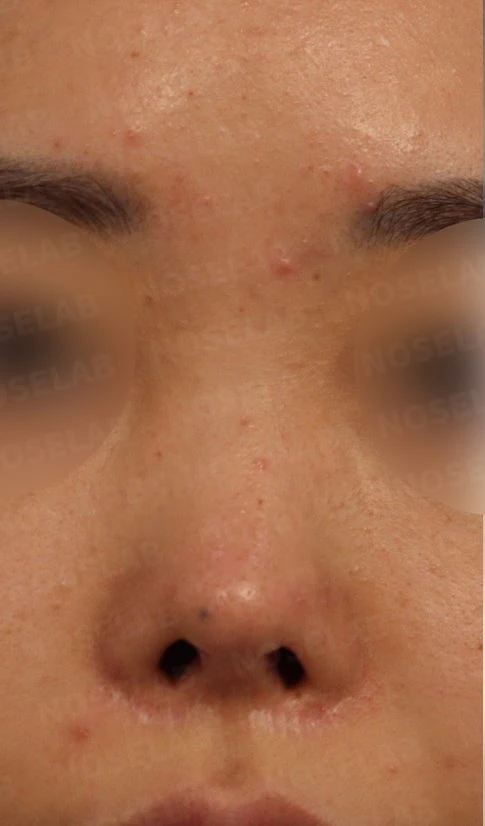
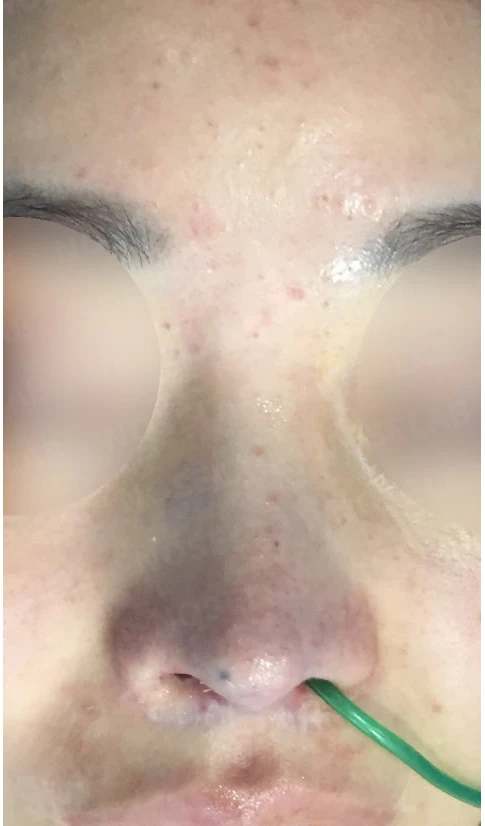
Before surgery / Day 0 immediately after surgery Photos taken immediately after surgery show swelling and may differ from the final result.
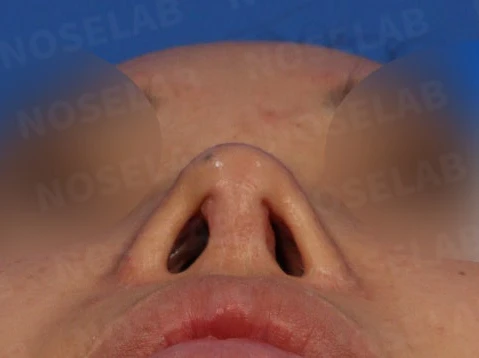
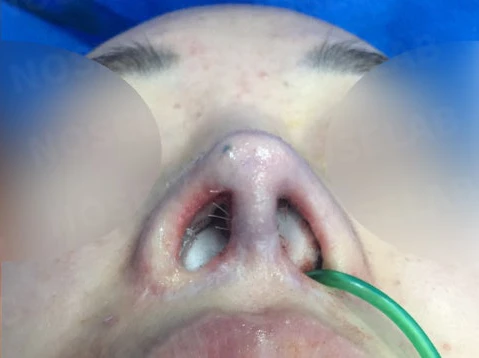
Before surgery / Day 0 immediately after surgery Photos taken immediately after surgery show swelling and may differ from the final result.
Preoperative analysis
Front view
The nose is slightly deviated to the right
The radix starts somewhat low
The nasal tip is bulbous and slightly wide
There is moderate nostril show
The nasal tip is slightly deviated to the right
The nostrils appear slightly asymmetrical
Profile view
The radix starts low
A distinct dorsal hump is present
There is a slight depression at the junction between the nasal bridge and nasal tip
The nasal tip is slightly drooping
The columella is slightly retracted
The nasolabial angle is somewhat acute
Mild protruding mouth is noted
Oblique view
The nasal bridge line appears unnatural due to the dorsal hump
Overall, the nose appears slightly drooping
Basal (nostril) view
Slight nostril asymmetry is present
The columella is tilted slightly to the right
The nasal base is slightly wide
The nasal tip is somewhat bulbous
Immediate post-op Day 0 analysis Immediate postoperative photos show swelling and may differ from the final result.
Front view
The nasal deviation was corrected, resulting in a straighter appearance
The radix starting point was appropriately elevated
The bulbous nasal tip was refined and made more delicate
Nostril show was reduced
The deviation of the nasal tip was corrected
Nostril symmetry was improved
Profile view
The radix starting point was appropriately elevated
The dorsal hump was corrected, creating a natural nasal bridge line
The depression between the bridge and tip was improved
The drooping nasal tip was corrected and appropriately elevated
The columellar retraction was improved
The nasolabial angle was naturally improved
The appearance of the protruding mouth was slightly improved
Oblique view
The bridge line became very natural
The overall nasal shape appears balanced and elevated
Basal view
Nostril symmetry was improved
The columellar tilt was corrected
The widening of the nasal base was reduced
The nasal tip became more refined and natural
Closing remarks
Through closed rhinoplasty, the dorsal hump was effectively corrected, and the shape and position of the nasal tip were improved. Overall nasal symmetry and balance were enhanced, creating a more natural and harmonious facial profile. In particular, the improvement in the dorsal line from the profile view is notable, and the deviation and asymmetry of the nose were also effectively corrected from the front.
Dr. Peter C. Kang
http://www..co.kr/

Limitations and risks
When autologous rib cartilage is used, scarring and pain may remain at the donor site on the chest, and pneumothorax (pleural injury) can occur rarely. Over time, the grafted cartilage may warp or undergo partial resorption.
When the septum is corrected at the same time, nasal obstruction may persist or recur, and in rare cases, septal perforation or changes in smell may occur.
Common potential risks include infection, bleeding, asymmetry, scarring, skin necrosis, and insufficient improvement; results vary depending on individual skin condition and previous surgical history.